
Mepsy: The Appliance & Equipment Climate Impact Calculator

For efficiency policy practitioners, accurate data and predictive models provide insight into how policy decisions translate to real-world impacts.
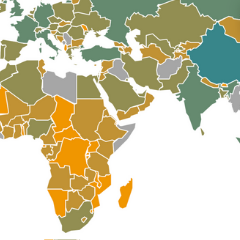
Explore global and national policy scenarios
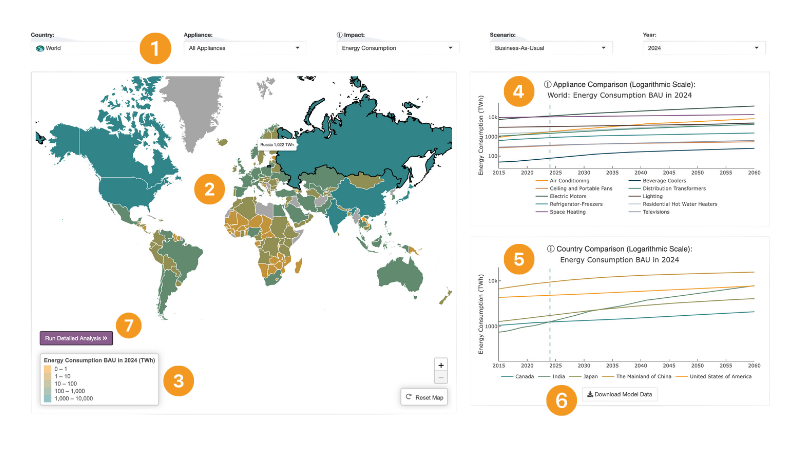
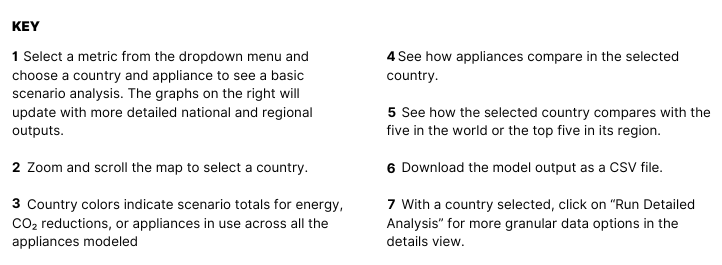
Compare major global carbon emitters or select a country for regional analysis to explore a range of business-as-usual and efficiency policy scenarios for energy use, carbon dioxide emissions, and the number of appliances in use.
See the CO₂ reductions, energy use, and number of appliances in use under business-as-usual or efficiency policy scenarios
Select a country to project the impact of different efficiency policies and compare the results with other countries in the region. Use the map interface for a broad overview or delve into detailed data for a specific country.
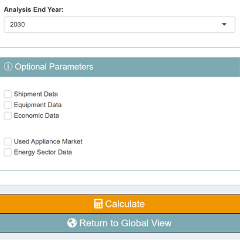
Use pre-loaded data or input your own
The Mepsy model is based on a bottom-up stock accounting method that incorporates country-specific data on appliance energy use, markets, economic indicators, and other policy factors.
Data for Mepsy is drawn from CLASP research, market research firms, and other public and private data sources
Wherever possible, Mepsy references precise stock, sales, and energy performance data from recent CLASP in-country market studies, or country-level estimates from reputable market research firms. Where country-level data for a particular product are not available, calculations are based on estimates from regional or global averages, accounting for differences in country population, economics, or climate as relevant to a particular appliance. Future and past shipments are extrapolated based on recent trends.
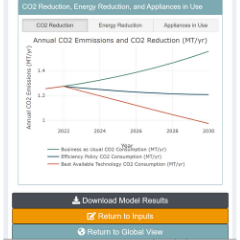
View model outputs by country
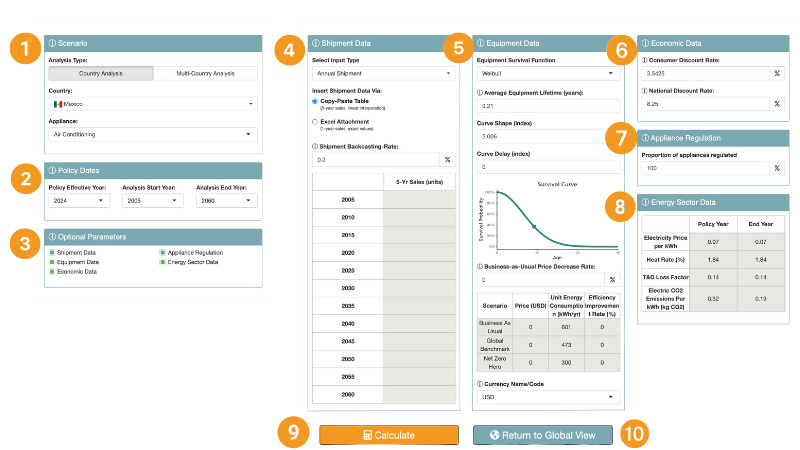
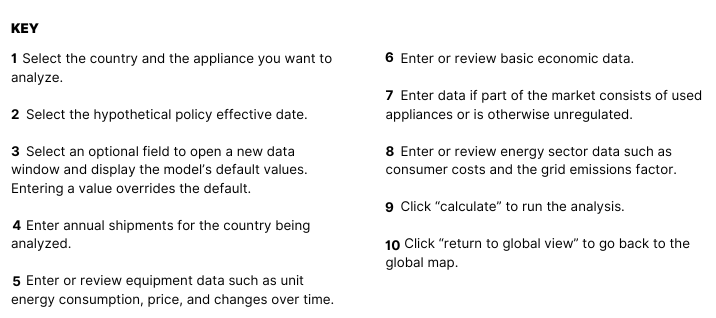
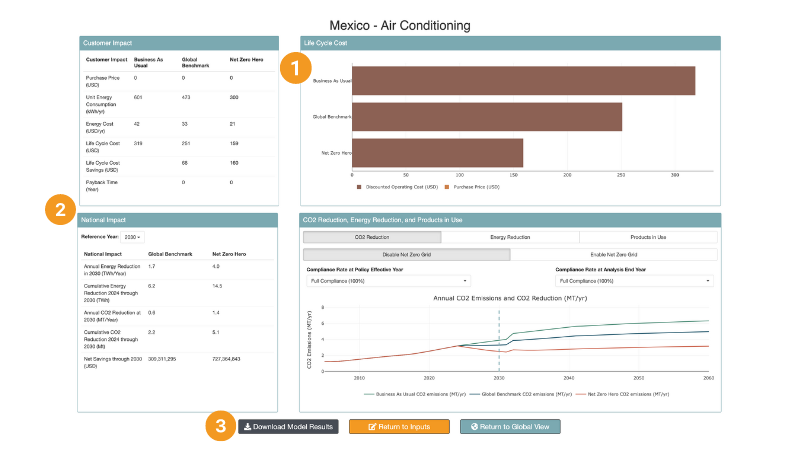
At the country level, view the effects of policy choices on customer-level factors like appliance lifecycle costs, as well as national changes in energy use, carbon dioxide emissions, and the number of appliances in use as a result of the chosen policy scenario.
Mepsy's calculation methodology has been used for decades to evaluate efficiency policy options
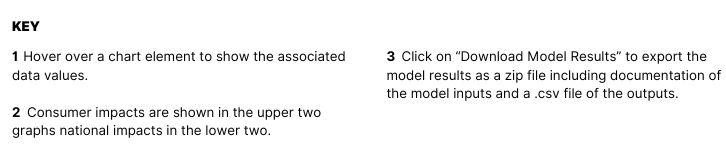
The model inputs and results can be downloaded as a data file to support further analysis offline.
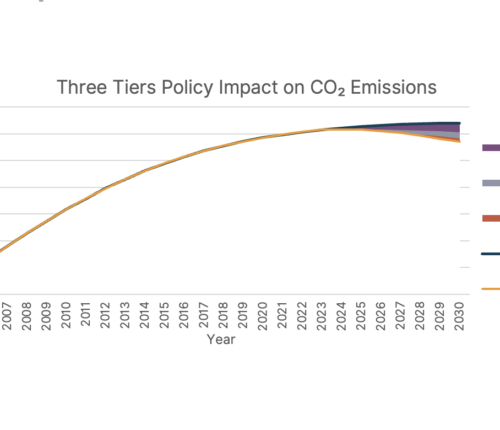
Analyzing policies with multiple tiers
Sometimes multiple-tiered policies need to be analyzed, where a package of increasingly stringent policies is implemented over several years. With the downloadable data, you can view combined impacts all in one place.
Combine multiple sets of data into one multiyear policy package with our how-to
To use Mepsy to analyze policies that have changing efficiency requirements over a number of years, follow our how-to guide and download the template. Please contact us at mepsy@clasp.ngo with any questions.

How can Mepsy help?
Policymakers

- Review efficiency opportunities in your country to help prioritize which products to address
- Experiment with different efficiency levels to see the projected results
- Leverage publicly-available data or input proprietary data
- Download your results to use in supporting analysis and share it with stakeholders
Researchers + Analysts

- Compare the benefits of policies for different products
- Conduct detailed analyses using custom shipment data and assumptions for unit energy consumption, lifetimes, grid emission factors and discount rates
Donors

- Assess the potential impacts of investing in different countries
- Visualize how appliance use varies by country, and the associated energy and climate impacts
- Ensure that policy programs address the most energy- and carbon-intensive appliances

Quick-Start Guide



Methodology
The calculation methodology has been used by CLASP and other organizations for decades to evaluate the potential impact of appliance and equipment energy efficiency policies around the world. Unique among efficiency policy tools, Mepsy is free to use and is regularly updated with the latest research on product shipments and efficiency. Wherever possible, the calculator references precise stock, sales, and energy performance data from recent CLASP in-country market studies, or country-level estimates from reputable market research firms. Where country-level data for a particular product are not available, calculations are based on estimates from regional or global averages, accounting for differences in country population, economics, or climate as relevant to a particular appliance. Future and past shipments are extrapolated based on recent trends.
For an overview of Mepsy’s methodology and assumptions, click here.
For a deep-dive into the data sources, calculations, and assumptions refer to the comprehensive Mepsy Methodology.
Additional Resources
- How Mepsy Can Transform Your Energy Efficiency Policy Development webinar
- How can CLASP’s tools be used? A use case from Botswana
- Subscribe to our CLASP newsletter so stay up to date on the latest Mepsy updates
More questions about Mepsy? Contact us at tools@clasp.ngo!
Net Zero Appliances NDC Toolkit
Benefits of Net-Zero Appliances
Efficient appliances, lighting, and equipment are vital climate solutions. Appliance efficiency offers a proven, cost-effective means of reducing energy-related greenhouse gas emissions, improving climate resilience, and promoting sustainable development.
Efficient appliances deliver a broad range of benefits aligned with the needs and priorities of many countries. Meeting ambitious energy efficiency targets for ten common appliances—air conditioners, fans, e-cookers, electric motors, televisions, refrigerators, lighting, solar irrigation, space heating equipment, and water heating equipment—would yield significant results:
- 9.2 gigatons of CO2 emissions avoided globally in 2050—equal to the combined greenhouse gas emissions of the United States, India, Indonesia, and Japan in 2022
- $1.5 trillion USD in utility bill savings globally in 2050—more than half of Africa’s GDP in 2024
- reduced demand for fossil fuels, making it easier to transition to renewable energy
- reduced demand for new power generation capacity, freeing up resources for investment in other development priorities such as education and health
- less strain on electric grids due to reduced electricity demand—and thus easier integration of renewable energy resources and reduced risk of blackouts and brownouts
- reduced air pollution and a cleaner environment from lower demand for fossil fuels
- better human health, improved food security, and increased productivity since reduced operating costs can make appliances accessible to more people
- expanded access to refrigeration and air conditioning, which are critical energy services in a warming world
Download country fact sheets for summaries of the projected benefits that increased appliance efficiency could deliver in specific countries.

Why appliances? Appliances and equipment make up nearly 40% of all energy-related CO2 emissions, yet most countries don‘t mention them in their NDCs.
At COP28, as part of the outcome of the first global stocktake (GST), parties to the Paris Climate Agreement agreed to “doubling the global average annual rate of energy efficiency improvements by 2030.” This part of the UAE Consensus was championed earlier in the 2023 Versailles Statement and in the COP28 Global Renewables and Energy Efficiency Pledge.
Appliances are responsible for nearly 40% of energy-related emissions globally. Thus, governments should prioritize appliances to achieve the efficiency-doubling goal. Appliance efficiency can deliver the necessary CO2 emissions reductions to keep climate commitments on track. Efficiency policies have a long track record of success and can show results within the next decade.
Appliance efficiency should be a key part of every country’s NDC, yet less than half of NDCs (1.0 and 2.0) mention appliances. The remainder of this toolkit summarizes how appliances have been featured in existing NDCs and explains how to include appliance efficiency in future commitments.
Now is the time for countries to turn global commitments into national action by doubling down on appliance efficiency.
Net Zero Appliances NDC Tracker
Many countries are already integrating appliances into their NDCs. CLASP’s Net Zero Appliances NDC Tracker enables you to explore which countries mention appliances, appliance efficiency, and supporting policies in their NDC. To view individual country data and our methodology, click the “Download data” button on the tracker below.
This interactive feature is not optimized for mobile devices. For the best experience, we recommend viewing it on a desktop.
Appliances in NDCs 3.0
The examples below were selected to show the variety of ways appliances have been included in the most recent NDCs (NDCs 3.0). They are intended to showcase the range of NDCs rather than highlight exceptional targets or model what an exemplary NDC should look like. This list is not exhaustive. To see a full list of countries mentioning appliances in NDCs, view CLASP’s Net Zero Appliances NDC Tracker above.
Cambodia’s NDC 3.0 outlines a plan to adopt standards and labeling requirements for five household appliances: air conditioners, refrigerators, fans, LED lighting, and rice cookers. These measures are expected to avoid 3.3 Mt CO₂ equivalent by 2035. The NDC also promotes clean cooking, aiming for 30% use of efficient stoves (i.e., improved biomass, biogas, LPG, and electric induction cooking equipment) by 2030 and 60% by 2035, and targets the 73% of rural households still reliant on traditional wood and charcoal stoves. These efforts are expected to avoid 2.1 Mt CO₂ equivalent. In the industrial sector, Cambodia plans to introduce mandatory minimum energy performance standards (MEPS) for equipment such as air compressors, transformers, and boilers to improve manufacturing efficiency, avoiding an additional 6.7 Mt CO₂ equivalent by 2035.
In its third NDC, Nigeria aims to have 100% of households using efficient lighting with a complete phaseout of incandescent bulbs. It also aims to reduce emissions from refrigeration and air conditioning by achieving the targets in its National Cooling Action Plan, introducing low-global warming potential (GWP) refrigerants, and promoting the recovery of hydrofluorocarbons (HFCs) from old equipment. Together these actions are estimated to avoid 14.4 Mt CO2 equivalent by 2035.
United Arab Emirates (UAE) has set an ambitious target of a 79% reduction in building sector emissions by 2035. Decarbonization will be achieved by revising building codes for efficiency, rolling out building energy labels, and ramping up retrofitting rates. Efficient cooling solutions will play an integral role. UAE’s NDC also highlights the opportunity to explore the use of low-GWP refrigerants and outlines plans to expand its appliance efficiency programs by annually updating standards for existing appliances, like ACs, and introducing new standards for other appliances.
Recommendations for Drafting NDCs
Parties to the Paris Agreement are encouraged to double the rate of efficiency improvement globally and to strengthen the 2035 targets in their nationally determined contributions. The recommendations below contain actionable steps that governments can take to integrate appliance energy efficiency into their revised NDCs.
Before drafting:
Identify the ministries responsible for appliance energy efficiency, which may include those in charge of:
- energy
- industry
- housing/buildings
- trade
- environment
Review the current NDC and note the following:
- mentions of appliances and equipment (e.g., lighting, air conditioners, and industrial electric motors) and supporting policies (e.g., energy performance standards, labeling requirements, market transformation programs, and incentives)
- specific targets or goals for appliances or appliance energy efficiency
- synergies with stated climate resilience, adaptation, and sustainable development priorities such as clean energy, cooling access, job creation, and economic development
Consult the ministries responsible for appliance energy efficiency to:
- Understand the appliance sector, including current and projected ownership levels and energy use.
- Take note of current and future appliance energy efficiency priorities and how they relate to national climate change, economic growth, and development goals.
- Assess how appliance efficiency contributes to current NDC and national energy efficiency targets and greenhouse gas accounting mechanisms.
- Model energy-saving and greenhouse gas mitigation opportunities in the appliances sector.
While drafting:
Acknowledge that increasing the efficiency of appliances and equipment is critical for meeting the goals of the Paris Agreement and other near-term climate commitments. Consider including the following points:
- Energy efficiency policies can double or triple the rate of appliance efficiency improvement, making them key to meeting the doubling target in the UAE Consensus and Global Renewables and Energy Efficiency Pledge.
- Meeting targets for the ten appliances most critical to meeting net zero globally—fans, air conditioners, electric cooking appliances, electric motors, lighting, televisions, refrigerators, solar irrigation, space heating equipment, and water heating equipment—could mitigate 9.2 gigatons of CO2 in 2050 alone.
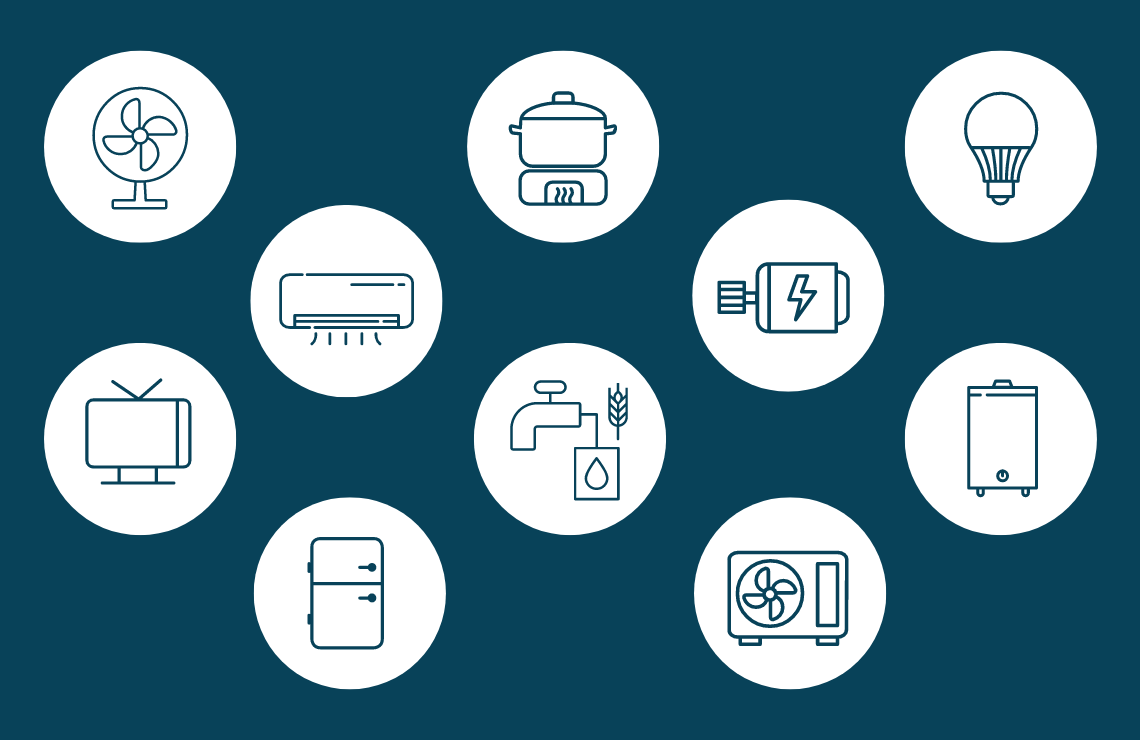
Ten priority appliances: Fans, ACs, e-cookers, electric motors, lighting, TVs, refrigerators, solar irrigation, space heaters, and water heaters
Highlight the cost-effectiveness and cross-cutting benefits of appliance energy efficiency investments.
- Affordability: Longstanding appliance efficiency policies are cost effective, with financial benefits four times greater than the costs.
- Resilience and adaptation benefits: Increased efficiency can expand access to cooling, information, and income-generating activities by reducing the total cost of appliance ownership and making appliances more affordable.
- Connections to UN Sustainable Development Goals: Appliances and equipment are critical to reaching 12 of 17 UN Sustainable Development Goals.
- Equity benefits: First-time appliance ownership can expand energy access, thereby raising productivity, incomes, and health outcomes for marginalized groups like women, children, and poor and rural households.
Identify priority appliances and equipment in order to define clear efficiency improvement targets.
- When determining which appliances to prioritize, consider products with high mitigation potential. See CLASP’s country fact sheets to learn which appliances could reduce the most emissions in different nations.
- When selecting targets, consider aligning them with existing pledges such as the Global Renewables and Energy Efficiency Pledge and the SEAD Product Efficiency Call to Action or existing appliance efficiency targets like those in CLASP’s Net Zero Heroes report.
Discuss the policies, financing, and/or reporting requirements needed to meet appliance efficiency targets, including:
- appliance efficiency policies such as energy performance standards, labeling requirements, financial incentives, and bulk procurement. See Net Zero Heroes for a summary of policies
- information about how policies and programs will be funded or how much funding is needed
- monitoring, reporting, and verification (MRV) mechanisms to track progress. IEA’s Evaluation Guidebook explains how to evaluate the impact of appliance efficiency policies

Model NDC Language
CLASP has prepared sample language to show how governments could revise their NDCs following the recommendations above.
Below are two illustrative examples designed for hypothetical countries. Governments are welcome to borrow applicable language when drafting their NDC.
Country A
- Population: 87 million people
- Emissions: 18 megatons CO2
- Per capita emissions: 0.21 tons CO2
- GDP: 98 billion USD in 2023
- Per capita GDP: 1,126 USD
- Per capita electricity consumption: 110 kWh
- Energy demand growth: 12% per year until 2030
- Household electricity access: 53%
- Household clean cooking access: 38%
- Household appliance access: Refrigerator—36%, TV—47%, AC—10%
- Needs: Expand energy access, leapfrog to clean electric appliances, increase resilience in vulnerable communities, and constrain future emissions growth
Example NDC Language
“Appliance energy efficiency will play a critical role in delivering Country A’s climate change mitigation, climate resilience, and sustainable development agenda over the next ten years. Efficiency policies are a cost-effective climate mitigation solution that has been shown to double or triple the rate of efficiency improvement in new appliances and equipment over time. More efficient appliances can also be catalysts for expanded energy access and sustainable development and can play an important role in building climate resilience. In communities with no or limited access to the electric grid, efficient appliances enable households to maximize the use of distributed energy resources. Solar-powered equipment like solar water pumps can also be used to enhance drought resilience by enabling smallholder farmers to access groundwater supply more efficiently and boost farmer productivity and incomes, allowing them to be more financially resilient. In grid-connected areas, efficiency can lower the cost of ownership, making critical appliances like air conditioners accessible to more people.
Appliances and equipment energy consumption in the buildings and industrial sectors represented 11% of all CO2 emissions in Country A in 2023. Their impact is expected to increase as Country A’s economy develops and more households gain access to electricity. By prioritizing appliance energy efficiency, Country A can curb appliance-related emissions while expanding access to the products needed to improve resilience among the most vulnerable communities.
Between 2025 and 2035, Country A aims to double the efficiency of new air conditioners, refrigerators, and lighting through appliance efficiency policies (i.e., energy performance standards and labeling policies). Achieving these targets would avoid 0.85 megatons of CO2 in 2035 and 1.36 megatons of CO2 in 2050. Conditional upon available financing, Country A may develop incentives to lower the first cost of appliances, making them more affordable to a greater share of the population. Country A also plans to expand access to energy-efficient appliances in communities with no or limited access to the electric grid by providing 500 million USD in consumer financing and 100 million USD to expand local jobs in the solar irrigation sector, conditional upon available financing.”
Country B
- Population: 50 million people
- Emissions: 250 megatons CO2
- Per capita emissions: 5.0 tons CO2
- GDP: 1.3 trillion USD
- Per capita GDP: 26,000 USD
- Per capita electricity consumption: 4,750 kWh
- Energy demand growth: 2.8% per year until 2030
- Household electricity access: 100%
- Household clean cooking access: 100%
- Household appliance access: Refrigerator—98%, TV—99%, AC—75%
- Needs: Lower emissions, decarbonize key sectors, retire inefficient appliances, and increase resilience in vulnerable communities
Example NDC Language
“Country B intends to significantly improve the energy efficiency of new appliances and equipment by 2035. This goal aligns with the UAE Consensus and the Global Renewables and Energy Efficiency Pledge, which target a collective global doubling of the rate of energy efficiency improvement. Appliance energy efficiency policies (i.e., energy performance standards and labeling policies) have been shown to improve the average rate of energy efficiency improvement by two to three times while making appliances more affordable and less costly to operate. Improved affordability can make critical cooling appliances like fans and air conditioners more accessible to a greater share of the population, improving climate resilience.
Country B will update and expand appliance energy efficiency policies (i.e., minimum energy performance standards and labeling requirements) for high-energy consuming products—starting with lighting, space cooling equipment, and industrial electric motor-driven systems—and expand government-backed procurement and incentives to accelerate the uptake of more energy-efficient heat pumps and industrial electric motors. Country B aims to phase out all fluorescent lighting by 2027, double the efficiency of new air conditioners by 2030, and set new minimum efficiency requirements of new industrial electric motors at efficiency class IE3 or above. Country B will develop a net-zero roadmap for the appliances sector to identify important milestones and establish systems for tracking progress.”


Why appliances? Improving appliance efficiency would help meet 12 of 17 UN Sustainable Development Goals.

Country Fact Sheets
Explore the climate, energy, and economic benefits of net-zero appliances at the national level.
Each fact sheet contains estimates of the climate, energy, and economic benefits of appliance efficiency in that country based on CLASP’s Net Zero Hero policy scenario presented in our 2023 Net Zero Heroes report.
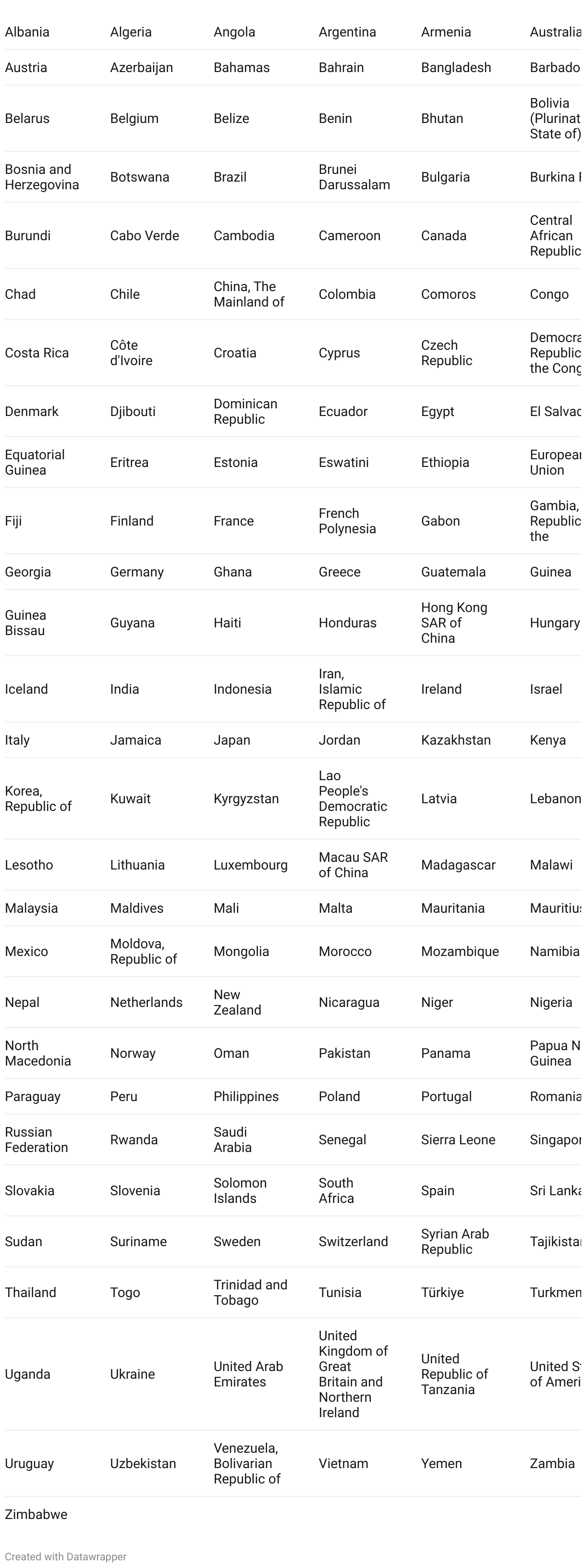
Factsheets for Burundi, Chad, Cote d’Ivoire, Democratic Republic of the Congo, Ghana, Kenya, Lao People’s Democratic Republic, Liberia, Madagascar, Malawi, Mauritania, Mozambique, Niger, Rwanda, Senegal, Sierra Leone, Togo, United Republic of Tanzania, and Zambia now include benefits from widespread adoption of e-cooking appliances provided by CLASP partner, Modern Energy Cooking Services (MECS). The methodology for these estimates may be viewed here.
Governments can use these fact sheets to promote the inclusion of net zero appliance targets in NDCs. Click on a country name in the table below to download the fact sheet (PDF) for that country.

Additional Resources
The following resources provide in-depth information to guide policymakers in developing NDCs.
NDCs
- NDC Energy Commitments Tracker E3G tool that monitors how countries’ NDCs align with COP28 energy goals.
- Climate Watch NDC Tracker WRI tool that tracks, compares, and analyzes NDC pledges and progress.
- NDC 3.0 Navigator NDC Partnership tool showing how countries can strengthen NDCs submitted in 2025.
- WWF Checklist for the NDCs We Want The World Wide Fund for Nature’s checklist of the 24 criteria it will use to rate NDCs 3.0.
- Credible Contributions: Bolder Plans for Higher Climate Ambition in the Next Round of NDCs Energy Transitions Commission insights briefing showing how industry and government collaboration can raise ambition in NDCs.
- Appliance Efficiency in NDCs: Tracking Changes in Nationally Determined Contributions to the Paris Climate Agreement CLASP report discussing appliances in existing NDCs.
- Appliance Efficiency Finally Recognized in National Climate Commitments CLASP blog post tracking appliances in NDCs 3.0 submitted by April 2025.
Appliances & Energy Efficiency
- Net Zero Heroes: Scaling Efficient Appliances for Climate Change Mitigation, Adaptation & Resilience CLASP report defining near-term efficiency targets for ten key appliances and the actions needed to achieve them.
- Net Zero Appliances Case Studies Case studies offering examples of appliance energy efficiency policies and programs in action.
- Getting Appliances Back on Track: Assessing Progress Towards Global Energy Efficiency Commitments CLASP report on progress toward doubling the efficiency of air conditioners, electric motors, lighting, and refrigerators.
- Doubling Energy Efficiency with Appliances: CLASP report showing how appliance efficiency is critical to meeting the efficiency doubling goal by 2030.
- Mission Efficiency A global coalition of governments, organizations, and initiatives driving progress on energy efficiency. Read the Mission Efficiency Energy Efficiency Playbook of Key Actions and submit a Mission Efficiency Pledge to share how you intend to achieve the efficiency targets included in your NDC 3.0.
- Energy Efficiency Policy Toolkit 2025 IEA toolkit showing how policy packages can combine regulations, information, and incentives to achieve the global target of doubling the pace of energy efficiency progress by 2030.
- IEA Appliance Energy Efficiency Policy Training Course A comprehensive 25-hour, 7-module course on the fundamentals of designing and implementing energy efficiency policy packages.
Tools
- Mepsy: The Appliance & Equipment Climate Impact Calculator CLASP tool for understanding the climate and energy impacts of appliance policies in 162 countries.
- CLASP Policy Resource Center Database containing over 1,500 examples of appliance policies from more than 130 countries.
- World’s Best MEPS: Tracking Leaders in Appliance Energy Efficiency Standards CLASP webpage showing the world’s most stringent energy performance standards for lighting, electric motors, air conditioners, refrigerators, water heaters, and space heating equipment.
World’s Best MEPS: Tracking Leaders in Appliance Energy Efficiency Standards
 Lighting
Achieving net-zero emissions by 2050 will require widespread deployment of light emitting diodes (LEDs) in all economies by 2025. Setting MEPS that eliminate the sale of inefficient compact fluorescent lamps (CLFs) and incandescent lamps is essential to achieving this goal. Technology-neutral standards treat all appliances fairly and prevent carveouts for legacy technologies (e.g., CFLs) that limit the energy savings potential of a policy and expose populations and ecosystems to dangerous pollutants like mercury. The graph shows economies that meet or exceed the 90 lm/W threshold for all general service lamps.
All economies should adopt technology-neutral MEPS at 91 lm/W or greater to phase out CFLs and incandescent lamps. Economies already meeting this requirement should strive for more stringent MEPS of at least 120 lm/W.
*Japan’s bar reflects their Top Runner targets rather than a fixed MEPS.
 Electric Motors
Electric motor-driven systems are responsible for more than 50% of global electricity use. Low-efficiency motors represent an estimated two-thirds of the global motors stock. Policies that improve the efficiency of electric motors will play a key role in slowing electricity demand growth and lowering lifetime costs. To achieve net zero emissions by 2050, the IEA estimates that all new industrial electric motors must be best-in-class technologies by 2035.
As a result, all economies below the target should require a minimum efficiency class of IE3, while economies with efficiency requirements at or above an IE3 efficiency class should strive for efficiency requirements at IE4 or IE5.
Note: Economies with a score of 3.5 indicate that MEPS for 3-phase AC induction motors are set at the higher IE4 level for certain motor sizes. Only economies that meet/exceed or are within 25% of the target are displayed in the graph.
*Japan’s bar reflects their Top Runner targets rather than a fixed MEPS.
 Electric Motor Systems
Expanding energy efficiency policies to cover the larger motor system would result in significant energy savings and emissions reductions. Energy system improvements may include increasing the efficiency of individual components of the motor system, improving the overall system design, regular maintenance, and matching energy use to demand through controls like variable speed drives. Using a systems approach in industrial settings could reduce energy demand by 10% in fan systems, 24% in pump systems, and 30% in compressed air systems. In recent years, some countries have adopted policies for motor controls and motor driven equipment.
All countries are encouraged to follow the lead of China, the EU, and the US to adopt test methods and efficiency requirements for motor-driven equipment (pumps, fans, and compressors).
 Air Conditioners
By 2050, the installed capacity of cooling equipment globally is expected to triple, more than doubling electricity consumption. This surge in demand will make it more difficult to transition to renewable energy, strain electricity grids, and release more than 5.1 gigatons of greenhouse gas emissions in 2050. To achieve net-zero emissions by 2050, the IEA estimates the average efficiency of air conditioner units must increase by 50% in all economies by 2030. Evidence from the Global Cooling Prize suggests air conditioner technology has the potential to reach efficiency levels of ISO CSPF 8.5 to 9.0 Wh/Wh, which may indicate new opportunities for more ambitious standards.
At a minimum, all countries should adopt a technology-neutral seasonal performance metric of 5.1 Wh/Wh or greater. Additionally, any economy using an energy efficiency ratio (EER) should switch to a seasonal performance metric for fixed- and variable-speed air conditioners.
Note: Only economies that meet, exceed, or are within 25% of the target are displayed in the graph.
*Japan’s bar reflects their Top Runner targets rather than a fixed MEPS.
 Refrigerators
Refrigerators make up a sizable portion of household energy consumption behind space heating and cooling, water heating, and lighting. To achieve net-zero emissions by 2050, the IEA estimates that nearly all household appliances sold worldwide by mid-2030 must be as efficient as the most efficient models available today.
At a minimum, all economies should set MEPS at 229 kWh/year or lower. Economies that have already achieved this target should increase their stringency to match U4E’s intermediate target of 223 kWh/year or less.
Note: The graph shows energy consumption in contrast to other charts in this tool that show energy efficiency. Economies with MEPS that meet or exceed the target will be shown below the target line. Only economies that meet/exceed or are within 25% of the target are displayed in this graph.
*Japan’s bar reflects their Top Runner targets rather than a fixed MEPS.
 Water Heating
Decarbonizing water heating will be essential to meeting net-zero goals. The IEA estimates that the share of electricity in water heating must exceed 40% by 2050 and fossil fuel products must become more efficient to achieve net-zero emissions. We define an economy’s MEPS as ambitious if at least 5% of new water heaters are required to be ≥ 86% efficient for fossil fuel water heaters and > 100% efficient for electric storage water heaters.
Economies should adopt these MEPS and look for additional opportunities to promote the electrification of water heating in line with IEA targets.
Note: Only economies that meet, exceed or are within 40% of the target are displayed in the graph.
 Space Heating
Space and water heating together represent almost half of building energy demand. Transitioning from fossil fuels to electricity can lower fossil fuel use and improve energy security. To achieve net-zero emissions by 2050, 40% of all building space heating must be electric. We define an economy’s MEPS as ambitious if 50% of the fossil fuel space heating market is required to have an efficiency ≥ 90% and 50% of the electric space heating market is required to have an efficiency > 100%. Economies should require condensing efficiency requirements for space heating. They should also encourage electrification through the adoption of heat pumps.
Note: Only economies that meet, exceed or are within 40% of the target are displayed in the graph.
View previous versions of World’s Best MEPS
We hope governments, NGOs, and researchers will use this tool to improve MEPS and align with international benchmarks. We encourage all governments to meet or exceed the target MEPS outlined in this analysis in national and/or regional policies and integrate these new efficiency targets into Nationally Determined Contributions under the Paris Climate Agreement and national net-zero emissions roadmaps.
To aid the policymaking process, CLASP offers governments, NGOs, and researchers free tools to browse existing policies and model the energy and climate impacts of MEPS.
View our Technical Appendix for a detailed description of our methodology, including how we selected each representative product and efficiency threshold, and standardized performance metrics to enable fair, consistent, and comparable assessments.
To learn about new updates and features to these tools sign up for CLASP’s newsletter.
CLASP Compliance Toolkit
The clean energy, and appliance efficiency and quality sectors are working tirelessly towards a more sustainable world. These efforts are significant, but it is critical that professionals and policymakers account for compliance in their strategies – a critical activity that helps to protect the anticipated benefits of energy efficiency policies and sustainable technologies for consumers, the market, and the planet.
Learn more about Why Compliance Counts.
The CLASP Compliance Toolkit offers up-to-date, accessible and interactive resources to help countries design effective policy implementation and enforcement strategies and mechanisms to improve compliance and lock in the benefits of adopting clean energy technologies and energy efficiency and quality standards.
Introduction to Compliance
CLASP has developed a series of general resources to educate policymakers, practitioners, researchers and the public on the basics of policy compliance.
Learn about each step of a robust compliance strategies for on- and off-grid markets.
Article: Why Compliance Counts
Videos: Introduction to Compliance (General, Off-Grid and On-Grid)
Informational Two-Pagers:
Non-Compliance Risk Assessment Tool
The Non-Compliance Risk Assessment Tool (NC-RAT) allows users to evaluate energy efficiency policy enforcement efforts and associated market non-compliance risk.
NC-RAT is an easy-to-use tool that is based on a qualitative assessment of national policy implementation and enforcement mechanisms.
The Non-Compliance Risk Assessment Tool (NC-RAT) is an easy-to-use tool that is based on a qualitative assessment of national compliance programs and organized under five Indicators: Regulation, Resources, Certification & Registration, Market Surveillance & Enforcement, and Compliance Communication. Each Indicator includes relevant questions for the user to respond to, based on which, the Tool calculates scores for 1) each Indicator and 2) a corresponding overall score for market non-compliance risk. The tool also provides initial recommendations for how policymakers can strengthen compliance programs, based on individual user responses
To learn more about how to use the NC-RAT, watch this how-to video for a step-by-step tutorial.
Additional Compliance Resources
Check out some of CLASP and partners’ recent work in supporting policy compliance worldwide.
Discover insights on activities like testing, labelling and more.
Mepsy
Visit Mepsy, CLASP’s energy impact modeling tool, to access its compliance feature that provides projections based on Low to Excellent policy compliance variability.
Conformity Assessment
Conformity Assessment for Off-Grid Solar Products: Opportunities & Recommendations for Stakeholders; VeraSol
Market Surveillance
ASEAN Market Surveillance Guidelines for Air Conditioners; CLASP
Guidelines for Market Surveillance and Enforcement; VeraSol
Labelling
Study to Evaluate Online Energy Labelling Compliance in the EU; CLASP
Product Registration Systems
Guidance and Resources on PRSs; U4E
Testing
SEAD Testing Costs Manual; CLASP
Guide to Building Sustainable Testing Capacity in ECOWAS; CLASP
Want to access more of CLASP’s compliance resources? Visit our research library.
For questions & feedback, please contact Lina Kelpsaite at lkelpsaite@clasp.ngo.
On-Mode Computer Testing Tool

This software tool allows individuals to test the performance and power consumption of personal computers.
Personal computers are essential to the functionality and productivity of society today across Europe and around the world. But how well do they perform their tasks and how much energy do they use?
To help answer these questions as they pertain to one of our most frequently used devices, CLASP and GTD, with input from DIGITALEUROPE and their members, developed a software tool to measure active power and performance of personal computers (I.e., products covered under Lot 3).
This updated software tool is designed to:
- accurately assess the energy use and performance of the computer when executing tasks;
- be agnostic of operating system, architecture and configuration;
- be low cost and easy to use for manufacturers and market surveillance authorities alike; and
- be open source so it may become part of independently reviewed and updated performance testing software
To learn more about the tool and how to use it, please view this recording and slide deck from our September 2022 webinar.

Software Download and Usage Instructions
Learn how to download and use the tool
Click the “Download Tool” button above to access the tool and create a USB key containing the Computer Efficiency Test Software. The file is 9GB and must be downloaded prior to creating the USB key.
If you already have a previous version of the software, you can update your USB key by running the update script as outlined in the Software Manual, section 3.4.
Software Manual: Read this manual for instructions on using the software – including information on required equipment, hardware setup, and software execution.
To learn more about the tool and how to use it, please view this recording and slide deck from our September 2022 webinar.

Additional Resources
Learn more about the tool and its metrics.
Metric White Paper: An informational document on the justification for the tool’s energy efficiency metric
This tool is the result of a multiyear partnership between CLASP, and DIGITALEUROPE.
CLASP thanks Unity, and Underwriters Laboratories (UL) for their support in providing high-quality content to be utilised within the software.
Current version 2024-03-15
This tool has been under development since 2020. Please visit the GTD site to access archived versions of the tool and a log of revisions made between the earlier drafts.
CLASP Policy Resource Center
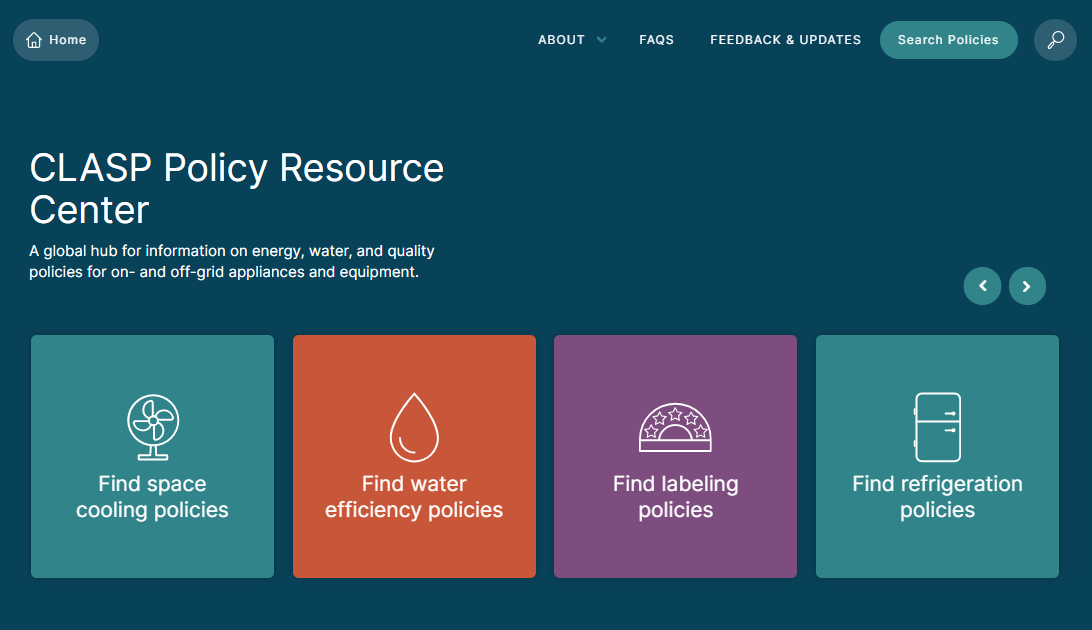
A clear picture of global efficiency policies facilitates a wide range of decision-making and analysis by policymakers, researchers, members of the appliance industry, and other practitioners.
A Hub for Appliance and Equipment Policy Information
The CLASP Policy Resource Center (CPRC) is a freely available digital tool that:
- Stands as the most comprehensive global policy platform of its kind. The CPRC serves as a single point of access for appliance and equipment policy data across more than 130 economies
- Allows visitors to develop customizable, aggregated lists of policies, or examine individual policies in more detail
- Makes it easy for policymakers and practitioners to explore efficiency policies from countries around the globe, enabling internationally informed decisions
- Is continually expanding in terms of features and content. CLASP will update the CPRC by country every 6-18 months and make ad-hoc updates as soon we become aware of policy changes. Users can submit updates to us and subscribe to receive CPRC updates and news (e.g. new features and events) from CLASP every 1-2 months.

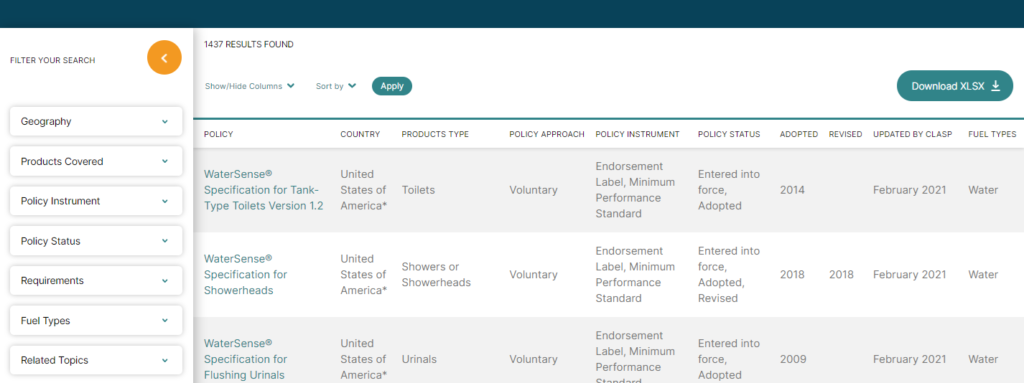
Sort & Filter
The Policy Search table allows users to filter searches, sort results, and show/hide columns based on relevance.
Use filters to refine search by geography, products covered, adopted and revised dates, and more

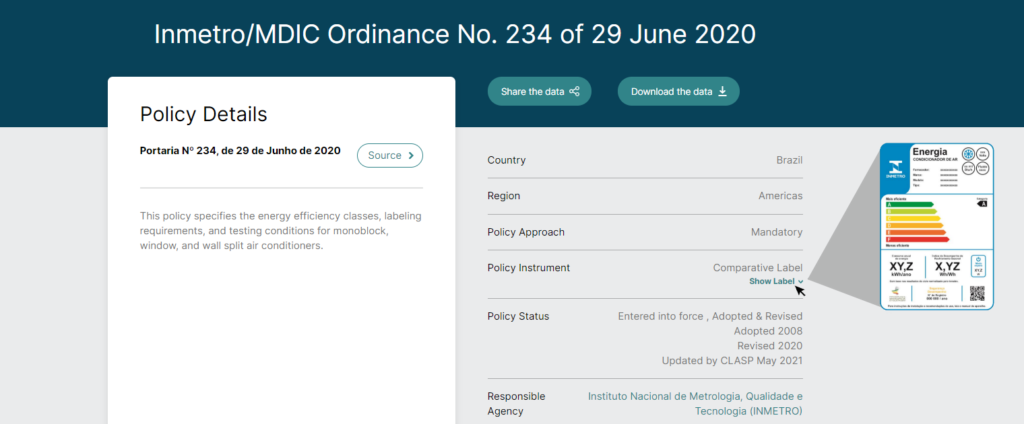
Policy Detail
Policy Detail pages allow users to see policy scopes, responsible agencies, and more. Users can also view policy sources, test methods applied, and label pictures when applicable and available.
Examine individual policies in more detail with Policy Detail pages

Download Data
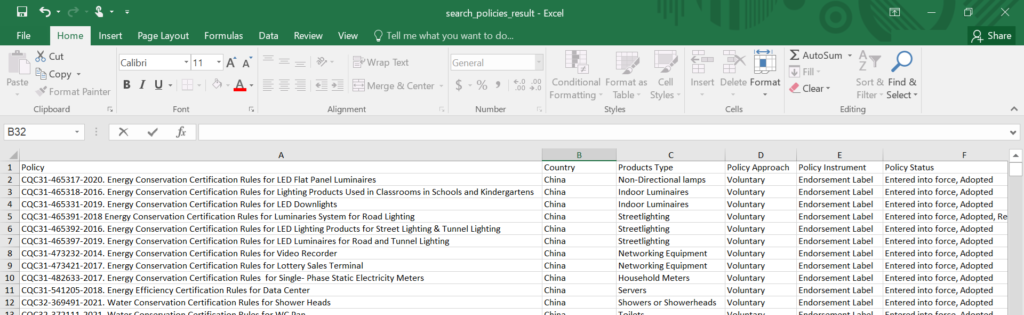
Users can download the contents of Policy Detail pages and the Policy Search as a .xlsx file. Policy Search downloads will reflect the contents seen in the table, based on filters and columns shown/hidden.
View, compare, download data to support policy development, product prioritization, and other technical analyses.

Provide Feedback
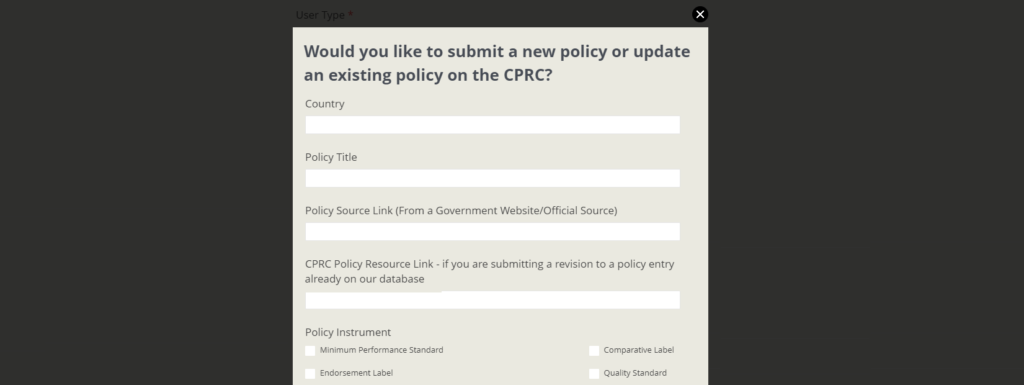
We encourage users to share their feedback so that we can make the CPRC as useful as possible. Users can submit new policies to add to the CPRC, updates to existing policies, and overall feedback on features.
Share your questions, comments, and feedback
For more information on how to use the CPRC see our FAQs and watch the tool walkthrough below.
To explore the taxonomy used in the CPRC see the Methodology.
More questions about the CPRC? Contact us.
VeraSol Product Database
Independent, Trusted, Third-Party Data
The VeraSol Product Database is a freely available digital tool that:
- Makes it easy to identify and compare off-grid solar solutions by consolidating information for solar energy kits and off-grid appliances on a single platform
- Enables manufacturers to increase the visibility of their products with distributors and development partners through standardized and searchable product listings
- Allows for easy product benchmarking on performance and quality that can drive market competition and innovation
All products in the database have undergone rigorous testing according to international standards by approved test laboratories. All listed pico-solar products and solar home system kits are certified to the leading international quality standards.
Using the Product Database

View
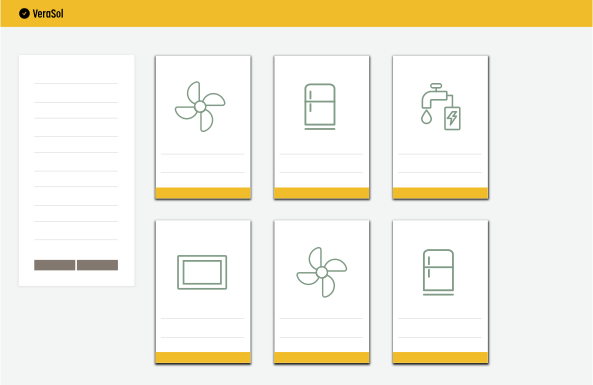
Use grid-view to see snapshots of product information, or list-view to see multiple products in a tabular form.
Choose your preferred viewing style.

Compare
Compare up to four products side-by-side to easily differentiate technical and performance details.
Make side-by-side product comparisons

Sort & Filter
Sort products by certain criteria such as model, brand, size and retail price. Filter data by size, power consumption, location and price to quickly identify products that meet your needs.
Quickly identify products that meet your criteria

Download
Download a spreadsheet for a single product, compared products, or all products to conduct your own analysis.
Save your data for future analysis
How to Use our Data

Manufacturers
Benchmark your product's performance and quality against your competitors. Use your product listing to communicate key attributes to buyers and signal a commitment to quality.

Distributors
Make faster, informed sourcing and procurement decisions. Identify reputable suppliers by comparing the performance, quality, and price of off-grid solar solutions.

Investors
Validate product quality and inform the due-diligence process when assessing products or companies to support. Easily screen products to reduce risk across investment portfolios.

Governments
Access certification documents and other important solar energy kits product attributes. Use off-grid appliance data to develop a market baseline, track progress, and craft policies

Development Institutions
Easily confirm product quality when assessing products or companies to support in programs and initiatives.
Ready to start browsing?
Visit the Product Database to begin comparing hundreds of independently-tested or certified solar home systems, televisions, fans, refrigerators, and solar water pumps.