
Water Heaters
Water heaters, used for cleaning and bathing, are among the most common household appliances.

Everything you need to know about water heaters
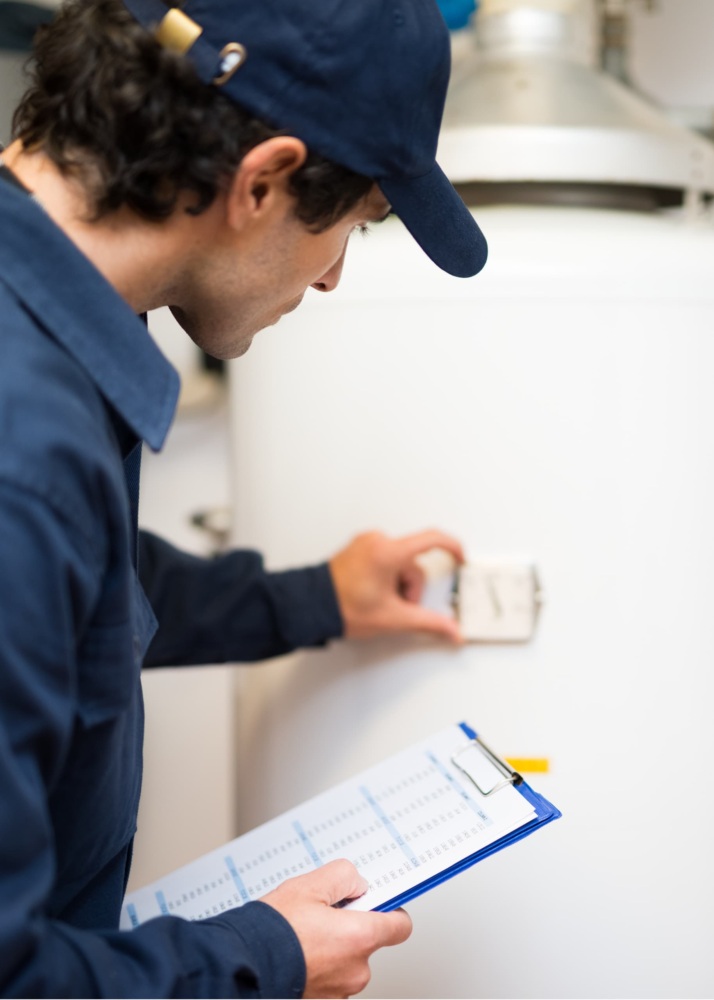
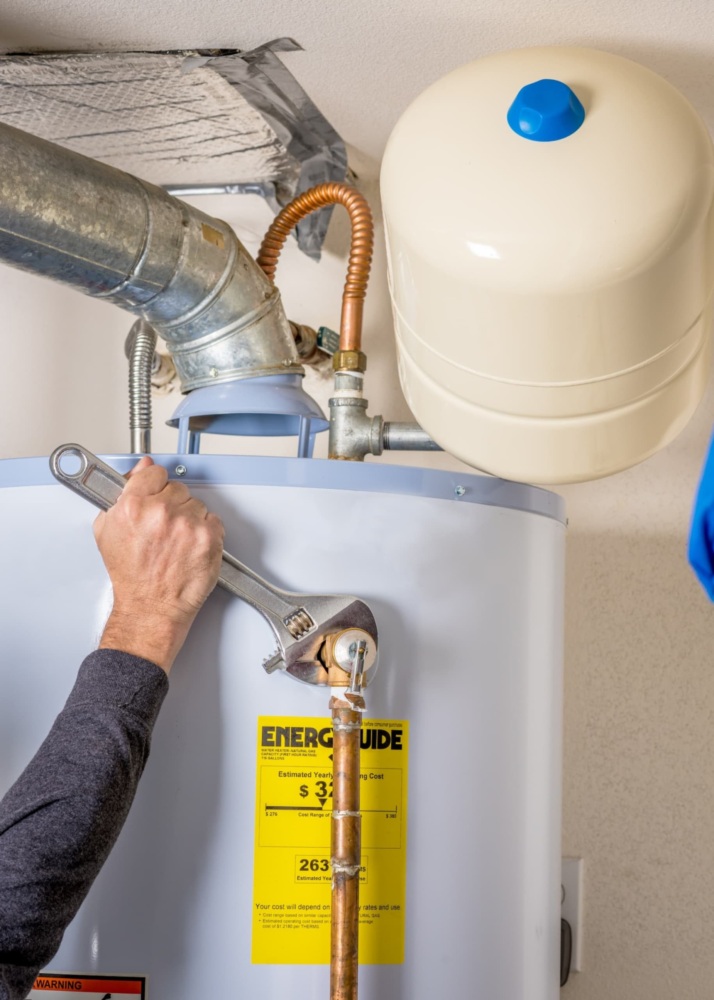
Every time you start the day with a nice, warm shower, you have a water heater to thank.
One of the most common domestic appliances, water heaters provide the essential ingredient for bathing and cleaning.
What kinds of water heaters exist and where are they used?
Water heater technologies vary in different parts of the world. In wealthy countries, most water heaters have historically been powered by gas and electrical resistance technologies, which can consume a great deal of energy.
In the United States, for example, heating water is typically the second-largest energy expense in a home, accounting for approximately 18% of all energy use.1
In low-income countries where gas and electrical grids are often lacking, people have traditionally burned biomass (that is, animal dung or plant matter such as firewood and charcoal) to heat water.
Today, we have alternatives that are better for people and planet: heat pump water heaters and solar-powered water heaters.
How do heat pump water heaters and solar water heaters work?
Heat pump water heaters use electricity and refrigerants to extract heat from the ground, surrounding air, or a water source, then transfer this heat to water.
Different solar water heater models work in slightly different ways, but the core functionality remains same across all systems: They collect sunlight (that is, solar radiation) and turn it to heat that warms water.
Why are heat pump and solar water heaters good for climate and the environment?
To understand the environmental benefits of heat pump and solar water heaters, it’s vital to consider how alternative technologies work.
Gas water heaters burn natural gas to heat water, while electric resistance models use electricity to heat an element to achieve the same goal.
Natural gas is essentially methane, a fossil fuel that is a greenhouse gas over 28 times more powerful than CO22. Using methane to heat water results in significant emissions, many of which come from leaks in the infrastructure that delivers gas to the homes and businesses that use it. Substituting heat pumps for gas-powered water heaters would eliminate those emissions.
Electric resistance water heaters are 70% less efficient3 than heat pump water heaters, meaning they require significantly more energy to run. As a result, in areas where electricity is generated by burning fossil fuels, their indirect emissions are much higher than those of heat pump water heaters. However, in places where electricity is generated by renewable sources, electric resistance technology is much more environmentally friendly.
Biomass combustion also harms the environment. Many people burn wood to heat water, contributing to deforestation. Burning biomass also pollutes the air, including with greenhouse gases. Globally, according to a study from 2009, the incomplete burning of biomass, combined with the unsustainable harvesting of wood for fuel, accounts for roughly 2% of total greenhouse gas emissions4—equivalent to driving approximately 280,000,000 gasoline-powered passenger vehicles for a year.5
Why are solar and heat pump water heaters important for sustainable development and climate adaptation?
Solar water heaters can be used in areas without reliable access to the power grid, making them an important tool for sustainable development. By eliminating the need for users to collect and burn biomass to heat water, they reduce drudgery and free up time for other activities.
These appliances also hold benefits for people in areas with electric and gas grids. For people switching to solar or heat pump water heaters from gas or electric resistance models, the added efficiency means cheaper energy bills, leaving more money for other priorities.
Solar water heaters also serve an important adaptation function, since they can heat water when power goes out because of disruptions to the grid from extreme weather.
CLASP has identified 10 appliances critical to fighting climate change and improving people's lives. Water heaters are one.
[Photo: Shutterstock]
[Photo: Shutterstock]
[Photo: Getty Images]
What is the solution?
Phase out the use of water heaters powered by fossil fuels and biomass and ensure widespread access to high-quality, efficient water heaters.
How can we achieve this?
Governments
- Develop, promote, and incentivize the production and import of energy-efficient heat pump and solar water heaters.
- Set policies to phase out the production, trade, and sale of inefficient water heaters and those that use refrigerants with high global warming potential (GWP).
- Increase national awareness of the net benefits of efficiency.
- Use labels to indicate and promote the most efficient water heaters.
- Ensure building standards and codes include energy-efficient heat pump and solar water heaters as the default option.
- Accelerate the development of renewable energy, since electric water heater use will likely remain significant, due to the technology’s unique advantages.
Water Heater Manufacturers
- Invest in research and development to improve the efficiency, affordability, and climate-friendliness of heat pump and solar water heaters to match global best practice.
- Abandon the production and export of inefficient models and challenge competitors to do the same.
Consumers and consumer groups
- Choose the most energy-efficient water heater you can afford to lower your energy bills and reduce your carbon footprint.
- If you choose a heat pump water heater, ensure it uses a refrigerant with low global warming potential.
- Increase the insulation on your water tank and pipes to reduce the need to reheat water.
- Contact government representatives to request ambitious efficiency policies for all appliances.
Recent News

Are you a policymaker working on water heaters? Explore CLASP's free tools:
Net Zero Appliances NDC Toolkit
- Learn how (and why) to maximize the potential of appliance efficiency in NDCs.
World's Best MEPS: Tracking Leaders in Appliance Energy Efficiency Standards
- Find the world’s most ambitious energy performance standards for six key appliances and equipment.
Mepsy: The Appliance & Equipment Climate Impact Calculator
- Analyze efficiency policy options for key appliances across 162 countries.
CLASP's work on water heaters impacts:



0. ”Water Heating”, U.S. Department of Energy, accessed July 8, 2025. https://www.energy.gov/energysaver/water-heating.
1. ”Importance of Methane,” United States Environmental Protection Agency, March 3, 2025. https://www.epa.gov/gmi/importance-methane.
2. ”Heat Pump Water Heaters Guide,” Energy Star. https://www.energystar.gov/partner-resources/residential_new/educational_resources/sup_program_guidance/heat_pump_water_heater_guide.
3. Robert Bailis et al., “The Carbon Footprint of Traditional Woodfuels,” Nature Climate Change 5, no. 3 (March 2015): 266–72, https://doi.org/10.1038/nclimate2491.
4. ”Greenhouse Gas Equivalencies Calculator,” United States Environmental Protection Agency. https://www.epa.gov/energy/greenhouse-gas-equivalencies-calculator#results.