
Residential Energy Consumption Patterns and Appliance Ownership in India: Insights From a 2024 Household Survey
This report presents findings from a nationwide survey examining residential energy consumption, ownership, and usage patterns for appliances in India.
India’s energy landscape is rapidly evolving, driven by a growing population, an expanding economy, and growing access to modern energy services.
With a population exceeding 1.4 billion, India’s residential sector is a key contributor to the country’s overall electricity consumption. As of 2024–25, it accounts for ~25% of total electricity usage in the country, with an annual growth rate of 6%.
To better understand the factors driving up this energy use, CLASP conducted a study examining appliance ownership, usage patterns, and their impact on residential electricity demand. The study draws on data collected from a sample of 4,321 households across 20 states, covering both urban and rural areas and representing major climatic zones.
Key findings
- Energy consumption in surveyed households is not uniform: Climatic conditions, socioeconomic status, awareness of energy efficiency strongly influence appliance use.
- Among surveyed households, electricity use is primarily driven by thermal comfort, which accounts for 40% of total consumption, reflecting the growing demand for cooling solutions. Kitchen appliances contribute 28% to electricity use, while lighting accounts for 11%, and other miscellaneous uses make up the remaining 21%.
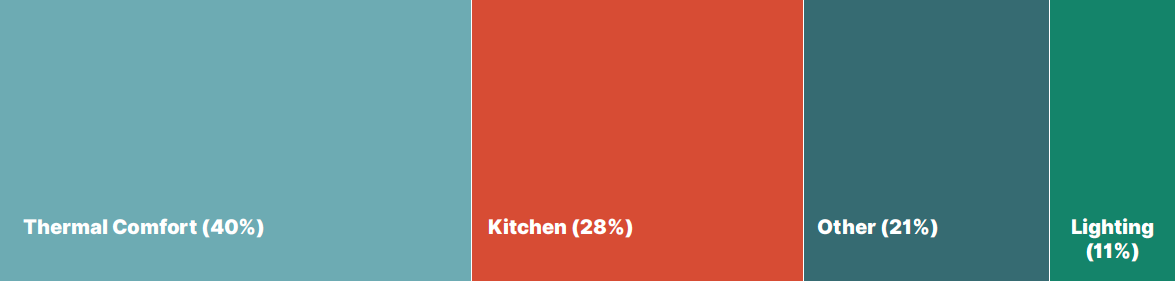
Annual electricity use in surveyed households by end use
- Affordability is a decisive factor in appliance purchases, often outweighing energy efficiency considerations.
- Consumer behavior around energy efficiency is inconsistent. All surveyed households reported using LED lighting, however, only 2% actively considered energy efficiency when purchasing lighting solutions. This contrast highlights the importance of initiatives promoting the adoption of energy-efficient technologies.
By identifying the key factors that influence residential energy use, this study aims to inform the development of effective energy efficiency policies and provide policy recommendations for managing growing demand efficiently. By acting on these insights, India can ensure that its residential sector evolves in a sustainable, energy-efficient, and climate-resilient manner.