
Efficiency Can Propel Brazil’s Appliance Industry
Brazil is one of the only countries in the world that produces the vast majority of the appliances sold on its domestic market. By implementing more ambitious energy efficiency standards that meet, or even exceed, global benchmarks, Brazil could bring its industrial power to the global market.
In addition to growing Brazil’s global appliance market share – thereby increasing local jobs and revenue – a move towards production of more efficient appliances would yield other benefits like reduced energy demand on national power grids and lower electricity bills for consumers.
Efficiency standards are a tool for industrialization
Ambitious efficiency policy spurs an improved manufacturing ecosystem, making the production of outdated products obsolete. Currently, Brazil’s appliance efficiency policies do not match the ambition of minimum energy efficiency standards of many nations, including potential trading partners like Argentina, the European Union, Kenya, Mexico, and the United States. As a result, Brazil’s appliances cannot enter these lucrative markets, while competitors from other countries reap economic and industrial benefits.
Appliance efficiency signals a readiness for investment
At the 2024 Clean Energy Ministerial in Fos do Iguassu, Brazil, CLASP Senior Director of Climate, Ana Maria Carreño explained, “Appliance efficiency policy signals to the private sector that it’s a good time to invest in industry, resulting in increased availability of more efficient appliances and benefits for industry, the country, and consumers.”
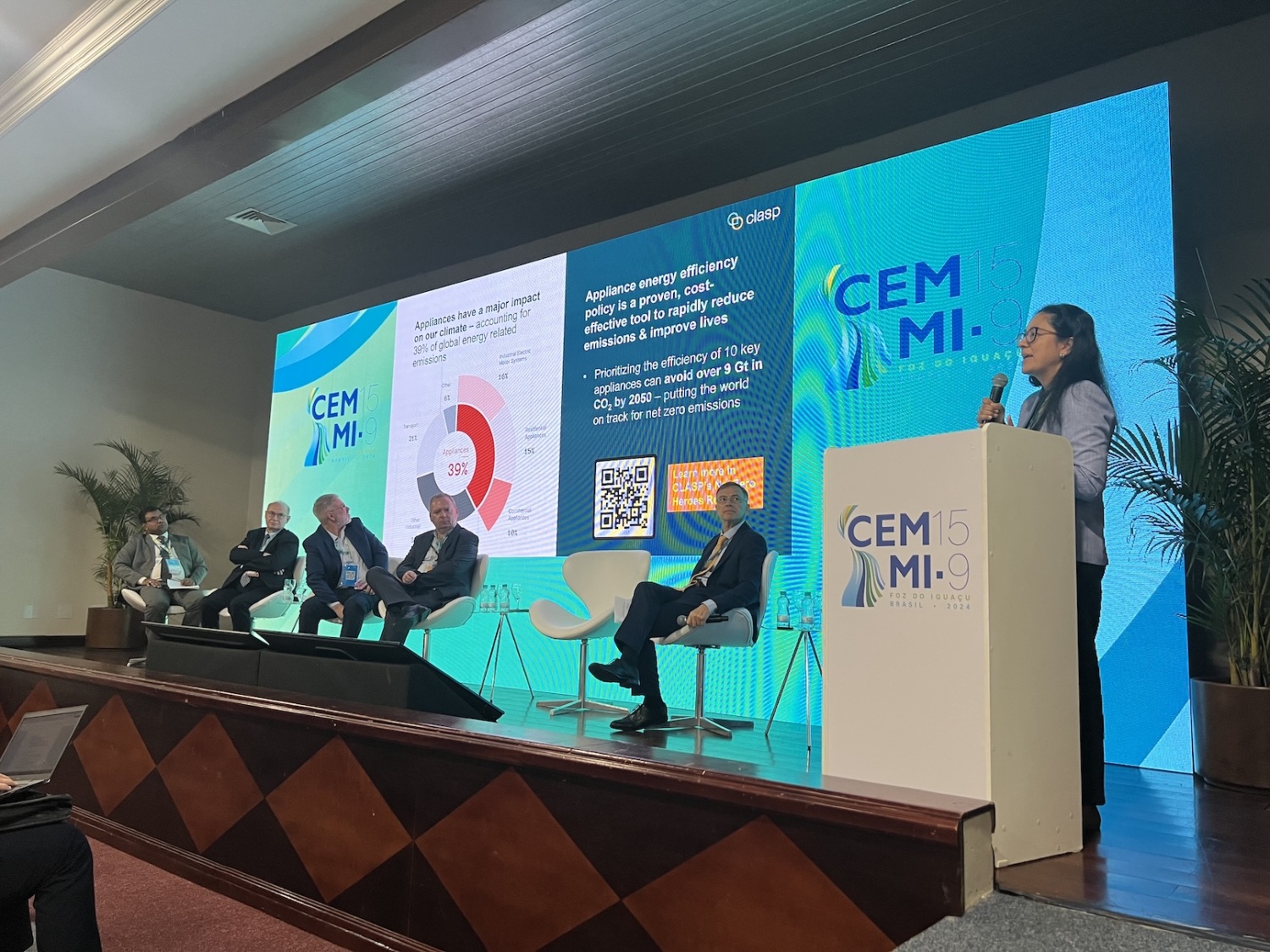
Ana Maria Carreño presenting at the Clean Energy Ministerial meeting in Fos do Iguassu, Brazil
Brazil is already witnessing the impacts of this positive cycle. Following the country’s refrigerator policy revisions in 2021 and 2023, leading manufacturer, Midea, invested $122 million USD in a new factory in Brazil to produce efficient refrigerators. At the same time, companies already operating in Brazil – like Electrolux, Esmaltec, and Whirlpool – injected tens of millions of dollars into their manufacturing operations to upgrade production lines and enable production of more efficient refrigerators.
CLASP collaborating to chart Brazil’s path forward
CLASP is working alongside multi-sectoral partners to outline what a feasible and fruitful national transition to more efficient appliances would entail. Progressive industry and government have revealed a willingness to collaborate in pursuit of a larger market reach and better Brazilian-made products. Some local utilities are also considering incentive-based programs in to back ambitious industrial policies driving the availability of quality, efficient appliances. This will go a long way to reduce climate emissions and improve lives.
Leave No One Behind: Bridging the Energy Access Gap with Innovative Off-Grid Solar Solutions
Millions of people lack access to the power grid, particularly in low-income rural areas of Africa and South Asia. If the current slow pace of electrification continues, 660 million people – most of them in Africa – will remain without electricity in 2030. Due to numerous challenges, people in off-grid settings typically have a lower quality of life, worse health outcomes, higher energy costs, and fewer economic opportunities than their grid-connected peers. High-quality, efficient off-grid solar appliances are a proven solution to these challenges.
This report – the third in the State of the Off-Grid Appliance Market series – finds that while the sector has strong fundamentals, it must rapidly grow in scale and ambition to avoid leaving people behind.
Key Findings:
- Approximately 159 million off-grid solar fans, water pumps, refrigerators, and grain mills are needed to serve people who lack access to the electric grid. Less than 2% of this demand is being met, leaving more than half a billion people without life-changing appliances.
- There is a significant market opportunity of $58 billion USD for off-grid solar appliances like fans, water pumps, refrigerators, and grain mills.
- The off-grid appliance sector is characterized by a multitude of business models, reflecting a diverse range of technologies, end users, and operating environments. There is no one right business model; rather, chosen models need to be managed appropriately.
- Closing the energy service gap in sub-Saharan Africa and South Asia requires exponential growth in the appliance sector. This can be achieved by deploying significantly more capital, strengthening cross-sectoral collaboration, and developing coherent policies and innovative business models.
Recommendations:
- Governments should emphasize quality assurance and consumer protection through rigorous quality standards and tax and duty exemptions to make high-quality solar products more accessible; support an enabling environment by incentivizing local manufacturers and launching consumer awareness campaigns; and develop integrated policies by establishing cross-ministry task forces to integrate and harmonize policies and regulations.
- Investors, development partners, and financiers should encourage market entry by increasing the deployment of capital over the next ten years; create public-private partnerships by developing programs that combine public and private funding; integrate with climate finance by leveraging carbon credits and other climate finance mechanisms; and provide innovation funding to local and foreign technology innovators.
- Technology innovators should design appliances that meet the specific needs of local off-grid consumers; and enhance product durability and reliability that focuses on long-term user satisfaction and low maintenance costs.
- Venture builders and entrepreneurs should work to expand pay-as-you-go (PAYGo) models; leverage catalytic grants to innovate business models and build partnerships; and focus on specific market segments to enhance efficiency and increase market penetration.
- All market actors should prioritize user-centric data that directly benefits appliance users; harmonize methodologies that establish standardized tracking systems for assessing progress and informing policy decisions; and facilitate data sharing to inform decision-making and policy development.
About Efficiency for Access
Efficiency for Access is a global coalition working to promote renewable and energy efficient appliances to deliver clean energy to the world’s poorest people. It is coordinated jointly by CLASP and the UK’s Energy Saving Trust.
Improving Communities and Women’s Lives with Solar Mills in Nigeria
Feeding a community or household can be time-consuming and even back-breaking work, especially for the women in sub-Saharan Africa who spend a collective 40 billion hours each year on milling.1 Although diesel-powered mills have largely replaced time-consuming manual grinding and pounding, diesel mills remain difficult to operate, expensive, unreliable, and polluting. They are also often located far from users’ farms, so incur additional transport costs.
Solar mills save time, money, and the environment
Unlike their diesel counterparts, solar mills are often portable, easy to use, and environmentally friendly. For women and children who often perform most of the milling work in off-grid regions of Africa, these agro-processing machines can help save valuable time that they can then devote to other pursuits.
According to Matt Carr, CEO of Agsol, a solar-powered agro-processing company based in Kenya, “Solar milling has the potential to be one of the greatest liberators of off-grid women’s time”.2
Boosting incomes and productivity
Coupled with their impact on gender equity and empowerment, solar mills can boost the income and quality of life of smallholder farmers by lowering operating costs, increasing farm productivity, and enhancing food security. By completely eliminating the need for pollutive diesel fuels, solar mills are also a boon for environmental and human health.
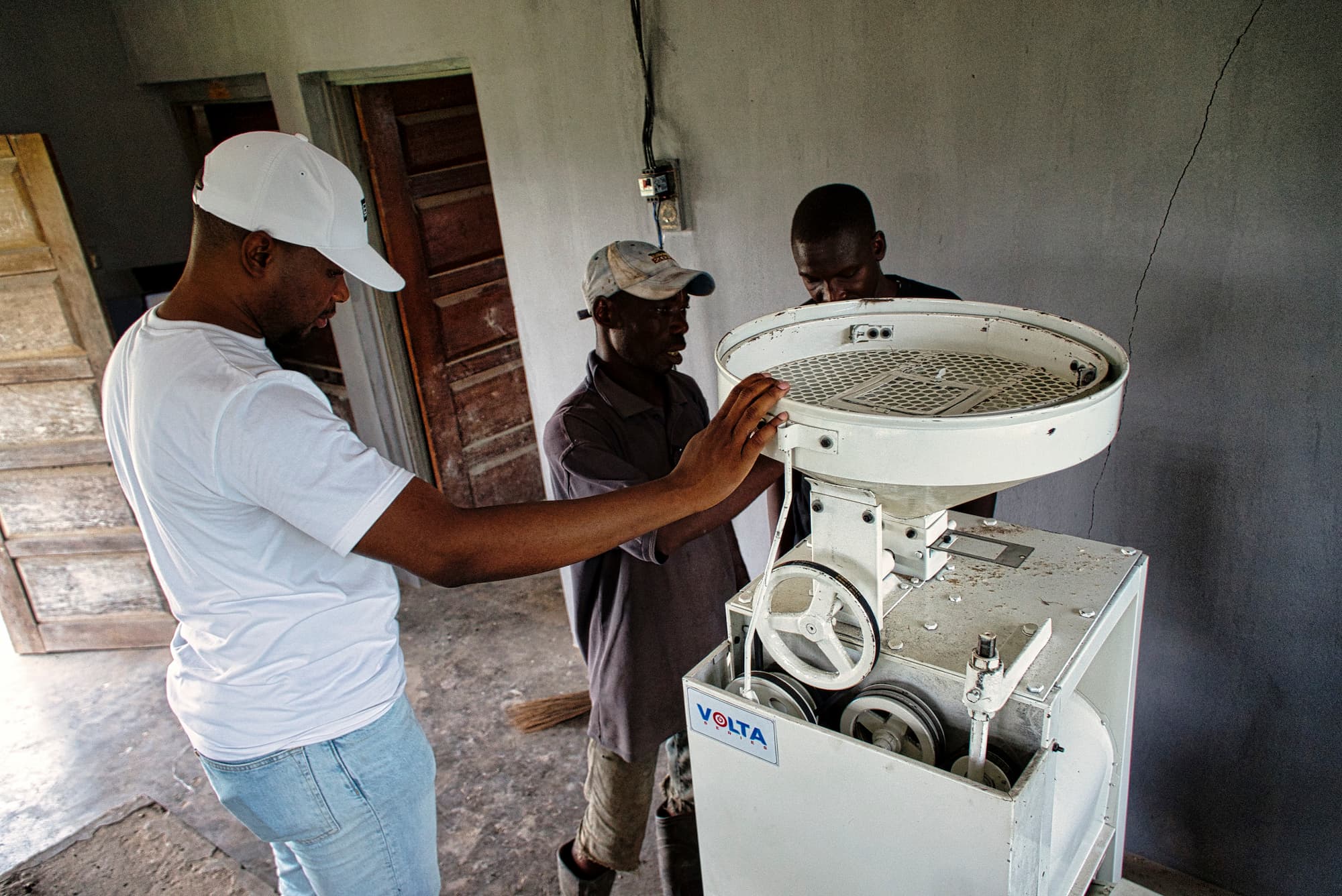
Enhancing food security in Nigeria
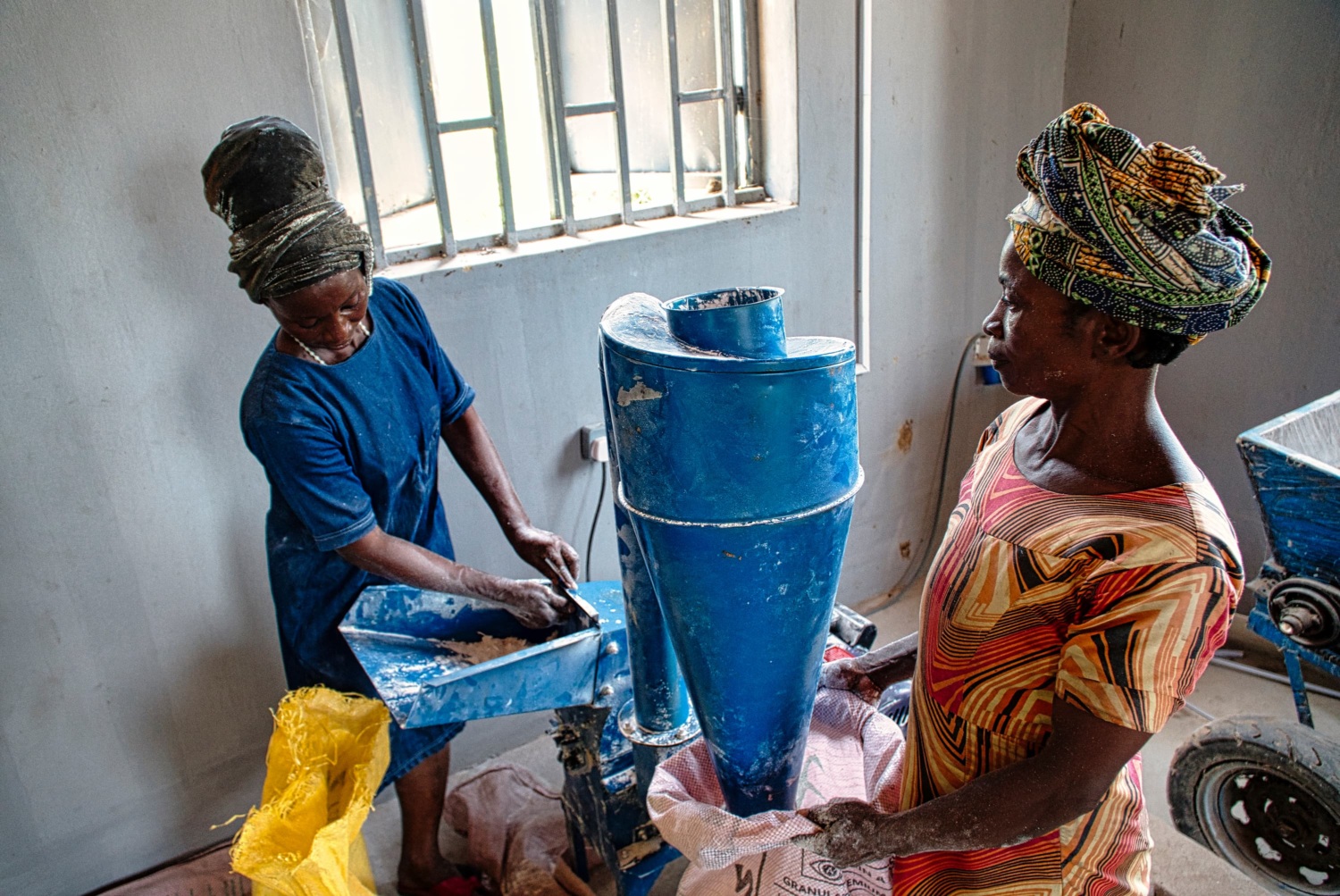
Farm Warehouse is an agricultural technology distributor that offers portable, solar-powered mills to smallholder farmers in Nigeria. Through the support of CLASP’s Productive Use Financing Facility – an innovative financing program that delivers support to companies through capacity-building grants, subsidies, and business support – Farm Warehouse has been able to deliver life-changing technologies into the hands of those who need them.
Farm Warehouse customers affirm the benefits of these grain mills:
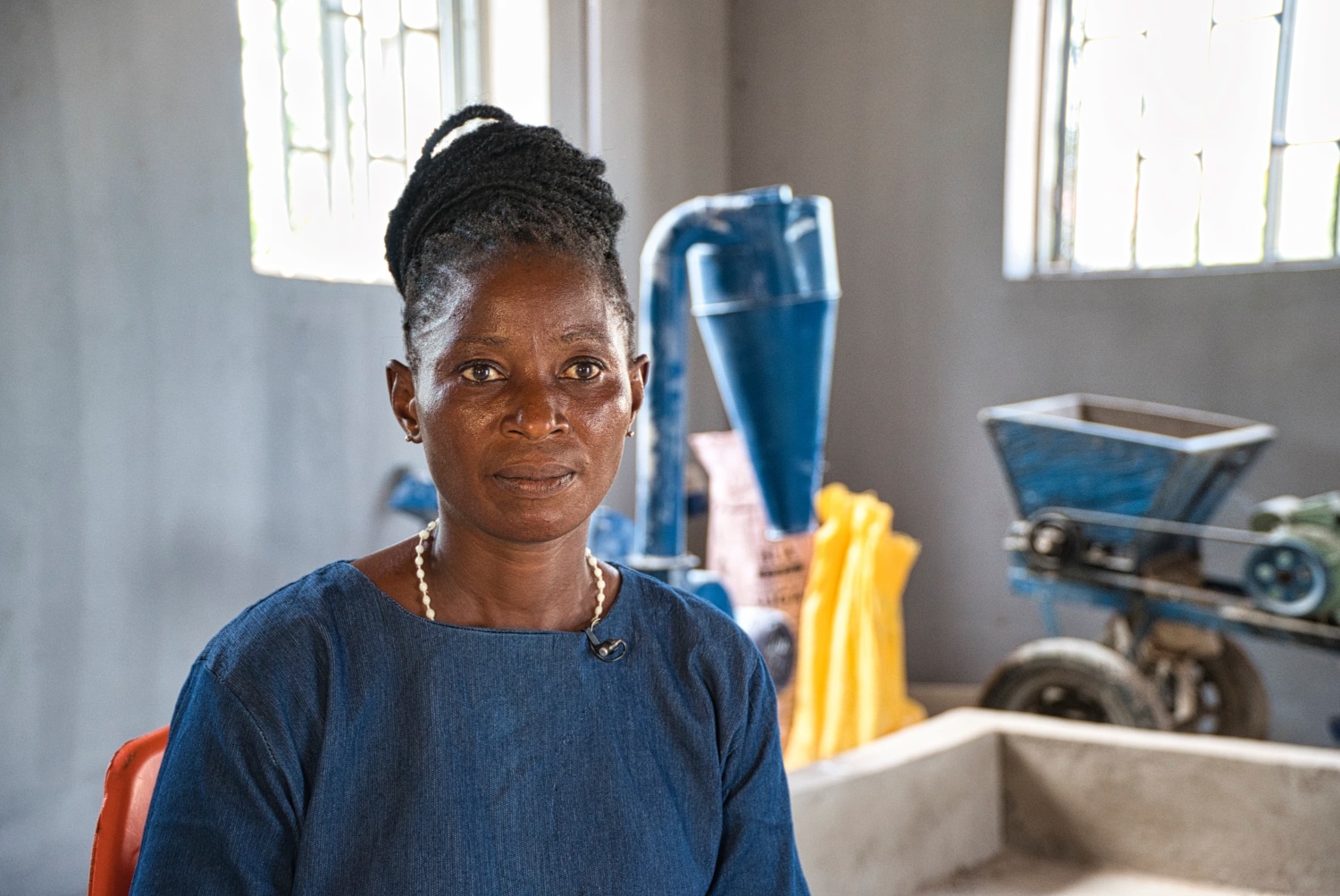
“Any type of flour that you want to produce, this machine can produce it. That is why we need this machine more, so we can have more money to help ourselves and have enough food to give out for people that need it.”
Okwei Sunday Ibor, Farm Warehouse client
Not only do these mills increase food production, they also significantly decrease food wastage. According to Kuma Mede, CEO of Farm Warehouse, before the introduction of these appliances, farmers were losing roughly 30% of their harvest; with Farm Warehouse’s portable, solar mill, farmers are able to significantly reduce wastage and reap more from their harvest.
For close to a decade, CLASP has been working to improve access to efficient appliances that work in off-grid or weak-grid areas. These productive-use appliances (PUAs), such as solar-powered refrigerators, solar water pumps, and solar milling machines are technologies that have a direct, transformative impact on local communities, small businesses, and people’s livelihoods. As these appliances are often powered by renewable energy, they have far lower running costs for consumers, and they reduce harm to the environment and the climate.
The Facility helps strengthen the role of appliance suppliers and distributors by providing capacity-building grants to companies like Farm Warehouse. In addition to business support, CLASP improves appliance performance testing to verify appliance quality, ensuring Farm Warehouse consumers receive reliable information about the efficiency and quality of the products on sale.
About the Productive Use Financing Facility
CLASP’s Productive Use Financing Facility, is supported by The Global Energy Alliance for People and Planet (GEAPP). It has provided financing to 24 companies in six countries, to enable the distribution of over 13,000 productive-use appliances, directly impacting more than 58,000 households.
0. Efficiency for Access: “Solar Milling: Exploring Market Requirements to Close the Commercial Viability Gap” (January 2020) https://efficiencyforaccess.org/wp-content/uploads/SolarMilling_Market-Requirements.pdf.
1. Efficiency for Access Coalition: “Solar Milling: Exploring Market Requirements to Close the Commercial Viability Gap” (January 2020), https://efficiencyforaccess.org/publications/solar-milling-exploring-market-requirements-to-close-the-commercial-viability-gap/?_gl=1*1wc2jau*_gcl_au*NjI0MDk1ODI5LjE3MTYzNzg1NjQ.*_ga*MTk0MDQ1NjQ5LjE3MTYzNzg1NjA.*_ga_RSE4P06FCR*MTcyMDQ0MjU0Mi4xMDIuMS4xNzIwNDQzODk3LjAuMC4w.
Brighter Futures for Rural Youth with Solar
Solar-powered farm equipment could be a crucial tool in overcoming the challenge of unemployment in rural areas across many emerging economies, according to new research by Efficiency for Access and Power for All. The solar irrigation sector in India and Kenya alone has the potential to create over 115,000 jobs by 2030.
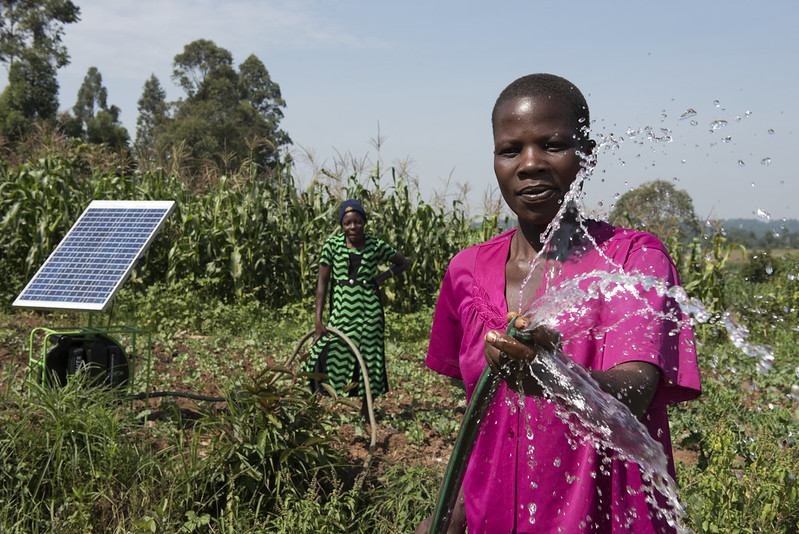
The report Green Jobs for Rural Youth analyzes four countries Kenya, India, Nigeria and Uganda. It finds that there is a significant opportunity to combat youth unemployment through innovative solar technologies.
Promising findings
The findings are promising: solar-powered farm equipment could generate thousands of sustainable jobs, transforming agriculture and improving life quality in rural communities.
Abigail Kuria, the lead researcher from CLASP, who co-authored the report, notes, “These technologies equip rural youth with transferable skills and long-term employment while advancing sustainable development.”
Addressing barriers to adoption
However, affordability and awareness remain significant barriers to wide-spread adoption. Kuria urges, “Investors, financiers, philanthropies, and governments must bolster financial support and market incentives to drive demand for renewable energy in agriculture and tackle affordability issues. This includes funding interventions and rolling out awareness campaigns to boost technology adoption.”
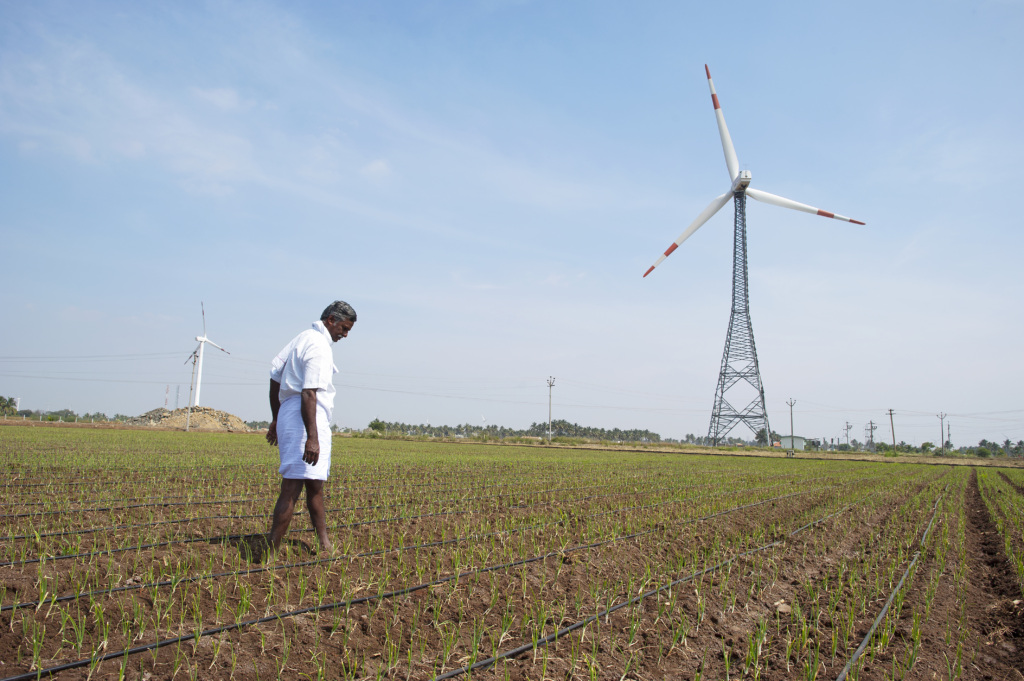
For this report Kuria collaborated with Hannibal Tesfahunegn from Power for All, a nonprofit advocating and scaling solutions in the off-grid sector. The research addresses a critical data gap that has hindered effective policymaking and sector growth, arriving at a pivotal moment for those looking to invest in sustainable development.
Discover how solar innovations can open new job opportunities and benefit rural areas by exploring the full report here.
The Efficiency for Access coalition is co-managed by CLASP and Energy Saving Trust.
0. Efficiency for Access: “Solar Milling: Exploring Market Requirements to Close the Commercial Viability Gap” (January 2020) https://efficiencyforaccess.org/wp-content/uploads/SolarMilling_Market-Requirements.pdf.
1. Efficiency for Access Coalition: “Solar Milling: Exploring Market Requirements to Close the Commercial Viability Gap” (January 2020), https://efficiencyforaccess.org/publications/solar-milling-exploring-market-requirements-to-close-the-commercial-viability-gap/?_gl=1*1wc2jau*_gcl_au*NjI0MDk1ODI5LjE3MTYzNzg1NjQ.*_ga*MTk0MDQ1NjQ5LjE3MTYzNzg1NjA.*_ga_RSE4P06FCR*MTcyMDQ0MjU0Mi4xMDIuMS4xNzIwNDQzODk3LjAuMC4w.
Green Jobs for Rural Youth: Unlocking Renewable Energy’s Potential in Agriculture
Youth unemployment is at an all-time high in sub-Saharan Africa and South Asia. At the same time, populations are growing rapidly in these regions, increasing the need for meaningful employment opportunities. Decentralized renewable energy (DRE) technologies offer a promising solution by creating sustainable growth and green jobs. DRE technologies generate green electricity near the point of use, reducing reliance on centralized power plants, increasing productivity, and improving sustainability. This creates new and enhanced employment opportunities in rural communities, particularly in agriculture, the largest employer in these regions, with 50% to 85% of the labor force working in the sector. However, high upfront costs, limited product availability, lack of awareness of the benefits, and shortage of local talent hinder the widespread adoption of DRE technologies in emerging economies.
Efficiency for Access’ new research fills many of the data gaps in this sector by analyzing four countries, and quantifying the jobs created by DRE technologies in agriculture. It also provides the first comprehensive estimate of employment levels and trends at the country level.
Key Findings
- The solar irrigation sector in India and Kenya alone has the potential to create more than 115,000 jobs by 2030, offering higher incomes for graduates from DRE courses.
- DRE creates opportunities for farm workers to transition into less physically demanding roles, avoiding long-term job displacement and improving life quality.
- DRE innovations significantly reduce labor-intensive tasks for women. In India, mechanized roti-rolling can save women up to 1,800 labor hours per year.
Recommendations
- Investors, financiers, philanthropies, and governments should improve financial support and market incentives to increase the demand for DRE equipment in the agriculture sector to address consumer affordability – the biggest challenge for the growth of DRE markets. This includes creating better financing options to make it easier for farmers to adopt these technologies.
- Governments and stakeholders need to strengthen the manufacturing sector for solar equipment to create thousands of skilled jobs in the DRE industry. For example, India could see up to 5,500 manufacturing jobs created in the solar water pump sector by 2030.
- Educational institutions, government bodies, DRE companies, and development programs need to collaborate to strengthen the DRE workforce. Technical and Vocational Education and Training Institutes (TVETs) can play a key role in rural skill development but face challenges like outdated curricula and high tuition costs. To support labor transitions in the DRE sector, integrating short-term internships, apprenticeships, and job training programs is essential.
- Improving coordination between agricultural and energy stakeholders is critical to improve the adoption of DRE products. Uganda has successfully integrated renewable energy into its agricultural development plans by assigning responsible parties to establish key performance indicators (KPIs) for implementing renewable energy targets. This approach has stimulated growth in the DRE market and attracted business investment in the sector.
Read the Green Jobs for Rural Youth: Unlocking Renewable Energy’s Potential in Agriculture report here.
About Efficiency for Access
Efficiency for Access is a global coalition working to promote renewable and energy efficient appliances to deliver clean energy to the world’s poorest people. It is coordinated jointly by CLASP and the UK’s Energy Saving Trust.
0. Efficiency for Access: “Solar Milling: Exploring Market Requirements to Close the Commercial Viability Gap” (January 2020) https://efficiencyforaccess.org/wp-content/uploads/SolarMilling_Market-Requirements.pdf.
1. Efficiency for Access Coalition: “Solar Milling: Exploring Market Requirements to Close the Commercial Viability Gap” (January 2020), https://efficiencyforaccess.org/publications/solar-milling-exploring-market-requirements-to-close-the-commercial-viability-gap/?_gl=1*1wc2jau*_gcl_au*NjI0MDk1ODI5LjE3MTYzNzg1NjQ.*_ga*MTk0MDQ1NjQ5LjE3MTYzNzg1NjA.*_ga_RSE4P06FCR*MTcyMDQ0MjU0Mi4xMDIuMS4xNzIwNDQzODk3LjAuMC4w.
Strengthening Pakistan’s Electric Motor Industry
As energy prices increase across Pakistan, businesses are realizing the financial savings that can be made by improving the energy efficiency of appliances and motors. To support this, CLASP and SAMA^Verte’s Industry Accelerator Program is transforming Pakistan’s electric motor industry, offering significant economic and environmental benefits.
In 2020, CLASP and SAMA^Verte provided technical support to Pakistan’s National Energy Efficiency & Conservation Authority (NEECA) to develop the country’s first mandatory energy efficiency standards for electric motors. If fully implemented, these standards could save consumers Rs.950 billion PKR ($6.3 billion USD) in electricity costs by 2030 and reduce CO₂ emissions by 23.6 megatons (Mt).
Upskilling Local Manufacturers to Improve Efficiency
Despite the introduction of these improved standards, local manufacturers have struggled to produce motors that meet the new efficiency levels, threatening jobs and increasing the reliance on imported motors. Recognizing these challenges, CLASP and SAMA^Verte launched the multi-year Industry Accelerator Program to support local manufacturers to develop, test, and manufacture motors that comply with the new standards. Improving the efficiency of nationally built motors will not only lower local power bills, it will also strengthen the competition in the domestic supply and create new export opportunities.
Learning from International Best Practices
The program brought experts from the Turkish Manufacturers Association (EMOSAD) to upskill Pakistani manufacturers and improve product designs, raw material selection, and the manufacturing processes.
The collaboration has led to significant improvements in local motor design and quality, paving the way for local production to meet international standards.

Positive Results Indicate a Promising Future
The Industry Accelerator Program has already shown promising results. The first motor, meeting IE1 efficiency class, has now been produced in Pakistan – an important step on the globally recognized scale of motor efficiency standards, and a significant milestone in developing Pakistan’s motor industry. This initiative is expected to increase the capability of these manufacturers to produce IE1 level motors by the end of 2024. The program’s efforts are projected to reduce CO₂ emissions by 12.8 Mt by 2050 and improve efficiency by 10%. Additionally, manufacturers have invested $123,000 USD in new equipment, supporting around 5,000 employees and their families, and making the supply chain more consistent and cost-effective.
As local manufacturers continue to improve, innovate and meet efficiency standards, the country’s production of better motors that require less power, are a crucial step towards self-sufficiency, reducing import dependency, and fostering economic growth while protecting local jobs.

Related articles:
CLASP Supports Pakistan Government’s Efforts with Cooling Needs Assessment
Improving Appliances, Changing Lives: Pakistan’s Industry Accelerator
Paving Pakistan’s Pathway to Efficient Cooling
Boosting Industrial Competitiveness in Pakistan
Bridging the Innovation Gap: Pakistani Manufacturers Tour Chinese Test Facility
0. Efficiency for Access: “Solar Milling: Exploring Market Requirements to Close the Commercial Viability Gap” (January 2020) https://efficiencyforaccess.org/wp-content/uploads/SolarMilling_Market-Requirements.pdf.
1. Efficiency for Access Coalition: “Solar Milling: Exploring Market Requirements to Close the Commercial Viability Gap” (January 2020), https://efficiencyforaccess.org/publications/solar-milling-exploring-market-requirements-to-close-the-commercial-viability-gap/?_gl=1*1wc2jau*_gcl_au*NjI0MDk1ODI5LjE3MTYzNzg1NjQ.*_ga*MTk0MDQ1NjQ5LjE3MTYzNzg1NjA.*_ga_RSE4P06FCR*MTcyMDQ0MjU0Mi4xMDIuMS4xNzIwNDQzODk3LjAuMC4w.
Financing for Impact: Providing Affordable and Sustainable Energy Solutions in Ethiopia
Rain-fed agriculture is a fundamental pillar of the Ethiopian economy. In 2022, agriculture employed about 80% percent of the country’s workforce and contributed nearly 38% to gross domestic product (GDP).3 However, persistent droughts have posed significant challenges to farmers’ livelihoods and reduced food yields.
Off-grid irrigation as a solution
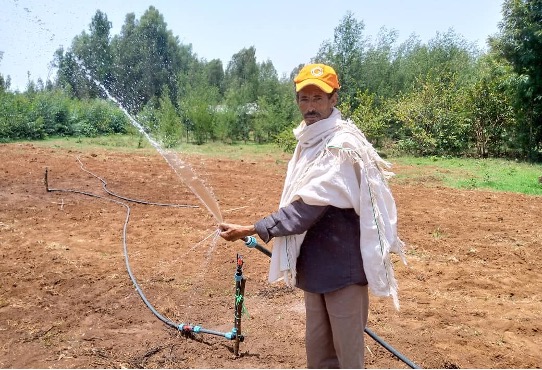
Solar water pumps are a sustainable, off-grid solution to improve small-scale irrigation, strengthen community resilience, and support sustainable economic growth. Powered by the sun, solar water pumps also reduce the use of fossil fuels, so they are less harmful to the climate. Rekik Bekele is the founder and CEO of Green Scene Energy, a thriving solar appliance distributor. Green Scene recently received business support through CLASP’s Productive Use Financing Facility to increase its supply of affordable solar water pumps.
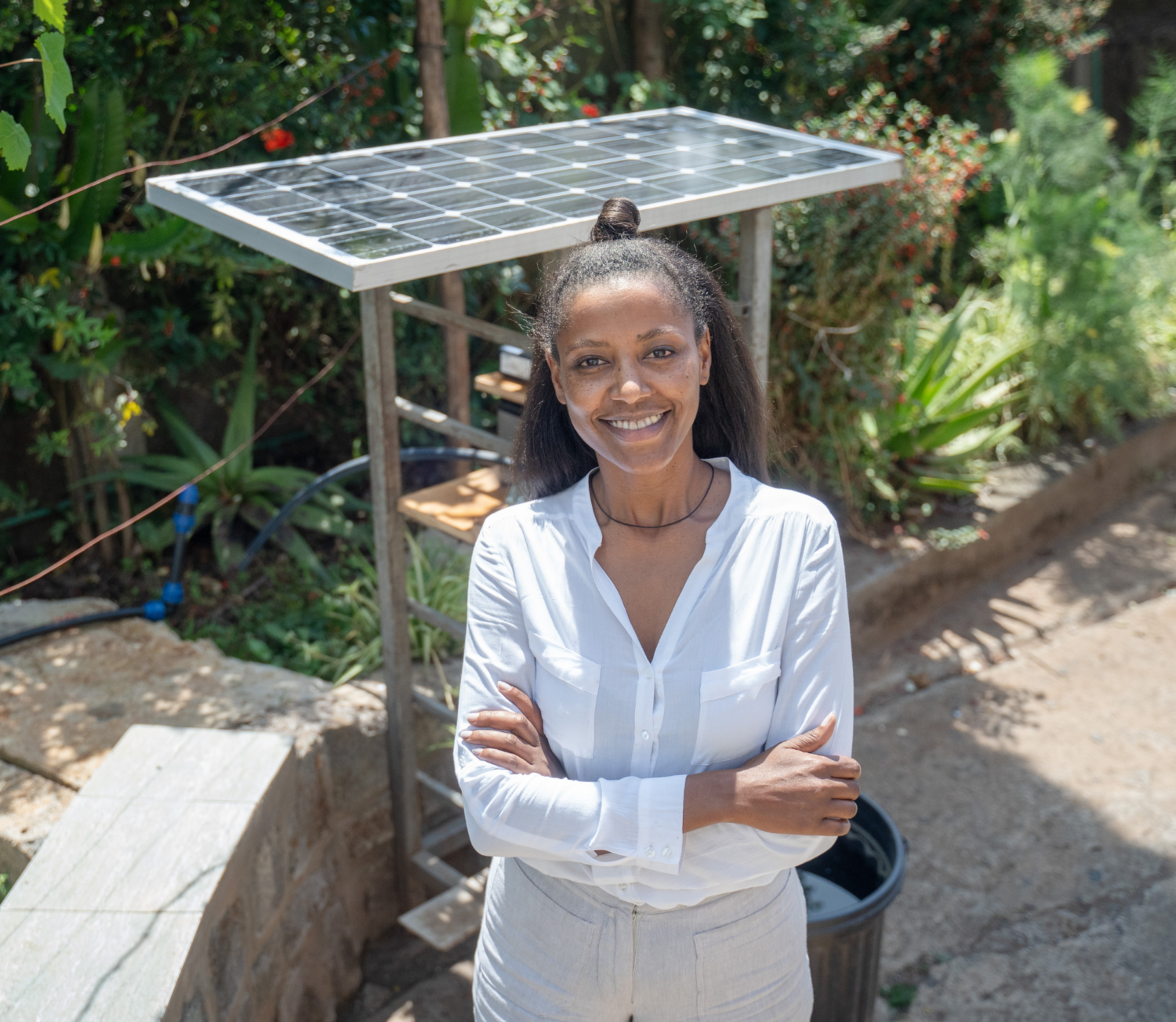
Founded by Rekik Bekele in 2016, Green Scene Energy provides affordable, high-quality solar energy products in off-grid areas of Ethiopia. Green Scene began by specializing in solar home lighting systems, later expanding its portfolio to include solar mini-grid, commercial and industrial solar engineering, procurement and construction (EPC) solutions for off-grid projects.
In 2022, in response to the growing need for irrigation pumping in rural areas across Ethiopia, Green Scene began distributing solar-powered water pumps. To date, the company has successfully positioned itself as a market leader in the provision of affordable solar water pumping systems.
Financial support catalyzing progress
Despite a growing demand for solar water pumps, the substantial upfront capital required exposes significant challenges. According to Rekik, CLASP’s Productive Use Financing Facility has been instrumental in allowing Green Scene to continue selling solar water pumps in 2023. “We had been seeking investment for some time; by the end of 2022, we were only importing small numbers of pumps at a time, using existing sales revenue,” observed Rekik.
“Green Scene’s expanded capacity to make larger, more efficient orders, is allowing us to reach many more end users. Response to the introduction of the pumps is incredibly positive. The farmers are pleased with the improvements.”
Appliances with a transformative potential
Efficient productive use appliances (PUAs), like solar water pumps, refrigerators, and milling machines, have transformative effects on local communities, small businesses, and the environment. However, despite their potential for income generation, PUA sales remain remarkably low in emerging markets due to their relatively high upfront costs and a lack of access to finance. CLASP’s innovative financing facility addresses these challenges by helping distribution companies like Green Scene sell their products at lower prices.
Multifaceted support
The Facility’s support to Green Scene is multifaceted. Subsidies to lower product prices are easing import constraints, while increased performance testing verifies product quality. A capacity-building grant is also helping with a variety of one-off costs and purchases associated with introducing new product lines.
“The funding has assisted Green Scene in selling over 50 solar water pumps,” adds Rekik. “We expect to sell at least another 250 during the upcoming months.”
According to Rekik, demand is leading Green Scene away from the sole retail of solar lighting, toward a greater focus on solar-powered productive-use appliances (PUAs). She attributes this strategic transition to the considerable success achieved with solar water pumps and a recognition of the tremendous potential within the PUA market.

Assisting customers to access finance
In addition to expanding and diversifying its portfolio, Green Scene Energy has also leveraged the Facility’s support to unlock consumer financing for solar water pumps. Rekik and her colleagues have been working closely with an Ethiopian bank to design the bank’s first-ever consumer loan product for solar water pumps.
“Previously, the Bank had provided loans for solar lighting to consumers through Micro-Finance Institutions (MFI),” explains Rekik. “However, solar water pumps have become more expensive and technologically complex. For the first time, the MFIs are now offering collateral-free loans for solar water pumps.”
According to Rekik, CLASP’s financing has been critical for Green Scene because it is in a scale-up stage. They have been able to use the funding to gain confidence and trust in their business, which has in turn facilitated the securing of additional private financing.
***
About The Productive Use Financing Facility
CLASP’s Productive Use Financing Facility, is supported by The Global Energy Alliance for People and Planet (GEAPP). It has provided financing to 24 companies in six countries, to enable the distribution of over 13,000 productive-use appliances, directly impacting more than 58,000 households.
0. Efficiency for Access: “Solar Milling: Exploring Market Requirements to Close the Commercial Viability Gap” (January 2020) https://efficiencyforaccess.org/wp-content/uploads/SolarMilling_Market-Requirements.pdf.
1. Efficiency for Access Coalition: “Solar Milling: Exploring Market Requirements to Close the Commercial Viability Gap” (January 2020), https://efficiencyforaccess.org/publications/solar-milling-exploring-market-requirements-to-close-the-commercial-viability-gap/?_gl=1*1wc2jau*_gcl_au*NjI0MDk1ODI5LjE3MTYzNzg1NjQ.*_ga*MTk0MDQ1NjQ5LjE3MTYzNzg1NjA.*_ga_RSE4P06FCR*MTcyMDQ0MjU0Mi4xMDIuMS4xNzIwNDQzODk3LjAuMC4w.
2. Ethiopia – Country Commercial Guide; https://www.trade.gov/country-commercial-guides/ethiopia-agro-processing
Powering Inclusion in India’s Energy Sector
Around the world, women make up only 32% of the renewable energy workforce, in India this figure is just 11%. To speak to this topic, CLASP hosted an event in New Delhi, to shine a light on the strategic benefit of increasing equity and inclusion in India’s energy sector. The first-of-its-kind event, titled “Equity Surge: Powering Inclusion in India’s Energy Sector”, brought together respected leaders and experts to delve into the various facets of gender inclusion and its impact on India’s energy transition.

The first discussion, moderated by Neha Dhingra, Senior Manager at CLASP, shed light on the evolving landscape of India’s energy sector and the pivotal role women play within it. Speakers, including Ruchika Drall from Ministry of Environment, Forest and Climate Change, Ramila Vyas from People Education & Development Organization, Mandira Kalra Kalaan from Purpose, and Leher Sethi from the Confederation of Women Entrepreneurs, Delhi, provided valuable insights into women’s participation, their role as community leaders and decision-makers, and the need for gender-responsive policies.
The first discussion, moderated by Neha Dhingra, Senior Manager at CLASP, shed light on the evolving landscape of India’s energy sector and the pivotal role women play within it. Speakers, including Ruchika Drall from Ministry of Environment, Forest and Climate Change, Ramila Vyas from People Education & Development Organization, Mandira Kalra Kalaan from Purpose, and Leher Sethi from the Confederation of Women Entrepreneurs, Delhi, provided valuable insights into women’s participation, their role as community leaders and decision-makers, and the need for gender-responsive policies.
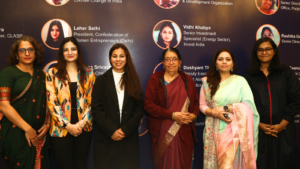
The speakers noted that women are not just underrepresented in the energy sector but also disproportionately affected by the impacts of climate change. The need for mainstreaming gender and fostering a gender-neutral framework was emphasized to break stereotypes and achieve gender balance in the workforce.
The solutions include enabling women’s access to finance and community engagement, as well as fostering leadership among women in the energy sector. The importance of monetizing unpaid household care work by women and communicating gender-responsive policies effectively were also underscored as critical steps toward achieving equity and inclusion.
According to India’s Council on Energy, Environment, and Water, if women’s participation in the energy sector is increased to 30%, it could create up to 3.2 million additional jobs by 2025. This CLASP event served as a crucial platform for fostering dialogue, learning and collaboration to encourage a more inclusive and equitable energy sector in India. CLASP continues to steer efforts and collective action globally with the vision of a just and inclusive energy transition for all.
0. Efficiency for Access: “Solar Milling: Exploring Market Requirements to Close the Commercial Viability Gap” (January 2020) https://efficiencyforaccess.org/wp-content/uploads/SolarMilling_Market-Requirements.pdf.
1. Efficiency for Access Coalition: “Solar Milling: Exploring Market Requirements to Close the Commercial Viability Gap” (January 2020), https://efficiencyforaccess.org/publications/solar-milling-exploring-market-requirements-to-close-the-commercial-viability-gap/?_gl=1*1wc2jau*_gcl_au*NjI0MDk1ODI5LjE3MTYzNzg1NjQ.*_ga*MTk0MDQ1NjQ5LjE3MTYzNzg1NjA.*_ga_RSE4P06FCR*MTcyMDQ0MjU0Mi4xMDIuMS4xNzIwNDQzODk3LjAuMC4w.
2. Ethiopia – Country Commercial Guide; https://www.trade.gov/country-commercial-guides/ethiopia-agro-processing
Financing for Impact: Powering Change in Northern Uganda with Solar
Appliances Supporting Life-Saving Health Facilities
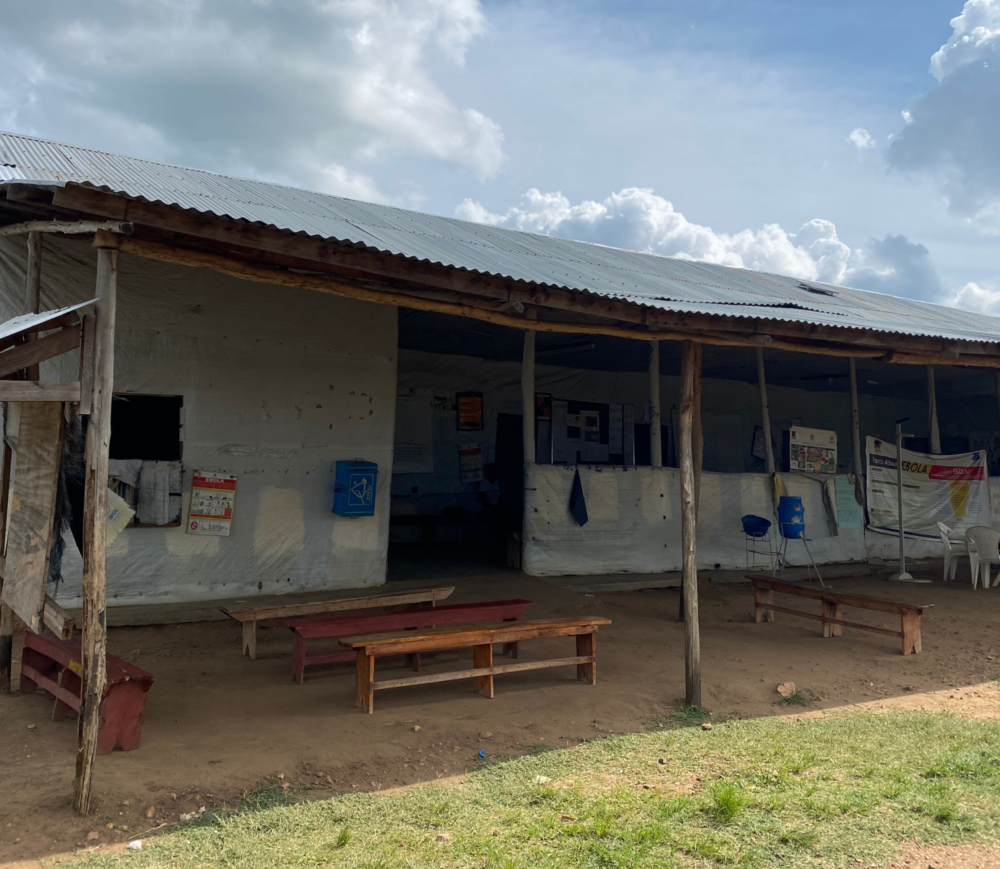
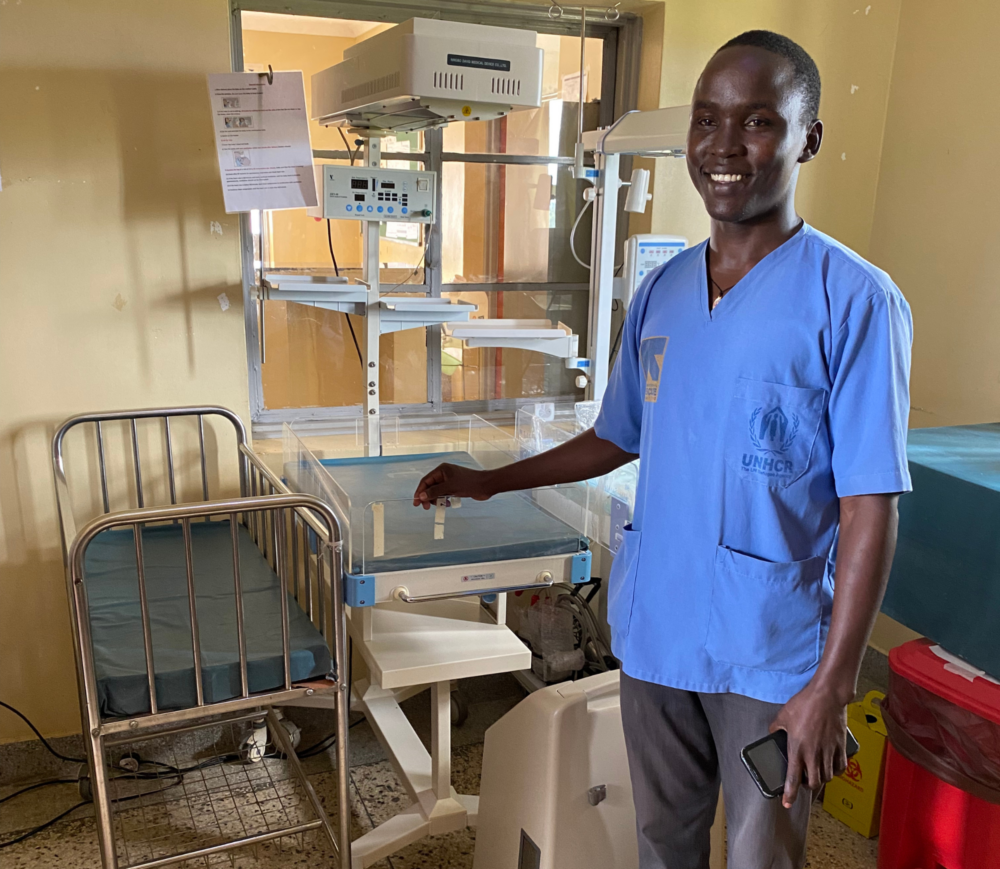
The Rhino Camp is a refugee settlement camp in Northern Uganda. Within the camp is the Ofua Health Center 3, a solar-powered medical facility with just two doctors attending to a population of over 45,000 people. Dr. Gideon Anguerini highlights a pressing challenge: the center’s reliance on a single, energy-inefficient fridge unsuitable for solar power. The health center aims to purchase an efficient solar-powered fridge from POPO Africa, an appliance distributor based in Uganda. With the fridge, the health center’s services will be expanded, its energy costs significantly lowered and it can treat more patients.
Delivering Change through Solar Solutions
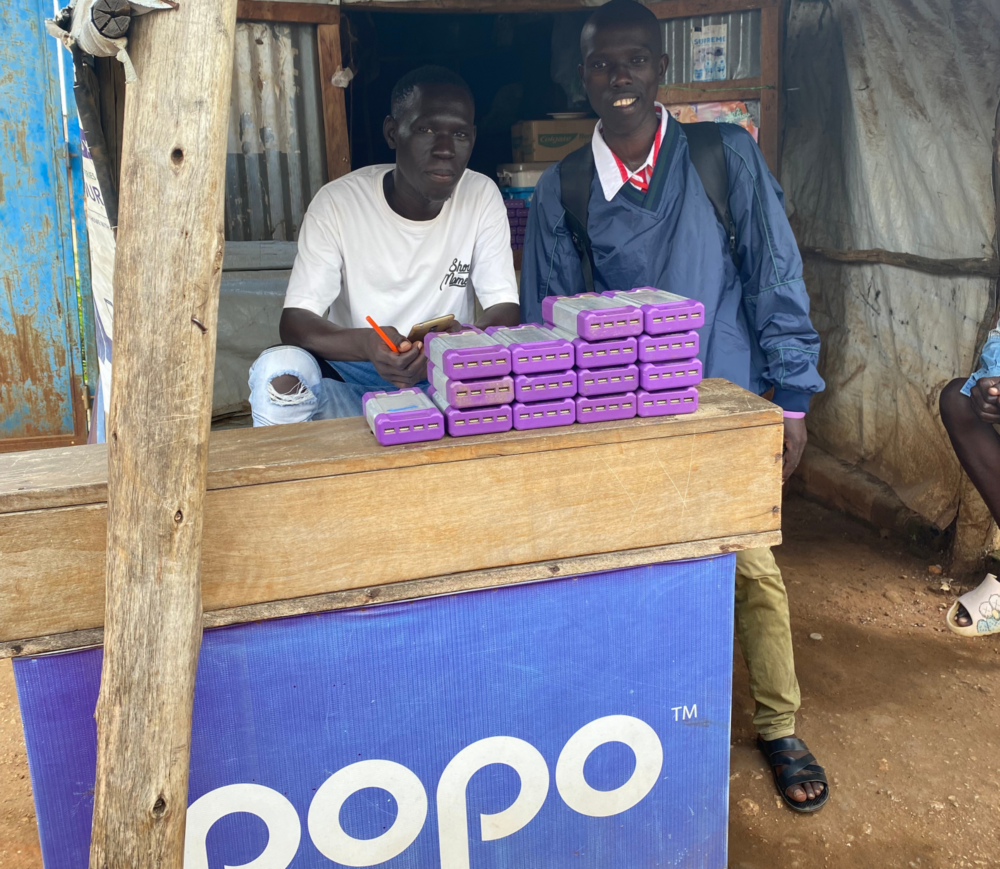
From the outset, POPO Africa’s vision aimed at enhancing maternal health by ensuring that clinics in refugee camps had reliable solar lighting powered by solar battery packs. This expanded, as the company moved into leasing the battery packs to the wider community.
POPO’s solar batteries are a lifeline for community businesses, enabling them to operate after dark, offer phone charging services, and more. With 54 distribution points across five districts, POPO’s impact is widespread, directly employing 75 people and indirectly supporting many more through their distribution network. POPO Africa also places a strong emphasis on women’s economic empowerment, boasting a workforce that is 70% female.
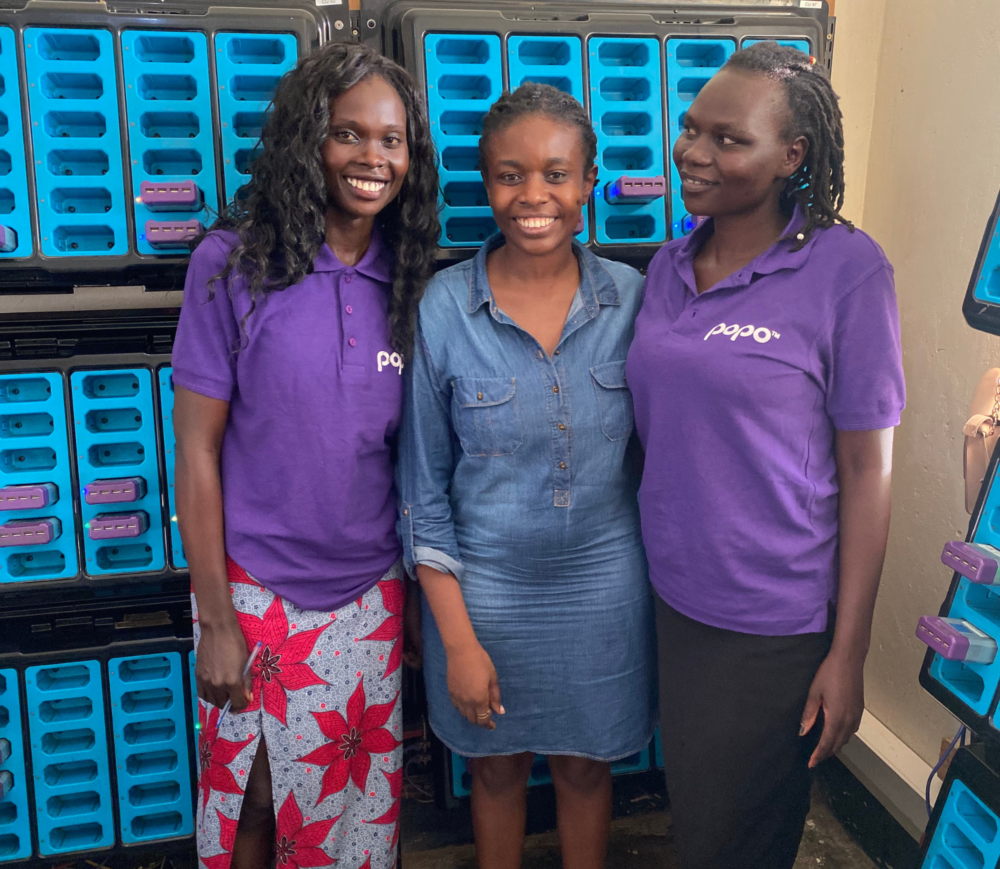
Recognizing the critical need for cooling services POPO aimed to revolutionize the off-grid cold chain service in Northern Uganda. The only barrier to this was capital constraints. POPO could not pursue the cold chain opportunity without external support. With funding from CLASP’s Productive Use Financing Facility, POPO was able to start selling solar-powered refrigerators, that will benefit healthcare facilities and empower local businesses.
Transformative, Impactful Financing
Efficient productive-use appliances (PUAs) like solar-powered refrigerators, pumps, and milling machines can have transformative effects on local communities, small businesses, and the environment. However, despite their potential for income generation, PUA sales remain remarkably low in emerging markets due to their relatively high upfront costs and a lack of access to finance. CLASP set up the Productive Use Financing Facility to address these challenges by helping distribution companies like POPO Africa sell their products at lower prices.
Overcoming Capital Constraints
With CLASP’s Facility’s procurement subsidies and capacity-building grant, POPO is working to sell approximately 140 refrigerators within a year. They have made that transformative step into the cold chain market and are now extending affordable, off-grid cooling to their customers, like the Ofua Health Center.
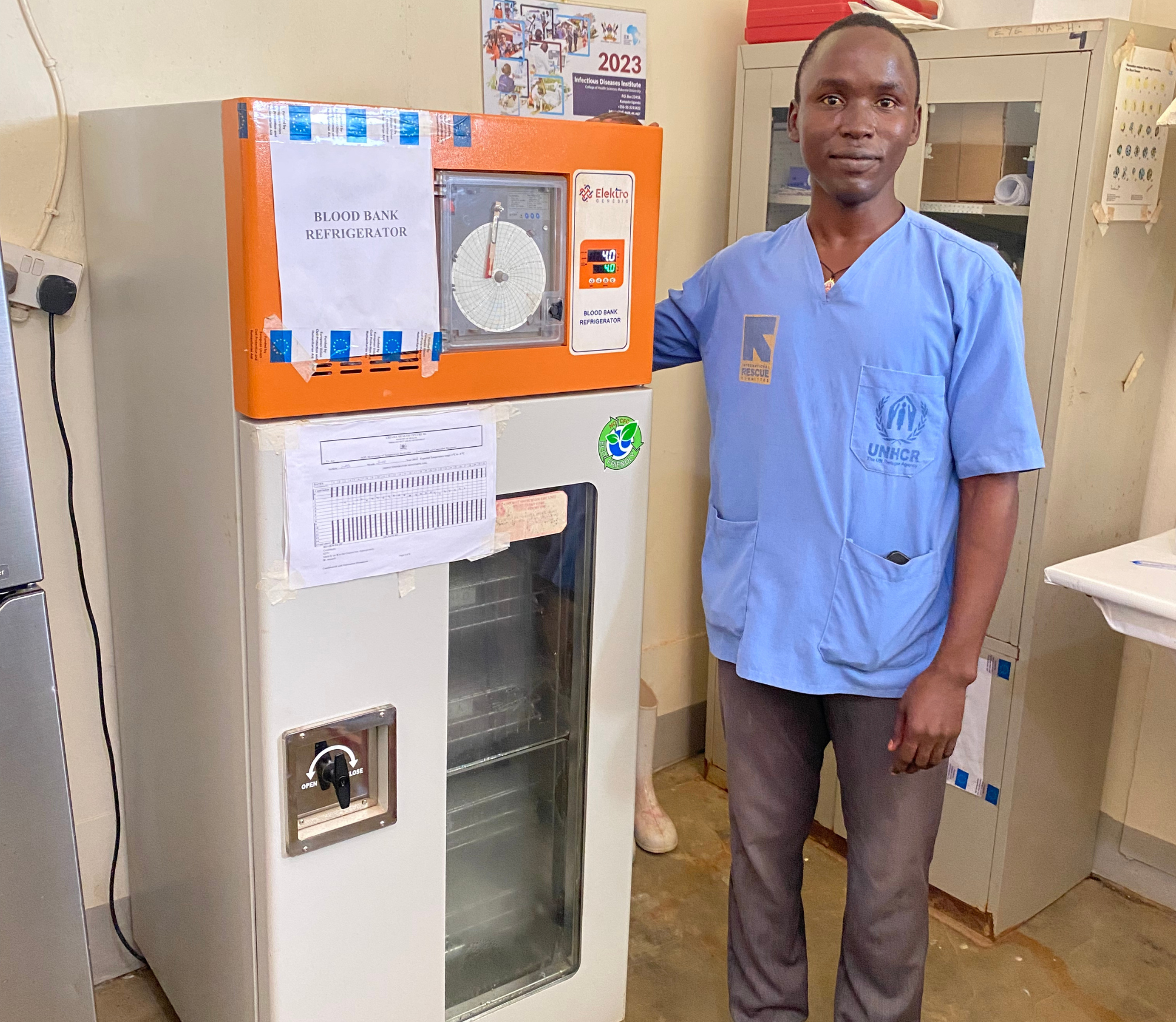
With each solar-powered battery and refrigerator, POPO is helping to build a future where energy is accessible, businesses thrive, and healthcare advances, even in the most remote corners of the world.
***
About The Productive Use Financing Facility
CLASP’s Productive Use Financing Facility, is supported by The Global Energy Alliance for People and Planet (GEAPP). It has provided financing to 24 companies in six countries, to enable the distribution of over 13,000 productive-use appliances, directly impacting more than 58,000 households.
0. Efficiency for Access: “Solar Milling: Exploring Market Requirements to Close the Commercial Viability Gap” (January 2020) https://efficiencyforaccess.org/wp-content/uploads/SolarMilling_Market-Requirements.pdf.
1. Efficiency for Access Coalition: “Solar Milling: Exploring Market Requirements to Close the Commercial Viability Gap” (January 2020), https://efficiencyforaccess.org/publications/solar-milling-exploring-market-requirements-to-close-the-commercial-viability-gap/?_gl=1*1wc2jau*_gcl_au*NjI0MDk1ODI5LjE3MTYzNzg1NjQ.*_ga*MTk0MDQ1NjQ5LjE3MTYzNzg1NjA.*_ga_RSE4P06FCR*MTcyMDQ0MjU0Mi4xMDIuMS4xNzIwNDQzODk3LjAuMC4w.
2. Ethiopia – Country Commercial Guide; https://www.trade.gov/country-commercial-guides/ethiopia-agro-processing
Improving Appliances, Changing Lives: Pakistan’s Industry Accelerator
CLASP is running an industrial accelerator program in Pakistan to spur innovation and improve appliance efficiency. The program leverages international production and design experts to collaborate with local industry manufacturers to enhance the energy efficiency of water heaters and motors. Improved energy efficiency will reduce demand on the national power grid, reduce energy costs for consumers, and produce less climate emissions.

This Industry Accelerator has two main components: strengthen capacity for testing labs and provide technical support for manufacturers to improve their products to prepare for the upcoming regulations.
The Need for Reliable Testing Laboratories
In Pakistan’s appliance and equipment manufacturing sector, reliable, independent appliance test laboratories are starting to emerge. Test labs support manufacturers in assessing efficiency levels of their appliances, and their presence is crucial to accelerating efficiency, innovation and quality. They will also be essential in measuring the performance of regulated products for compliance once Minimum Energy Performance Standards (MEPS) and labeling regulations are rolled out.
Strengthening Lab Capacity Through Partnerships with Private Sector
Recognizing the need for both industry-based and independent test laboratories that are able to provide reliable and accurate test results, CLASP facilitated public-private partnerships with major air conditioner and motor manufacturers in Pakistan. CLASP also collaborated major manufacturers to support the capacity building of existing labs such as Centre for Energy Research & Development, Pakistan (CERAD). The training included upskilling the lab technicians’ proficiency in protocols, test methodologies, and enhancing verification process to prove that testing is reliable.
Learning from International Best Practice
CLASP partnered with motor testing expert from Turkish National Standards Institute (TSE) who are working in Pakistan and remotely to help strengthen the capacity of three motors labs at the Information Technology University (ITU), the Gujranwala Institute of Future Technology (GIFT) and CERAD. TSE have provided advice not only on lab equipment set up, but have undertaken extensive testing alongside the Pakistani technical staff to ensure their ability to test products and analyze results according to the IEC testing standards.
To gain insights on producing more efficient water heaters, a delegation of Pakistani manufacturers visited China’s renowned testing lab, the China Household Electric Appliance Research Institute (CHEARI) in Beijing. The manufacturers had an opportunity to enhance their knowledge of test lab equipment, methodologies and processes and learn insights in designing more efficient water heaters. When efficient water heaters are produced in Pakistan they will reduce the fossil fuel demand, strain on national grid, lower emissions and lessen monthly power bills for consumers.
Strengthening the Motor Industry
CLASP also invited motor experts from EMOSAD in Türkiye to visit local counterparts in Pakistan to share insights on how the country transformed from producing low-efficiency motors to building globally competitive, energy-efficient models. Following initial assessment of manufacturer production facilities, the experts have been preparing tailored design and production improvement recommendations for each participant considering their existing capabilities and objectives. The overall goal is to enable all participating manufacturers to have the capacity to produce motors of at least IE1 efficiency levels.
Industry Support Yield Benefits for Manufacturers, Consumers and the Climate
Around the world, manufacturers are recognizing the benefits of producing appliances and equipment that adhere to global standards in energy-efficiency that are also crucial to climate action and sustainable development. The presence of reliable, independent appliance test laboratories and technical assistance to participating manufacturers are the first steps towards building thriving motor and water heater industries in Pakistan. This will benefit the climate, the economy and consumers.
CLASP would like to thank the following companies who are a key part of the Pakistan Industry Accelerator program: AC and Motor Test Laboratories at CERAD, ITU and GIFT; the Punjab Energy Department (PEECA); Haier, ABB, Dawlence; the Pakistan Council of Scientific and Industrial Research (PCSIR); the Turkish National Standards Institute (TSE); the Turkish Motor Manufacturer’s Association (EMOSAD); the Pakistan Pumps and Motor Manufacturers Association (PPEMMA); the China Household Electric Appliance Research Institute (CHEARI); and the participating manufacturers Canon, Super Asia, Waves, Golden Fuji, Fisher, Golden Dynamics, El-Khas, Sunrise and Shahzad Pump.
0. Efficiency for Access: “Solar Milling: Exploring Market Requirements to Close the Commercial Viability Gap” (January 2020) https://efficiencyforaccess.org/wp-content/uploads/SolarMilling_Market-Requirements.pdf.
1. Efficiency for Access Coalition: “Solar Milling: Exploring Market Requirements to Close the Commercial Viability Gap” (January 2020), https://efficiencyforaccess.org/publications/solar-milling-exploring-market-requirements-to-close-the-commercial-viability-gap/?_gl=1*1wc2jau*_gcl_au*NjI0MDk1ODI5LjE3MTYzNzg1NjQ.*_ga*MTk0MDQ1NjQ5LjE3MTYzNzg1NjA.*_ga_RSE4P06FCR*MTcyMDQ0MjU0Mi4xMDIuMS4xNzIwNDQzODk3LjAuMC4w.
2. Ethiopia – Country Commercial Guide; https://www.trade.gov/country-commercial-guides/ethiopia-agro-processing