To Combat Extreme Heat, India Is Becoming a Global Leader in AC Efficiency
Getting efficient cooling appliances to more people is key for public health, the economy, and development.
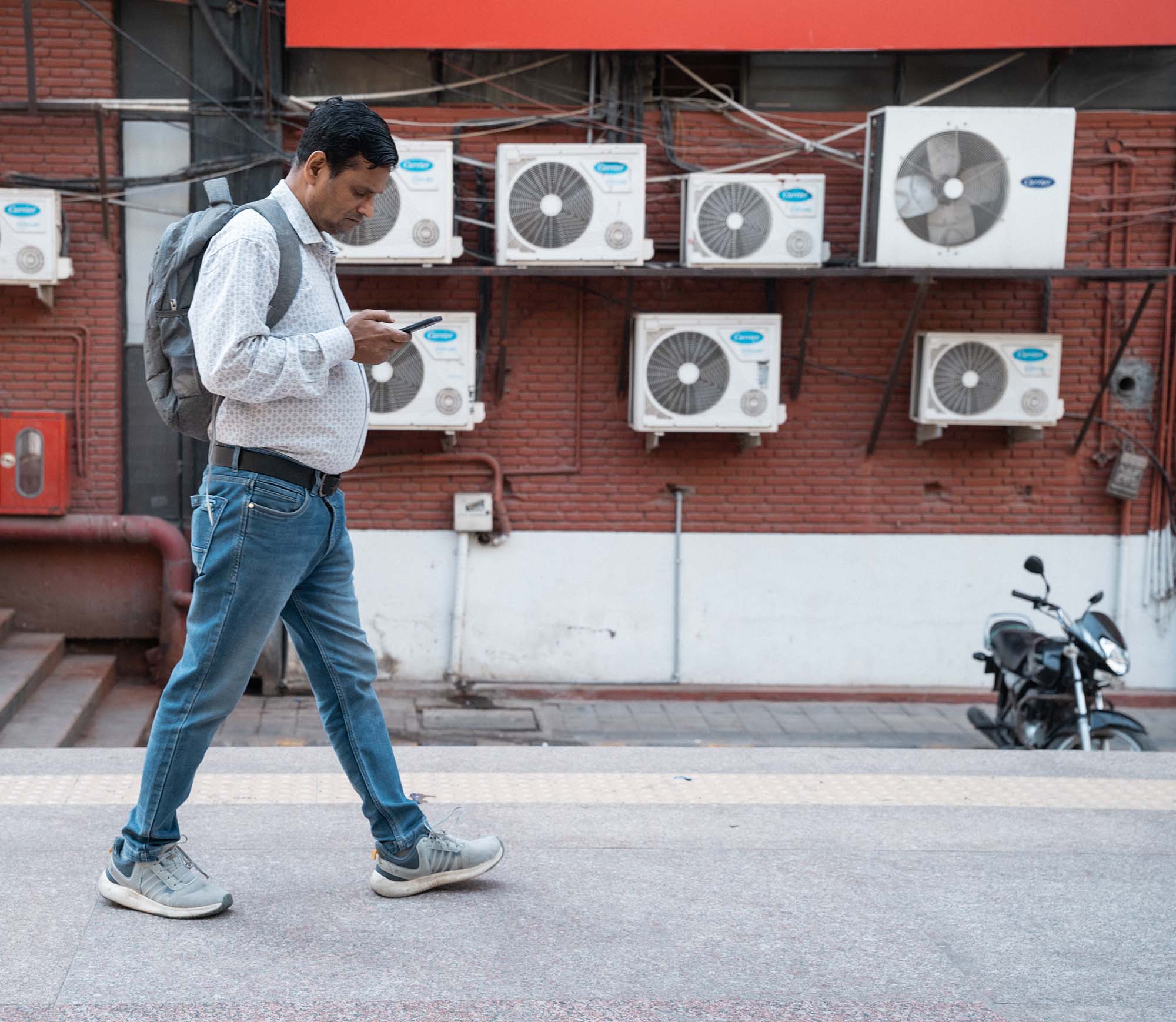
India is facing increasingly dangerous heat, with temperatures regularly breaching levels that threaten human life. Even beyond the worst heat waves, summer temperatures now often jeopardize people’s health, livelihoods, productivity, and quality of life.
Helping the country’s 1.4 billion residents stay cool is not simply a matter of comfort; it’s an urgent priority for resilience. But since the vast majority of Indian households lack air conditioning, achieving this will require a massive undertaking.
Moreover, there are serious risks associated with widespread AC use in India, including rising energy bills, increased strain on the power grid, and skyrocketing greenhouse gas emissions that drive temperatures even higher.
Fortunately, there’s a clear pathway to helping more people get AC while preventing unwanted outcomes. Making air conditioners more energy-efficient is a cross-cutting solution that reduces consumer costs, protects the grid, and lowers emissions.
India has a unique opportunity to realize these benefits at a national scale. In many countries, air conditioners were already widespread when ambitious efficiency standards were put in place. But in India, current decisions about AC efficiency will shape hundreds of millions of future purchases.
CLASP’s Marina Baur spoke with Neha Dhingra, the director of our India program, about why efficient cooling has become one of the country’s most important energy and development priorities—and what others can learn from India’s approach.
Marina Baur: Tell me about the role air conditioning currently plays in India and how this is changing as temperatures rise.
Neha Dhingra: I’ll start by saying that cooling—not just air conditioning, but mechanical cooling more broadly, including electric fans and evaporative coolers—is increasingly becoming a public health, economic, and development issue. The Indian government has actually added heat waves to its list of recognized natural disasters, which tells you how far-reaching their impacts are.
Over time, people have found many ways to stay comfortable on hot days, of course. India’s traditional architecture was designed to provide shade, breezes, and materials that absorb heat. And in the last few decades, electric fans have become very important in India; they’re now the primary cooling solution for most homes, schools, and workplaces.
But these measures aren’t enough for the heat we’re experiencing now. In June, temperatures in one city in Uttar Pradesh stayed around 48°C (118°F) for more than a week. I read recently that almost 5,000 cases of heat stroke have been reported in India this year, and that 20 people have died. Unfortunately, these numbers are almost certainly an undercount.
So keeping people protected in this kind of heat requires air conditioning. Past a certain temperature, fans just end up circulating hot air.
But most people in India don’t have access to AC. CLASP recently conducted research that showed that AC penetration in Indian homes is only about 13%.
This poses major challenges from an equity perspective. Many vulnerable communities lack even the most basic mechanical cooling appliances. Especially vulnerable are daily wage earners like construction workers, street food vendors, or vegetable sellers who spend their days working outside in the hot sun and have no air conditioning at home either. They’re at huge risk for heat strokes and other heat-related illnesses. And for them, being sick means they don’t earn any money. So there’s not just a health impact, there’s also an economic and productivity impact.

Street vendor at a market in West Bengal, India.
Credit: Tojo Basu / Ratul Pal
I’m optimistic that the new designation of heatwaves as natural disaster can unlock greater public investment in heat resilience and adaptation. This could help expand access to affordable, energy-efficient cooling for vulnerable households, as well as public spaces like schools and healthcare facilities.
But regardless of where this investment comes from, a technological shift is required. Clearly, the question is no longer whether India needs more air conditioning. The question is how we expand access to these appliances responsibly.
It’s not enough to just install more ACs in India, though—we also need to think very carefully about what kind of ACs people will buy. Will they be inefficient models that strain the grid and increase people’s energy bills? Or will they be efficient models that increase thermal comfort, reduce energy bills, reduce pressure on the electricity system, and avoid expensive investments in energy infrastructure that may only be required for a few hours each year?
Experts increasingly understand that efficiency is key, and that efficiency and access reinforce each other. The World Bank recently put out a report that listed AC efficiency as one of its top solutions for helping South Asian cities cope with extreme heat. It also cited India’s efficiency policies as a regional model.
This is the right time to be thinking about AC efficiency in India, since the demand for ACs is predicted to increase ninefold by 2050. Many advanced countries improved their AC standards only after these appliances were widely adopted, but here, a large share of air conditioners that are going to be operated are yet to be purchased. So there is an opportunity to influence the market before it’s fully mature.
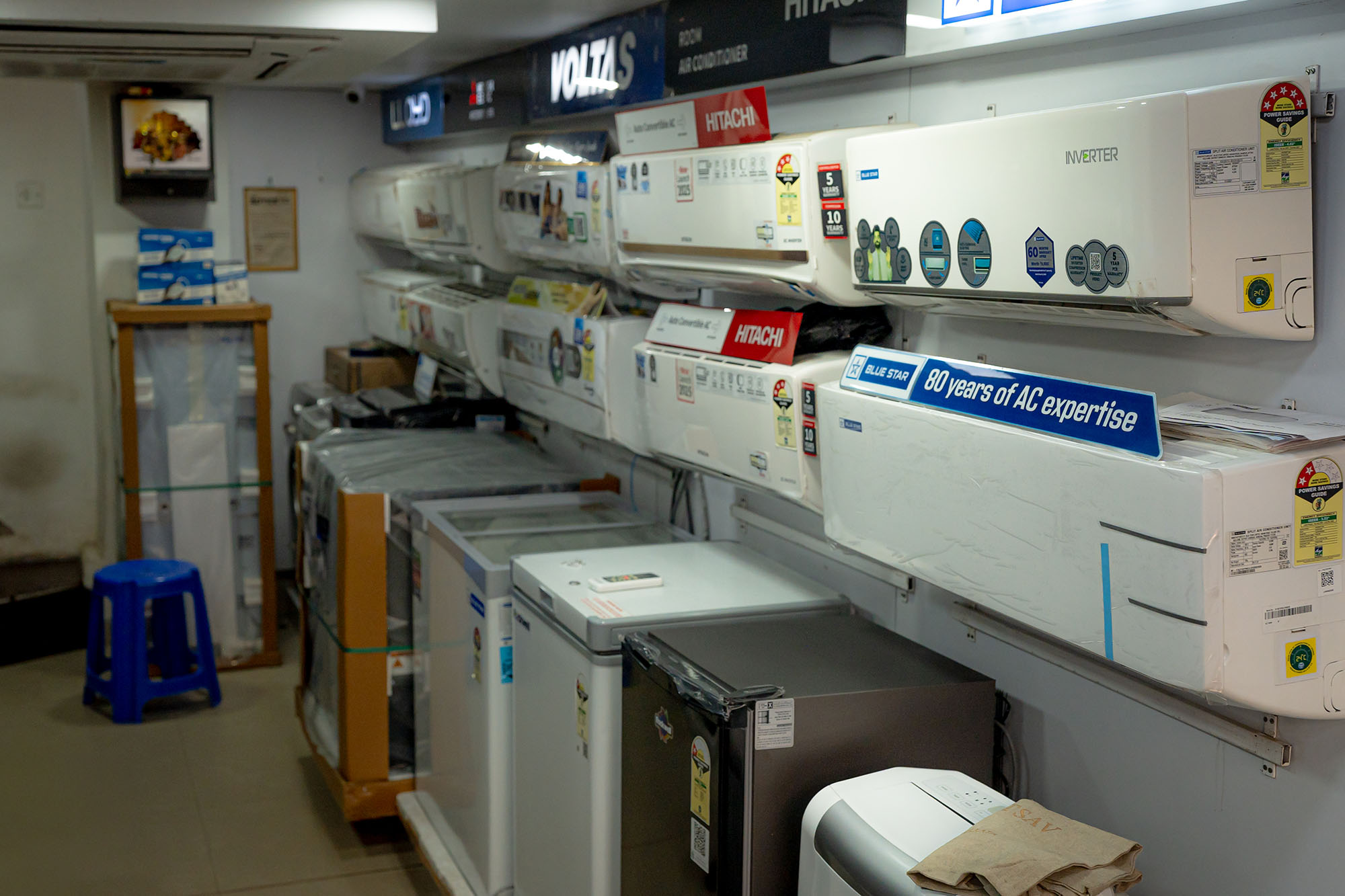
Appliance store in Kolkata, India.
Credit: CLASP
Baur: You mentioned straining the power grid. Can you say more about how this plays out and how efficiency can prevent it?
Dhingra: The most important thing to understand is that efficiency allows India to expand access to cooling appliances without proportionally increasing electricity demand. This is key to grid stability.
There are two main challenges when it comes to the grid: the rise in total electricity consumed and the growing peak demand during certain times of day, when many people use their appliances at the same time.
Cooling appliances are one of the largest contributors to India’s peak demand. Every summer, as more people buy ACs, we see peak demand go higher and higher.
During extreme heat waves, when millions of people turn on their ACs at the same time, we see a particularly sharp increase in demand. But if you think about it, this only occurs for a few hours in a year. So it doesn’t make sense for the utilities to add power generation, transmission, and distribution capacity that remains underutilized for the rest of the year.
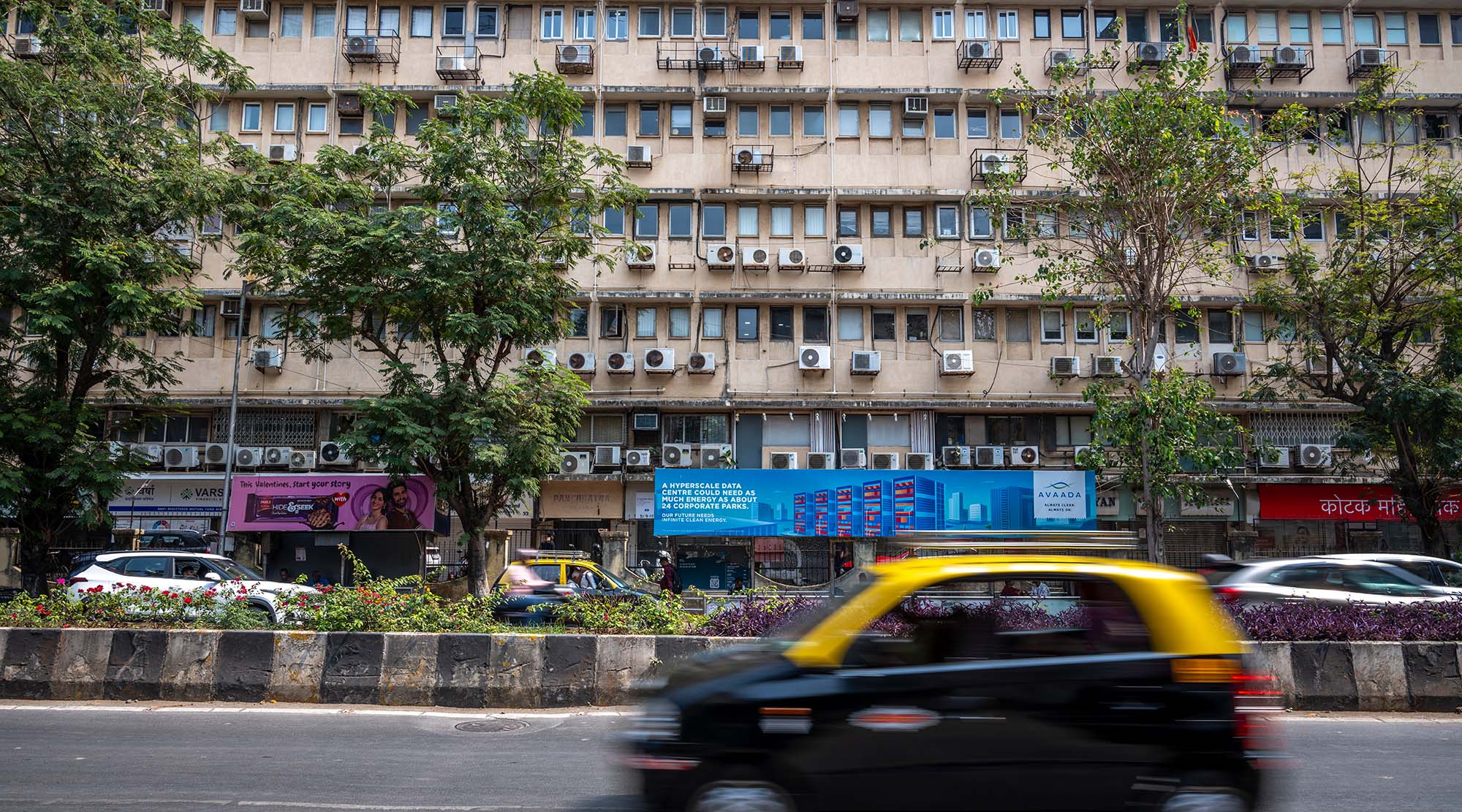
Air conditioners in Mumbai, India where temperatures reached 40° Celsius (104° Fahrenheit) during a heat wave this year.
Credit: CLASP
And it really doesn’t make sense when you think about the cost to consumers. Building this capacity across the country would be extremely expensive, and that cost would ultimately be paid as part of people’s electricity tariffs. So this is a kind of hidden way that inefficient ACs impact affordability, in addition to just raising electricity bills due to increased energy consumption.
Baur: So what are the solutions? How does India approach AC efficiency?
Dhingra: I’ll zoom out a bit and discuss the broader question of appliance efficiency, not just AC efficiency. One of India’s strengths has been recognizing that appliance efficiency is much bigger than regulation alone.
Efficiency standards provide an important market signal, but successful market transformation—in other words, making sure that the appliances people purchase and use are efficient—also requires appliance testing infrastructure, manufacturers, state governments, technical institutions, financing, consumer awareness, and continuous engagement across the entire value chain.
Policymakers in India have consistently worked at building an ecosystem for appliance efficiency in general, and AC efficiency specifically. They’re taking all these issues into account.
So policymaking is occurring as part of this larger process, within this larger ecosystem. And the policies that are being developed show this level of consideration. Starting in 2028, the minimum efficiency requirement for ACs will rise to a level that will dramatically raise the efficiency of products available in Indian stores. This will bring our efficiency standards up to the highest levels found anywhere in the world, comparable to China and Europe’s.
We’ve been talking about the importance of AC efficiency within India, but it’s also critical to understand how important this is from a global climate perspective. This policy will prevent a gigaton of emissions by 2050. It’s hard to overstate how important that is for broader mitigation efforts.
Baur: What are the main considerations that the government and other key players take into account when shaping AC policy and action in India?
Dhingra: One of the first questions is always, how are ordinary people going to get impacted? In other words, is the purchase price of the appliance going to increase if we improve efficiency?
That’s a key consideration, especially in a growing country where the AC penetration is low and access to cooling is a major challenge. Right now, the average price of an air conditioner in India is ₹35,000 INR ($366 USD), while the median household income is roughly ₹14,000 INR ($147 USD) a month. So policymakers don’t want to put these appliances further out of people’s reach.
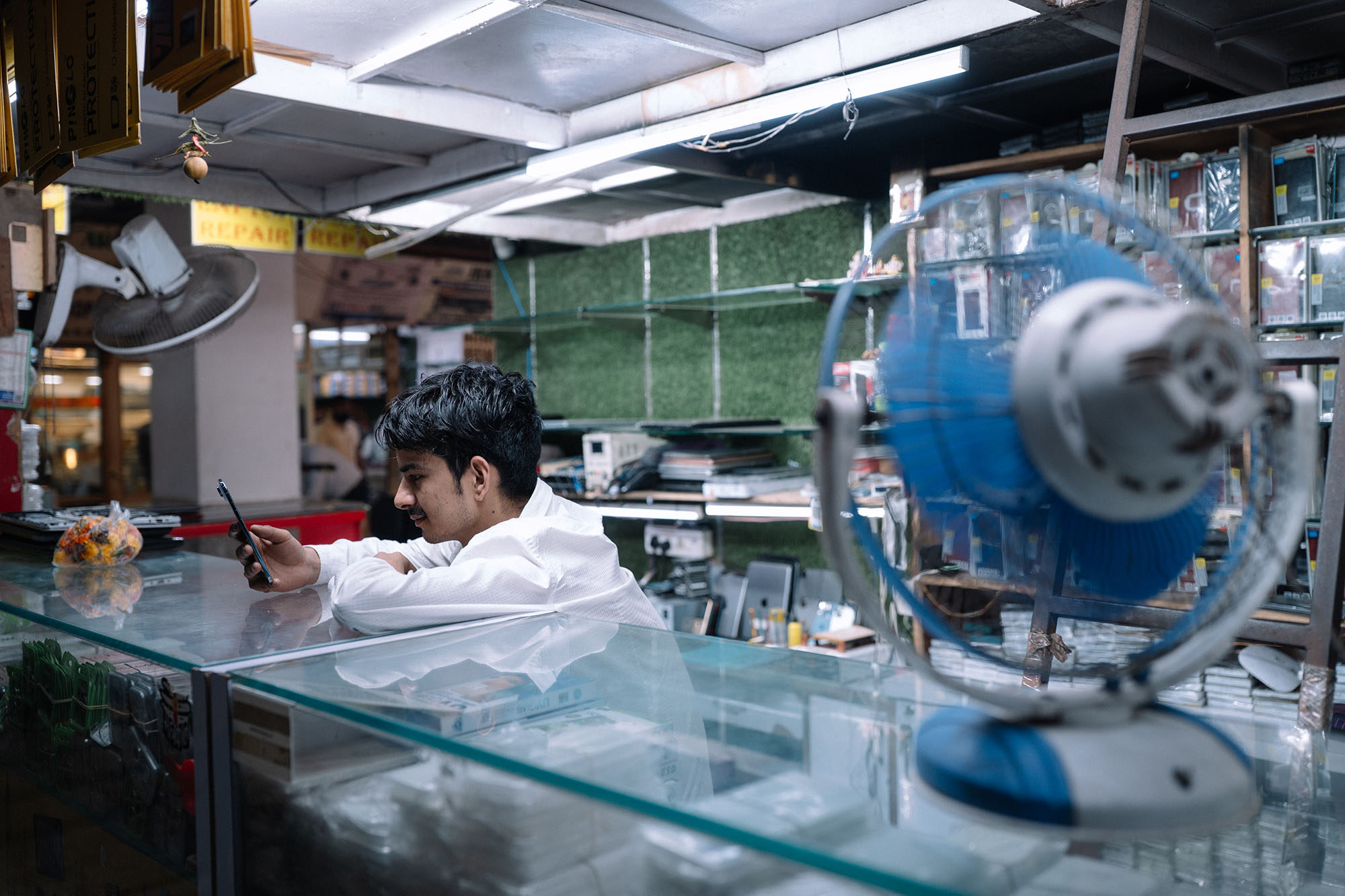
A shopkeeper in New Delhi, India, dependent on fans to keep him cool during rising heat.
Credit: CLASP
Encouragingly, evidence shows that stronger efficiency standards do not necessarily translate into higher prices. As markets mature, manufacturers innovate, production scales up, and competition increases, making efficient technologies increasingly affordable.
Consumers then benefit twice: through lower purchase costs over time as well as through significantly lower electricity bills throughout the lifetime of the appliance. That combination is essential if we want cooling to become accessible to many more households.
A second major consideration shaping AC efficiency policy is supporting domestic industry. Higher efficiency standards don’t simply reduce energy use—they create incentives for innovation, better products, and globally competitive manufacturing. India’s air conditioning industry is quite strong, and higher efficiency standards encourage companies to invest in better products that can compete both domestically and internationally.
A third consideration is industry readiness. Industry—including micro, small, and medium enterprises—needs to actually have the capacity to implement the efficiency standards. Otherwise, nobody will follow the standards and they won’t be effective.
Energy security is an increasingly important consideration as well. India’s energy supply needs to remain reliable, affordable, and resilient to external shocks. Efficient appliances can help with this in several ways. Lower electricity demand reduces the pressure to build new generation capacity and makes electricity system more reliant. It also reduces India’s exposure to volatile international fuel prices. And during periods of extreme heat or supply disruptions, a lower baseline energy need makes the system easier to manage.
So thinking of these issues as part of a single ecosystem has shaped the evolution of India’s air conditioner policy over the last 20 years, which has proven very effective. It has helped drive the market for efficient ACs, created opportunities for domestic and international manufacturers alike, and helped make India an AC manufacturing hub in its own right. These broader economic benefits are becoming just as important as the direct energy savings from AC efficiency.
Baur: The ecosystem approach seems like a very transferable model. What else can people outside India learn from its approach to AC efficiency and access?
Dhingra: The first thing is that countries should act early on appliance efficiency—before appliance ownership becomes universal. Efficiency standards, if they are introduced during the early stages of market growth, can influence millions of future purchases and prevent inefficient appliances from becoming locked into households.
And also, governments don’t have to choose between raising efficiency levels and helping expand access to appliances. With a thoughtful policy and strong partnerships, it is possible to improve affordability, strengthen energy security, support domestic manufacturing, reduce pressure on the electricity grid, and expand access to cooling—all at the same time.
As more countries face rising temperatures, these lessons are becoming increasingly relevant well beyond India.
Interview condensed and edited.