
Powering Thriving Communities: Efficient Appliances for Climate Change Adaptation and Resilience
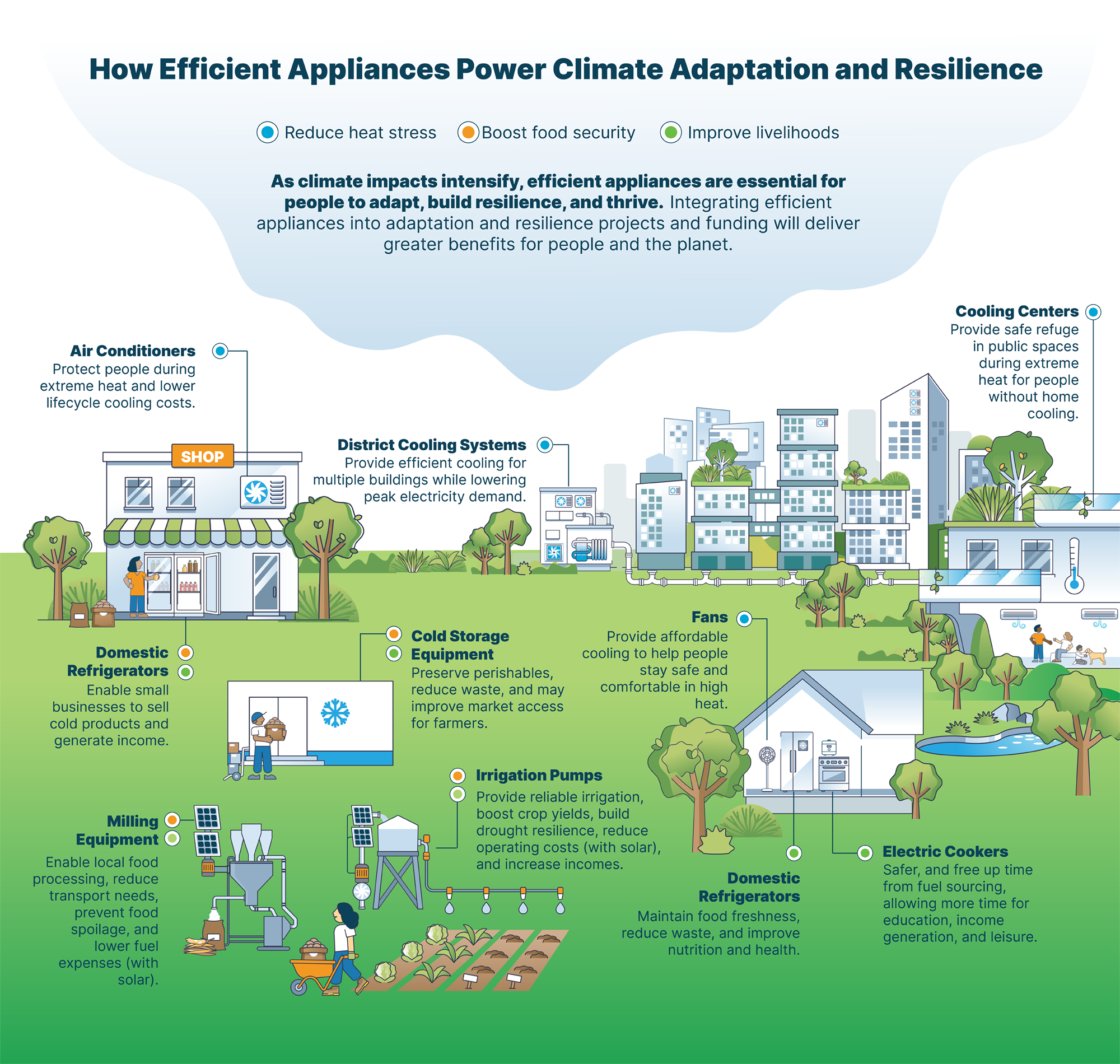
Efficient appliances and equipment reduce heat risk, bolster food security, and improve livelihoods, directly helping communities adapt and build resilience to climate shocks.
Increasingly frequent and severe climate hazards are making billions of people more vulnerable, particularly in the Global South. Risks such as heat-related illness and crop loss are only projected to increase.
In response, global momentum for an expanded adaptation and resilience toolkit is growing, with a specific demand for people-focused solutions. Efficient appliances and equipment should be a critical part of an expanded adaptation solution set.
Recommendations
How to include efficient appliances and equipment in expanded adaptation measures: Taken together, the actions described below would elevate appliances to a core pillar of adaptation policy, finance, and program delivery and ensure that appliances rapidly protect communities, food systems, and livelihoods as climate risks intensify.
- Develop appliance-specific adaptation metrics: Governments should adopt indicators that track adaptation and resilience outcomes from appliance access and use, while donors should consider including these indicators in project proposals. Implementers and researchers should provide practical tools and data to help develop indicators and measure results.
- Embed appliances in national adaptation policies, roadmaps, and plans: Governments should name priority appliances in National Adaptation Plans, Nationally Determined Contributions to the Paris Agreement, and Long-Term Low-Emission Development Strategies. Examples of priority appliances include cooling appliances and equipment, agricultural technologies, and business appliances. Governments should also create roadmaps involving multiple ministries and stakeholders responsible for adaptation delivery.
- Enable scalable and durable appliance delivery: Governments should strengthen markets through standards, subsidies, and incentives, while donors should provide grants and concessional finance for affordable service delivery models. Private-sector partners and implementers should expand local manufacturing and distribution, repair networks, and provide technician training to ensure long-term functionality.
CLASP
Media contact
For media inquiries, contact Marina Baur at mbaur@clasp.ngo.