
Investing in Institutions that Power Energy Access
The road to universal energy access runs through strong institutions. That’s the core idea behind the Energy Access Institutions Facility, or the Facility, a joint donor initiative hosted by CLASP. The Facility is supporting market institutions uniquely positioned to scale the energy access sector and help deliver clean, reliable energy to millions of people in Africa and South Asia.
The $25M+ initiative is empowering key institutions to expand distributed renewable energy solutions, including clean cooking, solar systems, productive-use appliances, and mini-grids, targeting millions of underserved communities across Africa and South Asia over the next five years.
Rather than funding individual technologies or businesses, the Facility focuses on the market institutions and accelerators that make energy access possible. They include trade alliances, policy accelerators, and quality assurance organizations that shape markets, influence regulations, and connect stakeholders. This new model, investing directly in institutions, is designed to scale what works, attract meaningful investment, and deliver energy solutions that last.
To enable market institutions to fulfill their role, the Facility provides critical inputs that empower market institutions and accelerators to build financial resilience, enhance their operational capacities, and foster strategic collaborations. The Facility achieves this through three main pillars:
- Core funding unlocks strategic decision-making for market institutions and accelerators, enables the pursuit of bolder visions distinct from project-driven objectives, and the flexibility to pivot to emerging opportunities in a fast-moving sector.
- Institutional health grants build high-functioning, sustainable institutions, and resilience to external shocks.
- Cross-learning and collaboration support a common theory of change to drive faster achievement of Sustainable Development Goal 7 and encourage alignment of resources and action opportunities.
The Facility’s group of grantees is a dynamic mix of organizations working across regions and technologies. Here’s a closer look at who they are and what they do.
Africa Minigrid Developers Association (AMDA)
AMDA represents over 40 mini-grid developers across the continent and is a strong voice for policies, financing, and standards that enable scale. The organization actively engages in regulatory reform and promotes sustainable business models.
“In the face of challenges that seem insurmountable, one truth remains: Business as usual is not an option. We cannot unlock universal energy access with fragmented strategies. We cannot power 680 million people still in the dark by 2030 without bold, coordinated, and scalable action,” Olamide (‘Lamide) Niyi-Afuye, CEO, AMDA.
Fun Fact: Mini-grids are key to reaching remote communities and AMDA is uniquely positioned to ensure the enabling environment keeps pace with the sector’s growth.
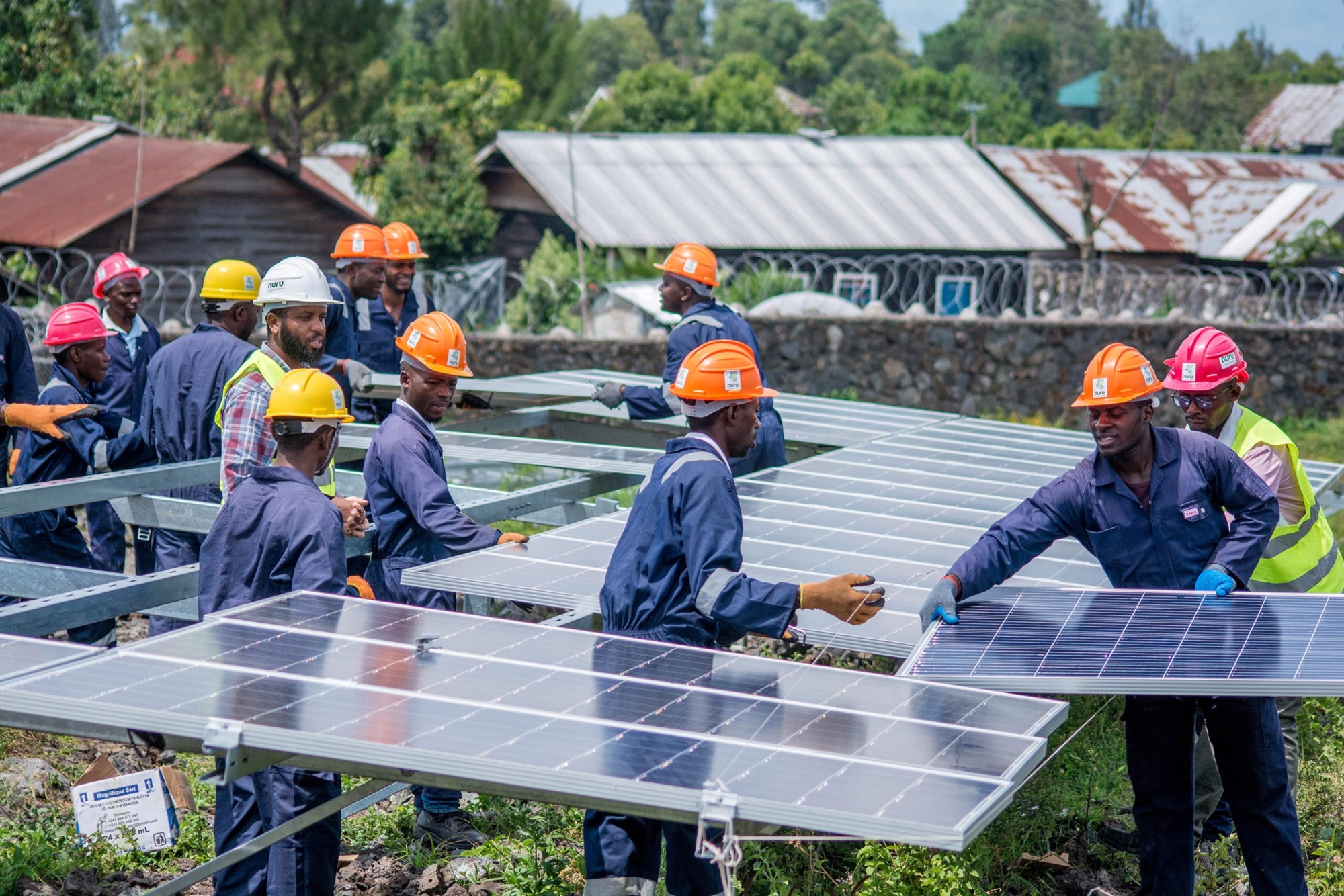
Nuru, Democratic Republic of the Congo
[Photo: AMDA]
Clean Cooking Alliance (CCA)
CCA drives efforts to make clean cooking affordable, accessible, and aspirational. Their work spans research, policy, investment facilitation, and ecosystem coordination.
“Whether from an energy access, climate, environment, health, or empowerment perspective, clean cooking is increasingly recognized as a critical component of a just energy transition. CCA is proud to have contributed to this shift. Our focus remains on turning commitments into actionable policies, business opportunities, and tangible investments that transform the pathways to clean cooking for the billions of people who still live without it,” Dymphna van der Lans, CEO, CCA.
Fun Fact: The clean cooking sector needs strong institutions to match its ambition. CCA brings the convening power, technical capacity, and cross-sectoral reach needed to transform this critical area of energy access.
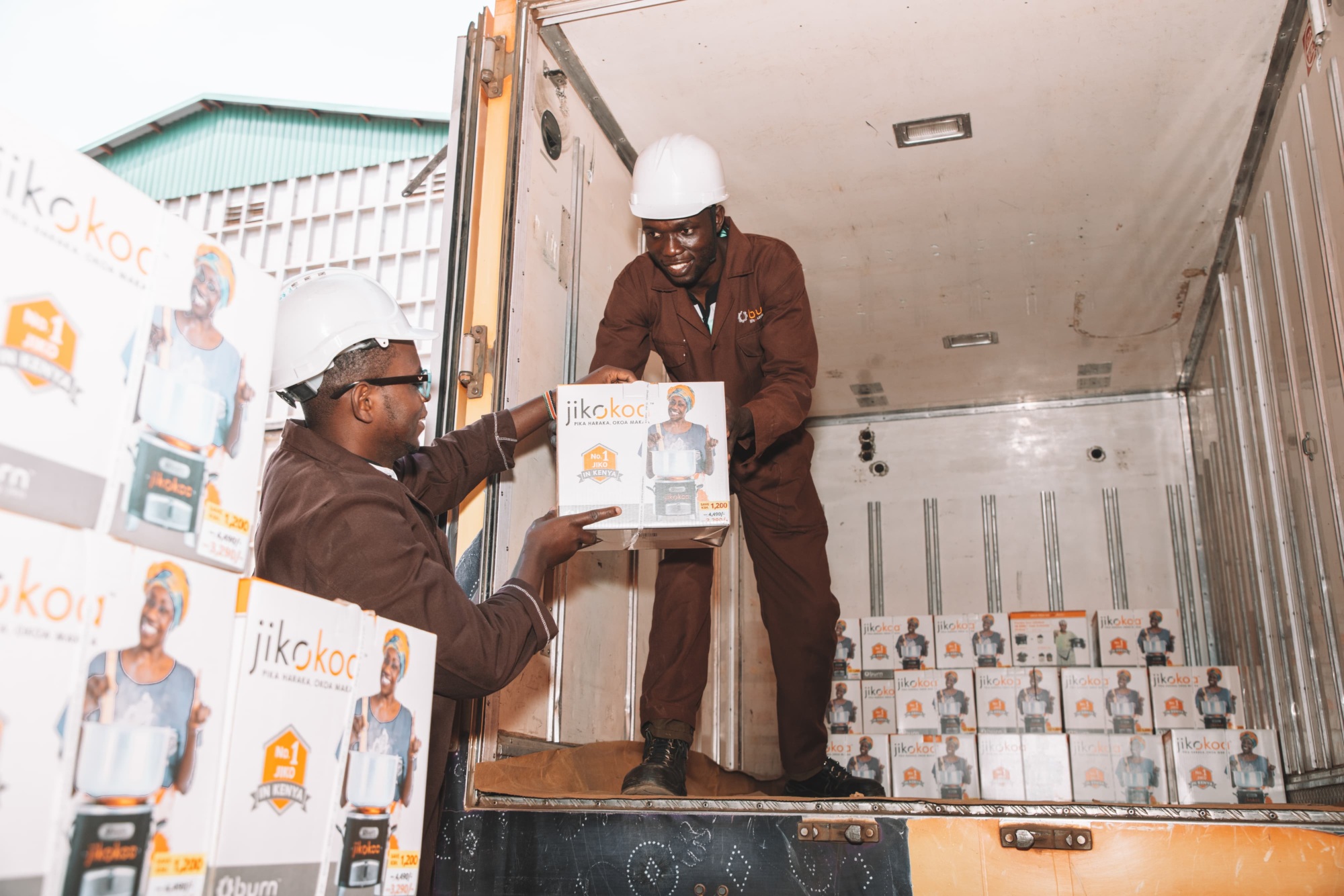
[Clean Cooking Alliance]
GOGLA
GOGLA is the global association for the off-grid solar energy industry, representing over 200 members. As a long-standing convener and advocate, GOGLA plays a critical role in shaping policy, collecting market intelligence, and promoting consumer protection. Their leadership helps build a transparent and investable solar market.
Fun Fact: GOGLA’s deep sector expertise, strong relationships with governments and financiers, and commitment to evidence-based advocacy make them a linchpin in advancing off-grid solar.
VeraSol
VeraSol provides quality assurance for off-grid solar products and appliances, including testing and certification services. Their standards and lab network help governments, donors, and consumers identify trustworthy products.
“VeraSol is a fundamental quality assurance framework that protects the poorest consumers. By protecting consumers and markets from sub-standard products, VeraSol safeguards investments in clean energy transitions, especially in fragile and underserved communities,” Elisa Lai, Senior Program Manager, VeraSol.
Fun Fact: As distributed energy markets grow, protecting consumers from poor-quality products is essential. VeraSol is the gold standard in this space, offering a proven pathway to quality and trust.
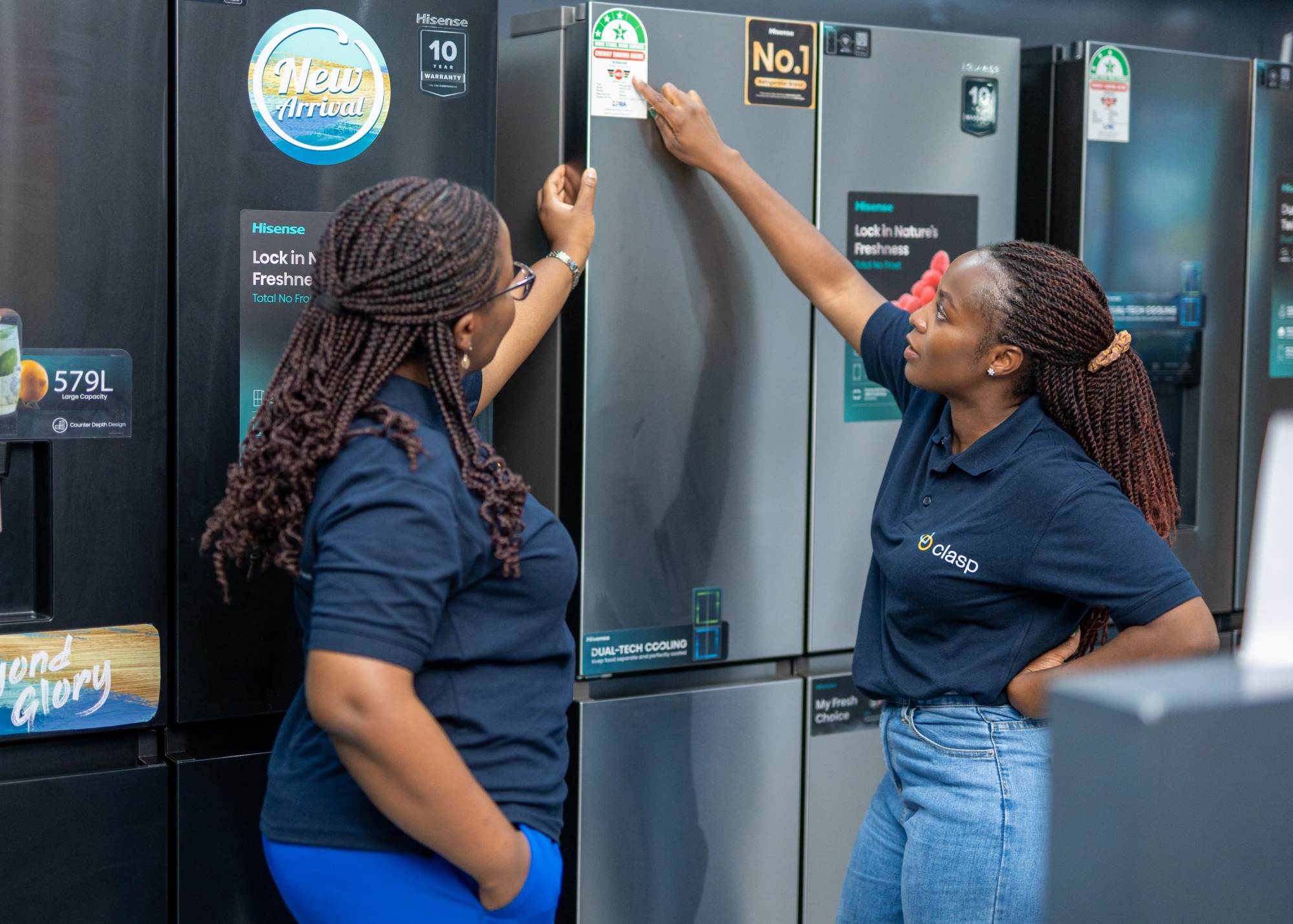
[Photo: CLASP]
Nigeria Off-grid Market Accelerator Program (NOMAP)
NOMAP supports Nigeria’s distributed renewable energy market through policy analysis, investor engagement, and ecosystem strengthening.
Fun Fact: NOMAP is helping to tackle Nigeria’s energy access challenge with strategic, locally grounded solutions and strong partnerships.
Precise
Precise builds learning ecosystems and delivers cutting-edge research and insights to business, governments, and non-profits in Ethiopia to help them make strategic development decisions.
“At Precise, we build market systems that empower local innovators and entrepreneurs to win the war against poverty. By partnering with philanthropies, we design and deliver bold, private sector-led solutions tailored to local realities. Solutions that help our partners do more with less. Our work drives systemic change that supports climate-resilient growth, creates jobs, raises incomes, improves nutrition and health, and empowers women,” Henok Assefa, Managing Partner, Precise.
Fun Fact: Precise designs and delivers bold, private sector-led solutions tailored to local realities that help their partners do more with less.

[Photo: Precise]
Uganda Off-grid Market Accelerator (UOMA)
UOMA works closely with government, industry, and development partners to identify market barriers and coordinate solutions. Their work includes technical assistance, data analysis, and stakeholder engagement to advance energy access nationally.
“UOMA has played a pivotal role in Uganda’s energy access journey, unlocking capital, enabling last-mile delivery, and supporting over 250,000 households. As the sector grows more complex, UOMA’s role as a neutral intermediary is critical in bridging silos, aligning stakeholders, and translating ambition into coordinated, on-the-ground action, especially in emerging areas like productive use and humanitarian energy access,” Reza Fazel, Associate Partner at Open Capital and Head of UOMA.
Fun Fact: Uganda is a key energy access frontier, and UOMA has a strong record of translating insights into action and facilitating national-level collaboration.
[Photo: UOMA]
A new model for impact
While these organizations vary in scope and geography, they share common strengths: strong governance, technical expertise, trusted relationships, and a commitment to systemic change. By supporting their growth and resilience, the Facility aims to create a more coordinated, capable, and impactful energy access ecosystem.
——
About The Facility
The Energy Access Institutions Facility is a joint donor initiative to support and strengthen the institutions that are essential for the achievement of Sustainable Development Goal 7, universal access to affordable, reliable, sustainable, and modern energy by 2030. The Facility is supported by DOEN, British International Investment, Good Energies Foundation, the Swedish International Development Agency (Sida), and UK aid via the Transforming Energy Access (TEA) platform and is managed by CLASP.
Energy Access
Foregrounding Global South Solutions at London Climate Action Week
This week, global climate advocates are converging on the UK capital for the seventh iteration of London Climate Action Week.
CLASP leaders are joining events across the city to discuss the critical role of appliances in climate mitigation and adaptation, with a focus on the Global South.
On Monday, CLASP hosted an event offering a preview of a forthcoming report. The research argues that extending electricity to the hundreds of millions of people who don’t have access—most of whom live in sub-Saharan Africa—will require a new focus on appliances.
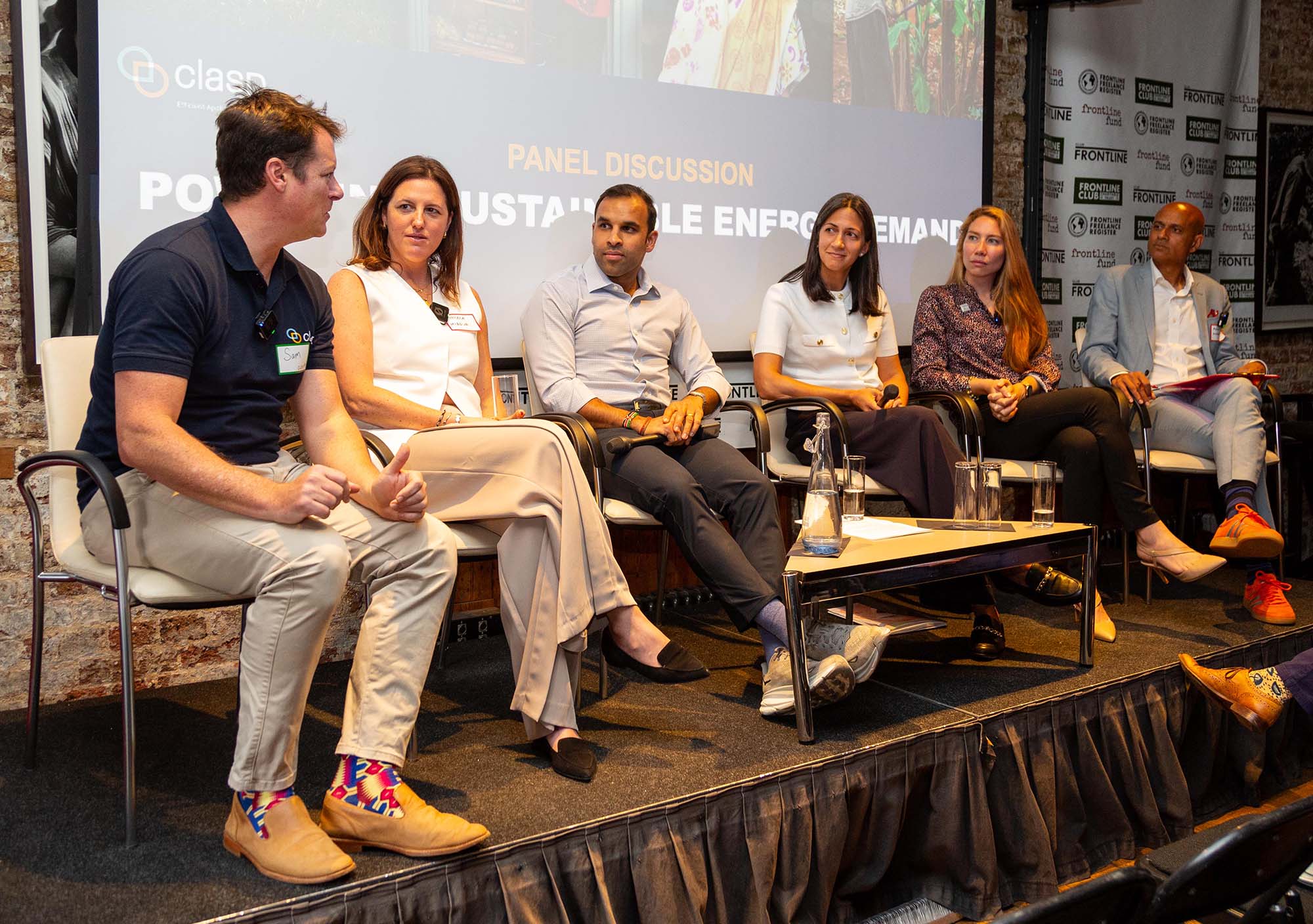
Panelists at CLASP's 2025 London Climate Action Week event focused on powering sustainable energy development.
CLASP
In his introduction to the event, one of the report’s authors, Bishal Thapa, CLASP’s chief strategy and impacts officer, provided an overview of its thesis. To date, attempts to provide universal energy access have failed because they have focused exclusively on supply, he said, with the idea that if we “just keep expanding the grid . . . lo and behold, everyone will get electricity.” In practice, however, because people living in the affected areas lack appliances that allow them to translate electricity into useful services, these efforts often don’t work out as intended.
“We’ve got to look at demand creation as a way of stimulating the economic and financial viability of grid expansion,” he said.
Thapa’s remarks were followed by a panel discussion moderated by Ashden’s Ashok Sinha. Panelists included Sam Grant, CLASP’s senior director of clean energy access and a coauthor of the forthcoming report; SunCulture’s Samir Ibrahim; Mirova’s Nicole Kugelmass; Lightrock’s Hanaan Marwah; and Power for All’s Carolina Inés Pan.

Attendees at CLASP's Powering Sustainable Energy Demand event.
CLASP
CLASP organized a second event on Monday with ZE-Gen, an initiative that promotes zero-emission power generators, with support from UK Aid. Focused on people-centered climate solutions in the Global South, the event presented examples of collaborations between communities, governments, private-sector actors, and nonprofits that create tangible benefits for local stakeholders.
During the panel discussion, Thapa discussed how CLASP’s work on appliance efficiency policy reduces greenhouse gas emissions and helps more people access the appliances they need to thrive in a warming world.
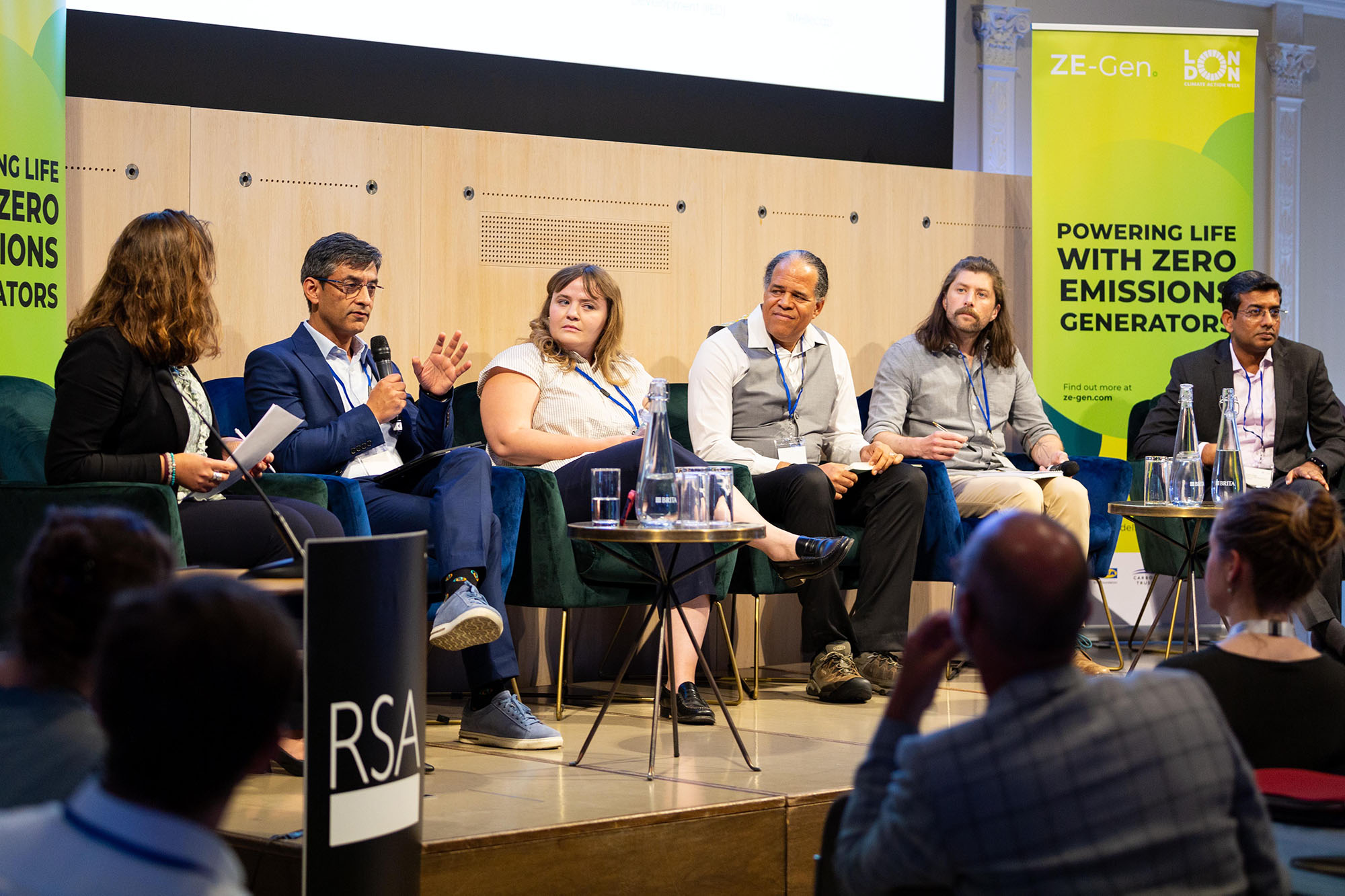
Panel discussion at a London Climate Action Week event organized by CLASP and ZE-Gen.
CLASP
Another panelist, Dana Crawhall, talked about the Climate and Clean Air Coalition‘s focus on super pollutants—the chemicals most responsible for short-term global warming. Since these pollutants have profound implications for people’s everyday lives in the Global South, affecting everything from food security and economic development to health, reducing them is vitally important. “This [super pollutant] agenda is really, really critical for the development agenda, to make good on the SDGs,” she said.
Additional panelists included the International Institute for Environment and Development’s Kevin Johnstone, KOC Bridge for Peace’s Karana Olivier, and Intellecap’s Santosh Singh. The discussion was moderated by Cipher News’s Anca Gurzu.
CLASP experts are also appearing at several other events during the remainder of the week. Follow us on LinkedIn and Bluesky for more information.
CLASP and GEAPP Expand Access to Affordable, Energy-Efficient Appliances in Africa
Cape Town, 18 June, 2025 – At the Africa Energy Forum in Cape Town, CLASP and the Global Energy Alliance for People and Planet (GEAPP) announced a substantial expansion of the Productive Use Financing Facility (PUFF). This $6.1 million USD funding boost will help accelerate the uptake of clean, energy-efficient appliances that power small businesses, support farmers, and transform the lives of thousands of people across Africa.
Despite their potential to improve lives globally, efficient appliances are still out of reach for over 600 million people without access to electricity. High costs and limited financing make it difficult for business and households to afford them. PUFF helps bridge that gap.
The facility provides grants, subsidies, and technical assistance to suppliers and distributors to lower prices and reach more customers. This enables small businesses, entrepreneurs, and households to purchase energy-efficient technologies at favorable prices, allowing them to grow over time.
Building on success
This extension builds on the success of the two-year pilot project that connected people with the useful appliances to earn a living. From 2022 to 2024, PUFF worked with 24 companies across six countries, helping to deploy nearly 16,000 appliances, and directly improve the lives of over 58,000 households. These appliances, such as solar-powered refrigerators, solar water pumps, and solar milling machines, had a direct, transformative impact on people’s livelihoods.
“Access to energy is foundational for economic growth. Efficient appliances and equipment, which are how people turn energy into opportunity, need to be considered essential energy infrastructure, alongside renewables. PUFF’s pilot phase proved that targeted support could unlock meaningful change. With effective financing, companies can reach more people with the right appliances, and they can change lives,” said Emmanuel Aziebor, Senior Director for Africa at CLASP.
What’s new in PUFF 2.0?
CLASP and GEAPP are renewing their partnership focused on scaling appliances for agriculture and entrepreneurship in Ethiopia, Kenya, and Nigeria. This new round aims to create over 3,000 green jobs through the sale and use of 10,000 appliances in four years, including established appliances like solar water pumps and refrigerators, and more specialized technologies such as coffee pulpers and honey extractors.
This expansion also deepens commitment to gender equity and youth inclusion. In the pilot, women made up nearly half of all appliance buyers, and households where women bought appliances saw a 94% increase in average income. PUFF 2.0 will have an even greater focus on equity by utilizing outreach and financing strategies that center women and young entrepreneurs.
“While electrification has expanded, many investments fail to turn access into economic opportunity, with limited job creation or enterprise growth. Through initiatives such as PUFF 2.0 collaboration with CLASP, we are addressing these shortfalls by ensuring that new energy connections drive productivity and power agriculture, energizing ambition in small and medium sized enterprises, and output in local manufacturing. Increased incomes from these activities spur economic growth and wellbeing in growing communities, creating jobs, and improving the quality of life,” said Makena Ireri, Managing Director for Productive Use of Energy at GEAPP.
CLASP’s Productive Use Financing Facility is supported by The Global Energy Alliance for People and Planet (GEAPP). Learn more about how it’s benefiting people and our planet.
- Appliance distribution companies who are interested in applying in this second round can get further information on the PUFF webpage and on the webinar on 8 July.
- For more information, please contact financing@clasp.ngo and follow us on LinkedIn for regular updates on how the facility is benefiting people and our planet.
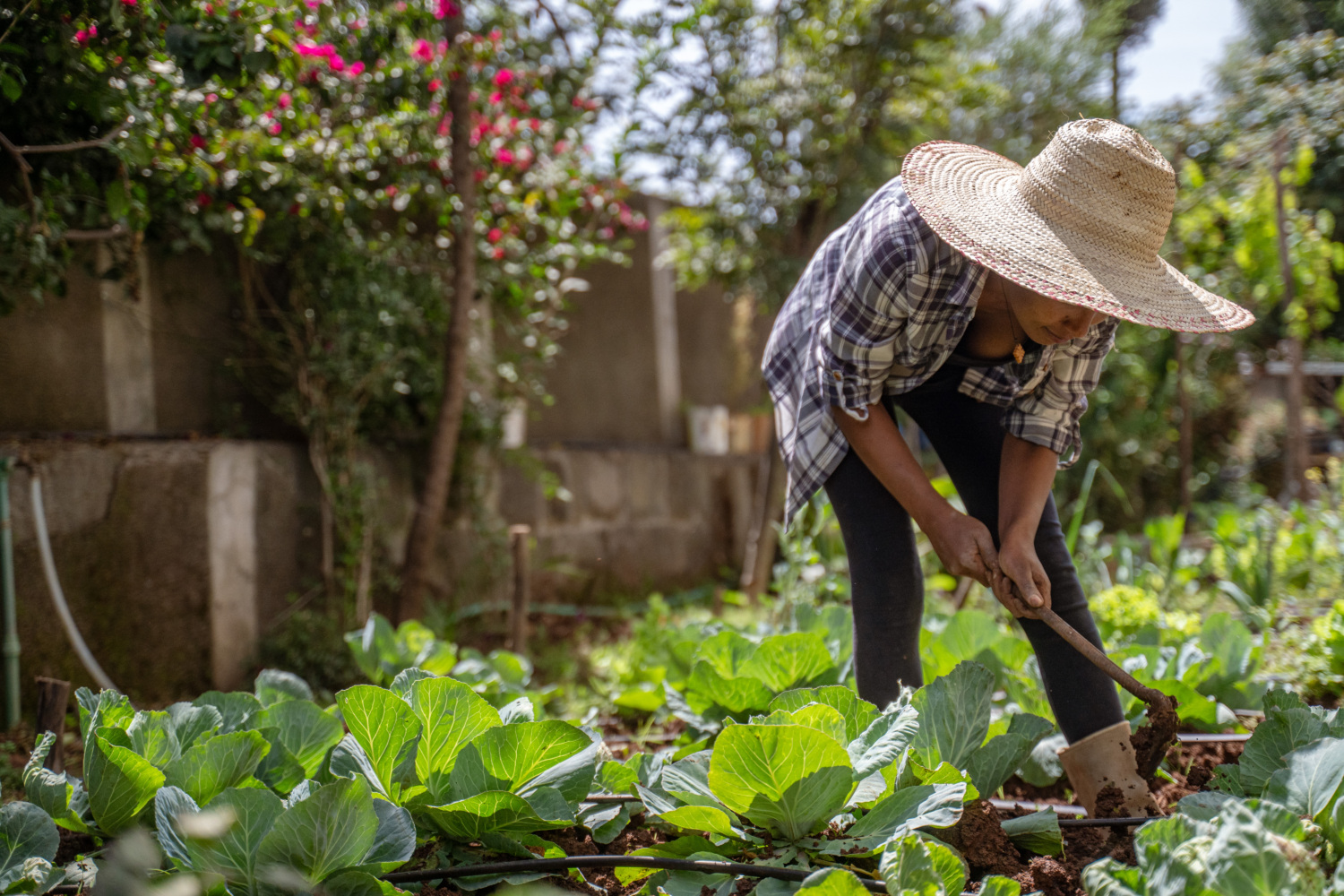
A farmer in Ethiopia using solar-powered drip irrigation acquired through PUFF support. Photo credit: CLASP
CLASP
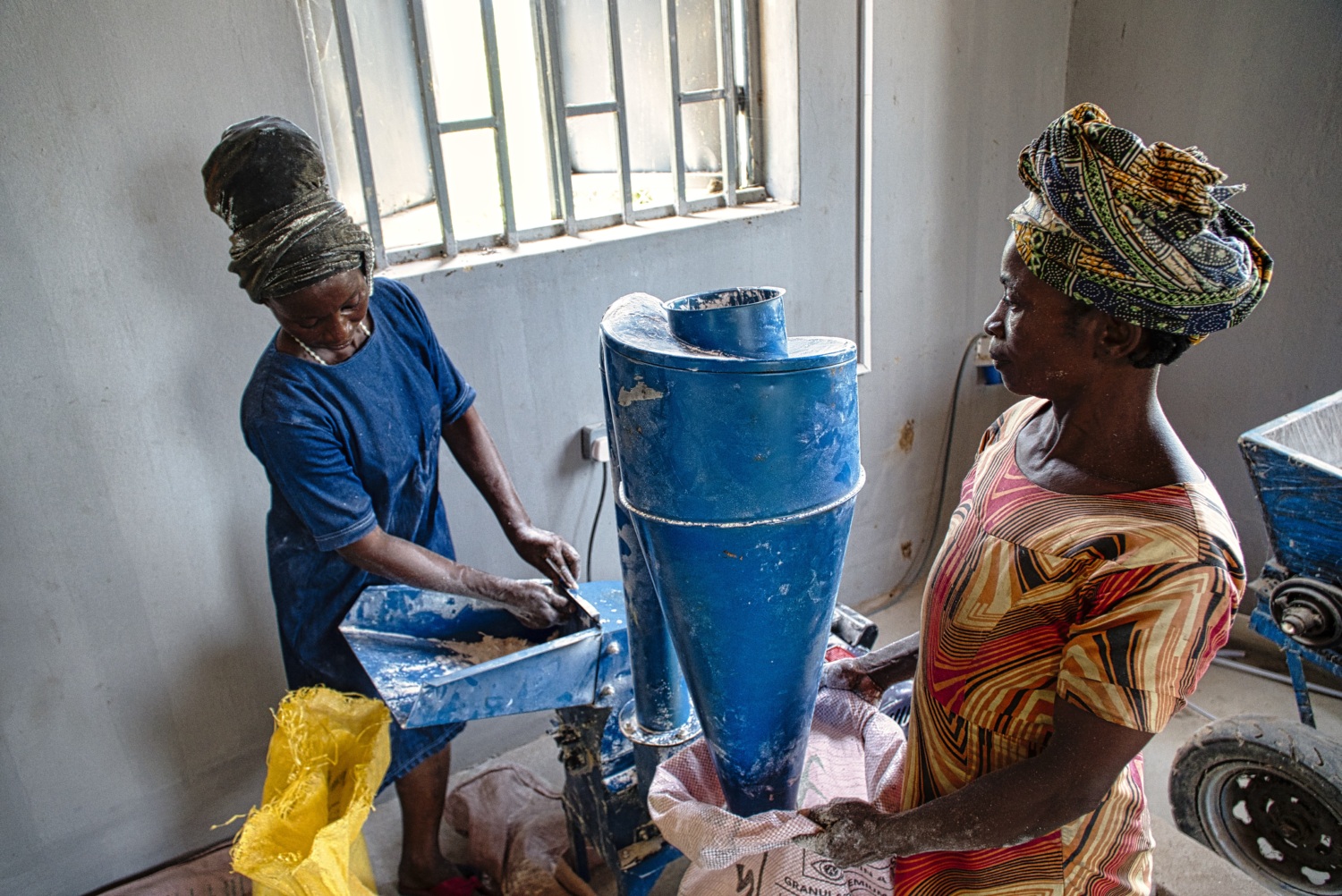
Women in Nigeria using a solar-powered mill acquired through PUFF support. Photo credit: CLASP
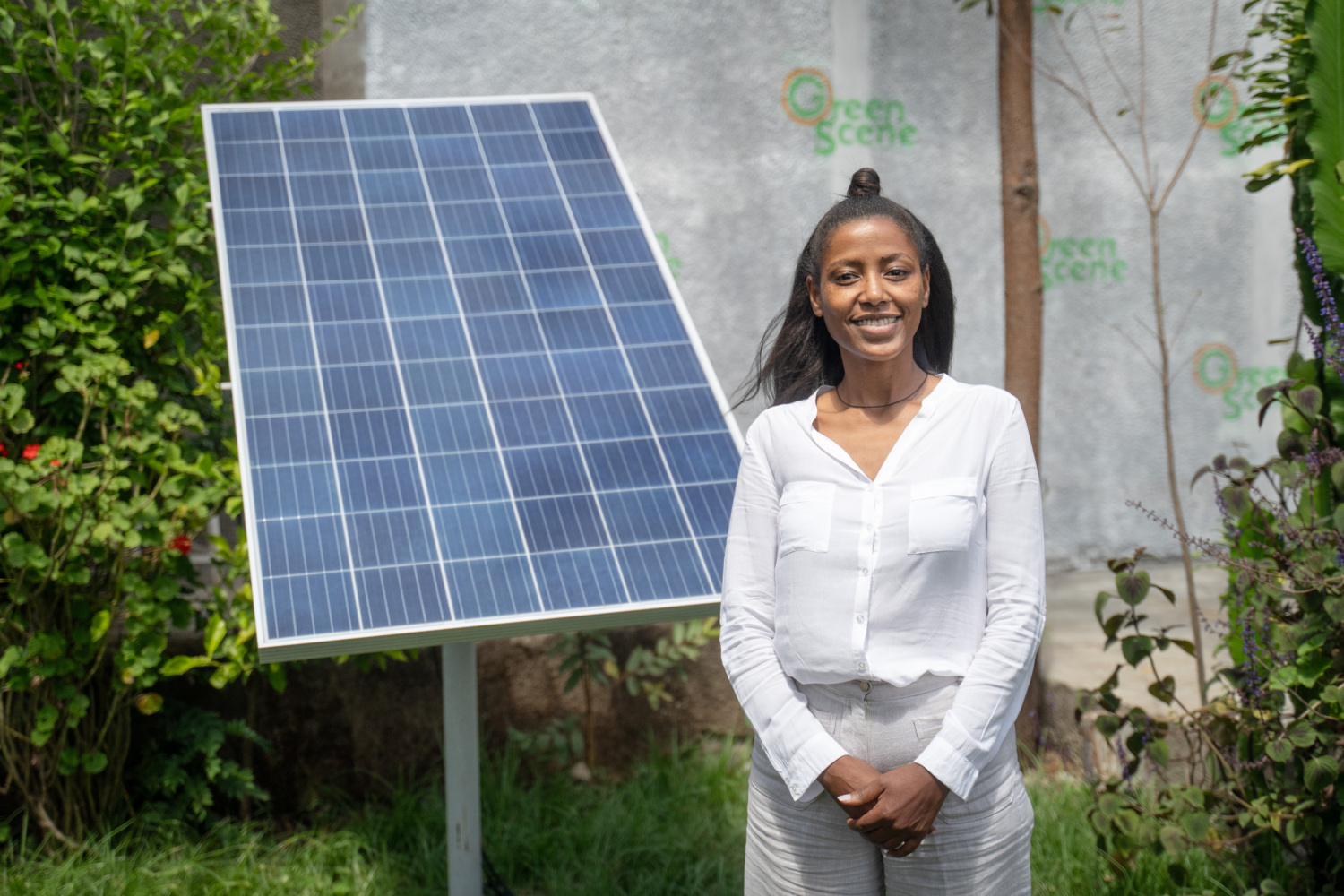
Rekik Bekele, CEO of Green Scene Energy, a leading solar appliance distributor, is expanding access to solar in Ethiopia with support from PUFF. Photo credit: CLASP

Abibat Akinwale, a shopkeeper in Nigeria, with the solar-powered refrigerator she acquired through PUFF support. Photo credit: CLASP
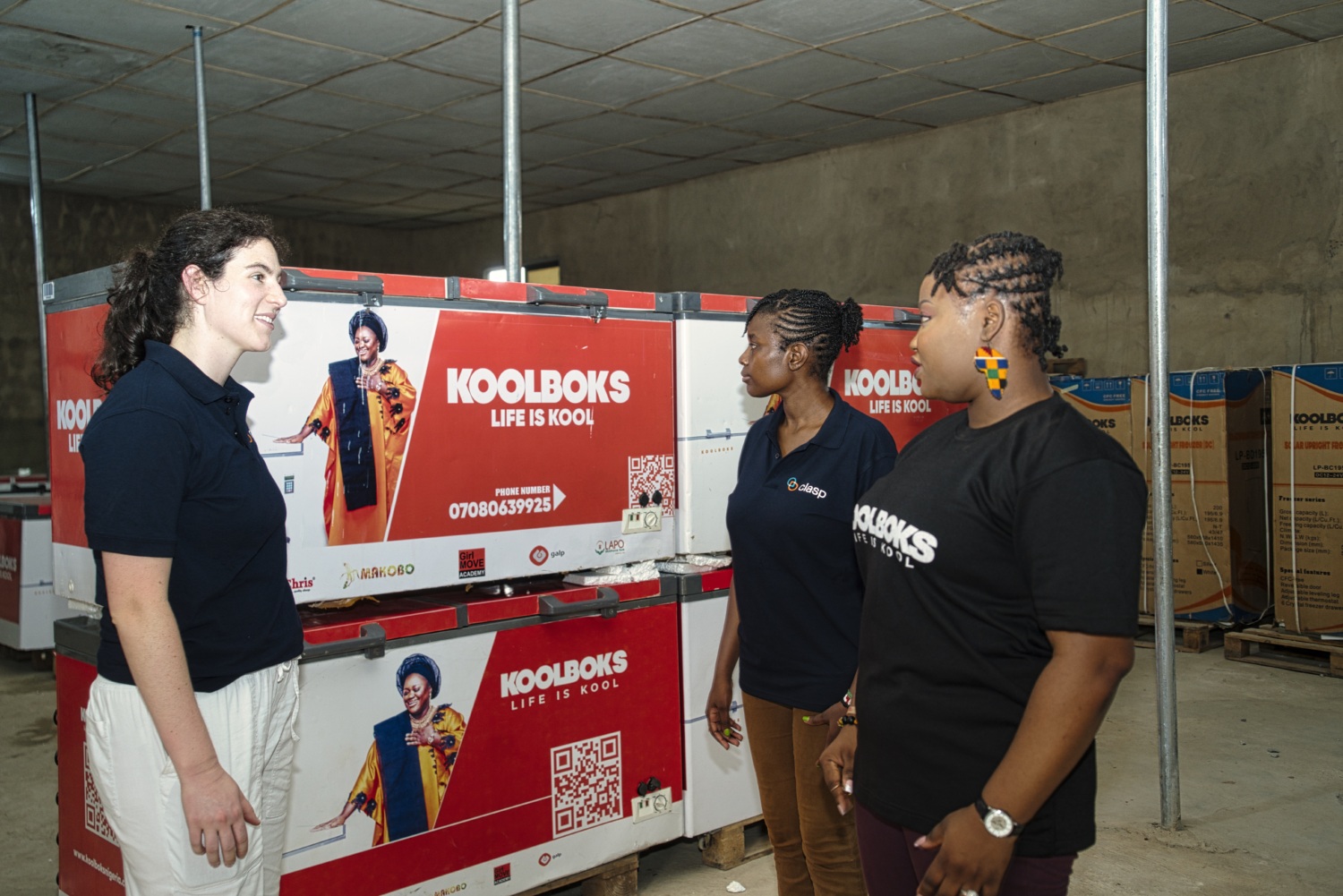
Lolade Esther Alonge of Koolboks shows the CLASP team their solar refrigerators, made more affordable for off-grid communities in Nigeria with PUFF support. Photo credit: CLASP
About CLASP
CLASP is the leading global authority on efficient appliances’ role in fighting climate change and improving people’s lives. An international NGO with 25 years of expertise and offices on four continents, CLASP collaborates with policymakers, industry leaders, and other experts to create a more sustainable future for people and the planet.
About GEAPP
The Global Energy Alliance for People and Planet (GEAPP) is an alliance of philanthropy, governments in emerging and developed economies, and technology, policy, and financing partners. Their common mission is to enable LMICs’ shift to a clean energy, pro-growth model that accelerates universal energy access and inclusive economic growth, while supporting the global community to meet critical climate goals during the next decade. As an Alliance, they aim to reduce 4 gigatons of future carbon emissions, expand clean energy access to one billion people, and enable 150 million new jobs. With philanthropic partners, IKEA Foundation, The Rockefeller Foundation, and Bezos Earth Fund, GEAPP works to build the enabling environment, capacity, and market conditions for private sector solutions, catalyze new business models through innovation and entrepreneurship, deploy high-risk capital to encourage private sector solutions, and assist just transition solutions. For more information, please visit www.energyalliance.org and follow us on LinkedIn.
Media inquiries: Stella Madete, Africa Communications Manager, smadete@clasp.ngo
CLASP Joins Energy-Efficiency Leaders at IEA Conference
As governments accelerate efforts to meet climate goals while tackling rising energy demand, one message rang clear in Brussels last week: energy efficiency is no longer a side solution, it must become the cornerstone of a just and sustainable energy transition.
CLASP’s Bishal Thapa, Chief Strategy and Impacts Officer, and Ari Reeves, Senior Director of Research, participated in the International Energy Agency’s (IEA) 10th Annual Global Conference on Energy Efficiency, alongside ministers, CEOs, and delegates from over 90 countries.
Energy efficiency: critical to solving energy challenges
Amid sessions on financing and industrial competitiveness, conversations were grounded in the shared recognition that energy efficiency is critical to achieving a sustainable and affordable energy system. While scaling up renewables is essential to meeting global energy demand, speakers stressed that energy efficiency must take the lead in addressing today’s urgent energy and climate challenges.
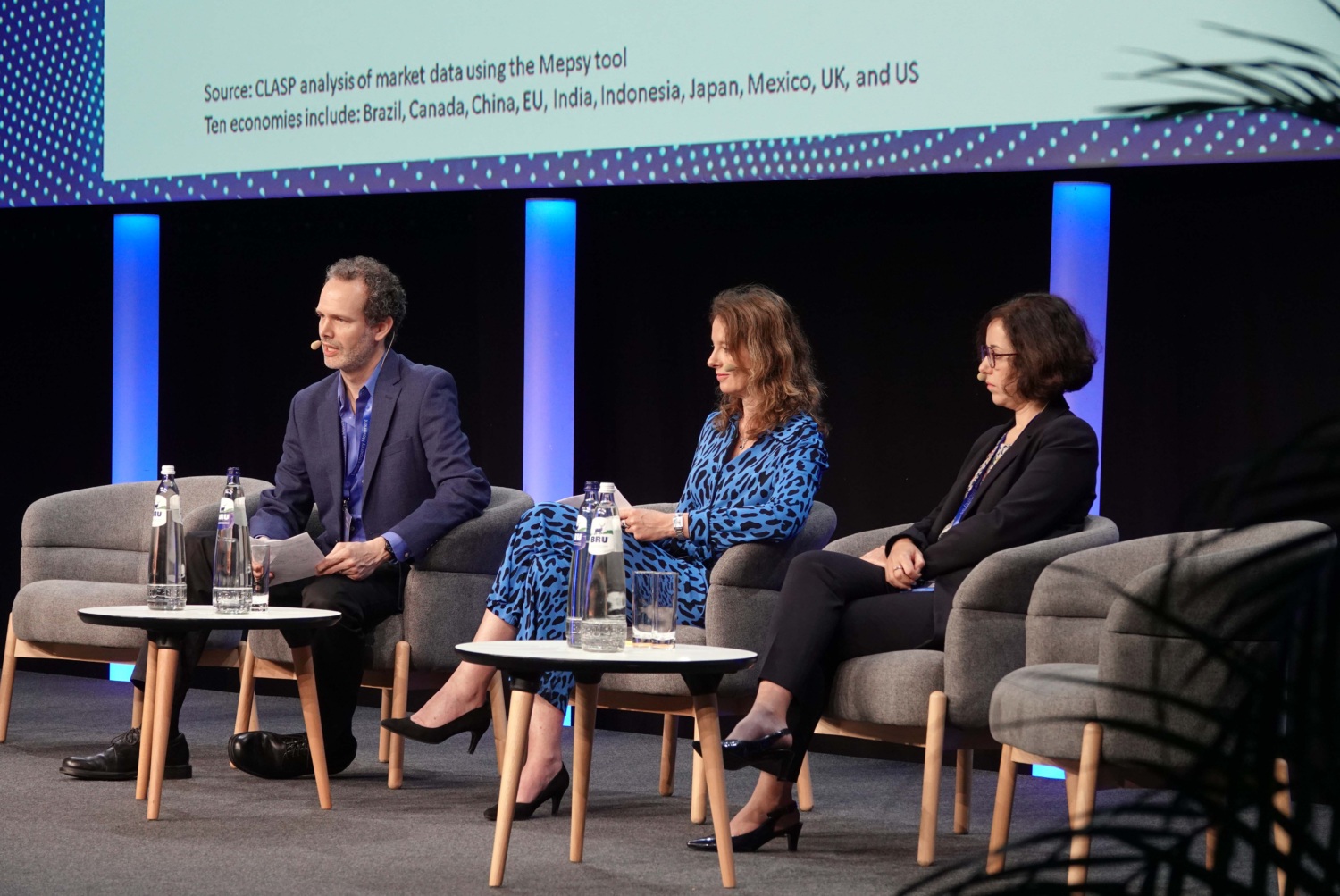
Photo by CLASP.
Left to right: Ari Reeves, Senior Director of Research at CLASP, Rosalinde van der Vlies, Director at the European Commission, and Manelle Ait Sahlia, Deputy Head of Energy at the French Development Agency.
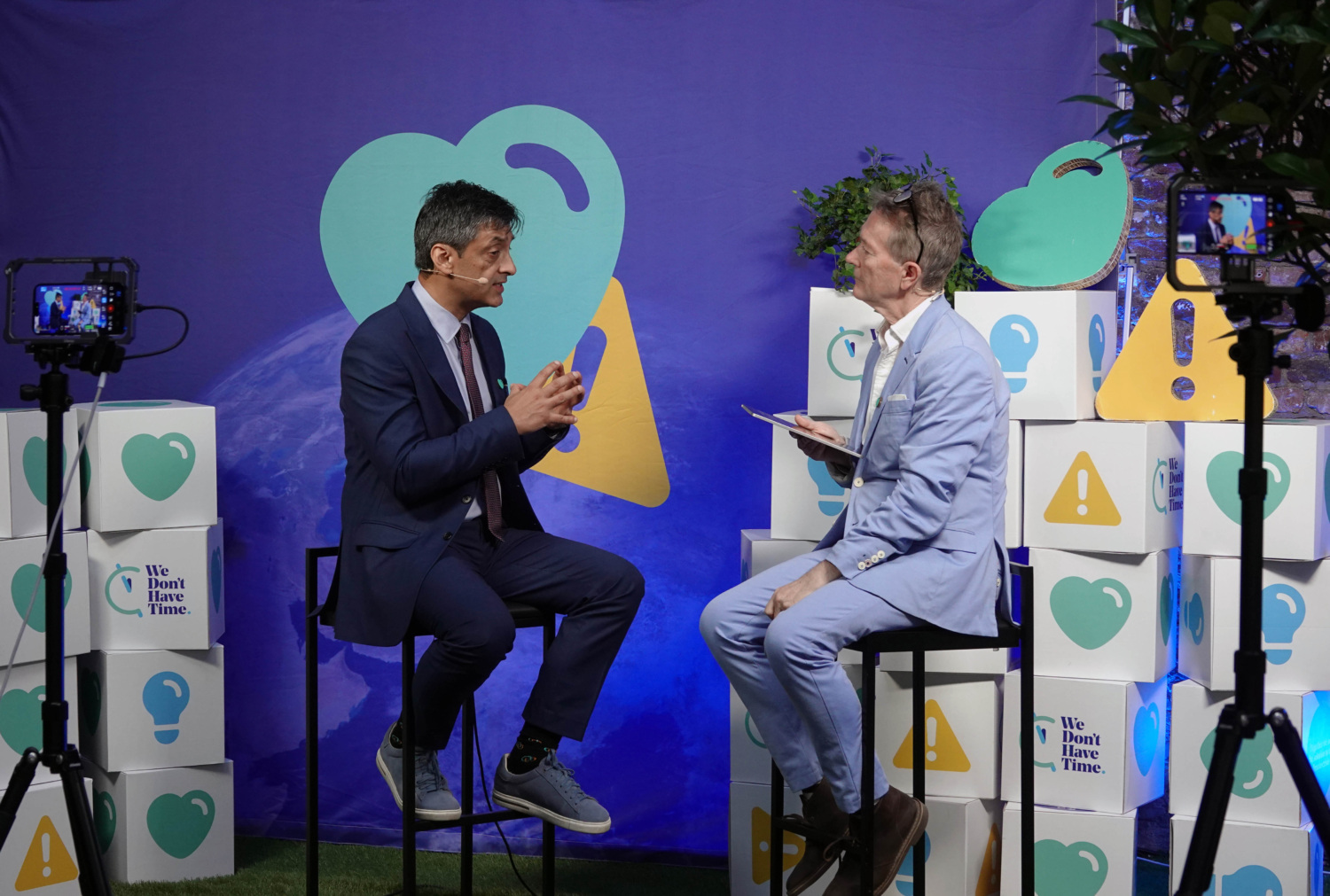
Photo by CLASP.
CLASP’s Bishal Thapa (left), Chief Strategy and Impacts Officer sits down for an interview with Nicholas Nuttal, broadcast host at We Don’t Have Time, during the IEA’s 10th Global Conference on Energy Efficiency.

Photo by CLASP.
CLASP’s Ari Reeves, Senior Director of Research, presents insights from a new analysis at the IEA’s 10th Global Conference on Energy Efficiency.
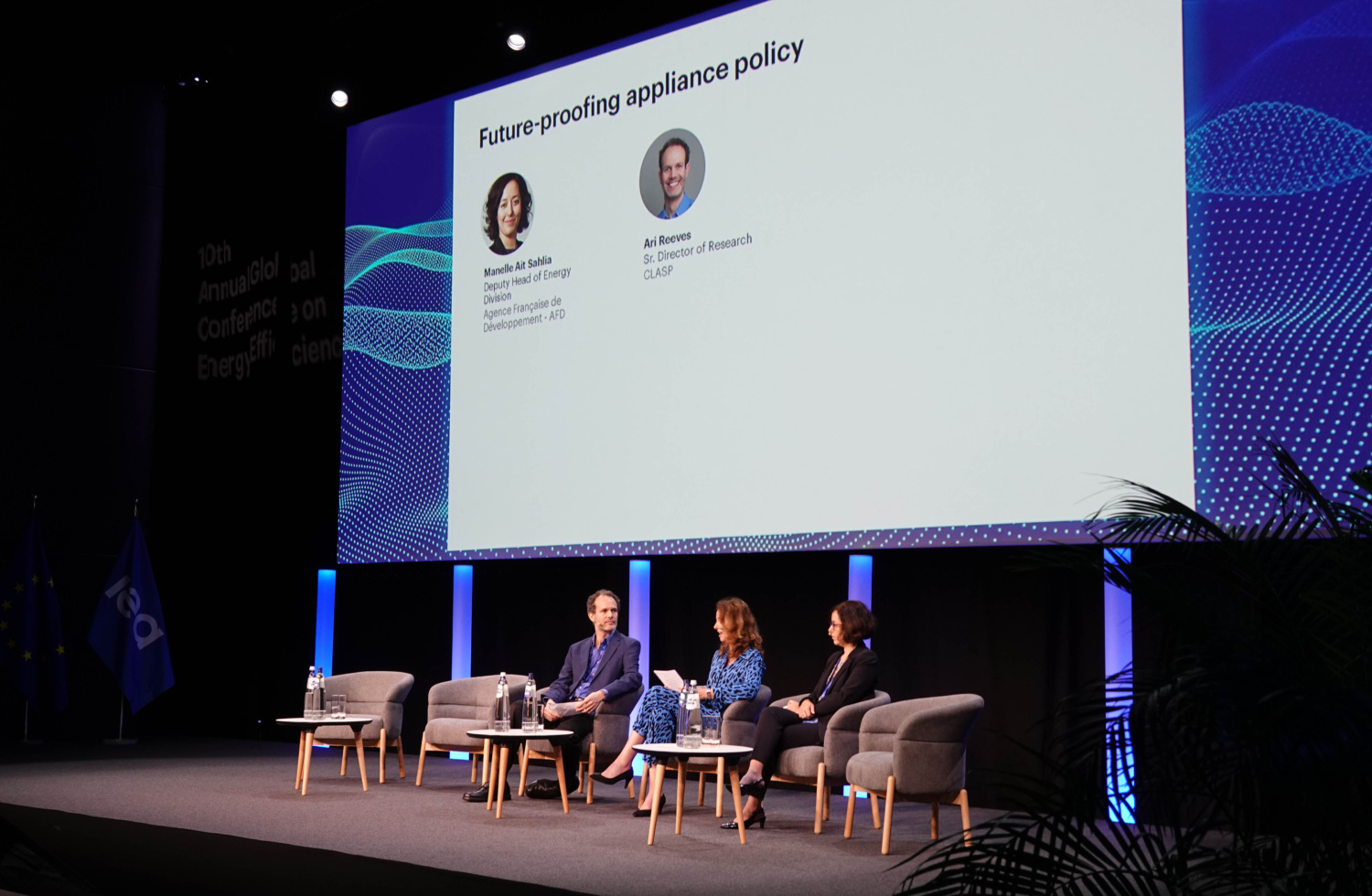
Photo by CLASP.
Left to right: Ari Reeves, Senior Director of Research at CLASP, Rosalinde van der Vlies, Director at the European Commission, and Manelle Ait Sahlia, Deputy Head of Energy at the French Development Agency.
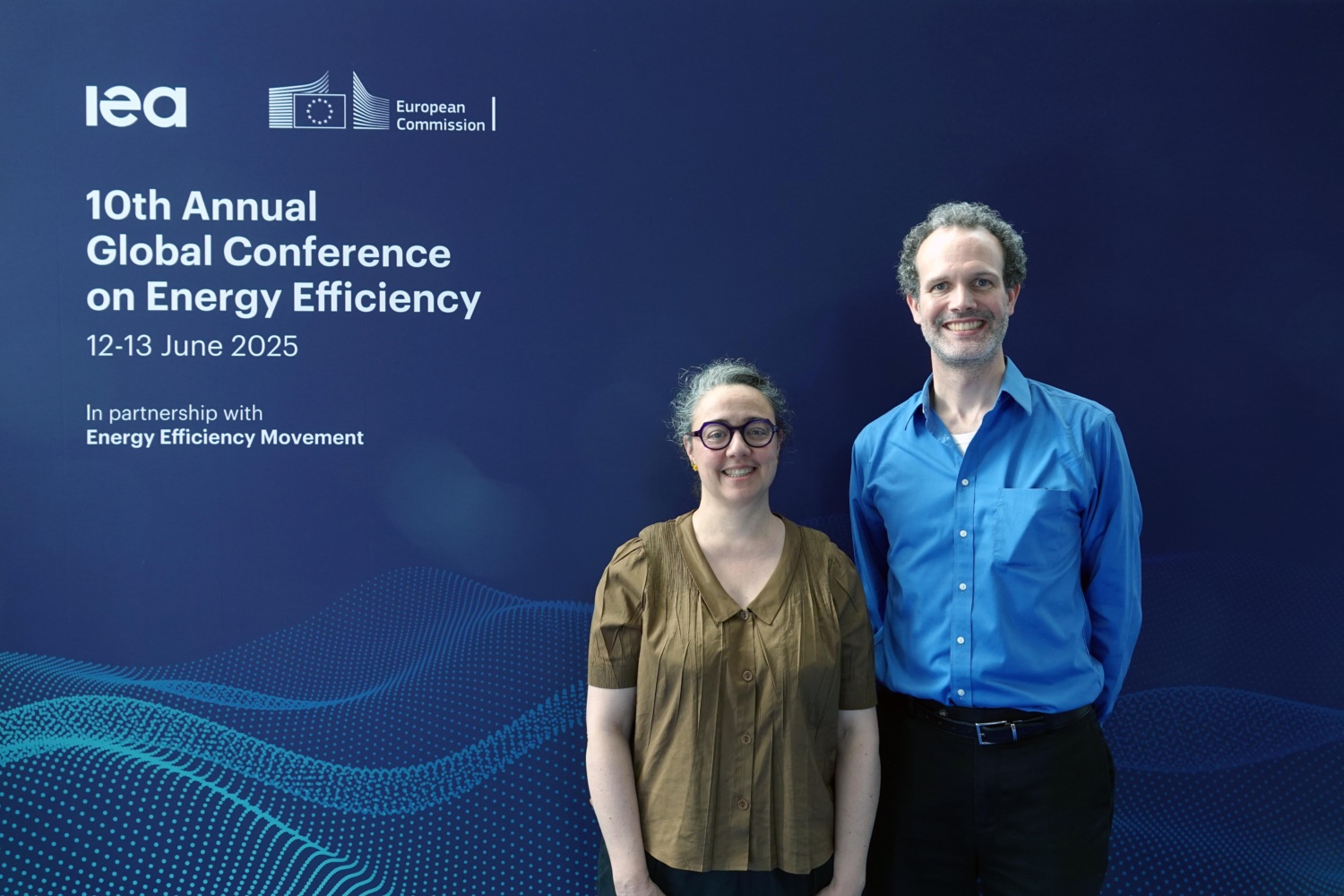
Photo by CLASP.
Sophie Attali (left), Energy Efficiency Policy Analyst at IEA, and Ari Reeves, Senior Director of Research at CLASP.
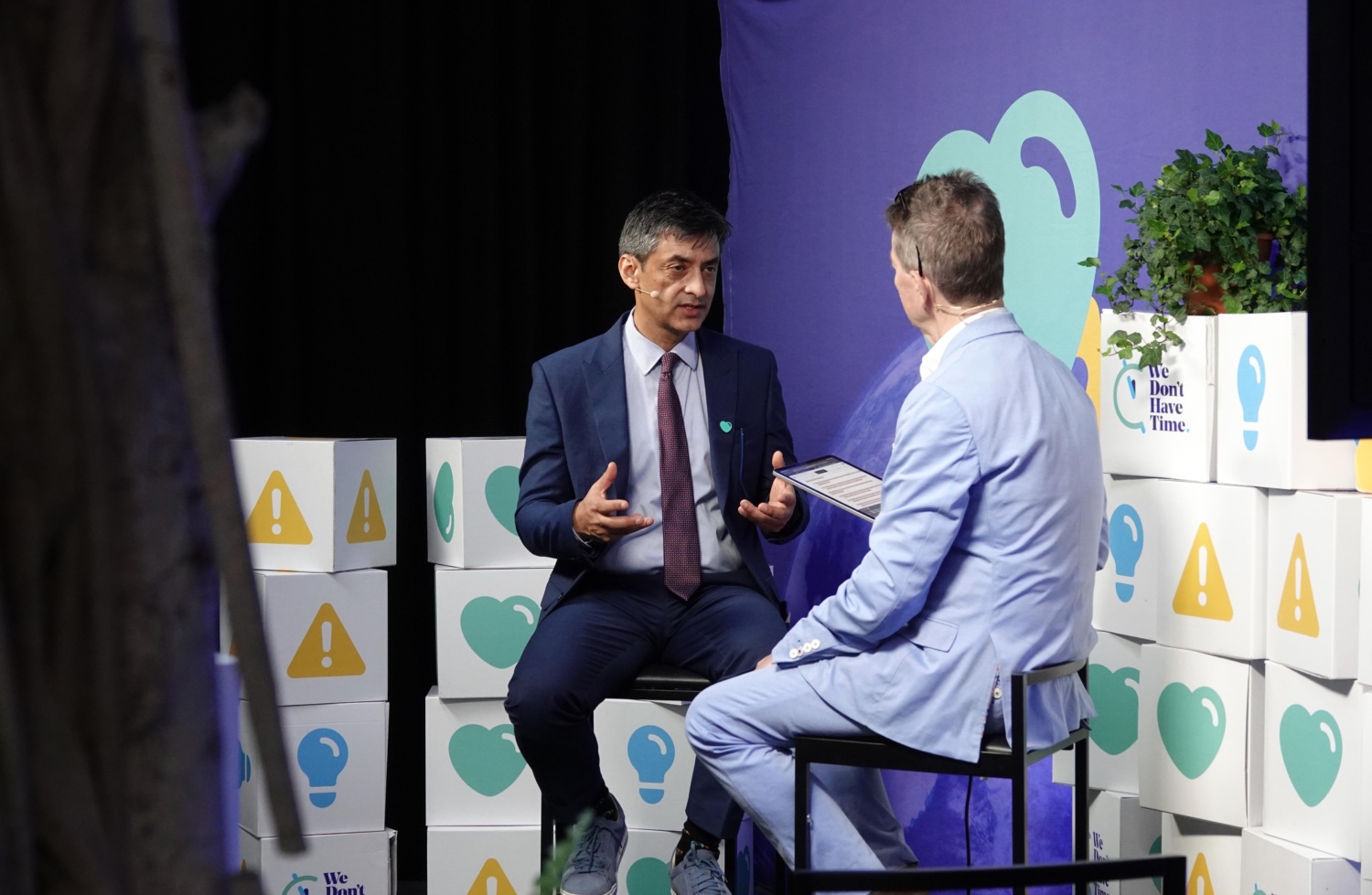
Photo by CLASP.
CLASP’s Bishal Thapa (left), Chief Strategy and Impacts Officer (speaks with Nicholas Nuttal, broadcast host at We Don’t Have Time, during the IEA’s 10th Global Conference on Energy Efficiency.
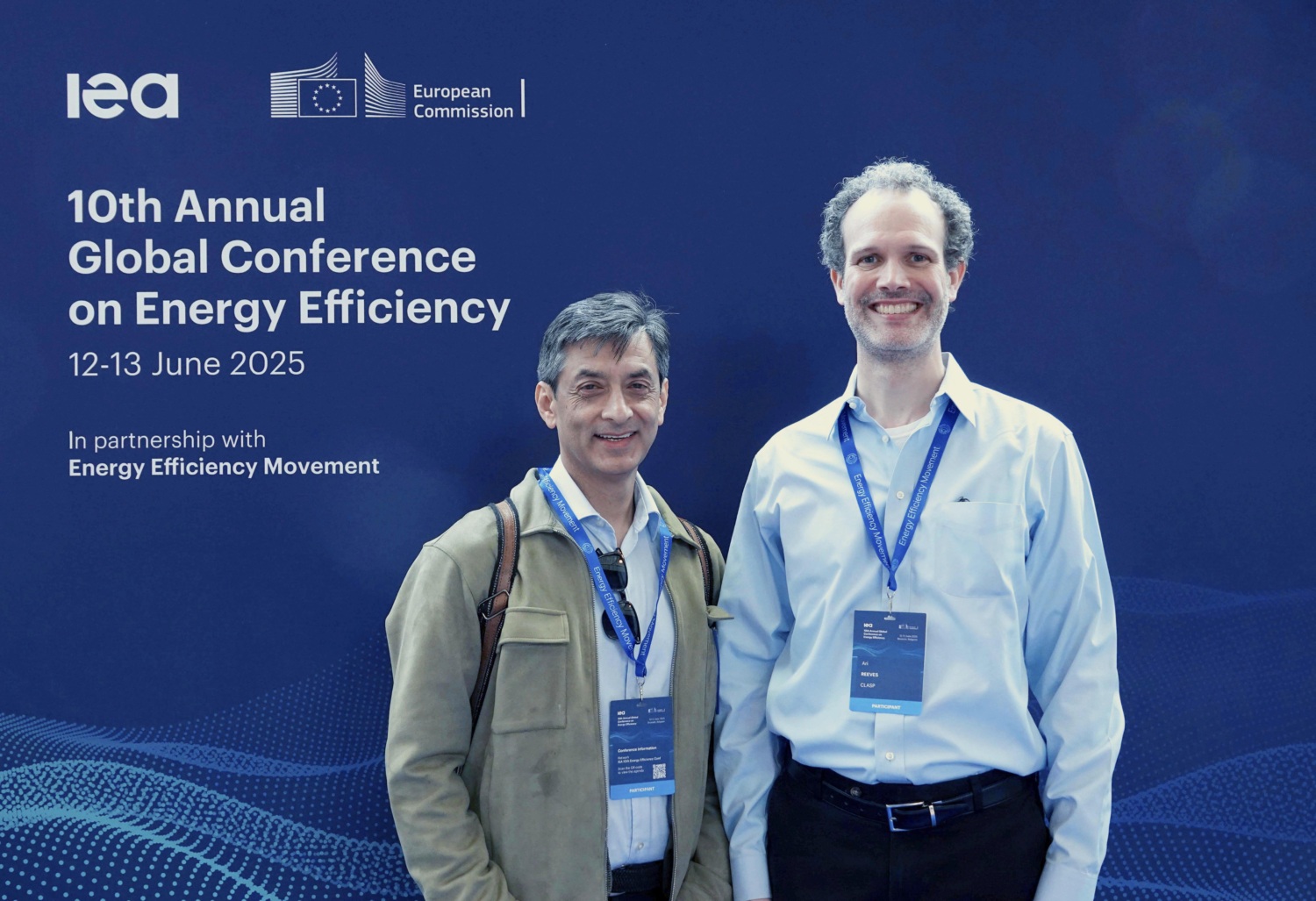
Photo by CLASP.
CLASP’s Bishal Thapa (left), Chief Strategy and Impacts Officer, and Ari Reeves, CLASP’s Senior Director of Research.
Speakers agreed that unlocking the full potential of energy efficiency requires greater public awareness, supportive policies, and investment frameworks. To help drive this shift, CLASP collaborates with policymakers and industry leaders to meet growing energy demand and deliver tangible benefits for people and the planet through energy-efficient appliances and equipment.
At the conference, Ari Reeves presented CLASP’s preliminary analysis of the energy demand reductions achievable through stronger appliance efficiency policies. He also pointed to CLASP’s analysis of the first 20 Nationally Determined Contribution (NDC 3.0) submissions, finding that appliance energy efficiency features more prominently than in previous rounds.
It’s time to scale what already works
Improving appliance energy efficiency is a proven, cost-effective way to cut emissions, strengthen climate resilience in vulnerable communities, and support sustainable development by expanding energy access. Energy-efficient appliances also reduce energy demand, lower costs for households and businesses, and ease pressure on national grids.
Appliance energy efficiency is key to simultaneously advance emissions reductions, energy access, and climate adaptation. Efficient appliances can deliver quick, measurable impacts, and they are ready to scale.
Bishal Thapa
Chief Strategy & Impacts Officer at CLASP
According to the IEA, energy efficiency has already generated major benefits across industries, households, and economies, boosting competitiveness and energy security. In 2023, energy demand in IEA countries would have been more than 20% greater if not for the contributions of energy efficiency.1
Throughout the conference, there was strong consensus: we know what needs to be done, and now is the time to act — efficiency must come first. As global momentum grows, CLASP will continue collaborating with key partners like the IEA, across sectors and borders, to put energy efficiency at the forefront of solving the world’s most pressing challenges.
0. International Energy Agency. Energy Savings. June 2025.
2025 Buyer’s Guide for Induction Cooktops
Global LEAP Awards Buyer’s Guides are catalogues of best-in-class appliances and productive use equipment appropriate for use in energy-constrained settings. This edition contains information about induction cooktops named winners and finalists in the 2024-2025 Global LEAP Awards Induction Cooktops Competition.
Nearly 2.3 billion people around the world still rely on polluting fuels, such as firewood, charcoal, and kerosene, for daily cooking. This dependence has far-reaching impacts on public health, the environment, and social and economic inequalities. Modern, energy-efficient electric cooking appliances like induction cooktops offer a powerful alternative.
The 2024–2025 Induction Cooktop Competition builds on growing efforts to expand access to high-quality eCooking solutions. This Buyer’s Guide features the competition’s winners and finalists and highlights top-performing products designed for off- and weak-grid communities. It is a practical resource for market stakeholders, including investors, funders, distributors, and other commercial actors. It provides detailed product specifications, performance metrics, and sales contact information.
The 2024–2025 Induction Cooktops Competition was administered by CLASP and funded by the IKEA Foundation and UK aid from the UK government via the Transforming Energy Access platform.
Read the ‘2025 Buyer’s Guide for Induction Cooktops’ to learn more.
About the Global Leap Awards
The Global LEAP Awards—an initiative of the Efficiency for Access coalition—is an international competition that identifies and promotes the world’s best, most energy-efficient appliances and equipment intended for use in energy-constrained settings.
0. International Energy Agency. Energy Savings. June 2025.
Find CLASP at London Climate Action Week 2025
Energy efficient appliances, lighting and equipment are at the intersection of energy security, energy affordability, economic opportunity, and climate action. Our CLASP research shows that driving the widespread adoption of efficient appliances is a key tool to slash climate-warming emissions and improving the health, economic wellbeing, and livelihoods of billions of people, including those in the most climate vulnerable regions.
From 21-29 June, CLASP is bringing Global South-led efficient appliance solutions to London Climate Action Week, exploring how scaling a range of interventions like financing, nationally determined contributions, and more can foster meaningful progress in the fight for people and the planet.
CLASP will be at the following events
Date and Time | Location | Event | Host |
|---|---|---|---|
Monday 23 June 11:30-14:00 | The Frontline Club 13 Norfolk Pl, Tyburnia, London W2 1QJ, United Kingdom | Powering Sustainable Energy Demand How investing in efficient appliance, equipment and lighting markets is key to unlocking energy access for adaptation, mitigation, and livelihoods. | CLASP |
Monday 23 June 15:50-16:50 | The RSA (Royal Society of Arts, Manufactures and Commerce) 8 John Adam Street London WC2N 6EZ United Kingdom | People-Centred Climate Action: A Focus on Global South Solutions The closing session to ZE-Gen’s day long event, “Powering Productivity, Accelerating Investment”.
| CLASP and ZE-Gen |
Wednesday 25 June 13:30-15:30 | The Event Hub @ Sustainable Ventures 5th Floor, County Hall, Belvedere Rd, London SE1 7PB | Hot Ideas for a Cooler Planet Please join CoolPact Capital for a panel discussion on sustainable cooling challenges and opportunities during London Climate Action Week. | CoolPact Capital |

For questions or additional speaking opportunities, please contact Alexia Ross (aross@clasp.ngo)
0. International Energy Agency. Energy Savings. June 2025.
At Asia Clean Energy Forum 2025, a Focus on Improving People’s Lives
At this year’s Asia Clean Energy Forum (ACEF), the conversations went beyond megawatts, decarbonization targets, and grid upgrades to a shared recognition of the importance of centering people.
For CLASP, ACEF 2025 was a chance to share what we’ve learned as well as listen, connect, and challenge ourselves and others to think more expansively about what an energy-inclusive future looks like.
Across panels and workshops, the fundamental question remained the same: How do we make clean energy truly work for people, especially those at the margins?

Building markets while driving equity
Bishal Thapa, CLASP’s chief of strategy and impacts, shared new research on appliance subsidy design. His message was clear: Financial support for low-income households should be seen not as a cost, but an investment in dignity and access. “We can build markets and drive equity at the same time,” he noted. “It’s not a trade-off.”
Meanwhile, in a session on technology innovation, our chief of programs, Jenny Corry, emphasized the power of community-driven solutions. Whether it’s a solar-powered irrigation pump in the countryside or a clean cooking appliance in a low-income urban area, the solutions that stick are the ones that respond to real lives, not just theoretical models.

CLASP

CLASP
Bringing energy efficiency to manufacturing
On the industrial front, CLASP’s technical manager in China, Hu Bo, spoke about the importance of bringing energy efficiency to the center of manufacturing. In Asian countries where factories are multiplying rapidly, embedding efficiency today can shape the trajectory of development for decades to come, he noted.
Discussing the digital energy transition, Prasun Pandey, a manager in CLASP’s India office, asked, “Who benefits from smart meters and demand-response technologies? Are we building for inclusion or for convenience?” In two well-attended sessions, he explained how digital tools can either widen or close energy access gaps, making intentional policy design critical.
Putting people at the heart of solutions
Beyond the panel discussions, the spirit of collaboration was apparent in conversations held throughout the conference venue, the Asian Development Bank’s Manila headquarters. Policymakers, practitioners, and CLASP partners spoke candidly about what’s working in the energy transition, what’s not, and what’s still missing. There was a quiet urgency to these discussions: With climate deadlines looming, the solutions we choose today will define our shared future.
For CLASP, this year’s ACEF reinforced our belief that energy efficiency is about more than saving watts and lowering emissions. It’s about reducing inequality, improving daily life, and building systems that are resilient, affordable, and fair. From efficient fans and refrigerators to smarter grids and greener factories, every piece of the puzzle matters.
As we return from Manila, we’re energized by the momentum, ready for the challenges, and more committed than ever to ensuring that people are at the heart of improving appliance efficiency and access.
0. International Energy Agency. Energy Savings. June 2025.
Carbon Credit Financing for Productive Use Appliance Markets
Long-term, sustainable growth in solar-powered appliance and equipment markets will require a significant increase in financing available to companies and customers. Carbon finance is one mechanism that could drive funding to this market, making solar-powered appliance and equipment more affordable. However, the current infrastructure for carbon finance in this sector is not fit for purpose and needs an upgrade.
This report presents a strategic approach for improving carbon credit financing into the Productive Use Appliance (PUA) sector in Africa, with a particular focus on solar- powered irrigation, cooling, and milling. It provides a comprehensive review of existing carbon methodologies applicable to PUAs and offers practical recommendations for their improvement.
The review uses a novel evaluative framework and analyzes each methodology’s use of baseline studies, monitoring, reporting and verification processes, integration of social and environmental safeguards, and alignment with both voluntary and compliance carbon markets.
Key Findings
- A review of existing methodologies for carbon projects involving solar PUAs revealed significant gaps, especially in terms of regional applicability, data consistency, and monitoring accuracy.
- These gaps limit the effectiveness of the methodologies, making it difficult to capture the true emissions reduction potential of solar PUA projects across different regions, particularly in Africa.
Recommendations
- Develop a new, consolidated solar PUA carbon methodology
- Conduct robust, standardized baseline studies
- Support innovation around digital monitoring, reporting, and evaluation
- Develop and adopt an emission reduction calculation tool
Read the “Carbon Credit Financing for Productive Use Appliance Markets” research paper for more findings.
About Efficiency for Access
Efficiency for Access is a global coalition dedicated to advancing access to energy and affordable, energy efficient appliances. It is co-managed by CLASP and Energy Saving Trust.
0. International Energy Agency. Energy Savings. June 2025.
CLASP’s New Brazil Office to Support Appliance Efficiency
CLASP is proud to announce the opening of our sixth global office in São Paulo, Brazil. Our other regional offices are in Brussels, Delhi, Jakarta, Nairobi, and Washington DC.
Why Brazil?
As a vocal supporter of climate progress in the Global South, Brazil recognizes the cross-cutting benefits of climate mitigation and adaptation to safeguard its economy, secure its energy supply, and improve the lives of its people.
Seven years of collaboration in Brazil
Since 2018, CLASP has been working closely with key Brazilian policymakers and partners to provide technical support that advances efficiency policies across a range of appliances. Improving the efficiency of Brazil’s appliances is a proven way to meet national climate targets and enhance quality of life for millions. Appliance efficiency makes critical energy services, like cooling and cooking, more accessible and affordable for all.

From 2020 to 2025, CLASP tackled policies in Brazil that will avoid more than 54 Mt CO[sub]2[/sub] through 2030.
Through this new regional office, CLASP will continue building strong partnerships and cooperation with leaders in government agencies, utilities, and the private sector. We aim to drive ambitious energy efficiency policies, improve local industry’s ability to produce more efficient appliances, and increase access to basic energy services. The office also strengthens CLASP’s commitment to impact in Latin America and the Caribbean.
Staffed with local experts
CLASP’s São Paulo office is staffed by local experts in appliance energy efficiency, bringing decades of experience and partnership expertise.
CLASP Brazil Team



Alessandra Barbosa
Technical Consultant, Brazil
0. International Energy Agency. Energy Savings. June 2025.