
Power for All Joins the CLASP Family
Nairobi, Kenya, 11 February 2026 – Strong and agile partnerships have been key to unlocking climate progress and sustainable development objectives. Today, a new collaboration emerges: we are delighted to announce that Power for All will join forces with CLASP.
CLASP is an international nonprofit organization dedicated to improving appliance and equipment energy efficiency, with 25 years of expertise and offices on five continents. Since 2015, Power for All has played a crucial role in the energy access sector, leading impactful campaigns, partnerships, and research to help end energy poverty worldwide.
Now, Power for All joins CLASP. By embedding Power for All’s well-honed campaign and partnership approaches in CLASP’s work, we will strengthen engagement with energy suppliers as well as our collective capacity to elevate appliance and equipment efficiency as a key solution to powering jobs and livelihoods while mitigating climate pollution.
CLASP CEO Christine Egan sees this union as a strategic move for making faster, practical progress:
Since its founding, Power for All has encouraged the distributed renewables sector to expand its thinking and partnerships for improved impact, for example, to make smarter connections with utilities. By joining forces, CLASP and Power for All will advance the integration of energy supply and energy demand. This is a critical move for sustainably getting people the energy services they need, and a direction that CLASP recently articulated in our flagship research, The Missing Piece of Energy Access. Together, our research and stakeholder networks will create a platform to super-charge climate-friendly prosperity. —Christine Egan
Since 2015, Power for All has challenged the status quo and encouraged the sector to probe deeper and better understand how best to drive a more inclusive global energy system. Over the years, they have led boundary-pushing research, publishing sector-defining report series such as their “Powering Jobs Census,” which tracks employment trends in the distributed renewable energy sector and provides critical labor market insights in key countries like Ethiopia, India, Kenya, Nigeria, and Uganda. Additionally, their ground-breaking Utilities 2.0 campaign sought to demonstrate the benefits of combining centralized and decentralized energy into an integrated energy network. This first-of-its-kind campaign showed that doing so could deliver customer-centric, clean energy solutions faster and more cheaply.
Kristina Skierka, founder of Power for All, reflects on the organization’s legacy and its new chapter:
Power for All was born from the companies that built the decentralized renewable energy sector in order to help accelerate the end of energy poverty. The combined efforts of Power for All and 500+ campaign partners in our decade of action helped connect over 500 million new energy users around the world. I’m encouraged by CLASP’s institutional strength, mission alignment, and global reach to steward the campaign’s legacy, and I remain deeply grateful to every advocate, ally, and team member who helped build this movement. —Kristina Skierka
Over the coming months, as this union takes shape, expect revived and historical Power for All offerings across CLASP channels.
Regarding the partnership, Alba Topulli, outgoing CEO at Power for All, and incoming Senior Director of Clean Energy Access at CLASP, adds:
CLASP has built one of our sector’s most trusted platforms through decades of shaping appliance markets and advancing energy efficiency, grounded in how people actually use energy. Power for All’s years of campaigning and coalition-building have shown us that systems change happens when we move together as a sector—aligning supply and demand, connecting public and private actors, and ensuring centralized and decentralized systems work as one. Together, we’re committed to a shift toward integrated energy solutions that put people at the center and make demand-side initiatives foundational to how energy access is planned, financed, and delivered. —Alba Topulli
Alba Topulli joins CLASP as Senior Director, Clean Energy Access
Adam Browning, Chair of the Board for Power for All, said:
Power for All has always championed bold collaboration and systems-level thinking to accelerate universal energy access. CLASP’s trusted leadership, global reach, and deep technical expertise offer a strong platform to expand our collective impact, grounded in shared purpose and a belief that demand-side solutions must be central to the energy access agenda. The Board is proud to support this strategic partnership, which honors Power for All’s work and positions it for greater scale and impact in the years ahead. —Adam Browning
CLASP and Power for All are delighted to unite forces and are confident that together, we can achieve even greater impact for people, enhanced prosperity, and the planet.
Watch this space as Power for All officially joins the CLASP family and collaborative efforts are announced. Follow us on LinkedIn at @CLASP and on Bluesky at @clasp-ngo.bsky.social.
Alba Topulli Joins CLASP as Senior Director, Clean Energy Access
CLASP welcomes Alba Topulli as the new Senior Director of Clean Energy Access at CLASP. In this role, Alba will lead CLASP’s efforts to scale jobs and economic opportunity and strengthen climate resilience through improved access to affordable and efficient appliances and equipment. Alba will be based in CLASP’s Nairobi office.
Over the last two decades, Alba has worked at the intersection of business, government, and the social sector, focusing on how strategy, research, and innovation can translate into scalable solutions that expand energy access. Much of that experience has been deeply collaborative, working directly with teams and partners in Afghanistan, Cambodia, Kenya, Liberia, Mozambique, Sierra Leone, and Uganda to design and deliver market-led, modern energy solutions responsive to local contexts.
Most recently, Alba served as Chief Executive Officer of Power for All and led the organization through a period of strategic evolution, positioning the campaign for its next phase of impact and integration with CLASP. Prior to serving as CEO of Power for All, Alba was Deputy Managing Director at Mercy Corps, where she helped shape global strategy for Energy 4 Impact, the organization’s energy innovation platform. Earlier in her career, she led market development initiatives across Asia and Africa, designing interventions that strengthened energy access sector performance and unlocked investment in off-grid energy markets.

Alba describes on how the sector is shifting and how her new role at CLASP responds to these changes:
We’re at an inflection point for energy access. Most people without electricity now live near existing grid infrastructure, where demand is growing but traditional electrification approaches can’t serve them sustainably. There’s growing recognition that centering demand—treating efficient appliances and equipment as fundamental as supply infrastructure—is critical for utilities and the distributed renewable energy sector alike. CLASP’s decades of technical expertise and the trusted platform it has built uniquely position it to help the sector navigate this shift. I’m excited to work with the team and partners to advance demand-side solutions as central to the SDG7 agenda. —Alba Topulli
CLASP is delighted to welcome Alba to the team and, under her leadership, looks forward to strengthening the organization’s mission and advancing integrated approaches that position efficient appliances and equipment as essential to inclusive economic growth and climate action.
Global Distributors Collective Joins Effort to Bring Clean Energy and Appliances to More Homes and Businesses Worldwide
The Global Distributors Collective (GDC) is the newest member of the Energy Access Institutions Facility, an initiative led by CLASP to help more people gain access to reliable and affordable energy.
Extensive network and wider reach
For nearly a decade, GDC has worked with locally owned businesses (or ‘last mile distributors’), globally, to get efficient products like solar-powered lights, clean cookers, and water filters, to underserved homes and communities. By partnering with the Facility, GDC joins a group of like-minded institutions committed to delivering energy access across the continent.
GDC’s impact is significant. Its network includes 300 distributors across more than 60 countries, which collectively reach more than 60 million people with beneficial household products, including essential sustainable energy products. These distributors operate at the ‘last mile’; the elusive final stretch between services and the often rural, low-income or otherwise marginalized people trying to access those services.
Focused scope for meaningful impact
GDC’s unique selling point is its strong focus on small, locally owned businesses, many of which face a lot of challenges growing or attracting investment. The Collective helps by providing practical training, tools, and support to help these businesses strengthen their operations; making industry knowledge available and more readily accessible; and linking businesses to investment opportunities. Equally important, GDC amplifies the voices of those businesses in decision-making spaces at the global level, where they have traditionally lacked a seat at the table.
Last-mile distributors are vital to connecting the billions of people worldwide who still lack access to potentially transformational energy products. GDC’s partnership with the Facility will enable us to ramp up our work providing support and services that strengthen and grow these businesses—ultimately helping them to reach even more underserved customers.
Jessica Utichi
Head of the Global Distributors Collective
We’re excited to welcome GDC to the Facility. Their unique blend of local expertise and experience, as well as their perspective on last-mile energy access in different geographies, will help us create a more practical, people-centered approach to energy and appliance access, and strengthen our role in supporting those leading the way.
Emmanuel Aziebor
Senior Director Africa, CLASP
The Facility partners with institutions that strengthen off-grid energy markets and help companies succeed and deliver not just electricity, but the skills, tools, and appliances that allow families and businesses to benefit from it. With GDC on board, the coalition is even better positioned to reach more people with solutions that work.
——
About the Energy Access Institutions Facility
The Energy Access Institutions Facility, or “The Facility,” is a joint donor initiative to support and strengthen the institutions that are essential for the achievement of Sustainable Development Goal 7, universal access to affordable, reliable, sustainable, and modern energy by 2030. The Facility is supported by DOEN Foundation, British International Investment, Good Energies Foundation, the Swedish International Development Agency (Sida), and the UK Government via the Transforming Energy Access (TEA) platform and is managed by CLASP.
This material has been funded by UK International Development from the UK Government; however, the views expressed do not necessarily reflect the UK Government’s official policies.
Reflections on the Productive Use Financing Facility
The Productive Use Financing Facility (the Financing Facility), an innovative program implemented by CLASP and supported by the Global Energy Alliance for People and Planet (the Alliance), makes energy-efficient appliances more affordable to consumers and businesses in emerging markets in Africa.
As the Financing Facility celebrates its first anniversary and concludes the initial phase of this expanded program, we look at the lives and communities it has already transformed and consider paths towards reaching our goals to help generate green jobs and equitable opportunities for thousands across Africa.
Empowering communities with the right tools
A single appliance has the potential to improve the quality of life for an entire household or community. Women entrepreneurs with access to an off-grid refrigerator can sell cold beverages, attracting customers and increasing their income. Solar-powered mills can provide a central flour-processing location for smallholder farmers in remote communities, allowing them to offer new products, reduce workloads, and avoid transportation costs.
Despite the potential of these technologies, many businesses and households that need them can’t afford them due to high costs and limited financing options. For the 750 million–plus people worldwide who live without access to electricity and the approximately 700 million living in extreme poverty, energy-efficient appliances are still out of reach.
The Financing Facility’s role in driving access and opportunity
The Financing Facility offers a solution: make these life-changing appliances more affordable to those who need them. By providing grants, subsidies, and technical assistance, the Financing Facility enables small businesses, entrepreneurs, and households to acquire energy-efficient appliances at lower prices.
The initiative’s two-year pilot project ran from 2022 to 2024, worked with 24 companies across six countries, deployed nearly 16,000 appliances, and directly improved the lives of over 58,000 households. In June 2025, the Financing Facility entered a second phase with the announcement of its expansion and a $6.1 million USD funding boost. During this phase, the initiative aims to create over 3,000 green jobs through the sale and use of over 10,000 appliances in four years.
One year on: expanding reach and impact
A new cohort of 11 appliance companies, announced in November 2025, remains focused on productive-use appliances (in other words, technologies people use to generate income) like grain mills, solar water pumps, walk-in cold rooms, and refrigerator/freezers. From this cohort alone, the Financing Facility aims to deploy over 2,000 appliances across Kenya to women-owned and -led businesses.
The second cohort selection, launching in February 2026, will be open to appliance companies in Ethiopia, Nigeria, and Kenya. CLASP will announce and detail the process via the Financing Facility web page, LinkedIn, and Bluesky.
Committed to the most underserved communities
While electrification is expanding globally, deliberate efforts must be made to ensure the sustainability and commercial viability of renewable energy infrastructure. Programs like the Financing Facility place appliances into people’s hands and homes, energizing ambition and output amongst local businesses and farms. Increased incomes from these activities drive economic growth, create jobs, and improve the quality of life, giving communities the tools to thrive. For example, Helen Obinna, a small business owner in Nigeria, has witnessed her business transform: her refrigerator can keep products cool despite inconsistent power, and sales of cold beverages have substantially increased.
About the Productive Use Financing Facility
The Financing Facility is an innovative program that provides grants, subsidies, and technical assistance to suppliers and distributors to lower appliance prices and reach more customers. This makes it easier for small businesses, entrepreneurs, and households to buy energy-efficient technologies, such as solar water pumps, mills, and refrigerators, at favorable prices.
This program is supported by the Global Alliance for People and Planet.
For more information, read the Productive Use Financing Facility 2.0 press release, contact financing@clasp.ngo, and follow us on LinkedIn for regular updates on how the Financing Facility is benefiting people and our planet.
About CLASP
CLASP is the leading global authority on efficient appliances’ role in fighting climate change and improving people’s lives. With 25 years of expertise and offices on four continents, CLASP collaborates with policymakers, industry leaders, and other experts to deliver clear pathways to a more sustainable world for people and the planet.
About the Global Alliance for People and Planet
The Global Energy Alliance for People and Planet works for a world where everyone has access to affordable, reliable, clean electricity and the means to use it to improve their lives. Our Alliance builds transformative public, private, philanthropic partnerships to end energy poverty and accelerate green economic opportunity. Founded in 2021 by The Rockefeller Foundation, IKEA Foundation, and Bezos Earth Fund, we unlock finance, strengthen institutions and transform markets, delivering progress anchored in deep community engagement. By uniting actors across the value chain, from households to heads of state, we go beyond individual projects to drive lasting systems change. With work in more than 30 countries across Africa, Asia, Latin America and the Caribbean, our Alliance aims to reach 1 billion people with clean electricity, prevent 4 billion tons of carbon emissions and create or improve 150 million jobs. For more information, please visit energyalliance.org.
Brazil Put a Spotlight on its Efficiency Agenda at COP30
In recent years, Brazil has taken initial steps toward a more sustainable future powered by energy efficiency. As the host of COP30, held in Belém in November, Brazil put a spotlight on this smart climate solution for the world to see.
The country is already a global leader in sustainable energy, generating 89% of its electricity with renewables. However, rapidly rising energy demand and decreased hydropower capacity are forcing policymakers and utilities to reevaluate the current energy mix.
Global warming and Brazil’s deep income inequality further complicate this challenge. For example, Brazil’s summers are growing hotter; in 2023, the country hit a new record temperature of 112.6° F (44.8° C). As a result, air conditioning, once considered a luxury, is becoming necessary for health and productivity. But today, air conditioning is found in only 20% of all homes, concentrated mainly in higher-income households.
The challenges lower-income Brazilians face in accessing energy services like air conditioning are reflected in the fact that almost half of the lowest-income Brazilians spend more than half of their household income on electricity and gas.

Air conditioners above a Rio de Janeiro street.
Credit: CLASP
Brazil’s solution for booming energy demand and high electric bills
Brazil’s leaders increasingly view efficiency as a cost-effective, climate-friendly tool for meeting the country’s energy needs while addressing economic barriers to energy access.
Analysis reveals that, in the absence of other interventions, meeting skyrocketing energy demand would require increasing domestic natural gas production by up to 300%. To avoid this, the government can embrace energy efficiency, making services like cooking and cooling less energy-intensive and therefore reducing overall energy demand.
Appliance efficiency has provided early wins in Brazil, although there are major opportunities to do more. New policies for air conditioners and LED lights are making the models available in Brazil more efficient. This, in turn, makes these appliances more affordable to operate—and therefore accessible to more people.
COP host puts efficiency on the podium
In conversations throughout COP30, the Brazilian government and media showcased energy efficiency as a key tool for meeting national and global climate targets, growing the country’s economy, and delivering accessible energy services for all.

Panelists from COP30 ABDI energy efficiency event.
In his speech to negotiators and delegates at the COP’s opening plenary session, Brazilian Vice President Geraldo Alckmin underscored the importance of meeting the COP29 pledge to double energy efficiency by 2030. “This COP must mark the beginning of a decade of acceleration and delivery—the moment when rhetoric gives way to concrete action, and when all parties move from setting targets to fulfilling them,” he said.
During a day dedicated to energy efficiency, the Brazilian Agency for Industrial Development (often referred to by its Portuguese acronym, ABDI) put together a packed agenda bringing together leaders from government, businesses, and international organizations to discuss how Brazil can achieve its goals through efficiency. During a session about the role of efficiency in the energy transition, speakers noted that a significant advantage of efficiency compared to other solutions is that technologies like efficient industrial equipment already exist and can be implemented immediately.
Another event organized by Casa Civil, the powerful organization run by Brazil’s presidential chief of staff, focused on the role of efficiency in achieving a just energy transition and expanding the Brazilian industry’s presence in the global marketplace. The event highlighted the fact that local appliance manufacturers can increase sales by making their products more efficient, which allows them to match international benchmarks and sell their products around the world.
Major Brazilian media outlets also jumped into the efficiency conversation at COP. Folha de São Paulo, the country’s largest newspaper, co-hosted a session with the Crux Alliance, a philanthropic organization focused on global climate policy, on leveraging demand-side strategies to deliver on renewable energy and efficiency targets.
Carving a sustainable path forward
With COP delegates from around the globe now back home, they have many opportunities to keep energy efficiency front of mind—and strong reasons for doing so.
“Efficiency lowers costs, expands access, and strengthens domestic industry,” said Edilaine Camillo, leader of CLASP’s Brazil program. “The more elements we add to this puzzle, the clearer it becomes how interconnected the energy transition is—and how it can positively impact multiple sectors of the economy and people’s everyday lives.”
Powering Progress: Three Local Appliance Companies Generate Job and Income Growth Across Africa
CLASP has selected 11 appliance companies to receive funding in support of job and income growth in sub-Saharan Africa. This support will be provided through the Productive Use Financing Facility (the Financing Facility), an initiative managed by CLASP and supported by the Global Energy Alliance for People and Planet (the Energy Alliance). The Financing Facility aims to accelerate the adoption of clean, energy-efficient appliances to power small businesses and support smallholder farmers, potentially transforming the lives of millions across Africa.
Baridi, Irri-hub, and Koolboks are three of the 11 impact-driven companies selected for the program whose work is already transforming the continent.
Solar appliances drive economic growth
For a smallholder farmer or business owner in sub-Saharan Africa, even a single appliance can go a long way. For example, a CLASP survey found that business owners in Uganda who purchased an off-grid refrigerator were able to increase their incomes twofold.
For women, an appliance can be a major driver of income. In the Finance Facility’s pilot program, households where women purchased an appliance saw incomes increase an average of 94%. From selling cold drinks using a refrigerator-freezer to growing high-value crops with a solar water pump, equitable access to reliable and affordable appliances can transform not only individual lives, but entire communities. Solar-powered appliances can reduce the physical strain attached to traditional working conditions, expand business opportunities, improve nutrition, and create local jobs.
Three African appliance companies making an impact
For Facility grantees like Baridi, Irri-hub, and Koolboks, this kind of transformative impact is what drives their work.
Baridi supplies solar-powered chilling technologies to smallholder farmers in Kenya, ensuring that their hard-earned produce remains fresh and market-ready.

Photo credit: Baridi

Photo credit: Baridi
Koolboks designs and distributes affordable solar-powered refrigerator-freezers, ensuring access for small businesses and farmers across the region. By providing reliable cold storage, Koolboks helps entrepreneurs expand product offerings and reduce the economic risks tied to spoilage.

Photo credit: Koolboks
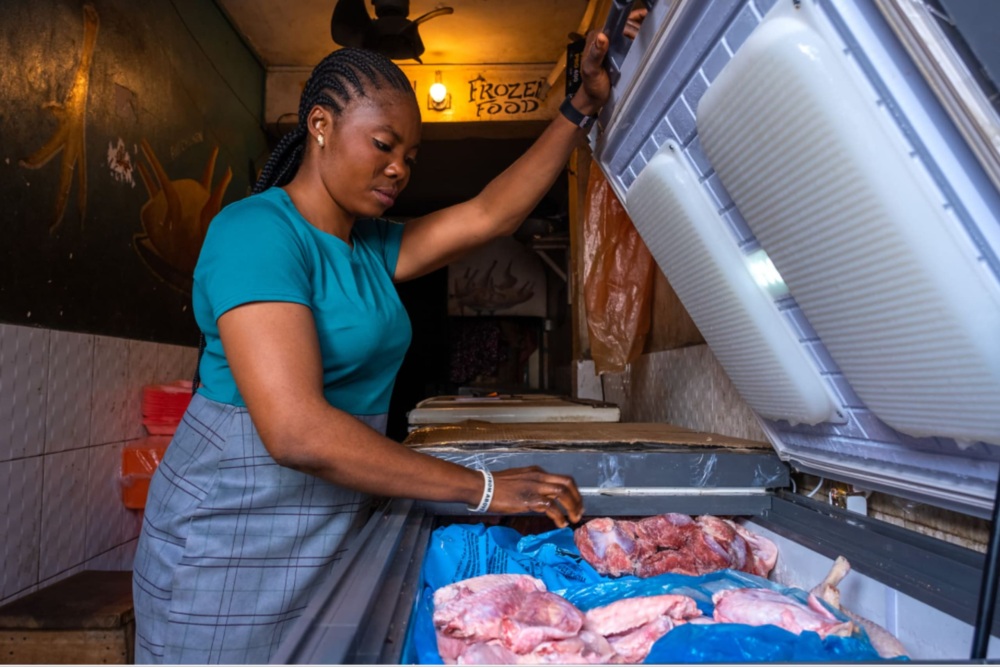
Photo credit: Koolboks
Irri-hub is a provider of affordable water management solutions, including solar water pumps, that help smallholder farmers increase yields, improve crop predictability, and expand production.
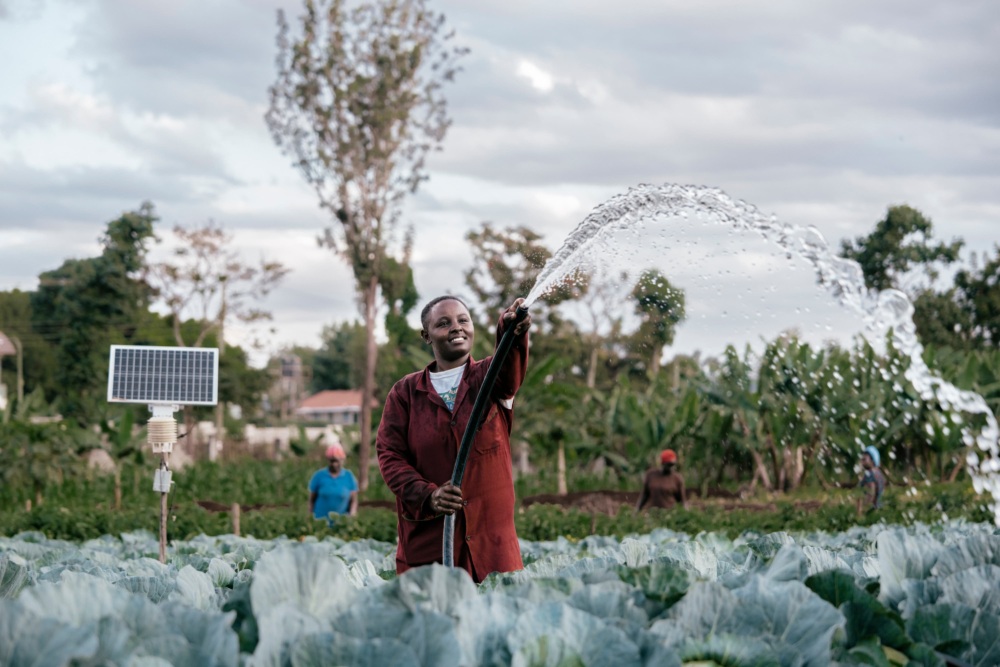
Photo credit: Irri-hub

Photo credit: Irri-hub
Solar water pumps offer an enormous amount of income and job growth potential. CLASP’s report “Leave No One Behind: Bridging the Energy Access Gap with Innovative Off-Grid Solar Solutions” found that 87% of farmers in Rwanda who obtained a solar water pump reported an increase in their monthly incomes, while 64% reported hiring more laborers and growing more crops.
Enduring partnerships are the key to transforming lives and livelihoods
Both Baridi and Koolboks have longstanding partnerships with CLASP. Baridi was a finalist in the 2022 Global LEAP Awards Off-Grid Cold Chain Challenge, while Koolboks received funding from the first round of the Financing Facility.
This round of the Financing Facility is Irri-hub’s first partnership with CLASP.
From long and enduring partnerships to new collaborations, these kinds of local, on-the-ground partnerships are key to helping transform the sector, bringing life-changing appliances to the millions who need them. CLASP remains committed to strengthening these relationships and investing in partners who are creating green jobs and equitable opportunities across Africa.
–
About the Productive Use Financing Facility
The Financing Facility is an innovative program that provides grants, subsidies, and technical assistance to suppliers and distributors, helping to lower appliance prices and expand customer bases. The Facility makes it easier for small businesses, entrepreneurs, and households to buy energy-efficient technologies, such as solar water pumps, mills, and refrigerators, at favorable prices.
This program is supported by the Global Alliance for People and Planet .
For more information, read the Productive Use Financing Facility 2.0 press release, contact financing@clasp.ngo, and follow us on LinkedIn for regular updates on how the facility is benefiting people and our planet.
About CLASP
CLASP is the leading global authority on efficient appliances’ role in fighting climate change and improving people’s lives. With 25 years of expertise and offices on four continents, CLASP collaborates with policymakers, industry leaders, and other experts to deliver clear pathways to a more sustainable world for people and the planet.
About the Global Alliance for People and Planet
The Global Energy Alliance for People and Planet works for a world where everyone has access to affordable, reliable, clean electricity and the means to use it to improve their lives. Our Alliance builds transformative public, private, philanthropic partnerships to end energy poverty and accelerate green economic opportunity. Founded in 2021 by The Rockefeller Foundation, IKEA Foundation, and Bezos Earth Fund, we unlock finance, strengthen institutions, and transform markets, delivering progress anchored in deep community engagement. Our Alliance aims to reach 1 billion people with clean electricity, prevent 4 billion tons of carbon emissions, and create or improve 150 million jobs. For more information, please visit www.energyalliance.org and follow us on X at @EnergyAlliance.
Making the Switch: The Deployment Handbook for Institutional eCookers
This report, “Making the Switch: The Deployment Handbook for Institutional eCookers,” conducted by Efficiency for Access in partnership with the Modern Energy Cooking Services (MECS) programme, aims to inform practitioners seeking advice on the design, deployment, and operation of commercially available institutional eCooking technologies and provide actionable recommendations for scaling eCooking in institutions in Kenya. This guide covers commercially available institutional eCooking technologies designed for both on- and off-grid applications. It provides:
- An overview of the current state of eCooking in institutions in Kenya
- Step-by-step advice for the pre-assessment, planning, installation, and commissioning of eCooking solutions
- Opportunities to scale the adoption of institutional eCooking
Download “Making the Switch: The Deployment Handbook for Institutional eCookers” to access key findings, recommendations, and guidance on electric cookers in institutional settings.
About Efficiency for Access
Efficiency for Access is a global coalition dedicated to advancing access to energy and affordable, energy-efficient appliances in underserved communities. It is a catalyst for change, accelerating access to off- and weak-grid appliances that boost incomes, avoid carbon emissions, improve quality of life, and support sustainable development. The coalition is co-chaired by UK aid from the UK government via the Transforming Energy Access platform and the IKEA Foundation.
About the MECS programme
Modern Energy Cooking Services (MECS) is an eleven-year research programme funded by UK Aid (FCDO). MECS is a geographically diverse, multicultural, and transdisciplinary team working in close partnership with NGOs, governments, the private sector, academia, research institutes, policy representatives, and communities in 16 countries of interest to accelerate a transition from biomass to genuinely ‘clean’ cooking.
In seeking to spark a new approach to clean cooking, the MECS programme researches the socio-economic realities of a transition from polluting fuels to a range of modern fuels. Whilst the research covers several clean fuels, the evidence is pointing to the viability, cost-effectiveness, and user satisfaction that energy-efficient electric cooking devices provide. Significant progress has been made in access to electricity in the last decade, but these gains are sometimes disconnected from the enduring problem of clean cooking. By integrating modern energy cooking services into the planning for electricity access, quality, reliability and sustainability, MECS hopes to leverage investment in renewable energies (both grid and off-grid) to address the clean cooking challenge.
CLASP Cooks Up Change at Brussels Event
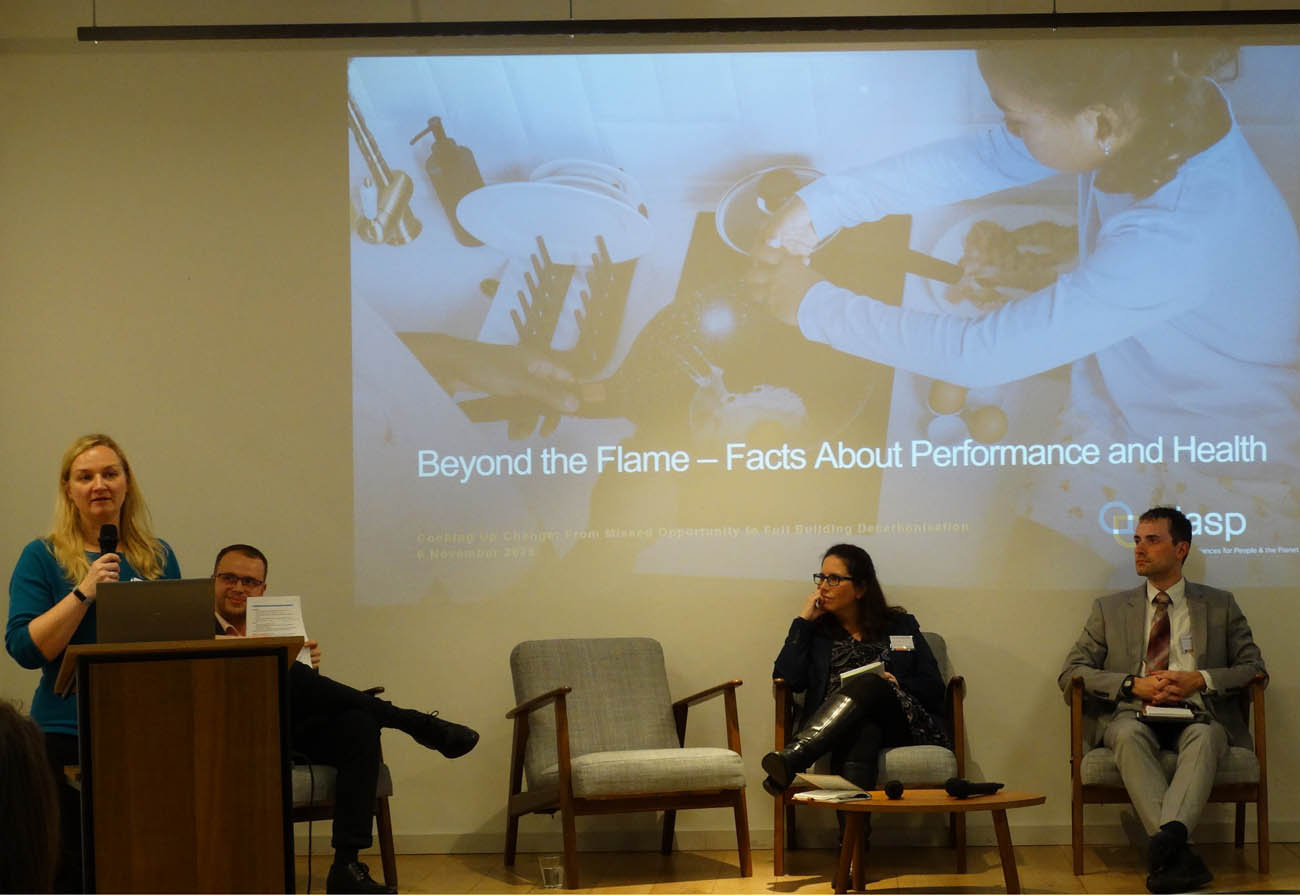
In early November, CLASP joined global experts in Brussels, Belgium, to discuss the path toward electrifying cooking in Europe—a crucial but often overlooked step in building decarbonization. The daylong meeting brought together representatives from CLASP, E3G, ECOS, European Public Health Alliance (EPHA), Global Cooksafe Coalition, PSE Healthy Energy, Respire, and Universitat Jaume I.
The event took place as the European Union revises its ecodesign product regulations for cooking appliances. Today, less than half of Europeans use electricity to cook food, although clean cooking is more efficient, healthier, safer, and affordable than cooking with gas. The revision is an important opportunity to bring these benefits to people across the European market, while also making it easier for consumers to compare different hob models.
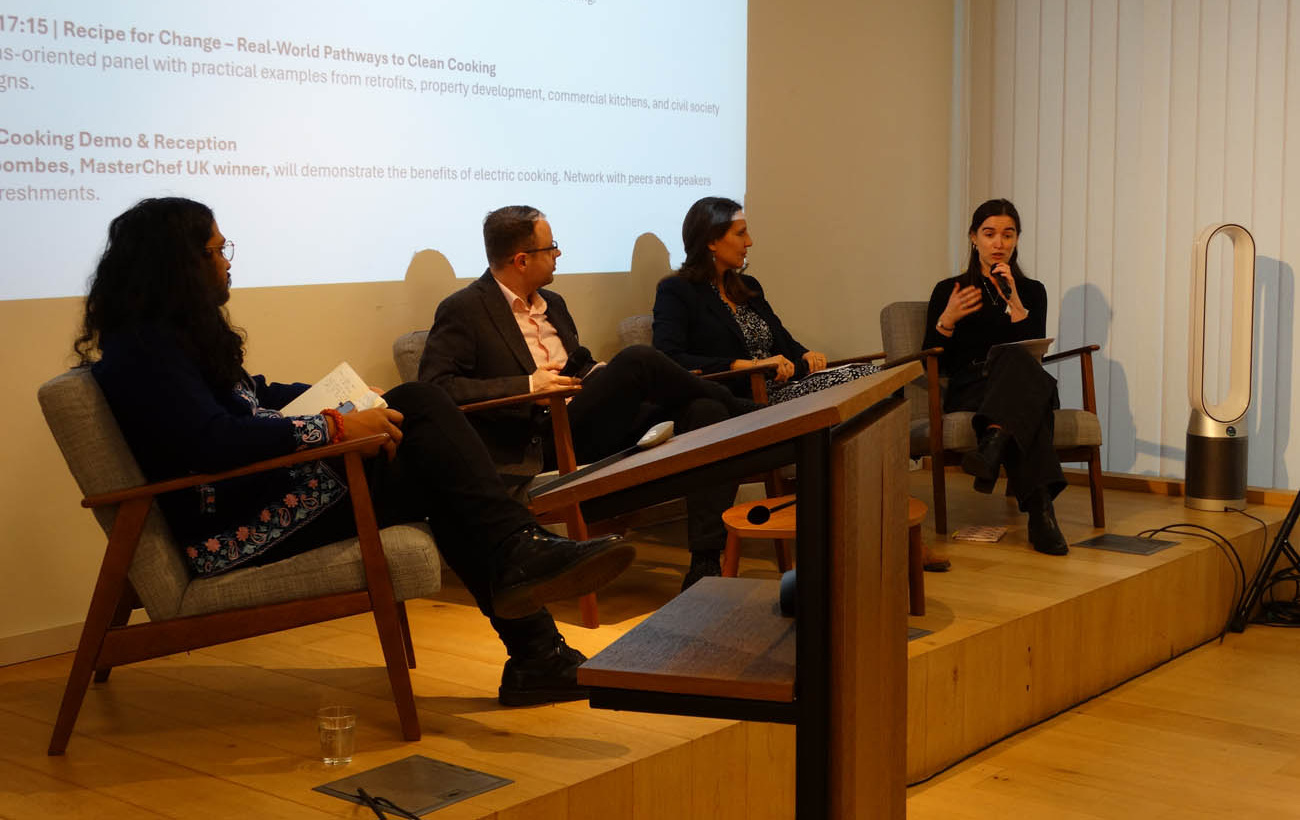
In panel discussions, speakers emphasized that cooking electrification is an important piece of the building decarbonization puzzle and noted that full household decarbonization may not happen without targeted support for cooking electrification. They also stressed the importance of an equitable, universal transition to clean cooking and discussed the critical role of consumer education in facilitating this transition.
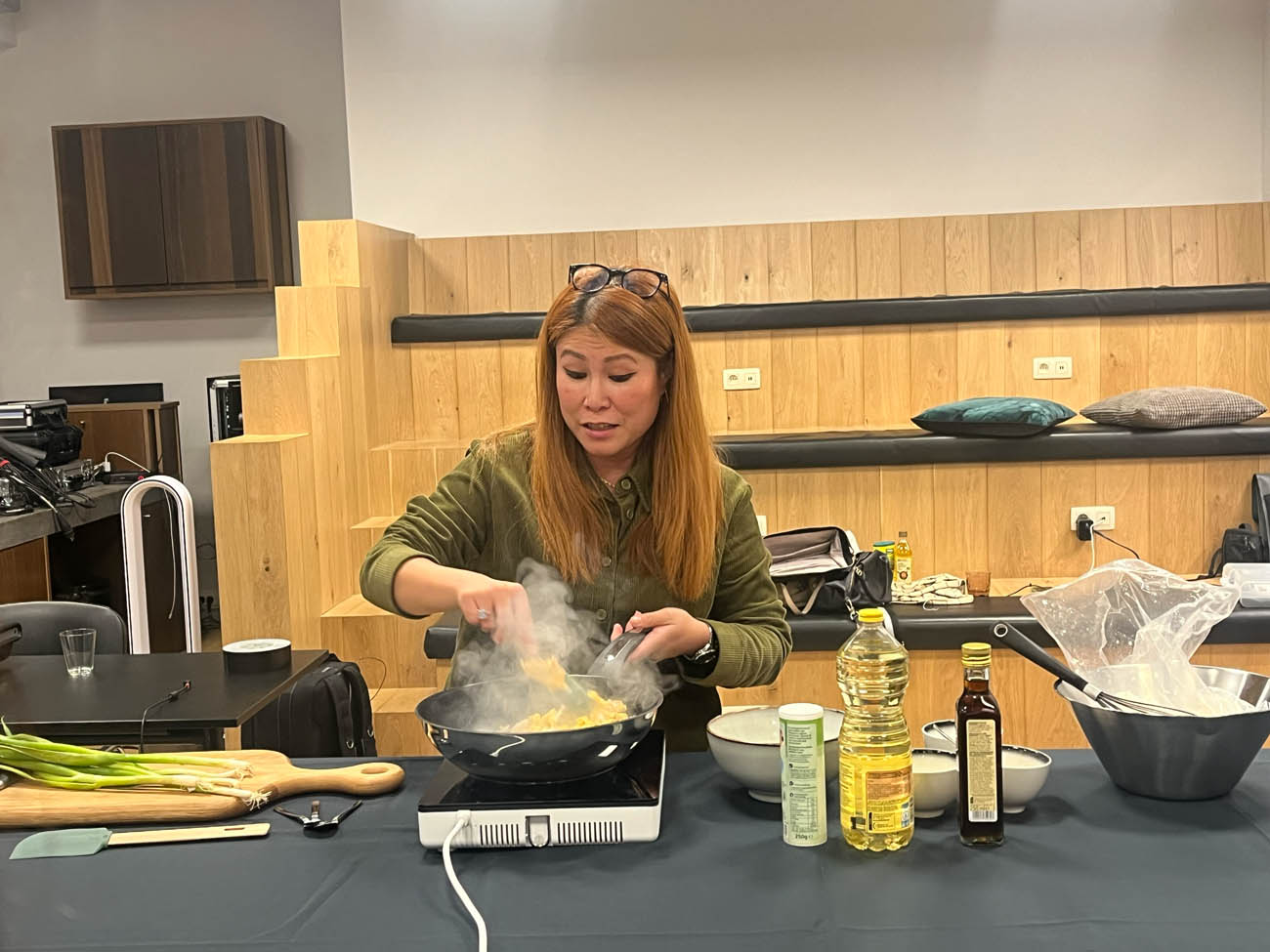
The event featured a live induction cooking demo and food tasting with MasterChef UK winner Ping Coombes. Coombes demonstrated the versatility of electric cooking by creating a smoky flavor—often associated with open-flame cooking—in a wok heated by an inexpensive portable induction hob.
Learn more about CLASP’s work on electrifying cooking in Europe.
Efficient Appliances are a Powerful Tool for Creating Jobs and Growing Economies
As technological advances like artificial intelligence and advanced robotics reshape lives and economies around the world, it can be difficult to imagine living without even the most basic electronic devices: lights, for example. But today, this is the daily reality for millions of people.
In recent decades, governments and other actors have made significant progress in extending electricity to those who lack it, whether in the form of power grids, microgrids, or distributed solar. Today, the communities that remain without power are those that are the hardest to reach. Located primarily in sub-Saharan Africa, they’re cut off from the energy needed for economic development.
Emmanuel Aziebor, who leads CLASP’s Africa program, has spent years working on solutions to this challenge. He spoke to Marina Baur about the critical role of appliances in reducing poverty on the continent.
*
Marina Baur: Globally, there are 666 million people who aren’t connected to the electric grid. More than a billion others are dealing with frequent power outages because their grids are unreliable. A lot of the people in both groups live in sub-Saharan Africa. Can you give us a sense of how the lack of reliable electricity shapes their lived reality?
Emmanuel Aziebor: Well, if you look at the data around electricity access in sub-Saharan Africa, some countries have much better statistics than others. In countries like Ghana and Kenya, over 70% of the population has electricity. But the reality is, if you go to any of these countries, there are still people with no access to even basic electricity. And by that, I mean they’re in darkness for much of the time; their only form of lighting is something like candles and kerosene lanterns. If they’re lucky, maybe they have a solar lamp.
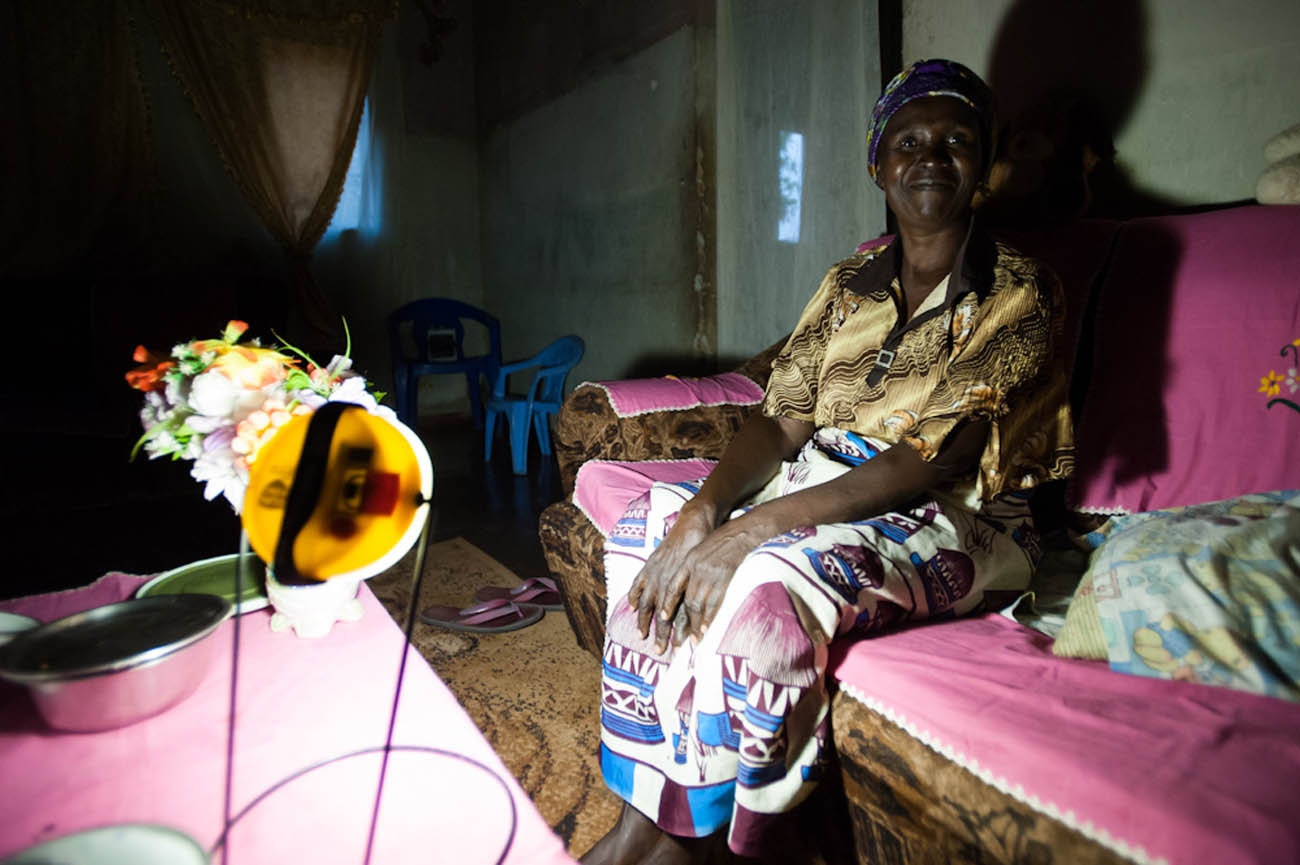
Woman with solar lamp.
Credit: Steve Woodward
Many of these communities are only about a kilometer away from the nearest grid. This happens mostly as a result of what we can think of as geographical difficulties: Maybe the community is on an island, or maybe the location is very sparsely populated—most of the time, the government only electrifies communities that have at least a few hundred people. This can become a self-fulfilling prophecy, since people leave those areas for the cities in order to get electricity and job opportunities.
So that’s one side of the energy access issue in Africa: Some people just don’t have electricity. Another side is that some people who are connected to the power grid can’t always rely on it when they need it. In countries like Nigeria, Ghana, Kenya, you still have a lot of blackouts. These happen in part because the utilities are in so much debt, which affects how efficiently they can operate.

Credit: Dreamstime
These blackouts don’t only affect people in their personal lives; they also affect businesses. We see this at CLASP. Our team in Nairobi works from home several days a week, but sometimes they have to come to the office anyway because of blackouts where they live. The office is the only place they’re sure they can get the electricity they need to be productive, because the generator in our building is always going to run.
People in all kinds of businesses are affected by electricity problems. Think about agriculture. Even though we have a lot of freshwater resources in Africa, it’s often hard for farmers to irrigate their crops because you need pumps to move that water and many farmers don’t have electricity to power those pumps. And if farmers can’t irrigate their crops, the crops don’t grow as well as they should, which keeps farmers’ incomes low and raises local food prices, which, in turn, impacts food security.
It’s also important to understand that people use energy to indirectly support their incomes. A long time ago, my father retired from the force and moved from the city to the village. That meant carrying all his appliances and everything to the village, where there was no electricity. So he bought a car battery to run this black-and-white TV. My mom started a bakery, and in the evening, people would come there to sit around and watch TV, and then they would buy bread and pastries as well. So that TV set indirectly contributed to my mom’s income. Without it, she would’ve earned less.
Baur: Thanks for that. CLASP believes that a significant percentage of the money devoted to building energy systems needs to be invested in appliances. That’s not a very intuitive idea; why do you think that’s important?
Aziebor: Well, electricity is like water flowing in a river. There are electrons all over the place, but they must be captured into usable form, and what makes that possible is appliances.
Let’s look at this issue from the macro level. Utilities set up generation plants and transmission systems to transfer those electrons to a point of distribution: a pole that is metered, with a wire that goes into a home. Currently, in the energy sector, we measure these poles and say things like, “We have connected 10,000 households to electricity.” But having that connection in your home doesn’t mean you can actually use those electrons. That can only happen through a device that draws that power and turns it into the services you need. That device could be a light bulb or a TV; it could be a fan or an air conditioner.
So the actual benefit of electricity only happens when people have appliances. And that’s actually true for the utility as well. If nobody uses the electrons they generate and transmit, utilities do not make profit. A lot of utilities in Africa are in debt, partly because people aren’t using the electricity that essentially just stops at the metering point.

The actual benefit of electricity only happens when people have appliances.Emmanuel Aziebor
This is what CLASP focuses on, and it has implications at every level of society. At the individual or household level, appliances can improve quality of life, reduce sicknesses, and improve incomes. For example, in very hot places like West Africa, it’s hard to sleep without an air conditioner or fan, and if you can’t sleep well, your quality of life and productivity suffer.
At the institutional level, if you, say, provide high-quality appliances in health clinics and hospitals, enabling things like reliable refrigeration of vaccines, the provision of healthcare improves. It also becomes more cost-effective because you’re not wasting valuable resources that you then have to buy more of.
And at the small business level, businesses that have appliances will be able to earn more profit. This is very important for economies in sub-Saharan Africa, since small and medium companies make up 95% of registered businesses in the region. Today, many of these businesses are struggling, for a wide variety of reasons. Having better access to devices that turn energy into the services they need could really be a game-changer.
So when you talk about community resilience, appliances play a major role. They help people access better information, higher incomes, and less sickness. Appliances are how we turn energy into opportunities, into comfort, into quality of life.

A cook at a Kenyan school uses an electronic cooker.
Credit: CLASP
This is a very important topic in Africa. But for a very long time, it hasn’t really been explained—even to government decisionmakers—from a strategic position.
Baur: What could African governments do to help more people access appliances? What types of interventions should they be thinking about when they decide where to spend money or what solutions to drive forward?
Aziebor: If you speak to African policymakers, the main things they’re concerned about are job creation and economic development. So that’s what we focus on.
Seventy percent of the population in sub-Saharan Africa is under 30, and many of these young people can’t find jobs. If they cannot get opportunities in-country, they move out, and then we see all this risk on the Mediterranean. So how can we encourage African governments to look at appliance access as a solution to that problem?
Basically, we say that one way to resolve issues around youth unemployment and economic development is to utilize the abundance of energy that is available. A lot of countries have installed grid capacity that is not being utilized. Well, what if we used that capacity to support rural enterprises? About 60% of the labor force in sub-Saharan Africa works in agriculture. So there are major opportunities there, and we already have a good idea of where interventions would do the most good. Most countries are mapped out into places where there is agricultural productivity, places where you can have agricultural processing. So we could say, “Okay, we know this area is good for rice production. Let’s get some irrigation systems into that area to produce more rice and get the youth involved in this business.” Then, we could encourage rice processing, which adds value—we can provide rice mills to help people get into that business. And then those workers would earn money that can be invested back into their businesses. So with appliances, governments can use energy to catalyze rural economic development.
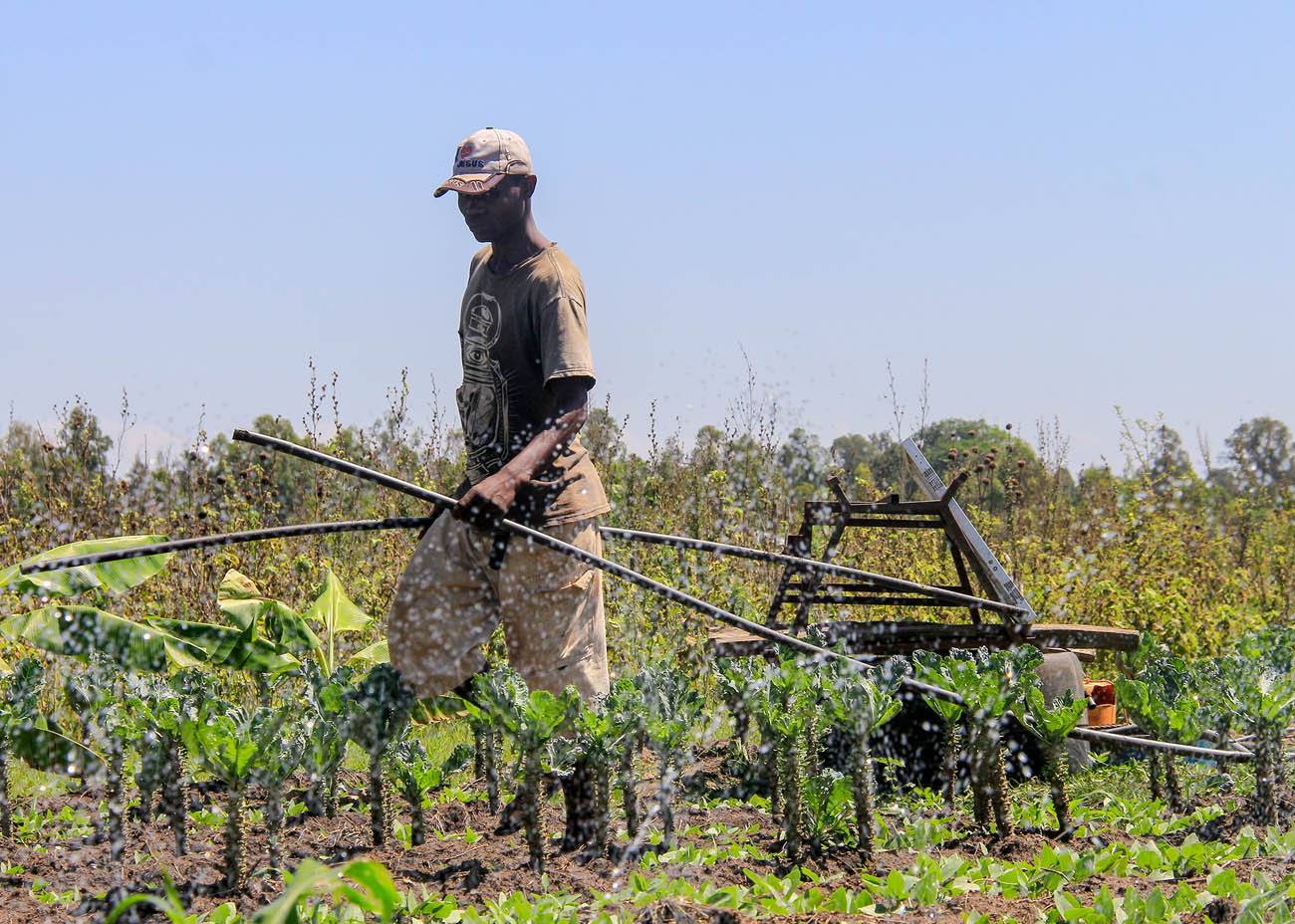
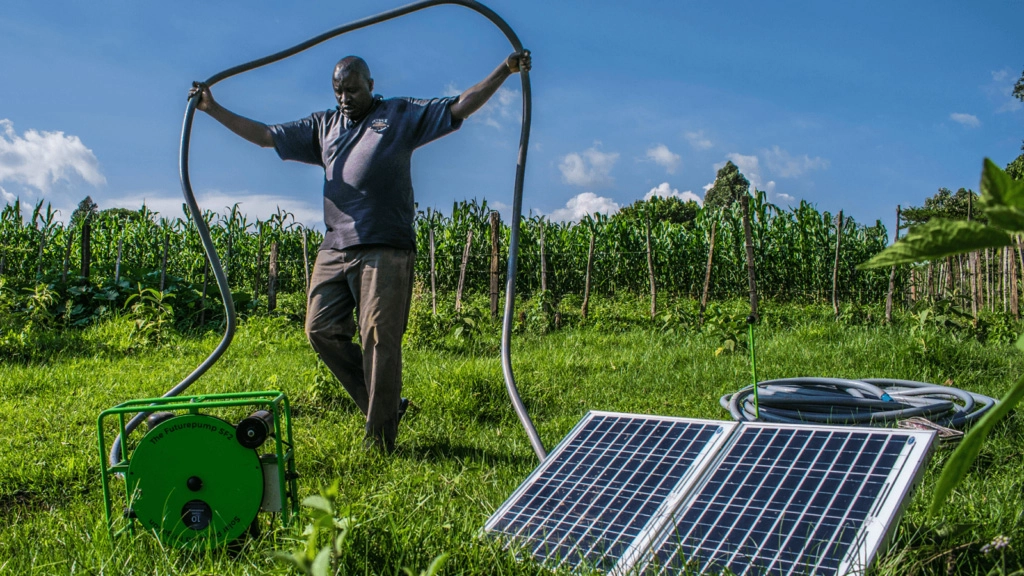
A farmer sets up a solar-powered sprinkler near Siaya, Kenya.
Credit: Futurepump
Another thing governments can do is introduce regulations to make appliances run more efficiently and eventually lead to lower consumption of energy. This may seem like a contradiction: If utilities need people to use more energy in order to be profitable, why would governments want appliances to use less energy? Well, the issue in Africa is that inefficient appliances have been dumped here for a long time. They overconsume energy, which creates an inflated need for grid capacity. And then governments build generation capacity to meet these inflated projections, which creates a huge delta in capital investment relative to the actual need. As a result, they’re spending money on power grids that could’ve been invested elsewhere, like schools or hospitals or job creation. Making matters even worse, these big generation capacities put the utilities in even greater debt because there aren’t enough appliances to use them all.
So our hypothesis here is that if we introduce efficiency regulations into the appliance sector, it allows the government and utilities to right-size the grid and right-size their capital spending.
Baur: Can you give examples of where this kind of approach has been tried and found successful?
Aziebor: Well, if you look at appliance dumping, African leaders have been at the forefront of a lot of these initiatives. For a long time, companies have sent products they can no longer sell in other parts of the world to the continent. This was happening with fluorescent lighting, which is extremely toxic, and African policymakers pushed back, which was instrumental in getting global agreement to phase out the production of fluorescent bulbs.
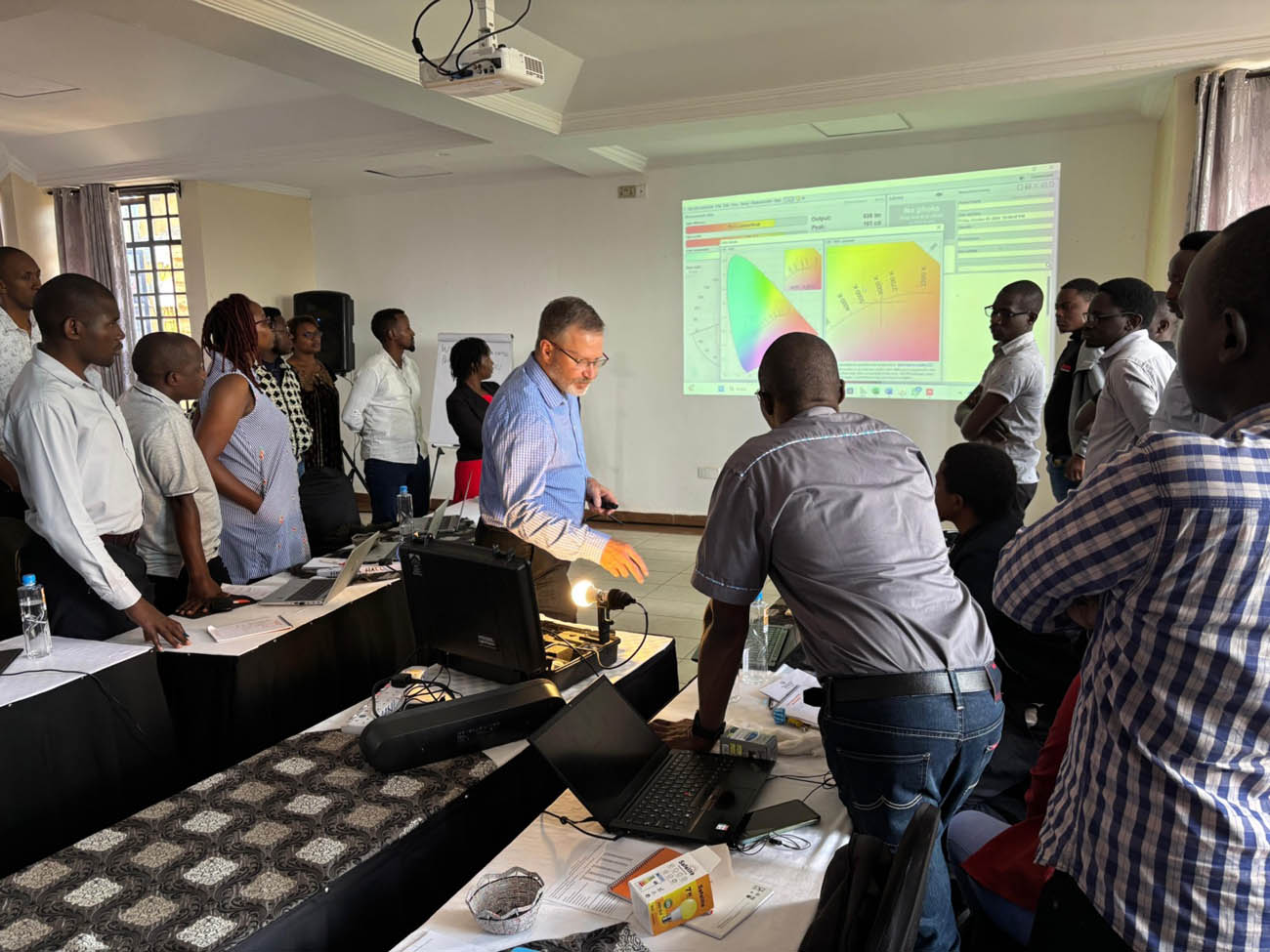
Lighting policy workshop in Kenya.
Credit: CLASP
I haven’t seen a large-scale program for other appliances, but I will mention a related example. Some time ago, the national government in Ghana came up with a way to transition all urban communities from charcoal to LPG (liquefied petroleum gas) as a cooking fuel, because we have abundant natural gas resources and the use of charcoal was causing deforestation in rural communities. So what did they do? They basically set up a government-owned LPG cylinder manufacturing company. They said, “Everybody, you’re going to get a subsidized cylinder and your first LPG fill-up is going to be free.” They also used a portion of taxes from petrol sales to fund the LPG program. All that helped people get used to cooking with LPG, since cooking is so cultural.
This program has been running for more than more than 20 years. Now, if you go to urban homes in Ghana, every one has a gas cylinder that they are using.
So this is one clear example where at the national level, the government drove adoption. And we see successful examples all the time with other kinds of infrastructure. The government provides the funding to build the airport and we all pay for flights to keep it operating. The government builds the road and we all pay a toll to use it. So these things can be translated into conversations about appliances—how public capital could be used at scale to address a particular solution.
But one problem we have in the appliance sector in Africa is that there are too many Mickey Mouse pilot projects. The problem has always been around scaling.
That means the government needs to be involved. For a very long time, we’ve had the impression that the private sector and nonprofits are the most important partners in the appliance sector. The idea was that nonprofits bring the money to derisk the private sector. But we must flip this equation. To reach the scale we need, we need to bring government to the table very early on.
The government is a fulcrum around which we all must build. The nonprofit brings philanthropic capital, the private sector brings commercial capital, and governments bring public capital to scale. But if we are not looking at scale with that equation in mind, it becomes difficult. We must be intentional. We know solar water pumps work; we know green milling can become a conduit for local economic development. So how can we get governments to scale these solutions, creating national programs where they invest public money into resolving both job creation and access-related issues? That is where I think the conversation should be.
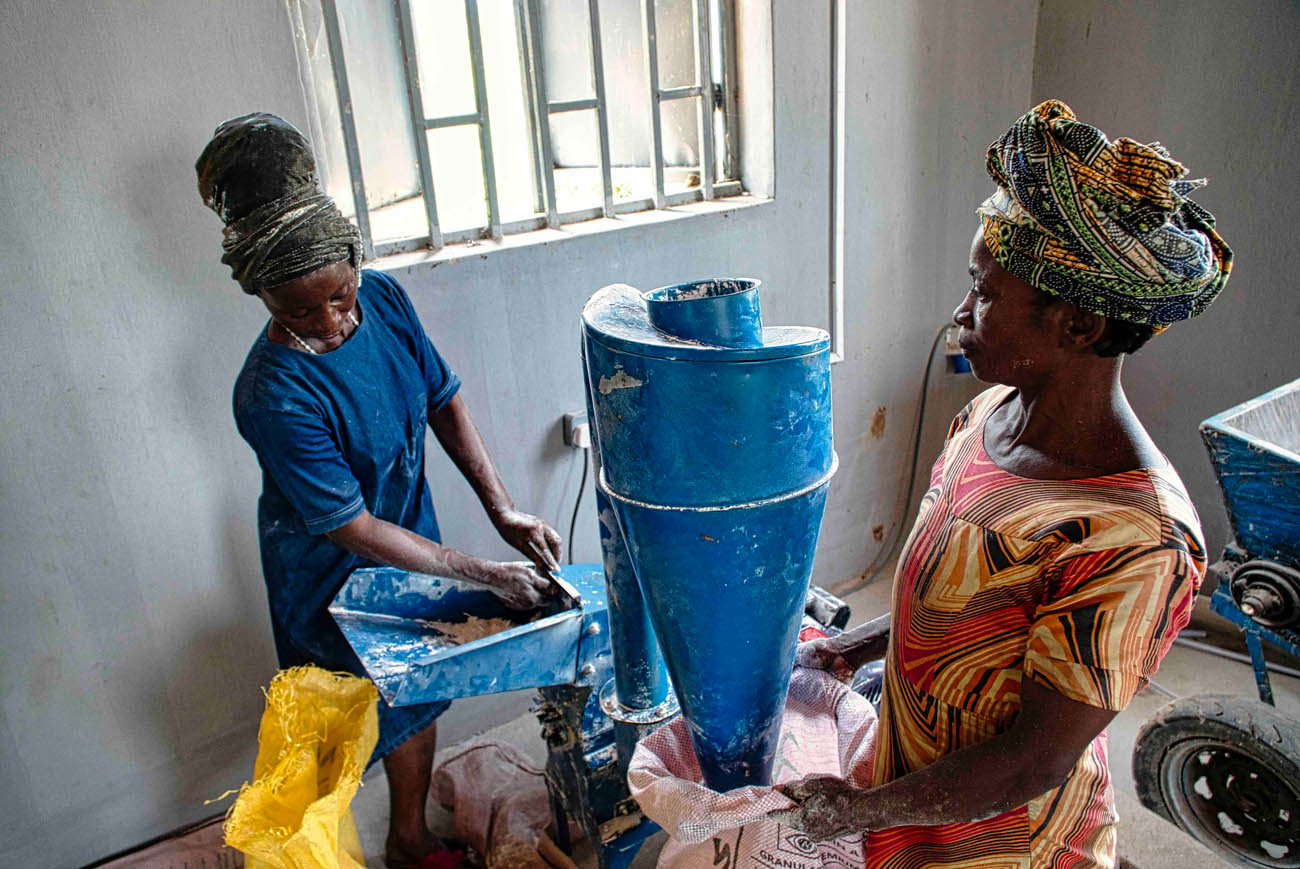
Women use a solar-powered mill in Nigeria.
Credit: CLASP
Take a company like SunCulture, which makes solar irrigation. So far, they’ve sold about 200,000 solar pumps, which is just a drop in the bucket compared to the need, even just in Kenya. But what if we were able to partner with the government of Kenya to say, “We’re going to put public money in the budget to support to every corn farmer in Kenya. All you need to go is to go to your district government, sign up, and then you get a subsidized solar water pump.” That is what we need to scale these solutions, and that is how the issues around jobs and incomes can be addressed.
I want to wake up one day and find that my nonprofit job no longer exists because this problem has been solved. That’s how I’ll know we’ve succeeded. But that requires that public capital and public partnership.
Interview edited and condensed.
Learn More

India Raises AC Efficiency Amid Growing Demand
India is facing hotter summers and more frequent heatwaves, making cooling essential for millions of households. About 110 million room air conditioners (ACs) are already in use in the country, which is expected to add another 130–150 million units over the next decade, making it one of the fastest-growing cooling markets in the world. The International Energy Agency (IEA) forecasts a ninefold rise in home AC ownership in the country by 2050. This growth could increase peak power demand by more than 180 gigawatts (GW) by 2035, putting significant strain on the power system.
Yet access to cooling remains highly unequal. Only about 8% of India’s 300 million households own an AC, with higher-income urban families accounting for most of this group. Rural AC ownership remains at around 1%, and the richest 10% of households hold the majority of ACs.
Why efficiency matters
Without stronger energy efficiency standards, the growth in AC ownership will lock in high energy use, drive up emissions, and increase household energy costs. Efficient ACs reduce electricity consumption, lower peak demand on the grid, and make cooling more affordable.
India’s energy labeling program has already helped buyers choose better-performing ACs and has shaped the market toward higher efficiency, but more can be done.
India’s new room AC efficiency standards
To meet the rising cooling demand, the Bureau of Energy Efficiency (BEE) in India has approved stringent efficiency standards for room ACs, effective January 2026, with further revisions in 2028, which will put India’s standards at global best levels. The standards establish minimum efficiency levels that appliances must meet, encouraging the use of more energy-efficient models.
By 2030, the new efficiency standards could reduce India’s peak electricity load by 8–10 GW, avoiding the need for more than 20 large coal power plants. Consumers could collectively save $12 billion on electricity bills annually, making cooling more affordable, especially for low and middle-income households. At the same time, they could help the country avoid up to 12 megatons (Mt) of CO₂ emissions annually.
India’s efficiency journey
The BEE has led India’s AC efficiency journey for nearly two decades. It introduced the star labeling system for room air conditioners in 2006 to remove inefficient appliances from the market and enable informed decision-making for consumers who might purchase high-efficiency products. Since then, baseline standards have been periodically tightened, resulting in a 43% energy efficiency improvement in ACs sold in the country. Inverter ACs, which are more energy-efficient, now dominate the domestic market, and companies have adopted a default temperature of 24°C to save energy.
These standards advance the goals of the India Cooling Action Plan (ICAP), which targets a 20–25% reduction in cooling demand by 2037–38 through efficient appliances, sustainable refrigerants, and improved building design.
By promoting efficient cooling, India is managing energy use, strengthening resilience against extreme heat, protecting public health, and creating jobs in manufacturing, testing, and supply chains.
Data-driven support for stronger standards
CLASP supported BEE by providing robust, evidence-based analysis to ensure that the new standards are both ambitious and achievable. It built clear evidence through product tests and an analysis of the Indian market, demonstrating that upgraded standards were both technically achievable and practical. It conducted affordability and feasibility studies and reviewed global pricing trends. It also assessed the financial performance of publicly listed companies and original equipment manufacturers (OEMs). The analysis confirmed that higher efficiency was financially viable. By providing this evidence, CLASP helped ensure that the revised standards are technically sound, cost-effective, and aligned with India’s goals of reducing electricity demand, emissions, and consumer costs.
India’s approach shows that fast-growing economies can expand access to cooling without harming the environment. Higher efficiency will also spur the adoption of next-generation ACs, creating new jobs in manufacturing, design, and testing, and contributing to economic growth.