Universal Electricity Access is Possible—If 15% of Current Spending is Invested in Energy-Efficient Appliances
Press Releases
New research conducted by CLASP shows that we must prioritize appliance access alongside energy infrastructure investments.
Nairobi, Kenya, 20 October 2025 – New research conducted by CLASP shows that to provide electricity for the 1.6 billion people who live with unreliable power and the 666 million who completely lack access, we must prioritize appliance access alongside energy infrastructure investments.
The International Energy Agency (IEA) estimates that achieving universal energy access by 2030 will take at least $50 billion USD of annual public investment. CLASP has determined that 10–15% of this amount (about $7.5 billion USD annually, or $38 billion USD in total) should be devoted to improving appliance access.
A reliable supply starts with reliable demand
CLASP’s new report, The Missing Piece of Energy Access: Why 15% of Energy Infrastructure Investment Must Go to Appliances, describes how the communities that remain unconnected to power supply infrastructure (located primarily in Sub-Saharan Africa) are those that are hardest to reach and have the lowest ability to pay. This makes the expense of building new infrastructure hard to justify for power supply developers and policymakers.
The report suggests that policymakers and other decision makers allocate 10–15% of power supply investments to establishing sustainable electricity demand growth. These investments should target market failures that hinder appliance use—in particular, a lack of affordability and consumer confidence. Importantly, all stakeholders should prioritize energy-efficient appliances over standard, less-efficient appliance options.
In-depth analysis also demonstrates that energy-efficient appliances are essential to reaching the United Nations’ Sustainable Development Goal 7 (SDG 7) of universal energy access by 2030 and the Paris Agreement target of net zero emissions by 2050. Researchers found that prioritizing energy-efficient appliances over less-efficient alternatives could avoid as much as 2.6 gigatons of CO2 equivalent emissions annually.
“I think we have to look at the pace of change in terms of the SDG indicators, not in its absolute but relative to what’s happening, and ask the questions, what’s not working?” —Bishal Thapa, Chief Strategy and Impact Officer
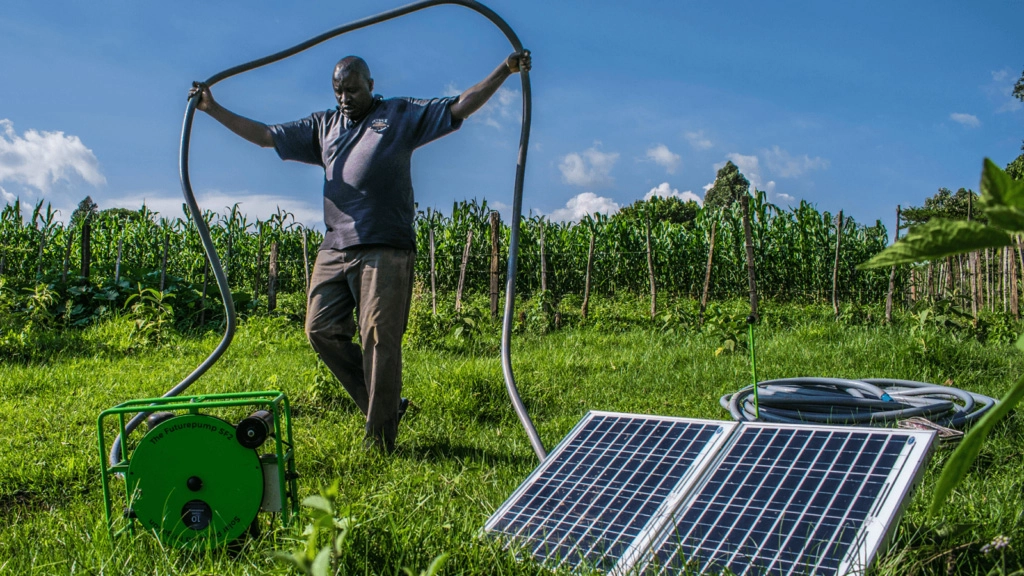
A solar-powered water pump in use: a standalone system delivering electricity where the grid doesn't reach. Credit: Dan Odero
Successfully deploying this strategy is possible
Africa currently spends approximately $800 billion USD every year as part of its 2010–2030 energy investment cycle. Governments and energy markets have proven their ability to mobilize resources at the scale required to achieve universal electricity access.
From 2013 to 2022, annual global grid electricity generation increased by 5,827 terawatt hours. Just 0.15% of this energy would be enough to provide at least 200 watt-hours daily per household.
Across the continent of Africa, where approximately 85% of the population lives without access to electricity, annual grid electricity generation grew by 178 terawatt hours from 2013 to 2022, an annual average growth rate of 2.5%. Just 4% of this growth would be sufficient to provide a basic electricity supply of at least eight hours daily for every African who currently lacks access.
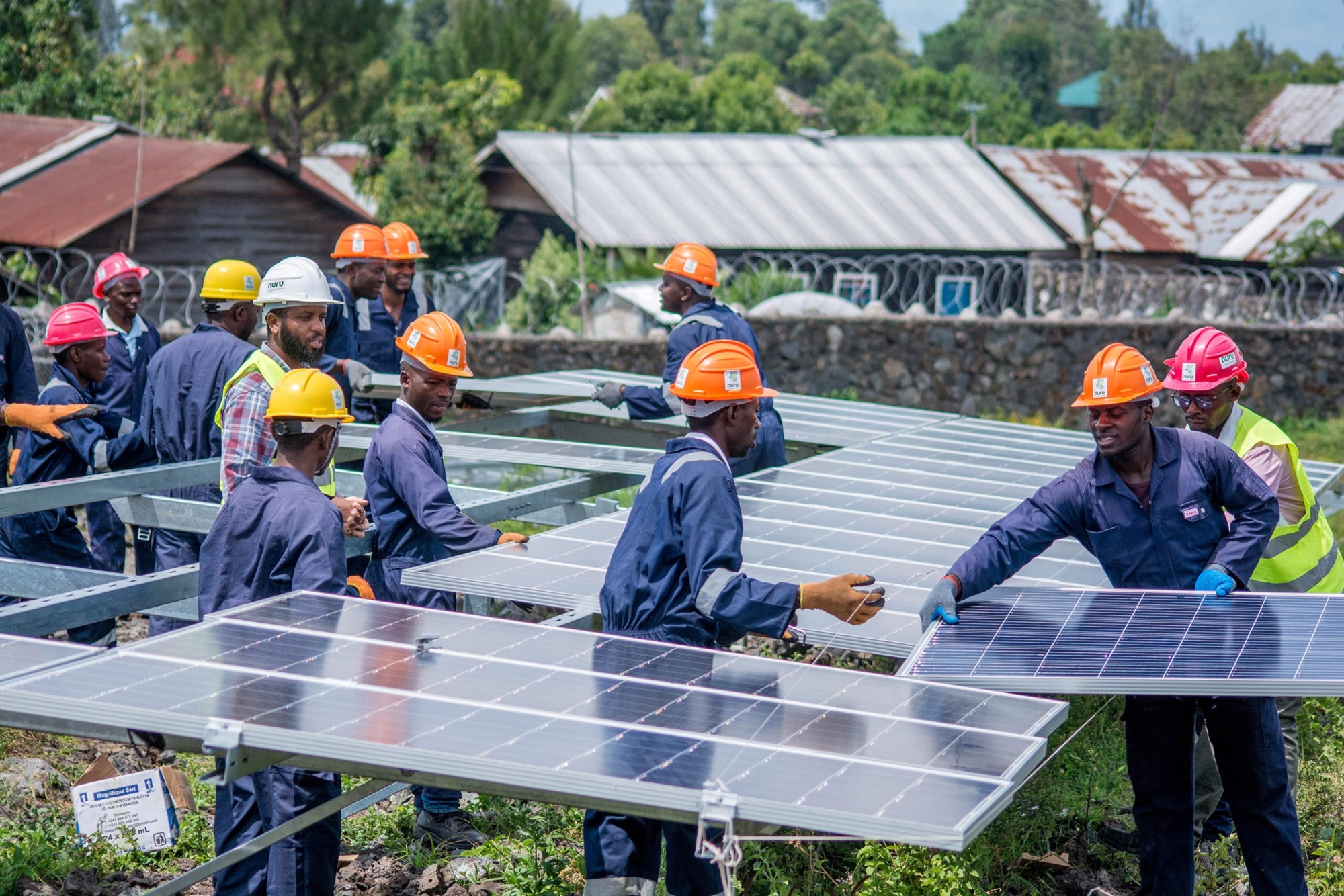
Additional efforts could fully erase the electricity access gap by 2030—but the pace of progress must accelerate and utilize a variety of distribution approaches like grid extension, mini-grids, and standalone distributed energy systems.
These and other methods to improve access to energy-efficient appliances are viable and could serve as a stepping stone toward higher economic growth, improved livelihoods, and increased social wellbeing.
CONTACT
For more information or media queries about The Missing Piece of Energy Access: Why 15% of Energy Infrastructure Investment Must Go to Appliances, please contact Communications Associate Marina Baur at publication@clasp.ngo.
About CLASP
CLASP is the leading global authority on efficient appliances’ role in fighting climate change and improving people’s lives. With 25 years of expertise and offices on four continents, CLASP collaborates with policymakers, industry leaders, and other experts to deliver clear pathways to a more sustainable world for people and the planet.