
2025 CLASP Annual Report
Collective action for people,
prosperity, and planet.
A note from CLASP’s CEO,
Christine Egan
Appliance and equipment energy efficiency is a triple-win for people, planet, and prosperity. In a time of multiplying global crises, it stands out as a durable climate solution and key element of smart decarbonization strategies. It also creates jobs and improves livelihoods, enhances energy security and food system resilience, and helps people adapt to a changing climate.
Looking back at 2025, I’m wowed by the work of CLASP’s global team and dedicated partners, and the focus of the decisionmakers we support. Through purposeful collaboration, we forged the policy instruments, finance, and intelligence to drive positive momentum.
Together, we are changing the way we use energy.

2025 by the numbers:
4.6 Gt 18 CLASP-supported appliance and equipment efficiency policies will avoid 4.6 gigatons of CO2 by 2050, improving planetary and human health and saving money.
30K+ Over 30,000 people experienced improved health and livelihoods via access to efficient, solar powered appliances and equipment.

Skyline of Jakarta, Indonesia
Image credit: CLASP
Elevating Appliance Efficiency in National Climate Commitments
What we did
Ahead of COP30, CLASP led a global campaign to improve inclusion of appliance and equipment energy efficiency in national climate goals (nationally determined contributions or NDCs).
How we did it
Through our Net Zero Appliance NDC Toolkit and bespoke support for governments around the globe, CLASP elevated appliance efficiency policy as a key climate mitigation solution. Now, appliance and equipment efficiency policy is included in 90% of all submitted NDCs—up from below 50% in the last cycle.

Image credit: CLASP
Powering Africa’s Green Economy
Solar-powered appliances and equipment turn energy into opportunity, helping small businesses generate jobs and income. In 2025, CLASP re-launched our innovative Productive Use Financing Facility to make it cheaper and easier for entrepreneurs, farmers, and small businesses in Ethiopia, Kenya, and Nigeria to buy solar-powered appliances and equipment that power livelihoods. Last year, CLASP partnered with 11 companies to drive jobs and economic growth in Africa’s informal and agricultural sectors, which make up 70-80% of African economies.
Slashing Emissions Through Smart Policy
Australia
National leaders passed a lighting policy that will transition Australia’s market to an all-LED future and avoid 41 Mt of CO₂ by 2050, informed by CLASP-led analysis.
Brazil
Policymakers made strides in Brazil’s LED transition with CLASP’s support, approving a lighting policy package that will slash nearly 3 Mt CO₂ by 2050.
China
CLASP supported seven major policy updates, including for compressed air systems, refrigerators, and water pumps. Altogether, the new policies are estimated to cut nearly 3 Gt CO₂ by 2050.
India
CLASP supported the advancement of policies for space cooling appliances that will place India among global leaders in efficiency and cut 1.2 Gt CO₂ by 2050.

Image credit: ImageDB
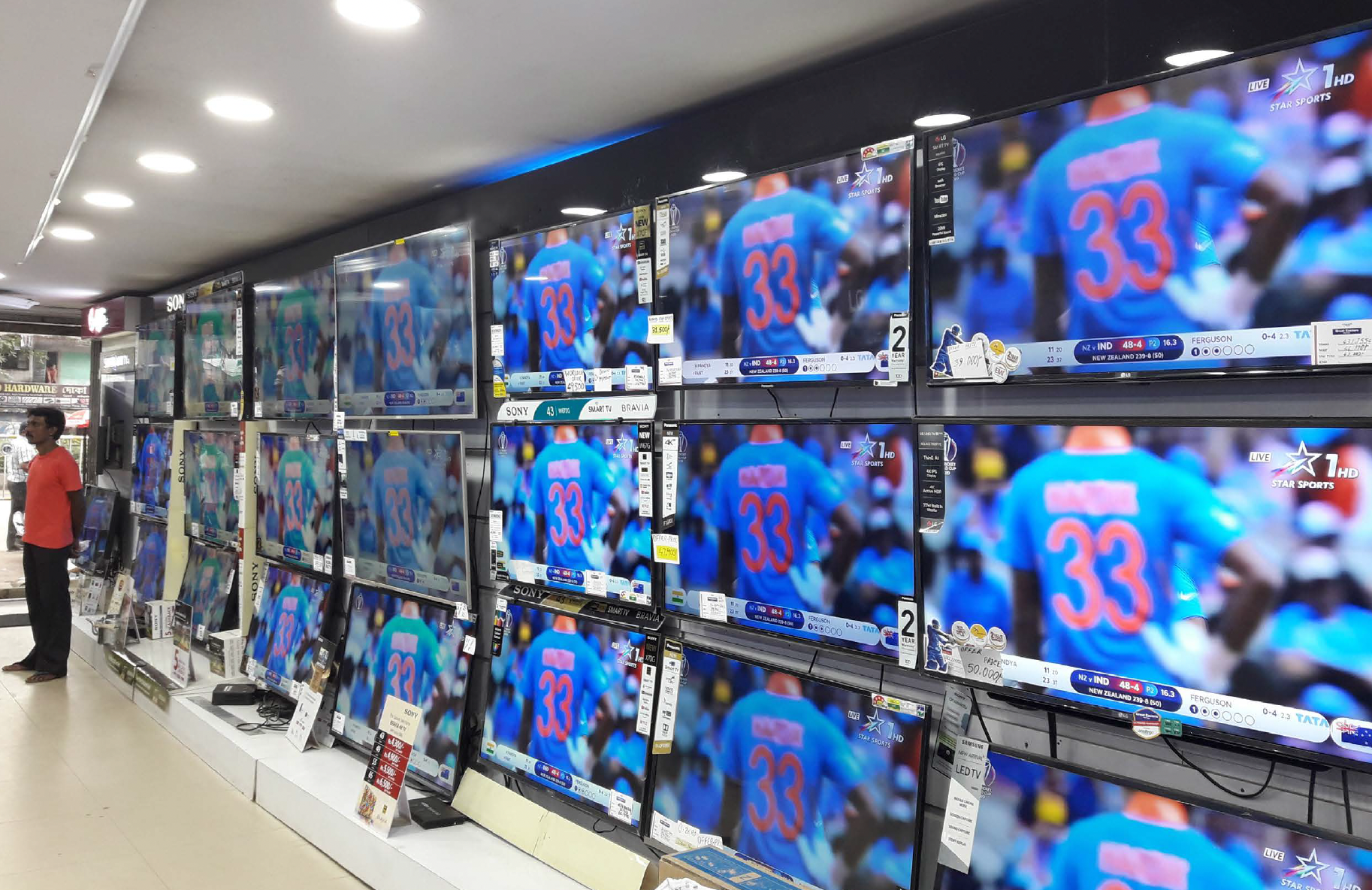
Making Efficient, Affordable Fans the New Standard in India
India is one of the places on the planet most at risk of extreme heat. 90% of households rely on fans as their only form of space cooling. CLASP partnered with government and private sector partners to drastically improve fan efficiency, availability, and affordability. A major part of the effort was supporting small and medium enterprises to improve their production capacity.
The impact has been catalytic. Together, CLASP and partners cut energy demand and climate emissions from cooling, while safeguarding jobs, strengthening local supply chains, and making efficient cooling more affordable to the people who need it.
Joining Up with the Modern Energy Cooking Services (MECS) Programme
CLASP joined the UK Aid-supported MECS programme as a core partner alongside Loughborough University and the World Bank’s ESMAP. CLASP now leads on venture building and market shaping, helping e-cooking businesses scale up. In 2025, CLASP launched the Global LEAP Awards Induction Cooktops Competition to identify and promote the most innovative electric cooktops on the market.
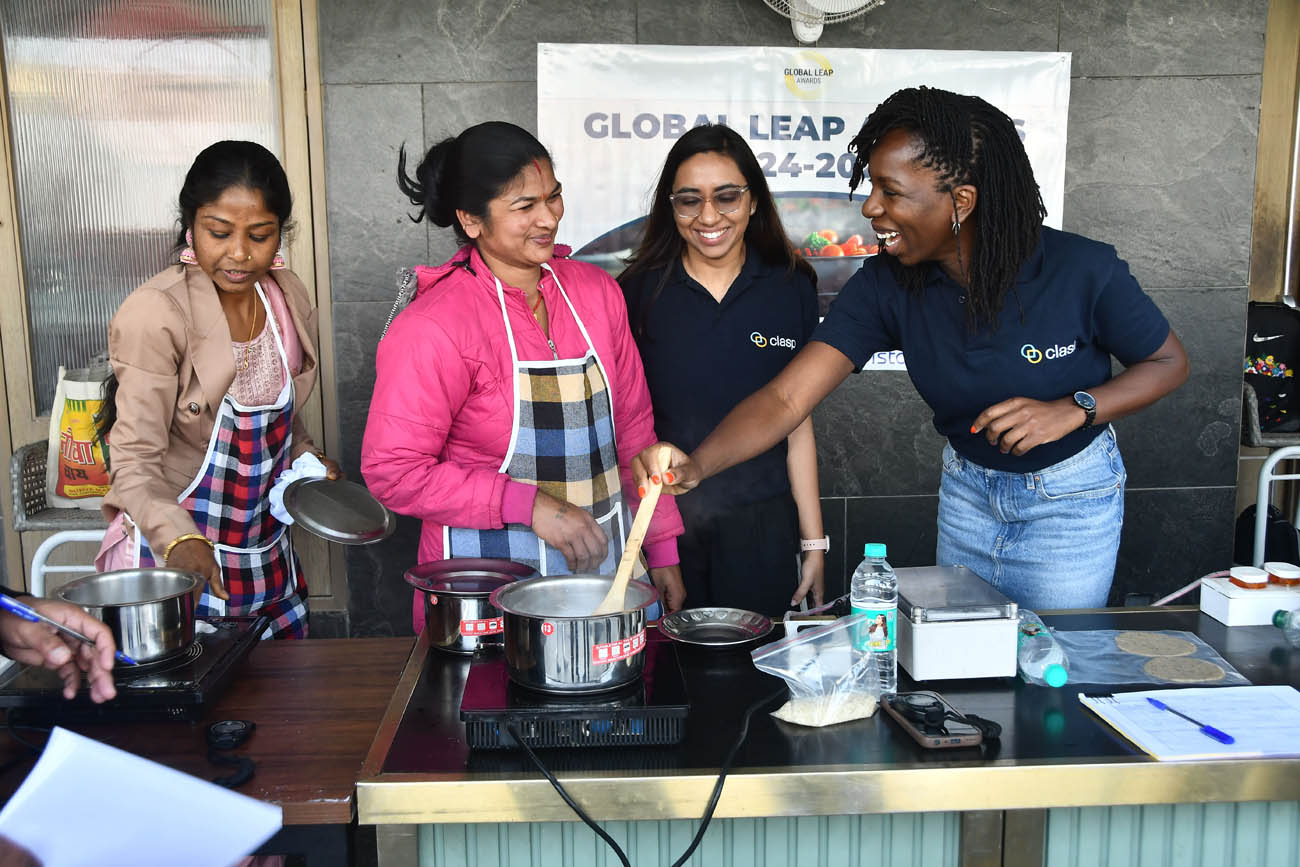
CLASP's Sumedha Awasthy & Nya Abagi at the Global LEAP Awards Induction Cooktops Competition workshop in New Delhi, India.
Image credit: CLASP
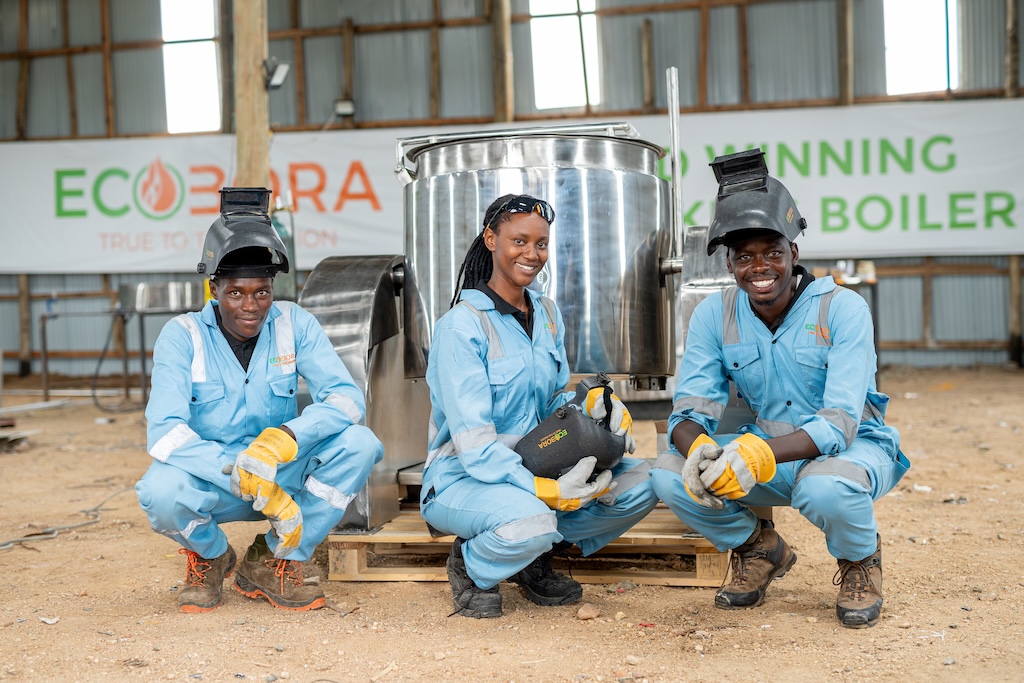
EcoBora, an innovative electric cooking company in Kenya, supported by CLASP through the MECS programme.
Image credit: CLASP
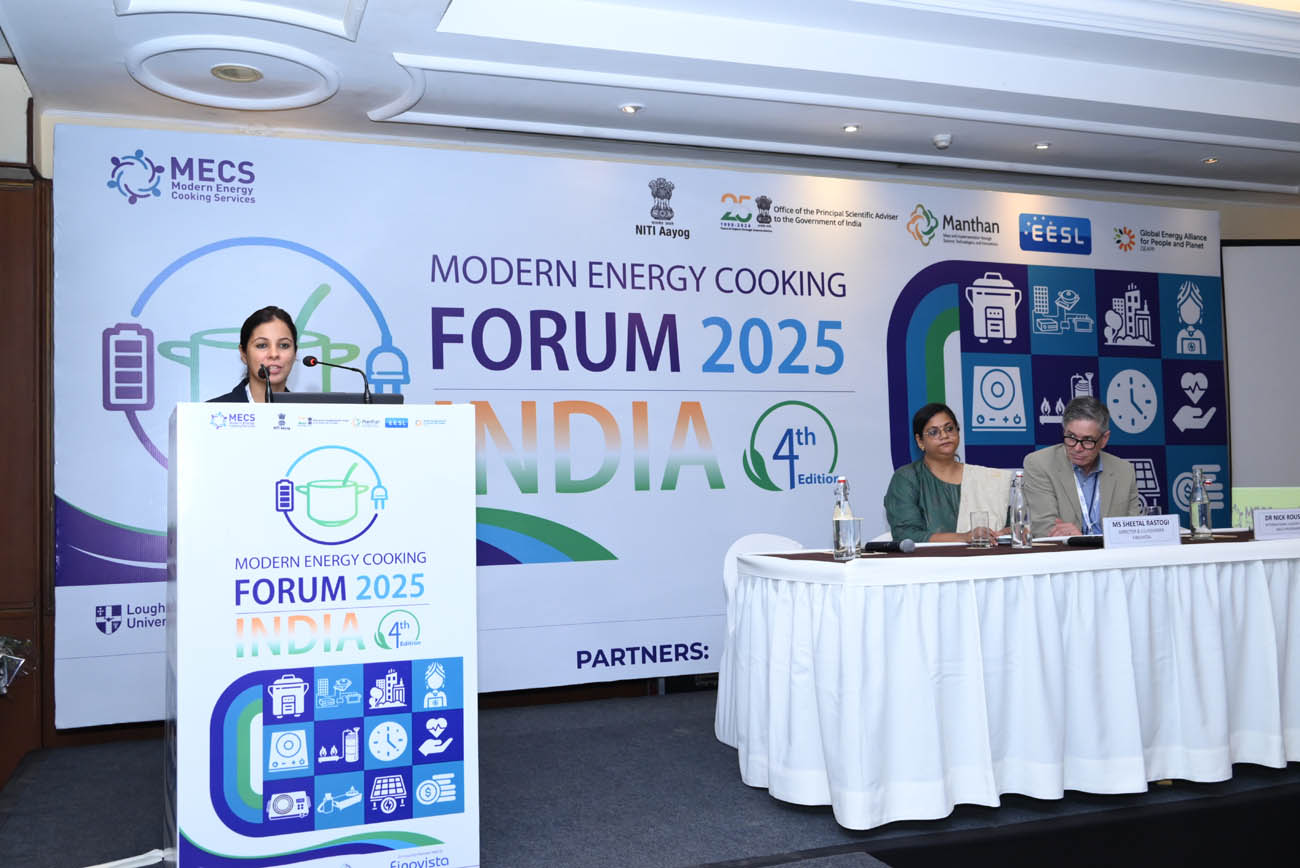
CLASP’s India Director, Neha Dhingra, speaking at the Modern Energy Cooking Forum in New Delhi, India, in September 2025.
Image credit: Finovista
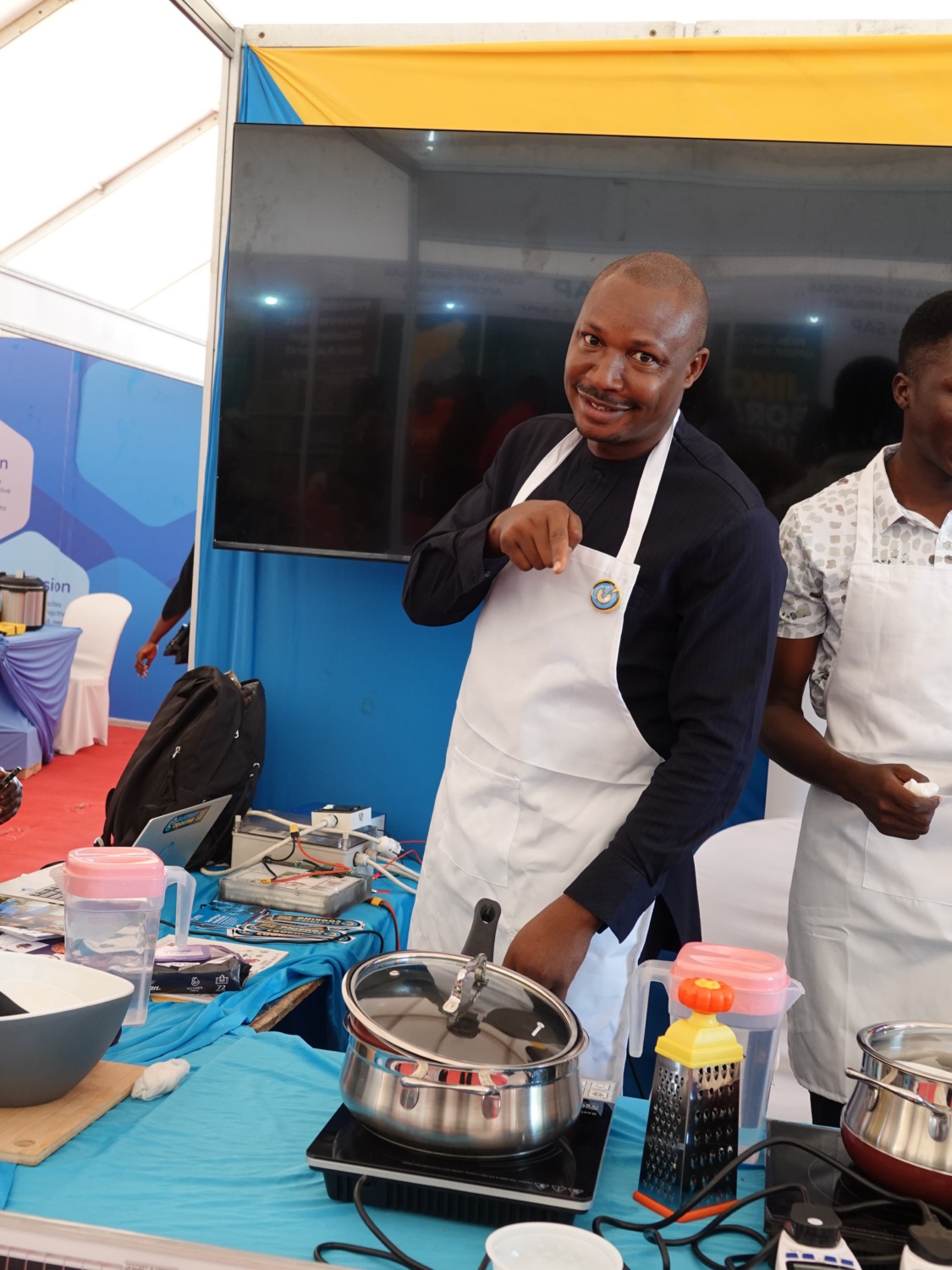
Emmanuel Aziebor, CLASP’s Senior Director, Africa, at Kenya Clean Cooking Week.
Image credit: CLASP
How UK Housing Authorities Can Power the Switch to Electric Cooking
Global Action Plan, in partnership with CLASP, piloted gas-to-electric cooking retrofits in a social housing community in Manchester.
For participating households, switching to electric meant more than lower emissions. It meant breathing more easily in the kitchen, a cleaner and more practical cooking experience, and greater peace of mind for families with young children. Every household preferred its new induction cooktop over gas.
Watch the video:
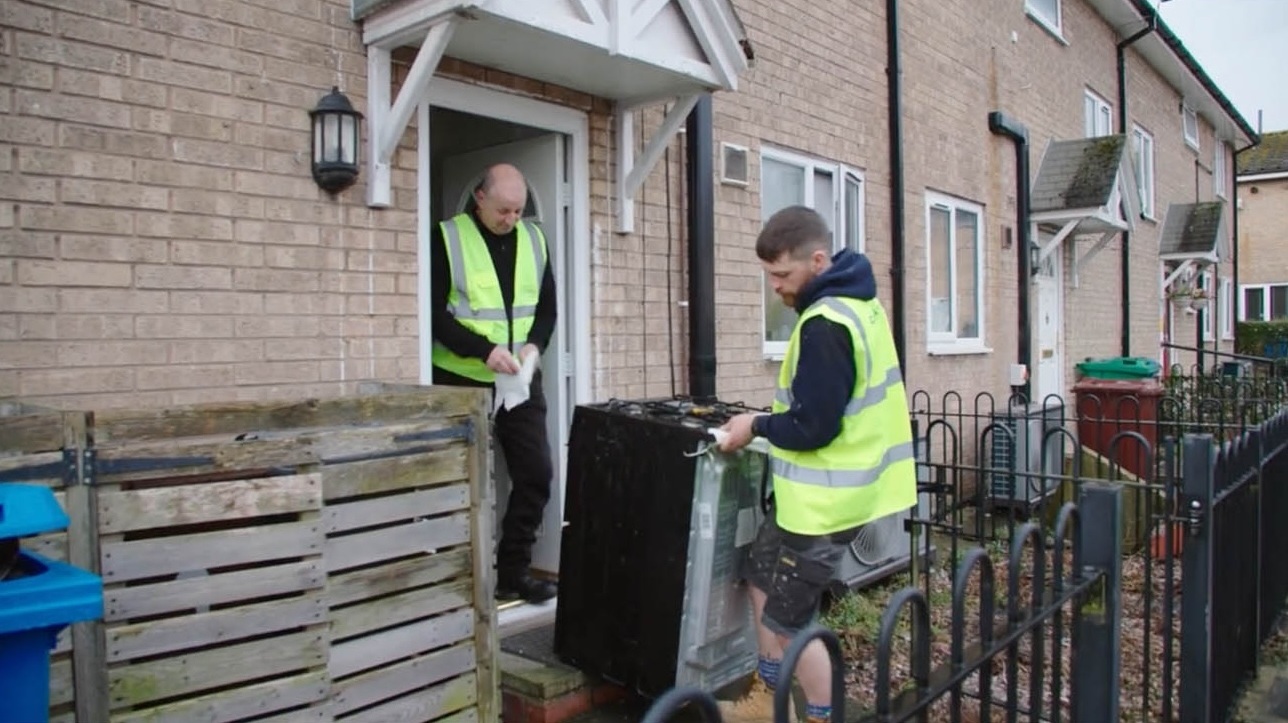
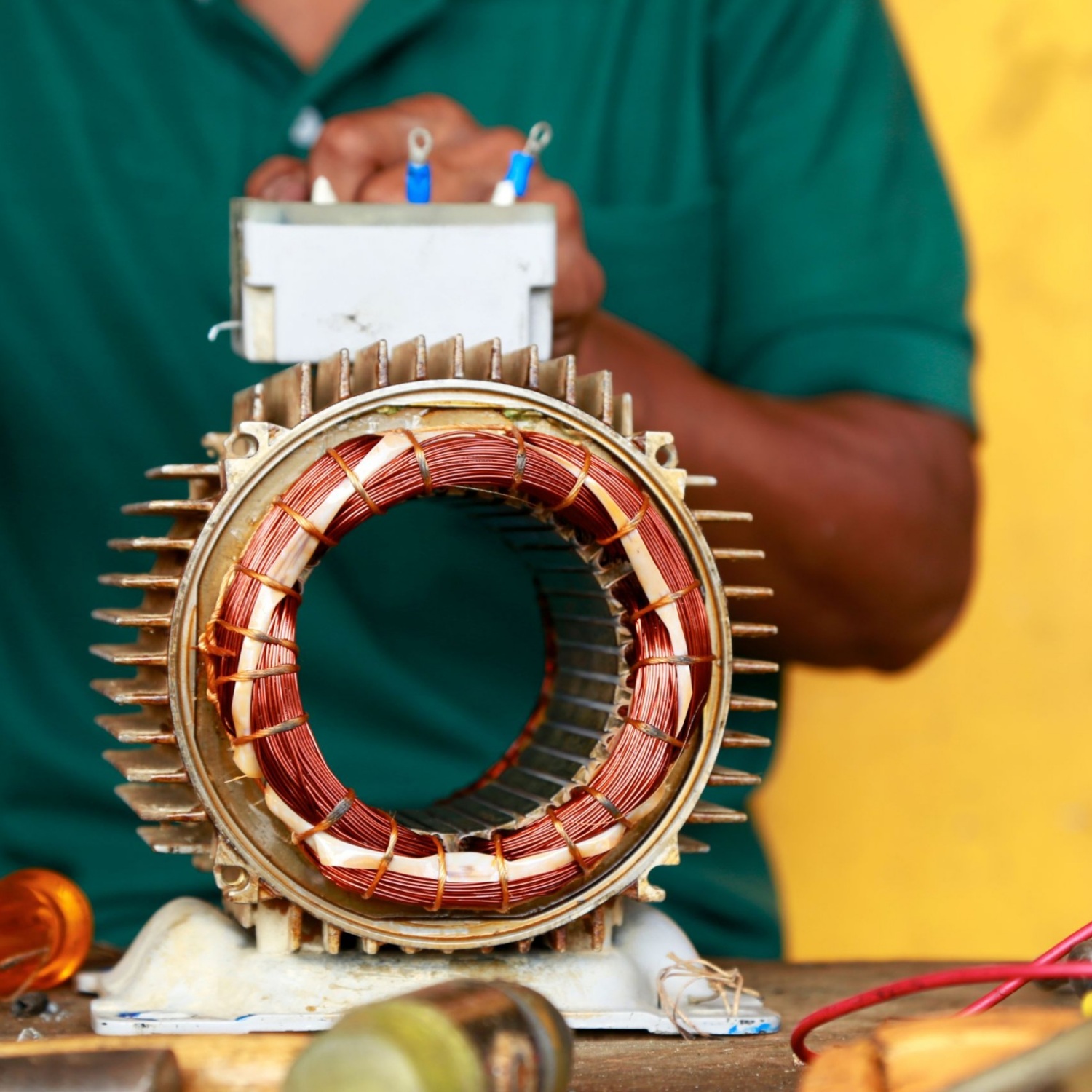
Image credit: CLASP
Economies Can Boom When Powered by Efficient Motor Systems
Industrial motor systems are the invisible heartbeat of economic development. Universally used across industrial facilities, they power the production of goods like metals, paper, cement, textiles, and packaged food. Motor systems are also ferocious energy consumers, due to their function and prevalence. Without intervention, and in step with global economic development and industrialization, by 2050 motor systems will account for 35% of global electricity demand and 19% of energy related emissions. CLASP is taking action on this priority appliance in the fight for Net Zero, identifying high impact opportunities at national and global scales to drive up efficiency, slash emissions, and boost economic progress.
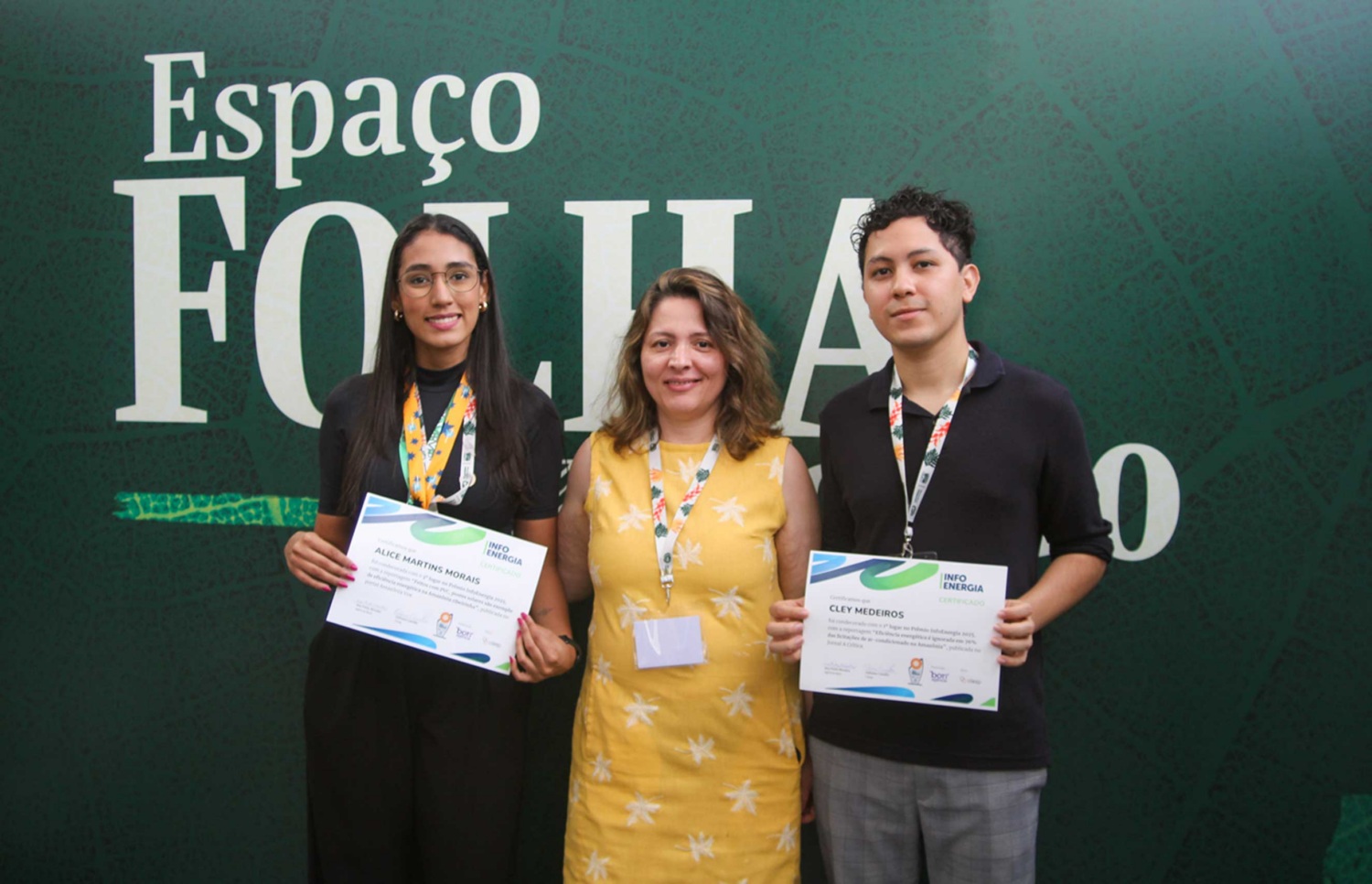
Image credit: CLASP
In Brazil, Partnering for Change
Ahead of COP30 in Brazil, CLASP joined forces with science communication agency Bori to drive national awareness of the benefits of appliance efficiency. Our InfoEnergia Mentorship was an 8-week, in-depth workshop that connected 25 journalists with experts and expertise to produce smart, contextualized reporting on appliance efficiency and its social, economic, and environmental impacts. Robust local journalism is a key element of durable climate policy.
Elevating Appliance-Centered Solutions at COP30
At COP 30 in Brazil, appliance and equipment energy efficiency stood out as a powerful climate solution, driving job creation, energy security, and adaptive capacity. CLASP provided expert testimony on the power of appliance efficiency solutions.
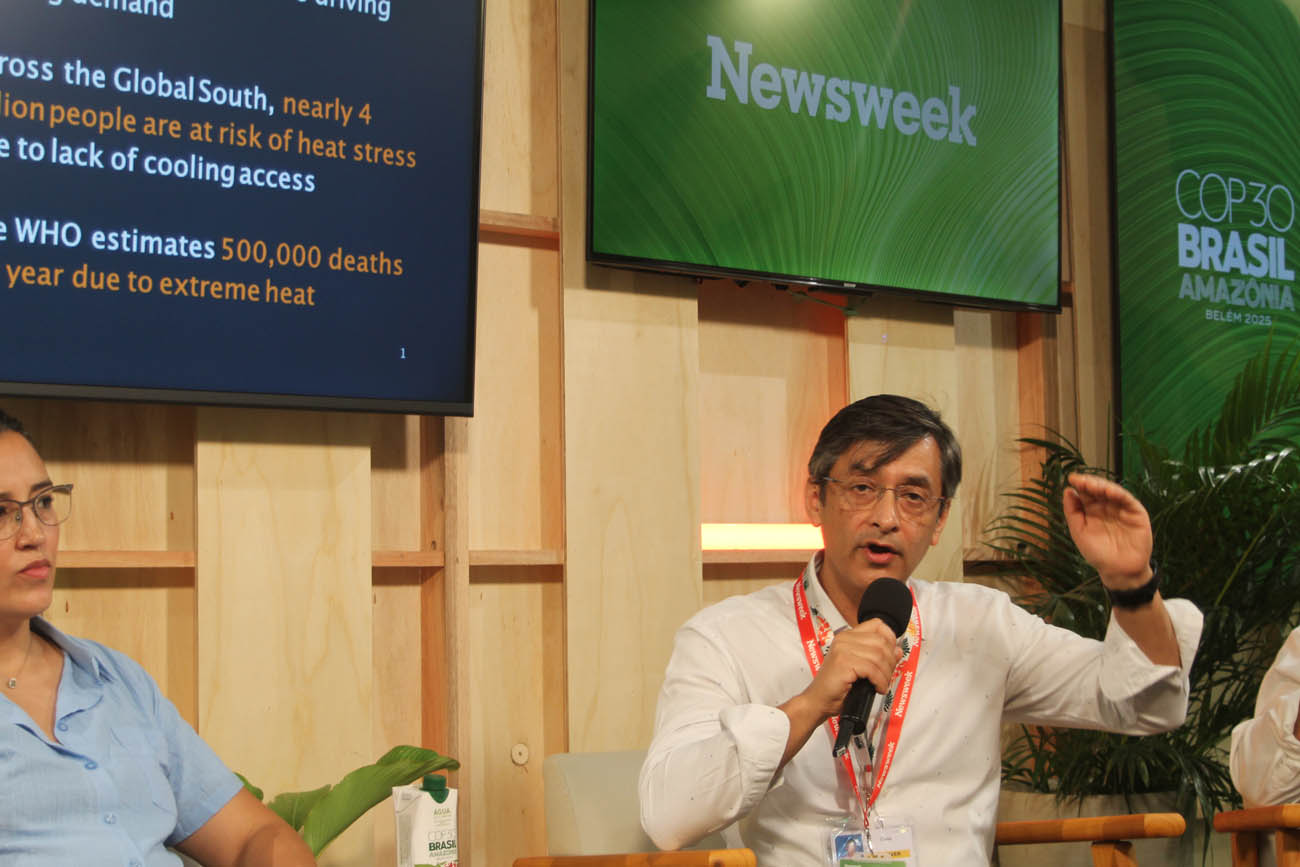
CLASP’s Bishal Thapa participated in discussion on space cooling solutions, offering insights about the benefits of efficient cooling technologies that slash emissions.
Image credit: CLASP
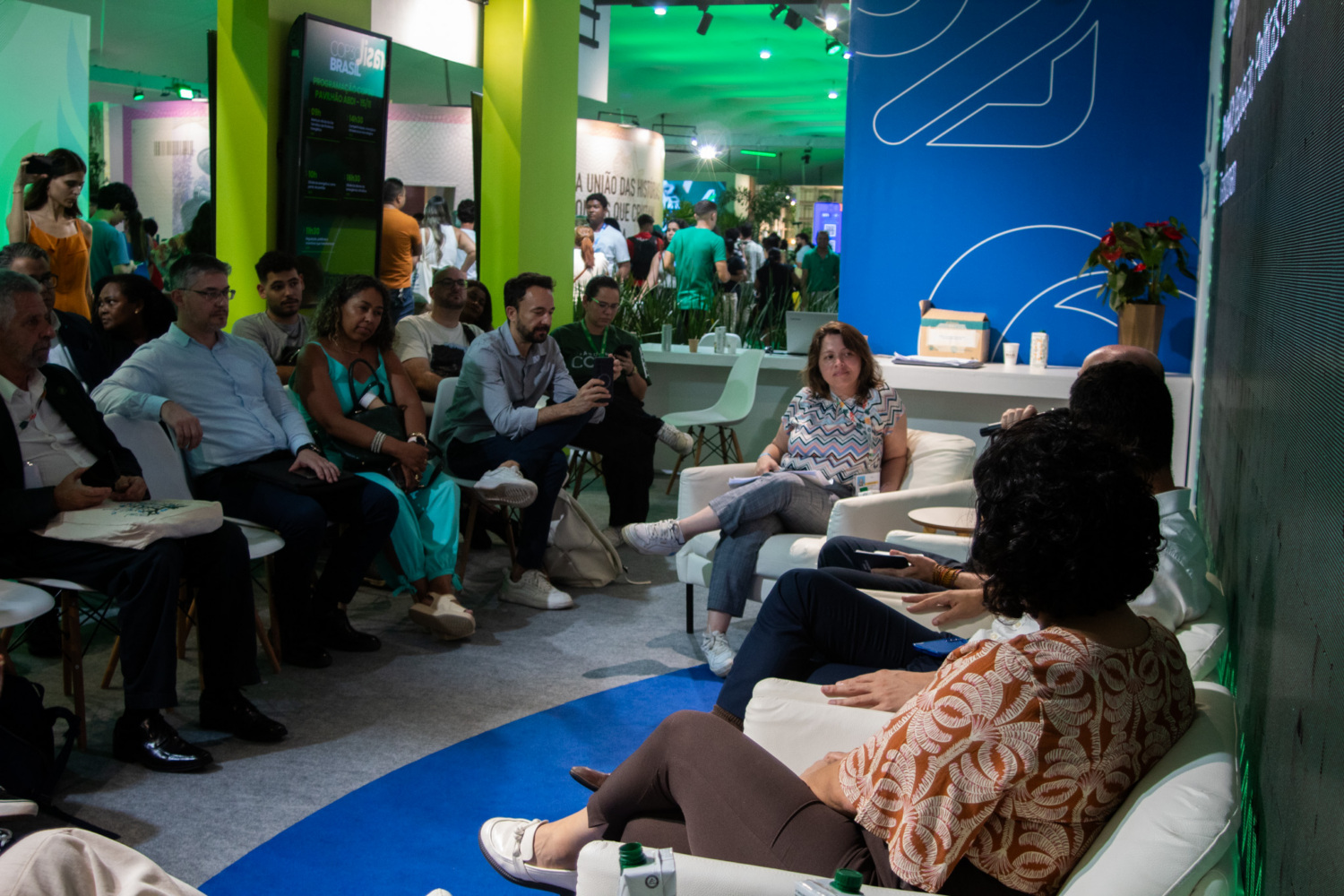
CLASP’s Edilaine Camillo moderated a conversation on the principal role of efficiency in Brazil’s energy transition during an agency-led day of efficiency themed events.
Image credit: CLASP

CLASP’s Bishal Thapa took part in a panel hosted by Casa Civil to speak about the role of energy efficiency policy in Brazil’s reindustrialization strategy.
Image credit: CLASP
Insights driving action
Delivering COP28’s Doubling Efficiency Goal Through Appliances
Appliance efficiency will play a critical role in meeting the COP28 commitment to double the global rate of energy efficiency improvement by 2030. CLASP research found it could deliver 20% of the energy savings needed, highlighting the value of strong standards, clear targets, and international collaboration.
The Missing Piece of Energy Access
666 million people, most of them in Africa, lack access to electricity. 2025 CLASP research shows that directing just 15% of existing energy investments toward efficient appliances can generate the demand needed to make grid expansions financially viable and help those currently living without electricity gain access to healthier, more productive lives.
Finances
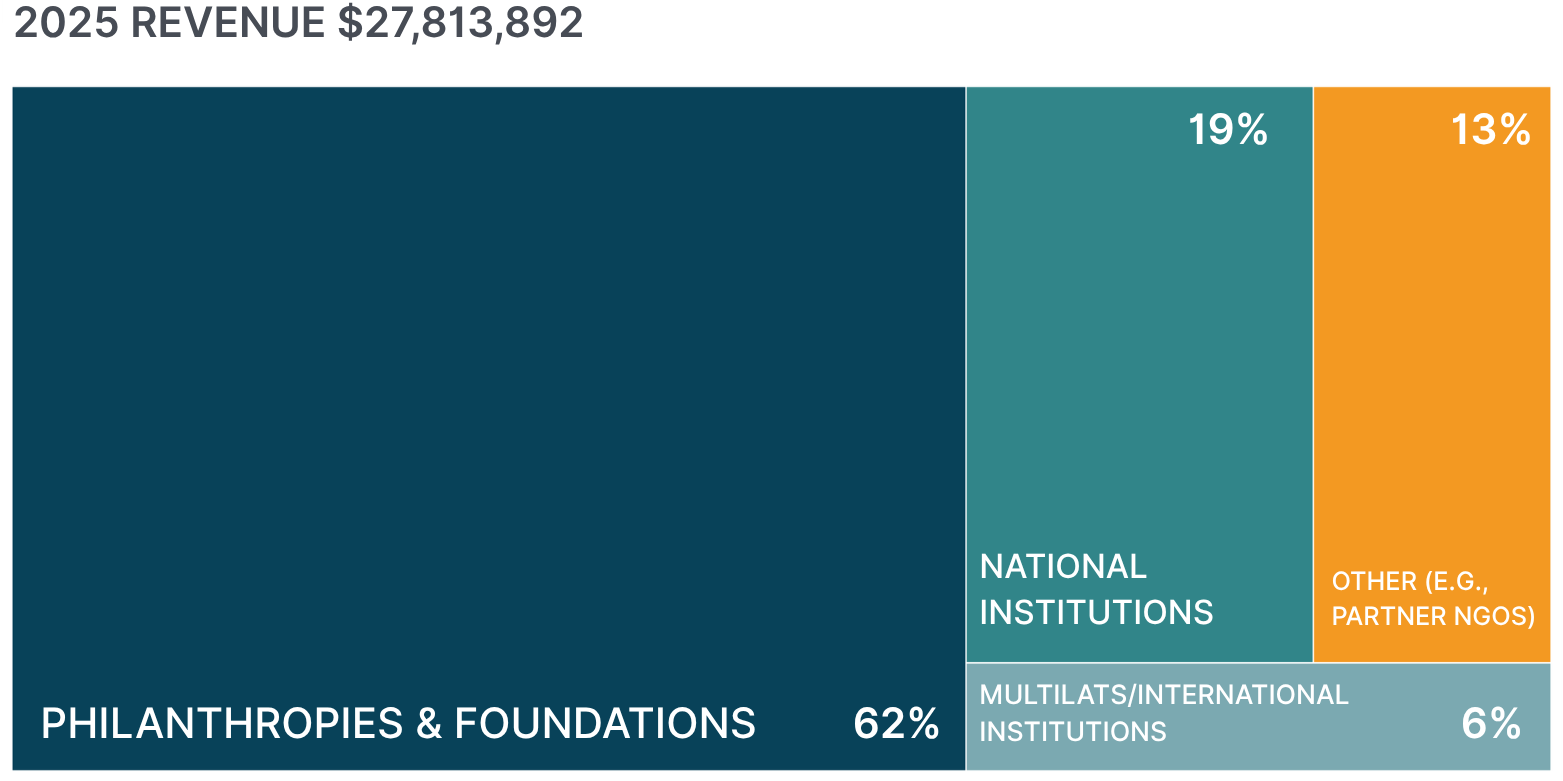
- Revenue by donor type
- Expenses by region
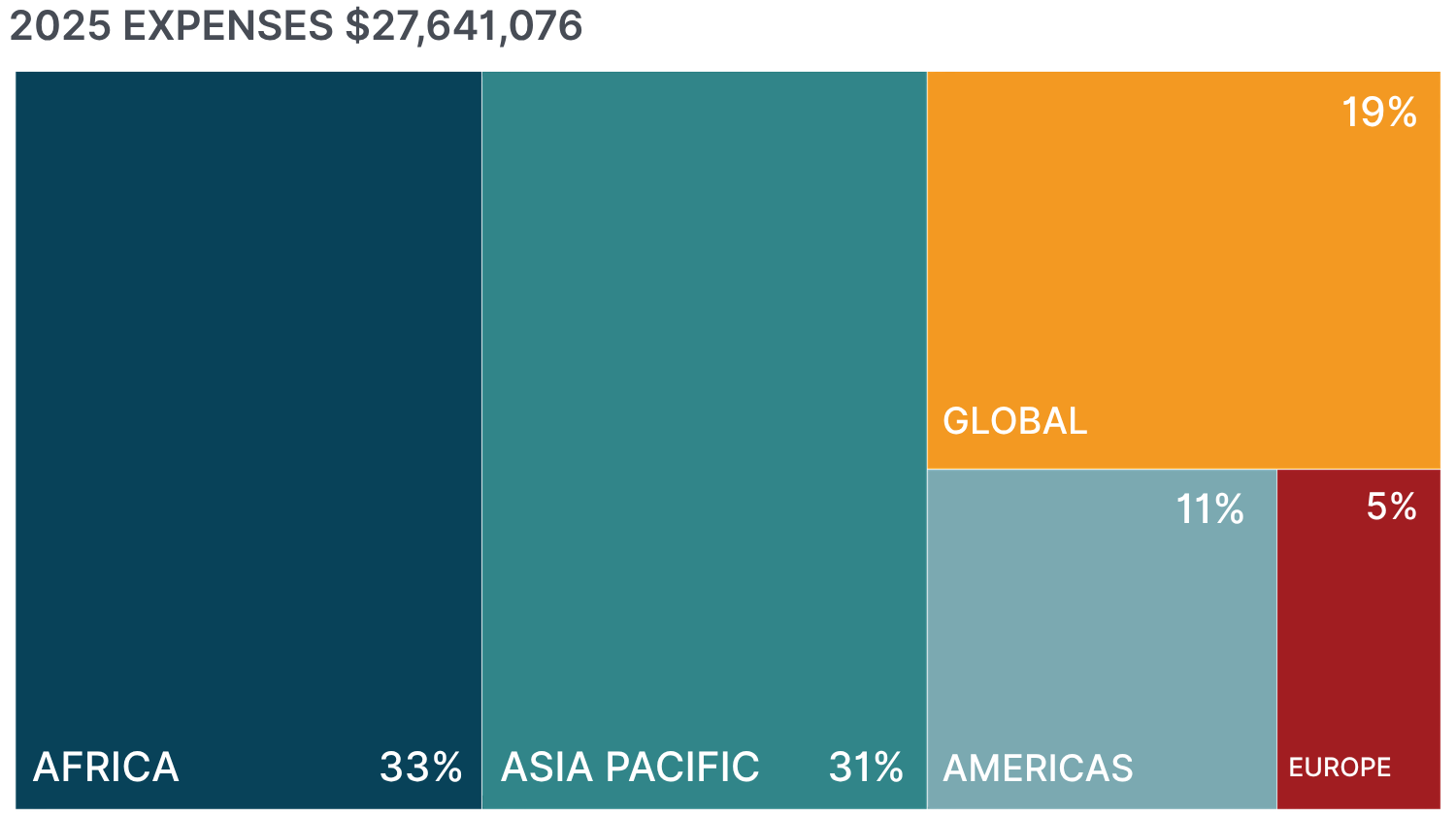
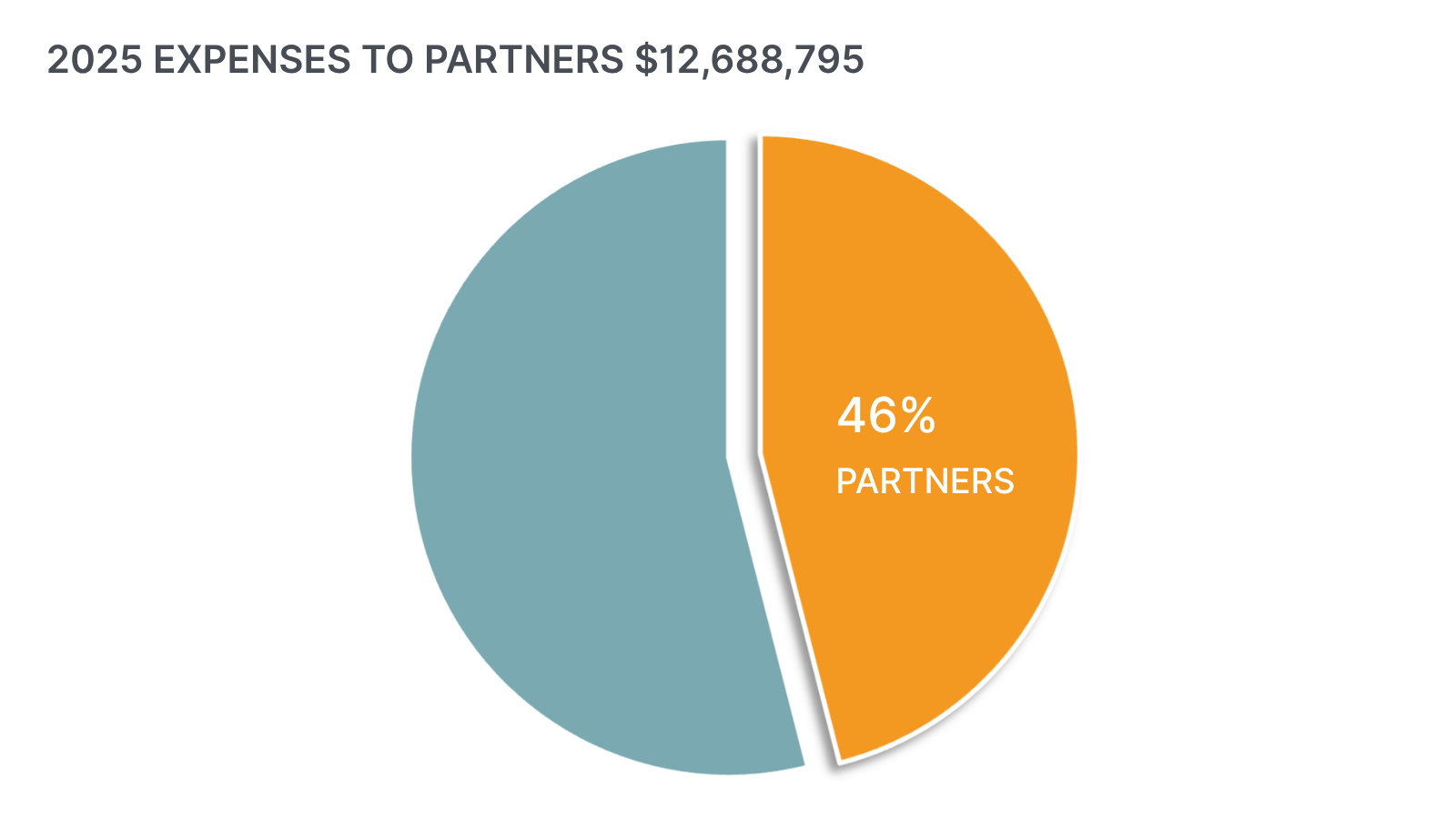
- CLASP collaborates with a global network of partners. In 2025, CLASP channeled nearly half our resources to civil society and energy groups, innovators, academic institutions, and experts — essential partners in changing the way we use energy.
About CLASP
Efficient appliances and equipment are essential drivers of economic growth and a fast, practical energy transition. With over 25 years of expertise and offices on five continents, CLASP collaborates with governments, industry leaders, and other experts to change the way we use energy.
We’re proud of what our team and partners achieved in 2025, driving progress for a better world. In 2026, we remain committed to championing appliance efficiency as a powerful solution for people, prosperity, and planet.
Bringing Global Expertise to Pakistan’s Motor Manufacturers
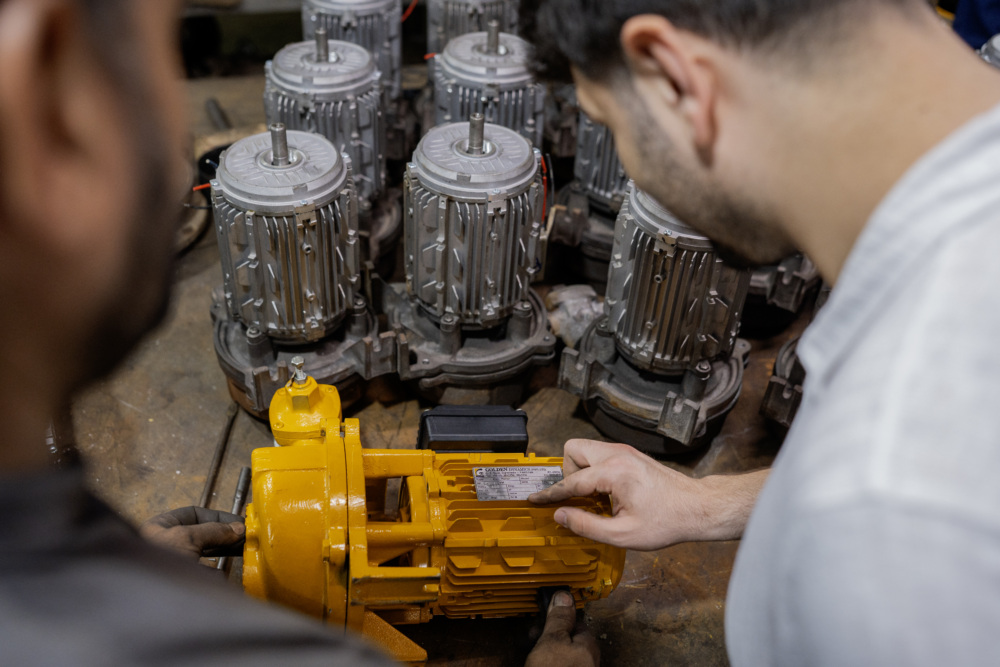
In Gujranwala, Pakistan, family‑run motor manufacturers share a common ambition: to produce world‑class motors that meet international efficiency standards.
To support this, CLASP and SAMA Verte’s Industry Accelerator Program is linking Pakistan’s local motor makers with international expertise to upgrade motor designs, improve efficiency, and help the motor industry thrive.
Working with Pakistan Pumps & Electric Motors Manufacturers Association (PPEMMA), and representatives from EMOSAD, a Turkish Motors Association, the Industry Accelerator Program combines decades of local craftsmanship with the latest global technical insights.


CLASP
CLASP
The program’s work supporting improved motor testing labs is already helping local engineers to identify energy losses, improve designs, and meet national efficiency standards for motors.
——
About CLASP’s Industry Accelerator Program in Pakistan
A collaborative initiative between CLASP and SAMA^Verte, the Industry Accelerator is aimed at transforming Pakistan’s electric motor manufacturing sector. Launched in 2023, the program focuses on enhancing the energy efficiency of locally produced electric motors and modernizing production processes. By providing technical assistance, facilitating international knowledge exchange, and supporting the development of energy-efficiency standards, the Industry Accelerator seeks to reduce energy consumption, lower CO₂ emissions, and strengthen the competitiveness of Pakistan’s motor industry.
Recent News
In Pakistan, Labs Testing for Efficiency are Advancing Motor Manufacturing
Until recently, most local motor manufacturers in Pakistan only tested the basic functionality of the motors they produced. A recent collaboration between CLASP and SAMA_Verte is helping local manufacturers improve motor efficiency testing.
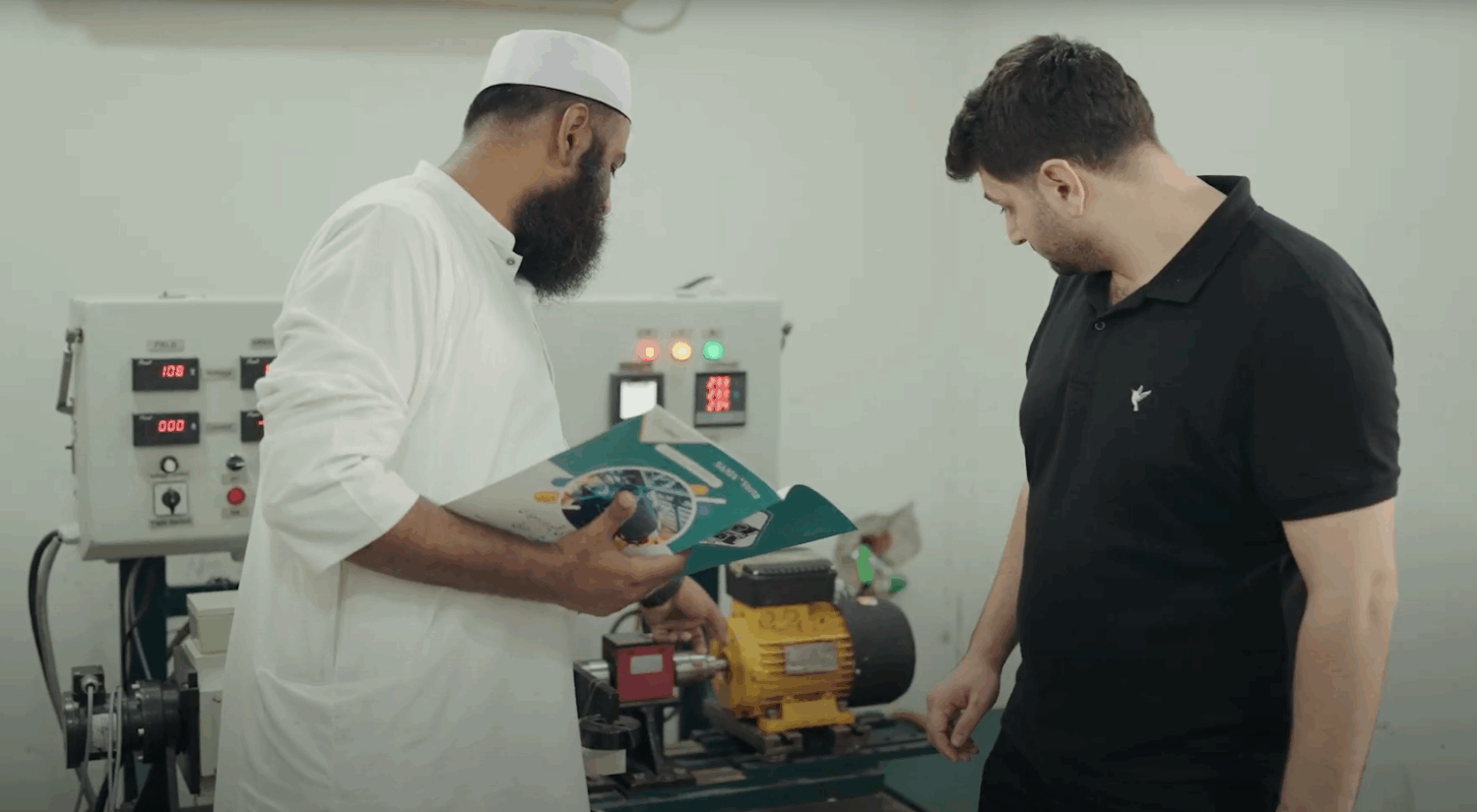
Advanced labs identify energy losses and improve motors
Improved, state-of-the-art testing labs are at the heart of this transformation. Equipped with advanced tools like calibrated dynamometers, power analyzers, and thermal imaging, these labs are helping engineers identify energy losses, improve designs, and ensure compliance with new national regulations set by the National Energy Efficiency & Conservation Authority (NEECA) in Pakistan.
With access to high-quality testing data, manufacturers are redesigning components, reducing energy losses by over 20%, and delivering motors that are more efficient, reliable, and cost-effective. Beyond individual products, these advancements are lifting the entire industry—with the potential to boost exports in the future, creating skilled jobs and opening doors to a more energy-efficient future.
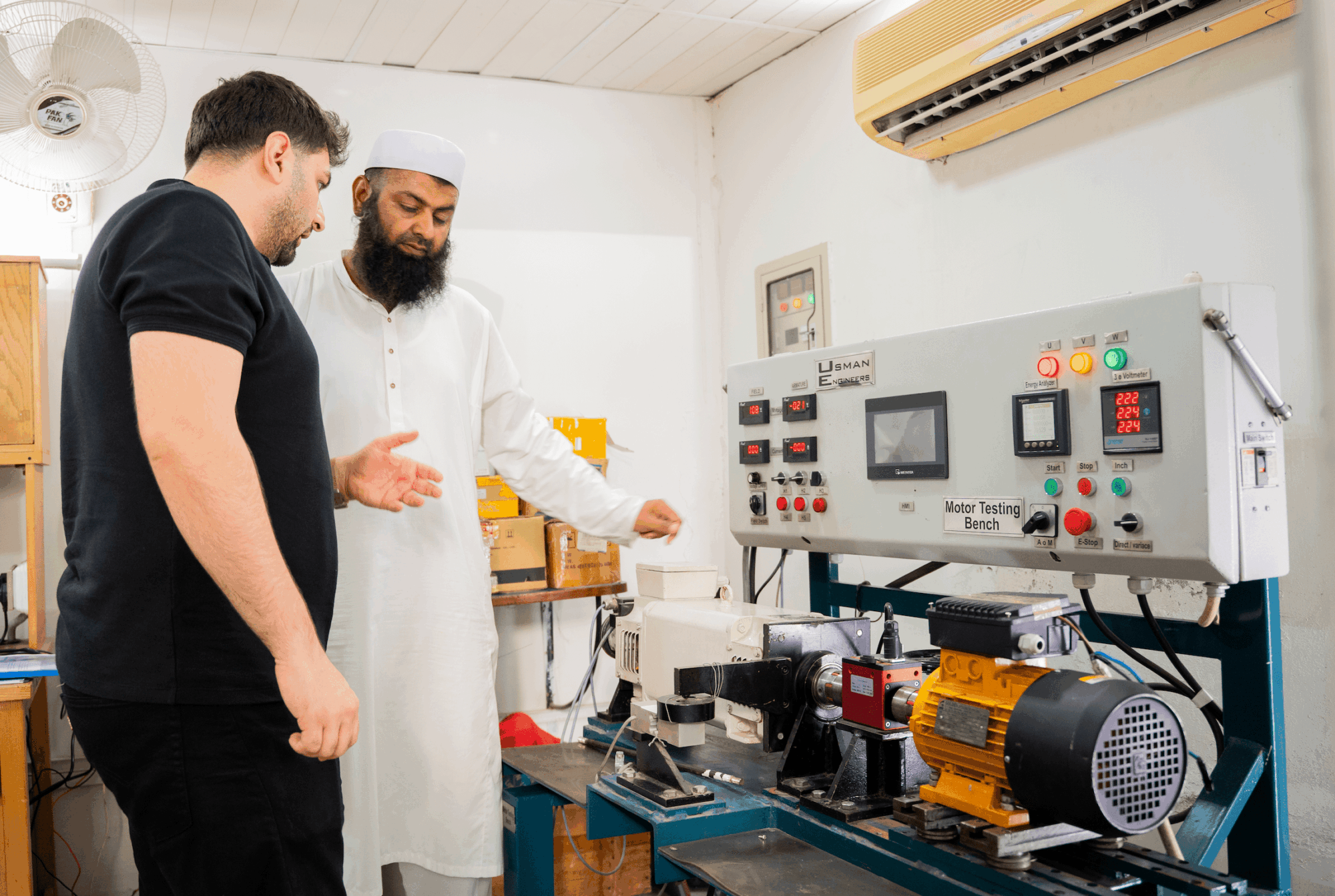
Ali Han Özcan, Turkish motor expert, with Dr. Usama at GIFT University, discussing the testing of locally manufactured motors.
CLASP
About CLASP’s Industry Accelerator Program in Pakistan
A collaborative initiative between CLASP and SAMA^Verte, the Industry Accelerator is aimed at transforming Pakistan’s electric motor manufacturing sector. Launched in 2023, the program focuses on enhancing the energy efficiency of locally produced electric motors and modernizing production processes. By providing technical assistance, facilitating international knowledge exchange, and supporting the development of energy-efficiency standards, the Industry Accelerator seeks to reduce energy consumption, lower CO₂ emissions, and strengthen the competitiveness of Pakistan’s motor industry.
Recent News
Pakistan
Accelerating Efficiency Gains in Pakistan’s Motor Industry
Electric motors are crucial to modern industrial economies. They transform electrical energy into mechanical energy, and power appliances and equipment such as pumps, industrial processing, and cooling equipment. While they are essential, they are also extremely power-hungry and are responsible for around 30% of global electricity demand. Research shows that outdated and inefficient low-efficiency motors represent two-thirds of the current global stock. This means there is a huge opportunity to slash energy demand, lower running costs, increase industrial competitiveness, and cut carbon emissions by increasing the energy efficiency of electric motors.
Capacity building to ensure more efficient motors are built
In Pakistan, CLASP and SAMA^Verte are aiming to do just that. Through a project called the Industry Accelerator Program, they are building the expertise of local manufacturers and improving the production processes to improve the efficiency of the motors being made. This year’s second phase of the program is centered in Gujranwala, a hub for electric motor manufacturing in Pakistan’s Punjab province.

Factory workers in Gujranwala assemble motors | Photo by CLASP
The Industry Accelerator’s achievements
In 2022, the first round of the Industry Accelerator directly supported four manufacturers in developing a higher-efficiency prototype motor. These efforts focused on enhancing design and production practices, ultimately resulting in the creation of an IE1 motor, which is a standard efficiency level that marked a notable improvement over what was locally available at the time. This motor is now in commercial production and used in solar-powered agriculture and small-scale industries.
The program also shared key learnings and best practices from this pilot with a broader group of manufacturers. Building on this momentum, 21 manufacturers collectively invested in a high-precision stamping machine, enabling them to improve motor design and quality. With these upgrades, manufacturers are now on track to achieve IE2 efficiency – a significant step toward meeting international standards.
Expanding the ambition to improve motor efficiency
This year, the second phase of the Industry Accelerator expands its scope to:
- Improve single-phase motors (0.75–1.5 kilowatts (kW)), widely used in domestic and commercial pumping systems across Pakistan
- Enhance production techniques, such as machining precision and workflow optimization
- Broaden access to quality control instruments and promote better materials like high-grade steel
- Support independent motor testing labs, enabling manufacturers to validate efficiency claims and meet compliance under Pakistan’s appliance efficiency standards
Backed by hands-on mentorship from Turkey’s motor industry association, EMOSAD, the program is also promoting more international knowledge exchanges.

Turkish motor experts highlight innovative technological improvements in motors | Photo by CLASP
“The visits by international experts and the resources provided through the Industry Accelerator have been indispensable, equipping us with the tools to manufacture motors aligned with international standards. We are now confident that local manufacturers can produce motors that meet Pakistan’s Minimum Energy Performance Standards and even achieve IE2-class efficiency in the future.”
Noor Ahmed
Secretary General, Pakistan Pumps & Electric Motors Manufacturers Association (PPEMMA)
Slashing costs and climate emissions with more efficient motors
Conservative projections estimate that the upgrades under the second phase of the Industry Accelerator (IAP-2) could save 123,000 gigawatt hours (GWh) of electricity and avoid 5.8 megatons (Mt) of CO₂ emissions by 2050. In addition to environmental benefits, these improvements will help reduce costs for manufacturers and consumers, support job security in Gujranwala and bolster Pakistan’s energy resilience.

Muhammad Salman Zaffar, Director/COO of SAMA Verte opens workshop for motor manufacturers of Gujranwala | Photo by CLASP
A collaborative path forward
By advancing energy-efficient motors and strengthening local production ecosystems, the Industry Accelerator in collaboration with Pakistan’s motor industry is pivoting towards continuous improvement, quality manufacturing, and long-term sustainability. With innovation as its engine, Gujranwala’s manufacturers are helping power a more efficient, low-carbon future for the country.
——
About CLASP’s Industry Accelerator in Pakistan
A collaborative initiative between CLASP and SAMA^Verte, the Industry Accelerator is aimed at transforming Pakistan’s electric motor manufacturing sector. Launched in 2022, the program focuses on enhancing the energy efficiency of locally produced electric motors and modernizing production processes. By providing technical assistance, facilitating international knowledge exchange, and supporting the development of energy efficiency standards, the Industry Accelerator seeks to reduce energy consumption, lower CO₂ emissions, and strengthen the competitiveness of Pakistan’s motor industry.
Related articles
Maximizing Motor Efficiency to Minimize Emissions
Electric motors transform electrical energy into mechanical energy, powering everything from household appliances to equipment in commercial buildings and industrial facilities. They are essential components of electric motor-driven systems (EMDS), which currently account for around 30% of global electricity demand1.
Industrial motors, in particular, are the main drivers behind increasing global demand for electricity2, with approximately 65% of industry’s electricity consumption powering motor-driven systems3. Yet, despite their crucial role, many motors and motor systems are outdated and inefficient. The International Energy Agency reports that low efficiency motors represent two-thirds of the current global stock4. This contributes heavily to energy waste and increasing carbon emissions.
Looking ahead, CLASP’s initiatives in China, the European Union, India, and the United States aim to avoid up to nine gigatons of CO2 emissions by 2050.
Improving the energy efficiency of electric motors and EMDS presents significant potential for reducing electricity demand and curbing carbon dioxide (CO2) emissions. By partnering with national stakeholders to raise standards, implementing replacement incentive programs, and promoting cross-sector collaboration, CLASP is driving global efforts to unlock this potential.
CLASP’s global efforts to make motors more efficient
In Brazil, a partnership between CLASP and the Ministry of Mines and Energy is paving the way for an ambitious new regulatory agenda. This aims to establish the country’s first-ever efficiency standards for pumps and air compressors by 2027. Setting minimum efficiency standards helps phase out the least efficient models and prevents businesses from getting stuck with outdated, energy-wasting technologies. CLASP will continue working closely with the Ministry to help ensure the timely completion of the regulatory agenda and the implementation of key policies in the next two years.

Meanwhile, China is making significant strides in industrial efficiency and the potential benefits of improving motor efficiency are immense. Motors represent 55% of the country’s total energy consumption and 75% of its industrial energy use5. Since 2023, CLASP has supported the China National Institute of Standardization in developing two new efficiency standards for high-voltage induction motors and permanent magnet synchronous motors. These new standards are expected to cut 920 megatons of CO2 emissions by 2040. They will also position China as the first country to adopt a policy exceeding the world’s most energy-efficient motor standard, IE5, setting a new benchmark for global industrial standards.
Motors account for over 50% of India’s industrial electricity consumption6. CLASP is supporting the Bureau of Energy Efficiency in strengthening efficiency standards for three-phase induction motors and providing technical assistance for a new labeling program for single-phase induction motors to meet growing demand. Together, the labeling programs for three-phase and single-phase induction motors are expected to save approximately 30.1 terawatt hours of electricity and reduce 23.83 megatons of CO2 emissions, contributing significantly to India’s energy efficiency and climate goals.
CLASP, in partnership with SAMA^Verte, is helping build a competitive, sustainable motor industry in Pakistan. Through the Industry Accelerator program, local manufacturers gain access to technical expertise and resources to produce high-efficiency components for electric motors. The program strengthens the local manufacturing sector by reducing dependency on imports and enabling businesses to expand their market share. For industries that rely on these motors, the shift toward high-efficiency components translates into lower energy costs and reduced emissions. By 2050, the program is expected to reduce 12.8 megatons of CO2 emissions and improve motor efficiency by 10%.
These initiatives, along with CLASP’s upcoming projects in other countries, will help reduce global energy consumption, increase industrial energy efficiency, and support industry in shifting to more environmentally-friendly processes. CLASP collaborates with policymakers, industry leaders, and other experts to create a more sustainable future for people and the planet.
Are you interested in driving industrial innovation in your region? Connect with CLASP to explore collaboration opportunities.
0. International Energy Agency “World Energy Outlook 2019” https://iea.blob.core.windows.net/assets/98909c1b-aabc-4797-9926-35307b418cdb/WEO2019-free.pdf
1. International Energy Agency “World Energy Outlook 2019” https://iea.blob.core.windows.net/assets/98909c1b-aabc-4797-9926-35307b418cdb/WEO2019-free.pdf
2. International Energy Agency “World Energy Outlook 2023” https://iea.blob.core.windows.net/assets/86ede39e-4436-42d7-ba2a-edf61467e070/WorldEnergyOutlook2023.pdf
3. International Energy Agency “World Energy Outlook 2019” https://iea.blob.core.windows.net/assets/98909c1b-aabc-4797-9926-35307b418cdb/WEO2019-free.pdf
4. International Copper Association “ICA China Motor Program: 20 Years of Promoting Energy Efficiency” https://internationalcopper.org/resource/ica-china-motor-program-20-years-of-promoting-energy-efficiency/
5. International Copper Association India “Energy Efficient Motors” https://copperindia.org/energy-efficient-motors/
Innovation Ignites Pakistan’s Electric Motor Future
The electric motor industry in Pakistan’s fourth biggest city, Gujranwala, is undergoing a transformation thanks to a new initiative led by CLASP and SAMA^Verte. This partnership is introducing advanced manufacturing capabilities, enabling local producers to create high-efficiency industrial components for electric motors.
Driving local innovation in motor efficiency
Twenty-one local motor manufacturers have pooled financial resources to acquire a Multi-Alloy stamping machine, enabling the production of high-efficiency motors locally. This milestone heralds a new era for Gujranwala’s motor manufacturing sector, enhancing both local and global competitiveness. Motor stamping machines are critical for manufacturing motors, as they bond multiple layers of steel to form the core components efficiently and precisely.
Previously, manufacturers were reliant on used or lower-quality components, often reprocessed from imported scrap motors. Now Gujranwala has access to locally produced, high-quality components. This shift marks a new wave of innovation and self-sufficiency.

A shift to modern solutions
The demand for high-quality components of motors has already exceeded initial expectations. Manufacturers across Gujranwala, including those who did not contribute to the launch, are now seeking Multi Alloy’s components to modernize their own production capabilities.
CLASP’s Industry Accelerator program, in collaboration with SAMA^Verte, has been instrumental in driving this shift, equipping local manufacturers with the knowledge and tools to elevate production quality and energy efficiency. This program fostered industry-wide consensus to adopt modern, efficient motor designs that will be carried forward in the next phase of the program.
Building a competitive, sustainable motor industry in Pakistan
These advancements are laying the groundwork for a stronger, more competitive motor industry in Pakistan. Locally produced components for high-efficiency motors allow local manufacturers to capture a larger market share and reduce dependency on imported motors. For end-users, these components increase efficiency and so reduce electricity costs and offer significant carbon savings, making it both economically and environmentally beneficial.
By investing in collaborative solutions, Gujranwala’s motor manufacturers are setting a precedent for sustainable growth in Pakistan’s industrial sector. With initiatives such as the Industry Accelerator by CLASP and SAMA^Verte, cities like Gujranwala are poised to lead a future of energy efficiency and high-quality motor manufacturing in Pakistan.
0. International Energy Agency “World Energy Outlook 2019” https://iea.blob.core.windows.net/assets/98909c1b-aabc-4797-9926-35307b418cdb/WEO2019-free.pdf
1. International Energy Agency “World Energy Outlook 2019” https://iea.blob.core.windows.net/assets/98909c1b-aabc-4797-9926-35307b418cdb/WEO2019-free.pdf
2. International Energy Agency “World Energy Outlook 2023” https://iea.blob.core.windows.net/assets/86ede39e-4436-42d7-ba2a-edf61467e070/WorldEnergyOutlook2023.pdf
3. International Energy Agency “World Energy Outlook 2019” https://iea.blob.core.windows.net/assets/98909c1b-aabc-4797-9926-35307b418cdb/WEO2019-free.pdf
4. International Copper Association “ICA China Motor Program: 20 Years of Promoting Energy Efficiency” https://internationalcopper.org/resource/ica-china-motor-program-20-years-of-promoting-energy-efficiency/
5. International Copper Association India “Energy Efficient Motors” https://copperindia.org/energy-efficient-motors/
Strengthening Pakistan’s Electric Motor Industry
As energy prices increase across Pakistan, businesses are realizing the financial savings that can be made by improving the energy efficiency of appliances and motors. To support this, CLASP and SAMA^Verte’s Industry Accelerator Program is transforming Pakistan’s electric motor industry, offering significant economic and environmental benefits.
In 2020, CLASP and SAMA^Verte provided technical support to Pakistan’s National Energy Efficiency & Conservation Authority (NEECA) to develop the country’s first mandatory energy efficiency standards for electric motors. If fully implemented, these standards could save consumers Rs.950 billion PKR ($6.3 billion USD) in electricity costs by 2030 and reduce CO₂ emissions by 23.6 megatons (Mt).
Upskilling Local Manufacturers to Improve Efficiency
Despite the introduction of these improved standards, local manufacturers have struggled to produce motors that meet the new efficiency levels, threatening jobs and increasing the reliance on imported motors. Recognizing these challenges, CLASP and SAMA^Verte launched the multi-year Industry Accelerator Program to support local manufacturers to develop, test, and manufacture motors that comply with the new standards. Improving the efficiency of nationally built motors will not only lower local power bills, it will also strengthen the competition in the domestic supply and create new export opportunities.
Learning from International Best Practices
The program brought experts from the Turkish Manufacturers Association (EMOSAD) to upskill Pakistani manufacturers and improve product designs, raw material selection, and the manufacturing processes.
The collaboration has led to significant improvements in local motor design and quality, paving the way for local production to meet international standards.

Positive Results Indicate a Promising Future
The Industry Accelerator Program has already shown promising results. The first motor, meeting IE1 efficiency class, has now been produced in Pakistan – an important step on the globally recognized scale of motor efficiency standards, and a significant milestone in developing Pakistan’s motor industry. This initiative is expected to increase the capability of these manufacturers to produce IE1 level motors by the end of 2024. The program’s efforts are projected to reduce CO₂ emissions by 12.8 Mt by 2050 and improve efficiency by 10%. Additionally, manufacturers have invested $123,000 USD in new equipment, supporting around 5,000 employees and their families, and making the supply chain more consistent and cost-effective.
As local manufacturers continue to improve, innovate and meet efficiency standards, the country’s production of better motors that require less power, are a crucial step towards self-sufficiency, reducing import dependency, and fostering economic growth while protecting local jobs.

Related articles:
CLASP Supports Pakistan Government’s Efforts with Cooling Needs Assessment
Improving Appliances, Changing Lives: Pakistan’s Industry Accelerator
Paving Pakistan’s Pathway to Efficient Cooling
Boosting Industrial Competitiveness in Pakistan
Bridging the Innovation Gap: Pakistani Manufacturers Tour Chinese Test Facility
0. International Energy Agency “World Energy Outlook 2019” https://iea.blob.core.windows.net/assets/98909c1b-aabc-4797-9926-35307b418cdb/WEO2019-free.pdf
1. International Energy Agency “World Energy Outlook 2019” https://iea.blob.core.windows.net/assets/98909c1b-aabc-4797-9926-35307b418cdb/WEO2019-free.pdf
2. International Energy Agency “World Energy Outlook 2023” https://iea.blob.core.windows.net/assets/86ede39e-4436-42d7-ba2a-edf61467e070/WorldEnergyOutlook2023.pdf
3. International Energy Agency “World Energy Outlook 2019” https://iea.blob.core.windows.net/assets/98909c1b-aabc-4797-9926-35307b418cdb/WEO2019-free.pdf
4. International Copper Association “ICA China Motor Program: 20 Years of Promoting Energy Efficiency” https://internationalcopper.org/resource/ica-china-motor-program-20-years-of-promoting-energy-efficiency/
5. International Copper Association India “Energy Efficient Motors” https://copperindia.org/energy-efficient-motors/
CLASP Supports Pakistan Government’s Efforts with Cooling Needs Assessment
Pakistan faces one of the highest cooling demands globally, ranking fifth in a recent study7. Despite this, access to cooling remains low, leaving a significant portion of the population vulnerable to heat-related risks. In response to this challenge, CLASP and local partner SAMA^Verte have collaborated with the Pakistan Ministry of Climate Change and Environmental Coordination to conduct a comprehensive Cooling Needs Assessment (CNA) to inform strategic initiatives, and serve as a foundation for a Pakistan Cooling Action Plan (PCAP).
The CNA analyzed the current state of cooling demand and notes that, while temperatures are rising, many households lack access to adequate space cooling and refrigeration. Although nearly all households have at least one electric fan, only 11% of households own an air conditioner, while 55% refrigerator ownership and limited use of cold chain technology create food safety and waste issues. Additionally, barriers such as access to a steady electricity supply and the affordability of cooling appliances hinder widespread adoption, particularly for the 26% of the population not connected to the grid.
The CNA provides insights into the existing policy landscape, current cooling demand, and future projections under different policy scenarios, which were used to guide the selection of priority interventions for the PCAP. A comprehensive assessment focused on key cooling appliances – domestic and commercial refrigeration, domestic air conditioning and electric comfort fans – with largest potential for energy consumption and emissions reduction. The data was gathered though extensive consultative processes. The main CNA results include:
- In a Business-As-Usual scenario, indirect emissions from the priority cooling appliances are responsible for 86% of the total emissions, with direct emissions from the refrigerants accounting for only 14%.
- Of the indirect emissions, the emissions resulting from the use of fans are the highest at 54% of the total, but fans also offer the greatest potential for reducing energy consumption and emissions.
- Without policy intervention, between 2024-2030, Pakistan’s cumulative energy consumption and indirect CO2 emissions from the priority cooling appliances are projected to reach 695.4 TWh and 326.8 megatons (Mt) respectively.
As Pakistan continues its journey towards becoming the world’s 20th largest economy by 2030, the PCAP will play a crucial role in ensuring sustainable and efficient cooling, aligning with the country’s development and climate ambitions. Increasing access to affordable, efficient cooling will ease the strain on national power grids and reduce consumers’ energy bills.
Building on the analysis in the CNA, the PCAP details concrete interventions to effectively manage the projected growth in cooling demand associated emissions, and reduce the cooling access gap. The PCAP has been finalized and is currently in the process of approval by the government of Pakistan.
The developments of CNA and PCAP were funded by Clean Cooling Collaborative.
Download the full Cooling Needs Assessment report here.
0. International Energy Agency “World Energy Outlook 2019” https://iea.blob.core.windows.net/assets/98909c1b-aabc-4797-9926-35307b418cdb/WEO2019-free.pdf
1. International Energy Agency “World Energy Outlook 2019” https://iea.blob.core.windows.net/assets/98909c1b-aabc-4797-9926-35307b418cdb/WEO2019-free.pdf
2. International Energy Agency “World Energy Outlook 2023” https://iea.blob.core.windows.net/assets/86ede39e-4436-42d7-ba2a-edf61467e070/WorldEnergyOutlook2023.pdf
3. International Energy Agency “World Energy Outlook 2019” https://iea.blob.core.windows.net/assets/98909c1b-aabc-4797-9926-35307b418cdb/WEO2019-free.pdf
4. International Copper Association “ICA China Motor Program: 20 Years of Promoting Energy Efficiency” https://internationalcopper.org/resource/ica-china-motor-program-20-years-of-promoting-energy-efficiency/
5. International Copper Association India “Energy Efficient Motors” https://copperindia.org/energy-efficient-motors/
6. This is the product of population and Cooling Degree Days (CDDs) per year (230M x 2,810 CDDs). The Person CDDs methodology has been described by the US Department of Energy in The Future of Air Conditioning For Buildings (2016), which uses the 2016 population figure of 182M. This has been updated using population of 230M in 2022. The 646-billion-person CDDs still ranks Pakistan in 5th place behind India, China, Indonesia and Nigeria.
Improving Appliances, Changing Lives: Pakistan’s Industry Accelerator
CLASP is running an industrial accelerator program in Pakistan to spur innovation and improve appliance efficiency. The program leverages international production and design experts to collaborate with local industry manufacturers to enhance the energy efficiency of water heaters and motors. Improved energy efficiency will reduce demand on the national power grid, reduce energy costs for consumers, and produce less climate emissions.

This Industry Accelerator has two main components: strengthen capacity for testing labs and provide technical support for manufacturers to improve their products to prepare for the upcoming regulations.
The Need for Reliable Testing Laboratories
In Pakistan’s appliance and equipment manufacturing sector, reliable, independent appliance test laboratories are starting to emerge. Test labs support manufacturers in assessing efficiency levels of their appliances, and their presence is crucial to accelerating efficiency, innovation and quality. They will also be essential in measuring the performance of regulated products for compliance once Minimum Energy Performance Standards (MEPS) and labeling regulations are rolled out.
Strengthening Lab Capacity Through Partnerships with Private Sector
Recognizing the need for both industry-based and independent test laboratories that are able to provide reliable and accurate test results, CLASP facilitated public-private partnerships with major air conditioner and motor manufacturers in Pakistan. CLASP also collaborated major manufacturers to support the capacity building of existing labs such as Centre for Energy Research & Development, Pakistan (CERAD). The training included upskilling the lab technicians’ proficiency in protocols, test methodologies, and enhancing verification process to prove that testing is reliable.
Learning from International Best Practice
CLASP partnered with motor testing expert from Turkish National Standards Institute (TSE) who are working in Pakistan and remotely to help strengthen the capacity of three motors labs at the Information Technology University (ITU), the Gujranwala Institute of Future Technology (GIFT) and CERAD. TSE have provided advice not only on lab equipment set up, but have undertaken extensive testing alongside the Pakistani technical staff to ensure their ability to test products and analyze results according to the IEC testing standards.
To gain insights on producing more efficient water heaters, a delegation of Pakistani manufacturers visited China’s renowned testing lab, the China Household Electric Appliance Research Institute (CHEARI) in Beijing. The manufacturers had an opportunity to enhance their knowledge of test lab equipment, methodologies and processes and learn insights in designing more efficient water heaters. When efficient water heaters are produced in Pakistan they will reduce the fossil fuel demand, strain on national grid, lower emissions and lessen monthly power bills for consumers.
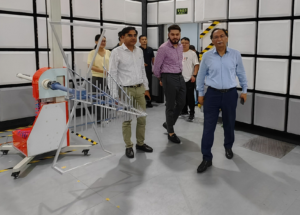
Strengthening the Motor Industry
CLASP also invited motor experts from EMOSAD in Türkiye to visit local counterparts in Pakistan to share insights on how the country transformed from producing low-efficiency motors to building globally competitive, energy-efficient models. Following initial assessment of manufacturer production facilities, the experts have been preparing tailored design and production improvement recommendations for each participant considering their existing capabilities and objectives. The overall goal is to enable all participating manufacturers to have the capacity to produce motors of at least IE1 efficiency levels.
Industry Support Yield Benefits for Manufacturers, Consumers and the Climate
Around the world, manufacturers are recognizing the benefits of producing appliances and equipment that adhere to global standards in energy-efficiency that are also crucial to climate action and sustainable development. The presence of reliable, independent appliance test laboratories and technical assistance to participating manufacturers are the first steps towards building thriving motor and water heater industries in Pakistan. This will benefit the climate, the economy and consumers.
CLASP would like to thank the following companies who are a key part of the Pakistan Industry Accelerator program: AC and Motor Test Laboratories at CERAD, ITU and GIFT; the Punjab Energy Department (PEECA); Haier, ABB, Dawlence; the Pakistan Council of Scientific and Industrial Research (PCSIR); the Turkish National Standards Institute (TSE); the Turkish Motor Manufacturer’s Association (EMOSAD); the Pakistan Pumps and Motor Manufacturers Association (PPEMMA); the China Household Electric Appliance Research Institute (CHEARI); and the participating manufacturers Canon, Super Asia, Waves, Golden Fuji, Fisher, Golden Dynamics, El-Khas, Sunrise and Shahzad Pump.
0. International Energy Agency “World Energy Outlook 2019” https://iea.blob.core.windows.net/assets/98909c1b-aabc-4797-9926-35307b418cdb/WEO2019-free.pdf
1. International Energy Agency “World Energy Outlook 2019” https://iea.blob.core.windows.net/assets/98909c1b-aabc-4797-9926-35307b418cdb/WEO2019-free.pdf
2. International Energy Agency “World Energy Outlook 2023” https://iea.blob.core.windows.net/assets/86ede39e-4436-42d7-ba2a-edf61467e070/WorldEnergyOutlook2023.pdf
3. International Energy Agency “World Energy Outlook 2019” https://iea.blob.core.windows.net/assets/98909c1b-aabc-4797-9926-35307b418cdb/WEO2019-free.pdf
4. International Copper Association “ICA China Motor Program: 20 Years of Promoting Energy Efficiency” https://internationalcopper.org/resource/ica-china-motor-program-20-years-of-promoting-energy-efficiency/
5. International Copper Association India “Energy Efficient Motors” https://copperindia.org/energy-efficient-motors/
6. This is the product of population and Cooling Degree Days (CDDs) per year (230M x 2,810 CDDs). The Person CDDs methodology has been described by the US Department of Energy in The Future of Air Conditioning For Buildings (2016), which uses the 2016 population figure of 182M. This has been updated using population of 230M in 2022. The 646-billion-person CDDs still ranks Pakistan in 5th place behind India, China, Indonesia and Nigeria.