
Here’s How Heat Pumps Benefit Homes, Wallets, & the Climate
Heat pumps have become a fixture in many homes over the past few decades as governments increasingly understand their climate, energy, and affordability benefits and craft policies to promote their adoption.
Globally, heat pumps provided 10% of all space heating in 2021. In the United States, their annual sales have increased by 70% since 2004, while gas furnace sales have decreased by 7%. Similar shifts have been seen in places like China and the European Union.
For homeowners, this technology offers several compelling reasons to make the switch from traditional heating appliances:
- Year-round comfort. Heat pumps can save users money by providing heating and air conditioning, along with hot-weather dehumidifying, through a single system instead of requiring separate appliances for summer and winter temperature control. In fact, all air conditioners are actually a type of heat pump.
- Energy efficiency. Unlike furnaces, which create heat by burning fuel or using electric resistance, heat pumps simply move heat between the indoors and outdoors. This allows them to provide substantially more heating for each unit of energy they consume, which can reduce energy bills.
- Healthier indoor air. Heat pumps eliminate a source of combustion inside the home, preventing heating equipment from sending harmful chemicals like carbon monoxide and nitrogen oxides into the air.
- Cold-climate functionality. Modern heat pumps can operate effectively in much colder climates than earlier technologies, making them a viable heating option in a wide range of geographies.
- Climate benefits. Heat pumps are an important climate solution. In a 2022 report, the International Energy Agency estimated that they could eliminate the equivalent of the annual carbon dioxide emissions of all cars in Europe.
But can a heat pump save me money?
For many homeowners, affordability is a key driver of decisions about which appliances to purchase. Since heat pumps are far more efficient than traditional heating solutions, they often lead to significant cost savings.
But determining exactly how much you can save with a heat pump can require some investigation. For example, people replacing an oil boiler in the northern United States, a high-efficiency gas furnace in Germany, and an aging furnace and air conditioner in Brazil will likely see very different cost savings.
The key variables influencing this are:
- the type of equipment a heat pump is replacing, including its energy-efficiency level
- the local climate
- the home’s insulation and air sealing
- local electricity and fuel prices.

Credit: Shutterstock
When replacing existing equipment, heat pumps are (typically) highly cost effective
For the majority of homeowners replacing existing heating and AC systems, heat pumps are the most cost-effective option—or, at the very least, high on the list.
These appliances are particularly cost effective if an air conditioner is due for replacement. A heat pump’s upfront cost isn’t much more than an AC’s in many places, and its operational cost is likely far less, since it can provide efficient (and therefore energy-bill-minimizing) air conditioning while also taking over the home’s heating load from a traditional heating appliance. The heat pump would also be more efficient, and therefore more affordable, than the heater it replaces, providing energy bill savings in both summer and winter months.
Homeowners with a relatively new furnace and an aging air conditioner may want to consider installing a heat pump and using the existing furnace as backup, a configuration referred to as a dual-fuel or hybrid heat system.
In very cold climates, some people prefer having a dual-fuel system to provide backup on the most frigid days.
Heat pumps tend to offer especially compelling savings when replacing electric-resistance, propane, or oil heating. The costs compared with a natural gas system are more dependent on local utility rates.
Understanding heat pump installation costs
Installation costs vary considerably from house to house. A straightforward installation using existing ductwork can be inexpensive, while one that requires electrical service upgrades, new ductwork, weatherization, or other modifications may cost significantly more.
It’s worth noting, however, that some of these costs also apply to the installation of other heating and cooling equipment. Weatherization would also be required for gas furnaces, for example.
Contractor availability and familiarity with different types of heat pumps can also affect costs. Homeowners interested in heat pumps may benefit from identifying a contractor before purchasing one, as some contractors may not be able to install particular models. This could force them to return the heat pump or seek out other contractors, potentially at a higher rate.
Heat pumps are a win–win
As energy bills rise in many parts of the world and extreme weather becomes more common, heat pumps offer homeowners something increasingly valuable: more comfort, greater energy efficiency, and the potential for lower utility bills—all while reducing their environmental footprint.
Accelerating Appliance Energy Efficiency and Decarbonization in China
China’s New AC Policy Could Benefit People Around the World
A proposed revision to China’s room air conditioner efficiency standard represents an important step toward addressing some of the world’s most pressing challenges.
Appliance standards are often viewed as purely technical regulations with relatively limited real-world impact. In reality, however, they fundamentally influence which technologies are developed, manufactured, and made available to consumers. Over time, this can lead to dramatic improvements in the performance, affordability, and environmental impact of appliances used by billions of people.
Policies that encourage high-performance appliances often deliver benefits far beyond the markets where they are first introduced. They can help countries around the world achieve faster, more affordable progress toward meeting energy and climate goals, as well as help people be healthy and productive as temperatures rise.
The promise of AC efficiency policy
China’s proposed new AC efficiency standard is currently under review and could be published in 2027.
If adopted, it’s expected to increase the average efficiency of new room AC units sold in China by around 20%. Additional benefits include enabling smart grid integration to help manage energy demand, encouraging the use of climate-friendly refrigerants, and performing better in real-world conditions.
The policy comes at a pivotal moment. In many countries, rising heat and growing incomes are driving rapid growth in air conditioner ownership. AC delivers critical health and economic benefits but can also increase electricity demand, which can strain power grids, particularly during heat waves. Rising AC use can also lead to a spike in greenhouse gas emissions, worsening global warming.
Appliance efficiency policy is a critical tool for governments seeking to help people stay cool while minimizing these challenges. Energy-efficient air conditioners deliver the same level of comfort as less-efficient models while easing pressure on grids. They reduce emissions in places where electricity is produced by burning fossil fuels. Importantly, they also cost less to run, helping people save money.
A national standard with global reach
If adopted, the standard would incentivize Chinese manufacturers to improve their products so they can continue selling them within the vast, lucrative domestic market. This would encourage investment in higher-efficiency AC components, advanced controls, and climate-friendly refrigerants.
As these technologies become more widely produced, they could also become more accessible in other parts of the world, creating new opportunities for governments seeking to raise the efficiency of appliances in their own countries.
Equally important, the revised standard provides practical evidence of what is technically and commercially achievable for other countries to draw from. Governments considering updates to their own appliance policies can learn from China’s experience while adapting requirements to local climates, electricity systems, and consumer needs.
By using China’s example to develop strong local standards, then ensuring that they’re effectively implemented, governments around the world can help ensure that their citizens benefit from advances in AC technology.
To Combat Extreme Heat, India Is Becoming a Global Leader in AC Efficiency
India is facing increasingly dangerous heat, with temperatures regularly breaching levels that threaten human life. Even beyond the worst heat waves, summer temperatures now often jeopardize people’s health, livelihoods, productivity, and quality of life.
Helping the country’s 1.4 billion residents stay cool is not simply a matter of comfort; it’s an urgent priority for resilience. But since the vast majority of Indian households lack air conditioning, achieving this will require a massive undertaking.
Moreover, there are serious risks associated with widespread AC use in India, including rising energy bills, increased strain on the power grid, and skyrocketing greenhouse gas emissions that drive temperatures even higher.
Fortunately, there’s a clear pathway to helping more people get AC while preventing unwanted outcomes. Making air conditioners more energy-efficient is a cross-cutting solution that reduces consumer costs, protects the grid, and lowers emissions.
India has a unique opportunity to realize these benefits at a national scale. In many countries, air conditioners were already widespread when ambitious efficiency standards were put in place. But in India, current decisions about AC efficiency will shape hundreds of millions of future purchases.
CLASP’s Marina Baur spoke with Neha Dhingra, the director of our India program, about why efficient cooling has become one of the country’s most important energy and development priorities—and what others can learn from India’s approach.
Marina Baur: Tell me about the role air conditioning currently plays in India and how this is changing as temperatures rise.
Neha Dhingra: I’ll start by saying that cooling—not just air conditioning, but mechanical cooling more broadly, including electric fans and evaporative coolers—is increasingly becoming a public health, economic, and development issue. The Indian government has actually added heat waves to its list of recognized natural disasters, which tells you how far-reaching their impacts are.
Over time, people have found many ways to stay comfortable on hot days, of course. India’s traditional architecture was designed to provide shade, breezes, and materials that absorb heat. And in the last few decades, electric fans have become very important in India; they’re now the primary cooling solution for most homes, schools, and workplaces.
But these measures aren’t enough for the heat we’re experiencing now. In June, temperatures in one city in Uttar Pradesh stayed around 48°C (118°F) for more than a week. I read recently that almost 5,000 cases of heat stroke have been reported in India this year, and that 20 people have died. Unfortunately, these numbers are almost certainly an undercount.
So keeping people protected in this kind of heat requires air conditioning. Past a certain temperature, fans just end up circulating hot air.
But most people in India don’t have access to AC. CLASP recently conducted research that showed that AC penetration in Indian homes is only about 13%.
This poses major challenges from an equity perspective. Many vulnerable communities lack even the most basic mechanical cooling appliances. Especially vulnerable are daily wage earners like construction workers, street food vendors, or vegetable sellers who spend their days working outside in the hot sun and have no air conditioning at home either. They’re at huge risk for heat strokes and other heat-related illnesses. And for them, being sick means they don’t earn any money. So there’s not just a health impact, there’s also an economic and productivity impact.

Street vendor at a market in West Bengal, India.
Credit: Tojo Basu / Ratul Pal
I’m optimistic that the new designation of heatwaves as natural disaster can unlock greater public investment in heat resilience and adaptation. This could help expand access to affordable, energy-efficient cooling for vulnerable households, as well as public spaces like schools and healthcare facilities.
But regardless of where this investment comes from, a technological shift is required. Clearly, the question is no longer whether India needs more air conditioning. The question is how we expand access to these appliances responsibly.
It’s not enough to just install more ACs in India, though—we also need to think very carefully about what kind of ACs people will buy. Will they be inefficient models that strain the grid and increase people’s energy bills? Or will they be efficient models that increase thermal comfort, reduce energy bills, reduce pressure on the electricity system, and avoid expensive investments in energy infrastructure that may only be required for a few hours each year?
Experts increasingly understand that efficiency is key, and that efficiency and access reinforce each other. The World Bank recently put out a report that listed AC efficiency as one of its top solutions for helping South Asian cities cope with extreme heat. It also cited India’s efficiency policies as a regional model.
This is the right time to be thinking about AC efficiency in India, since the demand for ACs is predicted to increase ninefold by 2050. Many advanced countries improved their AC standards only after these appliances were widely adopted, but here, a large share of air conditioners that are going to be operated are yet to be purchased. So there is an opportunity to influence the market before it’s fully mature.
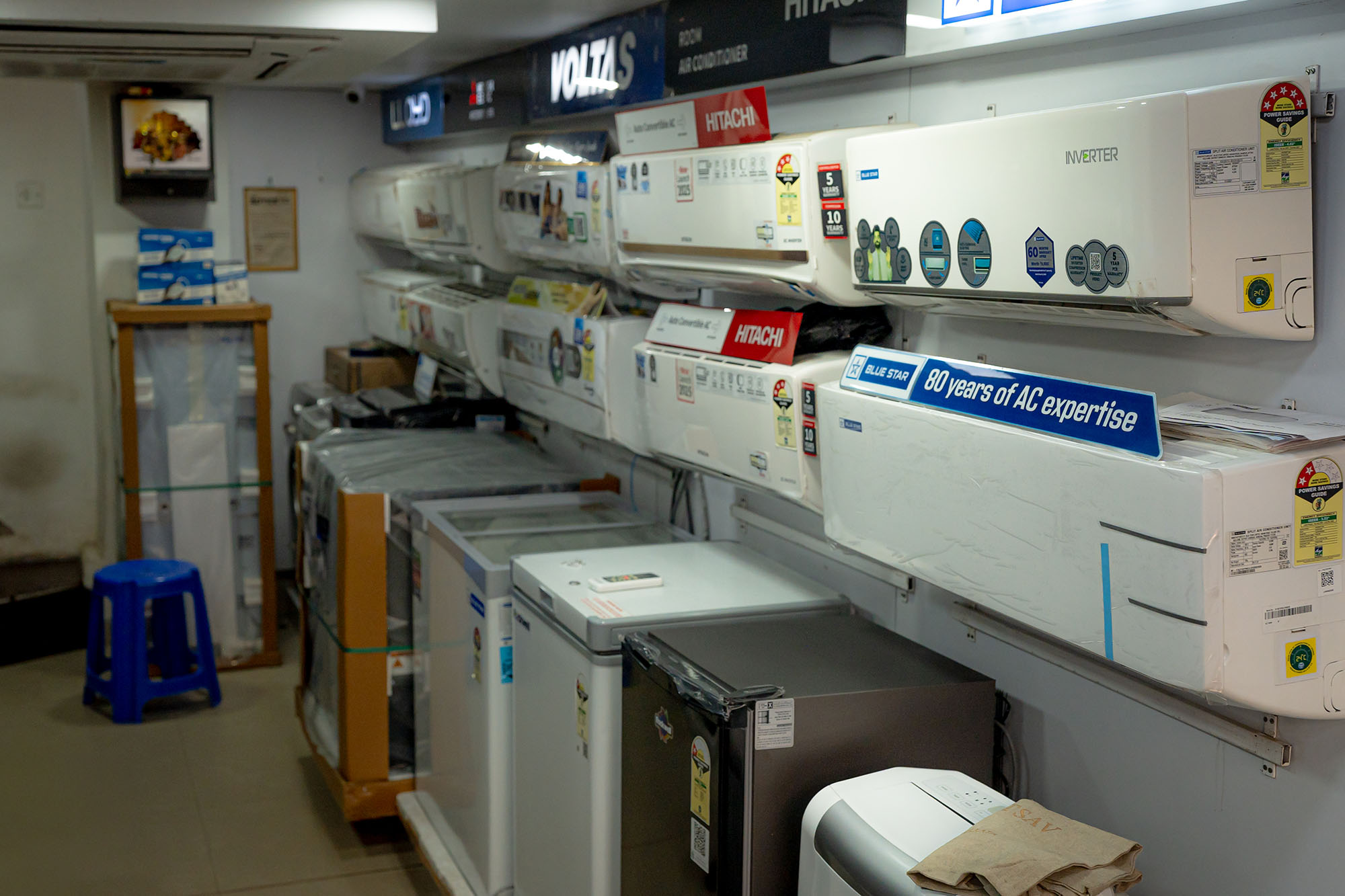
Appliance store in Kolkata, India.
Credit: CLASP
Baur: You mentioned straining the power grid. Can you say more about how this plays out and how efficiency can prevent it?
Dhingra: The most important thing to understand is that efficiency allows India to expand access to cooling appliances without proportionally increasing electricity demand. This is key to grid stability.
There are two main challenges when it comes to the grid: the rise in total electricity consumed and the growing peak demand during certain times of day, when many people use their appliances at the same time.
Cooling appliances are one of the largest contributors to India’s peak demand. Every summer, as more people buy ACs, we see peak demand go higher and higher.
During extreme heat waves, when millions of people turn on their ACs at the same time, we see a particularly sharp increase in demand. But if you think about it, this only occurs for a few hours in a year. So it doesn’t make sense for the utilities to add power generation, transmission, and distribution capacity that remains underutilized for the rest of the year.
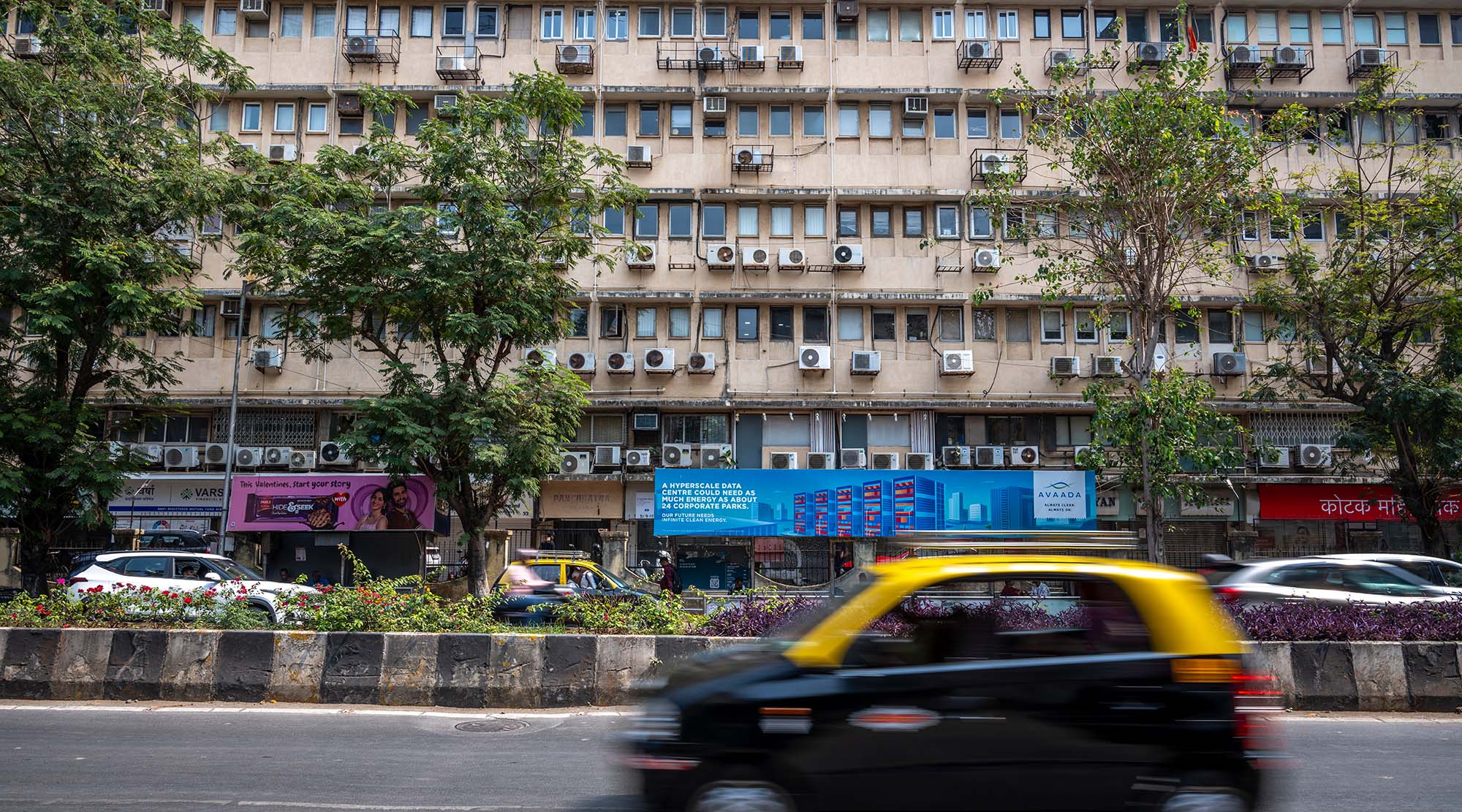
Air conditioners in Mumbai, India where temperatures reached 40° Celsius (104° Fahrenheit) during a heat wave this year.
Credit: CLASP
And it really doesn’t make sense when you think about the cost to consumers. Building this capacity across the country would be extremely expensive, and that cost would ultimately be paid as part of people’s electricity tariffs. So this is a kind of hidden way that inefficient ACs impact affordability, in addition to just raising electricity bills due to increased energy consumption.
Baur: So what are the solutions? How does India approach AC efficiency?
Dhingra: I’ll zoom out a bit and discuss the broader question of appliance efficiency, not just AC efficiency. One of India’s strengths has been recognizing that appliance efficiency is much bigger than regulation alone.
Efficiency standards provide an important market signal, but successful market transformation—in other words, making sure that the appliances people purchase and use are efficient—also requires appliance testing infrastructure, manufacturers, state governments, technical institutions, financing, consumer awareness, and continuous engagement across the entire value chain.
Policymakers in India have consistently worked at building an ecosystem for appliance efficiency in general, and AC efficiency specifically. They’re taking all these issues into account.
So policymaking is occurring as part of this larger process, within this larger ecosystem. And the policies that are being developed show this level of consideration. Starting in 2028, the minimum efficiency requirement for ACs will rise to a level that will dramatically raise the efficiency of products available in Indian stores. This will bring our efficiency standards up to the highest levels found anywhere in the world, comparable to China and Europe’s.
We’ve been talking about the importance of AC efficiency within India, but it’s also critical to understand how important this is from a global climate perspective. This policy will prevent a gigaton of emissions by 2050. It’s hard to overstate how important that is for broader mitigation efforts.
Baur: What are the main considerations that the government and other key players take into account when shaping AC policy and action in India?
Dhingra: One of the first questions is always, how are ordinary people going to get impacted? In other words, is the purchase price of the appliance going to increase if we improve efficiency?
That’s a key consideration, especially in a growing country where the AC penetration is low and access to cooling is a major challenge. Right now, the average price of an air conditioner in India is ₹35,000 INR ($366 USD), while the median household income is roughly ₹14,000 INR ($147 USD) a month. So policymakers don’t want to put these appliances further out of people’s reach.
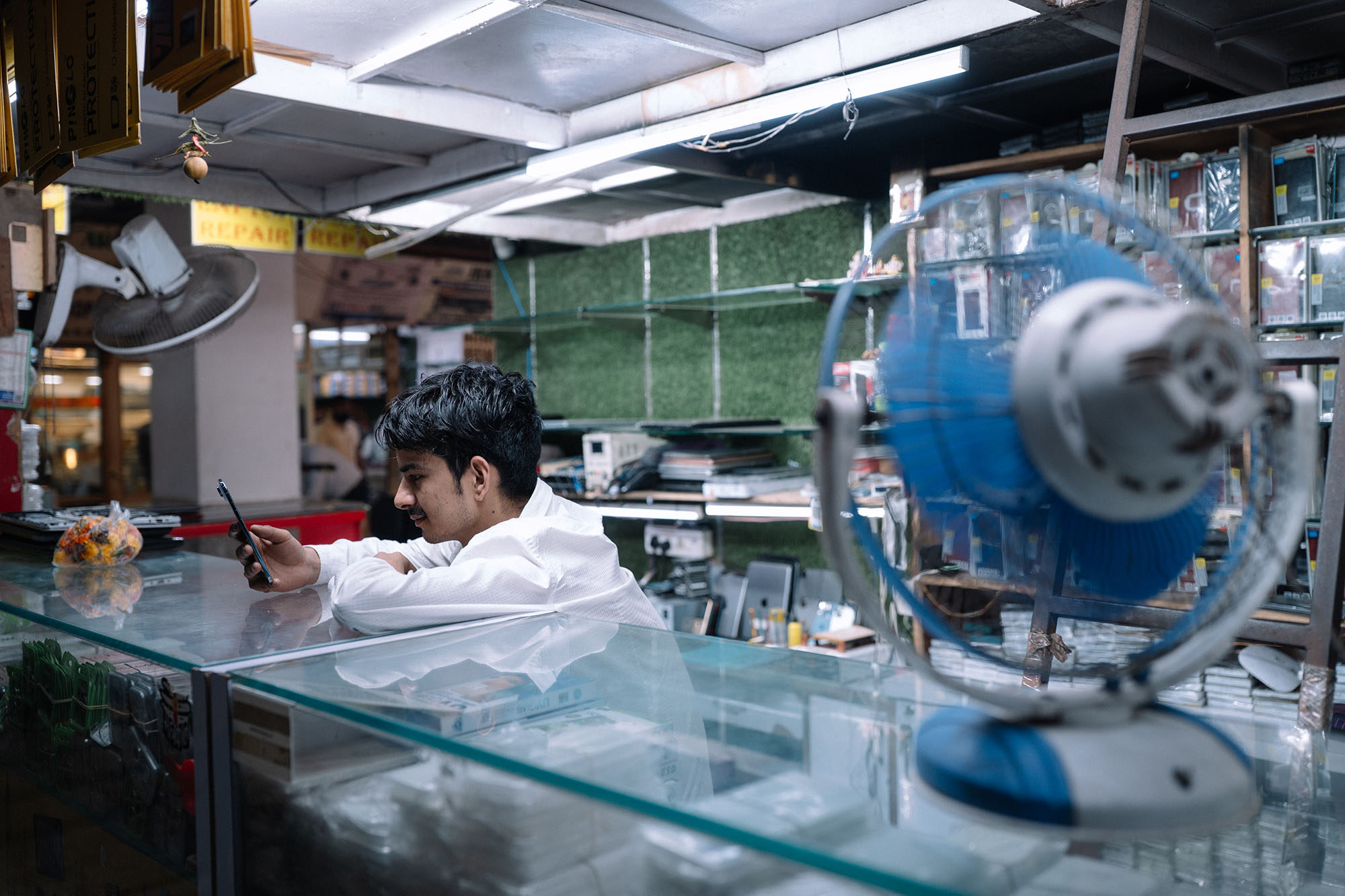
A shopkeeper in New Delhi, India, dependent on fans to keep him cool during rising heat.
Credit: CLASP
Encouragingly, evidence shows that stronger efficiency standards do not necessarily translate into higher prices. As markets mature, manufacturers innovate, production scales up, and competition increases, making efficient technologies increasingly affordable.
Consumers then benefit twice: through lower purchase costs over time as well as through significantly lower electricity bills throughout the lifetime of the appliance. That combination is essential if we want cooling to become accessible to many more households.
A second major consideration shaping AC efficiency policy is supporting domestic industry. Higher efficiency standards don’t simply reduce energy use—they create incentives for innovation, better products, and globally competitive manufacturing. India’s air conditioning industry is quite strong, and higher efficiency standards encourage companies to invest in better products that can compete both domestically and internationally.
A third consideration is industry readiness. Industry—including micro, small, and medium enterprises—needs to actually have the capacity to implement the efficiency standards. Otherwise, nobody will follow the standards and they won’t be effective.
Energy security is an increasingly important consideration as well. India’s energy supply needs to remain reliable, affordable, and resilient to external shocks. Efficient appliances can help with this in several ways. Lower electricity demand reduces the pressure to build new generation capacity and makes electricity system more reliant. It also reduces India’s exposure to volatile international fuel prices. And during periods of extreme heat or supply disruptions, a lower baseline energy need makes the system easier to manage.
So thinking of these issues as part of a single ecosystem has shaped the evolution of India’s air conditioner policy over the last 20 years, which has proven very effective. It has helped drive the market for efficient ACs, created opportunities for domestic and international manufacturers alike, and helped make India an AC manufacturing hub in its own right. These broader economic benefits are becoming just as important as the direct energy savings from AC efficiency.
Baur: The ecosystem approach seems like a very transferable model. What else can people outside India learn from its approach to AC efficiency and access?
Dhingra: The first thing is that countries should act early on appliance efficiency—before appliance ownership becomes universal. Efficiency standards, if they are introduced during the early stages of market growth, can influence millions of future purchases and prevent inefficient appliances from becoming locked into households.
And also, governments don’t have to choose between raising efficiency levels and helping expand access to appliances. With a thoughtful policy and strong partnerships, it is possible to improve affordability, strengthen energy security, support domestic manufacturing, reduce pressure on the electricity grid, and expand access to cooling—all at the same time.
As more countries face rising temperatures, these lessons are becoming increasingly relevant well beyond India.
Interview condensed and edited.
$1.5M USD Awarded for Income-Generating Appliances in Africa
Nairobi, Kenya, 9 July 2026—Nineteen productive use appliance companies across Kenya, Nigeria, and Ethiopia have been awarded $1.5 million USD through the Productive Use Financing Facility (PUFF) to expand access to income-generating solar appliances for entrepreneurs and small businesses.
The funding, announced by CLASP at the Adaptation Investment Summit 2026, will help beneficiaries to increase productivity, create jobs, and grow local economies. The funding targets to deploy 3,800 productive use equipment (PUE), supporting over 3,000 green jobs across the three countries.
The selected beneficiary companies are:
- Five from Ethiopia: Awdi Negesti Special Purpose Machinery Manufacturing, Center for Applied Manufacturing Service & Engineering, Green Scene Energy PLC, Inter Ethiopia, Zicon Trading
- Six from Kenya: Agsol Limited, Epicenter Africa Limited, Plexus Energy Limited, Suncool Storage, SunCulture Kenya Limited, Sunspot Energy Kenya (Spark Possibilities)
- Eight from Nigeria: Asolar System Nigeria Limited, Ceesolar Energy Limited, Cloud Energy Photoelectric, Consistent Energy Ltd, D@ech Nig Ltd, Ecotutu, Sosai Renewable Energies, GreenPower Overseas Limited
While electricity access across Africa continues to grow through initiatives such as Mission 300, many businesses lack access to the appliances needed to turn energy into jobs, income, and opportunity. These appliances include solar-powered water pumps, solar-powered refrigeration, solar-powered milling equipment, and other income-generating appliances. High upfront set up costs and costs associated with running inefficient appliances are the primary barriers for growth for businesses in Africa.
PUFF, an initiative managed by CLASP and supported by the Global Energy Alliance for People and Planet, will fund the selected companies to help reduce upfront production costs and make the appliances more affordable and accessible to farmers, entrepreneurs, and small businesses across the target regions. This access will enable more entrepreneurs to grow their businesses, creating increased income and impact for their families and communities.
Commenting on the initiative, Emmanuel Aziebor, Senior Director, Africa at CLASP, said, “Africa’s economic future depends not just on expanding access to electricity, but on ensuring that energy powers businesses, creates jobs, and improves livelihoods. The technologies already exist. The challenge is making them accessible to the entrepreneurs who need them most. Through PUFF, we are helping bridge that gap so more businesses can invest, grow, and drive local economic development.”
The selected companies are entering a sector with considerable room to grow: The productive use appliances (appliances that generate income) sector currently reaches less than 1% of the serviceable African market. If the sector was able to bridge that gap, it would lead to more jobs and increased incomes, reaching an income potential of almost $16 billion USD each year and the creation of 50 million new jobs over the next decade.
Carol Koech, Vice President for Africa at the Global Energy Alliance, said, “We understand that creating access to affordable capital is essential for accelerating the adoption of renewable energy technologies. Our goal is to empower African entrepreneurs with the tools to grow their businesses by aligning finance, technology, markets, and enabling policies that do this while accelerating more equitable energy transition across the region.”
“What we’ve learned through PUFF is that the market is ready,” said William Mulehi, Senior Manager at CLASP. “The next step is helping businesses overcome the upfront cost of investing in productive-use appliances. This second round of funding is designed to do exactly that, enabling the selected companies to adopt technologies that will enable them reach more entrepreneurs and expand into new markets.”
PUFF has a proven track record. The initiative provided $2.7 million USD in its first round of funding between 2022 and 2024 to support the sale of almost 16,000 income-generating appliances across the region, directly impacting over 53,000 people across Africa.
About the Productive Use Financing Facility
The Productive Use Financing Facility (PUFF) is an innovative program that provides grants, procurement subsidies and technical assistance to suppliers and distributors in order to lower appliance prices and reach more customers. This makes it easier for small businesses, entrepreneurs, and households to buy energy-efficient technologies, such as solar water pumps, mills, and refrigerators, at favorable prices.
This program is supported by the Global Alliance for People and Planet. For more information, read the financing facility 2.0 press release, contact financing@clasp.ngo, and follow us on LinkedIn for regular updates on how the financing facility is benefiting people and our planet.
About CLASP
CLASP is the leading global authority on efficient appliances’ role in fighting climate change and improving people’s lives. With 25 years of expertise and offices on four continents, CLASP collaborates with policymakers, industry leaders, and other experts to deliver clear pathways to a more sustainable world for people and the planet.
About the Global Energy Alliance for People and Planet
Global Energy Alliance for People and Planet is a global nonprofit that builds public, private, and philanthropic partnerships to accelerate clean energy and economic opportunity. Founded in 2021 by The Rockefeller Foundation, IKEA Foundation and Bezos Earth Fund, we build the technical, financial and institutional foundations that make clean energy investable and scalable across emerging economies. Our work is anchored in two mutually reinforcing global pillars that together address the market fragmentation that has historically slowed down progress on energy access and economic development. Grids of the Future strengthens energy supply through AI-enabled, renewables-ready power grids. Powering Opportunity builds demand, helping people harness clean energy to power businesses, create jobs and drive economic growth. Together, these pillars create a reinforcing cycle of abundant energy and economic opportunity.
With 130 projects across Africa, Asia and Latin America and the Caribbean, we are on track to reach 91 million people with clean energy, create or improve more than 3 million jobs and prevent nearly 300 million tons of carbon emissions. For more information, please visit www.energyalliance.org and follow us on LinkedIn.
Media contacts
Evelyne Kopar
ekopar@clasp.ngo
Catherine Karanja
catherine.karanja@quillhouse.co.ke
Building an Efficient Fan Market with India’s Small Manufacturers
Every day, millions of Indian households rely on ceiling fans to stay cool. In this video, Neha Dhingra explains why the small manufacturers behind these fans are essential to delivering affordable, energy-efficient cooling, and how the right support can help them meet evolving efficiency standards and reach more people while supporting India’s energy and climate goals.
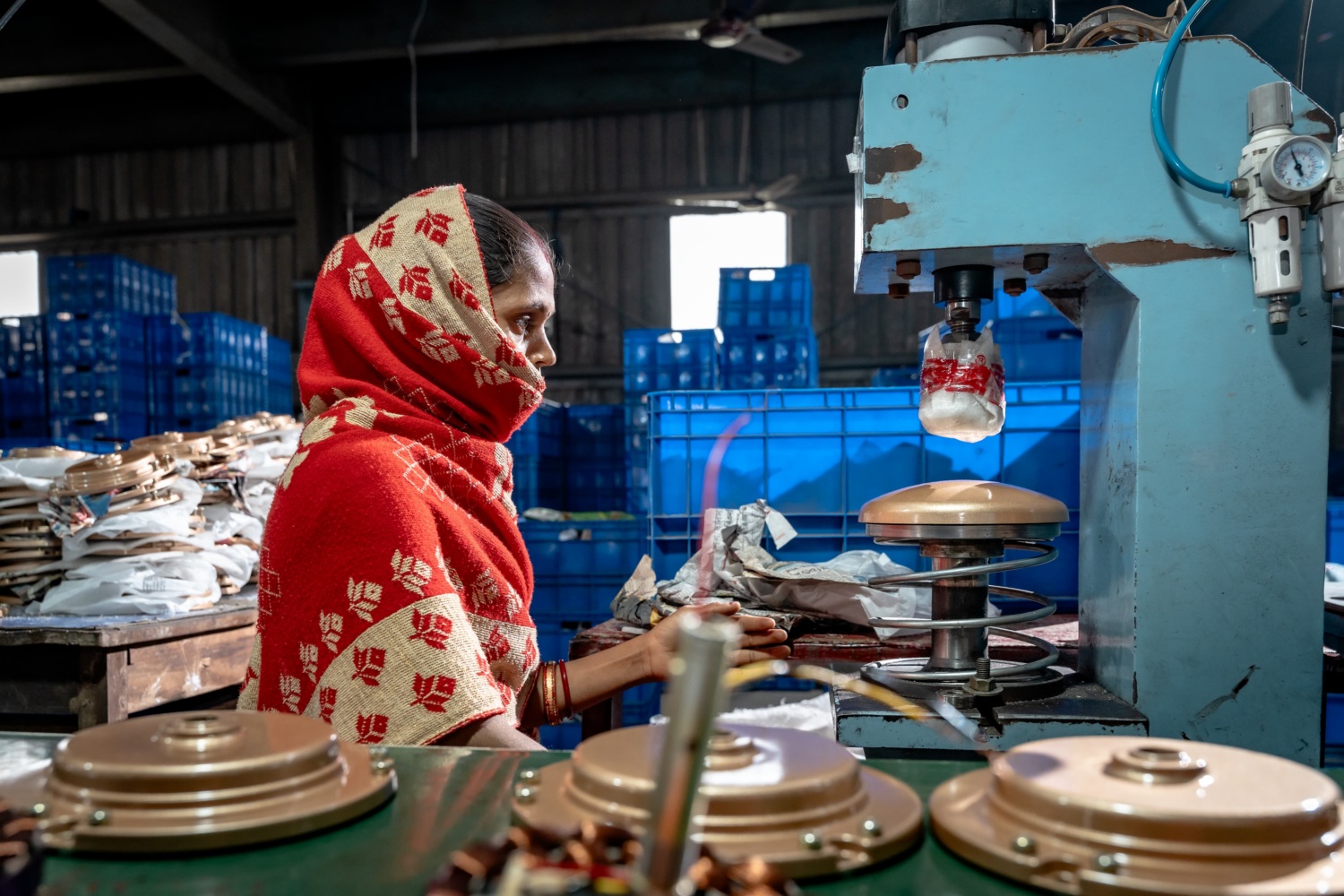
Building an Efficient Fan Market with India's Small Manufacturers
Running time: 2:06
Region: India, Asia
Featuring: Neha Dhingra
Explore CLASP’s YouTube channel for more videos about the transformative power of efficient appliances.
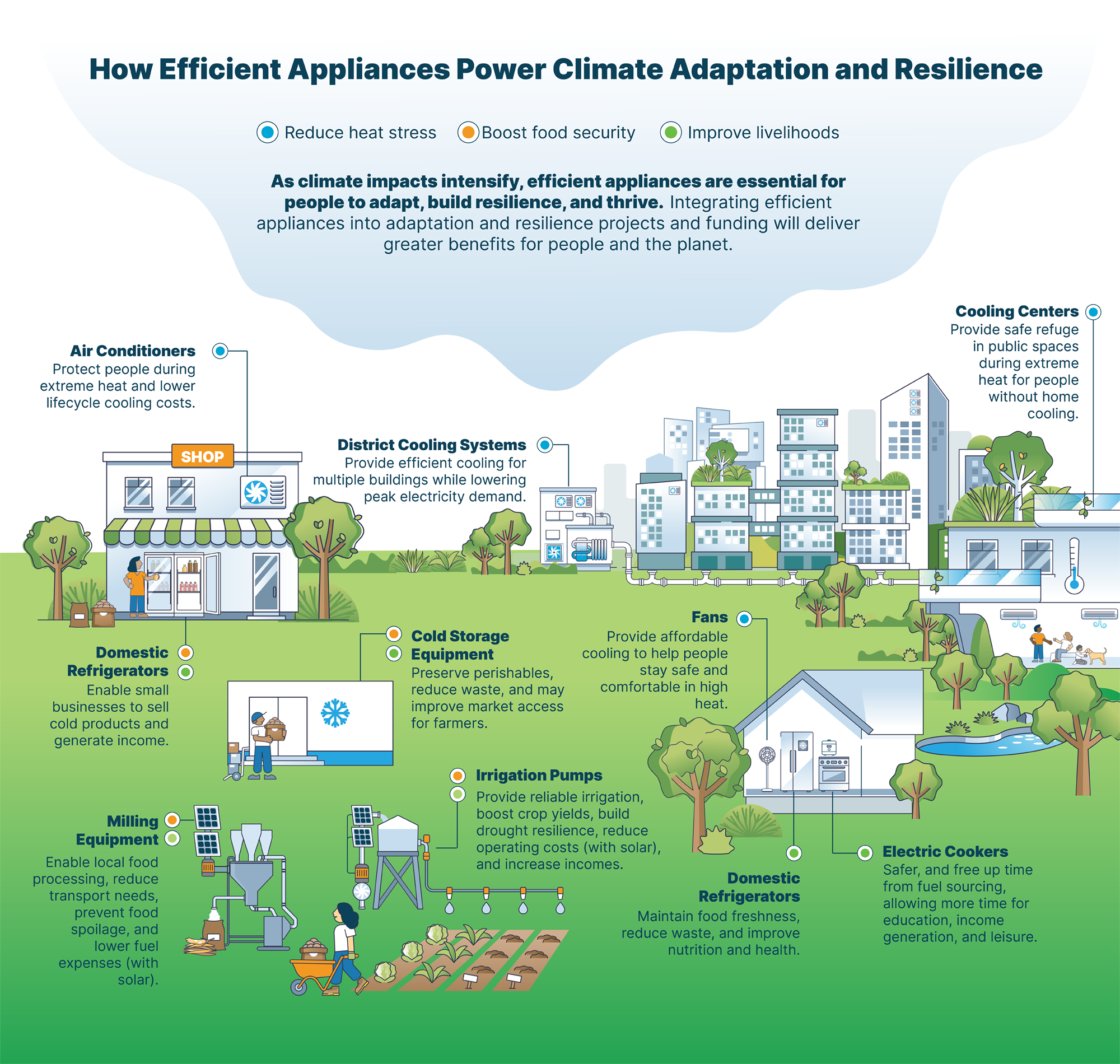
Powering Thriving Communities: Efficient Appliances for Climate Change Adaptation and Resilience
CLASP
Modern Energy Cooking Services Invests in Three African Companies to Accelerate Clean, Affordable Cooking
Nairobi, Kenya, 5 May 2026 – Across sub-Saharan Africa, more that 600 million people still cook with wood, charcoal, or other biomass fuels—a challenge that drives deforestation, generates harmful indoor air pollution, and imposes a disproportionate burden on women and girls. Closing this gap is one of the most urgent and compelling investment opportunities in the clean energy sector. Three innovative African companies are demonstrating exactly that.
Bridging the investment gap in clean cooking
EcoBora, PowerUp, and Sun-Power Box are Africa-based companies using clean technologies and innovative business models to make clean cooking viable and affordable for urban, peri-urban, and off-grid communities. Each is at a pivotal stage: they have gathered early evidence and validated demand for efficient electric cooking (e-cooking) technologies and now need targeted investment that will unlock the next round of growth.
Modern Energy Cooking Services (MECS), a research and innovation program funded by UK aid via the Foreign Commonwealth and Development Office (FCDO), has made direct Research & Development (R&D) investments in all three companies. These investments will directly support the companies’ R&D efforts, which includes product testing, technology validation, business model refinement, and market access research, generating transferable knowledge and reduce risk for future investors. Despite the clear potential for e-cooking, current financial structures are not adequately supporting its growth, creating a critical gap for early-stage ventures. MECS’ R&D venture building support is designed to bridge that gap and support early-stage companies move from market entry to scale.
Nyamolo Abagi, Director of Clean Energy Access at CLASP and member of the MECS Investment Committee, comments on the Investment Committee’s decision: “The MECS Investment Committee is pleased to support these three trail-blazing ventures. All three companies demonstrated potential to scale up their businesses and make significant strides in accelerating the adoption of clean cooking technologies across Africa.”
Meet the three companies:
Ecobora is a Kenya-based clean energy enterprise that manufactures solar- and grid-powered institutional electric cookstoves for large-scale kitchens. Combining robust design with smart monitoring and carbon revenue pathways, Ecobora is expanding affordable, zero-emission cooking for schools and other institutions across Africa.
PowerUp, a Uganda-based clean-tech venture, delivers affordable electric cooking solutions through smart electric pressure cookers and induction cooktops with integrated metering and Pay-As-You-Go (PAYGo) features that are supported by a data platform and carbon finance model.
Sun-Power Box is a Malawi-based company tackling the clean cooking challenge in rural off-grid communities. Its battery-enabled solar-electric cooking systems integrate efficient appliances, end-to-end system design, and last-mile delivery to bring clean cooking to households that are harder to reach.
All three companies have established track records of growth and a demonstrated readiness to push their technologies to the next level.
Kato Kibuka, Co-founder and CEO of PowerUp, remarks on how this R&D support will impact the company’s capacity to innovate and reach more people: “PowerUP values the R&D support from CLASP and MECS programme, which allows us to continue innovating on electric cooking solutions that are accessible and attractive to African homes. Now, even more customers will save money and time while avoiding indoor air pollution.”
MECS R&D venture building support
Over the next year, this R&D venture building support will focus on product testing and validation, alongside market access, financial, and policy research. Critically, the findings will build the evidence base that the wider clean cooking sector, and prospective investors, need to move with confidence.
Professor Rachel Kyte, UK Special Representative for Climate, remarks on the significance of this investment decision: “Clean cooking technologies transform lives and protect the planet by improving health, generating jobs, and avoiding deforestation. Innovative UK-African partnerships advancing viable and affordable electric cooking solutions are more important than ever at a time of price shocks and supply disruption for LPG and other fossil fuels. Supporting these three pioneering firms is part of our modern approach to development and helps move the world one step closer to universal clean cooking.”
A call to investors and partners
MECS’ investment in EcoBora, PowerUp, and Sun-Power Box is an early signal of what is possible when R&D funding is deployed with precision and purpose. The evidence these companies generate is designed to de-risk the investments that come next. MECS invite impact investors, development finance institutions, and technology partners to engage with these ventures and explore how their capital can help accelerate the clean cooking transition across Africa.
–
About Modern Energy Cooking Services programme
Modern Energy Cooking Services (MECS) is an eleven-year programme funded by UK aid via the Foreign Commonwealth and Development Office. MECS is a geographically diverse, multicultural and transdisciplinary team working in close partnership with NGOs, governments, private sector, academia and research institutes, policy representatives and communities in 16 countries of interest to accelerate a transition from biomass to genuinely ‘clean’ cooking.
About CLASP
CLASP is the leading global authority on efficient appliances’ role in fighting climate change and improving people’s lives. With 25 years of expertise and offices on four continents, CLASP collaborates with policymakers, industry leaders, and other experts to deliver clear pathways to a more sustainable world for people and the planet.
2025 CLASP Annual Report
Collective action for people,
prosperity, and planet.
A note from CLASP’s CEO,
Christine Egan
Appliance and equipment energy efficiency is a triple-win for people, planet, and prosperity. In a time of multiplying global crises, it stands out as a durable climate solution and key element of smart decarbonization strategies. It also creates jobs and improves livelihoods, enhances energy security and food system resilience, and helps people adapt to a changing climate.
Looking back at 2025, I’m wowed by the work of CLASP’s global team and dedicated partners, and the focus of the decisionmakers we support. Through purposeful collaboration, we forged the policy instruments, finance, and intelligence to drive positive momentum.
Together, we are changing the way we use energy.

2025 by the numbers:
4.6 Gt 18 CLASP-supported appliance and equipment efficiency policies will avoid 4.6 gigatons of CO2 by 2050, improving planetary and human health and saving money.
30K+ Over 30,000 people experienced improved health and livelihoods via access to efficient, solar powered appliances and equipment.

Skyline of Jakarta, Indonesia
Image credit: CLASP
Elevating Appliance Efficiency in National Climate Commitments
What we did
Ahead of COP30, CLASP led a global campaign to improve inclusion of appliance and equipment energy efficiency in national climate goals (nationally determined contributions or NDCs).
How we did it
Through our Net Zero Appliance NDC Toolkit and bespoke support for governments around the globe, CLASP elevated appliance efficiency policy as a key climate mitigation solution. Now, appliance and equipment efficiency policy is included in 90% of all submitted NDCs—up from below 50% in the last cycle.

Image credit: CLASP
Powering Africa’s Green Economy
Solar-powered appliances and equipment turn energy into opportunity, helping small businesses generate jobs and income. In 2025, CLASP re-launched our innovative Productive Use Financing Facility to make it cheaper and easier for entrepreneurs, farmers, and small businesses in Ethiopia, Kenya, and Nigeria to buy solar-powered appliances and equipment that power livelihoods. Last year, CLASP partnered with 11 companies to drive jobs and economic growth in Africa’s informal and agricultural sectors, which make up 70-80% of African economies.
Slashing Emissions Through Smart Policy
Australia
National leaders passed a lighting policy that will transition Australia’s market to an all-LED future and avoid 41 Mt of CO₂ by 2050, informed by CLASP-led analysis.
Brazil
Policymakers made strides in Brazil’s LED transition with CLASP’s support, approving a lighting policy package that will slash nearly 3 Mt CO₂ by 2050.
China
CLASP supported seven major policy updates, including for compressed air systems, refrigerators, and water pumps. Altogether, the new policies are estimated to cut nearly 3 Gt CO₂ by 2050.
India
CLASP supported the advancement of policies for space cooling appliances that will place India among global leaders in efficiency and cut 1.2 Gt CO₂ by 2050.
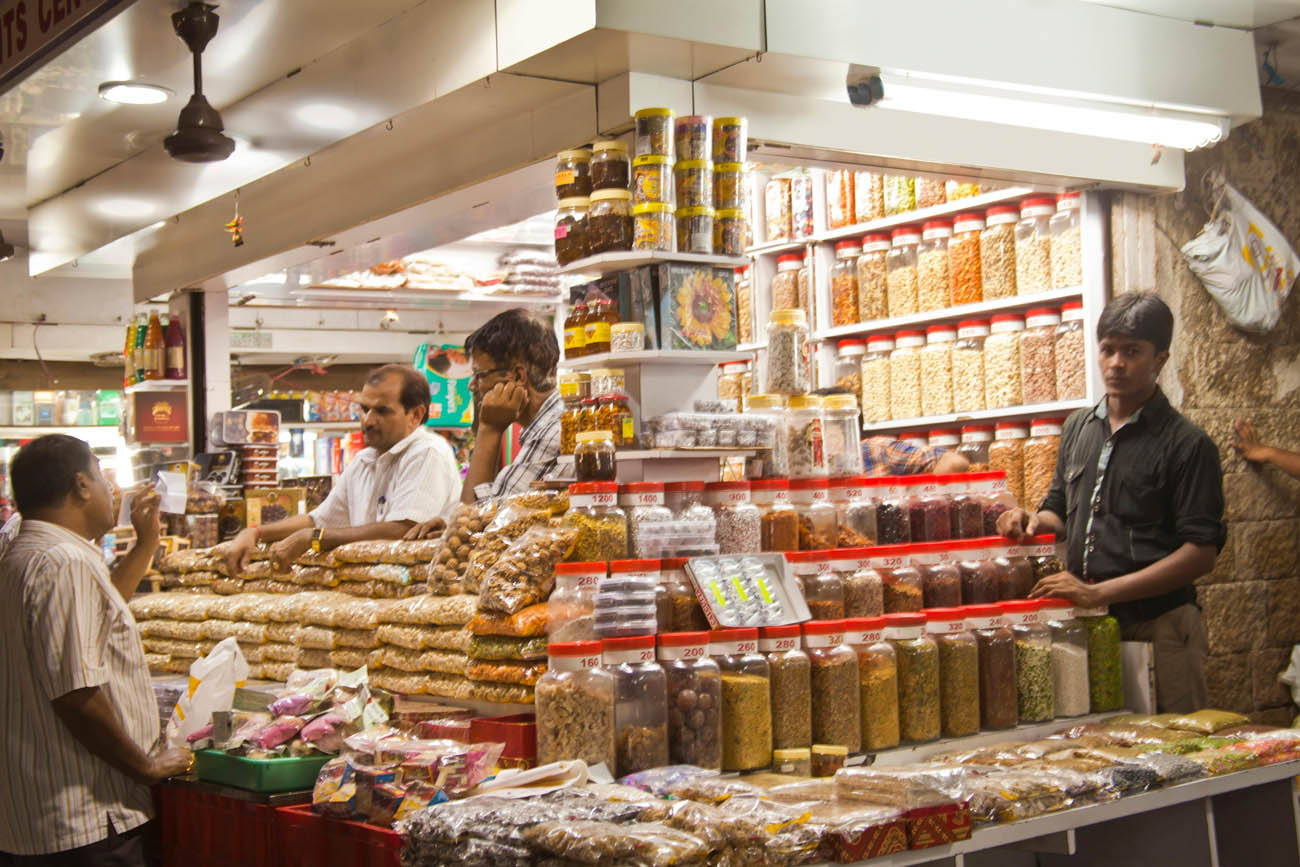
Image credit: ImageDB
Making Efficient, Affordable Fans the New Standard in India
India is one of the places on the planet most at risk of extreme heat. 90% of households rely on fans as their only form of space cooling. CLASP partnered with government and private sector partners to drastically improve fan efficiency, availability, and affordability. A major part of the effort was supporting small and medium enterprises to improve their production capacity.
The impact has been catalytic. Together, CLASP and partners cut energy demand and climate emissions from cooling, while safeguarding jobs, strengthening local supply chains, and making efficient cooling more affordable to the people who need it.
Joining Up with the Modern Energy Cooking Services (MECS) Programme
CLASP joined the UK Aid-supported MECS programme as a core partner alongside Loughborough University and the World Bank’s ESMAP. CLASP now leads on venture building and market shaping, helping e-cooking businesses scale up. In 2025, CLASP launched the Global LEAP Awards Induction Cooktops Competition to identify and promote the most innovative electric cooktops on the market.

CLASP's Sumedha Awasthy & Nya Abagi at the Global LEAP Awards Induction Cooktops Competition workshop in New Delhi, India.
Image credit: CLASP
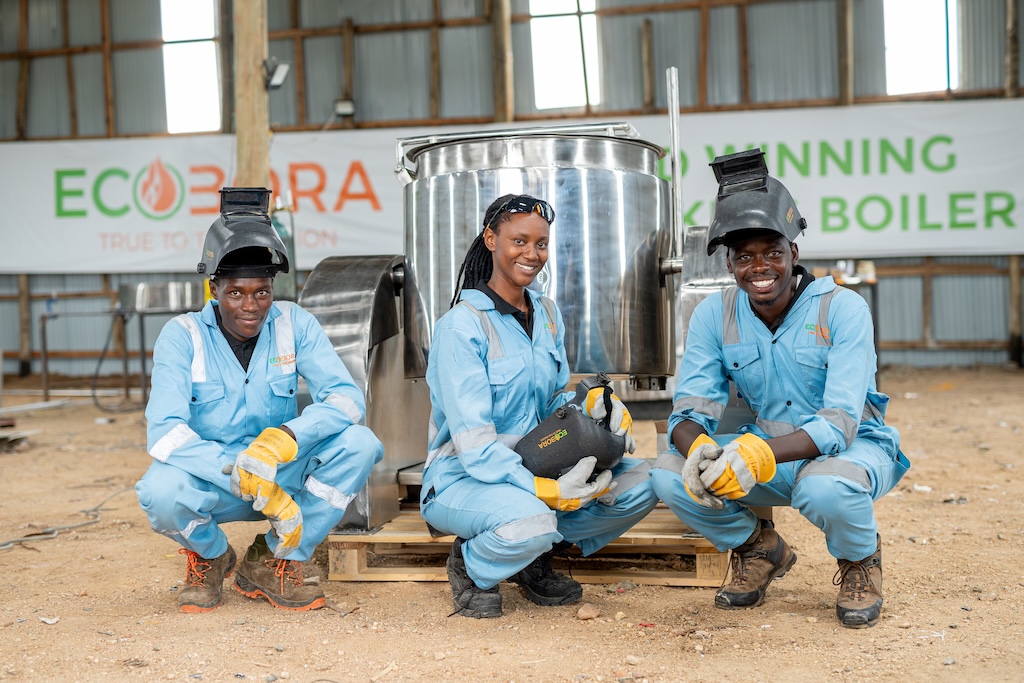
EcoBora, an innovative electric cooking company in Kenya, supported by CLASP through the MECS programme.
Image credit: CLASP
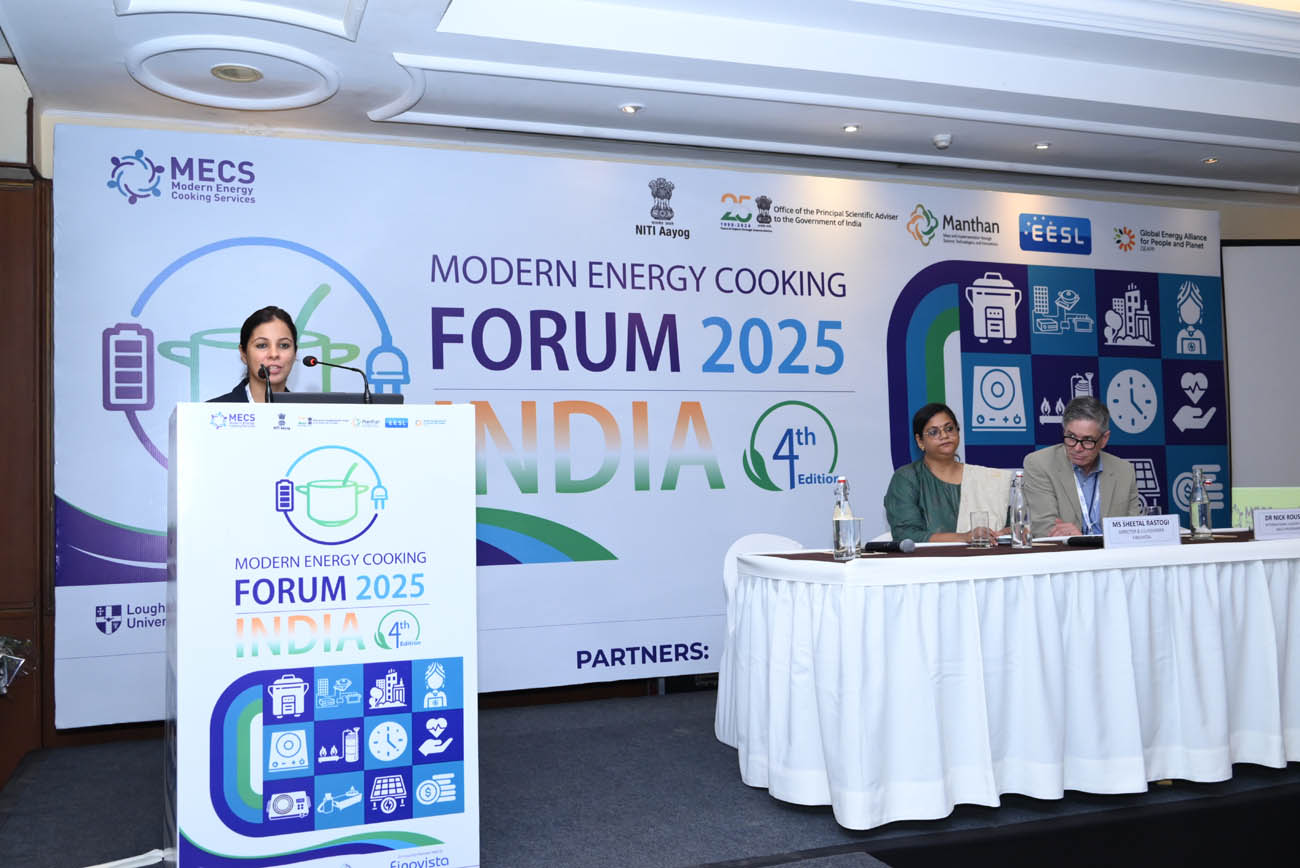
CLASP’s India Director, Neha Dhingra, speaking at the Modern Energy Cooking Forum in New Delhi, India, in September 2025.
Image credit: Finovista
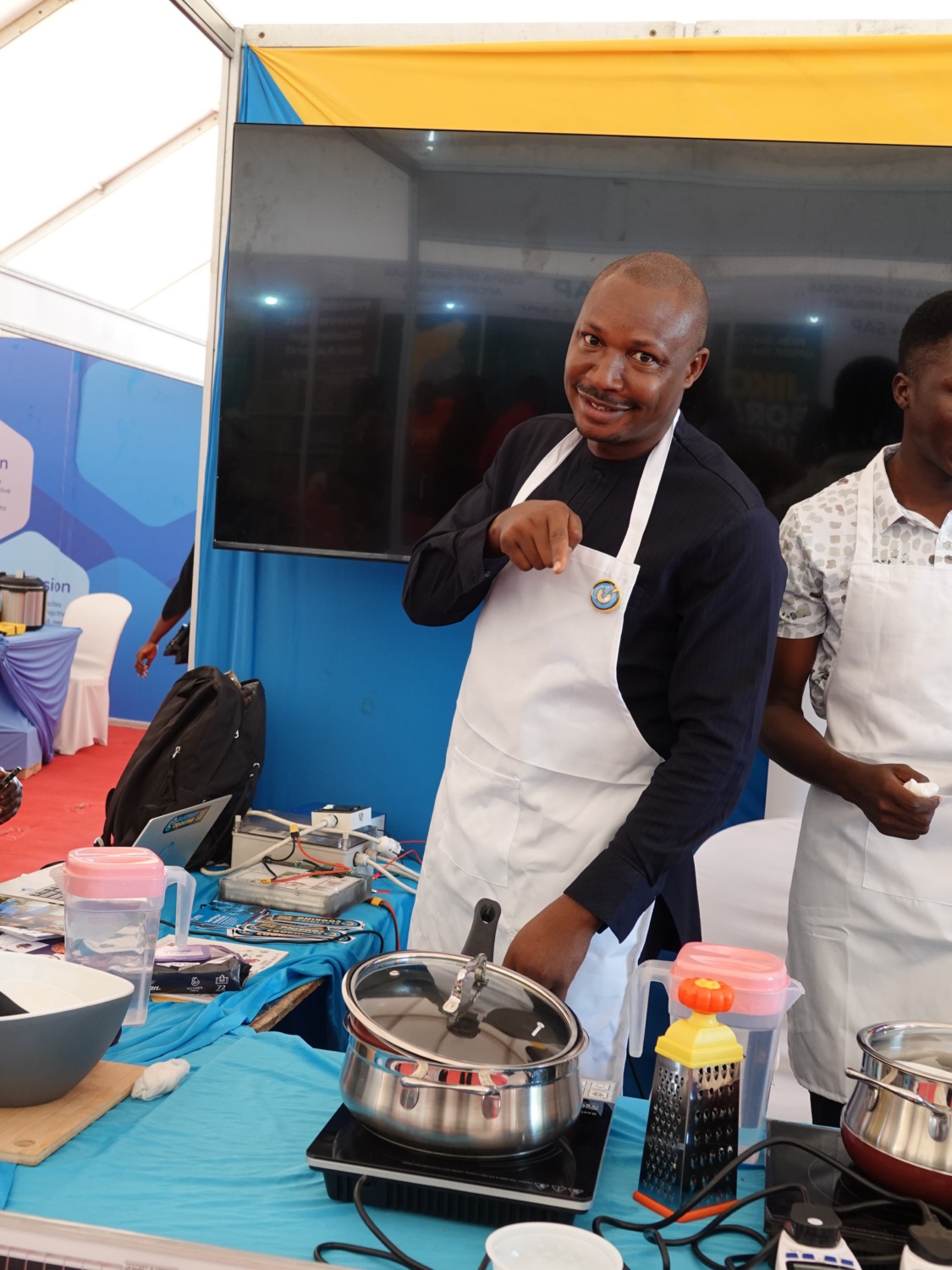
Emmanuel Aziebor, CLASP’s Senior Director, Africa, at Kenya Clean Cooking Week.
Image credit: CLASP
How UK Housing Authorities Can Power the Switch to Electric Cooking
Global Action Plan, in partnership with CLASP, piloted gas-to-electric cooking retrofits in a social housing community in Manchester.
For participating households, switching to electric meant more than lower emissions. It meant breathing more easily in the kitchen, a cleaner and more practical cooking experience, and greater peace of mind for families with young children. Every household preferred its new induction cooktop over gas.
Watch the video:

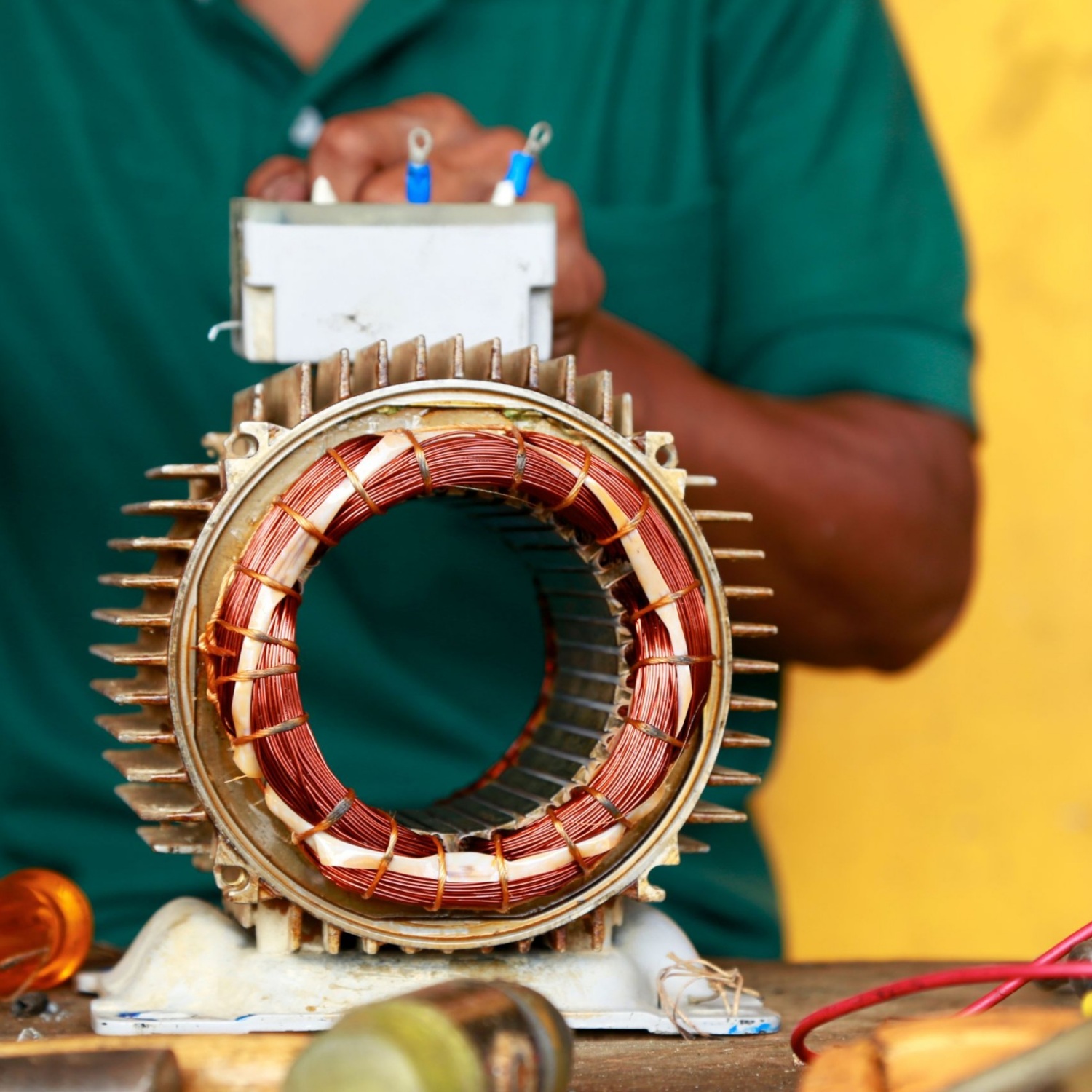
Image credit: CLASP
Economies Can Boom When Powered by Efficient Motor Systems
Industrial motor systems are the invisible heartbeat of economic development. Universally used across industrial facilities, they power the production of goods like metals, paper, cement, textiles, and packaged food. Motor systems are also ferocious energy consumers, due to their function and prevalence. Without intervention, and in step with global economic development and industrialization, by 2050 motor systems will account for 35% of global electricity demand and 19% of energy related emissions. CLASP is taking action on this priority appliance in the fight for Net Zero, identifying high impact opportunities at national and global scales to drive up efficiency, slash emissions, and boost economic progress.

Image credit: CLASP
In Brazil, Partnering for Change
Ahead of COP30 in Brazil, CLASP joined forces with science communication agency Bori to drive national awareness of the benefits of appliance efficiency. Our InfoEnergia Mentorship was an 8-week, in-depth workshop that connected 25 journalists with experts and expertise to produce smart, contextualized reporting on appliance efficiency and its social, economic, and environmental impacts. Robust local journalism is a key element of durable climate policy.
Elevating Appliance-Centered Solutions at COP30
At COP 30 in Brazil, appliance and equipment energy efficiency stood out as a powerful climate solution, driving job creation, energy security, and adaptive capacity. CLASP provided expert testimony on the power of appliance efficiency solutions.

CLASP’s Bishal Thapa participated in discussion on space cooling solutions, offering insights about the benefits of efficient cooling technologies that slash emissions.
Image credit: CLASP

CLASP’s Edilaine Camillo moderated a conversation on the principal role of efficiency in Brazil’s energy transition during an agency-led day of efficiency themed events.
Image credit: CLASP

CLASP’s Bishal Thapa took part in a panel hosted by Casa Civil to speak about the role of energy efficiency policy in Brazil’s reindustrialization strategy.
Image credit: CLASP
Insights driving action
Delivering COP28’s Doubling Efficiency Goal Through Appliances
Appliance efficiency will play a critical role in meeting the COP28 commitment to double the global rate of energy efficiency improvement by 2030. CLASP research found it could deliver 20% of the energy savings needed, highlighting the value of strong standards, clear targets, and international collaboration.
The Missing Piece of Energy Access
666 million people, most of them in Africa, lack access to electricity. 2025 CLASP research shows that directing just 15% of existing energy investments toward efficient appliances can generate the demand needed to make grid expansions financially viable and help those currently living without electricity gain access to healthier, more productive lives.
Finances
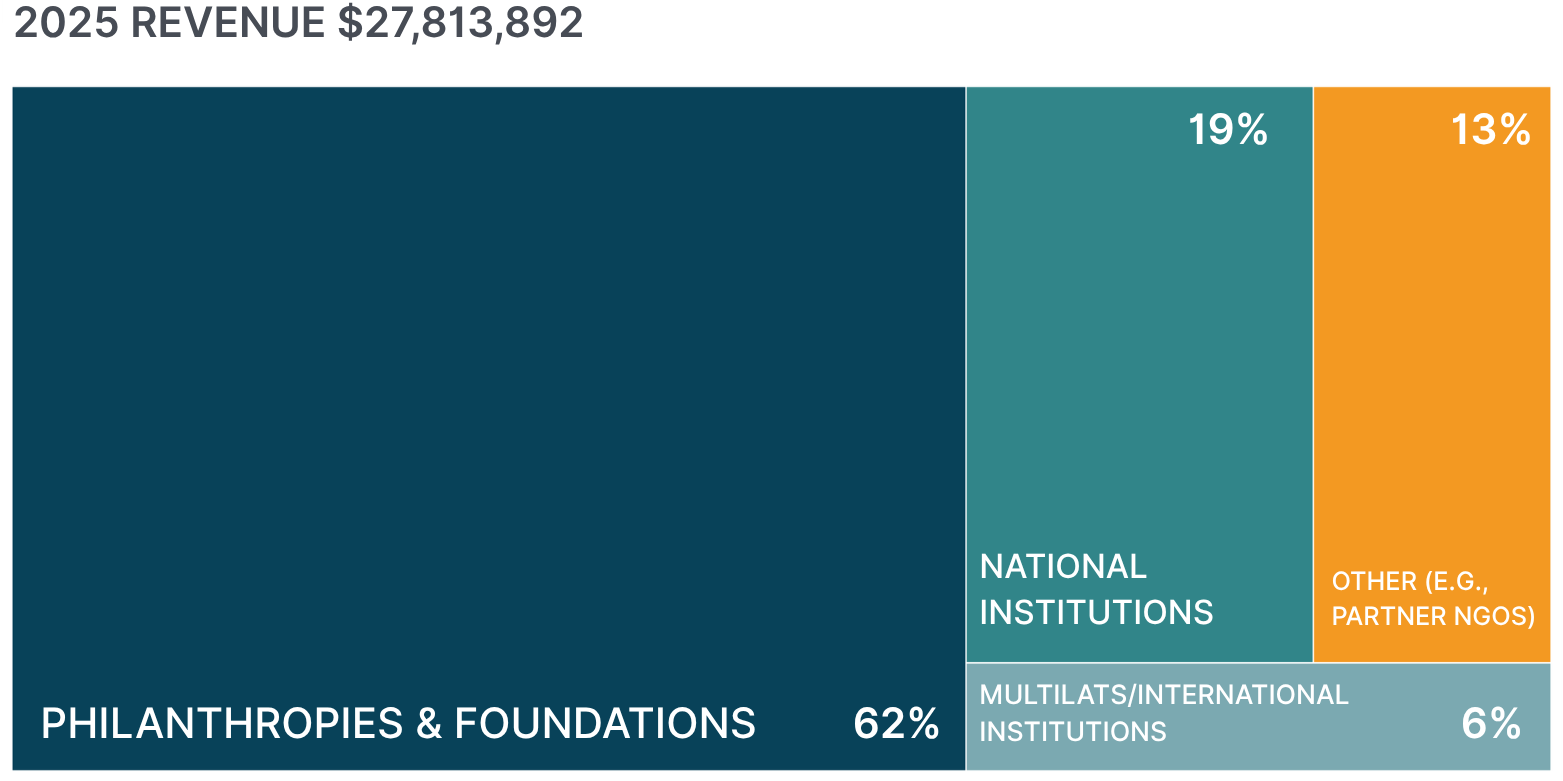
- Revenue by donor type
- Expenses by region
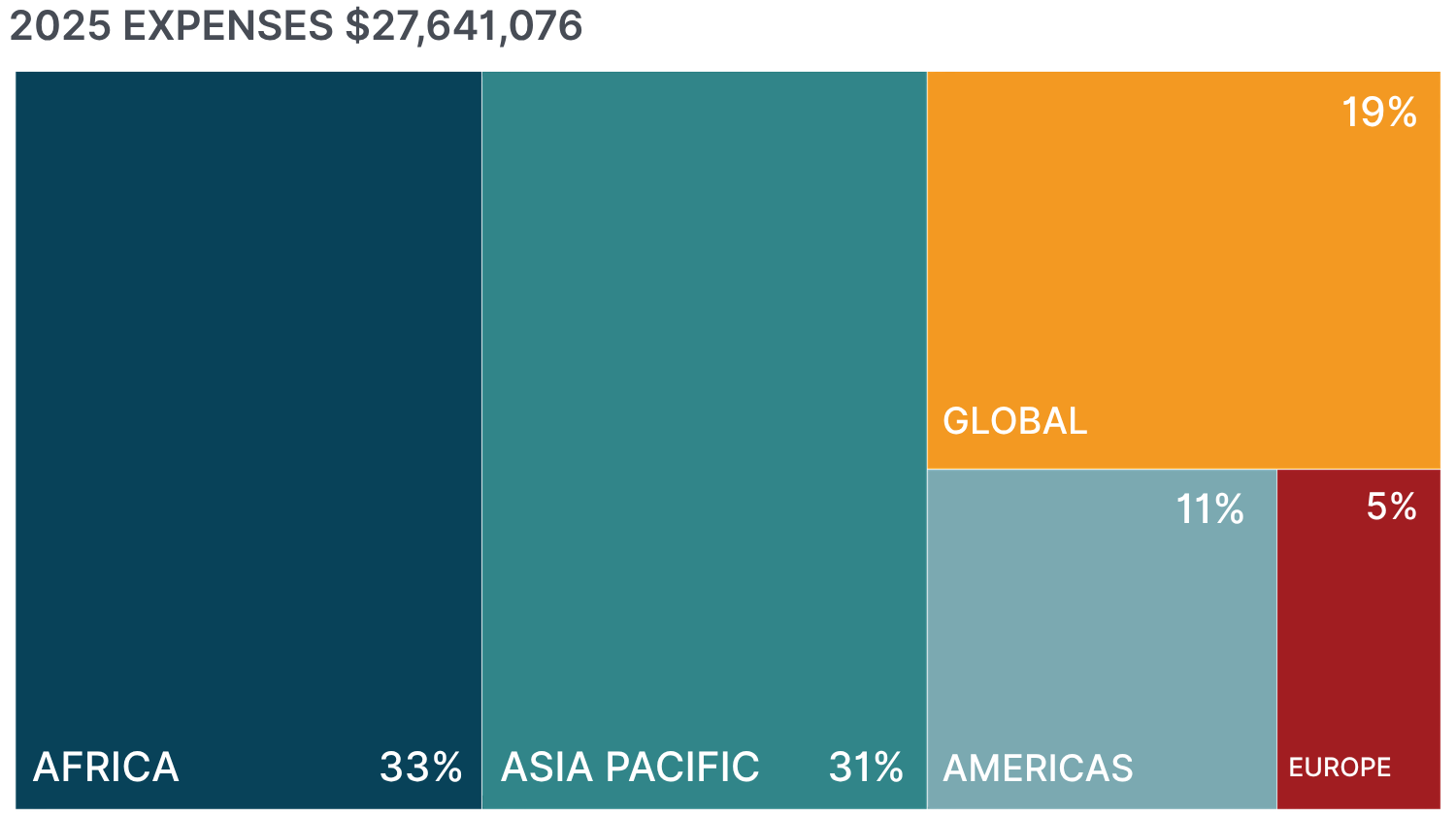
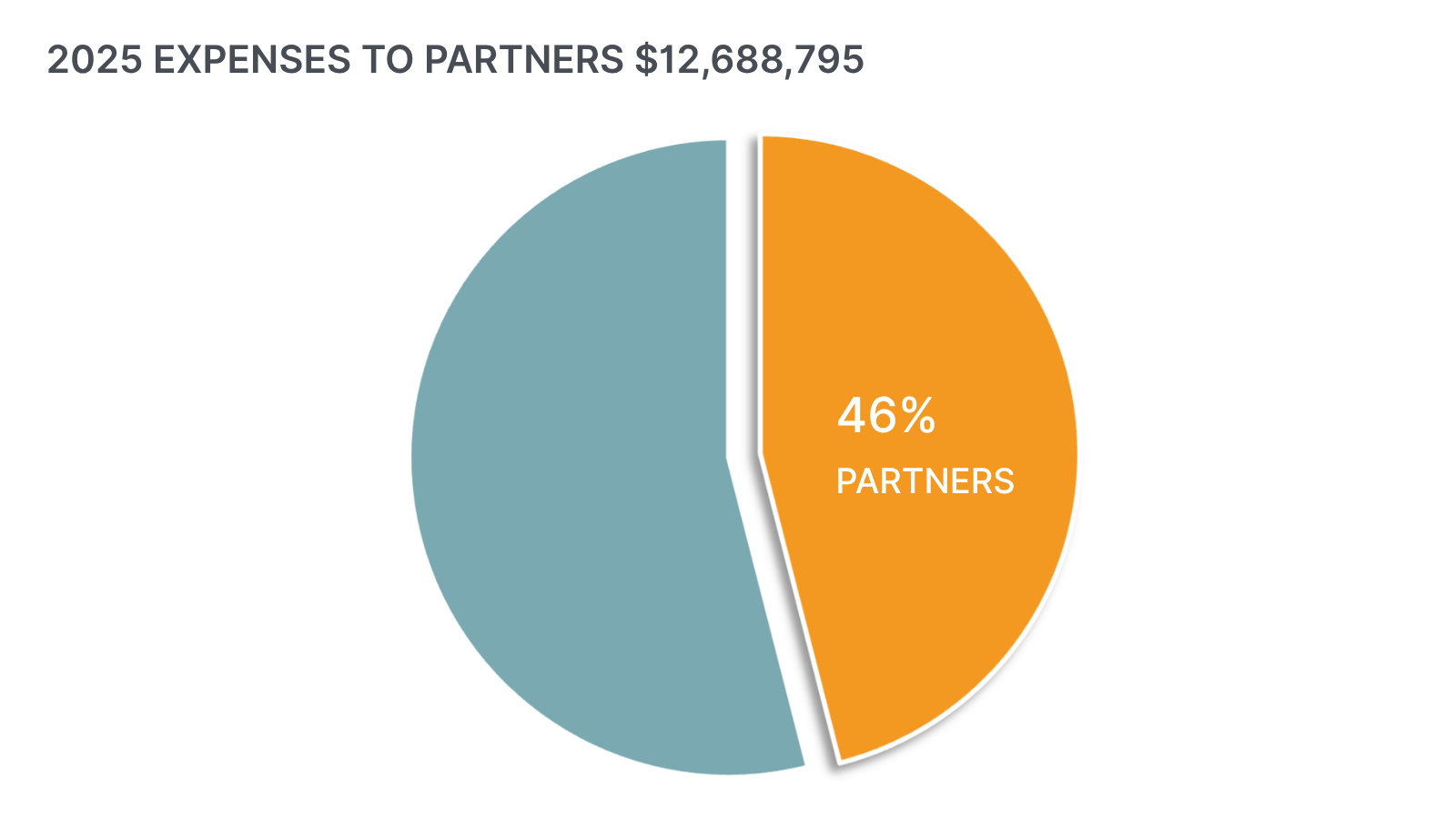
- CLASP collaborates with a global network of partners. In 2025, CLASP channeled nearly half our resources to civil society and energy groups, innovators, academic institutions, and experts — essential partners in changing the way we use energy.
About CLASP
Efficient appliances and equipment are essential drivers of economic growth and a fast, practical energy transition. With over 25 years of expertise and offices on five continents, CLASP collaborates with governments, industry leaders, and other experts to change the way we use energy.
We’re proud of what our team and partners achieved in 2025, driving progress for a better world. In 2026, we remain committed to championing appliance efficiency as a powerful solution for people, prosperity, and planet.
Making Efficient, Affordable Fans the New Standard in India
With temperatures soaring globally due to climate change, India is one of the places on the planet most at risk of extreme heat. Ceiling fans are widely used, with 90% of households relying on fans as their only form of space cooling.
Over a period of three years, CLASP partnered with both the Indian government and private sector to drastically improve the affordability and availability of efficient fans. A major part of the effort was working with small and medium enterprises to build their capacity to produce more efficient fans.
The results have been catalytic. Together, CLASP and our partners have cut energy demand from cooling, while safeguarding jobs and strengthening local supply chains, and making efficient fans more affordable to the people who need them.
A Systems Approach to Efficient Cooling Access
For many households in India, a ceiling fan can turn a space from unbearable to livable, enabling productivity, schoolwork, comfort, and health. With total stock projected to reach 1 billion by 2038, improving fan efficiency represents a major opportunity to cut energy demand. At the beginning of this project, fans accounted for about 40% of residential electricity consumption.
In 2023, CLASP supported India’s Bureau of Energy Efficiency to improve the energy efficiency policy for ceiling fans. The policy enacted a huge shift in the market, making formerly 5-star labeled fans (most efficient) now 1-star (least efficient), and raising the baseline efficiency by over 25%.
Meeting these standards, however, was challenging for medium and small enterprise (MSME) manufacturers, which produced roughly 40% to 50% of fans. Without support, these manufacturers risked losing their market share, which would lead to job losses, a weakened domestic supply chain, and, subsequently, over-reliance on imports to meet cooling demand in India.
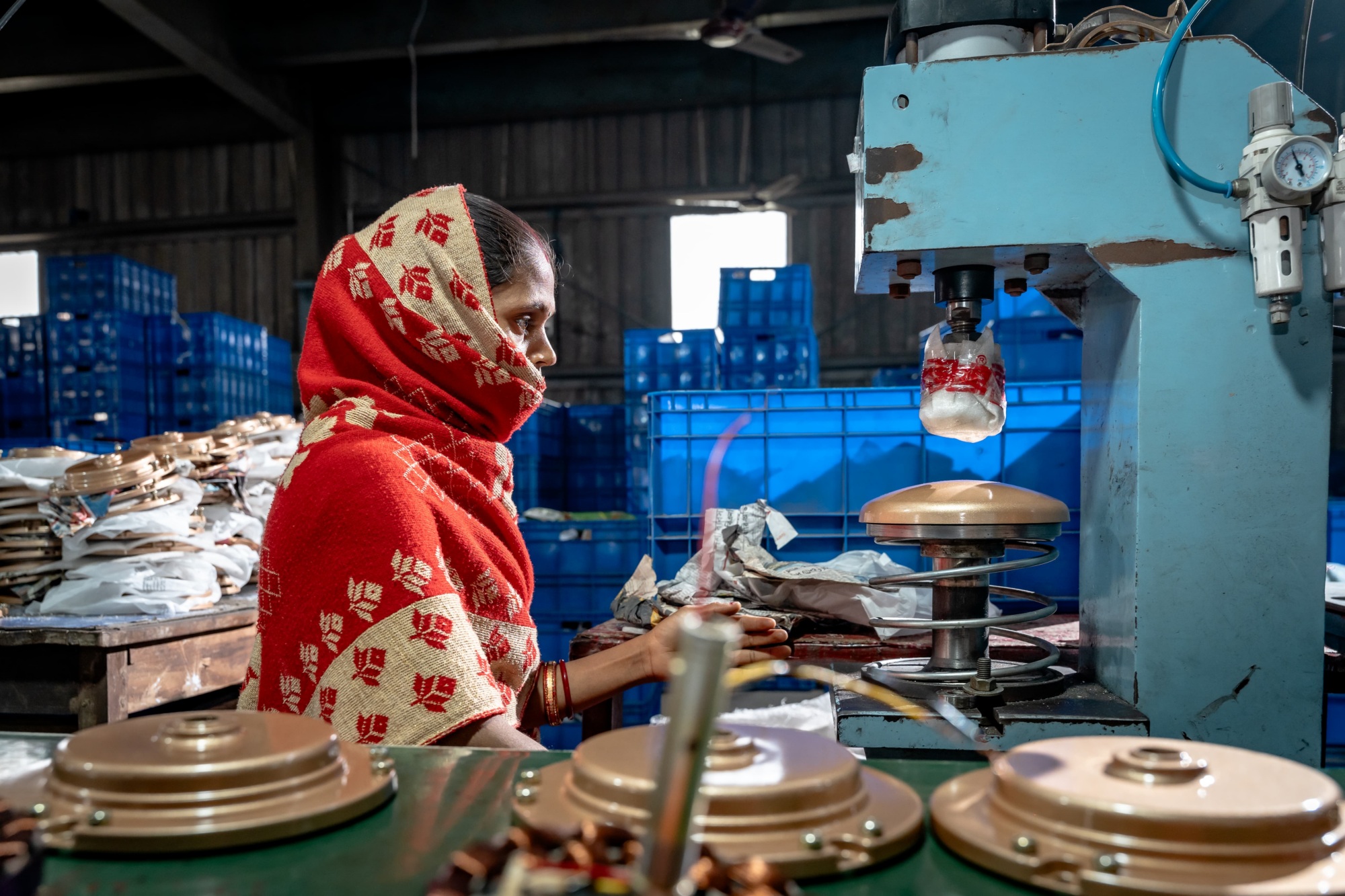
Fan manufacturing facility in Kolkata, India
Image credit: CLASP
To prevent this, CLASP worked closely with MSMEs to build their capacity to produce more efficient fans and participate in functions of the policy program, including testing, certification, and technical committees. MSMEs now have a seat at the table in the policy process, further edifying domestic businesses and contributing to long-term policy durability.
CLASP also partnered with Energy Efficient Services Limited, a state-owned energy service company, to develop a bulk procurement initiative for super-efficient fans. The initiative sought to drive down the cost of 5-star, or most efficient, ceiling fans through economies of scale, ensuring they were more available and affordable to a wider range of consumers.
Better Cooling for People, Prosperity & Planet
More efficient cooling supports India’s national climate goals and Thermal Comfort for All agenda. But this initiative also demonstrates that holistic climate action can strengthen businesses, energy security, and benefit regular people.
Our impact in numbers:
- Cut 159 Mt CO2 by 2050 and reduced demand by 218 TWh
- Lowered ceiling fan purchase price by over 25%
- 3x more manufacturers producing the technology
- Tripled the number of 5-star labelled, or most efficient fans, available on the market, with production volumes increasing by 63%
- 65% increase in medium and small enterprise participation in the policy program