
Bridging the Cooling Gap: Energy Efficiency as a Driver for Appliance Access
This research is posted preprint and will be published in the EEDAL’24 Book of Proceedings.
Energy efficient cooling appliances play a critical role in addressing climate resilience and cooling equity. This new research investigates how doubling the energy efficiency of cooling technologies globally can reduce lifecycle costs, expand appliance access, and limit energy demand growth. It focuses on three high-impact, low-access countries: India, Indonesia, and Nigeria and evaluates the impact of efficiency improvements on affordability, ownership, and climate adaptation, offering critical insights into policies needed to close access gaps and achieve net zero goals.
Key Findings
Doubling the efficiency of fans, refrigerators, and room air conditioners globally by 2030 could unlock great benefits. By 2050, in the three countries studied, this could:
- Drive down the total cost of ownership by 60% for room air conditioners and refrigerators and 58% for fans
- Deliver $105 billion USD in annual net consumer benefits in 2050
- Expand access by an additional 4-13 percentage points
- Avoid more than 420,000 premature deaths
- Limit the total energy consumed by these appliances to about half of what it would be otherwise
Recommendations
To realize these benefits, governments and other market actors must:
- Increase research and development funding, financing and financial incentives, bulk procurement schemes, awards, and informational tools to drive market uptake of efficient appliances
- Implement innovative financing schemes to reduce upfront costs
- Reduce tariffs to make efficient appliances more affordable locally
- Expand decentralized energy solutions, like solar home systems and mini-grids to help rural, low-income communities access energy services more readily
Bishal Thapa Takes on Global Leadership Role at CLASP
“Creating this new role reflects CLASP’s commitment to address some of the world’s most pressing challenges—fighting climate change, advancing clean energy access, and improving resilience for climate-vulnerable communities around the globe. Bishal’s ability to blend strategic thinking with practical execution has been instrumental to our impact in India and beyond. With his leadership, we are positioned to meet the scale of the challenges ahead and I’m very excited to collaborate with him in this new partnership.” –Christine Egan, CEO
Bishal’s impact at CLASP
After successfully leading CLASP’s India office for four years, Bishal Thapa has been promoted to Chief of Strategy and Impact. In this newly created role, he will lead the implementation of CLASP’s strategic plan, drive innovation, and ensure that CLASP’s work is impactful and mission-aligned to mitigate climate change and help communities adapt and thrive.
Under Bishal’s leadership, CLASP’s India office grew from a team of four to 15, which shaped 17 appliance efficiency policies in 2024 alone. Through innovative financing and collaborations with local banks and cooperatives, the team has started advancing solar water pump adoption for smallholder farmers, contributing to more equitable energy solutions.
An economist by trade, Bishal has more than two decades of international experience and a proven track record of designing and implementing complex energy sector projects. His deep understanding of the policy landscape and energy economics in combination with his ability to translate vision into action make him an invaluable asset as CLASP continues to expand our global reach.

Charting the path to 2030
“There is no more room for error on the goal to limit global warming to 1.5°C. I’m eager to support my colleagues as we double down on that target. The energy efficiency of appliances and equipment can drive a large share of the global response on climate, while ensuring access to sustainable solutions for communities. In partnership with other stakeholders, I’m confident that we can secure the pathway to net zero emissions that we absolutely need to limit global warming and create a more sustainable and equitable future.” –Bishal Thapa
Bishal’s promotion marks an exciting new chapter for CLASP in our 26th year, one that builds on our strengths and sets the stage for even greater achievements. As we welcome Bishal into this new role, we look forward to collaborating with him to solve the world’s most pressing, interconnected crises: the climate emergency, poverty, inequality, and access to energy—for people and the planet.
Neha Dhingra Promoted to Director of CLASP’s India Program
CLASP is thrilled to announce Neha Dhingra as the India program Director. In this role, Neha will lead a team advancing CLASP’s engagement in India to improve appliance energy efficiency for climate mitigation and improved access to energy services. Her leadership marks a new chapter in CLASP’s two-decade long journey in India; where CLASP collaborates with government agencies, industry stakeholders, and other partners to promote appliance efficiency as a way to reduce climate emissions and improve lives.
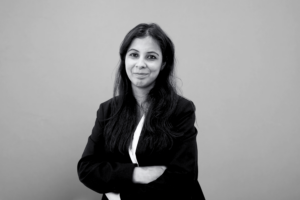
Neha’s journey at CLASP
Neha joined CLASP in January 2013 and has been instrumental in shaping and scaling CLASP’s initiatives, as CLASP’s India office grew to 15 team members. She has led transformative projects to improve the energy efficiency of numerous appliances and cooling systems. She also contributes to market transformation and supports policy development in collaboration with policymakers and other stakeholders. Neha has also led energy efficiency projects and programs across West Africa and South East Asia.
“We are thrilled to announce Neha’s promotion as Director of the India program. Her vast expertise and dedication to CLASP’s mission have driven remarkable progress,” said Christine Egan, CLASP’s Chief Executive Officer. “It’s gratifying to recognize talent within our team, and Neha’s leadership and dedication make her promotion well-deserved.”
India is key
India is central to CLASP’s global efforts to combat climate change and promote improved access to energy services. “I look forward to supporting and collaborating with Neha as she drives the next phase of impactful work in India,” said Bishal Thapa, CLASP’s Chief Strategy and Impacts Officer.
Neha’s expertise and vision have been pivotal to the success of landmark projects, such as the scaling of energy-efficient fans and cooling technologies that have improved the lives of millions and directly contributed to advancing India’s ambitious climate goals. CLASP’s work in India reflects a broader global commitment to solve the world’s most pressing, interconnected crises: the climate emergency, poverty, inequality, and access to energy.
Millions of People Lack Electricity. Solar Appliances Can Help
Cooling down on a scorching day, lighting the house at night, heating a pan to cook dinner: In wealthy countries, people take for granted the ability to meet their basic needs by switching on appliances. But in low-income nations, these appliances, along with the electricity needed to power them, are often out of reach.
As the planet warms, the lack of critical appliances has increasingly severe consequences, making it harder for people to thrive—and, in some cases, simply survive—in ever-harsher environments. Solar-powered appliances are a promising solution.
In this interview, Martha Wakoli, who works on CLASP’s clean energy access team in Nairobi, discusses their potential and how to reach it.
*
Sarah Wesseler, CLASP managing editor: Let’s start with some basics about solar appliances. What are they? Why should people who are interested in sustainable development and climate change care about them?
Martha Wakoli: Well, in places like the States or Europe, if you need light, you switch on a light bulb. But in other parts of the world, millions of people don’t have that option—they’re not connected to the electric grid. So they’ve found creative solutions for accessing services like lighting, cooling, and cooking. And that’s where the idea of solar appliances developed.
For a long time, this technology was used for things like charging phones and lighting homes. But increasingly, we’re seeing the potential to power much larger, almost industrial-level processes with solar appliances. Say you’re a clothing manufacturer in a place that doesn’t have electricity: The machines you need could be powered by the sun.
There’s more and more research and investment in these kinds of appliances. That opens a whole new pathway of solutions for the millions of people who continue to live without electricity.
Wesseler: When you say these appliances are powered by the sun, how does that work? I’m thinking about the US, where I live: A lot of people have solar panels on their roofs, but they still use standard appliances plugged into standard wall outlets. How are solar appliances different?
Wakoli: Well, with solar appliances, the appliance is connected directly to a solar panel on your roof via a cable. And depending on how many panels you have and how large they are, you could have multiple cables powering multiple appliances at the same time. And for appliances that are used outdoors—water pumps, for example—the cables from the solar panel also run directly to the appliance.

Solar irrigation in India
Credit: IDE Global / Bimala Colavito
Wesseler: What if the sun’s not out? Can you still run solar appliances then?
Wakoli: Yes. Solar appliances come with a little bit of energy storage, typically in the form of a battery, that allows them to keep functioning when it’s not sunny. For example, solar refrigerators keep things cool even at night.
Wesseler: That all makes sense. But why not just connect more people to the electric grid? Why focus on solar appliances instead?
Wakoli: There are a lot of reasons, but the most important is that it’s typically much more expensive to extend the power grid to far-flung places than it is to provide solar appliances. Solar appliances are more cost-effective in rural areas.
Providing solar appliances is also faster than building out the grid, which takes a long time. This is important given the urgency of the climate disaster, which we’re observing in real time, whether it’s heatwaves in India or droughts in Zambia. People need appliances that can help them adapt to climate change now.
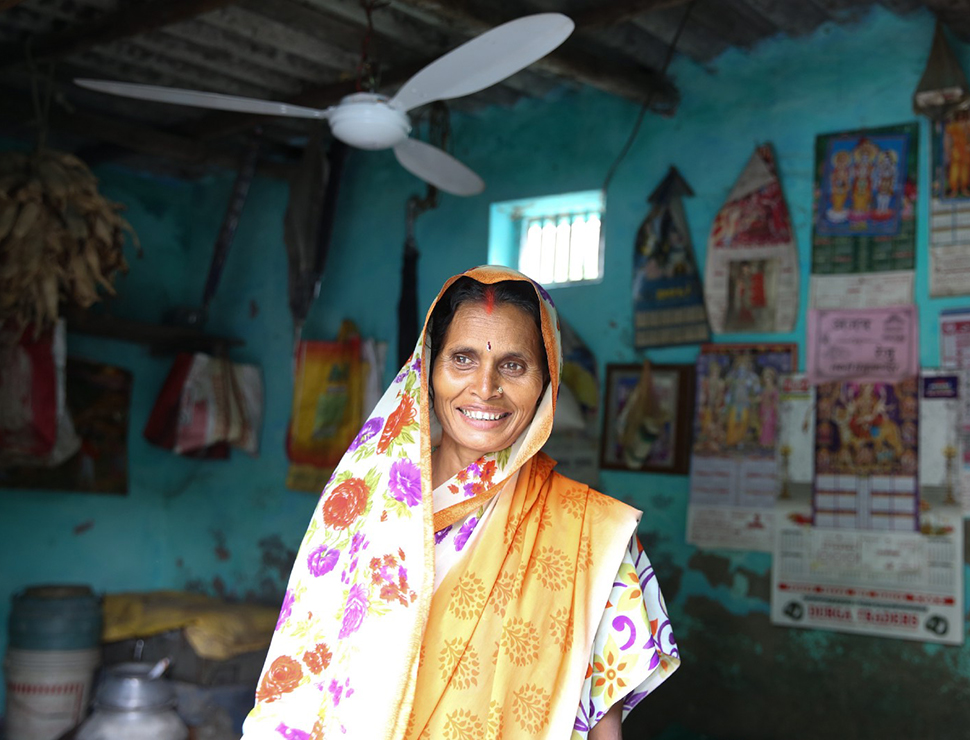
Credit: Monica Tiwari, SPI

Credit: Efficiency for Access
Solar appliances can also help people build climate resilience and empower them to be more active participants in their own development. I’ll give you an example: In Mozambique, the government used taxpayer money to build an electric grid, but in 2023, Cyclone Freddie knocked it out. Compare that to decentralized systems, where people can have their own solar panels on their roofs or solar pumps on their farms. Because these appliances are modular, the scale of damage tends to be much smaller.
This kind of resilience is especially important for facilities like schools and hospitals. When floods or droughts make it impossible for them to operate where they are, there’s not much they can do if they rely on the electric grid. But with solar, they can move to a safer location and take their power source with them.
Another reason is that the grid itself is changing. Around the world, we’re preparing for what we’re calling the grid of the future. A lot of people now have electric vehicles, and in some areas, these vehicles can be plugged back into the wall, sending that power back to the grid, right? So you now have a complex bidirectional electric system that’s very different from what has existed for the last 70 years. Instead of having very few energy producers and many consumers, you have a growing number of what’s called “prosumers”: They produce the energy and they’re also consumers. This subset of people is growing everywhere.
Wesseler: You recently led research seeking to understand the number of people globally who need solar appliances. Why did you focus on this issue in particular?

Solar appliances can help people build climate resilience and empower them to be more active participants in their own development.Martha Wakoli
Wakoli: Well, in the development sector—so essentially, organizations that are trying to lift people out of poverty—if we cannot quantify a problem, it is difficult to know what interventions are needed in terms of money, regulations, and human capital. So providing information like this helps decision makers develop solutions.
And in this case, the problem we are looking at involves energy services to help marginalized people lift themselves out of poverty while also building resilience. This is important because, as we know, these groups are already being affected by climate change. So one goal of our work is to help the development and climate sectors understand that they’re working toward a common target.
This is particularly critical because, as we recently saw at COP29, there’s still a lot of resistance to the idea that the nations most responsible for climate change should fund other nations to protect themselves from it. But what the international community needs to understand is that that if we don’t mitigate climate disasters in the most vulnerable communities, the damage won’t just stay in those communities. Issues like climate-driven displacement and public health crises can easily spill over borders, making climate change an even more complex and expensive problem to solve. So I believe the international community should collaborate to address energy access challenges immediately to avoid this complication.
Wesseler: What did you learn from the research?
Wakoli: The key finding was that only about 2% of the need for key appliances is being met.
I think people in the international development and energy sectors intuitively knew that we are falling behind on providing universal electricity access, but there was still maybe not a good understanding of how far behind. With this research, we put a number to it: There are over 500 million people who need these appliances but don’t have them and won’t be able to afford them unless there are major changes in the appliance sector. That’s a massive gap.

Solar mill in Nigeria
Credit: CLASP
Wesseler: What would it take to close this gap?
Wakoli: Well, we need more investment at all levels of solar appliances. We need to invest in people who can support the sector: students, researchers, manufacturers, distributors, maintenance people. Companies need money to build these appliances, to test business models, to scale. We also need money for governments to conduct awareness campaigns. People need to go into communities to let them know about these appliances and demonstrate how they work.
We also need more cross-disciplinary dialogue. Lifting people out of poverty requires more than electricity or appliances; the solution has to involve people who work in agriculture, environmental advocacy, etc. A practical example is solar water pumps, which make it easier for farmers to generate income. But productivity is not only a function of water; farmers also need good seeds, fertilizer, and good soil. So people outside the energy sector need to be involved as well.
Ultimately, we need to build a market that can exist without external support. Think of Coca-Cola. Soda is the one thing that is ubiquitous in every place I have been, even where people don’t have high incomes. Coca-Cola has figured out how to reach the last mile in countries like Kenya and India. The solar appliance sector needs to get to the same place.
Developing a self-sustaining market for solar appliances will require collaboration across governments, the private sector, and development partners. Governments need to prioritize solar appliances and other energy-efficient solutions as part of their national electrification strategies, and the appliance sector needs to build muscle in distribution and consumer awareness. What’s more, all these actors need to prioritize ensuring that solar appliances support increased productivity, driving up incomes for communities living below the poverty line.
Many critical pieces of this puzzle are currently missing. Right now, a lot of the money in the solar appliance sector comes from European governments as part of their international aid programs. But if we’re thinking about a sustainable solution for more than 50 countries and more than half a billion people, it cannot be contingent on well-wishers alone.
Interview edited and condensed.
Where was Energy Efficiency at COP29?
The 2023 UN Climate Conference (COP28) in Dubai gave energy efficiency its long-overdue moment in the spotlight. Advocates highlighted energy efficiency as a cost-effective and scalable tool capable of contributing to halving emissions by 2050. Hailed as a cornerstone of climate mitigation, leaders pledged to integrate efficiency into their national energy strategies, buoyed by compelling data from the International Energy Agency (IEA).
Fast forward to COP29 in Baku, and energy efficiency was conspicuously absent from the main stage. The muted dialogue left many wondering: Why was this proven, cost-effective climate solution sidelined at a time when the climate crisis demands bold and immediate action?
Energy efficiency is a climate solution we can’t ignore
The absence of energy efficiency discussions at COP29 is both perplexing and alarming. Experts widely agree that energy efficiency remains one of the most effective tools to combat climate change. According to the IEA, improving global energy efficiency could reduce emissions by 40% while also slashing energy costs for consumers and enhancing energy security—a crucial consideration amid the geopolitical turmoil of 2024.
The benefits are not hypothetical. From India’s deployment of 10 million energy-efficient fans to Europe’s stringent building retrofit programs, efficiency measures have already shown their potential to drive emissions reductions at scale. Despite these successes, COP29 failed to build on the momentum generated at COP28.
Why was energy efficiency absent from COP29?
There are several reasons why energy efficiency may have been sidelined at COP29:
- Fossil fuel dominance in the region
Baku, as the host city, may have influenced the agenda. With Azerbaijan’s economy deeply tied to oil and gas, there was a palpable tension in spotlighting solutions that could reduce energy demand, thereby threatening fossil fuel revenues. - The perception problem
Energy efficiency often lacks the appeal of high-profile solutions like renewable energy or electric vehicles. It is seen as a technical, behind-the-scenes measure rather than a transformative force—a perception that continues to undermine its importance. - Policy fatigue and fragmented leadership
The global energy transition requires coordinated leadership, yet the fragmented and often short-term focus of national policies undermines collective progress. The stark absence of binding commitments on efficiency at COP29 reflects this lack of cohesion.
A movement in need of revival
If there’s one takeaway from COP29’s neglect of energy efficiency, it is that advocates cannot afford to let this critical and affordable solution fade into the background. A renewed push for efficiency requires better storytelling, stronger coalitions, and more direct integration into broader climate frameworks like the Paris Agreement.
Organizations like CLASP and the IEA urge prioritizing efficiency across sectors—industry, buildings, and transport. We need more policymakers understanding that energy efficiency isn’t just about conserving energy; it’s about cutting costs, driving a just energy transition, and strengthening energy security.
CLASP’s toolkit shows how to reduce emissions with efficient appliances
Appliances account for nearly 40% of global energy-related CO2 emissions. Making them more efficient could dramatically reduce emissions.
To support policymakers, CLASP has launched a user-friendly toolkit to help over 160 countries slash emissions by incorporating appliance efficiency targets in their climate action plans. From Albania to Zimbabwe, the Net Zero Appliances NDC Toolkit lays out a clear pathway for including appliance efficiency—a proven, cost-effective means of reducing emissions and improving lives—in nationally determined contributions (NDCs) to the Paris Climate Agreement.
Looking Ahead to COP30
While COP29 was deemed a finance COP and excluding energy efficiency was a missed opportunity, it should not define the future. With COP30 slated to take place in Brazil, there’s a chance to reset the narrative. South America, with its growing energy demands and vulnerability to climate impacts, could offer a compelling stage to showcase the potential of efficiency-driven solutions.
In the meantime, the message is clear: the climate clock is ticking, and the world can’t afford to ignore any viable path to mitigation. Energy efficiency must be part of the global conversation—not as an afterthought but as a central pillar of climate action.
The world has the tools; it’s the will that must catch up.
UK Aid to Support Research in the Global Push to Transition to Electric Cooking Solutions
At the UN Climate Change Conference in Baku, Azerbaijan (COP 29), UK Aid (FCDO) announced a substantial extension of their Modern Energy Cooking Services (MECS) program. This funding boost will help accelerate the adoption of clean cooking practices and transform the lives of millions of people across Africa, Indo-Pacific, and South and Southeast Asia. CLASP looks forward to continued collaboration with MECS to expand access to clean, modern cooking solutions.
Clean cooking: Good for people and planet
The MECS programme is speeding-up the shift to clean cooking by driving research, testing new technologies, and tracking global tools and trends. It targets the 2.1 billion people—26% of the world’s population—who still rely on polluting fuels such as firewood and charcoal for their cooking. A transition to modern, clean cooking would help eliminate the harmful effect of these fuels on income, health, and the environment and have a profound social and economic impact on communities, especially on the women and children that bear the disproportionate burden of collecting fuel and preparing food.

MECS extension powers future impact
The MECS extension builds on the six-year success of the MECS programme in advancing the clean cooking agenda globally. To date, the programme has helped 3.8 million people adopt cleaner, more efficient cooking practices that lower fuel use, improve air quality, and boost income. It has also attracted £400 million of additional investment for clean energy innovation and published over 300 research papers. This compelling evidence base has already informed the adoption in policy of electric cooking (e-Cooking) in Kenya, Uganda, and Tanzania.
Aligning with the global goals
The MECS programme budget will increase by £44 million, raising the total value to £99 million, and pushing its work to December 2030 to align with the target dates of the Sustainable Development Goals. This extension will enable the implementing partners to continue driving even more impactful clean cooking solutions. By 2030, MECS aims to improve clean cooking access for 10 million people, leverage £1 billion in investments, publish 650 research products, and influence policy adoption in 12 countries. The MECS extension is expected to have reach across 17 countries in Africa, Indo-Pacific, and South and Southeast Asia, where clean energy transitions are urgently needed.
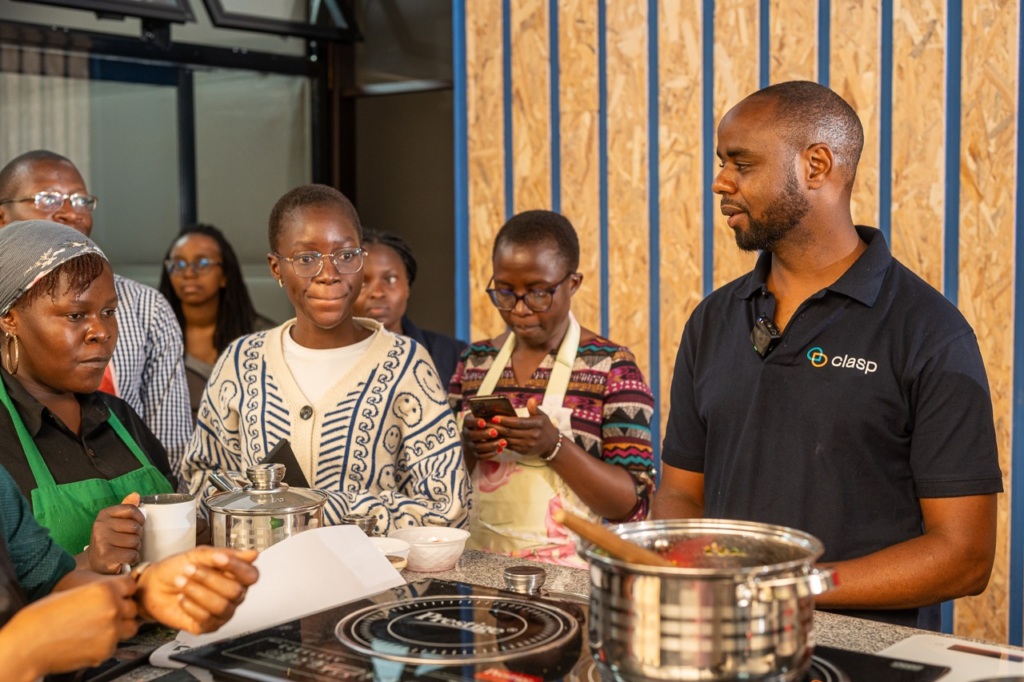
About CLASP
CLASP is the leading global authority with 25 years’ expertise on how applianceefficiency drives climate mitigation, adaptation, and improves the lives and livelihoodsof people. An international non-profit with offices on four continents, CLASPcollaborates with policymakers, appliance manufacturers, and leading experts todeliver sound policy recommendations, innovative tools, ground-breaking research,and clear pathways to a more sustainable world for people and the planet.
Find CLASP at COP29
CLASP has solutions to the global climate emergency. Our landmark Net Zero Heroes report shows that the appliance sector accounts for nearly 40% of global energy-related CO2 emissions. Improving appliance efficiency is a proven, cost-effective solution to slash emissions and improve millions of lives.
From 11-22 November 2024, CLASP will bring these solutions to COP29 in Baku, Azerbaijan, the United Nations’ annual climate meeting.
During the conference, CLASP will host an official side event and participate in panel discussions and presentation to showcase our research and highlight the importance of appliance efficiency in mitigating the climate crisis.
See where our team will be and join us in moving the needle on appliance efficiency!

For questions or additional speaking opportunities, please contact Karishma Joseph at kjoseph@clasp.ngo
About COP29
The 2024 UN Climate Change Conference or Conference of the Parties of the UNFCCC is more commonly known as COP 29. It will convene in Baku, Azerbaijan, from 11 to 22 November, 2024. The UNFCCC secretariat (UN Climate Change) is the United Nations entity charged with supporting the global response to the threat of climate change. The Convention was ratified by the UN in 1995 and has near universal membership (198 Parties). This foundational document is the parent treaty of the subsequent 1997 Kyoto Protocol and the 2015 Paris Agreement, both of which have been instrumental for setting goals on climate change.
Cool for Business: Solar Refrigerators Powering Off-grid Communities
“Naija no dey carry last” in Pidgin means Nigerians always aim to finish first. This spirit is reflected in the country’s focus on innovation, driven by creativity and passion. However, for over 86 million Nigerians without reliable electricity, the struggle to keep businesses running means often relying on costly, polluting diesel generators. This added expense and the uncertainty brought on by regular power cuts place a significant burden on the country’s people, economy, and environment.
Affordable, solar-powered refrigerators are an elegant solution with the potential to transform small businesses in Nigeria’s rural, off- or weak-grid communities.
Solar appliances for any wallet
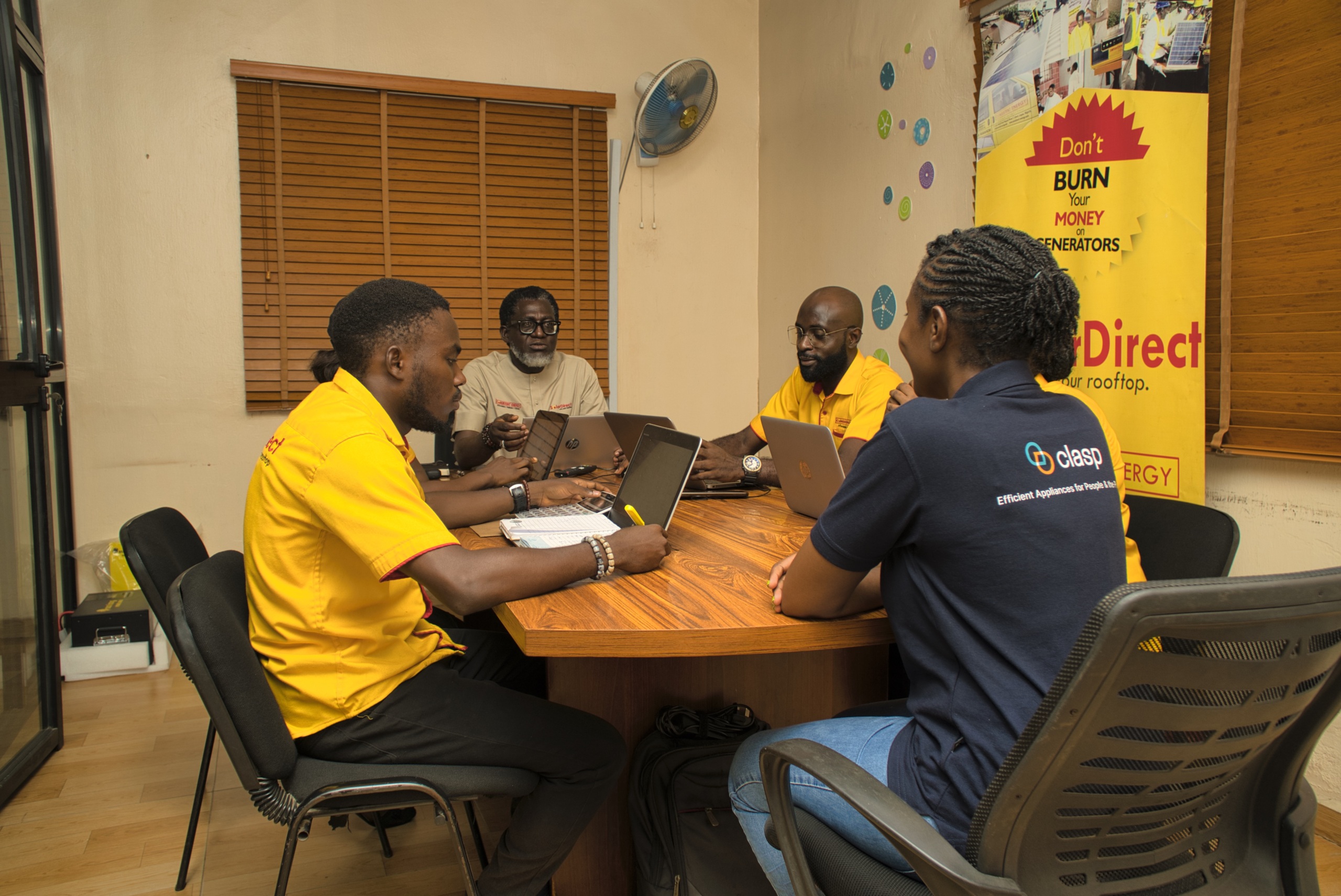
Solar refrigerators are efficient and effective but high costs and limited financing keep them out of reach for many Nigerians who could benefit from their impact. Recognizing this gap, CLASP’s Productive Use Financing Facility (PUFF) stepped in, offering grants, subsidies, and business support to companies such as Consistent Energy Limited to put affordable, life-changing technologies into the hands of those who need them most.
“The grant that was given to us by CLASP under this project really helped us building our capacity to reach last-mile distribution chain. The landed costs of the fridge to a customer in Nigeria will have been very high if not for the subsidy that we received,” says Segun Adaju, the CEO of Consistent Energy.
Solar refrigerators: A boon for businesses and customers
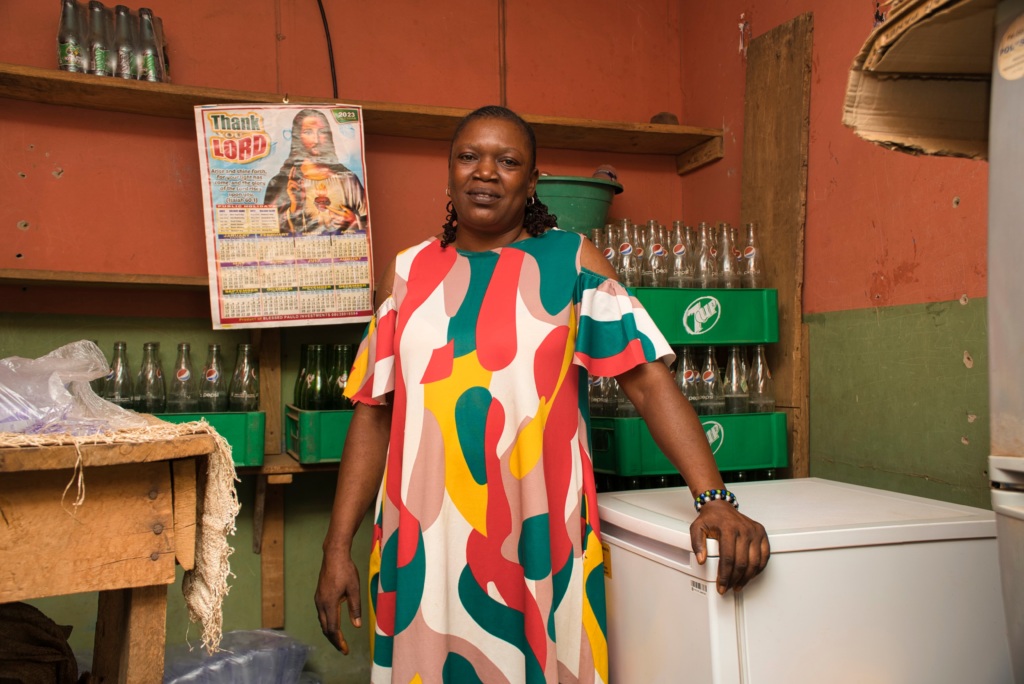
Solar refrigerators keep food cool, safe, and marketable and reduces waste. Without reliable refrigeration, shopkeepers spend more time and money on temporary cooling options such as ice and coolers and are forced to raise prices to do so, hurting both the business and their customers. This cycle was no longer viable for small business owners such as Abibat in Nigeria.
“We were buying ice blocks which led us to some debt, and after a while, the block would melt. We no longer had cold items for sale,” says Abibat Akinwale, a shopkeeper and Consistent Energy client. “The solar fridge has really increased sales. Business is very good now because I’m able to sell cold drinks.”
Consistent cooling creates opportunities for growth
Reliable, long-term cooling keeps food prices stable, meaning that Abibat’s customers have good reason to return to their shop. In Nigeria, the appeal of solar refrigerators lies in their reliability, a quality that resonates with businesses that refuse to “carry last.”
In a country where every Naira counts, solar-powered refrigerators are a game changer for small business owners in Nigeria. Because they are powered by renewable energy, solar refrigerators provide cooling without the cost of constant refueling. This switch to solar means that entrepreneurs save thousands each month that would otherwise be spent on generator costs, fuel, and maintenance. Instead, they can channel those funds to more productive uses and fully participate in the country’s growing economy.
Such opportunities for growth are especially important for women like Helen Obina, who make up a large percentage of the small business owners in Nigeria. For her, business was “not really moving” because she relied on the grid and generators. Installing her solar refrigerator relegated those worries to the past. “Having a solar fridge has really changed my business. The sales have really increased, and the business is moving,” she shared. Helen’s story is not isolated, it is an example of a growing trend for those who are able to access life-changing solar appliances.
Solar solutions bridge the energy gap
Refrigerators are an essential appliance for sustainable development, but 60% of the population in Africa does not own one. For nearly a decade, CLASP has been working to bridge this energy access gap by improving access to efficient appliances that work in off-grid or weak-grid areas.
“Over 600 million Africans don’t have access to electricity. Efficient appliances are an affordable and clean option for these cut-off communities who are otherwise forced to use polluting and expensive alternatives to maintain a good standard of living and actively participate in their economies,” says Ruth Kimani, a Senior Associate at CLASP.
These productive-use appliances (PUAs), such as solar-powered refrigerators, solar water pumps, and solar milling machines are technologies that have a direct, transformative impact on local communities, small businesses, and people’s livelihoods. They are also a necessary shift toward clean energy and reduced reliance on diesel-powered generators.
Shift to solar signals promising future
CLASP and companies such as Consistent Energy have helped small business owners in Nigeria gain independence from unreliable and costly energy sources through renewable appliances. They are now free to chase their dreams and ambitions with renewed fervor, which will have a positive impact on the economy, people, and the planet.

About The Productive Use Financing Facility
CLASP’s Productive Use Financing Facility, is supported by The Global Energy Alliance for People and Planet (GEAPP). It has provided financing to 24 companies in six countries, to enable the distribution of over 13,000 productive-use appliances, directly impacting more than 58,000 households.
Emmanuel Aziebor is CLASP’s new Senior Director for Africa
CLASP welcomes Emmanuel Aziebor as the new Senior Director of our Africa portfolio. In this role, Emmanuel will lead CLASP’s efforts to mitigate climate change and improve lives and livelihoods through affordable, efficient appliances.
CLASP has been working in Africa since 2012. Most of the projects and research carried out in the continent focus on how efficient, high-quality appliances alleviate energy poverty and promote sustainable development. CLASP drives technology innovation and catalyzes appliance market growth, putting efficient, affordable, high-quality appliances and equipment within reach of low-income families and communities, as well as smallholder farmers. In 2017, CLASP opened its Nairobi office.
Emmanuel is an accomplished international development leader with over a decade of experience in renewable energy. His expertise includes business model innovation, private-sector partnerships, energy policy formulation, and catalyzing off-grid energy solutions to scale.

“Expanding access to efficient appliances is the key to climate-resilient development. I’m thrilled to be part of the CLASP team leading the charge on energy efficiency and increasing access to clean energy technology across Africa. I look forward to collaborating with partners across the continent to create meaningful change for people and planet.” – Emmanuel Aziebor, CLASP’s Senior Director of Africa
Emmanuel holds a Master’s in Energy and Sustainable Management from the Kwame Nkrumah University of Science and Technology and a Bachelor’s (Hons) in Business Administration (Banking and Finance) from the University of Ghana Business School.
Before joining CLASP, he led global programs at Mercy Corps delivering sustainable energy services to displaced communities through public-private partnerships.
As a trusted voice in the climate change and clean energy fields, Emmanuel brings an extensive understanding of the renewable energy landscape in Africa and a passion for driving impactful change across the continent.
CLASP is delighted to welcome Emmanuel to the team and looks forward to expanding the organization’s impactful work in Africa under his leadership.
Find CLASP at the Global Off-Grid Solar Forum and Expo
CLASP drives technology innovation and catalyzes appliance market growth, putting efficient, affordable, high-quality appliances and equipment within reach of low-income families and communities, as well as smallholder farmers. From 8 to 10 October 2024, we will be bringing our solutions to the eighth Global Off-Grid Solar Forum and Expo (GOGSFE) taking place in Nairobi, Kenya.
Why are solar or off-grid appliances crucial?
Energy poverty is a reality for more than one billion people worldwide, with detrimental effects on health, productivity, and livelihoods.
A new report from Efficiency for Access (EforA), the coalition CLASP co-manages with Energy Saving Trust, shows that while approximately 159 million off-grid solar fans, water pumps, refrigerators, and grain mills are needed to serve people who lack access to the grid, less than 2% of this demand is being met. The off-grid solar sector must grow rapidly in scale and ambition in order to avoid leaving people behind.

About the event:
GOGSFE will gather policymakers, investors, entrepreneurs, and development actors from around the world to discuss strategies to help move toward universal electricity access, build climate resilience, and improve equity, agriculture, and health.
CLASP is hosting three key events during the Forum:
- A 25th anniversary party celebrating CLASP’s expertise in efficient appliances’ role in fighting climate change and improving people’s lives
- A breakfast meeting for donors and grantees of the Energy Access Institutions Facility
- And an industry dinner with GOGLA for all Forum attendees.
In addition, several CLASP experts are presenting and contributing to discussions throughout the Forum. These will showcase the critical role energy-efficient appliances play in the race to universal electrification.
Find CLASP at the following events:
| Date and Time | Location | Event | CLASP Speakers |
|---|---|---|---|
| Tuesday 8 October 1:30 PM – 2:45 PM EAT | Lenana | Agricultural processing: unlocking the potential for the next productive use frontier | Nyamolo Abagi and Michael Maina (both representing CLASP and EforA) |
| Tuesday 8 October 1:30 PM - 2:45 PM EAT | Aberdares | Over 3.3 million jobs by 2030: How workforce and human capital investment can grow Africa's green economy | Abigail Kuria (representing CLASP and EforA) |
| Wednesday 9 October 3:45 PM - 5:00 PM EAT | Turkana | Last mile repair: a collaboration opportunity for manufacturers and distributors | Martha Wakoli (representing CLASP and EforA) |
| Thursday 10 October 1:30-2:45 PM EAT | Tsavo B | Taking the credit: unlocking the DRE carbon finance opportunity | Sam Grant (representing CLASP and EforA |