
CLASP Europe Launches Twitter Account
The EU and UK are the third and tenth highest emitting economies in the appliances sector respectively, offering great potential for CLASP’s work and a notable global influence. Over the upcoming months, CLASP will be increasing our support and engagement with organizations, individuals and decision makers in the European Union and United Kingdom through more extensive communication efforts.
With the new CLASP Europe Twitter account (@CLASP_Europe), our team will be able to connect with new partners and advocates in the EU and UK and participate in the conversation about how to best prepare the region for a sustainable and efficient future.
@CLASP_Europe will feature engaging content on the latest research, tools, and analyses from CLASP and our partners, as well as lively conversations among leading voices in the climate mitigation & energy efficiency sectors. Followers can expect to see news on policy milestones, upcoming events and campaigns, videos, and more. Join the conversation and come follow us, we want to hear from you!
Since 2010, CLASP has worked alongside European policymakers and partners to achieve critical climate mitigation goals across the region. Learn more about our efforts in the EU and UK.
Nicole Kearney Named Director of CLASP Europe
Since 2010, CLASP has worked alongside European policymakers and partners to achieve critical climate mitigation goals across the region. With the increasingly urgent need to cut emissions and pollution in the EU and UK, CLASP is ramping up our capacity for impact.
We are excited to share that long-time CLASP team member, Nicole Kearney, is stepping into the role of Director of CLASP’s Europe program.

In her ten-year tenure at CLASP, Nicole has proven herself to be a strong leader in the appliance efficiency sector. She holds a wealth of knowledge on best practices in policymaking and labeling, with an expertise in compliance policy design and implementation.
“I am thrilled be working alongside CLASP Europe and our array of wonderful partners to ensure our work does the most good for people and the planet,” said Nicole. “We are in a critical moment for climate mitigation and fossil fuel divestment in the region. I am looking forward to increasing CLASP’s ability to influence ambitious policy across the EU and UK.”
Ranging from clean cookstoves to efficient cooling to policy compliance, Nicole has provided expert insight to a wide range of programs.
“Nicole’s leadership and international experience in the sector has, and continues to be, a true asset to CLASP’s climate mitigation work,” said Ana Maria Carreño, Senior Director of Climate. “I look forward to working alongside Nicole and the whole CLASP Europe team to maximize impacts of our work in the region.”
Prior to joining CLASP in 2012, Nicole worked on European Ecodesign, energy labeling product policies, and compliance for the UK government. She received a comprehensive regional education, studying in the UK, France and Germany – ultimately earning a Master’s by Research in European Environmental Law from the University of Warwick.

Nicole is joined by the rest of the Europe team – Sara Demartini and our expert consultants Marie Baton and Michael Scholand, who have led CLASP’s EU presence for several years.
“I am very excited to be part of an expanded CLASP Europe program,” said Sara. “I look forward to seeing how we are able to advance a just energy transition across Europe.”
To keep up to date on CLASP’s work in Europe, subscribe to our newsletter, explore our updates archive and research library and follow our new Europe Twitter account, @CLASP_Europe.
Find CLASP at the International Conference on Energy Efficiency in Domestic Appliances and Lighting (EEDAL)
After more than two years, we are excited to attend in-person conferences to share insights into our global appliance energy efficiency work. From 1-3 June, team members from our Washington D.C., Nairobi, Europe and New Delhi offices will present at the International Conference on Energy Efficiency in Domestic Appliances and Lighting (EEDAL) in Toulouse, France.
Their presentations will cover the impact of television and lighting efficiency policy in India; Mepsy, a new tool to model energy and carbon reduction policies; product registration systems to support compliance of energy efficiency policies; opportunities for solar e-waste management in Sub-Saharan Africa; digital marketing campaigns for national energy labels; online energy label regulation in our changing digital markets, and more.
Find out more about their sessions below and reach out if you or one of your colleagues will be attending.
Wednesday June 1st, 2022
14:00 – 15:40
Session 1.a Policy 1
Evaluation of Television Efficiency Policy and Market Transformation in India
Kishore Kumar, CLASP India
Introducing Mepsy: The Appliance & Equipment Climate Impact Calculator
Angellah Wekongo, CLASP Kenya
Thursday June 2nd, 2022
10:45-12:25
Session 4.a Policy 4
Evaluation of Lighting Efficiency Policy and Market Transformation in India
Kishore Kumar, CLASP India
14:00-15:40
Session 5.a Policy 5
Role of Product Registration Systems in Supporting Compliance of Energy Efficiency Policies
Neha Dhingra, CLASP India
14:00-15:40
Session 5.b Appliances
Innovations for Sustainable Off-grid E-Waste Management Across Africa
Monica Wambui and Hannah Blair, CLASP Kenya
Friday June 3rd, 2022
8:30-10:10
Session 7.a Behaviour
Can digital advertising raise consumer awareness of energy efficient domestic appliances? A case study of the #KenyaEnergyLabel campaign
Hannah Blair and Angellah Wekongo, CLASP Kenya
10:45-12:25
Session 8.a Policy 6
Online Energy Labeling Regulation and Compliance in the Growing Online Market
Katriana Dubytz and Lina Kelpsaite, CLASP United States with Marie Baton (CLASP Consultant, Europe)
Abstracts
Evaluation of Television Efficiency Policy and Market Transformation in India
Kishore Kumar, CLASP India
Televisions play an essential role in the lives of millions of Indians as a source of information, entertainment and education. The television market in India has doubled over the last decade as the appliance has become commonplace across households, businesses and institutions, driven in part by increasing disposable income. The penetration of television ownership among households in the country is close to 66%, with sales of about 8.5 million units in Fiscal Year 2019-20.
Anticipating the rising sales of televisions and associated electricity demand, in 2009 India adopted an energy efficiency policy for televisions. The policy covers four technologies: cathode ray tube (CRT); liquid crystal display (LCD) with cold cathode fluorescent lamp (CCFL) backlit; LCD with light-emitting diode backlit (LCD-LED); and plasma. Since its adoption the television efficiency policy has been revised 3 times, raising minimum energy performance standards by 45% from initial levels and transforming the television market toward more efficient LED technologies. As of last year, India’s television efficiency policy had saved 20 Terawatt-hours of electricity and reduced carbon emissions by a cumulative 16.7 million tons.
This paper analyses market growth, technology evolution and market transformation resulting from the television energy efficiency policy, assesses potential policy revisions, and calculates potential efficiency gains through 2030.
Introducing Mepsy: The Appliance & Equipment Climate Impact Calculator
Angellah Wekongo, CLASP Kenya
Mepsy is CLASP’s free digital tool to model the impacts of energy and carbon reduction policies. Setting policies and achieving their benefits requires accurate, actionable data. Mepsy’s dynamic, user-friendly interface guides researchers and policymakers in identifying efficiency policy opportunities and analyzing their energy and carbon impacts. Pre-loaded with data from 162 countries, it supports analysis and prioritization for the most energy-intensive appliances and equipment— space heaters, air conditioners, refrigerators, fans, electric motors, televisions, and lighting—with more technologies being planned to be included in the tool. Efficiency standards often called MEPS (minimum energy performance standards) are a key building block in most national plans but the analytical tools used to support policy design have long been too difficult or expensive to use and customize. CLASP developed Mepsy to address these issues and make rigorous efficiency policy analysis accessible to the widest possible audience.
Mepsy accumulates appliances sales over lifetime to determine the number of appliances in use in a country, then incorporates the energy performance of locally-representative products, typical usage patterns, the climate-intensity of the national grid, and other variables to analyze the energy consumption, carbon dioxide emissions, and consumer energy costs associated with given policy scenarios.
Evaluation of Lighting Efficiency Policy and Market Transformation in India
Kishore Kumar, CLASP India
Electric lights are used by millions across India. The lighting market has increased exponentially over the years due to rapid population growth, more dwelling units, concept of smart lighting, and electrification at remote places. In Fiscal Year 2018-19, India manufactured about 1.4 billion lamps and tube-lights. The lighting segment consumes approximately 18% of total electricity use in the residential sector, resulting in 40 million tons of greenhouse gases (GHG) emissions.
Energy efficient lighting is one of the most cost-effective measures to address the impacts of growing electricity demand from the sector. Recognizing this, India adopted an energy efficiency policy for Tubular Fluorescent Lamps (TFL) in 2006. A decade later, an efficiency policy for LED bulbs was also announced to cover another new category of lamps as LEDs gaining a mainstream lighting market across industrial, commercial and residential installations. Since its adoption, 1.2 billion TFLs and 0.8 billion LED lamps have been star-labeled, thereby developing the market towards more energy-efficient lighting. India has experienced one of the most remarkable successes in market transformation for lighting as a result of efficiency policies and mass procurement exercises such as the UJALA scheme. Over the last 15 years, lighting efficiency policies have resulted in cumulative electricity savings of 18 Terawatt-hours and reduced GHG emissions by 15 million tons.
This paper analyses and discusses the trends in market growth, technology evolution, and market development as a result of lighting efficiency policies and further assess the potential for future policy revisions.
Role of Product Registration Systems in supporting compliance of energy efficiency policies
Neha Dhingra, CLASP India
Robust policy compliance and enforcement are key to realizing and safeguarding the benefits and the impact of appliance energy efficiency policies and market transformation initiatives. A product registration system is an integral tool to support policy compliance both at the national and regional level. It serves as an initial compliance gateway where manufacturers and suppliers register eligible products market entry, thereby accelerating implementation of the national and regional product efficiency policies. The product registration system also enables compliance authorities to share market intelligence on non-compliant and suspicious products, so they can strategically target their market surveillance activities and allocate resources for more effective compliance initiatives. The data captured within the tool can also be used to guide consumer and procurement purchasing decisions, and to track product trends and efficiency levels, which can inform new and future policy revisions.
A well-maintained and resourced tool can help transform the market towards more efficient appliances, build credibility of the energy efficiency program amongst consumers and provide a level playing field to the industry. The paper will cover qualitative analysis of regional product registration systems across the world with a specific focus on Economic Community of West African States (ECOWAS) regional product registration system. The paper will share key lessons and considerations for policymakers to develop a regional system ranging from political buy in, early agreements, consultative process amongst others. This paper will shed light on what goes into the development and operation of these tools; potential barriers and provide recommendations to develop and run a robust system. The comparative analysis of different systems will benefit countries developing a new product registration system or upgrading an existing one.
Innovations for Sustainable Off-grid E-Waste Management in Sub-Saharan Africa
Monica Wambui and Hannah Blair, CLASP Kenya with Rebecca Rhodes, GOGLA
Over the past decade, hundreds of millions of people in off- and weak grid environments have gained access to energy services thanks to the rapid expansion of off-grid solar products and services. Yet, the proliferation of solar e-waste poses a threat to the health and environment of the very people benefiting from off-grid energy services. Across sub-Saharan Africa, infrastructure for e-waste management is either nascent or undeveloped, leaving end-users with limited to no options. Most consumers deal with their end-of-life solar products by storing, dumping, burning or disposing of them in water bodies or latrines. As solar sales grow, a sustainable solution for e-waste management must be developed.
To stimulate innovations and collaboration for off-grid solar e-waste management, the Efficiency for Access Coalition launched the Global LEAP Awards Solar E-Waste Challenge in 2019. The Challenge selected eight companies – off-grid solar, recyclers and waste management companies from five sub-Saharan African countries- to test different aspects of e-waste collection and disposal, including recycling, repair and refurbishment, take-back and collection, awareness raising and incentives. This paper aims to share the good practice that emerged from these projects, with the spotlight on Kenya, as the largest off-grid solar market on the continent and the implementing country for half of the projects. The paper explores key interventions so that other companies can replicate the successes and avoid some of the pitfalls.
Can digital advertising raise consumer awareness of energy efficient domestic appliances? A case study of the #KenyaEnergyLabel campaign
Hannah Blair and Angellah Wekongo, CLASP Kenya
In an effort to promote high-quality, efficient domestic appliances to reduce consumers’ electricity costs, the Kenyan government developed and implemented a Kenya-specific energy label. Labeling is a critical component of effective appliance energy policy, encouraging consumers to make informed purchase choices and protecting them from poor quality, inefficient products. However, consumer awareness, understanding, and trust in an energy label are central to its success. In 2019, the Energy and Petroleum Regulatory Authority (EPRA) requested support from CLASP to design and run an energy label consumer awareness campaign.
CLASP designed and implemented the #KenyaEnergyLabel campaign focused on the refrigerator, freezer, air conditioner, and motor labels across Facebook, Twitter, Instagram, and Google Ads for 4 months. The central campaign message, More Stars, More Savings, spoke to the five-star guide that demonstrates how much energy, and correlated energy expenditures, can be saved by purchasing appliances with higher star ratings. The campaign reached more than 2,500,000 Kenyans through 80 paid ads. This paper will share insights into the digital implementation of the campaign, evaluating consumer interactions with the advertisements and social media pages. The #KenyaEnergyLabel offers a case study for governments, regulatory entities, and other energy label stakeholders, outlining a low-cost, awareness raising intervention to target consumers and encourage the uptake of energy-efficient appliances.
Online Energy Labeling Regulation and Compliance in the Growing Online Market
Katriana Dubytz and Lina Kelpsaite, CLASP United States with Juraj Krivošík and Marie Baton
Energy labels engage retailers in promoting efficiency and influence consumers to choose more efficient products. To achieve this goal, they need to be visible where the purchase choices are made. With the steady growth of e-commerce, it is becoming increasingly important to require the display of energy labels for appliances sold online. In 2015-2020, e-commerce annual growth for major appliances was estimated at 17% globally, which increased to over 25% in 2020 due to the Covid-19 pandemic. Appliance e-commerce growth is expected to continue as consumers gain confidence in online purchasing and e-commerce capabilities. Regulating and enforcing online efficiency labeling regulations is necessary to secure market transformation, emissions reduction, and energy conservation targets.
Only the European Union (EU), United States, and South Africa have mandatory online labeling requirements, while the e-commerce growth has been recorded in markets in Asia Pacific, North America, the Middle East, and Africa. The EU has one of the world’s most comprehensive energy standards and labelling programs, and since 2015, has required the display of energy labels for online appliance sales. This paper discusses the status of online regulations and enforcement mechanisms globally, including unique challenges such as regulating online retail platforms for third-party sellers. It uses the EU case study, informed by the quantitative and qualitative evaluation of labeling compliance on 72 online retail websites for 5 products in six member states to provide insights and recommendations for policy makers and experts seeking to develop and increase compliance with online labeling regulations.
Convention on Mercury Promises CFLs Phase-Out; Action on LFLs Delayed
Bali, Indonesia – At the Minamata Convention on Mercury fourth Conference of Parties (COP4), 137 governments adopted amendments to phase out a major category of fluorescent lighting, but actions were stalled on others. All fluorescent light bulbs contain mercury, a chemical of major public health concern according to the World Health Organization.
In a major win for environmental and human health, the Parties agreed to phase out compact fluorescent lamps (CFLs) by 2025. By accelerating the transition to LED lighting, which is more energy-efficient and non-toxic, the move will avoid 26.2 metric tonnes of mercury pollution and 261.5 million metric tonnes CO₂ emissions from 2025-2050, and save people $77.8 billion in lower energy bills.
However, last-minute interventions delayed a decision on linear fluorescent lamps (LFLs), the long tubes commonly found in offices and stores, until Minamata COP5 in November 2023.
“LEDs are a rare silver bullet technology – they’re ready now, they cost half as much to run as fluorescents, and they constitute a double win for climate change mitigation and reducing toxics pollution. We were amazed to see the international cooperation on lighting at COP4. We hope for continued global alignment and momentum at COP5,” said Corinne Schneider, Chief Communications Officer at CLASP.
Over days of intense negotiations, a group of countries came together to agree on phase-out dates for all lighting categories, including the EU, India, Indonesia, Japan, Norway, Pakistan, Switzerland, the US, and many Latin American governments, including Argentina, Bolivia, Brazil, Chile and Colombia. However, not all Parties were prepared to move forward, citing the need for more time and additional feasibility analysis.
A phase-out of LFLs by 2027 – the date that most countries rallied around by the end of the week – would have captured significantly greater benefits, avoiding a further 71.7 million metric tonnes of mercury pollution and 2.72 Gt of CO₂ emissions and saving $1.06 trillion in cost savings, according to experts at CLASP.
Last year, 36 governments representing the Africa region submitted a proposal to the Minamata Convention to phase-out virtually all fluorescent lighting by the end of 2025. With many OECD countries banning fluorescents in the coming years in favor of more efficient LEDs, less regulated markets risk becoming dumping grounds for toxic lighting.
“The Africa region recognizes that lighting is crucial in promoting livelihoods. Through our proposal, we took the first step towards a global phase-out of mercury-containing fluorescent lighting,” explained Oumar Cissé, Head of Delegation (Mali) in his opening statement at COP4. “The case to phasing out fluorescent lamps – both CFLs and LFLs – is already justified today from a public health, environmental, technical as well as economic perspective.”
“The original proposal by the Africa region is consistent with our findings that a transition to clean and efficient lighting is feasible everywhere today. The move to phase out CFLs represents a major win, as it will remove toxic, inefficient bulbs from our homes. But keeping LFLs on the market continues to disadvantage our offices, hospitals, schools and childcare centers, needlessly increasing energy costs and risking mercury exposure,” said Ana Maria Carreño, Director of Climate at CLASP.
NGO groups around the world advocated over the past year to address mercury in lighting at COP4. The Climate Action Network launched a petition that garnered over 200 signatures from climate and environmental groups, as well as the private sector, urging governments to take action to phase out fluorescents.
“We are leaving this COP with mixed emotions. Un- and under-regulated markets are increasingly vulnerable to dumping of fluorescents that many countries have already banned due to their toxicity and inefficiency,” said Elena Lymberidi-Settimo, International Co-coordinator of the Zero Mercury Working Group. “The decision to phase out CFLs is one step in the right direction, and we congratulate governments for their efforts to progress the Convention’s promise to ‘Make Mercury History.’ We hope to see action on LFLs at COP5 in November 2023.”
“We are proud of the work the Africa region has done to protect people from toxic lighting products,” said Roger Baro, Vice President of COP4 (Burkina Faso). “We will continue working to phase-out all fluorescent lighting and stop it from causing further mercury pollution in our communities.”
Fluorescent lighting represents about 10% of mercury in all products globally. In the past, fluorescent lamps were promoted as an energy-efficient alternative to incandescent and halogen lamps, and the mercury risks were tolerated as a necessary tradeoff. Today, thanks to major advances in LED technology, mercury-free LED lamps can cost-effectively replace fluorescents in virtually all applications.
EU Bans Toxic Fluorescent Bulbs Domestically but Continues Exporting
In a law published today, the European Commission will phase-out general purpose fluorescent lighting across Europe in 2023. The Restriction of Hazardous Substances (RoHS) Directive will ban fluorescents due to their toxicity, citing the widespread availability of cost-effective LED alternatives.
Since 2019, CLASP has conducted market and technology research to demonstrate the feasibility of phasing out fluorescent lighting in Europe. The EU Commission used the evidence prepared by CLASP and partners to determine that a fluorescent phase-out was appropriate.
“As one of the original authors of the RoHS Directive, it gives me great pleasure to see the Commission finally using their authority to take this step,” said Eija-Riitta Korhola, former MEP from Finland. “This is a global first and Europe should be proud, however it is disappointing to see the Commission has not felt the same toxic lighting should also be avoided by people outside of the EU.”
In March, the EU will join delegates from 137 countries – representing more than six billion people – at the UN Minamata Convention on Mercury in Bali to discuss, among other things, whether to ban fluorescent lighting globally. Currently, the Convention has allowances for fluorescent lamps, but proposals submitted by the EU-27 and the African region address these fluorescent exemptions. Notably, the EU proposal is significantly less ambitious than the African proposal.
The EU-27 proposal seeks only to phase-out halophosphate linear fluorescent lamps from the international convention – a product banned in the EU-27 over ten years ago. However, the African region proposal is much closer to existing EU-27 law, removing compact fluorescent lamps (CFL) and all linear fluorescent lamps. While Europe has decided that these common fluorescents targeted in the African proposal are not good enough for EU-citizens, the region still hasn’t made its mind up about voting at the Minamata meeting just one month away.
If the EU fails to vote in favour of the more ambitious African proposal, this decision would be in the interest of protecting exports from two fluorescent lamp factories in Germany and Poland. A new report from CLASP shows that remaining fluorescent lamp manufacturing in Europe will lose 80% of their market by 2023; EU domestic market for fluorescents will be gone and major trade partners are also phasing-out fluorescents through separate regulations.
Regardless of the Minamata vote, there will no longer be a viable market for EU-manufactured fluorescents. However, the report finds that the EU has an economic opportunity to preserve jobs and lighting exports by transitioning domestic fluorescent manufacturing facilities to LED. It is in the best interest of the EU-27 to support the African proposal – to align global with domestic policy and mitigate further harm from mercury emissions.
CLASP is working with the Climate Action Network to circulate a petition calling on the EU-27 and other delegates to the Minamata Convention to support the African Lighting Amendment. If voted in, the proposal would not only eliminate 232 metric tonnes of mercury globally, but would also avoid 3.5 gigatonnes of carbon dioxide emissions from power stations between 2025 and 2050 due to the fact that LEDs are so much more efficient than fluorescent. Click here to review and sign the petition.
Read more about CLASP’s work on RoHS:
- Refurbishing Europe’s Fluorescent Lamp Manufacturing Facilities
- How Many Years Does It Take the European Commission to Change a Toxic Lightbulb?
- Quantifying Lighting Benefits under the RoHS Directive: Calculating the Cost of Lost Time
- Clarifications on Lighting Europe’s Comments to the RoHS Committee
- Assessing Annex III Fluorescent Lamp Exemptions in the Light of Scientific and Technical Progress
- Mercury-Free Alternatives to Certain Fluorescent Lamps: A Report to the European Commission’s Committee on the Restriction of Hazardous Substances
Refurbishing Europe’s Fluorescent Lamp Manufacturing Facilities
A new study from CLASP shows that the remaining fluorescent lamp manufacturing in Europe will lose 80% of their exports by 2023. Without urgent investment by the European Green Deal Fund or other appropriate funding to convert the factories to LED, these facilities will be closed. The report finds that the EU has an economic opportunity to preserve jobs and lighting exports by transitioning domestic fluorescent manufacturing facilities to LED.
The European Union and trade partners are banning domestic sale of fluorescents, citing failure to comply with efficiency and toxicity policies. As a result, the EU fluorescent export market is expected to reach zero by 2025. The EU Commission can use the Taxonomy Fund investment to transition fluorescent facilities in Germany and Poland to manufacture energy- efficient, high-value-add LED tube manufacturing, resulting in significant employment and climate benefits.
The EU-27 are currently in the process of phasing-out domestic consumption of fluorescent lighting. There are two regulations – one final and one draft – that will eliminate fluorescent lighting by 2023:
- Ecodesign Directive: Commission Regulation (EU) 2019/2020.
- Restriction of Hazardous Substances (RoHS) Directive: RoHS is completing its Parliamentary and Council scrutiny period in the coming few months.
Despite ambitious domestic policy to ban inefficient, mercury-containing lighting products, these internal market policy decisions stand in stark contrast to the position the EU-27 took in their proposal to amend lighting products in the Minamata Convention on Mercury. Through the Convention, the EU only proposed to phase-out halophosphate fluorescent lamps – a technology the EU banned in 2011. It is important to note that the Ecodesign and RoHS Directive regulations only apply to the EU’s internal market and thus do not affect exports; however a ban to these same products under Minamata would eliminate exports of those fluorescent lamps.
Europe has two manufacturing facilities for fluorescent lamps which are currently operational – one in Poland and one in Germany. The fluorescent production lines at these lighting factories are limited because the product they produce is no longer fit for purpose. EU domestic market for fluorescents will be gone in 2023 and regional export markets to the European Economic Area, the United States and other countries is also being phased out by separate legislation.
To be viable, converting the facilities in Poland and Germany from T8 and T5 linear fluorescent lamps to T8 and T5 LED retrofit tubes will require EU government investment. This study demonstrates that the fluorescent export market from these countries is already in decline and projected to reach zero around 2025. However, through the EU Taxonomy Fund, there is potential to invest in these facilities and create a long-term, domestic supply of high-quality LED tubes in Europe, produced in Poland and Germany.
The report demonstrates that transitioning the EU’s two linear fluorescent lamp factories to LED production is in line with the EU Taxonomy for Sustainable Activities and could be supported under that framework.
Refurbishing Europe’s Fluorescent Lamp Manufacturing Facilities
The EU-27 are currently in the process of phasing-out domestic consumption of fluorescent lighting. There are two regulations – one final and one draft – that will eliminate fluorescent lighting by 2023:
- Ecodesign Directive: Commission Regulation (EU) 2019/2020.
- Restriction of Hazardous Substances (RoHS) Directive: RoHS is completing its Parliamentary and Council scrutiny period in the coming few months.
Despite ambitious domestic policy to ban inefficient, mercury-containing lighting products, these internal market policy decisions stand in stark contrast to the position the EU-27 took in their proposal to amend lighting products in the Minamata Convention on Mercury. Through the Convention, the EU only proposed to phase-out halophosphate fluorescent lamps – a technology the EU banned in 2011. It is important to note that the Ecodesign and RoHS Directive regulations only apply to the EU’s internal market and thus do not affect exports; however a ban to these same products under Minamata would eliminate exports of those fluorescent lamps.
Europe has two manufacturing facilities for fluorescent lamps which are currently operational – one in Poland and one in Germany. The fluorescent production lines at these lighting factories are limited because the product they produce is no longer fit for purpose. EU domestic market for fluorescents will be gone in 2023 and regional export markets to the European Economic Area, the United States and other countries is also being phased out by separate legislation.
To be viable, converting the facilities in Poland and Germany from T8 and T5 linear fluorescent lamps to T8 and T5 LED retrofit tubes will require EU government investment. This study demonstrates that the fluorescent export market from these countries is already in decline and projected to reach zero around 2025. However, through the EU Taxonomy Fund, there is potential to invest in these facilities and create a long-term, domestic supply of high-quality LED tubes in Europe, produced in Poland and Germany.
This report highlights this opportunity for a Taxonomy Fund investment in EU manufacturing of energy- efficient, high-value-add LED tube manufacturing, which will result in significant employment and climate benefits.
CLASP & Partners Applaud Commission’s Move to Phase Out Fluorescents in the EU
The EEB and CLASP applaud the European Commission for adopting proposals that will phase out all general purpose compact and linear fluorescent lamps (CFL and LFL) containing mercury in the coming two years.
Currently, the EU regulates mercury in light bulbs through the Restriction of Hazardous Substances (RoHS) Directive, by allowing mercury use in lighting via an exemption list. CFLs and LFLs have been tolerated so far because of the once limited availability of mercury-free alternatives.
For years the EEB, CLASP, Member States and experts have tirelessly campaigned to end mercury lamps, as there are more efficient, mercury-free Light Emitting Diodes (LEDs) widely available on European markets, making fluorescent lamps redundant. In 2019, a study by CLASP and the Swedish Energy Council proved that “91-93% of fluorescent light fixtures in Europe can accept LED retrofits“.
Mercury is a well-documented neurotoxin that causes adverse effects to the developing brain, cardiovascular system, kidneys, and thyroid glands. The World Health Organisation puts mercury in the top ten most problematic chemicals for public health.
The European Commission could have by law removed inefficient and toxic fluorescent lamps from sale as far back as 2018, when its own experts confirmed the legal criteria for a market ban under RoHS were fulfilled. Their availability until the end 2023 is estimated to cost bill-payers over €16.8 million per day in lost efficiency savings for the next 2 years, according to recent NGO estimates.
Michael Scholand, Senior Advisor with CLASP Europe, said, “While the Commission’s decision has been delayed several years, the savings from this measure are still significant and will benefit EU citizens and businesses. Between 2023 and 2035, we calculate a net savings to the EU of €18.2 billion, as well as avoiding 1.8 metric tonnes of mercury from the fluorescent lamps. Furthermore, over 190 TWh of electricity will be saved, avoiding 55 million metric tonnes of CO₂ and contributing to the EU’s COP26 CO₂ reduction targets.”
Elena Lymberidi-Settimo, Policy Manager at the EEB for the Zero Mercury Campaign said, “The European Parliament must now follow through this big step forward and allow rapid final adoption of a ban on these mercury inefficient lamps. At the same time, the EU should follow its commitments set out in the European Green Deal, Chemicals Strategy for Sustainability and Zero Pollution Action Plan and support the African region’s proposal at the next session of the Minamata Convention’s Conference of the Parties in March 2022, to prohibit the manufacture and export of most fluorescent lights by 2025.”
To the regret of NGOs, progress towards phasing out other mercury added lamps, such as high-pressure sodium (orange streetlights) and metal halide lamps, has not yet been made. The amendments to the RoHS Directive will still allow these mercury-containing lamps to remain on the market for the next 3-5 years at a minimum.
Read the article on EEB.org
LED Manufacturers Join Forces with the Clean Lighting Coalition
The Clean Lighting Coalition (CLiC) private sector partners are demonstrating market readiness for a global transition to clean, energy efficient LED lighting by supporting the end of exemptions for mercury-containing fluorescent lighting products under the United Nations Minamata Convention on Mercury.
“The technological advancements in LED lighting over the past decade have far surpassed even the most advanced mercury-containing fluorescent bulbs,” says Professor Shuji Nakamura, Nobel Prize for Physics (2014), Inventor of Blue Light LED. Today, LED retrofit bulbs are readily available across global markets, providing an efficient, safer and mercury-free lighting alternative to fluorescents in virtually all applications.
The Clean Lighting Coalition (CLiC), coordinated by CLASP, brings together LED manufacturers, distributors, associations, and other vital stakeholders to prove market readiness for the global transition to clean, cost-effective LED lighting. CLiC supports the proposed amendment by the Africa region to the Minamata Convention on Mercury to eliminate special exemptions for mercury in general illumination lighting products. Our industry partners provide the strong market push needed to drive the LED shift.
“With the proposed amendment to the Minamata Convention and implementation of national-level regulations to phase-out fluorescent lighting by 2025, countries can accelerate the transition to LED lighting technology to benefit people and the planet,” explains Professor Nakamura.
Spotlight on growing industry partners
“By joining the coalition, industry partners make a strong and unequivocal statement to policy makers that the global transition to clean lighting is possible today,” explains Nyamolo Abagi, the Coalition’s Industry Lead. “The lighting industry has invested heavily and is continuously innovating in the development of clean affordable lighting, making the exemption for mercury containing fluorescent lights under the Minamata Convention unnecessary.”
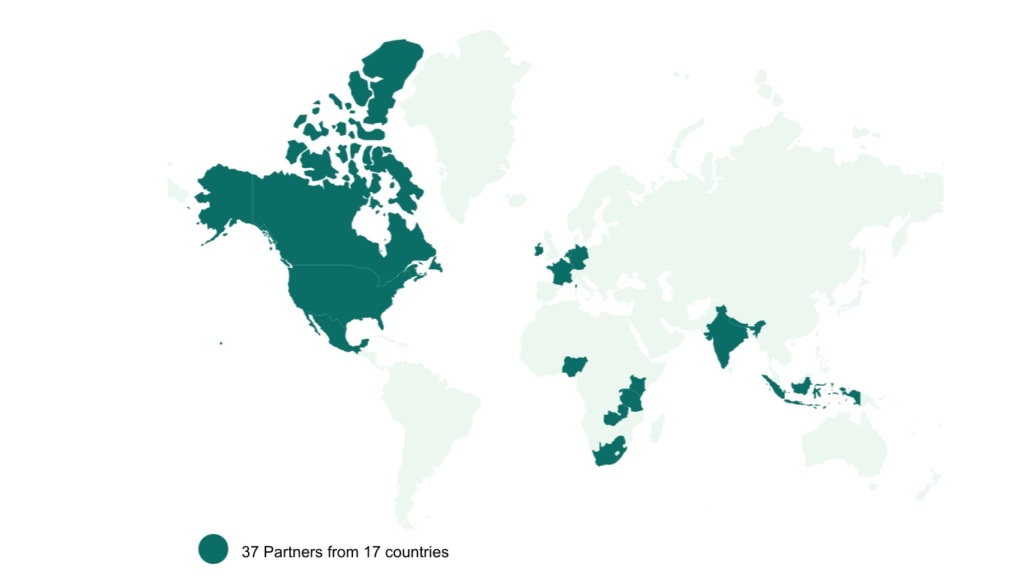
The Coalition’s growing list of private sector partners consists of 37 companies in 17 countries across Asia, Africa, Europe, and North America. This diverse list of partners includes Lumileds, a global lighting solutions company with research, development, and manufacturing facilities that employ approximately 7,000 team members in over 30 countries; Sahasra, an early innovator in local manufacturing of high-quality LEDs in Africa operating a subsidiary of its Indian headquarters in Rwanda; renowned manufacturer Panasonic’s India Anchorbrand, the DesignLights Consortium (DLC), a non-profit energy efficiency organization that evaluates commercial and industrial LED lighting products and maintains a list of over 500,000 products from over 1700 global suppliers for use in North America, and Golchha Group Nepal’s most prominent business conglomerate.
Clean Lighting Coalition industry partners lead the global lighting transition to LED
The Coalition provides an opportunity for the lighting community and private sector partners to publicly commit to supporting the global transition to clean, energy-efficient LED lighting to ensure the following benefits:
- Human Health – All fluorescent lamps contain mercury, a neurotoxin that is released whenever a bulb breaks. Lamp breakage can occur in homes, schools, child care settings, office and apartment buildings, retail stores, factories, health care, and other facilities. Mercury can cause harmful and long-term health effects; there is no “safe” level of mercury exposure.
- Diversity, Equity, and Inclusion – Without intervention, a global transition to clean LED lighting may take years due to the lobbying efforts of fluorescent lamp suppliers. Industry partners are bridging the gap between production and access to prevent under-regulated markets from becoming dumping grounds for outdated, mercury-laden fluorescents banned elsewhere.
- Climate and Environmental Health – A global transition to LED lighting is low-hanging fruit for climate change mitigation. Such a transition could support efforts to limit global warming to the UN target 1.5 Celsius. Transitioning to energy-efficient LEDs would eliminate 232 tonnes of mercury pollution from the environment, both from the bulbs themselves and avoided burning coal in power plants, and save 3.5 gigatons of CO₂ emissions from power plants (cumulatively between 2025-2050)
- Circular Economy – LEDs last 2-3 times longer than fluorescent alternatives and do not contain hazardous mercury, making them safer to dispose of at their end of life. Accelerating the adoption of LED products is estimated to reduce global energy consumption by 3%.
- Economics – LEDs are a cost-effective replacement for fluorescents. Consumers can find replacements for fluorescent bulbs in most countries for the same or slightly more expensive price. Where more expensive, LEDs pay for themselves in a few months from saved electricity costs due to the efficiency benefits.
LED companies and stakeholders can join the Clean Lighting Coalition by signing the CLiC Industry Pledge here or reach out to the CLiC Industry Engagement Lead Nyamolo Abagi (nabagi@cleanlightingcoalition.org).
Analysis Finds ROI of Appliance Efficiency Well Below Social Cost of Carbon
Appliance energy efficiency is a foundational component of effective climate policy, with well-documented social and economic benefits. A global transition to efficient appliances and equipment would cut more than 1 Gt of carbon emissions per year and save more than USD 200 billion annually on electricity bills.
CLASP’s new report, Pennies per Pound: The Return on Investment from Appliance Efficiency Technical Assistance, adds to the evidence base that appliance energy efficiency is a worthwhile investment, comparing the administrative costs of running such policies and climate impacts to the social cost of carbon.
We calculate the return on investment of appliance efficiency policies and technical assistance efforts. Our findings show appliance energy efficiency is a cost-effective climate mitigation tool.
Findings show appliance efficiency standards and labeling policies deliver major climate benefits for a minimal investment. When considering the benefits of different climate interventions, it is often helpful to compare their costs to the social cost of carbon. In the United States, the social cost of carbon, now USD 51 per ton, is used to determine whether a particular policy intervention is justified from a cost-benefit perspective. Any policy that reduces emissions for less than the social cost of carbon would be justified because the future economic benefits of mitigation outweigh the current costs.
For each of the 10 case studies assessed, the administrative costs required to achieve a one-ton reduction in CO₂e ranged from less than one cent per ton to USD 1 per ton.
Our analysis provides conclusive evidence that appliance energy efficiency policies are a smart investment for governments, enabling them to maximize climate impacts at a minimal cost.
Governments and implementing agencies are encouraged to read the full report and explore each case study in detail here.