
Making Efficient, Affordable Fans the New Standard in India
With temperatures soaring globally due to climate change, India is one of the places on the planet most at risk of extreme heat. Ceiling fans are widely used, with 90% of households relying on fans as their only form of space cooling.
Over a period of three years, CLASP partnered with both the Indian government and private sector to drastically improve the affordability and availability of efficient fans. A major part of the effort was working with small and medium enterprises to build their capacity to produce more efficient fans.
The results have been catalytic. Together, CLASP and our partners have cut energy demand from cooling, while safeguarding jobs and strengthening local supply chains, and making efficient fans more affordable to the people who need them.
A Systems Approach to Efficient Cooling Access
For many households in India, a ceiling fan can turn a space from unbearable to livable, enabling productivity, schoolwork, comfort, and health. With total stock projected to reach 1 billion by 2038, improving fan efficiency represents a major opportunity to cut energy demand. At the beginning of this project, fans accounted for about 40% of residential electricity consumption.
In 2023, CLASP supported India’s Bureau of Energy Efficiency to improve the energy efficiency policy for ceiling fans. The policy enacted a huge shift in the market, making formerly 5-star labeled fans (most efficient) now 1-star (least efficient), and raising the baseline efficiency by over 25%.
Meeting these standards, however, was challenging for medium and small enterprise (MSME) manufacturers, which produced roughly 40% to 50% of fans. Without support, these manufacturers risked losing their market share, which would lead to job losses, a weakened domestic supply chain, and, subsequently, over-reliance on imports to meet cooling demand in India.
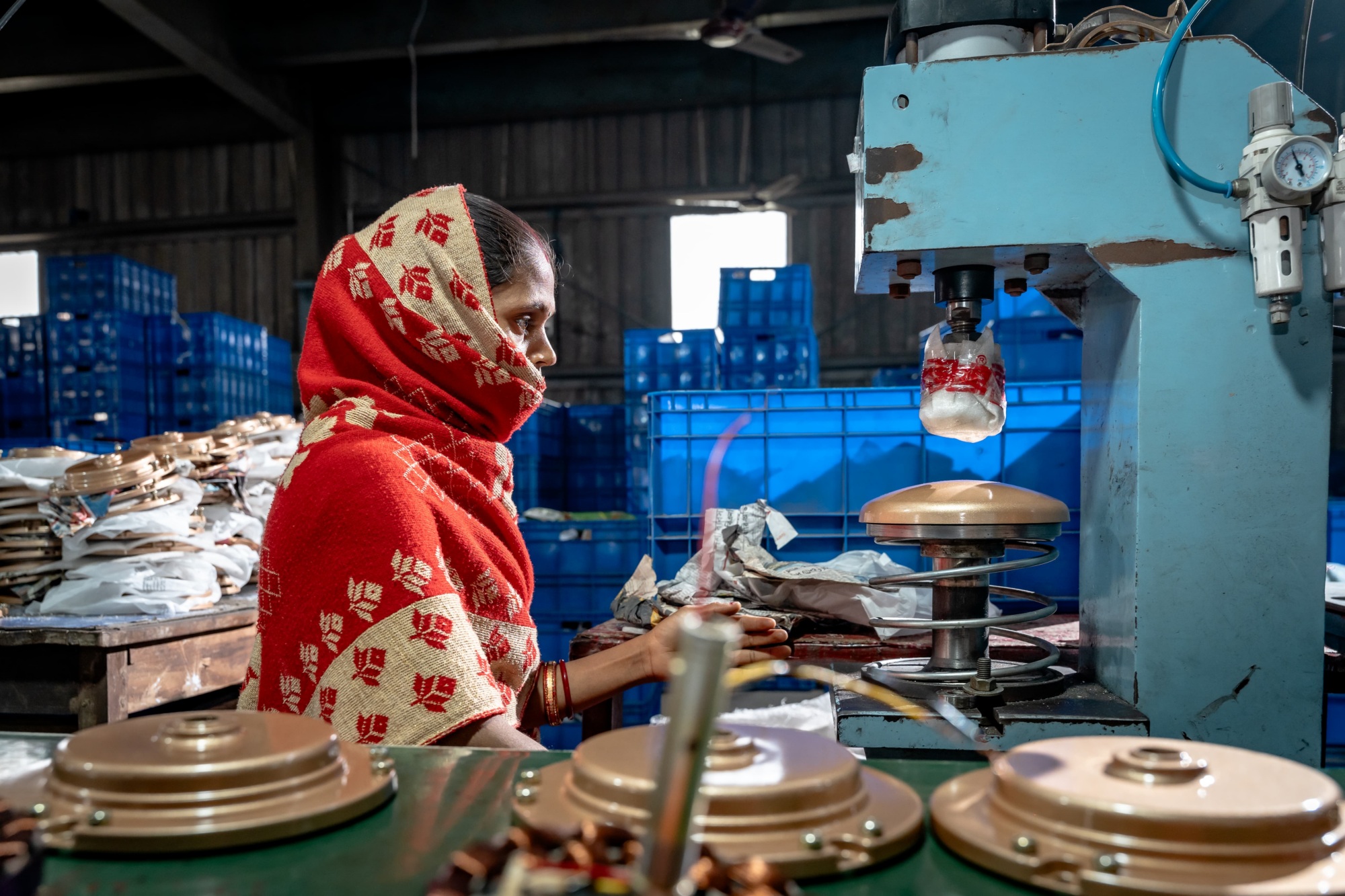
Fan manufacturing facility in Kolkata, India
Image credit: CLASP
To prevent this, CLASP worked closely with MSMEs to build their capacity to produce more efficient fans and participate in functions of the policy program, including testing, certification, and technical committees. MSMEs now have a seat at the table in the policy process, further edifying domestic businesses and contributing to long-term policy durability.
CLASP also partnered with Energy Efficient Services Limited, a state-owned energy service company, to develop a bulk procurement initiative for super-efficient fans. The initiative sought to drive down the cost of 5-star, or most efficient, ceiling fans through economies of scale, ensuring they were more available and affordable to a wider range of consumers.
Better Cooling for People, Prosperity & Planet
More efficient cooling supports India’s national climate goals and Thermal Comfort for All agenda. But this initiative also demonstrates that holistic climate action can strengthen businesses, energy security, and benefit regular people.
Our impact in numbers:
- Cut 159 Mt CO2 by 2050 and reduced demand by 218 TWh
- Lowered ceiling fan purchase price by over 25%
- 3x more manufacturers producing the technology
- Tripled the number of 5-star labelled, or most efficient fans, available on the market, with production volumes increasing by 63%
- 65% increase in medium and small enterprise participation in the policy program
New Partnership Between Government of Makueni County & CLASP Signals a $559M Opportunity to Transform Kenya’s Institutional Kitchens
Nairobi, Kenya, 27 March 2026 – Today, at the Kenya International Investment Conference (KIICO) in Nairobi, the Government of Makueni County and CLASP, as a co-implementer of Modern Energy Cooking Services (MECS) programme, signed a Memorandum of Understanding to accelerate clean cooking transitions across public institutions in Makueni County. The ceremony was witnessed by H.E. Prof. Kithure Kindiki, EGH, Deputy President of the Republic of Kenya. The signing coincides with the launch of Kenya’s first Institutional Clean Cooking Sector Pack, which identifies a KES 72 billion ($559M) investment opportunity to transition over 100,000 institutions serving 12.6 million people to modern clean cooking solutions—framing institutional clean cooking not as a development challenge, but as a compelling, bankable investment opportunity.
A partnership rooted in national commitment and investment ambition
Despite Kenya’s remarkable strides in electricity access—from 20% to 75% of the population in the last decade—clean cooking remains one of the last major frontiers of the energy transition. Many in Kenya still rely on traditional fuels, such as charcoal and firewood, which contribute to deforestation, generate harmful indoor air pollution, and divert billions of shillings annually from institutions and households toward inefficient fuel expenditure. Kenya’s National Cooking Transition Strategy (KNCTS 2024–2028) sets a clear national target of universal access to clean cooking by 2030, operationalizing the National Energy Policy and mobilizing government, private sector, and development partners toward a coordinated, multi-fuel transition. This partnership between the Government of Makueni County and CLASP takes a major step in translating the national framework into county-level action, with a clear investment case to match.
Nyamolo Abagi, Director of Clean Energy Access at CLASP and CLASP/MECS programme lead, emphasizes the impact this partnership will have on lives and livelihoods: “Through the MECS programme, we have spent years building the evidence base and market infrastructure to make clean cooking a real, affordable choice for institutions, households, and commercial settings across the Global South. But this is also, urgently, a story about dignity — about the cooks in institutional kitchens who feed school children and the sick every day, while enduring some of the highest levels of heat stress and indoor air pollution of any workforce on the continent. They deserve better, and better is now within reach.”
Unlocking the institutional cooking opportunity
While global clean cooking efforts have largely focused on households, institutional kitchens represent an equally critical and significantly underserved opportunity. Across sub-Saharan Africa, more than 620,000 schools, nearly 100,000 healthcare facilities, and hundreds of thousands of correctional and vocational training centers prepare meals daily for millions of people, with over 85% still relying on firewood or charcoal. In Kenya alone, there are over 97,000 educational institutions, more than 13,000 healthcare facilities, and over 130 correctional facilities; more than 90% still use biomass for cooking.
Kenya’s newly launched Institutional Clean Cooking Sector Pack — developed by the Office of the Special Envoy for Climate Change (OSECC) in partnership with InvestKenya, with contributions from the Government of Makueni County, CLASP/MECS, and other partners — quantifies this as a KES 72 billion ($559M) investment opportunity and provides the market intelligence to make it bankable.
Over the next five years, CLASP and the Government of Makueni County will jointly identify and prioritize public institutions and communities for electric cooking transitions, working with a growing ecosystem of Kenya-based clean cooking suppliers. Pilot interventions at vocational training centers will draw on innovative local companies, including Ecobora and Feion Green Ventures, two Kenya-based manufacturers supported through the MECS programme, to demonstrate that affordable, high-quality clean cooking solutions are available and ready to scale. The aim is to build a replicable, financially sustainable model that can attract private capital and be replicated across Kenya’s 47 counties to demonstrate that affordable, high-quality clean cooking solutions are available and ready to scale.
Nyamolo Abagi highlights the opportunity this partnership poses: “What makes this partnership with Makueni County so compelling is that all the ingredients are already here: a county government with the will to act, innovative local manufacturers ready to deliver, and a sector pack that turns a long-standing development challenge into a credible investment opportunity. CLASP’s role is to connect those pieces — and to ensure that the communities and institutions we serve are co-creators of the solutions, not just recipients. Makueni is where we prove the model.”
Governor of Makueni County, H.E. Mutula Kilonzo Junior says of the partnership: “Makueni is open for investment — and clean cooking is one of the most compelling opportunities on the table. Our county has already committed KES 157 million to solar energy, launched our County Energy Plan (2023 – 2032), Energy Policy 2025, and piloted clean cooking in our institutions. We know what is possible when the right partners show up. This partnership with MECS and CLASP is about turning that commitment into scale —reducing the fuel costs that drain our institutions, creating skilled jobs for our young people in the clean energy sector.”
A call to investors and partners
Today’s MOU signing is a signal of implementation intent, but unlocking Kenya’s KES 72 billion institutional clean cooking opportunity at scale will require blended finance approaches that combine public funding, private capital, concessional finance, and carbon markets. CLASP, the Government of Makueni County, and the MECS programme invite investors, development partners, local financial institutions, and technology providers to engage with the Institutional Clean Cooking Sector Pack and explore how their capital and expertise can accelerate this transition.

Governor of Makueni County, H.E. Mutula Kilonzo Junior, and CLASP's Nyamolo Abagi, signed a landmark MoU to accelerate clean cooking in public institutions. Photo credit: CLASP.
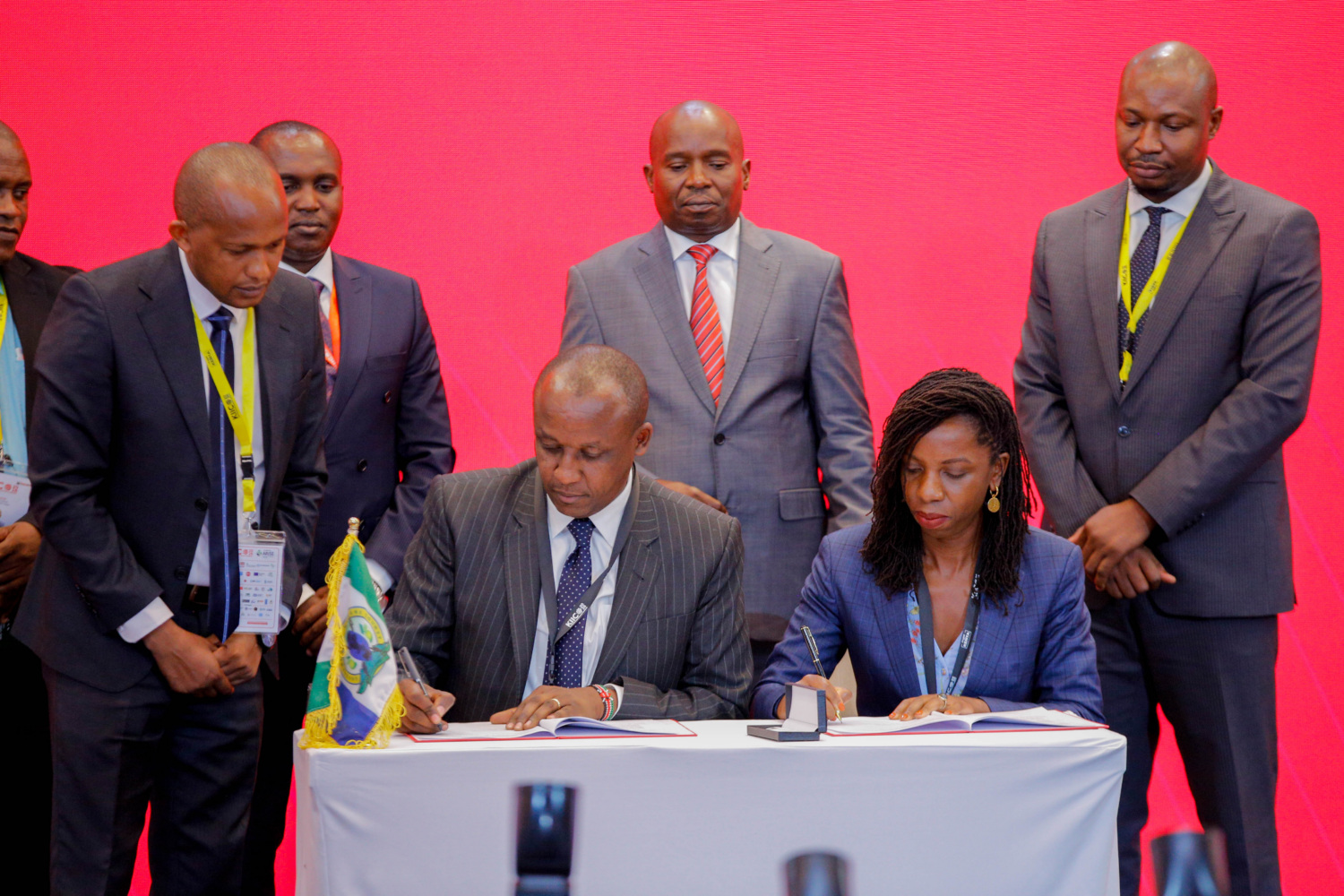
Photo Credit CLASP
H.E Prof. Kithure Kindiki E.G.H, Deputy President of Kenya, and CLASP's Emmanuel Aziebor, Senior Director Africa, witnessing the signing of the MoU between Makueni County and CLASP. Photo credit: CLASP.
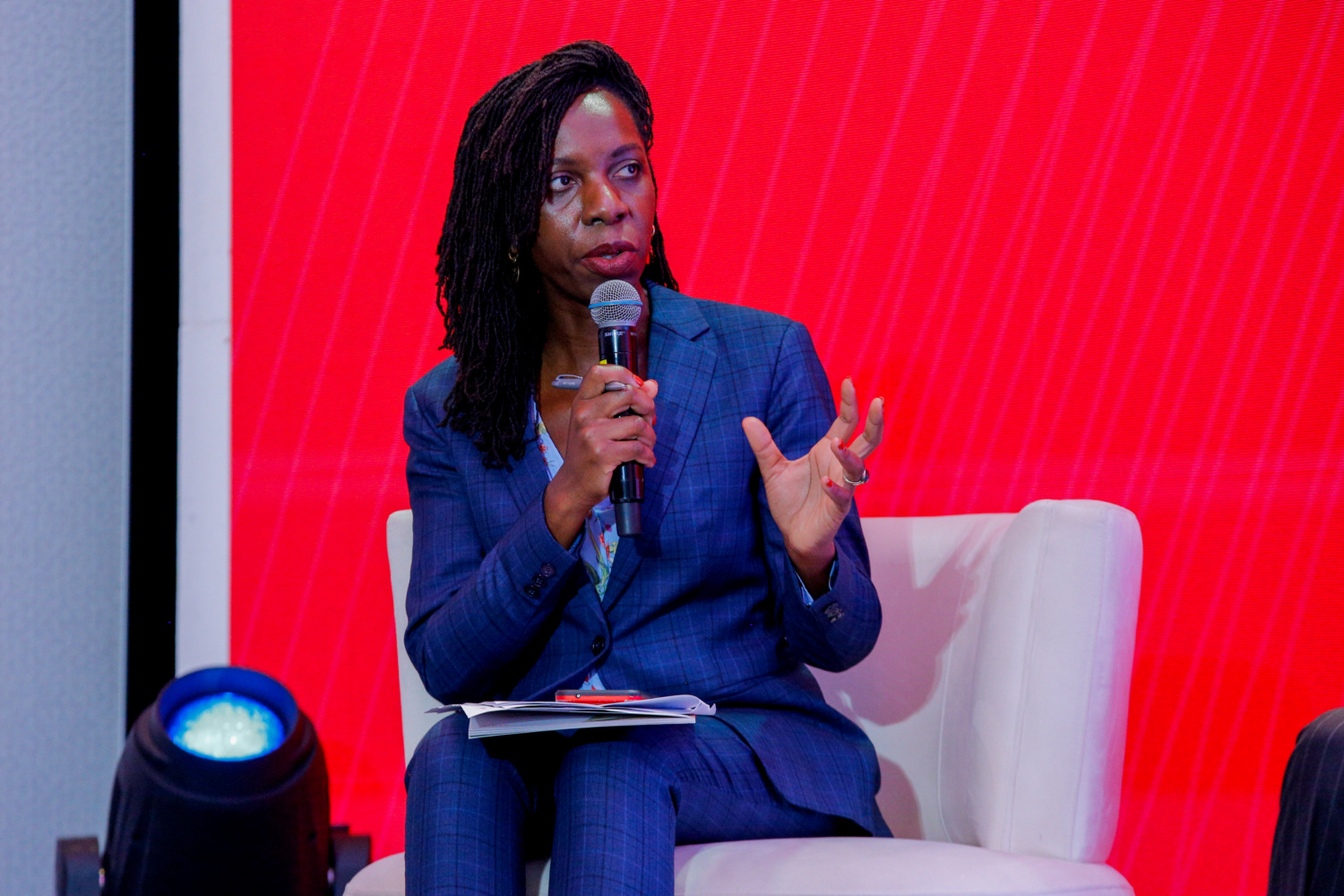
CLASP's Nyamolo Abagi moderating a session on enhancing institutional coordination to accelerate the clean cooking sector in Kenya. Photo credit: CLASP.
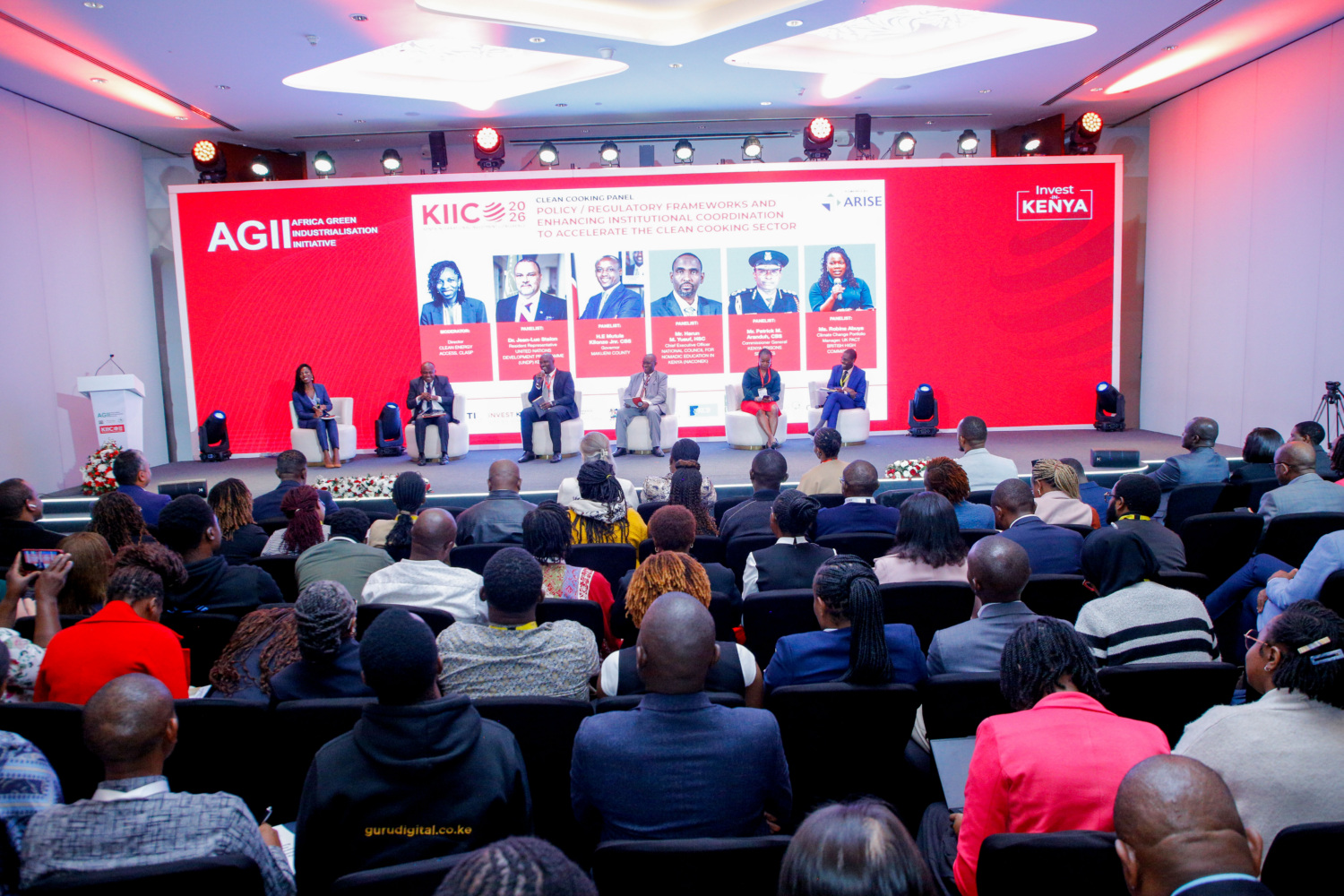
CLASP's Nyamolo Abagi moderating a session on enhancing institutional coordination to accelerate the clean cooking sector in Kenya. Photo credit: CLASP.
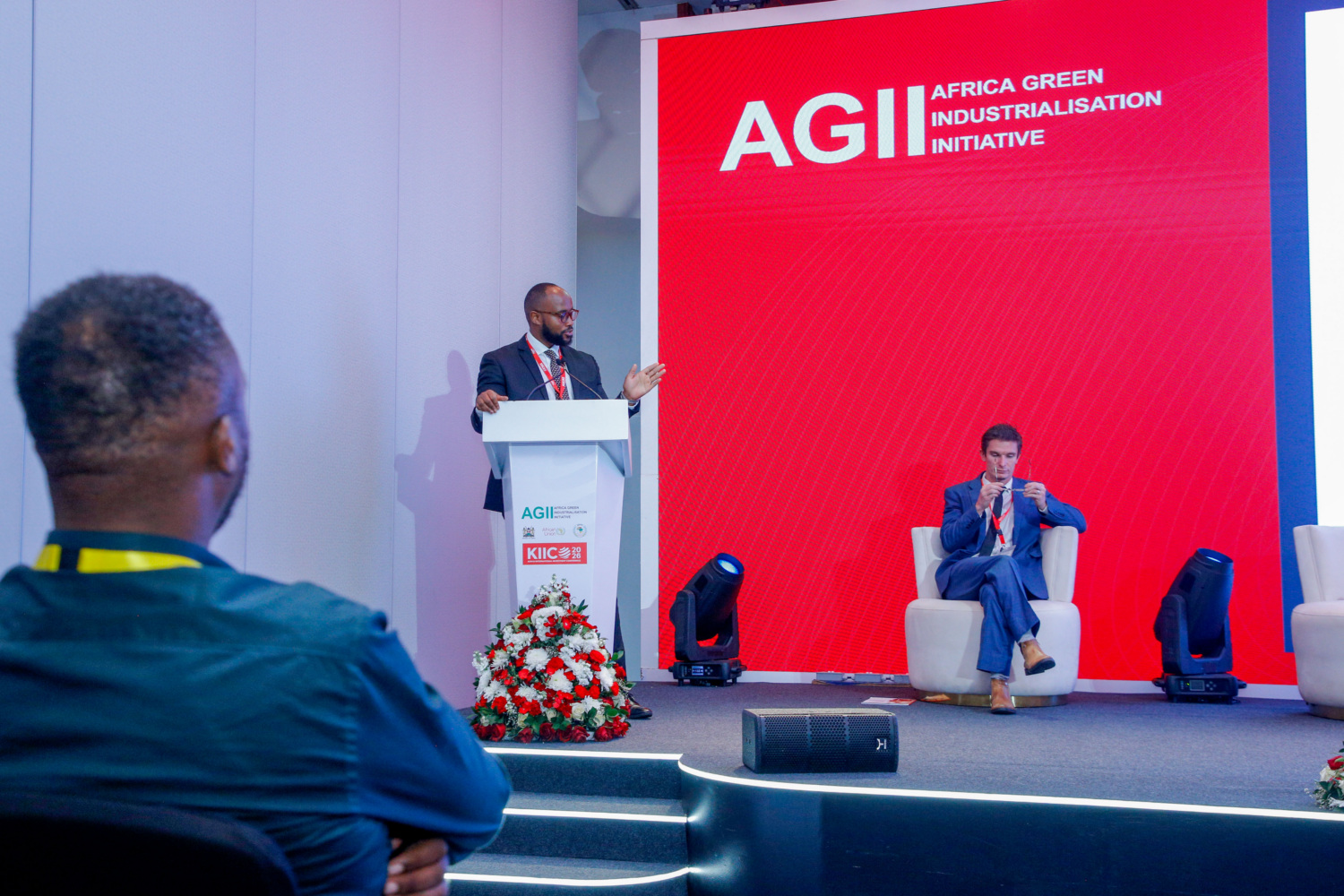
CLASP's Towett Ngetich and MECS Dr. John Leary, presenting the Kenya’s first Institutional Clean Cooking Sector Pack at KIICO 2026. Photo credit: CLASP.
About Modern Energy Cooking Services programme
Modern Energy Cooking Services (MECS) is an eleven-year programme funded by UK aid via the Foreign Commonwealth and Development Office. MECS is a geographically diverse, multicultural and transdisciplinary team working in close partnership with NGOs, governments, private sector, academia and research institutes, policy representatives and communities in 16 countries of interest to accelerate a transition from biomass to genuinely ‘clean’ cooking. CLASP is a core partner of the MECS programme alongside Loughborough University and ESMAP.
About CLASP
CLASP is the leading global authority on efficient appliances’ role in fighting climate change and improving people’s lives. With 25 years of expertise and offices on four continents, CLASP collaborates with policymakers, industry leaders, and other experts to deliver clear pathways to a more sustainable world for people and the planet.
CLASP Research Helps Set the Stage for Climate-Friendly, Efficient Cooling in Indonesia

Home to over 280 million people, Indonesia is one of the world’s top 20 emitters of greenhouse gases. With temperatures rising, the government’s Nationally Determined Contribution (NDC) commits to reducing emissions while continuing to support the nation’s economic growth.
Meeting both of these goals requires a strong focus on air conditioning. With global warming driving temperatures ever higher and the nation’s middle class growing, more Indonesians are buying ACs. By 2050, 85% of households in the country are expected to own ACs. But while this will create important quality-of-life benefits, it also poses risks. Today, low-efficiency ACs dominate the Indonesian market. Without policy intervention or market shifts, increased AC use will result in a significant rise in emissions and electricity usage across the country, jeopardizing the nation’s climate goals and raising consumers’ electricity bills.
One of the easiest and most cost-effective ways to make air conditioners more efficient and affordable is to improve national policies that determine the energy efficiency of appliances produced and sold in the market.
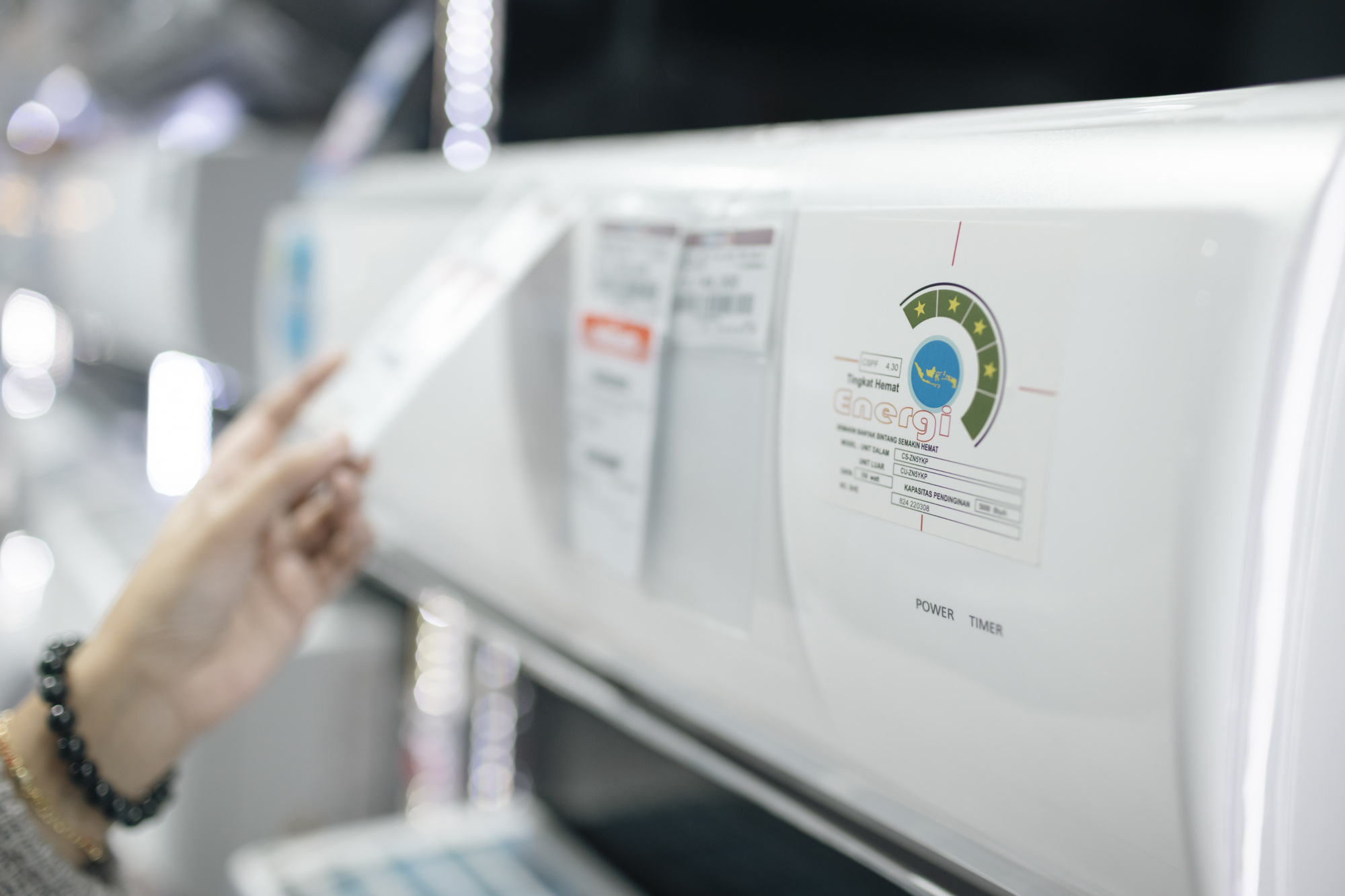
An air conditioner in Indonesia with an energy rating label
CLASP
Setting realistic and effective AC efficiency standards requires rigorous data on air conditioner performance. The Indonesian government, with technical support from CLASP, undertook a recent project to strengthen this evidence base.
We partnered with India’s CEPT University, University of Indonesia and other local universities, government and industry representatives, and certified AC technicians to study one important aspect of air conditioners: the difference in energy consumption between inverter and non-inverter technology.
Most air conditioners fall into these two types. An inverter AC can adjust how much power it uses depending on the cooling needed in the space, using less energy to maintain the right temperature. A non-inverter AC, on the other hand, repeatedly switches on and off to cool the room, which tends to consume more energy.
CLASP studied the energy consumption of these two technologies over a period of six months in three Indonesian cities: Jakarta, Medan, and Bali. In each location, two identical homes with identical bedroom conditions were identified. One home was fitted with an inverter AC and the other with a non-inverter unit, allowing researchers to compare their electricity usage under the same conditions. The study also provides independent evidence on whether inverter ACs can truly deliver electricity savings in Indonesia’s hot, humid climate.
The results showed:
- Field tests are consistent with global findings, indicating that inverter ACs consume less electricity than non-inverter units under similar conditions, with Jakarta measurements showing approximately 28% savings during the test period.
- The difference in energy use remained steady throughout the testing period, with inverter ACs consistently using less electricity.
Research has also shown that while inverter ACs cost more upfront, their lower electricity usage means households typically recover the extra cost in a few years through reduced electricity bills and continue saving afterward.
By providing empirical data to stakeholders and policymakers in Indonesia and elsewhere, CLASP aims to support stronger efficiency standards for air conditioners. These policies can help bring more efficient models to the market and encourage large-scale production, which can ultimately reduce the upfront cost of high-efficiency ACs, helping more people stay cool.
CLASP research helps set the stage for climate-friendly, efficient cooling in Indonesia
Home to over 280 million people, Indonesia is one of the world’s top 20 emitters of greenhouse gases. With temperatures rising, the government’s Nationally Determined Contribution (NDC) commits to reducing emissions while continuing to support the nation’s economic growth.
Meeting both of these goals requires a strong focus on air conditioning. With global warming driving temperatures ever higher and the nation’s middle class growing, more Indonesians are buying ACs. By 2050, 85% of households in the country are expected to own ACs. But while this will create important quality-of-life benefits, it also poses risks. Today, low-efficiency ACs dominate the Indonesian market. Without policy intervention or market shifts, increased AC use will result in a significant rise in emissions and electricity usage across the country, jeopardizing the nation’s climate goals and raising consumers’ electricity bills.
One of the easiest and most cost-effective ways to make air conditioners more efficient and affordable is to improve national policies that determine the energy efficiency of appliances produced and sold in the market.
An air conditioner in Indonesia with an energy rating label
CLASP
Setting realistic and effective AC efficiency standards requires rigorous data on air conditioner performance. The Indonesian government, with technical support from CLASP, undertook a recent project to strengthen this evidence base.
We partnered with India’s CEPT University, University of Indonesia and other local universities, government and industry representatives, and certified AC technicians to study one important aspect of air conditioners: the difference in energy consumption between inverter and non-inverter technology.
Most air conditioners fall into these two types. An inverter AC can adjust how much power it uses depending on the cooling needed in the space, using less energy to maintain the right temperature. A non-inverter AC, on the other hand, repeatedly switches on and off to cool the room, which tends to consume more energy.
CLASP studied the energy consumption of these two technologies over a period of six months in three Indonesian cities: Jakarta, Medan, and Bali. In each location, two identical homes with identical bedroom conditions were identified. One home was fitted with an inverter AC and the other with a non-inverter unit, allowing researchers to compare their electricity usage under the same conditions. The study also provides independent evidence on whether inverter ACs can truly deliver electricity savings in Indonesia’s hot, humid climate.
The results showed:
- Field tests are consistent with global findings, indicating that inverter ACs consume less electricity than non-inverter units under similar conditions, with Jakarta measurements showing approximately 28% savings during the test period.
- The difference in energy use remained steady throughout the testing period, with inverter ACs consistently using less electricity.
Research has also shown that while inverter ACs cost more upfront, their lower electricity usage means households typically recover the extra cost in a few years through reduced electricity bills and continue saving afterward.
By providing empirical data to stakeholders and policymakers in Indonesia and elsewhere, CLASP aims to support stronger efficiency standards for air conditioners. These policies can help bring more efficient models to the market and encourage large-scale production, which can ultimately reduce the upfront cost of high-efficiency ACs, helping more people stay cool.
Find CLASP at The Kenya International Investment Conference
From 25 to 27 March 2026, CLASP, as part of the Modern Energy Cooking Services (MECS), will attend the Kenya International Investment Conference (KIICO) in Nairobi, Kenya. CLASP’s Director of Clean Energy Access, Nyamolo Abagi, will moderate the panel discussion, “Policy/Regulatory Frameworks and Enhancing Institutional Coordination to Accelerate the Clean Cooking Sector” and Clean Energy Access Venture Building Manager, Towett Ngetich, and MECS Researcher and Program Lead, Jon Leary, will present at the side event, “Investment Opportunity Spotlight: From Sector Pack to Bankable Pipeline.”
At a time when Africa’s economy is in the midst of transformation and growth, KIICO provides a platform for visionary policymakers and investors across key sectors, including clean cooking and renewable energy, to transform ideas into action, mobilize capital, and forge new partnerships. It’s where investment, policy, and partnerships come together to shape the trajectory of the country’s, and the continent’s, economic growth.
Register for the event and connect with CLASP’s experts in person.
To invite CLASP experts to speak at your KIICO event, please contact Stella Madete, communications manager, at smadete@clasp.ngo.
Connect with CLASP at KIICO:
Event title | Date and time | Location | Host | Register |
|---|---|---|---|---|
Sector Pack Presentation by TWG: “Investment Opportunity Spotlight: From Sector Pack to Bankable Pipeline” | 27 March | Radisson Blu Hotel Nairobi, Upper Hill | Clean Cooking Working Group | Register to attend the conference |
Policy/Regulatory Frameworks and Enhancing Institutional Coordination to Accelerate the Clean Cooking Sector | 27 March | Radisson Blu Hotel Nairobi, Upper Hill | Clean Cooking Working Group | Register to attend the conference |
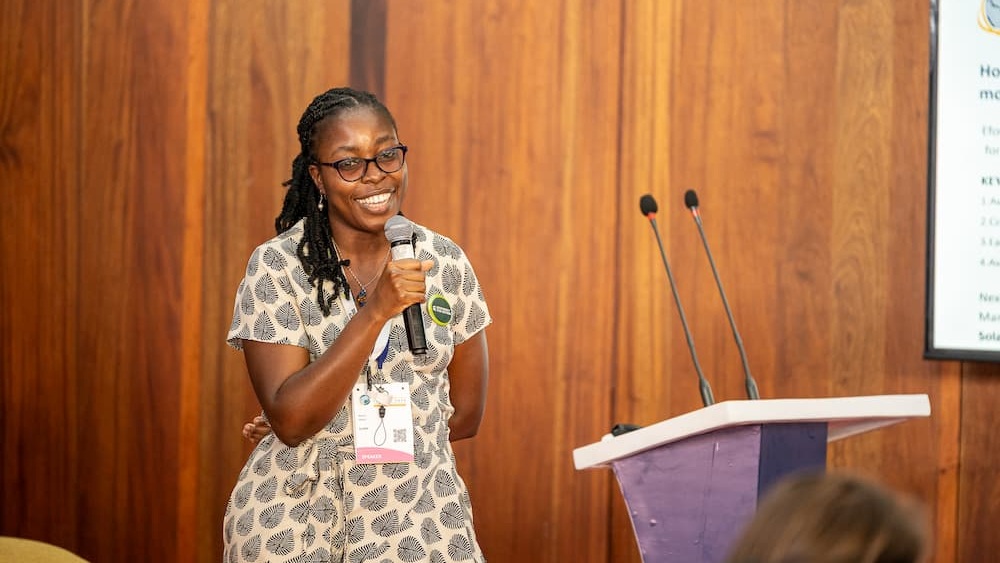
CLASP at your next event
Our team of experts leads the global conversation on the role of efficient appliances in fighting climate change and improving people’s lives. Please email us to learn more about the ways we can collaborate and connect.
Make a guest speaker inquiryRising Temperatures Put Millions Across Latin America and the Caribbean at Risk as Cooling Appliances Remain Inefficient
Washington, DC, 25 February 2026 — As temperatures rise and demand for air conditioning accelerates, new research reveals that nearly 70 million people across Latin America and the Caribbean exposed to rising heat risks lack efficient cooling appliances.
Despite the region’s growing need for sustainable cooling, only 15% of households own an air conditioner, leaving millions vulnerable to extreme heat. For many families, the affordability of purchasing and operating an air conditioner remains a key barrier to sustainable cooling access. Consequently, the lack of access to adequate cooling along with rising temperatures severely affects human health.
A new report from CLASP and the Institute for Governance & Sustainable Development (IGSD), with the Climate and Clean Air Coalition (CCAC) finds that these challenges are compounded by environmental dumping—the export of low-efficiency, climate-harming cooling equipment that does not meet existing standards in its country of origin.
Environmental dumping raises household energy bills, increases greenhouse gas emissions, and threatens to lock the region into decades of low-efficiency and polluting cooling infrastructure.
- The research, which focused on Argentina, Barbados, Brazil, Chile, Colombia, Dominican Republic, Grenada, Jamaica, Mexico, and Uruguay, finds:
- 44% of all new air conditioners sold in Latin America and the Caribbean are categorized as environmental dumping, which means they cannot be legally sold in the countries where they are manufactured.
- More than one-third of new room air conditioners sold in the region use obsolete refrigerants, which are currently phased down or phased out under the Montreal Protocol on Substances that Deplete the Ozone Layer and its Kigali Amendment.
- Existing cooling access gaps disproportionately affect low-income households and women, and the influx of outdated equipment deepens energy inequality and increases emissions.
- Without stronger efficiency and refrigerant standards, the region could lock in 173 million tons of CO₂e by 2050, emissions equivalent to more than three coal-fired power plants over the next 20 years.
Despite these challenges, the report highlights clear positive pathways for action. Brazil and Grenada are emerging as regional leaders by adopting modern efficiency standards and climate-friendly refrigerant policies and initiatives that protect consumers and close the door to environmental dumping.
While strong national efficiency policies are among the most effective ways for countries to protect themselves from environmental dumping, solutions ultimately require shared responsibility and close collaboration between importing- and exporting-country governments, the private sector, civil society, and international partners.
As extreme heat becomes a defining risk, access to efficient and climate-friendly cooling appliances is no longer optional; it is essential,” said Martina Otto, Head of the Climate and Clean Air Coalition Secretariat. “This year marks ten years since the adoption of the Kigali Amendment, a decade that has demonstrated how effective international partnerships can drive meaningful action. By acting together now, importing and exporting countries have a clear opportunity to shape markets, protect communities, and steer the inevitable growth in cooling toward solutions that advance climate justice while delivering economic, social, and environmental benefits.
Environmental dumping is an equity issue. As our research shows, millions of people across Latin America and the Caribbean are being left behind with inefficient, outdated cooling equipment that costs too much money to run. Manufacturers have the know-how to produce better appliances but are lacking the right incentives to manufacture and export them to Latin America and other regions in the Global South. This undermines people’s ability to stay safe in a warming world and deepens existing inequalities. —Ana Maria Carreño, Senior Director of Climate at CLASP
We must pursue innovative business models that do not export energy poverty and other burdens of obsolete cooling technologies to vulnerable countries in the Global South. Multilateral platforms, South-South cooperation, and collaborative government-industry partnerships can help. In this way, these countries can leapfrog to becoming innovation hubs for next-generation cooling solutions that support clean air, climate resilience, and prosperity. —Tad Ferris, Senior Counsel at IGSD
For inquiries, please reach out to Marina Baur, Senior Communication Associate, CLASP at mbaur@clasp.ngo.
Pathways to Prevent the Environmental Dumping of Climate-Harming Room Air Conditioners in Latin America & the Caribbean

Millions of people across Latin America & the Caribbean are being left behind with inefficient, outdated cooling equipment that's too expensive to run. Manufacturers have the know-how to produce better appliances but lack the incentives to manufacture and export them to the Global South.Ana Maria Carreño
Senior Director of Climate, CLASP
Power for All Joins the CLASP Family
Nairobi, Kenya, 11 February 2026 – Strong and agile partnerships have been key to unlocking climate progress and sustainable development objectives. Today, a new collaboration emerges: we are delighted to announce that Power for All will join forces with CLASP.
CLASP is an international nonprofit organization dedicated to improving appliance and equipment energy efficiency, with 25 years of expertise and offices on five continents. Since 2015, Power for All has played a crucial role in the energy access sector, leading impactful campaigns, partnerships, and research to help end energy poverty worldwide.
Now, Power for All joins CLASP. By embedding Power for All’s well-honed campaign and partnership approaches in CLASP’s work, we will strengthen engagement with energy suppliers as well as our collective capacity to elevate appliance and equipment efficiency as a key solution to powering jobs and livelihoods while mitigating climate pollution.
CLASP CEO Christine Egan sees this union as a strategic move for making faster, practical progress:
Since its founding, Power for All has encouraged the distributed renewables sector to expand its thinking and partnerships for improved impact, for example, to make smarter connections with utilities. By joining forces, CLASP and Power for All will advance the integration of energy supply and energy demand. This is a critical move for sustainably getting people the energy services they need, and a direction that CLASP recently articulated in our flagship research, The Missing Piece of Energy Access. Together, our research and stakeholder networks will create a platform to super-charge climate-friendly prosperity. —Christine Egan
Since 2015, Power for All has challenged the status quo and encouraged the sector to probe deeper and better understand how best to drive a more inclusive global energy system. Over the years, they have led boundary-pushing research, publishing sector-defining report series such as their “Powering Jobs Census,” which tracks employment trends in the distributed renewable energy sector and provides critical labor market insights in key countries like Ethiopia, India, Kenya, Nigeria, and Uganda. Additionally, their ground-breaking Utilities 2.0 campaign sought to demonstrate the benefits of combining centralized and decentralized energy into an integrated energy network. This first-of-its-kind campaign showed that doing so could deliver customer-centric, clean energy solutions faster and more cheaply.
Kristina Skierka, founder of Power for All, reflects on the organization’s legacy and its new chapter:
Power for All was born from the companies that built the decentralized renewable energy sector in order to help accelerate the end of energy poverty. The combined efforts of Power for All and 500+ campaign partners in our decade of action helped connect over 500 million new energy users around the world. I’m encouraged by CLASP’s institutional strength, mission alignment, and global reach to steward the campaign’s legacy, and I remain deeply grateful to every advocate, ally, and team member who helped build this movement. —Kristina Skierka
Over the coming months, as this union takes shape, expect revived and historical Power for All offerings across CLASP channels.
Regarding the partnership, Alba Topulli, outgoing CEO at Power for All, and incoming Senior Director of Clean Energy Access at CLASP, adds:
CLASP has built one of our sector’s most trusted platforms through decades of shaping appliance markets and advancing energy efficiency, grounded in how people actually use energy. Power for All’s years of campaigning and coalition-building have shown us that systems change happens when we move together as a sector—aligning supply and demand, connecting public and private actors, and ensuring centralized and decentralized systems work as one. Together, we’re committed to a shift toward integrated energy solutions that put people at the center and make demand-side initiatives foundational to how energy access is planned, financed, and delivered. —Alba Topulli
Alba Topulli joins CLASP as Senior Director, Clean Energy Access
Adam Browning, Chair of the Board for Power for All, said:
Power for All has always championed bold collaboration and systems-level thinking to accelerate universal energy access. CLASP’s trusted leadership, global reach, and deep technical expertise offer a strong platform to expand our collective impact, grounded in shared purpose and a belief that demand-side solutions must be central to the energy access agenda. The Board is proud to support this strategic partnership, which honors Power for All’s work and positions it for greater scale and impact in the years ahead. —Adam Browning
CLASP and Power for All are delighted to unite forces and are confident that together, we can achieve even greater impact for people, enhanced prosperity, and the planet.
Watch this space as Power for All officially joins the CLASP family and collaborative efforts are announced. Follow us on LinkedIn at @CLASP and on Bluesky at @clasp-ngo.bsky.social.
CLASP Conducting New Motor Assessment in Indonesia to Inform Efficiency Policies
CLASP has identified 10 appliances that are critical to fighting climate change and improving people’s lives. Industrial Motors are one of them. They power our economies and consume a significant amount of the world’s industrial electricity demand—27%. The resulting high energy consumption leads to greenhouse gas emissions and can strain power grids.
In Indonesia, the industrial sector consumes nearly 45% of the country’s total energy. Much of this demand comes from equipment powered by electric motors, which is expected to rise as Indonesia’s local manufacturing grows.
Given energy-efficient motors’ ability to consume less electricity when performing a task, and transitioning global motor stock to modern, efficient models would have major environmental and social benefits. Higher efficiency motors offer a win-win solution.
A market assessment to inform motor efficiency policies in Indonesia
Indonesia’s rapid industrial and economic growth is increasing the demand for commercial and industrial equipment. This makes improving the efficiency of motors embedded in pumps, fans, compressors, and conveyors a priority for national policy. However, there is limited information about the country’s current domestic motor market to guide policy development.
CLASP aims to fill this gap through a detailed market assessment of electric motors. The study will quantify the market’s size and composition, including motor sizes, brands, and efficiency levels, of Indonesia’s motor market and provide policymakers with reliable data to develop new national efficiency policies. This assessment is being conducted in coordination with the Ministry of Energy and Mineral Resources (EBTKE), and key motor brands and associations, including ABB, Siemens, TEKO, and Grundfos.
What Indonesia can gain from more efficient motors
Once in place, motor efficiency policies informed by this assessment could deliver major benefits. Early projections show that by 2060, Indonesia could save ~542 TWh of electricity, enough to power 115 million Indonesian households for one year, and avoid ~460 Mt CO₂ emissions, equal to taking 100 million passenger cars off the road for one year. This will support the country’s 2060 net-zero climate goals and its Nationally Determined Contribution, or national climate goal.
For consumers and businesses, efficient motors mean access to higher-quality products and lower energy bills during the equipment’s lifespan. For the broader economy, efficient motors mean improved productivity, stronger industrial competitiveness, and enhanced energy security.
Ensuring that Indonesia’s industrial motors become more energy efficient is key to building a competitive and sustainable industrial future.
Global Distributors Collective Joins Effort to Bring Clean Energy and Appliances to More Homes and Businesses Worldwide
The Global Distributors Collective (GDC) is the newest member of the Energy Access Institutions Facility, an initiative led by CLASP to help more people gain access to reliable and affordable energy.
Extensive network and wider reach
For nearly a decade, GDC has worked with locally owned businesses (or ‘last mile distributors’), globally, to get efficient products like solar-powered lights, clean cookers, and water filters, to underserved homes and communities. By partnering with the Facility, GDC joins a group of like-minded institutions committed to delivering energy access across the continent.
GDC’s impact is significant. Its network includes 300 distributors across more than 60 countries, which collectively reach more than 60 million people with beneficial household products, including essential sustainable energy products. These distributors operate at the ‘last mile’; the elusive final stretch between services and the often rural, low-income or otherwise marginalized people trying to access those services.
Focused scope for meaningful impact
GDC’s unique selling point is its strong focus on small, locally owned businesses, many of which face a lot of challenges growing or attracting investment. The Collective helps by providing practical training, tools, and support to help these businesses strengthen their operations; making industry knowledge available and more readily accessible; and linking businesses to investment opportunities. Equally important, GDC amplifies the voices of those businesses in decision-making spaces at the global level, where they have traditionally lacked a seat at the table.
Last-mile distributors are vital to connecting the billions of people worldwide who still lack access to potentially transformational energy products. GDC’s partnership with the Facility will enable us to ramp up our work providing support and services that strengthen and grow these businesses—ultimately helping them to reach even more underserved customers.
Jessica Utichi
Head of the Global Distributors Collective
We’re excited to welcome GDC to the Facility. Their unique blend of local expertise and experience, as well as their perspective on last-mile energy access in different geographies, will help us create a more practical, people-centered approach to energy and appliance access, and strengthen our role in supporting those leading the way.
Emmanuel Aziebor
Senior Director Africa, CLASP
The Facility partners with institutions that strengthen off-grid energy markets and help companies succeed and deliver not just electricity, but the skills, tools, and appliances that allow families and businesses to benefit from it. With GDC on board, the coalition is even better positioned to reach more people with solutions that work.
——
About the Energy Access Institutions Facility
The Energy Access Institutions Facility, or “The Facility,” is a joint donor initiative to support and strengthen the institutions that are essential for the achievement of Sustainable Development Goal 7, universal access to affordable, reliable, sustainable, and modern energy by 2030. The Facility is supported by DOEN Foundation, British International Investment, Good Energies Foundation, the Swedish International Development Agency (Sida), and the UK Government via the Transforming Energy Access (TEA) platform and is managed by CLASP.
This material has been funded by UK International Development from the UK Government; however, the views expressed do not necessarily reflect the UK Government’s official policies.