
Agriculture
CLASP and GEAPP Expand Access to Affordable, Energy-Efficient Appliances in Africa
Cape Town, 18 June, 2025 – At the Africa Energy Forum in Cape Town, CLASP and the Global Energy Alliance for People and Planet (GEAPP) announced a substantial expansion of the Productive Use Financing Facility (PUFF). This $6.1 million USD funding boost will help accelerate the uptake of clean, energy-efficient appliances that power small businesses, support farmers, and transform the lives of thousands of people across Africa.
Despite their potential to improve lives globally, efficient appliances are still out of reach for over 600 million people without access to electricity. High costs and limited financing make it difficult for business and households to afford them. PUFF helps bridge that gap.
The facility provides grants, subsidies, and technical assistance to suppliers and distributors to lower prices and reach more customers. This enables small businesses, entrepreneurs, and households to purchase energy-efficient technologies at favorable prices, allowing them to grow over time.
Building on success
This extension builds on the success of the two-year pilot project that connected people with the useful appliances to earn a living. From 2022 to 2024, PUFF worked with 24 companies across six countries, helping to deploy nearly 16,000 appliances, and directly improve the lives of over 58,000 households. These appliances, such as solar-powered refrigerators, solar water pumps, and solar milling machines, had a direct, transformative impact on people’s livelihoods.
“Access to energy is foundational for economic growth. Efficient appliances and equipment, which are how people turn energy into opportunity, need to be considered essential energy infrastructure, alongside renewables. PUFF’s pilot phase proved that targeted support could unlock meaningful change. With effective financing, companies can reach more people with the right appliances, and they can change lives,” said Emmanuel Aziebor, Senior Director for Africa at CLASP.
What’s new in PUFF 2.0?
CLASP and GEAPP are renewing their partnership focused on scaling appliances for agriculture and entrepreneurship in Ethiopia, Kenya, and Nigeria. This new round aims to create over 3,000 green jobs through the sale and use of 10,000 appliances in four years, including established appliances like solar water pumps and refrigerators, and more specialized technologies such as coffee pulpers and honey extractors.
This expansion also deepens commitment to gender equity and youth inclusion. In the pilot, women made up nearly half of all appliance buyers, and households where women bought appliances saw a 94% increase in average income. PUFF 2.0 will have an even greater focus on equity by utilizing outreach and financing strategies that center women and young entrepreneurs.
“While electrification has expanded, many investments fail to turn access into economic opportunity, with limited job creation or enterprise growth. Through initiatives such as PUFF 2.0 collaboration with CLASP, we are addressing these shortfalls by ensuring that new energy connections drive productivity and power agriculture, energizing ambition in small and medium sized enterprises, and output in local manufacturing. Increased incomes from these activities spur economic growth and wellbeing in growing communities, creating jobs, and improving the quality of life,” said Makena Ireri, Managing Director for Productive Use of Energy at GEAPP.
CLASP’s Productive Use Financing Facility is supported by The Global Energy Alliance for People and Planet (GEAPP). Learn more about how it’s benefiting people and our planet.
- Appliance distribution companies who are interested in applying in this second round can get further information on the PUFF webpage and on the webinar on 8 July.
- For more information, please contact financing@clasp.ngo and follow us on LinkedIn for regular updates on how the facility is benefiting people and our planet.
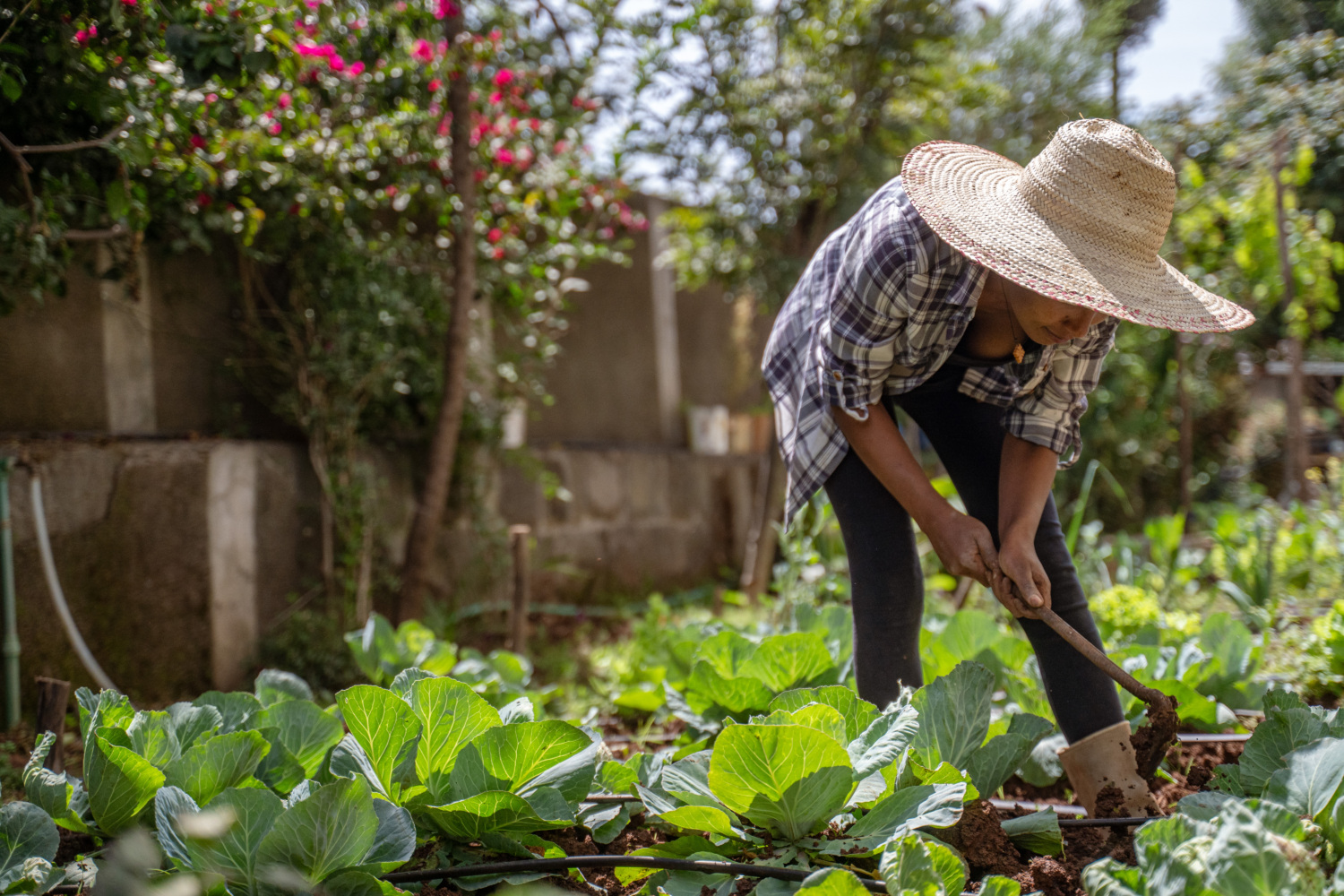
A farmer in Ethiopia using solar-powered drip irrigation acquired through PUFF support. Photo credit: CLASP
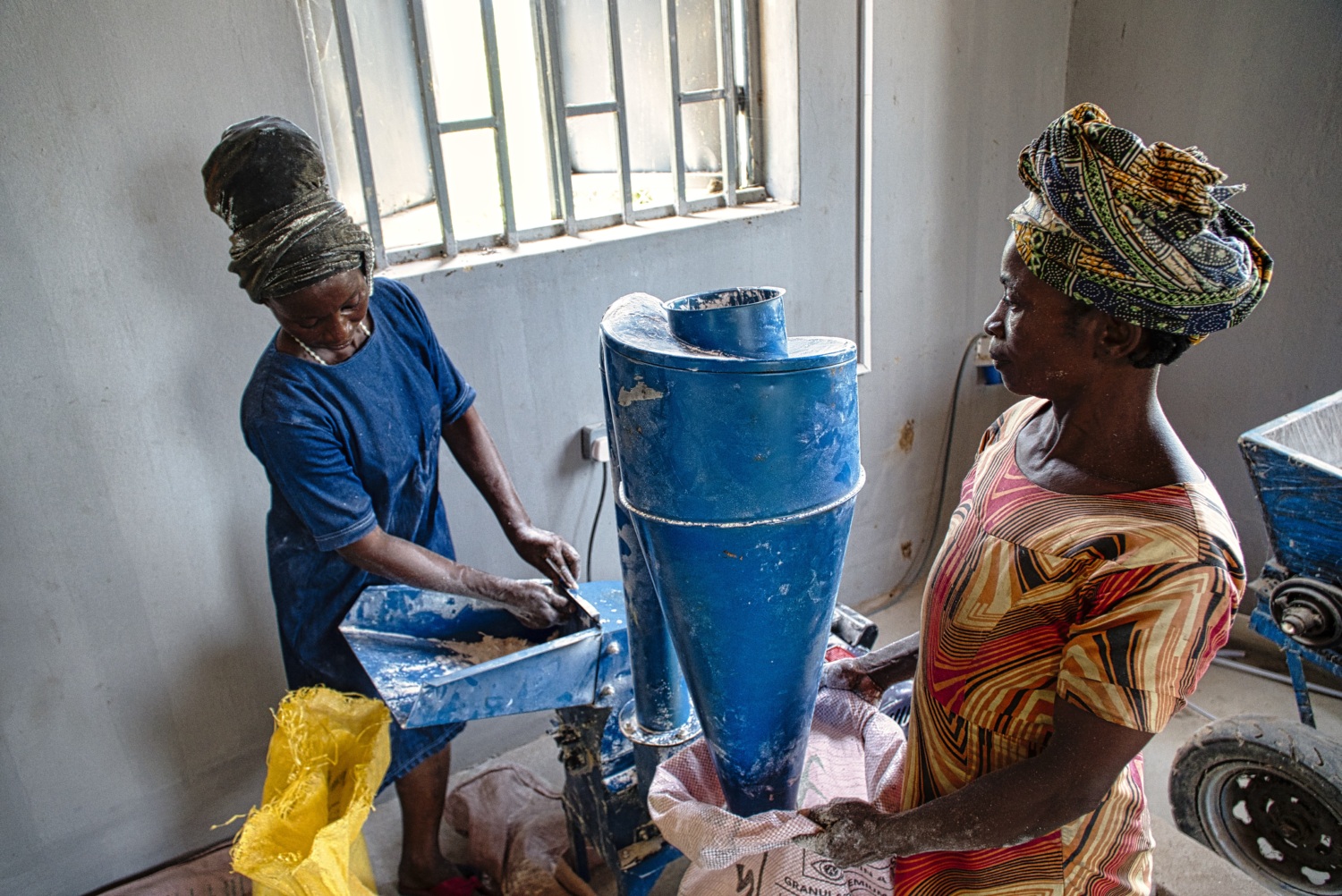
CLASP
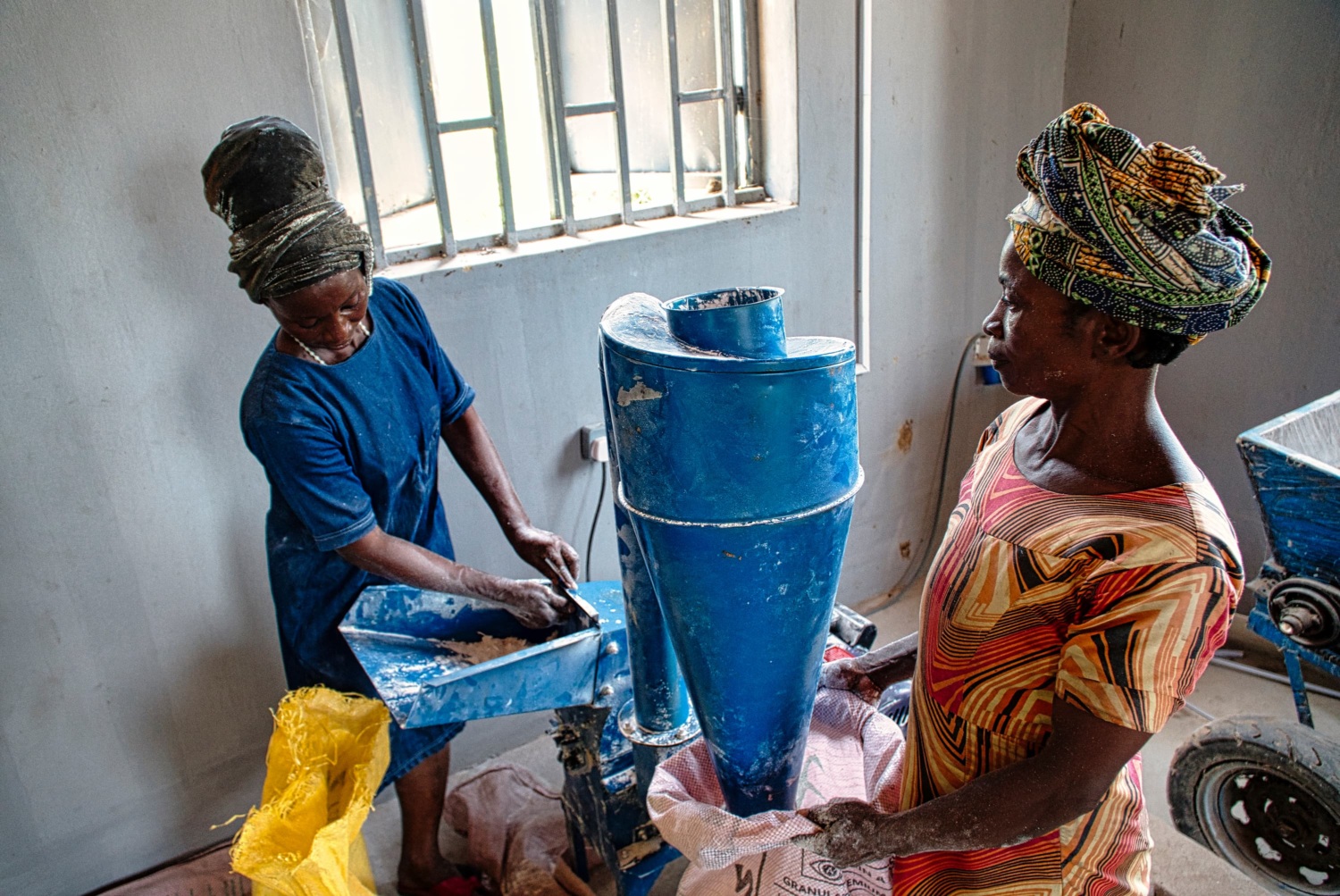
Women in Nigeria using a solar-powered mill acquired through PUFF support. Photo credit: CLASP
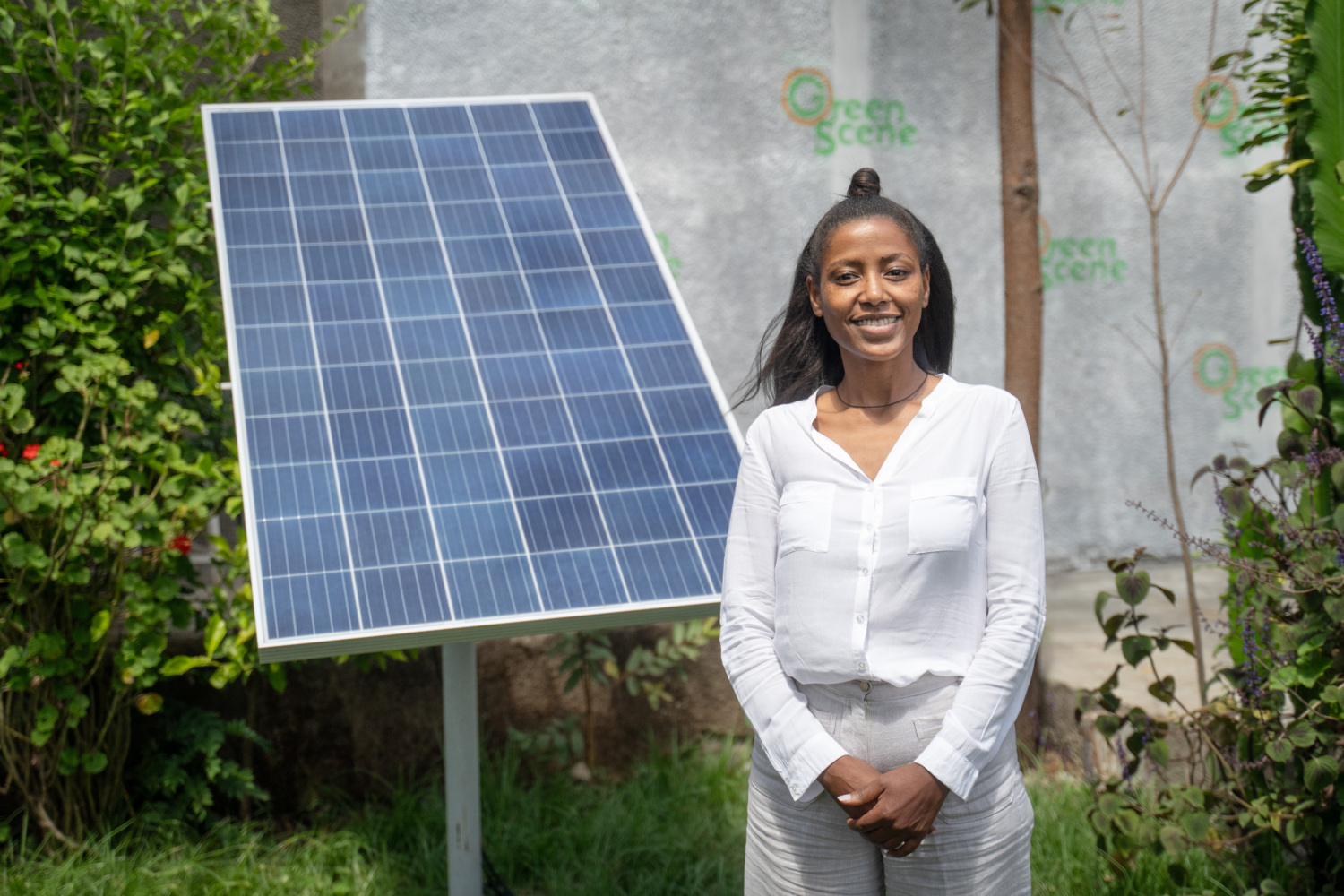
Rekik Bekele, CEO of Green Scene Energy, a leading solar appliance distributor, is expanding access to solar in Ethiopia with support from PUFF. Photo credit: CLASP

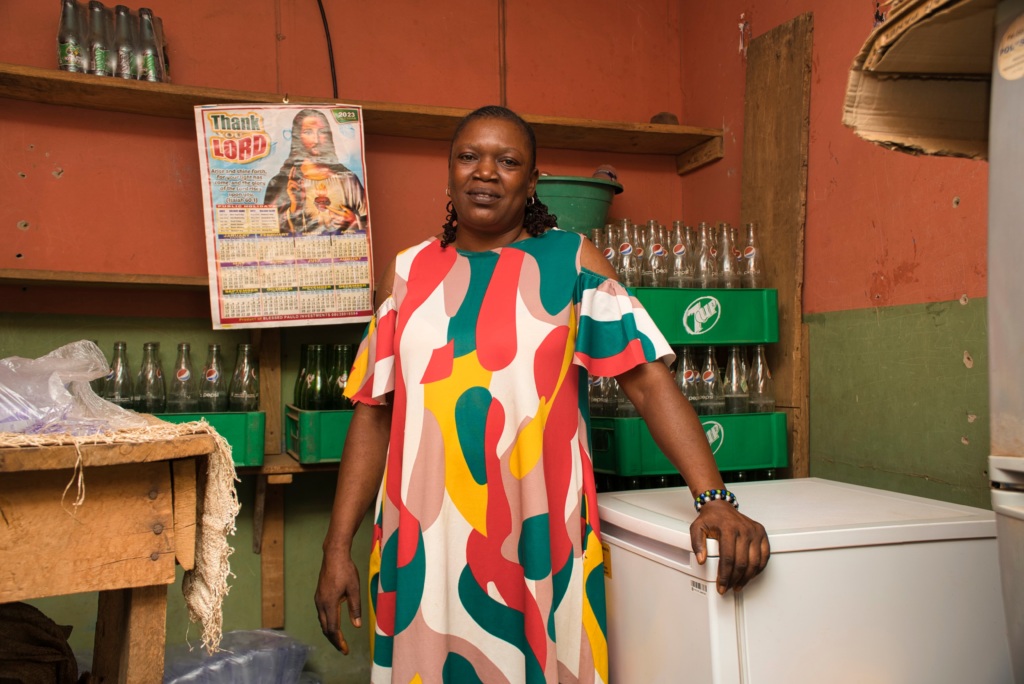
Abibat Akinwale, a shopkeeper in Nigeria, with the solar-powered refrigerator she acquired through PUFF support. Photo credit: CLASP
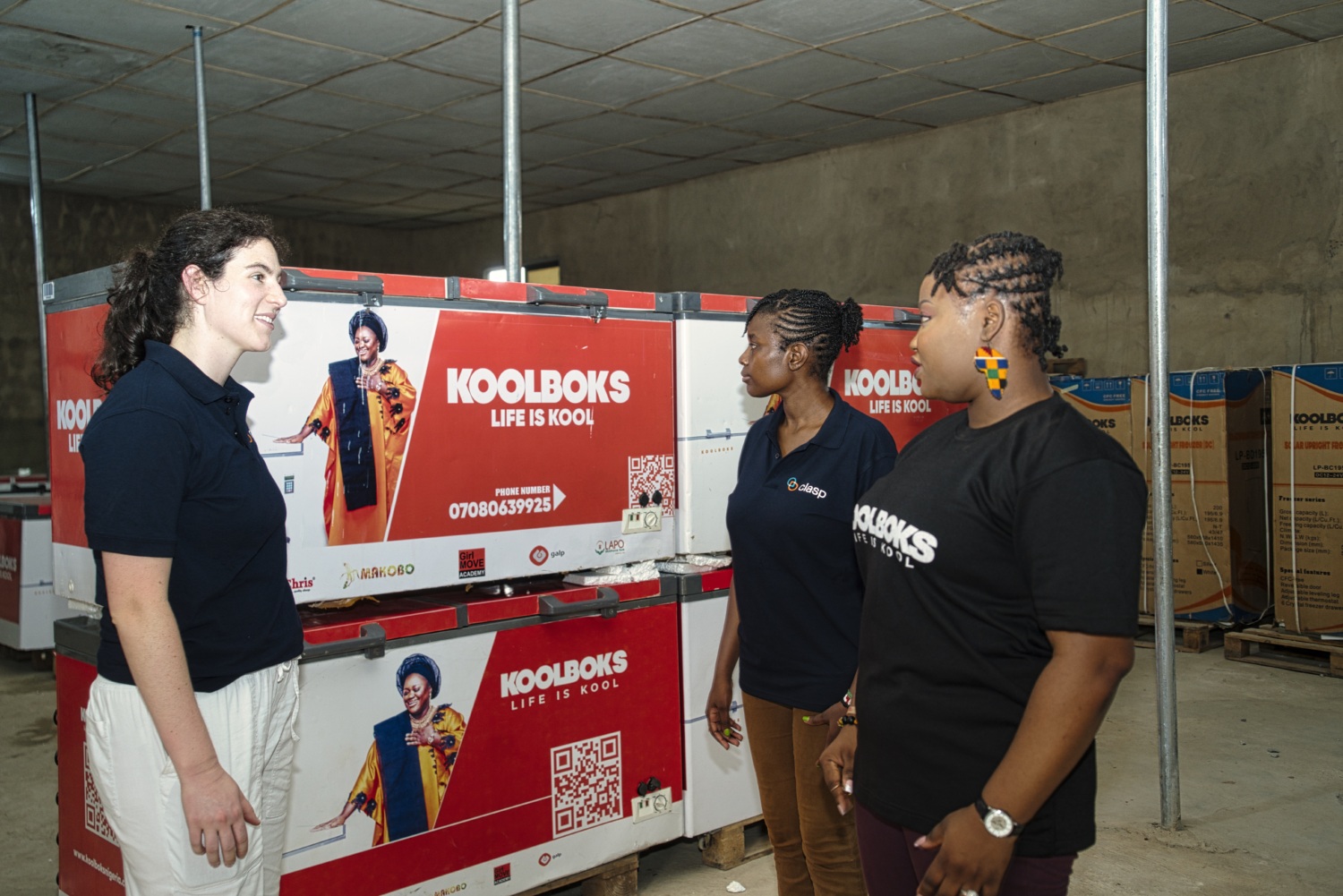
Lolade Esther Alonge of Koolboks shows the CLASP team their solar refrigerators, made more affordable for off-grid communities in Nigeria with PUFF support. Photo credit: CLASP
About CLASP
CLASP is the leading global authority on efficient appliances’ role in fighting climate change and improving people’s lives. An international NGO with 25 years of expertise and offices on four continents, CLASP collaborates with policymakers, industry leaders, and other experts to create a more sustainable future for people and the planet.
About GEAPP
The Global Energy Alliance for People and Planet (GEAPP) is an alliance of philanthropy, governments in emerging and developed economies, and technology, policy, and financing partners. Their common mission is to enable LMICs’ shift to a clean energy, pro-growth model that accelerates universal energy access and inclusive economic growth, while supporting the global community to meet critical climate goals during the next decade. As an Alliance, they aim to reduce 4 gigatons of future carbon emissions, expand clean energy access to one billion people, and enable 150 million new jobs. With philanthropic partners, IKEA Foundation, The Rockefeller Foundation, and Bezos Earth Fund, GEAPP works to build the enabling environment, capacity, and market conditions for private sector solutions, catalyze new business models through innovation and entrepreneurship, deploy high-risk capital to encourage private sector solutions, and assist just transition solutions. For more information, please visit www.energyalliance.org and follow us on LinkedIn.
Media inquiries: Stella Madete, Africa Communications Manager, smadete@clasp.ngo
E-Cookers Bring Clean Cooking to Schools in Kenya
Firewood is the primary cooking fuel in many Kenyan schools, contributing to deforestation, air pollution, and poor health. But with electricity now reaching around 75% of the country, there is a great opportunity for cleaner, safer, and more efficient cooking.

CLASP is partnering with Kenyan innovators Ecobora to expand access to clean cooking solutions in schools across Kenya. Through the Efficiency for Access e-cooking project, the team is testing how electric cooking can replace biomass fuels in school kitchens and other institutions in Kenya. This research will inform the design, deployment, and operation of commercial electric cooking technologies and directly impact how schools feed students in the country.
Ecobora’s award-winning electric cooker is purpose-built for large-scale use. This clean energy innovation features a patented thermal conversion system that enables faster, even cooking. The appliance includes a self-cooking function and supports both solar and electric power for maximum efficiency and flexibility. By eliminating firewood use, it cuts indoor air pollution significantly providing a healthier workplace for the chefs and conserves Kenyan forests. When powered by the sun, it eliminates energy costs, so is much cheaper to run.

Photo by: CLASP
To date, the project has brought electric cooking to nine schools across seven counties in Kenya, helping feed over 12,000 students. These e-cookers are actively in use and consistently show that electric cooking is not only efficient, reliable, and affordable, but also capable of producing delicious meals, including traditional Kenyan dishes.
The Efficiency for Access coalition is co-managed by CLASP and Energy Saving Trust.
About CLASP
CLASP is the leading global authority on efficient appliances’ role in fighting climate change and improving people’s lives. An international NGO with 25 years of expertise and offices on four continents, CLASP collaborates with policymakers, industry leaders, and other experts to create a more sustainable future for people and the planet. CLASP and our partners are dedicated to solving the world’s most pressing, interconnected crises: the climate emergency, poverty, inequality, and access to energy.
Energy for Everyone
Energy is everywhere, and it connects us all. At CLASP, we know that the distribution of affordable, efficient appliances ensures more people have access to modern, safer energy services. This creates opportunities, powers businesses, and improves lives. Get our solutions: https://www.clasp.ngo/
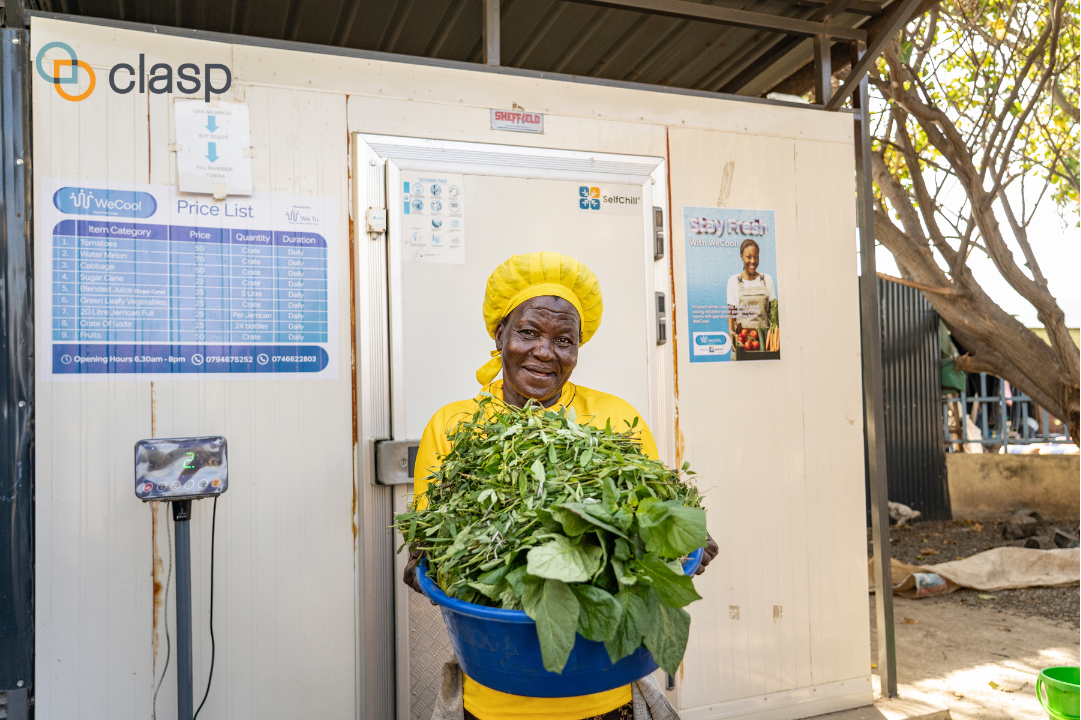
About CLASP
CLASP is the leading global authority on efficient appliances’ role in fighting climate change and improving people’s lives. An international NGO with 25 years of expertise and offices on four continents, CLASP collaborates with policymakers, industry leaders, and other experts to create a more sustainable future for people and the planet. CLASP and our partners are dedicated to solving the world’s most pressing, interconnected crises: the climate emergency, poverty, inequality, and access to energy.
Solar Appliances, a Sustainable Development Success Story, Need Support to Scale
When there’s no electricity to power the appliances essential to wellbeing and prosperity, what’s a community to do?
In sub-Saharan Africa, the answer is often turning to kerosene and diesel to run everything from lights to farm equipment. But fossil fuels are expensive and polluting. Reliance on these energy sources leads to a host of negative impacts across the region, from financial stress to lower crop yields.
David Wanjau, a Kenyan entrepreneur and rabbit farmer who trained as a scientist, spent six years watching this issue play out across sub-Saharan Africa while working at a nonprofit focused on food security. The experience changed his life.
“I noticed that every farmer we were supporting did not have access to electricity,” he said. “So I stopped what I was doing to focus on energy access and become an agent of change in these communities.”
Today, Wanjau leads Nairobi-based distributor Deevabits Green Energy, a small business that’s one of more than 200 companies working to expand solar energy access to the hundreds of millions of people in Africa who lack access to the electric grid.
Deevabits began by selling solar lights, but customers soon began asking for more. “They wanted solutions that could be used for their businesses: for cooling drinks, or for meat preservation,” Wanjau said. So his team decided to start stocking solar-powered refrigerators.
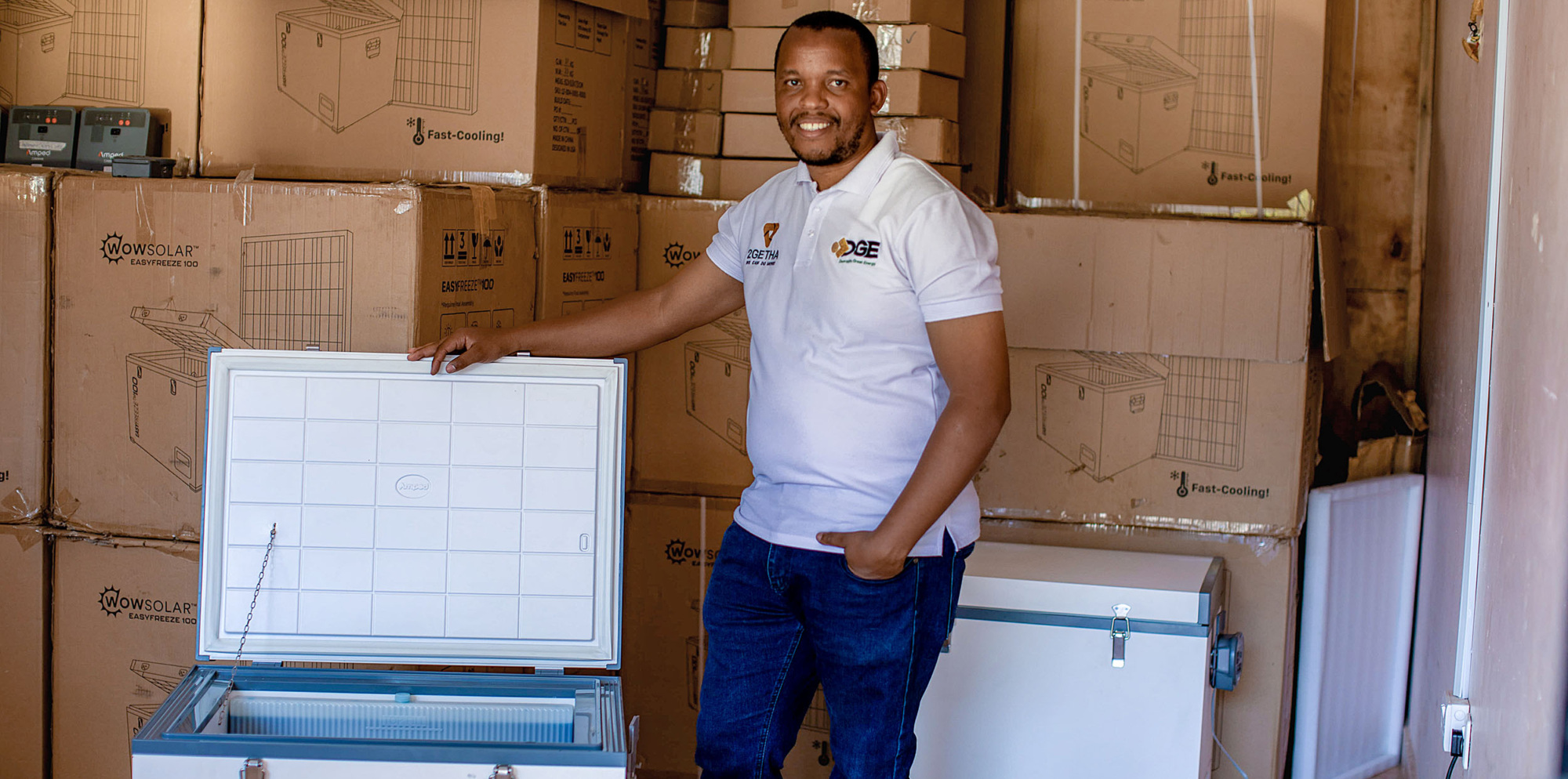
Deevabits founder David Wanjau in his company’s warehouse in Nairobi, Kenya.
CLASP
“Our company now wants to be on the forefront of providing energy efficient, standalone productive-use [i.e., income-generating] appliances,” he explained. “We just need to position ourselves to be able to tap into this big market.”
Meeting high demand for cooling and other energy services
Sales of solar appliances more than tripled between 2018 and 2023 as new manufacturers and distributors entered the sector, according to Leave No One Behind: Bridging the Energy Access Gap with Innovative Off-Grid Solar Solutions, a 2024 report published by the Efficiency for Access coalition. (CLASP co-manages the coalition with Energy Saving Trust, a UK-based nonprofit.)
The business potential is tremendous. The report’s modeling shows that if everyone who needs solar appliances could purchase them, the market value would reach $58 billion USD.
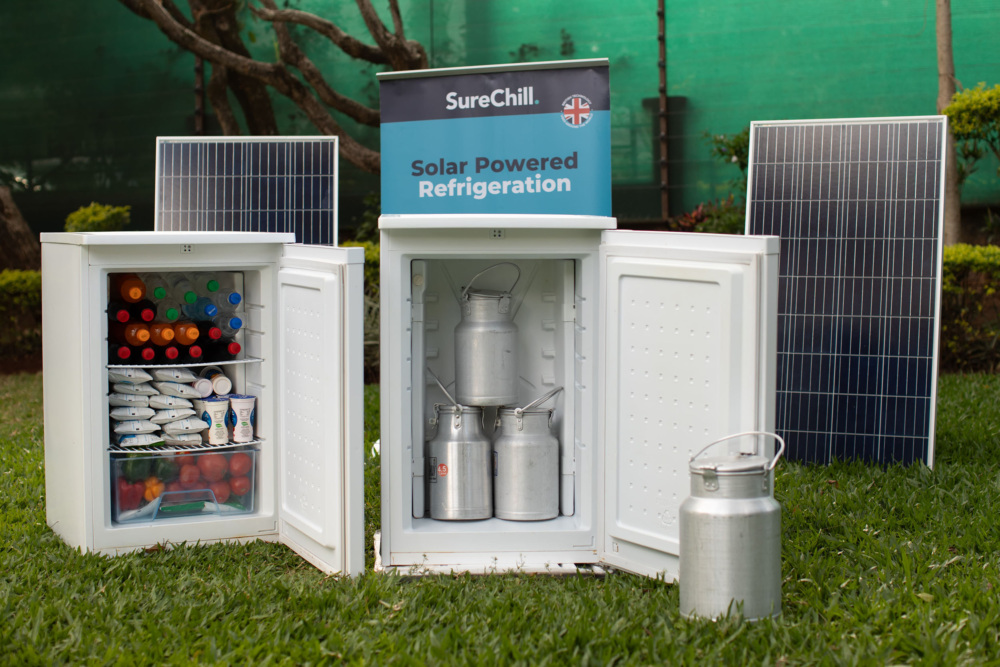
“It’s a huge market opportunity,” said Peter Wangila, Kenya operations and finance manager at SureChill, a manufacturer selling solar fridges in over ten African countries. The company’s patented battery-less design reduces the need for maintenance over the fridges’ lifespan and eliminates the need for expensive battery replacements.
“We’ve done over 1,000 installations, but we haven’t even scratched the surface. There’s a high demand for cooling,” Wangila said.
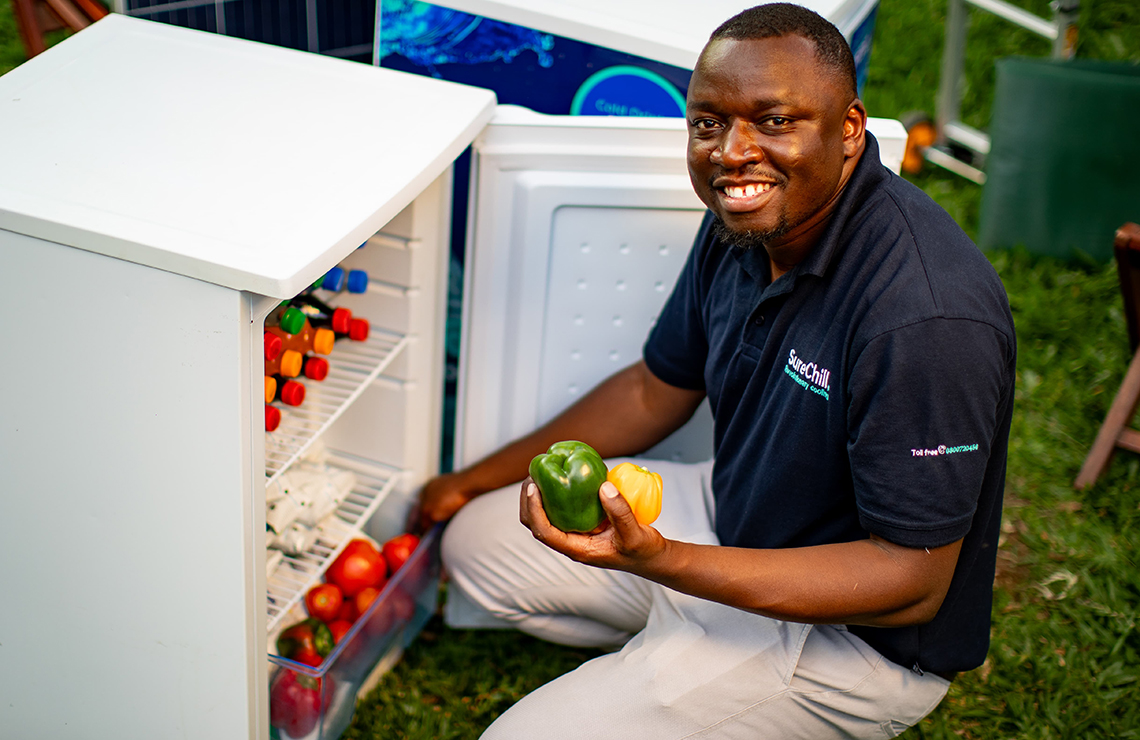
We’ve done over 1,000 installations, but we haven’t even scratched the surface. There's a high demand for cooling.Peter Wangila
SureChill
Today, sales cover less than 2% of the estimated global demand for solar appliances. It’s a gap that has remained frustratingly difficult to bridge, said CLASP’s Nyamolo Abagi, a coauthor of Leave No One Behind.
“Here in sub-Saharan Africa, 60% of households still do not own a refrigerator, an essential appliance for preserving food that is almost ubiquitous in homes across the Global North. This is a classic example of energy poverty,” she said. “The solar appliance sector has to grow rapidly in both scale and ambition in order to serve this enormous need.”
Solar appliances are a gamechanger for small businesses
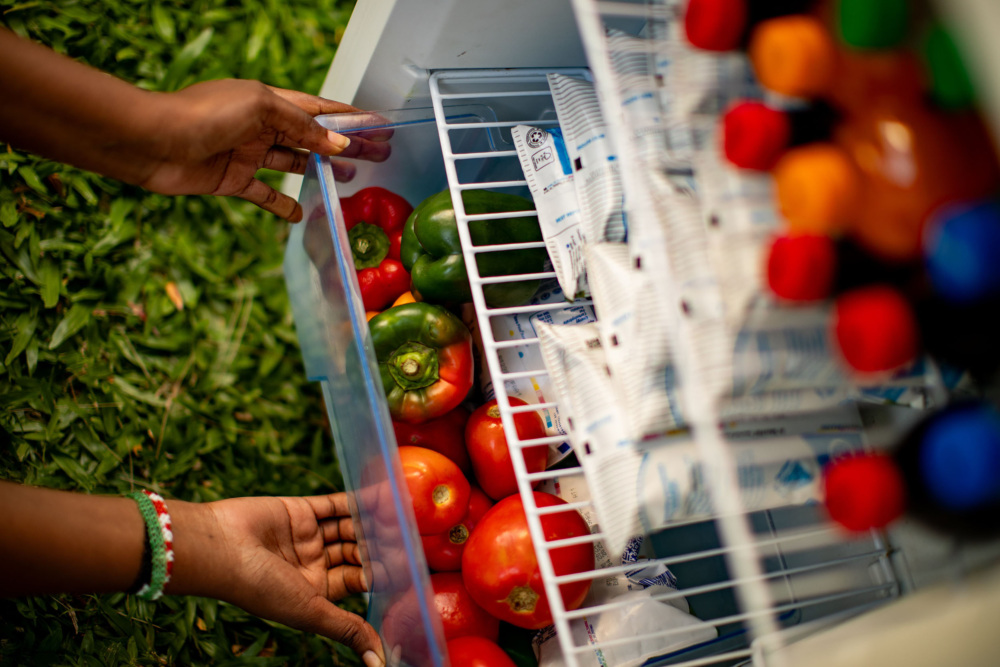
Most solar fridge customers live in rural areas with no grid access. Deevabits’ customers are typically small shopkeepers selling cold beverages—water, juice, milk, yogurt, and soda—to parched customers. “In very hot areas, cold drinks are a luxury,” said Wanjau. “That’s why for shops, these fridges are gamechangers.”
The company also serves clients in the medical and food retail sectors. Clinics use solar-powered fridges to keep vaccines and medicines cold, explained Wanjau, while fish traders see fridges as a safer way to preserve their wares than the traditional drying or deep frying.
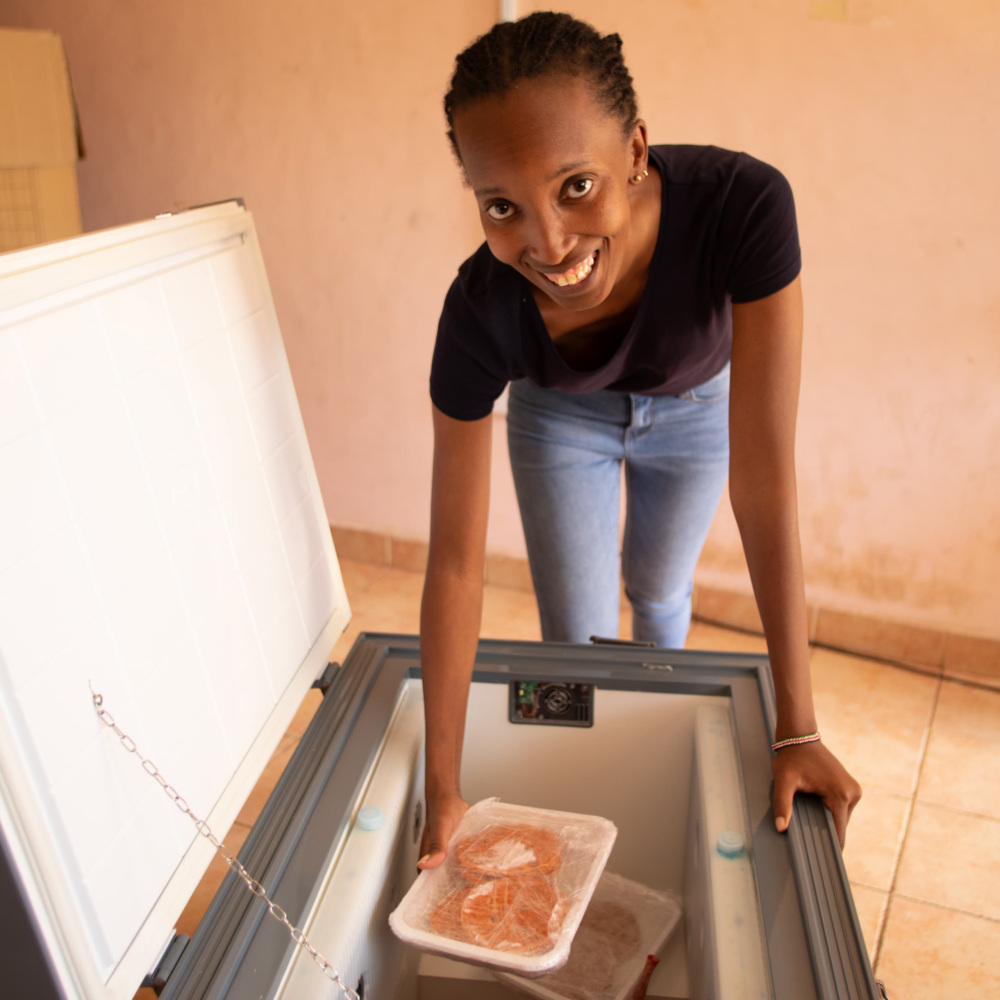
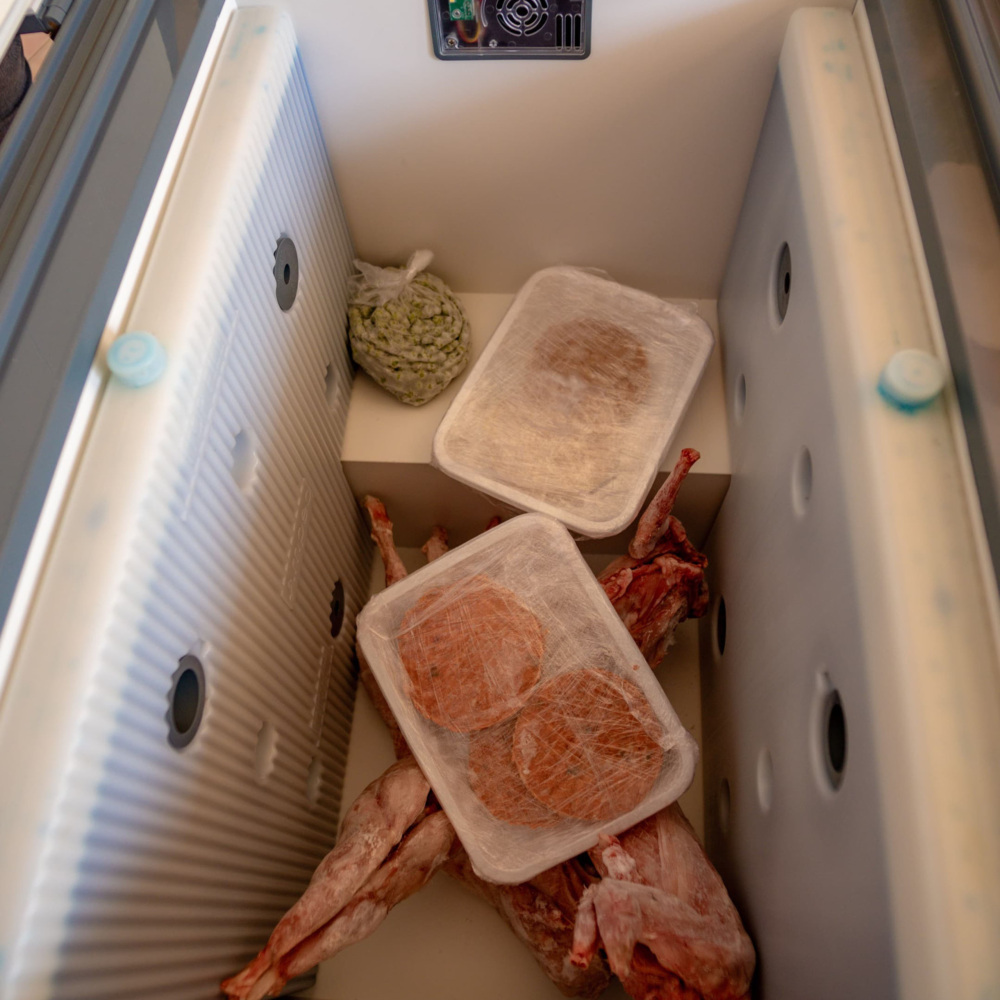
Meanwhile, butchers tend to use the freezer setting on the Deevabits model to reduce waste. Before acquiring these appliances, “they would hang their meat, and it would go bad after two or three days,” Wanjau said. “Now people can stock larger volumes and sell it for a whole week.”
CLASP
CLASP
SureChill works with a similar clientele. “We primarily target productive-use customers: someone with a small shop or someone in the homemade juice business,” said Wangila. “They do not have a lot of money, but they make enough to be able to support a fridge. They are able to see the positive financial impact that owning a fridge could have on their business.”
For most shopkeepers, a solar fridge can significantly boost revenue. “It attracts more customers,” Wangila explained. “And if they buy a cold beverage, those customers will also buy something else, which increases overall sales for the business.”
Increased income for a shopkeeper has ripple effects within families and communities, he added. “It benefits them and four or five other people. That’s how our communities work.”

A shop with a solar refrigerator.
CLASP
SureChill also serves the medical field, offering World Health Organization–approved vaccine fridges, in addition to cost-effective alternatives designed to store temperature-sensitive medications when power is unavailable.
The challenge of scaling up
Despite the advantages such appliances offer, many companies in the sector struggle to scale.
“Compared to a product like lights, productive-use appliances like these are energy-intensive, specialized, and expensive,” noted CLASP’s Abagi. “Fewer consumers can afford them, and the distribution model is more complicated. This makes the growth of companies trying to sell these bigger solar appliances slow.”
Cost is a major barrier. Many people would like to have solar refrigerators at home, but with prices up to $1,800 USD per unit (85% of the average annual household income in Kenya), they typically can’t afford them. “People want the fridge, but they then say, ‘Oh my goodness, it’s so expensive!’” explained Wanjau.
Appliances’ sheer weight and bulk also make it difficult to attract new customers through tactics like door-to-door sales. “You have to get people to believe that a solar fridge works,” said Wangila. “So when salespeople can’t carry it around, it’s a big challenge.”
Wanjau agrees. “When people are not aware of the product, they don’t demand it. They don’t have a reference point for a solar-powered fridge, so they need to see it—maybe feel the chill, take a cold soda from it.”
CLASP
CLASP
Companies like his participate in roadshows and market exhibitions required to build this awareness, but this costs money, ultimately driving up the price of their appliances.
Innovating to improve affordability
Solar appliance companies have been searching for ways to make their products more affordable for low-income customers. Both Deevabits and SureChill sell fridges on a rent-to-own basis, using internet-connected devices that activate the fridge when customers make weekly or monthly mobile money payments. This model enables shopkeepers to own their fridges after several years, allowing them to benefit from cooling without tying down their capital.

John Odongo, finance manager at Deevabits, explains how a Pay-go payment enabling device works.
CLASP
Another payment innovation is cooling-as-a-service (CaaS), in which customers lease appliances indefinitely. But despite its potential to bring down costs, both companies have found CaaS challenging to implement on the ground. “The way people use those fridges can be very unpredictable,” noted Wanjau. “If someone stops using it, how do you take it back? How can you resell it if it’s dirty and the butchers were cutting meat on top of it?”
In both cases, Wangila added, the risk of default is high. “That money is competing with school fees and medication when a family member falls sick. We try to mitigate this by telling them to pay more when business is good, to cover for the dry season.” But, he said, “even if you do very good customer selection, there are always people who will default.”
Stimulating growth
Ultimately, said Abagi, companies like Deevabits and SureChill need a more supportive environment to help bridge Africa’s yawning energy service gap. While they provide a crucial service, they can’t meet the overwhelming demand on their own.
“We need innovators, but we also need to attract incumbent manufacturers who have more resources,” she said. “Governments have a role to play in terms of better regulations and lower tariffs, and we also need development partners to help with long-term, consistent subsidies.”
Wangila and Wanjau point to the importance of grant funding in developing their own businesses. Both companies have benefitted from CLASP market activation grants, which help small businesses meet costs associated with product sales, marketing, distribution, and delivery in remote areas.
“Grants can be a sort of non-dilutive funding to help people scale,” said Wanjau. “A lot of these [solar appliance companies] are locally owned businesses, and grants could really stimulate their growth.”
Despite the challenges they face, both men are confident that solar appliances are the clean energy solution Africa needs.
“We are so blessed to have a lot of sun, so the future is bright,” Wangila insisted. “It’s just a question of maintaining focus and getting the right support in place.”
Millions of People Lack Electricity. Solar Appliances Can Help
Cooling down on a scorching day, lighting the house at night, heating a pan to cook dinner: In wealthy countries, people take for granted the ability to meet their basic needs by switching on appliances. But in low-income nations, these appliances, along with the electricity needed to power them, are often out of reach.
As the planet warms, the lack of critical appliances has increasingly severe consequences, making it harder for people to thrive—and, in some cases, simply survive—in ever-harsher environments. Solar-powered appliances are a promising solution.
In this interview, Martha Wakoli, who works on CLASP’s clean energy access team in Nairobi, discusses their potential and how to reach it.
*
Sarah Wesseler, CLASP managing editor: Let’s start with some basics about solar appliances. What are they? Why should people who are interested in sustainable development and climate change care about them?
Martha Wakoli: Well, in places like the States or Europe, if you need light, you switch on a light bulb. But in other parts of the world, millions of people don’t have that option—they’re not connected to the electric grid. So they’ve found creative solutions for accessing services like lighting, cooling, and cooking. And that’s where the idea of solar appliances developed.
For a long time, this technology was used for things like charging phones and lighting homes. But increasingly, we’re seeing the potential to power much larger, almost industrial-level processes with solar appliances. Say you’re a clothing manufacturer in a place that doesn’t have electricity: The machines you need could be powered by the sun.
There’s more and more research and investment in these kinds of appliances. That opens a whole new pathway of solutions for the millions of people who continue to live without electricity.
Wesseler: When you say these appliances are powered by the sun, how does that work? I’m thinking about the US, where I live: A lot of people have solar panels on their roofs, but they still use standard appliances plugged into standard wall outlets. How are solar appliances different?
Wakoli: Well, with solar appliances, the appliance is connected directly to a solar panel on your roof via a cable. And depending on how many panels you have and how large they are, you could have multiple cables powering multiple appliances at the same time. And for appliances that are used outdoors—water pumps, for example—the cables from the solar panel also run directly to the appliance.

Solar irrigation in India
Credit: IDE Global / Bimala Colavito
Wesseler: What if the sun’s not out? Can you still run solar appliances then?
Wakoli: Yes. Solar appliances come with a little bit of energy storage, typically in the form of a battery, that allows them to keep functioning when it’s not sunny. For example, solar refrigerators keep things cool even at night.
Wesseler: That all makes sense. But why not just connect more people to the electric grid? Why focus on solar appliances instead?
Wakoli: There are a lot of reasons, but the most important is that it’s typically much more expensive to extend the power grid to far-flung places than it is to provide solar appliances. Solar appliances are more cost-effective in rural areas.
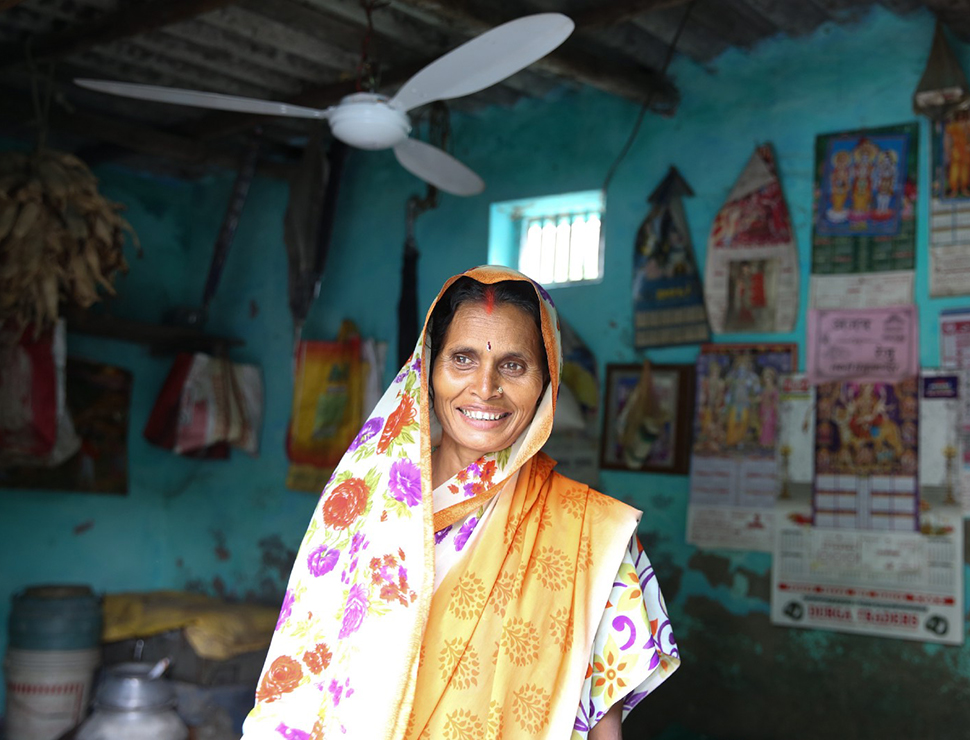
Providing solar appliances is also faster than building out the grid, which takes a long time. This is important given the urgency of the climate disaster, which we’re observing in real time, whether it’s heatwaves in India or droughts in Zambia. People need appliances that can help them adapt to climate change now.
Credit: Monica Tiwari, SPI

Credit: Efficiency for Access
Solar appliances can also help people build climate resilience and empower them to be more active participants in their own development. I’ll give you an example: In Mozambique, the government used taxpayer money to build an electric grid, but in 2023, Cyclone Freddie knocked it out. Compare that to decentralized systems, where people can have their own solar panels on their roofs or solar pumps on their farms. Because these appliances are modular, the scale of damage tends to be much smaller.
This kind of resilience is especially important for facilities like schools and hospitals. When floods or droughts make it impossible for them to operate where they are, there’s not much they can do if they rely on the electric grid. But with solar, they can move to a safer location and take their power source with them.
Another reason is that the grid itself is changing. Around the world, we’re preparing for what we’re calling the grid of the future. A lot of people now have electric vehicles, and in some areas, these vehicles can be plugged back into the wall, sending that power back to the grid, right? So you now have a complex bidirectional electric system that’s very different from what has existed for the last 70 years. Instead of having very few energy producers and many consumers, you have a growing number of what’s called “prosumers”: They produce the energy and they’re also consumers. This subset of people is growing everywhere.
Wesseler: You recently led research seeking to understand the number of people globally who need solar appliances. Why did you focus on this issue in particular?

Solar appliances can help people build climate resilience and empower them to be more active participants in their own development.Martha Wakoli
Wakoli: Well, in the development sector—so essentially, organizations that are trying to lift people out of poverty—if we cannot quantify a problem, it is difficult to know what interventions are needed in terms of money, regulations, and human capital. So providing information like this helps decision makers develop solutions.
And in this case, the problem we are looking at involves energy services to help marginalized people lift themselves out of poverty while also building resilience. This is important because, as we know, these groups are already being affected by climate change. So one goal of our work is to help the development and climate sectors understand that they’re working toward a common target.
This is particularly critical because, as we recently saw at COP29, there’s still a lot of resistance to the idea that the nations most responsible for climate change should fund other nations to protect themselves from it. But what the international community needs to understand is that that if we don’t mitigate climate disasters in the most vulnerable communities, the damage won’t just stay in those communities. Issues like climate-driven displacement and public health crises can easily spill over borders, making climate change an even more complex and expensive problem to solve. So I believe the international community should collaborate to address energy access challenges immediately to avoid this complication.
Wesseler: What did you learn from the research?
Wakoli: The key finding was that only about 2% of the need for key appliances is being met.
I think people in the international development and energy sectors intuitively knew that we are falling behind on providing universal electricity access, but there was still maybe not a good understanding of how far behind. With this research, we put a number to it: There are over 500 million people who need these appliances but don’t have them and won’t be able to afford them unless there are major changes in the appliance sector. That’s a massive gap.

Solar mill in Nigeria
Credit: CLASP
Wesseler: What would it take to close this gap?
Wakoli: Well, we need more investment at all levels of solar appliances. We need to invest in people who can support the sector: students, researchers, manufacturers, distributors, maintenance people. Companies need money to build these appliances, to test business models, to scale. We also need money for governments to conduct awareness campaigns. People need to go into communities to let them know about these appliances and demonstrate how they work.
We also need more cross-disciplinary dialogue. Lifting people out of poverty requires more than electricity or appliances; the solution has to involve people who work in agriculture, environmental advocacy, etc. A practical example is solar water pumps, which make it easier for farmers to generate income. But productivity is not only a function of water; farmers also need good seeds, fertilizer, and good soil. So people outside the energy sector need to be involved as well.
Ultimately, we need to build a market that can exist without external support. Think of Coca-Cola. Soda is the one thing that is ubiquitous in every place I have been, even where people don’t have high incomes. Coca-Cola has figured out how to reach the last mile in countries like Kenya and India. The solar appliance sector needs to get to the same place.
Developing a self-sustaining market for solar appliances will require collaboration across governments, the private sector, and development partners. Governments need to prioritize solar appliances and other energy-efficient solutions as part of their national electrification strategies, and the appliance sector needs to build muscle in distribution and consumer awareness. What’s more, all these actors need to prioritize ensuring that solar appliances support increased productivity, driving up incomes for communities living below the poverty line.
Many critical pieces of this puzzle are currently missing. Right now, a lot of the money in the solar appliance sector comes from European governments as part of their international aid programs. But if we’re thinking about a sustainable solution for more than 50 countries and more than half a billion people, it cannot be contingent on well-wishers alone.
Interview edited and condensed.
Cool for Business: Solar Refrigerators Powering Off-grid Communities
“Naija no dey carry last” in Pidgin means Nigerians always aim to finish first. This spirit is reflected in the country’s focus on innovation, driven by creativity and passion. However, for over 86 million Nigerians without reliable electricity, the struggle to keep businesses running means often relying on costly, polluting diesel generators. This added expense and the uncertainty brought on by regular power cuts place a significant burden on the country’s people, economy, and environment.
Affordable, solar-powered refrigerators are an elegant solution with the potential to transform small businesses in Nigeria’s rural, off- or weak-grid communities.
Solar appliances for any wallet
Solar refrigerators are efficient and effective but high costs and limited financing keep them out of reach for many Nigerians who could benefit from their impact. Recognizing this gap, CLASP’s Productive Use Financing Facility (PUFF) stepped in, offering grants, subsidies, and business support to companies such as Consistent Energy Limited to put affordable, life-changing technologies into the hands of those who need them most.
“The grant that was given to us by CLASP under this project really helped us building our capacity to reach last-mile distribution chain. The landed costs of the fridge to a customer in Nigeria will have been very high if not for the subsidy that we received,” says Segun Adaju, the CEO of Consistent Energy.
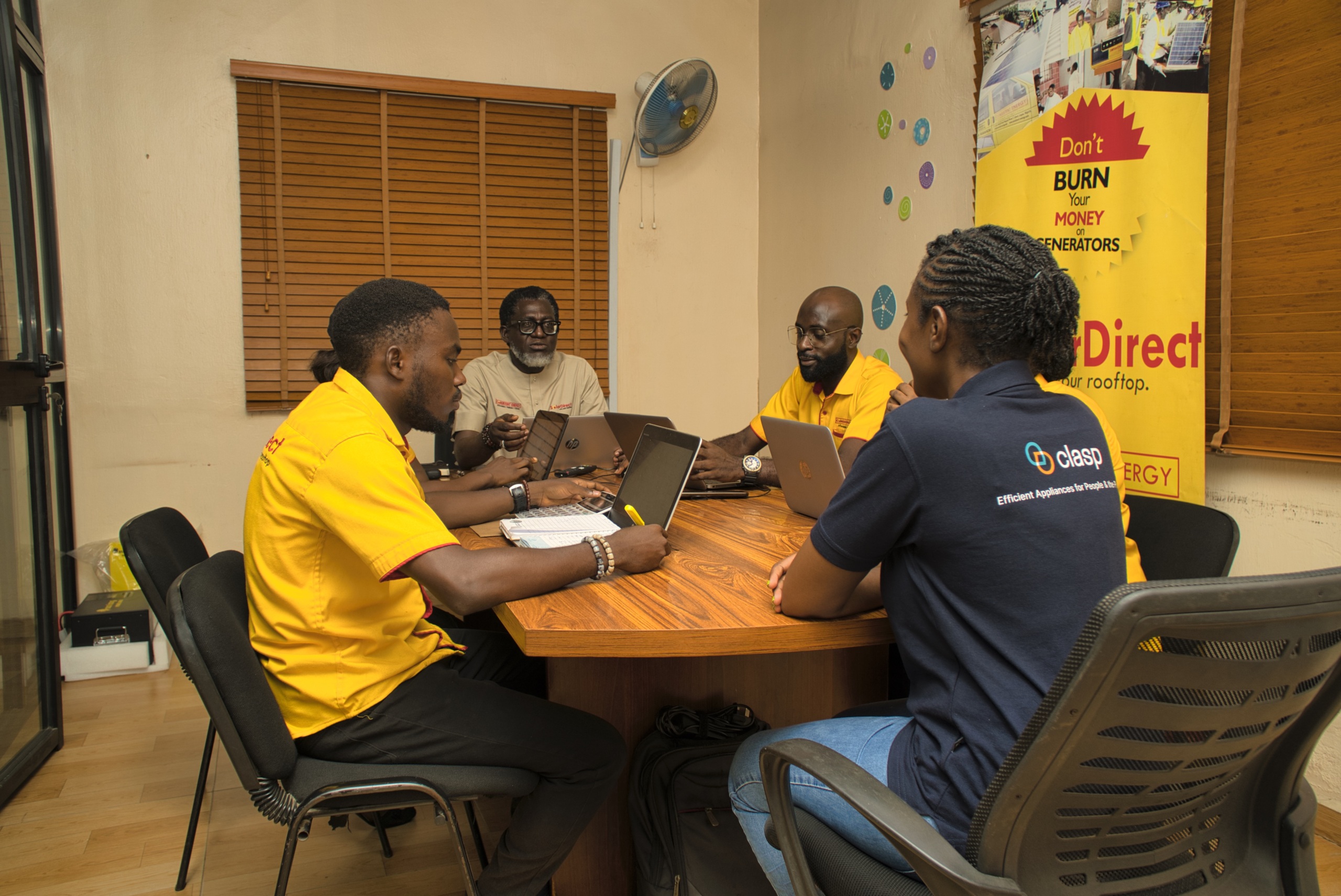
Solar refrigerators: A boon for businesses and customers
Solar refrigerators keep food cool, safe, and marketable and reduces waste. Without reliable refrigeration, shopkeepers spend more time and money on temporary cooling options such as ice and coolers and are forced to raise prices to do so, hurting both the business and their customers. This cycle was no longer viable for small business owners such as Abibat in Nigeria.
“We were buying ice blocks which led us to some debt, and after a while, the block would melt. We no longer had cold items for sale,” says Abibat Akinwale, a shopkeeper and Consistent Energy client. “The solar fridge has really increased sales. Business is very good now because I’m able to sell cold drinks.”
Consistent cooling creates opportunities for growth
Reliable, long-term cooling keeps food prices stable, meaning that Abibat’s customers have good reason to return to their shop. In Nigeria, the appeal of solar refrigerators lies in their reliability, a quality that resonates with businesses that refuse to “carry last.”
In a country where every Naira counts, solar-powered refrigerators are a game changer for small business owners in Nigeria. Because they are powered by renewable energy, solar refrigerators provide cooling without the cost of constant refueling. This switch to solar means that entrepreneurs save thousands each month that would otherwise be spent on generator costs, fuel, and maintenance. Instead, they can channel those funds to more productive uses and fully participate in the country’s growing economy.
Such opportunities for growth are especially important for women like Helen Obina, who make up a large percentage of the small business owners in Nigeria. For her, business was “not really moving” because she relied on the grid and generators. Installing her solar refrigerator relegated those worries to the past. “Having a solar fridge has really changed my business. The sales have really increased, and the business is moving,” she shared. Helen’s story is not isolated, it is an example of a growing trend for those who are able to access life-changing solar appliances.
Solar solutions bridge the energy gap
Refrigerators are an essential appliance for sustainable development, but 60% of the population in Africa does not own one. For nearly a decade, CLASP has been working to bridge this energy access gap by improving access to efficient appliances that work in off-grid or weak-grid areas.
“Over 600 million Africans don’t have access to electricity. Efficient appliances are an affordable and clean option for these cut-off communities who are otherwise forced to use polluting and expensive alternatives to maintain a good standard of living and actively participate in their economies,” says Ruth Kimani, a Senior Associate at CLASP.
These productive-use appliances (PUAs), such as solar-powered refrigerators, solar water pumps, and solar milling machines are technologies that have a direct, transformative impact on local communities, small businesses, and people’s livelihoods. They are also a necessary shift toward clean energy and reduced reliance on diesel-powered generators.
Shift to solar signals promising future
CLASP and companies such as Consistent Energy have helped small business owners in Nigeria gain independence from unreliable and costly energy sources through renewable appliances. They are now free to chase their dreams and ambitions with renewed fervor, which will have a positive impact on the economy, people, and the planet.

About The Productive Use Financing Facility
CLASP’s Productive Use Financing Facility, is supported by The Global Energy Alliance for People and Planet (GEAPP). It has provided financing to 24 companies in six countries, to enable the distribution of over 13,000 productive-use appliances, directly impacting more than 58,000 households.
Find CLASP at the Global Off-Grid Solar Forum and Expo
CLASP drives technology innovation and catalyzes appliance market growth, putting efficient, affordable, high-quality appliances and equipment within reach of low-income families and communities, as well as smallholder farmers. From 8 to 10 October 2024, we will be bringing our solutions to the eighth Global Off-Grid Solar Forum and Expo (GOGSFE) taking place in Nairobi, Kenya.
Why are solar or off-grid appliances crucial?
Energy poverty is a reality for more than one billion people worldwide, with detrimental effects on health, productivity, and livelihoods.
A new report from Efficiency for Access (EforA), the coalition CLASP co-manages with Energy Saving Trust, shows that while approximately 159 million off-grid solar fans, water pumps, refrigerators, and grain mills are needed to serve people who lack access to the grid, less than 2% of this demand is being met. The off-grid solar sector must grow rapidly in scale and ambition in order to avoid leaving people behind.

About the event:
GOGSFE will gather policymakers, investors, entrepreneurs, and development actors from around the world to discuss strategies to help move toward universal electricity access, build climate resilience, and improve equity, agriculture, and health.
CLASP is hosting three key events during the Forum:
- A 25th anniversary party celebrating CLASP’s expertise in efficient appliances’ role in fighting climate change and improving people’s lives
- A breakfast meeting for donors and grantees of the Energy Access Institutions Facility
- And an industry dinner with GOGLA for all Forum attendees.
In addition, several CLASP experts are presenting and contributing to discussions throughout the Forum. These will showcase the critical role energy-efficient appliances play in the race to universal electrification.
Find CLASP at the following events:
| Date and Time | Location | Event | CLASP Speakers |
|---|---|---|---|
| Tuesday 8 October 1:30 PM – 2:45 PM EAT | Lenana | Agricultural processing: unlocking the potential for the next productive use frontier | Nyamolo Abagi and Michael Maina (both representing CLASP and EforA) |
| Tuesday 8 October 1:30 PM - 2:45 PM EAT | Aberdares | Over 3.3 million jobs by 2030: How workforce and human capital investment can grow Africa's green economy | Abigail Kuria (representing CLASP and EforA) |
| Wednesday 9 October 3:45 PM - 5:00 PM EAT | Turkana | Last mile repair: a collaboration opportunity for manufacturers and distributors | Martha Wakoli (representing CLASP and EforA) |
| Thursday 10 October 1:30-2:45 PM EAT | Tsavo B | Taking the credit: unlocking the DRE carbon finance opportunity | Sam Grant (representing CLASP and EforA |
Leave No One Behind: Bridging the Energy Access Gap with Innovative Off-Grid Solar Solutions
Millions of people lack access to the power grid, particularly in low-income rural areas of Africa and South Asia. If the current slow pace of electrification continues, 660 million people – most of them in Africa – will remain without electricity in 2030. Due to numerous challenges, people in off-grid settings typically have a lower quality of life, worse health outcomes, higher energy costs, and fewer economic opportunities than their grid-connected peers. High-quality, efficient off-grid solar appliances are a proven solution to these challenges.
This report – the third in the State of the Off-Grid Appliance Market series – finds that while the sector has strong fundamentals, it must rapidly grow in scale and ambition to avoid leaving people behind.
Key Findings:
- Approximately 159 million off-grid solar fans, water pumps, refrigerators, and grain mills are needed to serve people who lack access to the electric grid. Less than 2% of this demand is being met, leaving more than half a billion people without life-changing appliances.
- There is a significant market opportunity of $58 billion USD for off-grid solar appliances like fans, water pumps, refrigerators, and grain mills.
- The off-grid appliance sector is characterized by a multitude of business models, reflecting a diverse range of technologies, end users, and operating environments. There is no one right business model; rather, chosen models need to be managed appropriately.
- Closing the energy service gap in sub-Saharan Africa and South Asia requires exponential growth in the appliance sector. This can be achieved by deploying significantly more capital, strengthening cross-sectoral collaboration, and developing coherent policies and innovative business models.
Recommendations:
- Governments should emphasize quality assurance and consumer protection through rigorous quality standards and tax and duty exemptions to make high-quality solar products more accessible; support an enabling environment by incentivizing local manufacturers and launching consumer awareness campaigns; and develop integrated policies by establishing cross-ministry task forces to integrate and harmonize policies and regulations.
- Investors, development partners, and financiers should encourage market entry by increasing the deployment of capital over the next ten years; create public-private partnerships by developing programs that combine public and private funding; integrate with climate finance by leveraging carbon credits and other climate finance mechanisms; and provide innovation funding to local and foreign technology innovators.
- Technology innovators should design appliances that meet the specific needs of local off-grid consumers; and enhance product durability and reliability that focuses on long-term user satisfaction and low maintenance costs.
- Venture builders and entrepreneurs should work to expand pay-as-you-go (PAYGo) models; leverage catalytic grants to innovate business models and build partnerships; and focus on specific market segments to enhance efficiency and increase market penetration.
- All market actors should prioritize user-centric data that directly benefits appliance users; harmonize methodologies that establish standardized tracking systems for assessing progress and informing policy decisions; and facilitate data sharing to inform decision-making and policy development.
About Efficiency for Access
Efficiency for Access is a global coalition working to promote renewable and energy efficient appliances to deliver clean energy to the world’s poorest people. It is coordinated jointly by CLASP and the UK’s Energy Saving Trust.
Improving Communities and Women’s Lives with Solar Mills in Nigeria
Feeding a community or household can be time-consuming and even back-breaking work, especially for the women in sub-Saharan Africa who spend a collective 40 billion hours each year on milling.1 Although diesel-powered mills have largely replaced time-consuming manual grinding and pounding, diesel mills remain difficult to operate, expensive, unreliable, and polluting. They are also often located far from users’ farms, so incur additional transport costs.
Solar mills save time, money, and the environment
Unlike their diesel counterparts, solar mills are often portable, easy to use, and environmentally friendly. For women and children who often perform most of the milling work in off-grid regions of Africa, these agro-processing machines can help save valuable time that they can then devote to other pursuits.
According to Matt Carr, CEO of Agsol, a solar-powered agro-processing company based in Kenya, “Solar milling has the potential to be one of the greatest liberators of off-grid women’s time”.2
Boosting incomes and productivity
Coupled with their impact on gender equity and empowerment, solar mills can boost the income and quality of life of smallholder farmers by lowering operating costs, increasing farm productivity, and enhancing food security. By completely eliminating the need for pollutive diesel fuels, solar mills are also a boon for environmental and human health.
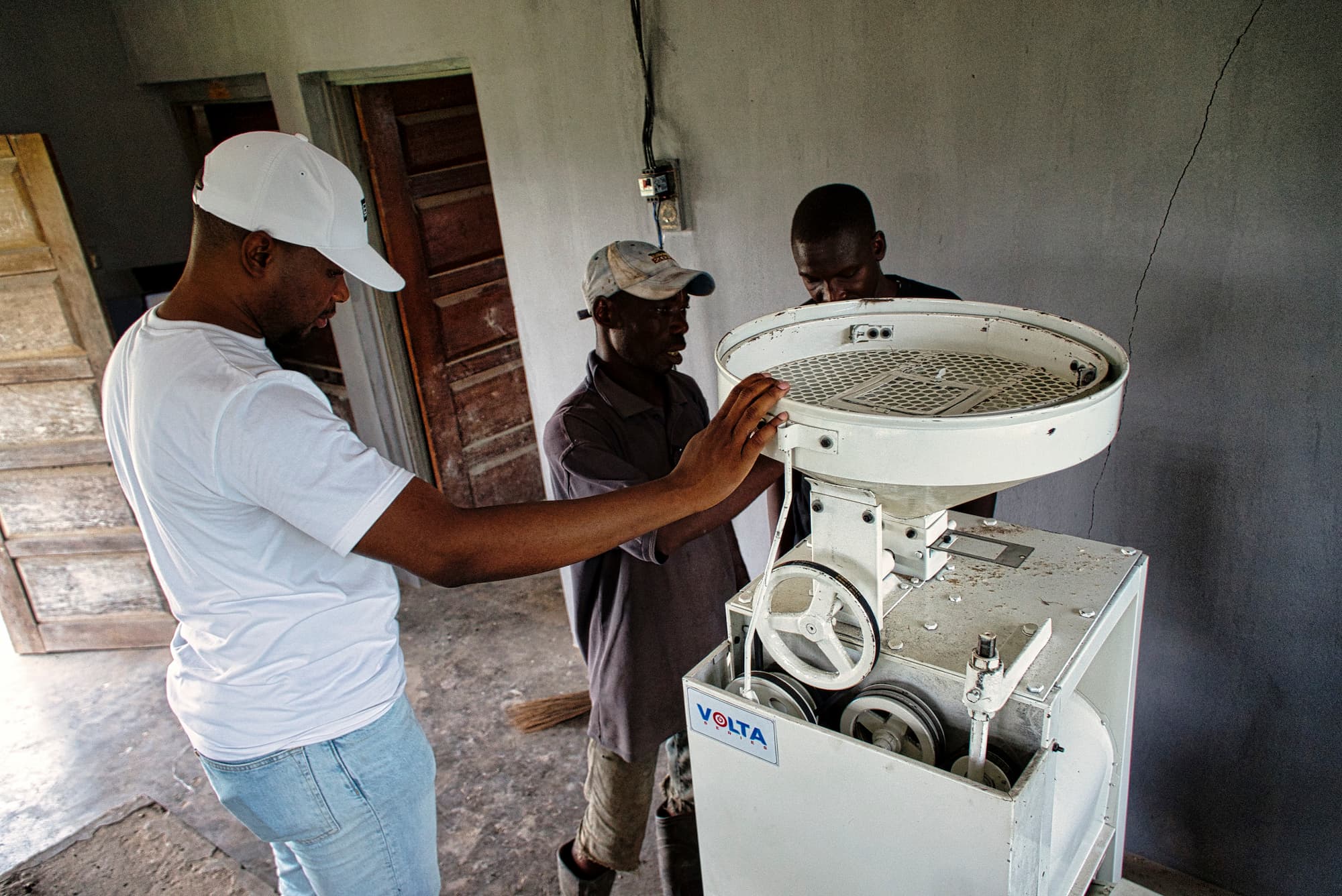
Enhancing food security in Nigeria
Farm Warehouse is an agricultural technology distributor that offers portable, solar-powered mills to smallholder farmers in Nigeria. Through the support of CLASP’s Productive Use Financing Facility – an innovative financing program that delivers support to companies through capacity-building grants, subsidies, and business support – Farm Warehouse has been able to deliver life-changing technologies into the hands of those who need them.
Farm Warehouse customers affirm the benefits of these grain mills:
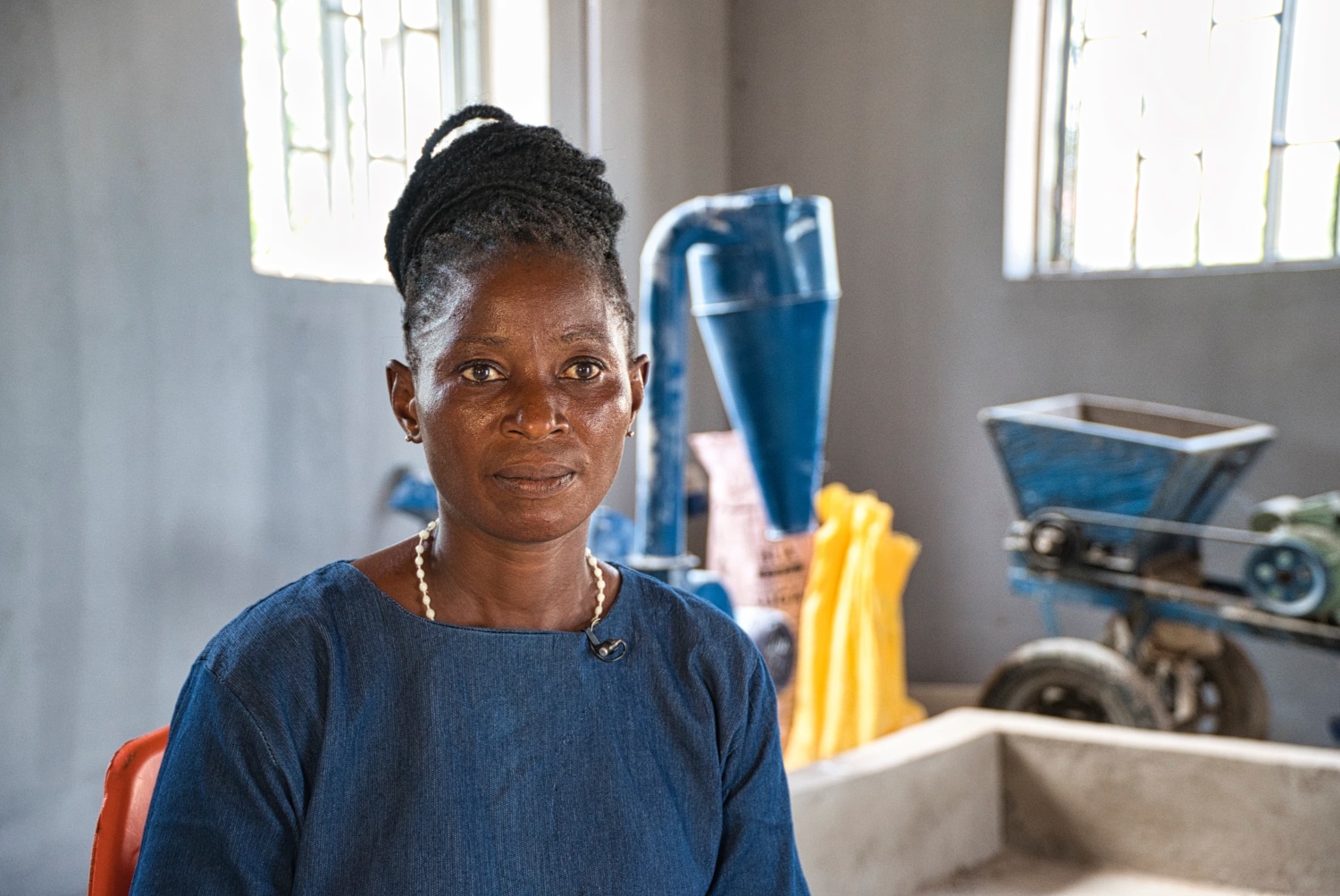
“Any type of flour that you want to produce, this machine can produce it. That is why we need this machine more, so we can have more money to help ourselves and have enough food to give out for people that need it.”
Okwei Sunday Ibor, Farm Warehouse client
Not only do these mills increase food production, they also significantly decrease food wastage. According to Kuma Mede, CEO of Farm Warehouse, before the introduction of these appliances, farmers were losing roughly 30% of their harvest; with Farm Warehouse’s portable, solar mill, farmers are able to significantly reduce wastage and reap more from their harvest.
For close to a decade, CLASP has been working to improve access to efficient appliances that work in off-grid or weak-grid areas. These productive-use appliances (PUAs), such as solar-powered refrigerators, solar water pumps, and solar milling machines are technologies that have a direct, transformative impact on local communities, small businesses, and people’s livelihoods. As these appliances are often powered by renewable energy, they have far lower running costs for consumers, and they reduce harm to the environment and the climate.
The Facility helps strengthen the role of appliance suppliers and distributors by providing capacity-building grants to companies like Farm Warehouse. In addition to business support, CLASP improves appliance performance testing to verify appliance quality, ensuring Farm Warehouse consumers receive reliable information about the efficiency and quality of the products on sale.
About the Productive Use Financing Facility
CLASP’s Productive Use Financing Facility, is supported by The Global Energy Alliance for People and Planet (GEAPP). It has provided financing to 24 companies in six countries, to enable the distribution of over 13,000 productive-use appliances, directly impacting more than 58,000 households.
0. Efficiency for Access: “Solar Milling: Exploring Market Requirements to Close the Commercial Viability Gap” (January 2020) https://efficiencyforaccess.org/wp-content/uploads/SolarMilling_Market-Requirements.pdf.
1. Efficiency for Access Coalition: “Solar Milling: Exploring Market Requirements to Close the Commercial Viability Gap” (January 2020), https://efficiencyforaccess.org/publications/solar-milling-exploring-market-requirements-to-close-the-commercial-viability-gap/?_gl=1*1wc2jau*_gcl_au*NjI0MDk1ODI5LjE3MTYzNzg1NjQ.*_ga*MTk0MDQ1NjQ5LjE3MTYzNzg1NjA.*_ga_RSE4P06FCR*MTcyMDQ0MjU0Mi4xMDIuMS4xNzIwNDQzODk3LjAuMC4w.