
International Benchmarking Analysis of Air Source Heat Pump and Chiller Standards
This report presents a technical assessment of testing methods, energy efficiency metrics, and minimum energy performance standards (MEPS) for air-to-water heat pumps and chillers in cooling mode across China, the European Union (EU), and the United States (US). These regions represent the largest markets for heat pump technologies, each employing distinct testing protocols, metrics, and requirements.
The analyses offer insights into how Chinese, EU, and US standards align or diverge, how performance comparisons can be made across energy efficiency standards, and where opportunities for international standard alignment exist.
Key findings:
- The US energy efficiency metric approximates 114% of China’s metric, while the EU’s metric differs by ±3% compared to China’s.
- China’s revised MEPS matches or exceeds EU and US efficiency benchmarks for low-capacity units.
- Requirements for high-capacity products in China still show room for improvement.
Heat Pumps
CLASP and GEAPP Expand Access to Affordable, Energy-Efficient Appliances in Africa
Cape Town, 18 June, 2025 – At the Africa Energy Forum in Cape Town, CLASP and the Global Energy Alliance for People and Planet (GEAPP) announced a substantial expansion of the Productive Use Financing Facility (PUFF). This $6.1 million USD funding boost will help accelerate the uptake of clean, energy-efficient appliances that power small businesses, support farmers, and transform the lives of thousands of people across Africa.
Despite their potential to improve lives globally, efficient appliances are still out of reach for over 600 million people without access to electricity. High costs and limited financing make it difficult for business and households to afford them. PUFF helps bridge that gap.
The facility provides grants, subsidies, and technical assistance to suppliers and distributors to lower prices and reach more customers. This enables small businesses, entrepreneurs, and households to purchase energy-efficient technologies at favorable prices, allowing them to grow over time.
Building on success
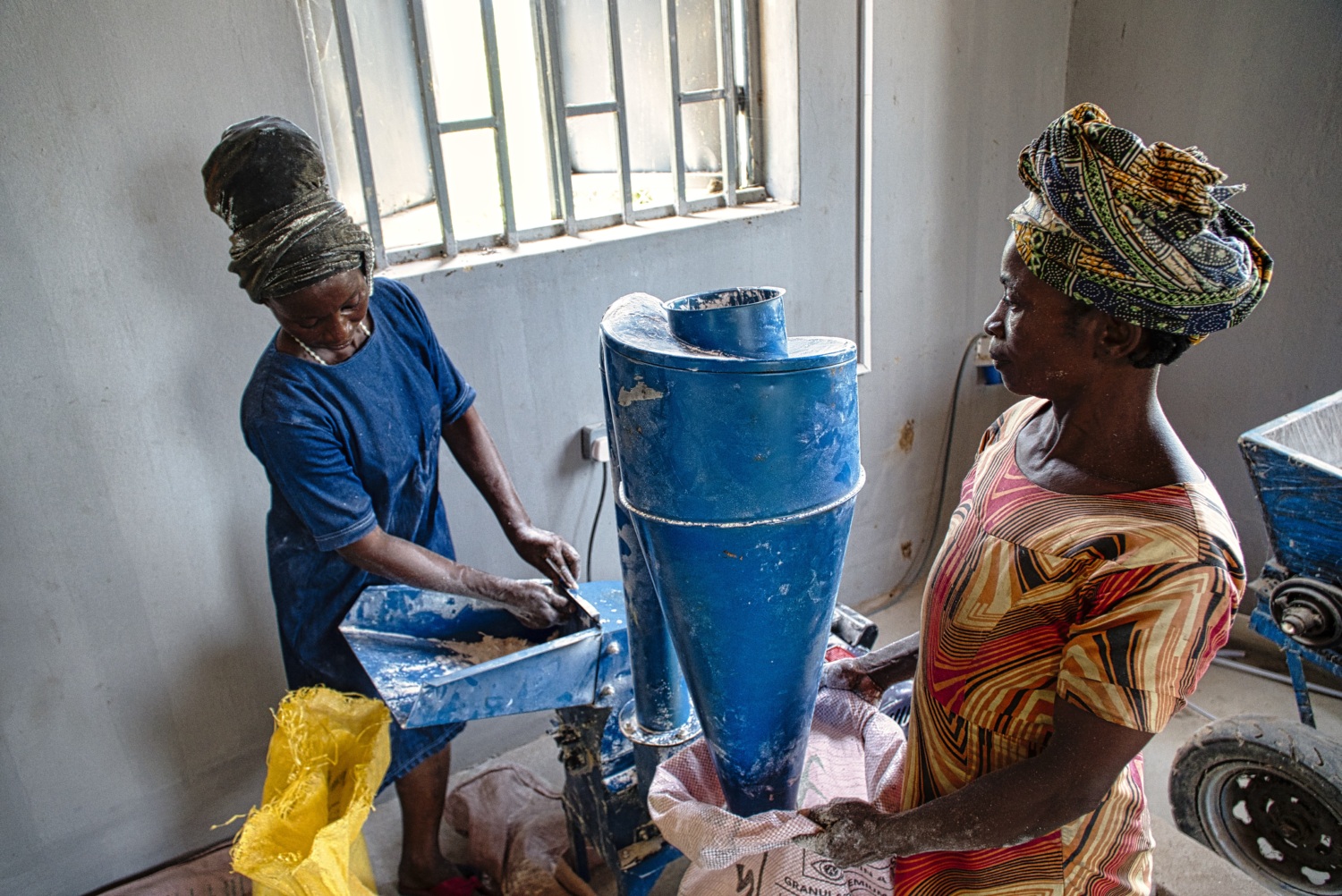
This extension builds on the success of the two-year pilot project that connected people with the useful appliances to earn a living. From 2022 to 2024, PUFF worked with 24 companies across six countries, helping to deploy nearly 16,000 appliances, and directly improve the lives of over 58,000 households. These appliances, such as solar-powered refrigerators, solar water pumps, and solar milling machines, had a direct, transformative impact on people’s livelihoods.
“Access to energy is foundational for economic growth. Efficient appliances and equipment, which are how people turn energy into opportunity, need to be considered essential energy infrastructure, alongside renewables. PUFF’s pilot phase proved that targeted support could unlock meaningful change. With effective financing, companies can reach more people with the right appliances, and they can change lives,” said Emmanuel Aziebor, Senior Director for Africa at CLASP.
What’s new in PUFF 2.0?
CLASP and GEAPP are renewing their partnership focused on scaling appliances for agriculture and entrepreneurship in Ethiopia, Kenya, and Nigeria. This new round aims to create over 3,000 green jobs through the sale and use of 10,000 appliances in four years, including established appliances like solar water pumps and refrigerators, and more specialized technologies such as coffee pulpers and honey extractors.
This expansion also deepens commitment to gender equity and youth inclusion. In the pilot, women made up nearly half of all appliance buyers, and households where women bought appliances saw a 94% increase in average income. PUFF 2.0 will have an even greater focus on equity by utilizing outreach and financing strategies that center women and young entrepreneurs.
“While electrification has expanded, many investments fail to turn access into economic opportunity, with limited job creation or enterprise growth. Through initiatives such as PUFF 2.0 collaboration with CLASP, we are addressing these shortfalls by ensuring that new energy connections drive productivity and power agriculture, energizing ambition in small and medium sized enterprises, and output in local manufacturing. Increased incomes from these activities spur economic growth and wellbeing in growing communities, creating jobs, and improving the quality of life,” said Makena Ireri, Managing Director for Productive Use of Energy at GEAPP.
CLASP’s Productive Use Financing Facility is supported by The Global Energy Alliance for People and Planet (GEAPP). Learn more about how it’s benefiting people and our planet.
- Appliance distribution companies who are interested in applying in this second round can get further information on the PUFF webpage and on the webinar on 8 July.
- For more information, please contact financing@clasp.ngo and follow us on LinkedIn for regular updates on how the facility is benefiting people and our planet.

A farmer in Ethiopia using solar-powered drip irrigation acquired through PUFF support. Photo credit: CLASP
CLASP
Women in Nigeria using a solar-powered mill acquired through PUFF support. Photo credit: CLASP
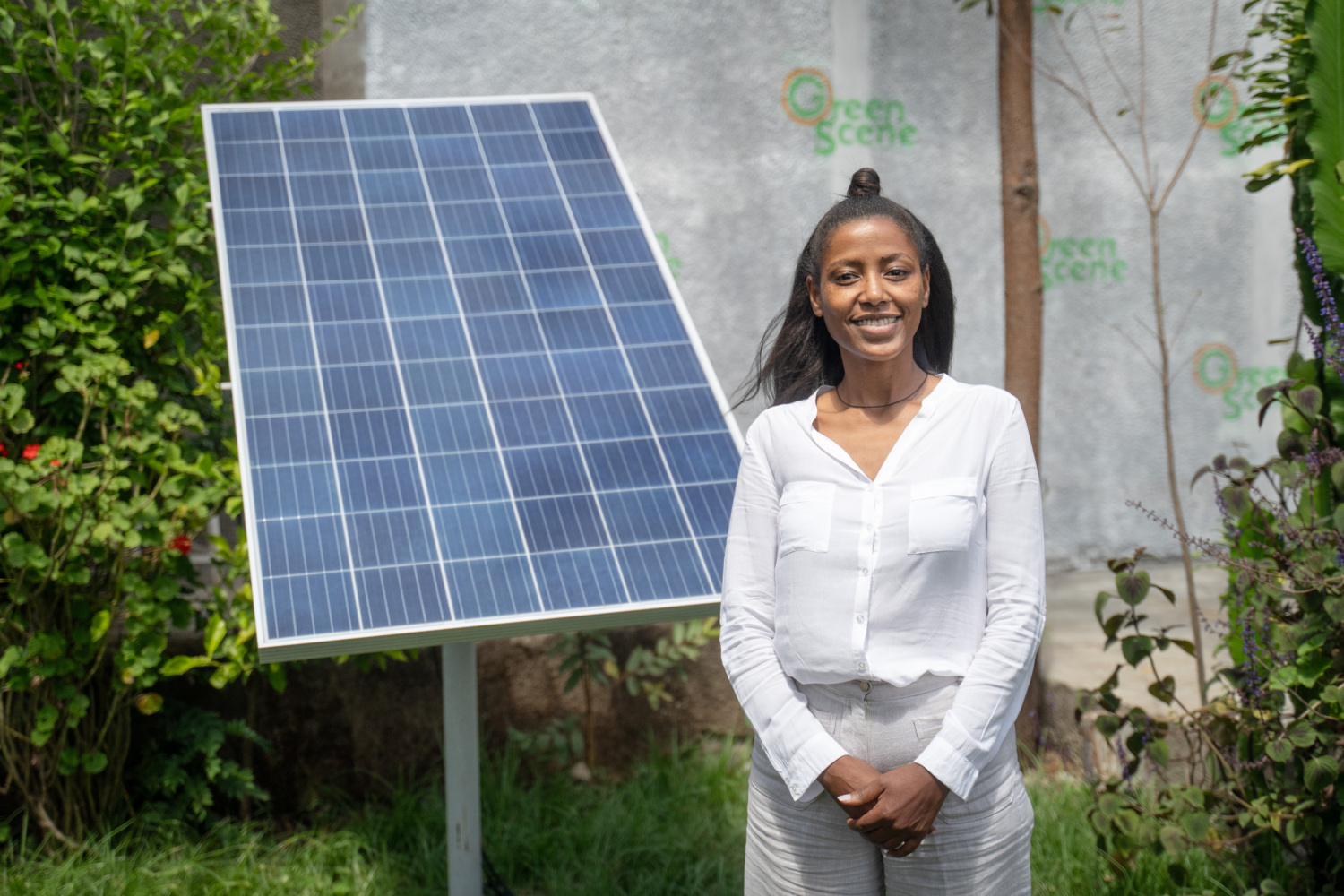
Rekik Bekele, CEO of Green Scene Energy, a leading solar appliance distributor, is expanding access to solar in Ethiopia with support from PUFF. Photo credit: CLASP

Abibat Akinwale, a shopkeeper in Nigeria, with the solar-powered refrigerator she acquired through PUFF support. Photo credit: CLASP
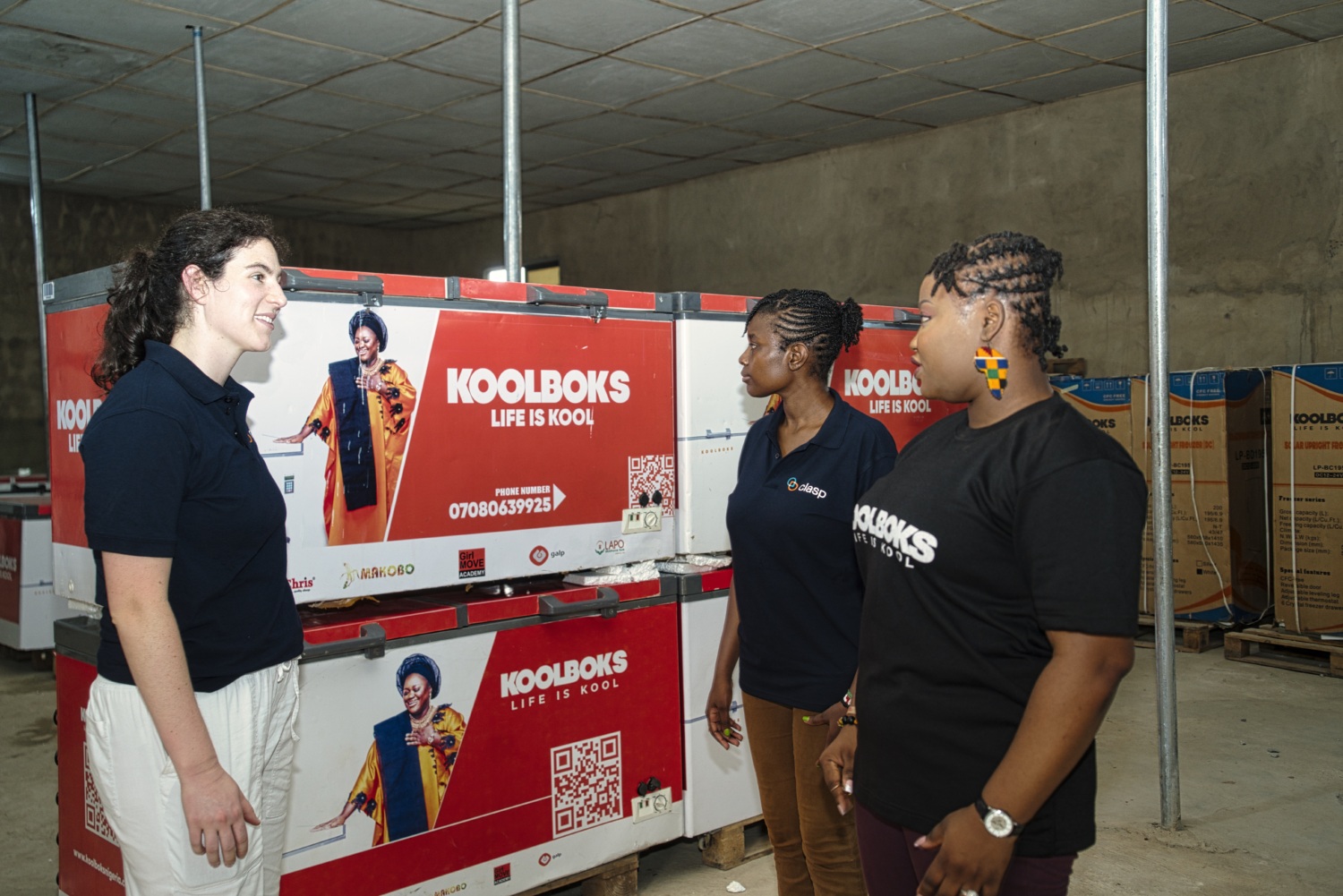
Lolade Esther Alonge of Koolboks shows the CLASP team their solar refrigerators, made more affordable for off-grid communities in Nigeria with PUFF support. Photo credit: CLASP
About CLASP
CLASP is the leading global authority on efficient appliances’ role in fighting climate change and improving people’s lives. An international NGO with 25 years of expertise and offices on four continents, CLASP collaborates with policymakers, industry leaders, and other experts to create a more sustainable future for people and the planet.
About GEAPP
The Global Energy Alliance for People and Planet (GEAPP) is an alliance of philanthropy, governments in emerging and developed economies, and technology, policy, and financing partners. Their common mission is to enable LMICs’ shift to a clean energy, pro-growth model that accelerates universal energy access and inclusive economic growth, while supporting the global community to meet critical climate goals during the next decade. As an Alliance, they aim to reduce 4 gigatons of future carbon emissions, expand clean energy access to one billion people, and enable 150 million new jobs. With philanthropic partners, IKEA Foundation, The Rockefeller Foundation, and Bezos Earth Fund, GEAPP works to build the enabling environment, capacity, and market conditions for private sector solutions, catalyze new business models through innovation and entrepreneurship, deploy high-risk capital to encourage private sector solutions, and assist just transition solutions. For more information, please visit www.energyalliance.org and follow us on LinkedIn.
Media inquiries: Stella Madete, Africa Communications Manager, smadete@clasp.ngo
2024 World’s Best MEPS: Technical Appendix
Minimum energy performance standards (MEPS) are a proven regulatory measure used widely to drive improvements in appliance energy efficiency. CLASP’s tool, World’s Best MEPS, compares current standards for six key appliance and equipment types across ten economies and identifies the most ambitious standards.
This document explains the tool’s methodology behind benchmarking different policies from around the globe. It outlines representative units, efficiency targets and thresholds, and the standardization of metrics needed to ensure fair and consistent comparisons across products and economies.
Types of appliances & equipment covered:
- Lighting
- Industrial electric motor systems
- Air conditioners
- Refrigerators
- Water heaters
- Space-heating equipment
Economies covered:
- Brazil
- Canada
- China
- European Union (EU)
- India
- Indonesia
- Japan
- South Africa
- United Kingdom
- United States
India Unveils 18 New Appliance Efficiency Policies
In a landmark year for energy policy, India’s Bureau of Energy Efficiency (BEE), with support from CLASP, advanced 18 appliance efficiency regulations in 2024. This is a testimony to the country’s fast-paced policymaking and strong national commitment to appliance efficiency as a key lever for climate action and energy security.
Fast-paced policymaking to meet urgent needs
As India undergoes rapid urbanization and industrial growth, the demand for appliances is surging. Left unchecked, this growth could place immense pressure on the power grid and accelerate emissions. Recognizing this, the government prioritized improvements that directly address the rising energy demand from homes, commercial spaces, and industry.
18 new policies – large emissions cuts and cost savings
CLASP advocates for appliance efficiency which ensures that everyday products from refrigerators and fans to inverters and TVs consume less energy while delivering the same or better performance. This is critical in a country like India, where millions of households are purchasing new appliances for the first time. By using higher effiicency appliances, India is building a more resilient energy system, reducing energy bills for consumers, and cutting emissions at scale.
The cumulative effect of these 2024 policies is significant. By 2030, they are expected to save over 180 terawatt hours (TWh) of electricity and avoid nearly 146 megatons (Mt) of CO₂ emissions.
Standouts include policies covering:
- Packaged boilers, commercial beverage coolers, solar inverters, and refrigerant compressors, which are collectively estimated to save 32.2 terawatt-hours (TWh) of electricity and avoid 24 megatons (Mt) of CO₂ emissions.
- Ceiling fans, a widely used appliance that will now become more efficient, saving 35.9 terawatt-hours (TWh) of electricity and avoiding 29 megatons (Mt) of CO₂ emissions.
Full list of 2024 appliance policies:
- Room air conditioners (RAC) (fixed speed-split and window)
Improving appliance efficiency across states
CLASP has also been working closely with the State Designated Agencies (SDAs) in Odisha and Kerala to support the implementation of India’s national appliance efficiency policies. By strengthening the adoption and enforcement of BEE’s Standards & Labeling program at the state level, CLASP is helping ensure that the benefits of energy-efficient appliances reach households and industries across these regions.
Aligning with CLASP’s global mission
Emissions reductions and energy savings not only bolster India’s energy security and climate goals but also resonate with CLASP’s global mission to advance appliance efficiency for people and the planet. By supporting national institutions like BEE in strengthening appliance efficiency policies, CLASP continues to catalyze transformative, long-lasting change.
CLASP Calls for Cleaner Heat Pumps in the European Union
CLASP, along with eight leading European environmental organizations, submitted a letter urging European Union (EU) countries to prioritize climate-friendly refrigerant heat pumps to help achieve climate goals.
The letter, submitted to the European Commission (EC), was timely, as EU Member States prepare to allocate funding from a €86 billion Social Climate Fund (SCF) and implement the EU’s goal for rapid heat pump deployment.
Key recommendations to the European Commission
- Prioritize heat pumps with natural refrigerants over high-global warming potential (GWP) hydrofluorocarbons (HFCs or F-gases). There is a long-term climate risk linked to the use of HFC-based systems, as HFCs have hundreds to thousands of times more GWP than natural refrigerants.
- Establish financial incentives for natural refrigerant heat pumps. EU Member States should offer extra subsidies or bonuses for the adoption of natural refrigerant heat pumps. Germany’s additional 5% grant, for homeowners who install heat pumps using natural refrigerants, provides an example of how targeted support can accelerate the shift to more climate-friendly heat pumps.
- Set a clear timeline for phasing out public funding for F-gas heat pumps. CLASP, the Environmental Investigation Agency, and the other signatories suggest defining a cut-off date, after which the installation of heat pumps that use climate-damaging HFC refrigerants should no longer be funded. This would align with the direction of EU legislation and offer much-needed clarity for industry and European consumers. Germany has already taken action: from 2028, only natural refrigerant heat pumps will be eligible for funding.1
Why is it important to transition to climate-friendly heat pumps?
If Member States continue allowing the installation of new equipment using HFCs, heat pumps installed today could still be operating decades from now, impacting the EU’s ability to meet its 2050 net zero target.
Data from the German incentive scheme2 indicate that natural refrigerant heat pumps are, on average, more energy-efficient than F-gas systems across all temperature ranges. This means they require less energy and reduce consumers costs to run. Their ability to operate at high temperatures also makes them an ideal choice for boiler retrofits.
To support market transformation efforts in this field, CLASP is researching the deployment of natural refrigerant heat pumps and the barriers to their adoption in the EU and the United Kingdom. More information on the topic can be found here.
0. Umweltbundesamt “Heat Pumps” August 2023
https://www.umweltbundesamt.de/en/topics/climate-energy/fluorinated-greenhouse-gases-fully-halogenated-cfcs/application-domains-emission-reduction/heat-pumps
1. Bundesamt für Wirtschaft und Ausfuhrkontrolle “Liste der förderfähigen
Wärmepumpen mit Prüf-/Effizienznachweis” April 2025 https://www.bafa.de/SharedDocs/Downloads/DE/Energie/beg_waermepumpen_pruef_effizienznachweis.html
Leveraging Low-Global Warming Potential Heat Pumps to Power Climate Action
Heat pumps are highly efficient solutions for space heating and cooling. When it comes to heating, they’re three to four times more efficient than electric resistance heaters which convert electricity into heat at 100% efficiency. Heat pumps are also far more efficient than the most advanced gas heating systems, which operate at only 85-99% efficiency.
Transitioning away from burning fossil fuels to efficient and sustainable heat pumps is key for decarbonizing heating and cooling systems and achieving carbon neutrality. In the European Union (EU), over 24 million heat pumps have already been installed, with over 3 million sold in 20233. To accelerate progress, the EU’s REPowerEU plan aims to scale up heat pump adoption, targeting 60 million installed units by 2030. The United Kingdom (UK) has set its own goal to install 600,000 heat pumps annually by 20284.
In addition to being more efficient and sustainable than electric resistance heaters and gas heating systems, heat pumps deliver a wide range of benefits, including improved energy security, power system flexibility, and job creation.
The Benefits of Heat Pumps in Europe

F-gases and forever chemicals harm the environment and human health
Heat pumps use refrigerants to regulate temperature by absorbing and releasing heat between indoor and outdoor spaces. Currently, most heat pumps use hydrofluorocarbon (HFC) refrigerants R-32 and R-410A. These refrigerants, also known as ‘F-gases’, have a high global warming potential (GWP) and trap more heat in the atmosphere than carbon dioxide (CO2). With respective GWPs of 675 and 2088, they are hundreds to thousands of times more potent greenhouse gases than CO2.
While refrigerants are meant to remain contained within a piece of equipment, leaks and accidental releases can happen during maintenance or end of life disposal. Some refrigerants, like R-410A, also contain per- and polyfluoroalkyl substances (PFAS). These ‘forever chemicals’ persist in the environment for decades and pose risks to human health and the environment5.

There are more sustainable alternatives to HFC refrigerants, including a class of refrigerants known as hydrocarbons, often called ‘natural’ refrigerants.
Low-GWP refrigerants: the climate-friendly solution
There are more sustainable alternatives to HFC refrigerants, including a class of refrigerants known as hydrocarbons, often called ‘natural’ refrigerants. These natural refrigerants have much lower global warming potential than traditional HFC refrigerants. Natural refrigerants include:
- R-290 (propane, GWP 3)
- R717 (ammonia, GWP 0)
- R744 (carbon dioxide, GWP 1)
- R600a (isobutane, GWP 3)
While these alternative refrigerants are not yet widely used in Europe, the availability of technologies using natural refrigerants is expanding with more manufacturers adding them to their product portfolios6. In addition to their environmental benefits, low-GWP heat pumps can operate at high temperatures, making them a convenient boiler replacement option without requiring changes to the rest of a heating system of building envelope.
In the EU, the recent approval of the F-gas Regulation (EU) 2024/5735 presents a significant opportunity to improve the heat pump market’s sustainability with ambitious HFC phase-down timelines. As demand for natural refrigerant heat pumps increases in the EU, it will drive innovation in manufacturing processes and technological advancements within the heat pump industry. This will, in turn, allow the EU to set the standard for sustainable heating and cooling solutions and boost the EU’s competitiveness in the green technology sector. Having not yet aligned with the EU’s regulation, the UK risks becoming a destination for high-GWP products that can’t be sold in the EU.
Now is the time to act
Without stringent regulation, F-gases could stay locked into European heating systems for years to come. Newly installed heat pump systems have an average lifetime of 10-15 years. This means that HFC heat pumps installed this year will continue to leak high-GWP gases during the next decade and more. Specialized equipment and technicians will have to be available for the next fifteen years to successfully repair and dismantle HFC heat pumps without releasing significant amounts of F-gases.

Despite a slump in sales from 2023-2024, the European heat pump market has experienced significant growth over the past decade7. With the continued, increasing prevalence of heat pumps in European households, we need to seize the opportunity to accelerate the transition to more sustainable refrigerants, rather than further increase the pool of F-gas-dependent heat pumps. The F-gas Regulation sets a timeline for phasing out F-gases in the EU, and this transition should be proactively planned and replicated in the UK. It’s time to shift the heat pump refrigerant landscape toward safer, more environmentally-responsible alternatives.
Recommendations for sustainable heating and cooling in Europe
- National and local governments should expand or amend existing incentives to offer additional incentives for low-GWP refrigerant systems to make them more affordable and encourage adoption. Incentives, like the Boiler Upgrade Scheme8 in the UK, are already widely available in some European countries. Germany, for example, has introduced an additional 5% incentive9 for installing heat pumps that use natural refrigerants, on top of the base subsidy that amounts to 25% of the total system cost.
- Governments and installers should raise awareness on the benefits of low-GWP heat pumps, especially for those unfamiliar with or skeptical of the technology. Raising awareness can help dispel myths about the installation process, safety, and efficiency of low-GWP heat pumps, highlighting them as a suitable alternative for heating and cooling system replacements.
- The UK Government should update its F-gas Regulation to align with the EU’s regulation. This alignment is essential for phasing out harmful HFC refrigerants and would ultimately encourage the development and adoption of safer, more sustainable refrigerants in heat pumps and other types of equipment, supporting climate targets.
- The EU and UK Governments should revise energy labeling requirements to include the type of refrigerant used in heat pump systems. Refrigerant information should be easily available for European consumers, allowing them to choose the most efficient and sustainable heating and cooling systems available.
How CLASP is making a difference
CLASP is conducting extensive research and engaging key stakeholders in the EU and the UK, focusing on the deployment of natural refrigerant heat pumps, as well as the barriers to their adoption. We aim to identify effective programs and strategies that can increase the awareness, availability, and adoption of these heating and cooling systems at local, national, and EU levels.
To drive market transformation, CLASP is seeking local partners and governments interested in developing and implementing policy interventions that accelerate the adoption of low-GWP heat pumps.
Download this brief.
0. Umweltbundesamt “Heat Pumps” August 2023
https://www.umweltbundesamt.de/en/topics/climate-energy/fluorinated-greenhouse-gases-fully-halogenated-cfcs/application-domains-emission-reduction/heat-pumps
1. Bundesamt für Wirtschaft und Ausfuhrkontrolle “Liste der förderfähigen
Wärmepumpen mit Prüf-/Effizienznachweis” April 2025 https://www.bafa.de/SharedDocs/Downloads/DE/Energie/beg_waermepumpen_pruef_effizienznachweis.html
2. European Heat Pump Association, European Heat Pump Market and Statistics Report 2024, https://www.ehpa.org/wp-content/uploads/2024/08/Executive-summary_EHPA-heat-pump-market-and-statistic-report-2024-2.pdf
3. UK Government, Energy Security Bill factsheet: Low-carbon heat scheme, 2023, https://www.gov.uk/government/publications/energy-security-bill-factsheets/energy-security-bill-factsheet-low-carbon-heat-scheme
4. United States Environmental Protection Agency, PFAS Explained, https://www.epa.gov/pfas/pfas-explained
5. Christina Hayes and Jae Haroldsen, ATMO Market Report 2024 “Natural Refrigerants: State of the Industry 2024”, https://atmosphere.cool/atmo-market-report-2024
6. European Heat Pump Association, European Heat Pump Market and Statistics Report 2024, https://www.ehpa.org/wp-content/uploads/2024/08/Executive-summary_EHPA-heat-pump-market-and-statistic-report-2024-2.pdf
7. Energy Saving Trust, “Boiler Upgrade Scheme,” 2024, https://energysavingtrust.org.uk/grants-and-loans/boiler-upgrade-scheme/
8. Thomas Trevisan, “Germany Grants Bonus Subsidy to Home Heat Pumps That Use Natural Refrigerants,” 10 January 2023, https://naturalrefrigerants.com/germany-grants-bonus-subsidy-to-home-heat-pumps-that-use-natural-refrigerants/
Millions of People Lack Electricity. Solar Appliances Can Help
Cooling down on a scorching day, lighting the house at night, heating a pan to cook dinner: In wealthy countries, people take for granted the ability to meet their basic needs by switching on appliances. But in low-income nations, these appliances, along with the electricity needed to power them, are often out of reach.
As the planet warms, the lack of critical appliances has increasingly severe consequences, making it harder for people to thrive—and, in some cases, simply survive—in ever-harsher environments. Solar-powered appliances are a promising solution.
In this interview, Martha Wakoli, who works on CLASP’s clean energy access team in Nairobi, discusses their potential and how to reach it.
*
Sarah Wesseler, CLASP managing editor: Let’s start with some basics about solar appliances. What are they? Why should people who are interested in sustainable development and climate change care about them?
Martha Wakoli: Well, in places like the States or Europe, if you need light, you switch on a light bulb. But in other parts of the world, millions of people don’t have that option—they’re not connected to the electric grid. So they’ve found creative solutions for accessing services like lighting, cooling, and cooking. And that’s where the idea of solar appliances developed.
For a long time, this technology was used for things like charging phones and lighting homes. But increasingly, we’re seeing the potential to power much larger, almost industrial-level processes with solar appliances. Say you’re a clothing manufacturer in a place that doesn’t have electricity: The machines you need could be powered by the sun.
There’s more and more research and investment in these kinds of appliances. That opens a whole new pathway of solutions for the millions of people who continue to live without electricity.
Wesseler: When you say these appliances are powered by the sun, how does that work? I’m thinking about the US, where I live: A lot of people have solar panels on their roofs, but they still use standard appliances plugged into standard wall outlets. How are solar appliances different?
Wakoli: Well, with solar appliances, the appliance is connected directly to a solar panel on your roof via a cable. And depending on how many panels you have and how large they are, you could have multiple cables powering multiple appliances at the same time. And for appliances that are used outdoors—water pumps, for example—the cables from the solar panel also run directly to the appliance.

Solar irrigation in India
Credit: IDE Global / Bimala Colavito
Wesseler: What if the sun’s not out? Can you still run solar appliances then?
Wakoli: Yes. Solar appliances come with a little bit of energy storage, typically in the form of a battery, that allows them to keep functioning when it’s not sunny. For example, solar refrigerators keep things cool even at night.
Wesseler: That all makes sense. But why not just connect more people to the electric grid? Why focus on solar appliances instead?
Wakoli: There are a lot of reasons, but the most important is that it’s typically much more expensive to extend the power grid to far-flung places than it is to provide solar appliances. Solar appliances are more cost-effective in rural areas.
Providing solar appliances is also faster than building out the grid, which takes a long time. This is important given the urgency of the climate disaster, which we’re observing in real time, whether it’s heatwaves in India or droughts in Zambia. People need appliances that can help them adapt to climate change now.

Credit: Monica Tiwari, SPI

Credit: Efficiency for Access
Solar appliances can also help people build climate resilience and empower them to be more active participants in their own development. I’ll give you an example: In Mozambique, the government used taxpayer money to build an electric grid, but in 2023, Cyclone Freddie knocked it out. Compare that to decentralized systems, where people can have their own solar panels on their roofs or solar pumps on their farms. Because these appliances are modular, the scale of damage tends to be much smaller.
This kind of resilience is especially important for facilities like schools and hospitals. When floods or droughts make it impossible for them to operate where they are, there’s not much they can do if they rely on the electric grid. But with solar, they can move to a safer location and take their power source with them.
Another reason is that the grid itself is changing. Around the world, we’re preparing for what we’re calling the grid of the future. A lot of people now have electric vehicles, and in some areas, these vehicles can be plugged back into the wall, sending that power back to the grid, right? So you now have a complex bidirectional electric system that’s very different from what has existed for the last 70 years. Instead of having very few energy producers and many consumers, you have a growing number of what’s called “prosumers”: They produce the energy and they’re also consumers. This subset of people is growing everywhere.
Wesseler: You recently led research seeking to understand the number of people globally who need solar appliances. Why did you focus on this issue in particular?

Solar appliances can help people build climate resilience and empower them to be more active participants in their own development.Martha Wakoli
Wakoli: Well, in the development sector—so essentially, organizations that are trying to lift people out of poverty—if we cannot quantify a problem, it is difficult to know what interventions are needed in terms of money, regulations, and human capital. So providing information like this helps decision makers develop solutions.
And in this case, the problem we are looking at involves energy services to help marginalized people lift themselves out of poverty while also building resilience. This is important because, as we know, these groups are already being affected by climate change. So one goal of our work is to help the development and climate sectors understand that they’re working toward a common target.
This is particularly critical because, as we recently saw at COP29, there’s still a lot of resistance to the idea that the nations most responsible for climate change should fund other nations to protect themselves from it. But what the international community needs to understand is that that if we don’t mitigate climate disasters in the most vulnerable communities, the damage won’t just stay in those communities. Issues like climate-driven displacement and public health crises can easily spill over borders, making climate change an even more complex and expensive problem to solve. So I believe the international community should collaborate to address energy access challenges immediately to avoid this complication.
Wesseler: What did you learn from the research?
Wakoli: The key finding was that only about 2% of the need for key appliances is being met.
I think people in the international development and energy sectors intuitively knew that we are falling behind on providing universal electricity access, but there was still maybe not a good understanding of how far behind. With this research, we put a number to it: There are over 500 million people who need these appliances but don’t have them and won’t be able to afford them unless there are major changes in the appliance sector. That’s a massive gap.

Solar mill in Nigeria
Credit: CLASP
Wesseler: What would it take to close this gap?
Wakoli: Well, we need more investment at all levels of solar appliances. We need to invest in people who can support the sector: students, researchers, manufacturers, distributors, maintenance people. Companies need money to build these appliances, to test business models, to scale. We also need money for governments to conduct awareness campaigns. People need to go into communities to let them know about these appliances and demonstrate how they work.
We also need more cross-disciplinary dialogue. Lifting people out of poverty requires more than electricity or appliances; the solution has to involve people who work in agriculture, environmental advocacy, etc. A practical example is solar water pumps, which make it easier for farmers to generate income. But productivity is not only a function of water; farmers also need good seeds, fertilizer, and good soil. So people outside the energy sector need to be involved as well.
Ultimately, we need to build a market that can exist without external support. Think of Coca-Cola. Soda is the one thing that is ubiquitous in every place I have been, even where people don’t have high incomes. Coca-Cola has figured out how to reach the last mile in countries like Kenya and India. The solar appliance sector needs to get to the same place.
Developing a self-sustaining market for solar appliances will require collaboration across governments, the private sector, and development partners. Governments need to prioritize solar appliances and other energy-efficient solutions as part of their national electrification strategies, and the appliance sector needs to build muscle in distribution and consumer awareness. What’s more, all these actors need to prioritize ensuring that solar appliances support increased productivity, driving up incomes for communities living below the poverty line.
Many critical pieces of this puzzle are currently missing. Right now, a lot of the money in the solar appliance sector comes from European governments as part of their international aid programs. But if we’re thinking about a sustainable solution for more than 50 countries and more than half a billion people, it cannot be contingent on well-wishers alone.
Interview edited and condensed.
0. Umweltbundesamt “Heat Pumps” August 2023
https://www.umweltbundesamt.de/en/topics/climate-energy/fluorinated-greenhouse-gases-fully-halogenated-cfcs/application-domains-emission-reduction/heat-pumps
1. Bundesamt für Wirtschaft und Ausfuhrkontrolle “Liste der förderfähigen
Wärmepumpen mit Prüf-/Effizienznachweis” April 2025 https://www.bafa.de/SharedDocs/Downloads/DE/Energie/beg_waermepumpen_pruef_effizienznachweis.html
2. European Heat Pump Association, European Heat Pump Market and Statistics Report 2024, https://www.ehpa.org/wp-content/uploads/2024/08/Executive-summary_EHPA-heat-pump-market-and-statistic-report-2024-2.pdf
3. UK Government, Energy Security Bill factsheet: Low-carbon heat scheme, 2023, https://www.gov.uk/government/publications/energy-security-bill-factsheets/energy-security-bill-factsheet-low-carbon-heat-scheme
4. United States Environmental Protection Agency, PFAS Explained, https://www.epa.gov/pfas/pfas-explained
5. Christina Hayes and Jae Haroldsen, ATMO Market Report 2024 “Natural Refrigerants: State of the Industry 2024”, https://atmosphere.cool/atmo-market-report-2024
6. European Heat Pump Association, European Heat Pump Market and Statistics Report 2024, https://www.ehpa.org/wp-content/uploads/2024/08/Executive-summary_EHPA-heat-pump-market-and-statistic-report-2024-2.pdf
7. Energy Saving Trust, “Boiler Upgrade Scheme,” 2024, https://energysavingtrust.org.uk/grants-and-loans/boiler-upgrade-scheme/
8. Thomas Trevisan, “Germany Grants Bonus Subsidy to Home Heat Pumps That Use Natural Refrigerants,” 10 January 2023, https://naturalrefrigerants.com/germany-grants-bonus-subsidy-to-home-heat-pumps-that-use-natural-refrigerants/
New Chinese Efficiency Measures for Industrial & Household Appliances
China is advancing its climate goals through enhanced appliance energy efficiency. Since 2022, CLASP has provided analysis and data to the China National Institute of Standardization (CNIS) for the improvement of efficiency policies for key industrial and household appliances including heat pumps, water chillers, and power transformers. The expected efficiency gains include:
- 15-20% efficiency boost for renewable energy transformers
- 10-15% efficiency improvement for low ambient air-source heat pumps
These policies will be implemented in 2025 and are projected to contribute to a CO2 emission reduction of 660 megatons (Mt) by 2040.

A global efficiency breakthrough for renewables
Power transformers are integral to electricity delivery but tend to be outdated and inefficient. In 2017, global power transformer losses totaled 1,100 terawatt hours (TWh) —equal to Japan’s annual electricity consumption. China’s updated appliance efficiency policies are the first worldwide to specifically include renewable energy transformers, reducing transmission losses and enhancing the efficiency of wind and solar power generation. As the country aims to power 70% of its economy with renewables by 2030, this initiative supports the broader goal of accessible and affordable clean energy.
“These achievements highlight our shared commitment to tackling climate change through energy efficiency. The revised efficiency policies set a significant precedent and showcase the value of international cooperation in advancing appliance efficiency policies,” said Steven Zeng, China Program Director at CLASP.
“We’re pleased to see our collaboration with CLASP lead to the launch of these important policies. This progress aligns with China’s focus on refining energy consumption and improving product standards, driving green transformation in the market,” added Cheng Jianhong, a lead researcher from CNIS.
Related articles
Supporting China’s Path to High-Efficiency Cooling
0. Umweltbundesamt “Heat Pumps” August 2023
https://www.umweltbundesamt.de/en/topics/climate-energy/fluorinated-greenhouse-gases-fully-halogenated-cfcs/application-domains-emission-reduction/heat-pumps
1. Bundesamt für Wirtschaft und Ausfuhrkontrolle “Liste der förderfähigen
Wärmepumpen mit Prüf-/Effizienznachweis” April 2025 https://www.bafa.de/SharedDocs/Downloads/DE/Energie/beg_waermepumpen_pruef_effizienznachweis.html
2. European Heat Pump Association, European Heat Pump Market and Statistics Report 2024, https://www.ehpa.org/wp-content/uploads/2024/08/Executive-summary_EHPA-heat-pump-market-and-statistic-report-2024-2.pdf
3. UK Government, Energy Security Bill factsheet: Low-carbon heat scheme, 2023, https://www.gov.uk/government/publications/energy-security-bill-factsheets/energy-security-bill-factsheet-low-carbon-heat-scheme
4. United States Environmental Protection Agency, PFAS Explained, https://www.epa.gov/pfas/pfas-explained
5. Christina Hayes and Jae Haroldsen, ATMO Market Report 2024 “Natural Refrigerants: State of the Industry 2024”, https://atmosphere.cool/atmo-market-report-2024
6. European Heat Pump Association, European Heat Pump Market and Statistics Report 2024, https://www.ehpa.org/wp-content/uploads/2024/08/Executive-summary_EHPA-heat-pump-market-and-statistic-report-2024-2.pdf
7. Energy Saving Trust, “Boiler Upgrade Scheme,” 2024, https://energysavingtrust.org.uk/grants-and-loans/boiler-upgrade-scheme/
8. Thomas Trevisan, “Germany Grants Bonus Subsidy to Home Heat Pumps That Use Natural Refrigerants,” 10 January 2023, https://naturalrefrigerants.com/germany-grants-bonus-subsidy-to-home-heat-pumps-that-use-natural-refrigerants/
Market Assessment Report for Packaged Boilers in India
Boilers are essential for providing steam and hot water in most process industries where production is continuous. A packaged boiler is a factory-made, ready-to-use boiler. They are used in textile industries, thermal power plants, metals and mining industries, chemical industries, among others.
In India, the Ministry of Power (MoP) aims to improve the efficiency of packaged boilers to reduce fossil fuel consumption. The Bureau of Energy Efficiency (BEE), under the MoP, developed appliance efficiency policies for packaged boilers with technical assistance from CLASP.
CLASP supported BEE by conducting a market and technical assessment study. BEE and CLASP reached out to major industry players to estimate the market size, assess energy performance, and understand boiler testing processes.
A structured questionnaire, in-depth interviews, and secondary research provided the following insights:
- The boiler industry in India is dominated by domestic players.
- Thermal efficiency data for 168 models of coal-, oil-, gas-, and biomass-fired boilers was collected and analyzed.
- The market size for packaged steam boilers up to a capacity of 30 Tons per hour (TPH) stood at about 2,400 units in 2019, as reported by manufacturers.
- The market for packaged steam boilers is expected to grow at 3.8% over the next 11 years and reach ~3,600 units by 2030.
- Major players in the packaged boiler market in India include Thermax, Industrial Boilers, Forbes Marshall, Transparent Systems, and Elite Thermal.
- The largest clusters of boiler manufacturing are in Maharashtra, Gujarat, and Karnataka, representing about 90% of the total units manufactured in 2019.
Cumulative energy savings of ~3.1 million Ton of Oil Equivalent (TOE) and reduction of CO2 emissions by ~7.23 megatons (Mt) CO2e is expected from this program between 2024 and 2033.
0. Umweltbundesamt “Heat Pumps” August 2023
https://www.umweltbundesamt.de/en/topics/climate-energy/fluorinated-greenhouse-gases-fully-halogenated-cfcs/application-domains-emission-reduction/heat-pumps
1. Bundesamt für Wirtschaft und Ausfuhrkontrolle “Liste der förderfähigen
Wärmepumpen mit Prüf-/Effizienznachweis” April 2025 https://www.bafa.de/SharedDocs/Downloads/DE/Energie/beg_waermepumpen_pruef_effizienznachweis.html
2. European Heat Pump Association, European Heat Pump Market and Statistics Report 2024, https://www.ehpa.org/wp-content/uploads/2024/08/Executive-summary_EHPA-heat-pump-market-and-statistic-report-2024-2.pdf
3. UK Government, Energy Security Bill factsheet: Low-carbon heat scheme, 2023, https://www.gov.uk/government/publications/energy-security-bill-factsheets/energy-security-bill-factsheet-low-carbon-heat-scheme
4. United States Environmental Protection Agency, PFAS Explained, https://www.epa.gov/pfas/pfas-explained
5. Christina Hayes and Jae Haroldsen, ATMO Market Report 2024 “Natural Refrigerants: State of the Industry 2024”, https://atmosphere.cool/atmo-market-report-2024
6. European Heat Pump Association, European Heat Pump Market and Statistics Report 2024, https://www.ehpa.org/wp-content/uploads/2024/08/Executive-summary_EHPA-heat-pump-market-and-statistic-report-2024-2.pdf
7. Energy Saving Trust, “Boiler Upgrade Scheme,” 2024, https://energysavingtrust.org.uk/grants-and-loans/boiler-upgrade-scheme/
8. Thomas Trevisan, “Germany Grants Bonus Subsidy to Home Heat Pumps That Use Natural Refrigerants,” 10 January 2023, https://naturalrefrigerants.com/germany-grants-bonus-subsidy-to-home-heat-pumps-that-use-natural-refrigerants/