
United Kingdom’s First Plan to Shift the Nation to Electric Cookers Presented to Members of Parliament
Government ‘blind spot’ on polluting gas stoves failing to prevent nearly 4,000 early deaths annually
1.5 million more gas hobs will be installed without policy change
London, 27 May 2025 – The United Kingdom’s (UK) first detailed plan to prevent thousands of early deaths by transitioning the nation from gas to electric cookers has been presented in Parliament.
Gas cookers regularly raise pollution above recommended safety levels in British homes, leading to an estimated 3,928 early deaths and about 500,000 children having asthma symptoms [1].
The cookers remain common and the government has no published plan to phase them out or stop them being installed in 1.5 million planned new homes [2]. This despite a legal obligation to decarbonise homes by 2050 and advice from Parliament’s Climate Change Committee to phase-out gas cookers by the mid 2030s.
Today, the UK’s first comprehensive package of proposals to transition to cleaner electric cookers was published by non-profit Global Action Plan, organiser of Clean Air Day, and international appliance efficiency NGO CLASP.
The 36-page document urges government to halt the installation of gas cookers by 2035 as the cornerstone of a “strategically managed transition”. Cleaner induction hobs and electric ovens could be encouraged through measures such as introducing pollution standards for appliances and helping homeowners replace their cookers through scrappage schemes, which already exist for gas boilers. With housebuilding a government priority, the NGOs want the Ministry of Housing, Communities and Local Government to move ahead with its Future Homes Standard that would effectively stop mains gas being connected to new housing developments.
The paper was published alongside results of a retrofit pilot project carried out in partnership with Greater Manchester Combined Authority [3]. This replaced gas for electric cookers in 10 social housing properties in Manchester. All residents said they favour induction hobs over gas, despite broad earlier scepticism, and the homes no longer depend on the gas network. The project was intended to demonstrate how the transition to electric cooking could work for many social housing associations, where residents may need financial support to make the switch.
The policy roadmap and retrofit findings were first presented at an event in Parliament last week and shared with ministers.
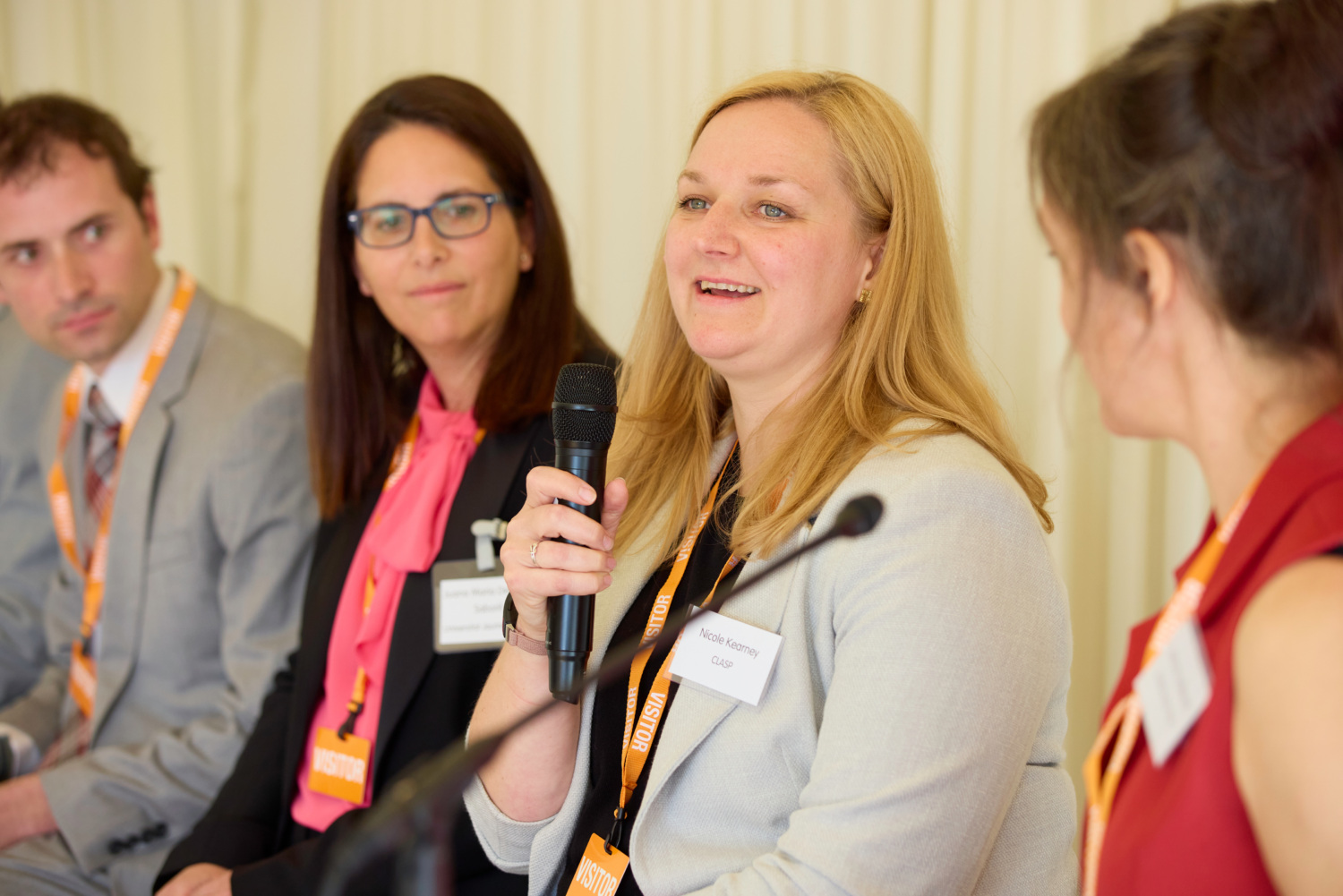
Nicole Kearney, Director at CLASP.
Photo by Douglas Kurn.

Larissa Lockwood, Director of Policy & Campaigns at Global Action Plan.
Photo by Douglas Kurn.

Afzal Khan, Member of UK Parliament.
Photo by Douglas Kurn.
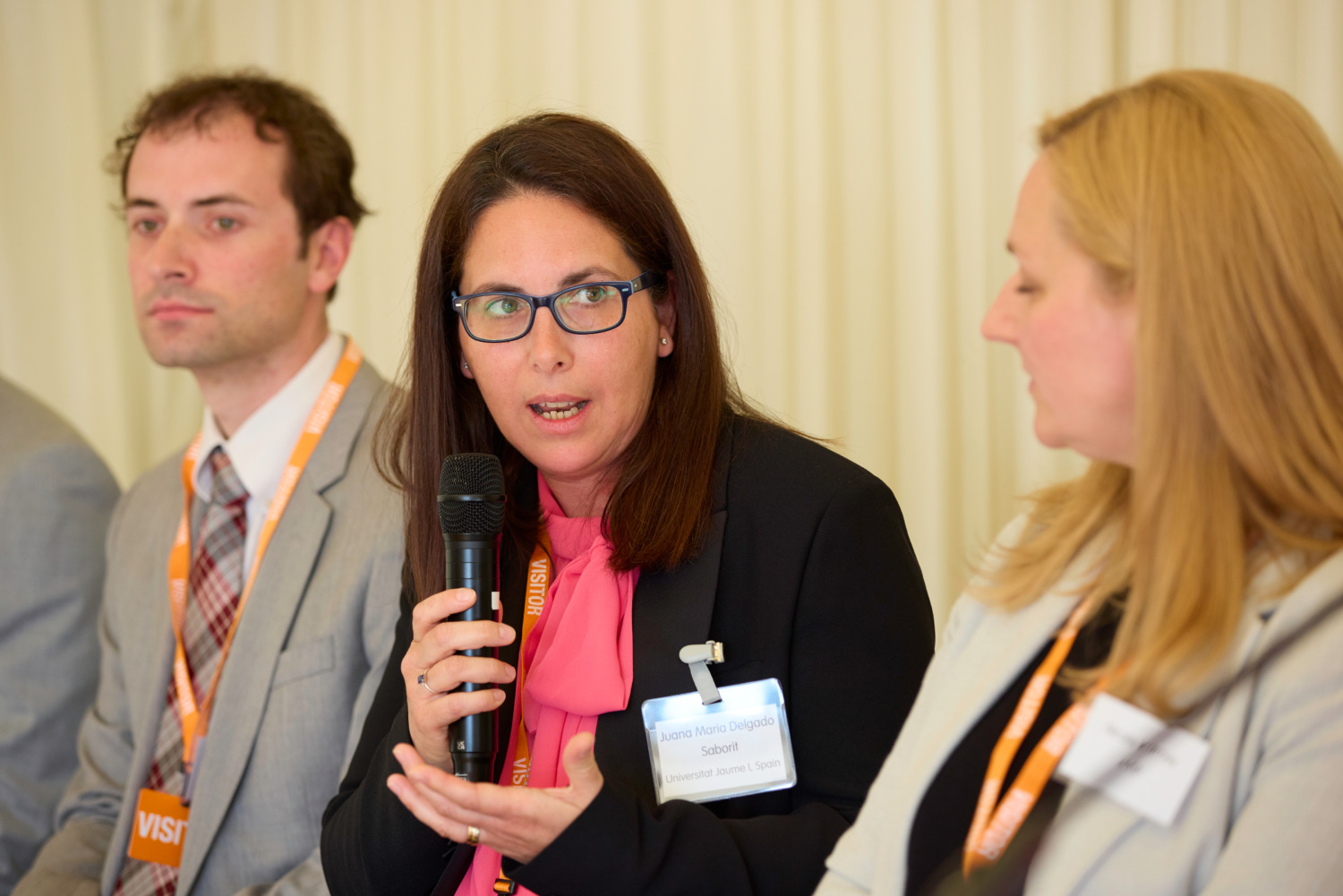
Dr Juana Maria Delgado-Saborit, Distinguished Researcher at University Jaume I.
Photo by Douglas Kurn.

Left to right: Yannai Kashtan, Air Quality Scientist, and Eric Lebel, Research Scientist at PSE Healthy Energy.
Photo by Douglas Kurn.

Cristina Pricop, Senior Associate at CLASP.
Photo by Douglas Kurn.

Left to right: Ed Green, Sustainability Director at Grosvenor, Rory Mathews, Senior Policy and Partnerships Officer at Greater Manchester Combined Authority, and Cristina Pricop, Senior Associate at CLASP.
Photo by CLASP.
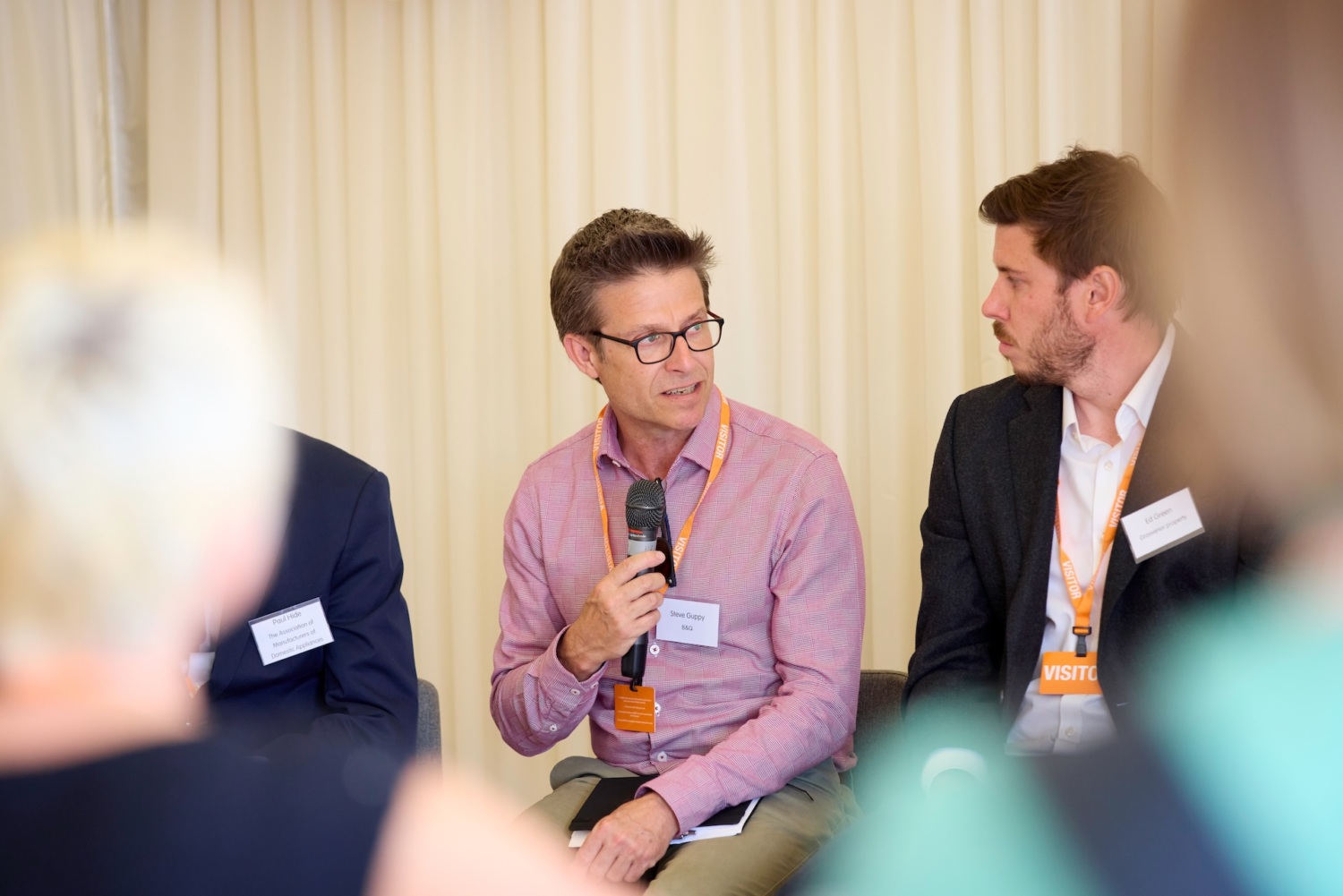
Left to right: Steve Guppy, Senior Sustainability Manager at B&Q, and Ed Green, Sustainability Director at Grosvenor.
Photo by Douglas Kurn.

Left to right: Rory Mathews, Senior Policy and Partnerships Officer at Greater Manchester Combined Authority, and Cristina Pricop, Senior Associate at CLASP.
Photo by Douglas Kurn.
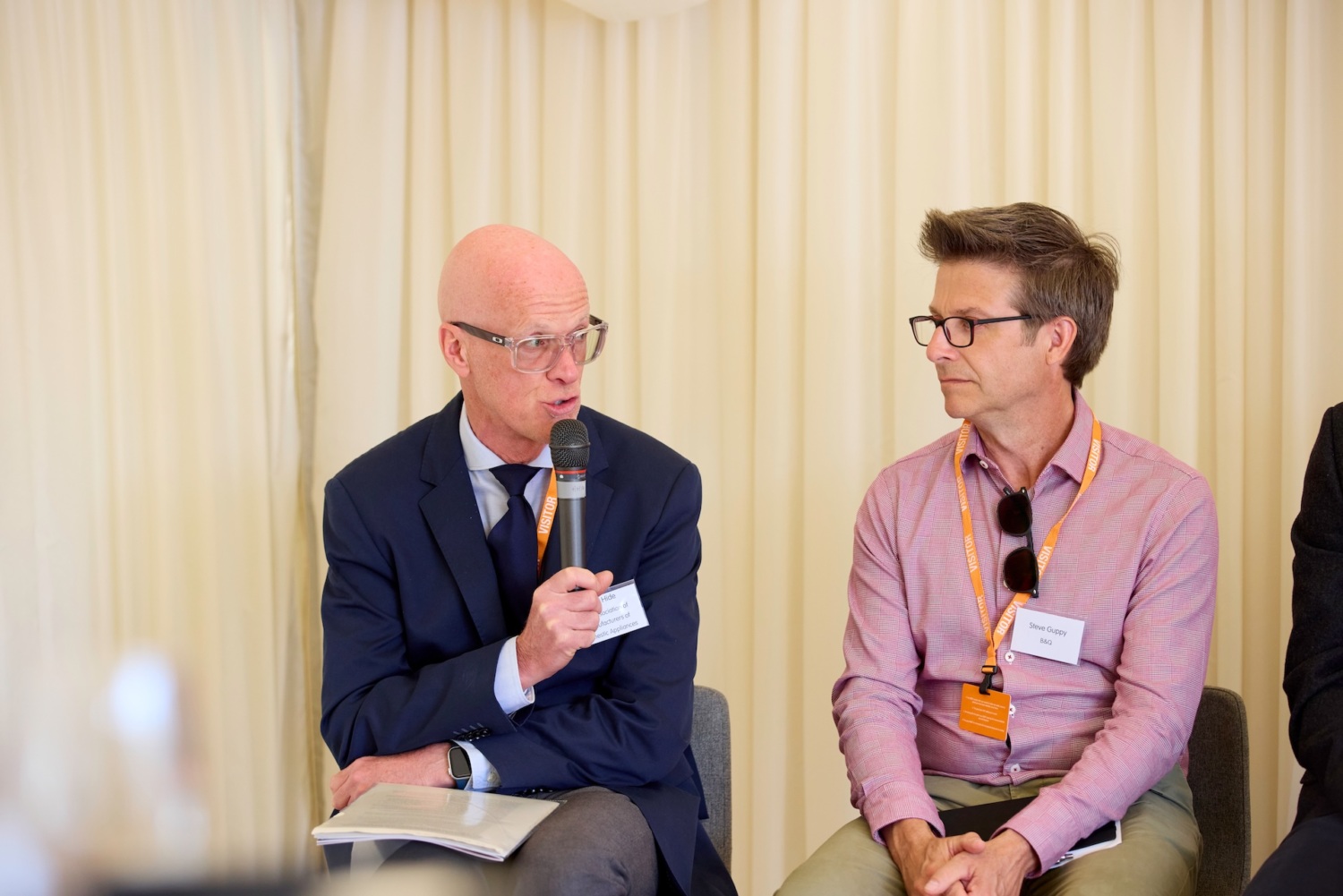
Left to right: Paul Hide, Chief Executive Officer at the Association of Manufacturers of Domestic Appliances, and Steve Guppy, Senior Sustainability Manager at B&Q.
Photo by Douglas Kurn.
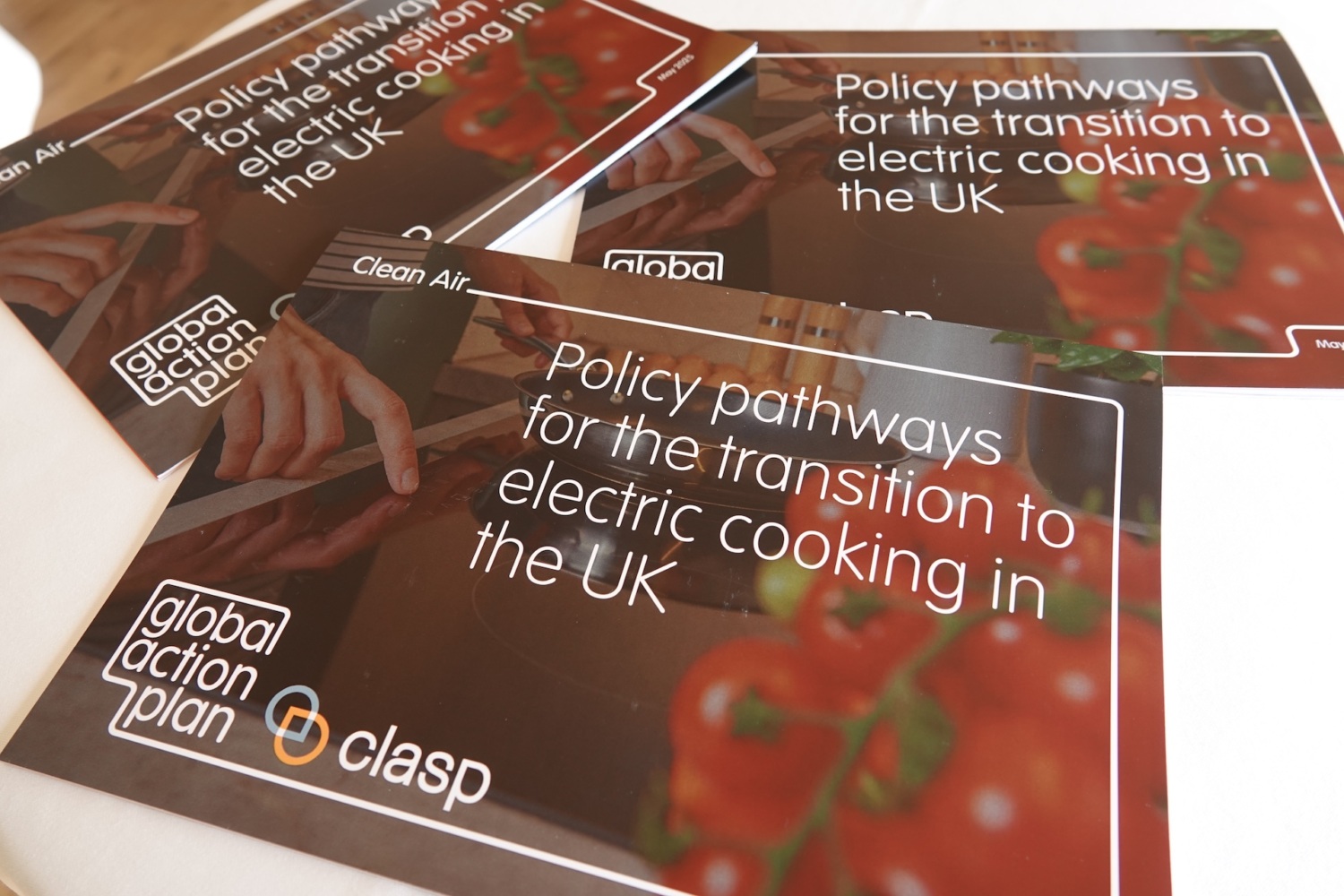
Photo by CLASP.
Larissa Lockwood, Director of Policy & Campaigns at Global Action Plan: “Homes with gas stoves can have nitrogen dioxide levels up to 400% higher than those without – this is the same type of toxic air pollution that comes from car exhausts and is linked to a range of health conditions including lung and heart disease. Transitioning from gas to electric cooking across the UK is a win-win: it will benefit public health through improving indoor air quality, as well as reducing household emissions and energy use. Today we are launching a robust policy roadmap that demonstrates how the UK can transition from gas to electric cooking by 2035, in line with Government home decarbonisation commitments and Climate Change Committee recommendations. We urge policymakers to ensure that UK households are not left behind in the transition to cleaner, safer, and more efficient cooking methods.”
Nicole Kearney, CLASP Director, Europe said: “As governments across Europe move to decarbonise heating, gas cooking remains a blind spot, a neglected source of indoor air pollution that keeps homes locked into using fossil fuels. The solution to bridge these gaps and make cleaner, healthier, and more efficient electric cooking accessible to everyone is available and ready for implementation. The UK Government should seize this opportunity and set a powerful precedent by championing an equitable transition.”
Manchester MP Afzal Khan, host of the parliamentary event, said: “Air pollution from gas cooking is linked to a range of health problems including asthma, lung and heart disease. I’m pleased to see Manchester leading locally on the transition from gas to electric cooking in social housing and demonstrating the value of electric cooking as a solution to improve air quality, boost public health, cut emissions and reduce household energy bills in the long run. We need to see action on a national scale to ensure that cooking isn’t left out of home decarbonisation efforts. Global Action Plan’s new report provides a comprehensive pathway to transition to electric cooking across the UK, and I urge the Government to review the recommendations set out within it.”
Quarterly polling by Opinium for Global Action Plan of 2,000 British adults shows that public awareness of gas cooking pollution and concern over its health, safety and environmental impacts is relatively low but has been steadily rising for years.
Some 2% of UK carbon dioxide emissions come from cooking. Phasing-out gas hobs would cut the equivalent of all of Birmingham, Glasgow, Edinburgh and Sheffield’s greenhouse gas emissions combined, CLASP calculates. The government had planned to phase-out gas boilers by 2035, but has so far overlooked the need to transition away from fossil fuel cooking appliances.
Ends
Notes
[1] Burning gas in the kitchen produces levels of indoor air pollution that exceed legal outdoor limits. The World Health Organization daily limit value for nitrogen dioxide exposure was broken in about half (55%) of British homes using gas hobs and/or gas ovens measured under normal living conditions by a Dutch scientific institute. Pollution spikes lasted several hours and were more intense the longer the cooking time. No breaches in homes using electric appliances were recorded. The same institute estimated that 557,326 British children report asthma symptoms. Spanish scientists built on the Dutch research to estimate the number of premature deaths in the UK from gas cookers.
[2] Public awareness of the risks has been growing steadily and gas cooker sales are slowly declining. But they still make up around 40% of sales and gas hobs are installed in around half of all UK homes. Government polling in 2023 found that two thirds of those asked intend to replace their gas hobs. The Government recognises air pollution as the biggest environmental health risk in the UK. Cookers and heaters are the main sources of air pollution inside homes that use gas. Despite this, there is currently no legislation or policy framework in place to warn UK consumers about the risks or encourage a shift to cleaner alternatives. Unless that changes, GAP estimates that well over 1.5 million new gas hobs will be installed in this parliamentary term, based on existing sales data. Gas cookers tend to be used for around 19 years, experts say, prolonging exposure to indoor air pollution.
[3] Residents in ten Southway Housing Trust properties agreed to have their gas ovens and hobs replaced with induction hobs and electric ovens in early 2025. Some of the gas cookers had been installed decades earlier. Interviews were conducted with all ten households one week before the installation and with seven that remained in the pilot one week after the retrofit. Of these, five said the transition was very easy and one said it was easy. Before the switch, only one household thought induction was easy to use. The project was supported by Beko, B&Q and Electrolux.
Contacts
- Global Action Plan press office press@globalactionplan.org.uk
- CLASP Director, Europe Nicole Kearney (EN) +44 75 4486 5924
- CLASP Senior Communications Associate Païline Caroni (EN, FR) +32 473 127 674
- CLASP Communications Consultant Jack Hunter: jack@fthe.fr +33 7 54 54 35 48
Global Action Plan mobilises people and organisations to take action on the systems that harm us and our planet. We are an environmental charity focused on issues where the connection between the health of people and our planet is most tangible. Our current focus issues are air pollution, big tech, and the education system.
CLASP is the leading global authority on efficient appliances’ role in fighting climate change and improving people’s lives. An international NGO with 25 years of expertise and offices on four continents, CLASP collaborates with policymakers, industry leaders, and other experts to create a more sustainable future for people and the planet. CLASP and our partners are dedicated to solving the world’s most pressing, interconnected crises: the climate emergency, poverty, inequality, and access to energy.
India Unveils 18 New Appliance Efficiency Policies
In a landmark year for energy policy, India’s Bureau of Energy Efficiency (BEE), with support from CLASP, advanced 18 appliance efficiency regulations in 2024. This is a testimony to the country’s fast-paced policymaking and strong national commitment to appliance efficiency as a key lever for climate action and energy security.
Fast-paced policymaking to meet urgent needs
As India undergoes rapid urbanization and industrial growth, the demand for appliances is surging. Left unchecked, this growth could place immense pressure on the power grid and accelerate emissions. Recognizing this, the government prioritized improvements that directly address the rising energy demand from homes, commercial spaces, and industry.
18 new policies – large emissions cuts and cost savings
CLASP advocates for appliance efficiency which ensures that everyday products from refrigerators and fans to inverters and TVs consume less energy while delivering the same or better performance. This is critical in a country like India, where millions of households are purchasing new appliances for the first time. By using higher effiicency appliances, India is building a more resilient energy system, reducing energy bills for consumers, and cutting emissions at scale.
The cumulative effect of these 2024 policies is significant. By 2030, they are expected to save over 180 terawatt hours (TWh) of electricity and avoid nearly 146 megatons (Mt) of CO₂ emissions.
Standouts include policies covering:
- Packaged boilers, commercial beverage coolers, solar inverters, and refrigerant compressors, which are collectively estimated to save 32.2 terawatt-hours (TWh) of electricity and avoid 24 megatons (Mt) of CO₂ emissions.
- Ceiling fans, a widely used appliance that will now become more efficient, saving 35.9 terawatt-hours (TWh) of electricity and avoiding 29 megatons (Mt) of CO₂ emissions.
Full list of 2024 appliance policies:
- Room air conditioners (RAC) (fixed speed-split and window)
Improving appliance efficiency across states
CLASP has also been working closely with the State Designated Agencies (SDAs) in Odisha and Kerala to support the implementation of India’s national appliance efficiency policies. By strengthening the adoption and enforcement of BEE’s Standards & Labeling program at the state level, CLASP is helping ensure that the benefits of energy-efficient appliances reach households and industries across these regions.
Aligning with CLASP’s global mission
Emissions reductions and energy savings not only bolster India’s energy security and climate goals but also resonate with CLASP’s global mission to advance appliance efficiency for people and the planet. By supporting national institutions like BEE in strengthening appliance efficiency policies, CLASP continues to catalyze transformative, long-lasting change.
Millions of People Lack Electricity. Solar Appliances Can Help
Cooling down on a scorching day, lighting the house at night, heating a pan to cook dinner: In wealthy countries, people take for granted the ability to meet their basic needs by switching on appliances. But in low-income nations, these appliances, along with the electricity needed to power them, are often out of reach.
As the planet warms, the lack of critical appliances has increasingly severe consequences, making it harder for people to thrive—and, in some cases, simply survive—in ever-harsher environments. Solar-powered appliances are a promising solution.
In this interview, Martha Wakoli, who works on CLASP’s clean energy access team in Nairobi, discusses their potential and how to reach it.
*
Sarah Wesseler, CLASP managing editor: Let’s start with some basics about solar appliances. What are they? Why should people who are interested in sustainable development and climate change care about them?
Martha Wakoli: Well, in places like the States or Europe, if you need light, you switch on a light bulb. But in other parts of the world, millions of people don’t have that option—they’re not connected to the electric grid. So they’ve found creative solutions for accessing services like lighting, cooling, and cooking. And that’s where the idea of solar appliances developed.
For a long time, this technology was used for things like charging phones and lighting homes. But increasingly, we’re seeing the potential to power much larger, almost industrial-level processes with solar appliances. Say you’re a clothing manufacturer in a place that doesn’t have electricity: The machines you need could be powered by the sun.
There’s more and more research and investment in these kinds of appliances. That opens a whole new pathway of solutions for the millions of people who continue to live without electricity.
Wesseler: When you say these appliances are powered by the sun, how does that work? I’m thinking about the US, where I live: A lot of people have solar panels on their roofs, but they still use standard appliances plugged into standard wall outlets. How are solar appliances different?
Wakoli: Well, with solar appliances, the appliance is connected directly to a solar panel on your roof via a cable. And depending on how many panels you have and how large they are, you could have multiple cables powering multiple appliances at the same time. And for appliances that are used outdoors—water pumps, for example—the cables from the solar panel also run directly to the appliance.

Solar irrigation in India
Credit: IDE Global / Bimala Colavito
Wesseler: What if the sun’s not out? Can you still run solar appliances then?
Wakoli: Yes. Solar appliances come with a little bit of energy storage, typically in the form of a battery, that allows them to keep functioning when it’s not sunny. For example, solar refrigerators keep things cool even at night.
Wesseler: That all makes sense. But why not just connect more people to the electric grid? Why focus on solar appliances instead?
Wakoli: There are a lot of reasons, but the most important is that it’s typically much more expensive to extend the power grid to far-flung places than it is to provide solar appliances. Solar appliances are more cost-effective in rural areas.
Providing solar appliances is also faster than building out the grid, which takes a long time. This is important given the urgency of the climate disaster, which we’re observing in real time, whether it’s heatwaves in India or droughts in Zambia. People need appliances that can help them adapt to climate change now.
Credit: Monica Tiwari, SPI

Credit: Efficiency for Access
Solar appliances can also help people build climate resilience and empower them to be more active participants in their own development. I’ll give you an example: In Mozambique, the government used taxpayer money to build an electric grid, but in 2023, Cyclone Freddie knocked it out. Compare that to decentralized systems, where people can have their own solar panels on their roofs or solar pumps on their farms. Because these appliances are modular, the scale of damage tends to be much smaller.
This kind of resilience is especially important for facilities like schools and hospitals. When floods or droughts make it impossible for them to operate where they are, there’s not much they can do if they rely on the electric grid. But with solar, they can move to a safer location and take their power source with them.
Another reason is that the grid itself is changing. Around the world, we’re preparing for what we’re calling the grid of the future. A lot of people now have electric vehicles, and in some areas, these vehicles can be plugged back into the wall, sending that power back to the grid, right? So you now have a complex bidirectional electric system that’s very different from what has existed for the last 70 years. Instead of having very few energy producers and many consumers, you have a growing number of what’s called “prosumers”: They produce the energy and they’re also consumers. This subset of people is growing everywhere.
Wesseler: You recently led research seeking to understand the number of people globally who need solar appliances. Why did you focus on this issue in particular?

Solar appliances can help people build climate resilience and empower them to be more active participants in their own development.Martha Wakoli
Wakoli: Well, in the development sector—so essentially, organizations that are trying to lift people out of poverty—if we cannot quantify a problem, it is difficult to know what interventions are needed in terms of money, regulations, and human capital. So providing information like this helps decision makers develop solutions.
And in this case, the problem we are looking at involves energy services to help marginalized people lift themselves out of poverty while also building resilience. This is important because, as we know, these groups are already being affected by climate change. So one goal of our work is to help the development and climate sectors understand that they’re working toward a common target.
This is particularly critical because, as we recently saw at COP29, there’s still a lot of resistance to the idea that the nations most responsible for climate change should fund other nations to protect themselves from it. But what the international community needs to understand is that that if we don’t mitigate climate disasters in the most vulnerable communities, the damage won’t just stay in those communities. Issues like climate-driven displacement and public health crises can easily spill over borders, making climate change an even more complex and expensive problem to solve. So I believe the international community should collaborate to address energy access challenges immediately to avoid this complication.
Wesseler: What did you learn from the research?
Wakoli: The key finding was that only about 2% of the need for key appliances is being met.
I think people in the international development and energy sectors intuitively knew that we are falling behind on providing universal electricity access, but there was still maybe not a good understanding of how far behind. With this research, we put a number to it: There are over 500 million people who need these appliances but don’t have them and won’t be able to afford them unless there are major changes in the appliance sector. That’s a massive gap.

Solar mill in Nigeria
Credit: CLASP
Wesseler: What would it take to close this gap?
Wakoli: Well, we need more investment at all levels of solar appliances. We need to invest in people who can support the sector: students, researchers, manufacturers, distributors, maintenance people. Companies need money to build these appliances, to test business models, to scale. We also need money for governments to conduct awareness campaigns. People need to go into communities to let them know about these appliances and demonstrate how they work.
We also need more cross-disciplinary dialogue. Lifting people out of poverty requires more than electricity or appliances; the solution has to involve people who work in agriculture, environmental advocacy, etc. A practical example is solar water pumps, which make it easier for farmers to generate income. But productivity is not only a function of water; farmers also need good seeds, fertilizer, and good soil. So people outside the energy sector need to be involved as well.
Ultimately, we need to build a market that can exist without external support. Think of Coca-Cola. Soda is the one thing that is ubiquitous in every place I have been, even where people don’t have high incomes. Coca-Cola has figured out how to reach the last mile in countries like Kenya and India. The solar appliance sector needs to get to the same place.
Developing a self-sustaining market for solar appliances will require collaboration across governments, the private sector, and development partners. Governments need to prioritize solar appliances and other energy-efficient solutions as part of their national electrification strategies, and the appliance sector needs to build muscle in distribution and consumer awareness. What’s more, all these actors need to prioritize ensuring that solar appliances support increased productivity, driving up incomes for communities living below the poverty line.
Many critical pieces of this puzzle are currently missing. Right now, a lot of the money in the solar appliance sector comes from European governments as part of their international aid programs. But if we’re thinking about a sustainable solution for more than 50 countries and more than half a billion people, it cannot be contingent on well-wishers alone.
Interview edited and condensed.
The Push for Efficient, Healthy Cooktops
Hobs, also known as cooktops, are found in nearly every household, yet they lack proper scrutiny in terms of their nitrogen dioxide (NO2) emissions and energy efficiency.
The impact of gas cooktops on health and climate
- Gas hobs contribute to poor indoor air quality. CLASP and Jaume I University’s research shows that gas hobs emit levels of NO2, that exceed outdoor air quality standards in the EU and UK, which can be harmful to our health. Until now, gas hob manufacturers have been able to sell appliances without any consideration of the amount of NO2 they emit. Introducing new NO2 tests and limits for gas hobs will help reduce pollutants emitted into the kitchen and improve indoor air quality.
- The energy efficiency of gas hobs is also overestimated, in comparison to their electric counterparts. Gas and electric hobs are currently tested in different conditions, which could result in overestimated energy efficiency results for gas-fueled technologies. For example, gas hobs are tested using pots which are larger than those typically used in kitchens – a larger pot captures more heat from the flame, which results in better efficiency than if a smaller pot is used.
Without real-world and comparable electric and gas energy efficiency performance standards, it is impossible to accurately assess which appliances are best for human health and reducing climate emissions. CLASP’s research shows that more ambitious policies could cut emissions by 60Mt CO2 by 2050.
To help address these issues, CLASP has developed a new method to test gas and electric hobs that reflects how people cook and identifies potential technological improvements. This test method also satisfies energy efficiency and health-related concerns.

CLASP’s call to action for the European Commission and Member States
- Set NO2 emissions limits: Setting limits on NO2 emissions from gas hobs is critical for improving indoor air quality. CLASP encourages the adoption of a new emissions test, with meaningful limits, to ensure only the safest and cleanest appliances make it to the market.
- Introduce a comparable test method for gas and electric hobs: The European Commission should adopt an improved and comparable test method that provides a fair and accurate energy efficiency rating for gas and electric hobs. When these appliances are tested in the same conditions, consumers can better identify the best options which will in turn drive innovation within the industry.
- Transparency of efficiency and emissions data: Consumers and policymakers need open access to better information on how these products perform on energy efficiency and emissions. An improved common test method will ensure people can accurately and fairly compare the performance of different hob technologies. Energy and emissions data should be shared with the product specifications on product websites and in instruction manuals, and in a future energy label for hobs. This will allow people to make informed decisions about the products they purchase, and governments will have better data to develop more impactful policies.
- Take immediate action: CLASP emphasizes the need for swift policy adoption, application, and revision timelines. Slower timescales will result in missed opportunities to protect people’s health, reduce utility bills, and climate mitigation impacts. The European Commission should collaborate with national institutions and industry to collect data on emissions and energy efficiency to guide future policy revisions.
In the European Union, countries like Italy and Poland continue to rely heavily on gas cooking appliances. CLASP’s proposed policy changes could have a wide-reaching impact. Our latest research, based on consumer surveys conducted in eight European countries, shows that most Europeans believe manufacturers should improve product efficiency and reduce pollution emitted by hobs. Consumers also hold government responsible for supporting their transition away from gas to cleaner, electric cooking.

CLASP’s recommendations are backed by health and environmental organizations, including the European Public Health Alliance (EPHA), the International Society of Doctors for the Environment Italy, and Respire. Organizations, like ECOS and the European Environmental Bureau, are working on improving standards and policies for cleaner, efficient, and sustainable cooktops, amongst other products, while EPHA is working towards policies for better indoor air quality.
CLASP and partners call on policymakers, industry leaders, and consumers to support these crucial changes for a healthier, more sustainable future.
For more information about CLASP’s research on gas and electric cooking, visit: https://www.clasp.ngo/cook-cleaner-europe/
UK Aid to Support Research in the Global Push to Transition to Electric Cooking Solutions
At the UN Climate Change Conference in Baku, Azerbaijan (COP 29), UK Aid (FCDO) announced a substantial extension of their Modern Energy Cooking Services (MECS) program. This funding boost will help accelerate the adoption of clean cooking practices and transform the lives of millions of people across Africa, Indo-Pacific, and South and Southeast Asia. CLASP looks forward to continued collaboration with MECS to expand access to clean, modern cooking solutions.
Clean cooking: Good for people and planet
The MECS programme is speeding-up the shift to clean cooking by driving research, testing new technologies, and tracking global tools and trends. It targets the 2.1 billion people—26% of the world’s population—who still rely on polluting fuels such as firewood and charcoal for their cooking. A transition to modern, clean cooking would help eliminate the harmful effect of these fuels on income, health, and the environment and have a profound social and economic impact on communities, especially on the women and children that bear the disproportionate burden of collecting fuel and preparing food.

MECS extension powers future impact
The MECS extension builds on the six-year success of the MECS programme in advancing the clean cooking agenda globally. To date, the programme has helped 3.8 million people adopt cleaner, more efficient cooking practices that lower fuel use, improve air quality, and boost income. It has also attracted £400 million of additional investment for clean energy innovation and published over 300 research papers. This compelling evidence base has already informed the adoption in policy of electric cooking (e-Cooking) in Kenya, Uganda, and Tanzania.
Aligning with the global goals
The MECS programme budget will increase by £44 million, raising the total value to £99 million, and pushing its work to December 2030 to align with the target dates of the Sustainable Development Goals. This extension will enable the implementing partners to continue driving even more impactful clean cooking solutions. By 2030, MECS aims to improve clean cooking access for 10 million people, leverage £1 billion in investments, publish 650 research products, and influence policy adoption in 12 countries. The MECS extension is expected to have reach across 17 countries in Africa, Indo-Pacific, and South and Southeast Asia, where clean energy transitions are urgently needed.
About CLASP
CLASP is the leading global authority with 25 years’ expertise on how applianceefficiency drives climate mitigation, adaptation, and improves the lives and livelihoodsof people. An international non-profit with offices on four continents, CLASPcollaborates with policymakers, appliance manufacturers, and leading experts todeliver sound policy recommendations, innovative tools, ground-breaking research,and clear pathways to a more sustainable world for people and the planet.
Moving Towards Healthier, Efficient Electric Cooking: Consumer Perspectives from Eight European Countries
This CLASP report presents insights from surveys of 8,000 demographically representative adults across eight European countries, France, Italy, Poland, Romania, Slovakia, Spain, Sweden, and the United Kingdom. The research provides valuable data for European policymakers on ways to accelerate the transition to cleaner, more efficient electric hobs (cooktops).
The report examines European consumers’ views and behaviours concerning gas and electric hobs, focusing on their usage, preferences, energy efficiency awareness, purchase criteria, health perceptions, ventilation practices, and opinions on potential policy measures.
Key Findings
- Most Europeans support a shift to cleaner, safer, and healthier electric cooking, but they need more exposure to induction technology to be fully convinced of its benefits.
- Supportive pricing and clear information are key factors in encouraging the transition to electric cooking, as consumers tend to prefer more energy-efficient and less polluting products.
- Consumers lack accurate information about the real efficiency of different hob technologies; their views are shaped by their personal experiences and familiarity with the hobs they use.
- Europeans have limited awareness of the impact gas cooking has on indoor air quality and often fail to ventilate adequately while cooking.
- Consumers feel that it’s the manufacturers’ responsibility to reduce pollution from gas hobs, and governments should help support the transition to more efficient and healthier electric cooking.
Recommendations
- Consumers should be able to select the most energy-efficient and least polluting hobs. Ecodesign regulations should remove the least efficient and most polluting options from the market. Clear information on the health risks of gas hobs should be made available through instruction manuals, webpages, or displayed on a future energy label or warning icon on hobs and ventilation hoods.
- National governments should offer incentives to encourage the shift to electric cooking and ensure that electricity prices are competitive with gas.
- Consumer organisations, non-governmental organisations, and forward-thinking producers and retailers should inform consumers about the health risks of gas cooking and the benefits of electric hobs. A successful transition to cleaner, more efficient electric hobs requires consumers to experience a new electric technology firsthand.
European consumers are ready for a shift to healthier, more efficient electric cooking, but to make this transition possible, people need clear information and supportive policies.Nicole Kearney
CLASP Europe Director
The surveys address technical, behavioural, and policy questions related to hob usage, which have been raised by policymakers, industry, and civil society. Detailed results for each country can be found in the annexes.
To ensure objectivity and representative results, CLASP commissioned Opinium Research, an independent polling organisation, to conduct the surveys. CLASP analysed the Europe-wide data and compiled this report, which builds on Opinium’s national analyses and findings.
Visit our Cook Cleaner Europe webpage to view additional resources on gas and electric cooking.
The Induction Revolution: Top Chefs Embrace Electric Cooking
The shift to induction stoves is gaining momentum in professional kitchens around the world, as demonstrated at the Global Cooksafe Coalition’s (GCC) launch in the United Kingdom on 3 June 2024. CLASP participated in the event, along with world-renowned chefs, public health and climate experts, and industry leaders. There was consensus in the call for a rapid transition from fossil fuel powered cooking to healthier, affordable, and safer electric kitchens powered by renewable energy.

Key Takeaways from the Event
- Culinary excellence: Modern electric cooking technologies provide excellent cooking performance for both professional and home kitchens as they offer precise temperature control and the ability to heat food faster.
- Health and safety: Transitioning to electric cooking can significantly improve indoor air quality and reduce health risks associated with gas cooking. Electric cooking also creates safer cooking conditions, with more manageable room temperatures for chefs, compared to open flame stoves. This reduces heat-related stress and fatigue and leads to higher productivity and better physical and mental health.
- Environmental impact: Electrifying kitchens is a critical step in decarbonizing restaurants and homes, lowering climate emissions, and achieving global climate targets.
- Economic viability: Electric stoves are much easier to clean than gas stoves, saving restaurant staff hours each week. In addition, renewable energy combined with electric appliances offers a cost-effective and stable energy solution, reducing dependency on volatile fossil fuel markets.
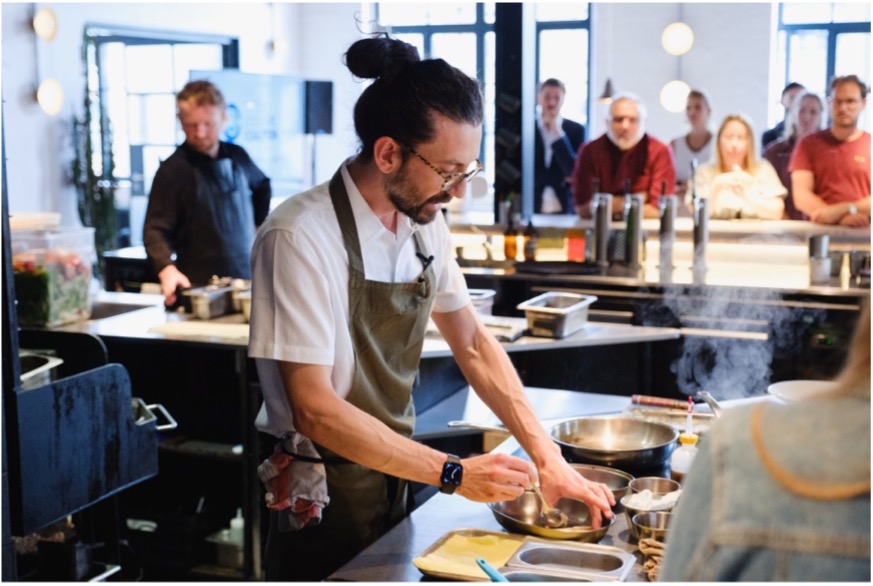
I worked in a couple of kitchens doing pop-ups and things where they had induction suites and I just really enjoy working on them. I loved the control. I loved the ability to clean it so easily and also not having so much heat generated from it. I actually switched my entire house to induction very recently. I just felt it was the future.Chef John Chantarasak
Owner of AngloThai
Top UK Chefs Embrace Electric Cooking
During the event, professional chefs and GCC ambassadors, John Chantarasak and Chantelle Nicholson, along with Chef Douglas McMaster, highlighted the advantages of electric cooking. They demonstrated how modern induction stoves offer precise control and superior cooking quality, dispelling common misconceptions about electric cooking’s limitations.
The Future is Electric
Chefs around the world are increasingly embracing electric alternatives like induction, making it a compelling option for households as well. Innovations in electric cooking technologies cater to all varieties of culinary needs.

Induction is just so accurate, so precise, so clean. It’s 3 times more efficient. It’s absolutely the way forward.Chef Douglas McMaster
Owner of Silo London
By using electromagnetic energy to directly heat cookware, induction stoves produce less ambient heat, creating a safer, healthier, and more comfortable work environment, particularly during busy restaurant shifts. The absence of open flames on electric or induction stoves also reduces the risk of accidental fires and eliminates pollutants caused by burning gas.
Reducing Risks for Healthier Homes
Electrifying kitchens is a solution to growing health concerns. Cooking with gas releases toxic pollutants, such as nitrogen dioxide and benzene, into kitchens and homes. It puts people at greater risk of respiratory diseases like asthma, particularly for vulnerable groups such as children or those with pre-existing health conditions. There is growing evidence linking combustion-related air pollution with adverse health effects on brain development in young children. For adults, emissions from gas cooking can lead to negative impacts on the brain, respiratory, and nervous systems.
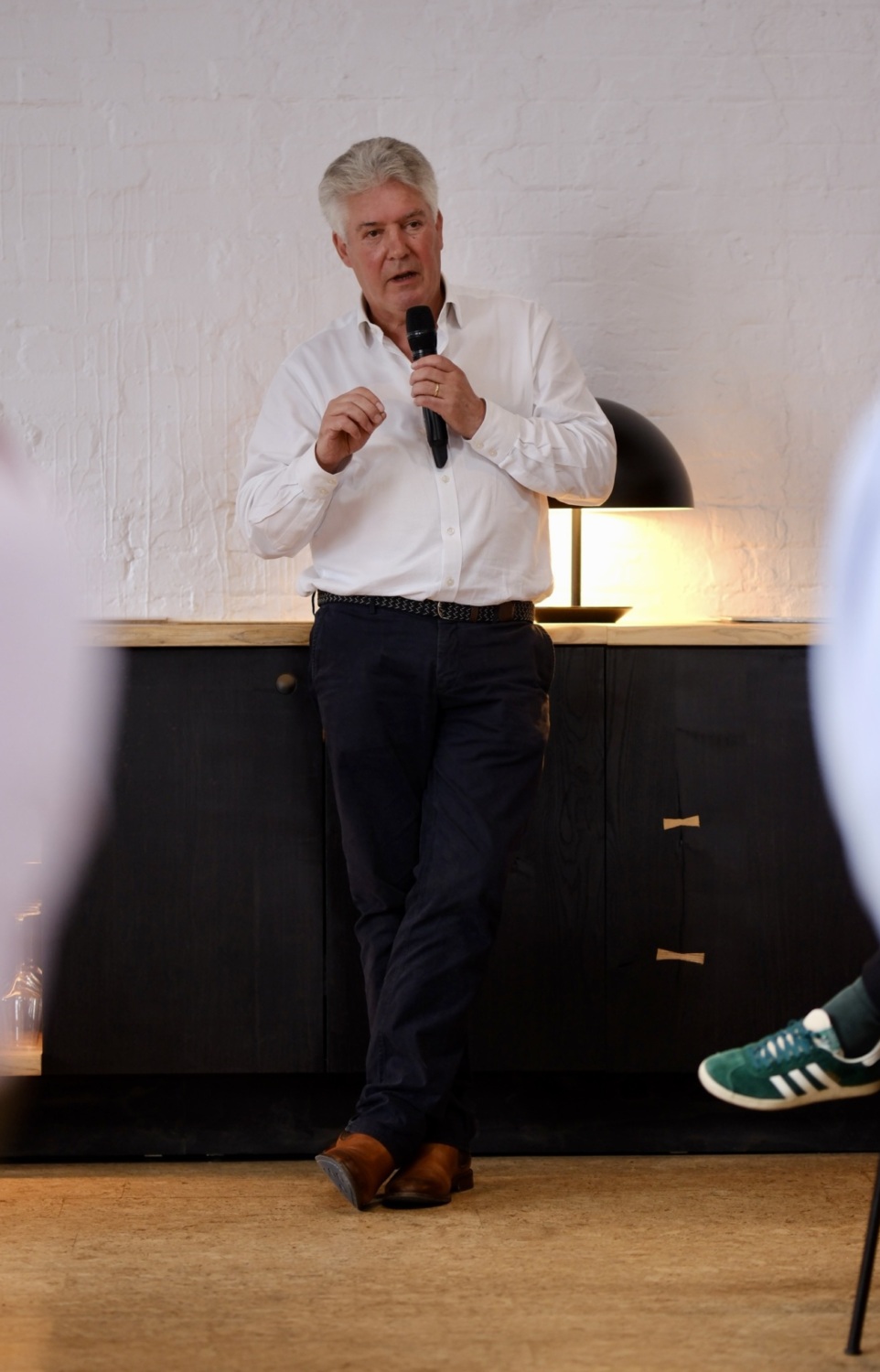
We spend roughly 80% of our time indoors – in our homes, in our schools, in our workplaces. So why has all the focus and concentration been on what we breathe outdoors when we’re potentially at more risk breathing what is present in indoor air?Professor Frank Kelly
Battcock Chair in Community Health and Policy, Imperial College London
Transitioning to electric appliances and ensuring proper ventilation can help lower the risks of gas cooking. For people who cannot adopt electric options, there are several ways to minimize exposure to gas cooking emissions. Find out how to improve the air quality in your home when you use a gas stove or oven.
About the Global Cooksafe Coalition
As a founding member of the GCC, CLASP supports the coalition’s mission by researching cleaner, more efficient electric alternatives while also addressing the health and environmental impacts of cooking with gas. Together, CLASP and GCC work for a healthier and more sustainable future for all.
More information about CLASP’s research on gas and electric cooking: www.clasp.ngo/cook-cleaner-europe
For more information about the GCC’s launch in the United Kingdom: www.cooksafecoalition.org/grosvenor-lendlease-electric
CLASP’s Impact Working with Africa’s Clean Cooking Sector
Modern, clean and efficient cooking solutions, such as electric pressure cookers and induction cookstoves, deliver proven health, economic, and social benefits – even in off-grid areas. Despite this, over 900 million people in Africa still lack access to these life-improving appliances.
CLASP and our partners are engaged in various initiatives across the continent to enhance the affordability and adoption of clean cooking appliances. These aim to reduce indoor air pollution, reduce the risk of fire, promote gender equality, and demonstrate the energy and cost savings associated with clean cooking practices.
Clean Cooking Improves Health and Air Quality
Household air pollution from cooking with polluting fuels is responsible for an estimated 3.2 million premature deaths annually. A significant portion of these deaths occur in low- and middle-income countries. CLASP aims to reduce the incidence of respiratory diseases and environmental damage linked to household air pollution by promoting the increased adoption of efficient, clean cooking appliances. CLASP is doing this through a range of programs such as the Global LEAP Induction Cooktops and Electric Pressure Cooker Competitions. These showcase sustainable alternatives to traditional biomass cookstoves as well as harmful fuels like kerosene. CLASP invites companies developing and supplying induction stoves to submit an expression of interest for their products to undergo usability testing in Kenya and India.
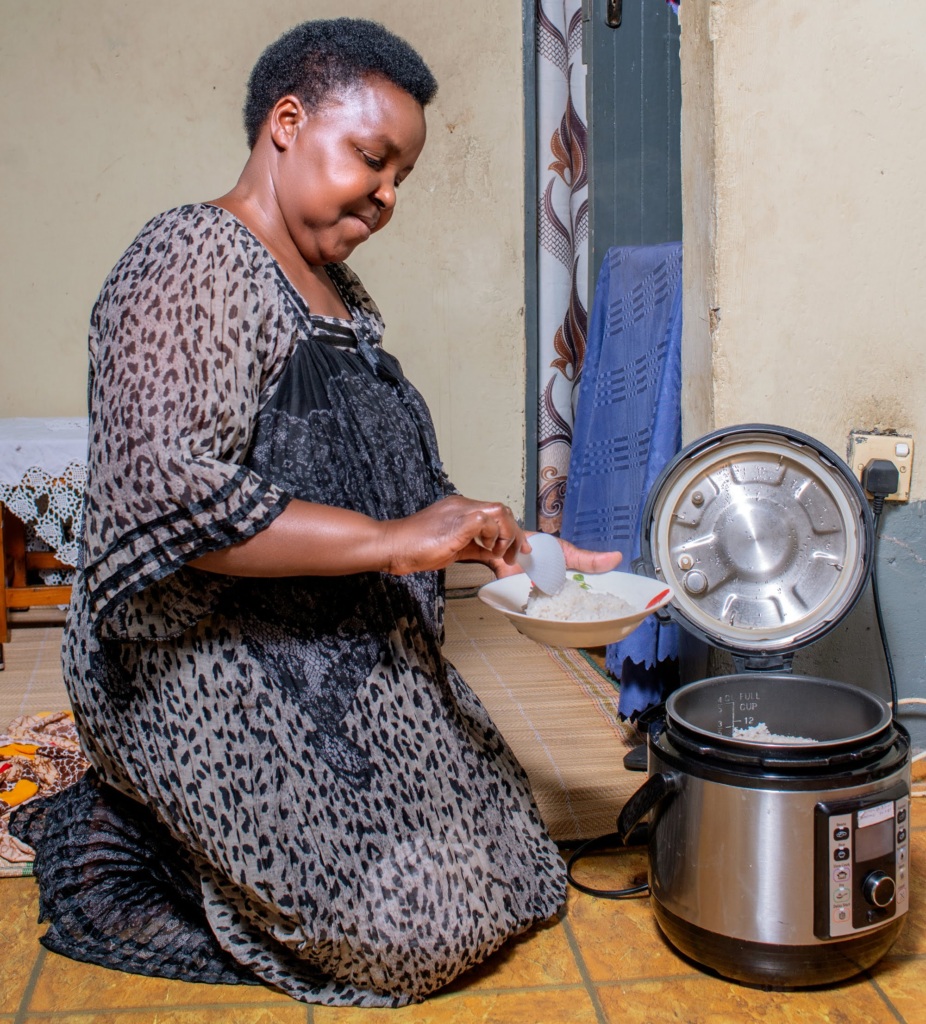
Product Testing Builds Consumer Awareness and Trust
Modern cooking appliances suitable for off-grid homes and businesses are still a developing market. This causes variations in quality, durability, and performance among the available products. CLASP conducts performance testing in household and business contexts to evaluate product performance and publish the results. This ensures consumers know which products to invest in, and manufacturers have clear benchmarks to improve the design and development of cooking solutions. This promotes energy-efficient, cost-effective, and high-functioning appliances on the market.
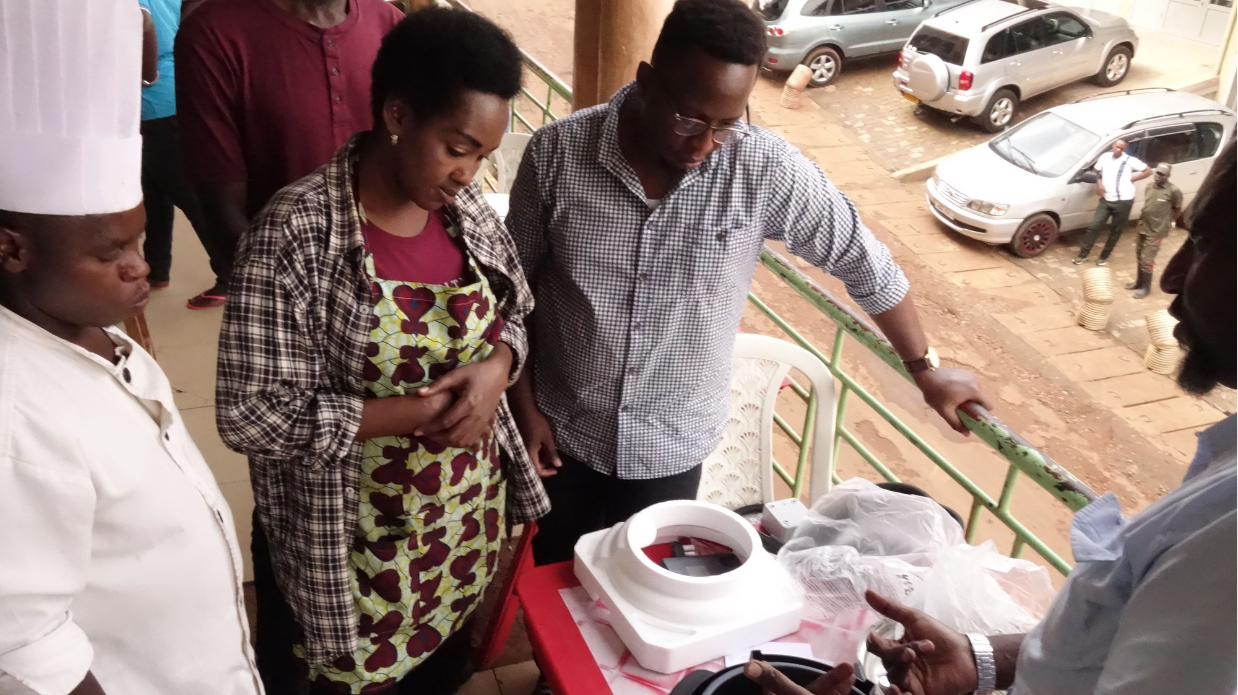
Innovative Financing Drives Supply and Affordability
Many clean cooking appliance businesses in Africa struggle to expand their customer base and scale their operations due to a lack of finance and the high costs associated with importing quality products. To address this, CLASP and our partners created initiatives such as the Higher-Tier Cooking Component (HTCC) and the Productive Use Financing Facility. Both these programs provide procurement subsidies and help companies bulk-buy electric cooking equipment, lowering their purchasing price and unlocking new markets. In addition, the companies test the performance of these products through VeraSol to verify product quality.
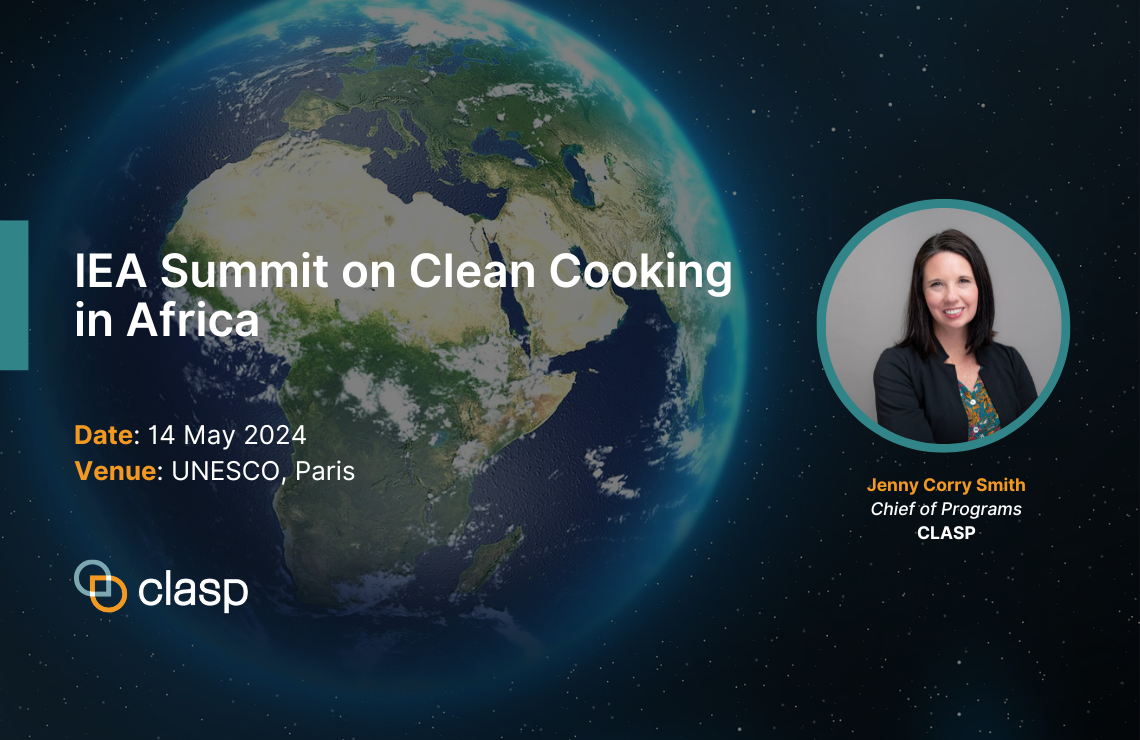
CLASP’s Chief of Programs, Jenny Corry Smith, attended the IEA Summit on Clean Cooking in Africa on 14 May 2024.
Update 14 May 2024:
At the close of the Summit on Clean Cooking in Africa, CLASP, along with a host of national governments, international organizations, civil society organizations and companies signed The Clean Cooking Declaration: Making 2024 the Pivotal Year for Clean Cooking. This declaration pledges to make clean cooking a priority, and enhance efforts toward achieving universal access for all.
The declaration emphasizes the importance of developing financing, policies and partnerships on the topic. The IEA also announced the mobilization of USD2.2 billion in related public and private sector pledges. Clean cooking is seen as essential in support of achieving Sustainable Development Goal 7, access to affordable, reliable, sustainable, and modern energy.
The Respiratory Benefits of Electric Cooking
CLASP is collaborating with partner organizations and policymakers around the world to address the health and environmental impacts associated with open-flame cooking appliances, and increase the uptake of electric cooking.
CLASP research shows that gas and solid fuel stoves produce a cocktail of air pollutants within homes, posing significant risks to respiratory systems. These pollutants impact people and children with asthma more notably. However, the solutions already exist: transitioning to electric cooking appliances. Replacing open-flame stoves with cleaner, energy-efficient electric alternatives remains the healthiest and safest option available.
Addressing Gas Cooking
Cooking with gas emits a cocktail of pollutants, one of them, nitrogen dioxide (NO2), is formed when gas flames react with oxygen in the air. A recent CLASP study conducted in Europe found that levels of NO2 in households with gas cooking appliances often exceed WHO air quality guidelines. In fact, indoor air quality, particularly in gas-cooking households, can often be poorer than outdoor air quality.

CLASP is working with the European Commission to introduce NO2 limits into the Ecodesign standards that govern cooking appliances. More information on CLASP’s research and recommendations on gas and electric cooking in Europe can be found here.
Tackling Solid Fuel Cooking
In regions like Africa and South East Asia, millions rely on burning solid fuels, like coal, firewood, and biomass for cooking. This has significant health consequences.
“The evidence is clear: transitioning to electric cooking is a vital step towards protecting respiratory health and reducing air pollution. CLASP is fostering healthier homes and communities worldwide by promoting cleaner, safer, and more sustainable, energy-efficient cooking appliances, to make a tangible improvement on people’s lives.” Sam Grant, Senior Director of Clean Energy Access at CLASP
To mitigate the air pollution caused by cooking methods in Rwanda and Uganda, CLASP is encouraging the widespread adoption of affordable electric pressure cookers. In India, CLASP promotes the adoption of efficient induction cookstoves, as a cleaner alternative to traditional solid fuel cooking appliances.
Understanding the Respiratory Risks
Air pollution stands among the World Health Organization’s (WHO) top ten global health concerns. The WHO considers NO2 a dangerous air pollutant that can cause serious respiratory problems, including, “…bronchoconstriction, increased bronchial reactivity, air way inflammation and decrease in immune defense leading to increased susceptibility to respiratory infection.”

Those already suffering from asthma symptoms are particularly sensitive to the pollutants emitted by gas and solid fuel cooking appliances.
“Electric cooking is not just about preparing meals: it is about safeguarding our health. NO2 exposure, brief or prolonged, harms respiratory health. Studies indicate that switching to electric cooking could prevent as many as 700,000 children in Europe from developing asthma, making up 12% of all cases. Recognizing these risks, EPHA is mobilizing the public health community and advocating for policy changes that promote electric cooking, safeguard respiratory health, and ensure a healthier future for all.” Sara Bertucci, Policy Manager at the European Public Health Alliance
Clean Cooking Solutions
Both health and air quality experts recommend accelerating the transition to electric cooking. To minimize exposure to cooking pollutants, effective ventilation practices can be beneficial, but the ultimate solution is adopting plug-in electric appliances. Governments have a pivotal role to play by enforcing stricter appliance standards and incentivizing the widespread and equitable adoption of electric cooking appliances. Manufacturers and healthcare professionals should also inform people about the indoor air pollution linked with gas and solid fuel cooking appliances, as well as possible alternatives.
Collective action from policymakers, manufacturers, and healthcare professionals can ensure significant progress is made in reducing people’s exposure to cooking emissions and promoting respiratory health.
Seven Clean Cooking Companies Selected for CLASP Support in Uganda
Although improved access to modern, energy-efficient cooking appliances offers substantial health, economic, gender, and quality of life benefits, many small businesses in this sector still face market challenges. CLASP, in partnership with GIZ Uganda, the Netherlands Enterprise Agency (RVO), and the European Union (EU), wants to change this. Together, they will disburse $230,000 USD in subsidies to support seven small and medium businesses selling a range of electric cooking and higher-tier biomass stoves in Uganda.
Strengthening Supply for Local Businesses
This initiative, called the Higher Tier Cooking Component (HTCC) Uganda, aims to strengthen the supply side of the clean cooking sector. It works by providing procurement subsidies that the companies use to scale their business operations and increase their customer base. In turn, this will increase the affordability of higher-tier cookstoves in Uganda.
Companies selected for support
| Company | Cooking Appliance |
|---|---|
| Bidhaa Sasa | Electric Pressure Cookers, Charcoal Stoves |
| Conservation and Development Uganda Ltd (CODE) | Biomass Pellet Stoves |
| Ezylife Holdings Limited | Charcoal Stoves |
| Potential Energy, Inc. | Electric Pressure Cookers |
| ReNewable Hub (U) LTD | Electric Pressure Cookers |
| TEECO Uganda Limited (a subsidiary of PowerUp) | Electric Pressure Cookers |
| UpEnergy Uganda Limited | Electric Pressure Cookers |
Financing for Clean Cooking Outcomes
Through the program, CLASP and its partners aim to enhance the affordability of clean cooking appliances, reduce indoor air pollution, and highlight the energy and cost savings that stem from clean cooking. The ultimate goal is to increase the adoption of more efficient clean cooking appliances for households and small businesses across Uganda.
“CLASP is optimistic that our support will enable the selected companies to ramp up their e-cooking sales,” commented Sam Grant, Senior Director of Clean Energy Access at CLASP. “Similar to other initiatives focusing on clean cooking for this market, we are keen to see the number of Ugandans with access to clean cooking rise far above the current 5% of the population.”
The selected companies are expected to cumulatively sell over 12,000 electric pressure cookers and higher-tier biomass stoves. This will enable access to high-quality, low-emissions, and energy-efficient cooking technologies for more than 60,000 end-users between April 2024 and March 2025.
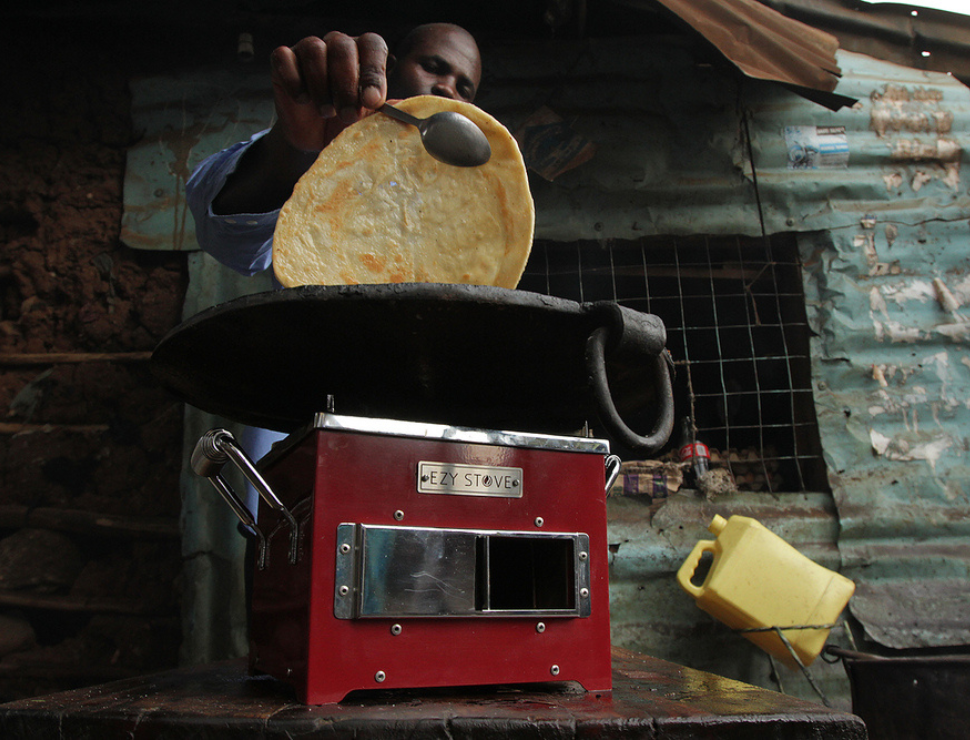
Image credit: EzyLife
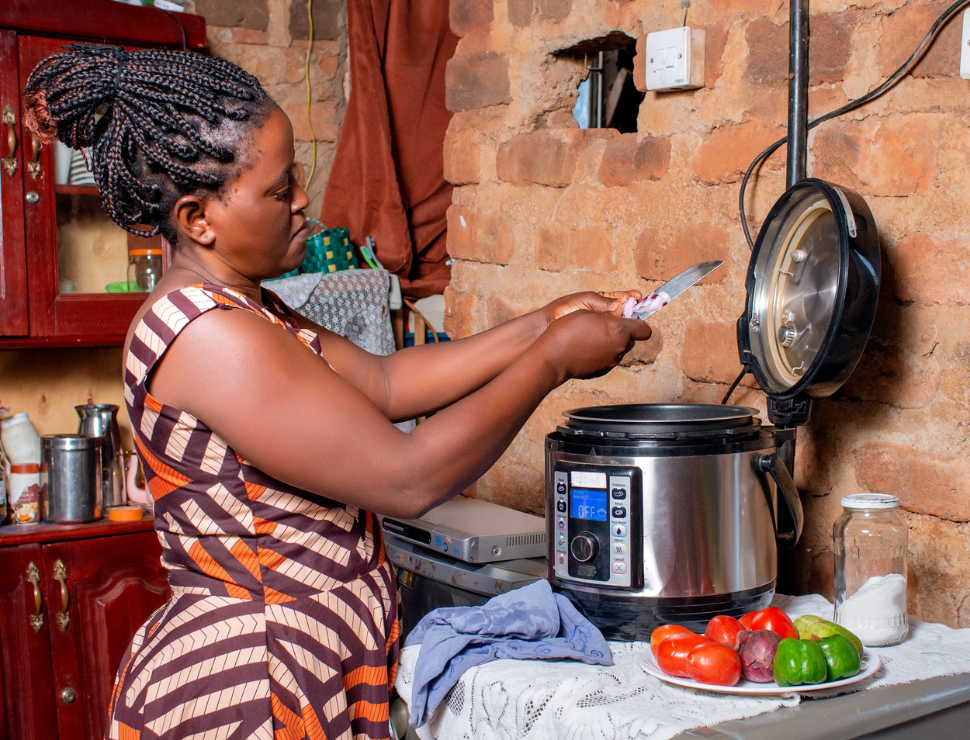
Image credit: UpEnergy
The HTCC Uganda project received 17 applications from clean cooking technology companies operating in Uganda during the public auction window. The total subsidy ask exceeded $2.19 million for 157,756 units of clean cooking products, highlighting the significant demand and potential impact of the program.
***
About the Higher-Tier Cooking Component (HTCC) Results-based Financing Program
The HTCC Uganda RBF is administered by CLASP in partnership with the German Development Agency (GIZ) with support from the Netherlands Enterprise Agency. The HTCC is part of the multi-country Strengthening the Entrepreneurial Ecosystem for the Clean Cooking (SEE-CC) program commissioned by the Netherlands Enterprise Agency and implemented in partnership with EnDev. SEE-CC supports small and medium-sized enterprises in Uganda to enhance their business operations, access finance for upscaling, and drive innovation in the clean cooking sector.
For any questions on the Higher-Tier Cooking Component program, please get in touch with financing@clasp.ngo.
Subscribe to our newsletter for more updates on the Uganda RBF Program.