
Brazil’s Rapid AC Overhaul Offers a Blueprint for Sustainable Cooling
With a recent effort to improve its air conditioner efficiency policies, Brazil proved that smart planning and thoughtful partnerships can help countries fast-track climate change mitigation and improve social equity.
As climate change continues to drive temperatures higher, threatening health and livelihoods, air conditioners remain out of reach for millions of people around the world. In Latin America and the Caribbean, only 15% of households in the warmest areas own ACs.
Increasing access to air conditioners is part of the solution. But to avoid further worsening climate change, it’s critical for these ACs to be energy efficient and use climate-friendly refrigerants. This is because inefficient units drive up energy demand and increase planet-warming emissions, while some refrigerants are potent greenhouse gases thousands of times more harmful than CO2.
Energy efficiency can also help address one of the main barriers that’s preventing many people from owning an air conditioner: affordability. The high upfront cost of these appliances puts them out of reach for many households. Additionally, inefficient models can be expensive to run, driving up electricity bills. Improving energy efficiency can help lower operating costs and make cooling more affordable overall.
As demand for ACs is rising in Latin America and the Caribbean, putting the right policies in place will protect both people and planet. Brazil’s example shows how it’s done.
The policies that transformed Brazil’s market
Today, Brazil has the most efficient room air conditioner market in Latin America and the Caribbean. More than half of units sold there meet or exceed leading global efficiency standards.
Just a few years ago, the picture looked very different. Brazil’s appliance efficiency labeling program, first introduced in 1984, is one of the oldest in the world. But until recently, it offered little real guidance to consumers looking for ACs, since it had only two categories and labeled around 70% of all air conditioners as “efficient.”
That changed in 2020, when INMETRO, the federal agency responsible for appliance labeling, introduced a more rigorous classification system with a wider range of performance tiers.
Today, more than 60% of consumers report relying on appliance labels to guide their purchasing decisions. What’s more, 85% of the ACs sold in Brazil use inverter technology, which is more efficient than non-inverter alternatives.
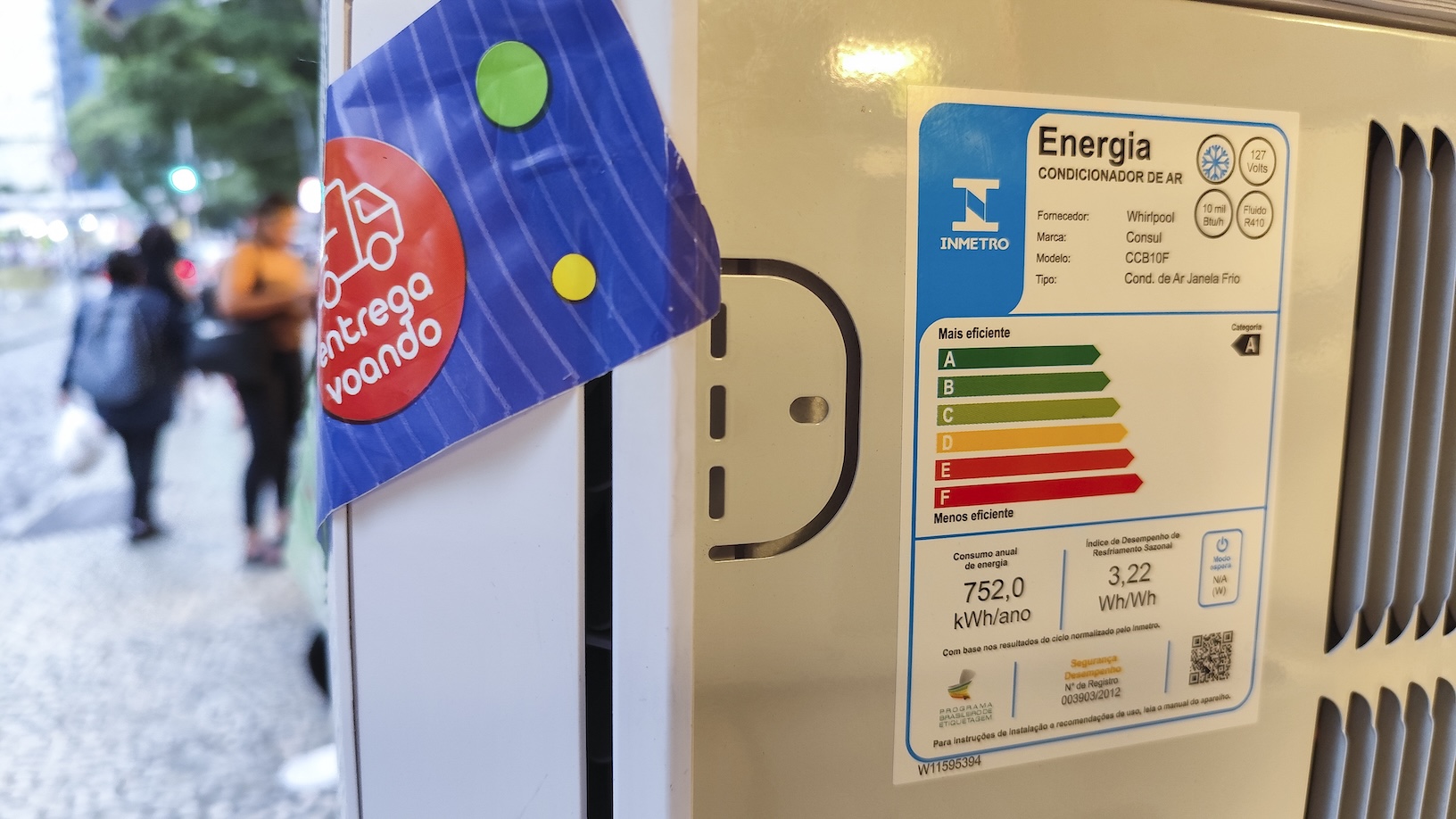
Energy label at an appliance store in Rio de Janeiro, Brazil.
CLASP
“This shows that consumers have already understood that the most efficient equipment is also the best choice for everyday use,” says Hercules Souza, head of INMETRO’s regulatory division.
But labels alone didn’t drive this transformation. Brazil also aligned energy labeling, appliance efficiency standards, and endorsement programs (in which efficient units are recognized with a government seal) into a coherent policy package that accelerated the shift to more efficient technologies.
As Alexandra Albuquerque Marciel, an energy efficiency projects coordinator at Brazil’s Ministry of Mines and Energy, puts it, the key was “straight dialogue between the different agencies in charge of these policies.”
The government also enlisted the support of international appliance efficiency policy experts at CLASP. Our staff worked alongside Brazilian policymakers throughout this process, providing data, global insights, and technical analysis to inform policy design and align new regulations with global best practice while ensuring they reflected local market realities.
Industry was part of the solution
Policymakers often fear that strengthening appliance efficiency standards will have negative impacts on local industry. Brazil, home to the largest AC manufacturing sector in Latin America and the Caribbean, shows the opposite: Well-designed policies can actually strengthen domestic manufacturing.
From the outset, policymakers worked closely with manufacturers to set clear timelines, incorporate feedback, and allow time for transition. “Dialogue is super important,” Hercules Souza emphasizes. “Don’t do anything hastily . . . the [manufacturing] sector must be part of the discussion.” Without industry buy-in, he notes, policies risk being unrealistic or hard to implement, undermining progress.
Moreover, producing more efficient appliances allows manufacturers to compete globally. “Industry also has an international market to fulfill,” Alexandra Albuquerque Marciel says.
A model for other countries
The results of these efforts speak for themselves. The standards currently in place are expected to save 8 million megawatt-hours of electricity annually while avoiding 4 million tons of greenhouse gas emissions.
A planned revision in 2028 is projected to expand these impacts dramatically, achieving electricity savings of 284 million megawatt-hours—nearly four times the amount of electricity Itaipu, one of the world’s most productive hydroelectric plants, supplies to Brazil each year. This will reduce grid stress, lower costs for consumers, and cut greenhouse gas emissions.
While policymakers in Brazil are already looking ahead to further tighten their efficiency policies, the speed of their cooling market transformation offers a strong example for other countries to follow. By bringing together policymakers, industry, and international experts, Brazil’s government ensured that these policies are smart, inclusive, and implementable.
Both regionally and globally, many countries are at a similar inflection point as Brazil six years ago. Since policy decisions often shape cooling markets for years, governments have the potential to realize major benefits for public health and climate over time.
The takeaway from Brazil is simple: Efficient cooling doesn’t require a trade-off between keeping people cool and supporting domestic manufacturing. Instead, strong AC policies represent an opportunity to protect people from rising temperatures, reduce costs, strengthen industry, and cut emissions all at once.
Sources
CLASP. “Lessons from Cooling Champions: The Impact of Brazil’s Leading Efficiency Policies.” YouTube video, 1:16. February 26, 2026. https://www.youtube.com/watch?v=MYOZ-aZD_5k.
CLASP. “Lessons from Cooling Champions: How collaboration made Brazil’s leading efficiency policies possible.” YouTube video, 1:00. February 26, 2026. https://www.youtube.com/watch?v=4fHWFwPBvz8&list=PLvc9P9LzyLdNO6aabS7a6uURfkQo24o61&index=8.
CLASP. “Lessons from Cooling Champions: How Brazil’s Labeling Program Transformed Their Market.” YouTube video. March 24, 2026. https://www.youtube.com/watch?v=mPYWx6V22Uo&list=PLvc9P9LzyLdNO6aabS7a6uURfkQo24o61&index=2.
CLASP and IGSD (2026). Pathways to prevent environmental dumping of climate-harming room air conditioners in Latin America and the Caribbean. https://doi.org/10.70098/JCRA7148. Produced with support from the Climate and Clean Air Coalition.
Seeding Appliance Efficiency in Brazilian Media
In Brazil, energy costs are skyrocketing while renewable capacity struggles to keep pace with increasing demand. During this unprecedented challenge, appliance and equipment energy efficiency stands out as an essential tool for managing energy demand and cutting costs.
In 2025, CLASP and Bori trained local journalists on the impacts and opportunities of appliance efficiency in Brazil, connecting the topic to real-world challenges faced by Brazilians, like increasing demand for space cooling. The program enabled reporters to deliver compelling and nuanced efficiency coverage to the public through mainstream media as Brazil geared up to host COP30 and interest in climate solutions peaked.
The impact was broad and immediate: Over 750 media stories on appliance efficiency were published in Brazilian media from the start of 2025 to COP30. Combined with CLASP’s other efforts, the initiative helped elevate efficiency at COP30, spotlighting it as a key climate solution at the year’s most important climate talks.
The InfoEnergia Mentorship
CLASP and Bori’s InfoEnergia Mentorship nurtured a new era of energy journalism in Brazil. The program aimed to equip local media with the training and contacts needed to integrate efficiency stories into regular reporting beats.
In many markets, journalists may lack the background needed to cover climate and energy topics and their impact. Regular reporting about the connection between appliance efficiency and key issues like cooling access, grid reliability, and cost of living is critical for building public awareness and political will.
A cohort of 25 participants, selected from a pool of 100 applicants, participated in the six-week, eight-session workshop. The sessions featured speakers from across the efficiency sector, from policymakers and technical experts to private sector leaders and academics. Journalists learned about the energy efficiency policymaking process in Brazil and heard first-hand insights about the economic, environmental, and livelihood impacts of efficient appliances within the national context, with specialized conversations on topics like cooling and energy equity in the Amazon.
Participants boasted bylines in dozens of Brazil’s most prominent media outlets—including Amazônia Vox, O Povo, and O Estado de São Paulo —and ranged from early career reporters to deeply established experts in the climate and energy reporting space. Nearly 70% of participants identified as women.
Each journalist published a final story that was submitted for the InfoEnergia Award, an accolade recognizing excellence in energy efficiency reporting. Journalist Cley Medeiros of Jornal A Critica was honored with the top award for his piece “Energy efficiency is ignored in 76% of air conditioning bids in the Amazon.” Reflecting on his experience in the program, Medeiros said, “For a long time, I’ve wanted to understand why the public sector has been unable to drive the energy transition we need here in the Amazon, so I am very happy for this opportunity. I want to thank my colleagues from InfoEnergia who were part of this journey. Thank you for being drivers of transformation in journalism!” [translated from Portuguese].
Impactful investments in local media ecosystems
Accurate, nuanced reporting on climate and energy topics and how they impact people’s lives is essential for a practical, just and durable energy transition. The InfoEnergia Mentorship successfully broadened and mainstreamed coverage of appliance and equipment energy efficiency. Increasing public awareness about the impacts and opportunities for energy efficiency in Brazil contributed to momentum for action at COP, driven by key moments including mentions in the COP President’s plenary remarks and Brazil’s industrial agency dedicating a full day to efficiency programming, helping to advance efficiency momentum globally.
2025 CLASP Annual Report
Collective action for people,
prosperity, and planet.
A note from CLASP’s CEO,
Christine Egan
Appliance and equipment energy efficiency is a triple-win for people, planet, and prosperity. In a time of multiplying global crises, it stands out as a durable climate solution and key element of smart decarbonization strategies. It also creates jobs and improves livelihoods, enhances energy security and food system resilience, and helps people adapt to a changing climate.
Looking back at 2025, I’m wowed by the work of CLASP’s global team and dedicated partners, and the focus of the decisionmakers we support. Through purposeful collaboration, we forged the policy instruments, finance, and intelligence to drive positive momentum.
Together, we are changing the way we use energy.

2025 by the numbers:
4.6 Gt 18 CLASP-supported appliance and equipment efficiency policies will avoid 4.6 gigatons of CO2 by 2050, improving planetary and human health and saving money.
30K+ Over 30,000 people experienced improved health and livelihoods via access to efficient, solar powered appliances and equipment.
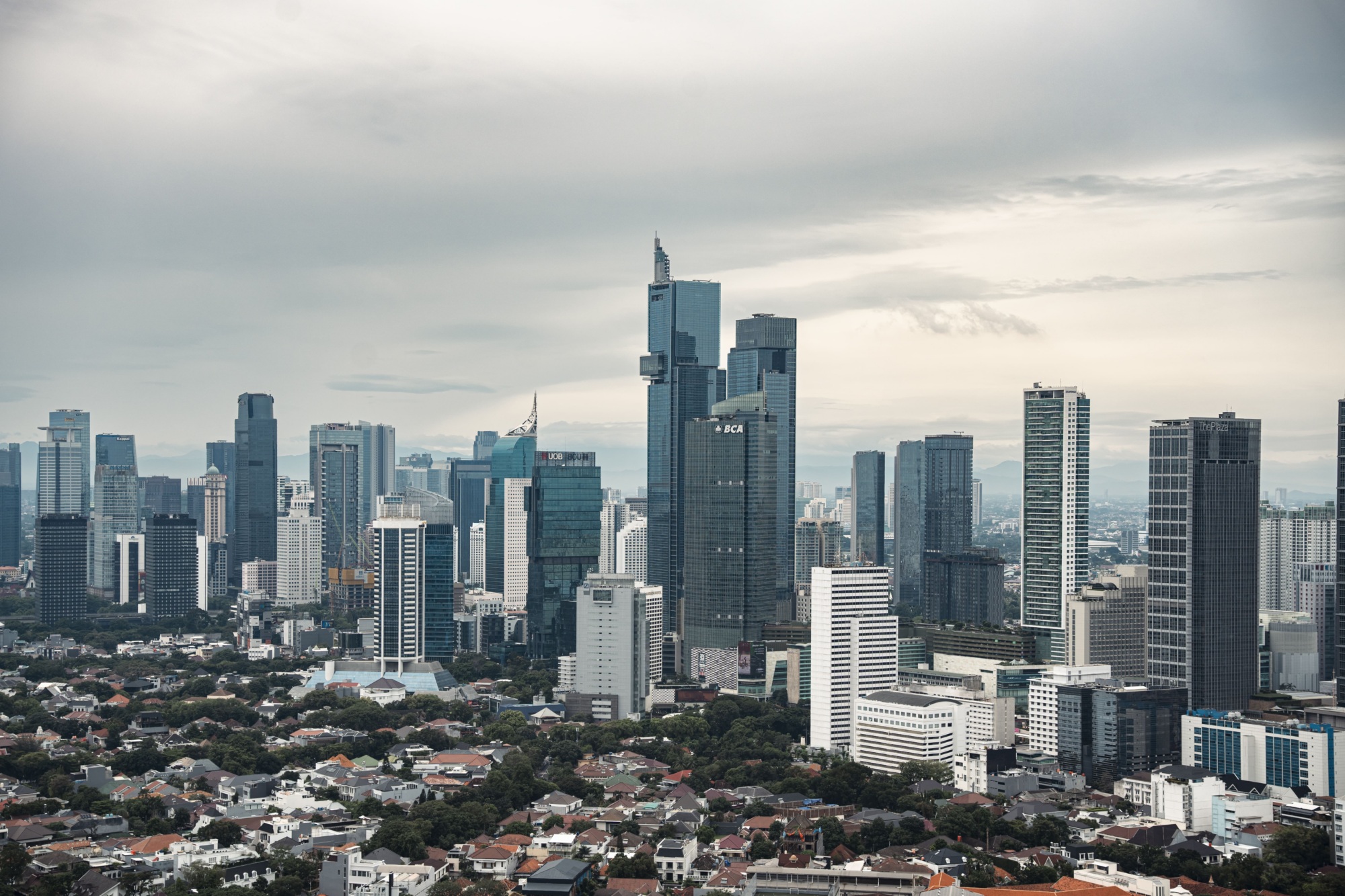
Skyline of Jakarta, Indonesia
Image credit: CLASP
Elevating Appliance Efficiency in National Climate Commitments
What we did
Ahead of COP30, CLASP led a global campaign to improve inclusion of appliance and equipment energy efficiency in national climate goals (nationally determined contributions or NDCs).
How we did it
Through our Net Zero Appliance NDC Toolkit and bespoke support for governments around the globe, CLASP elevated appliance efficiency policy as a key climate mitigation solution. Now, appliance and equipment efficiency policy is included in 90% of all submitted NDCs—up from below 50% in the last cycle.
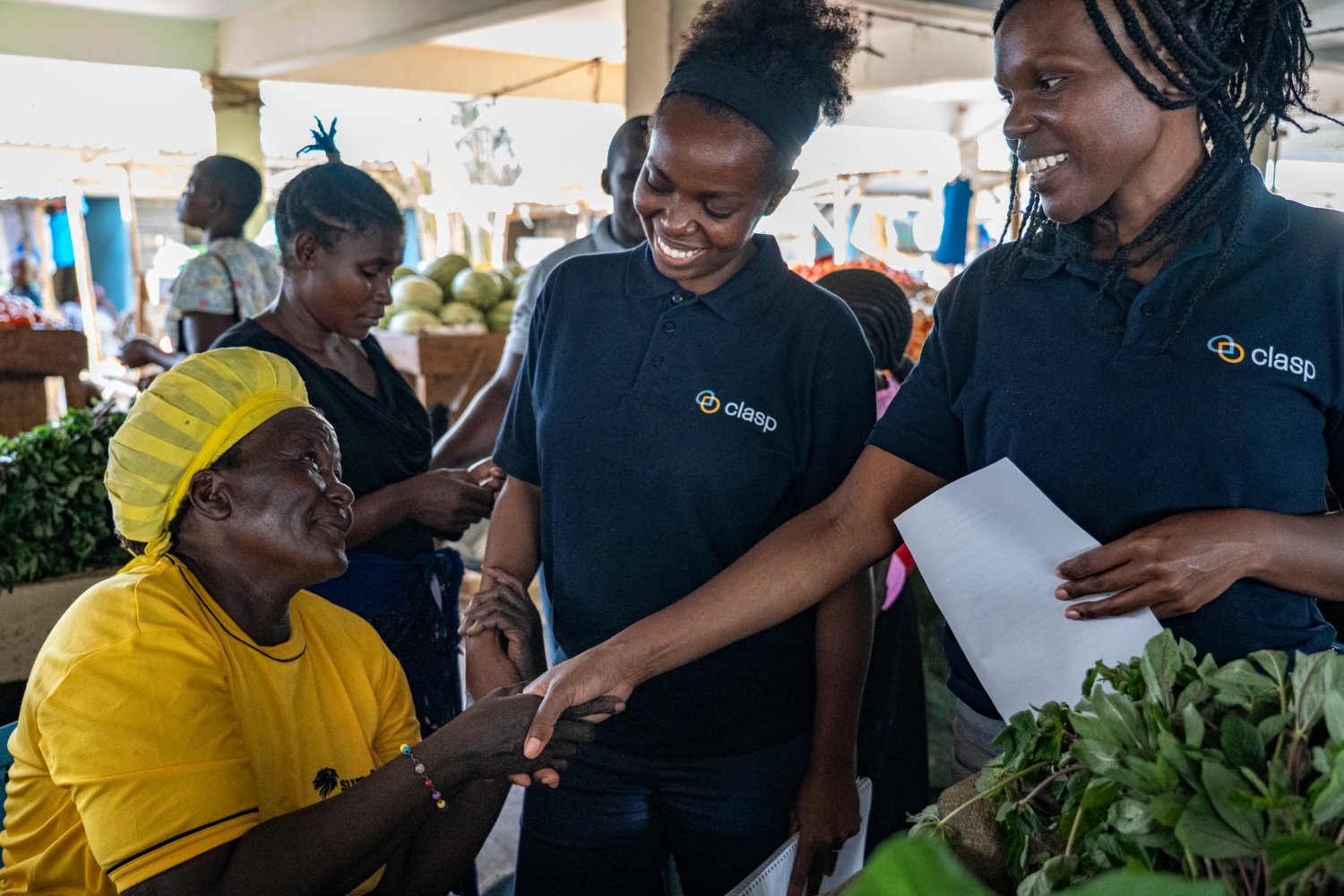
Image credit: CLASP
Powering Africa’s Green Economy
Solar-powered appliances and equipment turn energy into opportunity, helping small businesses generate jobs and income. In 2025, CLASP re-launched our innovative Productive Use Financing Facility to make it cheaper and easier for entrepreneurs, farmers, and small businesses in Ethiopia, Kenya, and Nigeria to buy solar-powered appliances and equipment that power livelihoods. Last year, CLASP partnered with 11 companies to drive jobs and economic growth in Africa’s informal and agricultural sectors, which make up 70-80% of African economies.
Slashing Emissions Through Smart Policy
Australia
National leaders passed a lighting policy that will transition Australia’s market to an all-LED future and avoid 41 Mt of CO₂ by 2050, informed by CLASP-led analysis.
Brazil
Policymakers made strides in Brazil’s LED transition with CLASP’s support, approving a lighting policy package that will slash nearly 3 Mt CO₂ by 2050.
China
CLASP supported seven major policy updates, including for compressed air systems, refrigerators, and water pumps. Altogether, the new policies are estimated to cut nearly 3 Gt CO₂ by 2050.
India
CLASP supported the advancement of policies for space cooling appliances that will place India among global leaders in efficiency and cut 1.2 Gt CO₂ by 2050.
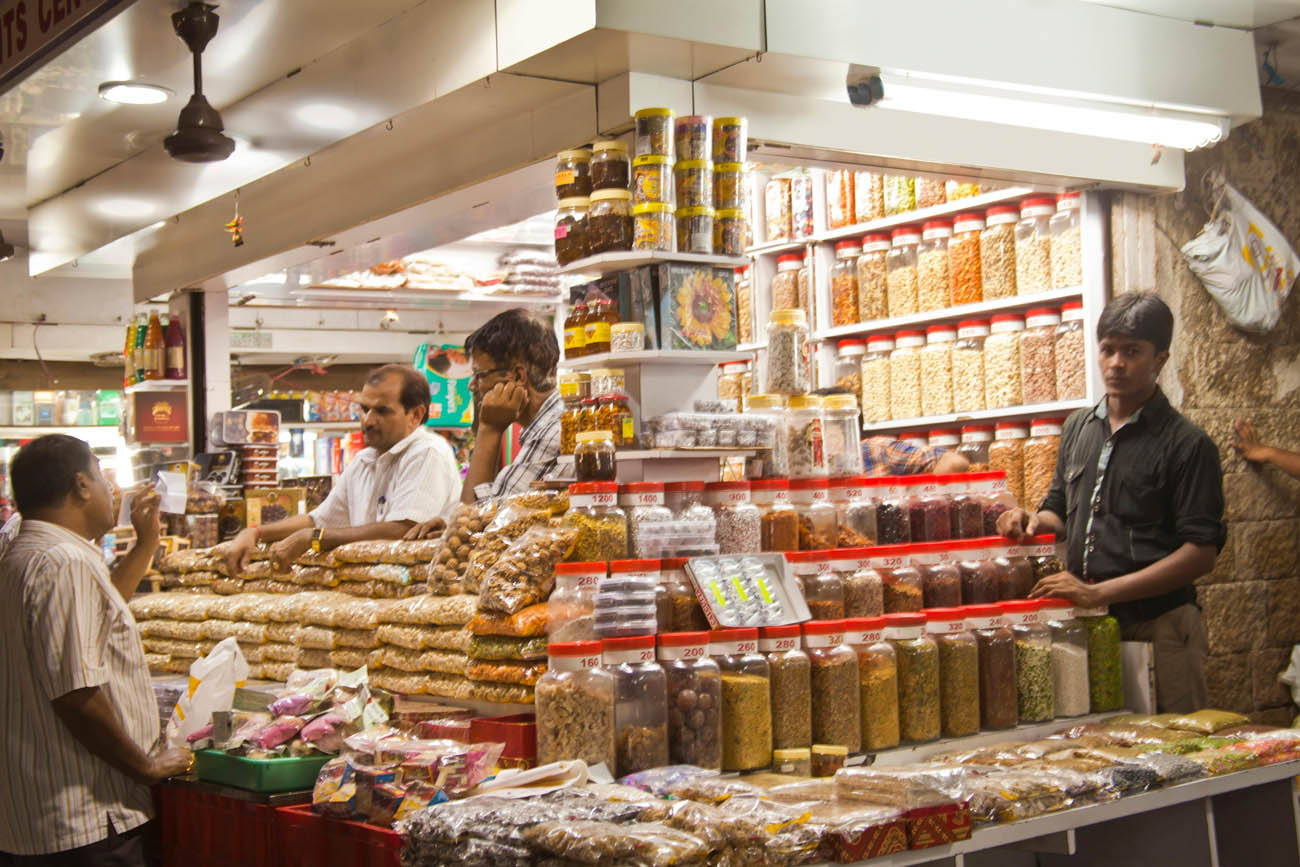
Image credit: ImageDB
Making Efficient, Affordable Fans the New Standard in India
India is one of the places on the planet most at risk of extreme heat. 90% of households rely on fans as their only form of space cooling. CLASP partnered with government and private sector partners to drastically improve fan efficiency, availability, and affordability. A major part of the effort was supporting small and medium enterprises to improve their production capacity.
The impact has been catalytic. Together, CLASP and partners cut energy demand and climate emissions from cooling, while safeguarding jobs, strengthening local supply chains, and making efficient cooling more affordable to the people who need it.
Joining Up with the Modern Energy Cooking Services (MECS) Programme
CLASP joined the UK Aid-supported MECS programme as a core partner alongside Loughborough University and the World Bank’s ESMAP. CLASP now leads on venture building and market shaping, helping e-cooking businesses scale up. In 2025, CLASP launched the Global LEAP Awards Induction Cooktops Competition to identify and promote the most innovative electric cooktops on the market.

CLASP's Sumedha Awasthy & Nya Abagi at the Global LEAP Awards Induction Cooktops Competition workshop in New Delhi, India.
Image credit: CLASP
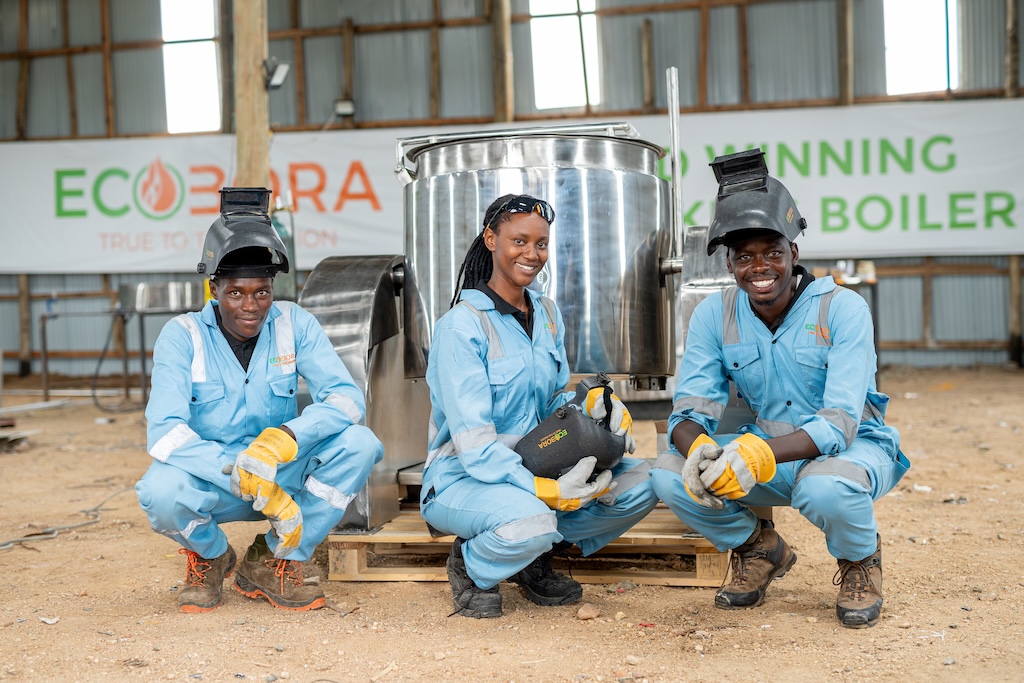
EcoBora, an innovative electric cooking company in Kenya, supported by CLASP through the MECS programme.
Image credit: CLASP
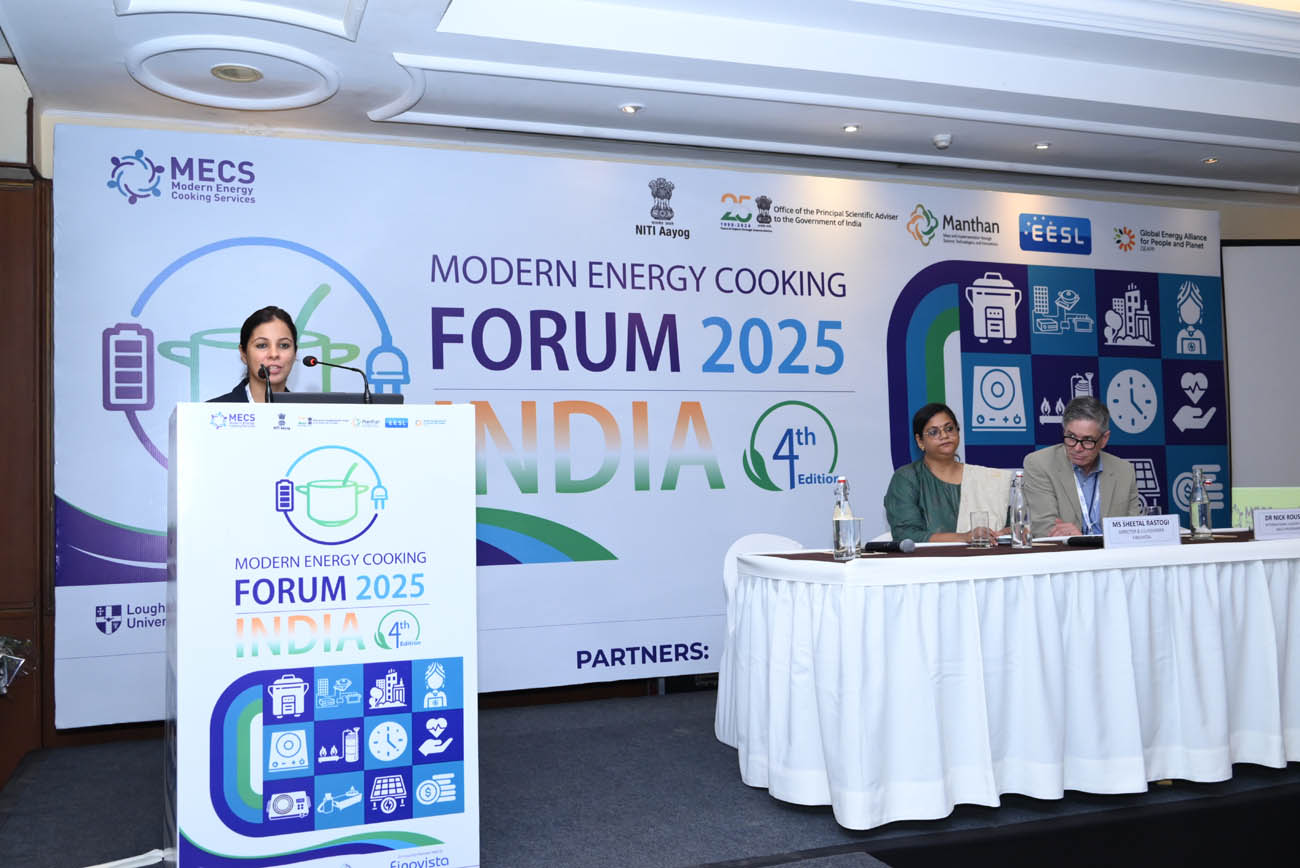
CLASP’s India Director, Neha Dhingra, speaking at the Modern Energy Cooking Forum in New Delhi, India, in September 2025.
Image credit: Finovista
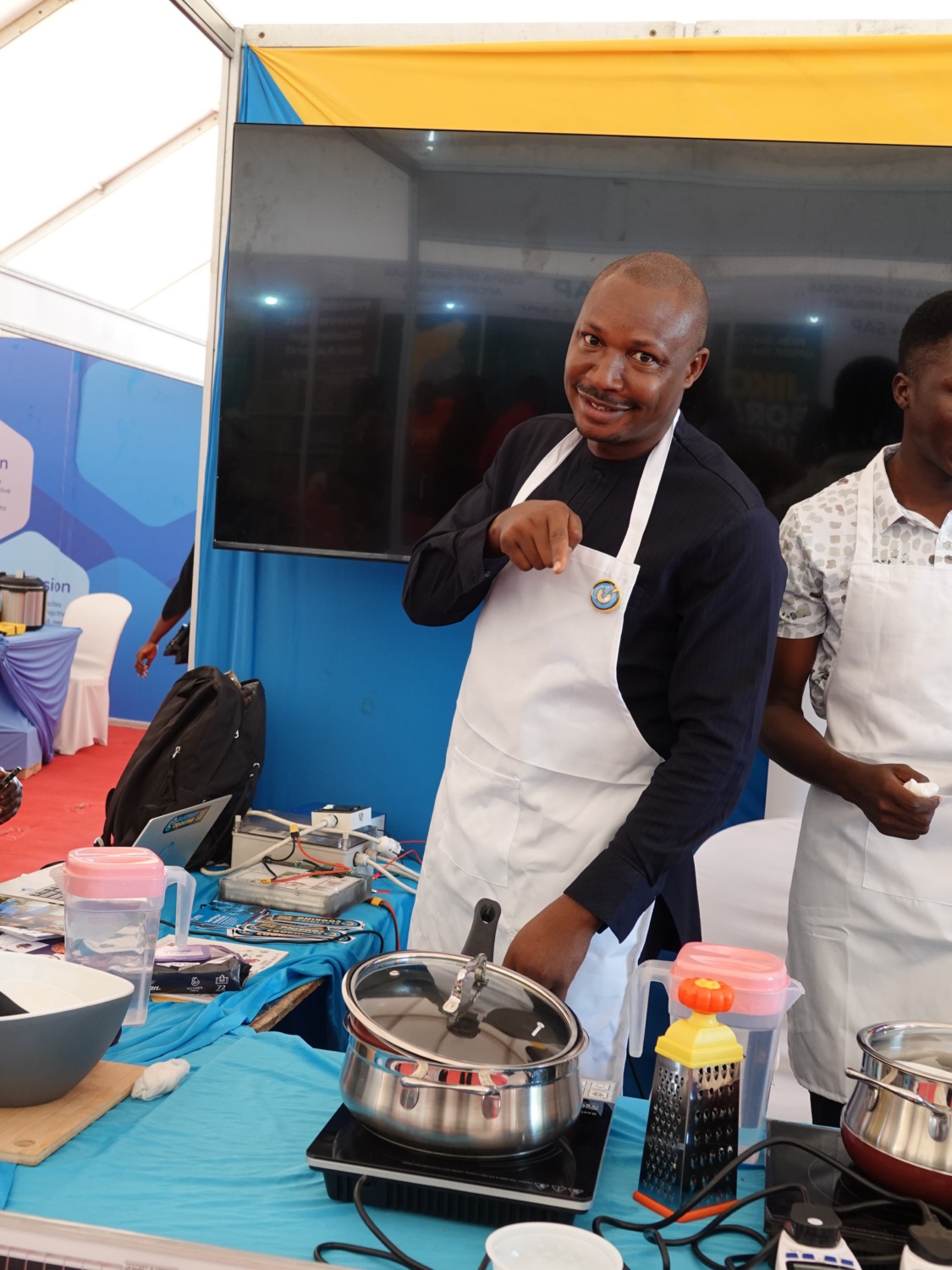
Emmanuel Aziebor, CLASP’s Senior Director, Africa, at Kenya Clean Cooking Week.
Image credit: CLASP
How UK Housing Authorities Can Power the Switch to Electric Cooking
Global Action Plan, in partnership with CLASP, piloted gas-to-electric cooking retrofits in a social housing community in Manchester.
For participating households, switching to electric meant more than lower emissions. It meant breathing more easily in the kitchen, a cleaner and more practical cooking experience, and greater peace of mind for families with young children. Every household preferred its new induction cooktop over gas.
Watch the video:
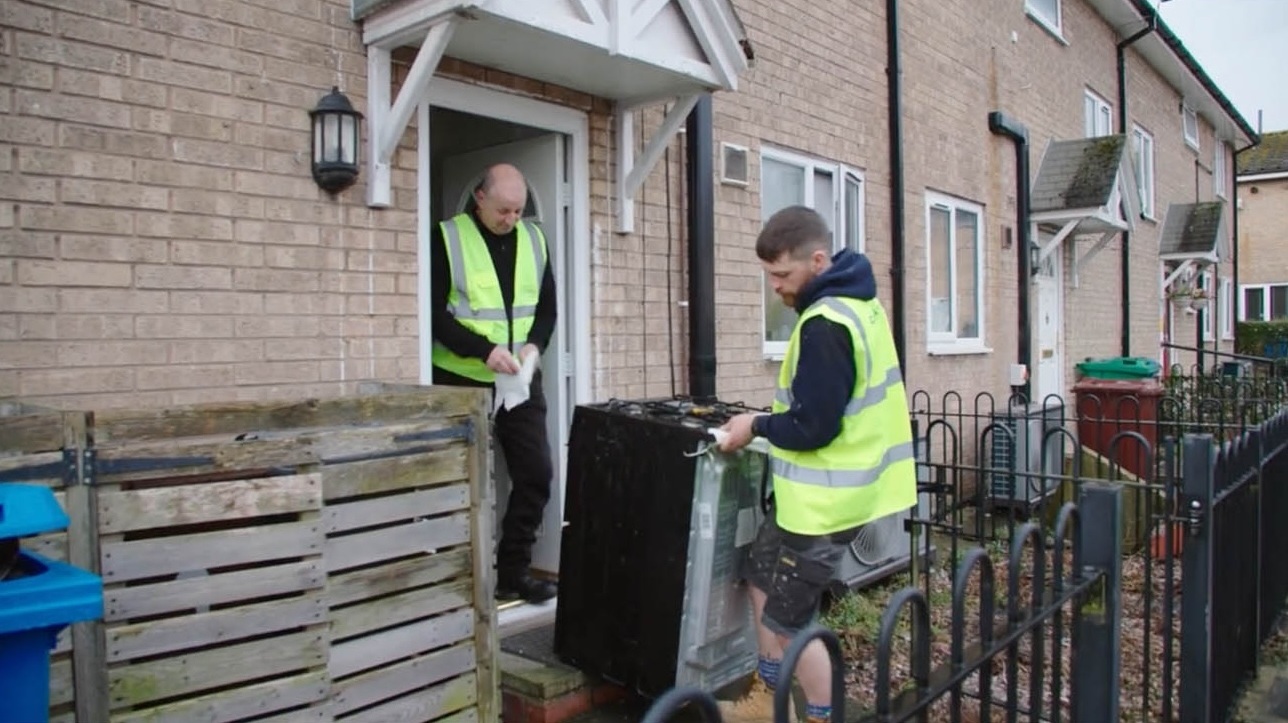
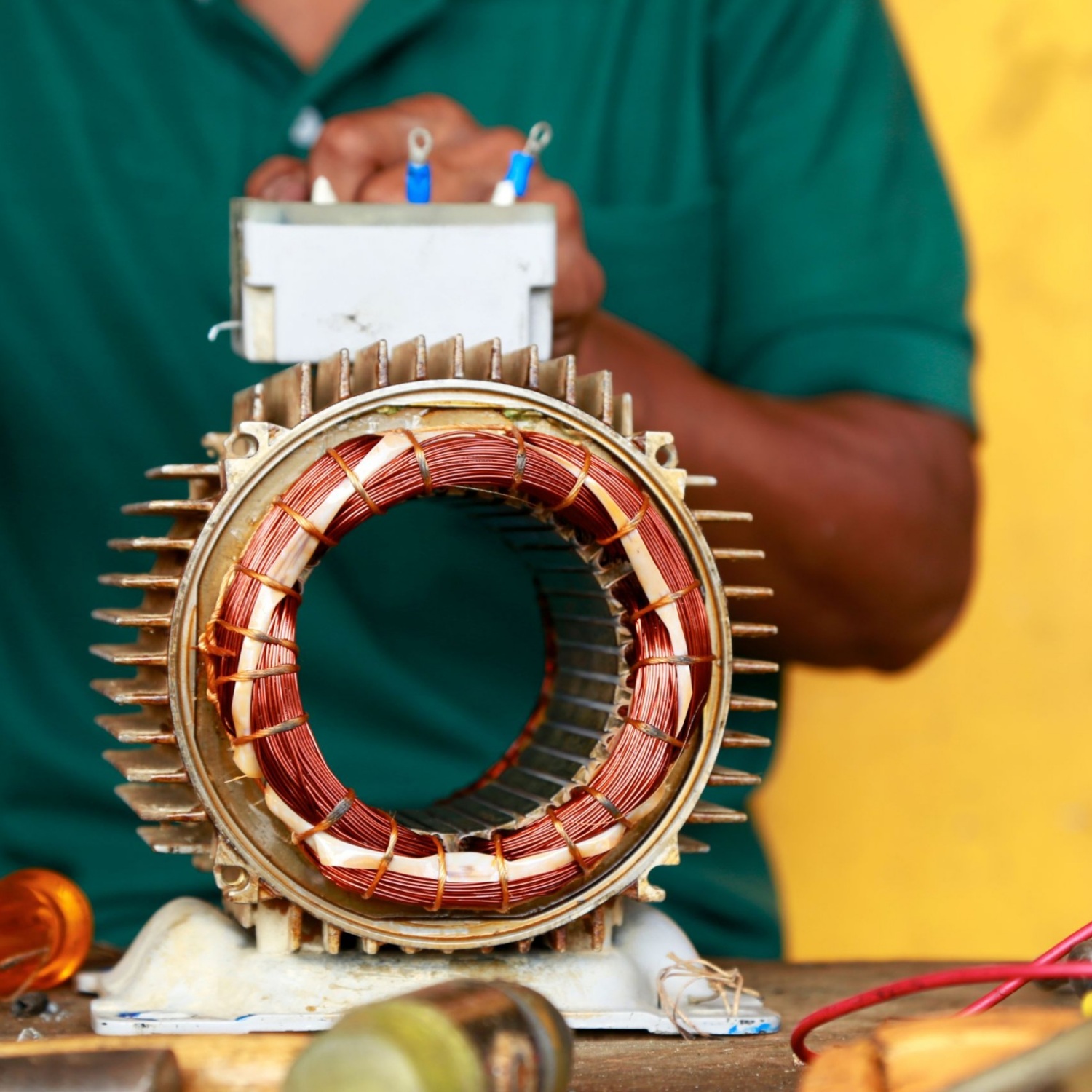
Image credit: CLASP
Economies Can Boom When Powered by Efficient Motor Systems
Industrial motor systems are the invisible heartbeat of economic development. Universally used across industrial facilities, they power the production of goods like metals, paper, cement, textiles, and packaged food. Motor systems are also ferocious energy consumers, due to their function and prevalence. Without intervention, and in step with global economic development and industrialization, by 2050 motor systems will account for 35% of global electricity demand and 19% of energy related emissions. CLASP is taking action on this priority appliance in the fight for Net Zero, identifying high impact opportunities at national and global scales to drive up efficiency, slash emissions, and boost economic progress.
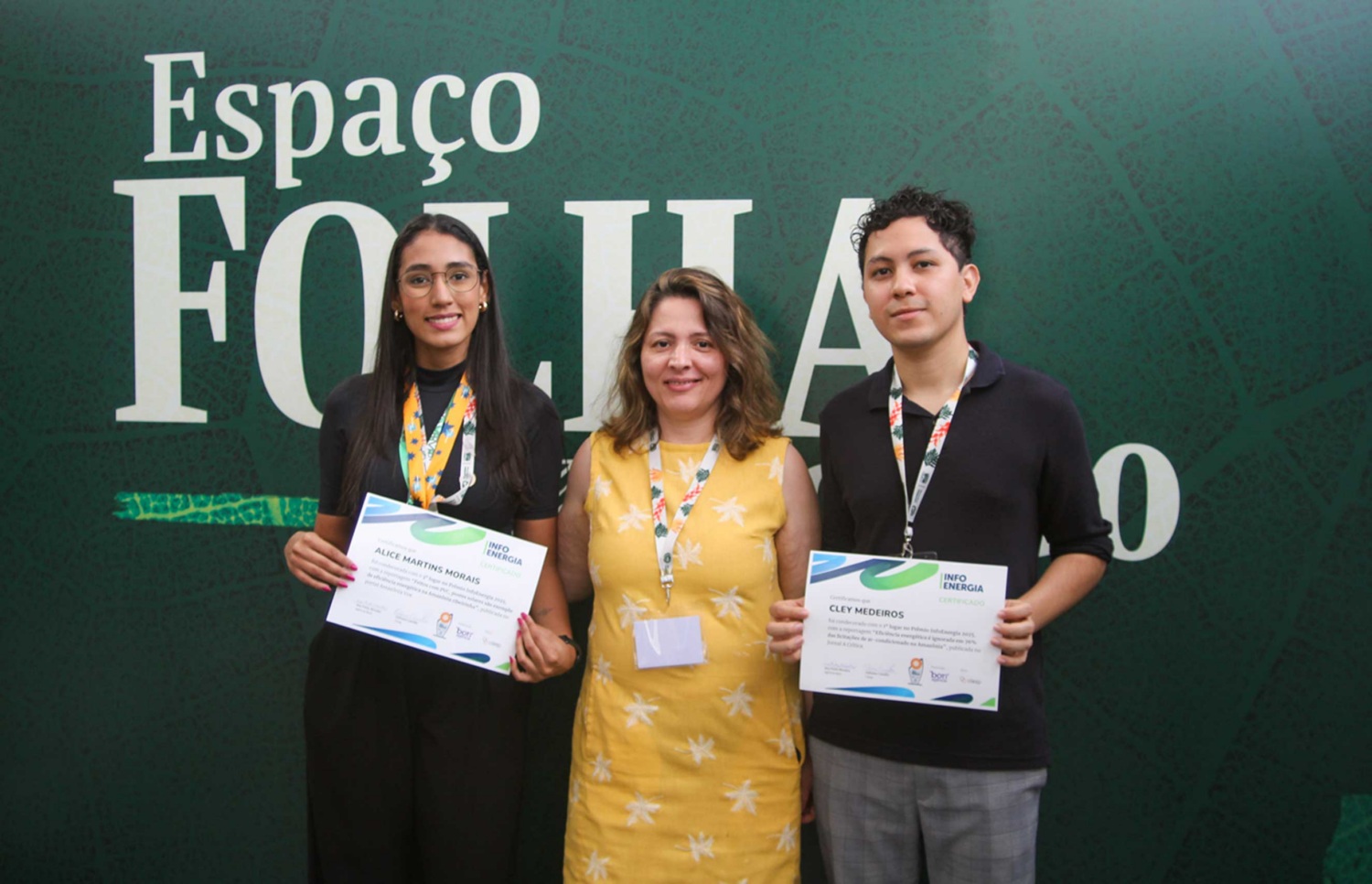
Image credit: CLASP
In Brazil, Partnering for Change
Ahead of COP30 in Brazil, CLASP joined forces with science communication agency Bori to drive national awareness of the benefits of appliance efficiency. Our InfoEnergia Mentorship was an 8-week, in-depth workshop that connected 25 journalists with experts and expertise to produce smart, contextualized reporting on appliance efficiency and its social, economic, and environmental impacts. Robust local journalism is a key element of durable climate policy.
Elevating Appliance-Centered Solutions at COP30
At COP 30 in Brazil, appliance and equipment energy efficiency stood out as a powerful climate solution, driving job creation, energy security, and adaptive capacity. CLASP provided expert testimony on the power of appliance efficiency solutions.
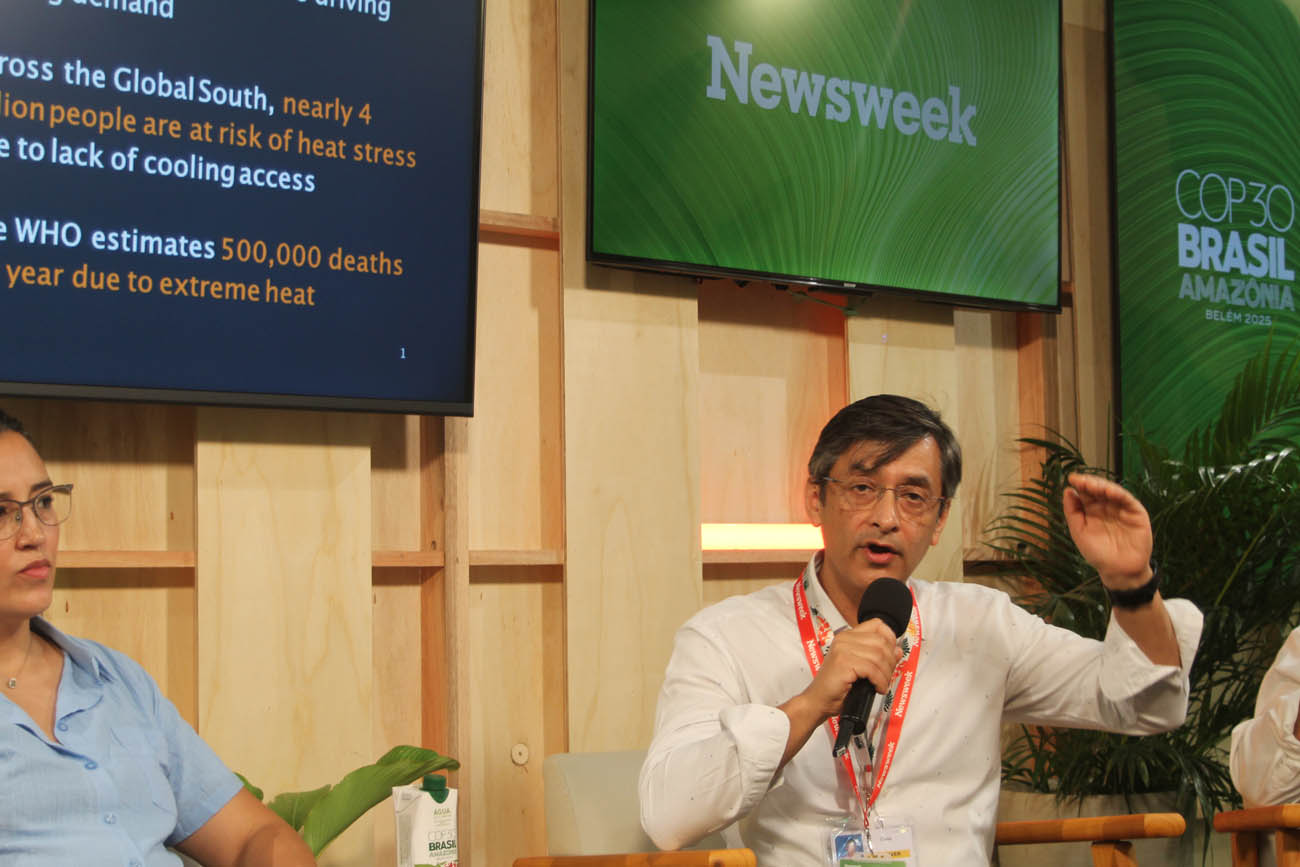
CLASP’s Bishal Thapa participated in discussion on space cooling solutions, offering insights about the benefits of efficient cooling technologies that slash emissions.
Image credit: CLASP

CLASP’s Edilaine Camillo moderated a conversation on the principal role of efficiency in Brazil’s energy transition during an agency-led day of efficiency themed events.
Image credit: CLASP

CLASP’s Bishal Thapa took part in a panel hosted by Casa Civil to speak about the role of energy efficiency policy in Brazil’s reindustrialization strategy.
Image credit: CLASP
Insights driving action
Delivering COP28’s Doubling Efficiency Goal Through Appliances
Appliance efficiency will play a critical role in meeting the COP28 commitment to double the global rate of energy efficiency improvement by 2030. CLASP research found it could deliver 20% of the energy savings needed, highlighting the value of strong standards, clear targets, and international collaboration.
The Missing Piece of Energy Access
666 million people, most of them in Africa, lack access to electricity. 2025 CLASP research shows that directing just 15% of existing energy investments toward efficient appliances can generate the demand needed to make grid expansions financially viable and help those currently living without electricity gain access to healthier, more productive lives.
Finances
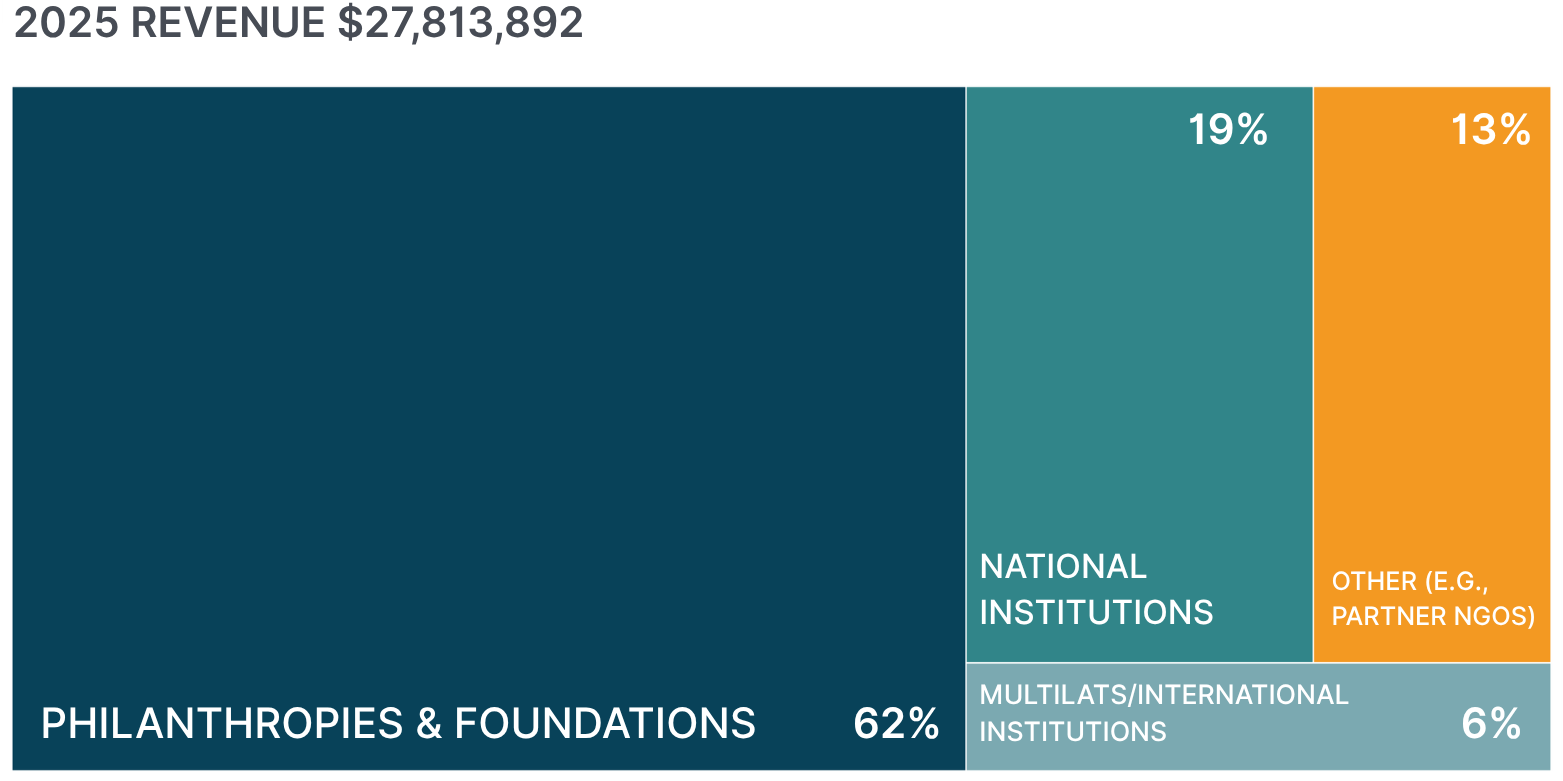
- Revenue by donor type
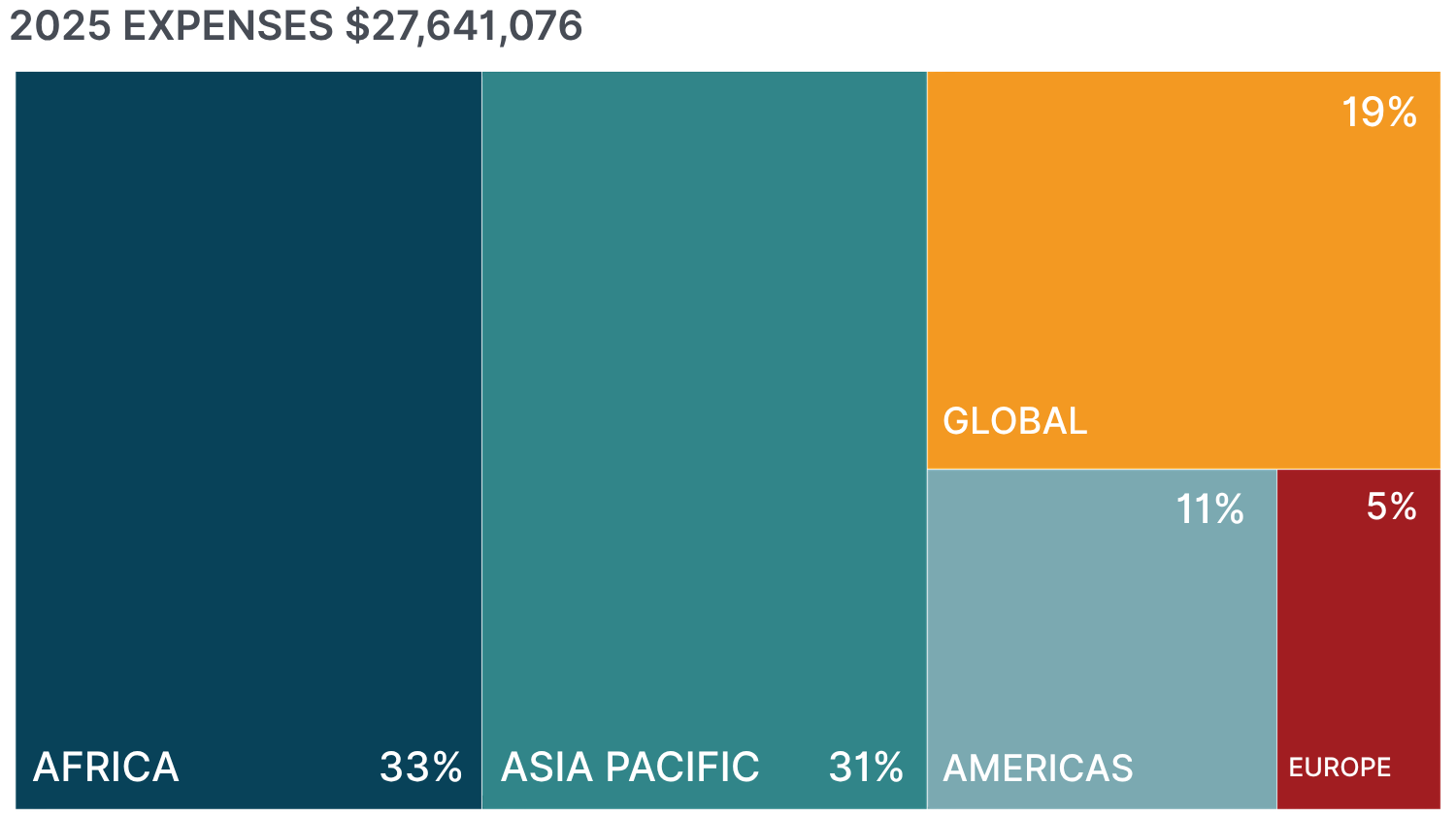
- Expenses by region
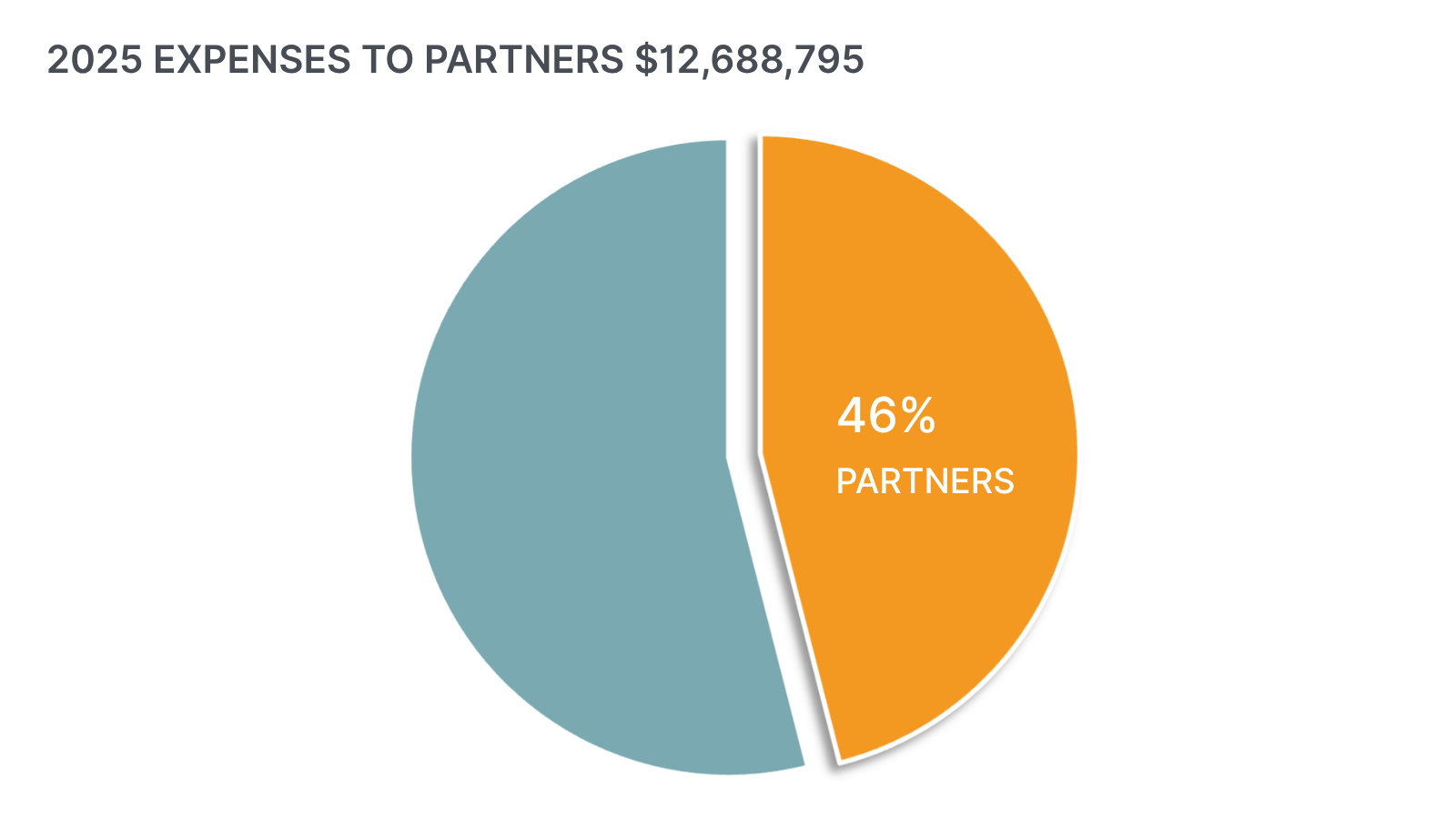
- CLASP collaborates with a global network of partners. In 2025, CLASP channeled nearly half our resources to civil society and energy groups, innovators, academic institutions, and experts — essential partners in changing the way we use energy.
About CLASP
Efficient appliances and equipment are essential drivers of economic growth and a fast, practical energy transition. With over 25 years of expertise and offices on five continents, CLASP collaborates with governments, industry leaders, and other experts to change the way we use energy.
We’re proud of what our team and partners achieved in 2025, driving progress for a better world. In 2026, we remain committed to championing appliance efficiency as a powerful solution for people, prosperity, and planet.
Rising Temperatures Put Millions Across Latin America and the Caribbean at Risk as Cooling Appliances Remain Inefficient
Washington, DC, 25 February 2026 — As temperatures rise and demand for air conditioning accelerates, new research reveals that nearly 70 million people across Latin America and the Caribbean exposed to rising heat risks lack efficient cooling appliances.
Despite the region’s growing need for sustainable cooling, only 15% of households own an air conditioner, leaving millions vulnerable to extreme heat. For many families, the affordability of purchasing and operating an air conditioner remains a key barrier to sustainable cooling access. Consequently, the lack of access to adequate cooling along with rising temperatures severely affects human health.
A new report from CLASP and the Institute for Governance & Sustainable Development (IGSD), with the Climate and Clean Air Coalition (CCAC) finds that these challenges are compounded by environmental dumping—the export of low-efficiency, climate-harming cooling equipment that does not meet existing standards in its country of origin.
Environmental dumping raises household energy bills, increases greenhouse gas emissions, and threatens to lock the region into decades of low-efficiency and polluting cooling infrastructure.
- The research, which focused on Argentina, Barbados, Brazil, Chile, Colombia, Dominican Republic, Grenada, Jamaica, Mexico, and Uruguay, finds:
- 44% of all new air conditioners sold in Latin America and the Caribbean are categorized as environmental dumping, which means they cannot be legally sold in the countries where they are manufactured.
- More than one-third of new room air conditioners sold in the region use obsolete refrigerants, which are currently phased down or phased out under the Montreal Protocol on Substances that Deplete the Ozone Layer and its Kigali Amendment.
- Existing cooling access gaps disproportionately affect low-income households and women, and the influx of outdated equipment deepens energy inequality and increases emissions.
- Without stronger efficiency and refrigerant standards, the region could lock in 173 million tons of CO₂e by 2050, emissions equivalent to more than three coal-fired power plants over the next 20 years.
Despite these challenges, the report highlights clear positive pathways for action. Brazil and Grenada are emerging as regional leaders by adopting modern efficiency standards and climate-friendly refrigerant policies and initiatives that protect consumers and close the door to environmental dumping.
While strong national efficiency policies are among the most effective ways for countries to protect themselves from environmental dumping, solutions ultimately require shared responsibility and close collaboration between importing- and exporting-country governments, the private sector, civil society, and international partners.
As extreme heat becomes a defining risk, access to efficient and climate-friendly cooling appliances is no longer optional; it is essential,” said Martina Otto, Head of the Climate and Clean Air Coalition Secretariat. “This year marks ten years since the adoption of the Kigali Amendment, a decade that has demonstrated how effective international partnerships can drive meaningful action. By acting together now, importing and exporting countries have a clear opportunity to shape markets, protect communities, and steer the inevitable growth in cooling toward solutions that advance climate justice while delivering economic, social, and environmental benefits.
Environmental dumping is an equity issue. As our research shows, millions of people across Latin America and the Caribbean are being left behind with inefficient, outdated cooling equipment that costs too much money to run. Manufacturers have the know-how to produce better appliances but are lacking the right incentives to manufacture and export them to Latin America and other regions in the Global South. This undermines people’s ability to stay safe in a warming world and deepens existing inequalities. —Ana Maria Carreño, Senior Director of Climate at CLASP
We must pursue innovative business models that do not export energy poverty and other burdens of obsolete cooling technologies to vulnerable countries in the Global South. Multilateral platforms, South-South cooperation, and collaborative government-industry partnerships can help. In this way, these countries can leapfrog to becoming innovation hubs for next-generation cooling solutions that support clean air, climate resilience, and prosperity. —Tad Ferris, Senior Counsel at IGSD
For inquiries, please reach out to Marina Baur, Senior Communication Associate, CLASP at mbaur@clasp.ngo.
Pathways to Prevent the Environmental Dumping of Climate-Harming Room Air Conditioners in Latin America & the Caribbean
Millions of people across Latin America & the Caribbean are being left behind with inefficient, outdated cooling equipment that's too expensive to run. Manufacturers have the know-how to produce better appliances but lack the incentives to manufacture and export them to the Global South.Ana Maria Carreño
Senior Director of Climate, CLASP
Brazil Put a Spotlight on its Efficiency Agenda at COP30
In recent years, Brazil has taken initial steps toward a more sustainable future powered by energy efficiency. As the host of COP30, held in Belém in November, Brazil put a spotlight on this smart climate solution for the world to see.
The country is already a global leader in sustainable energy, generating 89% of its electricity with renewables. However, rapidly rising energy demand and decreased hydropower capacity are forcing policymakers and utilities to reevaluate the current energy mix.
Global warming and Brazil’s deep income inequality further complicate this challenge. For example, Brazil’s summers are growing hotter; in 2023, the country hit a new record temperature of 112.6° F (44.8° C). As a result, air conditioning, once considered a luxury, is becoming necessary for health and productivity. But today, air conditioning is found in only 20% of all homes, concentrated mainly in higher-income households.
The challenges lower-income Brazilians face in accessing energy services like air conditioning are reflected in the fact that almost half of the lowest-income Brazilians spend more than half of their household income on electricity and gas.


Air conditioners above a Rio de Janeiro street.
Credit: CLASP
Brazil’s solution for booming energy demand and high electric bills
Brazil’s leaders increasingly view efficiency as a cost-effective, climate-friendly tool for meeting the country’s energy needs while addressing economic barriers to energy access.
Analysis reveals that, in the absence of other interventions, meeting skyrocketing energy demand would require increasing domestic natural gas production by up to 300%. To avoid this, the government can embrace energy efficiency, making services like cooking and cooling less energy-intensive and therefore reducing overall energy demand.
Appliance efficiency has provided early wins in Brazil, although there are major opportunities to do more. New policies for air conditioners and LED lights are making the models available in Brazil more efficient. This, in turn, makes these appliances more affordable to operate—and therefore accessible to more people.
COP host puts efficiency on the podium
In conversations throughout COP30, the Brazilian government and media showcased energy efficiency as a key tool for meeting national and global climate targets, growing the country’s economy, and delivering accessible energy services for all.

Panelists from COP30 ABDI energy efficiency event.
In his speech to negotiators and delegates at the COP’s opening plenary session, Brazilian Vice President Geraldo Alckmin underscored the importance of meeting the COP29 pledge to double energy efficiency by 2030. “This COP must mark the beginning of a decade of acceleration and delivery—the moment when rhetoric gives way to concrete action, and when all parties move from setting targets to fulfilling them,” he said.
During a day dedicated to energy efficiency, the Brazilian Agency for Industrial Development (often referred to by its Portuguese acronym, ABDI) put together a packed agenda bringing together leaders from government, businesses, and international organizations to discuss how Brazil can achieve its goals through efficiency. During a session about the role of efficiency in the energy transition, speakers noted that a significant advantage of efficiency compared to other solutions is that technologies like efficient industrial equipment already exist and can be implemented immediately.
Another event organized by Casa Civil, the powerful organization run by Brazil’s presidential chief of staff, focused on the role of efficiency in achieving a just energy transition and expanding the Brazilian industry’s presence in the global marketplace. The event highlighted the fact that local appliance manufacturers can increase sales by making their products more efficient, which allows them to match international benchmarks and sell their products around the world.
Major Brazilian media outlets also jumped into the efficiency conversation at COP. Folha de São Paulo, the country’s largest newspaper, co-hosted a session with the Crux Alliance, a philanthropic organization focused on global climate policy, on leveraging demand-side strategies to deliver on renewable energy and efficiency targets.
Carving a sustainable path forward
With COP delegates from around the globe now back home, they have many opportunities to keep energy efficiency front of mind—and strong reasons for doing so.
“Efficiency lowers costs, expands access, and strengthens domestic industry,” said Edilaine Camillo, leader of CLASP’s Brazil program. “The more elements we add to this puzzle, the clearer it becomes how interconnected the energy transition is—and how it can positively impact multiple sectors of the economy and people’s everyday lives.”
Find CLASP at MOP37
From 3–7 November 2025, CLASP will be in Nairobi, Kenya, to take part in the 37th Meeting of the Parties to the Montreal Protocol, also known as MOP37. In a side event, CLASP experts will discuss the harmful impacts of environmental dumping of obsolete room air conditioners in the Global South and offer solutions.
Join CLASP’s side event
- When: Thursday, 6 November from 1–3:00 pm East Africa Time (EAT)
- Where: CR-11
- Click here to participate remotely via Teams.
CLASP’s event Pathways to Stop Environmental Dumping of Climate-Harming Room Air Conditioners: Lessons From Latin America, the Caribbean, and Beyond will explore how unprotected markets in the Global South are vulnerable to the environmentally harmful dumping of new but low-efficiency room air conditioners with obsolete refrigerants.
Low-efficiency cooling appliances not only waste energy but often rely on high-global warming potential refrigerants targeted for phasedown and phaseout under the Montreal Protocol. As a result, climate change worsens, cooling access gaps may widen, and gender inequalities may increase.
The event will be co-hosted by CLASP, the Climate and Clean Air Coalition (CCAC), and the Institute for Governance & Sustainable Development, along with local champions from Brazil, Grenada, and the African continent.
At the event, CLASP and its partners will:
- Preview findings from our upcoming research report
- Share solutions on how importing- and exporting-country governments, the private sector, civil society, and international partners can work together to prevent the environmental dumping of room air conditioners
- Spotlight leaders from Brazil, Grenada, and the African continent who will share best practices for overcoming these challenges
Connect with CLASP
Attending MOP37:
- Senior Director of Climate Ana Maria Carreño
- Chief of Communications & Development Corinne Schneider
- Senior Associate, Climate Angellah Wekongo
For questions about the event or to connect with our experts, please contact Marina Bauer at mbaur@clasp.ngo.
Doubling Energy Efficiency with Appliances
Appliance efficiency could provide roughly one fifth of the reduction in energy demand needed to meet a pivotal climate commitment, according to CLASP’s analysis “Doubling Energy Efficiency with Appliances: How governments can leverage appliances to reach climate targets.” With nearly 110 countries pledging at COP28 to double annual energy efficiency improvements by 2030, more ambitious appliance policies are critical to reaching this goal before the narrow window for net zero by mid-century closes.
Key Findings
- To get on track for net zero emissions by mid-century, the average global annual rate of improvement in energy intensity must double to at least 4% by 2030. Appliance efficiency can deliver approximately 20% of the total reduction in energy demand required to meet this goal.
- Brazil, China, India, and Indonesia have recently taken significant steps to integrate appliance efficiency into their national strategies, recognizing its critical role in achieving energy and climate goals.
Recommendations
- Policymakers must rapidly implement stringent minimum efficiency standards for appliances, ensuring that they meet or exceed the best standards currently in place. Countries with world-leading standards should increase them further to reflect the levels of today’s best available technologies.
- Governments need to embed clear, measurable appliance efficiency targets into their national climate goals. They must also track progress with standardized metrics to stay on course to meet the doubling efficiency goal.
- All stakeholders across government, industry, and civil society must strengthen international and cross-sectoral collaboration to accelerate global energy efficiency gains. This cost-effective approach includes sharing technical expertise, conducting joint market surveillance, and harmonizing standards to overcome common barriers.