
2025 CLASP Annual Report
Collective action for people,
prosperity, and planet.
A note from CLASP’s CEO,
Christine Egan
Appliance and equipment energy efficiency is a triple-win for people, planet, and prosperity. In a time of multiplying global crises, it stands out as a durable climate solution and key element of smart decarbonization strategies. It also creates jobs and improves livelihoods, enhances energy security and food system resilience, and helps people adapt to a changing climate.
Looking back at 2025, I’m wowed by the work of CLASP’s global team and dedicated partners, and the focus of the decisionmakers we support. Through purposeful collaboration, we forged the policy instruments, finance, and intelligence to drive positive momentum.
Together, we are changing the way we use energy.

2025 by the numbers:
4.6 Gt 18 CLASP-supported appliance and equipment efficiency policies will avoid 4.6 gigatons of CO2 by 2050, improving planetary and human health and saving money.
30K+ Over 30,000 people experienced improved health and livelihoods via access to efficient, solar powered appliances and equipment.
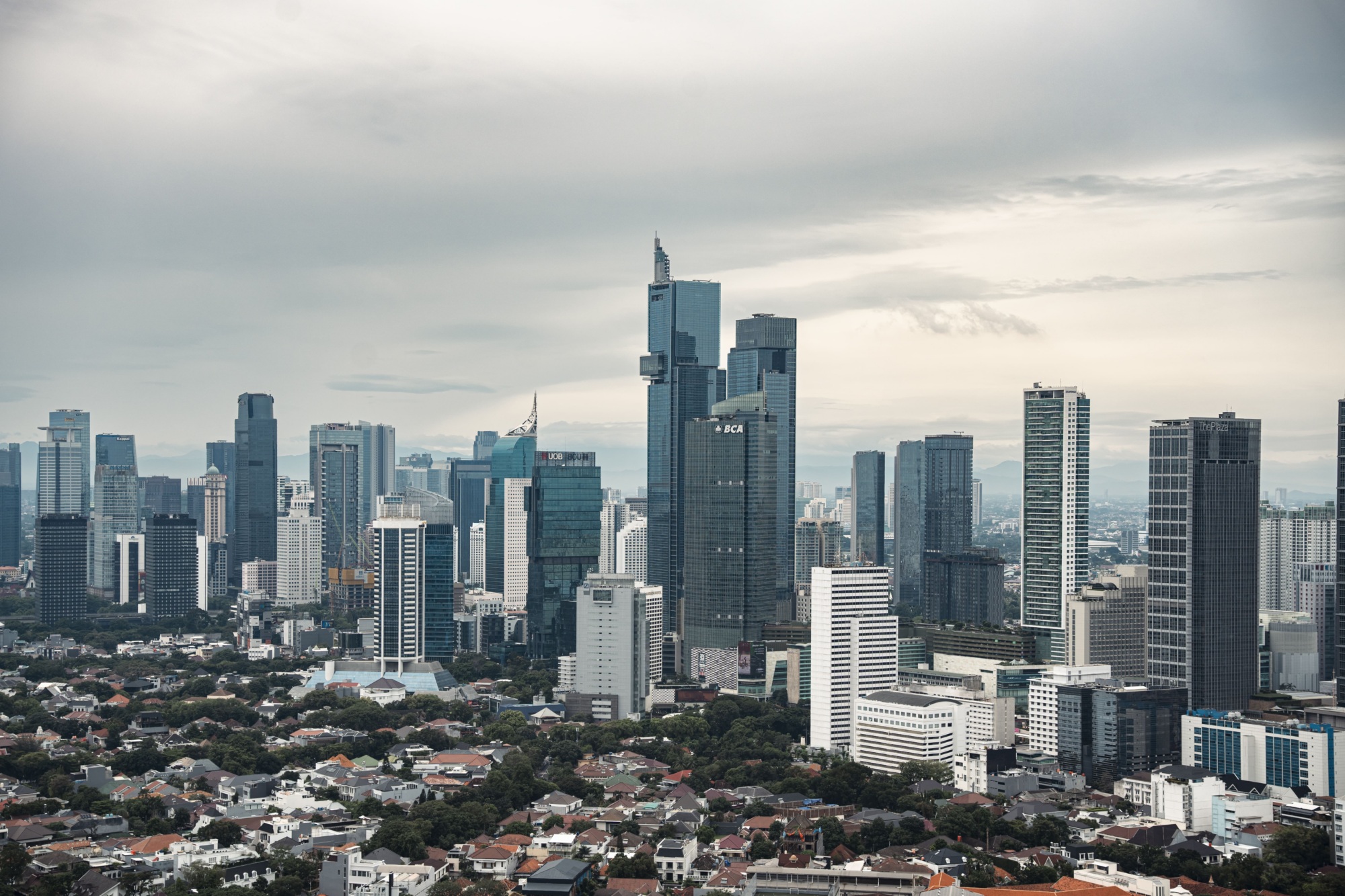
Skyline of Jakarta, Indonesia
Image credit: CLASP
Elevating Appliance Efficiency in National Climate Commitments
What we did
Ahead of COP30, CLASP led a global campaign to improve inclusion of appliance and equipment energy efficiency in national climate goals (nationally determined contributions or NDCs).
How we did it
Through our Net Zero Appliance NDC Toolkit and bespoke support for governments around the globe, CLASP elevated appliance efficiency policy as a key climate mitigation solution. Now, appliance and equipment efficiency policy is included in 90% of all submitted NDCs—up from below 50% in the last cycle.

Image credit: CLASP
Powering Africa’s Green Economy
Solar-powered appliances and equipment turn energy into opportunity, helping small businesses generate jobs and income. In 2025, CLASP re-launched our innovative Productive Use Financing Facility to make it cheaper and easier for entrepreneurs, farmers, and small businesses in Ethiopia, Kenya, and Nigeria to buy solar-powered appliances and equipment that power livelihoods. Last year, CLASP partnered with 11 companies to drive jobs and economic growth in Africa’s informal and agricultural sectors, which make up 70-80% of African economies.
Slashing Emissions Through Smart Policy
Australia
National leaders passed a lighting policy that will transition Australia’s market to an all-LED future and avoid 41 Mt of CO₂ by 2050, informed by CLASP-led analysis.
Brazil
Policymakers made strides in Brazil’s LED transition with CLASP’s support, approving a lighting policy package that will slash nearly 3 Mt CO₂ by 2050.
China
CLASP supported seven major policy updates, including for compressed air systems, refrigerators, and water pumps. Altogether, the new policies are estimated to cut nearly 3 Gt CO₂ by 2050.
India
CLASP supported the advancement of policies for space cooling appliances that will place India among global leaders in efficiency and cut 1.2 Gt CO₂ by 2050.
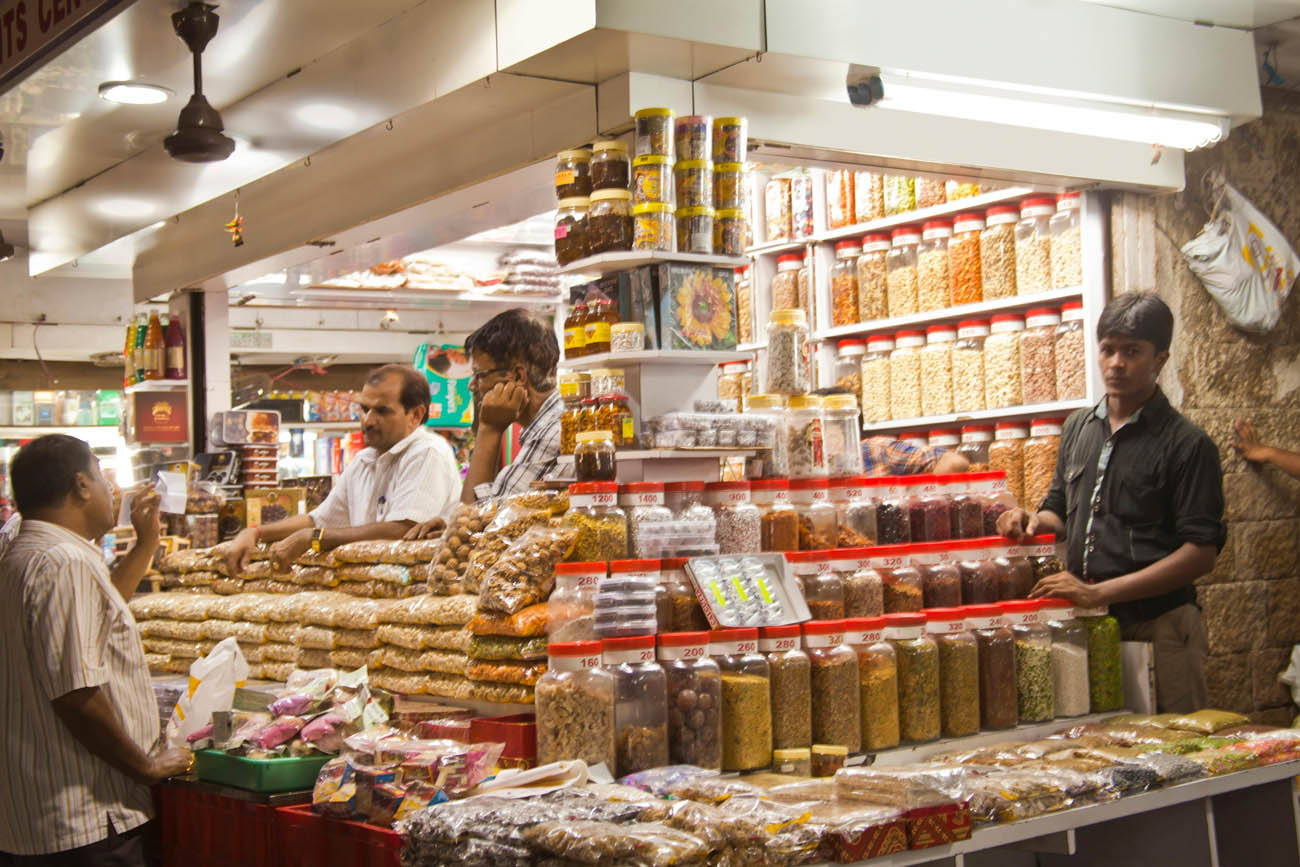
Image credit: ImageDB
Making Efficient, Affordable Fans the New Standard in India
India is one of the places on the planet most at risk of extreme heat. 90% of households rely on fans as their only form of space cooling. CLASP partnered with government and private sector partners to drastically improve fan efficiency, availability, and affordability. A major part of the effort was supporting small and medium enterprises to improve their production capacity.
The impact has been catalytic. Together, CLASP and partners cut energy demand and climate emissions from cooling, while safeguarding jobs, strengthening local supply chains, and making efficient cooling more affordable to the people who need it.
Joining Up with the Modern Energy Cooking Services (MECS) Programme
CLASP joined the UK Aid-supported MECS programme as a core partner alongside Loughborough University and the World Bank’s ESMAP. CLASP now leads on venture building and market shaping, helping e-cooking businesses scale up. In 2025, CLASP launched the Global LEAP Awards Induction Cooktops Competition to identify and promote the most innovative electric cooktops on the market.
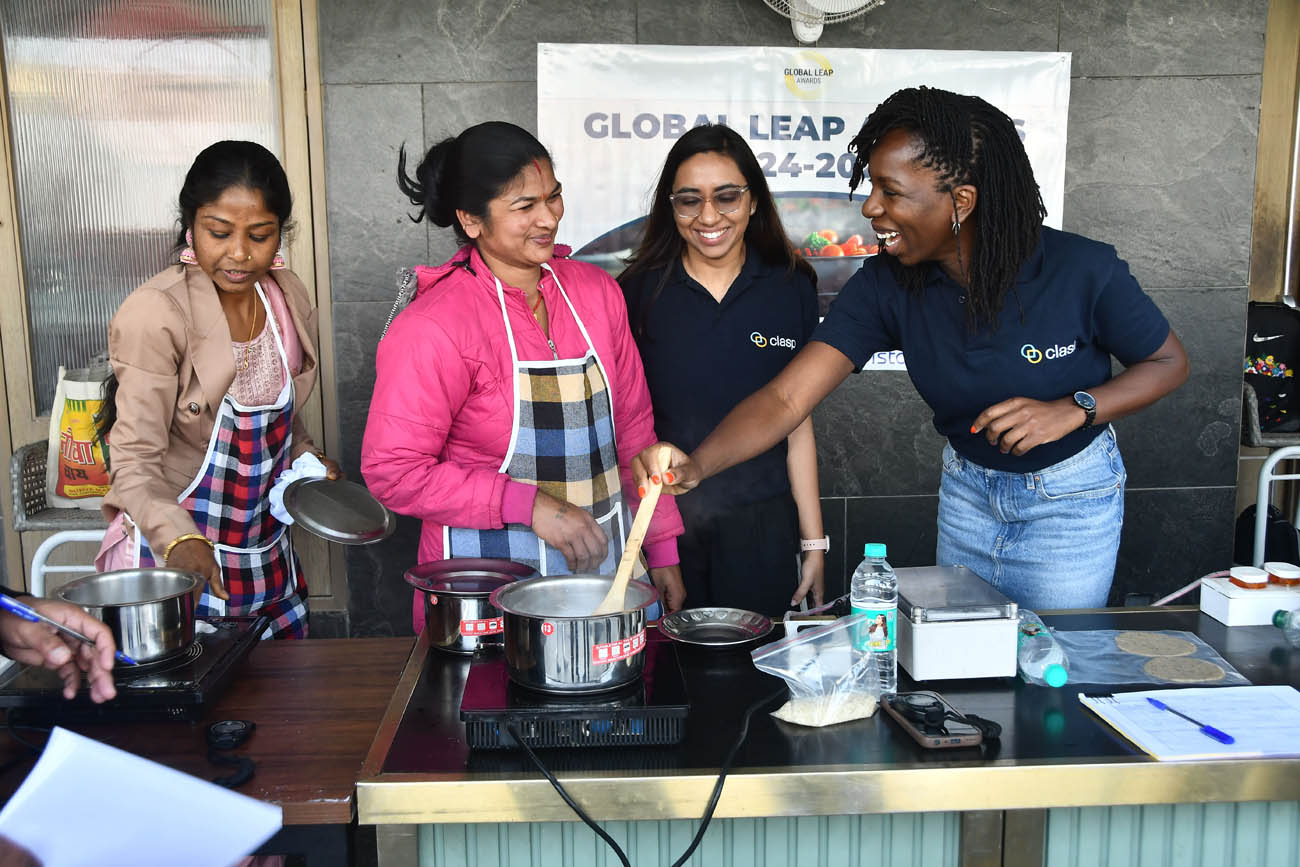
CLASP's Sumedha Awasthy & Nya Abagi at the Global LEAP Awards Induction Cooktops Competition workshop in New Delhi, India.
Image credit: CLASP
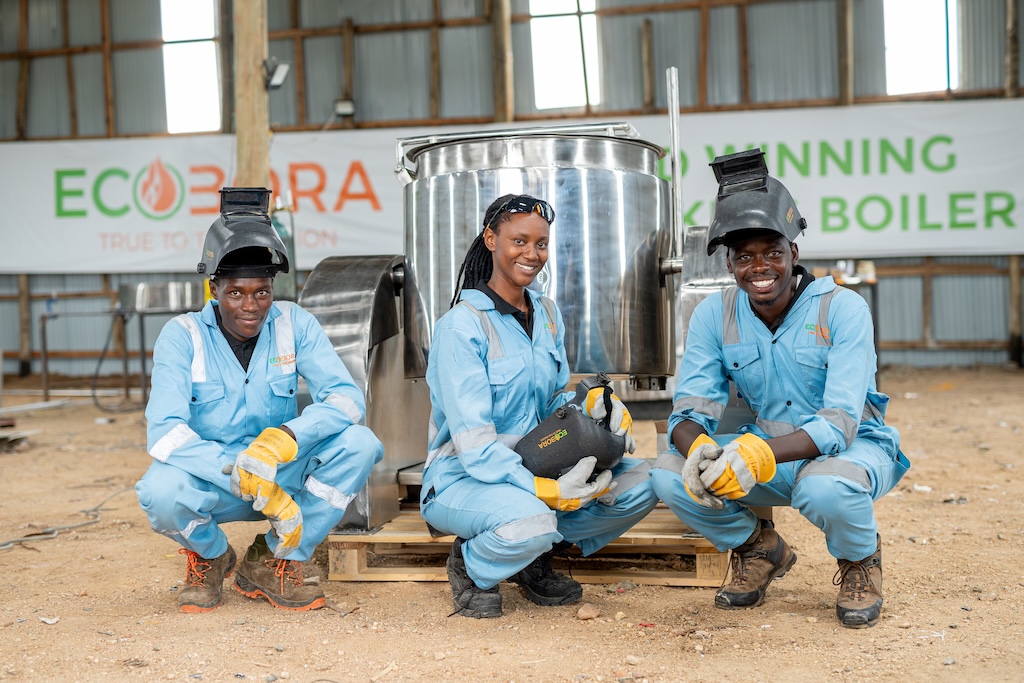
EcoBora, an innovative electric cooking company in Kenya, supported by CLASP through the MECS programme.
Image credit: CLASP
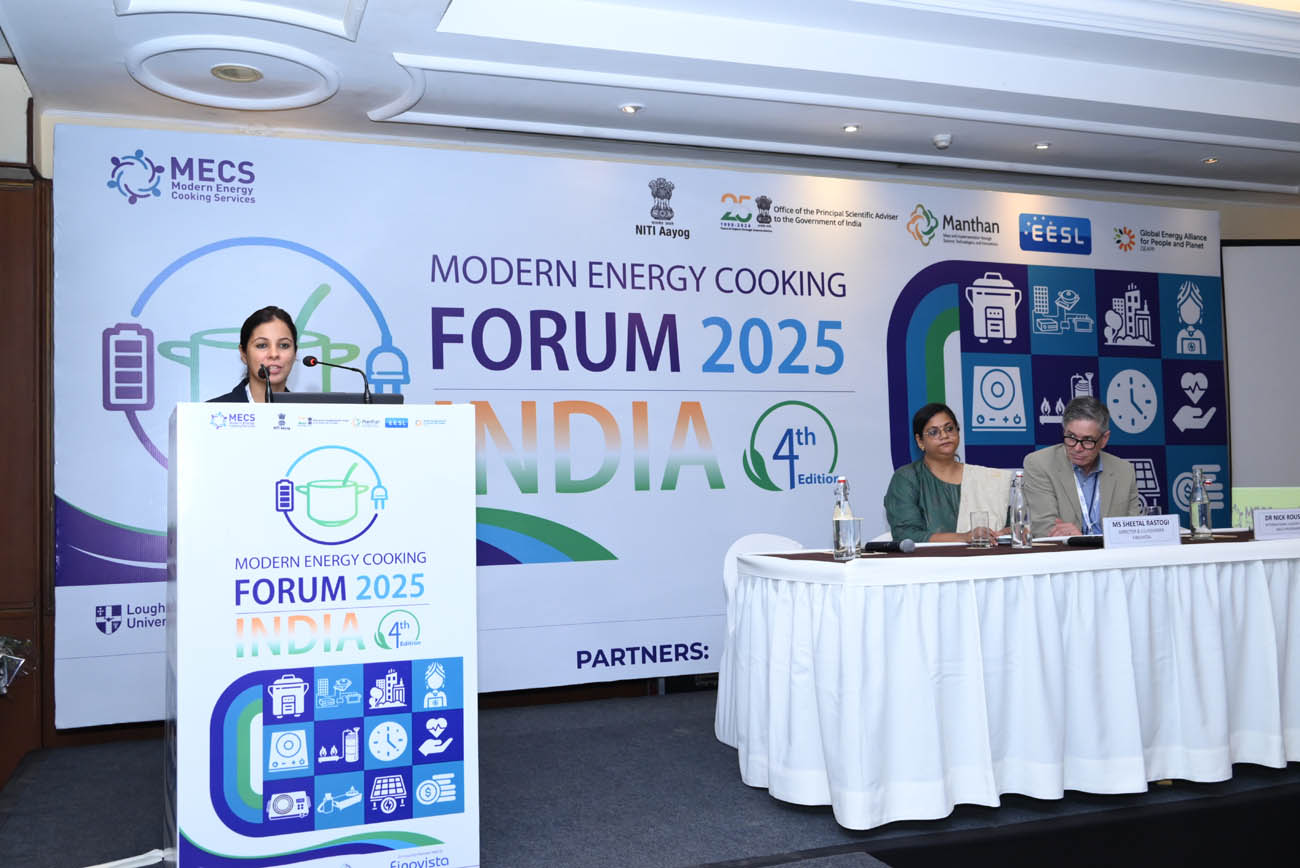
CLASP’s India Director, Neha Dhingra, speaking at the Modern Energy Cooking Forum in New Delhi, India, in September 2025.
Image credit: Finovista
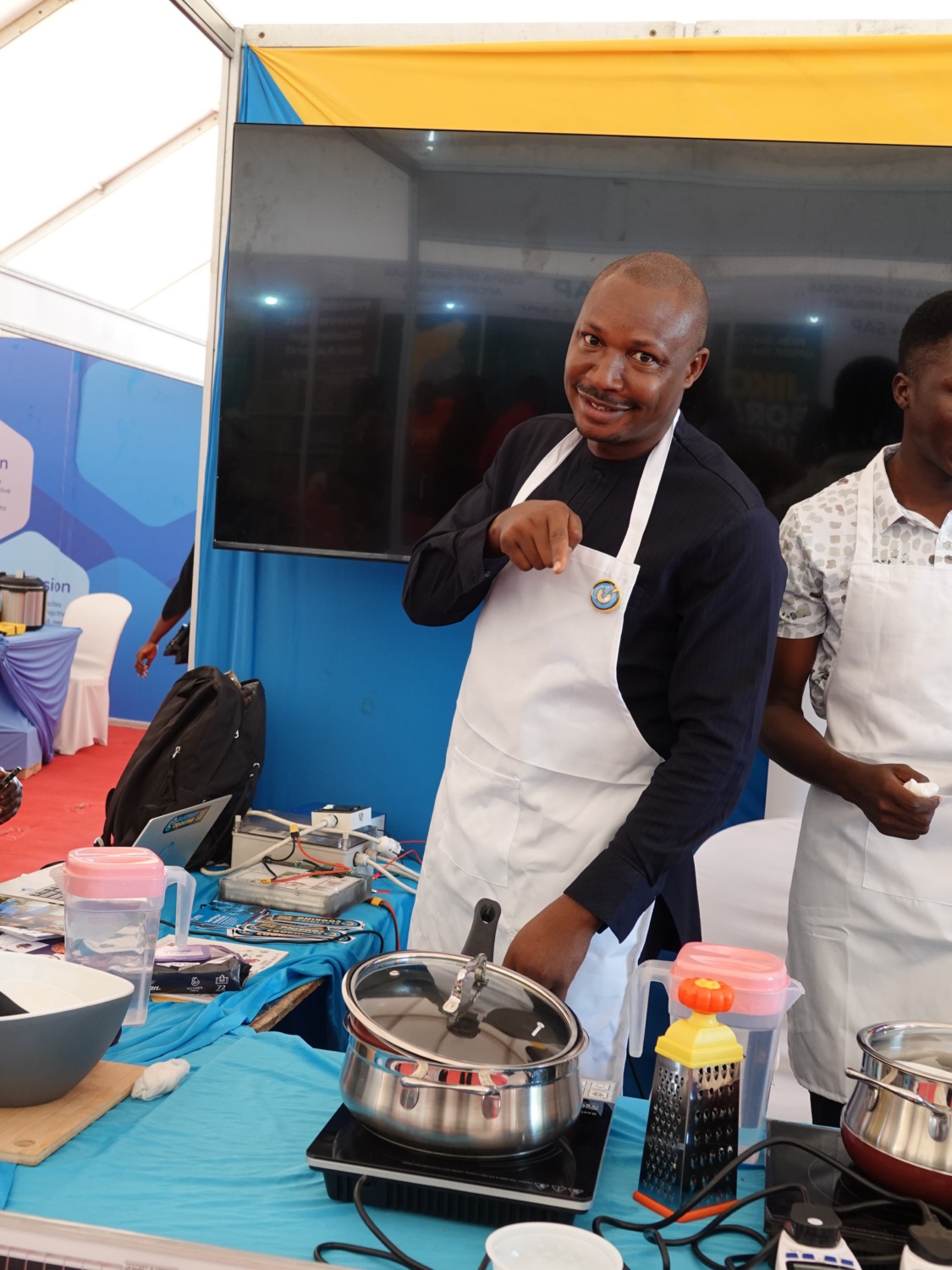
Emmanuel Aziebor, CLASP’s Senior Director, Africa, at Kenya Clean Cooking Week.
Image credit: CLASP
How UK Housing Authorities Can Power the Switch to Electric Cooking
Global Action Plan, in partnership with CLASP, piloted gas-to-electric cooking retrofits in a social housing community in Manchester.
For participating households, switching to electric meant more than lower emissions. It meant breathing more easily in the kitchen, a cleaner and more practical cooking experience, and greater peace of mind for families with young children. Every household preferred its new induction cooktop over gas.
Watch the video:
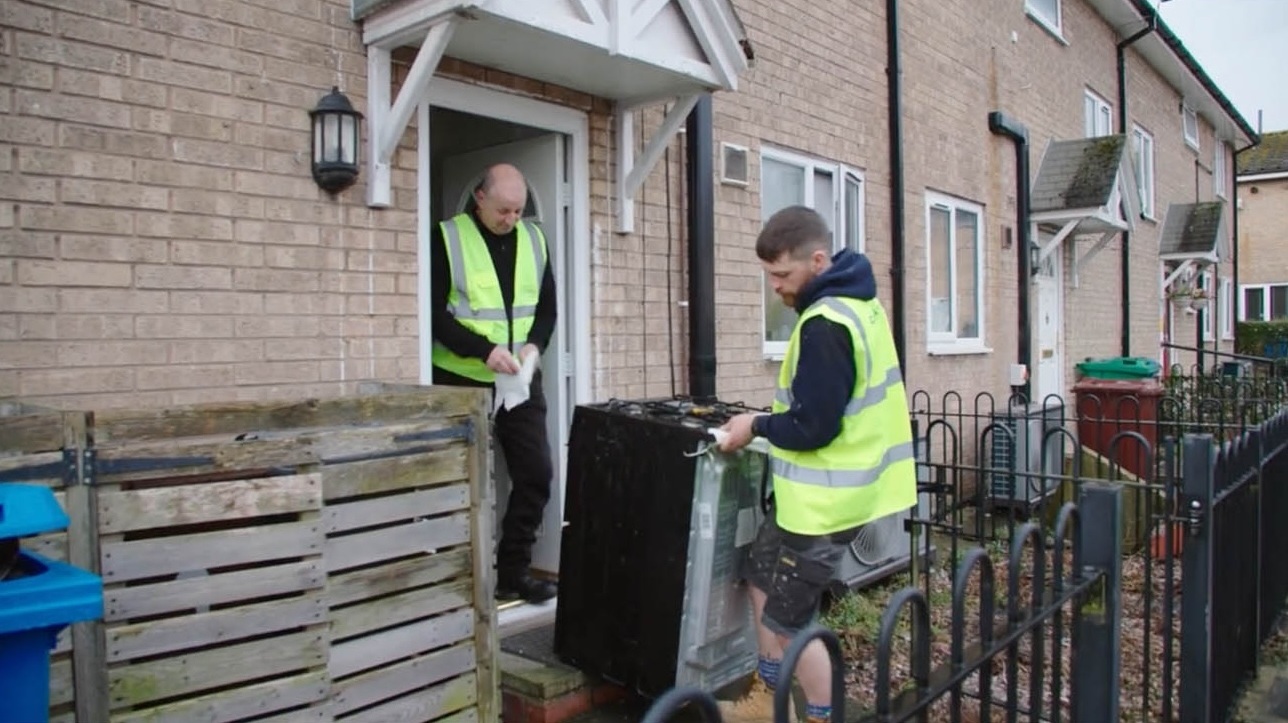
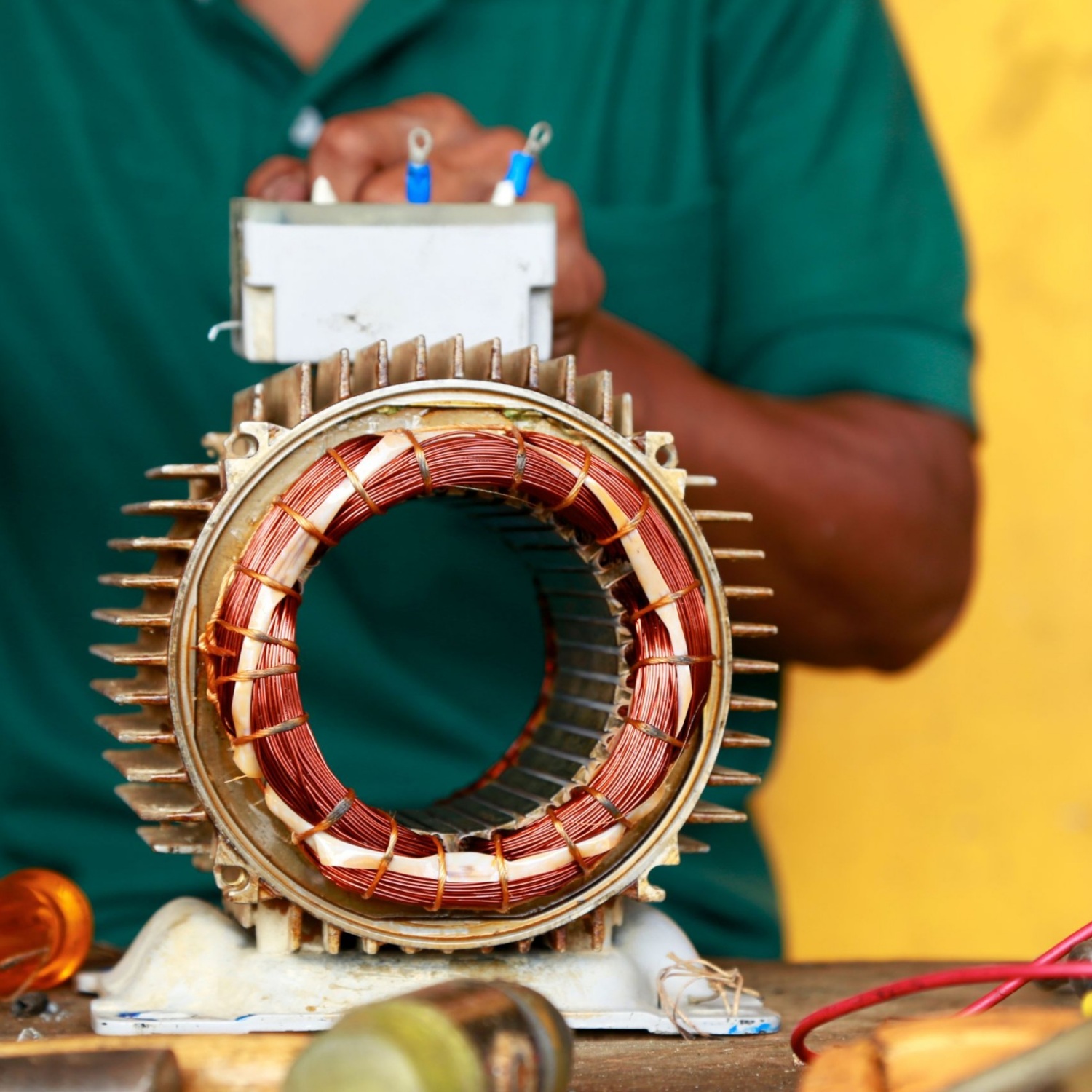
Image credit: CLASP
Economies Can Boom When Powered by Efficient Motor Systems
Industrial motor systems are the invisible heartbeat of economic development. Universally used across industrial facilities, they power the production of goods like metals, paper, cement, textiles, and packaged food. Motor systems are also ferocious energy consumers, due to their function and prevalence. Without intervention, and in step with global economic development and industrialization, by 2050 motor systems will account for 35% of global electricity demand and 19% of energy related emissions. CLASP is taking action on this priority appliance in the fight for Net Zero, identifying high impact opportunities at national and global scales to drive up efficiency, slash emissions, and boost economic progress.
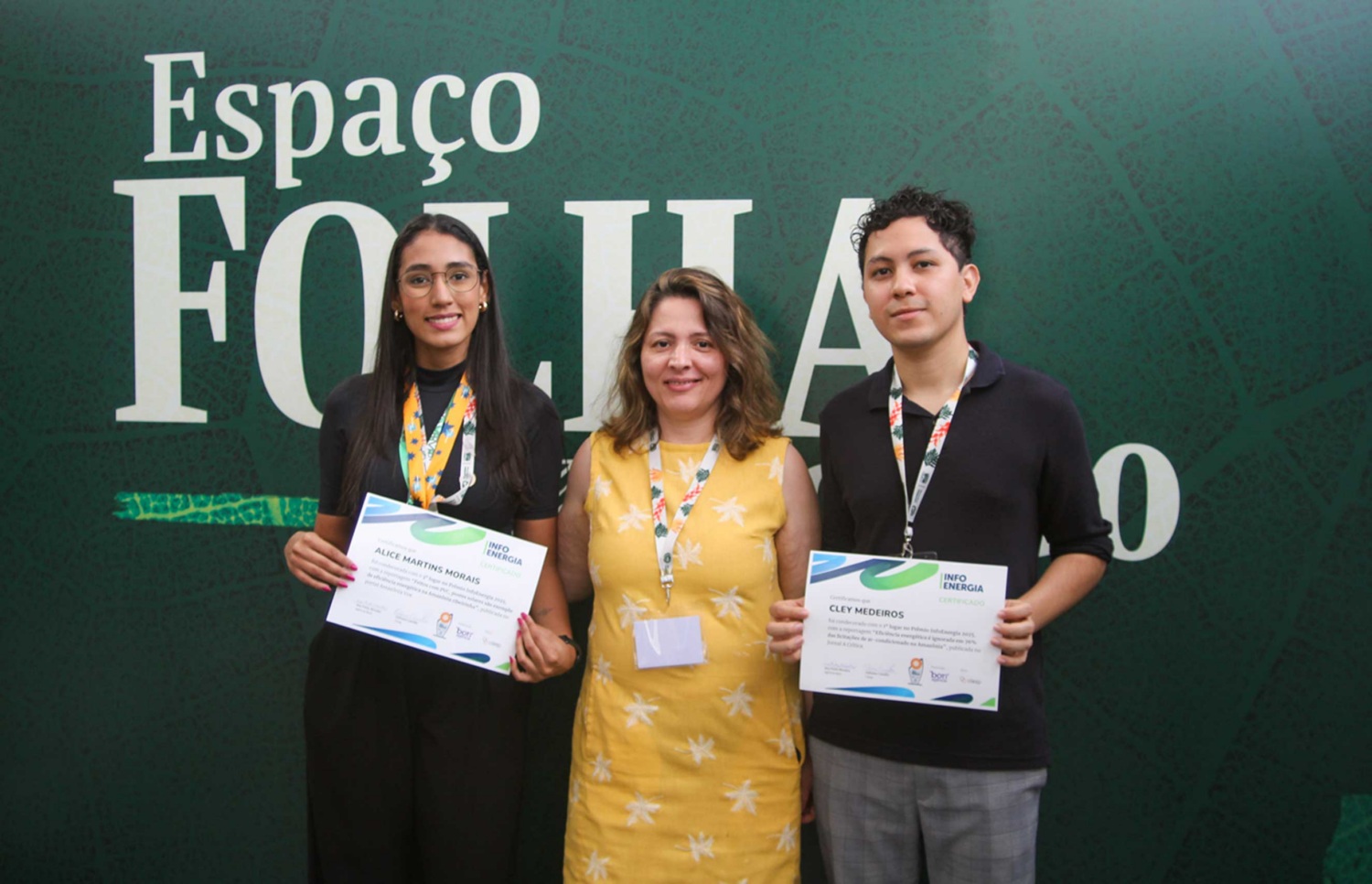
Image credit: CLASP
In Brazil, Partnering for Change
Ahead of COP30 in Brazil, CLASP joined forces with science communication agency Bori to drive national awareness of the benefits of appliance efficiency. Our InfoEnergia Mentorship was an 8-week, in-depth workshop that connected 25 journalists with experts and expertise to produce smart, contextualized reporting on appliance efficiency and its social, economic, and environmental impacts. Robust local journalism is a key element of durable climate policy.
Elevating Appliance-Centered Solutions at COP30
At COP 30 in Brazil, appliance and equipment energy efficiency stood out as a powerful climate solution, driving job creation, energy security, and adaptive capacity. CLASP provided expert testimony on the power of appliance efficiency solutions.
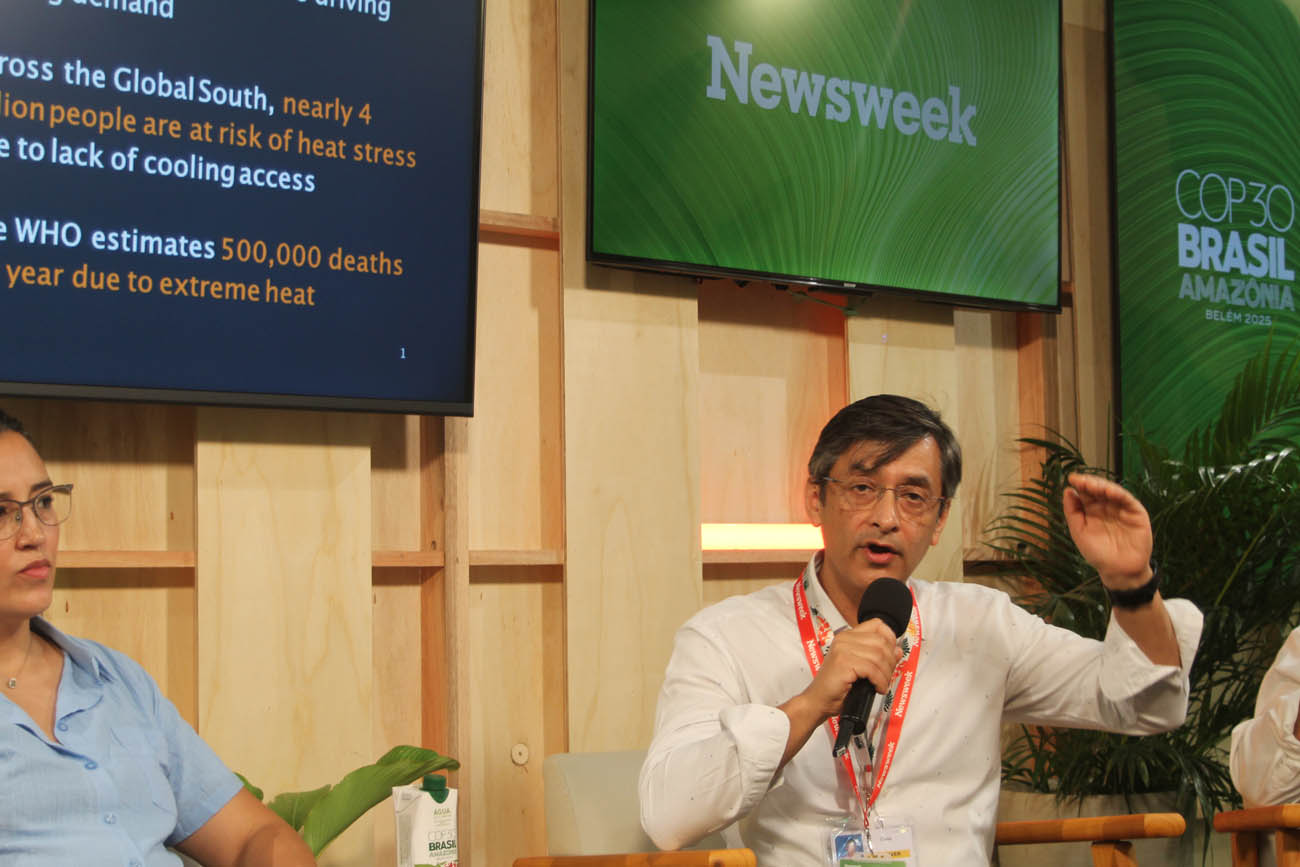
CLASP’s Bishal Thapa participated in discussion on space cooling solutions, offering insights about the benefits of efficient cooling technologies that slash emissions.
Image credit: CLASP
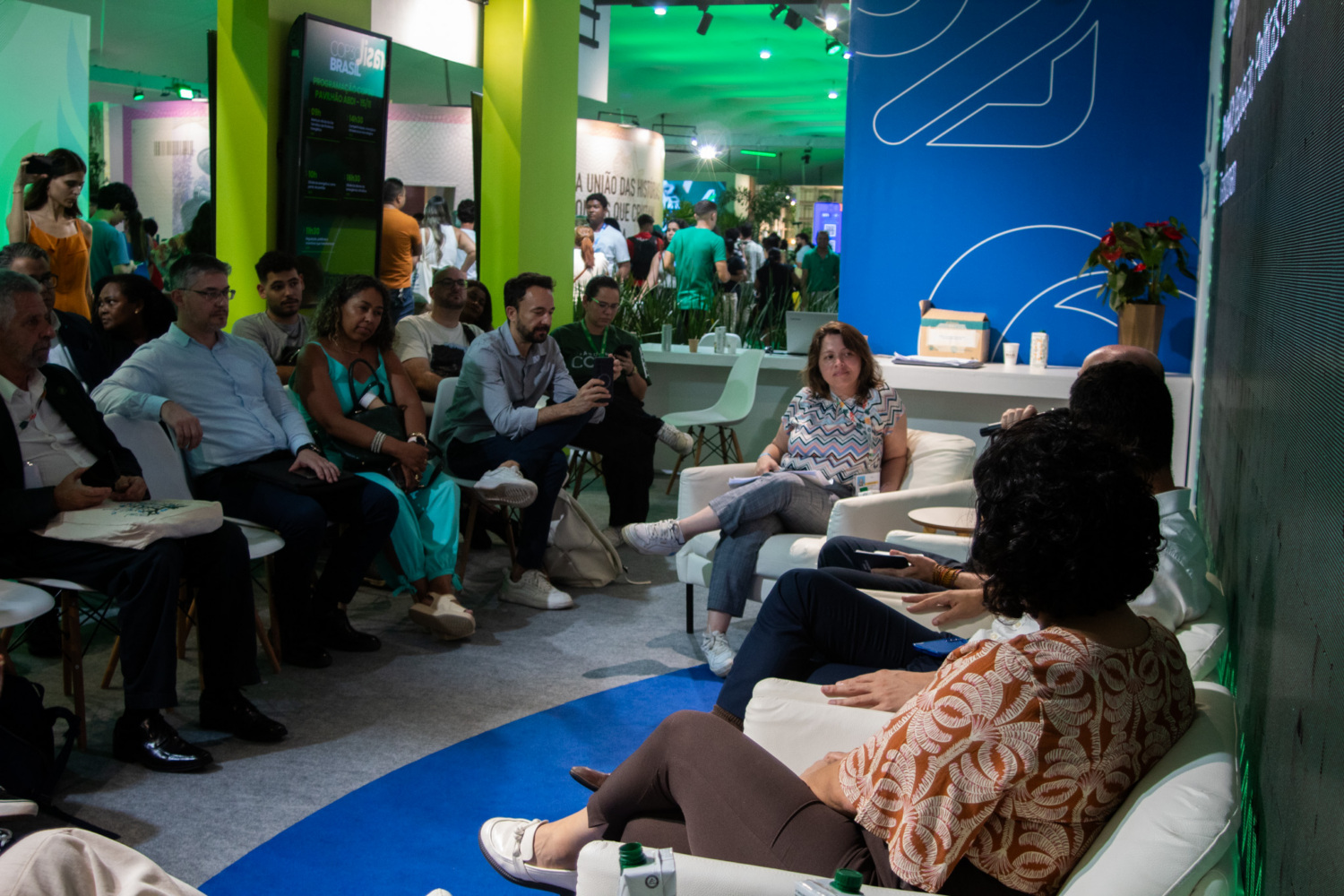
CLASP’s Edilaine Camillo moderated a conversation on the principal role of efficiency in Brazil’s energy transition during an agency-led day of efficiency themed events.
Image credit: CLASP
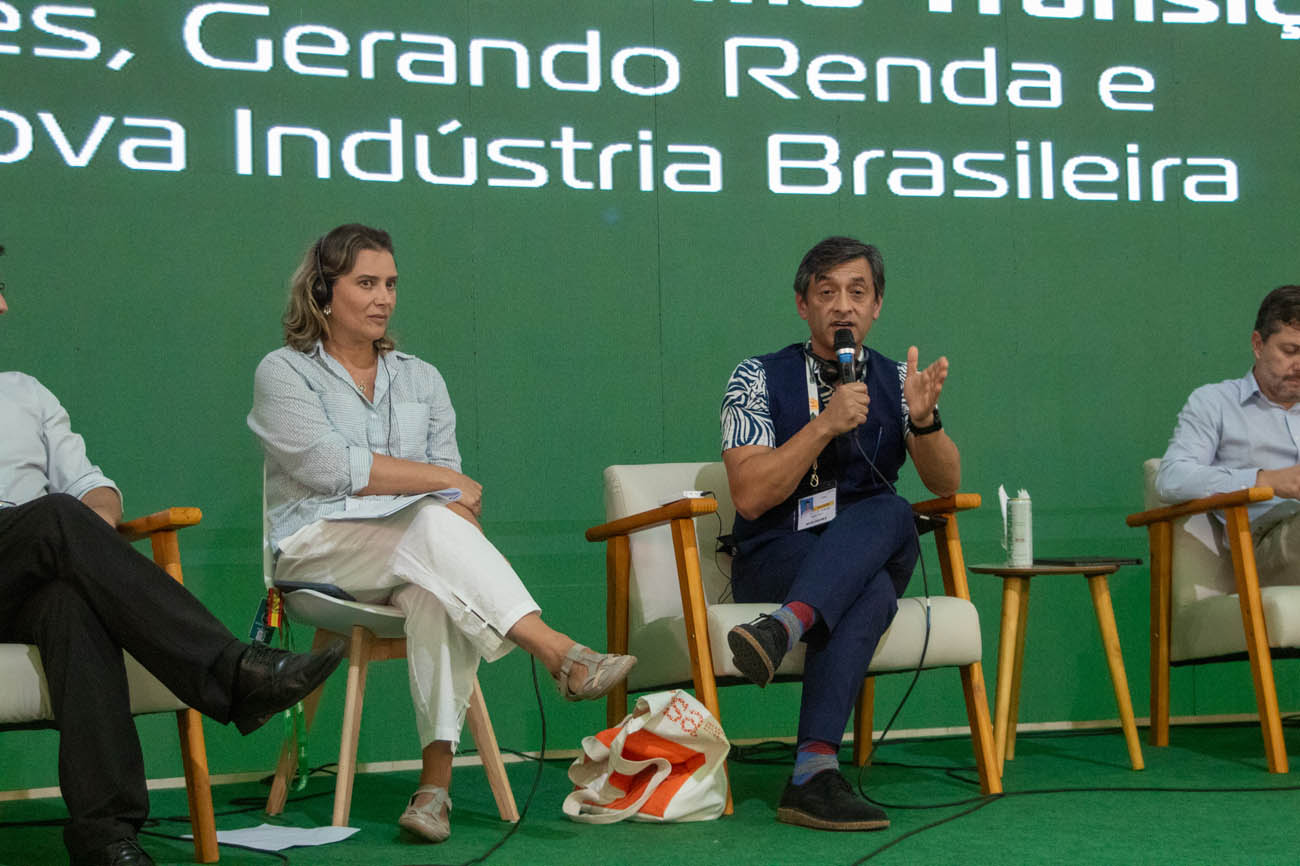
CLASP’s Bishal Thapa took part in a panel hosted by Casa Civil to speak about the role of energy efficiency policy in Brazil’s reindustrialization strategy.
Image credit: CLASP
Insights driving action
Delivering COP28’s Doubling Efficiency Goal Through Appliances
Appliance efficiency will play a critical role in meeting the COP28 commitment to double the global rate of energy efficiency improvement by 2030. CLASP research found it could deliver 20% of the energy savings needed, highlighting the value of strong standards, clear targets, and international collaboration.
The Missing Piece of Energy Access
666 million people, most of them in Africa, lack access to electricity. 2025 CLASP research shows that directing just 15% of existing energy investments toward efficient appliances can generate the demand needed to make grid expansions financially viable and help those currently living without electricity gain access to healthier, more productive lives.
Finances
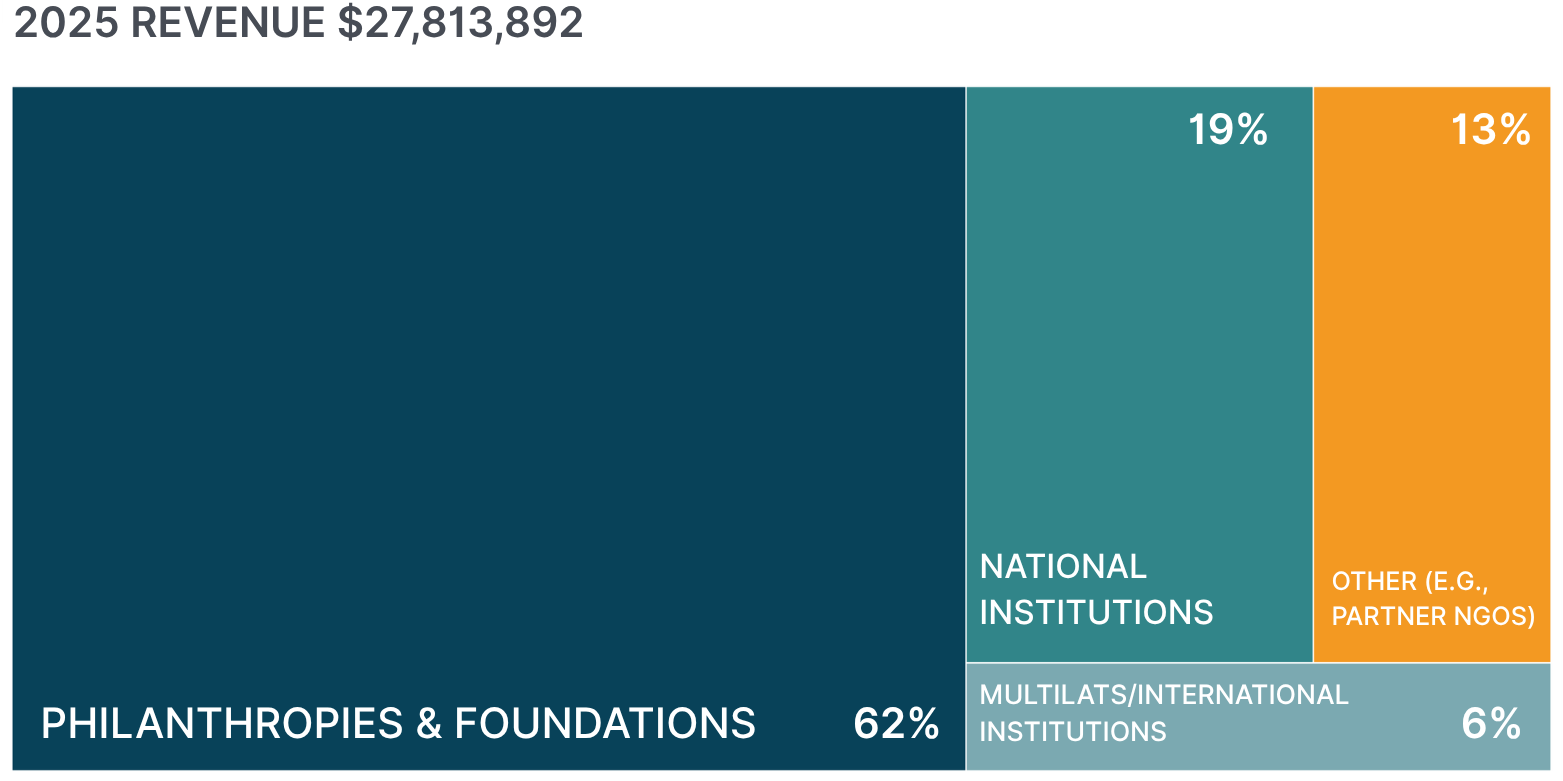
- Revenue by donor type
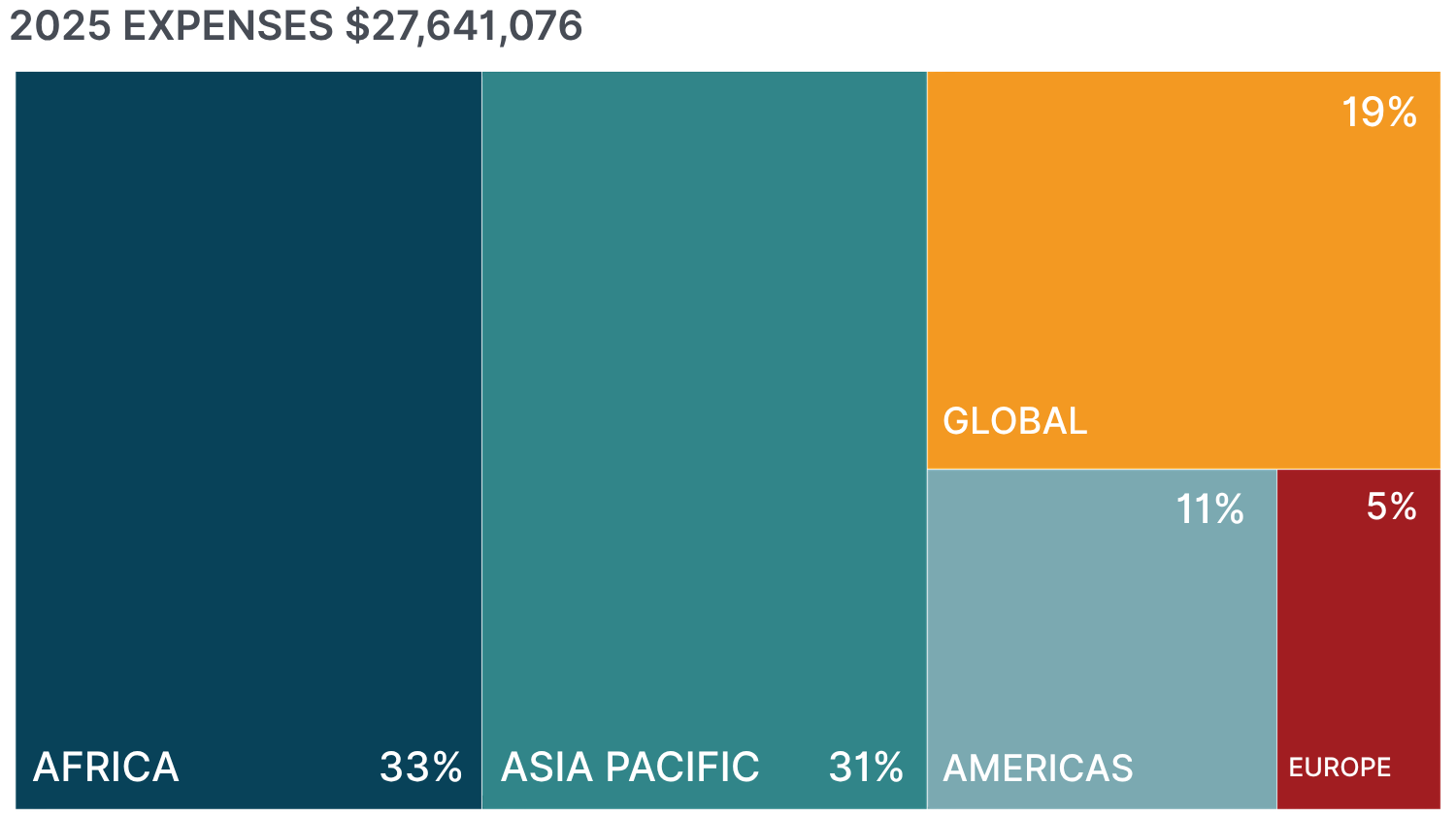
- Expenses by region
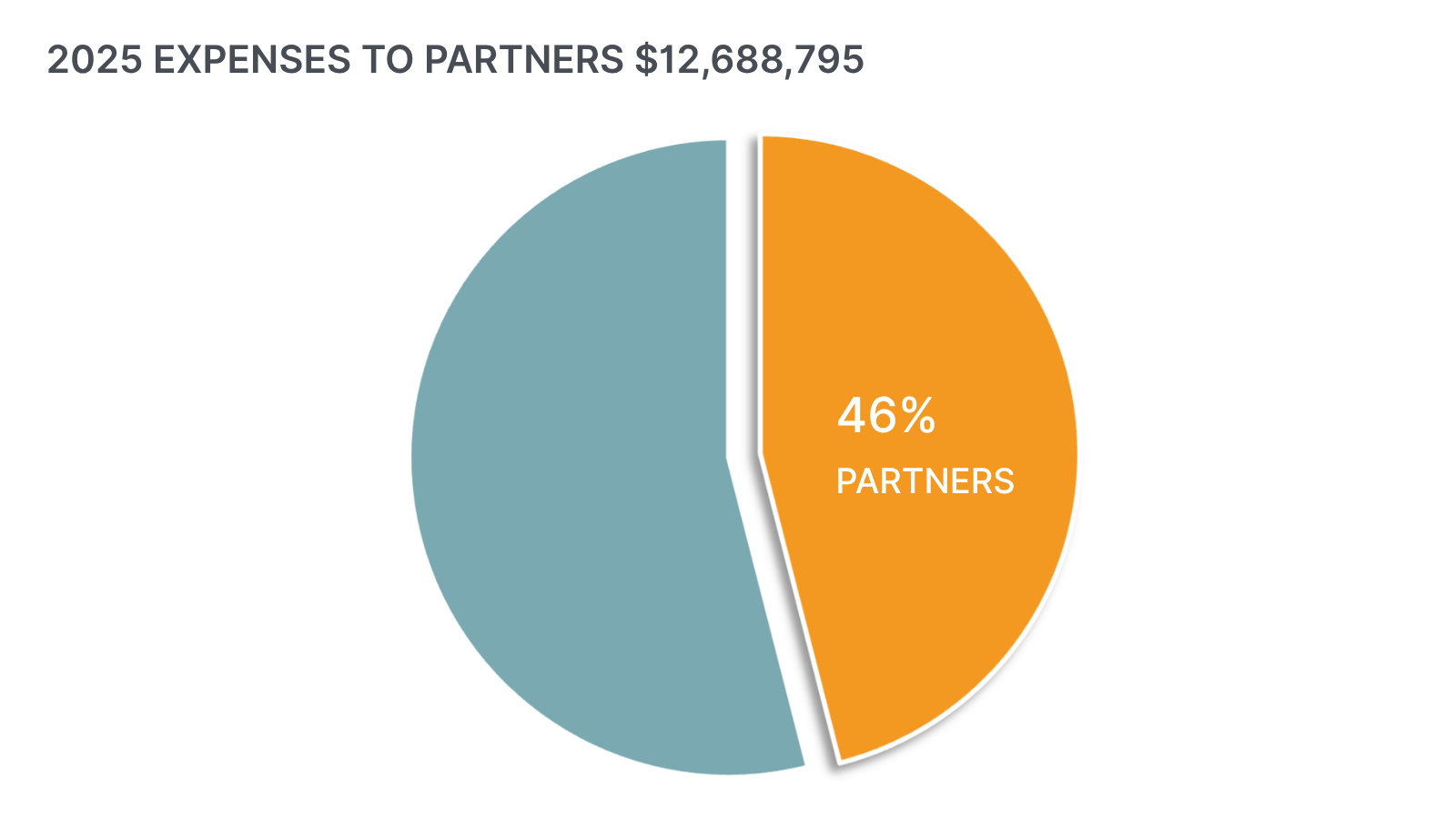
- CLASP collaborates with a global network of partners. In 2025, CLASP channeled nearly half our resources to civil society and energy groups, innovators, academic institutions, and experts — essential partners in changing the way we use energy.
About CLASP
Efficient appliances and equipment are essential drivers of economic growth and a fast, practical energy transition. With over 25 years of expertise and offices on five continents, CLASP collaborates with governments, industry leaders, and other experts to change the way we use energy.
We’re proud of what our team and partners achieved in 2025, driving progress for a better world. In 2026, we remain committed to championing appliance efficiency as a powerful solution for people, prosperity, and planet.
CLASP Research Helps Set the Stage for Climate-Friendly, Efficient Cooling in Indonesia

Home to over 280 million people, Indonesia is one of the world’s top 20 emitters of greenhouse gases. With temperatures rising, the government’s Nationally Determined Contribution (NDC) commits to reducing emissions while continuing to support the nation’s economic growth.
Meeting both of these goals requires a strong focus on air conditioning. With global warming driving temperatures ever higher and the nation’s middle class growing, more Indonesians are buying ACs. By 2050, 85% of households in the country are expected to own ACs. But while this will create important quality-of-life benefits, it also poses risks. Today, low-efficiency ACs dominate the Indonesian market. Without policy intervention or market shifts, increased AC use will result in a significant rise in emissions and electricity usage across the country, jeopardizing the nation’s climate goals and raising consumers’ electricity bills.
One of the easiest and most cost-effective ways to make air conditioners more efficient and affordable is to improve national policies that determine the energy efficiency of appliances produced and sold in the market.
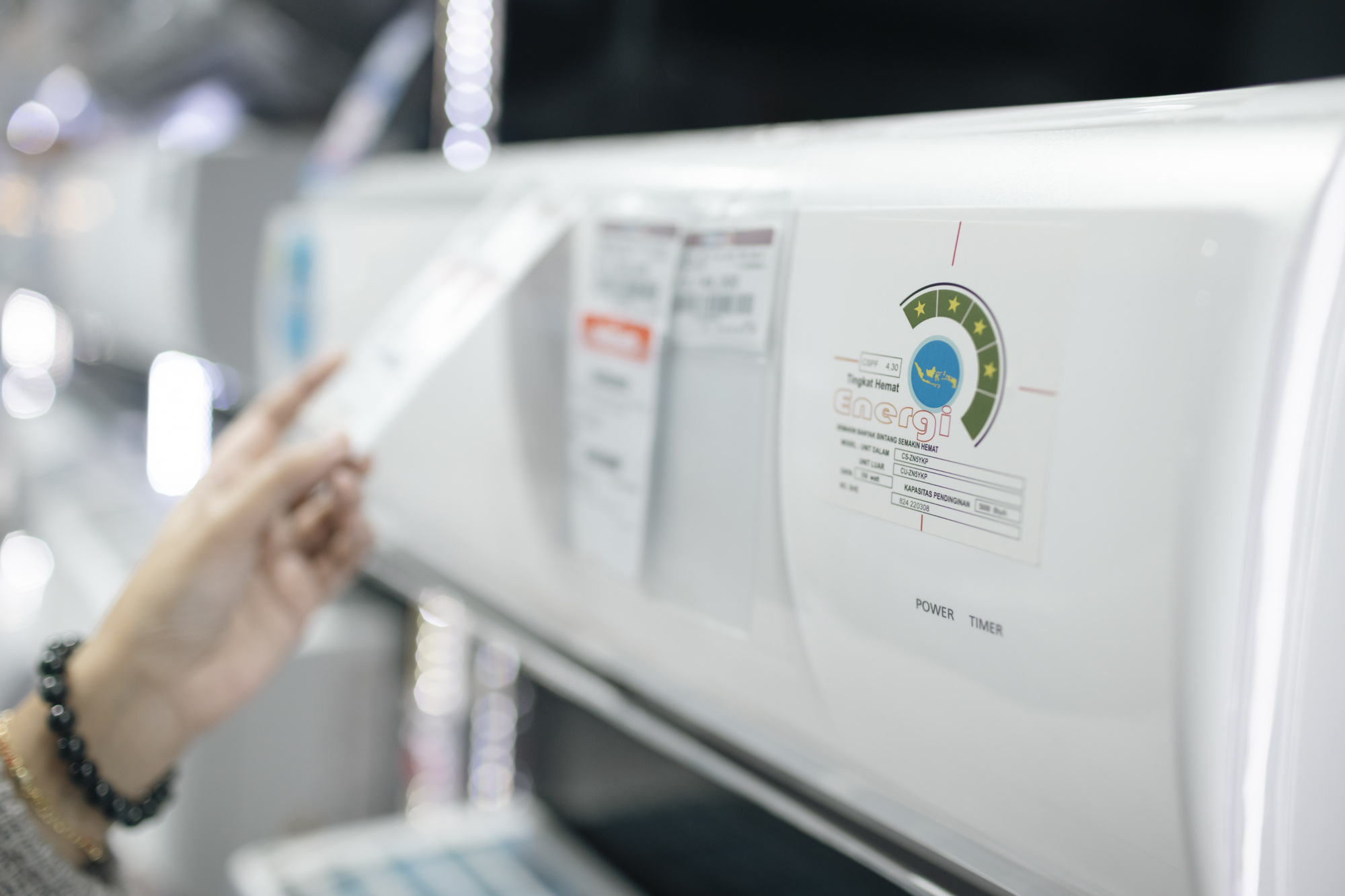
An air conditioner in Indonesia with an energy rating label
CLASP
Setting realistic and effective AC efficiency standards requires rigorous data on air conditioner performance. The Indonesian government, with technical support from CLASP, undertook a recent project to strengthen this evidence base.
We partnered with India’s CEPT University, University of Indonesia and other local universities, government and industry representatives, and certified AC technicians to study one important aspect of air conditioners: the difference in energy consumption between inverter and non-inverter technology.
Most air conditioners fall into these two types. An inverter AC can adjust how much power it uses depending on the cooling needed in the space, using less energy to maintain the right temperature. A non-inverter AC, on the other hand, repeatedly switches on and off to cool the room, which tends to consume more energy.
CLASP studied the energy consumption of these two technologies over a period of six months in three Indonesian cities: Jakarta, Medan, and Bali. In each location, two identical homes with identical bedroom conditions were identified. One home was fitted with an inverter AC and the other with a non-inverter unit, allowing researchers to compare their electricity usage under the same conditions. The study also provides independent evidence on whether inverter ACs can truly deliver electricity savings in Indonesia’s hot, humid climate.
The results showed:
- Field tests are consistent with global findings, indicating that inverter ACs consume less electricity than non-inverter units under similar conditions, with Jakarta measurements showing approximately 28% savings during the test period.
- The difference in energy use remained steady throughout the testing period, with inverter ACs consistently using less electricity.
Research has also shown that while inverter ACs cost more upfront, their lower electricity usage means households typically recover the extra cost in a few years through reduced electricity bills and continue saving afterward.
By providing empirical data to stakeholders and policymakers in Indonesia and elsewhere, CLASP aims to support stronger efficiency standards for air conditioners. These policies can help bring more efficient models to the market and encourage large-scale production, which can ultimately reduce the upfront cost of high-efficiency ACs, helping more people stay cool.
CLASP research helps set the stage for climate-friendly, efficient cooling in Indonesia
Home to over 280 million people, Indonesia is one of the world’s top 20 emitters of greenhouse gases. With temperatures rising, the government’s Nationally Determined Contribution (NDC) commits to reducing emissions while continuing to support the nation’s economic growth.
Meeting both of these goals requires a strong focus on air conditioning. With global warming driving temperatures ever higher and the nation’s middle class growing, more Indonesians are buying ACs. By 2050, 85% of households in the country are expected to own ACs. But while this will create important quality-of-life benefits, it also poses risks. Today, low-efficiency ACs dominate the Indonesian market. Without policy intervention or market shifts, increased AC use will result in a significant rise in emissions and electricity usage across the country, jeopardizing the nation’s climate goals and raising consumers’ electricity bills.
One of the easiest and most cost-effective ways to make air conditioners more efficient and affordable is to improve national policies that determine the energy efficiency of appliances produced and sold in the market.
An air conditioner in Indonesia with an energy rating label
CLASP
Setting realistic and effective AC efficiency standards requires rigorous data on air conditioner performance. The Indonesian government, with technical support from CLASP, undertook a recent project to strengthen this evidence base.
We partnered with India’s CEPT University, University of Indonesia and other local universities, government and industry representatives, and certified AC technicians to study one important aspect of air conditioners: the difference in energy consumption between inverter and non-inverter technology.
Most air conditioners fall into these two types. An inverter AC can adjust how much power it uses depending on the cooling needed in the space, using less energy to maintain the right temperature. A non-inverter AC, on the other hand, repeatedly switches on and off to cool the room, which tends to consume more energy.
CLASP studied the energy consumption of these two technologies over a period of six months in three Indonesian cities: Jakarta, Medan, and Bali. In each location, two identical homes with identical bedroom conditions were identified. One home was fitted with an inverter AC and the other with a non-inverter unit, allowing researchers to compare their electricity usage under the same conditions. The study also provides independent evidence on whether inverter ACs can truly deliver electricity savings in Indonesia’s hot, humid climate.
The results showed:
- Field tests are consistent with global findings, indicating that inverter ACs consume less electricity than non-inverter units under similar conditions, with Jakarta measurements showing approximately 28% savings during the test period.
- The difference in energy use remained steady throughout the testing period, with inverter ACs consistently using less electricity.
Research has also shown that while inverter ACs cost more upfront, their lower electricity usage means households typically recover the extra cost in a few years through reduced electricity bills and continue saving afterward.
By providing empirical data to stakeholders and policymakers in Indonesia and elsewhere, CLASP aims to support stronger efficiency standards for air conditioners. These policies can help bring more efficient models to the market and encourage large-scale production, which can ultimately reduce the upfront cost of high-efficiency ACs, helping more people stay cool.
CLASP Conducting New Motor Assessment in Indonesia to Inform Efficiency Policies
CLASP has identified 10 appliances that are critical to fighting climate change and improving people’s lives. Industrial Motors are one of them. They power our economies and consume a significant amount of the world’s industrial electricity demand—27%. The resulting high energy consumption leads to greenhouse gas emissions and can strain power grids.
In Indonesia, the industrial sector consumes nearly 45% of the country’s total energy. Much of this demand comes from equipment powered by electric motors, which is expected to rise as Indonesia’s local manufacturing grows.
Given energy-efficient motors’ ability to consume less electricity when performing a task, and transitioning global motor stock to modern, efficient models would have major environmental and social benefits. Higher efficiency motors offer a win-win solution.
A market assessment to inform motor efficiency policies in Indonesia
Indonesia’s rapid industrial and economic growth is increasing the demand for commercial and industrial equipment. This makes improving the efficiency of motors embedded in pumps, fans, compressors, and conveyors a priority for national policy. However, there is limited information about the country’s current domestic motor market to guide policy development.
CLASP aims to fill this gap through a detailed market assessment of electric motors. The study will quantify the market’s size and composition, including motor sizes, brands, and efficiency levels, of Indonesia’s motor market and provide policymakers with reliable data to develop new national efficiency policies. This assessment is being conducted in coordination with the Ministry of Energy and Mineral Resources (EBTKE), and key motor brands and associations, including ABB, Siemens, TEKO, and Grundfos.
What Indonesia can gain from more efficient motors
Once in place, motor efficiency policies informed by this assessment could deliver major benefits. Early projections show that by 2060, Indonesia could save ~542 TWh of electricity, enough to power 115 million Indonesian households for one year, and avoid ~460 Mt CO₂ emissions, equal to taking 100 million passenger cars off the road for one year. This will support the country’s 2060 net-zero climate goals and its Nationally Determined Contribution, or national climate goal.
For consumers and businesses, efficient motors mean access to higher-quality products and lower energy bills during the equipment’s lifespan. For the broader economy, efficient motors mean improved productivity, stronger industrial competitiveness, and enhanced energy security.
Ensuring that Indonesia’s industrial motors become more energy efficient is key to building a competitive and sustainable industrial future.
Doubling Energy Efficiency with Appliances
Appliance efficiency could provide roughly one fifth of the reduction in energy demand needed to meet a pivotal climate commitment, according to CLASP’s analysis “Doubling Energy Efficiency with Appliances: How governments can leverage appliances to reach climate targets.” With nearly 110 countries pledging at COP28 to double annual energy efficiency improvements by 2030, more ambitious appliance policies are critical to reaching this goal before the narrow window for net zero by mid-century closes.
Key Findings
- To get on track for net zero emissions by mid-century, the average global annual rate of improvement in energy intensity must double to at least 4% by 2030. Appliance efficiency can deliver approximately 20% of the total reduction in energy demand required to meet this goal.
- Brazil, China, India, and Indonesia have recently taken significant steps to integrate appliance efficiency into their national strategies, recognizing its critical role in achieving energy and climate goals.
Recommendations
- Policymakers must rapidly implement stringent minimum efficiency standards for appliances, ensuring that they meet or exceed the best standards currently in place. Countries with world-leading standards should increase them further to reflect the levels of today’s best available technologies.
- Governments need to embed clear, measurable appliance efficiency targets into their national climate goals. They must also track progress with standardized metrics to stay on course to meet the doubling efficiency goal.
- All stakeholders across government, industry, and civil society must strengthen international and cross-sectoral collaboration to accelerate global energy efficiency gains. This cost-effective approach includes sharing technical expertise, conducting joint market surveillance, and harmonizing standards to overcome common barriers.
Indonesia
Indonesia’s Students Introduced to Energy Efficiency Benefits
Junior high school students at SMPN 1 Teluk Naga, a public school in Tangerang, Indonesia, are learning the basics of energy-efficient appliances and their vital role in protecting our environment.
Efficient appliances consume significantly lesser energy and can help Indonesia avoid 100 megatons (Mt) of harmful CO₂ emissions by 2030. They also cost less to maintain. By increasing awareness among students today, CLASP is empowering the next generation to make informed, climate-conscious decisions that will drive positive environmental and financial change. While this workshop focused on high school students, CLASP is actively planning to conduct similar workshops for elementary and university-level students.
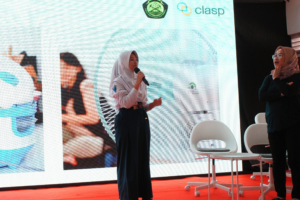
Igniting an interest in energy-saving appliances
The campaign, organized by CLASP, the Ministry of Energy and Resources, local schools, and the Solidaritas Perempuan Untuk Indonesia (Women’s Solidarity for Indonesia), is part of a broader initiative to promote sustainable habits across generations. During a one-day workshop, students engaged in interactive presentations, quizzes, and games designed to make learning about energy efficiency tangible and fun. Teachers from neighboring schools shared real-world examples of sustainable lifestyle choices, while CLASP’s team members demonstrated how energy labels help people choose appliances that are better for the environment and their budgets.
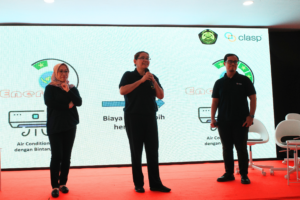
Several prominent guests attended the event, including the Chair of SERUNI and affiliates of the Ministry of Police and the Ministry of Energy in Indonesia. Their presence demonstrated the commitment of the Indonesian government to promoting energy efficiency across the country.
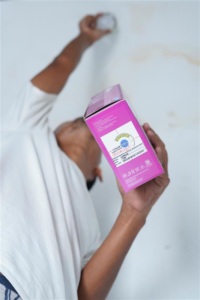
More stars, more savings!
In Indonesia, energy labels indicate an appliance’s efficiency levels, which range from one star (the least efficient) to five stars (the most efficient). The more efficient an appliance is, the more money consumers save on electricity bills and maintenance. Despite these benefits, a 2020 survey in revealed that only approximately 27% of Indonesian consumers consider energy efficiency when buying appliances, indicating a lack of awareness about energy labels.
Energy efficiency from school to home
The knowledge imparted to the students should resonate beyond the event, creating a lasting impact on both their families and their communities. Many students expressed interest in taking learnings from the campaign to their families and making energy-efficient choices when they’re older.
CLASP in Indonesia
CLASP works closely with government and civil society to advance Indonesia’s shift toward high-efficiency appliances. We have helped spur ambitious appliance efficiency initiatives in Indonesia, supporting seven policies that will avoid 100 Mt of CO₂ emissions by 2030. CLASP has also informed the national government’s commitment to reducing CO₂ emissions by 29% by 2030 and reaching net zero by 2060.
Journalists’ Workshop Strengthens Energy Label Awareness in Indonesia
Journalists not only report the news but they also shape public perception and influence policy. CLASP in collaboration with the Society of Indonesian Environmental Journalists (SIEJ), hosted a first-of-its-kind media workshop, equipping journalists with the knowledge to drive public engagement on appliance efficiency. Through this initiative, 20 national news articles were published (noted in the table below). These stories reached major cities across Indonesia, capturing the attention of policymakers, landing on Mongabay, and even being cited by local media such as Kompas. The articles also sparked conversations about the merits of energy efficiency for consumers. The ripple effect is clear: informed journalism has the power to increase public awareness and the potential to turn this into consumer action.
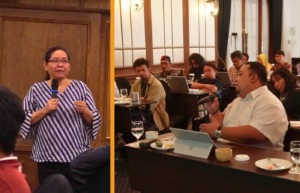
Building awareness about efficiency
Energy labels are a critical tool for consumers to make informed, energy-efficient choices. However, in Indonesia, where energy demand is rising rapidly, only 27.5% of the population recognizes and understands the meaning of these labels on appliances. Indonesia is the fourth highest emitter of CO₂ emissions in the Asia Pacific region, so improving the country’s appliance efficiency is a cost-effective way to reduce both energy demand and climate emissions.
To bridge this awareness gap, CLASP and the Indonesian Directorate General of New, Renewable Energy and Energy Conservation (EBTKE), and the Indonesian Ministry of Energy and Mineral Resources (MEMR) joined forces to mainstream energy efficiency through appliances energy labeling in Indonesia. This includes a campaign and consumer education initiatives held in collaboration with local organizations, such as the Indonesian Consumer Organization (YLKI) and the Society of Indonesian Environmental Journalists (SIEJ).
What’s next?
The success of the media workshop has laid the groundwork for future collaborations, including potentially expanding to more specialized media programs and direct consumer engagement. By building the capacity and understanding of journalists, CLASP and its partners are ensuring more accurate reporting about the opportunities energy efficiency can provide in Indonesia–for the government, businesses, consumers, and the climate.
Articles compiled by journalists that attended the workshop:
| Date | Name of Media House | Title of article in Bhasa (hyperlinked) | Title of article in English |
|---|---|---|---|
| 27 June 2024 | Purworejo24 | Asingnya Istilah Label SKEM Dan LTHE Bagi Warga Di Purworejo | The unfamiliar terms of the labels SKEM and LTHE for residents in Purworejo |
| 28 June 2024 | Tribunnews | Emak-Emak, Katalisator Andal dalam Menghemat Energi | Mothers, a Reliable Catalyst in Saving Energy |
| 28 June 2024 | Tribunnews | Kisah Lucky Setiawan Pakai AC Berlabel SKEM dan LTHE untuk Lawan Cuaca Ekstrem di Semarang | Lucky Setiawan's Story of Using SKEM and LTHE Labeled Air Conditioners to Fight Extreme Weather in Semarang |
| 28 June 2024 | Pontianak Post | Kisah Penghematan Energi dari Warung Kopi | An Energy Saving Story from a Coffee Shop |
| 29 June 2024 | Mimbarutan | LTHE vs PLTS, Kaum Mendang-mending Tetap Bisa Hemat Energi | LTHE vs PLTS, Mendang-mending Community Can Still Save Energy |
| 29 June 2024 | Medcomm | Kisah Kelompok Difabel Terapkan Hidup Hemat Energi | The Story of a Group of People with Disabilities Implementing Energy Efficient Living |
| 29 June 2024 | Medcomm | Kelompok Minoritas Perlu Akses Informasi Tentang Produk-Produk Hemat Energi | Minority Groups Need Access to Information on Energy Efficient Products |
| 29 June 2024 | Kompas | Membumikan Efisiensi Energi Sejak Dini | Grounding Energy Efficiency from an Early Age |
| 30 June 2024 | Mongabay | Produk Elektronik Berstandar Hemat Energi Minim Sosialisasi | Energy-Saving Standard Electronic Products Lack Socialization |
| 30 june 2024 | Kalteng | Belum Akrab dengan istilah SKEM dan LTHE, begini cara pelaku UMKM di kota pelangka raya menghemat biaya listrik | Not familiar with the terms SKEM and LTHE, this is how MSME players in Pelangka Raya city save electricity costs |
| 30 June 2024 | Global FM Lombok | Pengenalan dan Edukasi Label Hemat Energi Barang Elekronik di NTB Harus Digencarkan | Introduction and Education of Energy-Saving Label for Electronic Goods in NTB Must be Intensified |
| 30 June 2024 | Pucukmera | Geliat Bangunan Konserver Energi | Energy Conserver Building Movement |
| 30 June 2024 | Pikiran Rakyat | Sosialisasi Masih Terbatas, SKEM dan LTHE Belum Membumi di Kawasan Wisata Puncak Bogor | Limited Socialization, SKEM and LTHE Not Yet Grounded in Bogor Peak Tourism Area |
| 30 June 2024 | Antaranews | Mengintip penggunaan peranti hemat energi di desa wisata Lantebung | A peek at the use of energy-efficient appliances in Lantebung tourism village |
| 30 june 2024 | Kontan | Dugaan Praktik Dumping AC Mencuat Saat Suhu Makin Panas | Alleged AC Dumping Practices Emerge as Temperatures Get Hotter |
| 01 July 2024 | Detik | Jalan Terjal Menuju Pasar AC Efisien | The Road to an Efficient AC Market |
| 01 July 2024 | Kompas | Pemilik Kafe Akui Mahal dan Tak Ada Edukasi AC Label SKEM LTHE di Ambon | Café Owner Admits Expensive and No Education on AC Label SKEM LTHE in Ambon |
| 02 July 2024 | Detik | Indonesia Banjir AC Impor Boros Energi | Indonesia is flooded with energy-intensive imported air conditioners |
Driving Sustainable Building Practices: CLASP’s Impact in Indonesia
Opportunity for change
Accounting for a whopping 70% of the nation’s electricity usage, Indonesia’s building sector is poised for change. Recognizing the opportunity to enhance energy efficiency in buildings, CLASP has spearheaded initiatives to promote more sustainable building practices, particularly with energy-efficient cooling systems.
CLASP supported the establishment of the Minimum Energy Performance Standards (MEPS) for lighting and air conditioning systems. This regulation encourages building owners to adopt energy-efficient cooling solutions, reducing demand on the national power grid, and lowering energy costs for consumers. Energy audits recommended by CLASP also identify inefficiencies and allow for their rectification.
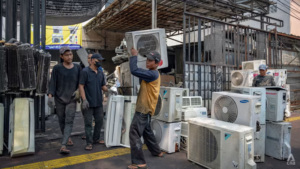
Efficiency creates energy savings and emission reduction
At a recent National Seminar on Decarbonization of the Building Sector, CLASP, ASHRAE Indonesia Chapter and the Ministry of Energy and Mineral Resources (MEMR), brought together industry experts to highlight the critical role of energy-efficient equipment, especially chillers. Chillers account for up to 60% of a building’s energy use, making it a significant opportunity for energy savings and emissions reduction.
Sripeni Inten Cahyani, expert to the MEMR Minister, noted that by embracing energy-efficient appliances and adhering to Minimum Energy Performance Standards (SKEM or MEPS), Indonesia aims to achieve a substantial 83.8 million tons reduction in CO2 emissions by 2030.
Efficiency also yields economic benefits
Sripeni noted potential annual savings of approximately IDR 1.9 trillion (USD 121 million) through the implementation of energy management practices, equivalent to 111,600 tons of oil saved per year.
CLASP’s advocacy and collaborative efforts support the drive for sustainable development in Indonesia’s building sector. By promoting energy-efficient cooling solutions and supporting the implementation of improved standards, CLASP contributes to a more sustainable, more resilient future for Indonesia and the world’s climate.
Image credits: CNA/Danang Wisanggeni
Collaborating towards Net Zero in Indonesia
Under a business-as-usual scenario, CLASP’s tool Mepsy found that Indonesia is anticipated to be the 7th largest contributor of greenhouse gas emissions globally from 2025 to 2040. However, taking note of this, the Indonesian government has adopted an ambitious stance by establishing rigorous targets aimed at curtailing these emissions. Collaborating closely with the Directorate General of New, Renewable Energy, and Energy Conservation (EBTKE), the governing body responsible for shaping the nation’s energy policies, CLASP has taken an active role in facilitating the government’s tangible efforts to propel energy efficiency advancements within Indonesia.
In line with this shared objective, CLASP and the EBTKE have recently formalized their commitment through the signing of a Memorandum of Understanding (MoU) in June 2023. The primary focus of this agreement is to bolster energy conservation initiatives and mitigate the adverse impacts of climate change. Through collaborative endeavors, both organizations intend to drive substantial progress towards a more sustainable and energy-efficient future for Indonesia.
The Indonesian government has committed to reducing 358 million tons of CO2 independently or 446 million tons of CO2 with international assistance by 2030. The collaboration between EBTKE and CLASP seeks to improve Indonesia’s energy conservation efforts, including policy analysis for MEPS and energy labeling of electrical appliances, outreach campaigns to promote energy efficiency, and the development of software and applications to support compliance with MEPS and Energy Labeling programs.
The partnership aims to drive energy efficiency and contribute to the reduction of greenhouse gas emissions, while supporting Indonesia’s goal of Net Zero Emissions (NZE) by 2060.
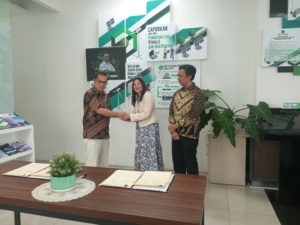
The MoU signing between EBTKE and CLASP was attended by high-level representatives, including the Secretary of the Directorate General for New Renewable Energy and Energy Conservation, Sahid Junaidi, S. Kom, M.M, the Director for Energy Conservation, Gigih Udi Atmo, S.T., M. EPM, Ph. D, and CLASP’s CEO, Christine Egan. The Director of Energy Conservation, expressed optimism about the collaboration, emphasizing that it will go beyond the existing five appliances and equipment currently covered by MEPS and Energy Labeling.
The EBTKE-CLASP partnership spans three years, during which they plan to collaborate with registered local non-government organizations to expand the reach of their energy conservation efforts.
CLASP CEO, Christine Egan noted, “CLASP has supported policy makers, not only in Indonesia but also in various countries that implement energy efficiency standards and labels for appliances and lighting. We hope to make a tangible contribution to climate mitigation and clean energy access”.
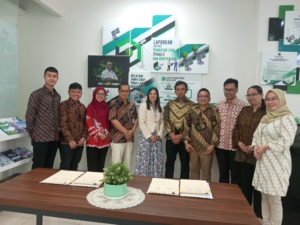
Nanik Rahmawati, CLASP’s Program Manager for Southeast Asia expressed gratitude for the opportunity to contribute towards promoting stringent MEPS and energy labels.
The collaboration’s ultimate objective is to achieve significant energy savings of approximately 1,739 TWh and avoid 1,513 MTCO2 over the next three years. By aligning their efforts, EBTKE and CLASP are determined to create a more sustainable and energy-efficient future for Indonesia.
Related links: