
CEO Christine Egan: Witnessing Efficiency in Action in India
India is close to my heart — it is one of CLASP’s longest-running programs and the first place I went after I became CEO. Before the pandemic, these trips were an annual guarantee, packed with policymaker meetings and visits with our partners. Though we took a three-year pause, during my visit at the end of 2022 it was evident that critical work continues to happen through intentional collaboration. India’s energy and climate achievements hadn’t paused for the pandemic.
The CLASP India team inaugurated the new office in New Delhi, which will serve as a home base for our growing team that doubled (!) in size despite a worldwide shift in how we work. Being in a regional CLASP office gave me the opportunity to enjoy the camaraderie of much-missed colleagues and some of our newer faces. Now that many of us work remotely, these office gatherings have acquired a different spirit and make in-person meetings something to relish, even just for the few minutes before official business begins.
Outside of our office, I met with key policymakers who consistently leave me in awe of their dedication to high-quality, high-impact work. These close working relationships are behind our success in India, particularly with appliance efficiency and standardization.
The marquee event of the week brought together more than 60 people to discuss the implementation of the India Cooling Action Plan. In the capital, CLASP hosted the event in collaboration with the Bureau of Energy Efficiency (BEE) to discuss the accessibility and affordability of vital cooling appliances. I watched these candid discussions between consumer forum representatives, manufacturing associations, government agencies, philanthropies, and think tanks. The conversations provided insight into the extensive coordination and cooperation necessary to run energy efficiency programs that capture the diverse needs of everyone involved. The focus is not solely on cutting CO₂ and reducing energy demand, but also on ensuring that the energy transition is affordable and equitable across a vast market.
We closed our week with a team discussion about the past year and the immense strides made toward India’s ambitious climate goals. Seeing the evolution of our work over the past two decades has shown me how India’s policy choices seek to balance development needs and climate imperatives. During my last dinner, we ended with personal reflections: I have profound gratitude for our colleagues, our growing team in India, and the life-changing work they do for people and the planet.

How Can We Cool India Faster?
Cooling is central to economic development. As India faces record-breaking temperatures, how can the country meet increasing cooling demand, while simultaneously reducing energy intensity and mitigating potential environmental impacts? This emerged as the key question in a conference that CLASP hosted to explore how implementation of India’s Cooling Action Plan could be accelerated.
India, with its predominantly tropical climate, is experiencing rising temperatures along with population growth and rapid urbanization, which are contributing to a steep increase in cooling demand. As temperatures continue to rise due to climate change, there will be an increase in cooling demand and greenhouse gas emissions.
To meet a growing cooling demand in a sustainable manner, India set a precedent with the launch of a comprehensive National Cooling Action Plan (ICAP) in 2019. ICAP aimed to lower cooling needs across various industries by 20-25% and decrease the energy required for cooling by 25-40% by 2037-38. The plan prioritizes the deployment of a robust mix of energy-efficient cooling technologies and environment-friendly refrigerants to meet growing cooling requirements.
In December 2022, CLASP hosted a workshop to convene key industry representatives, government agencies, civil society organizations, manufacturers, and other stakeholders to explore how ICAP implementation could be accelerated.
Abhay Bakre, Director General of the Bureau of Energy Efficiency (BEE), delivered the keynote address and highlighted the role of efficient cooling devices in reducing peak energy demand. He also stressed on the need to transition to the best available cooling technologies.
Arijit Sengupta, Director of BEE, highlighted key action areas and initiatives of BEE in implementing ICAP. These include efficiency policies and programs across space cooling in buildings, cold chain and refrigeration and transport air conditioning.
“India plays a leadership role globally in setting the cooling agenda. Dramatic climate changes demonstrate the critical role cooling appliances play in keeping economies healthy and productive. The ICAP is both a challenge and an opportunity for India to address rising cooling needs through policy and coordinated action.” – Christine Egan, CLASP CEO
Some of the key takeaways from the workshop include:
- Representatives from Energy Efficiency Services Limited, Refrigeration and Air-Conditioning Manufacturers Association, United Nations Environment Program and Consumer Electronics and Appliances Manufacturers Association discussed the need to create incentives programs for utilities/consumers to transform the market towards efficient cooling appliances.
- Civil society organisations (CSOs) play an important role in accelerating ICAP implementation. Representatives from AEEE, Prayas (Energy Group), Consumer Voice, NRDC, and CLASP discussed the need to improve the availability of energy efficiency best practices, operation and maintenance guidelines in local languages.
- The importance of enhancing communication and connecting with people to showcase the monetary benefits of using efficient (labelled) appliances to change consumer behaviour.
“The workshop emphasized the importance of collaboration and coordination among diverse stakeholders to achieve ICAP targets,” explains Bishal Thapa, CLASP’s Senior Director. “It is clear that the ICAP is a critical step towards reducing energy consumption, protecting the environment and promoting sustainable development.”
India Dialogue Series: Climate Group x CLASP
Climate change is undeniably one of the greatest global threats today. The world is striving to limit the global average temperature increase to 1.5℃ above pre-industrial levels. An increase of 2℃ would amplify the risk of heatwaves and heavy rainfall events that lead to flooding, among other life-threatening consequences. To realize a mission of this scale, there is an imminent need for global collaborative efforts.
Last month, Neha Dhingra, Senior Manager at CLASP spoke with Divya Sharma, Executive Director at Climate Group as part of CLASP’s India Dialogue Series. Here are our key takeaways:
India strengthens climate commitments at COP27
Neha shared that India reinforced its commitment to reducing greenhouse gas emissions associated with its GDP1 by 45% in 2030, from 2005. This would require strong and concerted action from multiple stakeholders including governments and businesses. CLASP works with governments across the world, including India, to help mitigate climate change, thus contributing towards Nationally Determined Contribution (NDC) targets and net zero energy goals.
“We have to work like communities, not like different nations” – Divya Sharma
Divya added that Climate Group is the Secretariat to the Under2 Coalition, which is the largest global network of states, regions, provinces, and other subnational governments committed to achieving net zero emissions by 2050 at the latest. There is a need for stakeholders to come together and work towards meeting collective climate goals together.
Role of energy efficiency in meeting India’s climate goals
Energy efficiency is critical to India’s climate ambitions and is widely recognized as one of the largest and most critical sources to near term success in achieving these ambitions. Neha highlighted that India’s appliance energy efficiency program is considered integral to achieving India’s climate ambitions and delivered the single largest emissions reductions within its portfolio of programs in 2018-2019, accounting for 30% of total reductions.
Climate Group has been working with businesses to drive energy efficiency in their procurement practices.
Moving the needle on clean energy transition
A multi-stakeholder approach necessitates collaboration and is crucial to achieving global climate mitigation goals. Organizations like Climate Group and CLASP are pivotal in bringing stakeholders together. Divya mentioned that Climate Group runs global flagship campaigns (such as EV100, RE100, SteelZero and so on) to collaborate with businesses and governments, accelerating climate action and decarbonization of the industrial sector. CLASP’s Clean Lighting Coalition has garnered support from over 300 organisations in the public health, appliance efficiency, policy and environment domains to advocate for mercury-free lighting.
Equitable representation remains to be achieved
Neha emphasized that the energy sector remains one of the least gender-diverse sectors. Narrowing the gender gap is vital as equitable representation drives innovation and catalyse inclusive solutions. Simultaneously, underrepresented segments bear the brunt of lack of access to energy in developing countries; women are often the ones who are most affected by the negative consequences of poor energy efficiency, such as high energy bills and indoor air pollution. Divya suggested that inclusivity in the decision-making process for climate action will ensure that energy efficiency decisions are made in a way that benefits all members of society, not just a select few.
Building an equitable transition for India
The transition towards clean energy should be just and inclusive as countries across the globe seek to accelerate energy transition to meet developmental and climate objectives. It is exceedingly important for stakeholders to collaborate to identify priority areas, plan concrete action and foster international cooperation.
Climate Group has undertaken efforts to move businesses towards just and equitable transition.
Watch the whole discussion here.
This conversation was hosted as part of CLASP’s India Dialogue Series, a quarterly discussion that aims to address the many facets of energy efficiency and appliances.
0. Energy intensity is total energy consumption divided by real gross domestic product (GDP). Using less energy per output reduces the intensity.
A Tale of Scale and Stature: How India’s Labeling Program is Helping Combat Climate Change
Energy efficiency policies were highlighted yet again at COP27 as an opportunity for countries to reach net zero targets. As Indian energy consumption patterns change, CLASP is providing the Bureau of Energy Efficiency (BEE) with technical assistance to help achieve its goal on appliance efficiency policies.
India – A Case Study on Energy Efficiency
India has ambitious appliance efficiency policies to achieve its own climate objectives. The S&L program was launched in 2006 under the Energy Conservation Act, 2001 to reduce energy intensity and electricity bills for people across the economy.
BEE’s S&L program delivered the single largest emissions reductions within its portfolio of programs in 2018-2019, accounting for approximately 30% of the total reductions, and energy cost savings of USD 5.3 billion (total savings were USD 15.7 billion2). Noticing these significant outcomes, the S&L program has been considered integral to achieving India’s climate ambitions.
Appliance policies are initially launched on a voluntary basis and are transitioned to a mandatory phase once the market matures.
CLASP has been providing BEE with technical assistance, and in the last two years has provided BEE with the technical information and analyses of approximately 11 different appliances for efficiency improvement. Once implemented, efficiency policies of these 11 products are collectively expected to deliver approximately 78 Mt CO₂ in savings by 2030.
These appliances can be broadly categorized into two types, as outlined below:
1. Household Appliances
With rising incomes and urbanization, the demand for household appliances is growing rapidly. The S&L program now covers common high-energy intensive appliances like washing machines, storage water heaters, transformers, and televisions.
2. Cooling and Refrigeration Appliances
The India Cooling Action Plan (ICAP) was launched with the aim of increasing access to sustainable cooling across the residential, commercial and agriculture sectors. As the demand for cooling is expected to grow multifold in the coming decades, BEE has prioritized the efficiency policy development for critical cooling appliances, such as ceiling fans, light commercial air conditioners (LCACs), deep freezers, chillers, and refrigerators (frost-free and direct cool) as highlighted in ICAP.
CLASP has conducted extensive market and technical assessments, analysis of international best practices, lab capacity assessments and benchmarks, and impact assessments for these appliances. Our analysis suggests that once adopted and implemented, these cooling appliance efficiency policies alone are expected to save approximately 73 TWh of energy and GHG emissions equivalent to 59 million tonnes 3.
Securing the Gains of Efficiency Policies
An enabling ecosystem that enhances policy effectiveness is also required to secure the benefits of energy efficiency. India’s S&L program has transformed the national appliance market.
In India and elsewhere, CLASP is collaborating with a wide range of partners advancing technical information and analyses that support a well-established compliance framework, designing new model sampling plans that could reduce compliance costs amongst others.
Online appliance sales are also rapidly increasing in India and are expected to grow by 24.5% each year on average by 2025 4.
Ensuring that appliances sold online meet labeling requirements will enable customers to identify and purchase high-efficiency appliances that reduce energy use costs and help reduce emissions. Providing technical information that can help improve visibility of energy performance labels on online market platforms will be a key part of CLASP’s activities in India.
Using Lessons from India to Guide Global Efficiency Work
Strong efficiency policies require concerted efforts by a wide range of stakeholders, and in India, state-led initiatives could significantly enhance the reach and effectiveness of its S&L program to achieve its climate goals. The Government of India is developing state climate action plans and state energy efficiency action plans to supplement action led by the central government.
India has a strong regulatory and institutional framework in place, and its multi-dimensional approach to policymaking could serve as model for many other countries seeking to tap the quick-fire, ample and immediately available opportunities for energy cost savings, energy use and emissions reductions.
0. Energy intensity is total energy consumption divided by real gross domestic product (GDP). Using less energy per output reduces the intensity.
1. [1] https://beeindia.gov.in/sites/default/files/BEE_Final%20Report_Website%20version.pdf
Echoes from India on COP27
At the UN Climate COP26 last year, India committed to meet 50% of its energy needs from renewable fuels by 2030 and transition to a net zero carbon economy by 2070. For Indians navigating our daily lives, conversations in faraway lands are often abstract. Yet, the realities we are facing – heat waves, extended dry or excessively wet periods, food shortages and more virulent seasonal diseases – disrupt our routines and weigh heavy on our minds.
As COP27 winds down in Sharm-El-Sheikh, the CLASP India team spoke with a journalist, energy experts, and a business leader to gain a deeper view on what they think, see and take-away from India’s role in climate change mitigation, adaptation and resilience.
- A revised global commitment to Climate Finance
A science journalist at a leading digital publication in India noted that for developing countries to continue to mitigate the adverse effects of climate change, access to both financial and technological resources is important.
Commitments made by developed countries at COP15 to disburse USD 100 billion by 2020 as climate finance for developing countries remains to be achieved. It is currently a minimal portion of the realistic amount needed – believed to be in the order of trillions.
Climate finance needs a clearer definition that has been mutually agreed upon by all nations. India proposed at COP27 that there be much more transparency in the definition, scope, and disbursement of climate finance. India’s Union Environment Minister Bhupender Yadav said slow disbursements, lack of flexibility and long complex approval procedures with stringent eligibility criteria make access to climate finance difficult.
In the absence of climate finance that is explicitly defined, developed nations may continue to greenwash their finances and pass off loans as climate-related aid.
Manoj Kumar Muthumanickam, Project Specialist at UNEP further echoed that climate finance contributions from international mechanisms and government resources need to be leveraged through participation from the private sector.
- Urgent need for increased forest cover
Sanjay Chhetri, a Project Manager at EDS was excited that India put forward Mission LiFE – Lifestyle for Environment, which aims to support at least 80% of all Indian villages and urban local bodies to become environment-friendly by 2028. The country is already working towards the earlier commitments of Net Zero Carbon by 2070.
Between 2001 and 2019, the world’s forests stored roughly twice as much carbon dioxide (CO2) as they released, according to a 2021 study published in Nature Climate Change. This is a trend that thrills Sanjay. But there is also a flip side. The overall forest cover is dwindling; India alone lost natural forest cover of 127kha equivalent to 64.4Mt CO2e, with the dominant cause being deforestation, Sanjay pointed out. India also accounted for 12.5% of global coal consumption in 2021. Sanjay adds that all climate change mitigation measures will fail us if we don’t stick to basics, increasing forest cover – snowballing natural carbon sinks.
- Need for collaborative efforts at a national and international level
Manoj Kumar Muthumanickam, Project Specialist at UNEP noted that in the run-up to the COP26, countries declared their net zero ambitions by 2050-2070. To realize these ambitions, countries should develop strategies and actions for achieving these targets.
He further added that there is no single solution to climate change and it necessitates a comprehensive approach across different avenues such as renewable energy, energy efficiency, e-mobility, etc. to achieve net zero targets. It would be beneficial to adopt large-scale efforts to support states in developing and implementing climate action plans – ultimately enabling the nation to fulfill its climate ambitions.
- Streamlining regulation to increase adoption of clean energy technologies
Integration of clean energy and sustainability is being heralded as a favourable economic decision in green real estate companies. Rohit Hegde is the Managing Director of KSH Infra, a company that aims to inspire green development by using certified buildings that reduce stress on the environment. Hegde noted that despite having ambitions to scale the adoption of solar energy via rooftop installations, they are often constrained by regulations. There is an urgent need for supportive net metering rules that can help enterprises such as KSH Infra realise the economic gains of championing sustainability in the real estate industry.
As COP27 comes to a close, citizens find India’s climate targets are ambitious but necessary. The country’s new energy initiatives at a state, national and international are a testimony to collective action for global good.
0. Energy intensity is total energy consumption divided by real gross domestic product (GDP). Using less energy per output reduces the intensity.
1. [1] https://beeindia.gov.in/sites/default/files/BEE_Final%20Report_Website%20version.pdf
Increasing Access to Air Conditioners in a Heating India
Heatwaves – a rising public health risk
In the last five decades, India has experienced over 700 heatwaves, claiming the lives of more than 17,000 people. The extreme weather is putting public health at risk, with more frequent cases of dehydration, cramps, exhaustion, and heat strokes.
According to Sustainable Cooling for All, without access to affordable cooling technologies, approximately 284 million people’s economic well-being and health is threatened – making India the country with the largest population at risk.
Over the last two decades, a growing middle-class, rising disposable incomes, lower prices of ACs and ease of availability and financing has grown the Indian appliance market. Despite these changes, AC access has grown at a slow pace – from less than 1% in 2000 to only 8% in 2021.
Enabling AC access through collaboration
“Efficiency policies are an important component of cooling access in India,” explains Kishore Kumar of CLASP India. “These policies not only raise energy efficiency, but also guarantee the availability of high quality, affordable products across the growing market. Standards and labelling programs help consumers make informed purchasing decisions and encouraging energy cost savings.”
CLASP has been providing institutional and technical support to the Bureau of Energy Efficiency (BEE) to accelerate access to ACs.
BEE implemented mandatory efficiency policies that increased the market share of energy-efficient inverter ACs from 1% in 2015 to close to 60% in 2019.
Policies must anticipate market innovations
Over a decade ago the Indian government developed an ecosystem to enable manufacturing of ACs and components domestically. A conducive manufacturing environment has helped the country produce more than 60 million ACs over the last decade, with a production capacity of about 8.8 million units per year. The industry is estimated to grow more than threefold by 2029.
Since 2006 when AC efficiency policies were launched, India has increased efficiency by 47%. These policies support the India Cooling Action Plan (ICAP) recommendations to reduce cooling demand across sectors by 20%-25% by the 2037-38. AC manufacturers have supported and adopted the policy swiftly, as well as invested in innovative technologies. Their adaptability has resulted in significant AC industry transformation.
To keep up with market innovations, BEE, with support from CLASP, revised star rating plan and increased minimum energy performance standards (MEPS) over the last ten years.
ACs offer a multitude of benefits, but household ownership remains low
Efforts by the Indian government to grow the AC market offer a case study on the benefits of energy efficiency in the cooling sector. Over the past 15 years, India has manufactured more than 63 million efficient AC units that reduced the country’s electricity consumption by 85 TWh, avoiding 70 Mt of greenhouse gas emissions. Efficient ACs have also lowered electricity bills by an estimated USD 5.6 billion.
Despite widespread benefits, India must work towards increasing overall penetration of ACs in households. While less than 10% of Indian households own an AC, Japan and Korea have reached 90% penetration, followed by China at 60%.
In the midst of rising temperatures, cooling remains a priority for the Government of India. CLASP will continue to support BEE to increase the efficiency levels of ACs which will require manufacturers to produce better, more efficient appliances – therefore improving affordability and access for everyday Indians.
0. Energy intensity is total energy consumption divided by real gross domestic product (GDP). Using less energy per output reduces the intensity.
1. [1] https://beeindia.gov.in/sites/default/files/BEE_Final%20Report_Website%20version.pdf
Soaring Temperatures in India Necessitate Sustainable Cold Storage
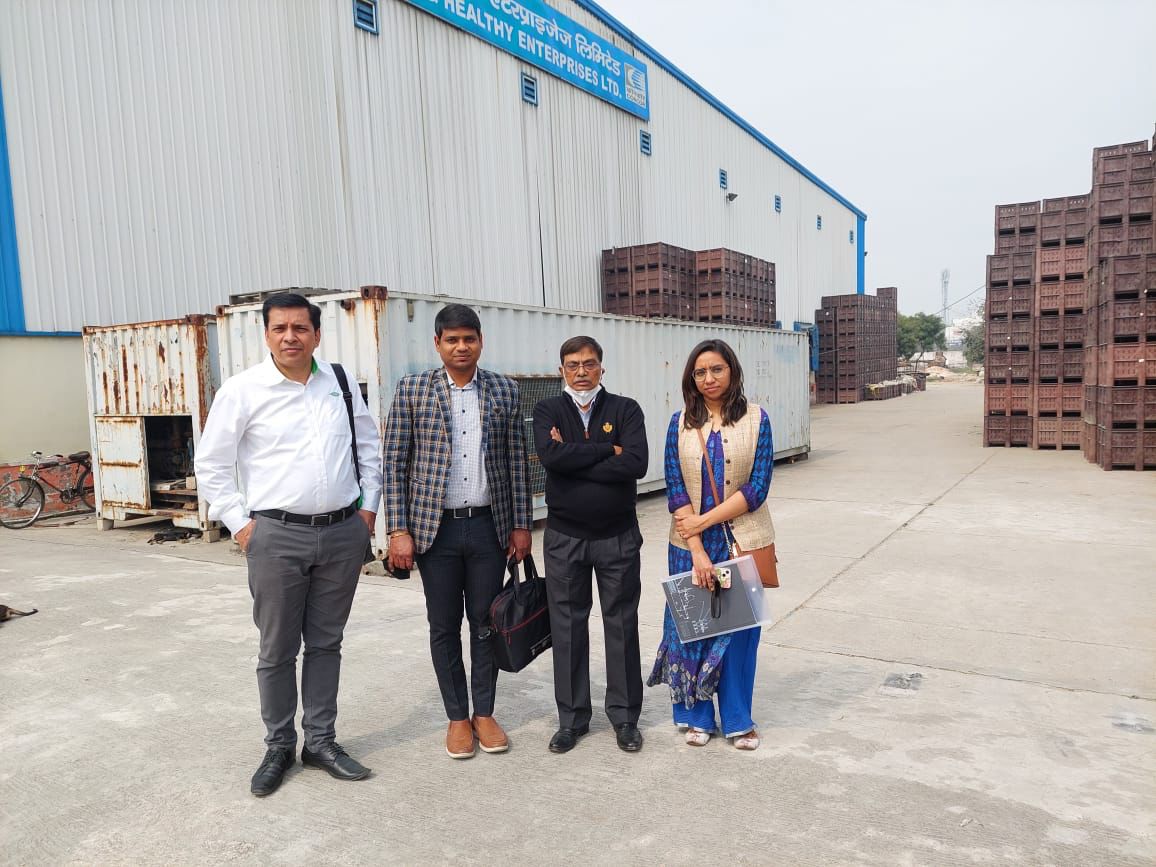
On the outskirts of Delhi, CLASP visited two cold storage facilities to learn how policy can improve cold chain infrastructure across India. We are partnering with Alliance for an Energy Efficient Economy (AEEE) to support more resilient food chains in the face of increasingly severe weather.
Rising Temperatures Put Crops at Risk
CLASP visited two cold chain units – ASPAM Cold Storage and Fresh Healthy Enterprise Limited (FHEL). Meeting with these companies offered important insights into the use cases and challenges we could address through better efficiency policies – namely lowering soaring electricity costs and increasing capacity for storage.
The FHEL unit sits in a remote midpoint for several neighboring cities. FHEL is one of several key actors in the regional cold chain, connecting farmers and agricultural cooperatives to larger businesses. With soaring temperatures across India and erratic rainfall, storage of produce is becoming an increasingly important aspect of food security efforts.
The local government has stepped in to support food chain infrastructure in Sonipat. The government allocated ASPAM Cold Food Storage land to build a cold storage unit and granted the company a 40% subsidy to fully automate the facility. The facility contains twenty-one Controlled Atmosphere (CA) chambers – highly effective technology to control the temperature and humidity. The combined capacity of this facility is 8500 MT (approximately the weight of 2236 full-sized shipping containers) and frozen storage capacity of 1500 MT.
Regulating Cold Rooms Requires Intensive Electricity
The ASPAM cold units require intensive electricity to maintain advanced temperate controlled rooms. The units maintain low levels of oxygen and high levels of carbon dioxide in gas-tight containers to retain freshness and nutritional content of fruits like apples and kiwis, as well as frozen produce like peas. The chambers employ unique storage protocols that vary depending on the product’s needs. For example, apples and kiwis are stored at 1-20°C, whereas dates and oranges are stored at 4-5°C. For reference, July temperatures in Sonipat average 28-39°C. Without the unit, the fruits would quickly rot.
The controlled atmosphere extends the shelf life of produce and reduces the need for post-harvest chemicals, usually sprayed for protection against insects and microorganisms. The unit also hosts a ripening chamber for fruits like bananas, mangoes and papayas. This is typically a 5-day cycle and requires a consistent temperature of 2°C and relative humidity of 95%. All the conditions in the cold rooms are controlled and monitored through a remote monitoring system.
The total cost to run these units is approximately INR 700,000 ($8778 USD) per month.
Power cuts are frequent in the area so ASPAM relies on a diesel generator for power backup.
Currently, CLASP is visiting cold storage facilities across the country to understand the ecosystem and the different requirements of cold chain infrastructure amidst varied weathers. CLASP aims to use this information to devise standards and labels for key cold chain equipment in the months to come.

How can cold storage employ more design and technology innovations?
The unit maintains the variable temperatures efficiently by employing freon refrigeration technology. Freon is a non-combustible gas, typically used as a refrigerant in air cooling applications. By undergoing an evaporation process repeatedly, freon helps produce cool air that can be circulated throughout a unit. CLASP is standardizing the equipment that utilizes freon – ensuring that the gas is efficiently used in cold storage applications.
With the lessons learned from the visit to Sonipat and six other sites across India, our team will collaborate with industry leaders to achieve our goals. By 2030, our cold storage policies aim to mitigate 8.5 Mt of CO₂ emissions by adoption of high-efficiency agricultural cold chain solutions.
Learn more about how CLASP is contributing to more resilient cold chain systems around the world:
- CLASP celebrates and encourages innovation the cold chain sector – 2022 Global LEAP Awards Off-Grid Cold Chain Challenge Announces Preliminary Finalists
- Standards and Labeling Policy for Deep Freezers in India
- How a Solar-Powered Walk-In Cold Room is Cutting Post-Slaughter Losses for Butchers in Kenya
0. Energy intensity is total energy consumption divided by real gross domestic product (GDP). Using less energy per output reduces the intensity.
1. [1] https://beeindia.gov.in/sites/default/files/BEE_Final%20Report_Website%20version.pdf
BRICS Meets to Discuss Global Efficiency Standards
On 28 June, CLASP participated in an international workshop hosted by The China National Institute of Standardization (CNIS) with representatives from the BRICS nations. The “BRICS Workshop on Carbon Peaking and Carbon Neutrality Standards” built on the alliance’s desire to transition to a greener, lower-carbon, and circular economy, in alignment with the Paris Agreement. CNIS led the session, focusing on how to support other BRICS countries to take maximum advantage of energy efficiency standards in their own climate agendas.
This type of knowledge exchange is critical for influencing world economies and allow countries with different experiences share lessons for effective mobilization. BRICS consists of highly populous countries (Brazil, Russia, India, China, and South Africa) with rapidly increasing appliance markets. This shift in energy demand will continue to have an enormous global impact on energy usage and subsequent energy-related emissions. Facilitating the expansion of energy efficiency programs through international partnerships is a key component of quickly reaching our collective climate goals.
CNIS shared their experience with efficiency standards and their role in dramatically reducing energy consumption and associated GHG emissions. They presented their legal and technical framework as an example for further strengthening the existing programs of the other four member countries.
Policymakers from Brazil and South Africa emphasized the importance of CLASP’s role in improving national energy efficiency policy for several priority products. The Research Institute at the Environmental Industrial Policy Centre in Russia also expressed interest in future collaboration on efficiency regulations beyond appliances, like agriculture and industry. Our team will continue to participate in international knowledge sharing among BRICS entities, working together toward a more efficient future.
0. Energy intensity is total energy consumption divided by real gross domestic product (GDP). Using less energy per output reduces the intensity.
1. [1] https://beeindia.gov.in/sites/default/files/BEE_Final%20Report_Website%20version.pdf
Friday Night Musings: Energy Efficiency enters a New Phase in India
On most occasions, Friday evenings are a time to wind down, button down the frenzy of the week and open a window to a weekend ahead. But on Friday, 27 May, we hosted Mr. Abhay Bakre, Director General of India’s Bureau of Energy Efficiency (BEE) for an engaging conversation that opened a different window into how energy efficiency in India is entering a new phase in India.
This March, BEE celebrated two decades of existence. Established through the Energy Conservation Act (ECA) to serve as the lead agency on energy efficiency, the institution has evolved considerably over the past twenty years.
“The Paris agreement changed everything,” Mr. Bakre says, outlining how it repurposed energy efficiency as a movement. Today, India is pursuing a new approach to energy efficiency, vastly differently from its early days. Efficiency policies are driving deployment of new technologies and solutions, not only to reduce energy use but to contribute towards emissions reductions.
Energy efficiency is now central to India’s climate response strategy – efficiency is projected to deliver at least half of India’s emissions reductions goals of 1 billion tonnes by 2030.
“Affordable, climate friendly, and more effective for long-term growth,” Mr. Bakre outlined the three key principles driving efficiency policy formulation. Energy efficiency has become integral to India’s energy transition, helping to accelerate the process by promoting climate-friendly technologies and solutions, making them affordable to drive climate friendly growth and development.
Mr. Bakre listed cooling as one key priority for BEE. India’s current cooling use is small, only at 6%-8%. Future cooling growth will place a massive strain on the country’s energy use. Mr. Bakre believes that improvements in cooling efficiency have already been on a “good trajectory”. BEE’s focus is on enhancing those policies so that the most efficient cooling solutions are available and affordable to all Indians.
One of BEE’s flagship initiatives are minimum efficiency policy standards through the standards and labelling (S&L) program, delivering approximately 30% of the total energy use savings from energy efficiency. Mr. Bakre intends to expand the program, broadening the scope to include a wider range of technically complex equipment, such as boilers, chillers, and pumps, that are applicable for commercial and industrial applications.
The opportunity for emissions reductions from energy efficiency is immense and immediate. “But are we doing enough to make it happen?” Mr. Bakre asks, adding that this is what keeps him awake at night – with financing as a key challenge. Financing is critical to make relevant technologies and solutions affordable so that the decision to adopt them are not postponed. Today, financing on energy efficiency in India is about $340 million annually. This is small relative to the scale of the opportunity and the need.
It is hard to end the work week on Friday evening on a question of “Are we doing enough?” Clearly, there is much more to be done for climate in India and the world. Yet, India is well positioned to accelerate energy efficiency as long as we prioritize collaboration and resource mobilization.
Watch the full dialogue here.
This conversation was hosted as part of CLASP’s India Dialogue Series, a monthly discussion that aims to address the many facets of energy efficiency and appliances.
0. Energy intensity is total energy consumption divided by real gross domestic product (GDP). Using less energy per output reduces the intensity.
1. [1] https://beeindia.gov.in/sites/default/files/BEE_Final%20Report_Website%20version.pdf
National Conservation Week Celebrations in India, hosted by CLASP and BEE
The theme for this year’s National Conservation Week was ‘Azaadi ka Amrit Mahotsav’, which is an initiative of the Government of India to celebrate and commemorate 75 years of India’s independence.
The event kicked off with a welcome address by Bishal Thapa, India Director at CLASP, followed by presentations by several industry leaders from Refrigeration and Air-Conditioning Manufacturers Association (RAMA), Consumer Electronics and Appliances Manufacturers Association (CEAMA), Bureau of Energy Efficiency (BEE), Department of Science and Technology (DST), Energy Efficiency Services Limited (EESL) and the Ministry of Power.
Several industry agencies and associations then presented information on the current standards and labelling (S&L) program in India, innovative cooling technologies and appliance market trends. The event gave attendees a holistic overview of the industry from governmental, international, multilateral and technical perspectives. This discussion was chaired by Abhay Bakre of BEE, with the panel including Bishal Thapa of CLASP, Dawa Zangmo – of the Ministry of Economic Affairs, Royal Government of Bhutan, Shubha Laxmi Shrestha of Nepal Alternative Energy Promotion Centre (APEC), Nicholas Jeffrey, representing the UK Government (BEIS) and Mel Slade of IEA.

The panel discussion centered on how appliance energy efficiency contributes to energy conservation and advances progress towards global environmental goals.
CLASP congratulates BEE on a successful event, attended by close to 50 industry partners across the energy efficiency, appliances and power sectors, amassing large interest in collective action towards energy-efficient appliances.
Watch the discussion: here: https://www.facebook.com/beeindiadigital/videos/591033918641558
0. Energy intensity is total energy consumption divided by real gross domestic product (GDP). Using less energy per output reduces the intensity.
1. [1] https://beeindia.gov.in/sites/default/files/BEE_Final%20Report_Website%20version.pdf