
Financing for Impact: CLASP Collaborates to Accelerate India’s Net Zero Transition
GOA, 22 JULY 2023 – CLASP and Energy Efficiency Services Limited (EESL) signed a Memorandum of Understanding (MoU) at a side-event on “Accelerating India’s Net Zero Transition through Energy Efficiency, Sustainable Cooling & Mobility” at the 14th Clean Energy Ministerial (CEM14) to support EESL’s 10 million Energy-Efficient Fans programme, which will help support India’s transition to Net Zero Carbon Emissions. The event was by members of the Ministry of Power, Bureau of Energy Efficiency, State ministers from Andhra Pradesh and Orissa among others.
CEM14 brings together energy ministers, business leaders, policymakers, and experts from around the world to collaborate and take collective action through energy efficiency measures across sectors. During the event, Vishal Kapoor, CEO – EESL unveiled EESL’s 10 million Energy-Efficient Fan programme, which aims to transform India’s market towards energy-efficient ceiling fans. By raising the efficiency levels of the entire stock of residential ceiling fans, India could save 15% of its residential power consumption annually.
Under the partnership agreement, CLASP will support ceiling fans market transformation programme with technical assistance and capacity building to EESL on Quality Assurance and Quality Control (QAQC).
Vishal Kapoor, Chief Executive Officer, EESL, said, “These partnerships and collaborations reinforce EESL’s commitment to driving energy efficiency and sustainability in various sectors. By pooling our expertise and resources with experts, we will accelerate the pace of India’s transition towards clean energy solutions. EESL remains dedicated to promoting a clean, sustainable, and inclusive energy future, while addressing the challenges and opportunities associated with energy efficiency.”
Bishal Thapa, Senior Director, CLASP, said, “A programme of this scale and nature is a true representation of the collaboration needed to keep our planet cool amid rising temperatures. CLASP applauds EESL’s efforts in bringing together several organizations, who will bring their shared expertise to work towards a single goal of enabling efficient cooling in India.”
********
For media inquiries and more information, please contact:
Karishma Joseph
Communications – CLASP India
kjoseph@clasp.ngo
Established in 1999, CLASP is a leading international nonprofit organization at the epicenter of collaborative efforts to combat climate change and drive the transition towards a more energy-efficient future. With a primary focus on promoting appliance efficiency for the well-being of people and the planet, CLASP aims to ensure that no one is left behind due to inefficient appliances or limited access to energy sources. The organization actively supports the achievement of United Nations’ Sustainable Development Goal 7, which aims to provide affordable and sustainable energy for all. CLASP works closely with governments and partners to empower low-income communities and improve lives in a climate-friendly manner. Through its dedicated efforts, the organization remains steadfast in its commitment to expanding access to clean energy by implementing efficiency standards and labels for appliances, lighting, and equipment. With its global presence across Washington, DC; Nairobi, Kenya; New Delhi, India; Brussels, Belgium; and Jakarta, Indonesia, CLASP operates across continents to drive positive change on a global scale.
A joint venture of NTPC Limited, Power Finance Corporation, Rural Electrification Corporation and POWERGRID, Energy Efficiency Services Limited (EESL) was set up under the Ministry of Power to facilitate implementation of energy efficiency projects. EESL is a Super Energy Service Company (ESCO) that seeks to unlock energy efficiency market in India, estimated at Rs 74,000 crore that can potentially result in energy savings of up to 20 percent of current consumption, by way of innovative business and implementation models. It also acts as the resource centre for capacity building of State DISCOMs, ERCs, SDAs, upcoming ESCOs, financial institutions, etc.
Catalyzing India’s Transition to Energy-Efficient Fans
In the past year, India faced some of its highest summer temperatures in 122 years. Extreme heat poses a threat to the country’s productivity, health, and energy security as the country’s cooling demand continues to expand. To keep cool, 90% of India or 1.2 billion people use a fan in their homes – more than the combined population of USA, Japan, the EU region, and Canada. However, only 3% use energy-efficient fans. Higher-efficiency ceiling fans hold the potential to reduce greenhouse gas emissions, consume lesser electricity, and save electricity costs for consumers.
Earlier last month, CLASP and Energy Efficiency Services Limited (EESL) hosted a workshop on ‘Strategies to Increase Adoption of Efficient Fans in India’, bringing together government agencies, civil society organizations, fan associations and manufacturers, consumer groups, and academia. The objective of the workshop was to facilitate a discussion on mass deployment of energy-efficient fans in the Indian market and the role of various stakeholders in driving market transformation.
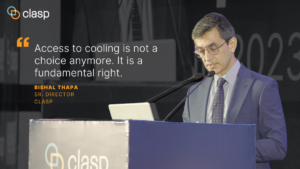
“For millions in India and around the world, fans differentiate a good night’s rest from a bad one. Or in extreme cases, fans can be the difference between life and death”, noted Bishal Thapa, Senior Director – India, CLASP as he highlighted the importance of fans for efficient and affordable cooling at the inauguration of the event.
What makes fans important in India?
- Nearly 60 million units of ceiling fans are sold every year, make it one of the most sold cooling appliances
- Ceiling fans alone accounted for ~40% of India’s residential electricity consumption in 2021, and this number is expected to remain significant at 32% in 2030
- India’s electric fan market is expected to cross INR 16,000 crore (USD 1.95 billion) by 2027-28
With the growing popularity of ceiling fans, India’s Bureau of Energy Efficiency (BEE) upgraded the Standards and Labeling (S&L) program for ceiling fans to a mandatory category in 2023. Today, all ceiling fans in India must display an energy efficiency star rating label. This initiative will ensure that vulnerable populations have access to affordable ceiling fans, while reducing carbon emissions.
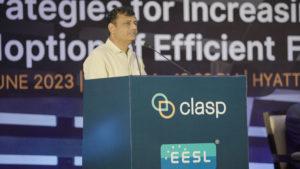
“Aggregating demand and collaborating with manufacturers to increase supply of energy-efficient fans will help drive market transformation”, observed Milind Deore, Secretary, BEE.
To drive market transformation, EESL launched an initiative in 2023 to deploy 10 million energy-efficient fans in the Indian market. By transitioning the entire stock of residential ceiling fans, India could save 15% of its residential power consumption annually. This is also in line with India’s commitment to achieving net-zero carbon emission by 2070.
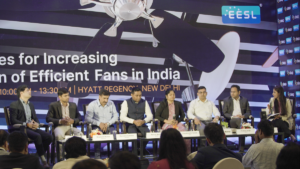
The workshop included two panel discussions that explored opportunities for growth in India’s fan supply chain and the potential routes for market transformation. The panels consisted of representatives from BEE, EESL, government agencies, manufacturers, think tanks, NGOs. The rich and engaging discussions were well received by over 150 attendees in person.
Pravati Samal, Director – Bureau of Energy Efficiency (BEE), highlighted the profound emotional attachment that rural Indians have towards their older ceiling fans. Despite the minimal cost to upgrade to a more efficient model, the sentimental value of these fans often overshadows considerations of energy efficiency.
Key takeaways from the discussion included:
- Combining education, awareness, and dialogue, will be essential to striking a balance between cultural sentiments and the pursuit of energy conservation
- Replacement value must be passed onto those who upgrade to energy-efficient models
- Awareness and targeted messaging must be designed for relevant consumer groups
- Dedicated platforms must be created for consumers and manufacturers
- Subsidies and incentives must be granted to fan manufacturers
- CSR funds should be used to increase awareness
This workshop included a live demonstration of fans of various star ratings running through the course of the event. The conventional, 3-star, and 5-star fans provided participants to practically understand the difference that efficiency can have on energy consumed and cost incurred by ceiling fans.
Lesser energy consumption of ceiling fans will result in fewer resources used, reduced energy generated, energy costs saved, and consequently, will mitigate emissions exponentially. Energy-efficient fans in India can help extend critical cooling to people, especially those vulnerable to rising temperatures without access to to cooling appliances.
CLASP at Clean Energy Ministerial 2023
On 19 July, CLASP’s India team and Asian Development Bank (ADB) will co-host a side event at the 14th Clean Energy Ministerial 2023 (CEM14) in Goa, India. This session will focus on Opportunities for Energy Transition within the Agricultural Cold Chain and Logistics Sector, centered around CEM14’s theme, Advancing Clean Energy Together.
Climate change and population growth is expected to have a significant impact on how India stores and distributes food. As the demand for food increases, so will the demand for agriculture cold chain and logistics infrastructure. ICAP estimates that approximately 55,000 packhouses will be developed over 2027-28. Additionally, the National Centre for Cold Chain Development in 2015 estimated that India had less than 15% of the refrigerated trucks it needed, impeding connectivity between producers and markets. As such, India’s cold chain requires substantial investments and power supply to meet the country’s growing needs. As the infrastructure is built out, it is important to ensure that it is energy efficient and relies on renewable energy.
To address this pressing challenge, CLASP and ADB are co-hosting a panel discussion to explore the opportunities and challenges associated with transitioning towards a low-carbon and energy-efficient cold chain infrastructure.
The event will consist of two panel discussions:
11:00 AM to 11:35 AM | Need for a Robust Energy Efficient Cold Chain Infrastructure
11:35 AM to 12:10 PM | Financing Landscape for Developing a Sustainable Cold Chain Infrastructure
To register for CEM14, please log on here.
Video: CLASP Launches Awareness Video on India’s Standards & Labeling Program for World Environment Day
India’s Bureau of Energy Efficiency (BEE) launched the Standards and Labeling (S&L) program in 2006 and has successfully covered 34 appliances and equipment until 2023. CLASP, in collaboration with BEE, launched a video on World Environment Day highlighting the importance of the program.
As per BEE’s Impact Report 2020-21, the S&L program has saved India an astonishing INR 37,000 crores (USD 4500 million) annually in energy costs and has also contributed to an annual reduction of 50 million metric tons of carbon dioxide emissions, as per BEE’s study. This achievement underscores the immense potential of the S&L program.
By spreading awareness about the S&L program across the nation, we can reap multifaceted benefits and facilitate India’s progress towards achieving its climate goals.
To learn more about the BEE’s S&L program, visit this link.
For more videos on CLASP’s work, visit our YouTube channel.
PRESS RELEASE: On World Environment Day, Indian Govt holds Conference on Consumer-Centric Approaches for E-Cooking Transition
This press release was issued by the Press Information Bureau, Government of India.
E-cooking is going to be the future of the Indian kitchen, need Affordable Business Models: Additional Secretary, Power
Posted On: 05 JUN 2023 12:02PM by PIB Delhi
How can we accelerate the deployment of energy-efficient, clean and affordable e-cooking solutions in India? On World Environment Day today, a conference organized in New Delhi by the Bureau of Energy Efficiency (BEE), Ministry of Power, Government of India, in collaboration with CLASP, sought to find new answers to this question. The “Conference on Consumer-Centric Approaches for E-cooking Transition” brought together institutional consumers, consumer research groups, policy makers, think tanks and manufacturers in a discussion on strategy for the transition to electric cooking.
Delivering the special address, Additional Secretary, Ministry of Power, Ajay Tewari said that e-cooking is going to be an environment-friendly habit for all Indians in the times to come. “Some people take it very lightly, but e-cooking has many dimensions for families in urban and rural areas. Given our large population, a change in our behaviour can have the biggest impact on the planet.”
Speaking about Mission LiFE launched by the Prime Minister at the 26th UN Climate Change Conference of the Parties (COP26) in Glasgow in 2021, the Additional Secretary said that India has emerged as the leader in energy transition. “We are going to achieve renewable energy targets much earlier than the timelines we announced. This is evident from our achievement of Nationally Determined Contributions nine years ahead of target and our renewable energy targets.”
Move towards e-cooking driven by 24/7 Electricity
The Additional Secretary said that we want to move towards e-cooking since we have 24/7 electricity in our households. “India has, in just 18 months, given Saubhagya connections to 26 million households who did not have electricity access. Never before in the history of the world has so many households been given electricity connection in such a short time. We are supplying energy for 23.5 hours in all urban areas and 23 hours and more in rural areas. It is a big achievement that the age of power cuts is behind us.” He added that 700 million people in the world however still do not have access to electricity and that universal energy access is one of the priorities of G20.

E-cooking is going to be the future of the Indian kitchen.Ajay Tewari
Additional Secretary, Ministry of Power
The Additional Secretary asserted that once all Indian households have electricity access, e-cooking is going to be the future of the Indian kitchen. “We can promote electric cooking since the technology is available. It must be scaled up, a model needs to be developed so that the energy comes from renewable sources, so that there is aggregation of carbon credits. The model should work in such a way that it becomes affordable in both urban and rural areas.”
“Need to come up with affordable e-cooking business models”
After success of UJWALA and thus having transitioned to clean cooking, we now want to make the transition to e-cooking, said the Additional Secretary. Highlighting the importance of affordability, he said that we must promote e-cooking from renewable energy sources such as solar power and thermal power. “We are coming up with aggregation models whereby prices can be brought down. We are moving towards an Indian model of e-cooking to serve Indian kitchens. If we have standard and affordable models, we should be able to cover all urban areas within 2-3 years. By 2030, we will like to cover as many households as possible under e-cooking. This will contribute significantly to our fight against climate change.”
“Very few technology barriers towards adopting e-cooking, need replication at scale”
In his keynote address, Director General, Bureau of Energy Efficiency, Abhay Bakre said that we have today come to an important juncture in our movement towards environment protection where we are moving ahead with Mission LiFE. Speaking about electric cooking, the Director General said that there is comparatively very little research required in this field since we have e-cooking appliances and consumers too are aware of this. “The principal barriers towards adopting e-cooking were customers’ concerns regarding potential faults in e-cooking appliances and whether all dishes could be prepared using e-cooking. When we launched the GO Electric Campaign, we faced big challenges such as setting up the electric vehicle charging infrastructure, the cost of Electric Vehicles and the production capacity. Contrary to this, we don’t have such challenges in e-cooking. We have found that almost all dishes prepared using conventional stoves can be prepared using e-cooking as well. So, what is needed is replication at scale. Our focus has been on kitchens and locations where cooking can happen for longer periods of time, of 8 – 10 hours per day. Rather than going for full replacement, consumers could go for replacing 50% of their cookers by electric cookers, so that they get the time to build confidence in e-cooking before making full transition.”

E-cooking is going to be a win-win for both the power sector and consumers.Abhay Bakre
Director General, Bureau of Energy Efficiency
Speaking about Sustainable Development Goal 7.1, the Director General said that 2.1 billion people do not today have access to clean cooking, and are exposed to harmful ways of cooking. “The promotion to e-cooking is a natural way of moving ahead with the SDGs, which are to be achieved by 2030. The first part – universal access to electricity – has been achieved in India. Most of our households also have access to LPG, thanks to UJALA. When we transition to e-cooking, it is going to be a much cleaner fuel. Electric cooking is the future and consumer participation is very important here. E-cooking can save energy consumed in reheating as well.” In conclusion, the DG said that we have to start with urban areas and move to Tier-2, Tier-3 towns and then to rural areas. He said that by 2030, e-cooking is going to be a win-win solution for both the power sector and for consumers as well.

The transition to e-cooking can improve quality of life, reduce carbon emissions and improve indoor air quality.Bishal Thapa
Senior Director, CLASP
Senior Director, CLASP, Bishal Thapa recalled that as we celebrate the 50th anniversary of World Environment Day today, it is time for decisive and transformative action and that the transition to e-cooking represents that opportunity. Noting that the Prime Minister’s articulation of Mission LiFE is bold and visionary, he said that the transition to e-cooking will enable a cleaner, greener and environmentally benign lifestyle. “The potential for e-cooking is not limited to rural areas. It is highly relevant for households and commercial areas in urban areas as well. The transition to e-cooking can help reduce energy imports and reduce our supply vulnerabilities. Overall, the transition can improve the quality of life, reduce carbon emissions and significantly improve indoor air quality.”
The CLASP Senior Director said that the transition now requires greater consumer awareness, encouraging consumer choices and additional supply. “New partnerships are now required to drive this energy transition.”
The participants took a pledge on Mission LiFE, to adopt environment-friendly lifestyle in all ways possible and to promote the same among fellow citizens.
The Secretary, BEE, Milind Deore delivered the vote of thanks at the conclusion of the inaugural session.
E-cooking Key to Mission LiFE
The focus on electric cooking is based on the recognition that e-cooking is a key pathway to Mission LiFE (Lifestyle for Environment), an India-led global mass movement to nudge individual and community action to protect and preserve the environment. Launched by Prime Minister Narendra Modi at the 26th UN Climate Change Conference of the Parties (COP26) in Glasgow in 2021, Mission LiFE seeks to transform persons into pro-planet people, who would adopt sustainable lifestyles.
Access to clean cooking energy is a crucial aspect of India’s energy transition journey. The choices we make regarding cooking fuel can have a significant impact on India’s trajectory towards becoming a sustainable economy. India’s clean cooking transition requires rethinking individual and community actions and decisions that drive energy consumption.
Conference to deliberate on Enablers and Approaches for Adopting E-Cooking Solutions
The one-day conference on Consumer-Centric Approaches for E-cooking Transition will explore enablers for adoption of e-cooking solutions such as finance, demand aggregation, carbon credits and business models.
The conference will also brainstorm on consumer-centric approaches and behaviours to bring about the e-cooking transition.
The conference will also have a presentation by Energy Efficiency Services Limited, on e-cooking market transformation program and a presentation by BEE on initiatives undertaken to promote e-cooking.
***
PIB Delhi | Dheep Joy Mampilly
The press release was featured in several Indian mainlines such as Business Standard, Money Control, North East Now, Economic Times Government among others.
Supporting the Deployment of Approximately 10 Million Energy-Efficient Fans Pan-India
New Delhi, 2nd June 2023: Energy Efficiency Services Limited (EESL), a joint venture of Public Sector Undertakings (PSUs) under the Ministry of Power, today organized a workshop – in collaboration with the CLASP – aimed at accelerating the adoption of energy-efficient fans in India. The workshop brought together government agencies, civil society organizations, fan manufacturers, fan manufacturer associations, retailers and several other stakeholders to share views and insights on how to accelerate the adoption of energy-efficient fans and enable market transformation in India.
EESL has previously worked towards promoting adoption of energy-efficient appliances like LED bulbs and tube lights. The organization now plans to diversify its portfolio with energy efficient fans by working towards procurement and distribution of approximately 10 million fans across India.
Speaking on the occasion,
Shri. Venkatesh Dwivedi, Group Executive Director, EESL said, “Ceiling fans are one of the most widely used household appliances in India. Fans are also amongst the leading contributors to electricity consumption. At EESL, our endeavor is to ensure easy and affordable access to energy efficiency solutions. We now aim to procure/ distribute energy-efficient fans that consume 60% less energy than conventional fans and make them affordable and accessible to every household. Switching to these fans will help in securing an energy-conscious and sustainable future for all.”
Shri Bishal Thapa, Senior Director – India, CLASP, said, “Fans are a critical cooling appliance for millions across India and around the world. Replacing all of India’s residential ceiling fans with super-efficient models can save a remarkable 15% of residential power consumption annually. Energy efficient fans have the potential to increase access, reduce energy use as well as carbon emissions. We are pleased to be partnering with EESL on this important effort to promote increased deployment of energy-efficient fans.”
Shri Milind Deore, Secretary, Bureau of Energy Efficiency (BEE) said, “The demand for cooling is expected to surge with the rising temperatures. This in turn will increase the burden on power generation and transmission systems. Adoption of energy-efficient fans is crucial for improving indoor comfort, lowering costs, reducing peak demand, and driving environmental sustainability. EESL’s energy-efficient fans thus hold multiple benefits for individuals, communities, and the nation as a whole.”
*****
About Energy Efficiency Services Limited (EESL)
A joint venture of NTPC Limited, Power Finance Corporation, Rural Electrification Corporation and POWERGRID, Energy Efficiency Services Limited (EESL) was set up under the Ministry of Power to facilitate implementation of energy efficiency projects. EESL is a Super Energy Service Company (ESCO) that seeks to unlock energy efficiency market in India, estimated at Rs 74,000 crore that can potentially result in energy savings of up to 20 percent of current consumption, by way of innovative business and implementation models. It also acts as the resource centre for capacity building of State DISCOMs, ERCs, SDAs, upcoming ESCOs, financial institutions, etc.
About CLASP
CLASP focuses on appliance & equipment energy performance and quality, to mitigate and adapt to climate change and expand access to clean energy. Appliance efficiency policies accelerate access to and use of high-quality appliances for the world’s poorest people. CLASP supports progress on the United Nations’ Sustainable Development Goal 7, affordable and sustainable energy for all. Renewable energy services like cooling, communications, and mechanization empower low-income communities and improve lives in a climate friendly way. CLASP works globally and has teams in Washington, DC; Nairobi, Kenya; New Delhi, India; Brussels, Belgium; and Jakarta, Indonesia.
For media inquiries, please reach out to:
Karishma Joseph
Asia Communication Lead
kjoseph@clasp.ngo
The press release has been covered by leading publications in India such as Economic Times Energy, Orissa Diary, Deccan Herald among others.
Scaling Adoption of Efficient Induction Cookstoves in India
Achieving universal access to clean cooking is one of the most significant developmental challenges in India. Heavy reliance on inexpensive and unclean solid fuels such as firewood, dried biomass, cow dung, and coal for cooking exposes millions of Indians to hazardous air pollution, resulting in significant health consequences. According to the National Family Health Survey 5, 41% of households (predominantly in rural India) use solid fuels for cooking. Several studies have indicated that biomass fuel burning for cooking accounts for approximately 40% of India’s air pollution and causes around 800,000 premature deaths annually in the country.1 This poses a considerable risk factor for respiratory diseases, particularly affecting women and children. It also directly contributes to deforestation and greenhouse gas (GHG) emissions, particularly black carbon emissions.
Access to clean cooking energy is a crucial aspect of India’s energy transition journey. It is also an issue of gender equality and inclusivity, as women and girls, who often bear the burden of cooking and fuel collection, are disproportionately affected. Clean cooking solutions not only reduce drudgery and improve their environment but also promote women’s empowerment by freeing up time for education and economic activities — ultimately contributing to a shift in gender roles. These efforts align with a few Sustainable Development Goals, specifically Goal 5 on gender equality and Goal 7 on affordable and clean energy.
Recognizing the health, economic, and environmental benefits of clean cooking, the Government of India (GoI) has prioritized policies that promote cleaner cooking fuels. Notably, the Pradhan Mantri Ujjwala Yojana (PMUY) initiative is aiming to expand the coverage of Liquefied Petroleum Gas (LPG) as a cleaner and more efficient cooking fuel, with a focus on economically weaker families. The scheme has already provided over 70 million LPG connections to date.2 India also has a history of experimenting with smokeless cookstoves, with varying degrees of success.
Undoubtedly, the next significant step in India’s cooking transition will revolve around the electrification of cooking. This becomes particularly relevant with the GoI’s achievement of almost 100% household electrification through the Saubhagya initiative and the substantial growth of renewable energy capacity. In line with this, the Ministry of Power launched the “Go Electric” campaign in 2021, aiming to create mass awareness and encourage the adoption of electric cooking appliances and vehicles. Similarly, the Ministry of Petroleum and Natural Gas (MoPNG), through its agencies, has been promoting research and development of solar cooking systems to reduce dependence on fossil fuel imports.
In 2023, Prime Minister Modi launched a solar-powered indoor cooking system, emphasizing the importance of green and clean cooking in India.
Amongst the various technological options for electric cooking, induction cookstoves have the potential to bring about a paradigm shift and emerge as the ideal choice for clean, energy-efficient cooking in India. In addition to being cleaner and safer, induction cookstoves are easy to operate and resilient. Even under the “ambitious scenario” of NITI Aayog’s India Energy Security Scenario Building Tool, only 14% of rural households will use electricity for cooking by 2047.3 Therefore, marquee policy and market transformation initiatives will be necessary to transition households from fossil fuels and traditional cooking sources to induction cooking.
Recognizing the importance of induction cookstoves for achieving clean cooking, CLASP has supported Bureau of Energy Efficiency in developing an energy efficiency labeling program for induction cookstoves, which was launched in March 2023.
The market size of induction cookstoves in the 2018–2019 fiscal year was estimated to be 4 million units, with reported sales increasing at a compound annual growth rate (CAGR) of 10% from 2014 to 2019. However, despite this figure, only around 5% of the households own electric cooking appliances — of which, only half of those households use it daily. With the introduction of energy efficiency policies for induction cookstoves, there is now a need to promote adoption through awareness-building and user-centric programs.
To encourage the use of efficient and affordable induction cookstoves, a comprehensive feasibility assessment is required. This assessment should analyze the environmental, health, and economic impacts of transitioning to induction cooking. India has a strong track record of designing and implementing user-centric energy efficiency programs such as Bachat Lamp Yojana and LED market transformation. A demand aggregation program in collaboration with an electric utility or oil company has the potential to provide affordable induction cookstoves to consumers. Such a program can also offer cost-effective cooking solutions and consumer financing, making the transition more accessible. Additionally, it can play a crucial role in generating mass awareness and promoting widespread adoption of induction cookstoves.
This article was adapted into a blog for the Times of India.
1. https://www.pmujjwalayojana.com/
2. https://www.ceew.in/sites/default/files/CEEW%20-%20Roadmap%20for%20Access%20to%20Clean%20Cooking%20Energy%20in%20India%20-%20Report%20%2031Oct19-min.pdf
For Women, By Women: Unlocking a More Inclusive, Gender-Diverse Energy Sector
India’s G-20 presidency will be inclusive, ambitious, decisive, and action-oriented. India will strive to ensure that the G-20 acts as a global “prime mover” to envision new ideas and accelerate collective action over the next one year.Shri. Narendra Modi
Honourable Prime Minister of India
Recently, India’s PM Modi identified women-led development as a high priority for India’s G20 presidency, and created an engagement group “Women 20” focused on gender equity. While women’s contributions – including different perspectives and approaches to business – result in more inclusive and effective workplaces is widely acknowledged, today only 21 women are at the helm of Fortune 500 Companies.4
The energy sector represents a unique gender imbalance: energy remains one the least gender-diverse sectors, yet women experience the greatest obstacles in access to quality energy services. According to the IEA, the energy sector workforce has 76% fewer women than men, in contrast with the total global workforce gap of roughly 8%. Women make up only 32% of the renewable energy workforce: 28% hold STEM positions and 45% administrative jobs. The gender imbalance in the workforce is reflected in boardrooms and other leadership tiers, as women in the energy sector are far outnumbered by their male counterparts. A 2022 study of 155 countries revealed that 80% of senior management roles in the energy sector are held by men. Comparatively, fewer women are hired into senior roles in energy than in most other industries.
Women disproportionately shoulder the burden of energy poverty, yet poor representation means they are excluded from energy decision-making processes. Delivering energy services with a gendered lens can reduce drudgery, generate income, and promote women’s health and prosperity.
Equitable representation drives innovation and catalyses inclusive solutions. Experience in other sectors, and anecdotal evidence from the energy sector, suggest that women indeed have an important role to play in sustainable energy development. The World Energy Transitions Outlook 2022 report estimates that a 1.5°C-aligned energy transition will result in 139 million energy sector jobs worldwide by 2030. Of those jobs, 38.2 million will be in renewable energy and 74.2 million in other energy transition-related sectors (e-mobility, energy efficiency, etc.). The growth in the clean energy sector provides an opportunity to reskill and upskill a balanced and diverse transition workforce, inclusive of women at all levels of the workforce.
As we celebrate International Women’s Day, let’s not forget how crucial leadership across the gender spectrum is for a more equitable world. At CLASP and through our work, we recognize the important role that women play in promoting clean energy and reducing energy burden. Today and every day, we implore our partners to take action to promote greater gender equality in the energy sector.
1. https://www.pmujjwalayojana.com/
2. https://www.ceew.in/sites/default/files/CEEW%20-%20Roadmap%20for%20Access%20to%20Clean%20Cooking%20Energy%20in%20India%20-%20Report%20%2031Oct19-min.pdf
India’s Push for Energy Efficiency Continues with Launch of Four Appliance Policies
India is now the world’s third-largest energy consumer and one of the fastest growing economies. Its global leadership is pivotal in shaping policies and strategies that tackle pressing issues of energy security and climate change mitigation. In the first G20 Environment and Climate Sustainability Working Group and G20 Finance Ministers meetings in Bengaluru, the country articulated intent to holistically address issues relating to environment, sustainability and climate change.
India has made significant progress to expand the coverage and deepen the gains from appliance energy efficiency policies. On the 21st Foundation Day of the Bureau of Energy Efficiency (BEE), the Minister of Power, New and Renewable Energy, Mr. R. K. Singh, launched four new energy efficiency policies for key residential appliances. The appliances include table and wall-mounted fans, pedestal fans, multi-door refrigerators, and induction cookstoves. These policies are projected to reduce CO₂ emissions by an estimated 9 million metric tons by 2030.
With these policy announcements, BEE’s portfolio for appliance energy efficiency now comprises 34 appliances and equipment in the residential, commercial, and industrial sectors. These policies can serve as a roadmap for other countries aiming to reduce energy consumption, and accelerate the transition to more energy-efficient alternatives.
Launching the policies, Mr. Singh highlighted that India will reduce its emissions intensity by 33% by 2030. Power secretary Alok Kumar further added that the efforts of BEE has achieved 50% of the outcomes which India is now showcasing in front of the world.
50% of India’s emission intensity reduction has come from what BEE has achieved with a staff of 120 people. – Alok Kumar, Power Secretary

"The launch of these policies is a critical milestone in India's efforts to achieve its energy efficiency goals. By promoting appliance energy efficiency, we are taking a step towards meeting our target of reducing energy intensity by 45% by 2030. The program will not only help consumers make informed choices but also incentivize manufacturers to produce more efficient products, leading to a significant reduction in carbon emissions. The positive impact of this program will be felt across society, the economy, and the environment."
Mr. Abhay Bakre, Director General, BEE
Reflecting on the achievement, Bishal Thapa, Senior Director, CLASP noted, “Energy efficiency is crucial in meeting the government’s targets and addressing climate change. We congratulate BEE on the launch of these new policies and hope that the progress here serves as an example to other countries aiming to reduce energy intensity. CLASP is pleased to support the development of appliance efficiency policies, and we look forward to supporting BEE in ensuring their effective implementation.”
1. https://www.pmujjwalayojana.com/
2. https://www.ceew.in/sites/default/files/CEEW%20-%20Roadmap%20for%20Access%20to%20Clean%20Cooking%20Energy%20in%20India%20-%20Report%20%2031Oct19-min.pdf
Feeding One Billion People: Revamping India’s Cold Chain
Despite being one of largest producers of fresh fruits and vegetables in the world, India loses 40% of its harvests to inefficient storage. Rising temperatures have intensified the need for efficient cold storage.
CLASP co-hosted a workshop with the Bureau of Energy Efficiency (BEE) and the Bihar Renewable Development Agency (BREDA) to promote energy efficiency in the cold chain sector. The event brought together government agencies, cold chain manufacturers, technology providers, and other stakeholders to showcase new technologies and map opportunities to improve food security for more than one billion people.
“The Bureau of Energy Efficiency has taken proactive steps to advance energy-efficient practices in the cold chain sector through various initiatives and is committed to supporting states in their efforts as well.” noted Arijit Sengupta, Director – BEE
Key highlights from the event include:
- Khagesh Chaudhary from BREDA, highlighted the role of the state government in promoting renewable energy and energy efficiency in the cold chain industry.
- The Bureau of Energy Efficiency inviteds State Designated Agencies to submit proposals that demonstrate innovative and energy-efficient cold chain technologies.
- BEE is developing guidelines for design and construction of energy-efficient cold chain facilities, which will include standards for refrigeration equipment, insulation, and lighting.
- Gerry George from AEEE observed that it is crucial to emphasize the need for consistent maintenance and monitoring to maintain the facility’s energy efficiency over time.
- The benefits of optimizing refrigeration systems and integrating renewable energy sources was echoed by Vikash Kumar from Jitban who voiced the supply side of the industry.
- More recently established start-ups such as New Leaf Dynamics and Ecozen demonstrated innovative solutions that are transforming India’s farms today. These include a biomass-based cold chain solution, a renewable option that can be installed at farm gates or rural areas that are otherwise inaccessible to the electricity grid.
“The significance of energy efficiency in the cold chain industry cannot be overstated, and it is essential that all stakeholders come together to make this a reality.” – Bishal Thapa, Sr. Director – CLASP
Scaling access to efficient cold chain in India requires collaboration and innovation. The workshop encouraged dialogue between manufacturers, suppliers, and policymakers, demonstrating a shared commitment to food security and economic growth.
1. https://www.pmujjwalayojana.com/
2. https://www.ceew.in/sites/default/files/CEEW%20-%20Roadmap%20for%20Access%20to%20Clean%20Cooking%20Energy%20in%20India%20-%20Report%20%2031Oct19-min.pdf