
Solar Appliances, a Sustainable Development Success Story, Need Support to Scale
When there’s no electricity to power the appliances essential to wellbeing and prosperity, what’s a community to do?
In sub-Saharan Africa, the answer is often turning to kerosene and diesel to run everything from lights to farm equipment. But fossil fuels are expensive and polluting. Reliance on these energy sources leads to a host of negative impacts across the region, from financial stress to lower crop yields.
David Wanjau, a Kenyan entrepreneur and rabbit farmer who trained as a scientist, spent six years watching this issue play out across sub-Saharan Africa while working at a nonprofit focused on food security. The experience changed his life.
“I noticed that every farmer we were supporting did not have access to electricity,” he said. “So I stopped what I was doing to focus on energy access and become an agent of change in these communities.”
Today, Wanjau leads Nairobi-based distributor Deevabits Green Energy, a small business that’s one of more than 200 companies working to expand solar energy access to the hundreds of millions of people in Africa who lack access to the electric grid.
Deevabits began by selling solar lights, but customers soon began asking for more. “They wanted solutions that could be used for their businesses: for cooling drinks, or for meat preservation,” Wanjau said. So his team decided to start stocking solar-powered refrigerators.
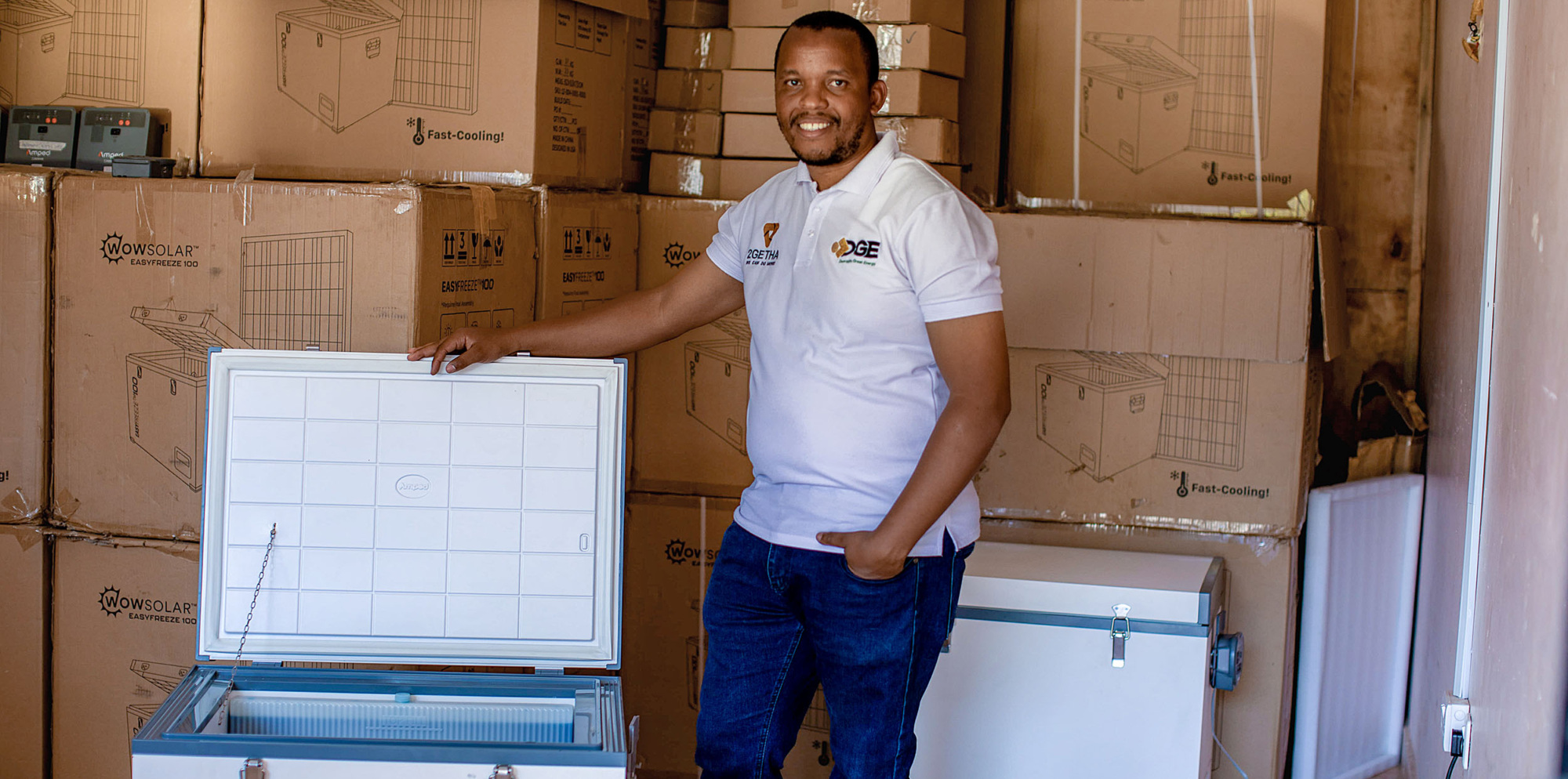
Deevabits founder David Wanjau in his company’s warehouse in Nairobi, Kenya.
CLASP
“Our company now wants to be on the forefront of providing energy efficient, standalone productive-use [i.e., income-generating] appliances,” he explained. “We just need to position ourselves to be able to tap into this big market.”
Meeting high demand for cooling and other energy services
Sales of solar appliances more than tripled between 2018 and 2023 as new manufacturers and distributors entered the sector, according to Leave No One Behind: Bridging the Energy Access Gap with Innovative Off-Grid Solar Solutions, a 2024 report published by the Efficiency for Access coalition. (CLASP co-manages the coalition with Energy Saving Trust, a UK-based nonprofit.)
The business potential is tremendous. The report’s modeling shows that if everyone who needs solar appliances could purchase them, the market value would reach $58 billion USD.
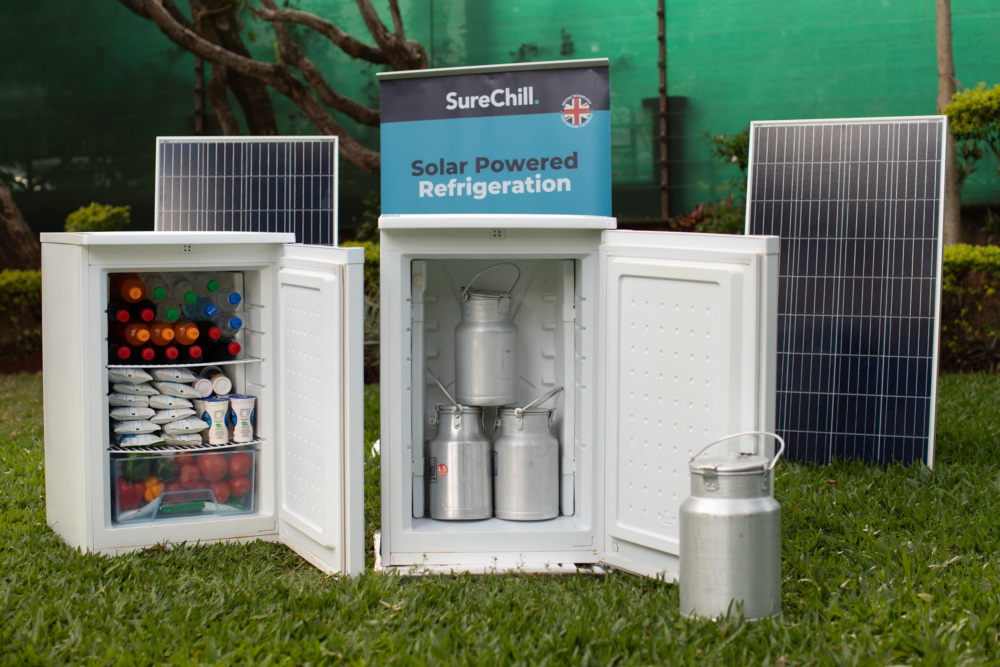
“It’s a huge market opportunity,” said Peter Wangila, Kenya operations and finance manager at SureChill, a manufacturer selling solar fridges in over ten African countries. The company’s patented battery-less design reduces the need for maintenance over the fridges’ lifespan and eliminates the need for expensive battery replacements.
“We’ve done over 1,000 installations, but we haven’t even scratched the surface. There’s a high demand for cooling,” Wangila said.
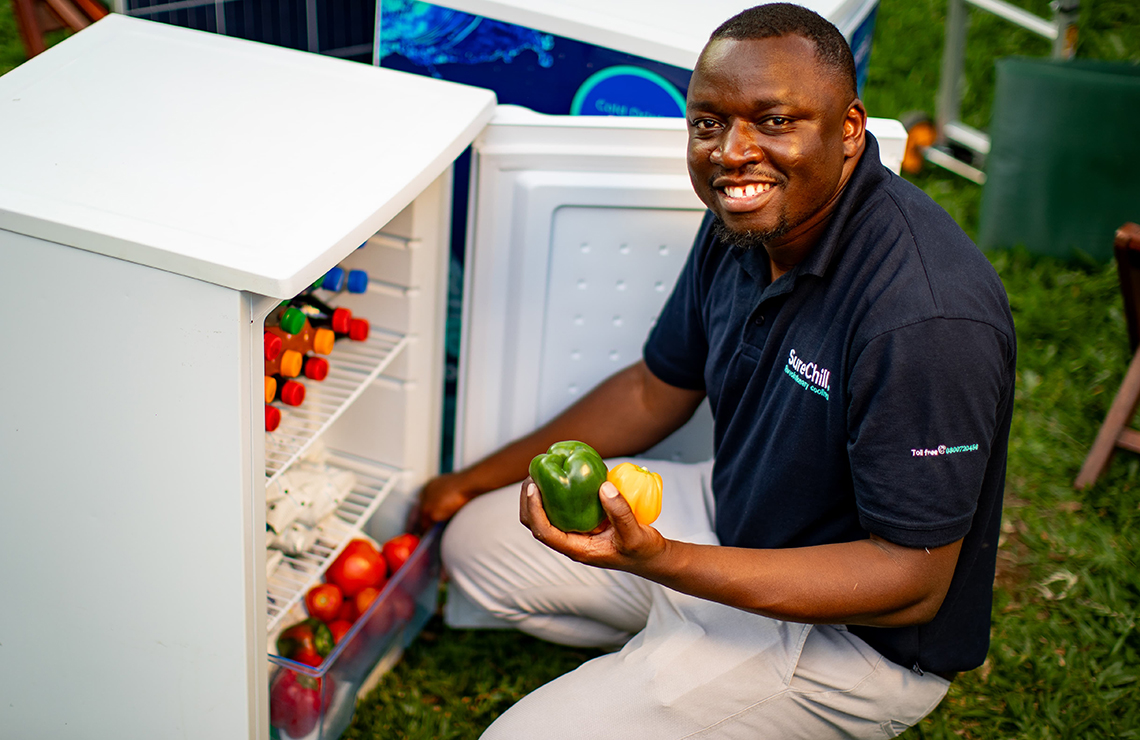
We’ve done over 1,000 installations, but we haven’t even scratched the surface. There's a high demand for cooling.Peter Wangila
SureChill
Today, sales cover less than 2% of the estimated global demand for solar appliances. It’s a gap that has remained frustratingly difficult to bridge, said CLASP’s Nyamolo Abagi, a coauthor of Leave No One Behind.
“Here in sub-Saharan Africa, 60% of households still do not own a refrigerator, an essential appliance for preserving food that is almost ubiquitous in homes across the Global North. This is a classic example of energy poverty,” she said. “The solar appliance sector has to grow rapidly in both scale and ambition in order to serve this enormous need.”
Solar appliances are a gamechanger for small businesses
Most solar fridge customers live in rural areas with no grid access. Deevabits’ customers are typically small shopkeepers selling cold beverages—water, juice, milk, yogurt, and soda—to parched customers. “In very hot areas, cold drinks are a luxury,” said Wanjau. “That’s why for shops, these fridges are gamechangers.”
The company also serves clients in the medical and food retail sectors. Clinics use solar-powered fridges to keep vaccines and medicines cold, explained Wanjau, while fish traders see fridges as a safer way to preserve their wares than the traditional drying or deep frying.
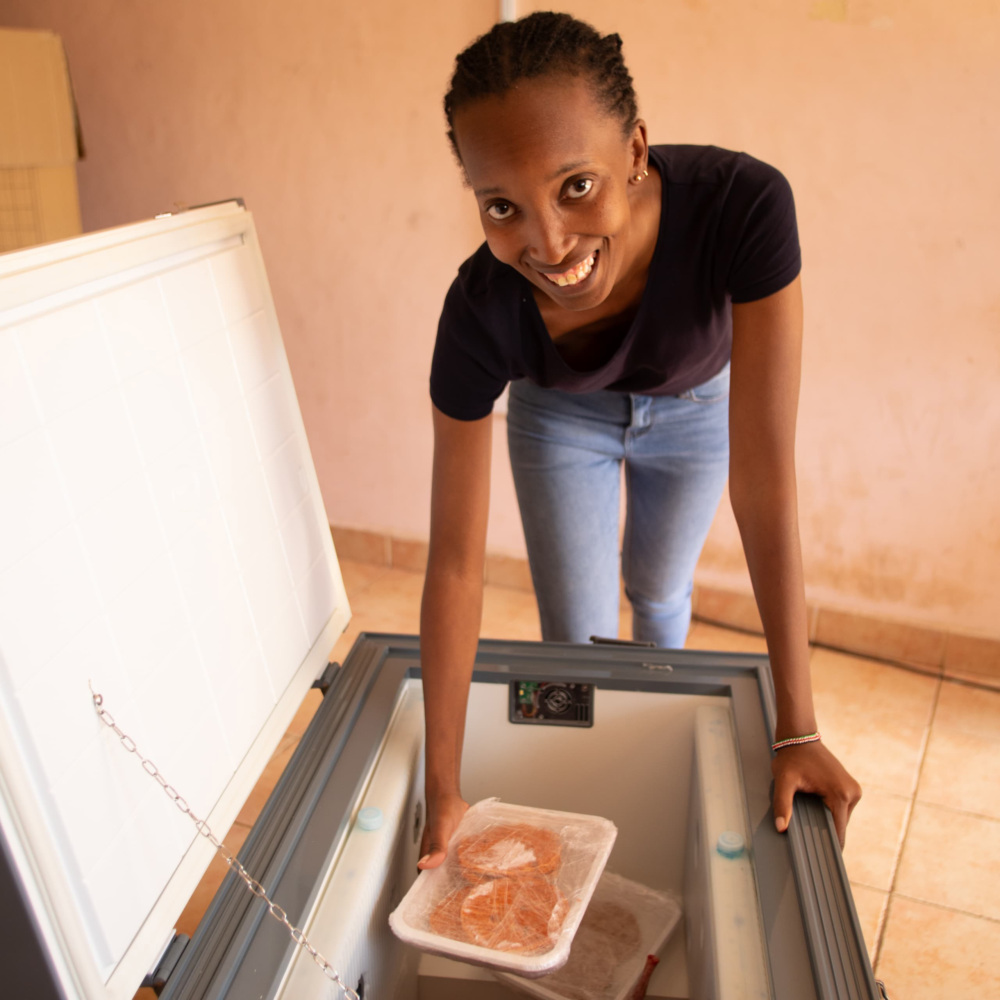
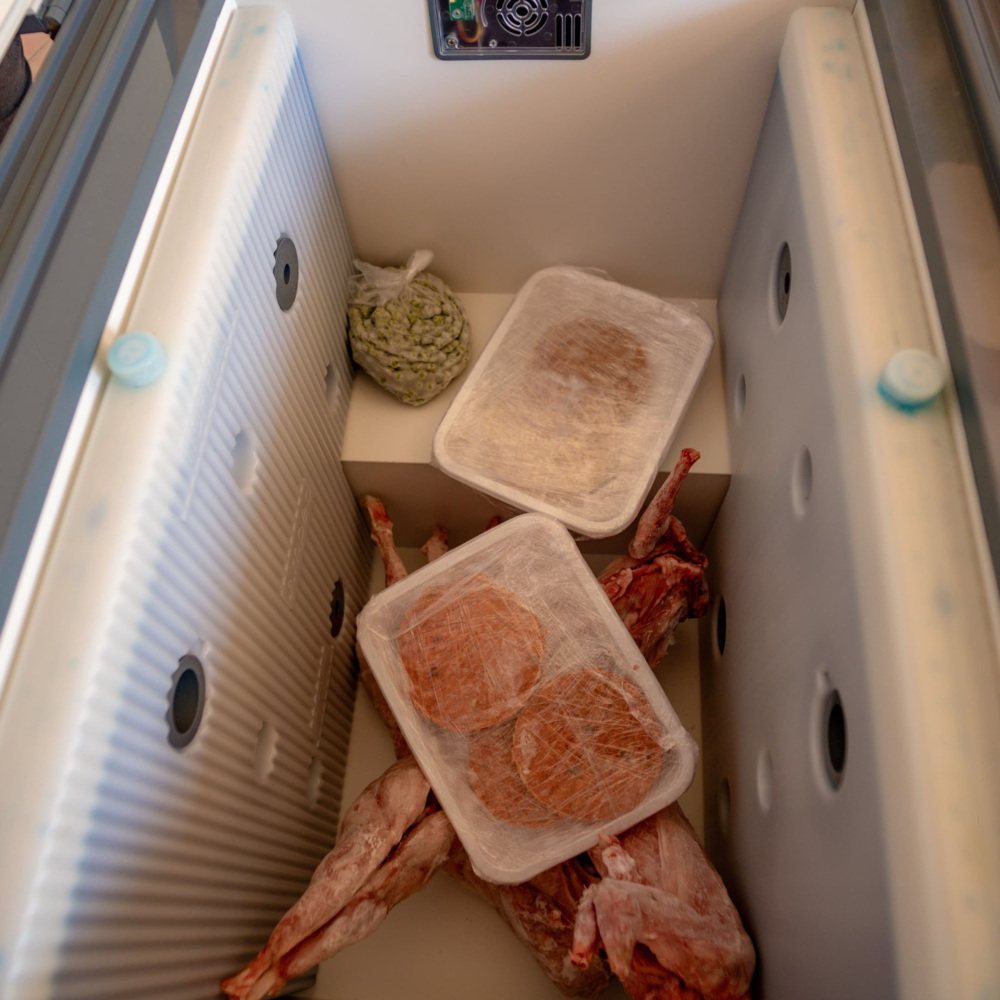
Meanwhile, butchers tend to use the freezer setting on the Deevabits model to reduce waste. Before acquiring these appliances, “they would hang their meat, and it would go bad after two or three days,” Wanjau said. “Now people can stock larger volumes and sell it for a whole week.”
CLASP
CLASP
SureChill works with a similar clientele. “We primarily target productive-use customers: someone with a small shop or someone in the homemade juice business,” said Wangila. “They do not have a lot of money, but they make enough to be able to support a fridge. They are able to see the positive financial impact that owning a fridge could have on their business.”
For most shopkeepers, a solar fridge can significantly boost revenue. “It attracts more customers,” Wangila explained. “And if they buy a cold beverage, those customers will also buy something else, which increases overall sales for the business.”
Increased income for a shopkeeper has ripple effects within families and communities, he added. “It benefits them and four or five other people. That’s how our communities work.”

A shop with a solar refrigerator.
CLASP
SureChill also serves the medical field, offering World Health Organization–approved vaccine fridges, in addition to cost-effective alternatives designed to store temperature-sensitive medications when power is unavailable.
The challenge of scaling up
Despite the advantages such appliances offer, many companies in the sector struggle to scale.
“Compared to a product like lights, productive-use appliances like these are energy-intensive, specialized, and expensive,” noted CLASP’s Abagi. “Fewer consumers can afford them, and the distribution model is more complicated. This makes the growth of companies trying to sell these bigger solar appliances slow.”
Cost is a major barrier. Many people would like to have solar refrigerators at home, but with prices up to $1,800 USD per unit (85% of the average annual household income in Kenya), they typically can’t afford them. “People want the fridge, but they then say, ‘Oh my goodness, it’s so expensive!’” explained Wanjau.
Appliances’ sheer weight and bulk also make it difficult to attract new customers through tactics like door-to-door sales. “You have to get people to believe that a solar fridge works,” said Wangila. “So when salespeople can’t carry it around, it’s a big challenge.”
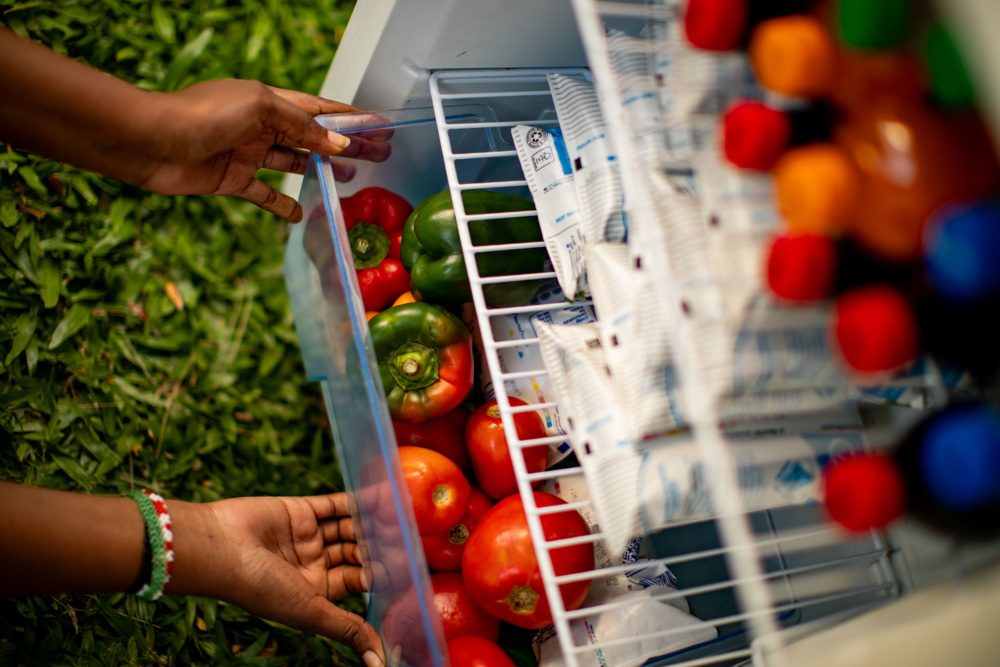
Wanjau agrees. “When people are not aware of the product, they don’t demand it. They don’t have a reference point for a solar-powered fridge, so they need to see it—maybe feel the chill, take a cold soda from it.”
CLASP
CLASP
Companies like his participate in roadshows and market exhibitions required to build this awareness, but this costs money, ultimately driving up the price of their appliances.
Innovating to improve affordability
Solar appliance companies have been searching for ways to make their products more affordable for low-income customers. Both Deevabits and SureChill sell fridges on a rent-to-own basis, using internet-connected devices that activate the fridge when customers make weekly or monthly mobile money payments. This model enables shopkeepers to own their fridges after several years, allowing them to benefit from cooling without tying down their capital.

John Odongo, finance manager at Deevabits, explains how a Pay-go payment enabling device works.
CLASP
Another payment innovation is cooling-as-a-service (CaaS), in which customers lease appliances indefinitely. But despite its potential to bring down costs, both companies have found CaaS challenging to implement on the ground. “The way people use those fridges can be very unpredictable,” noted Wanjau. “If someone stops using it, how do you take it back? How can you resell it if it’s dirty and the butchers were cutting meat on top of it?”
In both cases, Wangila added, the risk of default is high. “That money is competing with school fees and medication when a family member falls sick. We try to mitigate this by telling them to pay more when business is good, to cover for the dry season.” But, he said, “even if you do very good customer selection, there are always people who will default.”
Stimulating growth
Ultimately, said Abagi, companies like Deevabits and SureChill need a more supportive environment to help bridge Africa’s yawning energy service gap. While they provide a crucial service, they can’t meet the overwhelming demand on their own.
“We need innovators, but we also need to attract incumbent manufacturers who have more resources,” she said. “Governments have a role to play in terms of better regulations and lower tariffs, and we also need development partners to help with long-term, consistent subsidies.”
Wangila and Wanjau point to the importance of grant funding in developing their own businesses. Both companies have benefitted from CLASP market activation grants, which help small businesses meet costs associated with product sales, marketing, distribution, and delivery in remote areas.
“Grants can be a sort of non-dilutive funding to help people scale,” said Wanjau. “A lot of these [solar appliance companies] are locally owned businesses, and grants could really stimulate their growth.”
Despite the challenges they face, both men are confident that solar appliances are the clean energy solution Africa needs.
“We are so blessed to have a lot of sun, so the future is bright,” Wangila insisted. “It’s just a question of maintaining focus and getting the right support in place.”
Bridging the Gap: Efficient Appliances in Healthcare
Access to healthcare is a fundamental human right, but for more than 600 million Africans, it remains unattainable. Frequent power cuts and incompatible, power-hungry medical equipment makes it difficult and expensive to provide essential medical services to rural communities. This means patients suffer: mothers give birth in darkness, premature babies lack incubators to help them survive, and preventative care for a wide range of treatable conditions is unavailable.
Designing medical appliances tailored to the different energy settings across the continent is key to improving healthcare in off and weak-grid communities.
Mismatched equipment and energy
Medical equipment, from basic diagnostic equipment to life-saving devices like incubators and vaccine refrigerators, often fail in areas with unreliable energy. They are designed for stable grids in different contexts, which means that around 70% of medical devices in the Global South do not function and go unused. To date, little progress has been made in the adoption of energy-efficient medical appliances.
“Most of the electric medical appliances do not conform to the wiring system and their electricity demands are too high in terms of their voltage, leading to frequent damage of appliances and high electricity bills,” says Victor Ajumbo, the Facility in Charge at the Ober Kamoth Sub-County Hospital in Kisumu.
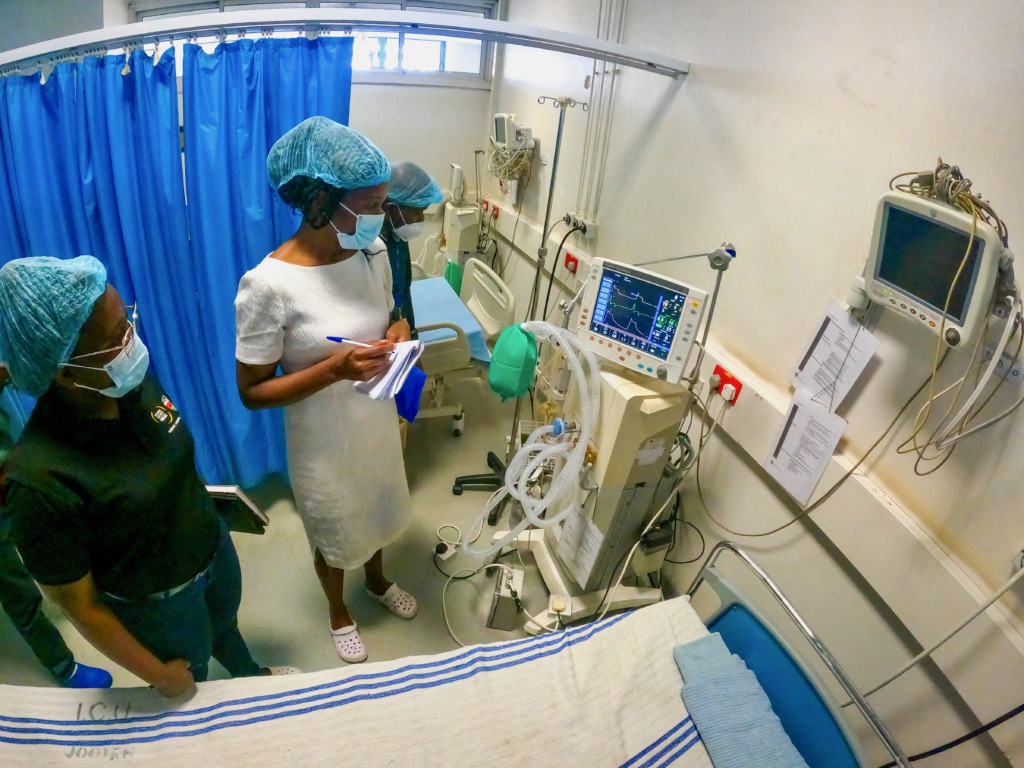
CLASP, in partnership with SEforALL, is studying the efficiency and performance of medical appliances in off and weak-grid clinics in Kisumu, Kenya–one of the first attempts to assess the suitability of conventional medical devices and appliances in energy-constrained settings. Findings from the Medical Appliances for Clinic Electrification project will help manufacturers design appliances that are better suited to these contexts and support governments in developing appropriate clinic electrification solutions.
Energy efficiency matters in healthcare
Reliable energy and efficient medical appliances are key to addressing Kenya’s healthcare energy gap, where 26% of facilities lack electricity and only 15% have access to reliable power. Many clinic electrification projects install energy systems that are too small or unreliable to meet the needs of their medical equipment. Frequent power cuts and voltage fluctuations often destroy the equipment. Studying the energy consumption of medical equipment is the first step to understanding the scale of the problem and designing appropriate appliances that can safely deliver reliable healthcare in these unique contexts.
“We can’t conduct baby deliveries when there is a power outage,” says Irene Akello, Facility in Charge at the Kuoyo Health Centre in Kisumu County. “It’s a risk the facility cannot take, so pregnant mothers are referred elsewhere. Reliable energy is essential to power critical devices like the resuscitaire (incubator), which supports babies born in critical condition.”

Reliable cooling creates opportunities for growth
Energy efficient appliances not only improve access to healthcare in complex settings but also greatly contribute to sustainability in Africa’s medical sector. Hospitals require around 119 kWh of electricity per square meter annually to function properly, making them one of the most energy-demanding institutions to run. To put this into perspective, a single hospital bed needs as much power as three to four single-family houses. Replacing the inefficient devices in medical facilities with energy efficient alternatives can help to reduce electricity consumption, which in turn cuts operating costs and reduces carbon emissions.
“The healthcare sector contributes 5% of global greenhouse gas emissions globally. Around 71% of that comes from supply chains, which include medical appliances. Transitioning to efficient appliances can lower this impact considerably while supporting clinics in off and weak-grid areas to buy the right equipment to serve their communities,” says CLASP’s Emily Bolo.

A path forward
Africa’s ever-changing landscape needs an energy system that matches its diversity and growth, and the demands that come with it. Efficient medical appliances are an important part of this system and can be a game changer for healthcare delivery in Africa’s off and weak-grid communities.
CLASP’s research in Kenya is a crucial step towards bridging the gap between energy and healthcare. With the right energy systems and efficient appliances that match them, under-resourced communities can come one step closer to rightly realising their fundamental human right to healthcare.
Read the groundbreaking report, “Medical appliances for resource-constrained settings.”
Sign up for our newsletter to read our upcoming report, “Efficient Appliances for Health Clinic Electrification,” launching in March 2025.
Cool for Business: Solar Refrigerators Powering Off-grid Communities
“Naija no dey carry last” in Pidgin means Nigerians always aim to finish first. This spirit is reflected in the country’s focus on innovation, driven by creativity and passion. However, for over 86 million Nigerians without reliable electricity, the struggle to keep businesses running means often relying on costly, polluting diesel generators. This added expense and the uncertainty brought on by regular power cuts place a significant burden on the country’s people, economy, and environment.
Affordable, solar-powered refrigerators are an elegant solution with the potential to transform small businesses in Nigeria’s rural, off- or weak-grid communities.
Solar appliances for any wallet
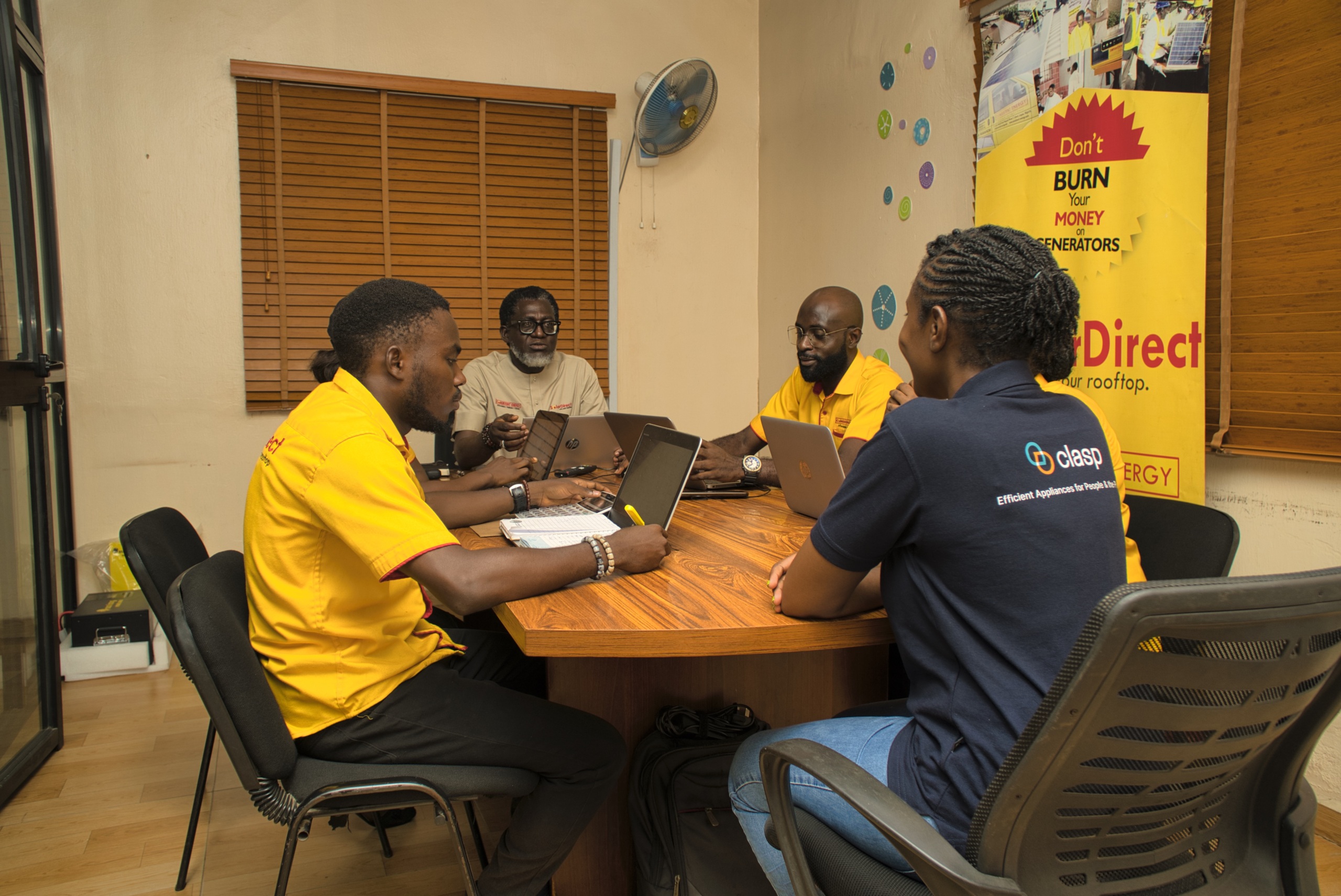
Solar refrigerators are efficient and effective but high costs and limited financing keep them out of reach for many Nigerians who could benefit from their impact. Recognizing this gap, CLASP’s Productive Use Financing Facility (PUFF) stepped in, offering grants, subsidies, and business support to companies such as Consistent Energy Limited to put affordable, life-changing technologies into the hands of those who need them most.
“The grant that was given to us by CLASP under this project really helped us building our capacity to reach last-mile distribution chain. The landed costs of the fridge to a customer in Nigeria will have been very high if not for the subsidy that we received,” says Segun Adaju, the CEO of Consistent Energy.
Solar refrigerators: A boon for businesses and customers
Solar refrigerators keep food cool, safe, and marketable and reduces waste. Without reliable refrigeration, shopkeepers spend more time and money on temporary cooling options such as ice and coolers and are forced to raise prices to do so, hurting both the business and their customers. This cycle was no longer viable for small business owners such as Abibat in Nigeria.
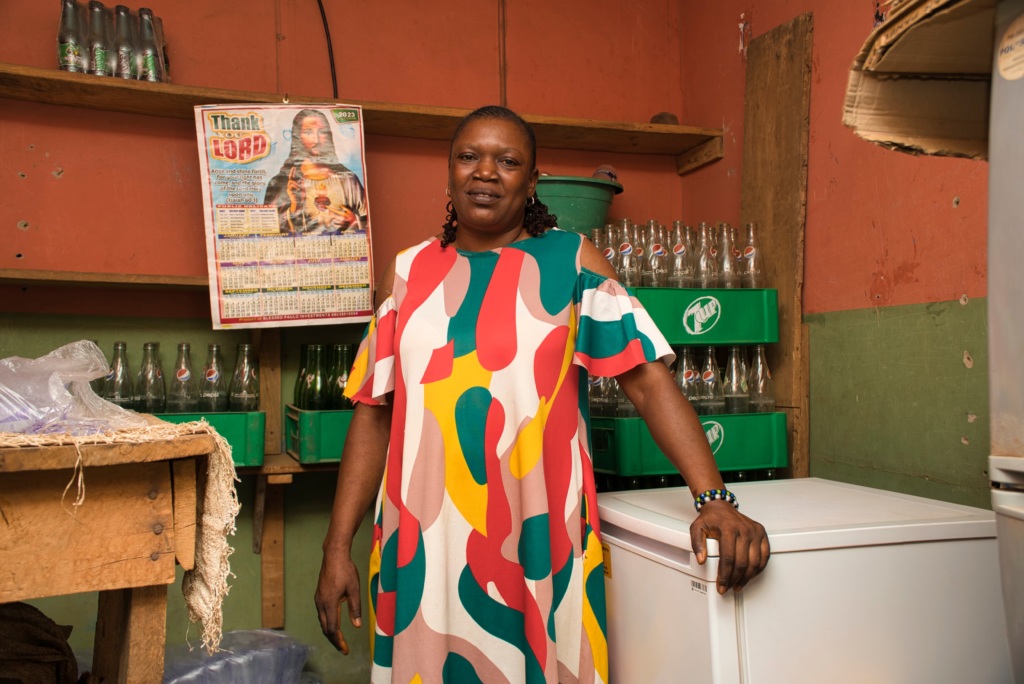
“We were buying ice blocks which led us to some debt, and after a while, the block would melt. We no longer had cold items for sale,” says Abibat Akinwale, a shopkeeper and Consistent Energy client. “The solar fridge has really increased sales. Business is very good now because I’m able to sell cold drinks.”
Consistent cooling creates opportunities for growth
Reliable, long-term cooling keeps food prices stable, meaning that Abibat’s customers have good reason to return to their shop. In Nigeria, the appeal of solar refrigerators lies in their reliability, a quality that resonates with businesses that refuse to “carry last.”
In a country where every Naira counts, solar-powered refrigerators are a game changer for small business owners in Nigeria. Because they are powered by renewable energy, solar refrigerators provide cooling without the cost of constant refueling. This switch to solar means that entrepreneurs save thousands each month that would otherwise be spent on generator costs, fuel, and maintenance. Instead, they can channel those funds to more productive uses and fully participate in the country’s growing economy.
Such opportunities for growth are especially important for women like Helen Obina, who make up a large percentage of the small business owners in Nigeria. For her, business was “not really moving” because she relied on the grid and generators. Installing her solar refrigerator relegated those worries to the past. “Having a solar fridge has really changed my business. The sales have really increased, and the business is moving,” she shared. Helen’s story is not isolated, it is an example of a growing trend for those who are able to access life-changing solar appliances.
Solar solutions bridge the energy gap
Refrigerators are an essential appliance for sustainable development, but 60% of the population in Africa does not own one. For nearly a decade, CLASP has been working to bridge this energy access gap by improving access to efficient appliances that work in off-grid or weak-grid areas.
“Over 600 million Africans don’t have access to electricity. Efficient appliances are an affordable and clean option for these cut-off communities who are otherwise forced to use polluting and expensive alternatives to maintain a good standard of living and actively participate in their economies,” says Ruth Kimani, a Senior Associate at CLASP.
These productive-use appliances (PUAs), such as solar-powered refrigerators, solar water pumps, and solar milling machines are technologies that have a direct, transformative impact on local communities, small businesses, and people’s livelihoods. They are also a necessary shift toward clean energy and reduced reliance on diesel-powered generators.
Shift to solar signals promising future
CLASP and companies such as Consistent Energy have helped small business owners in Nigeria gain independence from unreliable and costly energy sources through renewable appliances. They are now free to chase their dreams and ambitions with renewed fervor, which will have a positive impact on the economy, people, and the planet.

About The Productive Use Financing Facility
CLASP’s Productive Use Financing Facility, is supported by The Global Energy Alliance for People and Planet (GEAPP). It has provided financing to 24 companies in six countries, to enable the distribution of over 13,000 productive-use appliances, directly impacting more than 58,000 households.
Emmanuel Aziebor is CLASP’s new Senior Director for Africa
CLASP welcomes Emmanuel Aziebor as the new Senior Director of our Africa portfolio. In this role, Emmanuel will lead CLASP’s efforts to mitigate climate change and improve lives and livelihoods through affordable, efficient appliances.
CLASP has been working in Africa since 2012. Most of the projects and research carried out in the continent focus on how efficient, high-quality appliances alleviate energy poverty and promote sustainable development. CLASP drives technology innovation and catalyzes appliance market growth, putting efficient, affordable, high-quality appliances and equipment within reach of low-income families and communities, as well as smallholder farmers. In 2017, CLASP opened its Nairobi office.
Emmanuel is an accomplished international development leader with over a decade of experience in renewable energy. His expertise includes business model innovation, private-sector partnerships, energy policy formulation, and catalyzing off-grid energy solutions to scale.

“Expanding access to efficient appliances is the key to climate-resilient development. I’m thrilled to be part of the CLASP team leading the charge on energy efficiency and increasing access to clean energy technology across Africa. I look forward to collaborating with partners across the continent to create meaningful change for people and planet.” – Emmanuel Aziebor, CLASP’s Senior Director of Africa
Emmanuel holds a Master’s in Energy and Sustainable Management from the Kwame Nkrumah University of Science and Technology and a Bachelor’s (Hons) in Business Administration (Banking and Finance) from the University of Ghana Business School.
Before joining CLASP, he led global programs at Mercy Corps delivering sustainable energy services to displaced communities through public-private partnerships.
As a trusted voice in the climate change and clean energy fields, Emmanuel brings an extensive understanding of the renewable energy landscape in Africa and a passion for driving impactful change across the continent.
CLASP is delighted to welcome Emmanuel to the team and looks forward to expanding the organization’s impactful work in Africa under his leadership.
Leave No One Behind: Bridging the Energy Access Gap with Innovative Off-Grid Solar Solutions
Millions of people lack access to the power grid, particularly in low-income rural areas of Africa and South Asia. If the current slow pace of electrification continues, 660 million people – most of them in Africa – will remain without electricity in 2030. Due to numerous challenges, people in off-grid settings typically have a lower quality of life, worse health outcomes, higher energy costs, and fewer economic opportunities than their grid-connected peers. High-quality, efficient off-grid solar appliances are a proven solution to these challenges.
This report – the third in the State of the Off-Grid Appliance Market series – finds that while the sector has strong fundamentals, it must rapidly grow in scale and ambition to avoid leaving people behind.
Key Findings:
- Approximately 159 million off-grid solar fans, water pumps, refrigerators, and grain mills are needed to serve people who lack access to the electric grid. Less than 2% of this demand is being met, leaving more than half a billion people without life-changing appliances.
- There is a significant market opportunity of $58 billion USD for off-grid solar appliances like fans, water pumps, refrigerators, and grain mills.
- The off-grid appliance sector is characterized by a multitude of business models, reflecting a diverse range of technologies, end users, and operating environments. There is no one right business model; rather, chosen models need to be managed appropriately.
- Closing the energy service gap in sub-Saharan Africa and South Asia requires exponential growth in the appliance sector. This can be achieved by deploying significantly more capital, strengthening cross-sectoral collaboration, and developing coherent policies and innovative business models.
Recommendations:
- Governments should emphasize quality assurance and consumer protection through rigorous quality standards and tax and duty exemptions to make high-quality solar products more accessible; support an enabling environment by incentivizing local manufacturers and launching consumer awareness campaigns; and develop integrated policies by establishing cross-ministry task forces to integrate and harmonize policies and regulations.
- Investors, development partners, and financiers should encourage market entry by increasing the deployment of capital over the next ten years; create public-private partnerships by developing programs that combine public and private funding; integrate with climate finance by leveraging carbon credits and other climate finance mechanisms; and provide innovation funding to local and foreign technology innovators.
- Technology innovators should design appliances that meet the specific needs of local off-grid consumers; and enhance product durability and reliability that focuses on long-term user satisfaction and low maintenance costs.
- Venture builders and entrepreneurs should work to expand pay-as-you-go (PAYGo) models; leverage catalytic grants to innovate business models and build partnerships; and focus on specific market segments to enhance efficiency and increase market penetration.
- All market actors should prioritize user-centric data that directly benefits appliance users; harmonize methodologies that establish standardized tracking systems for assessing progress and informing policy decisions; and facilitate data sharing to inform decision-making and policy development.
About Efficiency for Access
Efficiency for Access is a global coalition working to promote renewable and energy efficient appliances to deliver clean energy to the world’s poorest people. It is coordinated jointly by CLASP and the UK’s Energy Saving Trust.
Improving Communities and Women’s Lives with Solar Mills in Nigeria
Feeding a community or household can be time-consuming and even back-breaking work, especially for the women in sub-Saharan Africa who spend a collective 40 billion hours each year on milling.1 Although diesel-powered mills have largely replaced time-consuming manual grinding and pounding, diesel mills remain difficult to operate, expensive, unreliable, and polluting. They are also often located far from users’ farms, so incur additional transport costs.
Solar mills save time, money, and the environment
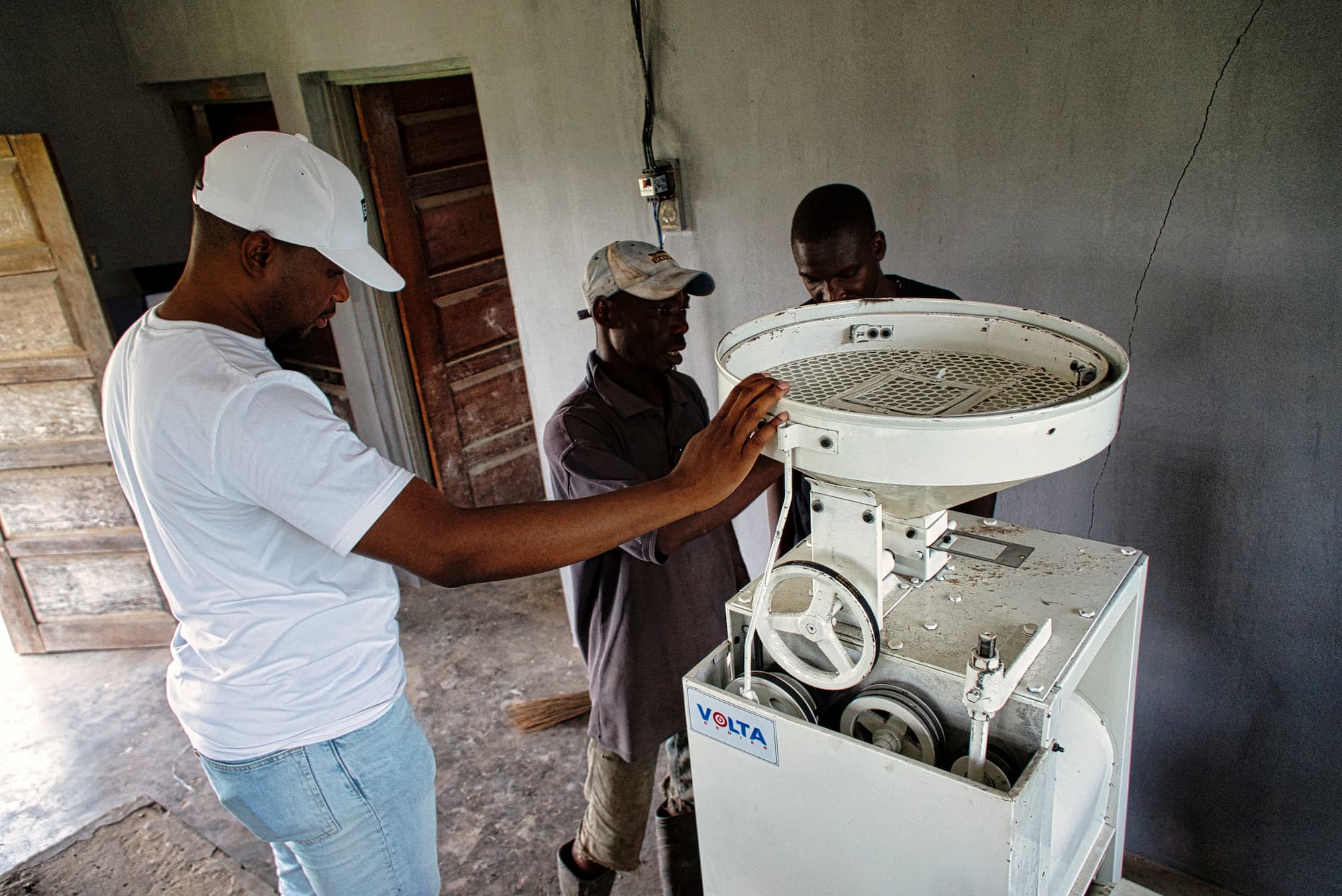
Unlike their diesel counterparts, solar mills are often portable, easy to use, and environmentally friendly. For women and children who often perform most of the milling work in off-grid regions of Africa, these agro-processing machines can help save valuable time that they can then devote to other pursuits.
According to Matt Carr, CEO of Agsol, a solar-powered agro-processing company based in Kenya, “Solar milling has the potential to be one of the greatest liberators of off-grid women’s time”.2
Boosting incomes and productivity
Coupled with their impact on gender equity and empowerment, solar mills can boost the income and quality of life of smallholder farmers by lowering operating costs, increasing farm productivity, and enhancing food security. By completely eliminating the need for pollutive diesel fuels, solar mills are also a boon for environmental and human health.
Enhancing food security in Nigeria
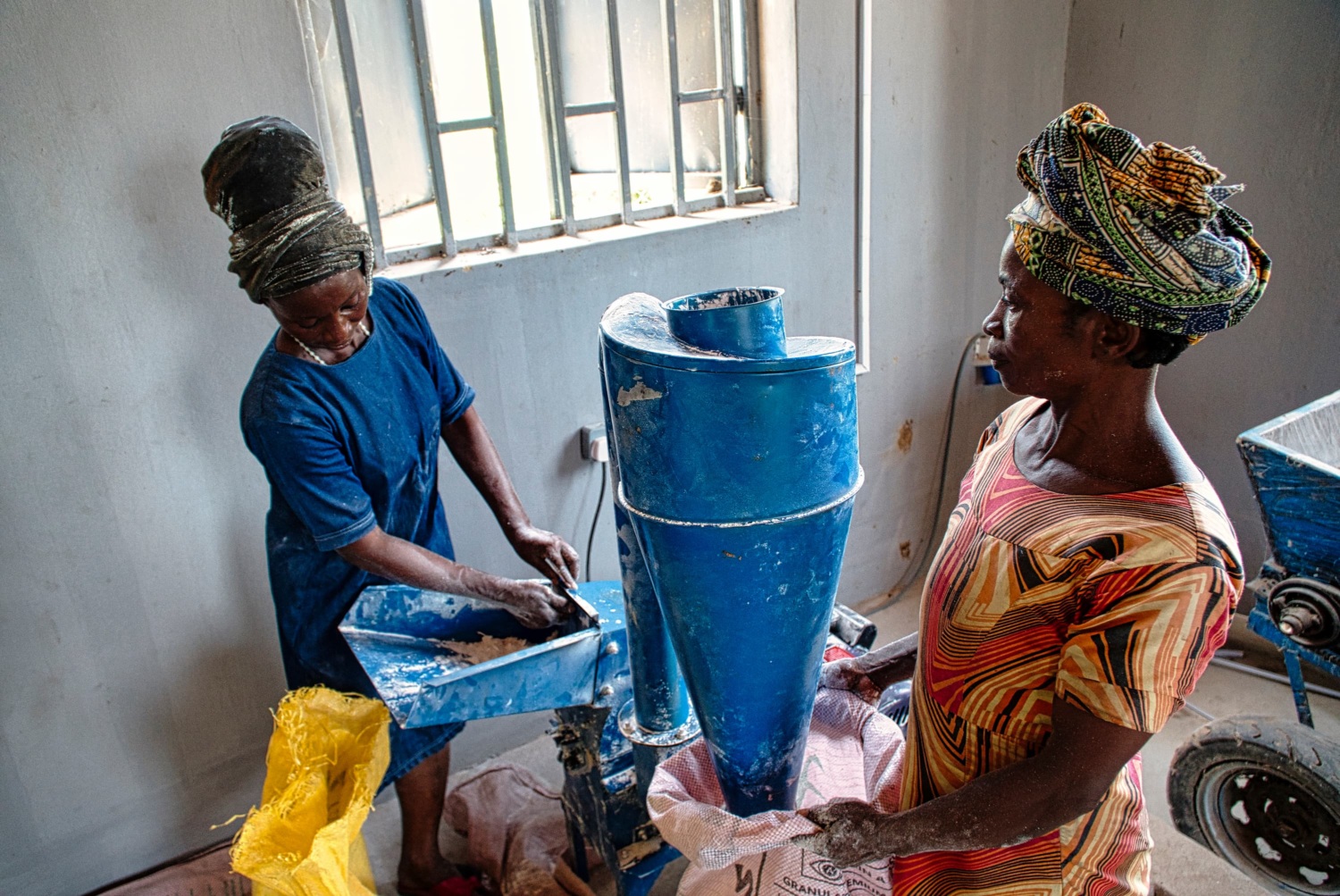
Farm Warehouse is an agricultural technology distributor that offers portable, solar-powered mills to smallholder farmers in Nigeria. Through the support of CLASP’s Productive Use Financing Facility – an innovative financing program that delivers support to companies through capacity-building grants, subsidies, and business support – Farm Warehouse has been able to deliver life-changing technologies into the hands of those who need them.
Farm Warehouse customers affirm the benefits of these grain mills:
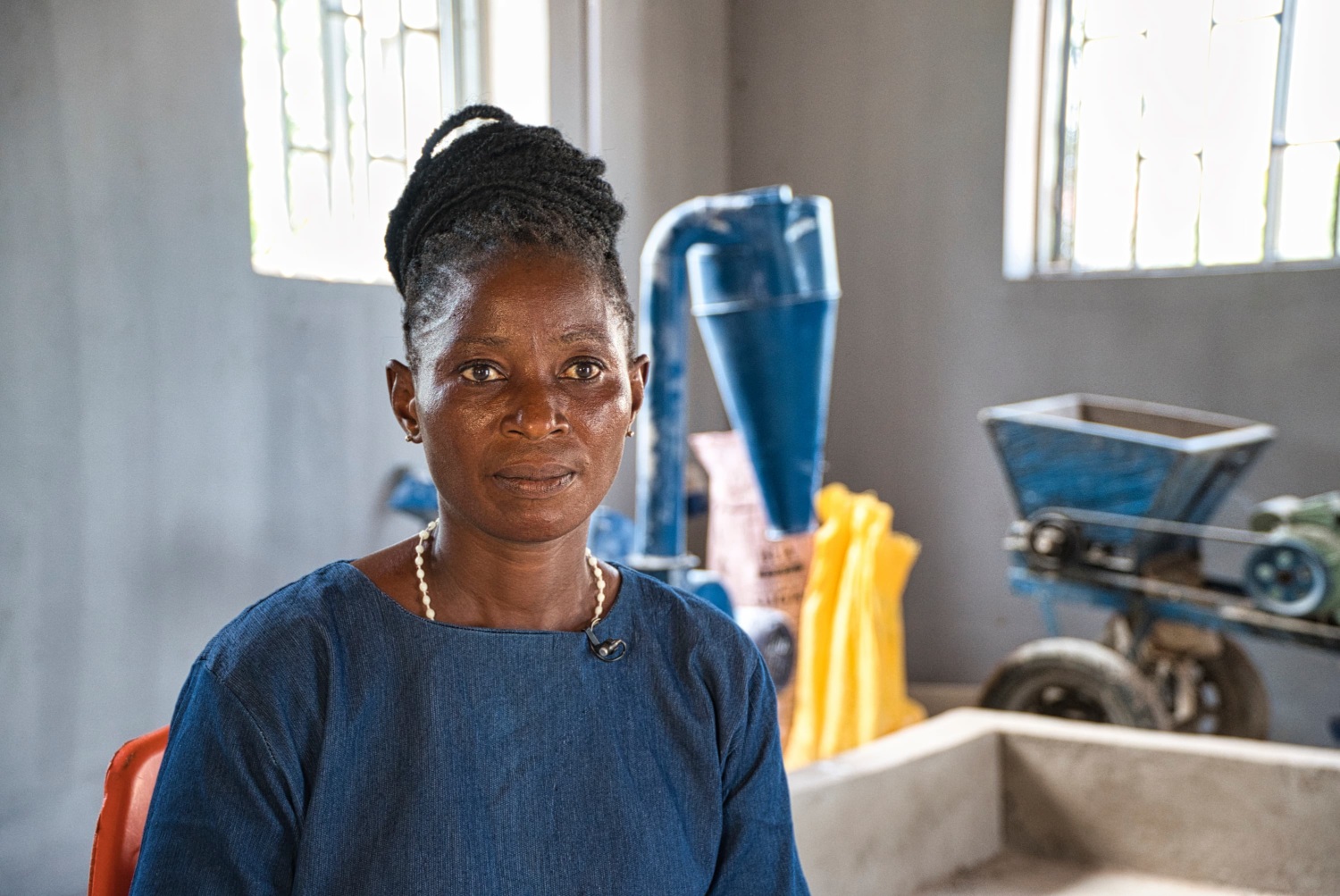
“Any type of flour that you want to produce, this machine can produce it. That is why we need this machine more, so we can have more money to help ourselves and have enough food to give out for people that need it.”
Okwei Sunday Ibor, Farm Warehouse client
Not only do these mills increase food production, they also significantly decrease food wastage. According to Kuma Mede, CEO of Farm Warehouse, before the introduction of these appliances, farmers were losing roughly 30% of their harvest; with Farm Warehouse’s portable, solar mill, farmers are able to significantly reduce wastage and reap more from their harvest.
For close to a decade, CLASP has been working to improve access to efficient appliances that work in off-grid or weak-grid areas. These productive-use appliances (PUAs), such as solar-powered refrigerators, solar water pumps, and solar milling machines are technologies that have a direct, transformative impact on local communities, small businesses, and people’s livelihoods. As these appliances are often powered by renewable energy, they have far lower running costs for consumers, and they reduce harm to the environment and the climate.
The Facility helps strengthen the role of appliance suppliers and distributors by providing capacity-building grants to companies like Farm Warehouse. In addition to business support, CLASP improves appliance performance testing to verify appliance quality, ensuring Farm Warehouse consumers receive reliable information about the efficiency and quality of the products on sale.
About the Productive Use Financing Facility
CLASP’s Productive Use Financing Facility, is supported by The Global Energy Alliance for People and Planet (GEAPP). It has provided financing to 24 companies in six countries, to enable the distribution of over 13,000 productive-use appliances, directly impacting more than 58,000 households.
0. Efficiency for Access: “Solar Milling: Exploring Market Requirements to Close the Commercial Viability Gap” (January 2020) https://efficiencyforaccess.org/wp-content/uploads/SolarMilling_Market-Requirements.pdf.
1. Efficiency for Access Coalition: “Solar Milling: Exploring Market Requirements to Close the Commercial Viability Gap” (January 2020), https://efficiencyforaccess.org/publications/solar-milling-exploring-market-requirements-to-close-the-commercial-viability-gap/?_gl=1*1wc2jau*_gcl_au*NjI0MDk1ODI5LjE3MTYzNzg1NjQ.*_ga*MTk0MDQ1NjQ5LjE3MTYzNzg1NjA.*_ga_RSE4P06FCR*MTcyMDQ0MjU0Mi4xMDIuMS4xNzIwNDQzODk3LjAuMC4w.
Brighter Futures for Rural Youth with Solar
Solar-powered farm equipment could be a crucial tool in overcoming the challenge of unemployment in rural areas across many emerging economies, according to new research by Efficiency for Access and Power for All. The solar irrigation sector in India and Kenya alone has the potential to create over 115,000 jobs by 2030.
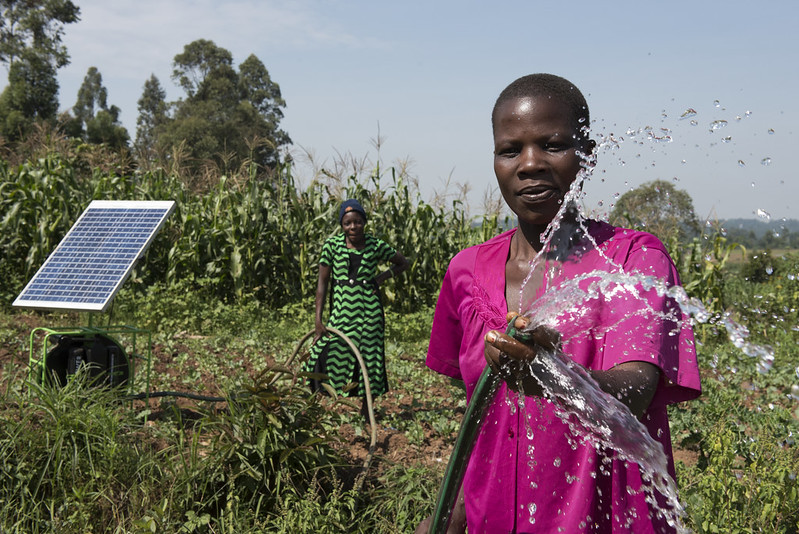
The report Green Jobs for Rural Youth analyzes four countries Kenya, India, Nigeria and Uganda. It finds that there is a significant opportunity to combat youth unemployment through innovative solar technologies.
Promising findings
The findings are promising: solar-powered farm equipment could generate thousands of sustainable jobs, transforming agriculture and improving life quality in rural communities.
Abigail Kuria, the lead researcher from CLASP, who co-authored the report, notes, “These technologies equip rural youth with transferable skills and long-term employment while advancing sustainable development.”
Addressing barriers to adoption
However, affordability and awareness remain significant barriers to wide-spread adoption. Kuria urges, “Investors, financiers, philanthropies, and governments must bolster financial support and market incentives to drive demand for renewable energy in agriculture and tackle affordability issues. This includes funding interventions and rolling out awareness campaigns to boost technology adoption.”
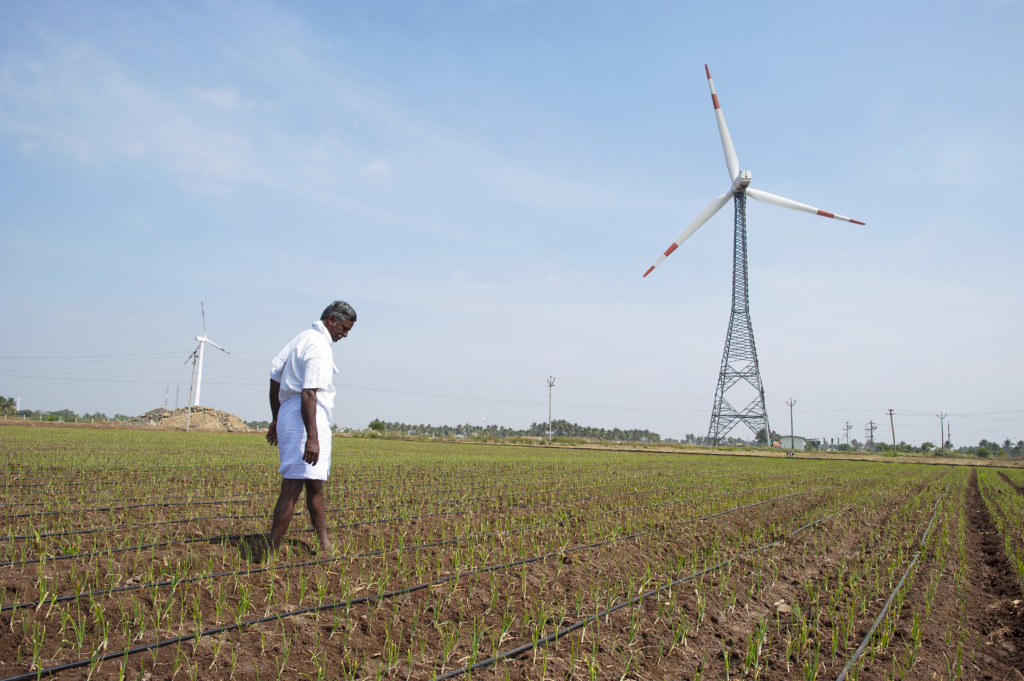
For this report Kuria collaborated with Hannibal Tesfahunegn from Power for All, a nonprofit advocating and scaling solutions in the off-grid sector. The research addresses a critical data gap that has hindered effective policymaking and sector growth, arriving at a pivotal moment for those looking to invest in sustainable development.
Discover how solar innovations can open new job opportunities and benefit rural areas by exploring the full report here.
The Efficiency for Access coalition is co-managed by CLASP and Energy Saving Trust.
0. Efficiency for Access: “Solar Milling: Exploring Market Requirements to Close the Commercial Viability Gap” (January 2020) https://efficiencyforaccess.org/wp-content/uploads/SolarMilling_Market-Requirements.pdf.
1. Efficiency for Access Coalition: “Solar Milling: Exploring Market Requirements to Close the Commercial Viability Gap” (January 2020), https://efficiencyforaccess.org/publications/solar-milling-exploring-market-requirements-to-close-the-commercial-viability-gap/?_gl=1*1wc2jau*_gcl_au*NjI0MDk1ODI5LjE3MTYzNzg1NjQ.*_ga*MTk0MDQ1NjQ5LjE3MTYzNzg1NjA.*_ga_RSE4P06FCR*MTcyMDQ0MjU0Mi4xMDIuMS4xNzIwNDQzODk3LjAuMC4w.
Green Jobs for Rural Youth: Unlocking Renewable Energy’s Potential in Agriculture
Youth unemployment is at an all-time high in sub-Saharan Africa and South Asia. At the same time, populations are growing rapidly in these regions, increasing the need for meaningful employment opportunities. Decentralized renewable energy (DRE) technologies offer a promising solution by creating sustainable growth and green jobs. DRE technologies generate green electricity near the point of use, reducing reliance on centralized power plants, increasing productivity, and improving sustainability. This creates new and enhanced employment opportunities in rural communities, particularly in agriculture, the largest employer in these regions, with 50% to 85% of the labor force working in the sector. However, high upfront costs, limited product availability, lack of awareness of the benefits, and shortage of local talent hinder the widespread adoption of DRE technologies in emerging economies.
Efficiency for Access’ new research fills many of the data gaps in this sector by analyzing four countries, and quantifying the jobs created by DRE technologies in agriculture. It also provides the first comprehensive estimate of employment levels and trends at the country level.
Key Findings
- The solar irrigation sector in India and Kenya alone has the potential to create more than 115,000 jobs by 2030, offering higher incomes for graduates from DRE courses.
- DRE creates opportunities for farm workers to transition into less physically demanding roles, avoiding long-term job displacement and improving life quality.
- DRE innovations significantly reduce labor-intensive tasks for women. In India, mechanized roti-rolling can save women up to 1,800 labor hours per year.
Recommendations
- Investors, financiers, philanthropies, and governments should improve financial support and market incentives to increase the demand for DRE equipment in the agriculture sector to address consumer affordability – the biggest challenge for the growth of DRE markets. This includes creating better financing options to make it easier for farmers to adopt these technologies.
- Governments and stakeholders need to strengthen the manufacturing sector for solar equipment to create thousands of skilled jobs in the DRE industry. For example, India could see up to 5,500 manufacturing jobs created in the solar water pump sector by 2030.
- Educational institutions, government bodies, DRE companies, and development programs need to collaborate to strengthen the DRE workforce. Technical and Vocational Education and Training Institutes (TVETs) can play a key role in rural skill development but face challenges like outdated curricula and high tuition costs. To support labor transitions in the DRE sector, integrating short-term internships, apprenticeships, and job training programs is essential.
- Improving coordination between agricultural and energy stakeholders is critical to improve the adoption of DRE products. Uganda has successfully integrated renewable energy into its agricultural development plans by assigning responsible parties to establish key performance indicators (KPIs) for implementing renewable energy targets. This approach has stimulated growth in the DRE market and attracted business investment in the sector.
Read the Green Jobs for Rural Youth: Unlocking Renewable Energy’s Potential in Agriculture report here.
About Efficiency for Access
Efficiency for Access is a global coalition working to promote renewable and energy efficient appliances to deliver clean energy to the world’s poorest people. It is coordinated jointly by CLASP and the UK’s Energy Saving Trust.
0. Efficiency for Access: “Solar Milling: Exploring Market Requirements to Close the Commercial Viability Gap” (January 2020) https://efficiencyforaccess.org/wp-content/uploads/SolarMilling_Market-Requirements.pdf.
1. Efficiency for Access Coalition: “Solar Milling: Exploring Market Requirements to Close the Commercial Viability Gap” (January 2020), https://efficiencyforaccess.org/publications/solar-milling-exploring-market-requirements-to-close-the-commercial-viability-gap/?_gl=1*1wc2jau*_gcl_au*NjI0MDk1ODI5LjE3MTYzNzg1NjQ.*_ga*MTk0MDQ1NjQ5LjE3MTYzNzg1NjA.*_ga_RSE4P06FCR*MTcyMDQ0MjU0Mi4xMDIuMS4xNzIwNDQzODk3LjAuMC4w.
Seven Impact-Driven Organizations to Receive Funding to Alleviate Energy Poverty for Millions
In late 2023, with support from the Swedish International Development and Cooperation Agency (Sida) who committed approximately $4.5 million USD in funding, CLASP was selected to take over as host and manager of the Energy Access Institutions Facility (the Facility). This joint donor initiative is set up to support industry organizations known as market institutions (MIs) that serve an essential function in facilitating a more efficient pathway to achieving Sustainable Development Goal 7: affordable, reliable, sustainable, and modern energy for all.
Expanding access to clean energy has ripple effects across people’s livelihoods, helping to improve crop yields and irrigation, reduce food loss and waste, increase incomes, address gender inequities, and avoid significant amounts of planet-warming carbon emissions.
Seven Organizations Chosen for Impact & Potential
Following several months of due diligence, the Facility has just announced the first cohort of Facility grantees. Nominated and selected with input from Facility funders, the seven organizations – four global institutions and three country-specific market accelerators – will be supported based on their impactful track record and their potential to achieve SDG 7. Operating at various geographic levels and filling discrete but complementary roles, these organizations and their members are ideally placed to help alleviate energy poverty for millions of low-income people in sub-Saharan Africa and South Asia.
Meet the Seven Grantees
| Market Institution | Expertise | Geographical Reach | Impact |
|---|---|---|---|
| Africa Minigrid Developers Association (AMDA) | AMDA aims to end energy poverty across the African continent by accelerating minigrid companies’ pathway to scale and sustainability by supporting the achievement of SDG 7 by 2030. | AMDA represents over 44 companies that are operating minigrids across 22 countries in Africa. | As of 2022, AMDA members were operating more than 400 projects with more than 78,000 installed connections that impacted more than 750,000 people, healthcare facilities, schools, and businesses. |
| Clean Cooking Alliance (CCA) | CCA builds thriving, diverse, and competitive markets to accelerate equitable access to modern and affordable clean cooking solutions. | CCA has 30 staff in 10 countries, with projects in over 40 countries. | Over 8 million people gained access to clean cooking solutions between 2019 and 2022 thanks to CCA projects. |
| GOGLA | GOGLA helps the off-grid industry build buoyant and sustainable markets that deliver high-quality products and services to customers with no, or insufficient, access to electricity. | GOGLA’s 200 members include companies and financiers and 18 National Renewable Energy Associations in Africa, as well as a network of government representatives from 21 African governments and three regional bodies. | GOGLA affiliate companies reached 461 million people through life-changing energy access products between 2012 and 2022. |
| VeraSol | VeraSol strives to make safe, affordable, and durable products the default option in the market through a variety of quality assurance services. | More than 40 countries worldwide use VeraSol certification of solar energy kits. | As of 2022, more than 60 million VeraSol-certified products have been sold, benefitting over 180 million people worldwide. |
| Market Accelerator | Expertise | Geographical Reach | Impact |
|---|---|---|---|
| Ethiopia Energy Market Accelerator (EMA) | EMA accelerates clean, affordable, and renewable energy for Ethiopia and the Horn of Africa by overcoming market barriers and unleashing the power of private sector initiative, innovation, and capital. | EMA works with 35 local and 20 international partners. | EMA projects helped improve the lives of 1.7 million people through access to clean energy. |
| Nigeria Off-grid Market Accelerator Program (NOMAP) | NOMAP catalyzes energy access through reliable market intelligence, piloting new business models for mini-grid/SHS companies, and policy and regulatory support to subnational and Federal governments in Nigeria. | Through six market interventions, NOMAP has supported more than 30 off-grid companies and six subnational governments in Nigeria. | NOMAP’s interventions have delivered 40,000 new connections in Nigeria and leveraged more than USD 15 million. |
| Uganda Off-grid Energy Market Accelerator (UOMA) | UOMA coordinates industry actors and provides technical input, expertise, and private and public sector support to deliver universal access to affordable and clean energy for Ugandans. | UOMA has led more than 25 innovative pilot blueprints and raised USD 40M+ in funding for last-mile, off-grid companies across Uganda. | UOMA facilitated 250,000+ new connections from pilots for Uganda’s hardest to reach, impacting over a million Ugandans. |
Facility Support to MIs, Donors, and the Sector
By channeling flexible, pooled donor funding, the Facility aims to help MIs facilitate an enabling environment that can give rise to initiatives and technologies that improve people’s livelihoods and better protect the planet. The Facility’s long-term vision is to deploy $50 million USD to a portfolio of impactful MIs that are accelerating the pathway to achieving affordable, sustainable, and life-changing energy for all.

Farm Warehouse solar-powered mill in Nigeria
About the Facility
The Energy Access Institutions Facility is a joint donor initiative to support and strengthen the institutions that are essential for the achievement of Sustainable Development Goal 7, universal access to affordable, reliable, sustainable, and modern energy by 2030. The Facility is currently supported by the Swedish International Development Agency (Sida) and UK aid via the Transforming Energy Access (TEA) platform, and is managed by CLASP.
This material has been funded by UK aid from the UK government; however, the views expressed do not necessarily reflect the UK government’s official policies.
About CLASP
CLASP is the leading global authority on efficient appliances’ role in fighting climate change and improving people’s lives. With 25 years of expertise and offices on four continents, CLASP collaborates with policymakers, industry leaders, and other experts to deliver clear pathways to a more sustainable world for people and the planet.
0. Efficiency for Access: “Solar Milling: Exploring Market Requirements to Close the Commercial Viability Gap” (January 2020) https://efficiencyforaccess.org/wp-content/uploads/SolarMilling_Market-Requirements.pdf.
1. Efficiency for Access Coalition: “Solar Milling: Exploring Market Requirements to Close the Commercial Viability Gap” (January 2020), https://efficiencyforaccess.org/publications/solar-milling-exploring-market-requirements-to-close-the-commercial-viability-gap/?_gl=1*1wc2jau*_gcl_au*NjI0MDk1ODI5LjE3MTYzNzg1NjQ.*_ga*MTk0MDQ1NjQ5LjE3MTYzNzg1NjA.*_ga_RSE4P06FCR*MTcyMDQ0MjU0Mi4xMDIuMS4xNzIwNDQzODk3LjAuMC4w.
Financing for Impact: CLASP Supports Companies Delivering Sustainable Cooling in Nigeria
Nigeria, like many West African countries, has experienced record-breaking temperatures in recent months. These intense heatwaves threaten people’s health, reduce food production, and increase energy costs as people try to stay cool.
Affordable Solar Cooling to Replace Diesel Generators
Inconsistent power supply in the country means households and businesses rely on expensive, polluting diesel generators for electricity – a system not everyone can afford.
The solar refrigerators sold by companies like Koolboks, offer an affordable and reliable cooling solution.
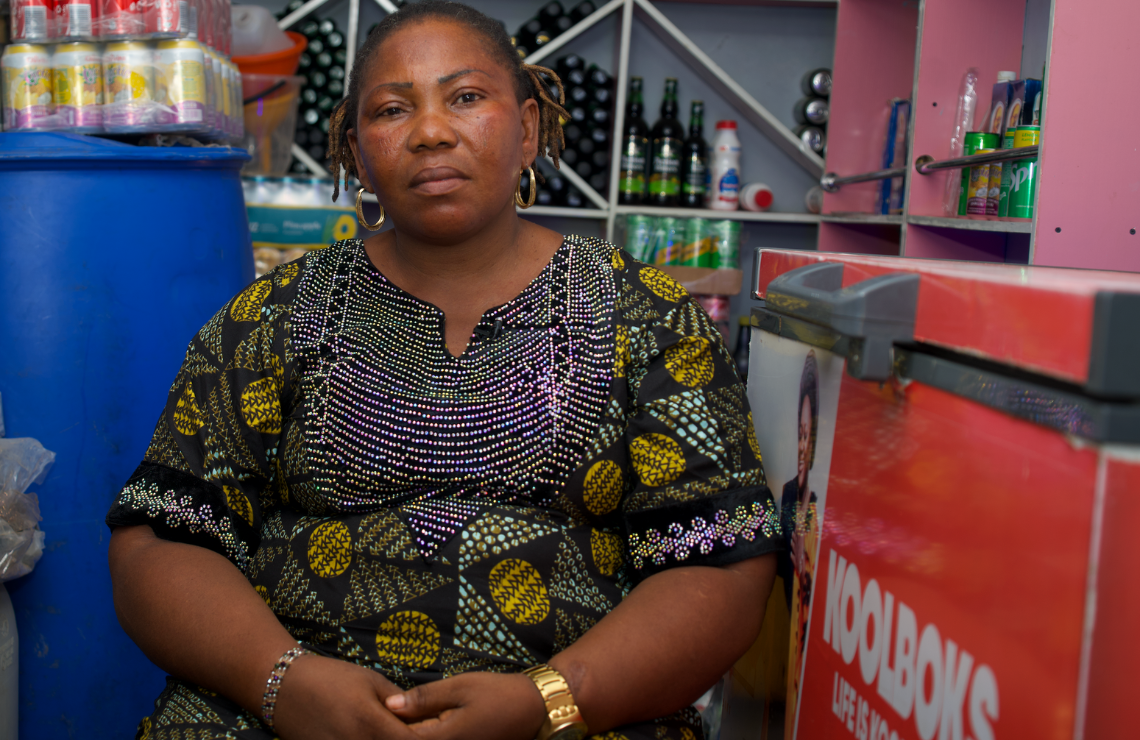
“When my customers come to me saying they have no power supply and ask how I have electricity? I tell them, "I am using Koolboks to chill my drinks.”
Doris Chuwa, Koolboks customer
CLASP Increases Access to Life-Changing Appliances
Lack of reliable access to electricity is a reality for half of the world’s population, 3.5 billion people worldwide. This energy poverty has detrimental effects on health, productivity, and livelihoods.
For close to a decade, CLASP has been working to improve access to efficient appliances that work in off-grid or weak-grid areas. These productive-use appliances (PUAs), such as solar-powered refrigerators, solar water pumps, and solar milling machines are technologies that have a direct, transformative impact on local communities, small businesses, and people’s livelihoods. As these appliances are often powered by renewable energy, they have far lower running costs for consumers, and they reduce harm to the environment and the climate.
Innovative financing for Local Distributors
Through its regional presence in four continents, CLASP has researched and worked on different mechanisms to increase access to life-changing, off-grid appliances. Since 2016, CLASP has been driving technology innovation and catalyzing appliance market growth through innovative financing. CLASP works to put efficient, affordable, high-quality appliances and equipment within reach of low-income families and communities through financing projects like the Energy Access Institutions Facility and various results-based financing initiatives like the Higher-Tier Cooking Component and Global LEAP Awards.
CLASP also initiated the Productive Use Financing Facility, a $6.5 million USD innovative financing program aimed at catalyzing the uptake of productive use appliances across East, West, and Central Africa. This innovative facility delivers support to companies through capacity-building grants, subsidies, and business support.
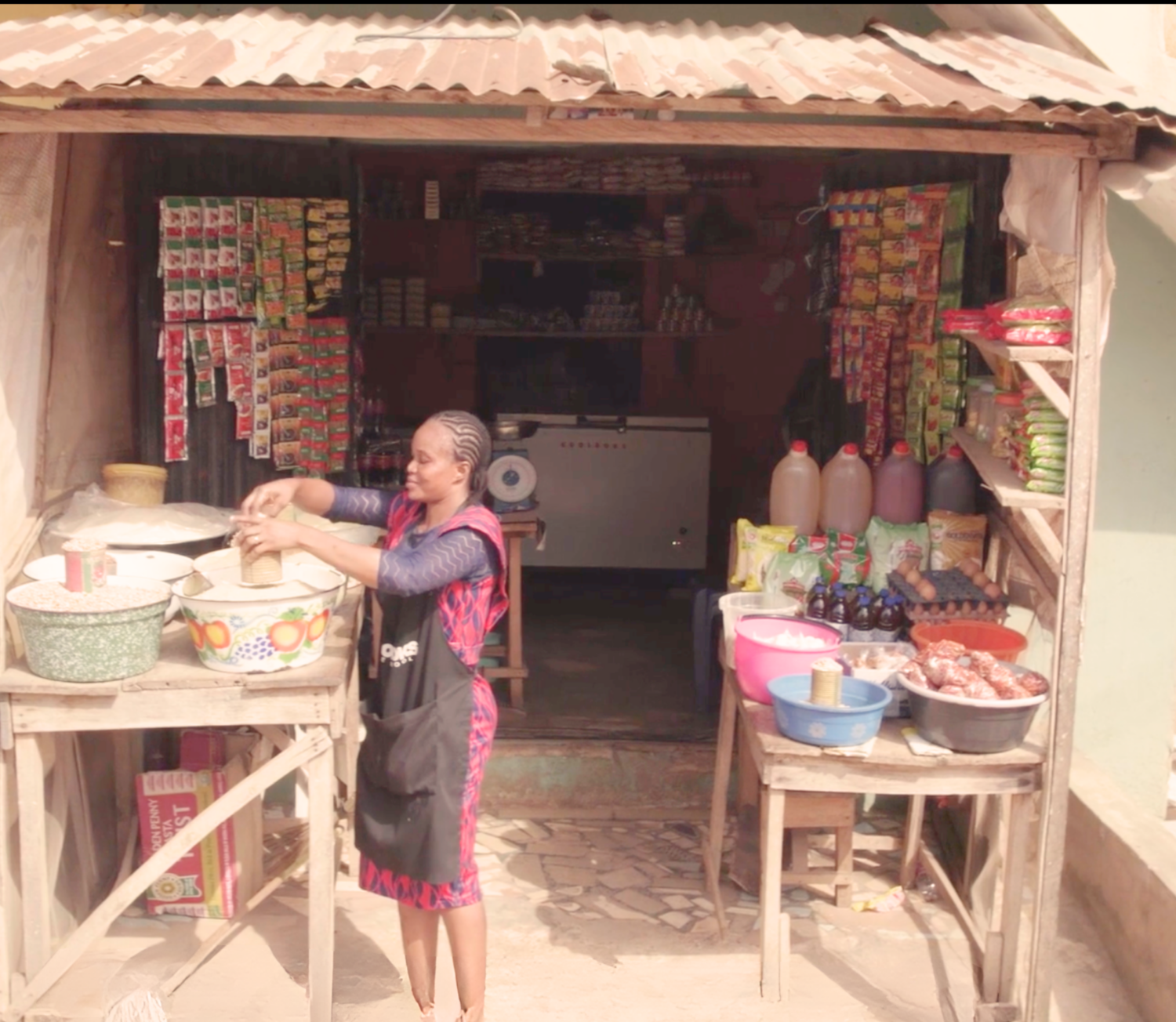
The Facility strengthens the role of appliance suppliers and distributors by providing capacity-building grants to companies like Koolboks. In addition to business support, CLASP improves appliance performance testing to verify appliance quality, ensuring Koolboks consumers receive reliable information about the efficiency and quality of the products on sale.
“Thanks to the capacity-building funds, we were able to set up the local assembly plant. Now, customers are able to have access to some amount of discounts on their product, which made it more affordable for them.” Lolade Esther Alonge, Project Manager, Koolboks
Watch the video to hear more from Koolboks and their customers on the impact of access to affordable cooling.
***
About The Productive Use Financing Facility
CLASP’s Productive Use Financing Facility, is supported by The Global Energy Alliance for People and Planet (GEAPP). It has provided financing to 24 companies in six countries, to enable the distribution of over 13,000 productive-use appliances, directly impacting more than 58,000 households.
0. Efficiency for Access: “Solar Milling: Exploring Market Requirements to Close the Commercial Viability Gap” (January 2020) https://efficiencyforaccess.org/wp-content/uploads/SolarMilling_Market-Requirements.pdf.
1. Efficiency for Access Coalition: “Solar Milling: Exploring Market Requirements to Close the Commercial Viability Gap” (January 2020), https://efficiencyforaccess.org/publications/solar-milling-exploring-market-requirements-to-close-the-commercial-viability-gap/?_gl=1*1wc2jau*_gcl_au*NjI0MDk1ODI5LjE3MTYzNzg1NjQ.*_ga*MTk0MDQ1NjQ5LjE3MTYzNzg1NjA.*_ga_RSE4P06FCR*MTcyMDQ0MjU0Mi4xMDIuMS4xNzIwNDQzODk3LjAuMC4w.