
Find CLASP at the 2025 Africa Climate Summit
CLASP and our partners are dedicated to solving the world’s most pressing, interconnected crises: the climate emergency, poverty, inequality, and access to energy.
Our research shows how efficient, high-quality appliances alleviate energy poverty and promote sustainable development—positively impacting billions of people.
At this year’s Africa Climate Summit in Addis Ababa, we will be presenting solutions from our upcoming research to showcase how efficient appliances are a critical piece to achieve universal electricity access and accelerate Africa’s momentum in becoming a powerhouse of global climate solutions.
CLASP experts attending:
- Emmanuel Aziebor – Senior Director, Africa
- Anne Muhonja Songole – Manager, Climate
If you are interested in connecting with us to speak at or attend your events, please contact mbaur@clasp.ngo.
Where to find us:
Date | Time and Venue | Event |
|---|---|---|
Sunday 7 September 2025 | 10:45-11:45 | WEDO Panel: From Ground to Global: African Women’s Power in Climate Action |
Tuesday 9 September 2025 | 09:30-11:00 Addis International Convention Center (Room AP2) | Precise Panel: Transforming Livelihoods Through Climate-Smart Decentralized Renewable Energy (DRE) Ecosystem Collaboration |
Tuesday 9 September 2025 | 11:30-13:00 Rockefeller Foundation Pavillion | GEAP Panel: Leveraging Increasing Energy Access to Create Jobs, Drive Economic Transformation, and Increase Climate Resilience |
Tuesday 9 September 2025 | 13:30-15:00 | IWMI and GOGLA Panel: Climate-Smart Irrigation: Scaling Solar Solutions for Africa’s Smallholder Resilience |

Investing in Institutions that Power Energy Access
The road to universal energy access runs through strong institutions. That’s the core idea behind the Energy Access Institutions Facility, or the Facility, a joint donor initiative hosted by CLASP. The Facility is supporting market institutions uniquely positioned to scale the energy access sector and help deliver clean, reliable energy to millions of people in Africa and South Asia.
The $25M+ initiative is empowering key institutions to expand distributed renewable energy solutions, including clean cooking, solar systems, productive-use appliances, and mini-grids, targeting millions of underserved communities across Africa and South Asia over the next five years.
Rather than funding individual technologies or businesses, the Facility focuses on the market institutions and accelerators that make energy access possible. They include trade alliances, policy accelerators, and quality assurance organizations that shape markets, influence regulations, and connect stakeholders. This new model, investing directly in institutions, is designed to scale what works, attract meaningful investment, and deliver energy solutions that last.
To enable market institutions to fulfill their role, the Facility provides critical inputs that empower market institutions and accelerators to build financial resilience, enhance their operational capacities, and foster strategic collaborations. The Facility achieves this through three main pillars:
- Core funding unlocks strategic decision-making for market institutions and accelerators, enables the pursuit of bolder visions distinct from project-driven objectives, and the flexibility to pivot to emerging opportunities in a fast-moving sector.
- Institutional health grants build high-functioning, sustainable institutions, and resilience to external shocks.
- Cross-learning and collaboration support a common theory of change to drive faster achievement of Sustainable Development Goal 7 and encourage alignment of resources and action opportunities.
The Facility’s group of grantees is a dynamic mix of organizations working across regions and technologies. Here’s a closer look at who they are and what they do.
Africa Minigrid Developers Association (AMDA)
AMDA represents over 40 mini-grid developers across the continent and is a strong voice for policies, financing, and standards that enable scale. The organization actively engages in regulatory reform and promotes sustainable business models.
“In the face of challenges that seem insurmountable, one truth remains: Business as usual is not an option. We cannot unlock universal energy access with fragmented strategies. We cannot power 680 million people still in the dark by 2030 without bold, coordinated, and scalable action,” Olamide (‘Lamide) Niyi-Afuye, CEO, AMDA.
Fun Fact: Mini-grids are key to reaching remote communities and AMDA is uniquely positioned to ensure the enabling environment keeps pace with the sector’s growth.
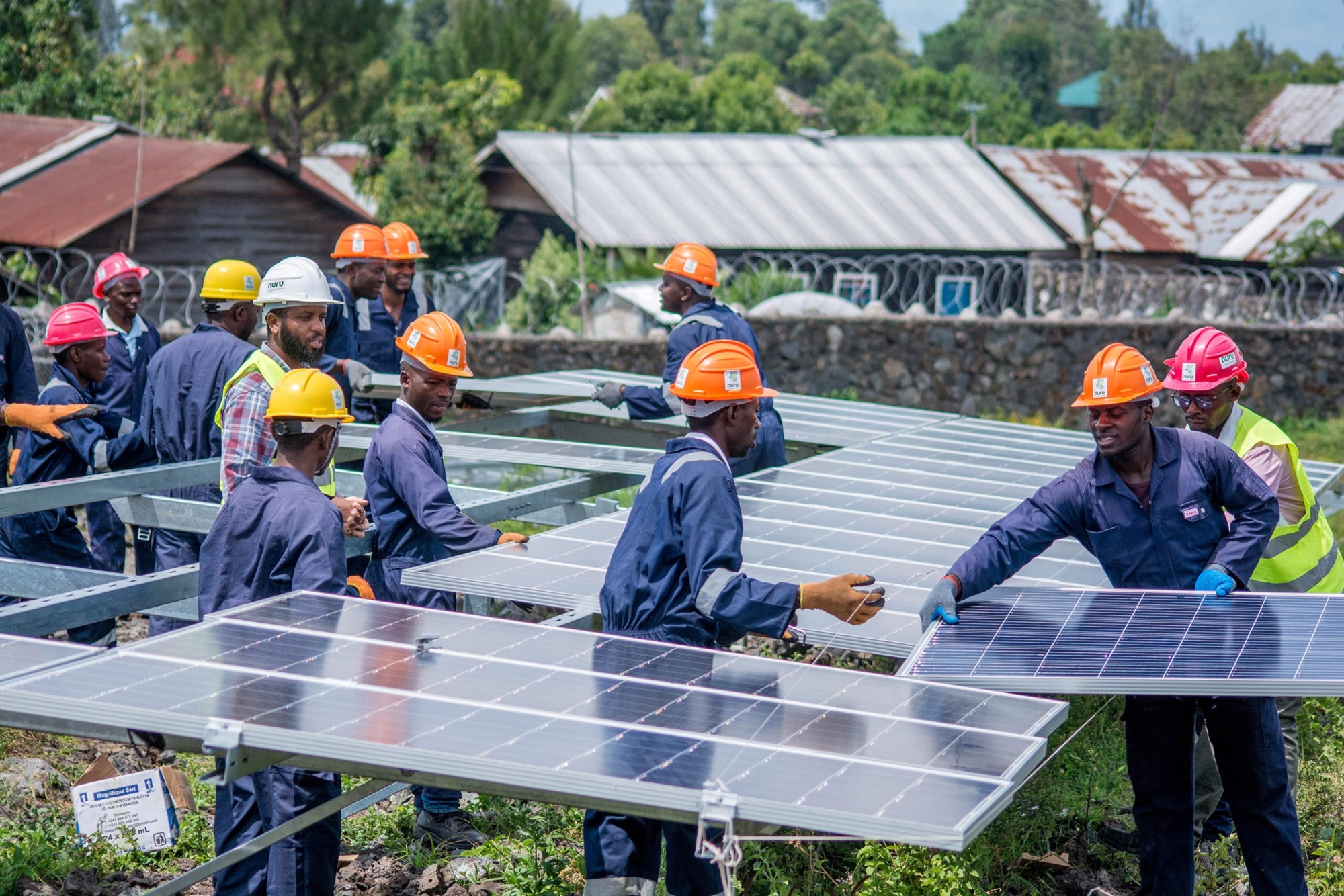
Nuru, Democratic Republic of the Congo
[Photo: AMDA]
Clean Cooking Alliance (CCA)
CCA drives efforts to make clean cooking affordable, accessible, and aspirational. Their work spans research, policy, investment facilitation, and ecosystem coordination.
“Whether from an energy access, climate, environment, health, or empowerment perspective, clean cooking is increasingly recognized as a critical component of a just energy transition. CCA is proud to have contributed to this shift. Our focus remains on turning commitments into actionable policies, business opportunities, and tangible investments that transform the pathways to clean cooking for the billions of people who still live without it,” Dymphna van der Lans, CEO, CCA.
Fun Fact: The clean cooking sector needs strong institutions to match its ambition. CCA brings the convening power, technical capacity, and cross-sectoral reach needed to transform this critical area of energy access.
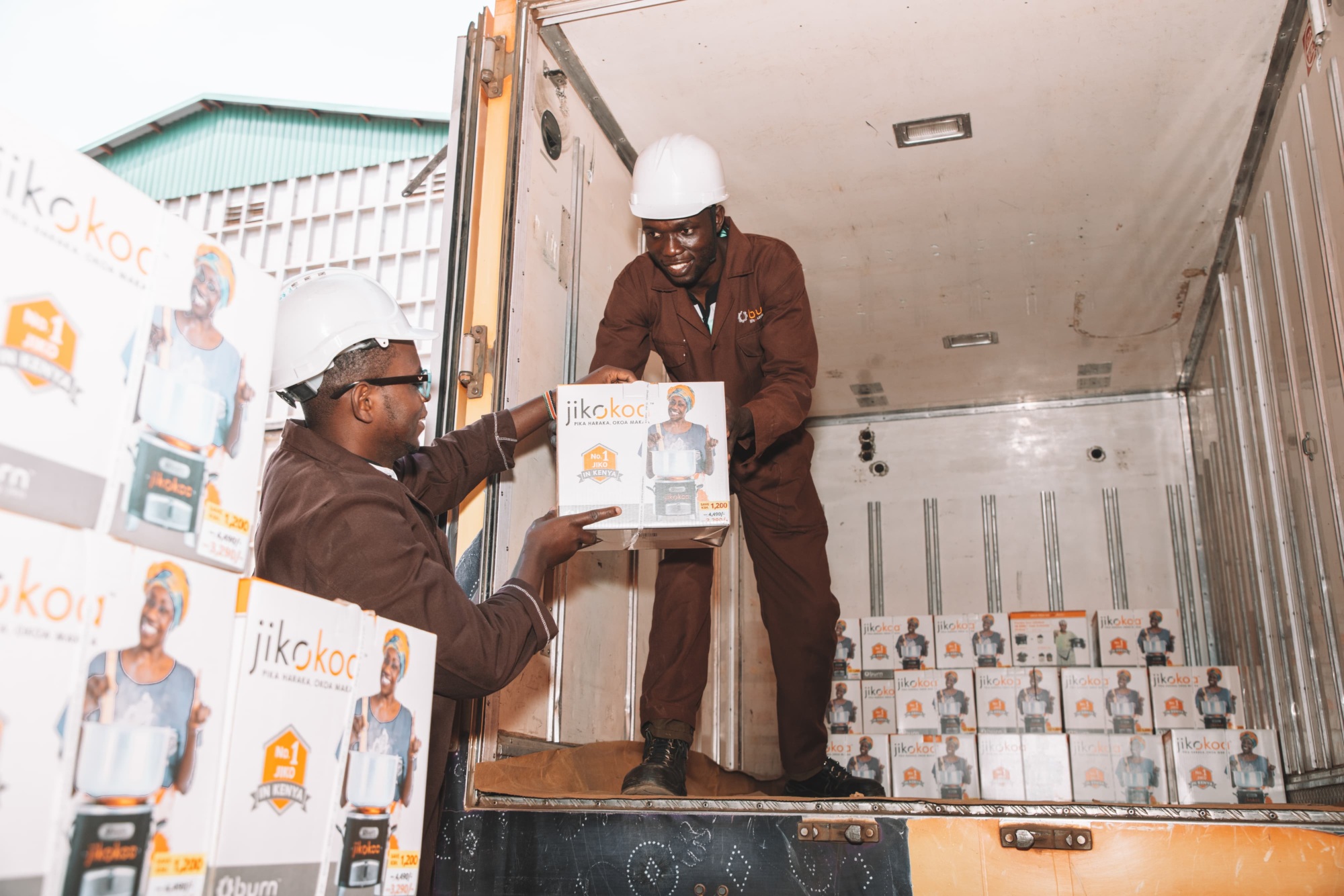
[Clean Cooking Alliance]
GOGLA
GOGLA is the global association for the off-grid solar energy industry, representing over 200 members. As a long-standing convener and advocate, GOGLA plays a critical role in shaping policy, collecting market intelligence, and promoting consumer protection. Their leadership helps build a transparent and investable solar market.
Fun Fact: GOGLA’s deep sector expertise, strong relationships with governments and financiers, and commitment to evidence-based advocacy make them a linchpin in advancing off-grid solar.
VeraSol
VeraSol provides quality assurance for off-grid solar products and appliances, including testing and certification services. Their standards and lab network help governments, donors, and consumers identify trustworthy products.
“VeraSol is a fundamental quality assurance framework that protects the poorest consumers. By protecting consumers and markets from sub-standard products, VeraSol safeguards investments in clean energy transitions, especially in fragile and underserved communities,” Elisa Lai, Senior Program Manager, VeraSol.
Fun Fact: As distributed energy markets grow, protecting consumers from poor-quality products is essential. VeraSol is the gold standard in this space, offering a proven pathway to quality and trust.
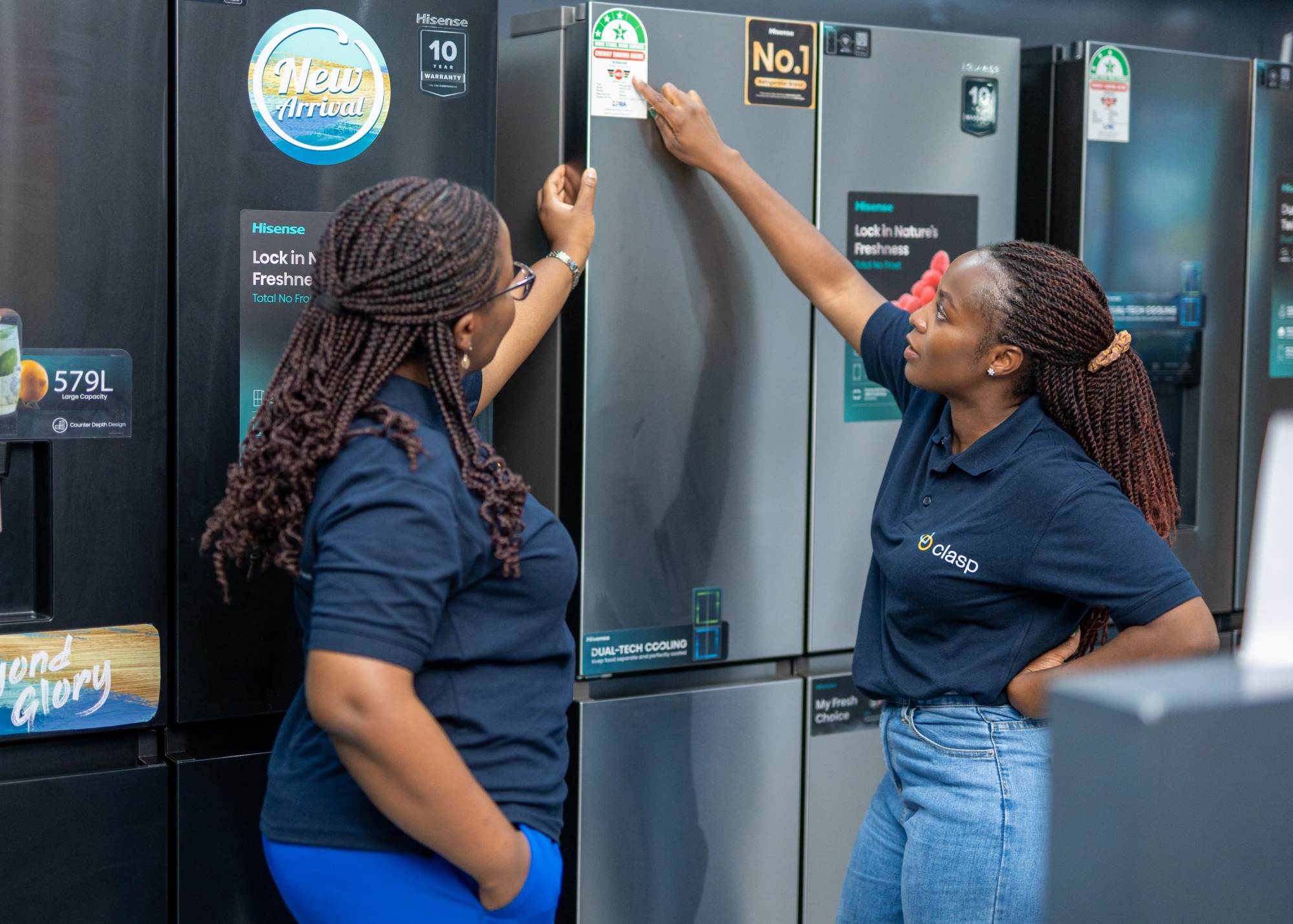
[Photo: CLASP]
Nigeria Off-grid Market Accelerator Program (NOMAP)
NOMAP supports Nigeria’s distributed renewable energy market through policy analysis, investor engagement, and ecosystem strengthening.
Fun Fact: NOMAP is helping to tackle Nigeria’s energy access challenge with strategic, locally grounded solutions and strong partnerships.
Precise
Precise builds learning ecosystems and delivers cutting-edge research and insights to business, governments, and non-profits in Ethiopia to help them make strategic development decisions.
“At Precise, we build market systems that empower local innovators and entrepreneurs to win the war against poverty. By partnering with philanthropies, we design and deliver bold, private sector-led solutions tailored to local realities. Solutions that help our partners do more with less. Our work drives systemic change that supports climate-resilient growth, creates jobs, raises incomes, improves nutrition and health, and empowers women,” Henok Assefa, Managing Partner, Precise.
Fun Fact: Precise designs and delivers bold, private sector-led solutions tailored to local realities that help their partners do more with less.

[Photo: Precise]
Uganda Off-grid Market Accelerator (UOMA)
UOMA works closely with government, industry, and development partners to identify market barriers and coordinate solutions. Their work includes technical assistance, data analysis, and stakeholder engagement to advance energy access nationally.
“UOMA has played a pivotal role in Uganda’s energy access journey, unlocking capital, enabling last-mile delivery, and supporting over 250,000 households. As the sector grows more complex, UOMA’s role as a neutral intermediary is critical in bridging silos, aligning stakeholders, and translating ambition into coordinated, on-the-ground action, especially in emerging areas like productive use and humanitarian energy access,” Reza Fazel, Associate Partner at Open Capital and Head of UOMA.
Fun Fact: Uganda is a key energy access frontier, and UOMA has a strong record of translating insights into action and facilitating national-level collaboration.
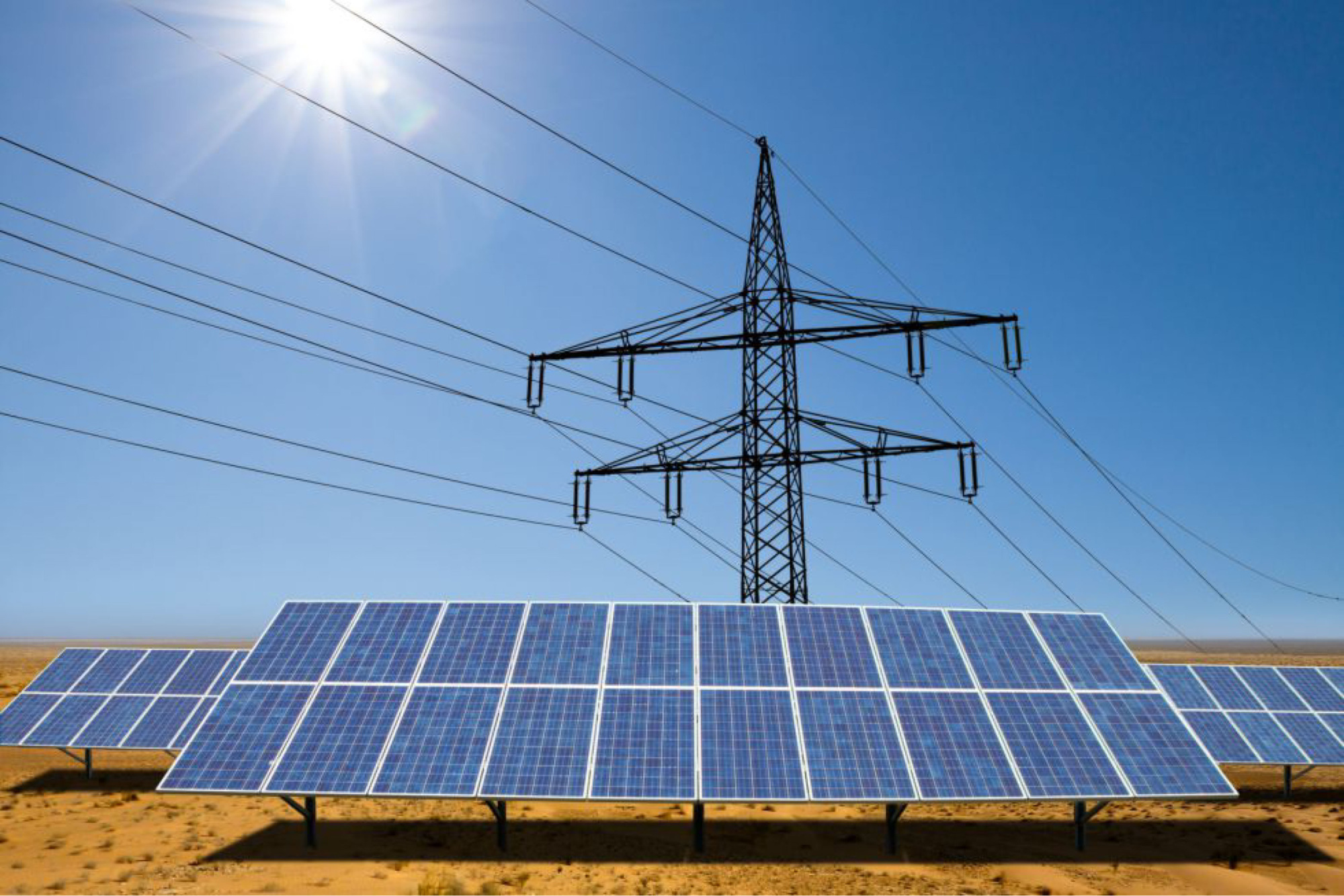
[Photo: UOMA]
A new model for impact
While these organizations vary in scope and geography, they share common strengths: strong governance, technical expertise, trusted relationships, and a commitment to systemic change. By supporting their growth and resilience, the Facility aims to create a more coordinated, capable, and impactful energy access ecosystem.
——
About The Facility
The Energy Access Institutions Facility is a joint donor initiative to support and strengthen the institutions that are essential for the achievement of Sustainable Development Goal 7, universal access to affordable, reliable, sustainable, and modern energy by 2030. The Facility is supported by DOEN, British International Investment, Good Energies Foundation, the Swedish International Development Agency (Sida), and UK aid via the Transforming Energy Access (TEA) platform and is managed by CLASP.
Green Jobs & Livelihoods
CLASP and GEAPP Expand Access to Affordable, Energy-Efficient Appliances in Africa
Cape Town, 18 June, 2025 – At the Africa Energy Forum in Cape Town, CLASP and the Global Energy Alliance for People and Planet (GEAPP) announced a substantial expansion of the Productive Use Financing Facility (PUFF). This $6.1 million USD funding boost will help accelerate the uptake of clean, energy-efficient appliances that power small businesses, support farmers, and transform the lives of thousands of people across Africa.
Despite their potential to improve lives globally, efficient appliances are still out of reach for over 600 million people without access to electricity. High costs and limited financing make it difficult for business and households to afford them. PUFF helps bridge that gap.
The facility provides grants, subsidies, and technical assistance to suppliers and distributors to lower prices and reach more customers. This enables small businesses, entrepreneurs, and households to purchase energy-efficient technologies at favorable prices, allowing them to grow over time.
Building on success
This extension builds on the success of the two-year pilot project that connected people with the useful appliances to earn a living. From 2022 to 2024, PUFF worked with 24 companies across six countries, helping to deploy nearly 16,000 appliances, and directly improve the lives of over 58,000 households. These appliances, such as solar-powered refrigerators, solar water pumps, and solar milling machines, had a direct, transformative impact on people’s livelihoods.
“Access to energy is foundational for economic growth. Efficient appliances and equipment, which are how people turn energy into opportunity, need to be considered essential energy infrastructure, alongside renewables. PUFF’s pilot phase proved that targeted support could unlock meaningful change. With effective financing, companies can reach more people with the right appliances, and they can change lives,” said Emmanuel Aziebor, Senior Director for Africa at CLASP.
What’s new in PUFF 2.0?
CLASP and GEAPP are renewing their partnership focused on scaling appliances for agriculture and entrepreneurship in Ethiopia, Kenya, and Nigeria. This new round aims to create over 3,000 green jobs through the sale and use of 10,000 appliances in four years, including established appliances like solar water pumps and refrigerators, and more specialized technologies such as coffee pulpers and honey extractors.
This expansion also deepens commitment to gender equity and youth inclusion. In the pilot, women made up nearly half of all appliance buyers, and households where women bought appliances saw a 94% increase in average income. PUFF 2.0 will have an even greater focus on equity by utilizing outreach and financing strategies that center women and young entrepreneurs.
“While electrification has expanded, many investments fail to turn access into economic opportunity, with limited job creation or enterprise growth. Through initiatives such as PUFF 2.0 collaboration with CLASP, we are addressing these shortfalls by ensuring that new energy connections drive productivity and power agriculture, energizing ambition in small and medium sized enterprises, and output in local manufacturing. Increased incomes from these activities spur economic growth and wellbeing in growing communities, creating jobs, and improving the quality of life,” said Makena Ireri, Managing Director for Productive Use of Energy at GEAPP.
CLASP’s Productive Use Financing Facility is supported by The Global Energy Alliance for People and Planet (GEAPP). Learn more about how it’s benefiting people and our planet.
- Appliance distribution companies who are interested in applying in this second round can get further information on the PUFF webpage and on the webinar on 8 July.
- For more information, please contact financing@clasp.ngo and follow us on LinkedIn for regular updates on how the facility is benefiting people and our planet.
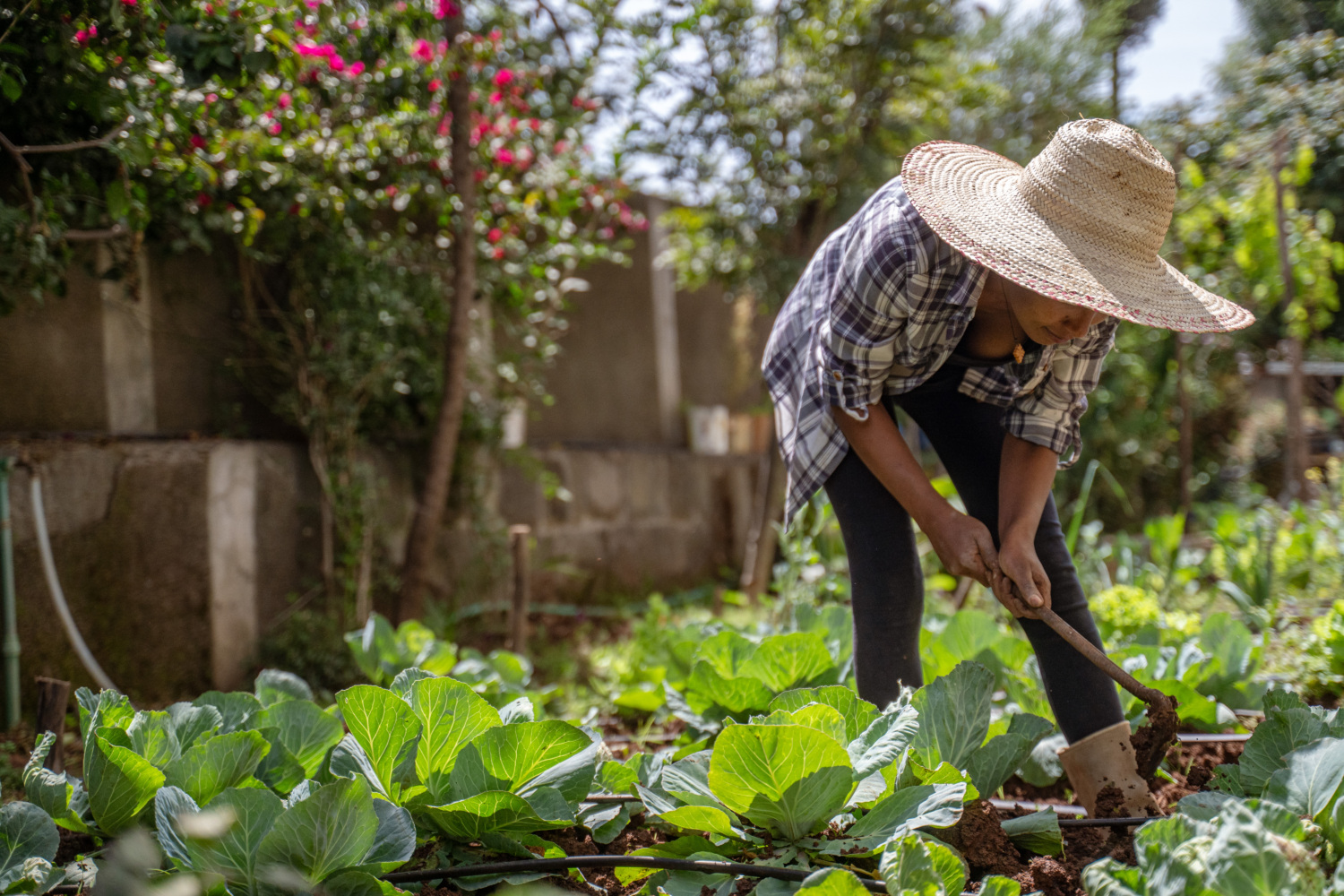
A farmer in Ethiopia using solar-powered drip irrigation acquired through PUFF support. Photo credit: CLASP
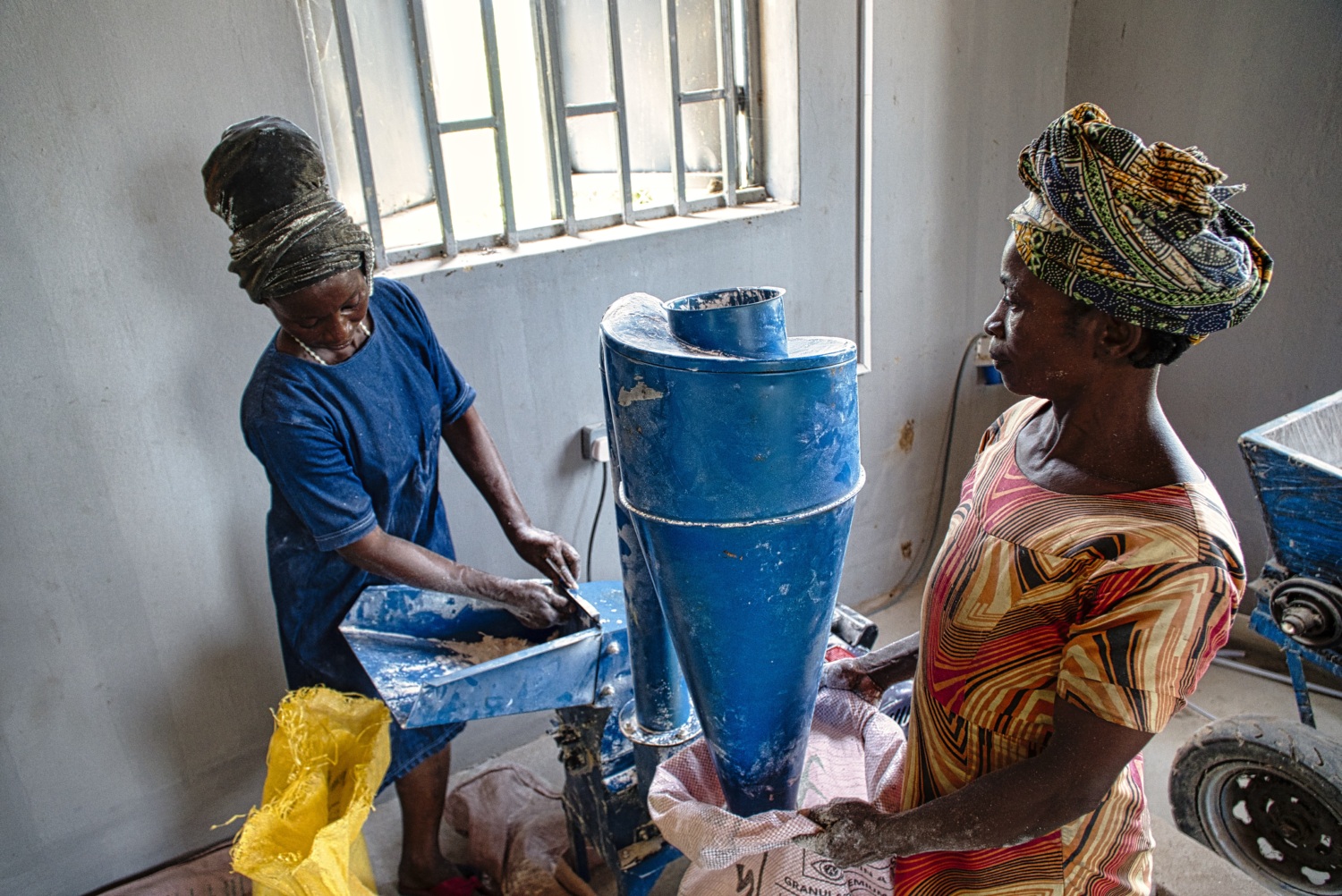
CLASP
Women in Nigeria using a solar-powered mill acquired through PUFF support. Photo credit: CLASP
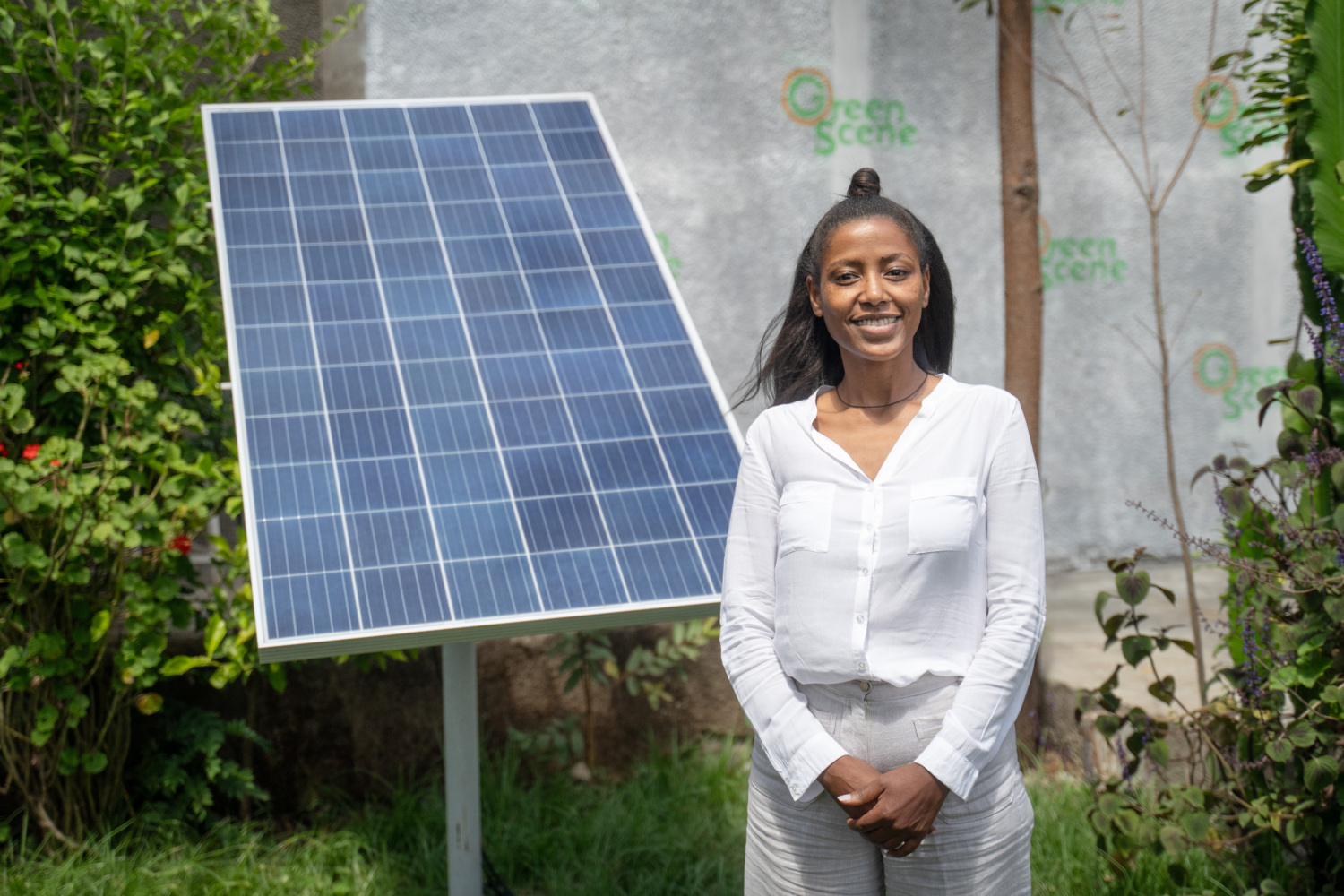
Rekik Bekele, CEO of Green Scene Energy, a leading solar appliance distributor, is expanding access to solar in Ethiopia with support from PUFF. Photo credit: CLASP

Abibat Akinwale, a shopkeeper in Nigeria, with the solar-powered refrigerator she acquired through PUFF support. Photo credit: CLASP
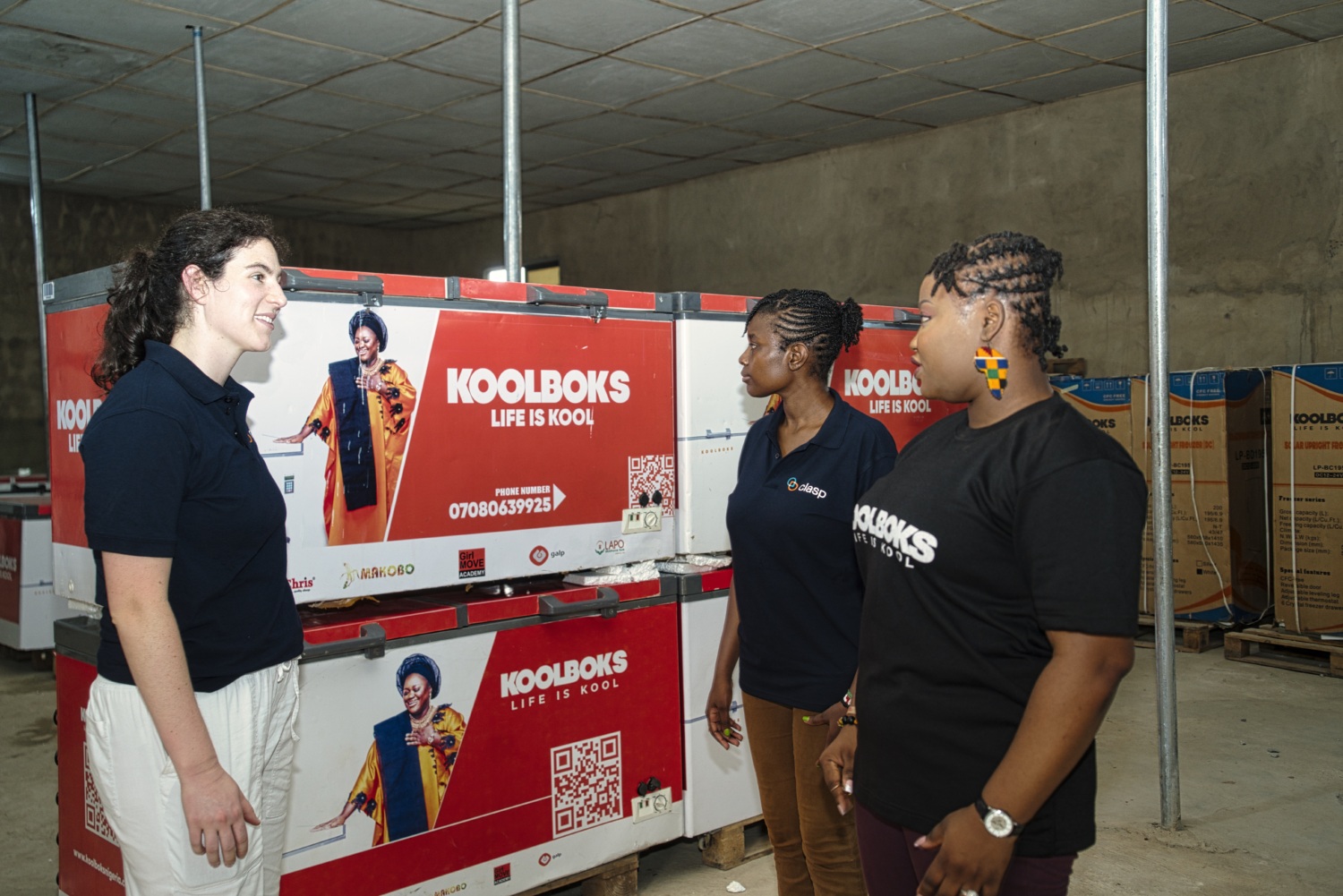
Lolade Esther Alonge of Koolboks shows the CLASP team their solar refrigerators, made more affordable for off-grid communities in Nigeria with PUFF support. Photo credit: CLASP
About CLASP
CLASP is the leading global authority on efficient appliances’ role in fighting climate change and improving people’s lives. An international NGO with 25 years of expertise and offices on four continents, CLASP collaborates with policymakers, industry leaders, and other experts to create a more sustainable future for people and the planet.
About GEAPP
The Global Energy Alliance for People and Planet (GEAPP) is an alliance of philanthropy, governments in emerging and developed economies, and technology, policy, and financing partners. Their common mission is to enable LMICs’ shift to a clean energy, pro-growth model that accelerates universal energy access and inclusive economic growth, while supporting the global community to meet critical climate goals during the next decade. As an Alliance, they aim to reduce 4 gigatons of future carbon emissions, expand clean energy access to one billion people, and enable 150 million new jobs. With philanthropic partners, IKEA Foundation, The Rockefeller Foundation, and Bezos Earth Fund, GEAPP works to build the enabling environment, capacity, and market conditions for private sector solutions, catalyze new business models through innovation and entrepreneurship, deploy high-risk capital to encourage private sector solutions, and assist just transition solutions. For more information, please visit www.energyalliance.org and follow us on LinkedIn.
Media inquiries: Stella Madete, Africa Communications Manager, smadete@clasp.ngo
Accelerating Efficiency Gains in Pakistan’s Motor Industry
Electric motors are crucial to modern industrial economies. They transform electrical energy into mechanical energy, and power appliances and equipment such as pumps, industrial processing, and cooling equipment. While they are essential, they are also extremely power-hungry and are responsible for around 30% of global electricity demand. Research shows that outdated and inefficient low-efficiency motors represent two-thirds of the current global stock. This means there is a huge opportunity to slash energy demand, lower running costs, increase industrial competitiveness, and cut carbon emissions by increasing the energy efficiency of electric motors.
Capacity building to ensure more efficient motors are built
In Pakistan, CLASP and SAMA^Verte are aiming to do just that. Through a project called the Industry Accelerator Program, they are building the expertise of local manufacturers and improving the production processes to improve the efficiency of the motors being made. This year’s second phase of the program is centered in Gujranwala, a hub for electric motor manufacturing in Pakistan’s Punjab province.

Factory workers in Gujranwala assemble motors | Photo by CLASP
The Industry Accelerator’s achievements
In 2022, the first round of the Industry Accelerator directly supported four manufacturers in developing a higher-efficiency prototype motor. These efforts focused on enhancing design and production practices, ultimately resulting in the creation of an IE1 motor, which is a standard efficiency level that marked a notable improvement over what was locally available at the time. This motor is now in commercial production and used in solar-powered agriculture and small-scale industries.
The program also shared key learnings and best practices from this pilot with a broader group of manufacturers. Building on this momentum, 21 manufacturers collectively invested in a high-precision stamping machine, enabling them to improve motor design and quality. With these upgrades, manufacturers are now on track to achieve IE2 efficiency – a significant step toward meeting international standards.
Expanding the ambition to improve motor efficiency
This year, the second phase of the Industry Accelerator expands its scope to:
- Improve single-phase motors (0.75–1.5 kilowatts (kW)), widely used in domestic and commercial pumping systems across Pakistan
- Enhance production techniques, such as machining precision and workflow optimization
- Broaden access to quality control instruments and promote better materials like high-grade steel
- Support independent motor testing labs, enabling manufacturers to validate efficiency claims and meet compliance under Pakistan’s appliance efficiency standards
Backed by hands-on mentorship from Turkey’s motor industry association, EMOSAD, the program is also promoting more international knowledge exchanges.

Turkish motor experts highlight innovative technological improvements in motors | Photo by CLASP
“The visits by international experts and the resources provided through the Industry Accelerator have been indispensable, equipping us with the tools to manufacture motors aligned with international standards. We are now confident that local manufacturers can produce motors that meet Pakistan’s Minimum Energy Performance Standards and even achieve IE2-class efficiency in the future.”
Noor Ahmed
Secretary General, Pakistan Pumps & Electric Motors Manufacturers Association (PPEMMA)
Slashing costs and climate emissions with more efficient motors
Conservative projections estimate that the upgrades under the second phase of the Industry Accelerator (IAP-2) could save 123,000 gigawatt hours (GWh) of electricity and avoid 5.8 megatons (Mt) of CO₂ emissions by 2050. In addition to environmental benefits, these improvements will help reduce costs for manufacturers and consumers, support job security in Gujranwala and bolster Pakistan’s energy resilience.

Muhammad Salman Zaffar, Director/COO of SAMA Verte opens workshop for motor manufacturers of Gujranwala | Photo by CLASP
A collaborative path forward
By advancing energy-efficient motors and strengthening local production ecosystems, the Industry Accelerator in collaboration with Pakistan’s motor industry is pivoting towards continuous improvement, quality manufacturing, and long-term sustainability. With innovation as its engine, Gujranwala’s manufacturers are helping power a more efficient, low-carbon future for the country.
——
About CLASP’s Industry Accelerator in Pakistan
A collaborative initiative between CLASP and SAMA^Verte, the Industry Accelerator is aimed at transforming Pakistan’s electric motor manufacturing sector. Launched in 2022, the program focuses on enhancing the energy efficiency of locally produced electric motors and modernizing production processes. By providing technical assistance, facilitating international knowledge exchange, and supporting the development of energy efficiency standards, the Industry Accelerator seeks to reduce energy consumption, lower CO₂ emissions, and strengthen the competitiveness of Pakistan’s motor industry.
Related articles
E-Cookers Bring Clean Cooking to Schools in Kenya
Firewood is the primary cooking fuel in many Kenyan schools, contributing to deforestation, air pollution, and poor health. But with electricity now reaching around 75% of the country, there is a great opportunity for cleaner, safer, and more efficient cooking.

CLASP is partnering with Kenyan innovators Ecobora to expand access to clean cooking solutions in schools across Kenya. Through the Efficiency for Access e-cooking project, the team is testing how electric cooking can replace biomass fuels in school kitchens and other institutions in Kenya. This research will inform the design, deployment, and operation of commercial electric cooking technologies and directly impact how schools feed students in the country.
Ecobora’s award-winning electric cooker is purpose-built for large-scale use. This clean energy innovation features a patented thermal conversion system that enables faster, even cooking. The appliance includes a self-cooking function and supports both solar and electric power for maximum efficiency and flexibility. By eliminating firewood use, it cuts indoor air pollution significantly providing a healthier workplace for the chefs and conserves Kenyan forests. When powered by the sun, it eliminates energy costs, so is much cheaper to run.

Photo by: CLASP
To date, the project has brought electric cooking to nine schools across seven counties in Kenya, helping feed over 12,000 students. These e-cookers are actively in use and consistently show that electric cooking is not only efficient, reliable, and affordable, but also capable of producing delicious meals, including traditional Kenyan dishes.
The Efficiency for Access coalition is co-managed by CLASP and Energy Saving Trust.
About CLASP
CLASP is the leading global authority on efficient appliances’ role in fighting climate change and improving people’s lives. An international NGO with 25 years of expertise and offices on four continents, CLASP collaborates with policymakers, industry leaders, and other experts to create a more sustainable future for people and the planet. CLASP and our partners are dedicated to solving the world’s most pressing, interconnected crises: the climate emergency, poverty, inequality, and access to energy.
Energy for Everyone
Energy is everywhere, and it connects us all. At CLASP, we know that the distribution of affordable, efficient appliances ensures more people have access to modern, safer energy services. This creates opportunities, powers businesses, and improves lives. Get our solutions: https://www.clasp.ngo/
About CLASP
CLASP is the leading global authority on efficient appliances’ role in fighting climate change and improving people’s lives. An international NGO with 25 years of expertise and offices on four continents, CLASP collaborates with policymakers, industry leaders, and other experts to create a more sustainable future for people and the planet. CLASP and our partners are dedicated to solving the world’s most pressing, interconnected crises: the climate emergency, poverty, inequality, and access to energy.
Solar Appliances, a Sustainable Development Success Story, Need Support to Scale
When there’s no electricity to power the appliances essential to wellbeing and prosperity, what’s a community to do?
In sub-Saharan Africa, the answer is often turning to kerosene and diesel to run everything from lights to farm equipment. But fossil fuels are expensive and polluting. Reliance on these energy sources leads to a host of negative impacts across the region, from financial stress to lower crop yields.
David Wanjau, a Kenyan entrepreneur and rabbit farmer who trained as a scientist, spent six years watching this issue play out across sub-Saharan Africa while working at a nonprofit focused on food security. The experience changed his life.
“I noticed that every farmer we were supporting did not have access to electricity,” he said. “So I stopped what I was doing to focus on energy access and become an agent of change in these communities.”
Today, Wanjau leads Nairobi-based distributor Deevabits Green Energy, a small business that’s one of more than 200 companies working to expand solar energy access to the hundreds of millions of people in Africa who lack access to the electric grid.
Deevabits began by selling solar lights, but customers soon began asking for more. “They wanted solutions that could be used for their businesses: for cooling drinks, or for meat preservation,” Wanjau said. So his team decided to start stocking solar-powered refrigerators.
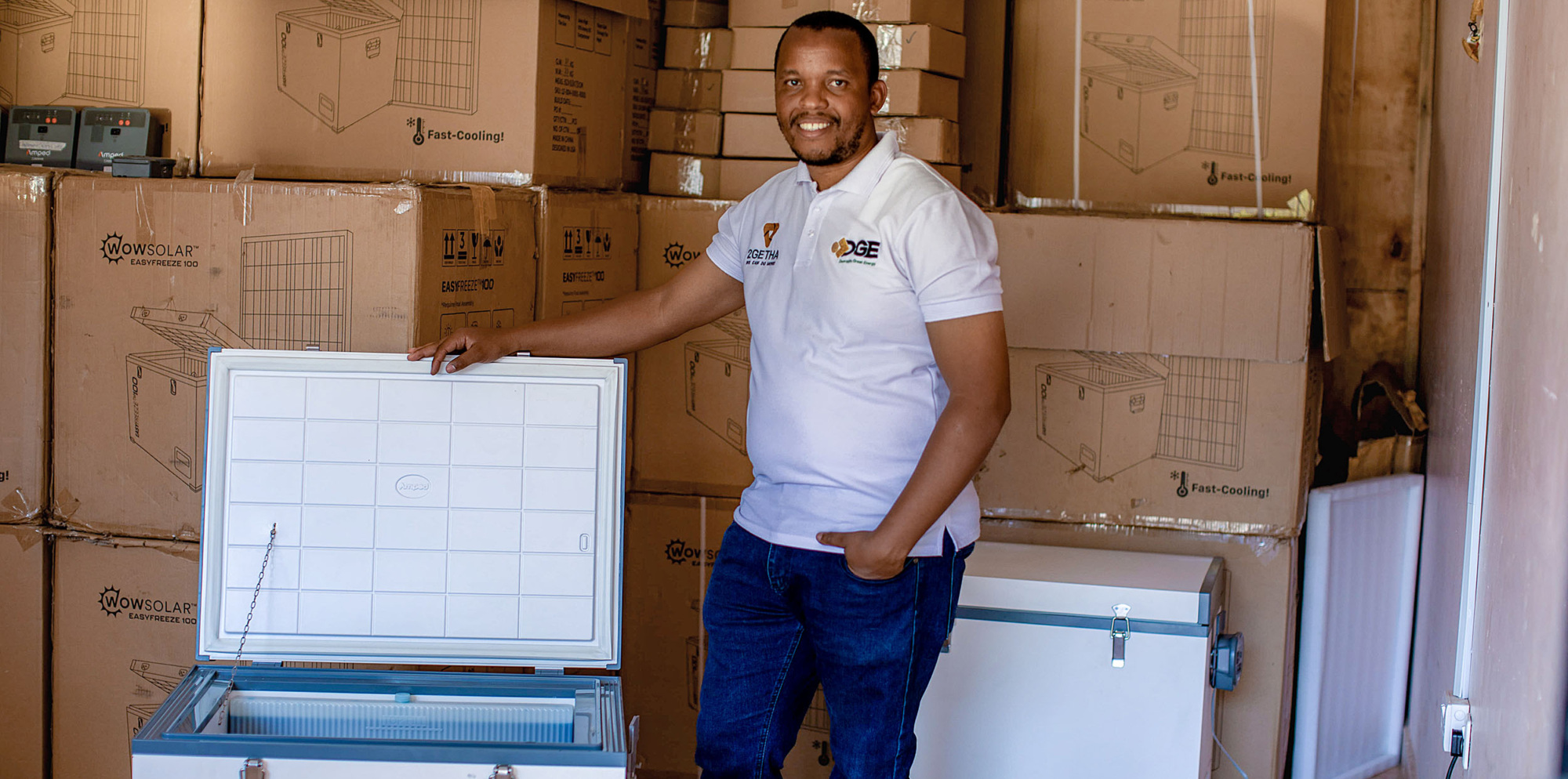
Deevabits founder David Wanjau in his company’s warehouse in Nairobi, Kenya.
CLASP
“Our company now wants to be on the forefront of providing energy efficient, standalone productive-use [i.e., income-generating] appliances,” he explained. “We just need to position ourselves to be able to tap into this big market.”
Meeting high demand for cooling and other energy services
Sales of solar appliances more than tripled between 2018 and 2023 as new manufacturers and distributors entered the sector, according to Leave No One Behind: Bridging the Energy Access Gap with Innovative Off-Grid Solar Solutions, a 2024 report published by the Efficiency for Access coalition. (CLASP co-manages the coalition with Energy Saving Trust, a UK-based nonprofit.)
The business potential is tremendous. The report’s modeling shows that if everyone who needs solar appliances could purchase them, the market value would reach $58 billion USD.
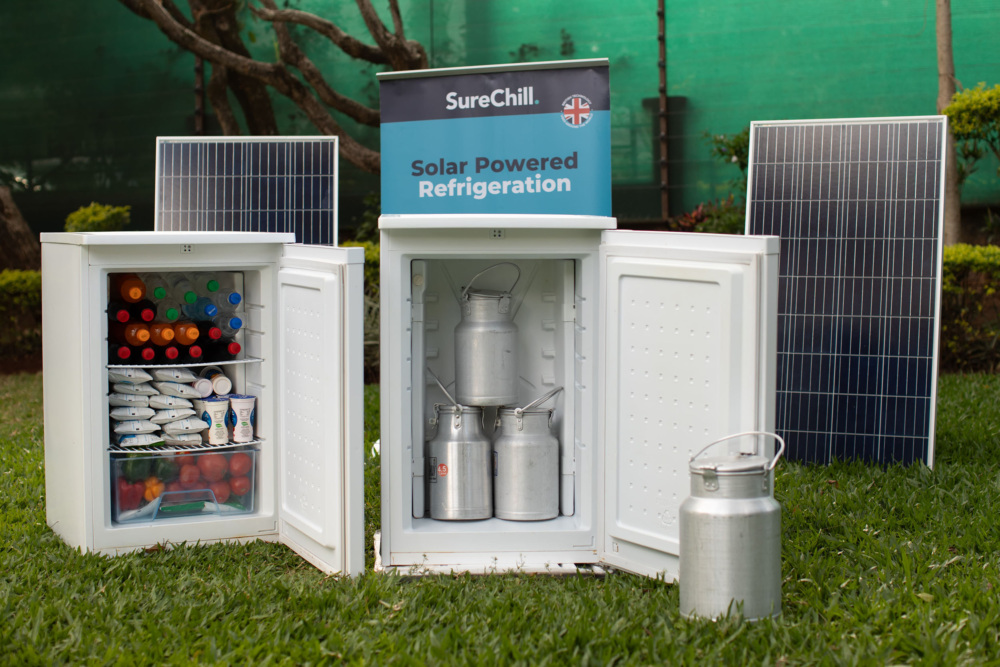
“It’s a huge market opportunity,” said Peter Wangila, Kenya operations and finance manager at SureChill, a manufacturer selling solar fridges in over ten African countries. The company’s patented battery-less design reduces the need for maintenance over the fridges’ lifespan and eliminates the need for expensive battery replacements.
“We’ve done over 1,000 installations, but we haven’t even scratched the surface. There’s a high demand for cooling,” Wangila said.
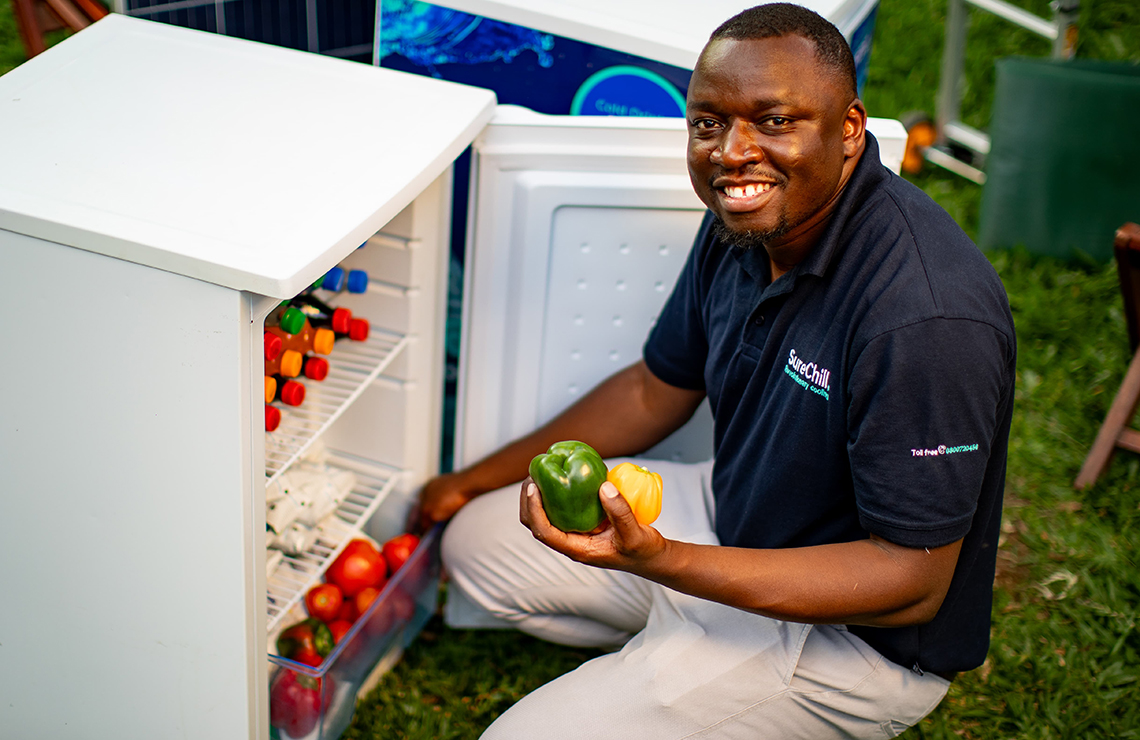
We’ve done over 1,000 installations, but we haven’t even scratched the surface. There's a high demand for cooling.Peter Wangila
SureChill
Today, sales cover less than 2% of the estimated global demand for solar appliances. It’s a gap that has remained frustratingly difficult to bridge, said CLASP’s Nyamolo Abagi, a coauthor of Leave No One Behind.
“Here in sub-Saharan Africa, 60% of households still do not own a refrigerator, an essential appliance for preserving food that is almost ubiquitous in homes across the Global North. This is a classic example of energy poverty,” she said. “The solar appliance sector has to grow rapidly in both scale and ambition in order to serve this enormous need.”
Solar appliances are a gamechanger for small businesses
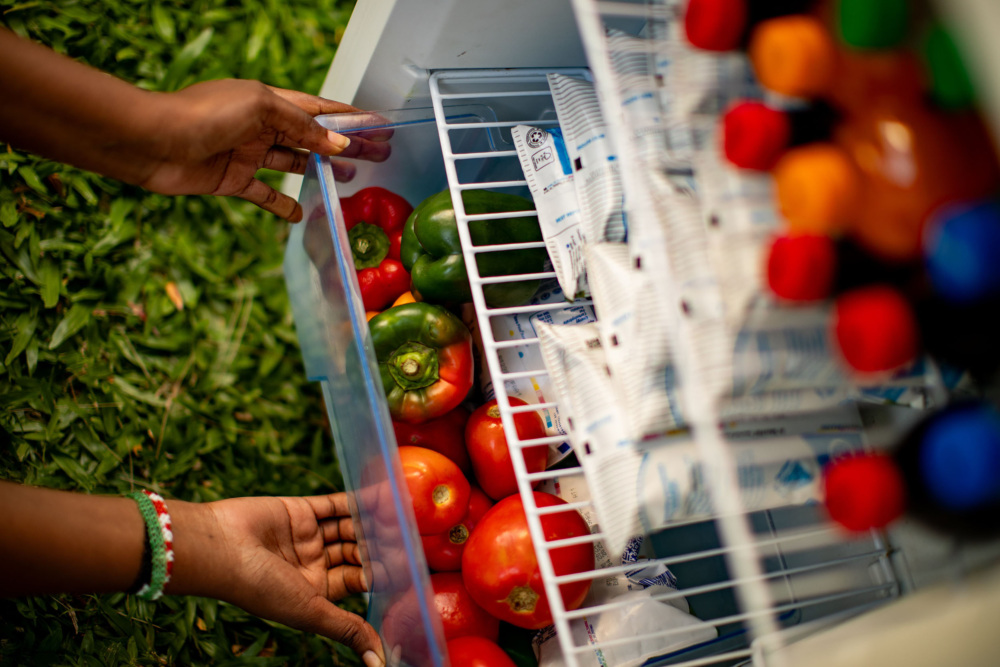
Most solar fridge customers live in rural areas with no grid access. Deevabits’ customers are typically small shopkeepers selling cold beverages—water, juice, milk, yogurt, and soda—to parched customers. “In very hot areas, cold drinks are a luxury,” said Wanjau. “That’s why for shops, these fridges are gamechangers.”
The company also serves clients in the medical and food retail sectors. Clinics use solar-powered fridges to keep vaccines and medicines cold, explained Wanjau, while fish traders see fridges as a safer way to preserve their wares than the traditional drying or deep frying.
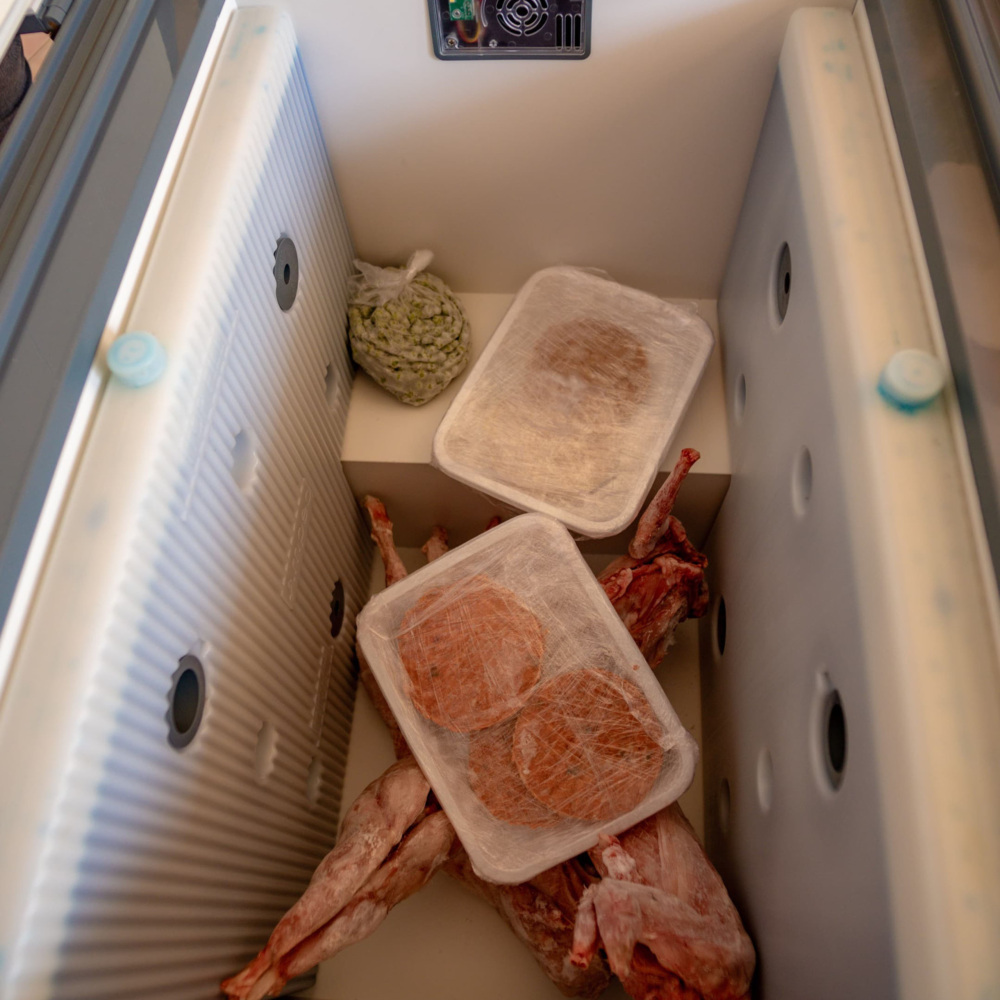
Meanwhile, butchers tend to use the freezer setting on the Deevabits model to reduce waste. Before acquiring these appliances, “they would hang their meat, and it would go bad after two or three days,” Wanjau said. “Now people can stock larger volumes and sell it for a whole week.”
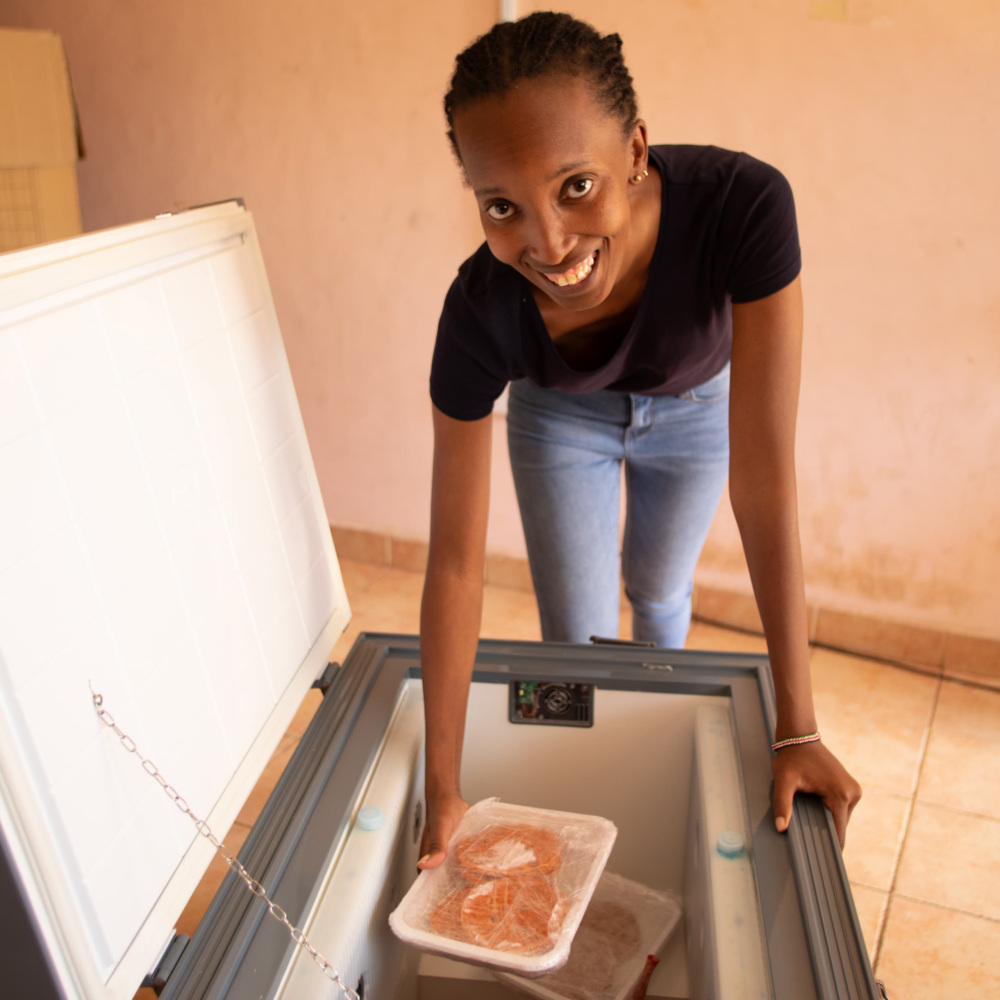
CLASP
CLASP
SureChill works with a similar clientele. “We primarily target productive-use customers: someone with a small shop or someone in the homemade juice business,” said Wangila. “They do not have a lot of money, but they make enough to be able to support a fridge. They are able to see the positive financial impact that owning a fridge could have on their business.”
For most shopkeepers, a solar fridge can significantly boost revenue. “It attracts more customers,” Wangila explained. “And if they buy a cold beverage, those customers will also buy something else, which increases overall sales for the business.”
Increased income for a shopkeeper has ripple effects within families and communities, he added. “It benefits them and four or five other people. That’s how our communities work.”

A shop with a solar refrigerator.
CLASP
SureChill also serves the medical field, offering World Health Organization–approved vaccine fridges, in addition to cost-effective alternatives designed to store temperature-sensitive medications when power is unavailable.
The challenge of scaling up
Despite the advantages such appliances offer, many companies in the sector struggle to scale.
“Compared to a product like lights, productive-use appliances like these are energy-intensive, specialized, and expensive,” noted CLASP’s Abagi. “Fewer consumers can afford them, and the distribution model is more complicated. This makes the growth of companies trying to sell these bigger solar appliances slow.”
Cost is a major barrier. Many people would like to have solar refrigerators at home, but with prices up to $1,800 USD per unit (85% of the average annual household income in Kenya), they typically can’t afford them. “People want the fridge, but they then say, ‘Oh my goodness, it’s so expensive!’” explained Wanjau.
Appliances’ sheer weight and bulk also make it difficult to attract new customers through tactics like door-to-door sales. “You have to get people to believe that a solar fridge works,” said Wangila. “So when salespeople can’t carry it around, it’s a big challenge.”
Wanjau agrees. “When people are not aware of the product, they don’t demand it. They don’t have a reference point for a solar-powered fridge, so they need to see it—maybe feel the chill, take a cold soda from it.”
CLASP
CLASP
Companies like his participate in roadshows and market exhibitions required to build this awareness, but this costs money, ultimately driving up the price of their appliances.
Innovating to improve affordability
Solar appliance companies have been searching for ways to make their products more affordable for low-income customers. Both Deevabits and SureChill sell fridges on a rent-to-own basis, using internet-connected devices that activate the fridge when customers make weekly or monthly mobile money payments. This model enables shopkeepers to own their fridges after several years, allowing them to benefit from cooling without tying down their capital.

John Odongo, finance manager at Deevabits, explains how a Pay-go payment enabling device works.
CLASP
Another payment innovation is cooling-as-a-service (CaaS), in which customers lease appliances indefinitely. But despite its potential to bring down costs, both companies have found CaaS challenging to implement on the ground. “The way people use those fridges can be very unpredictable,” noted Wanjau. “If someone stops using it, how do you take it back? How can you resell it if it’s dirty and the butchers were cutting meat on top of it?”
In both cases, Wangila added, the risk of default is high. “That money is competing with school fees and medication when a family member falls sick. We try to mitigate this by telling them to pay more when business is good, to cover for the dry season.” But, he said, “even if you do very good customer selection, there are always people who will default.”
Stimulating growth
Ultimately, said Abagi, companies like Deevabits and SureChill need a more supportive environment to help bridge Africa’s yawning energy service gap. While they provide a crucial service, they can’t meet the overwhelming demand on their own.
“We need innovators, but we also need to attract incumbent manufacturers who have more resources,” she said. “Governments have a role to play in terms of better regulations and lower tariffs, and we also need development partners to help with long-term, consistent subsidies.”
Wangila and Wanjau point to the importance of grant funding in developing their own businesses. Both companies have benefitted from CLASP market activation grants, which help small businesses meet costs associated with product sales, marketing, distribution, and delivery in remote areas.
“Grants can be a sort of non-dilutive funding to help people scale,” said Wanjau. “A lot of these [solar appliance companies] are locally owned businesses, and grants could really stimulate their growth.”
Despite the challenges they face, both men are confident that solar appliances are the clean energy solution Africa needs.
“We are so blessed to have a lot of sun, so the future is bright,” Wangila insisted. “It’s just a question of maintaining focus and getting the right support in place.”
Millions of People Lack Electricity. Solar Appliances Can Help
Cooling down on a scorching day, lighting the house at night, heating a pan to cook dinner: In wealthy countries, people take for granted the ability to meet their basic needs by switching on appliances. But in low-income nations, these appliances, along with the electricity needed to power them, are often out of reach.
As the planet warms, the lack of critical appliances has increasingly severe consequences, making it harder for people to thrive—and, in some cases, simply survive—in ever-harsher environments. Solar-powered appliances are a promising solution.
In this interview, Martha Wakoli, who works on CLASP’s clean energy access team in Nairobi, discusses their potential and how to reach it.
*
Sarah Wesseler, CLASP managing editor: Let’s start with some basics about solar appliances. What are they? Why should people who are interested in sustainable development and climate change care about them?
Martha Wakoli: Well, in places like the States or Europe, if you need light, you switch on a light bulb. But in other parts of the world, millions of people don’t have that option—they’re not connected to the electric grid. So they’ve found creative solutions for accessing services like lighting, cooling, and cooking. And that’s where the idea of solar appliances developed.
For a long time, this technology was used for things like charging phones and lighting homes. But increasingly, we’re seeing the potential to power much larger, almost industrial-level processes with solar appliances. Say you’re a clothing manufacturer in a place that doesn’t have electricity: The machines you need could be powered by the sun.
There’s more and more research and investment in these kinds of appliances. That opens a whole new pathway of solutions for the millions of people who continue to live without electricity.
Wesseler: When you say these appliances are powered by the sun, how does that work? I’m thinking about the US, where I live: A lot of people have solar panels on their roofs, but they still use standard appliances plugged into standard wall outlets. How are solar appliances different?
Wakoli: Well, with solar appliances, the appliance is connected directly to a solar panel on your roof via a cable. And depending on how many panels you have and how large they are, you could have multiple cables powering multiple appliances at the same time. And for appliances that are used outdoors—water pumps, for example—the cables from the solar panel also run directly to the appliance.

Solar irrigation in India
Credit: IDE Global / Bimala Colavito
Wesseler: What if the sun’s not out? Can you still run solar appliances then?
Wakoli: Yes. Solar appliances come with a little bit of energy storage, typically in the form of a battery, that allows them to keep functioning when it’s not sunny. For example, solar refrigerators keep things cool even at night.
Wesseler: That all makes sense. But why not just connect more people to the electric grid? Why focus on solar appliances instead?
Wakoli: There are a lot of reasons, but the most important is that it’s typically much more expensive to extend the power grid to far-flung places than it is to provide solar appliances. Solar appliances are more cost-effective in rural areas.
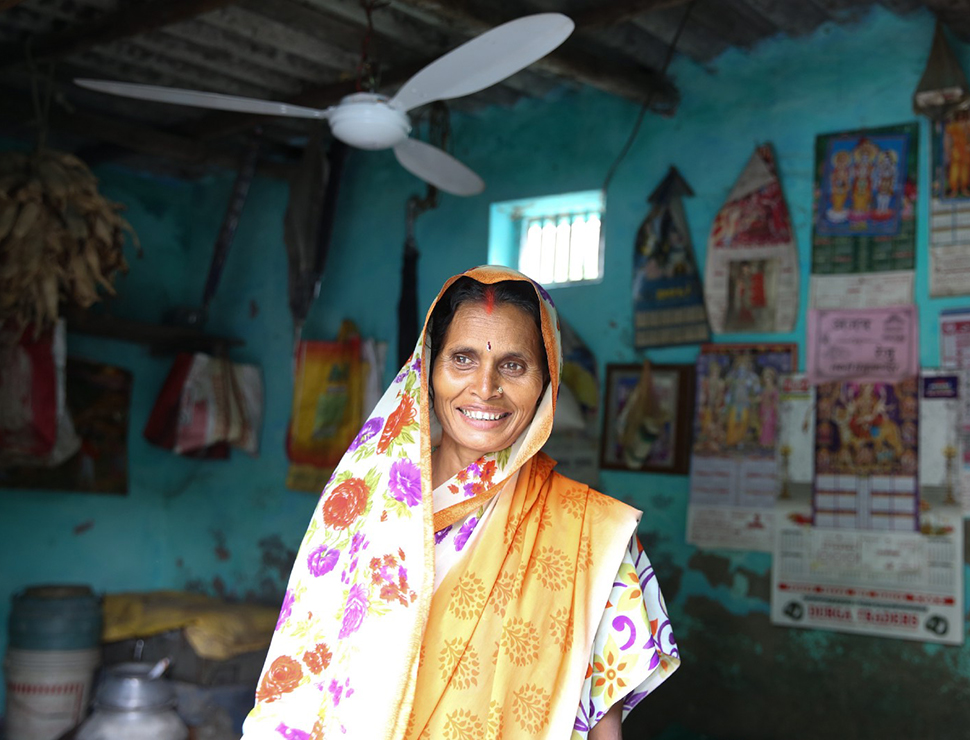
Providing solar appliances is also faster than building out the grid, which takes a long time. This is important given the urgency of the climate disaster, which we’re observing in real time, whether it’s heatwaves in India or droughts in Zambia. People need appliances that can help them adapt to climate change now.
Credit: Monica Tiwari, SPI

Credit: Efficiency for Access
Solar appliances can also help people build climate resilience and empower them to be more active participants in their own development. I’ll give you an example: In Mozambique, the government used taxpayer money to build an electric grid, but in 2023, Cyclone Freddie knocked it out. Compare that to decentralized systems, where people can have their own solar panels on their roofs or solar pumps on their farms. Because these appliances are modular, the scale of damage tends to be much smaller.
This kind of resilience is especially important for facilities like schools and hospitals. When floods or droughts make it impossible for them to operate where they are, there’s not much they can do if they rely on the electric grid. But with solar, they can move to a safer location and take their power source with them.
Another reason is that the grid itself is changing. Around the world, we’re preparing for what we’re calling the grid of the future. A lot of people now have electric vehicles, and in some areas, these vehicles can be plugged back into the wall, sending that power back to the grid, right? So you now have a complex bidirectional electric system that’s very different from what has existed for the last 70 years. Instead of having very few energy producers and many consumers, you have a growing number of what’s called “prosumers”: They produce the energy and they’re also consumers. This subset of people is growing everywhere.
Wesseler: You recently led research seeking to understand the number of people globally who need solar appliances. Why did you focus on this issue in particular?

Solar appliances can help people build climate resilience and empower them to be more active participants in their own development.Martha Wakoli
Wakoli: Well, in the development sector—so essentially, organizations that are trying to lift people out of poverty—if we cannot quantify a problem, it is difficult to know what interventions are needed in terms of money, regulations, and human capital. So providing information like this helps decision makers develop solutions.
And in this case, the problem we are looking at involves energy services to help marginalized people lift themselves out of poverty while also building resilience. This is important because, as we know, these groups are already being affected by climate change. So one goal of our work is to help the development and climate sectors understand that they’re working toward a common target.
This is particularly critical because, as we recently saw at COP29, there’s still a lot of resistance to the idea that the nations most responsible for climate change should fund other nations to protect themselves from it. But what the international community needs to understand is that that if we don’t mitigate climate disasters in the most vulnerable communities, the damage won’t just stay in those communities. Issues like climate-driven displacement and public health crises can easily spill over borders, making climate change an even more complex and expensive problem to solve. So I believe the international community should collaborate to address energy access challenges immediately to avoid this complication.
Wesseler: What did you learn from the research?
Wakoli: The key finding was that only about 2% of the need for key appliances is being met.
I think people in the international development and energy sectors intuitively knew that we are falling behind on providing universal electricity access, but there was still maybe not a good understanding of how far behind. With this research, we put a number to it: There are over 500 million people who need these appliances but don’t have them and won’t be able to afford them unless there are major changes in the appliance sector. That’s a massive gap.

Solar mill in Nigeria
Credit: CLASP
Wesseler: What would it take to close this gap?
Wakoli: Well, we need more investment at all levels of solar appliances. We need to invest in people who can support the sector: students, researchers, manufacturers, distributors, maintenance people. Companies need money to build these appliances, to test business models, to scale. We also need money for governments to conduct awareness campaigns. People need to go into communities to let them know about these appliances and demonstrate how they work.
We also need more cross-disciplinary dialogue. Lifting people out of poverty requires more than electricity or appliances; the solution has to involve people who work in agriculture, environmental advocacy, etc. A practical example is solar water pumps, which make it easier for farmers to generate income. But productivity is not only a function of water; farmers also need good seeds, fertilizer, and good soil. So people outside the energy sector need to be involved as well.
Ultimately, we need to build a market that can exist without external support. Think of Coca-Cola. Soda is the one thing that is ubiquitous in every place I have been, even where people don’t have high incomes. Coca-Cola has figured out how to reach the last mile in countries like Kenya and India. The solar appliance sector needs to get to the same place.
Developing a self-sustaining market for solar appliances will require collaboration across governments, the private sector, and development partners. Governments need to prioritize solar appliances and other energy-efficient solutions as part of their national electrification strategies, and the appliance sector needs to build muscle in distribution and consumer awareness. What’s more, all these actors need to prioritize ensuring that solar appliances support increased productivity, driving up incomes for communities living below the poverty line.
Many critical pieces of this puzzle are currently missing. Right now, a lot of the money in the solar appliance sector comes from European governments as part of their international aid programs. But if we’re thinking about a sustainable solution for more than 50 countries and more than half a billion people, it cannot be contingent on well-wishers alone.
Interview edited and condensed.
Innovation Ignites Pakistan’s Electric Motor Future
The electric motor industry in Pakistan’s fourth biggest city, Gujranwala, is undergoing a transformation thanks to a new initiative led by CLASP and SAMA^Verte. This partnership is introducing advanced manufacturing capabilities, enabling local producers to create high-efficiency industrial components for electric motors.
Driving local innovation in motor efficiency
Twenty-one local motor manufacturers have pooled financial resources to acquire a Multi-Alloy stamping machine, enabling the production of high-efficiency motors locally. This milestone heralds a new era for Gujranwala’s motor manufacturing sector, enhancing both local and global competitiveness. Motor stamping machines are critical for manufacturing motors, as they bond multiple layers of steel to form the core components efficiently and precisely.
Previously, manufacturers were reliant on used or lower-quality components, often reprocessed from imported scrap motors. Now Gujranwala has access to locally produced, high-quality components. This shift marks a new wave of innovation and self-sufficiency.

A shift to modern solutions
The demand for high-quality components of motors has already exceeded initial expectations. Manufacturers across Gujranwala, including those who did not contribute to the launch, are now seeking Multi Alloy’s components to modernize their own production capabilities.
CLASP’s Industry Accelerator program, in collaboration with SAMA^Verte, has been instrumental in driving this shift, equipping local manufacturers with the knowledge and tools to elevate production quality and energy efficiency. This program fostered industry-wide consensus to adopt modern, efficient motor designs that will be carried forward in the next phase of the program.
Building a competitive, sustainable motor industry in Pakistan
These advancements are laying the groundwork for a stronger, more competitive motor industry in Pakistan. Locally produced components for high-efficiency motors allow local manufacturers to capture a larger market share and reduce dependency on imported motors. For end-users, these components increase efficiency and so reduce electricity costs and offer significant carbon savings, making it both economically and environmentally beneficial.
By investing in collaborative solutions, Gujranwala’s motor manufacturers are setting a precedent for sustainable growth in Pakistan’s industrial sector. With initiatives such as the Industry Accelerator by CLASP and SAMA^Verte, cities like Gujranwala are poised to lead a future of energy efficiency and high-quality motor manufacturing in Pakistan.