
Resilient Appliances for Resilient People and Planet
Our latest whitepaper, Resilient Appliances for Resilient People and Planet, explores the underrated yet critical application of quality assurance in developing and identifying climate-resilient solar appliances, thereby building communities’ resilience against climate-related risks.
In 2022, the number of people without access to energy rose for the first time, and climate change threatens to de-rail ongoing efforts. High-performing, solar-powered appliances suitable for resource-constrained settings have the dual advantage of delivering energy access to some of the most vulnerable communities that are often disconnected from the grid, while also building their resilience to climate risks like high temperatures, water scarcity and natural disasters. However, not all appliances are created equal. Only high-performing, durable and energy-efficient appliances can maximise climate resilience.
This whitepaper unpacks dimensions of quality that are important to measure and assess, such as safety, performance, durability or repairability and ease of handling e-waste. It then maps how these quality metrics can fortify products in the face of specific climate risks.
By disseminating this message on the importance of quality assurance, and supporting quality assurance programs like VeraSol, the off-grid solar sector can help ensure that life-saving appliances not only reach bottom-of-the-pyramid customers but also reliably help them withstand global climatic challenges.
Download the whitepaper here: Resilient Appliances for Resilient People and Planet
About Efficiency for Access
Efficiency for Access is a global coalition working to promote renewable and energy efficient appliances to deliver clean energy to the world’s poorest people. It is coordinated jointly by CLASP and the UK’s Energy Saving Trust.
Feeding One Billion People: Revamping India’s Cold Chain
Despite being one of largest producers of fresh fruits and vegetables in the world, India loses 40% of its harvests to inefficient storage. Rising temperatures have intensified the need for efficient cold storage.
CLASP co-hosted a workshop with the Bureau of Energy Efficiency (BEE) and the Bihar Renewable Development Agency (BREDA) to promote energy efficiency in the cold chain sector. The event brought together government agencies, cold chain manufacturers, technology providers, and other stakeholders to showcase new technologies and map opportunities to improve food security for more than one billion people.
“The Bureau of Energy Efficiency has taken proactive steps to advance energy-efficient practices in the cold chain sector through various initiatives and is committed to supporting states in their efforts as well.” noted Arijit Sengupta, Director – BEE
Key highlights from the event include:
- Khagesh Chaudhary from BREDA, highlighted the role of the state government in promoting renewable energy and energy efficiency in the cold chain industry.
- The Bureau of Energy Efficiency inviteds State Designated Agencies to submit proposals that demonstrate innovative and energy-efficient cold chain technologies.
- BEE is developing guidelines for design and construction of energy-efficient cold chain facilities, which will include standards for refrigeration equipment, insulation, and lighting.
- Gerry George from AEEE observed that it is crucial to emphasize the need for consistent maintenance and monitoring to maintain the facility’s energy efficiency over time.
- The benefits of optimizing refrigeration systems and integrating renewable energy sources was echoed by Vikash Kumar from Jitban who voiced the supply side of the industry.
- More recently established start-ups such as New Leaf Dynamics and Ecozen demonstrated innovative solutions that are transforming India’s farms today. These include a biomass-based cold chain solution, a renewable option that can be installed at farm gates or rural areas that are otherwise inaccessible to the electricity grid.
“The significance of energy efficiency in the cold chain industry cannot be overstated, and it is essential that all stakeholders come together to make this a reality.” – Bishal Thapa, Sr. Director – CLASP
Scaling access to efficient cold chain in India requires collaboration and innovation. The workshop encouraged dialogue between manufacturers, suppliers, and policymakers, demonstrating a shared commitment to food security and economic growth.
Appliance Impacts Over Time
Between 2015 -2021, in partnership with 60 Decibels, CLASP through Efficiency for Access surveyed over 4000 solar refrigerator, water pump and television customers across East, West and Southern Africa. Understanding these customers’ needs, experiences and satisfaction levels provides strategic insights to support the growth of the nascent solar appliance sector.
The ‘Appliance Impacts Over Time‘ report presents the findings of this longitudinal study and offers an exciting opportunity to understand how customers’ relationships with their solar appliances change over time based on product quality, durability, satisfaction, impact, and uptake indicators. The data presented is categorised by appliance type and ownership tenure to produce specific and actionable insights, share feedback from consumers and signal opportunities for improvement.
The customer cohort examined in the report is represented in previous Efficiency for Access and 60 Decibels reports that explore the use and impact of off-grid appliances (electric pressure cookers, refrigerators, solar water pumps & TVs). We recommend referencing the use and benefits reports together with this report for deeper insights.
Download the Appliance Impacts Over Time report.
About Efficiency for Access
Efficiency for Access is a global coalition working to promote renewable and energy efficient appliances to deliver clean energy to the world’s poorest people. It is coordinated jointly by CLASP and the UK’s Energy Saving Trust.
How Can We Cool India Faster?
Cooling is central to economic development. As India faces record-breaking temperatures, how can the country meet increasing cooling demand, while simultaneously reducing energy intensity and mitigating potential environmental impacts? This emerged as the key question in a conference that CLASP hosted to explore how implementation of India’s Cooling Action Plan could be accelerated.
India, with its predominantly tropical climate, is experiencing rising temperatures along with population growth and rapid urbanization, which are contributing to a steep increase in cooling demand. As temperatures continue to rise due to climate change, there will be an increase in cooling demand and greenhouse gas emissions.
To meet a growing cooling demand in a sustainable manner, India set a precedent with the launch of a comprehensive National Cooling Action Plan (ICAP) in 2019. ICAP aimed to lower cooling needs across various industries by 20-25% and decrease the energy required for cooling by 25-40% by 2037-38. The plan prioritizes the deployment of a robust mix of energy-efficient cooling technologies and environment-friendly refrigerants to meet growing cooling requirements.
In December 2022, CLASP hosted a workshop to convene key industry representatives, government agencies, civil society organizations, manufacturers, and other stakeholders to explore how ICAP implementation could be accelerated.
Abhay Bakre, Director General of the Bureau of Energy Efficiency (BEE), delivered the keynote address and highlighted the role of efficient cooling devices in reducing peak energy demand. He also stressed on the need to transition to the best available cooling technologies.
Arijit Sengupta, Director of BEE, highlighted key action areas and initiatives of BEE in implementing ICAP. These include efficiency policies and programs across space cooling in buildings, cold chain and refrigeration and transport air conditioning.
“India plays a leadership role globally in setting the cooling agenda. Dramatic climate changes demonstrate the critical role cooling appliances play in keeping economies healthy and productive. The ICAP is both a challenge and an opportunity for India to address rising cooling needs through policy and coordinated action.” – Christine Egan, CLASP CEO
Some of the key takeaways from the workshop include:
- Representatives from Energy Efficiency Services Limited, Refrigeration and Air-Conditioning Manufacturers Association, United Nations Environment Program and Consumer Electronics and Appliances Manufacturers Association discussed the need to create incentives programs for utilities/consumers to transform the market towards efficient cooling appliances.
- Civil society organisations (CSOs) play an important role in accelerating ICAP implementation. Representatives from AEEE, Prayas (Energy Group), Consumer Voice, NRDC, and CLASP discussed the need to improve the availability of energy efficiency best practices, operation and maintenance guidelines in local languages.
- The importance of enhancing communication and connecting with people to showcase the monetary benefits of using efficient (labelled) appliances to change consumer behaviour.
“The workshop emphasized the importance of collaboration and coordination among diverse stakeholders to achieve ICAP targets,” explains Bishal Thapa, CLASP’s Senior Director. “It is clear that the ICAP is a critical step towards reducing energy consumption, protecting the environment and promoting sustainable development.”
Solar-Powered Milling & Irrigation Bring New Life to An Old Family Home
Magdalene Mbinya is a Kenyan small-scale farmer reaping the benefits of solar-powered farming. Like many Kenyans who grow up in rural or semi-urban areas, Mbinya left her home in Yatta, Machakos County, to pursue her dreams in Nairobi. She enrolled at a university there, completed her studies, and then worked as a social worker at various local and international NGOs. Things were going well until the COVID-19 pandemic hit and disrupted life as she knew it. Mbinya found herself re-evaluating the benefits of city living and eventually decided to return to her rural home in Yatta. Despite the hot and dry conditions there, Mbinya was determined to make the land she inherited from her late parents agriculturally productive.
‘Our place is dry, but I can do something with it. With the manpower, knowledge and exposure that I have, I can change it.’
Despite an above-average rural electrification rate of 62.7% in Kenya, Mbinya’s home is one of many unserved by the national grid. Undaunted by the lack of grid access, Mbinya has invested in solar as an alternative power source for her home and farming projects. Additionally, if it were available to her, Mbinya would be wary of connecting to the national grid due to the costly energy bills — especially with recent electricity price hikes.
‘Now I want solar — pure solar…The goal is to go green completely.’
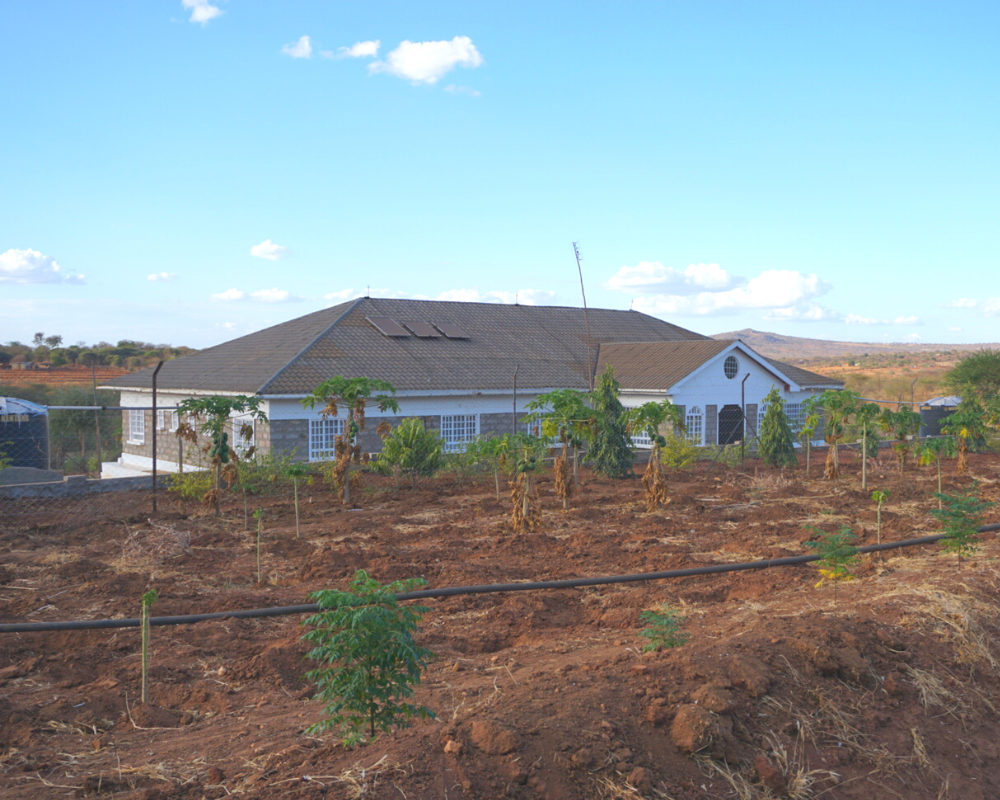
Mbinya’s beautiful home runs on a solar home system, and she uses a solar pump to channel water from a nearby river to a dam in her compound, enabling her to farm throughout the year — unrestrained by unreliable rain and the area’s arid conditions. At the time of our visit, it was particularly dry and dusty — Mbinya mentioned that it had been almost four months since the last rain. Despite this, we saw young papaya trees and other leafy green vegetables growing on sections of the ten-acre farm.
With her Agsol solar MicroMill, Mbinya provides flour for her household and serves neighbouring homes and schools. Her affordable pricing at KES 5 (USD 0.04) per kilogramme gives her an edge over the posho millers at the market centres. The electric-powered millers charge four times more than Mbinya at KES 20 (USD 0.16) per kilogramme, while the diesel-powered millers charge double at KES 10. Mbinya mills various crops, including maize (most popular), cassava, and chicken feed. Schools are her biggest customers — she currently mills maize flour for two schools, with a combined weekly output of 50 -70 kilograms of maize flour. She makes around KES 3,000–4,000 (USD 24 – 32) from all orders weekly. With this money, she employs someone to operate the mill and serve walk-in customers while she attends to her other business projects.
‘Now that my milling service is cheap; I have so many customers. They even buy maize from Kisiiki market centre (about 7km away) and come to mill it here instead of milling there.’
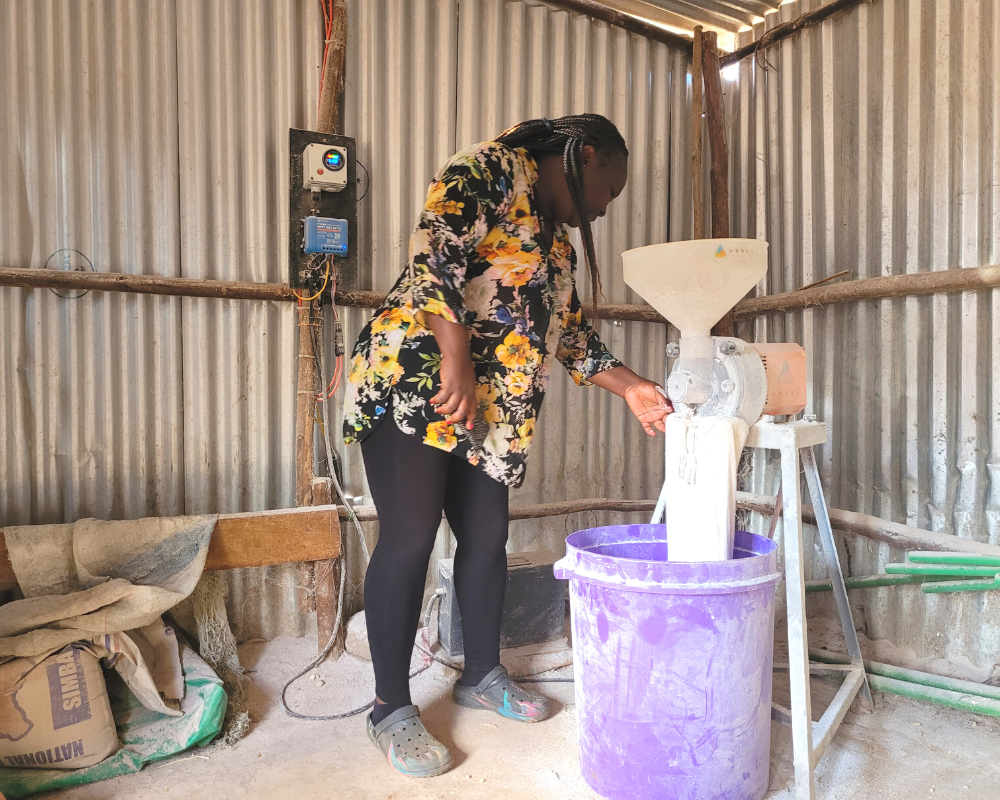
Mbinya checking her Agsol solar mill to confirm that the bag was well secured.
Mbinya learned about Agsol through her sister, who works for a humanitarian NGO. She was eager to try the MicroMill because of the challenges she had faced obtaining clean flour that didn’t smell of diesel fumes. Also, she knew there was a business opportunity to provide affordable and reliable milling for her community. Mbinya’s milling service is so popular in her neighbourhood that customers from beyond a five-kilometre radius come to buy her flour. Due to this high demand, after her initial lump sum payment, Mbinya managed to pay off the financing for the mill in two instalments over about three months. She attributes her growing customer base to word-of-mouth — customers tell their friends, who tell their other friends and so forth. Mbinya also encourages her customers to share their experiences of using her mill when they meet up for their ‘chama’ meetings (informal savings and investments groups) over the weekend.
‘I would say it’s a good initiative for a village like this one where there’s no power and diesel is expensive. Having a solar mill changes our lifestyle and even the food — it is clean.’
An aspect of the solar mill that Mbinya thinks could be improved is that during overcast conditions, the mill runs out of power early in the day. As a result, she serves fewer customers at those times compared to when it is bright and sunny. Besides that, she’s satisfied with the mill and is happy that she can provide this service to her community. Mbinya’s friends and neighbours have expressed an interest in purchasing Agsol’s MicroMill — the only barrier being affordability. Despite her explaining the consumer financing option to them, people are still hesitant to commit to such a large expense.
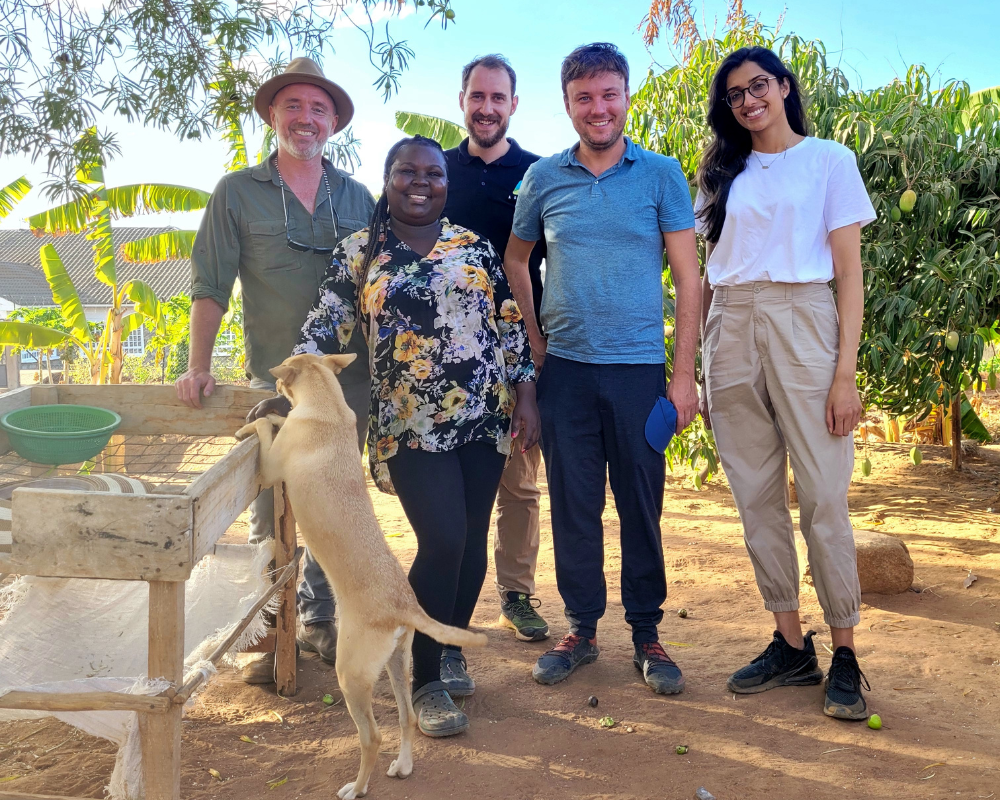
Mbinya plans to continue developing her home and farm. Among her goals is to sink a borehole, which would be a more reliable water source during prolonged dry seasons. Meanwhile, she will continue to provide convenient and affordable milling services, which she knows her community needs.
‘…the community really loves it (the mill service), and they appreciate it. They know that the food is clean and very nice.’
Adopting solar technologies like solar water pumps and mills boosts farmers’ productivity and saves energy-related costs while avoiding carbon emissions.
***
Agsol is based in Kenya and was established in 2016 to develop solar-powered milling machines that can viably serve small communities, improve labour efficiencies, keep more money in rural economies, and catalyse access to higher-tier energy services.
Efficiency for Access has been working with Agsol since 2018, both in research and R&D. The Efficiency for Access Research and Development Fund supported Agsol in two projects — the first project was to develop a MicroMill prototype and the second project involved further improvements to the prototype, including efficiency gains and improved affordability. The R&D Fund’s support has helped Agsol create a highly efficient, more affordable small grain mill with a strong product-market fit.
Serving the Community and Earning Extra Income through Efficient Solar Milling
Wilfred Muriithi proudly refers to himself as a ‘solar man.’
‘I am using solar for lighting, solar for pumping and solar for milling. I’m a solar man.’
But his solar reliance has been borne out of necessity. Despite an ambitious national electrification plan and the installation of electricity poles close to his home, Wilfred and his wife, like many other rural Kenyans, are yet to be connected to the national grid. Wilfred says the government set up the wiring for electricity supply in his area three years ago but has still not installed a transformer.
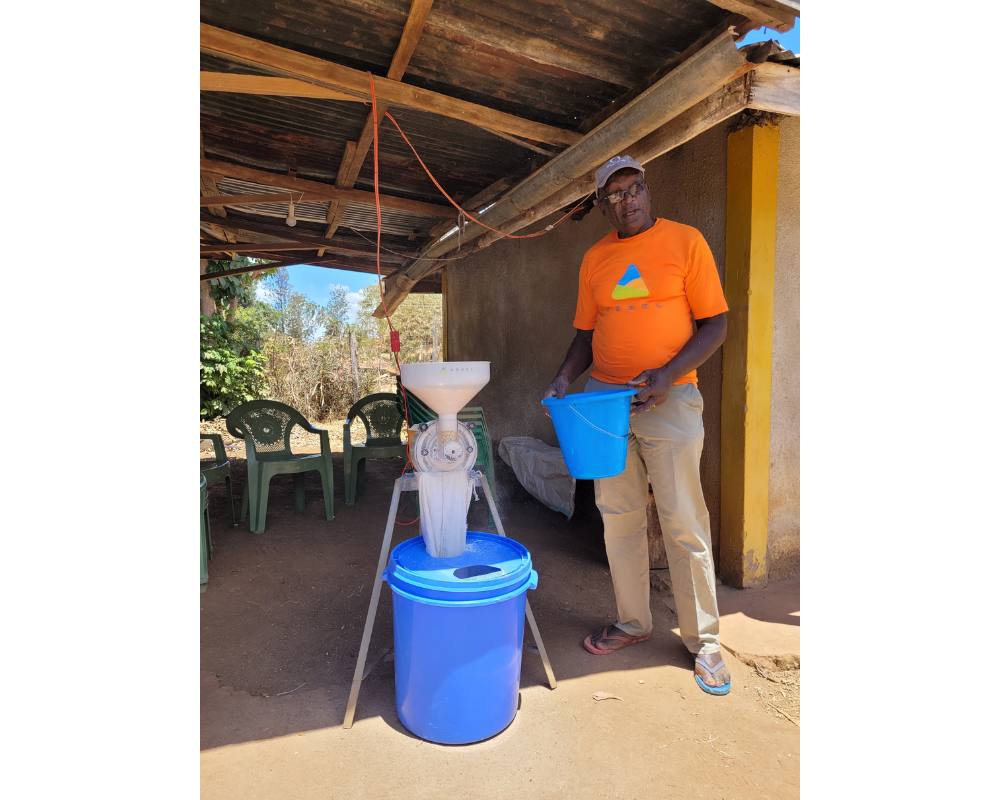
They live in Mbinguini, one of the smaller localities in Mwea, Kirinyaga County, Kenya, about two hours from Nairobi by road. Wilfred is a retired groundwater and agriculture engineer who previously worked with the government on soil and water conservation and is now an independent specialist in spatial water resource mapping.
Since Wilfred is often away from home on water prospecting trips, his wife is the one who mainly works with their Agsol mill and grinds flour for customers. So far, they are both immensely happy with the MicroMill, which they say works excellently and is reliable.

‘This [mill] is very easy to use…I have not encountered any issues. Even during very cloudy days, it is still functional.’
Wilfred discovered the Agsol solar mill during a water prospecting field visit. In addition to helping his customers identify groundwater sources, he trains them on drip-irrigation system installations and often promotes SunCulture solar water pumps for irrigation systems. On one such pump installation, Wilfred was introduced to the solar mill by the SunCulture team.
Already aware of the cost-saving benefits of solar-powered technologies, Wilfred was immediately interested in the innovative mill. For him, Agsol’s MicroMill presented a convenient option for flour production to meet his family’s needs and income generation through milling for his neighbours.
Access to a posho mill is crucial in many rural communities in Kenya. Families in these areas rely on them for their household and farming milling needs — citing that posho mill flour is more nutritious and palatable than flour from milling factories. Additionally, many rural Kenyan households (70%) rely on small-scale agriculture to earn a modest living and feed themselves. Because of this, crops such as maize, cassava, and millet are often readily available to them. The families typically harvest the produce from their farm and take it to the closest miller to make flour. This is then used to prepare popular local meals such as ugali (maize meal dish) and millet porridge — which are staples in rural homes.
Beyond household consumption, small-scale farmers can save on buying expensive commercial animal feed by milling the crops they grow to produce feed. Despite the undeniable benefits of milling for day-to-day rural-household demands, the posho mills are often inconvenient to access — often located at market centres many kilometres away. Women and children often walk long distances to the market centre to access a posho mill. The time spent travelling and then waiting for the flour to be milled could go towards more meaningful activities, e.g., studying, spending time with family or participating in income-generating activities. Additionally, many posho mills run on petrol or fuel, making them pollutive for the environment and costly due to recurring fuel costs.
For Wilfred and his neighbours, the closest posho millers in their area are at least three kilometres away. Wilfred offers his customers more convenient access to milling services and provides the service at about two-thirds the cost of the traditional posho millers. He charges KES 20 (USD 0.16) for two kilogrammes compared to the posho miller’s rate of KES 30 (USD 0.24). Additionally, the quality of the flour that Wilfred provides is superior to that of the diesel posho millers, which often taste of diesel fumes.
A changing climate
Unfortunately, Wilfred could not rely on customer revenue to pay off the mill’s financing due to the severe drought affecting his home area and other parts of Kenya for most of this year, coupled with challenging economic conditions. He reported that milling orders have been much lower this year than in 2021 because people haven’t grown much maize. Neighbours often mill small quantities that only meet their daily meal requirements. He also mentioned that they sometimes mill on credit, and he allows a neighbour to pay for what they milled during their next visit, often a few days later. On average, the solar mill generates KES 100–300 (USD 0.82 -2.45) daily at least three times a week.
‘I am not alone. Everybody is affected by these harsh economic times. Especially those who had employed people to rely on a salary from their mill — they have closed down.’

Wilfred with Agsol and Efficiency for Access team members.
Despite the dwindling quantity of milling orders, Wilfred is optimistic that his business will become more profitable. He has identified several business opportunities to widen his customer base, including partnering with the local schools to mill their flour weekly and possibly employing someone to provide mobile milling services at the local markets. He says the government has plans to reintroduce indigenous crops, such as millet, cassava and sorghum, in the region to boost food security and improve nutrition. Once underway, the increased crop production would provide another growth opportunity for his milling business. Finally, he is keen to stop buying commercial chicken feed by milling a more nutritious blend of homemade feed, which will be comparable to store-bought feed.
Wilfred and his wife’s story showcases how adopting a solar mill enables convenient and affordable milling services for rural Kenyan communities while avoiding carbon emissions.
***
Agsol is based in Kenya and was established in 2016 to develop solar-powered milling machines that can viably serve small communities, improve labour efficiencies, keep more money in rural economies, and catalyse access to higher-tier energy services.
Efficiency for Access has been working with Agsol since 2018, both in research and R&D. The Efficiency for Access Research and Development Fund supported Agsol in two projects — the first project was to develop a MicroMill prototype and the second project involved further improvements to the prototype, including efficiency gains and improved affordability. The R&D Fund’s support has helped Agsol create a highly efficient, more affordable small grain mill with a strong product-market fit.
GreenMax Capital Group and CLASP Launch Green4Access First Loss Facility to Drive Uptake of Renewable Energy Solutions in East and West Africa
October 19, 2022 — Today, at the Off-grid Solar Forum in Kigali, Rwanda, GreenMax Capital and CLASP announced the Green4Access Financing Facility (G4A) launch. G4A’s initial pilot phase will catalyse project and consumer financing for local renewable energy companies in Uganda and Nigeria, expanding next year to include Kenya, Tanzania, Malawi and up to 10 additional countries across Sub-Saharan Africa. The increased financing triggered by G4A’s risk mitigation instruments will enable low-income households to invest in solar home systems and appliances, deliver mini-grid installations and improve service delivery at community health facilities. G4A is supported by the IKEA Foundation.
Local lending for renewable energy in East and West Africa is not scaling at the speed required. According to World Bank projections, sub-Saharan countries will account for 85% of the world’s unelectrified population by 2030. Off-grid, distributed renewable energy supply coupled with solar appliances and equipment will put the region on a low-carbon pathway to electrification. Yet, there is a considerable gap between the funding available to energy access companies and what they require to provide more communities with energy services.
G4A is establishing a blended finance platform for first-loss facilities to support off-balance sheet energy access lending in East and West Africa. G4A is offering first-loss products and technical assistance that will help local lenders perceive off-grid consumer lending as sufficiently de-risked while also aiming to allow the fund’s investors to achieve modest returns that make the products sustainable.
GreenMax will manage G4A’s first loss guarantee facility and work with African banks during the pilot phase to reduce risk by covering up to 100% of losses if an individual customer defaults on their loan, up to a cap of 20% of the bank’s total energy access loan portfolio. G4A aims to unlock a further USD 25 million in consumer lending from banks in Uganda, Kenya, Nigeria, Tanzania and Malawi to scale solar-powered appliances and healthcare equipment in its pilot phase.
GreenMax Founding Principal, Clifford J. Aron believes that “G4A’s goal is to transform the energy access finance ecosystem by demonstrating to local lenders how the off-grid energy space can be a significant element of their mainstream consumer lending business. Local lenders provide a critical source of much-needed local currency finance. Their direct lending to consumers will dramatically reduce the pressure on energy access companies to finance their customers themselves- allowing smaller, locally owned energy access companies to flourish.”
###
About the IKEA Foundation
The IKEA Foundation is funded by INGKA Foundation, owner of the Ingka Group of companies. The IKEA Foundation is independent from the retail business, with a sole focus on creating brighter lives on a liveable planet through philanthropy and grantmaking. Learn more at www.ikeafoundation.org.
About CLASP
CLASP serves at the epicenter of collaborative, ambitious efforts to mitigate climate change and expand access to clean energy through appliance energy performance and quality.
About GreenMax Capital Group
GreenMax is a specialized fund management and advisory firm focused exclusively on the clean energy space in emerging markets.
For more information on how to participate in the G4A facility, please reach out to G4A@greenmaxcap.com. For media inquiries, please get in touch with Lisa Kahuthu at lkahuthu@clasp.ngo.
CLASP & Nithio Launch Financing Facility for Productive Use Appliances
Kigali, Rwanda, 19 October 2022 – Today at the Global Off-Grid Solar Forum and Expo, CLASP and Nithio launched a USD $6.5 million financing facility to catalyze uptake of productive use appliances across Africa. The facility will improve appliance affordability for consumers and companies and is supported by the Global Energy Alliance for People and Planet (GEAPP).
Access to productive use appliances can deliver significant economic, health, education, and quality of life benefits for an estimated 60 million households worldwide and put under-electrified parts of the world on a low carbon pathway to electrification. Yet, affordability remains a major barrier to access and scale.
Speaking during the facility’s launch in Kigali, Rwanda, Jeff Stottlemyer, Director at CLASP said, “This facility is designed to catalyze private investment in productive use appliance markets at scale, making those appliances more affordable and accessible.” CLASP and Nithio identified six appliance technologies based on their relative maturity and potential to drive development impact – walk-in cold rooms, refrigerators, electric cookers, fans, mills, and solar water pumps.
Chianda Njogu, Senior Associate at the Global Energy Alliance for People and Planet (GEAPP) said, “By making productive use appliances affordable and accessible, the facility can transform lives by enhancing income generated by smallholder farmers and micro-enterprises, creating new green energy enabled jobs, and improving the sustainability of renewable energy infrastructure projects through increased demand for electricity.”
The facility will initially operate in Democratic Republic of Congo, Ethiopia, Kenya, Nigeria, Sierra Leone, and Uganda based on growth potential and market maturity.
Kate Steel, Chief Executive Officer at Nithio said, “Consumer financing is crucial to long-term, sustainable growth in the productive use market. GEAPP’s support will enable Nithio to leverage our unique, data-drive approach to make consumer financing accessible for more companies and, ultimately, make it easier for their customers to afford these life-changing technologies.”
How it Works
The facility will offer procurement subsidies, capacity building grants, consumer financing, and advisory support focused on credit systems development for productive use appliance distributors. It will lower appliance costs for end-users by discounting the price of bulk solar appliance procurements and providing financing for distributors to enable them to sell their products on credit.
For more information, please visit our website. Grant requests and general enquiries should be sent to Financing@clasp.ngo. For media enquiries, please contact Lisa Kahuthu (lkahuthu@clasp.ngo)
About CLASP
CLASP focuses on appliance & equipment energy performance and quality, to mitigate and adapt to climate change and expand access to clean energy. Super-efficient and high quality appliances accelerate access to and use of renewable energy for the world’s poorest people. CLASP supports progress on the United Nations’ Sustainable Development Goal 7, affordable and sustainable energy for all. Renewable energy services like cooling, communications, and mechanization empower low-income communities and improve lives in a climate friendly way. CLASP works globally and has teams in Washington, DC; Nairobi, Kenya; New Delhi, India; Brussels, Belgium; and Jakarta, Indonesia.
About NITHIO
Nithio is an energy financing platform powered by its innovative credit risk analytics engine. Nithio leverages its deep sector expertise, geospatial data, and artificial intelligence (AI) to forecast repayment patterns by consumer segment, provide detailed insight on projected cash flows, and finance energy access technologies.
About the Global Energy Alliance for People and Planet (GEAPP)
The Global Energy Alliance for People and Planet (GEAPP) is an alliance of local entrepreneurs, governments in emerging and developed economies, and technology, policy, and financing partners. Our common mission is to support developing countries’ shift to a clean energy, pro-growth model that ensures universal energy access and unlocks a new era of inclusive economic growth, while enabling the global community to meet critical climate goals during the next decade. In doing so, as an Alliance we aim to enable 150 million new jobs, reduce 4 gigatons of future carbon emissions, and expand clean energy access to one billion people. With philanthropic partners, Bezos Earth Fund, IKEA Foundation, and The Rockefeller Foundation, GEAPP works to build the enabling environment, capacity, and market conditions for private sector solutions, catalyze new business models through innovation and entrepreneurship, and deploy high-risk capital to encourage private sector solutions, and assist just transition solutions. For more information, please visit www.energyalliance.org and follow us on Twitter at @EnergyAlliance.
Media Contact:
Eric Gay
Global Energy Alliance for People and Planet
+1 917 912 6190,
Off- and Weak-Grid Appliance Market: Pakistan
While Pakistan’s electrification rate is relatively high, with 75% of the populationreported to have access to electricity – households and businesses still experience frequent power outages due to load shedding. Recurring outages for grid-connected homes and the high percentage of rural households without access to electricity (39%) provide an opportunity for off-grid solar energy solutions to meet household energy demand, such as lighting and appliances.
CLASP, as co-Secretariat of Efficiency for Access engaged a local consultant in collecting appliance data from over 100 retail shops and reporting on the market conditions in Pakistan. Overall, our findings on solar appliance sales in Pakistan reflect a thriving market built primarily on fan uptake. The country’s productive use of renewable energy (PURE) and large appliance sectors, including refrigerators, solar water pumps, and evaporative air coolers, are just emerging with immense potential to transform the productivity and livelihoods of rural and urban consumers. The market is defined by widespread local manufacturing of fans, evaporative air coolers, and appliance motors, which have had positive impacts on appliance affordability, efficiency, and warranties. However, for the market to expand and for uptake of larger and productive appliances to increase, consumer awareness-raising of the benefits of off- and weak-grid appliances and ensuring quality and durability through warranties and after-sales care will be key.
Read the full report for detailed insights on the off- and weak-grid market landscape, the common power type, size, price, warranty, and performance of off-grid appliances sold in retail markets, and other findings relevant to sector stakeholders working in Pakistan.
Download the Off- and Weak-Grid Appliance Market: Pakistan report here.
About Efficiency for Access
Efficiency for Access is a global coalition working to promote renewable and energy efficient appliances to deliver clean energy to the world’s poorest people. It is coordinated jointly by CLASP and the UK’s Energy Saving Trust.
The Solar Lighting and Appliances Sector may be Leaving Marginalised Groups Behind, New Efficiency for Access Study Reveals
Washington, DC, September 13, 2022 – A new analysis from Efficiency for Access, “Appliances for All: Assessing the Inclusivity of the Solar Appliances & Lighting Sector”, examines how well solar lighting and appliances are reaching their target populations, and assesses inclusion across solar company employment practices and product offerings. According to the analysis, the sector is largely serving a homogenous demographic: men with grid connections who are better educated and wealthier than their peers. Additionally, women make up only 23% of the workforce within decentralised energy companies. Overall, this meta-analysis finds that more can be done to reach marginalised groups and ensure the benefits of energy access are experienced equitably.
This seminal report is a first step towards establishing a baseline to understand how well the sector is performing across different facets of inclusivity. “As global economic and climatic challenges threaten our progress towards achieving universal energy access by 2030, marginalised groups may be overlooked. This report offers a first look at the solar lighting and appliance sector’s reach to those historically excluded by virtue of their gender, disability, poverty or otherwise,” said Makena Ireri, Director of Clean Energy Access Research at CLASP.
The Sector’s Typical Consumer
While limited, data from 19 household surveys indicate that the typical solar lighting and appliance user is most commonly a male with a grid connection who is employed, does not have a disability, and is relatively better educated and more affluent than the average person in his country.
- Only 41% of respondents reported earning less than USD $3.20 per day, the international poverty line, compared to over 65% of people in sub-Saharan Africa and over 60% in India.
- 12% of the respondents reported having at least one disability, which is lower than the global estimate (15%).
- 64% of respondents identified as men, while women comprised less than 40% of our sample, suggesting access barriers to solar products across sales, ownership and use.
“These findings, while not exhaustive in their representation, still reveal a sobering status quo that solar lighting and appliances may still be out of reach for millions of vulnerable people,” said Yasemin Erboy Ruff, Clean Energy Access Manager at CLASP. “To truly accelerate the sector’s aim of achieving Sustainable Development Goal 7, we need to more intentionally focus on multiple dimensions of inclusivity, not just gender.”
Assessing the Private Sector
Data from 68 companies in four markets show that women account for 23% of the workforce in distributed energy companies, similar to the broader energy sector at 22%. Notably, 84% of companies did not report gender-disaggregated data. Further, only 5% of the companies surveyed said they distribute or deal in nascent technologies that have traditionally been perceived to benefit women, like electric pressure cookers or solar mills.
Men far outnumber women in managerial positions within solar lighting and appliance companies. For example, there are only three women CEOs in over 200 solar companies in Uganda. This diversity gap within the private sector may lead to biases in the types of products developed and business decisions made, which may affect social impact.
An Incomplete Picture
According to Lauren Boucher, Research Manager at CLASP, “Principles of diversity, equity, and inclusion are deeply embedded within the ethos of solar lighting and appliances sector and its goal to ‘leave no on behind.’ However, to date, it lacks the standardised definitions, targets, indicators, and data collection efforts required to assess who is included and excluded from access initiatives.”
The report is an important first step toward establishing a baseline to understand how well the sector is performing, but the results should not be viewed as a comprehensive or fully accurate view of the sector. No survey included in this analysis required respondents to share demographic information on all three dimensions of this report (gender, income, disability). In an effort to create the largest possible sample size, Efficiency for Access did not drop observations with missing data from its analysis. These missing data introduce bias and further underscore the need for a coordinated, sector-wide effort to fill data gaps and harmonize tracking and evaluation methods.
Recommendations for Impact
To deliver sustainable development through a just energy transition, solar products must be accessible to all who need or desire them. A push for a more inclusive sector is good for business: widening access to previously untapped populations can expand customer bases, increase sales and enable appliance markets to scale. Feedback from a diverse consumer base can lead to product improvements that benefit all customers, not just marginalised groups.
To fully realise these benefits, our analysis recommends addressing the affordability gap, developing and tracking diversity, equity and inclusion metrics, and innovating and investing in a broader array of solar appliances, among other tactics.
“As the sector develops strategies to leave no one behind, this report sets a baseline to give stakeholders more clarity, direction, and the ability to track,” added Makena Ireri of CLASP.
A Deeper Dive
To assess how well the off-grid solar sector is reaching marginalised groups, we used data on the respondent’s gender, income, and disability status to calculate the per cent of respondents that identify as a woman, have a household income lower than the international poverty lines of USD $1.90 or USD $3.20 daily, or live with a disability. We
used data from 60 Decibels and the World Bank to construct benchmarks and the relevant region/country to draw comparisons to the broader solar lighting and appliance sector as well as the populations it serves. Respondents were surveyed on ownership of more than nine appliances, including televisions, fans, milking machines, refrigerators, solar water pumps and solar home systems.
To assess workplace diversity and inclusion efforts among private sector companies, we analysed gender-disaggregated employment and compensation data from Power for All’s 2021 Powering Jobs Survey. We also analysed company-reported data on the location of company offices, company expertise, and product offerings using data from Power for All’s Powering Jobs Survey and the Global Distributors Collective’s Member Survey.
For more information, download “Appliances for All: Assessing the Inclusivity of the Solar Appliances & Lighting Sector” and follow us on Twitter for regular updates.
—
About Efficiency for Access
Efficiency for Access is a global coalition promoting energy efficiency as a potent catalyst in clean energy access efforts. Since its founding in 2015, Efficiency for Access has grown from a year-long call to action and collaborative effort by Global LEAP and Sustainable Energy for All to a coalition of 20 donor organizations. Coalition programmes aim to scale up markets and reduce prices for super-efficient, off- and weak-grid appropriate products, support technological innovation, and improve sector coordination. Current Efficiency for Access Coalition members lead 12 programmes and initiatives spanning three continents, 62 countries, and 34 key technologies.
For media inquiries, please get in touch with Dennis Migono at dmigono@clasp.ngo.