
Keep it Cool: Harnessing Cold Storage to Reduce Food Loss & Support Sustainable Food Systems in Emerging Economies
Cold storage technologies play a crucial role in preserving food freshness, preventing spoilage, and extending shelf life, but it is essential that they do so in an environmentally sustainable manner. This technology trend brief, titled “Keep it Cool: Harnessing Cold Storage to Reduce Food Loss & Support Sustainable Food Systems in Emerging Economies,” is brought to you by Efficiency for Access and partners. It highlights innovative cold chain technologies that are addressing these critical challenges.

Approximately one-third of all food produced is lost or wasted, resulting in staggering environmental impacts and economic losses.
The latest data from the Food and Agriculture Organization (FAO) offers some startling statistics about food loss. Not only is 14% of food lost in the supply chain, food waste also:
- Contributes to 8-10% of global greenhouse gas emissions;
- Squanders a land mass the size of China;
- And has an economic cost of around $1 trillion annually;
However, despite these losses, one in ten people globally remains malnourished. As the population grows and the demand for nutritious food increases, energy-efficient and sustainable cold chain becomes critical to reducing food loss, improving food security, and mitigating climate impact. We need a global paradigm shift towards cold storage technologies that align with international climate agreements.
This brief spotlights three organizations that are working alongside Efficiency for Access at the forefront of this field:
- Wageningen University & Research has developed a postharvest assessment method, which identifies key areas of food loss in the supply chain and suggests interventions to minimize waste. Their research provides valuable guidance for reducing food loss and improving the efficiency of the cold chain.
- Global Food Cold Chain Council is an independent not-for-profit industry organization that seeks to simultaneously reduce food waste, and related greenhouse gas emissions in the processing, transportation, storage, and retail display of cold food by expanding and improving access to energy efficient low-global warming potential technology.
- Champions 12.3 is a coalition of global leaders who are all committed to supporting SDG12.3 which aims to halve food waste and reduce food loss by 2030. The Champions 12.3 coalition develops and drives a number of initiatives which are targeted at tackling specific issues and problems with the food systems, thereby reducing food loss and waste.
Read the Keep it Cool: Harnessing Cold Storage to Reduce Food Loss & Support Sustainable Food Systems in Emerging Economies report here.
About Efficiency for Access
Efficiency for Access is a global coalition working to promote renewable and energy efficient appliances to deliver clean energy to the world’s poorest people. It is coordinated jointly by CLASP and the UK’s Energy Saving Trust.
2023 Tech Trends in Energy Access
Building upon the insights presented in Efficiency for Access’ 2021 Solar Appliance Technology Briefs, this Tech Trends series provides a window into the rapidly evolving appliances markets. This series synthesizes technical, impact and market research done by Efficiency for Access and partners into a digestible snapshot. It offers valuable insights into emerging trends and opportunities across various off-grid appropriate appliances that are most relevant to catalyzing energy access and achieving the Sustainable Development Goals, along with a focus on identifying critical areas that require attention, complemented by specific recommendations.
The technologies covered in this series encompass:
- Electric cooking (e-cooking)
- Fans
- Refrigerators
- Solar mills
- Solar water pumps
- Walk-in cold rooms
We will be releasing the appliance market summaries successively over the next few months.
This comprehensive series aims to inform future strategies of industry stakeholders, providing a clear understanding of the market’s trajectory. It serves as a valuable, quick-read resource for a diverse audience, ranging from interested donors and newcomers to the appliance sector to seasoned industry players seeking a convenient reference for sharing with their respective networks.
Download the 2023 Tech Trends in Energy Access technology briefs.
About Efficiency for Access
Efficiency for Access is a global coalition working to promote renewable and energy efficient appliances to deliver clean energy to the world’s poorest people. It is coordinated jointly by CLASP and the UK’s Energy Saving Trust.
CLASP’s #NetZeroHeroes hit back at the climate crisis with actionable solutions
In the lead up to the United Nations Framework Convention on Climate Change 28th Conference of the Parties (COP28) in Dubai, United Arab Emirates from 30 November – 12 December, CLASP is launching #NetZeroHeroes – a celebration of the people and appliance heroes that are critical in reaching global Net Zero targets and promoting resilience in an already warming world.
Appliances like air conditioners, refrigerators, electric motors, and lighting collectively have a major climate impact. They are responsible for a staggering 40% of energy-related carbon dioxide (CO2) emissions globally, according to CLASP’s forthcoming report ‘Net Zero Heroes: Scaling Efficient Appliances for Climate Change Mitigation, Adaptation & Resilience.’ CLASP’s research shows how rolling out affordable, energy efficient alternatives is key to mitigating and adapting to the climate crisis and achieving the United Nations’ Sustainable Development Goals.
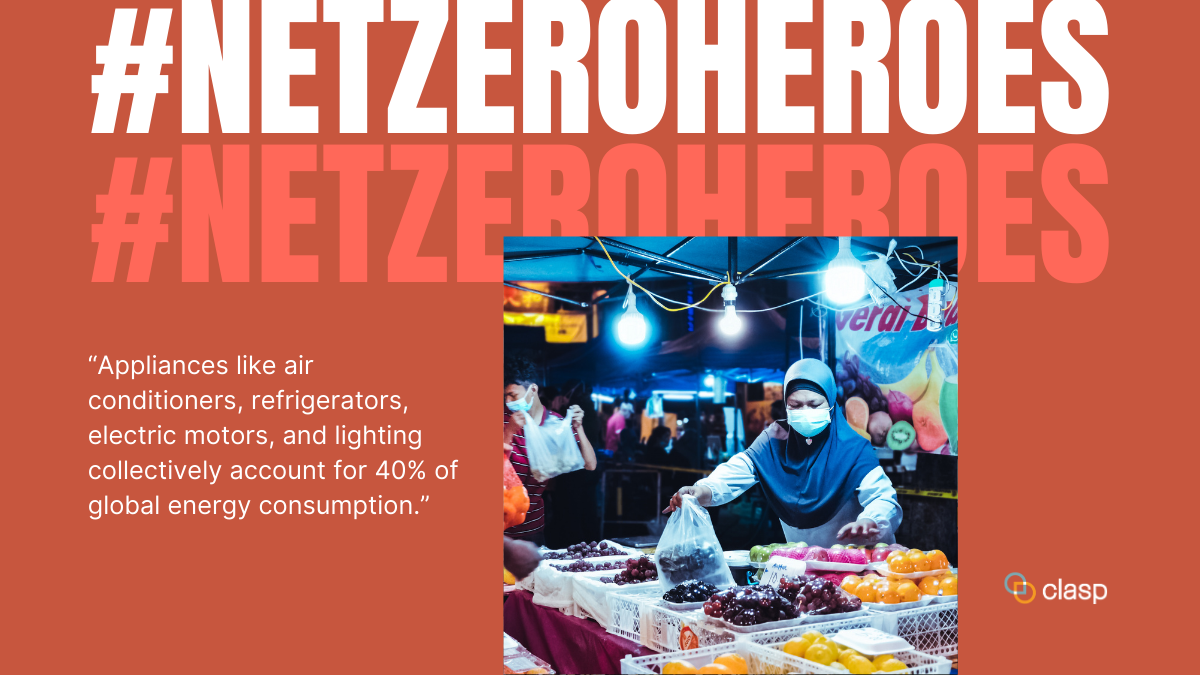
CLASP's Net Zero Heroes Air Conditioners, Comfort Fans, Refrigerator-Freezers, Heat Pump Space & Water Heaters, Electric Motors, Electric Cookers, Televisions, Solar Water Pumps
Through a series of reports, videos and articles highlighting stories of leadership and expert perspectives from across the sector, #NetZeroHeroes will amplify the urgent and immediate need to deploy efficient appliances at speed and scale to protect people and the planet.
The campaign will culminate in CLASP’s groundbreaking publication, “Net Zero Heroes: Scaling efficient appliances for climate change mitigation, adaptation & resilience” – launching the week before COP28 and available on CLASP’s website.
This research will highlight the transformative potential of efficient appliances by:
- Quantifying appliances’ ability to achieve the emissions reductions needed to meet the goals of the Paris Climate Agreement;
- Indicating where we should scale our efforts this decade for maximum impact;
- Analyzing gaps in access to appliances and recommending where scale-up would better enable communities to adapt in a warming world;
- Providing a roadmap of solutions that governments, investors and other stakeholders can implement today to get on track to net zero emissions and an inclusive energy transition.
Stay tuned and follow #NetZeroHeroes on social media. This page will serve as a homebase for all campaign materials and will be updated regularly.
If you are interested in getting involved with the campaign, reach out to Lexi Ross at aross@clasp.ngo.
Explore the Campaign

Net Zero Heroes
CLASP’s landmark report identifies the ten appliances that should form the basis of an unprecedented efficiency push: the #NetZeroHeroes.
Efficient appliances combat the triple planetary crisis of climate change, air pollution, and biodiversity loss.
CLASP’s analysis finds that the appliance sector accounts for nearly 40% of energy-related CO2 emissions. Appliances are on pace to surpass the IEA’s 2050 net zero targets by over 9 gigatons CO2. At the same time, there are profound inequities in access to appliances, leaving billions vulnerable to the effects of climate change. At least 1.2 billion people lack access to air conditioners and fans, making it difficult to cope as temperatures rise.
The first-of-its-kind report provides a clear roadmap for realizing mitigation and adaptation potential by rapidly increasing the efficiency of the Net Zero Heroes.
Explore the data, recommendations, and analysis, and download the report on our interactive Net Zero Heroes Report Website.
Net Zero Heroes Webinar: The Essential Appliances for Climate Action
This webinar launched CLASP’s landmark publication ‘Net Zero Heroes: Scaling Efficient Appliances for Climate Change Mitigation, Adaptation & Resilience’ with an expert panel.
A compelling discussion about the efficient appliances that are key to mitigating and adapting to the climate crisis.
This webinar launched CLASP’s landmark publication ‘Net Zero Heroes: Scaling Efficient Appliances for Climate Change Mitigation, Adaptation & Resilience’, with a compelling discussion about the efficient appliances that are key to mitigating and adapting to the climate crisis and achieving the world’s Sustainable Development Goals.
During the event, our panelists also discussed inspirational case studies and powerful data that prove the effectiveness and scalability of affordable, efficient appliance solutions. The event panel includes a diverse group of experts who shared their insights and experiences in the world of energy efficiency, climate action, and appliance innovation.
- Axum Teferra – Clean Cooling Collaborative
- Christine Eibs Singer – Shine Campaign
- Christine Egan – CLASP
- Duncan Gibb -Regulatory Assistance Project (RAP)
- Oliver-Bealby Wright – Consumers International
The event is moderated by Joyita Mukherjee, a CLASP board member and expert in international development and blended finance.

Appliance Efficiency in NDCs
In the leadup to COP28, this report emphasizes the opportunity for governments to bolster their climate commitments by integrating ambitious appliance efficiency targets into the next round of NDCs.
Appliance efficiency is an important mitigation solution, but it’s often left out of nationally determined contributions (NDCs)
Nationally determined contributions (NDCs) lie at the heart of the Paris Agreement, guiding the actions of governments around the globe. One climate solution that’s often missing from these plans is appliance efficiency, which is critical to lowering global energy demand and emissions. New CLASP analysis reveals that only 47% of NDCs mention appliances, while a mere 25% reference key policies such as Minimum Energy Performance Standards (MEPS) and appliance labeling. To realize the enormous potential of appliance efficiency, CLASP urges governments to take action.
Getting Appliances Back on Track
This report tracks the progress of 15 countries who signed onto the Appliance Efficiency Call to Action in 2021 at COP26 in Glasgow, which pledged to double the energy efficiency of four product categories by 2030.
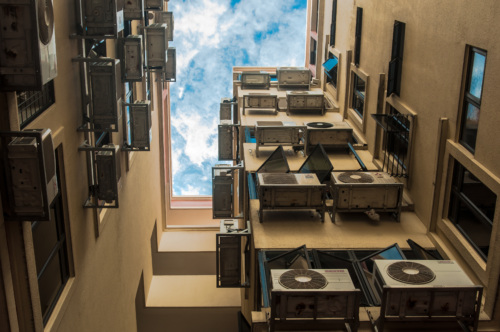
Air conditioners (ACs), lighting, electric motors, and refrigerators collectively account for more than 40% of global electricity consumption.
“Getting Appliances Back on Track” is the first publication of CLASP’s #NetZeroHeroes COP28 digital campaign. The report offers valuable analysis to economies already committed to prioritizing appliance energy efficiency, and illustrates a path toward success for governments interested in joining as a Call to Action signatory.
The Global Appliance Stocktake
Director of Climate Research at CLASP and author of the “Getting Appliances Back on Track” report, Matt Malinowski, provides an honest look at where we stand globally with energy efficiency commitments.
Countries are not on track to meet their commitments to double the efficiency of priority appliances.
“In the wake of this year’s alarming UN climate global stocktake, my colleagues at CLASP and I looked back on the Call to Action and wondered: Are countries on track to meet their commitments to double the efficiency of priority appliances? The short answer is no. The long answer is that we are falling behind, but there is a clear path to success.” -Matt Malinowski, Director of Climate Research & author of “Getting Appliances Back on Track”

2023 Tech Trends Series
This series offers up-to-date market insights for off-grid cooling, cooking and agricultural productive-use appliances.
Off-grid refrigeration plays a vital role in a warming world, but new research from Efficiency for Access shows that the sector is struggling.
Building upon the insights presented in Efficiency for Access’ 2021 Solar Appliance Technology Briefs, this Tech Trends series provides a window into the rapidly evolving appliances markets. This series synthesizes technical, impact and market research done by Efficiency for Access and partners into a digestible snapshot.
Find CLASP at the Africa Climate Summit 2023
On September 5 from 8 am to 9 am, CLASP planned a side event at the Africa Climate Summit entitled ‘The Opportunity of Appliance Access for a Climate-Resilient Africa’. This event aimed to showcase actionable solutions that African nations can implement today to accelerate the transition towards a net-zero emissions future.

Millions of people across Africa lack access to electricity and energy-efficient appliances. Often, the very same people are most at risk of exposure to climate hazards, which can result in displacement, serious health issues, and, in the worst cases, premature death. Appliances and equipment are cornerstones of life, essential for living productively and—increasingly—coping with global warming and its associated shocks. With numerous households in Africa already feeling the effects of climate change, the time to close the appliance access gaps is now, and doing this will have profound benefits for people and our planet.
Crucially, the discussions aimed to feature effective and affordable appliance solutions that foster resilient communities and drive progress toward national and global emissions reduction targets. The opportunity is here to build a more inclusive, sustainable world while positioning Africa as a global leader and advocate for universal access to efficient appliances and equipment.
Speakers at the event
Moderator – Christine Egan – CEO, CLASP
- Chianda Njogu – The Global Energy Alliance for People and Planet (GEAPP)
- David Mutisya – Directorate of Renewable Energy, Ministry of Energy (Kenya)
- Martha Wakoli – CLASP
- Mikayla Czajkowski – SunCulture
- Rebecca Mincy – The Acumen Resilient Agriculture Fund (ARAF)
Event details:
Tuesday 5 September | 2.30 to 3.30 pm | The Opportunity of Appliance Access for a Climate-Resilient Africa | Lenana Hall
Find CLASP at South Asia Forum for Distributed Energy 2023
On August 23 and 24, CLASP’s India team will lead two sessions at the 2023 South Asia Forum for Distributed Energy (SAFDE), organized by GOGLA in New Delhi, India. This event will highlight the distributed energy community’s efforts to chart a business-driven route to improved energy access for households and the way forward to enhance the Productive Use of Energy (PURE) for improved livelihoods.
India’s substantial endeavors in electrification have resulted in ensuring widespread electricity accessibility across the nation – today the country is 100% electrified. The Government of India is now looking at enabling access to reliable power 24/7 across India through multiple initiatives.
To address the ‘weak grid’ challenge, GOGLA and CLASP are holding a focused discussion on ‘Plugging the Gap: Partnerships and Innovations for the Weak Grid’ on August 23. The session will include panelists from the Distributed Renewable Energy (DRE) industry, electricity distribution companies, financing and technology experts.
India is one of the largest producers of agriculture and horticulture products – the largest producer of milk, and the second largest producer of fruits, vegetables, and fish. While reaching record horticulture output in 2020-21, it wasted 30% of produced food in the same year. The lack of cold chain facilities for food storage contributed largely to agricultural losses. Post-harvest losses for fruits and vegetables in FY 2021-22 amounted to 10 million metric tons and INR 60,000 crores (USD 7.2 billion), impacting farmers’ incomes and greenhouse gas emissions.
To enhance access to cold chain facilities, the Indian government launched multiple schemes to enable investments in cold chain infrastructure. In partnership with Energy Efficiency Services Limited, and cKinetics as the knowledge partner, CLASP will be co-hosting a session on investment prospects in the cold chain sector for the future of India’s agriculture. The session will bring together financial institutions and demand aggregators, uncovering short and long-term opportunities that minimize the gaps between farmers and cold chain facilities.
CLASP at SAFDE2023:
23 August 2023 | 15:00 PM – 16:00 PM | Plugging the Gap: Partnerships and Innovations for the Weak Grid
24 August 2023 | 10:00 AM – 11:30 AM | Investment Opportunities for Affordable and Efficient Agriculture Cold Chain
To register for SAFDE 2023, please log on here.
CLASP: Advancing Energy-Efficient Cold Chains in India
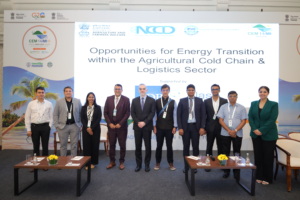
India’s agricultural sector faces two significant challenges: the impact of climate change and a rapidly growing population. As the demand for food increases, so will the need for efficient and robust cold chain and food logistics infrastructure. To bridge the gap between farmers and markets, the country needs substantial investments, a reliable power supply and an energy-efficient cold chain infrastructure.
In collaboration with Asian Development Bank (ADB), National Centre for Cold Chain Development, and Bureau of Energy Efficiency (BEE), CLASP co-hosted an event to explore the opportunities and challenges in transitioning towards low-carbon and energy-efficient cold chains.
BEE’s Director, Arijit Sengupta highlighted the importance of the energy sector for agriculture and livelihoods. Sengupta also shared that BEE is working to advance energy efficiency policy options for cold chain components such as compressors, walk in cold rooms and cold storage.
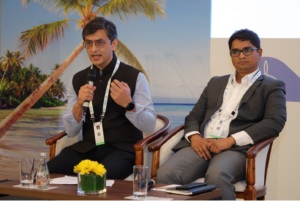
CLASP Senior Director, Bishal Thapa, moderated a discussion that emphasized the need to make the next wave of cold chain infrastructure energy efficient and sustainable. The consensus was that sustainable cold chain solutions and services must be accessible and affordable even to the smallest farms in India.
CLASP’s P. K. Mukherjee reinforced the need to have specific standards for cold chain equipment as a prerequisite to develop impactful energy efficiency policies for the sector. He also highlighted the existence of post-harvest horticulture guidelines and the need to ensure these are adopted by farmers.
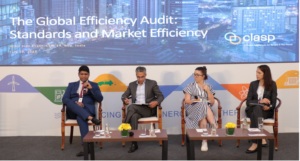 CLASP’s Kishore Kumar featured in a discussion on the Super-Efficient Appliance Deployment (SEAD) initiative of CEM. Kishore highlighted the progress being made towards doubling the efficiency of four priority products by 2030 – air conditioners, refrigerators, industrial motor systems, and lighting. This initiative is essential in the context of Nationally Determined Contributions (NDCs), where many countries are finding it challenging to meet their climate goals. By promoting super-efficient appliances, countries can significantly reduce their carbon footprint and contribute to global climate action.
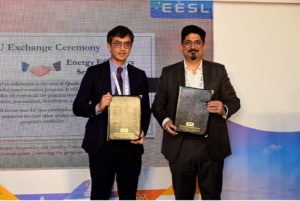
On the last day of CEM,, Energy Efficiency Services Limited (EESL) hosted a side event which included the signing of a Memorandum of Understanding with CLASP on adoption of 10 million energy-efficient fans in India. CLASP will provide technical assistance and capacity building support to EESL on Quality Assurance and Quality Control (QAQC) framework of fans program.
A key takeaway from CEM14 is that transitioning towards low-carbon and energy-efficient cold chain infrastructure is not just an opportunity but an imperative for India. Climate change poses significant challenges for India’s food storage and distribution, and it requires urgent action.
Watch all session recordings here.
Innovative Financing Facility Supports 18 Productive Use Companies in Africa
18 Small and medium-sized companies selling productive use appliances (PUAs) were selected by the Productive Use Financing Facility to receive procurement subsidies and capacity-building grants.
PUAs are energy-efficient, income-generating appliances like refrigerators, walk-in cold rooms, electric cookers, solar water pumps and milling machines. Despite their transformative potential for local communities, small businesses and the environment, PUA sales are extremely low in emerging markets due to affordability and access to finance.
CLASP and Nithio want to change this. They set up the Facility, with support from the Global Energy Alliance for People and Planet (GEAPP), to make PUAs more affordable to consumers and companies. In this funding round, CLASP received over 80 applications from companies across Central, East and West Africa, representing a range of PUA technologies. Solar water pumps were the most common technology, followed by refrigerators and fans.
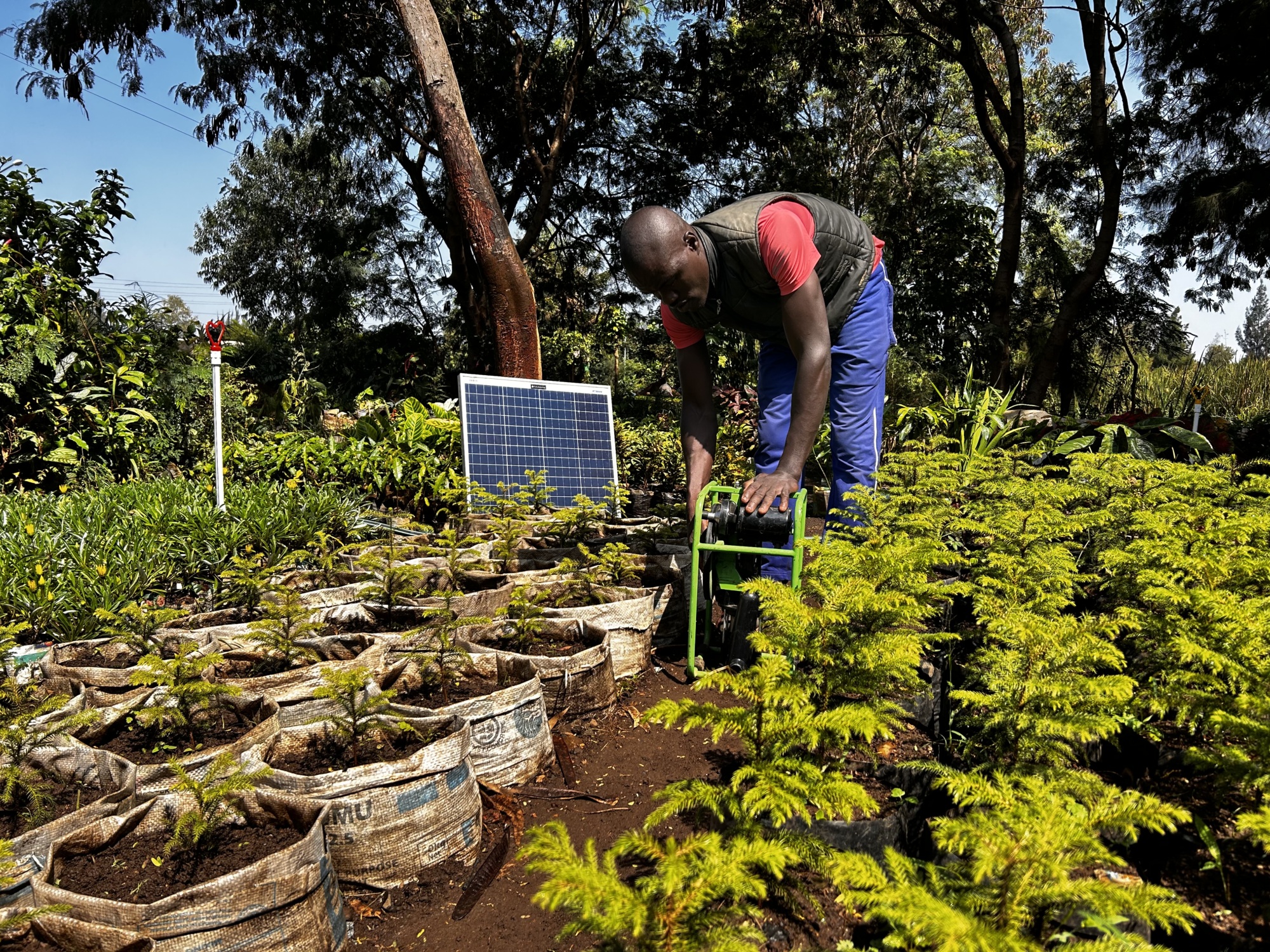
Kenyan solar water pump user
Subsidies with a transformative impact
The 18 companies selected will use their funding to sell a combined amount of 12,135 PUAs that will introduce life-changing productive use technology to over 500,000 people. The successful companies target both households and small businesses, with the PUA providing a transformative community-level impact by enabling customers to generate more income, save time, and improve their quality of life.
“We are excited to support such a wide range of early movers and leaders in the productive use market,” commented Jeff Sottlemyer, CLASP program lead for the Facility. “We look forward to seeing the impact of this support on the lives of their customers and the communities they live and work in.”
Many applicants laid out strategies to specifically market appliances to women, showcasing the sector’s recognition of equitable uptake of PUA. BrightLife, a Ugandan refrigerator distributor, incentivizes sales agents to reach targets of at least 50% women shop owners and farmers for sales of refrigeration products. The companies also have a strong representation of women on their payroll. For example, women comprise more than 70% of the Ugandan-based and owned company POPO Africa’s workforce, while ALLTIMEFRESH in Nigeria is owned and predominately run by women.
“We anticipate the Facility will help early movers reduce unit costs, improving access to affordable, high-quality appliances,” noted Makena Ireri, Director at the Global Energy Alliance for People and Planet “Unit cost reduction is a necessary step in demonstrating commercially sustainable PUA businesses that can attract private investment and propel market growth.”
The goal of the Productive Use Financing Facility is to support companies with the potential to scale quickly, and this round prioritized companies that are ready to sell. Already sales are underway at many of these companies, with the others expected to commence within the next month.
Following a rigorous evaluation, CLASP selected the following 18 companies:
| Company | Country | PUA |
|---|---|---|
| Acme Engineering And Trading Plc | Ethiopia | Solar water pumps |
| ALLTIMEFRESH LIMITED | Nigeria | Walk-in cold storage, solar milling |
| Altech Group | DRC | Fans, Refrigerators, Walk-in cold storage |
| Baobab+ Group | Nigeria | Refrigerators |
| Bidhaa Sasa | Kenya | Electric pressure cookers |
| Brightlife | Uganda | Refrigerators |
| BURN Manufacturing USA LLA (Kenya Branch) | DRC, Kenya | Electric Induction Cookers |
| Consistent Energy Limited | Nigeria | Refrigerators |
| Deevabits Green Energy Limited | Kenya | Refrigerators |
| Ecozen Solutions Private Limited | DRC, Kenya, Nigeria, Uganda | Solar milling, Solar water pumps, Walk-in cold storage |
| Green Scene Energy PLC | Ethiopia | Solar water pumps |
| Ignite Power SL Limited | Sierra Leone | Refrigerators |
| POPO Africa Limited | Uganda | Refrigerators |
| SokoFresh AgriInnovations East Africa Limited | Kenya | Walk-in cold storage |
| SureChill Africa Limited | Kenya, Nigeria | Refrigerators, Walk-in cold storage |
| Rensys Engineering and Trading PLC | Ethiopia | Solar water pumps |
| Tulima Solar Limited | Uganda | Solar water pumps |
| Village Energy Limited | Uganda | Refrigerators |
Subscribe to our newsletter for more updates on the Facility.
About The Productive Use Financing Facility
CLASP’s Productive Use Financing Facility, is supported by The Global Energy Alliance for People and Planet (GEAPP).
Market Assessment for Deep Freezers in India
Deep freezers are refrigerating appliances in which food products are frozen to increase shelf life. Deep freezers constitute a significant market share in the refrigeration segment after household refrigerators. These appliances are adopted in retail, hospitality, and residential sectors. The growing use of deep freezers is expected to increase the refrigeration load, and thus energy consumption in India. Recognizing an expected growth, the Bureau of Energy Efficiency (BEE), developed the efficiency policy for chest-type deep freezers and announced the voluntary program in March 2020.
Given the massive opportunity for potential Greenhouse Gas (GHG) emissions reductions and energy consumption from deep freezers, BEE now aims to make the labelling program mandatory to comply with the India Cooling Action Plan (ICAP). CLASP, with support from PwC India, is providing technical assistance to BEE in transitioning the efficiency policy for deep freezers to a mandatory stage. The team reached out to key industry players to estimate the current market size of deep freezers in India, the state of energy performance of the appliances available in the country and the extent of voluntary label penetration. The structured questionnaire and in-depth interviews provided the following insights:
- Current market size for chest-type deep freezers for FY 20-21 is ~5.5 lakhs as reported by manufacturers, out of which ~ 3 lakh units are imported
- The market size for chest-type deep freezers is envisaged to grow at 12% for the next 5 years and is expected to reach 9.4 lakhs by FY 2025-26
- Capacity ranges of more than 300L constitute 81% of market share
- Primary data received from leading manufacturersindicate an availability of 94 models with 62 hard-top and 32 glass-top models respectively
- 2 manufacturers have registered their models under the voluntary phase with BEE
- Out of 94 models submitted by manufacturers, 25 models are registered in the voluntary phase (<30% penetration for registration of models in voluntary phase with BEE)
- As per NABL, 3 manufacturers and 3 test labs have accredited test facilities as per IS 7872:2020
The Bureau of Energy Efficiency has proposed to make the chest-type deep freezer labeling program mandatory from 01 July, 2023, with a star rating table validity period of 2 years until 30 June 2025.
A cumulative savings of ~14.9 TWh and ~11.7 MtCO2 is estimated (by FY 2030) from the mandatory labeling program of deep freezers.
Kenya Launches First National Cooling Action Plan
On 14 June, Kenya’s Ministry of Environment, Climate Change, and Forestry officially launched the National Cooling Action Plan for Kenya (NCAP). Since 2018, CLASP has worked closely with government agencies and key stakeholders to develop the Plan that will guide sustainable cooling solutions in the country through 2027.
Growing Demand for Cooling in Kenya
As temperatures rise, cooling technologies are needed to support resilient food supply chains and keep society healthy and productive. However, these same technologies are highly energy-intensive and can contribute to significant carbon emissions. With a strong focus on aligning with Kenya’s climate commitments, the National Cooling Action Plan (NCAP) sets out to play a crucial role in achieving the nation’s greenhouse gas (GHG) emissions reduction target of at least 32% by 2030, as outlined in its Nationally Determined Contributions (NDC).
In Kenya, only 12.8% of households currently own a refrigerator, while 15% of residential and 30% of commercial buildings employ air conditioning. However, these numbers are expected to rise with the expansion of the national grid, economic growth and increasing average temperatures. The NCAP will provide a concrete approach to address growing cooling demand, without exacerbating strain on the national grid or further contributing to climate change.
Promoting Environmentally Friendly Cooling Solutions
Speaking at the launch event organized by Sustainable Energy for All (SEforALL), Engineer Festus Ng’eno, the Principal Secretary for Environment and Climate, emphasized the objectives of the NCAP:
“With the implementation of this Plan, we are setting a course towards a more efficient, environmentally friendly, and inclusive refrigeration and air-conditioning sector in Kenya.”
The NCAP aims to expand access to sustainable cooling by focusing on key areas:
- Enhancing the performance and efficiency of energy-consuming cooling appliances;
- Transitioning the cooling sector to refrigerants with minimal environmental impact;
- Increasing access to energy-efficient cooling solutions with a low environmental footprint; and
Improving access to agricultural cold chains to support a resilient agricultural sector and reduce food waste.
Kenya’s National Cooling Action Plan represents a significant step towards addressing the country’s growing demand for sustainable cooling. By promoting energy efficiency, eco-friendly refrigerants, and improved access to cooling services, the NCAP aims to create a more inclusive and environmentally-conscious refrigeration and air-conditioning sector.
The development of the NCAP is led by Kenya’s Ministry of Environment, Climate Change and Forestry, supported by the Department of Multilateral Environment Agreements (MEAs), the Government of Germany through the Green Cooling Initiative II, Deutsche Gesellschaft für Internationale Zusammenarbeit (GIZ) GmbH, Sustainable Energy for All (SEforALL) and CLASP.
Building Resilience in Low-Income Communities – The Role of Off-Grid Appliances
Energy-efficient off-grid appliances are crucial in addressing climate change and promoting resilience and adaptation, particularly for rural communities in sub-Saharan Africa. These communities often face the brunt of weather-related disasters and have limited access to resources and infrastructure for coping.
To tackle this challenge, CLASP through Efficiency for Access commissioned Rural Senses to gather insights from the community in Siaya County, Kenya. The objective was to understand their perceptions of climate change challenges and identify pathways to enhance resilience. The study also delved into the role of seven off-grid solar products and equipment, such as electric pressure cookers, fans, motorbikes, refrigerators, televisions, water pumps, grain mills, and solar PV systems, in building resilience.
Read the full report to learn more about the community’s primary concerns regarding climate events, existing barriers to resilience-building, the potential of off-grid appliances, and suggested pathways for fostering resilience.
Download the Building Resilience in Low-Income Communities – The Role of Off-Grid Appliances report.
About Efficiency for Access
Efficiency for Access is a global coalition working to promote renewable and energy efficient appliances to deliver clean energy to the world’s poorest people. It is coordinated jointly by CLASP and the UK’s Energy Saving Trust.