
$1.5M USD Awarded for Income-Generating Appliances in Africa
Nairobi, Kenya, 9 July 2026—Nineteen productive use appliance companies across Kenya, Nigeria, and Ethiopia have been awarded $1.5 million USD through the Productive Use Financing Facility (PUFF) to expand access to income-generating solar appliances for entrepreneurs and small businesses.
The funding, announced by CLASP at the Adaptation Investment Summit 2026, will help beneficiaries to increase productivity, create jobs, and grow local economies. The funding targets to deploy 3,800 productive use equipment (PUE), supporting over 3,000 green jobs across the three countries.
The selected beneficiary companies are:
- Five from Ethiopia: Awdi Negesti Special Purpose Machinery Manufacturing, Center for Applied Manufacturing Service & Engineering, Green Scene Energy PLC, Inter Ethiopia, Zicon Trading
- Six from Kenya: Agsol Limited, Epicenter Africa Limited, Plexus Energy Limited, Suncool Storage, SunCulture Kenya Limited, Sunspot Energy Kenya (Spark Possibilities)
- Eight from Nigeria: Asolar System Nigeria Limited, Ceesolar Energy Limited, Cloud Energy Photoelectric, Consistent Energy Ltd, D@ech Nig Ltd, Ecotutu, Sosai Renewable Energies, GreenPower Overseas Limited
While electricity access across Africa continues to grow through initiatives such as Mission 300, many businesses lack access to the appliances needed to turn energy into jobs, income, and opportunity. These appliances include solar-powered water pumps, solar-powered refrigeration, solar-powered milling equipment, and other income-generating appliances. High upfront set up costs and costs associated with running inefficient appliances are the primary barriers for growth for businesses in Africa.
PUFF, an initiative managed by CLASP and supported by the Global Energy Alliance for People and Planet, will fund the selected companies to help reduce upfront production costs and make the appliances more affordable and accessible to farmers, entrepreneurs, and small businesses across the target regions. This access will enable more entrepreneurs to grow their businesses, creating increased income and impact for their families and communities.
Commenting on the initiative, Emmanuel Aziebor, Senior Director, Africa at CLASP, said, “Africa’s economic future depends not just on expanding access to electricity, but on ensuring that energy powers businesses, creates jobs, and improves livelihoods. The technologies already exist. The challenge is making them accessible to the entrepreneurs who need them most. Through PUFF, we are helping bridge that gap so more businesses can invest, grow, and drive local economic development.”
The selected companies are entering a sector with considerable room to grow: The productive use appliances (appliances that generate income) sector currently reaches less than 1% of the serviceable African market. If the sector was able to bridge that gap, it would lead to more jobs and increased incomes, reaching an income potential of almost $16 billion USD each year and the creation of 50 million new jobs over the next decade.
Carol Koech, Vice President for Africa at the Global Energy Alliance, said, “We understand that creating access to affordable capital is essential for accelerating the adoption of renewable energy technologies. Our goal is to empower African entrepreneurs with the tools to grow their businesses by aligning finance, technology, markets, and enabling policies that do this while accelerating more equitable energy transition across the region.”
“What we’ve learned through PUFF is that the market is ready,” said William Mulehi, Senior Manager at CLASP. “The next step is helping businesses overcome the upfront cost of investing in productive-use appliances. This second round of funding is designed to do exactly that, enabling the selected companies to adopt technologies that will enable them reach more entrepreneurs and expand into new markets.”
PUFF has a proven track record. The initiative provided $2.7 million USD in its first round of funding between 2022 and 2024 to support the sale of almost 16,000 income-generating appliances across the region, directly impacting over 53,000 people across Africa.
About the Productive Use Financing Facility
The Productive Use Financing Facility (PUFF) is an innovative program that provides grants, procurement subsidies and technical assistance to suppliers and distributors in order to lower appliance prices and reach more customers. This makes it easier for small businesses, entrepreneurs, and households to buy energy-efficient technologies, such as solar water pumps, mills, and refrigerators, at favorable prices.
This program is supported by the Global Alliance for People and Planet. For more information, read the financing facility 2.0 press release, contact financing@clasp.ngo, and follow us on LinkedIn for regular updates on how the financing facility is benefiting people and our planet.
About CLASP
CLASP is the leading global authority on efficient appliances’ role in fighting climate change and improving people’s lives. With 25 years of expertise and offices on four continents, CLASP collaborates with policymakers, industry leaders, and other experts to deliver clear pathways to a more sustainable world for people and the planet.
About the Global Energy Alliance for People and Planet
Global Energy Alliance for People and Planet is a global nonprofit that builds public, private, and philanthropic partnerships to accelerate clean energy and economic opportunity. Founded in 2021 by The Rockefeller Foundation, IKEA Foundation and Bezos Earth Fund, we build the technical, financial and institutional foundations that make clean energy investable and scalable across emerging economies. Our work is anchored in two mutually reinforcing global pillars that together address the market fragmentation that has historically slowed down progress on energy access and economic development. Grids of the Future strengthens energy supply through AI-enabled, renewables-ready power grids. Powering Opportunity builds demand, helping people harness clean energy to power businesses, create jobs and drive economic growth. Together, these pillars create a reinforcing cycle of abundant energy and economic opportunity.
With 130 projects across Africa, Asia and Latin America and the Caribbean, we are on track to reach 91 million people with clean energy, create or improve more than 3 million jobs and prevent nearly 300 million tons of carbon emissions. For more information, please visit www.energyalliance.org and follow us on LinkedIn.
Media contacts
Evelyne Kopar
ekopar@clasp.ngo
Catherine Karanja
catherine.karanja@quillhouse.co.ke
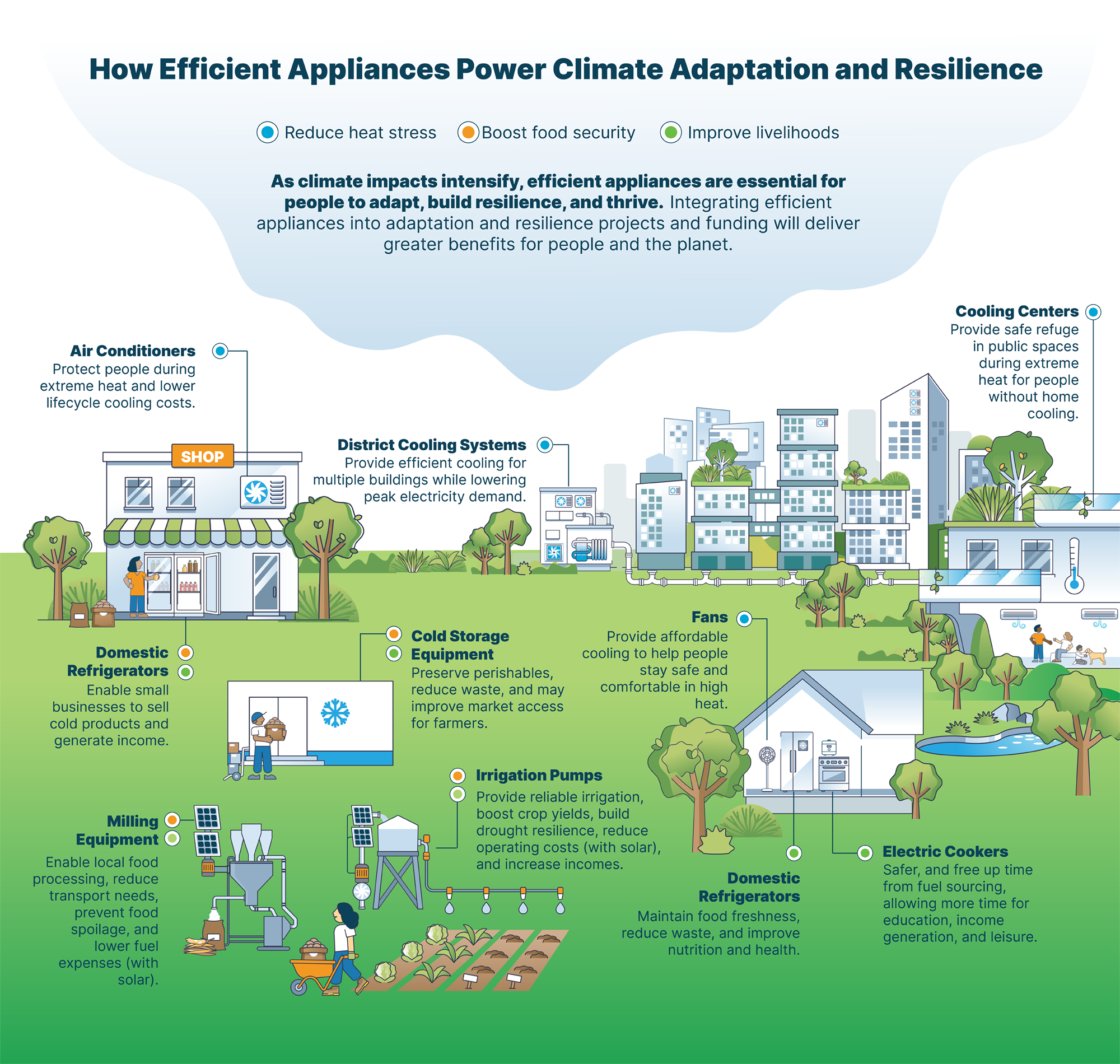
Powering Thriving Communities: Efficient Appliances for Climate Change Adaptation and Resilience
CLASP
2025 CLASP Annual Report
Collective action for people,
prosperity, and planet.
A note from CLASP’s CEO,
Christine Egan
Appliance and equipment energy efficiency is a triple-win for people, planet, and prosperity. In a time of multiplying global crises, it stands out as a durable climate solution and key element of smart decarbonization strategies. It also creates jobs and improves livelihoods, enhances energy security and food system resilience, and helps people adapt to a changing climate.
Looking back at 2025, I’m wowed by the work of CLASP’s global team and dedicated partners, and the focus of the decisionmakers we support. Through purposeful collaboration, we forged the policy instruments, finance, and intelligence to drive positive momentum.
Together, we are changing the way we use energy.

2025 by the numbers:
4.6 Gt 18 CLASP-supported appliance and equipment efficiency policies will avoid 4.6 gigatons of CO2 by 2050, improving planetary and human health and saving money.
30K+ Over 30,000 people experienced improved health and livelihoods via access to efficient, solar powered appliances and equipment.

Skyline of Jakarta, Indonesia
Image credit: CLASP
Elevating Appliance Efficiency in National Climate Commitments
What we did
Ahead of COP30, CLASP led a global campaign to improve inclusion of appliance and equipment energy efficiency in national climate goals (nationally determined contributions or NDCs).
How we did it
Through our Net Zero Appliance NDC Toolkit and bespoke support for governments around the globe, CLASP elevated appliance efficiency policy as a key climate mitigation solution. Now, appliance and equipment efficiency policy is included in 90% of all submitted NDCs—up from below 50% in the last cycle.
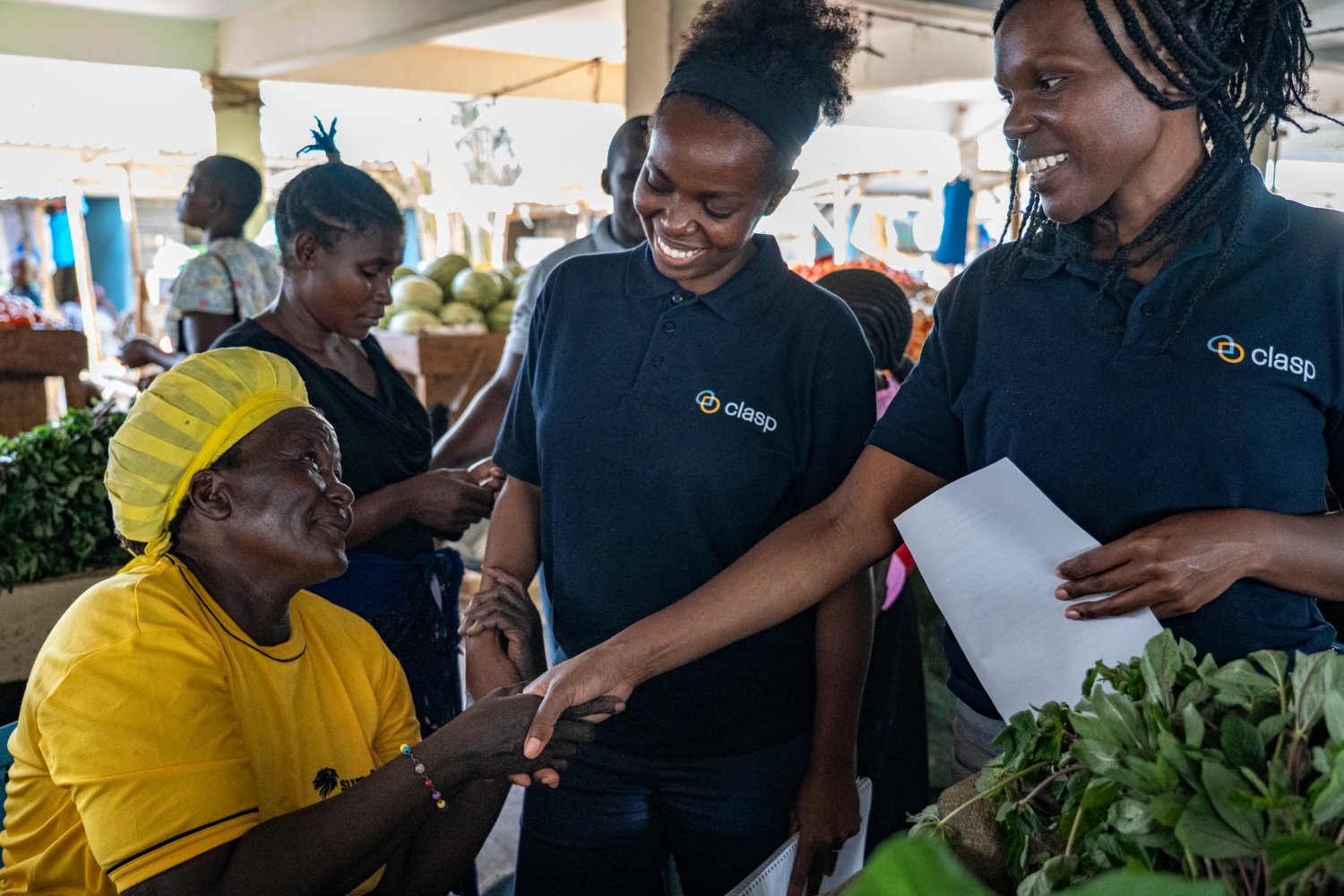
Image credit: CLASP
Powering Africa’s Green Economy
Solar-powered appliances and equipment turn energy into opportunity, helping small businesses generate jobs and income. In 2025, CLASP re-launched our innovative Productive Use Financing Facility to make it cheaper and easier for entrepreneurs, farmers, and small businesses in Ethiopia, Kenya, and Nigeria to buy solar-powered appliances and equipment that power livelihoods. Last year, CLASP partnered with 11 companies to drive jobs and economic growth in Africa’s informal and agricultural sectors, which make up 70-80% of African economies.
Slashing Emissions Through Smart Policy
Australia
National leaders passed a lighting policy that will transition Australia’s market to an all-LED future and avoid 41 Mt of CO₂ by 2050, informed by CLASP-led analysis.
Brazil
Policymakers made strides in Brazil’s LED transition with CLASP’s support, approving a lighting policy package that will slash nearly 3 Mt CO₂ by 2050.
China
CLASP supported seven major policy updates, including for compressed air systems, refrigerators, and water pumps. Altogether, the new policies are estimated to cut nearly 3 Gt CO₂ by 2050.
India
CLASP supported the advancement of policies for space cooling appliances that will place India among global leaders in efficiency and cut 1.2 Gt CO₂ by 2050.
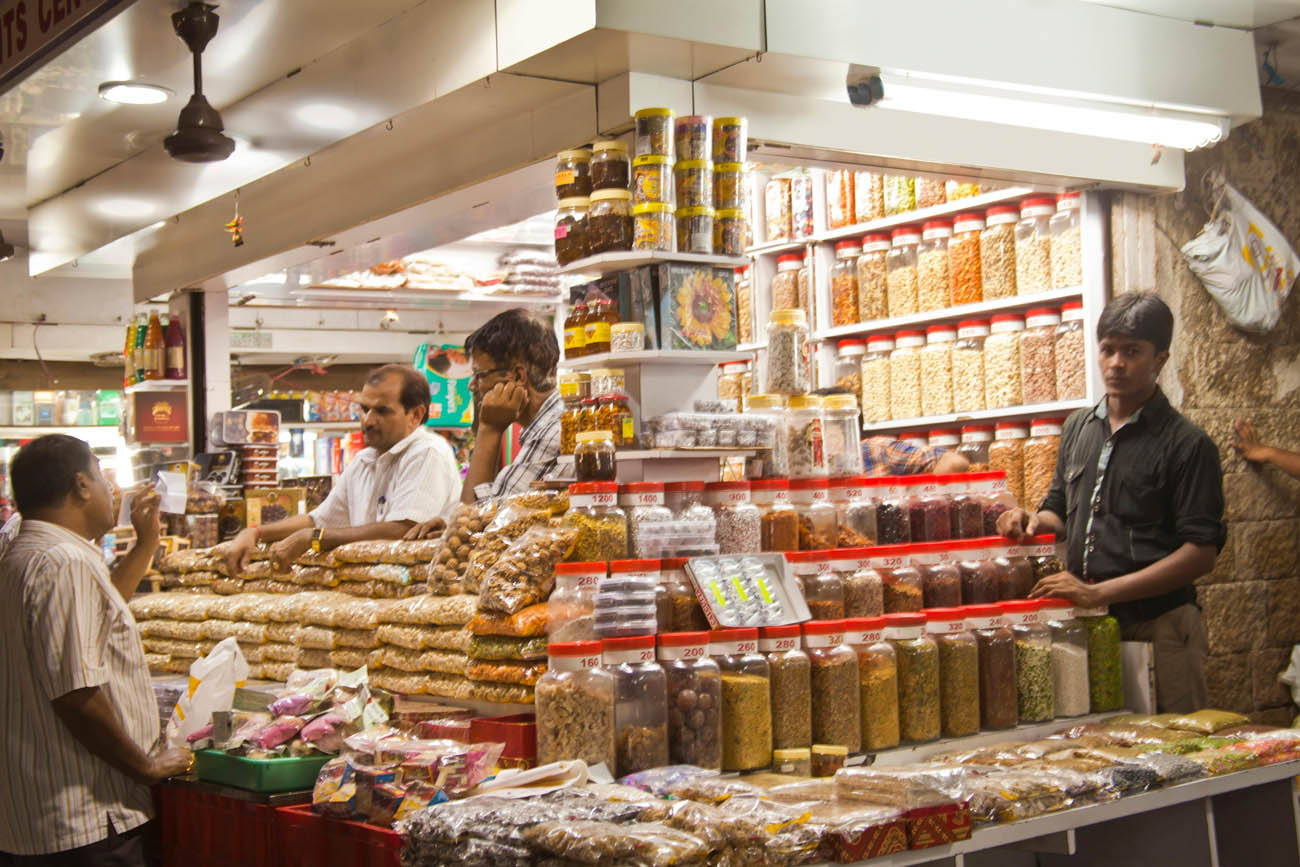
Image credit: ImageDB
Making Efficient, Affordable Fans the New Standard in India
India is one of the places on the planet most at risk of extreme heat. 90% of households rely on fans as their only form of space cooling. CLASP partnered with government and private sector partners to drastically improve fan efficiency, availability, and affordability. A major part of the effort was supporting small and medium enterprises to improve their production capacity.
The impact has been catalytic. Together, CLASP and partners cut energy demand and climate emissions from cooling, while safeguarding jobs, strengthening local supply chains, and making efficient cooling more affordable to the people who need it.
Joining Up with the Modern Energy Cooking Services (MECS) Programme
CLASP joined the UK Aid-supported MECS programme as a core partner alongside Loughborough University and the World Bank’s ESMAP. CLASP now leads on venture building and market shaping, helping e-cooking businesses scale up. In 2025, CLASP launched the Global LEAP Awards Induction Cooktops Competition to identify and promote the most innovative electric cooktops on the market.
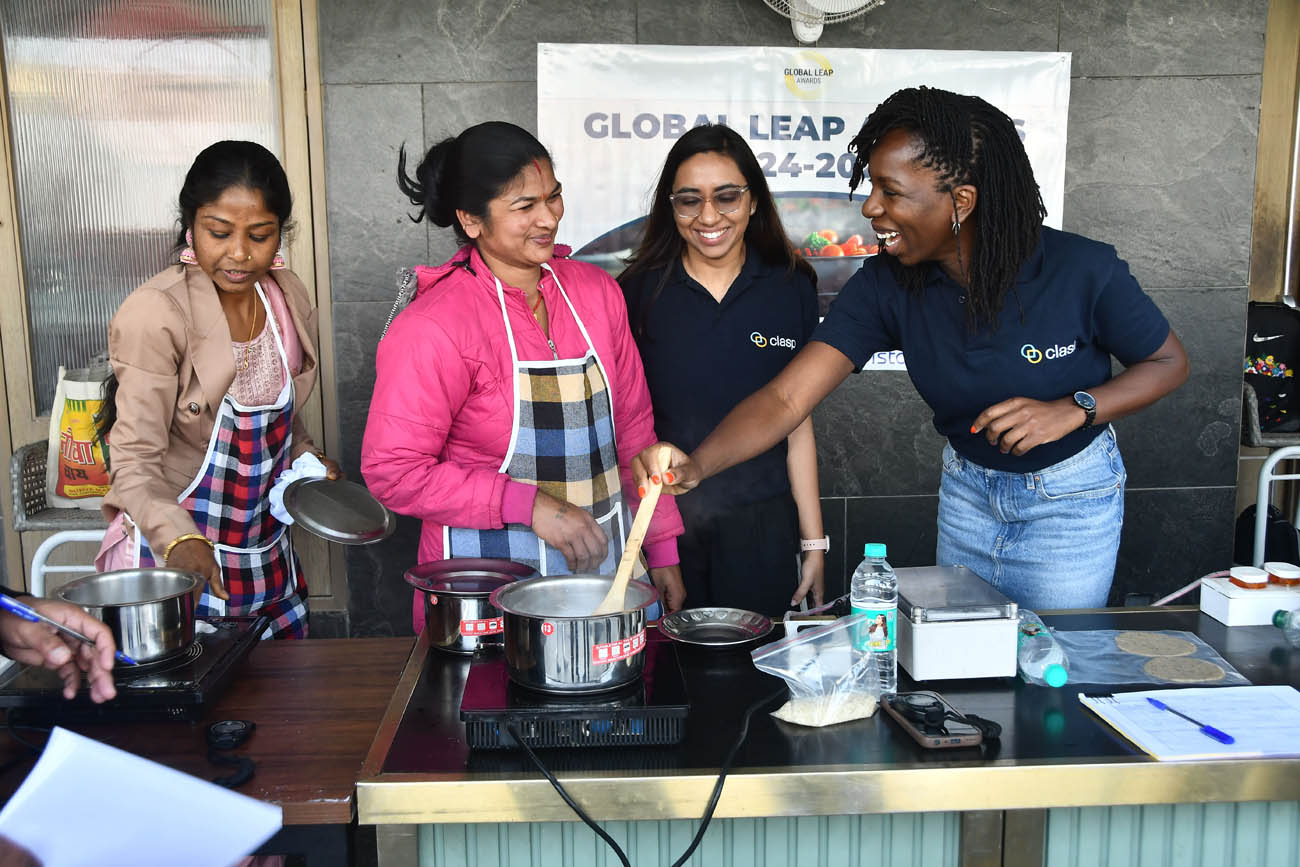
CLASP's Sumedha Awasthy & Nya Abagi at the Global LEAP Awards Induction Cooktops Competition workshop in New Delhi, India.
Image credit: CLASP
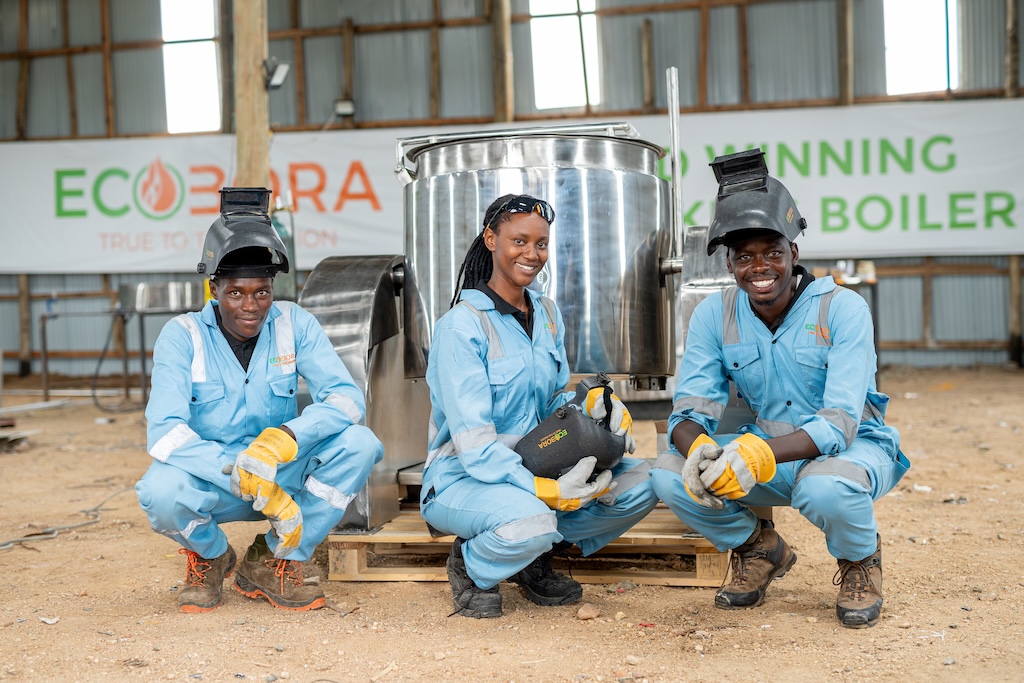
EcoBora, an innovative electric cooking company in Kenya, supported by CLASP through the MECS programme.
Image credit: CLASP
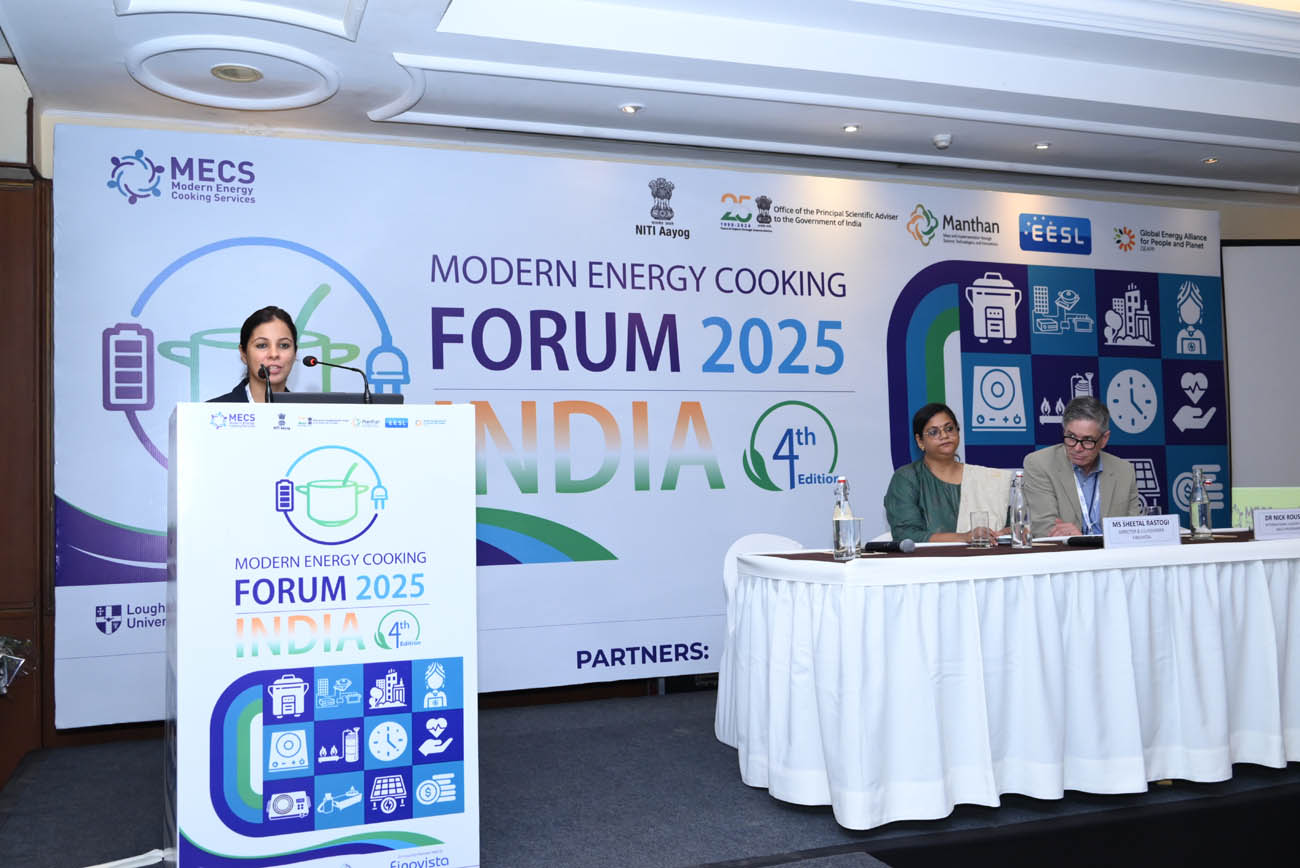
CLASP’s India Director, Neha Dhingra, speaking at the Modern Energy Cooking Forum in New Delhi, India, in September 2025.
Image credit: Finovista
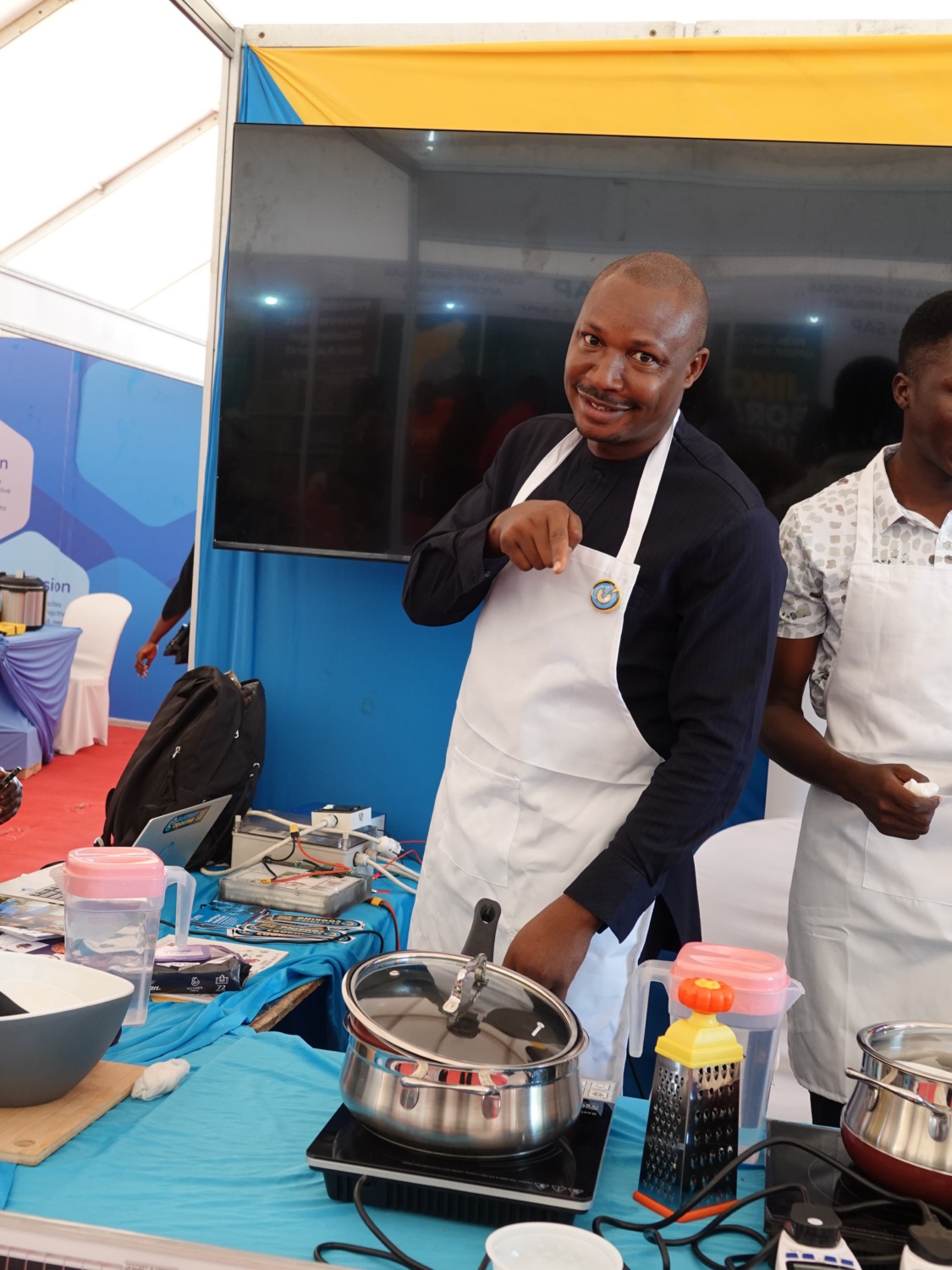
Emmanuel Aziebor, CLASP’s Senior Director, Africa, at Kenya Clean Cooking Week.
Image credit: CLASP
How UK Housing Authorities Can Power the Switch to Electric Cooking
Global Action Plan, in partnership with CLASP, piloted gas-to-electric cooking retrofits in a social housing community in Manchester.
For participating households, switching to electric meant more than lower emissions. It meant breathing more easily in the kitchen, a cleaner and more practical cooking experience, and greater peace of mind for families with young children. Every household preferred its new induction cooktop over gas.
Watch the video:
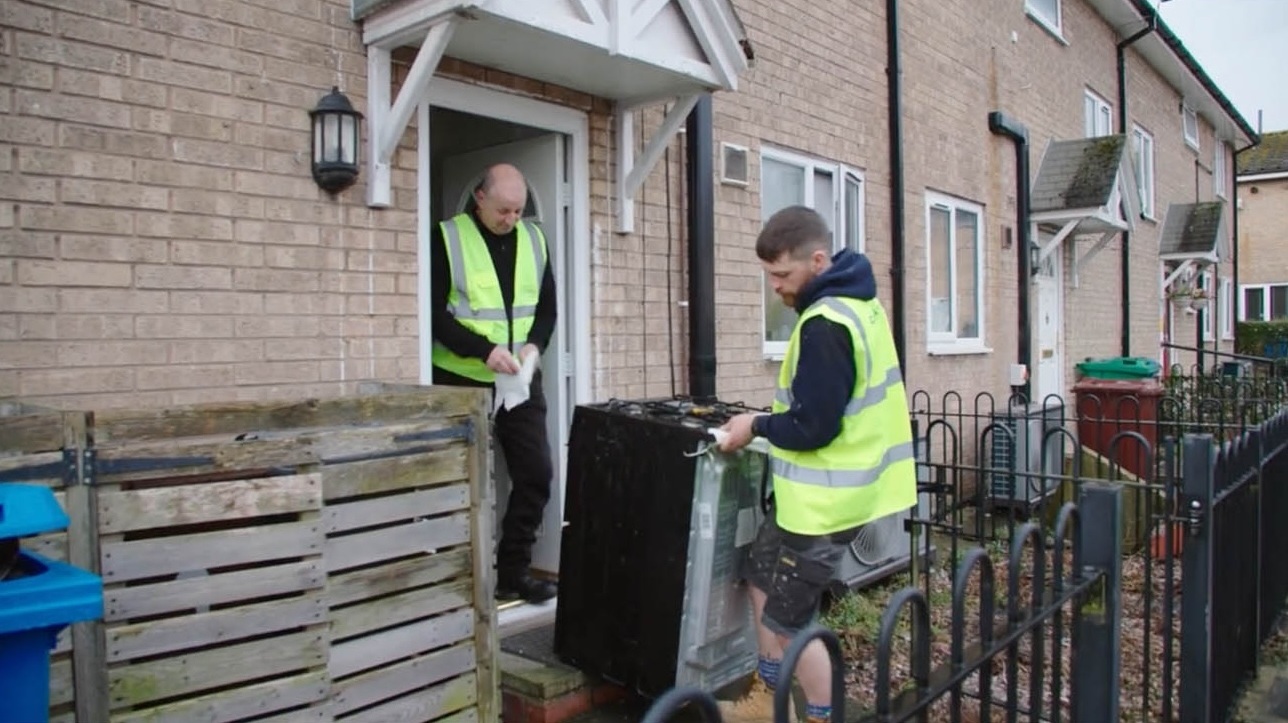
Image credit: CLASP
Economies Can Boom When Powered by Efficient Motor Systems
Industrial motor systems are the invisible heartbeat of economic development. Universally used across industrial facilities, they power the production of goods like metals, paper, cement, textiles, and packaged food. Motor systems are also ferocious energy consumers, due to their function and prevalence. Without intervention, and in step with global economic development and industrialization, by 2050 motor systems will account for 35% of global electricity demand and 19% of energy related emissions. CLASP is taking action on this priority appliance in the fight for Net Zero, identifying high impact opportunities at national and global scales to drive up efficiency, slash emissions, and boost economic progress.
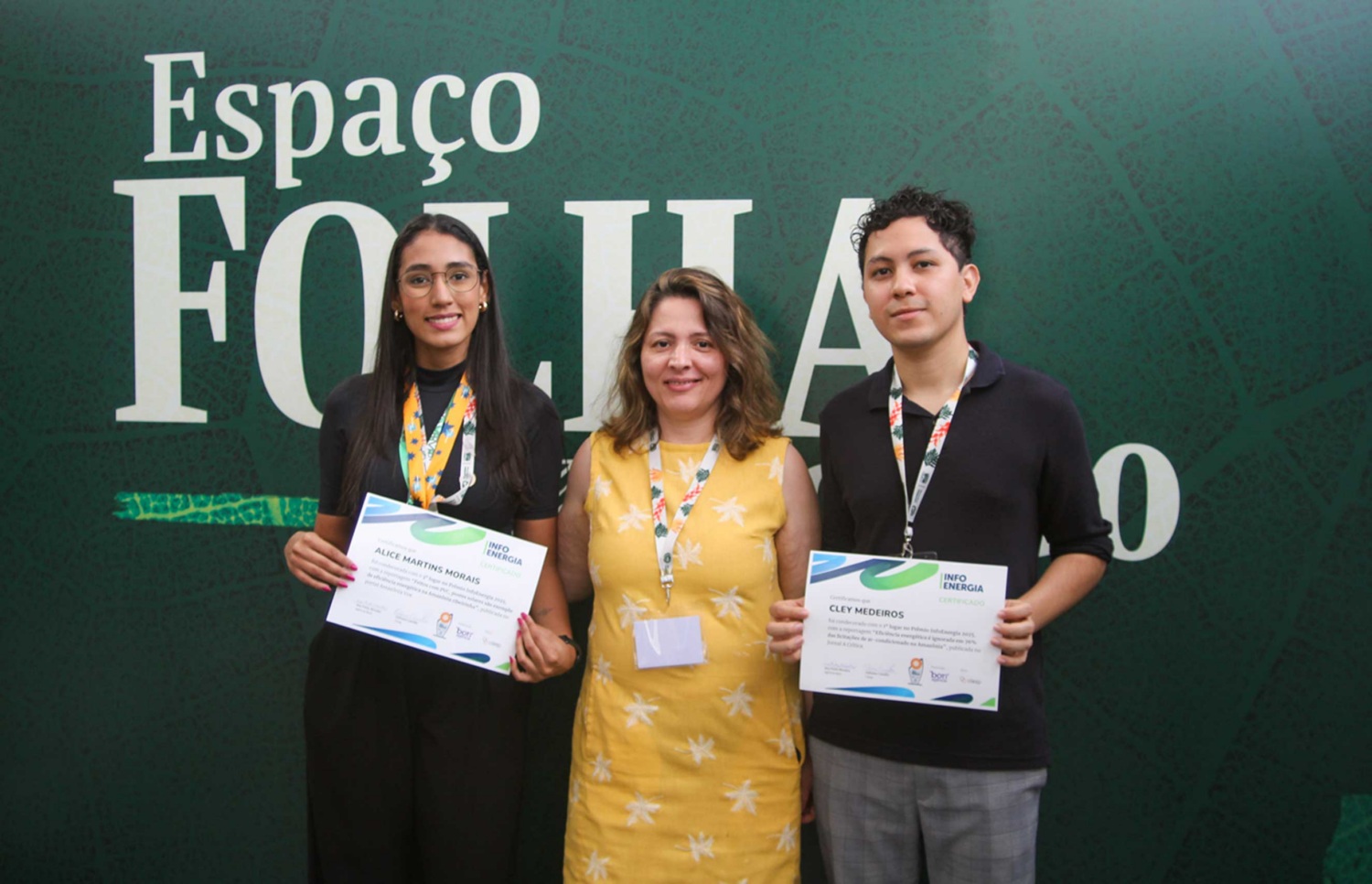
Image credit: CLASP
In Brazil, Partnering for Change
Ahead of COP30 in Brazil, CLASP joined forces with science communication agency Bori to drive national awareness of the benefits of appliance efficiency. Our InfoEnergia Mentorship was an 8-week, in-depth workshop that connected 25 journalists with experts and expertise to produce smart, contextualized reporting on appliance efficiency and its social, economic, and environmental impacts. Robust local journalism is a key element of durable climate policy.
Elevating Appliance-Centered Solutions at COP30
At COP 30 in Brazil, appliance and equipment energy efficiency stood out as a powerful climate solution, driving job creation, energy security, and adaptive capacity. CLASP provided expert testimony on the power of appliance efficiency solutions.
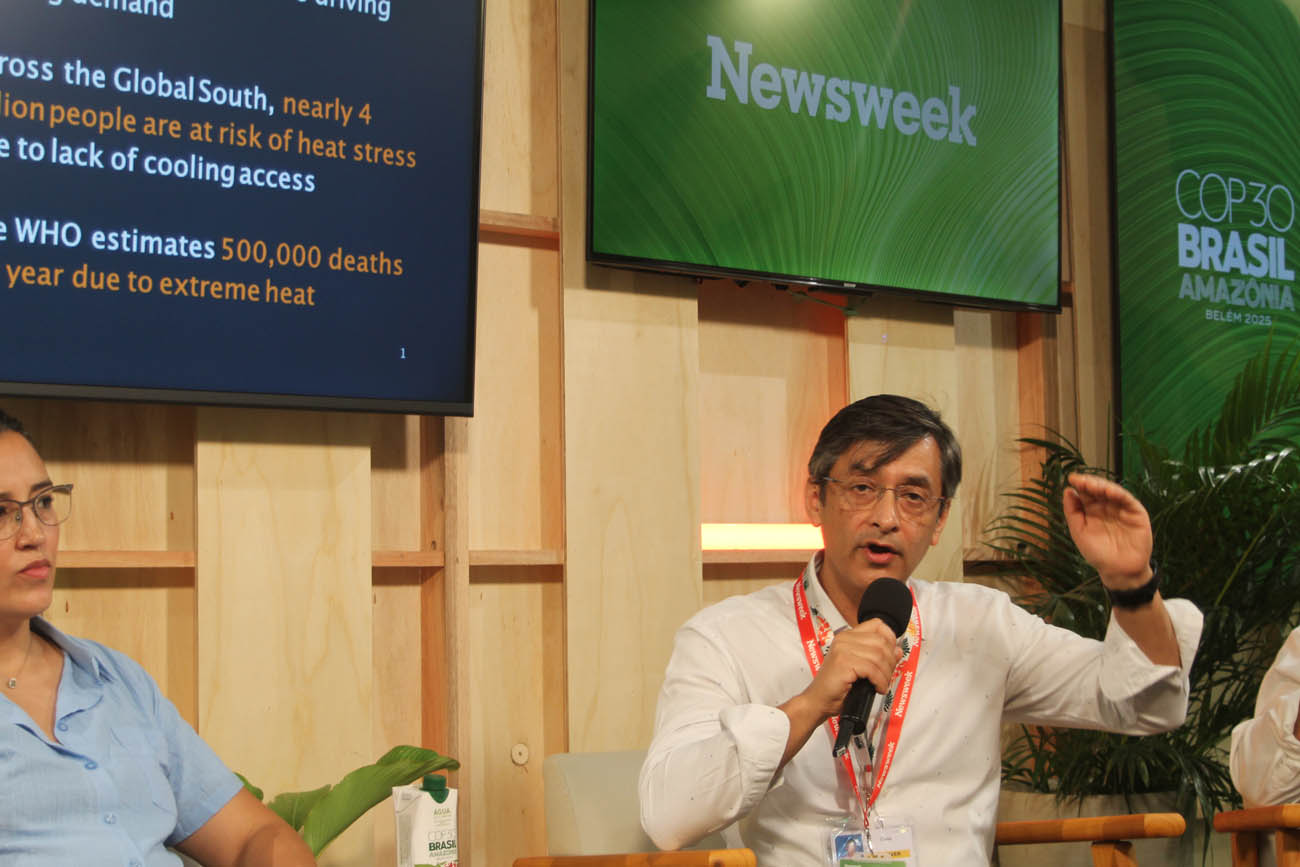
CLASP’s Bishal Thapa participated in discussion on space cooling solutions, offering insights about the benefits of efficient cooling technologies that slash emissions.
Image credit: CLASP

CLASP’s Edilaine Camillo moderated a conversation on the principal role of efficiency in Brazil’s energy transition during an agency-led day of efficiency themed events.
Image credit: CLASP

CLASP’s Bishal Thapa took part in a panel hosted by Casa Civil to speak about the role of energy efficiency policy in Brazil’s reindustrialization strategy.
Image credit: CLASP
Insights driving action
Delivering COP28’s Doubling Efficiency Goal Through Appliances
Appliance efficiency will play a critical role in meeting the COP28 commitment to double the global rate of energy efficiency improvement by 2030. CLASP research found it could deliver 20% of the energy savings needed, highlighting the value of strong standards, clear targets, and international collaboration.
The Missing Piece of Energy Access
666 million people, most of them in Africa, lack access to electricity. 2025 CLASP research shows that directing just 15% of existing energy investments toward efficient appliances can generate the demand needed to make grid expansions financially viable and help those currently living without electricity gain access to healthier, more productive lives.
Finances
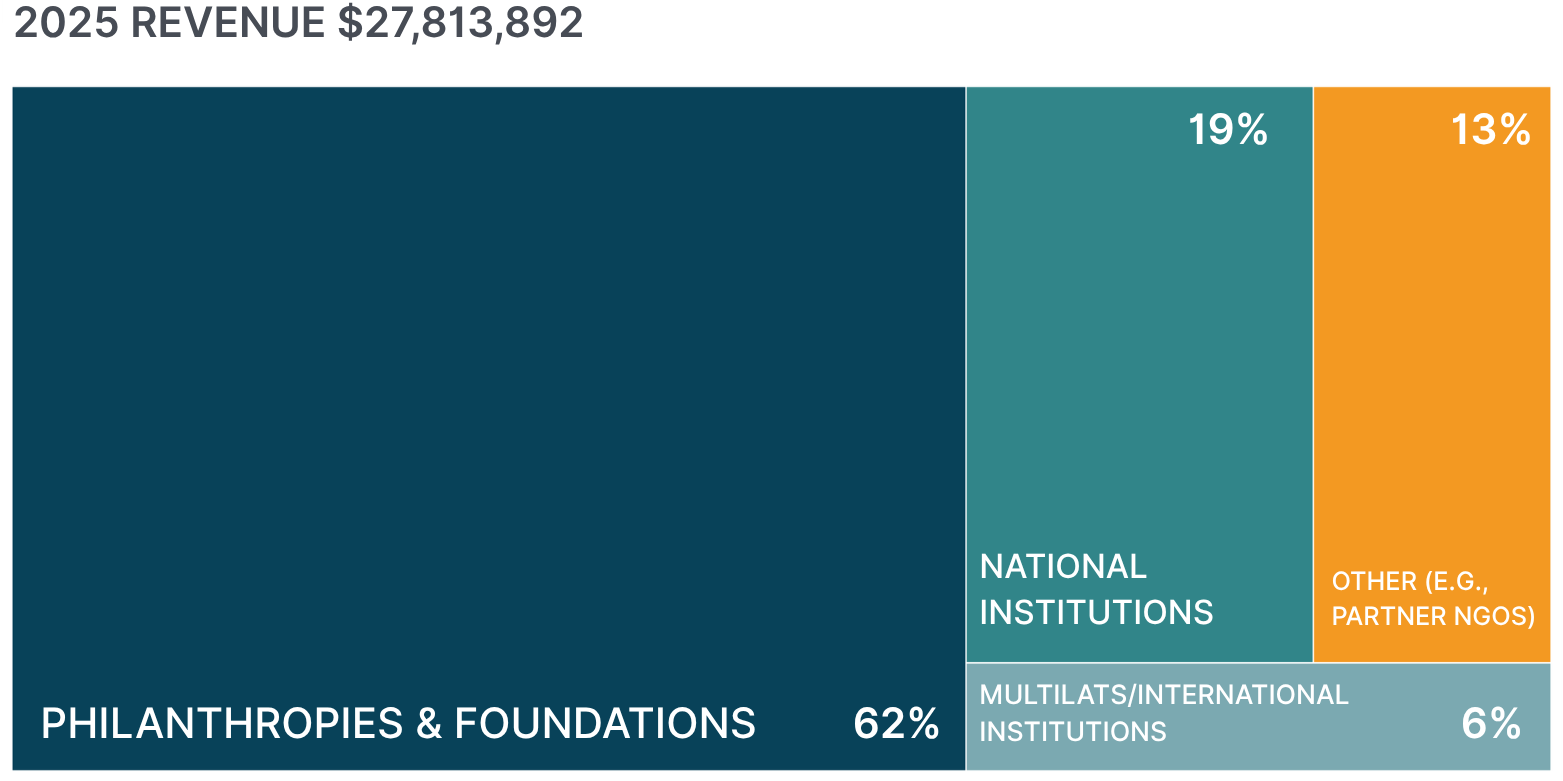
- Revenue by donor type
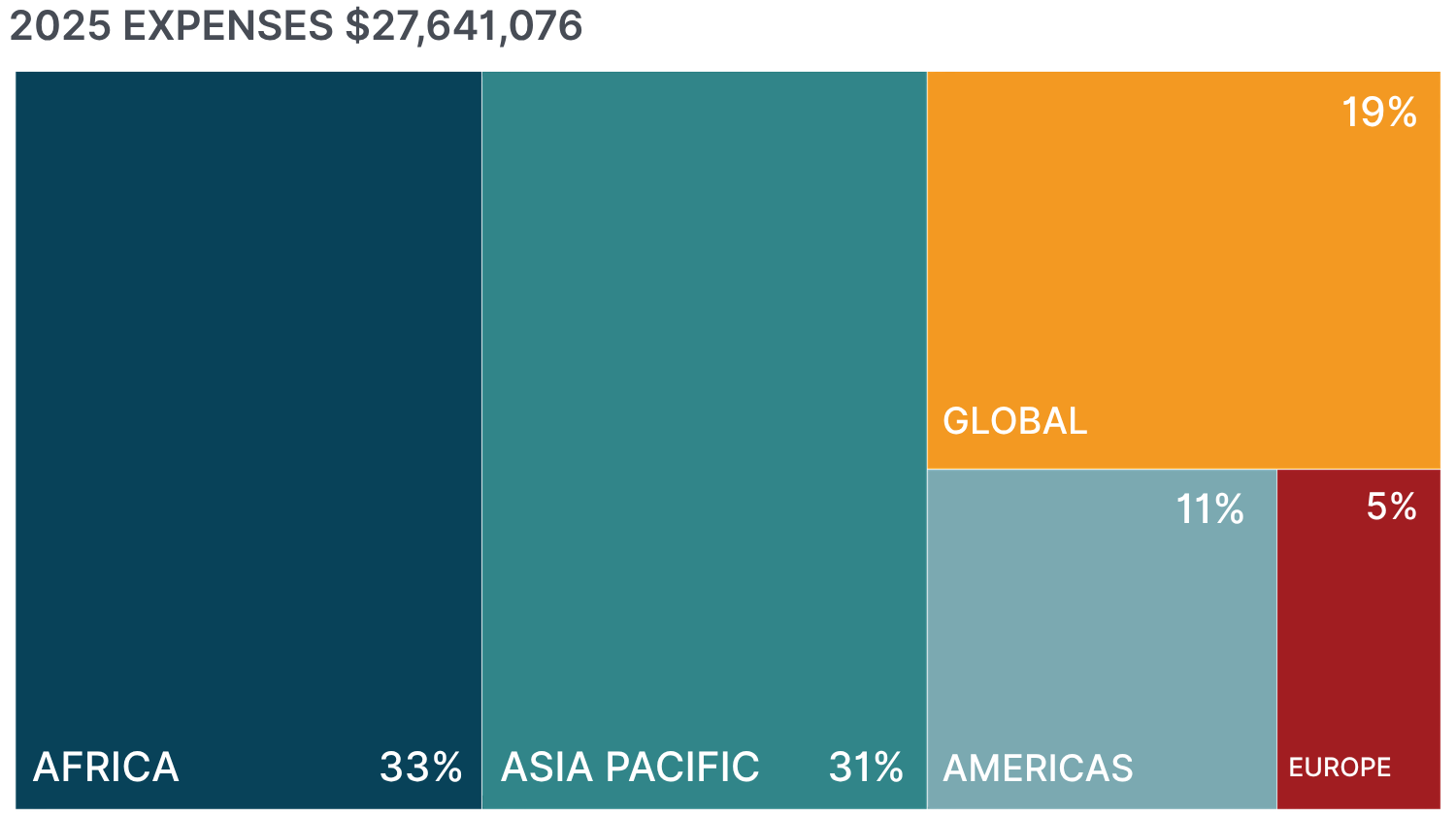
- Expenses by region
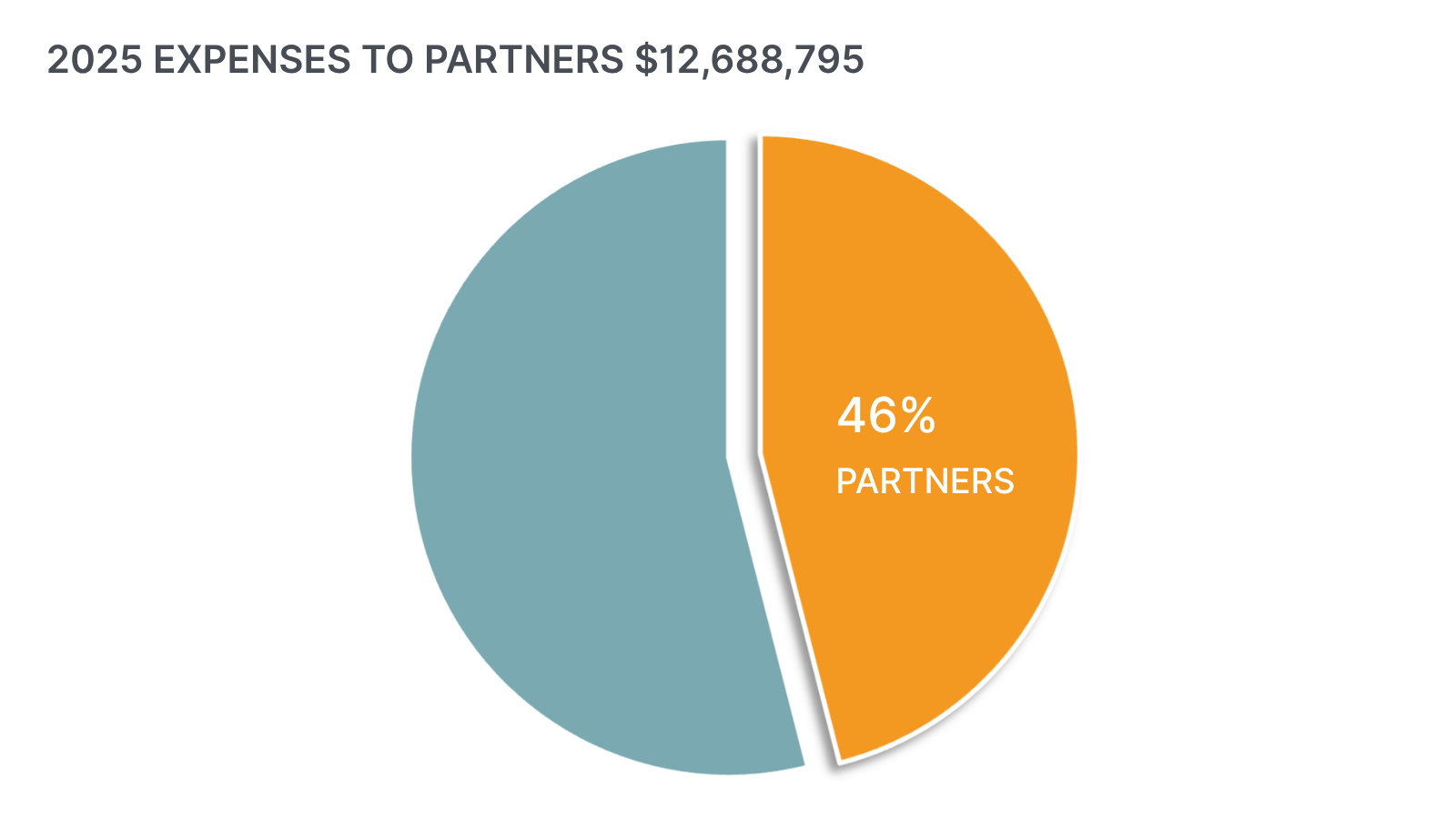
- CLASP collaborates with a global network of partners. In 2025, CLASP channeled nearly half our resources to civil society and energy groups, innovators, academic institutions, and experts — essential partners in changing the way we use energy.
About CLASP
Efficient appliances and equipment are essential drivers of economic growth and a fast, practical energy transition. With over 25 years of expertise and offices on five continents, CLASP collaborates with governments, industry leaders, and other experts to change the way we use energy.
We’re proud of what our team and partners achieved in 2025, driving progress for a better world. In 2026, we remain committed to championing appliance efficiency as a powerful solution for people, prosperity, and planet.
Reflections on the Productive Use Financing Facility
The Productive Use Financing Facility (the Financing Facility), an innovative program implemented by CLASP and supported by the Global Energy Alliance for People and Planet (the Alliance), makes energy-efficient appliances more affordable to consumers and businesses in emerging markets in Africa.
As the Financing Facility celebrates its first anniversary and concludes the initial phase of this expanded program, we look at the lives and communities it has already transformed and consider paths towards reaching our goals to help generate green jobs and equitable opportunities for thousands across Africa.
Empowering communities with the right tools
A single appliance has the potential to improve the quality of life for an entire household or community. Women entrepreneurs with access to an off-grid refrigerator can sell cold beverages, attracting customers and increasing their income. Solar-powered mills can provide a central flour-processing location for smallholder farmers in remote communities, allowing them to offer new products, reduce workloads, and avoid transportation costs.
Despite the potential of these technologies, many businesses and households that need them can’t afford them due to high costs and limited financing options. For the 750 million–plus people worldwide who live without access to electricity and the approximately 700 million living in extreme poverty, energy-efficient appliances are still out of reach.
The Financing Facility’s role in driving access and opportunity
The Financing Facility offers a solution: make these life-changing appliances more affordable to those who need them. By providing grants, subsidies, and technical assistance, the Financing Facility enables small businesses, entrepreneurs, and households to acquire energy-efficient appliances at lower prices.
The initiative’s two-year pilot project ran from 2022 to 2024, worked with 24 companies across six countries, deployed nearly 16,000 appliances, and directly improved the lives of over 58,000 households. In June 2025, the Financing Facility entered a second phase with the announcement of its expansion and a $6.1 million USD funding boost. During this phase, the initiative aims to create over 3,000 green jobs through the sale and use of over 10,000 appliances in four years.
One year on: expanding reach and impact
A new cohort of 11 appliance companies, announced in November 2025, remains focused on productive-use appliances (in other words, technologies people use to generate income) like grain mills, solar water pumps, walk-in cold rooms, and refrigerator/freezers. From this cohort alone, the Financing Facility aims to deploy over 2,000 appliances across Kenya to women-owned and -led businesses.
The second cohort selection, launching in February 2026, will be open to appliance companies in Ethiopia, Nigeria, and Kenya. CLASP will announce and detail the process via the Financing Facility web page, LinkedIn, and Bluesky.
Committed to the most underserved communities
While electrification is expanding globally, deliberate efforts must be made to ensure the sustainability and commercial viability of renewable energy infrastructure. Programs like the Financing Facility place appliances into people’s hands and homes, energizing ambition and output amongst local businesses and farms. Increased incomes from these activities drive economic growth, create jobs, and improve the quality of life, giving communities the tools to thrive. For example, Helen Obinna, a small business owner in Nigeria, has witnessed her business transform: her refrigerator can keep products cool despite inconsistent power, and sales of cold beverages have substantially increased.
About the Productive Use Financing Facility
The Financing Facility is an innovative program that provides grants, subsidies, and technical assistance to suppliers and distributors to lower appliance prices and reach more customers. This makes it easier for small businesses, entrepreneurs, and households to buy energy-efficient technologies, such as solar water pumps, mills, and refrigerators, at favorable prices.
This program is supported by the Global Alliance for People and Planet.
For more information, read the Productive Use Financing Facility 2.0 press release, contact financing@clasp.ngo, and follow us on LinkedIn for regular updates on how the Financing Facility is benefiting people and our planet.
About CLASP
CLASP is the leading global authority on efficient appliances’ role in fighting climate change and improving people’s lives. With 25 years of expertise and offices on four continents, CLASP collaborates with policymakers, industry leaders, and other experts to deliver clear pathways to a more sustainable world for people and the planet.
About the Global Alliance for People and Planet
The Global Energy Alliance for People and Planet works for a world where everyone has access to affordable, reliable, clean electricity and the means to use it to improve their lives. Our Alliance builds transformative public, private, philanthropic partnerships to end energy poverty and accelerate green economic opportunity. Founded in 2021 by The Rockefeller Foundation, IKEA Foundation, and Bezos Earth Fund, we unlock finance, strengthen institutions and transform markets, delivering progress anchored in deep community engagement. By uniting actors across the value chain, from households to heads of state, we go beyond individual projects to drive lasting systems change. With work in more than 30 countries across Africa, Asia, Latin America and the Caribbean, our Alliance aims to reach 1 billion people with clean electricity, prevent 4 billion tons of carbon emissions and create or improve 150 million jobs. For more information, please visit energyalliance.org.
Powering Progress: Three Local Appliance Companies Generate Job and Income Growth Across Africa
CLASP has selected 11 appliance companies to receive funding in support of job and income growth in sub-Saharan Africa. This support will be provided through the Productive Use Financing Facility (the Financing Facility), an initiative managed by CLASP and supported by the Global Energy Alliance for People and Planet (the Energy Alliance). The Financing Facility aims to accelerate the adoption of clean, energy-efficient appliances to power small businesses and support smallholder farmers, potentially transforming the lives of millions across Africa.
Baridi, Irri-hub, and Koolboks are three of the 11 impact-driven companies selected for the program whose work is already transforming the continent.
Solar appliances drive economic growth
For a smallholder farmer or business owner in sub-Saharan Africa, even a single appliance can go a long way. For example, a CLASP survey found that business owners in Uganda who purchased an off-grid refrigerator were able to increase their incomes twofold.
For women, an appliance can be a major driver of income. In the Finance Facility’s pilot program, households where women purchased an appliance saw incomes increase an average of 94%. From selling cold drinks using a refrigerator-freezer to growing high-value crops with a solar water pump, equitable access to reliable and affordable appliances can transform not only individual lives, but entire communities. Solar-powered appliances can reduce the physical strain attached to traditional working conditions, expand business opportunities, improve nutrition, and create local jobs.
Three African appliance companies making an impact
For Facility grantees like Baridi, Irri-hub, and Koolboks, this kind of transformative impact is what drives their work.
Baridi supplies solar-powered chilling technologies to smallholder farmers in Kenya, ensuring that their hard-earned produce remains fresh and market-ready.

Photo credit: Baridi

Photo credit: Baridi
Koolboks designs and distributes affordable solar-powered refrigerator-freezers, ensuring access for small businesses and farmers across the region. By providing reliable cold storage, Koolboks helps entrepreneurs expand product offerings and reduce the economic risks tied to spoilage.

Photo credit: Koolboks
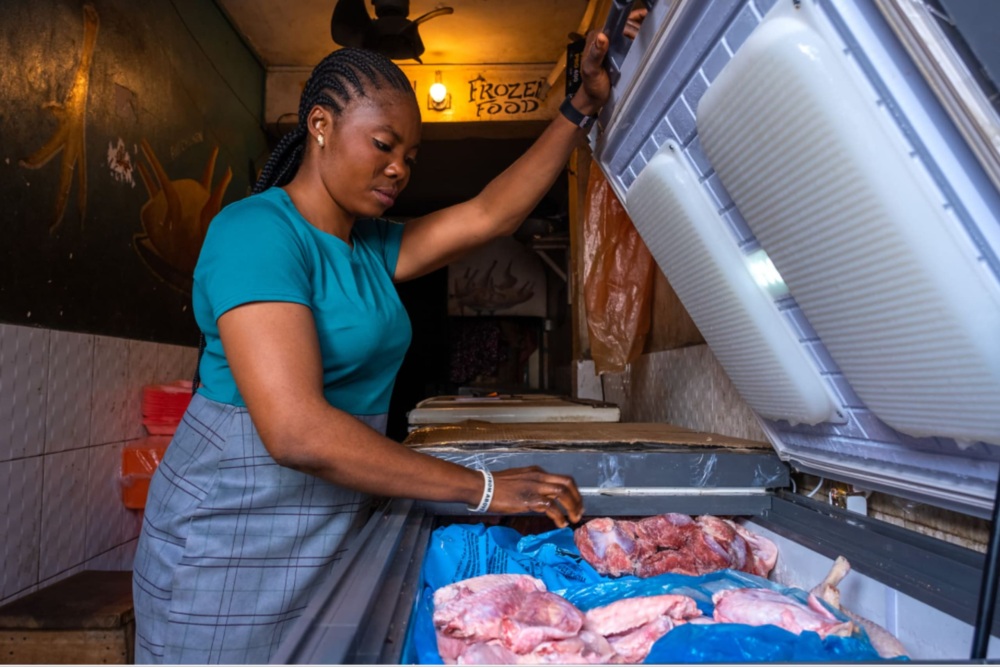
Photo credit: Koolboks
Irri-hub is a provider of affordable water management solutions, including solar water pumps, that help smallholder farmers increase yields, improve crop predictability, and expand production.
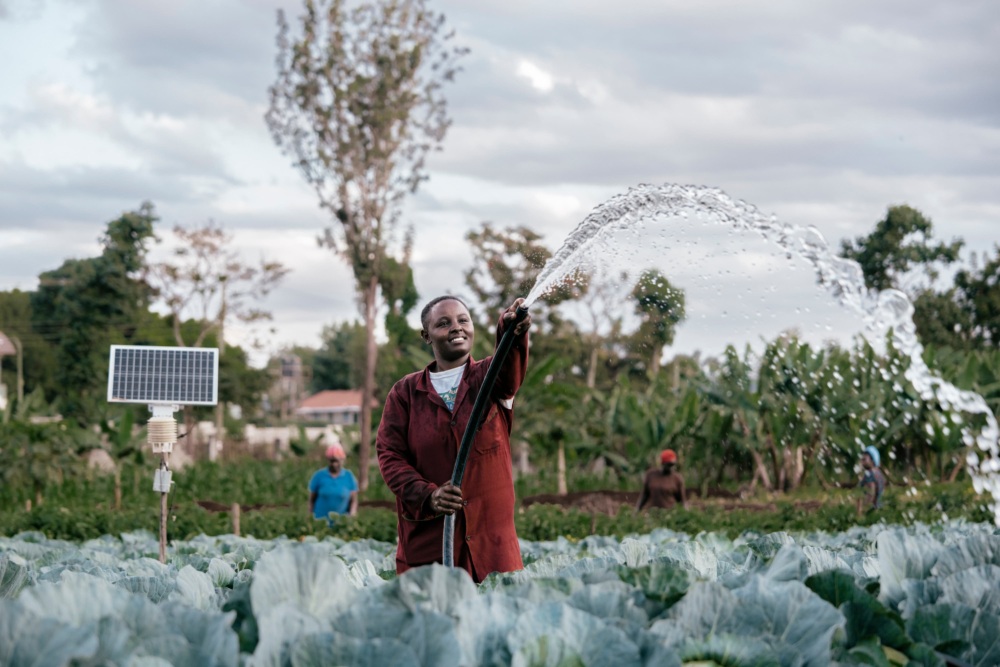
Photo credit: Irri-hub

Photo credit: Irri-hub
Solar water pumps offer an enormous amount of income and job growth potential. CLASP’s report “Leave No One Behind: Bridging the Energy Access Gap with Innovative Off-Grid Solar Solutions” found that 87% of farmers in Rwanda who obtained a solar water pump reported an increase in their monthly incomes, while 64% reported hiring more laborers and growing more crops.
Enduring partnerships are the key to transforming lives and livelihoods
Both Baridi and Koolboks have longstanding partnerships with CLASP. Baridi was a finalist in the 2022 Global LEAP Awards Off-Grid Cold Chain Challenge, while Koolboks received funding from the first round of the Financing Facility.
This round of the Financing Facility is Irri-hub’s first partnership with CLASP.
From long and enduring partnerships to new collaborations, these kinds of local, on-the-ground partnerships are key to helping transform the sector, bringing life-changing appliances to the millions who need them. CLASP remains committed to strengthening these relationships and investing in partners who are creating green jobs and equitable opportunities across Africa.
–
About the Productive Use Financing Facility
The Financing Facility is an innovative program that provides grants, subsidies, and technical assistance to suppliers and distributors, helping to lower appliance prices and expand customer bases. The Facility makes it easier for small businesses, entrepreneurs, and households to buy energy-efficient technologies, such as solar water pumps, mills, and refrigerators, at favorable prices.
This program is supported by the Global Alliance for People and Planet .
For more information, read the Productive Use Financing Facility 2.0 press release, contact financing@clasp.ngo, and follow us on LinkedIn for regular updates on how the facility is benefiting people and our planet.
About CLASP
CLASP is the leading global authority on efficient appliances’ role in fighting climate change and improving people’s lives. With 25 years of expertise and offices on four continents, CLASP collaborates with policymakers, industry leaders, and other experts to deliver clear pathways to a more sustainable world for people and the planet.
About the Global Alliance for People and Planet
The Global Energy Alliance for People and Planet works for a world where everyone has access to affordable, reliable, clean electricity and the means to use it to improve their lives. Our Alliance builds transformative public, private, philanthropic partnerships to end energy poverty and accelerate green economic opportunity. Founded in 2021 by The Rockefeller Foundation, IKEA Foundation, and Bezos Earth Fund, we unlock finance, strengthen institutions, and transform markets, delivering progress anchored in deep community engagement. Our Alliance aims to reach 1 billion people with clean electricity, prevent 4 billion tons of carbon emissions, and create or improve 150 million jobs. For more information, please visit www.energyalliance.org and follow us on X at @EnergyAlliance.
Find CLASP at the 2025 Africa Climate Summit
CLASP and our partners are dedicated to solving the world’s most pressing, interconnected crises: the climate emergency, poverty, inequality, and access to energy.
Our research shows how efficient, high-quality appliances alleviate energy poverty and promote sustainable development—positively impacting billions of people.
At this year’s Africa Climate Summit in Addis Ababa, we will be presenting solutions from our upcoming research to showcase how efficient appliances are a critical piece to achieve universal electricity access and accelerate Africa’s momentum in becoming a powerhouse of global climate solutions.
CLASP experts attending:
- Emmanuel Aziebor – Senior Director, Africa
- Anne Muhonja Songole – Manager, Climate
If you are interested in connecting with us to speak at or attend your events, please contact mbaur@clasp.ngo.
Where to find us:
Date | Time and Venue | Event |
|---|---|---|
Sunday 7 September 2025 | 10:45-11:45 | WEDO Panel: From Ground to Global: African Women’s Power in Climate Action |
Tuesday 9 September 2025 | 09:30-11:00 Addis International Convention Center (Room AP2) | Precise Panel: Transforming Livelihoods Through Climate-Smart Decentralized Renewable Energy (DRE) Ecosystem Collaboration |
Tuesday 9 September 2025 | 11:30-13:00 Rockefeller Foundation Pavillion | GEAP Panel: Leveraging Increasing Energy Access to Create Jobs, Drive Economic Transformation, and Increase Climate Resilience |
Tuesday 9 September 2025 | 13:30-15:00 | IWMI and GOGLA Panel: Climate-Smart Irrigation: Scaling Solar Solutions for Africa’s Smallholder Resilience |

Solar Water Pumps
Financing for Impact: Providing Affordable and Sustainable Energy Solutions in Ethiopia
Rain-fed agriculture is a fundamental pillar of the Ethiopian economy. In 2022, agriculture employed about 80% percent of the country’s workforce and contributed nearly 38% to gross domestic product (GDP).1 However, persistent droughts have posed significant challenges to farmers’ livelihoods and reduced food yields.
Off-grid irrigation as a solution
Solar water pumps are a sustainable, off-grid solution to improve small-scale irrigation, strengthen community resilience, and support sustainable economic growth. Powered by the sun, solar water pumps also reduce the use of fossil fuels, so they are less harmful to the climate. Rekik Bekele is the founder and CEO of Green Scene Energy, a thriving solar appliance distributor. Green Scene recently received business support through CLASP’s Productive Use Financing Facility to increase its supply of affordable solar water pumps.
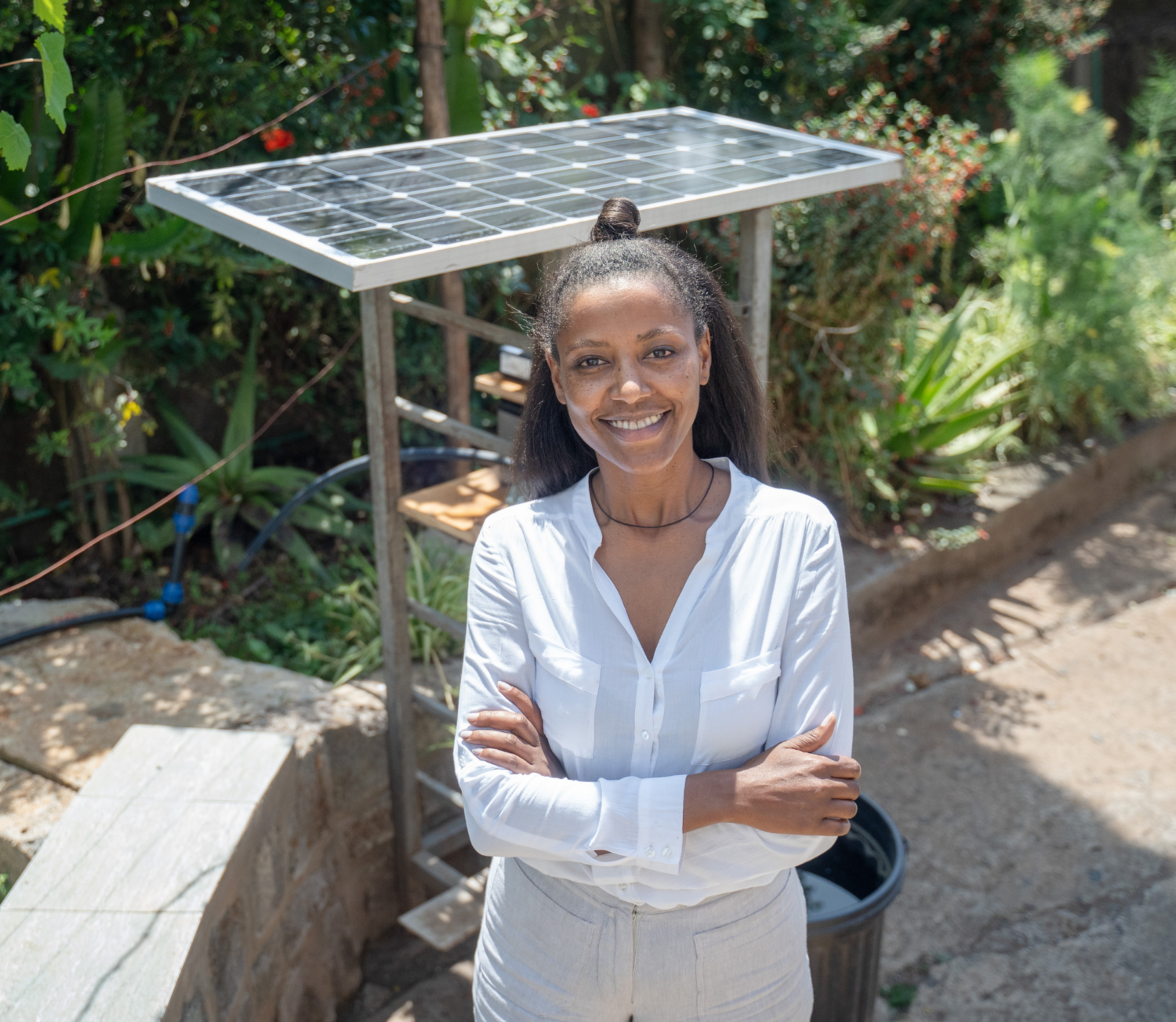
Founded by Rekik Bekele in 2016, Green Scene Energy provides affordable, high-quality solar energy products in off-grid areas of Ethiopia. Green Scene began by specializing in solar home lighting systems, later expanding its portfolio to include solar mini-grid, commercial and industrial solar engineering, procurement and construction (EPC) solutions for off-grid projects.
In 2022, in response to the growing need for irrigation pumping in rural areas across Ethiopia, Green Scene began distributing solar-powered water pumps. To date, the company has successfully positioned itself as a market leader in the provision of affordable solar water pumping systems.
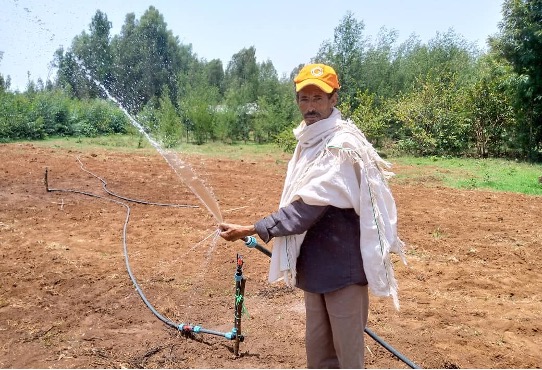
Financial support catalyzing progress
Despite a growing demand for solar water pumps, the substantial upfront capital required exposes significant challenges. According to Rekik, CLASP’s Productive Use Financing Facility has been instrumental in allowing Green Scene to continue selling solar water pumps in 2023. “We had been seeking investment for some time; by the end of 2022, we were only importing small numbers of pumps at a time, using existing sales revenue,” observed Rekik.
“Green Scene’s expanded capacity to make larger, more efficient orders, is allowing us to reach many more end users. Response to the introduction of the pumps is incredibly positive. The farmers are pleased with the improvements.”
Appliances with a transformative potential
Efficient productive use appliances (PUAs), like solar water pumps, refrigerators, and milling machines, have transformative effects on local communities, small businesses, and the environment. However, despite their potential for income generation, PUA sales remain remarkably low in emerging markets due to their relatively high upfront costs and a lack of access to finance. CLASP’s innovative financing facility addresses these challenges by helping distribution companies like Green Scene sell their products at lower prices.
Multifaceted support
The Facility’s support to Green Scene is multifaceted. Subsidies to lower product prices are easing import constraints, while increased performance testing verifies product quality. A capacity-building grant is also helping with a variety of one-off costs and purchases associated with introducing new product lines.
“The funding has assisted Green Scene in selling over 50 solar water pumps,” adds Rekik. “We expect to sell at least another 250 during the upcoming months.”
According to Rekik, demand is leading Green Scene away from the sole retail of solar lighting, toward a greater focus on solar-powered productive-use appliances (PUAs). She attributes this strategic transition to the considerable success achieved with solar water pumps and a recognition of the tremendous potential within the PUA market.
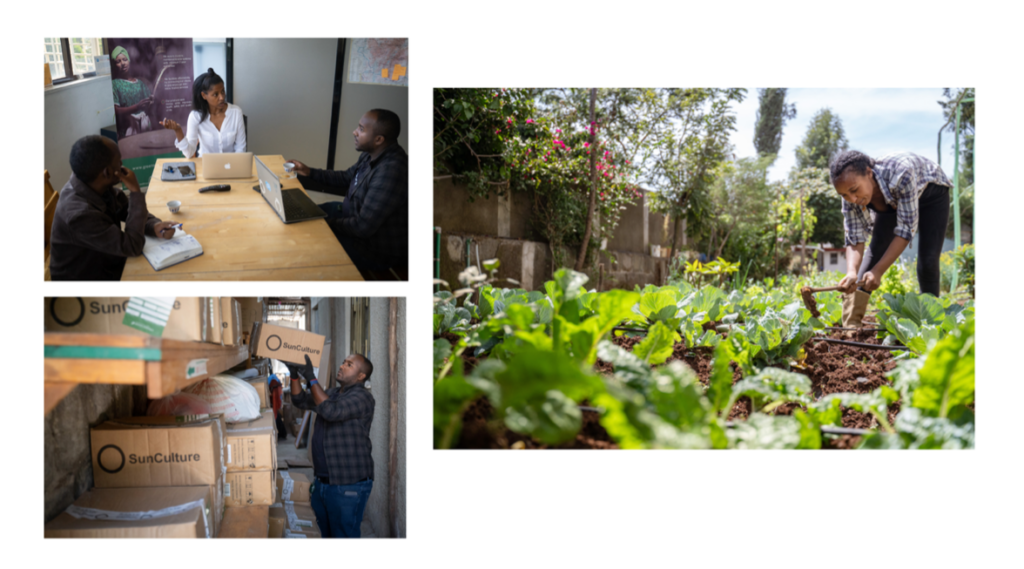
Assisting customers to access finance
In addition to expanding and diversifying its portfolio, Green Scene Energy has also leveraged the Facility’s support to unlock consumer financing for solar water pumps. Rekik and her colleagues have been working closely with an Ethiopian bank to design the bank’s first-ever consumer loan product for solar water pumps.
“Previously, the Bank had provided loans for solar lighting to consumers through Micro-Finance Institutions (MFI),” explains Rekik. “However, solar water pumps have become more expensive and technologically complex. For the first time, the MFIs are now offering collateral-free loans for solar water pumps.”
According to Rekik, CLASP’s financing has been critical for Green Scene because it is in a scale-up stage. They have been able to use the funding to gain confidence and trust in their business, which has in turn facilitated the securing of additional private financing.
***
About The Productive Use Financing Facility
CLASP’s Productive Use Financing Facility, is supported by The Global Energy Alliance for People and Planet (GEAPP). It has provided financing to 24 companies in six countries, to enable the distribution of over 13,000 productive-use appliances, directly impacting more than 58,000 households.
0. Ethiopia – Country Commercial Guide; https://www.trade.gov/country-commercial-guides/ethiopia-agro-processing
Securing Year-Round Water Supply On Small Farms In Rwanda
Cosmos Ntare’s farm is in Kayonza, three hours outside of Kigali. Until recently, his ability to grow his main crops — peas, mangoes, oranges, maize, and beans — was limited by the availability of water. “Without irrigation, you only have two seasons to grow crops,” he points out. “With irrigation, I will be able to grow crops in the third season, the dry season.”
Water has also posed a challenge for Ntare’s livestock operations. He keeps several cows and goats at the top of a hill, where it can be difficult to transport heavy liquids.
To support Ntare in overcoming these issues, CLASP selected his farm to field test a solar water pump. Ntare had seen these devices on display in shops in Kigali, but hadn’t had the opportunity to try one out yet due to their cost.
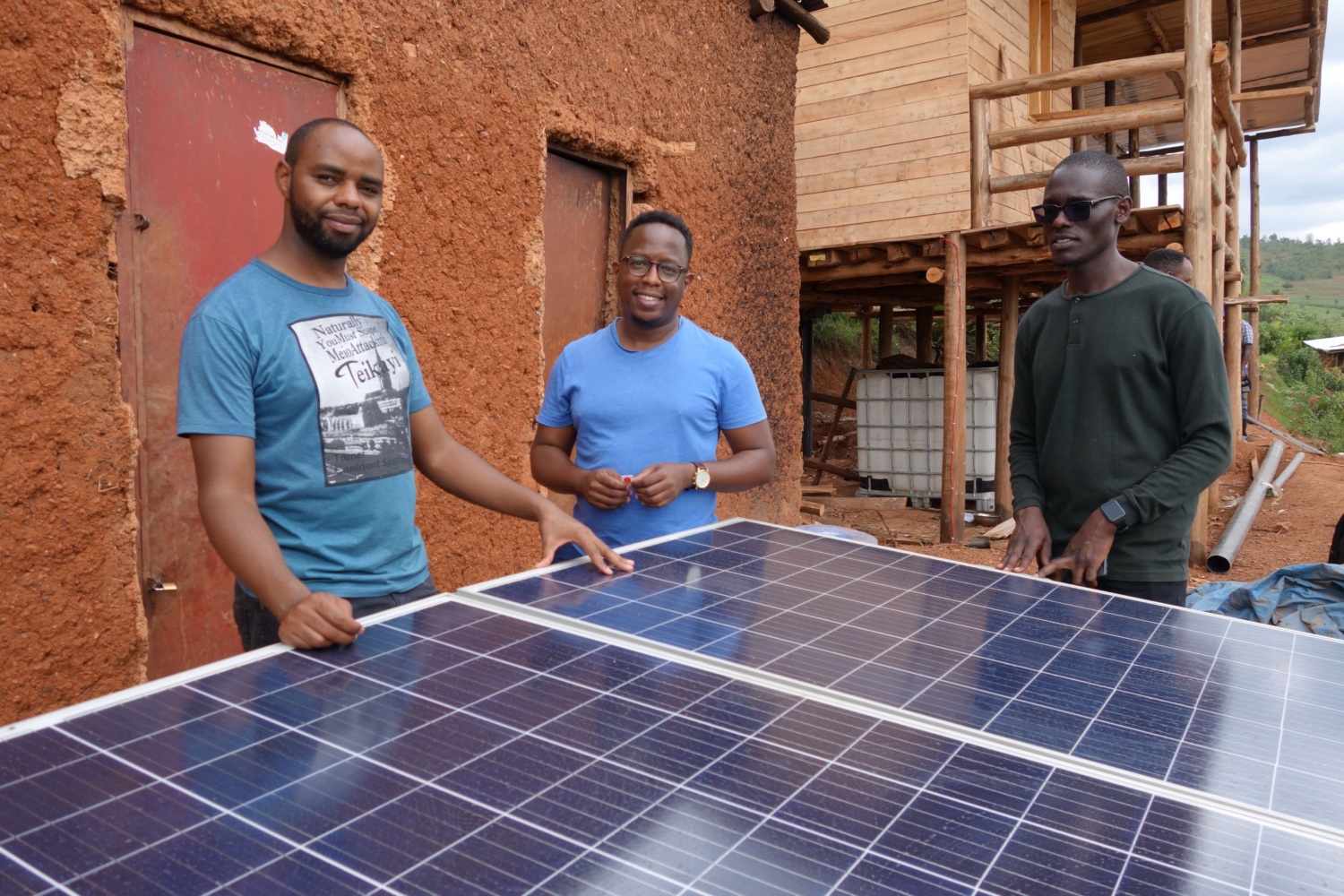
Testing clean irrigation solutions
Secure irrigation is becoming a necessity as our planet heats. Solar water pumps are off-grid appliances that use sunlight for power. Photovoltaic panels generate electricity that powers a motor, allowing the pump to draw water from either under the ground or from ponds, lakes, and rivers.
By ensuring a regular supply of water, these pumps can increase a farm’s yield. In addition, they avoid the use of diesel pumps for off-grid electricity, so they have cheaper running costs and lower greenhouse gas emissions.
To understand how these productive use appliances perform in a working farm over time, CLASP and Sustainable Energy for All (SEforALL) selected Ntare’s farm to field-test a solar water pump for four months. CLASP’s team set up the pump, along with monitors designed to measure its efficiency. The researchers are also surveying the farmers during the testing period to understand whether these appliances are a good fit for their needs.
Measuring efficiency and business viability
While laboratory testing gives a glimpse of appliance performance in a controlled environment, it provides only a limited representation of how products operate under the rigors of real use. Field testing like that underway at Ntare’s farm is critical to measure the appliance’s efficiency and durability over an extended period of time. It can quantify time savings and additional income generated or saved, as well as calculate avoided CO2.
These measurements are particularly important in markets where there may not be a history of appliance usage or community awareness of how appliances can impact the livelihoods of first-time users.
About the project
This project is part of the Productive Use of Energy Pilot Study in Rwanda, conducted by CLASP with the support of Sustainable Energy for All (SEforALL) and the World Bank. The appliances being tested are electric pressure cookers, electric bikes, solar water pumps, and solar-powered fridges.
CLASP works enhance the access to affordable, energy-efficient appliances to improve the lives of people and reduce the impact on our climate.
0. Ethiopia – Country Commercial Guide; https://www.trade.gov/country-commercial-guides/ethiopia-agro-processing
Net Zero Heroes: Scaling Efficient Appliances for Climate Change Mitigation, Adaptation & Resilience
Efficient appliances, lighting, and equipment are critical climate solutions, situated at the nexus of mitigation, adaptation, and sustainable development.
However, not enough is being done to maximize their benefits. In this report, CLASP lays out actions that must be taken by 2030 to put the world on a pathway to net zero emissions and enable a just energy transition. Our research identifies the ten appliances most vital to meeting global climate mitigation targets and improving people’s lives: the Net Zero Heroes.
Visit the Net Zero Heroes site to read and download the report.
0. Ethiopia – Country Commercial Guide; https://www.trade.gov/country-commercial-guides/ethiopia-agro-processing