
Leveraging Low-Global Warming Potential Heat Pumps to Power Climate Action
Heat pumps are highly efficient solutions for space heating and cooling. When it comes to heating, they’re three to four times more efficient than electric resistance heaters which convert electricity into heat at 100% efficiency. Heat pumps are also far more efficient than the most advanced gas heating systems, which operate at only 85-99% efficiency.
Transitioning away from burning fossil fuels to efficient and sustainable heat pumps is key for decarbonizing heating and cooling systems and achieving carbon neutrality. In the European Union (EU), over 24 million heat pumps have already been installed, with over 3 million sold in 20231. To accelerate progress, the EU’s REPowerEU plan aims to scale up heat pump adoption, targeting 60 million installed units by 2030. The United Kingdom (UK) has set its own goal to install 600,000 heat pumps annually by 20282.
In addition to being more efficient and sustainable than electric resistance heaters and gas heating systems, heat pumps deliver a wide range of benefits, including improved energy security, power system flexibility, and job creation.
The Benefits of Heat Pumps in Europe

F-gases and forever chemicals harm the environment and human health
Heat pumps use refrigerants to regulate temperature by absorbing and releasing heat between indoor and outdoor spaces. Currently, most heat pumps use hydrofluorocarbon (HFC) refrigerants R-32 and R-410A. These refrigerants, also known as ‘F-gases’, have a high global warming potential (GWP) and trap more heat in the atmosphere than carbon dioxide (CO2). With respective GWPs of 675 and 2088, they are hundreds to thousands of times more potent greenhouse gases than CO2.
While refrigerants are meant to remain contained within a piece of equipment, leaks and accidental releases can happen during maintenance or end of life disposal. Some refrigerants, like R-410A, also contain per- and polyfluoroalkyl substances (PFAS). These ‘forever chemicals’ persist in the environment for decades and pose risks to human health and the environment3.

There are more sustainable alternatives to HFC refrigerants, including a class of refrigerants known as hydrocarbons, often called ‘natural’ refrigerants.
Low-GWP refrigerants: the climate-friendly solution
There are more sustainable alternatives to HFC refrigerants, including a class of refrigerants known as hydrocarbons, often called ‘natural’ refrigerants. These natural refrigerants have much lower global warming potential than traditional HFC refrigerants. Natural refrigerants include:
- R-290 (propane, GWP 3)
- R717 (ammonia, GWP 0)
- R744 (carbon dioxide, GWP 1)
- R600a (isobutane, GWP 3)
While these alternative refrigerants are not yet widely used in Europe, the availability of technologies using natural refrigerants is expanding with more manufacturers adding them to their product portfolios4. In addition to their environmental benefits, low-GWP heat pumps can operate at high temperatures, making them a convenient boiler replacement option without requiring changes to the rest of a heating system of building envelope.
In the EU, the recent approval of the F-gas Regulation (EU) 2024/5735 presents a significant opportunity to improve the heat pump market’s sustainability with ambitious HFC phase-down timelines. As demand for natural refrigerant heat pumps increases in the EU, it will drive innovation in manufacturing processes and technological advancements within the heat pump industry. This will, in turn, allow the EU to set the standard for sustainable heating and cooling solutions and boost the EU’s competitiveness in the green technology sector. Having not yet aligned with the EU’s regulation, the UK risks becoming a destination for high-GWP products that can’t be sold in the EU.
Now is the time to act
Without stringent regulation, F-gases could stay locked into European heating systems for years to come. Newly installed heat pump systems have an average lifetime of 10-15 years. This means that HFC heat pumps installed this year will continue to leak high-GWP gases during the next decade and more. Specialized equipment and technicians will have to be available for the next fifteen years to successfully repair and dismantle HFC heat pumps without releasing significant amounts of F-gases.

Despite a slump in sales from 2023-2024, the European heat pump market has experienced significant growth over the past decade5. With the continued, increasing prevalence of heat pumps in European households, we need to seize the opportunity to accelerate the transition to more sustainable refrigerants, rather than further increase the pool of F-gas-dependent heat pumps. The F-gas Regulation sets a timeline for phasing out F-gases in the EU, and this transition should be proactively planned and replicated in the UK. It’s time to shift the heat pump refrigerant landscape toward safer, more environmentally-responsible alternatives.
Recommendations for sustainable heating and cooling in Europe
- National and local governments should expand or amend existing incentives to offer additional incentives for low-GWP refrigerant systems to make them more affordable and encourage adoption. Incentives, like the Boiler Upgrade Scheme6 in the UK, are already widely available in some European countries. Germany, for example, has introduced an additional 5% incentive7 for installing heat pumps that use natural refrigerants, on top of the base subsidy that amounts to 25% of the total system cost.
- Governments and installers should raise awareness on the benefits of low-GWP heat pumps, especially for those unfamiliar with or skeptical of the technology. Raising awareness can help dispel myths about the installation process, safety, and efficiency of low-GWP heat pumps, highlighting them as a suitable alternative for heating and cooling system replacements.
- The UK Government should update its F-gas Regulation to align with the EU’s regulation. This alignment is essential for phasing out harmful HFC refrigerants and would ultimately encourage the development and adoption of safer, more sustainable refrigerants in heat pumps and other types of equipment, supporting climate targets.
- The EU and UK Governments should revise energy labeling requirements to include the type of refrigerant used in heat pump systems. Refrigerant information should be easily available for European consumers, allowing them to choose the most efficient and sustainable heating and cooling systems available.
How CLASP is making a difference
CLASP is conducting extensive research and engaging key stakeholders in the EU and the UK, focusing on the deployment of natural refrigerant heat pumps, as well as the barriers to their adoption. We aim to identify effective programs and strategies that can increase the awareness, availability, and adoption of these heating and cooling systems at local, national, and EU levels.
To drive market transformation, CLASP is seeking local partners and governments interested in developing and implementing policy interventions that accelerate the adoption of low-GWP heat pumps.
Download this brief.
0. European Heat Pump Association, European Heat Pump Market and Statistics Report 2024, https://www.ehpa.org/wp-content/uploads/2024/08/Executive-summary_EHPA-heat-pump-market-and-statistic-report-2024-2.pdf
1. UK Government, Energy Security Bill factsheet: Low-carbon heat scheme, 2023, https://www.gov.uk/government/publications/energy-security-bill-factsheets/energy-security-bill-factsheet-low-carbon-heat-scheme
2. United States Environmental Protection Agency, PFAS Explained, https://www.epa.gov/pfas/pfas-explained
3. Christina Hayes and Jae Haroldsen, ATMO Market Report 2024 “Natural Refrigerants: State of the Industry 2024”, https://atmosphere.cool/atmo-market-report-2024
4. European Heat Pump Association, European Heat Pump Market and Statistics Report 2024, https://www.ehpa.org/wp-content/uploads/2024/08/Executive-summary_EHPA-heat-pump-market-and-statistic-report-2024-2.pdf
5. Energy Saving Trust, “Boiler Upgrade Scheme,” 2024, https://energysavingtrust.org.uk/grants-and-loans/boiler-upgrade-scheme/
6. Thomas Trevisan, “Germany Grants Bonus Subsidy to Home Heat Pumps That Use Natural Refrigerants,” 10 January 2023, https://naturalrefrigerants.com/germany-grants-bonus-subsidy-to-home-heat-pumps-that-use-natural-refrigerants/
Mepsy Methodology: Model and Approach for Climate Impact Analysis
DOI: https://doi.org/10.70098/OUAN6240
Mepsy is CLASP’s appliance and equipment climate impact calculator. It’s designed for policymakers, researchers, and other industry stakeholders to model different policy scenarios and measure their impact.
Mepsy uses a “bottom-up” accounting approach, considering the number of appliances in use in a country, the energy performance of representative products, the climate-intensity of the local power grid, and other variables to analyze the electricity use, carbon dioxide emissions, and consumer energy costs associated with a given policy scenario.
Wherever possible, the calculator references precise stock, sales, and energy performance data from recent CLASP in-country market studies, or country-level estimates from reputable market research firms. Where country-level data for a particular product are not available, calculations are based on estimates from regional or global averages, accounting for differences in country population, economics, or climate as relevant to a particular appliance. Future and past shipments are extrapolated based on recent trends.
The Mepsy Methodology outlines all underlying calculations and data sources behind the tool. For appliance-specific data for each of the ten appliances featured on Mepsy, please refer to the respective technical appendix:
- Air conditioning
- Beverage cooler
- Distribution transformer
- Fans
- Lighting
- Motors
- Refrigerator
- Space heater
- Television
- Water heater
In addition, the annex “Extending Mepsy to 2050” details the methodology behind projecting Mepsy’s insights through 2050, including key assumptions, modeling approaches, and data sources used in this effort.
To learn more about Mepsy or use our free tool, click here.
0. European Heat Pump Association, European Heat Pump Market and Statistics Report 2024, https://www.ehpa.org/wp-content/uploads/2024/08/Executive-summary_EHPA-heat-pump-market-and-statistic-report-2024-2.pdf
1. UK Government, Energy Security Bill factsheet: Low-carbon heat scheme, 2023, https://www.gov.uk/government/publications/energy-security-bill-factsheets/energy-security-bill-factsheet-low-carbon-heat-scheme
2. United States Environmental Protection Agency, PFAS Explained, https://www.epa.gov/pfas/pfas-explained
3. Christina Hayes and Jae Haroldsen, ATMO Market Report 2024 “Natural Refrigerants: State of the Industry 2024”, https://atmosphere.cool/atmo-market-report-2024
4. European Heat Pump Association, European Heat Pump Market and Statistics Report 2024, https://www.ehpa.org/wp-content/uploads/2024/08/Executive-summary_EHPA-heat-pump-market-and-statistic-report-2024-2.pdf
5. Energy Saving Trust, “Boiler Upgrade Scheme,” 2024, https://energysavingtrust.org.uk/grants-and-loans/boiler-upgrade-scheme/
6. Thomas Trevisan, “Germany Grants Bonus Subsidy to Home Heat Pumps That Use Natural Refrigerants,” 10 January 2023, https://naturalrefrigerants.com/germany-grants-bonus-subsidy-to-home-heat-pumps-that-use-natural-refrigerants/
Bridging the Cooling Gap: Energy Efficiency as a Driver for Appliance Access
This research is posted preprint and will be published in the EEDAL’24 Book of Proceedings.
Energy efficient cooling appliances play a critical role in addressing climate resilience and cooling equity. This new research investigates how doubling the energy efficiency of cooling technologies globally can reduce lifecycle costs, expand appliance access, and limit energy demand growth. It focuses on three high-impact, low-access countries: India, Indonesia, and Nigeria and evaluates the impact of efficiency improvements on affordability, ownership, and climate adaptation, offering critical insights into policies needed to close access gaps and achieve net zero goals.
Key Findings
Doubling the efficiency of fans, refrigerators, and room air conditioners globally by 2030 could unlock great benefits. By 2050, in the three countries studied, this could:
- Drive down the total cost of ownership by 60% for room air conditioners and refrigerators and 58% for fans
- Deliver $105 billion USD in annual net consumer benefits in 2050
- Expand access by an additional 4-13 percentage points
- Avoid more than 420,000 premature deaths
- Limit the total energy consumed by these appliances to about half of what it would be otherwise
Recommendations
To realize these benefits, governments and other market actors must:
- Increase research and development funding, financing and financial incentives, bulk procurement schemes, awards, and informational tools to drive market uptake of efficient appliances
- Implement innovative financing schemes to reduce upfront costs
- Reduce tariffs to make efficient appliances more affordable locally
- Expand decentralized energy solutions, like solar home systems and mini-grids to help rural, low-income communities access energy services more readily
0. European Heat Pump Association, European Heat Pump Market and Statistics Report 2024, https://www.ehpa.org/wp-content/uploads/2024/08/Executive-summary_EHPA-heat-pump-market-and-statistic-report-2024-2.pdf
1. UK Government, Energy Security Bill factsheet: Low-carbon heat scheme, 2023, https://www.gov.uk/government/publications/energy-security-bill-factsheets/energy-security-bill-factsheet-low-carbon-heat-scheme
2. United States Environmental Protection Agency, PFAS Explained, https://www.epa.gov/pfas/pfas-explained
3. Christina Hayes and Jae Haroldsen, ATMO Market Report 2024 “Natural Refrigerants: State of the Industry 2024”, https://atmosphere.cool/atmo-market-report-2024
4. European Heat Pump Association, European Heat Pump Market and Statistics Report 2024, https://www.ehpa.org/wp-content/uploads/2024/08/Executive-summary_EHPA-heat-pump-market-and-statistic-report-2024-2.pdf
5. Energy Saving Trust, “Boiler Upgrade Scheme,” 2024, https://energysavingtrust.org.uk/grants-and-loans/boiler-upgrade-scheme/
6. Thomas Trevisan, “Germany Grants Bonus Subsidy to Home Heat Pumps That Use Natural Refrigerants,” 10 January 2023, https://naturalrefrigerants.com/germany-grants-bonus-subsidy-to-home-heat-pumps-that-use-natural-refrigerants/
Millions of People Lack Electricity. Solar Appliances Can Help
Cooling down on a scorching day, lighting the house at night, heating a pan to cook dinner: In wealthy countries, people take for granted the ability to meet their basic needs by switching on appliances. But in low-income nations, these appliances, along with the electricity needed to power them, are often out of reach.
As the planet warms, the lack of critical appliances has increasingly severe consequences, making it harder for people to thrive—and, in some cases, simply survive—in ever-harsher environments. Solar-powered appliances are a promising solution.
In this interview, Martha Wakoli, who works on CLASP’s clean energy access team in Nairobi, discusses their potential and how to reach it.
*
Sarah Wesseler, CLASP managing editor: Let’s start with some basics about solar appliances. What are they? Why should people who are interested in sustainable development and climate change care about them?
Martha Wakoli: Well, in places like the States or Europe, if you need light, you switch on a light bulb. But in other parts of the world, millions of people don’t have that option—they’re not connected to the electric grid. So they’ve found creative solutions for accessing services like lighting, cooling, and cooking. And that’s where the idea of solar appliances developed.
For a long time, this technology was used for things like charging phones and lighting homes. But increasingly, we’re seeing the potential to power much larger, almost industrial-level processes with solar appliances. Say you’re a clothing manufacturer in a place that doesn’t have electricity: The machines you need could be powered by the sun.
There’s more and more research and investment in these kinds of appliances. That opens a whole new pathway of solutions for the millions of people who continue to live without electricity.
Wesseler: When you say these appliances are powered by the sun, how does that work? I’m thinking about the US, where I live: A lot of people have solar panels on their roofs, but they still use standard appliances plugged into standard wall outlets. How are solar appliances different?
Wakoli: Well, with solar appliances, the appliance is connected directly to a solar panel on your roof via a cable. And depending on how many panels you have and how large they are, you could have multiple cables powering multiple appliances at the same time. And for appliances that are used outdoors—water pumps, for example—the cables from the solar panel also run directly to the appliance.

Solar irrigation in India
Credit: IDE Global / Bimala Colavito
Wesseler: What if the sun’s not out? Can you still run solar appliances then?
Wakoli: Yes. Solar appliances come with a little bit of energy storage, typically in the form of a battery, that allows them to keep functioning when it’s not sunny. For example, solar refrigerators keep things cool even at night.
Wesseler: That all makes sense. But why not just connect more people to the electric grid? Why focus on solar appliances instead?
Wakoli: There are a lot of reasons, but the most important is that it’s typically much more expensive to extend the power grid to far-flung places than it is to provide solar appliances. Solar appliances are more cost-effective in rural areas.
Providing solar appliances is also faster than building out the grid, which takes a long time. This is important given the urgency of the climate disaster, which we’re observing in real time, whether it’s heatwaves in India or droughts in Zambia. People need appliances that can help them adapt to climate change now.

Credit: Monica Tiwari, SPI

Credit: Efficiency for Access
Solar appliances can also help people build climate resilience and empower them to be more active participants in their own development. I’ll give you an example: In Mozambique, the government used taxpayer money to build an electric grid, but in 2023, Cyclone Freddie knocked it out. Compare that to decentralized systems, where people can have their own solar panels on their roofs or solar pumps on their farms. Because these appliances are modular, the scale of damage tends to be much smaller.
This kind of resilience is especially important for facilities like schools and hospitals. When floods or droughts make it impossible for them to operate where they are, there’s not much they can do if they rely on the electric grid. But with solar, they can move to a safer location and take their power source with them.
Another reason is that the grid itself is changing. Around the world, we’re preparing for what we’re calling the grid of the future. A lot of people now have electric vehicles, and in some areas, these vehicles can be plugged back into the wall, sending that power back to the grid, right? So you now have a complex bidirectional electric system that’s very different from what has existed for the last 70 years. Instead of having very few energy producers and many consumers, you have a growing number of what’s called “prosumers”: They produce the energy and they’re also consumers. This subset of people is growing everywhere.
Wesseler: You recently led research seeking to understand the number of people globally who need solar appliances. Why did you focus on this issue in particular?

Solar appliances can help people build climate resilience and empower them to be more active participants in their own development.Martha Wakoli
Wakoli: Well, in the development sector—so essentially, organizations that are trying to lift people out of poverty—if we cannot quantify a problem, it is difficult to know what interventions are needed in terms of money, regulations, and human capital. So providing information like this helps decision makers develop solutions.
And in this case, the problem we are looking at involves energy services to help marginalized people lift themselves out of poverty while also building resilience. This is important because, as we know, these groups are already being affected by climate change. So one goal of our work is to help the development and climate sectors understand that they’re working toward a common target.
This is particularly critical because, as we recently saw at COP29, there’s still a lot of resistance to the idea that the nations most responsible for climate change should fund other nations to protect themselves from it. But what the international community needs to understand is that that if we don’t mitigate climate disasters in the most vulnerable communities, the damage won’t just stay in those communities. Issues like climate-driven displacement and public health crises can easily spill over borders, making climate change an even more complex and expensive problem to solve. So I believe the international community should collaborate to address energy access challenges immediately to avoid this complication.
Wesseler: What did you learn from the research?
Wakoli: The key finding was that only about 2% of the need for key appliances is being met.
I think people in the international development and energy sectors intuitively knew that we are falling behind on providing universal electricity access, but there was still maybe not a good understanding of how far behind. With this research, we put a number to it: There are over 500 million people who need these appliances but don’t have them and won’t be able to afford them unless there are major changes in the appliance sector. That’s a massive gap.

Solar mill in Nigeria
Credit: CLASP
Wesseler: What would it take to close this gap?
Wakoli: Well, we need more investment at all levels of solar appliances. We need to invest in people who can support the sector: students, researchers, manufacturers, distributors, maintenance people. Companies need money to build these appliances, to test business models, to scale. We also need money for governments to conduct awareness campaigns. People need to go into communities to let them know about these appliances and demonstrate how they work.
We also need more cross-disciplinary dialogue. Lifting people out of poverty requires more than electricity or appliances; the solution has to involve people who work in agriculture, environmental advocacy, etc. A practical example is solar water pumps, which make it easier for farmers to generate income. But productivity is not only a function of water; farmers also need good seeds, fertilizer, and good soil. So people outside the energy sector need to be involved as well.
Ultimately, we need to build a market that can exist without external support. Think of Coca-Cola. Soda is the one thing that is ubiquitous in every place I have been, even where people don’t have high incomes. Coca-Cola has figured out how to reach the last mile in countries like Kenya and India. The solar appliance sector needs to get to the same place.
Developing a self-sustaining market for solar appliances will require collaboration across governments, the private sector, and development partners. Governments need to prioritize solar appliances and other energy-efficient solutions as part of their national electrification strategies, and the appliance sector needs to build muscle in distribution and consumer awareness. What’s more, all these actors need to prioritize ensuring that solar appliances support increased productivity, driving up incomes for communities living below the poverty line.
Many critical pieces of this puzzle are currently missing. Right now, a lot of the money in the solar appliance sector comes from European governments as part of their international aid programs. But if we’re thinking about a sustainable solution for more than 50 countries and more than half a billion people, it cannot be contingent on well-wishers alone.
Interview edited and condensed.
0. European Heat Pump Association, European Heat Pump Market and Statistics Report 2024, https://www.ehpa.org/wp-content/uploads/2024/08/Executive-summary_EHPA-heat-pump-market-and-statistic-report-2024-2.pdf
1. UK Government, Energy Security Bill factsheet: Low-carbon heat scheme, 2023, https://www.gov.uk/government/publications/energy-security-bill-factsheets/energy-security-bill-factsheet-low-carbon-heat-scheme
2. United States Environmental Protection Agency, PFAS Explained, https://www.epa.gov/pfas/pfas-explained
3. Christina Hayes and Jae Haroldsen, ATMO Market Report 2024 “Natural Refrigerants: State of the Industry 2024”, https://atmosphere.cool/atmo-market-report-2024
4. European Heat Pump Association, European Heat Pump Market and Statistics Report 2024, https://www.ehpa.org/wp-content/uploads/2024/08/Executive-summary_EHPA-heat-pump-market-and-statistic-report-2024-2.pdf
5. Energy Saving Trust, “Boiler Upgrade Scheme,” 2024, https://energysavingtrust.org.uk/grants-and-loans/boiler-upgrade-scheme/
6. Thomas Trevisan, “Germany Grants Bonus Subsidy to Home Heat Pumps That Use Natural Refrigerants,” 10 January 2023, https://naturalrefrigerants.com/germany-grants-bonus-subsidy-to-home-heat-pumps-that-use-natural-refrigerants/
Cool for Business: Solar Refrigerators Powering Off-grid Communities
“Naija no dey carry last” in Pidgin means Nigerians always aim to finish first. This spirit is reflected in the country’s focus on innovation, driven by creativity and passion. However, for over 86 million Nigerians without reliable electricity, the struggle to keep businesses running means often relying on costly, polluting diesel generators. This added expense and the uncertainty brought on by regular power cuts place a significant burden on the country’s people, economy, and environment.
Affordable, solar-powered refrigerators are an elegant solution with the potential to transform small businesses in Nigeria’s rural, off- or weak-grid communities.
Solar appliances for any wallet
Solar refrigerators are efficient and effective but high costs and limited financing keep them out of reach for many Nigerians who could benefit from their impact. Recognizing this gap, CLASP’s Productive Use Financing Facility (PUFF) stepped in, offering grants, subsidies, and business support to companies such as Consistent Energy Limited to put affordable, life-changing technologies into the hands of those who need them most.
“The grant that was given to us by CLASP under this project really helped us building our capacity to reach last-mile distribution chain. The landed costs of the fridge to a customer in Nigeria will have been very high if not for the subsidy that we received,” says Segun Adaju, the CEO of Consistent Energy.

Solar refrigerators: A boon for businesses and customers
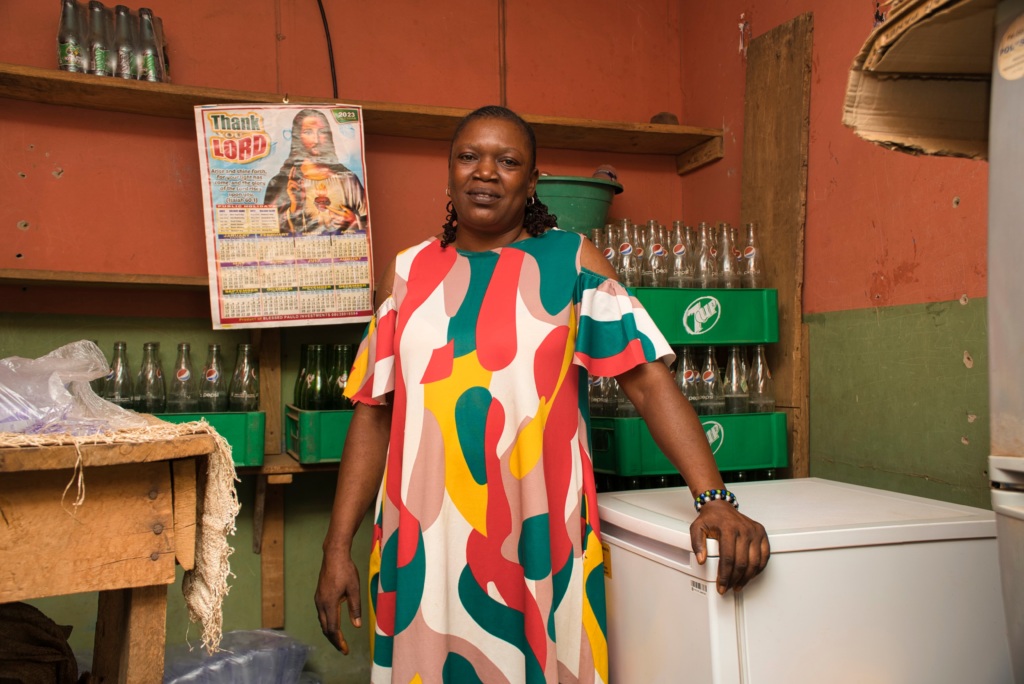
Solar refrigerators keep food cool, safe, and marketable and reduces waste. Without reliable refrigeration, shopkeepers spend more time and money on temporary cooling options such as ice and coolers and are forced to raise prices to do so, hurting both the business and their customers. This cycle was no longer viable for small business owners such as Abibat in Nigeria.
“We were buying ice blocks which led us to some debt, and after a while, the block would melt. We no longer had cold items for sale,” says Abibat Akinwale, a shopkeeper and Consistent Energy client. “The solar fridge has really increased sales. Business is very good now because I’m able to sell cold drinks.”
Consistent cooling creates opportunities for growth
Reliable, long-term cooling keeps food prices stable, meaning that Abibat’s customers have good reason to return to their shop. In Nigeria, the appeal of solar refrigerators lies in their reliability, a quality that resonates with businesses that refuse to “carry last.”
In a country where every Naira counts, solar-powered refrigerators are a game changer for small business owners in Nigeria. Because they are powered by renewable energy, solar refrigerators provide cooling without the cost of constant refueling. This switch to solar means that entrepreneurs save thousands each month that would otherwise be spent on generator costs, fuel, and maintenance. Instead, they can channel those funds to more productive uses and fully participate in the country’s growing economy.
Such opportunities for growth are especially important for women like Helen Obina, who make up a large percentage of the small business owners in Nigeria. For her, business was “not really moving” because she relied on the grid and generators. Installing her solar refrigerator relegated those worries to the past. “Having a solar fridge has really changed my business. The sales have really increased, and the business is moving,” she shared. Helen’s story is not isolated, it is an example of a growing trend for those who are able to access life-changing solar appliances.
Solar solutions bridge the energy gap
Refrigerators are an essential appliance for sustainable development, but 60% of the population in Africa does not own one. For nearly a decade, CLASP has been working to bridge this energy access gap by improving access to efficient appliances that work in off-grid or weak-grid areas.
“Over 600 million Africans don’t have access to electricity. Efficient appliances are an affordable and clean option for these cut-off communities who are otherwise forced to use polluting and expensive alternatives to maintain a good standard of living and actively participate in their economies,” says Ruth Kimani, a Senior Associate at CLASP.
These productive-use appliances (PUAs), such as solar-powered refrigerators, solar water pumps, and solar milling machines are technologies that have a direct, transformative impact on local communities, small businesses, and people’s livelihoods. They are also a necessary shift toward clean energy and reduced reliance on diesel-powered generators.
Shift to solar signals promising future
CLASP and companies such as Consistent Energy have helped small business owners in Nigeria gain independence from unreliable and costly energy sources through renewable appliances. They are now free to chase their dreams and ambitions with renewed fervor, which will have a positive impact on the economy, people, and the planet.

About The Productive Use Financing Facility
CLASP’s Productive Use Financing Facility, is supported by The Global Energy Alliance for People and Planet (GEAPP). It has provided financing to 24 companies in six countries, to enable the distribution of over 13,000 productive-use appliances, directly impacting more than 58,000 households.
0. European Heat Pump Association, European Heat Pump Market and Statistics Report 2024, https://www.ehpa.org/wp-content/uploads/2024/08/Executive-summary_EHPA-heat-pump-market-and-statistic-report-2024-2.pdf
1. UK Government, Energy Security Bill factsheet: Low-carbon heat scheme, 2023, https://www.gov.uk/government/publications/energy-security-bill-factsheets/energy-security-bill-factsheet-low-carbon-heat-scheme
2. United States Environmental Protection Agency, PFAS Explained, https://www.epa.gov/pfas/pfas-explained
3. Christina Hayes and Jae Haroldsen, ATMO Market Report 2024 “Natural Refrigerants: State of the Industry 2024”, https://atmosphere.cool/atmo-market-report-2024
4. European Heat Pump Association, European Heat Pump Market and Statistics Report 2024, https://www.ehpa.org/wp-content/uploads/2024/08/Executive-summary_EHPA-heat-pump-market-and-statistic-report-2024-2.pdf
5. Energy Saving Trust, “Boiler Upgrade Scheme,” 2024, https://energysavingtrust.org.uk/grants-and-loans/boiler-upgrade-scheme/
6. Thomas Trevisan, “Germany Grants Bonus Subsidy to Home Heat Pumps That Use Natural Refrigerants,” 10 January 2023, https://naturalrefrigerants.com/germany-grants-bonus-subsidy-to-home-heat-pumps-that-use-natural-refrigerants/
Find CLASP at the Global Off-Grid Solar Forum and Expo
CLASP drives technology innovation and catalyzes appliance market growth, putting efficient, affordable, high-quality appliances and equipment within reach of low-income families and communities, as well as smallholder farmers. From 8 to 10 October 2024, we will be bringing our solutions to the eighth Global Off-Grid Solar Forum and Expo (GOGSFE) taking place in Nairobi, Kenya.
Why are solar or off-grid appliances crucial?
Energy poverty is a reality for more than one billion people worldwide, with detrimental effects on health, productivity, and livelihoods.
A new report from Efficiency for Access (EforA), the coalition CLASP co-manages with Energy Saving Trust, shows that while approximately 159 million off-grid solar fans, water pumps, refrigerators, and grain mills are needed to serve people who lack access to the grid, less than 2% of this demand is being met. The off-grid solar sector must grow rapidly in scale and ambition in order to avoid leaving people behind.

About the event:
GOGSFE will gather policymakers, investors, entrepreneurs, and development actors from around the world to discuss strategies to help move toward universal electricity access, build climate resilience, and improve equity, agriculture, and health.
CLASP is hosting three key events during the Forum:
- A 25th anniversary party celebrating CLASP’s expertise in efficient appliances’ role in fighting climate change and improving people’s lives
- A breakfast meeting for donors and grantees of the Energy Access Institutions Facility
- And an industry dinner with GOGLA for all Forum attendees.
In addition, several CLASP experts are presenting and contributing to discussions throughout the Forum. These will showcase the critical role energy-efficient appliances play in the race to universal electrification.
Find CLASP at the following events:
| Date and Time | Location | Event | CLASP Speakers |
|---|---|---|---|
| Tuesday 8 October 1:30 PM – 2:45 PM EAT | Lenana | Agricultural processing: unlocking the potential for the next productive use frontier | Nyamolo Abagi and Michael Maina (both representing CLASP and EforA) |
| Tuesday 8 October 1:30 PM - 2:45 PM EAT | Aberdares | Over 3.3 million jobs by 2030: How workforce and human capital investment can grow Africa's green economy | Abigail Kuria (representing CLASP and EforA) |
| Wednesday 9 October 3:45 PM - 5:00 PM EAT | Turkana | Last mile repair: a collaboration opportunity for manufacturers and distributors | Martha Wakoli (representing CLASP and EforA) |
| Thursday 10 October 1:30-2:45 PM EAT | Tsavo B | Taking the credit: unlocking the DRE carbon finance opportunity | Sam Grant (representing CLASP and EforA |
0. European Heat Pump Association, European Heat Pump Market and Statistics Report 2024, https://www.ehpa.org/wp-content/uploads/2024/08/Executive-summary_EHPA-heat-pump-market-and-statistic-report-2024-2.pdf
1. UK Government, Energy Security Bill factsheet: Low-carbon heat scheme, 2023, https://www.gov.uk/government/publications/energy-security-bill-factsheets/energy-security-bill-factsheet-low-carbon-heat-scheme
2. United States Environmental Protection Agency, PFAS Explained, https://www.epa.gov/pfas/pfas-explained
3. Christina Hayes and Jae Haroldsen, ATMO Market Report 2024 “Natural Refrigerants: State of the Industry 2024”, https://atmosphere.cool/atmo-market-report-2024
4. European Heat Pump Association, European Heat Pump Market and Statistics Report 2024, https://www.ehpa.org/wp-content/uploads/2024/08/Executive-summary_EHPA-heat-pump-market-and-statistic-report-2024-2.pdf
5. Energy Saving Trust, “Boiler Upgrade Scheme,” 2024, https://energysavingtrust.org.uk/grants-and-loans/boiler-upgrade-scheme/
6. Thomas Trevisan, “Germany Grants Bonus Subsidy to Home Heat Pumps That Use Natural Refrigerants,” 10 January 2023, https://naturalrefrigerants.com/germany-grants-bonus-subsidy-to-home-heat-pumps-that-use-natural-refrigerants/
Leave No One Behind: Bridging the Energy Access Gap with Innovative Off-Grid Solar Solutions
Millions of people lack access to the power grid, particularly in low-income rural areas of Africa and South Asia. If the current slow pace of electrification continues, 660 million people – most of them in Africa – will remain without electricity in 2030. Due to numerous challenges, people in off-grid settings typically have a lower quality of life, worse health outcomes, higher energy costs, and fewer economic opportunities than their grid-connected peers. High-quality, efficient off-grid solar appliances are a proven solution to these challenges.
This report – the third in the State of the Off-Grid Appliance Market series – finds that while the sector has strong fundamentals, it must rapidly grow in scale and ambition to avoid leaving people behind.
Key Findings:
- Approximately 159 million off-grid solar fans, water pumps, refrigerators, and grain mills are needed to serve people who lack access to the electric grid. Less than 2% of this demand is being met, leaving more than half a billion people without life-changing appliances.
- There is a significant market opportunity of $58 billion USD for off-grid solar appliances like fans, water pumps, refrigerators, and grain mills.
- The off-grid appliance sector is characterized by a multitude of business models, reflecting a diverse range of technologies, end users, and operating environments. There is no one right business model; rather, chosen models need to be managed appropriately.
- Closing the energy service gap in sub-Saharan Africa and South Asia requires exponential growth in the appliance sector. This can be achieved by deploying significantly more capital, strengthening cross-sectoral collaboration, and developing coherent policies and innovative business models.
Recommendations:
- Governments should emphasize quality assurance and consumer protection through rigorous quality standards and tax and duty exemptions to make high-quality solar products more accessible; support an enabling environment by incentivizing local manufacturers and launching consumer awareness campaigns; and develop integrated policies by establishing cross-ministry task forces to integrate and harmonize policies and regulations.
- Investors, development partners, and financiers should encourage market entry by increasing the deployment of capital over the next ten years; create public-private partnerships by developing programs that combine public and private funding; integrate with climate finance by leveraging carbon credits and other climate finance mechanisms; and provide innovation funding to local and foreign technology innovators.
- Technology innovators should design appliances that meet the specific needs of local off-grid consumers; and enhance product durability and reliability that focuses on long-term user satisfaction and low maintenance costs.
- Venture builders and entrepreneurs should work to expand pay-as-you-go (PAYGo) models; leverage catalytic grants to innovate business models and build partnerships; and focus on specific market segments to enhance efficiency and increase market penetration.
- All market actors should prioritize user-centric data that directly benefits appliance users; harmonize methodologies that establish standardized tracking systems for assessing progress and informing policy decisions; and facilitate data sharing to inform decision-making and policy development.
About Efficiency for Access
Efficiency for Access is a global coalition working to promote renewable and energy efficient appliances to deliver clean energy to the world’s poorest people. It is coordinated jointly by CLASP and the UK’s Energy Saving Trust.
0. European Heat Pump Association, European Heat Pump Market and Statistics Report 2024, https://www.ehpa.org/wp-content/uploads/2024/08/Executive-summary_EHPA-heat-pump-market-and-statistic-report-2024-2.pdf
1. UK Government, Energy Security Bill factsheet: Low-carbon heat scheme, 2023, https://www.gov.uk/government/publications/energy-security-bill-factsheets/energy-security-bill-factsheet-low-carbon-heat-scheme
2. United States Environmental Protection Agency, PFAS Explained, https://www.epa.gov/pfas/pfas-explained
3. Christina Hayes and Jae Haroldsen, ATMO Market Report 2024 “Natural Refrigerants: State of the Industry 2024”, https://atmosphere.cool/atmo-market-report-2024
4. European Heat Pump Association, European Heat Pump Market and Statistics Report 2024, https://www.ehpa.org/wp-content/uploads/2024/08/Executive-summary_EHPA-heat-pump-market-and-statistic-report-2024-2.pdf
5. Energy Saving Trust, “Boiler Upgrade Scheme,” 2024, https://energysavingtrust.org.uk/grants-and-loans/boiler-upgrade-scheme/
6. Thomas Trevisan, “Germany Grants Bonus Subsidy to Home Heat Pumps That Use Natural Refrigerants,” 10 January 2023, https://naturalrefrigerants.com/germany-grants-bonus-subsidy-to-home-heat-pumps-that-use-natural-refrigerants/
Market Assessment Report for Commercial Beverage Coolers in India
Commercial beverage coolers, or visi coolers, are glass-fronted refrigerators used in stores and restaurants to display bottled and canned drinks. According to the India Cooling Action Plan (ICAP), this sector will grow 2-fold in the next decade and 6-fold in the following one, increasing energy use by 2.2 to 6 times.
While domestic refrigeration in India is regulated for energy efficiency, many commercial refrigeration products are not yet covered by the Bureau of Energy Efficiency (BEE) standards and labeling program. Given the growing market, BEE plans to introduce energy efficiency labels for visi coolers to promote more efficient models. CLASP supports BEE by conducting market assessments and developing efficiency policies for these appliances.
CLASP’s market analysis of visi coolers in India revealed several key findings:
- In India, visi coolers vary widely in demand and popularity across the market.
- About 75% of manufacturers specialize in models with capacities ranging from 200 to 500 liters, expected to last around 7 years on average.
- International suppliers play a significant role in the visi coolers market, with 30% of parts imported from countries like China, South Korea, Thailand, and Slovakia.
- Many visi coolers in the market remain in use for more than 7 years, indicating their longevity.
- Different types of stores use visi coolers differently; for example, dairy shops use coolers to keep milk and dairy products cool, while smaller stores may switch the coolers off when product is cold.
- Overloading of shelves and frequent opening can reduce cooling efficiency and increase energy consumption.
- Single-door visi coolers are prevalent due to space constraints in stores.
- Furthermore, single-door models constitute almost 90% of production, while nearly 100% of respondents manufacture floor-standing, vertical visi coolers.
The labeling program for commercial beverage cooler was launched under voluntary phase by BEE on 1st March, 2024. The validity of the program will be from 1st March, 2024 to 31st December, 2026.
The program is expected to reduce energy expenditure by 11.67 billion kWh from 2024–2034, and reduce CO2 emissions by 8.35 megatons (Mt) CO2.
0. European Heat Pump Association, European Heat Pump Market and Statistics Report 2024, https://www.ehpa.org/wp-content/uploads/2024/08/Executive-summary_EHPA-heat-pump-market-and-statistic-report-2024-2.pdf
1. UK Government, Energy Security Bill factsheet: Low-carbon heat scheme, 2023, https://www.gov.uk/government/publications/energy-security-bill-factsheets/energy-security-bill-factsheet-low-carbon-heat-scheme
2. United States Environmental Protection Agency, PFAS Explained, https://www.epa.gov/pfas/pfas-explained
3. Christina Hayes and Jae Haroldsen, ATMO Market Report 2024 “Natural Refrigerants: State of the Industry 2024”, https://atmosphere.cool/atmo-market-report-2024
4. European Heat Pump Association, European Heat Pump Market and Statistics Report 2024, https://www.ehpa.org/wp-content/uploads/2024/08/Executive-summary_EHPA-heat-pump-market-and-statistic-report-2024-2.pdf
5. Energy Saving Trust, “Boiler Upgrade Scheme,” 2024, https://energysavingtrust.org.uk/grants-and-loans/boiler-upgrade-scheme/
6. Thomas Trevisan, “Germany Grants Bonus Subsidy to Home Heat Pumps That Use Natural Refrigerants,” 10 January 2023, https://naturalrefrigerants.com/germany-grants-bonus-subsidy-to-home-heat-pumps-that-use-natural-refrigerants/
Financing for Impact: CLASP Supports Companies Delivering Sustainable Cooling in Nigeria
Nigeria, like many West African countries, has experienced record-breaking temperatures in recent months. These intense heatwaves threaten people’s health, reduce food production, and increase energy costs as people try to stay cool.
Affordable Solar Cooling to Replace Diesel Generators
Inconsistent power supply in the country means households and businesses rely on expensive, polluting diesel generators for electricity – a system not everyone can afford.
The solar refrigerators sold by companies like Koolboks, offer an affordable and reliable cooling solution.

“When my customers come to me saying they have no power supply and ask how I have electricity? I tell them, "I am using Koolboks to chill my drinks.”
Doris Chuwa, Koolboks customer
CLASP Increases Access to Life-Changing Appliances
Lack of reliable access to electricity is a reality for half of the world’s population, 3.5 billion people worldwide. This energy poverty has detrimental effects on health, productivity, and livelihoods.
For close to a decade, CLASP has been working to improve access to efficient appliances that work in off-grid or weak-grid areas. These productive-use appliances (PUAs), such as solar-powered refrigerators, solar water pumps, and solar milling machines are technologies that have a direct, transformative impact on local communities, small businesses, and people’s livelihoods. As these appliances are often powered by renewable energy, they have far lower running costs for consumers, and they reduce harm to the environment and the climate.
Innovative financing for Local Distributors
Through its regional presence in four continents, CLASP has researched and worked on different mechanisms to increase access to life-changing, off-grid appliances. Since 2016, CLASP has been driving technology innovation and catalyzing appliance market growth through innovative financing. CLASP works to put efficient, affordable, high-quality appliances and equipment within reach of low-income families and communities through financing projects like the Energy Access Institutions Facility and various results-based financing initiatives like the Higher-Tier Cooking Component and Global LEAP Awards.
CLASP also initiated the Productive Use Financing Facility, a $6.5 million USD innovative financing program aimed at catalyzing the uptake of productive use appliances across East, West, and Central Africa. This innovative facility delivers support to companies through capacity-building grants, subsidies, and business support.

The Facility strengthens the role of appliance suppliers and distributors by providing capacity-building grants to companies like Koolboks. In addition to business support, CLASP improves appliance performance testing to verify appliance quality, ensuring Koolboks consumers receive reliable information about the efficiency and quality of the products on sale.
“Thanks to the capacity-building funds, we were able to set up the local assembly plant. Now, customers are able to have access to some amount of discounts on their product, which made it more affordable for them.” Lolade Esther Alonge, Project Manager, Koolboks
Watch the video to hear more from Koolboks and their customers on the impact of access to affordable cooling.
***
About The Productive Use Financing Facility
CLASP’s Productive Use Financing Facility, is supported by The Global Energy Alliance for People and Planet (GEAPP). It has provided financing to 24 companies in six countries, to enable the distribution of over 13,000 productive-use appliances, directly impacting more than 58,000 households.
0. European Heat Pump Association, European Heat Pump Market and Statistics Report 2024, https://www.ehpa.org/wp-content/uploads/2024/08/Executive-summary_EHPA-heat-pump-market-and-statistic-report-2024-2.pdf
1. UK Government, Energy Security Bill factsheet: Low-carbon heat scheme, 2023, https://www.gov.uk/government/publications/energy-security-bill-factsheets/energy-security-bill-factsheet-low-carbon-heat-scheme
2. United States Environmental Protection Agency, PFAS Explained, https://www.epa.gov/pfas/pfas-explained
3. Christina Hayes and Jae Haroldsen, ATMO Market Report 2024 “Natural Refrigerants: State of the Industry 2024”, https://atmosphere.cool/atmo-market-report-2024
4. European Heat Pump Association, European Heat Pump Market and Statistics Report 2024, https://www.ehpa.org/wp-content/uploads/2024/08/Executive-summary_EHPA-heat-pump-market-and-statistic-report-2024-2.pdf
5. Energy Saving Trust, “Boiler Upgrade Scheme,” 2024, https://energysavingtrust.org.uk/grants-and-loans/boiler-upgrade-scheme/
6. Thomas Trevisan, “Germany Grants Bonus Subsidy to Home Heat Pumps That Use Natural Refrigerants,” 10 January 2023, https://naturalrefrigerants.com/germany-grants-bonus-subsidy-to-home-heat-pumps-that-use-natural-refrigerants/
China’s Path to High-Efficiency Cooling
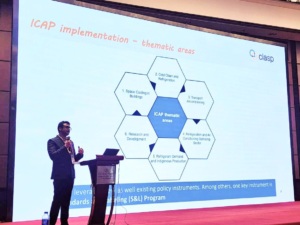
The recent China Refrigeration Symposium 2024 and the China Cooling Expo 2024 took place in Beijing. China also announced it will promote the use of CO₂ and other natural refrigerants to reduce the harmful environmental impact of cooling systems.
CLASP was there too, to present our global research on the interlinked climate and sustainable development opportunities affordable, efficient cooling appliances can bring, as well as the policy mechanisms that can expedite a country’s transition to efficiency. CLASP research indicates that improved appliance efficiency policies in China would reduce 500 million tons of CO₂ by 2040.

CLASP has supported data and analysis to support China’s policy upgrades for commercial refrigerators, room air conditioners among other appliances. The China Labeling Program covers more than 150 appliances and emphasizes high efficiency standards.
The China National Institute of Standardization (CNIS) and leading universities like Southeast University develop frameworks for improved efficiency policies.
“CLASP has provided international best practices to CNIS and immense support to our technical teams, helping us make significant progress in improving appliance energy efficiency in China. Our efforts will help the country meet its commitments of peaking carbon emission by 2030, and reaching carbon neutrality before 2060,” said Liqiang Xing, Director of Resource & Environment, CNIS.
CLASP’s research highlights the opportunity and urgency needed for concerted global efforts to achieve high-efficiency cooling solutions. “The critical role of policymaking in implementation of high-efficiency technologies cannot be overstated. Chinese leaders who set strict standards for energy efficiency are a beacon for the global community”, said Steven Zeng, CLASP’s Program Lead in China.
As CLASP continues to collaborate with international policymakers, industry stakeholders and global partners, momentum for high-efficient cooling is picking up pace. By leveraging collective expertise and shared goals, the path to a more energy-efficient and environmentally sustainable future for cooling systems is increasingly attainable.

CLASP's global team at the China Cooling Expo 2024
0. European Heat Pump Association, European Heat Pump Market and Statistics Report 2024, https://www.ehpa.org/wp-content/uploads/2024/08/Executive-summary_EHPA-heat-pump-market-and-statistic-report-2024-2.pdf
1. UK Government, Energy Security Bill factsheet: Low-carbon heat scheme, 2023, https://www.gov.uk/government/publications/energy-security-bill-factsheets/energy-security-bill-factsheet-low-carbon-heat-scheme
2. United States Environmental Protection Agency, PFAS Explained, https://www.epa.gov/pfas/pfas-explained
3. Christina Hayes and Jae Haroldsen, ATMO Market Report 2024 “Natural Refrigerants: State of the Industry 2024”, https://atmosphere.cool/atmo-market-report-2024
4. European Heat Pump Association, European Heat Pump Market and Statistics Report 2024, https://www.ehpa.org/wp-content/uploads/2024/08/Executive-summary_EHPA-heat-pump-market-and-statistic-report-2024-2.pdf
5. Energy Saving Trust, “Boiler Upgrade Scheme,” 2024, https://energysavingtrust.org.uk/grants-and-loans/boiler-upgrade-scheme/
6. Thomas Trevisan, “Germany Grants Bonus Subsidy to Home Heat Pumps That Use Natural Refrigerants,” 10 January 2023, https://naturalrefrigerants.com/germany-grants-bonus-subsidy-to-home-heat-pumps-that-use-natural-refrigerants/