
Innovation Ignites Pakistan’s Electric Motor Future
The electric motor industry in Pakistan’s fourth biggest city, Gujranwala, is undergoing a transformation thanks to a new initiative led by CLASP and SAMA^Verte. This partnership is introducing advanced manufacturing capabilities, enabling local producers to create high-efficiency industrial components for electric motors.
Driving local innovation in motor efficiency
Twenty-one local motor manufacturers have pooled financial resources to acquire a Multi-Alloy stamping machine, enabling the production of high-efficiency motors locally. This milestone heralds a new era for Gujranwala’s motor manufacturing sector, enhancing both local and global competitiveness. Motor stamping machines are critical for manufacturing motors, as they bond multiple layers of steel to form the core components efficiently and precisely.
Previously, manufacturers were reliant on used or lower-quality components, often reprocessed from imported scrap motors. Now Gujranwala has access to locally produced, high-quality components. This shift marks a new wave of innovation and self-sufficiency.

A shift to modern solutions
The demand for high-quality components of motors has already exceeded initial expectations. Manufacturers across Gujranwala, including those who did not contribute to the launch, are now seeking Multi Alloy’s components to modernize their own production capabilities.
CLASP’s Industry Accelerator program, in collaboration with SAMA^Verte, has been instrumental in driving this shift, equipping local manufacturers with the knowledge and tools to elevate production quality and energy efficiency. This program fostered industry-wide consensus to adopt modern, efficient motor designs that will be carried forward in the next phase of the program.
Building a competitive, sustainable motor industry in Pakistan
These advancements are laying the groundwork for a stronger, more competitive motor industry in Pakistan. Locally produced components for high-efficiency motors allow local manufacturers to capture a larger market share and reduce dependency on imported motors. For end-users, these components increase efficiency and so reduce electricity costs and offer significant carbon savings, making it both economically and environmentally beneficial.
By investing in collaborative solutions, Gujranwala’s motor manufacturers are setting a precedent for sustainable growth in Pakistan’s industrial sector. With initiatives such as the Industry Accelerator by CLASP and SAMA^Verte, cities like Gujranwala are poised to lead a future of energy efficiency and high-quality motor manufacturing in Pakistan.
How National Appliance and Equipment Energy Conservation Standards Can Improve Public Health in the US
Gain insight into the critical role of national appliance standards in improving public health and discover how to measure their impact against Justice40 goals. Find actionable recommendations for maximizing their benefits for a healthier, greener, and fairer future.
Key findings
- National appliance standards have led to significant reductions in PM2.5 and PM2.5 precursor emissions, avoiding hundreds of thousands of tons of pollutants in 2017.
- These standards prevented between 1,900 and 4,400 PM2.5-related deaths in 2017, translating to monetary benefits of $18 to $41 billion.
- Health benefits from national appliance standards have been distributed relatively equitably. Communities designated as disadvantaged by Justice40, representing 33% of the total population, have received 36% of the health benefits.
Recommendations
- The US Department of Energy must meet legal deadlines for updating appliance efficiency standards to maximize public health benefits.
- Governments should expand outreach and incentives to promote efficient appliance adoption, prioritizing disadvantaged communities, renters, and low-income households.
- Engage disadvantaged communities and people of color in all stages of policy development and implementation.
___________________________________________________________________________________________
Additional Resources:
Improved Efficiency for Motors & Transformers in China
China’s chief administrative authority, State Council, and the National Cabinet, in its recent policy documents, underscored the importance of energy efficiency especially in sectors like appliances, to achieve 13.5% reduction in national energy demand by 2025.
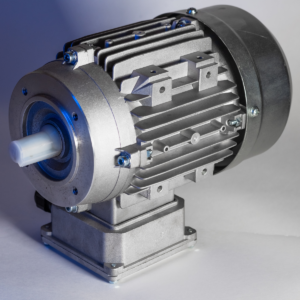
Electric motors are responsible for over 50% of China’s electricity consumption. Increasing their energy efficiency is a huge opportunity to reduce electricity demand.
In CLASP’s latest publication, Net Zero Heroes, motors contribute to 16% of total emissions by appliances globally. China National Insitute of Standardization (CNIS), and CLASP played a pivotal role in updating a critical standard for permanent magnet synchronous motors. China’s commitment to surpassing IE5 or Ultra-Premium Efficiency levels is a global first, with CLASP’s China Director, Steven Zeng noting, ”China’s initiative will raise worldwide awareness of the efficiency potential of motors.” Together with revised MEPS for high voltage motors, this initiative is set to cut 920 million tons of CO2 emissions by 2040.
In a groundbreaking move, CLASP is extending its impact to renewable energy transformers, addressing crucial components in solar, wind and energy storage facilities. These transformers play a key role in the transmission and distribution of electrical power generated from renewable sources and contribute to the efficiency, reliability, and stability of renewable energy infrastructure.
The draft of the updated MEPS is now open for public opinions and review. If adopted, China will be the first country globally to establish MEPS for renewable energy transformers, and is projected to prevent 260 million tons of CO2 emissions by 2050. Zhu Jing, lead researcher at the China National Laboratory of Wind Power Equipment and Control, notes this significance, stating, “Adopting a standardized method for sustainable power transformers contributes to green transitions, fostering trust and confidence among stakeholders.”
These innovative policy frameworks are part of CLASP’s global efforts towards appliance efficiency, carried out in collaboration with partners all around the globe. CLASP works to enhance access to affordable, energy-efficient appliances to improve the lives of people and reduce the impact on our climate.
Improving Public Health & Advancing Equity Goals with Appliance Energy Efficiency Standards
Federal energy efficiency standards for appliances and equipment lead to cleaner air, creating health benefits. By conserving energy, standards reduce both indirect emissions (from power plants) and direct emissions (from fossil fuel appliances). This decreases human exposure to fine particulate matter (PM2.5) pollution, a harmful form of particle pollution capable of entering the lungs and bloodstream and contributing to increased incidences of respiratory and cardiovascular health complications.
This factsheet summarizes the key findings from a recent report that estimates the distribution of public health benefits in disadvantaged communities in the United States. Specifically, it estimates the reductions in PM2.5-related deaths that can be attributed to standards adopted over a 30-year period and explores how standards can contribute to Justice40 Initiative goals.
Improving Appliances, Changing Lives: Pakistan’s Industry Accelerator
CLASP is running an industrial accelerator program in Pakistan to spur innovation and improve appliance efficiency. The program leverages international production and design experts to collaborate with local industry manufacturers to enhance the energy efficiency of water heaters and motors. Improved energy efficiency will reduce demand on the national power grid, reduce energy costs for consumers, and produce less climate emissions.

This Industry Accelerator has two main components: strengthen capacity for testing labs and provide technical support for manufacturers to improve their products to prepare for the upcoming regulations.
The Need for Reliable Testing Laboratories
In Pakistan’s appliance and equipment manufacturing sector, reliable, independent appliance test laboratories are starting to emerge. Test labs support manufacturers in assessing efficiency levels of their appliances, and their presence is crucial to accelerating efficiency, innovation and quality. They will also be essential in measuring the performance of regulated products for compliance once Minimum Energy Performance Standards (MEPS) and labeling regulations are rolled out.
Strengthening Lab Capacity Through Partnerships with Private Sector
Recognizing the need for both industry-based and independent test laboratories that are able to provide reliable and accurate test results, CLASP facilitated public-private partnerships with major air conditioner and motor manufacturers in Pakistan. CLASP also collaborated major manufacturers to support the capacity building of existing labs such as Centre for Energy Research & Development, Pakistan (CERAD). The training included upskilling the lab technicians’ proficiency in protocols, test methodologies, and enhancing verification process to prove that testing is reliable.
Learning from International Best Practice
CLASP partnered with motor testing expert from Turkish National Standards Institute (TSE) who are working in Pakistan and remotely to help strengthen the capacity of three motors labs at the Information Technology University (ITU), the Gujranwala Institute of Future Technology (GIFT) and CERAD. TSE have provided advice not only on lab equipment set up, but have undertaken extensive testing alongside the Pakistani technical staff to ensure their ability to test products and analyze results according to the IEC testing standards.
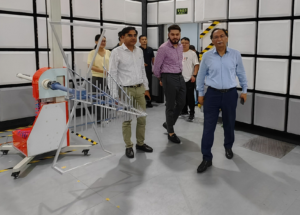
To gain insights on producing more efficient water heaters, a delegation of Pakistani manufacturers visited China’s renowned testing lab, the China Household Electric Appliance Research Institute (CHEARI) in Beijing. The manufacturers had an opportunity to enhance their knowledge of test lab equipment, methodologies and processes and learn insights in designing more efficient water heaters. When efficient water heaters are produced in Pakistan they will reduce the fossil fuel demand, strain on national grid, lower emissions and lessen monthly power bills for consumers.
Strengthening the Motor Industry
CLASP also invited motor experts from EMOSAD in Türkiye to visit local counterparts in Pakistan to share insights on how the country transformed from producing low-efficiency motors to building globally competitive, energy-efficient models. Following initial assessment of manufacturer production facilities, the experts have been preparing tailored design and production improvement recommendations for each participant considering their existing capabilities and objectives. The overall goal is to enable all participating manufacturers to have the capacity to produce motors of at least IE1 efficiency levels.
Industry Support Yield Benefits for Manufacturers, Consumers and the Climate
Around the world, manufacturers are recognizing the benefits of producing appliances and equipment that adhere to global standards in energy-efficiency that are also crucial to climate action and sustainable development. The presence of reliable, independent appliance test laboratories and technical assistance to participating manufacturers are the first steps towards building thriving motor and water heater industries in Pakistan. This will benefit the climate, the economy and consumers.
CLASP would like to thank the following companies who are a key part of the Pakistan Industry Accelerator program: AC and Motor Test Laboratories at CERAD, ITU and GIFT; the Punjab Energy Department (PEECA); Haier, ABB, Dawlence; the Pakistan Council of Scientific and Industrial Research (PCSIR); the Turkish National Standards Institute (TSE); the Turkish Motor Manufacturer’s Association (EMOSAD); the Pakistan Pumps and Motor Manufacturers Association (PPEMMA); the China Household Electric Appliance Research Institute (CHEARI); and the participating manufacturers Canon, Super Asia, Waves, Golden Fuji, Fisher, Golden Dynamics, El-Khas, Sunrise and Shahzad Pump.
Net Zero Heroes: Scaling Efficient Appliances for Climate Change Mitigation, Adaptation & Resilience
Efficient appliances, lighting, and equipment are critical climate solutions, situated at the nexus of mitigation, adaptation, and sustainable development.
However, not enough is being done to maximize their benefits. In this report, CLASP lays out actions that must be taken by 2030 to put the world on a pathway to net zero emissions and enable a just energy transition. Our research identifies the ten appliances most vital to meeting global climate mitigation targets and improving people’s lives: the Net Zero Heroes.
Visit the Net Zero Heroes site to read and download the report.
Getting Appliances Back on Track: Assessing Progress Towards Global Energy Efficiency Commitments
At the United Nations Framework Convention on Climate Change (UNFCCC) 26th Conference of the Parties (COP26) in 2021 in Glasgow, Scotland, 15 countries signed onto the Super-efficient Appliance and Equipment Deployment (SEAD) Initiative Appliance Efficiency Call to Action—estimated to be the largest energy efficiency commitment ever. The 15 signatories pledged to double the energy efficiency of four priority product categories by 2030: air conditioners (ACs), lighting, electric motors, and refrigerators, which collectively account for more than 40% of global electricity consumption.
“Getting Appliances Back on Track: Assessing Global Efficiency Progress,” evaluates economies’ progress toward the goal of doubling product efficiency, including the 15 signatories plus four top-emitting economies. The report also provides insight into the leading policy levers for accelerating appliance efficiency efforts – including examples of effective implementation of key interventions like minimum energy performance standards (MEPS) and appliance energy labeling.

15 signatories pledged to double the energy efficiency of four priority product categories by 2030: air conditioners (ACs), lighting, electric motors, and refrigerators, which collectively account for more than 40% of global electricity consumption.
“Getting Appliances Back on Track” offers valuable analysis to economies already committed to prioritizing appliance energy efficiency, and illustrates a path toward success for governments interested in joining as a Call to Action signatory.
This report continues analysis from World’s Best MEPS, which provided a snapshot of the stringency of minimum energy performance standards (MEPS) for key products across top-emitting economies.
“Getting Appliances Back on Track” is the first publication of CLASP’s #NetZeroHeroes COP28 digital campaign, which will shine a light on the critical role of appliance energy efficiency in the lead-up to climate discussions at COP28.
World’s Best MEPS: Identifying Top Energy Efficiency Standards for Priority Appliances
Minimum energy performance standards (MEPS) for appliances and equipment play a critical role in meeting ambitious international climate goals. By adopting updated MEPS aligned with international targets and best practice, governments can deliver further energy and cost savings to consumers and take action to curb the worst impacts of climate change.
CLASP evaluated the stringency of MEPS requirements for six major appliance categories—lighting, air conditioners, refrigerators, electric motors, water heating, and space heating—across ten of the world’s highest greenhouse gas-emitting economies—Brazil, Canada, China, the European Union, India, Indonesia, Japan, South Africa, the United Kingdom, and the United States.
This report identifies economies with the most ambitious MEPS, and highlights opportunities for further policy intervention across all economies. The analysis will be updated periodically, with updated data available on the World’s Best MEPS tool page.
Webinar Materials | How to Achieve the World’s Best MEPS
Webinar Materials | How Mepsy Can Transform Your Energy Efficiency Policy Development

Effective energy efficiency policy is more important than ever for mitigating carbon emissions and improving energy access globally. Policymakers and researchers can take advantage of Mepsy, CLASP’s free policy analysis tool, to make data-driven decisions about managing the top energy-consuming appliances, now including lighting and considerations for varying compliance levels.
This webinar, held on 16 March 2022, informed participants of two major additions to Mepsy’s toolkit: lighting and compliance. In addition, CLASP demonstrated how to use Mepsy to perform custom analyses and multiple tier policy analyses, in response to high demand for the feature.
A PDF version of the slides is available above, but to view the videos presented during the slideshow, please see the link below. Other related materials can also be downloaded below.
- Download Presentation (Read Only)
- 2022 Mepsy Webinar Q&A
- Analyzing Multiple Policy Tiers Guide
- Multiple Tiers Tool (Excel sheet)
- Transcript
For more information on Mepsy, see the Mepsy tool page and watch our launch webinar.
Pennies per Pound: The Return on Investment from Appliance Efficiency Technical Assistance

Analysis of 10 standards and labeling case studies finds appliance energy efficiency is a cost-effective climate mitigation tool
Calculating the Return on Investment of Appliance Energy Efficiency
While the social and economic benefits of energy efficiency are widely documented, few studies have explored the cost-effectiveness of policy interventions from an administrative perspective.
This study adds to the evidence base that appliance energy efficiency is a worthwhile investment, comparing the administrative costs of running such policies and their climate impact to the social cost of carbon.
By calculating the return on investment of 10 policy interventions, we find the administrative costs needed to achieve a one-ton reduction in CO₂e are below the social cost of carbon, with estimates ranging from less than one cent per ton to one dollar per ton.
Our findings underscore the large value for money appliances standards and labeling policies pose to governments and implementing agencies. Read the full report to explore each case study in detail.