
Lighting The Path to Net Zero: Boosting China’s LED Efficiency
In China, the world’s leading lighting producer, domestic lighting market is dominated by LED technologies which offer 50-80% energy savings compared to incandescent and fluorescent alternatives. CLASP is supporting the China National Institute for Standardization (CNIS) continue to raise the ambition for LED efficiency, drawing on international best practices and exploring opportunities to harmonize global or regional policies.
Lighting Efficiency as a Tool to Meet Net Zero Targets
Despite increasing lighting efficiency, the simultaneous increase in lighting demand and consumption is driving up overall energy consumption. In 2022, residential, commercial and industrial lighting in China together reached 990 TWh, accounting for 13% of overall national electricity consumption. To meet their Net Zero 2060 target, the Chinese government must continue innovating and pushing for improved lighting efficiency.
CLASP has been supporting China’s transition to clean lighting since 2020. We are very proud to continue moving forward in this collaboration. We believe this cooperation with CNIS will propose a path for China, and possibly for other countries, to improve LED lighting MEPS to the world-leading level.
– Steven Zeng, CLASP China Program Director.
According to Mepsy, CLASP’s climate impact calculator, by adopting new minimum energy performance standards (MEPS), China could reduce carbon emissions by 2,286 million tons by 2050. This is nearly equivalent to the emissions reductions anticipated from China’s New Energy Vehicle Industrial Development Plan. Revised MEPS align with China’s goal to phase-out mercury-containing fluorescent lighting by 2025, reducing mercury pollution by 3,466kg and saving 20.1 billion CNY/3 billion USD in energy costs.
Collaborating for a Brighter Future
CLASP and CNIS will collaborate to improve current LED MEPS.[1] The first focus will be on increasing efficiency levels for indoor LEDs to become the world leading MEPS. China plays a vital role in the global value chain as the world’s largest producer, consumer and exporter of LED lighting products. The country’s efforts to improve efficiency policies for LEDs will have a significant impact the global lighting supply chain – and therefore global energy consumption and carbon emissions. We will support CNIS to collaborate with regional and international partners to potentially synchronize global or regional policies.
“China recognized that MEPS are one of the key drivers for improving efficiency. We are glad to work with CLASP to advance our study on the roadmap of improving China’s MEPS for LED lighting products.”
– Xiuying Liang, Researcher of Lighting Products and Program Coordinator, CNIS.
[1] The new collaboration will target MEPS for Indoor LED Lighting (GB 30255-2019), MEPS for LED Road and Tunnel Lighting (GB 37478-2019) and MEPS for LED Flat Panel Luminaries (GB 38450-2019).
Results from China’s Energy Efficiency Program Encourage Further Progress
Over the past decade, China has made significant progress implementing mandatory energy efficiency policies. According to the IEA, energy efficiency standards decreased expected energy use in China by 20% in 2018. Since the announcement of CLASP’s official partnership with China National Institute of Standardization (CNIS) last July, three of our research reports have shown that strong energy efficiency policies have enormous potential to mitigate CO2 emissions and reduce energy costs in the world’s largest emitter.
In our most recent report, China’s MEPS Lead to Major AC Market Transformation, evidence demonstrates the success of such policies and serves as a case study for other countries, as well as China itself, to keep pushing for better standards. Room air conditioner (RAC) use in China is soaring, along with the percentage of efficient models on the market. This unprecedented market transformation, in just two years, is thanks to a timely update to China’s RAC efficiency levels.
In just two years, highly efficient ACs with variable speed technology went from 60% to 98% of the Chinese market.
Sustained partnership with government and industry is necessary to ensure China does not stagnate, but rather continues to achieve higher levels of efficiency for high-emitting appliances. The study found that the energy efficiency of cooling products can still improve by 30-50%.
The benefits of China’s standards are global. As the world’s largest exporter of RAC units, domestic policies can raise efficiency levels for dozens of other countries, potentially lowering energy costs for billions of people. China also has the opportunity to incorporate stricter requirements for refrigerant efficiency, the main cause of direct emissions from RACs.
These findings align with IEA’s Efficient World Scenario analysis that advises MEPS remain a central energy efficiency policy for China. To discuss China’s commitments and better understand progress, CLASP recently visited CNIS and several industry leaders, including National Lighting Test Center (NLTC), China Heat Pump Association (CHPA) and Vkan Certification and Verification Center (CVC), and attended the 34th China Refrigeration Expo in Shanghai.
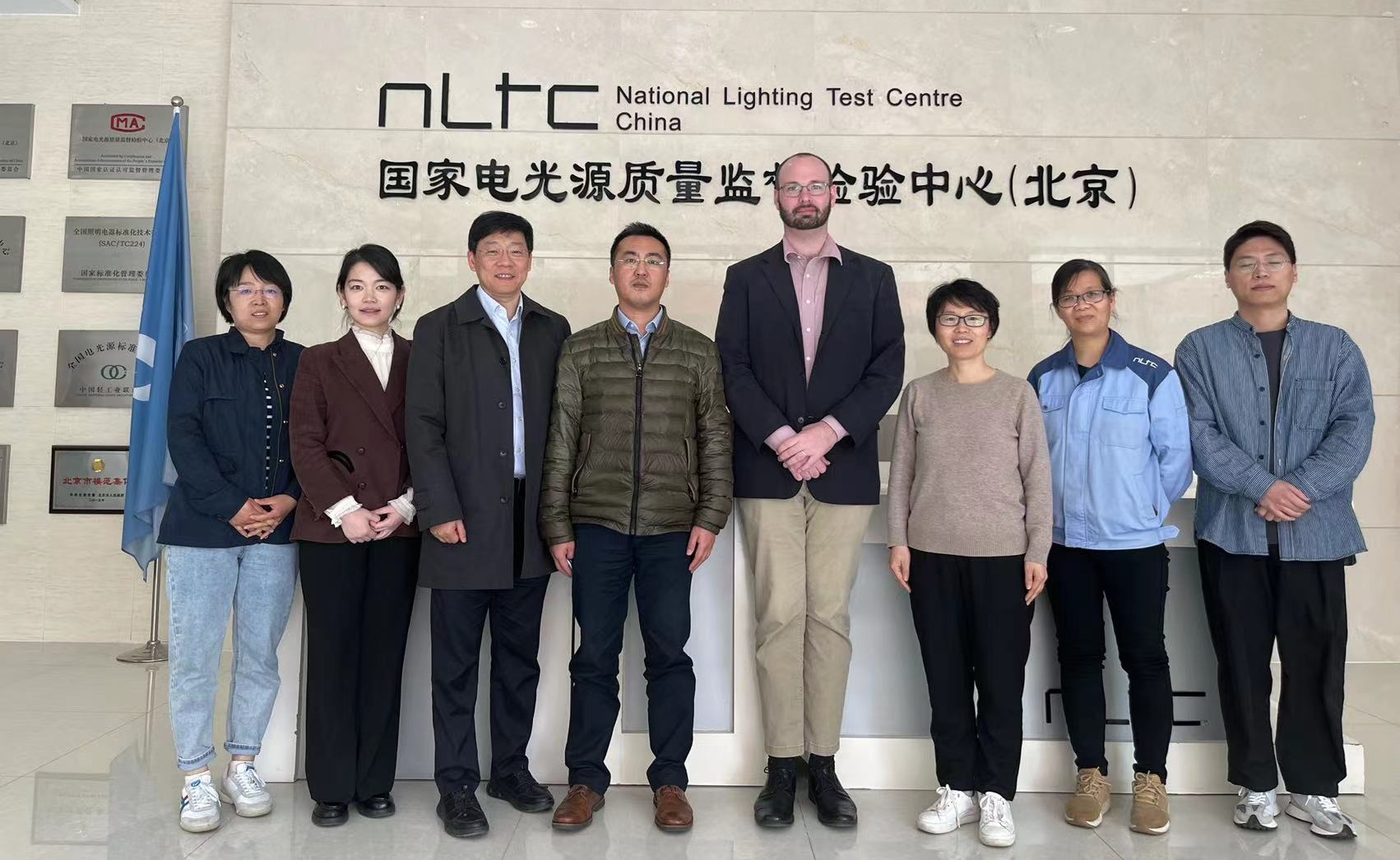
CLASP and Chinese partners agreed to continue prioritizing the development and revision of minimum energy performance standards (MEPS) for key products – cooling and refrigeration, water heaters, LED lighting, heat pump heating equipment, among others. We also will continue facilitating international knowledge exchanges to support other countries’ testing capabilities and policy processes, using lessons learned in China to realize policy breakthroughs around the world.
“CLASP will continue working with the National Development and Reform Commission and State Administration for Market Regulation to officially launch the 2023-2024 work plan,” says Steven Zeng, China Program Lead. “The plan includes developing policies that will reduce energy consumption by a cumulative 10,000 TWh by 2050. That translates to a 3.8 Gt reduction in CO₂ emissions, equivalent to China’s annual emissions from industry, transportation, agricultural, buildings, and fugitive emissions. Long-term, the China program hopes to become the global leader and role model for product energy efficiency policies.”
Building Resilience in Low-Income Communities – The Role of Off-Grid Appliances
Energy-efficient off-grid appliances are crucial in addressing climate change and promoting resilience and adaptation, particularly for rural communities in sub-Saharan Africa. These communities often face the brunt of weather-related disasters and have limited access to resources and infrastructure for coping.
To tackle this challenge, CLASP through Efficiency for Access commissioned Rural Senses to gather insights from the community in Siaya County, Kenya. The objective was to understand their perceptions of climate change challenges and identify pathways to enhance resilience. The study also delved into the role of seven off-grid solar products and equipment, such as electric pressure cookers, fans, motorbikes, refrigerators, televisions, water pumps, grain mills, and solar PV systems, in building resilience.
Read the full report to learn more about the community’s primary concerns regarding climate events, existing barriers to resilience-building, the potential of off-grid appliances, and suggested pathways for fostering resilience.
Download the Building Resilience in Low-Income Communities – The Role of Off-Grid Appliances report.
About Efficiency for Access
Efficiency for Access is a global coalition working to promote renewable and energy efficient appliances to deliver clean energy to the world’s poorest people. It is coordinated jointly by CLASP and the UK’s Energy Saving Trust.
Guarding Against Low-Efficiency Appliances in East & Southern Africa
Across East and Southern Africa, households and businesses face increasingly frequent blackouts and rising electricity costs due to overburdened national grids. In an effort to lower energy demand, governments are implementing regulations to increase appliance efficiency levels, but face challenges ensuring products entering the market are compliant. Through UNIDO’s EELA project, CLASP is building compliance capacity throughout these regions.
Efficiency policies are limited without proper compliance
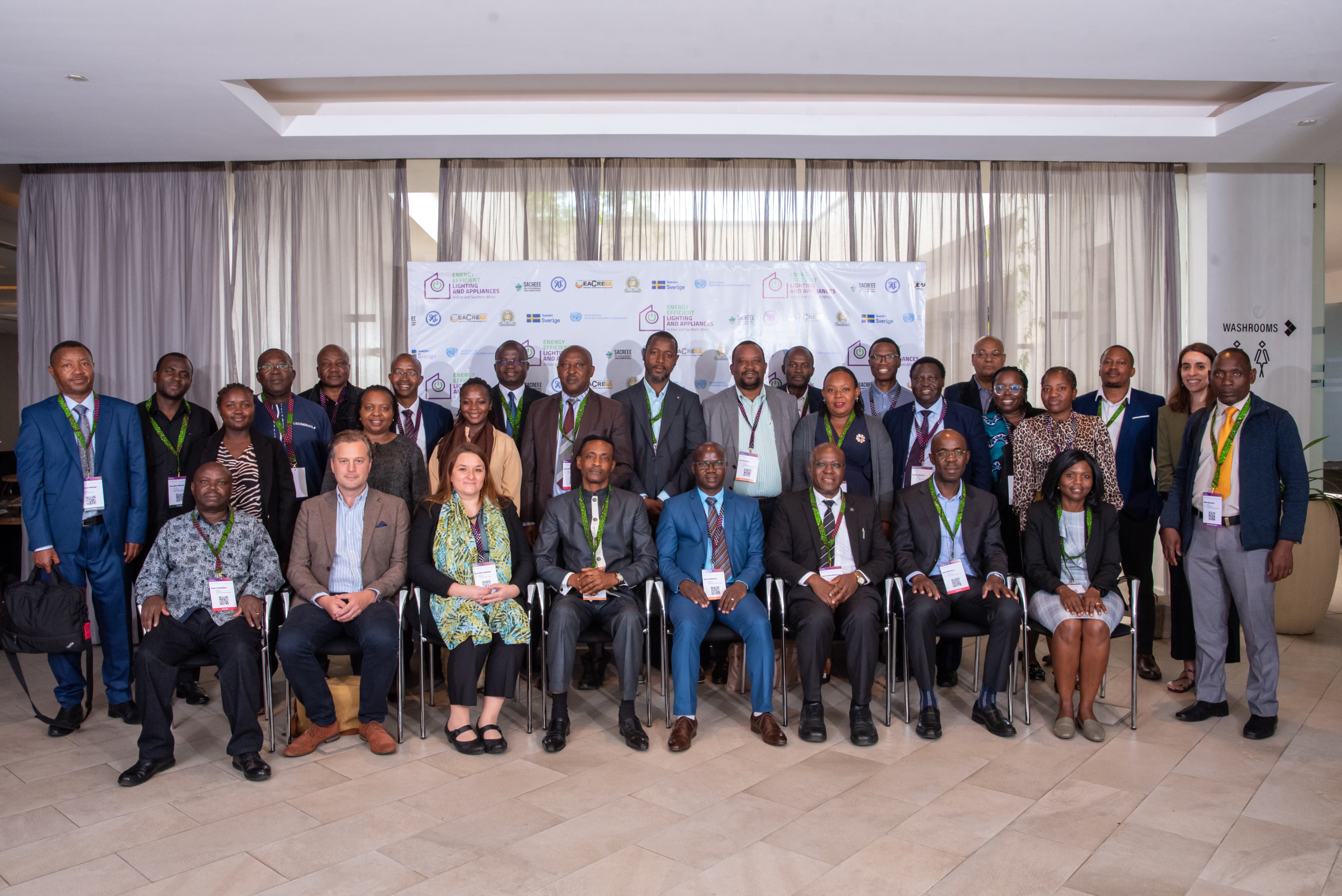
In March, CLASP joined the UNIDO Energy Efficiency Lighting & Appliances (EELA) Annual Stakeholder Forum as a technical partner, offering a workshop on compliance and joining panels on productive use and policy interventions. Most countries in East and Southern Africa are still adopting minimum energy performance standards (MEPS) and developing compliance frameworks to ensure appliances entering their markets meet the MEPS.
At the Forum, Angellah Wekongo led a training on Conformity Assessments – a mechanism to protect markets at the point of entry. The Assessment involves evaluating products before market entry through product testing, certification, and registration, to check that they comply with national requirements. In addition to ensuring compliance of appliances placed on the market, a robust conformity assessment can save costs on market surveillance and provide insights into the performance of appliances on the market.
Adopting a regionally harmonized framework
“A highlight of the meeting was voting on the adoption of the EAC/SADC region Compliance Framework that was developed by CLASP. The goal of the framework is to enable member states to effectively implement regionally harmonized energy efficiency policy measures and ultimately protect markets from non-compliant and low-quality products.” – Angellah Wekongo
The Framework objectives are to:
- Increase the efficiency of compliance efforts throughout the two regions;
- Establish appropriate communication channels and collaboration between the national compliance authorities through regional centers to share compliance intelligence and resources;
- Establish a regional product registration system;
- Ensure adequate and accessed-by-all testing capacity in the regions;
- Develop common practices and methodologies, and support alignment of national compliance regulations to the extent possible;
- and foster gender equality and women’s empowerment.
All 21 SADC countries voted in favor of the Framework, and five of the six EAC countries also voted in favor. South Sudan abstained as they had yet to read the framework.
CLASP focuses on policy & productive use appliance market opportunity
In addition to her work on compliance, Wekongo participated in a policy session about the legal, policy, and regulatory environment for energy efficient lighting and appliances. The session also shared experiences on how local markets have benefitted from harmonization of EELA policies and compliance efforts in the region.
Sam Grant, CLASP’s Director of Clean Energy Access, also moderated a session on productive use appliances to address the challenges and opportunities for market growth in the region.
To learn more about this event, visit SACREEE’s website.
Africa Region Galvanizes Efforts to End Mercury Lighting
Download the press release here.
WASHINGTON/BRUSSELS (3 May 2023) – The Zero Mercury Working Group and the Clean Lighting Coalition commend the Africa Region for proposing an amendment to phase out all the remaining fluorescent lamps at the Fifth meeting of the Conference of the Parties (COP 5) of the Minamata Convention on Mercury in Geneva.
This amendment complements the unanimous decision at Minamata COP4 to phase out compact fluorescent lamps (CLFs) by 2025. If adopted in November, the COP5 Amendment will effectively end the manufacture and trade of all fluorescent bulbs globally by 2026.
Phasing out the proposed categories of fluorescent lamps in the timeline proposed in the amendment will cumulatively:
- avoid 3.00 gigatonnes of carbon dioxide;
- save US $1.26 trillion in electricity costs, and;
- prevent 176 metric tonnes of mercury pollution – including both mercury used in lamps, and the mercury emissions from coal-fired power plants that would be avoided through lower electricity use for lighting.
“The COP5 African Lighting Amendment is the most effective strategy we have to limiting the dangerous health and environmental impacts of mercury-containing fluorescent lighting,” said Elena Lymberidi-Settimo, International Co-coordinator of the Zero Mercury Working Group. “The Africa region, and most regions around the world, do not have the recycling capacity and resources to properly manage the mercury contents of end-of-life fluorescent bulbs. Widely available LED alternatives mean these exemptions are no longer necessary – there is no justifiable reason to continue manufacturing, importing or exporting harmful fluorescent technologies.”
All fluorescent lamps contain mercury, a neurotoxin that can cause harmful and long-term health effects. Mercury is on the World Health Organization’s list of the 10 chemicals or groups of chemicals of major public health concern, as it affects the nervous, digestive and immune system. Pregnant people and children are at heightened risk for these health impacts.
When a fluorescent lamp is broken or improperly disposed of, the mercury from the lamp contaminates the atmosphere, land and water – posing a risk to workers and the local environment.
“We applaud the Africa Region for their continued leadership in the transition to more efficient mercury-free lighting,” said Rachel Kamande, Campaign Lead of the Clean Lighting Coalition. “The economic case to phase-out fluorescent lamps is even stronger today because the mercury-free LEDs have become less expensive and energy prices have increased leading to even shorter payback periods.”
LEDs are the most efficient lighting option on today’s market, consuming only half as much energy as fluorescent bulbs and have a lifespan up to three times longer. Due to the reduced energy demand, LEDs bulbs ease strain on the electric grid and have a rapid payback period for consumers. LED retrofits for fluorescents are widely available around the globe, with lamps to fit nearly every need and ballast.
Although some of the world’s largest lighting manufacturers already have plans to fully transition to LEDs in the next decade, many continue to export fluorescents – often to less regulated markets. The Africa region’s Amendment will prime the global LED market for an equitable and economically beneficial transition away from toxic lighting.
###
About the Clean Lighting Coalition: The Clean Lighting Coalition is a global partnership to capture the health and environmental benefits of eliminating mercury-based lighting. www.cleanlightingcoalition.org
About The Zero Mercury Working Group: The Zero Mercury Working Group is a coalition of more than 110 environmental and health non-governmental organizations from over 55 countries, which strives for zero supply, demand, and emissions of mercury from anthropogenic sources. www.zeromercury.org
PRESS CONTACTS
Washington, DC: Ana Maria Carreño, Director, Clean Lighting Coalition
acarreno@clasp.ngo | Phone/WhatsApp: +1 202 999 2886
Washington, DC: Alexia Ross, Strategic Communications Associate, Clean Lighting Coalition
aross@clasp.ngo | Phone/WhatsApp: +1 339 222 4311
Brussels: Elena Lymberidi-Settimo
International Co-coordinator Zero Mercury Working Group & Policy Manager, European Environmental Bureau
elena.lymberidi@eeb.org | Phone/WhatsApp: +32 496 532818
Insights into Energy Efficiency in Rio’s Favelas
In preparation for Earth Day (April 22), Rio de Janeiro’s Sustainable Favela Network (SFN) and the Favelas Unified Dashboard (PUF) launched Energy Efficiency in the Favelas. The report details community access to energy efficient appliances, services, and habits, as well as highlights opportunities for government intervention. CLASP provided training to the researchers on topics in energy-efficiency.
Last year, the SFN, PUF, and seven partner institutions implemented the course and research project, ‘Monitoring Water and Energy Justice in the Favelas.’ The course and resulting research engaged 45 youth and leaders from 15 favelas in Greater Rio as citizen-researchers. The findings demonstrate how favelas can produce robust data, often eliciting deeper insights than researchers and utilities from outside the communities.
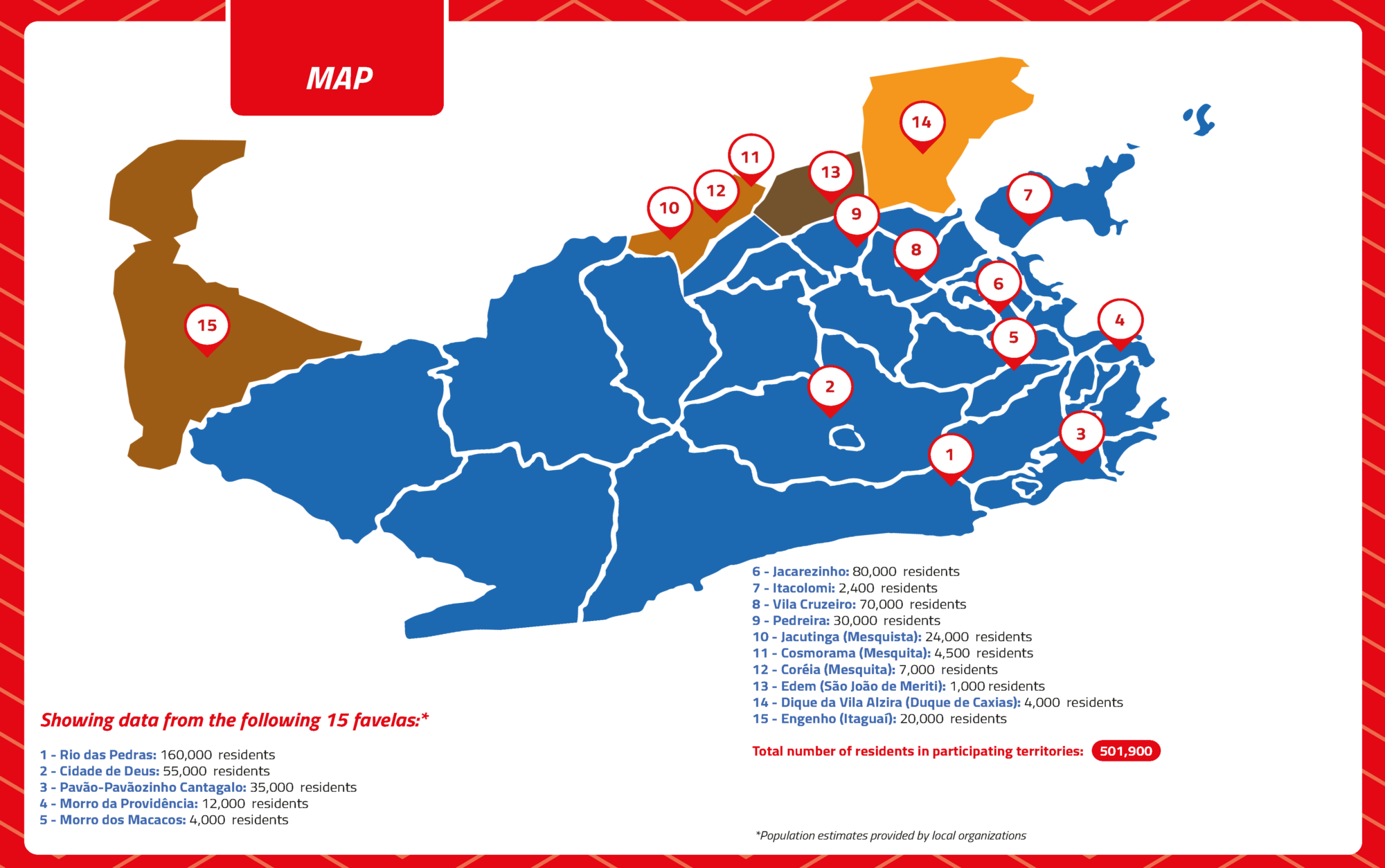
Map of Greater Rio de Janeiro, showing where the research took place.
Following the launch of the initial research project report Water and Energy Justice in the Favelas: Data Collected Make Inequalities Evident and Lead to Demands for Change—released in September 2022, with coverage in Globo TV, CNN, Agência Brasil, and Notícia Preta—participants turned their attention to more in-depth and detailed analyses of their data on energy efficiency. One outcome is the new report launched today.
New Data on Energy Efficiency in Rio’s Favelas
The data presented in the new report Energy Efficiency in the Favelas reflect the reality of 1,156 families (4,164 people) in 15 favelas from five municipalities across the Greater Rio metropolitan region, and specifically show the relationship between energy, poverty, and social inequality, focusing on the efficiency of service provision and use.
Kayo Moura, a social scientist, student of statistics and member of the data and narratives laboratory, LabJaca, based in the Jacarezinho favela and recently referenced in The New York Times, was responsible for the analysis.
He explains:
“The most interesting thing [about this study]… was understanding that when we talk about energy efficiency in the favelas, urban peripheries, and the Global South, we are talking about justice, about access. If I had to define the report in one statement, it would be that: energy inefficiency operates as a tool of energy injustice, especially in Brazil’s favelas.
Inside favelas, with a majority of families left socially vulnerable, inefficiency affects the poorest of the poor. It is those with the least knowledge of social programs, such as the Social Electricity Tariff, that suffer the most from service inefficiency and endure the most frequent and longest blackouts.”
The data can serve as a reference and impetus for policymakers to support vulnerable families become more energy-efficient through improved access to energy-efficient appliances outright or larger subsidies.
The Backdrop of Poverty and Racial Inequality
Energy Efficiency in the Favelas presents the data within the socioeconomic context of community members. For example, of the 4,163 residents represented in the data, over half the families interviewed live below the poverty line.
The analysis also looked into racial breakdown by income bracket: there was a clear inverse correlation between race and income. A smaller proportion of Black people were present in higher income groups, reflecting the broader societal trend of Afro-Brazilians being overrepresented in lower income brackets.
The Daily Reality of Energy Poverty
Energy poverty refers to when an electric bill takes up over 10% of a family’s monthly income (the recommendation is below 6.8%). The report shows that families earning zero to half a minimum wage comprise the majority of families facing energy poverty. There is a trend line: as the income bracket increases, the proportion of families facing energy poverty decreases.
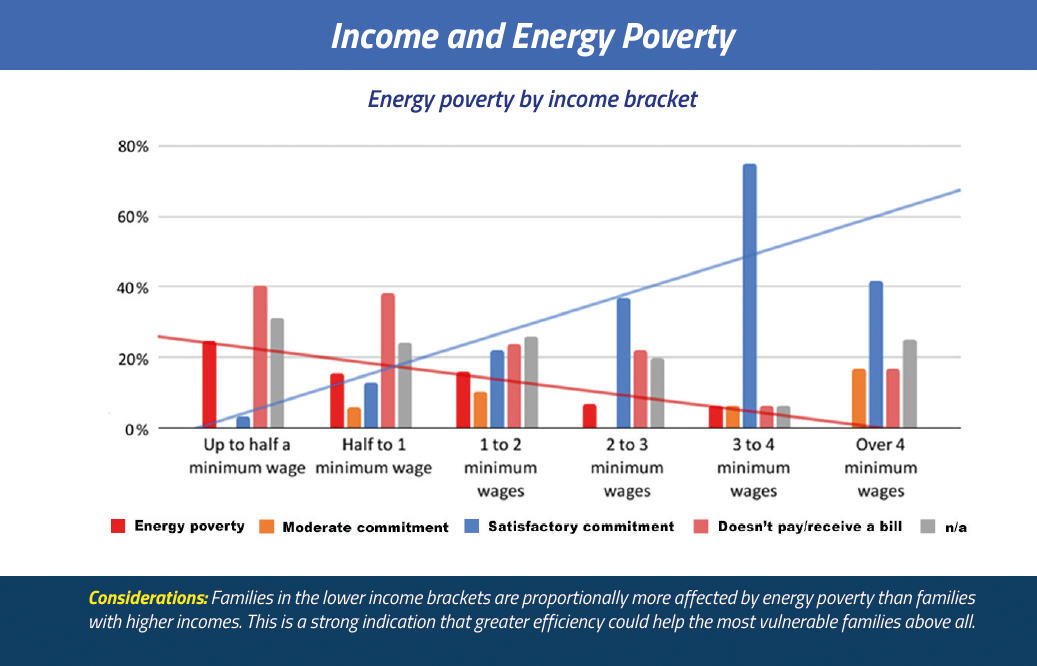
Additionally, 69% of respondents stated that if their electric bill were halved, they would use the money to buy food (instead of paying other bills, buying medication, for education, etc.), which indicates that energy poverty is directly linked to food insecurity for interviewees.
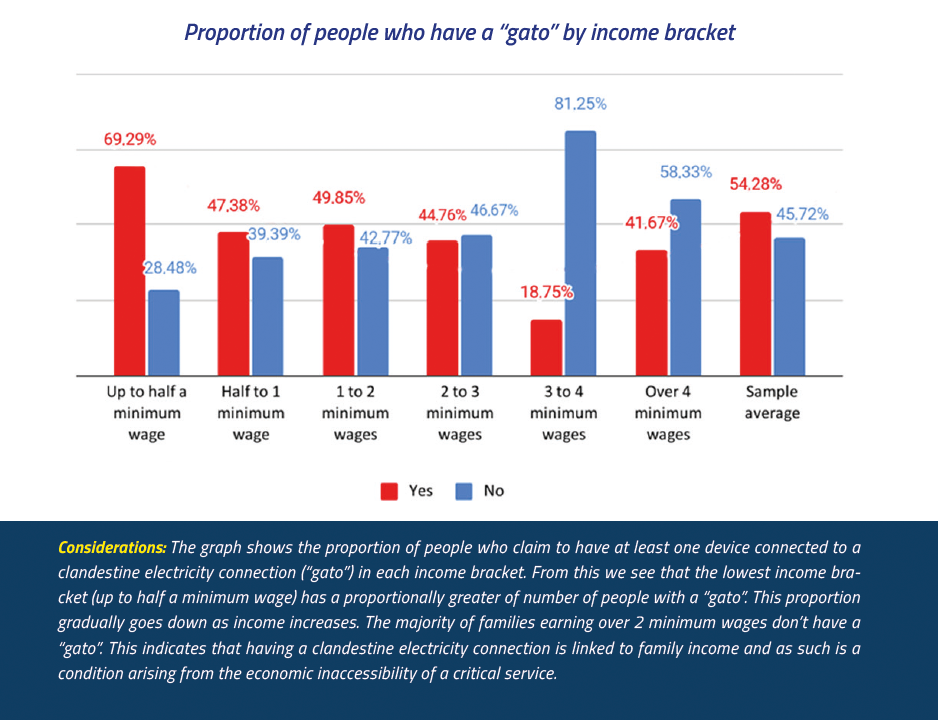
Families in energy poverty must seek alternative means to access critical electricity – in the favelas, ‘gatos’ (clandestine electrical connections) are a common approach. As Moura explains:
“The approach we used when studying ‘gatos’ was from the perspective of understanding the need to guarantee access, rather than criminalize access. The data show how ‘gatos’ are frequently the only means by which people can access energy. The poorest families are shown to have the biggest proportion of ‘gatos.’ As income increases, the proportion of those who state they do not have a ‘gato’ also increases. So we see how this is a question of access, of being in a financial position to pay the electric bill, and not one of dishonesty or taking advantage.”
Depending on the irregular connection of a “gato” results in inefficiency of access to the service and repair, further reinforcing the poverty of the family. The families with the lowest incomes in the study were those that suffered most from service inefficiency. Moura summarized the results:
“Those who said they faced daily blackouts are in the lowest income brackets. As the income bracket increases, the number of people stating they did not face a blackout that lasted over 24 hours in the past three months also increases.
Favela Residents Lack Choice & Information on Efficient Appliances
Energy-efficient household appliances provide the same or improved services while using less energy, resulting in cost and energy savings. The research aimed to understand whether favela participants have access to efficient appliances, as well as what types and which appliances have the largest impact on their electric bills.
Obtaining information about energy-efficient appliances that could potentially reduce electricity bills is challenging for lower-income families. These families reported the lowest levels of awareness about the National Energy Conservation Label (ENCE), a mandatory label affixed to all electrical appliances in Brazil, which indicates their energy usage in comparison to other appliances.
Qualitative accounts revealed that energy-efficient appliances, often the latest models, are expensive and are therefore inaccessible to residents. Lower-income residents reported that their appliances break down quicker due to recurring blackouts and they must replace them regularly with second-hand ones.
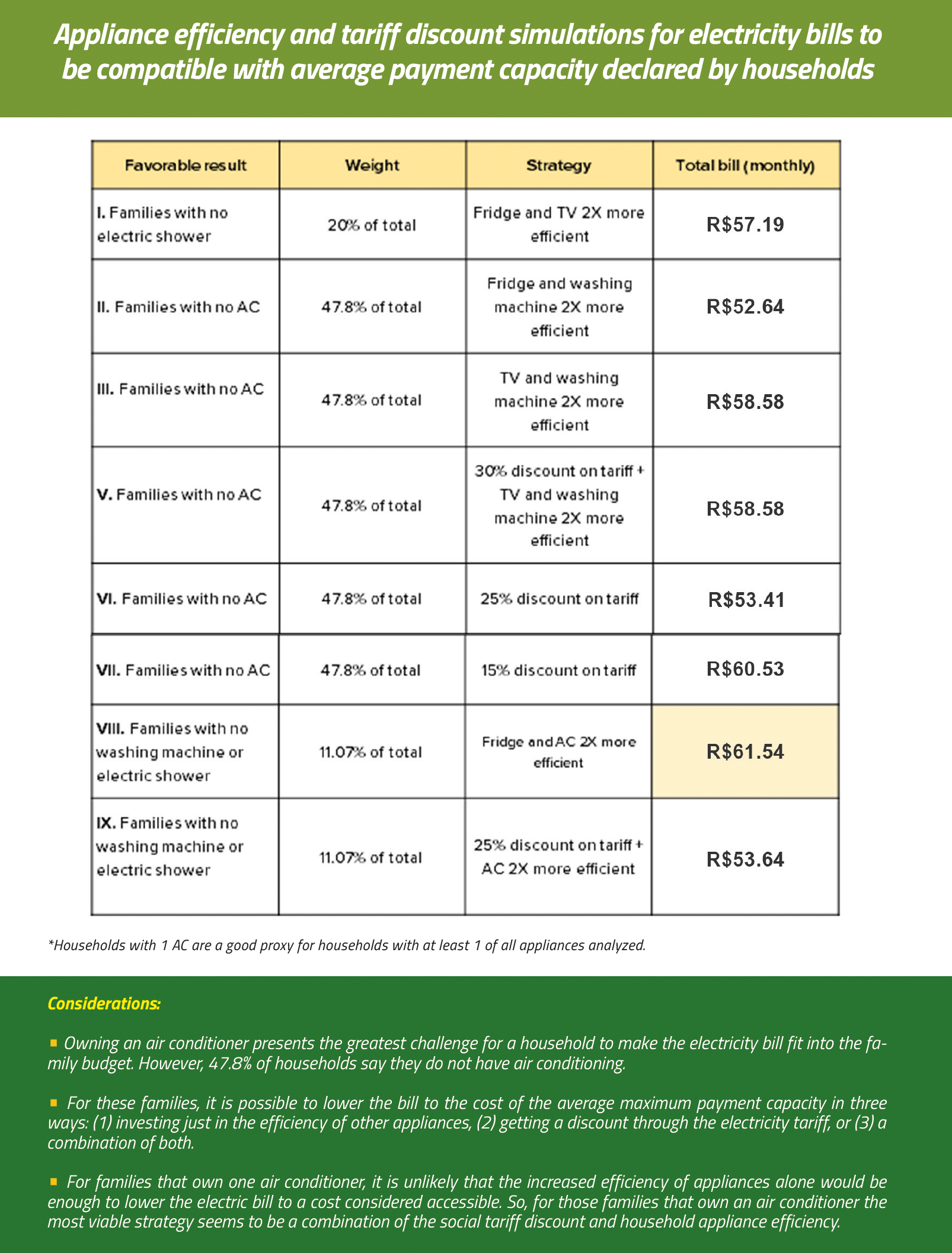
The study focused on key household appliances (air conditioners, electric showers, refrigerators, washing machines, televisions, and fans) and calculated the estimated impact of each appliance’s energy consumption on a family’s monthly income. The research confirmed that air conditioners are the highest energy consumer and have the biggest impact on the household budget, despite the benefits on increasingly hot days in Rio.
Air conditioners account for 51.4% of total electricity consumption, surpassing the combined impact of electric showers, refrigerators, washing machines, televisions, and fans. Over 50% of those interviewed reported owning between one and three air conditioners.
According to Moura, this part of the survey aimed to assist authorities and professionals to identify ways to help families achieve more efficient average energy consumption:
“While it may not be feasible to produce an air conditioner that is three times more efficient, could it be possible to implement a social tariff that offers a 25% discount to families that meet a specific criterion and use air conditioning, for example?”
Efficient Habits Independent of Clandestine Access
There are two main strategies to achieve efficient energy use. The first is to invest in efficient appliances, which, as demonstrated, is a challenge for favela residents due to high upfront costs and lack of awareness. The second is consumer habits.
The study aimed to understand consumer habits around efficiency: such as remembering to turn off lights when leaving a room or using LED bulbs. Based on the responses, the researchers developed a point system. The system attributed one point to every response that represented a high degree of energy efficiency, with the highest score being 9. The results show a high degree of concern about maintaining efficient habits: over half of interviewees scored between 6 and 9, and many showed concern with having energy efficient habits without even knowing the term. 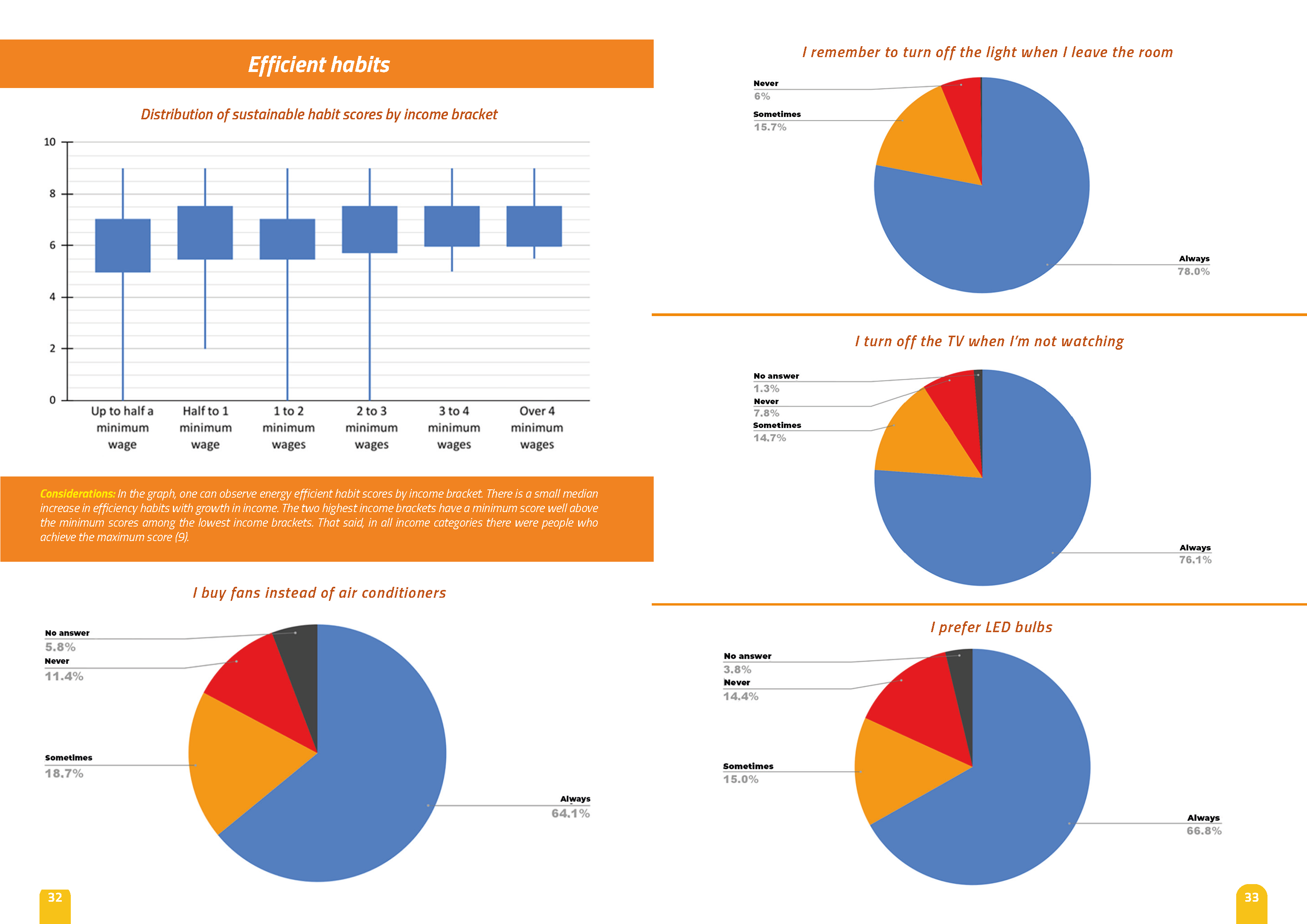
Moura summarizes:
“There’s a myth that no one in the favela cares about energy-saving habits. There’s also a misconception that everyone in the favela has a ‘gato’ [clandestine electric connection] and that since they don’t pay for electricity, they don’t care about savings or energy efficiency. We compared the behaviors of people who have a ‘gato’ and those who don’t. We discovered that there is a small difference between those who have a ‘gato’ and those who don’t, but that it’s negligible, indicating that, in general, regardless of whether a person has a ‘gato’ or not, residents tend to seek energy efficiency in what is in their power: their habits.”
Poor Awareness of Available Social Energy Services
The study sought to understand community members’ awareness of the Social Electricity Tariff (TSEE) and the ENCE label. The Social Tariff offers discounts on electric bills and provides rewards for energy savings: the more efficient the consumer is, the larger the discount. Both mechanisms aim to make bills cheaper for families with the greatest need.
As with the ENCE label, the study found that there is a significant lack of knowledge about the Social Tariff. This was seen in all income brackets during the study, but over 75% of lowest income groups do not know the program exists. Approximately 60% of families in the study meet the income criteria for the TSEE, but only 8% state that they receive the benefit. Of the families that meet income criteria to qualify for the TSEE, 90% say they do not receive the benefit.
For the Community, By the Community
Through the research, CatComm aimed to demonstrate the benefits of community-led research. It can be challenging to elicit honest responses about topics like gatos if residents fear potential repercussions from outside researchers. The insights garnered by Moura and his team are robust; community members opened up more easily to the youth researchers based on established trust.
“People from outside often see the favela as a problem, which is why the study we’ve conducted is crucial: it’s by the favela, for the favela. We are no longer objects of study; we are building our own narrative from the inside out, producing discourse about ourselves,” explains Moura. “There’s no way of thinking and talking about the favela without us being there as the main actors, as subjects. We’re here telling our own story. It’s no longer someone else telling it from the outside. This is why electricity is important, because the lack of electricity also means the lack of means of communication. e can speak for ourselves, so we can tell our own story. The story of Brazil from our point of view.”
Highlights from the Data
Efficiency and Quality of Access
- 55.2% of people represented in the research are living below the poverty line, with a per capita monthly family income of up to R$497 (US$96).
- 41.5% of families earning up to half the minimum wage experienced blackouts lasting over 24 hours in the past three months. Among families earning 2-3 minimum wages, the percentage was 23%.
- 32.1% of families have experienced loss of electrical appliances due to electrical grid failures.
- Families pay, on average, an electricity bill that is twice their average payment capacity. 31% of families experience energy poverty, with a disproportionate amount of the family budget going to pay the electric bill.
- 69% would choose to spend the savings on food if their electric bills were reduced.
- 68.7% of those interviewed (794 people) do not know what the Social Electricity Tariff (TSEE) is. 59.55% of families meet the income criteria to qualify for the Social Tariff, but only 8.04% of families state they receive the benefit, while 90.04% of families who would qualify affirm they do not receive it.
- 73% of families earning up to half a minimum wage state they do not complain or make requests to the utility, Light. As income increases, comfort in requesting services from the utility increases: only 33% of those earning over four minimum wages say they do not make complaints to Light.
Energy-Efficient Appliances and Habits
- Air conditioning is responsible for over half (51.4%) of energy consumption in the sample, followed by electric showers (13.8%) and refrigerators (13.6%).
- Energy-saving habits are at a good level across the sample population. The average score was 6.21 and the mode was 7, with the scale ranging from 0 to 9. Among those interviewed, 78% always remember to turn off the lights when leaving a room and 67% choose LED bulbs.
- 50.6% state they know what the National Energy Conservation Label (ENCE) means. Of those that know the label, 49.1% state they have bought an electrical appliance based on it being classified in the ENCE A category.
Read more
- Energy Efficiency in the Favelas Report in Portuguese
- Energy Efficiency in the Favelas Report in English
- Energy & Water Justice Article
- Energy & Water Justice Report
- Documentary
The course “Researching and Monitoring Water and Energy Justice in the Favelas,” was carried out collaboratively by the following organizations: Roots in Movement, ICICT and EPSJV (Fiocruz), Climate and Society Institute, CLASP, LabJaca, DataLabe, and Casa Fluminense.
The community organizations which took part in the course and research project were: Alfazendo (City of God/Rio de Janeiro), Fusion Social Center Association (Jacutinga/Mesquita), Women of Attitude and Social Commitment Association (Dique da Vila Alzira/Duque de Caxias), Edson Passos Women’s Association (Cosmorama/Mesquita), Association of Itaguaí Warrior Women and Social Organizers (Engenho/Itaguaí), Life Root Community Center (Morro dos Macacos/Rio de Janeiro), Transvida Cooperative (Vila Cruzeiro/Rio de Janeiro, LabJaca (Jacarezinho/Rio de Janeiro), Maria Pimentel Marinho Women’s Movement (Itacolomi/Rio de Janeiro), Museu de Favela (Cantagalo, Pavãozinho e Pavão/Rio de Janeiro), Grassroots Social Education in Solidarity Economy Nucleus (Coréia/Mesquita); Inclusion Project (Edem/São João de Meriti), Projeto Moleque (Pedreira/Rio de Janeiro); Sowing Love Social Project (Rio das Pedras/Rio de Janeiro), SOS Providência (Providência/Rio de Janeiro).
Energy Efficiency in the Favelas
A new report from Catalytic Communities offers insights into the efficiency of service provision and use in favelas across Rio de Janeiro where inefficiency affects lowest income residents the worst. CLASP provided trainings to the researchers on energy efficiency, helping to craft the survey design and questions.
The data presented in the new report Energy Efficiency in the Favelas reflect the reality of 1,156 families (4,164 people) in 15 favelas from five municipalities across the Greater Rio metropolitan region, and specifically show the relationship between energy and poverty, focusing on the efficiency of service provision and use.
Key Findings
- The lowest-income families make up the majority of those facing energy poverty. 31% of surveyed families experience energy poverty,1 with a disproportionate amount of the family budget going to pay the electric bill.
- 69% of respondents stated that if their electric bill were halved, they would use the money to buy food, which indicates that energy poverty is directly linked to food insecurity for interviewees.
- Air conditioning is responsible for over half (51.4%) of energy consumption in the sample, followed by electric showers (13.8%) and refrigerators (13.6%).
- Energy-saving habits are at a good level across the sample population. Among those interviewed, 78% always remember to turn off the lights when leaving a room and 67% choose LED bulbs.
- Knowledge of energy-efficient appliances and the country’s labeling and assistance programs is low among low-income families: 50.6% state they know what the National Energy Conservation Label (ENCE) means. Of those that know the label, 49.1% state they have bought an electrical appliance based on it being classified in the ENCE A category.
- The Social Electricity Tariff (TSEE) offers discounts on electric bills and provides rewards for energy savings. Approximately 60% of families in the study meet the income criteria for the TSEE, but only 8% state that they receive the benefit. Of the families that meet income criteria to qualify for the TSEE, 90% say they do not receive the benefit.
This report is a follow-up to Water and Energy Justice in the Favelas.
Learn more
0. Energy poverty refers to when an electric bill takes up over 10% of a family’s monthly income (the recommended is below 6.8%).
Productive Use Financing Facility Opens First Public Auction Window
Nairobi, Kenya, 12 April 2023 – Access to productive use appliances can deliver significant economic, health, education, and quality of life benefits for the approximately 600 million people across the African continent who lack access to electricity. This can also put under-electrified parts of the world on a low-carbon pathway to electrification. However, affordability remains a major barrier to access and scale. The Productive Use Financing Facility aims to help address the affordability barrier, and the current auction window will make procurement subsidies available for companies in six African countries.
Makena Ireri, Director at the Global Energy Alliance for People and Planet, said, “The Facility will help make high-quality, productive use appliances more affordable and accessible. These technologies can transform lives and livelihoods by helping to create new green energy-enabled jobs, enhance income generation for micro-enterprises and smallholder farmers, and improve the sustainability of renewable energy infrastructure projects through increased demand for electricity.”
The Facility’s initial scope includes the Democratic Republic of Congo, Ethiopia, Kenya, Nigeria, Sierra Leone, and Uganda based on growth potential and market maturity. Eligible technologies include electric pressure cookers, fans, milling, solar water pumps, refrigerators/freezers, and walk-in cold storage. All technologies must complete quality assurance testing, helping to ensure that users receive high-quality products.
Eligible distributors can also apply for capacity-building small grants to offset one-off costs associated with nascent PUA business lines, such as warehouse space, staffing, or training. The procurement subsidies and capacity-building grants will allow eligible companies to lower costs for customers while investing in long-term growth. Participating companies may also agree for the Facility to share their information with Nithio, should they wish to be considered for debt investment to help them further scale their business and reach more consumers.
Interested companies should send in their applications by the end of day on April 21, 2023. Please check out these resources to learn more about the program, including eligibility requirements of the procurement subsidy auction window and how to submit a subsidy request. For any other questions, please get in touch with financing@clasp.ngo.
About the Facility
Launched in October 2022 by CLASP and Nithio, with support from the Global Energy Alliance for People and Planet (GEAPP), the Facility supports companies in catalyzing the growth of productive use appliance markets. Facility operations will also generate a foundational data set on appliance market activity and the developmental impacts of appliances, improving our collective knowledge base on appliance performance, national markets, and consumer experience and satisfaction.
Companies can leverage the Facility to access bulk discounts on solar appliance procurement and offer products on credit to lower the cost of appliances for end-user. The Facility also provides smaller capacity-building grants and advisory support for PUA distributors to help establish credit systems and increase their investment readiness.
Facility support is intended to help companies expand their reach and cater to a broader market, helping to deliver essential technologies to more consumers in East and West Africa.
About CLASP
CLASP focuses on appliance & equipment energy performance and quality, to mitigate and adapt to climate change and expand access to clean energy. Super-efficient and high-quality appliances accelerate access to and use of renewable energy for the world’s poorest people. CLASP supports progress on the United Nations’ Sustainable Development Goal 7, affordable and sustainable energy for all. Renewable energy services like cooling, communications, and mechanization empower low-income communities and improve lives in a climate-friendly way. CLASP works globally and has teams in Washington, DC; Nairobi, Kenya; New Delhi, India; Brussels, Belgium; and Jakarta, Indonesia.
About Nithio
Nithio is an energy financing platform powered by its innovative credit risk analytics engine. Nithio leverages its deep sector expertise, geospatial data, and artificial intelligence (AI) to forecast repayment patterns by consumer segment, provide detailed insight on projected cash flows, and finance energy access technologies.
About the Global Energy Alliance for People and Planet (GEAPP)
The Global Energy Alliance for People and Planet (GEAPP) is an alliance of local entrepreneurs, governments in emerging and developed economies, and technology, policy, and financing partners. Our common mission is to support developing countries’ shift to a clean energy, pro-growth model that ensures universal energy access and unlocks a new era of inclusive economic growth, while enabling the global community to meet critical climate goals during the next decade. In doing so, as an Alliance we aim to enable 150 million new jobs, reduce 4 gigatons of future carbon emissions, and expand clean energy access to one billion people. With philanthropic partners, Bezos Earth Fund, IKEA Foundation, and The Rockefeller Foundation, GEAPP works to build the enabling environment, capacity, and market conditions for private sector solutions, catalyze new business models through innovation and entrepreneurship, and deploy high-risk capital to encourage private sector solutions, and assist just transition solutions. For more information, please visit www.energyalliance.org and follow us on Twitter at @EnergyAlliance.
Media Contact
Lisa Kahuthu, CLASP: lkahuthu@clasp.ngo
0. Energy poverty refers to when an electric bill takes up over 10% of a family’s monthly income (the recommended is below 6.8%).
Tackling Water and Energy Inequality in the Favelas of Rio
In September 2022, Rio de Janeiro’s Sustainable Favela Network (SFN) and Favelas Unified Dashboard published the report “Water and Energy Justice in the Favelas: Community Researchers Gather Data Revealing Inequalities and Calling for Action.”
The publication was the culmination of an intensive 6-month research course “Researching and Monitoring Water and Energy Justice in the Favelas,” engaging two youth and one leader from each of 15 favelas in Rio de Janeiro (45 people in total) to learn the entire arc of research, from why it’s important for their communities, to the development of useful indicators, all the way through how to report and advocate using data produced. As one of seven modules, participants generated “data by and for the favelas.”
CLASP collaborated with Catalytic Communities (CatComm), an NGO that has supported favela community organizers since 2000 and which facilitates the Sustainable Favela Network and Favelas Unified Dashboard. We contributed expertise on energy efficiency, leading intro to energy efficiency and policy sessions and helping community organizers develop indicators used in the survey. In the courses, we emphasized the connection between energy efficiency and electric bills, and how data are used in policymaking processes.
The Energy Needs of Underserved Favelas
Favelas are informal communities that emerge from an unmet need for affordable housing. Although a common English translation is “slums,” this term carries a negative connotation that fails to honor the unique historical consolidation and cultural context of favelas in Brazil. In Rio de Janeiro, most favelas are over 50 years old and some 24% of the population lives in these communities.
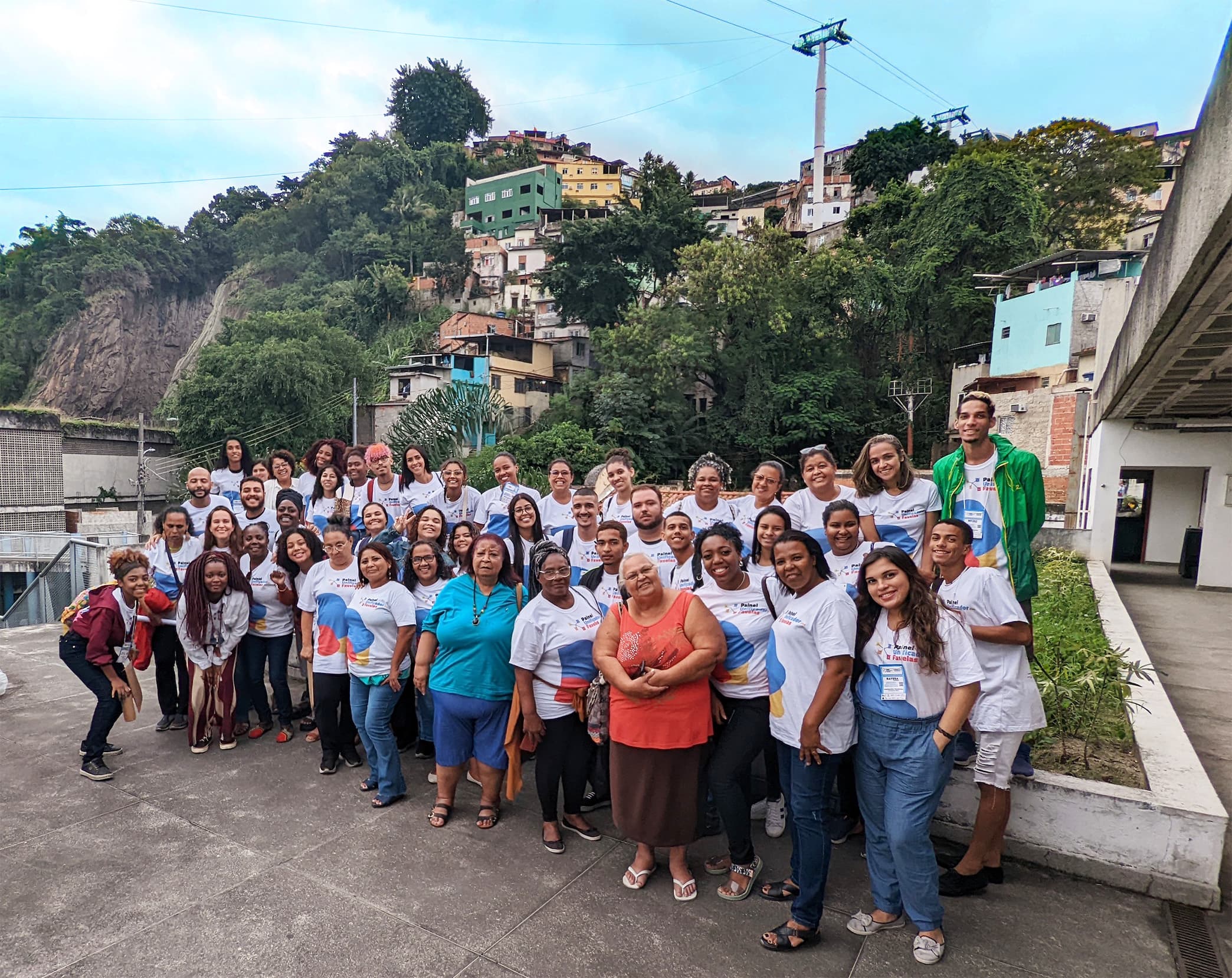
The course was created for youth in the favelas to better understand the importance of data — including how to collect, analyze, understand, and use it to communicate community needs. Community members collecting data of use to them and using it for advocacy represents an effort to remedy the underrepresentation of low-income populations in policymaking processes.
We spoke with Kayo Moura, a graduate student completing his second degree in Statistics, who led many of the course sessions centered on data and analysis for the reports. Kayo also served as the local leader for the Jacarezinho favela in the survey, drawing from his work with LabJaca, one of the 15 community organizations involved with the course, focused on “research, training, and production of data and narratives about favelas and peripheries.”
Kayo was raised across the Guanabara Bay in Niterói by a single mother who always encouraged him to study hard — so he did, earning a scholarship to the private Pontifical Catholic University (PUC) of Rio de Janeiro. After living in different places in and around favelas, interacting with PUC’s surrounding neighborhood with a high population of wealthy and white students, was eye-opening.
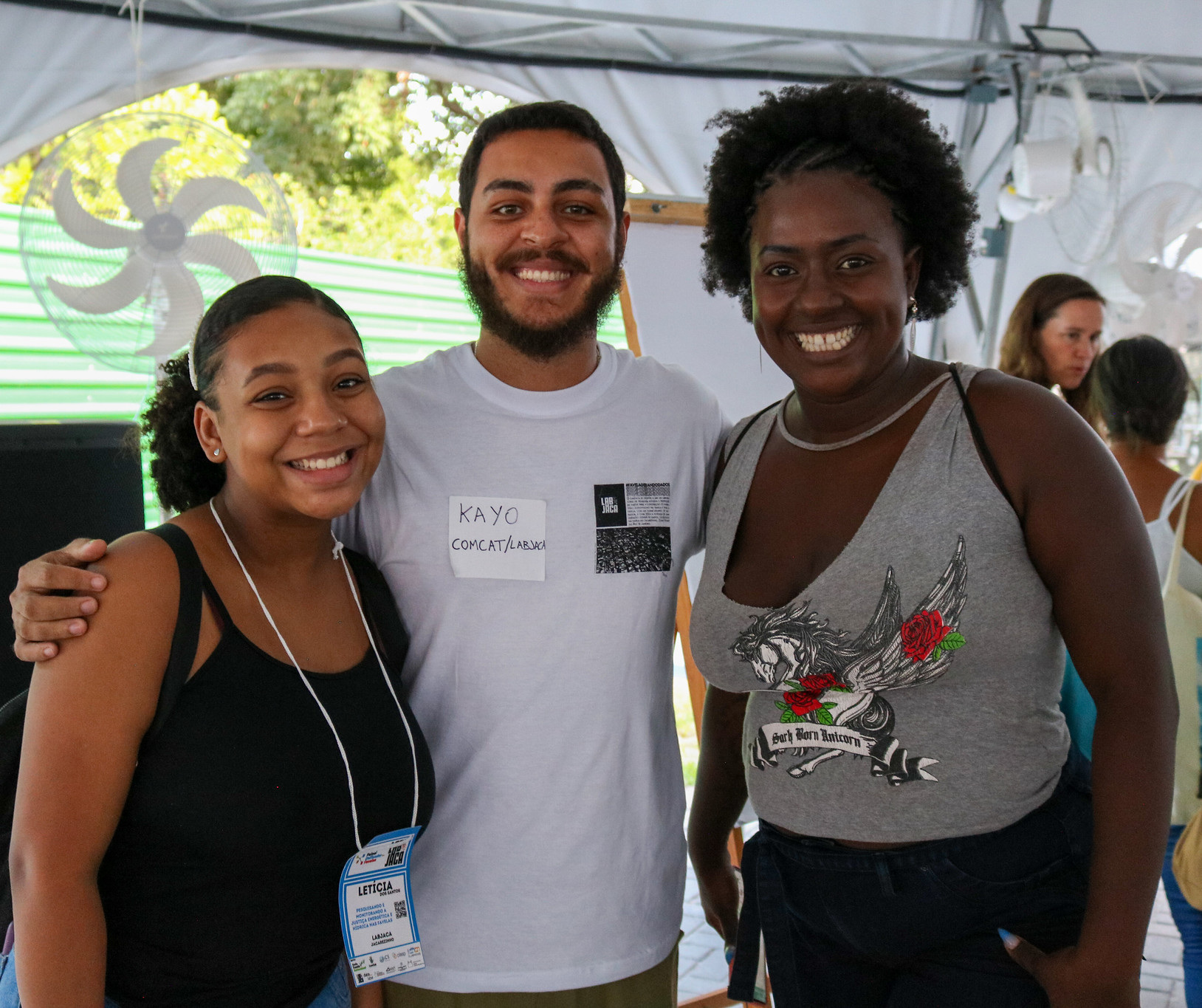
“I realized that everything I ever achieved in my life was thanks to public policies that supported me in getting to those places. That’s when I decided I was going to study and work toward public policies and projects that train and educate people, enabling them not just to transform their own lives but also to transform their communities.”
Kayo Moura
LabJaca, Sustainable Favela Network
This commitment led Kayo to the research course, designed to help youth better understand the extent of the injustices they have experienced in their respective communities and the role they can play in addressing them. “It is people with similar problems, or perhaps with different ones, sharing their experiences and lessons learned that strengthens and enhances everybody’s work. That is what happened during the course.”
Energy Efficiency Improves Energy And Water Access
Reducing energy demand is especially crucial now — climate change has diminished the reliability of Brazil’s hydroelectric power, and combined with turbulent economic conditions, more households are struggling with high energy burdens. When households cannot afford electric bills, they resort to siphoning electricity from the grid, known locally as using a “gato.”
“A resident turned to me and said that she had no reason to lie; she has a ‘gato’ because she doesn’t even have money for the basics in her house, let alone paying for electricity and water. But I told her that electricity and water are basics for human beings… that we deserve and need to survive.”
— Domênica Ferreira (Morro dos Macacos)
Utilities can decline to service areas with “gatos” or Areas with Severe Operational Restrictions (ASRO), which some favelas are categorized as due to the presence of armed criminal groups. During the data collection, Rio experienced the second deadliest operation in its history in Vila Cruzeiro, only surpassed by the operations in Jacarezinho just one year earlier. These conditions are an additional barrier preventing residents in the favela from accessing basic services.
When the Light Goes Out
In response to this lack of authorized access as well as very long response times from the electric utility (Light) when servicing favelas during blackouts, survey respondents indicated that they typically resolve electricity supply issues within the community. 30% turn to a community electrician and 21% solve the problem themselves, compared to only 38% who request service from the utility.
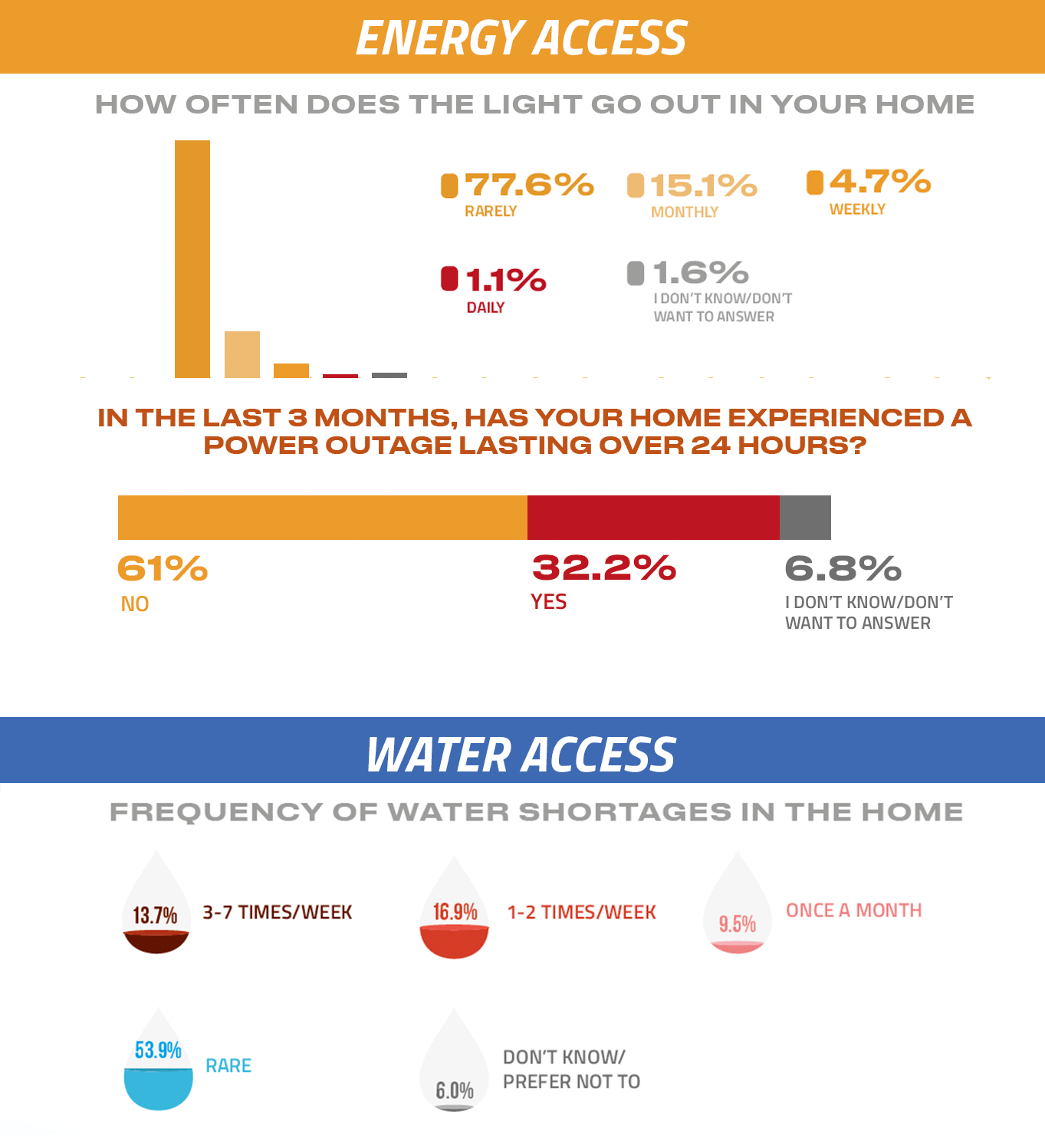
Poor access to public services was evident in the survey; within the last three months, 32% of households experienced a power outage and 26% had water services interrupted for longer than 24 hours. Inefficient products, in addition to raising energy costs for consumers, also contribute to strain on the electric grid, exacerbating the frequency and length of blackouts. Residents showed themselves concerned with efficiency, 67% indicating that they always choose LED bulbs.
Considering nearly half of respondents required a pump to receive water in their households due to water supply issues, the unreliable electric grid has serious implications on access to water. And of the water they do receive, over a quarter reported that it is discolored and has an abnormal taste. The confluence of these issues suggests the importance of further investigation of energy efficiency as a means of addressing poverty and access to basic human rights. This will be the focus of a second report, to be launched prior to Earth Day 2023.
“One of the problems here is the cost of energy to supply water. To have water requires a lot of energy.”
Juliana Cesário
Cosmorama/Mesquita
This research has shown that collaboration is needed to design programs that provide meaningful benefits to underserved populations. As experts on their own needs and living conditions, residents play a critical role in designing both relevant surveys, and the solutions necessary for successful policy action.
Interested in learning more?
- Water and Energy Justice in the Favelas report (English)
- Insights into Energy Efficiency in the Favelas
- Research Is Also ‘By Us for Us!’ Leaders and Youth From 15 Favelas Prepare to Launch ‘Water and Energy Justice in the Favelas’ Report
- Comprehensive report (in Portuguese)
- 43 min documentary on the research course
- 5 min report launch video
0. Energy poverty refers to when an electric bill takes up over 10% of a family’s monthly income (the recommended is below 6.8%).
Water and Energy Justice in the Favelas
The millions of residents in low-income communities known as favelas are feeling the worst effects of the energy crisis in Brazil. Many government programs are ineffective due to structural inequality, gang-related violence, and general distrust of government by residents. As a result, there is often a mismatch between the community’s needs and municipal services. Catalytic Communities, a Rio-based NGO working to provide strategic support to favela organizers, led a research course to train favela youth to perform research and data collection that could be used for political advocacy. CLASP supported training on energy efficiency and its impacts on residents’ quality of life.
The research focused on the impact of minimal energy and water access for favela residents, highlighting the country’s unique relationship to hydroelectric power. Recent droughts — and floods — have led to a decrease in water quality and availability, subsequently affecting power availability and costs. Meanwhile, energy is needed to pump water to homes. Many people in the favelas struggle to choose between keeping the lights on and having enough to eat. Key findings from the report include:
- At least a fifth of interviewees suffer from blackouts at least once a month.
- 68.7% were not aware of Social Electricity Tariff (TSEE), a program aimed at subsidizing electricity costs for low-income households. Only 8% participated in the program.
- Energy as a cost disproportionally affects lower-income families — over 30% are considered to be in energy poverty.
These conditions are only worsening, as energy prices rise and utility companies are unresponsive to service requests. This collectively-produced report outlines recommendations for the government and utilities to improve responsiveness and keep the lights on.
This report precedes a more specialized “Energy Efficiency in the Favelas” report, which will be released 21 April, in advance of Earth Day 2023.
0. Energy poverty refers to when an electric bill takes up over 10% of a family’s monthly income (the recommended is below 6.8%).