
Energy Efficiency in the Favelas
A new report from Catalytic Communities offers insights into the efficiency of service provision and use in favelas across Rio de Janeiro where inefficiency affects lowest income residents the worst. CLASP provided trainings to the researchers on energy efficiency, helping to craft the survey design and questions.
The data presented in the new report Energy Efficiency in the Favelas reflect the reality of 1,156 families (4,164 people) in 15 favelas from five municipalities across the Greater Rio metropolitan region, and specifically show the relationship between energy and poverty, focusing on the efficiency of service provision and use.
Key Findings
- The lowest-income families make up the majority of those facing energy poverty. 31% of surveyed families experience energy poverty,1 with a disproportionate amount of the family budget going to pay the electric bill.
- 69% of respondents stated that if their electric bill were halved, they would use the money to buy food, which indicates that energy poverty is directly linked to food insecurity for interviewees.
- Air conditioning is responsible for over half (51.4%) of energy consumption in the sample, followed by electric showers (13.8%) and refrigerators (13.6%).
- Energy-saving habits are at a good level across the sample population. Among those interviewed, 78% always remember to turn off the lights when leaving a room and 67% choose LED bulbs.
- Knowledge of energy-efficient appliances and the country’s labeling and assistance programs is low among low-income families: 50.6% state they know what the National Energy Conservation Label (ENCE) means. Of those that know the label, 49.1% state they have bought an electrical appliance based on it being classified in the ENCE A category.
- The Social Electricity Tariff (TSEE) offers discounts on electric bills and provides rewards for energy savings. Approximately 60% of families in the study meet the income criteria for the TSEE, but only 8% state that they receive the benefit. Of the families that meet income criteria to qualify for the TSEE, 90% say they do not receive the benefit.
This report is a follow-up to Water and Energy Justice in the Favelas.
Learn more
0. Energy poverty refers to when an electric bill takes up over 10% of a family’s monthly income (the recommended is below 6.8%).
Tackling Water and Energy Inequality in the Favelas of Rio
In September 2022, Rio de Janeiro’s Sustainable Favela Network (SFN) and Favelas Unified Dashboard published the report “Water and Energy Justice in the Favelas: Community Researchers Gather Data Revealing Inequalities and Calling for Action.”
The publication was the culmination of an intensive 6-month research course “Researching and Monitoring Water and Energy Justice in the Favelas,” engaging two youth and one leader from each of 15 favelas in Rio de Janeiro (45 people in total) to learn the entire arc of research, from why it’s important for their communities, to the development of useful indicators, all the way through how to report and advocate using data produced. As one of seven modules, participants generated “data by and for the favelas.”
CLASP collaborated with Catalytic Communities (CatComm), an NGO that has supported favela community organizers since 2000 and which facilitates the Sustainable Favela Network and Favelas Unified Dashboard. We contributed expertise on energy efficiency, leading intro to energy efficiency and policy sessions and helping community organizers develop indicators used in the survey. In the courses, we emphasized the connection between energy efficiency and electric bills, and how data are used in policymaking processes.
The Energy Needs of Underserved Favelas
Favelas are informal communities that emerge from an unmet need for affordable housing. Although a common English translation is “slums,” this term carries a negative connotation that fails to honor the unique historical consolidation and cultural context of favelas in Brazil. In Rio de Janeiro, most favelas are over 50 years old and some 24% of the population lives in these communities.
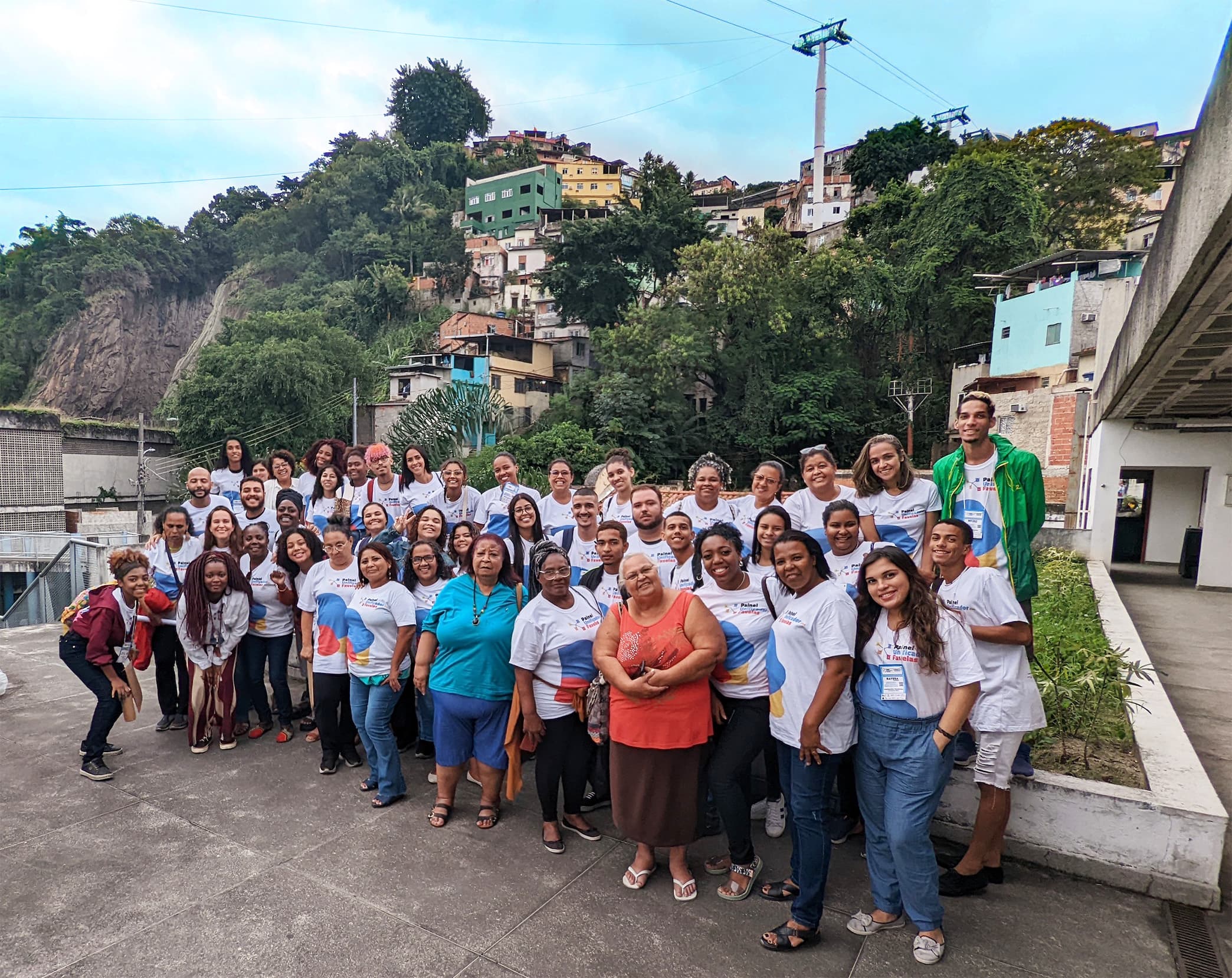
The course was created for youth in the favelas to better understand the importance of data — including how to collect, analyze, understand, and use it to communicate community needs. Community members collecting data of use to them and using it for advocacy represents an effort to remedy the underrepresentation of low-income populations in policymaking processes.
We spoke with Kayo Moura, a graduate student completing his second degree in Statistics, who led many of the course sessions centered on data and analysis for the reports. Kayo also served as the local leader for the Jacarezinho favela in the survey, drawing from his work with LabJaca, one of the 15 community organizations involved with the course, focused on “research, training, and production of data and narratives about favelas and peripheries.”
Kayo was raised across the Guanabara Bay in Niterói by a single mother who always encouraged him to study hard — so he did, earning a scholarship to the private Pontifical Catholic University (PUC) of Rio de Janeiro. After living in different places in and around favelas, interacting with PUC’s surrounding neighborhood with a high population of wealthy and white students, was eye-opening.

“I realized that everything I ever achieved in my life was thanks to public policies that supported me in getting to those places. That’s when I decided I was going to study and work toward public policies and projects that train and educate people, enabling them not just to transform their own lives but also to transform their communities.”
Kayo Moura
LabJaca, Sustainable Favela Network
This commitment led Kayo to the research course, designed to help youth better understand the extent of the injustices they have experienced in their respective communities and the role they can play in addressing them. “It is people with similar problems, or perhaps with different ones, sharing their experiences and lessons learned that strengthens and enhances everybody’s work. That is what happened during the course.”
Energy Efficiency Improves Energy And Water Access
Reducing energy demand is especially crucial now — climate change has diminished the reliability of Brazil’s hydroelectric power, and combined with turbulent economic conditions, more households are struggling with high energy burdens. When households cannot afford electric bills, they resort to siphoning electricity from the grid, known locally as using a “gato.”
“A resident turned to me and said that she had no reason to lie; she has a ‘gato’ because she doesn’t even have money for the basics in her house, let alone paying for electricity and water. But I told her that electricity and water are basics for human beings… that we deserve and need to survive.”
— Domênica Ferreira (Morro dos Macacos)
Utilities can decline to service areas with “gatos” or Areas with Severe Operational Restrictions (ASRO), which some favelas are categorized as due to the presence of armed criminal groups. During the data collection, Rio experienced the second deadliest operation in its history in Vila Cruzeiro, only surpassed by the operations in Jacarezinho just one year earlier. These conditions are an additional barrier preventing residents in the favela from accessing basic services.
When the Light Goes Out
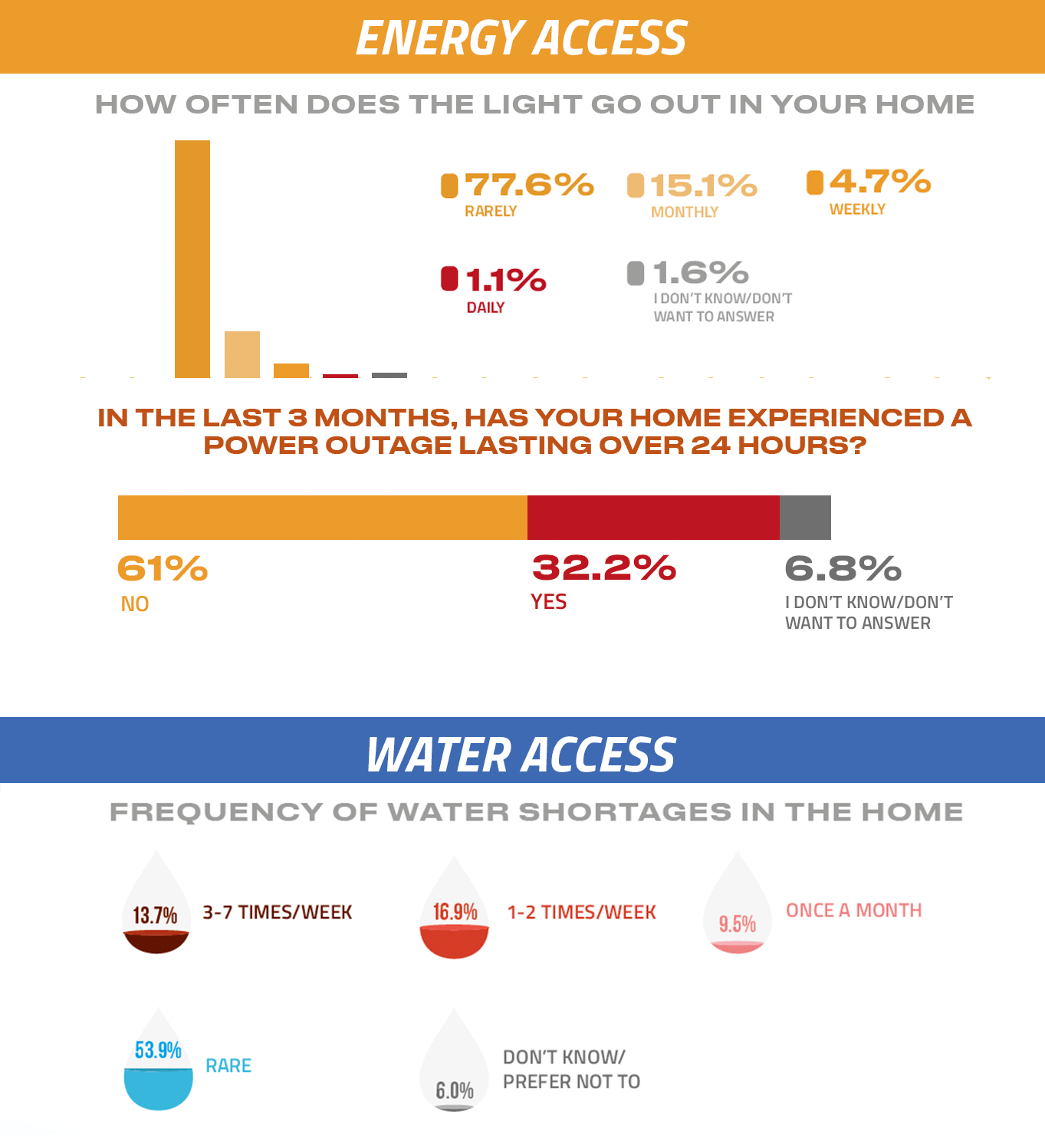
In response to this lack of authorized access as well as very long response times from the electric utility (Light) when servicing favelas during blackouts, survey respondents indicated that they typically resolve electricity supply issues within the community. 30% turn to a community electrician and 21% solve the problem themselves, compared to only 38% who request service from the utility.
Poor access to public services was evident in the survey; within the last three months, 32% of households experienced a power outage and 26% had water services interrupted for longer than 24 hours. Inefficient products, in addition to raising energy costs for consumers, also contribute to strain on the electric grid, exacerbating the frequency and length of blackouts. Residents showed themselves concerned with efficiency, 67% indicating that they always choose LED bulbs.
Considering nearly half of respondents required a pump to receive water in their households due to water supply issues, the unreliable electric grid has serious implications on access to water. And of the water they do receive, over a quarter reported that it is discolored and has an abnormal taste. The confluence of these issues suggests the importance of further investigation of energy efficiency as a means of addressing poverty and access to basic human rights. This will be the focus of a second report, to be launched prior to Earth Day 2023.
“One of the problems here is the cost of energy to supply water. To have water requires a lot of energy.”
Juliana Cesário
Cosmorama/Mesquita
This research has shown that collaboration is needed to design programs that provide meaningful benefits to underserved populations. As experts on their own needs and living conditions, residents play a critical role in designing both relevant surveys, and the solutions necessary for successful policy action.
Interested in learning more?
- Water and Energy Justice in the Favelas report (English)
- Insights into Energy Efficiency in the Favelas
- Research Is Also ‘By Us for Us!’ Leaders and Youth From 15 Favelas Prepare to Launch ‘Water and Energy Justice in the Favelas’ Report
- Comprehensive report (in Portuguese)
- 43 min documentary on the research course
- 5 min report launch video
0. Energy poverty refers to when an electric bill takes up over 10% of a family’s monthly income (the recommended is below 6.8%).
Water and Energy Justice in the Favelas
The millions of residents in low-income communities known as favelas are feeling the worst effects of the energy crisis in Brazil. Many government programs are ineffective due to structural inequality, gang-related violence, and general distrust of government by residents. As a result, there is often a mismatch between the community’s needs and municipal services. Catalytic Communities, a Rio-based NGO working to provide strategic support to favela organizers, led a research course to train favela youth to perform research and data collection that could be used for political advocacy. CLASP supported training on energy efficiency and its impacts on residents’ quality of life.
The research focused on the impact of minimal energy and water access for favela residents, highlighting the country’s unique relationship to hydroelectric power. Recent droughts — and floods — have led to a decrease in water quality and availability, subsequently affecting power availability and costs. Meanwhile, energy is needed to pump water to homes. Many people in the favelas struggle to choose between keeping the lights on and having enough to eat. Key findings from the report include:
- At least a fifth of interviewees suffer from blackouts at least once a month.
- 68.7% were not aware of Social Electricity Tariff (TSEE), a program aimed at subsidizing electricity costs for low-income households. Only 8% participated in the program.
- Energy as a cost disproportionally affects lower-income families — over 30% are considered to be in energy poverty.
These conditions are only worsening, as energy prices rise and utility companies are unresponsive to service requests. This collectively-produced report outlines recommendations for the government and utilities to improve responsiveness and keep the lights on.
This report precedes a more specialized “Energy Efficiency in the Favelas” report, which will be released 21 April, in advance of Earth Day 2023.
0. Energy poverty refers to when an electric bill takes up over 10% of a family’s monthly income (the recommended is below 6.8%).
World’s Best MEPS: Tracking Global Leaders in Appliance Energy Efficiency Standards
WASHINGTON, DC – A new research tool and report from CLASP offers groundbreaking insights into the state of minimum energy performance standards (MEPS) across high carbon emitting economies and appliances.
The analyses evaluate the stringency of MEPS requirements for six major appliance categories—lighting, air conditioners, refrigerators, electric motors, water heating, and space heating—across ten high greenhouse gas-emitting economies—Brazil, Canada, China, the European Union, India, Indonesia, Japan, South Africa, the United Kingdom, and the United States. Doubling the energy efficiency of these appliances worldwide could avoid over 2 gigatons (Gt) of carbon dioxide (CO₂) emissions per year in 2030.
“Minimum energy performance standards for appliances sit at the crux of the international community’s Paris Agreement targets and achievable carbon savings. This new comparative analysis from CLASP will be essential to inform global progress toward net zero targets,” said Christine Egan, CEO of CLASP.
The tool and its accompanying report, “World’s Best MEPS: Identifying Top Efficiency Standards for Priority Appliances,” identify economies with the most ambitious MEPS. The resources also highlight opportunities for further policy intervention.
“This game-changing analysis will be critical in raising global appliance energy performance, cutting carbon and costs for millions of people across the globe,” said Ari Reeves, CLASP’s Senior Director of Research. “Our aim with this analysis is to open people’s eyes to what is possible. With this information, policymakers have tangible advice for setting more stringent standards.”
The research tool, “World’s Best MEPS: Tracking Leaders in Global Appliance Energy Efficiency Standards, offers a birds-eye-view of the status of MEPS for all mentioned economies and appliance categories, as well as per-product data visualizations. The accompanying report contains detailed information on the methodology and research findings.
The tool and report will be updated on periodically, offering researchers and policymakers the most up-to-date picture of the world’s best MEPS.
Explore the tool and read the report on the CLASP website.
###
About CLASP: CLASP serves at the epicenter of collaborative, ambitious efforts to mitigate climate change and in the global movement for clean energy access, through appliance efficiency. CLASP works hand-in-hand with governments, experts, industry, consumers, donor organizations and others to propel policies and markets toward the highest-quality, lowest resource-intensive products possible. Learn more at https://www.clasp.ngo/.
0. Energy poverty refers to when an electric bill takes up over 10% of a family’s monthly income (the recommended is below 6.8%).
World’s Best MEPS: Identifying Top Energy Efficiency Standards for Priority Appliances
Minimum energy performance standards (MEPS) for appliances and equipment play a critical role in meeting ambitious international climate goals. By adopting updated MEPS aligned with international targets and best practice, governments can deliver further energy and cost savings to consumers and take action to curb the worst impacts of climate change.
CLASP evaluated the stringency of MEPS requirements for six major appliance categories—lighting, air conditioners, refrigerators, electric motors, water heating, and space heating—across ten of the world’s highest greenhouse gas-emitting economies—Brazil, Canada, China, the European Union, India, Indonesia, Japan, South Africa, the United Kingdom, and the United States.
This report identifies economies with the most ambitious MEPS, and highlights opportunities for further policy intervention across all economies. The analysis will be updated periodically, with updated data available on the World’s Best MEPS tool page.
Webinar Materials | How to Achieve the World’s Best MEPS
0. Energy poverty refers to when an electric bill takes up over 10% of a family’s monthly income (the recommended is below 6.8%).
Solar-Powered Milling & Irrigation Bring New Life to An Old Family Home
Magdalene Mbinya is a Kenyan small-scale farmer reaping the benefits of solar-powered farming. Like many Kenyans who grow up in rural or semi-urban areas, Mbinya left her home in Yatta, Machakos County, to pursue her dreams in Nairobi. She enrolled at a university there, completed her studies, and then worked as a social worker at various local and international NGOs. Things were going well until the COVID-19 pandemic hit and disrupted life as she knew it. Mbinya found herself re-evaluating the benefits of city living and eventually decided to return to her rural home in Yatta. Despite the hot and dry conditions there, Mbinya was determined to make the land she inherited from her late parents agriculturally productive.
‘Our place is dry, but I can do something with it. With the manpower, knowledge and exposure that I have, I can change it.’
Despite an above-average rural electrification rate of 62.7% in Kenya, Mbinya’s home is one of many unserved by the national grid. Undaunted by the lack of grid access, Mbinya has invested in solar as an alternative power source for her home and farming projects. Additionally, if it were available to her, Mbinya would be wary of connecting to the national grid due to the costly energy bills — especially with recent electricity price hikes.
‘Now I want solar — pure solar…The goal is to go green completely.’
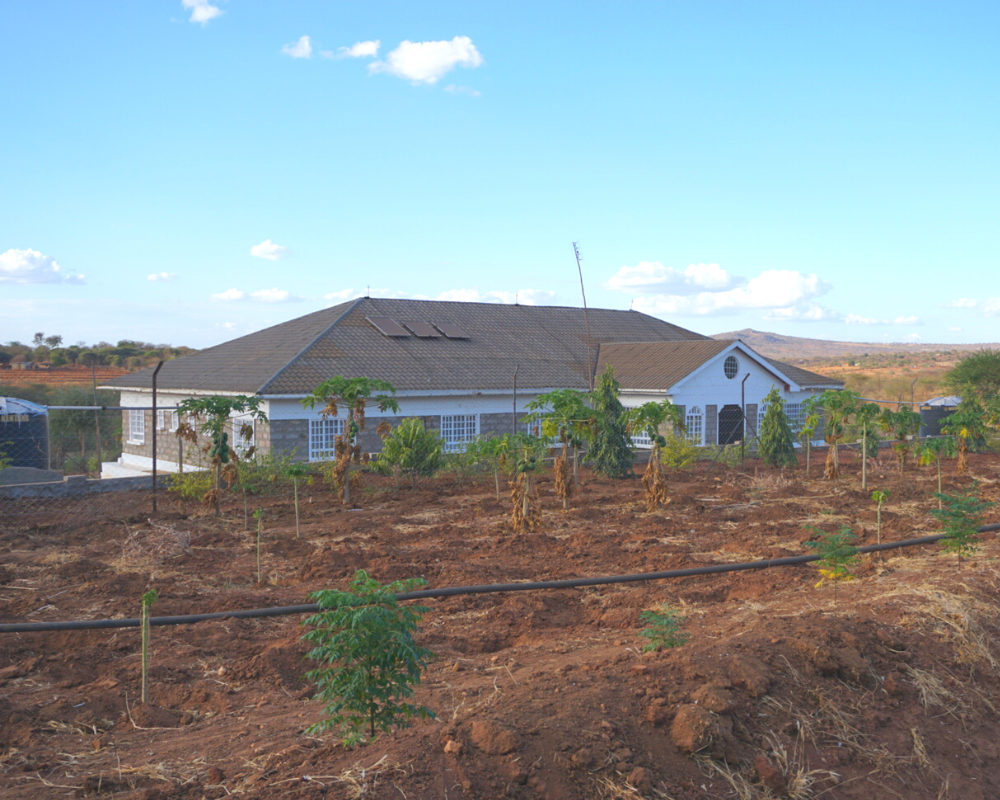
Mbinya’s beautiful home runs on a solar home system, and she uses a solar pump to channel water from a nearby river to a dam in her compound, enabling her to farm throughout the year — unrestrained by unreliable rain and the area’s arid conditions. At the time of our visit, it was particularly dry and dusty — Mbinya mentioned that it had been almost four months since the last rain. Despite this, we saw young papaya trees and other leafy green vegetables growing on sections of the ten-acre farm.
With her Agsol solar MicroMill, Mbinya provides flour for her household and serves neighbouring homes and schools. Her affordable pricing at KES 5 (USD 0.04) per kilogramme gives her an edge over the posho millers at the market centres. The electric-powered millers charge four times more than Mbinya at KES 20 (USD 0.16) per kilogramme, while the diesel-powered millers charge double at KES 10. Mbinya mills various crops, including maize (most popular), cassava, and chicken feed. Schools are her biggest customers — she currently mills maize flour for two schools, with a combined weekly output of 50 -70 kilograms of maize flour. She makes around KES 3,000–4,000 (USD 24 – 32) from all orders weekly. With this money, she employs someone to operate the mill and serve walk-in customers while she attends to her other business projects.
‘Now that my milling service is cheap; I have so many customers. They even buy maize from Kisiiki market centre (about 7km away) and come to mill it here instead of milling there.’
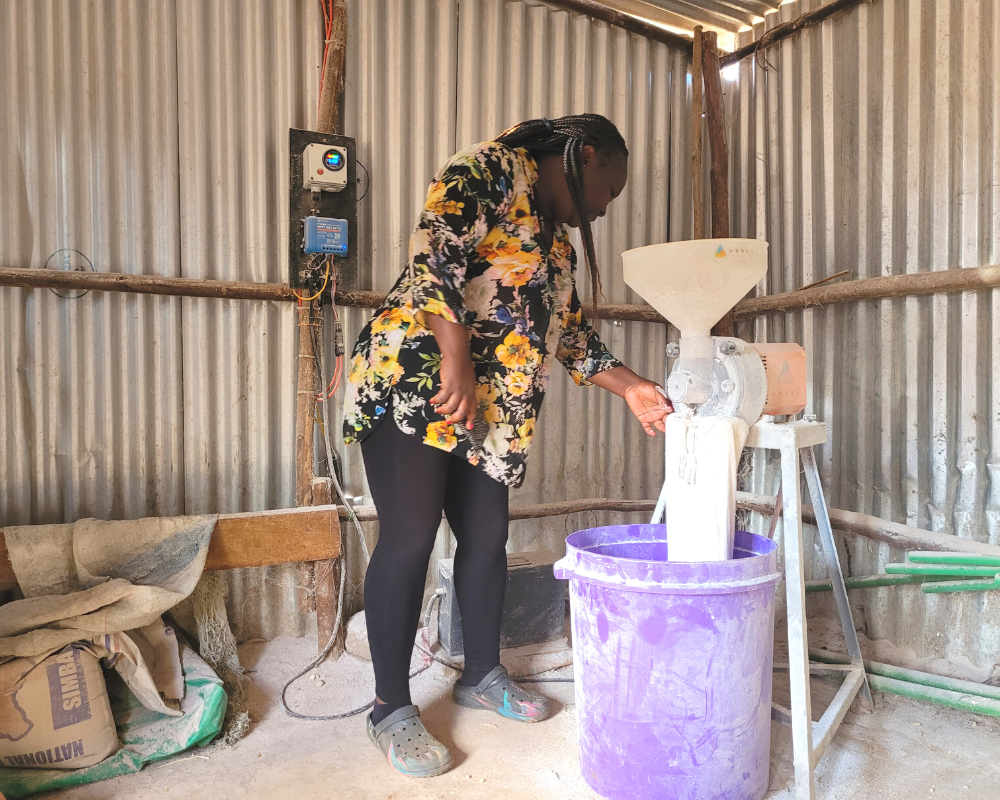
Mbinya checking her Agsol solar mill to confirm that the bag was well secured.
Mbinya learned about Agsol through her sister, who works for a humanitarian NGO. She was eager to try the MicroMill because of the challenges she had faced obtaining clean flour that didn’t smell of diesel fumes. Also, she knew there was a business opportunity to provide affordable and reliable milling for her community. Mbinya’s milling service is so popular in her neighbourhood that customers from beyond a five-kilometre radius come to buy her flour. Due to this high demand, after her initial lump sum payment, Mbinya managed to pay off the financing for the mill in two instalments over about three months. She attributes her growing customer base to word-of-mouth — customers tell their friends, who tell their other friends and so forth. Mbinya also encourages her customers to share their experiences of using her mill when they meet up for their ‘chama’ meetings (informal savings and investments groups) over the weekend.
‘I would say it’s a good initiative for a village like this one where there’s no power and diesel is expensive. Having a solar mill changes our lifestyle and even the food — it is clean.’
An aspect of the solar mill that Mbinya thinks could be improved is that during overcast conditions, the mill runs out of power early in the day. As a result, she serves fewer customers at those times compared to when it is bright and sunny. Besides that, she’s satisfied with the mill and is happy that she can provide this service to her community. Mbinya’s friends and neighbours have expressed an interest in purchasing Agsol’s MicroMill — the only barrier being affordability. Despite her explaining the consumer financing option to them, people are still hesitant to commit to such a large expense.

Mbinya plans to continue developing her home and farm. Among her goals is to sink a borehole, which would be a more reliable water source during prolonged dry seasons. Meanwhile, she will continue to provide convenient and affordable milling services, which she knows her community needs.
‘…the community really loves it (the mill service), and they appreciate it. They know that the food is clean and very nice.’
Adopting solar technologies like solar water pumps and mills boosts farmers’ productivity and saves energy-related costs while avoiding carbon emissions.
***
Agsol is based in Kenya and was established in 2016 to develop solar-powered milling machines that can viably serve small communities, improve labour efficiencies, keep more money in rural economies, and catalyse access to higher-tier energy services.
Efficiency for Access has been working with Agsol since 2018, both in research and R&D. The Efficiency for Access Research and Development Fund supported Agsol in two projects — the first project was to develop a MicroMill prototype and the second project involved further improvements to the prototype, including efficiency gains and improved affordability. The R&D Fund’s support has helped Agsol create a highly efficient, more affordable small grain mill with a strong product-market fit.
0. Energy poverty refers to when an electric bill takes up over 10% of a family’s monthly income (the recommended is below 6.8%).
Videos: CLASP Collaborates with Industry in Pakistan to Tackle Energy Crisis
In Pakistan, a severe energy crisis is putting undue strain on the grid and gas reserves are running low. In collaboration with the National Energy Efficiency & Conservation Authority of Pakistan (NEECA), CLASP is bringing industry into policymaking process to achieve national climate targets.
To demonstrate solutions, CLASP produced two videos that detail how our collaboration with industry spurs technological innovation. We initially led a series of workshops to train manufacturers on international best practices for energy-efficient water heater and motor design, equipping them with the knowledge and skills to make the transition. By building local capacity, we are transforming the local appliance market to help Pakistan achieve national efficiency goals.
Watch the videos to learn more about industry’s response to the policymaking process.
For more videos on CLASP’s work, visit our YouTube channel.
0. Energy poverty refers to when an electric bill takes up over 10% of a family’s monthly income (the recommended is below 6.8%).
Water Efficiency in a Drying South Africa
A growing population and reliance on increasingly unpredictable rainfall has left South Africa in a water crisis. In partnership with the South African Energy Development Institute (SANEDI) and Institute of Plumber South Africa (IOPSA), CLASP is supporting water efficiency policies to preserve this diminishing and essential resource.
Low water, high risk
Water security is a growing concern in South Africa. The dwindling supply is under threat exacerbated by climate change, amid increasing demand and low water availability. An additional 17% of water is needed by 2030 to meet the growing demand but sources are already strained.
Among the interventions found to be most impactful in preserving water are Water Efficiency Labelling Standards (WELS) schemes. Under the National Water and Sanitation Plan, South Africa has committed to introduce WELS by 2025, targeting common household appliances such as taps and showerheads that contribute to unsustainable water consumption habits across the country.
Understanding the water appliance market
Establishing an efficient labelling system calls for uniformity in water appliance policy requirements. A report published by CLASP this year recommends a South African National Standard (SANS) for showerheads –limiting showerhead flowrates to 7.5 L/min. However, limited data on the performance of commercially available showerheads called for an assessment of commonly available showerheads.
“We tested a wide range of showerheads to better understand the water flow rates and spray patterns of the commonly available appliances,” says Monica Wambui of CLASP East Africa.
“Our findings will be vital in supporting a policy decision to develop standards for showerheads.” said Monica Wambui of CLASP East Africa.”
Current flow rates vary depending on appliance cost
CLASP worked with a South Africa-based partner to test the commonly available showerheads. The testing showed that cheaper showerheads were usually less efficient than the more expensive options. Budget price showerheads had flow rates above 30 L/min whereas showerheads in the high-price categories had flow rates below 10 L/min. Showerheads with significantly high flow rates and those with 10 L/min were available in medium and low-price categories.
The tests also found that flow regulators, costing approximately R10 (US $0.55) each, significantly reduced flow rates. These findings indicate that South Africans could benefit from relatively affordable flow rate reductions, without compromising the quality of shower experience.
Prioritizing showerhead efficiency
CLASP recommends a South African National Standard for showerheads, including lower flow rates and performance requirements. This standard should also encourage the use of acceptable flow rate regulators.
The transition to more efficient showerheads is one step towards more sustainable water consumption in the country. CLASP will continue to support our partners to identify complementary policies that preserve both water and energy.
0. Energy poverty refers to when an electric bill takes up over 10% of a family’s monthly income (the recommended is below 6.8%).
Research Shows Huge Heat Pump Potential in China
Update: The China Heat Pump Association in collaboration with CLASP has released a white paper describing the opportunities for and benefits of transitioning to heat pumps for space and water heating. As next steps, the two partners will work on the development of a unified energy efficiency testing method for household space heating and conduct dialogue with Chinese policymakers. The full summary can be seen here.
China committed to net zero carbon emissions by 2060, an ambitious goal that requires large-scale efficiency action. Because of the country’s status as both a major manufacturer and one of the biggest energy-consuming economies in the world, energy-efficient strategies for space and water heating appliances could eliminate millions of tons of CO₂ and help China deliver on its carbon reduction goals. Heat pumps are already “on the radar” for many policymakers, but there is huge potential yet to be realized.
China’s Heat Pump Paradox
CLASP joined with the Regulatory Assistance Project (RAP), Global Buildings Performance Network (GBPN), and Agora Energiewende to research the impacts of transitioning from fossil fuel heating to electric heat pumps in China. Electric heat pumps in China run on average at 350%–450% efficiency, producing 3.5–4.5 units of energy in heat per every unit they consume. As the middle class continues to increase, so does the demand for climate-controlled living spaces, and subsequently the emissions from coal and gas. Now is the time to ensure that this demand is paired with efficient technology that can match it.
Our research specifically sought to answer the question, “Why do heat pumps have such a limited market presence despite their proven benefits?” Although Chinese data has already shown that heat pump technology is highly efficient and reduces emissions, they comprise only 3% of the nationwide water heater market and 5% of the space heating market in 2021 (China Heat Pump Association 2022 Heat Pump Development Report).
In 2021, the country’s heat pump systems reduced CO₂ emissions by 81 million metric tons. RAP estimated that for every 1% increase in heat pump uptake in China’s buildings, an additional 7.1 Mt of CO₂ could be eliminated annually. Currently, only 3.4% of building area in China uses heat pumps for space heating, indicating a significant opportunity to scale deployment and decrease CO₂ nationally.
Technology Neutral, Heat-Pump Positive
To examine the potential barriers to widespread proliferation, the research group conducted a comparative analysis of heat pump standards in the EU and China. The results showed that if the current labeling system in China were improved, customers would more easily understand the efficiency benefits of heat pumps as compared to fossil fuel alternatives like furnaces. Using the EU as an example, China should move to a unified (technology neutral) standard for heating, which would highlight the drastic jump in efficiency provided by heat pumps.
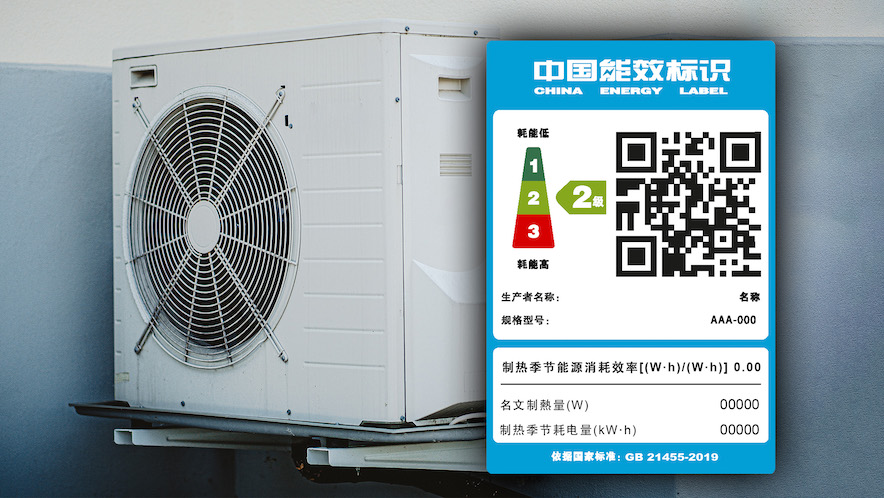
Capturing the Chinese market is especially important because of the sheer amount of fossil fuel that would be eliminated from homes across the country. Heating accounts for around 68% of average household energy use in China. The majority of these heating systems are powered by methane and liquefied methane gas. The CO₂ reductions from converting to electric heat pump technology is staggering.
CO₂ emissions from domestic hot water in China could be reduced by 890 million metric tons during 2022-2030 with a total conversion to heat pump hot water heaters. (Mepsy)
CLASP strongly recommends that China prioritizes the development of technology neutral standards for heating appliance labels, allowing consumers to choose more energy-efficient options. We are assisting the China Energy Conservation Association to develop these policies and hope to finalize a proposal by the end of 2022.
Other Efficiency Work in China
In addition to promoting the uptake of heat pumps, CLASP is also working to improve the minimum energy performance standards (MEPS) of several other appliances in China, as well as hosting international workshops to facilitate policy adoption globally. In July, CLASP wrapped a year-long research effort to support China’s transition to 100% LED lighting in compliance with the Minamata Convention COP 4 requirements.
0. Energy poverty refers to when an electric bill takes up over 10% of a family’s monthly income (the recommended is below 6.8%).
Combating High Fuel Prices with Hybrid Heating: The Case for Swapping Air Conditioners for Heat Pumps
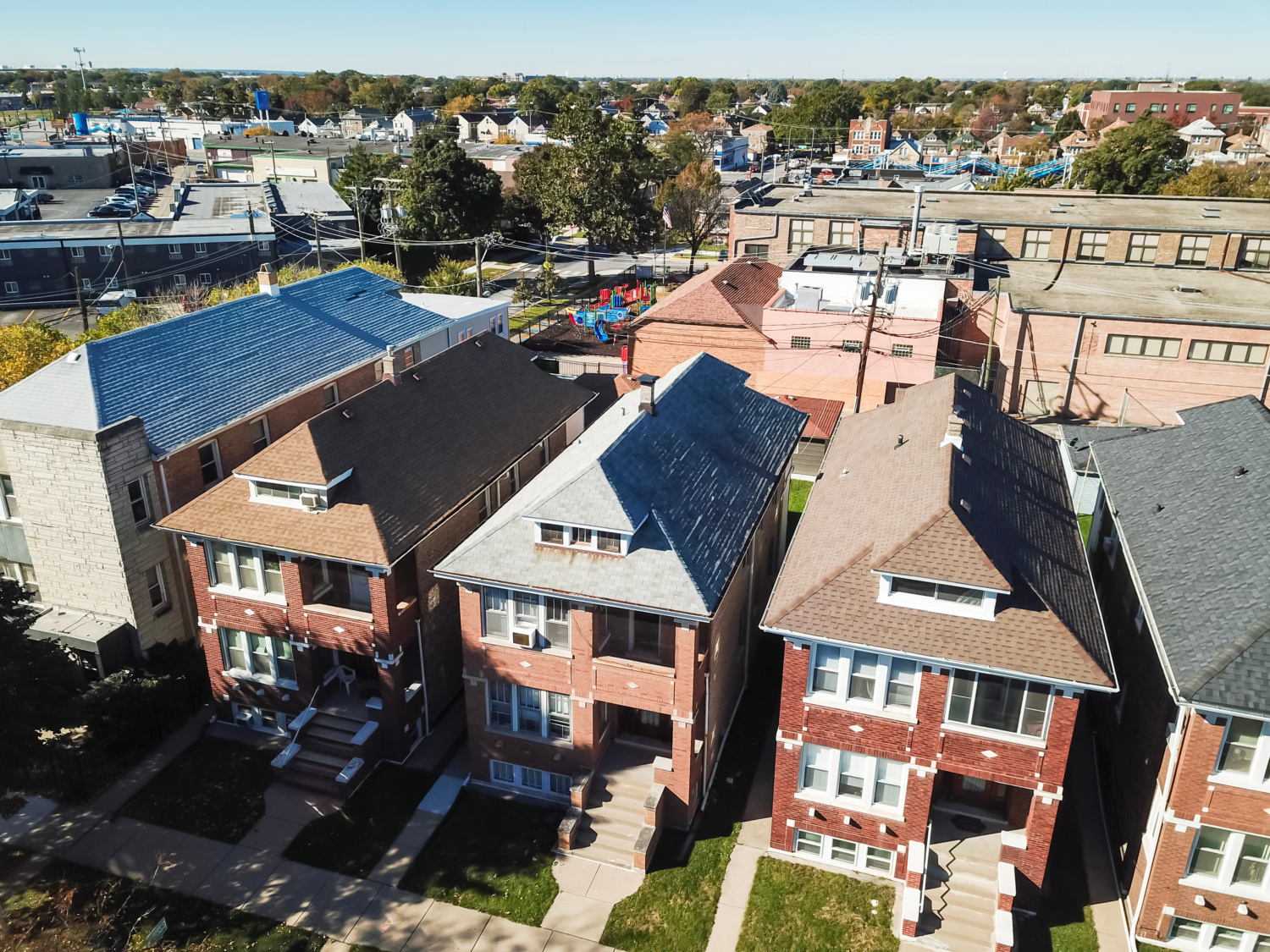
If all 53.8 million households that are ready to transition from oil, methane, propane and electric resistance to hybrid heat pumps make the switch, the US would cut 67 Mt CO₂ emissions and reduce national heating bill costs by $13.6 billion annually.
Every six seconds a new residential furnace or air conditioner starts up in the US, meaning homes lose out on the opportunity to decarbonize until the product is ready to be replaced – likely not until 2035-2040. This report advocates for households to replace existing air conditioning units at the end of their useful life with look-alike electric heat pumps – a super-efficient technology that can both heat and cool indoor spaces.
Two-way heat pumps offer a reliable, cost-effective and efficient alternative to traditional air conditioners, enhancing energy security and reducing fossil fuel consumption. In this proposal, households would keep their legacy heat system in place, using it to supplement the heat pump at lower temperatures. As of 2022, there are 54 million US homes that are ready for hybrid heating.
This report, expanding on findings from CLASP’s 2021 3H Hybrid Heat Homes Report, offers benefit analyses of four major heating fuel types – oil, propane, methane and electric resistance – and outlines key recommendations for how state governments and utilities can support accelerated heat pump adoption across the US.
By transitioning these households to super-efficient hybrid heating, US could reduce national heating bills by $13.6 billion and cut annual CO2 emissions by 67 Mt, the equivalent of removing 14.4 million passenger cars from the road for an entire year.
0. Energy poverty refers to when an electric bill takes up over 10% of a family’s monthly income (the recommended is below 6.8%).