Solar-Powered Crop Storage Helps Farmers, Economies, and the Climate
Reducing post-harvest crop losses has far-reaching benefits. Solar-powered cold storage units are an important piece of the solution.
Reading time: 3 minutes
Kenyan farmer John Mburu Ndotono used to watch much of his avocado harvest rot before it ever reached a buyer. Today, he loads freshly picked fruit into a SokoFresh cold storage unit near his farm, knowing that within a week, 95% of it will be in supermarkets in Spain, the Netherlands, and the United Arab Emirates.
“I usually harvest about 3,000 kilograms (6,600 pounds) of avocado,” he said. “Before the installation of the cold storage facility, we used to lose as much as 50% of avocados after harvesting. But after it was installed, nearly all harvested fruits are taken and sold to the local and international market.”
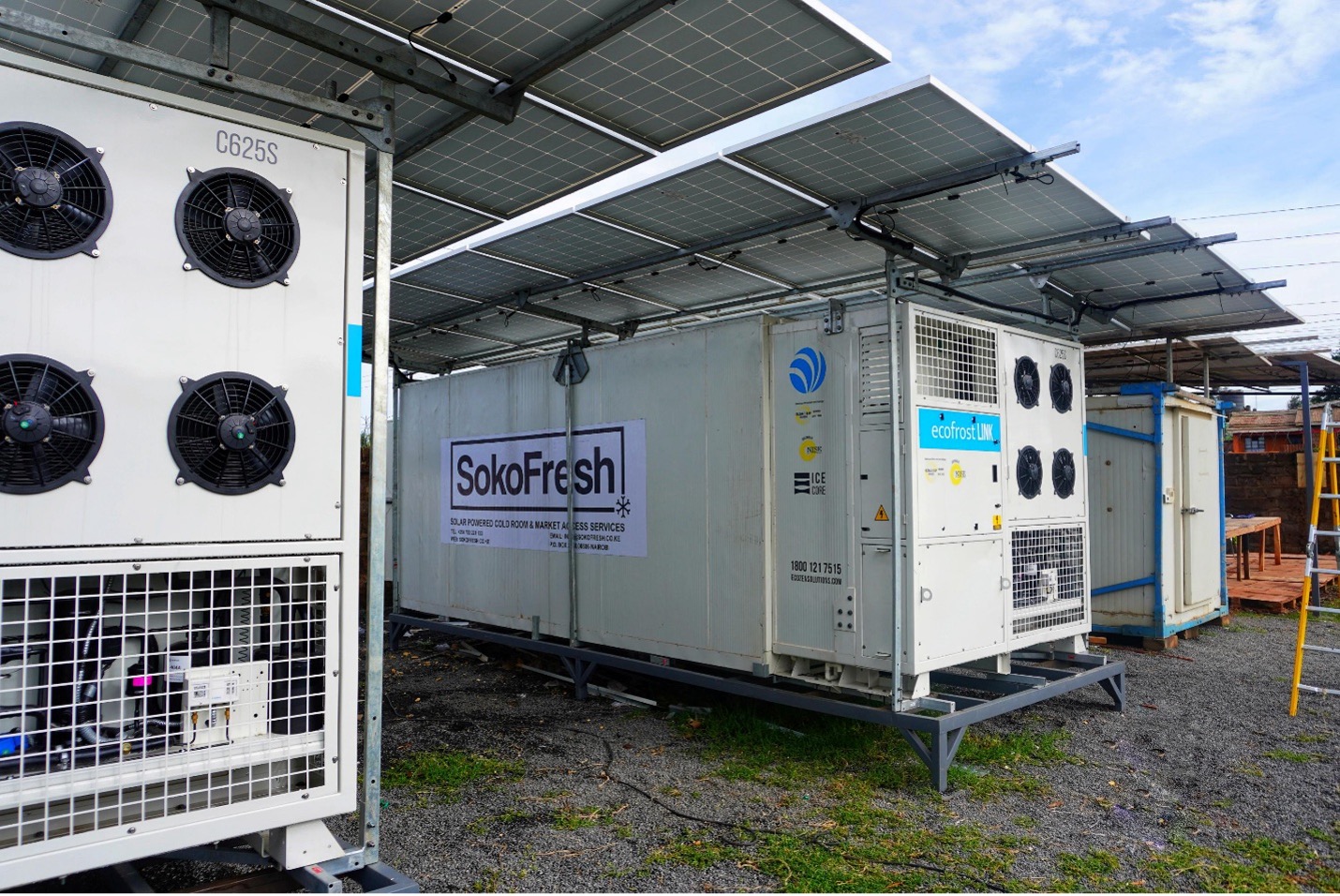
Essentially trailer-sized refrigerators topped with solar panels, SokoFresh units have an unassuming appearance that belies their transformative potential. As a mission-driven, Kenya-based company, SokoFresh works to empower rural agricultural communities across the country, helping farmers improve their livelihoods.
“Every kilogram of harvest that doesn’t spoil is income that stays with the farmer,” said Denis Karema, the company’s cofounder and CEO.
Cold storage units can extend avocados’ shelf life before export by as much as two weeks. This post-harvest refrigeration period also helps buyers by allowing them to enjoy fresh fruit for longer.
Zooming out to the global level, agricultural cold storage also has critical implications for sustainable development, national economies, and climate change.
Post-harvest food loss is a global challenge
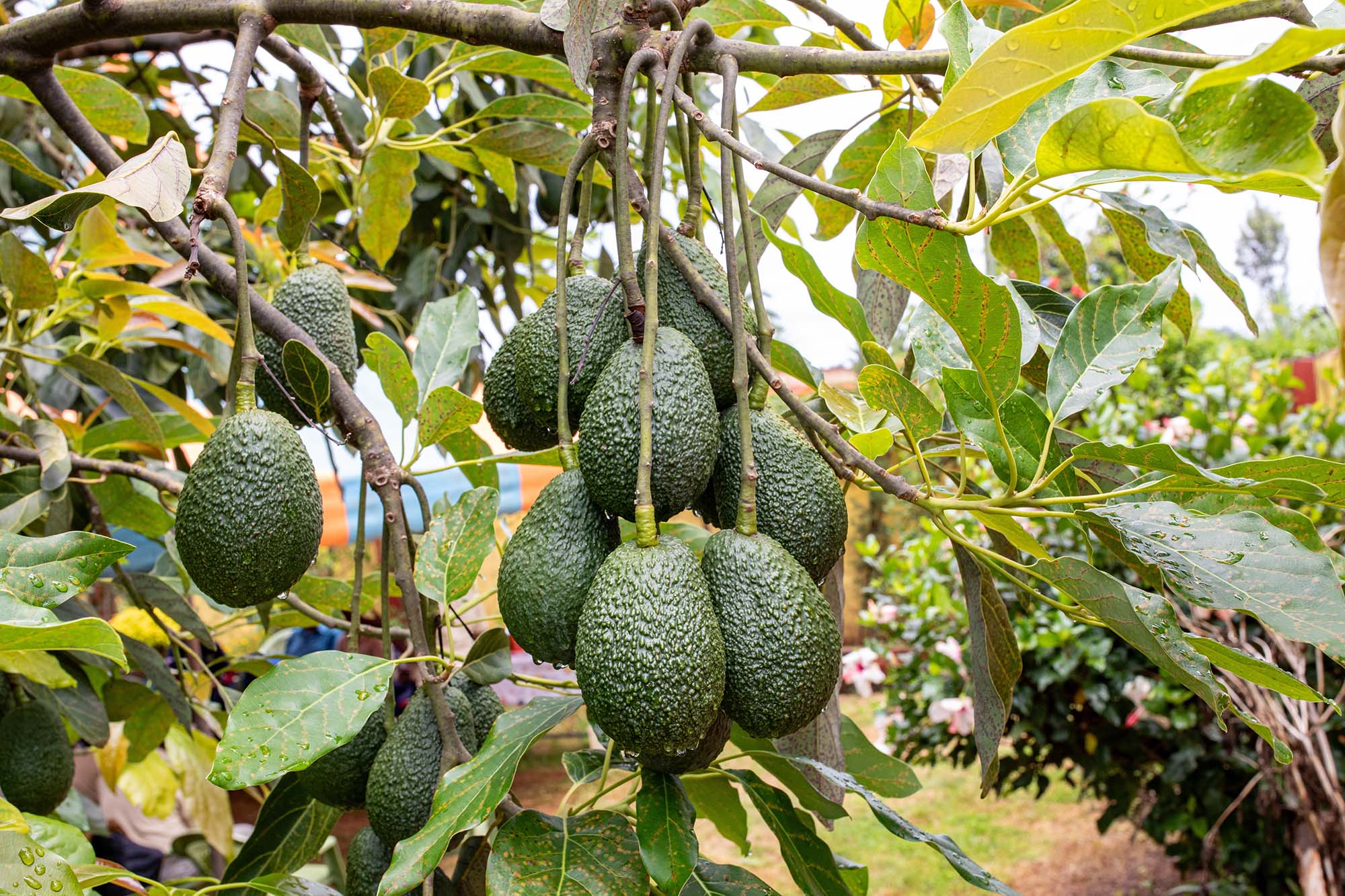
In Kenya, the government views agriculture as an important path to growing its economy and providing good jobs for its citizens. Avocado farming is one pathway that could help it achieve this goal, as the country’s climate is ideal for growing the fruit. Today, Kenya is the sixth-largest avocado producer globally and Africa’s leading exporter by volume.
Credit: Shutterstock
Despite this, most of the smallholder farmers who grow 70% of Kenya’s avocados remain locked out of premium export markets like the European Union and United Arab Emirates, in part because of high post-harvest crop losses.
“In most parts of the country, farmers do not get enough value for their produce because a big percentage of the produce is spoilt and has to be thrown away,” said Emmanuel Aziebor, who leads CLASP’s Africa program. “This is because farmers lack adequate access to food processing and storage facilities.”
Climate change is adding to this challenge, as extreme weather and rising temperatures increase the risk of post-harvest crop loss. This loss, in turn, exacerbates global warming, since rotting food that’s not exposed to oxygen releases methane, a powerful greenhouse gas.
According to the United Nations, around 10% of the world’s annual emissions stem from a combination of post-harvest losses—which destroy an estimated 13% of all food before it reaches stores—and consumer food waste.
SokoFresh helps farmers access refrigeration—and lucrative export markets
Historically, the refrigeration that helps protect crops like avocados from spoiling has been out of reach for smallholder Kenyan farmers. Innovative companies like SokoFresh are working to change this.
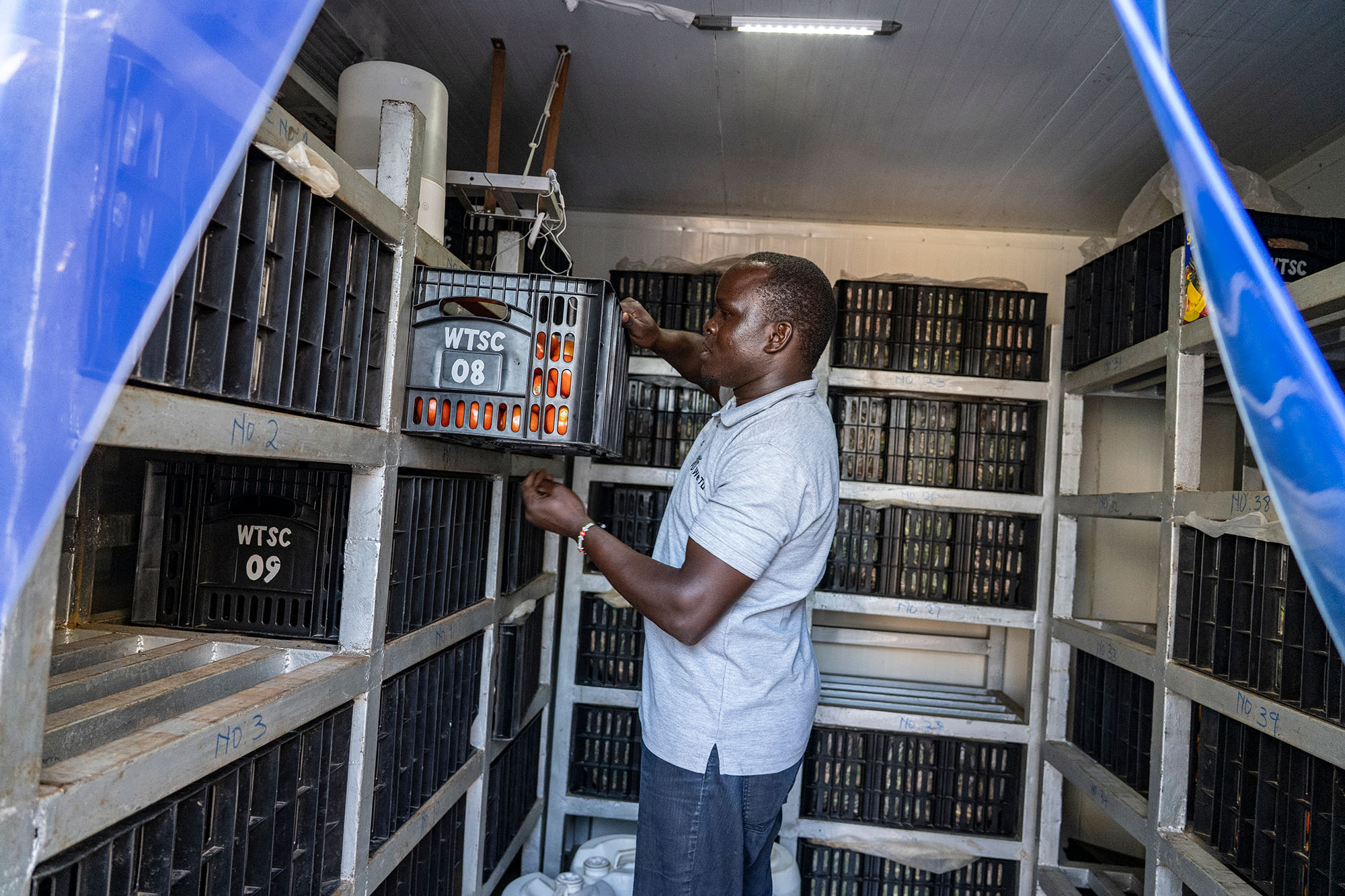
Produce in a cold storage unit in Kenya.
Credit: CLASP
In the past, affordability has been the main barrier preventing many farmers from accessing cold storage. In Kenya, a cold storage unit costs far more to purchase than farmers earning an average of $3 USD a day or less can afford.
Even when they gain access to a cold storage unit, operating it can be cost-prohibitive. Running a diesel-powered model for a month can cost roughly 14,000 Kenyan shillings, or $108 USD. Meanwhile, inefficient models use more energy than necessary, leading to higher bills for both diesel- and grid-connected units.
SokoFresh’s approach overcomes these challenges while also making it easier for farmers to reach lucrative export markets. The company acts as an aggregator for small-scale farmers located close to one another, essentially leasing refrigerated space to each at a much more affordable price than they could typically access. The company then exports the produce in bulk, making it easier for farmers to earn a profit.
“SokoFresh is able to connect farmers to premium markets because they have a cold storage unit and can join forces,” said Lilian Simiyu, a clean energy expert at CLASP.
Critically, SokoFresh offers cold storage units that are both solar powered and energy efficient. By drawing power from sunlight, they prevent farmers from having to rely on expensive fuel. Meanwhile, energy efficiency allows the units to rely on smaller, and therefore cheaper, solar panels, batteries, and inverters.
Powering rural prosperity
Today, SokoFresh serves more than 2,500 smallholder farmers in Kiambu County, Kenya, where it has created more than 1,000 jobs for young people, whose unemployment rate is significantly higher than the national average. Thirty-five percent of these jobs are held by women—a notable figure in a country where women are more likely to be unemployed.
SokoFresh is now present in 17 other counties in Kenya. By 2030, it plans to scale to 1,000 cold rooms across countries like Uganda and Nigeria.
“Our vision is a continent where farmers and agri-SMEs [agricultural small- and medium-enterprises] earn the full value of what they grow,” said Karema.
SokoFresh is supported by CLASP’s Productive Use Financing Facility (PUFF), which provides grants, procurement subsidies, and technical assistance to suppliers and distributors of energy-efficient appliances and equipment in Ethiopia, Kenya, and Nigeria.
PUFF’s mission is to help lower prices of income-boosting appliances like refrigerators, solar water pumps, and grain mills, helping more people benefit from them. It aims to deploy 10,000 appliances and generate 3,000 new jobs by 2030, with support from the Global Energy Alliance for People and Planet, a nonprofit founded by The Rockefeller Foundation, the IKEA Foundation, and the Bezos Earth Fund.