Electric Cooking Could Transform Health, Energy, and Climate—Here’s How
An interview with CLASP's director of clean energy access, Nyamolo Abagi
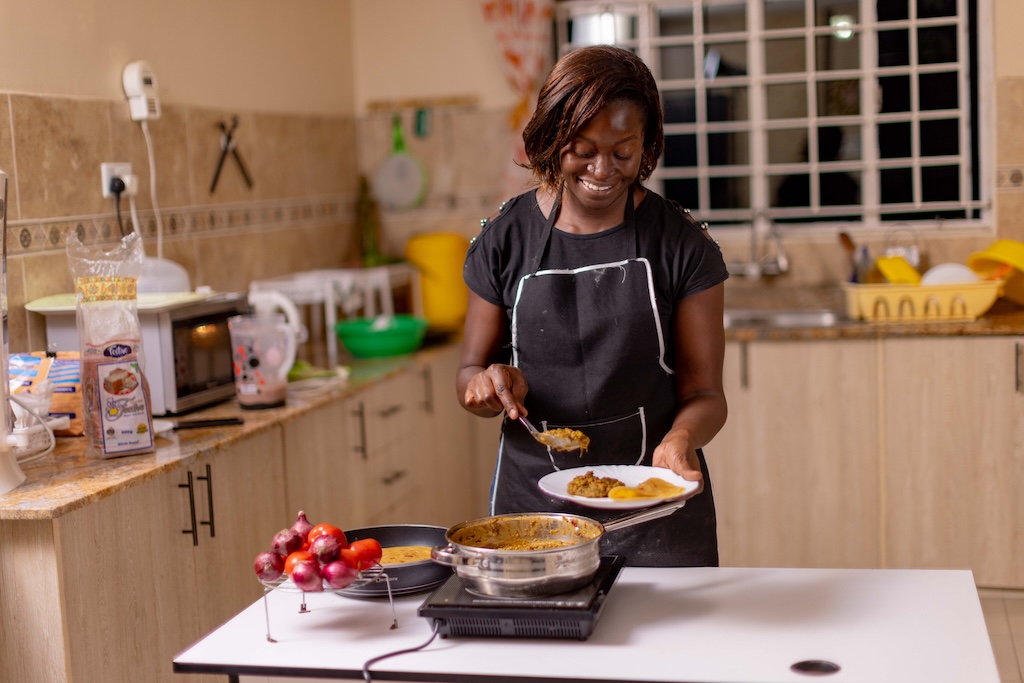
For more than 90% of the world’s population, cooking typically involves burning fuels like gas, wood, or animal dung to heat food. As these fuels are polluting, preparing food has consequences far beyond the kitchen, affecting public health, air quality, and climate.
But for billions of people, cleaner cooking isn’t an option due to a lack of access to electricity, electric cooking appliances, or both. Moreover, many people are reluctant to switch to electric cooking. Often, this reluctance is rooted in misconceptions about taste, convenience, or affordability.
Nyamolo Abagi wants to change this. As a leader of CLASP’s electric cooking work, she collaborates with policymakers, manufacturers, and clean cooking advocates to communicate the wide-ranging benefits of electric cooking (also known as e-cooking) and make the technology more accessible across the Global South.
Abagi spoke with CLASP’s Marina Baur about this work.
Marina Baur: Electric cooking technologies have been around for a long time, but it seems like momentum is growing behind the idea that transitioning to them could really benefit society as a whole. Why is this happening now? What’s changed to make this a viable option globally?
Nyamolo Abagi: The one requirement for electric cooking is reliable electricity supply to run your appliance, whether that’s an induction stove, oven, or electric pressure cooker. And in the Global South, where millions of people still live without power, that’s not always a given.
But over the last 10 years, we’ve brought electricity to a lot more homes. So now we’re facing a massive opportunity. We have millions of people who are newly connected to electricity, often via distributed renewable energy, but they’re only using if for very basic energy services like lighting, phone charging, or watching TV. There’s a huge opportunity for e-cooking around the world to scale.
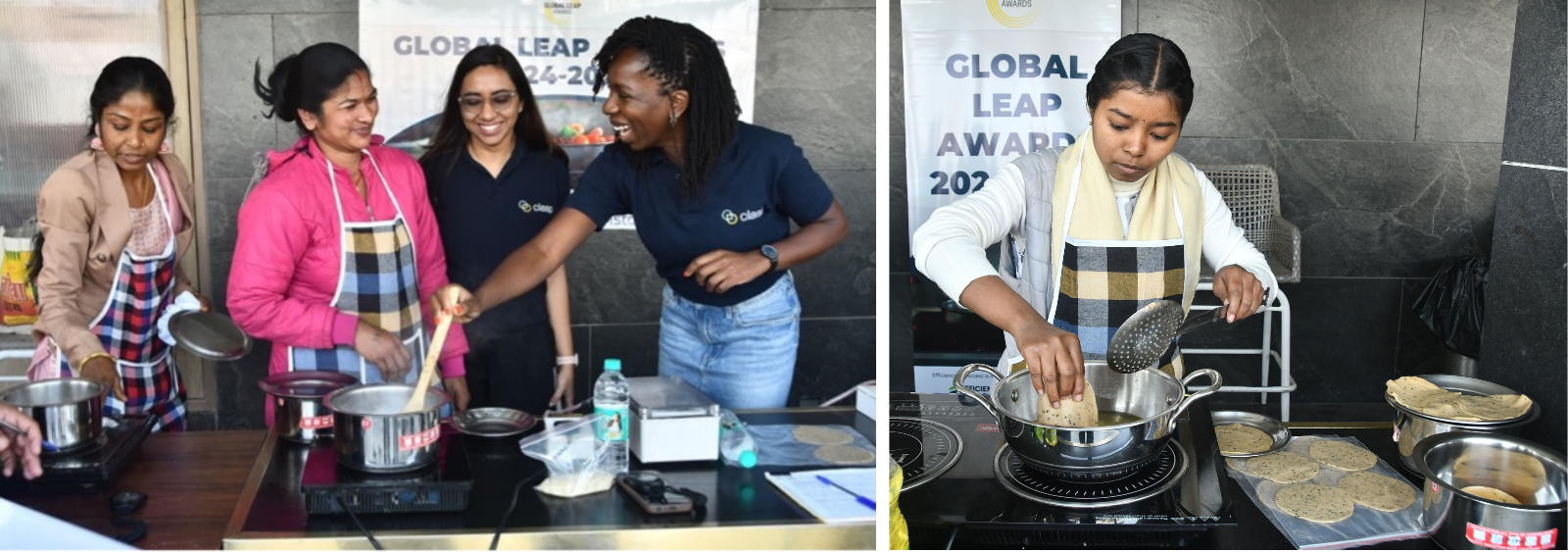
Abagi (fourth from the left) at an e-cooking competition using induction cookstoves in New Delhi, India.
CLASP
Another important factor is that e-cooking technologies today are mature and ready to scale. Over the last few years, these appliances have become extremely efficient.
And current events are underscoring just how important the transition to efficient, electric cooking appliances is. The geopolitical tensions in the Middle East are exposing the fragile nature of our energy fuel supply and leaders across many regions fear that gas shortages may affect people’s ability to cook.
As a result, we’re seeing a huge spike in induction cooktop sales. For example, last week Amazon India recorded a 20-fold increase in demand within 24 hours compared to a normal day.
This current moment is a powerful reminder that the transition to electric cooking is about far more than climate alone—it’s also about resilience and energy security—and the time to leverage these benefits is now.
Baur: Even as interest in e-cooking grows, people have cooked with fuels like wood since early in human history. What other benefits could make them want to switch to?
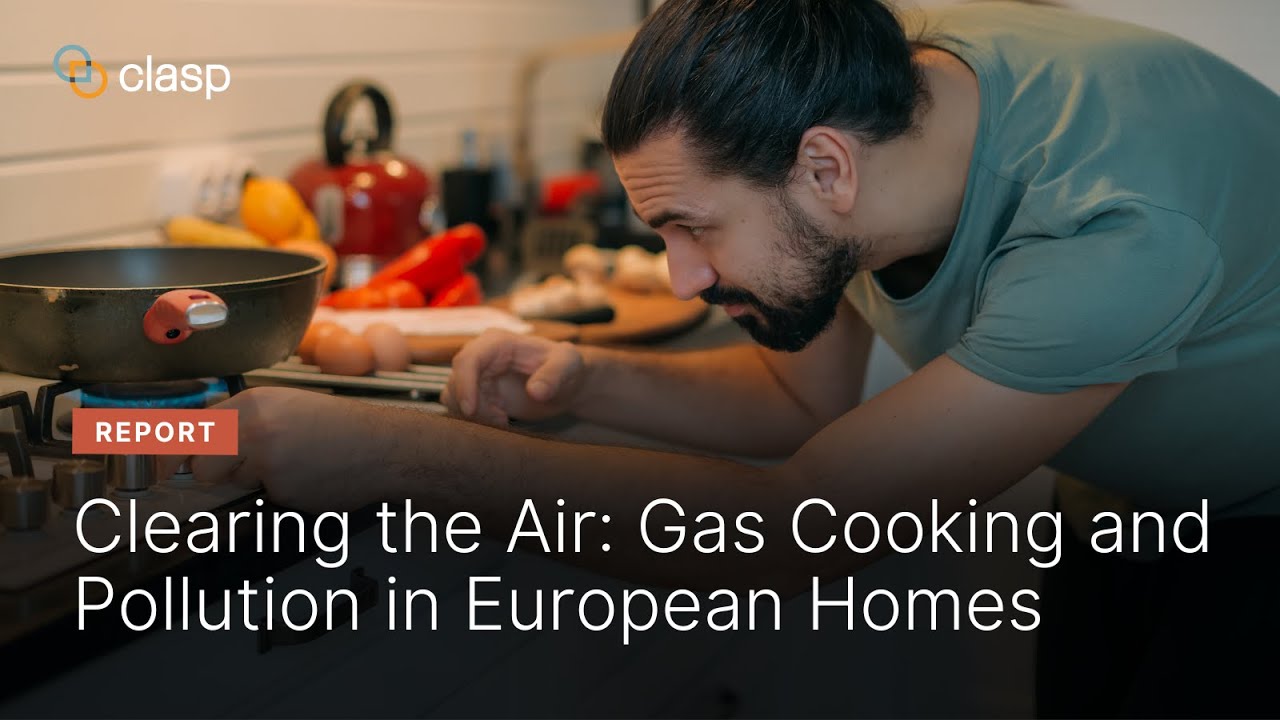
Abagi: Probably the biggest benefit is health. CLASP did extensive research in Europe into the health impacts of cooking with gas stoves, and the data clearly showed that households using gas breathe in twice as much indoor air pollution as those with electric appliances. You can imagine what the numbers might look like for households with a biomass stove. This indoor pollution can be linked directly to respiratory diseases like asthma, and it leads to coughing, wheezing, and increased hospital visits, particularly for vulnerable groups like children.
And now imagine this in a Global South context. Across Africa and Asia, more and more people are moving into cities, where they often live in densely populated apartment complexes. Yet many people, especially the lower middle class, are still cooking with a biomass or charcoal stove. Whether they’re cooking in their kitchens or on their little balconies with the door open, there’s a lot of smoke coming into their homes. In tightly packed, often poorly ventilated buildings, that’s only going to exacerbate the issue of indoor air pollution.
Besides that, cooking on an open flame increases the risk of fire and fire-related incidents. Imagine a family with kids. Kids tend to be very curious, and they might accidently tip over the charcoal stove and end up with a first-, second-, or third-degree burn. This is actually quite common.
And—this is something I only recently realized myself—induction cooktops, with no open flames, no harmful gas residue, lightweight designs, and touch‑based controls instead of knobs, are revolutionary for differently abled people with limited mobility. They can be operated safely, moved easily, placed on the floor, and even used with toes, restoring independence in ways I hadn’t previously imagined.
Many of these health and safety aspects also extend to institutional settings. Think about schools, hospitals, or prisons where cooks prepare meals for thousands of people every day. In sub-Saharan Africa, most of these kitchens still rely on biomass such as wood. Studies have shown that temperatures in these big kitchens are upwards of 10 degrees Celsius hotter than ambient temperature, and humidity is also high. Now imagine that’s your job that you go to every single day. Transitioning to electric cooking would be a big step to ensure the health and safety of these folks who are responsible for feeding our children and sick people.
Transitioning away from wood stoves in institutional kitchens can also have huge environmental benefits. Right now, most have to cut down so many trees to heat their food that both policymakers and the institutions themselves have recognized the need for change.
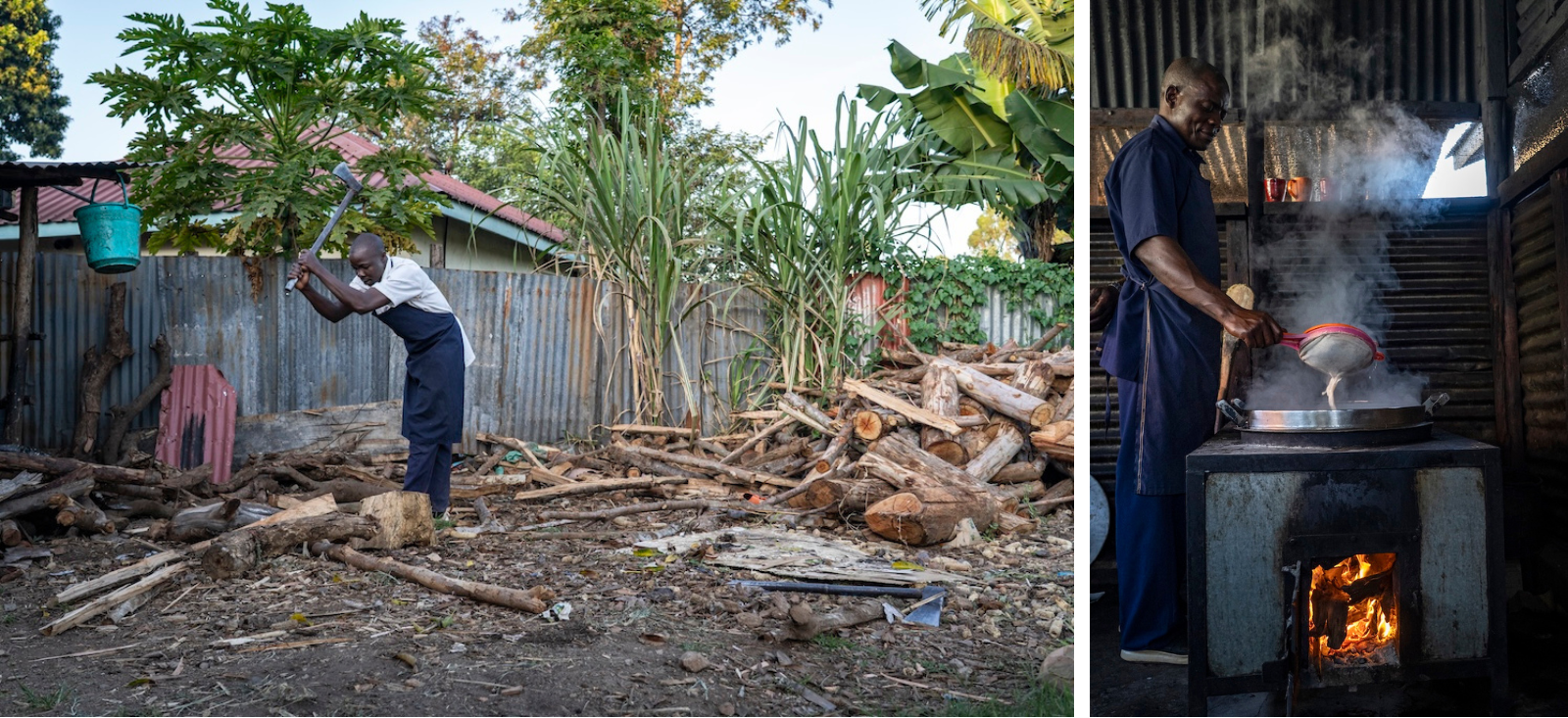
Cooks at a school kitchen in Kenya where chopping wood and cooking meals on a wood stove are part of their daily duties.
CLASP
And think about what this could mean for utilities. Some people believe that e-cooking would burden the grid, but this is a myth. If done right, electric cooking can actually help strengthen the energy system. This is because utilities make money by selling electricity. When they connect more homes to the grid, they often have to borrow a lot of money to build that infrastructure. But if those households barely use electricity, as is the case in many parts of the Global South, how do utilities pay that money back? That’s a chicken and egg problem. We need electricity to be more reliable, but utilities have little incentive to invest in improvements if they are not earning enough.
That’s where e-cooking can come in. It increases everyday electricity use in a predictable way, which gives utilities more income and a stronger reason to keep the power reliable.
There’s another aspect to e-cooking that I’m really excited about: It creates huge economic opportunity. Imagine all the new green jobs for retailers, technicians, importers, manufacturers, and improved economics and working conditions for small businesses that prepare food.
With the population growing quickly and unemployment rising, youth employment is a big concern for many African governments right now. Including electric cooking in a jobs strategy is a triple win for jobs, climate, and health.
I have visited assembly plants in Asia that manufacture electric cooking appliances. CLASP is incubating one here in Africa that is doing all of its welding locally.
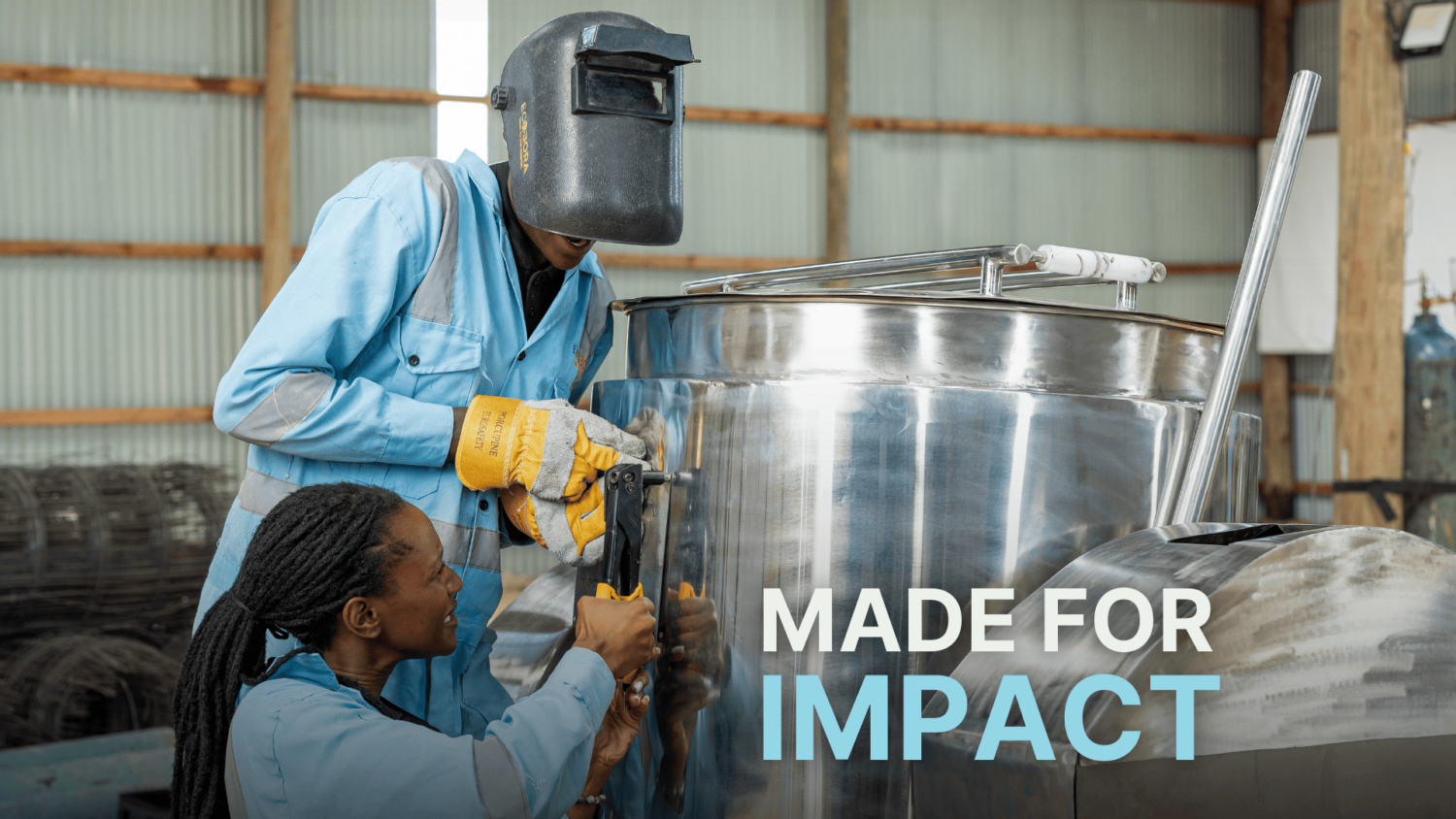
And the even bigger opportunity is what could happen through South–South collaboration, for example between India and countries in Africa, or India and Nepal. There is real potential for knowledge transfer and joint ventures. This might mean Indian companies partnering with African distributors or manufacturers who understand local markets. It could even mean acquiring some of the businesses we are helping to grow. If that happens, that would be a great success story; it’s how markets mature.
Baur: If the benefits are so massive, why isn’t this happening faster? What’s holding things back, and how can we get past those challenges?
Abagi: In many countries—including Kenya, where I’m taking this interview from—electricity is expensive and often still unreliable. So for a lot of people, e-cooking is a dead-on-arrival message. It is a bit like telling me about a luxury electric car. I might say, “That sounds great, but I cannot afford it.”
But the picture is more complicated than it seems. If you do a dish-by-dish comparison, you will find that e-cooking is not only more efficient but also actually more affordable than gas or biomass. So misconceptions around affordability are one of the biggest bottlenecks we need to overcome as stakeholders in the energy access and clean cooking space. What we can do is generate strong data and evidence to show utilities that energy-efficient, affordable technologies already exist and that there are practical ways for customers to procure them.
With the right data, we can also get utilities’ support in strengthening the e-cooking ecosystem. For example, to address affordability concerns, utilities could experiment with a dedicated tariff for electric cooking. Internet of Things technologies now make it possible to collect detailed usage data. Some of these devices are very simple: you plug them into the wall, then plug the cooking appliance into it, and it captures meter data on how often the appliance is used and how much electricity it consumes.
With that kind of information, a utility could design a tariff specifically linked to electric cooking that is slightly lower than the standard rate. That could serve as a practical incentive to encourage people to cook with electricity more regularly, including at an institutional level.
There are also other barriers to overcome. The shift to e-cooking isn’t just about technology or money; culture also plays a big role. What many people really care about is stuff like, “Is my food going to taste as good as my grandmother’s dishes if I shift away from the cooking methods we’ve been using for generations?”
Fortunately, it’s easy to demonstrate that food cooked with electricity can be delicious, and that many traditional recipes can be cooked this way. Take pressure cookers, for example—they’re so efficient that you’re preserving a lot more of the flavors and nutrients in your food. I wish I could do a blind taste test with people that are attached to the idea that food cooked on biomass tastes better. I’m sure they would be surprised.
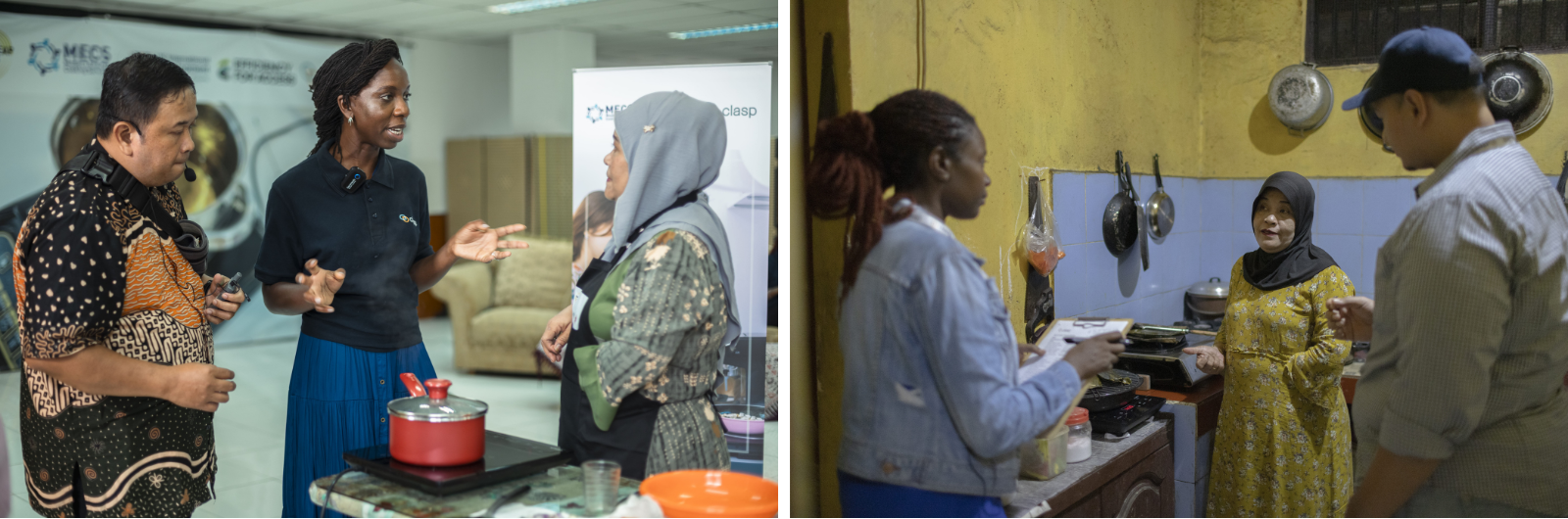
Abagi (second from the left) testing e-cooking appliances with differently abled homemakers participating as 'citizen scientists' in a workshop in Jakarta, Indonesia.
CLASP
Additionally, I’m not saying that 100% of the dishes have to be prepared using electricity. Wherever you are in the world, we’re all using different appliances in our kitchens: You might have an oven, a toaster, a microwave, a blender, an air fryer, and so on. So when we talk about transitioning to e-cooking, what we’re advocating for is to move households toward electric cooking as their primary cooking method, covering about 70% of our cooking needs. There will always be some dishes that have to be prepared in different ways—some people have wood-fired pizza ovens; others may enjoy grilling in the summertime. For these special cases, it’s fine for people to keep using biomass, as a way to preserve culture and tradition.
Another aspect people don’t like to talk about is that policymaking around cooking is often male-dominated, even though women do most of the cooking. This creates a disconnect between lived experience and policy design – and momentum for change.
Whenever I speak to policymakers, I joke with them that we would solve this issue today if they would pass a law that men have to do all the cooking for one year. Men would still have to do their other jobs and then come home and cook the meals. And of course, the moment men had to cook every day after work, I have a strong hunch the first question they would ask is: “surely there must be better way to do this?”
Think about cooking beans, for instance. If you have ever cooked beans on a gas or charcoal stove, you know it’s complicated. You’re constantly wondering: Did I pour too much water? Did I seal the pot properly? Is it going to bubble over and create a big mess? With a pressure cooker, I no longer worry about these things. I can turn it on, be in a Zoom call, and even if I completely forget about it, the pressure cooker is going to turn itself off when it’s done, and my beans will be waiting for me, warm and ready to eat.
Right now, a lot of people, most of them women, are spending so much of their time babysitting their beans. That time and mental space could be used more productively to do other things.
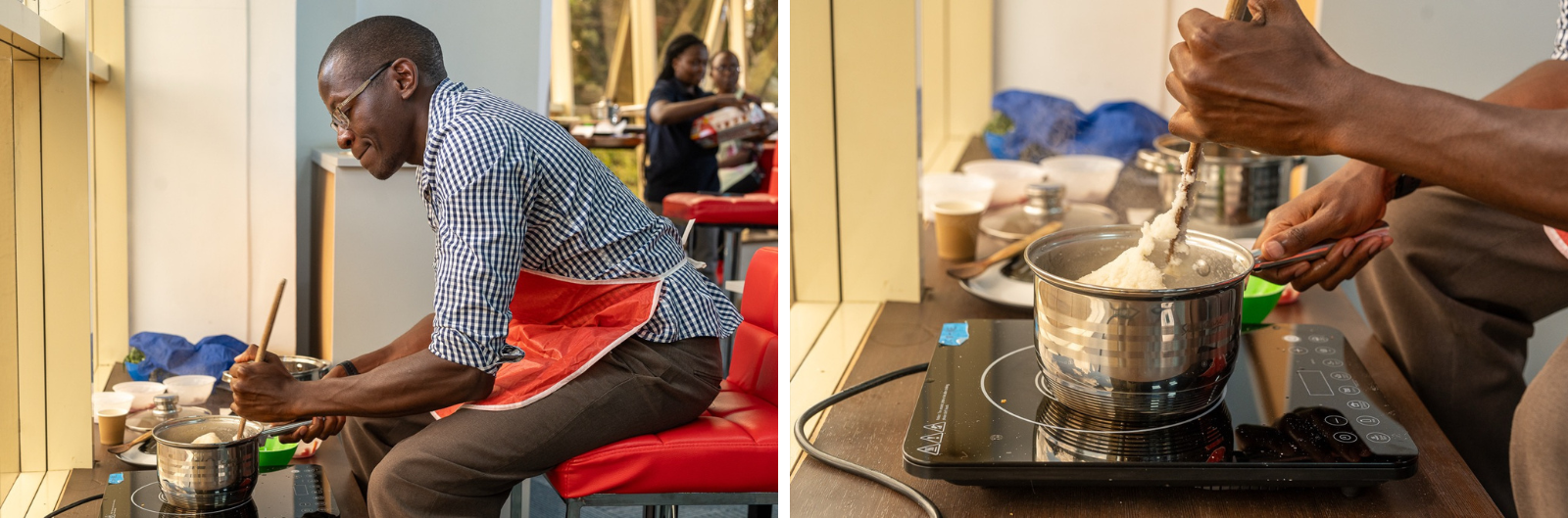
A consumer participating as a ‘citizen scientist’ in a hands-on cooking workshop in Kenya, cooking a local staple dish on an induction cooktop.
CLASP
Baur: CLASP is doing a lot of work to accelerate the electric cooking transition. What does that work look like and what is it going to take to fully make the shift?
Abagi: What CLASP is trying to do is build an e-cooking ecosystem where we bring together policymakers, utilities, manufacturers, and households, directly involving consumers to build trust in new technologies.
The Global LEAP Awards that CLASP conducts are a great example of this. It involves usability testing, which means putting the e-cooking appliances directly into the hands of real people and having them test them. It allows us to collect data in a scientific way—for example, understanding the actual cost of cooking specific dishes. But it’s also about the people themselves: It gives them agency. They become part of the effort and part of shaping what clean cooking looks like in practice. It matters, because making this shift really does require everyone.
CLASP is also a core partner of the MECS program, which stands for Modern Energy Cooking Services and is dedicated to speeding up the shift to clean electric cooking. CLASP’s role is mostly in venture building and market shaping. That means we help innovative e-cooking businesses grow and reach more homes across sub-Saharan Africa and South Asia. We also work with governments, regulators, and funders to strengthen the policies, standards, and financing that make it possible for people to adopt these technologies.
What we’re seeing is that policymakers are already signaling their commitment. If you look at many African countries today, whether through national clean cooking or electrification strategies, clean cooking, including electric cooking, is becoming a priority.
But policy signals are only the first step. Utilities need to improve reliability; consumers need to know that electric cooking is possible and practical for them.
And it is. Irrespective of where you are in the world, there are technologies today that would make your cooking more efficient and affordable. And the two that really jump out are pressure cookers and induction cooktops. So let’s get them in as many homes as we can.
Interview edited and condensed.