
New Partnership Between Government of Makueni County & CLASP Signals a $559M Opportunity to Transform Kenya’s Institutional Kitchens
Press Releases
Signed at the Kenyan International Investment Conference (KIICO), the MOU between the Government of Makueni County and CLASP through the UK aid (FCDO) funded Modern Energy Cooking Services programme targets over 4,500 people across 63 vocational training centers—a replicable model for Kenya’s institutional clean cooking transition.
Nairobi, Kenya, 27 March 2026 – Today, at the Kenya International Investment Conference (KIICO) in Nairobi, the Government of Makueni County and CLASP, as a co-implementer of Modern Energy Cooking Services (MECS) programme, signed a Memorandum of Understanding to accelerate clean cooking transitions across public institutions in Makueni County. The signing coincides with the launch of Kenya’s first Institutional Clean Cooking Sector Pack, which identifies a KES 72 billion ($559M) investment opportunity to transition over 100,000 institutions serving 12.6 million people to modern clean cooking solutions—framing institutional clean cooking not as a development challenge, but as a compelling, bankable investment opportunity.
A partnership rooted in national commitment and investment ambition
Despite Kenya’s remarkable strides in electricity access—from 20% to 75% of the population in the last decade—clean cooking remains one of the last major frontiers of the energy transition. Many in Kenya still rely on traditional fuels, such as charcoal and firewood, which contribute to deforestation, generate harmful indoor air pollution, and divert billions of shillings annually from institutions and households toward inefficient fuel expenditure. Kenya’s National Cooking Transition Strategy (KNCTS 2024–2028) sets a clear national target of universal access to clean cooking by 2030, operationalizing the National Energy Policy and mobilizing government, private sector, and development partners toward a coordinated, multi-fuel transition. This partnership between the Government of Makueni County and CLASP takes a major step in translating the national framework into county-level action, with a clear investment case to match.
Nyamolo Abagi, Director of Clean Energy Access at CLASP and CLASP/MECS programme lead, emphasizes the impact this partnership will have on lives and livelihoods: “Through the MECS programme, we have spent years building the evidence base and market infrastructure to make clean cooking a real, affordable choice for institutions, households, and commercial settings across the Global South. But this is also, urgently, a story about dignity — about the cooks in institutional kitchens who feed school children and the sick every day, while enduring some of the highest levels of heat stress and indoor air pollution of any workforce on the continent. They deserve better, and better is now within reach.”
Unlocking the institutional cooking opportunity
While global clean cooking efforts have largely focused on households, institutional kitchens represent an equally critical and significantly underserved opportunity. Across sub-Saharan Africa, more than 620,000 schools, nearly 100,000 healthcare facilities, and hundreds of thousands of correctional and vocational training centers prepare meals daily for millions of people, with over 85% still relying on firewood or charcoal. In Kenya alone, there are over 97,000 educational institutions, more than 13,000 healthcare facilities, and over 130 correctional facilities; more than 90% still use biomass for cooking.
Kenya’s newly launched Institutional Clean Cooking Sector Pack — developed by the Office of the Special Envoy for Climate Change (OSECC) in partnership with InvestKenya, with contributions from the Government of Makueni County, CLASP/MECS, and other partners — quantifies this as a KES 72 billion ($559M) investment opportunity and provides the market intelligence to make it bankable.
Over the next five years, CLASP and the Government of Makueni County will jointly identify and prioritize public institutions and communities for electric cooking transitions, working with a growing ecosystem of Kenya-based clean cooking suppliers. Pilot interventions at vocational training centers will draw on innovative local companies, including Ecobora and Feion Green Ventures, two Kenya-based manufacturers supported through the MECS programme, to demonstrate that affordable, high-quality clean cooking solutions are available and ready to scale. The aim is to build a replicable, financially sustainable model that can attract private capital and be replicated across Kenya’s 47 counties to demonstrate that affordable, high-quality clean cooking solutions are available and ready to scale.
Nyamolo Abagi highlights the opportunity this partnership poses: “What makes this partnership with Makueni County so compelling is that all the ingredients are already here: a county government with the will to act, innovative local manufacturers ready to deliver, and a sector pack that turns a long-standing development challenge into a credible investment opportunity. CLASP’s role is to connect those pieces — and to ensure that the communities and institutions we serve are co-creators of the solutions, not just recipients. Makueni is where we prove the model.”
Governor of Makueni County, H.E. Mutula Kilonzo Junior says of the partnership: “Makueni is open for investment — and clean cooking is one of the most compelling opportunities on the table. Our county has already committed KES 157 million to solar energy, launched our County Energy Plan (2023 – 2032), Energy Policy 2025, and piloted clean cooking in our institutions. We know what is possible when the right partners show up. This partnership with MECS and CLASP is about turning that commitment into scale —reducing the fuel costs that drain our institutions, creating skilled jobs for our young people in the clean energy sector.”
A call to investors and partners
Today’s MOU signing is a signal of implementation intent, but unlocking Kenya’s KES 72 billion institutional clean cooking opportunity at scale will require blended finance approaches that combine public funding, private capital, concessional finance, and carbon markets. CLASP, the Government of Makueni County, and the MECS programme invite investors, development partners, local financial institutions, and technology providers to engage with the Institutional Clean Cooking Sector Pack and explore how their capital and expertise can accelerate this transition.

Governor of Makueni County, H.E. Mutula Kilonzo Junior, and CLASP's Nyamolo Abagi, signed a landmark MoU to accelerate clean cooking in public institutions. Photo credit: CLASP.
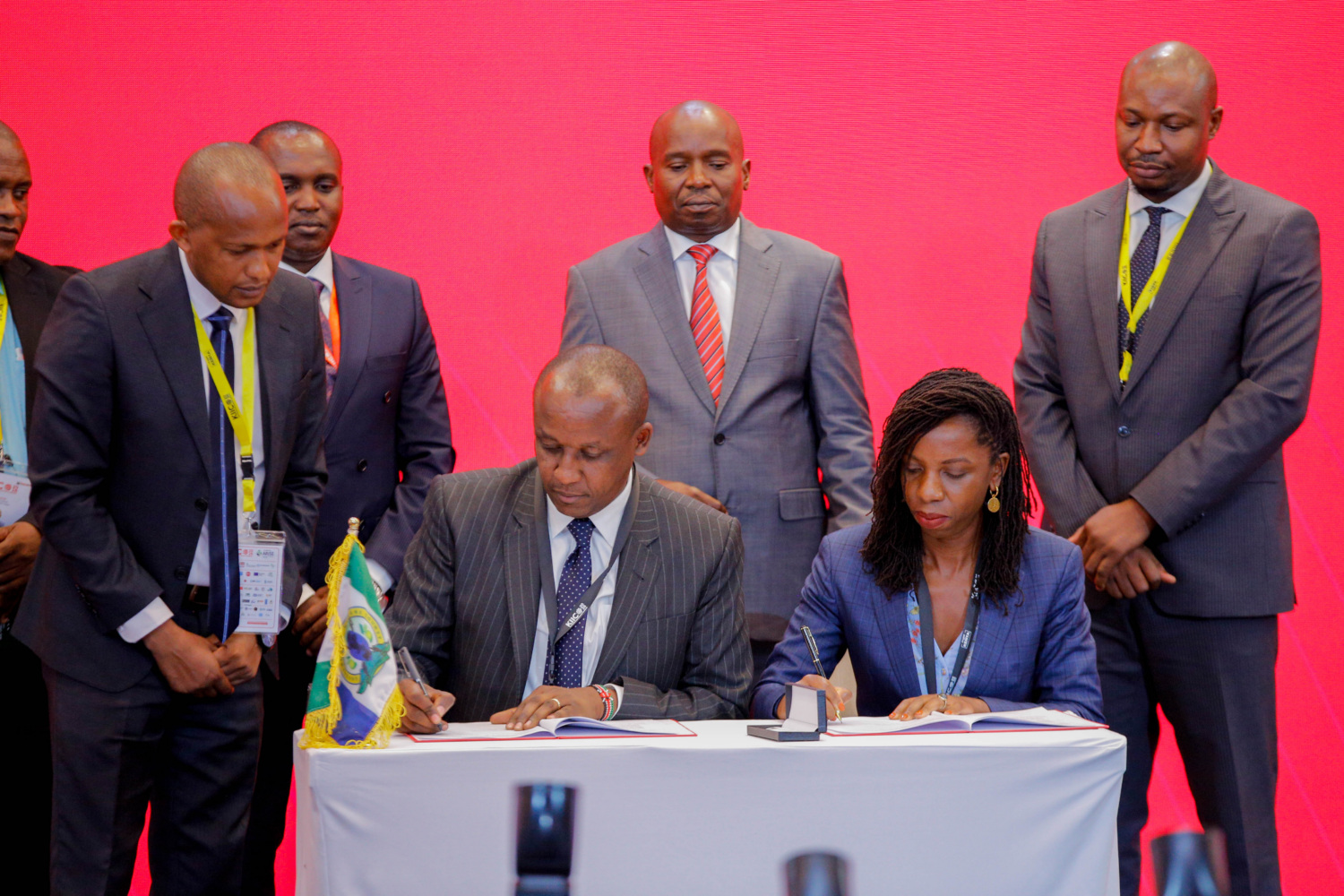
Photo Credit CLASP
H.E Prof. Kithure Kindiki E.G.H, Deputy President of Kenya, and CLASP's Emmanuel Aziebor, Senior Director Africa, witnessing the signing of the MoU between Makueni County and CLASP. Photo credit: CLASP.
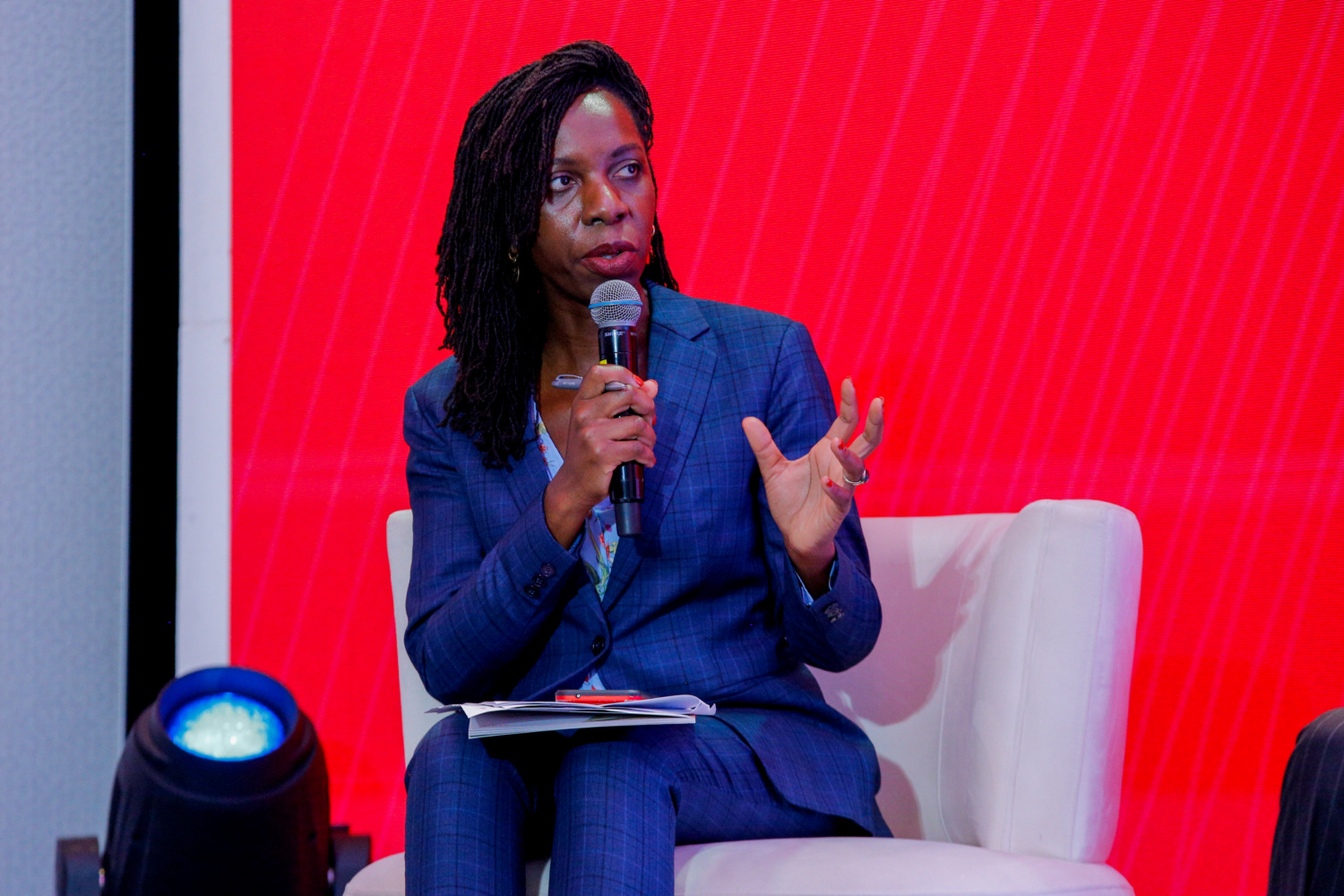
CLASP's Nyamolo Abagi moderating a session on enhancing institutional coordination to accelerate the clean cooking sector in Kenya. Photo credit: CLASP.
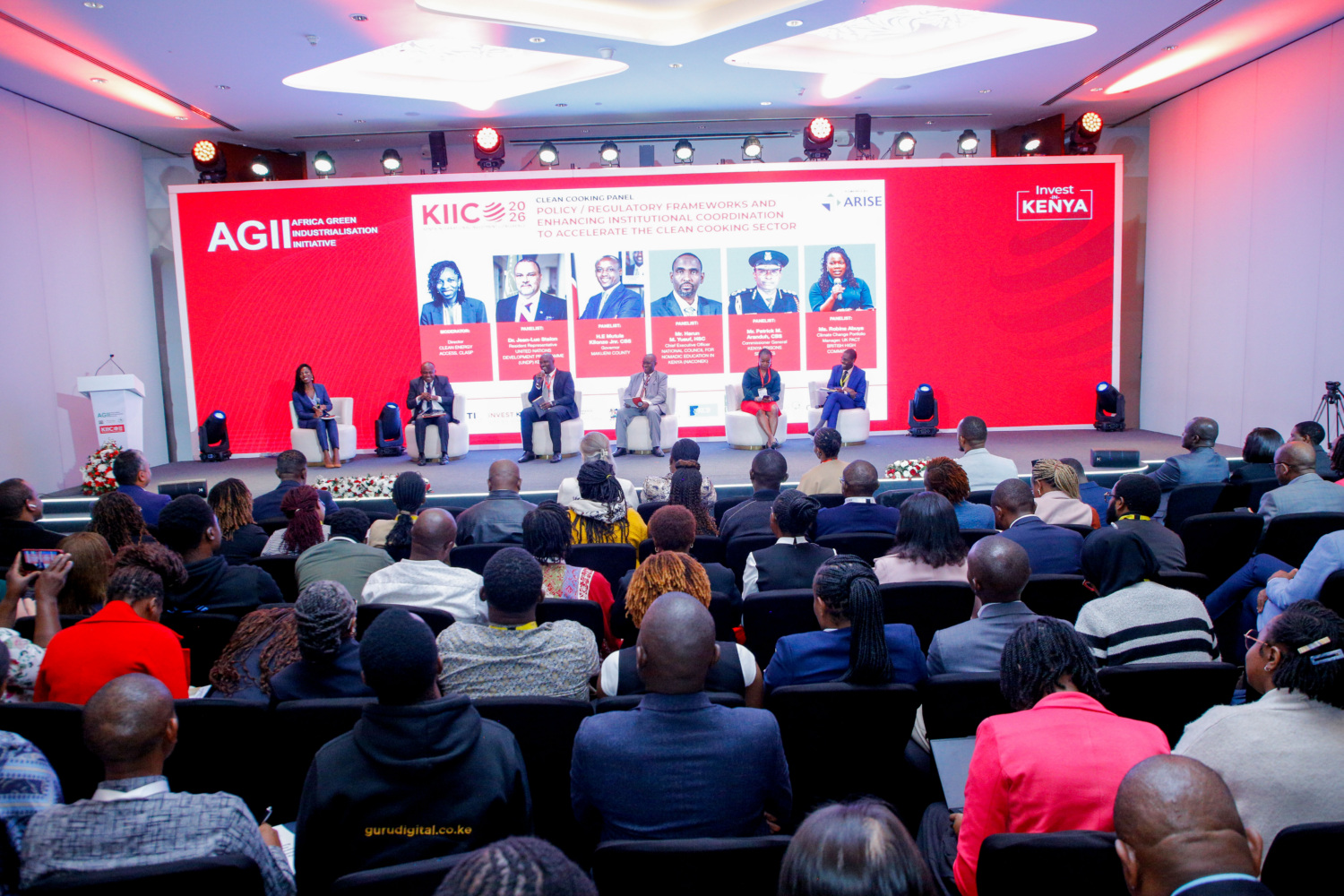
CLASP's Nyamolo Abagi moderating a session on enhancing institutional coordination to accelerate the clean cooking sector in Kenya. Photo credit: CLASP.
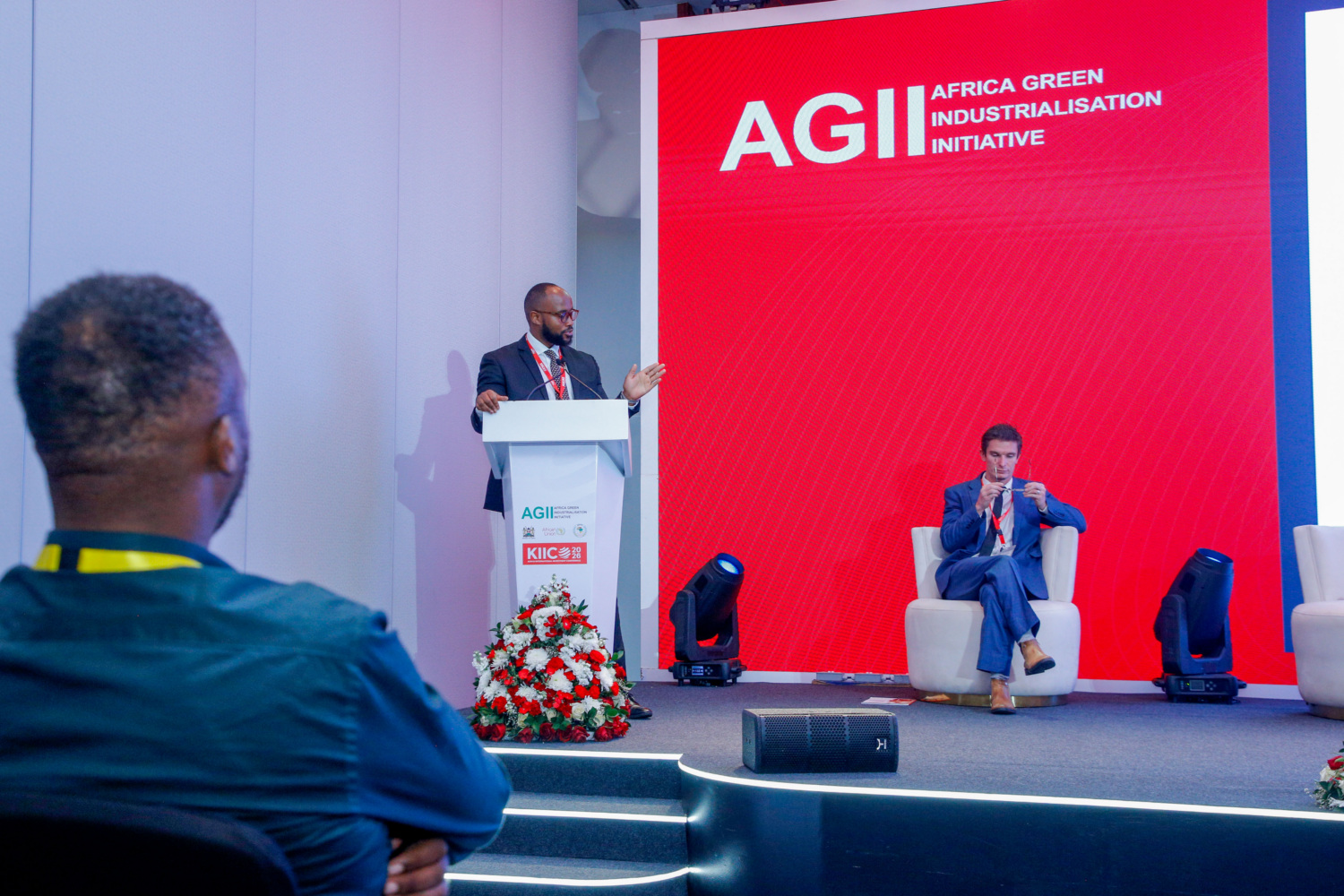
CLASP's Towett Ngetich and MECS Dr. John Leary, presenting the Kenya’s first Institutional Clean Cooking Sector Pack at KIICO 2026. Photo credit: CLASP.
About Modern Energy Cooking Services programme
Modern Energy Cooking Services (MECS) is an eleven-year programme funded by UK aid via the Foreign Commonwealth and Development Office. MECS is a geographically diverse, multicultural and transdisciplinary team working in close partnership with NGOs, governments, private sector, academia and research institutes, policy representatives and communities in 16 countries of interest to accelerate a transition from biomass to genuinely ‘clean’ cooking. CLASP is a core partner of the MECS programme alongside Loughborough University and ESMAP.
About CLASP
CLASP is the leading global authority on efficient appliances’ role in fighting climate change and improving people’s lives. With 25 years of expertise and offices on four continents, CLASP collaborates with policymakers, industry leaders, and other experts to deliver clear pathways to a more sustainable world for people and the planet.