
Find CLASP at Climate Week NYC 2024
CLASP has solutions to the global climate emergency. Our landmark Net Zero Heroes report showed that the appliance sector accounts for nearly 40% of global energy-related CO2 emissions. Improving appliance efficiency is a proven, cost-effective solution to slash emissions.
At Climate Week NYC, one of the largest annual climate events, CLASP will be in attendance to showcase our solutions and highlight our latest work.
See where our team will be speaking and join us in supercharging appliance efficiency!

For questions or additional speaking opportunities, please contact Alexia Ross (aross@clasp.ngo)
Ten US States Commit to LEDs
Policymakers from ten states across the United States (US) – California, Colorado, Hawai’i, Illinois, Maine, Minnesota, Oregon, Rhode Island, Vermont, and Washington – have passed ‘clean lighting bills’ in the last two years, advancing their transition to more efficient, cleaner light-emitting diode (LED) lighting technology. Together, the ten states will cumulatively avoid 13.6 megatons (Mt) of CO2 by 2050.
The clean lighting bills mean that over 20% of the US fluorescent lighting sold will switch to LED.
Why are LED Lights Better than Fluorescent?
LEDs are widely accessible, mercury-free lighting solutions that are twice as efficient and last two to three times longer than fluorescent alternatives. This means they reduce energy demand, carbon emissions, and electricity bills – high priorities for many states.
“Hawai‘i pays the highest electricity rates in the country, almost three times as high as the U.S. average,” said Jodi Robinson of the Blue Planet Foundation, who helped lead the effort to phase out fluorescents in Hawai’i. “Energy efficiency policies, like adopting clean lighting standards, are the most cost-effective solution to reduce greenhouse gas emissions, while also addressing the high energy burden facing our island’s residents and businesses.”
Vermont and California, the first and second states respectively to pass clean lighting bills, are now implementing the change.
“In Vermont, we are proud to have led the nation in moving to mercury-free lighting,” said Paul Burns, Executive Director of the Vermont Public Interest Research Group. “It was always our hope that other states would quickly follow, and it’s wonderful to see that happening, thanks to some excellent advocacy and organizing work. “
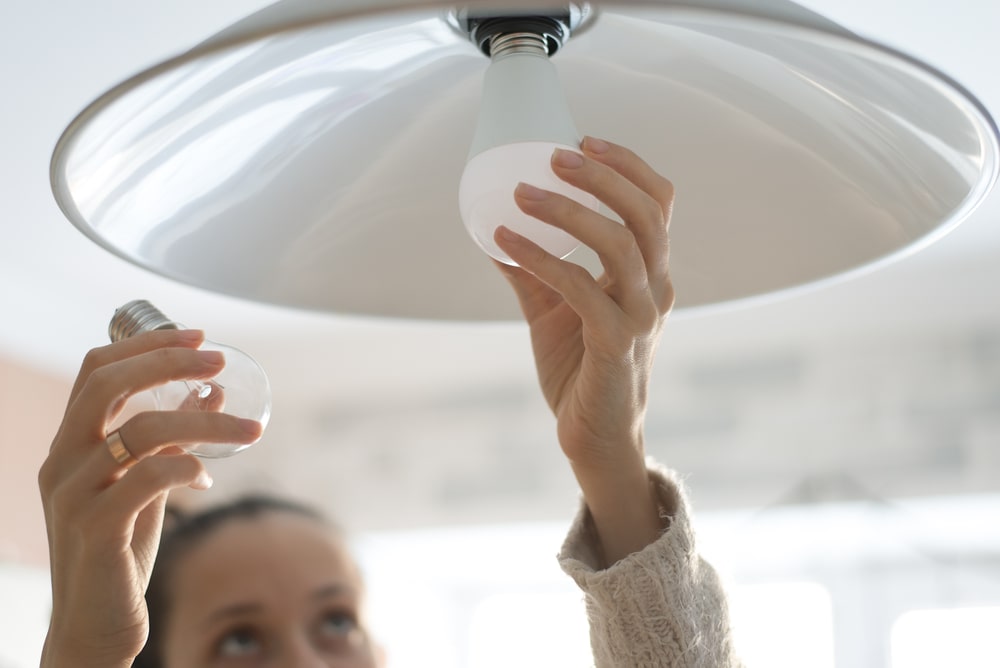
US States Matching Global Moves to Efficient Lighting
The ongoing revisions to the US’s federal lighting policies are incrementally raising the required efficiency of bulbs being sold on the market, slowly edging out the most inefficient and polluting products; however, there is an immediate opportunity to shut the door on costly lighting technologies.
“There is global momentum around the LED transition and US states are leading the pack,” said Ana Maria Carreño, Senior Climate Director at CLASP. “A national clean lighting policy would benefit every household and business across the US and help usher in the next generation of energy and cost-efficient lighting, while preventing further mercury pollution.”
At the recent Minamata Convention Fifth Conference of the Parties (COP5), countries agreed to phase out fluorescents globally by 2027. As the US is a party to the Convention, both state and federal action will be crucial to carrying out the decision nationally.
More states are signaling interest in passing their own clean lighting bills in upcoming legislative cycles. The CLASP lighting experts are watching closely to see when federal action will take advantage of the multifaceted benefits of an all-LED future.
__
CLASP and the Appliance Standards Awareness Project (ASAP) would like to thank the nearly 200 state advocate organizations who are making the clean lighting transition a reality across the US, including the clean lighting champions at:
- Blue Planet Foundation
- Environment Oregon
- Fresh Energy
- Green Energy Consumers Alliance
- Hawaii Energy
- Illinois Public Interest Research Group
- Massachusetts Public Interest Research Group
- Mercury Policy Project
- National Product Stewardship Council
- Natural Resources Council of Maine
- Northwest Energy Coalition
- Responsible Purchasing Network
- Southwest Energy Efficiency Project
- Vermont Public Interest Research Group
CLASP Study Shows Appliance Efficiency Standards in the US Prevented Up to 4,400 Pollutant-Related Deaths Annually, Valued at $41 Billion
Washington DC, 11 March, 2024 – CLASP’s latest report, “How National Appliance and Equipment Energy Conservation Standards Can Improve Public Health and Advance Justice40 Initiative Goals,” finds that standards adopted over the past 30 years have led to substantial reductions in fine particulate matter (PM2.5) and PM2.5 precursor emissions, which are harmful pollutants that can cause respiratory and cardiovascular health issues such as asthma, lung cancer, or heart disease. Data from 2017 suggest that this reduction could prevent between 1,900 and 4,400 PM2.5-related deaths every year. Using the value of statistical life, this translates to monetary benefits of $18 to $41 billion.
Importantly, CLASP’s study finds that the benefits of these standards are distributed relatively equitably among communities with those designated as disadvantaged by Justice40, an initiative aiming to ensure that 40% of the overall benefit of federal climate investments go to disadvantaged communities, receiving a significant share.
These findings demonstrate the far-reaching positive impacts of standards and highlight the importance of the US Department of Energy meeting its deadlines for updating approximately 50 appliance efficiency standards, including for water heaters, by January 2025. Finalizing all pending standards could avert 2.5 billion metric tons of greenhouse gas emissions while saving consumers nearly $1 trillion over 30 years, according to the agency.
The report outlines actionable recommendations to amplify the benefits of standards and suggests ways to measure their contribution towards Justice40 goals. By implementing these recommendations, policymakers, industry stakeholders, and communities can work together to ensure that national appliance standards continue to drive positive change for all people and the planet.
Read the full report here.
How National Appliance and Equipment Energy Conservation Standards Can Improve Public Health in the US
Gain insight into the critical role of national appliance standards in improving public health and discover how to measure their impact against Justice40 goals. Find actionable recommendations for maximizing their benefits for a healthier, greener, and fairer future.
Key findings
- National appliance standards have led to significant reductions in PM2.5 and PM2.5 precursor emissions, avoiding hundreds of thousands of tons of pollutants in 2017.
- These standards prevented between 1,900 and 4,400 PM2.5-related deaths in 2017, translating to monetary benefits of $18 to $41 billion.
- Health benefits from national appliance standards have been distributed relatively equitably. Communities designated as disadvantaged by Justice40, representing 33% of the total population, have received 36% of the health benefits.
Recommendations
- The US Department of Energy must meet legal deadlines for updating appliance efficiency standards to maximize public health benefits.
- Governments should expand outreach and incentives to promote efficient appliance adoption, prioritizing disadvantaged communities, renters, and low-income households.
- Engage disadvantaged communities and people of color in all stages of policy development and implementation.
___________________________________________________________________________________________
Additional Resources:
Fighting Extreme Temperatures with the Inflation Reduction Act
The US has experienced extreme and dangerous freezing temperatures this winter – with dozens of deaths attributed to exposure to the bitter cold. Last summer saw sweltering heatwaves across the country shatter previous records.
Heat pumps help people and the planet
Heat pumps – an energy efficient, all-electric indoor space heating and cooling technology – are a key solution for controlling indoor temperatures, while reducing the use of fossil fuels like methane gas and oil.
In 2022, The Inflation Reduction Act (IRA), became the biggest climate investment in US history. It funded electrification efforts to increase the widespread adoption of heat pumps, with the aim to make climate-friendly home temperature control accessible to all communities.
Additional policymakers’ action can drive adoption
According to a new report from CLASP and the Regulatory Assistance Project, the IRA funds are insufficient to increase heat pump adoption to the level needed. The research shows that although the IRA is projected to incrementally increase heat pump deployment this decade, complementary state level policies and initiatives could be the key to supercharging heat pumps implementation as a critical climate-solution.
The report outlines effective and proven tactics to drive heat pump adoption – including community engagement, energy efficiency and performance policies, workforce development and financing mechanisms. Hybrid heating, a strategy developed by CLASP and partners to introduce homeowners to heat pumps by pairing them with legacy heating systems, offers another path forward.
The report advises that state policymakers utilize a combination of these approaches to craft a winning strategy that drives familiarity, acceptance, and widespread adoption of heat pumps to make the best use of federal dollars. This would be a win for people and the planet.
Learn more how CLASP and RAP are supporting accelerated heat pump adoption here.
Improving Public Health & Advancing Equity Goals with Appliance Energy Efficiency Standards
Federal energy efficiency standards for appliances and equipment lead to cleaner air, creating health benefits. By conserving energy, standards reduce both indirect emissions (from power plants) and direct emissions (from fossil fuel appliances). This decreases human exposure to fine particulate matter (PM2.5) pollution, a harmful form of particle pollution capable of entering the lungs and bloodstream and contributing to increased incidences of respiratory and cardiovascular health complications.
This factsheet summarizes the key findings from a recent report that estimates the distribution of public health benefits in disadvantaged communities in the United States. Specifically, it estimates the reductions in PM2.5-related deaths that can be attributed to standards adopted over a 30-year period and explores how standards can contribute to Justice40 Initiative goals.
U.S. Consumer Attitudes Towards Appliance Efficiency Standards and Purchasing Behaviors by Income, Race, and Homeownership
This Issue Brief serves to inform the US Department of Energy (DOE) and policymakers of widespread public support for federal appliance energy efficiency standards across key U.S. demographic groups. Supporting evidence is derived from a nationally-representative survey of 4,000 U.S. adults. The survey asked about consumer attitudes towards national appliance standards and payback periods, and revealed new data on appliance purchasing decisions by race, income, and homeownership.
The brief covers:
- new insights on consumer purchasing behaviors, including information on the reasons for and regularity of appliance replacements across the US;
- first-of-its-kind data on the used appliance market;
- and an evaluation of how more stringent appliance standards can benefit Americans, with a particular focus on low-income households, households of color and renters who often spend a disproportionate share of their income on energy bills.
Readers can explore the study’s methodology in the Annex companion document.
New US Consumer Insights Reveal Overwhelming Support for Appliance Efficiency
WASHINGTON, DC – A new issue brief from CLASP and Consumer Federation of America finds 76% of Americans support federal energy efficiency standards for appliances. The brief highlights a significant opportunity to lower energy bills across the country, including for low-income households, households of color, and renters that spend a disproportionate share of their income on energy.
The nationally representative survey of over 4,000 Americans revealed that a majority of the country, regardless of race, gender, or income, is in favor of standards and in support of payback periods ranging between three, five, and even ten years.
“With rising energy prices and widespread inflation, now more than ever, consumers can use the additional pocketbook savings that updated efficiency standards will provide in hundreds of dollars annually thanks to the increased energy efficiency of their household appliances,” said Richard Eckman, Communications Manager and Energy Advocate at Consumer Federation of America. “Our data show that consumers across all demographics support efficiency standards and are willing to make an investment in energy efficiency that pays for itself over a short period of time through energy bill savings.”
The survey found that two-thirds of US households replaced major appliances – like refrigerators, air conditioners, washing machines, and space heating equipment – within the last five years, largely due to emergency situations like product failure.
“Without stringent efficiency requirements, we are missing out on massive cost and energy savings that would benefit consumers across the country – especially lower-income households,” said Matt Malinowski, Director of Climate Research at CLASP, an efficiency policy NGO. “The data showcase the urgent need to eliminate the worst performing products from the market to promote the equitable benefits of leading technology.”
When faced with the need for a new appliance, a notable portion of the population turns to the used market. The survey found that low-income, Black, and renter households are at least 50% more likely than the general population to replace a major appliance with a used product.
“Our findings suggest a large used appliance market in the US. When the most inefficient appliances are passed on as second- or even third-hand items, they can have persistent and lasting cost burdens, particularly for low-income renters and households of color that spend a disproportionate share of their income on energy bills. We need to amplify efforts that lower barriers to efficient appliances for marginalized groups and expand initiatives that prevent the oldest, least-efficient products from entering the resale market,” said Lauren Boucher, Research Manager at CLASP.
Standards already save the average American household over $300 per year on their energy bills. To ensure that all Americans reap additional economic benefits from more efficient technologies, the authors recommend that the US Department of Energy meet legally binding deadlines for updating standards and, when warranted, implement efficiency requirements for uncovered products.
###
About CLASP: CLASP serves at the epicenter of collaborative, ambitious efforts to mitigate climate change and in the global movement for clean energy access, through appliance efficiency. CLASP works hand-in-hand with governments, experts, industry, consumers, donor organizations and others to propel policies and markets toward the highest-quality, lowest resource-intensive products possible. Learn more at https://www.clasp.ngo/.
About Consumer Federation of America: The Consumer Federation of America (CFA) is an association of more than 250 nonprofit consumer organizations that was established in 1968 to advance consumer interest through research, education, and advocacy. Learn more at https://consumerfed.org/.
California Passes Landmark Clean Lighting Bill
On Sunday, California Governor Gavin Newsom signed AB 2208 into law, a landmark bill by Assemblymember Kalra and Senator Becker that sets phase out dates for compact fluorescent lamps (CFLs) and linear fluorescent lamps (LFLs) starting in 2024. Climate, clean air, worker safety, and public and environmental health advocates applaud the move to protect Californians and the planet from the dangers of mercury containing lamps.
“We are delighted to have legislative champions in Assemblymember Ash Kalra and Senator Josh Becker who were willing to take action to remove toxic mercury from lighting which unnecessarily exposes the public and waste workers to a potent neurotoxin,” said Heidi Sanborn, Executive Director of the National Stewardship Action Council (NSAC), sponsor of the bill.
Over the last 10 years, light emitting diodes (LEDs) have become an increasingly available, cost-effective, and much more efficient lighting solution. Because LED retrofit lamps produce the same illumination as fluorescents but use half as much electricity, this new law will cut California’s lighting energy bills in half and protect the state from rolling blackouts caused by electricity shortages.
“AB 2208 will result in even more efficient energy use in our homes and businesses, reduced electricity bills, as well as reductions in both carbon and toxic pollution,” said Victoria Rome, Director of California Government Affairs for NRDC (Natural Resources Defense Council).
A recent market study found that by 2030, California could save over $1 billion annually on electricity bills, achieve annual electricity savings of about 5,600 gigawatt hours, and avoid the release of 950,000 metric tons of CO2 per year.
California is now the second state to pass a ban on fluorescent lamps, following Vermont’s vote to phase out CFLs in 2023 and 4-foot LFLs in 2024. California, however, went further by including lamps up to 8 feet in the phase-out.
“We applaud the leadership being shown by the State of California, transitioning away from toxic mercury-based light sources in favor of clean, efficient and cost-effective LED technology,” said Corinne Schneider, Chief Communications and Development Officer at CLASP. “We hope California’s move will generate some momentum, with other states taking action to protect people and the planet from fluorescent lighting.”
Governments around the world are increasingly recognizing LEDs as the foremost lighting technology on the market today. In December 2021, the European Union banned the sale of almost all mercury-containing fluorescent lamps by September 2023, and in March 2022, 137 governments voted to phase out CFLs by 2025 through the Minamata Convention on Mercury.
As one of the biggest lighting markets in the country, the new California law signals that the US is ready to make the transition to a clean lighting economy. The US is well positioned to take a leading role in global negotiations and push for an equitable global transition to better lighting at the Minamata Convention COP5 next year.
###
About the Clean Lighting Coalition: The Clean Lighting Coalition is a global partnership coordinated by CLASP to capture the health and environmental benefits of eliminating mercury-based lighting. To learn more, visit www.cleanlightingcoalition.org and follow the Coalition on Twitter and LinkedIn.
About the National Stewardship Action Council: The National Stewardship Action Council was founded in 2015 as a 501(c)(4) nonprofit organization that engages in education and advocacy work that drives a circular and equitable economy, anywhere in the U.S., and at any level of government. Our vision is that the U.S. achieve a circular and equitable economy. You can follow us on social media via Facebook, Twitter, LinkedIn, and You Tube.
Supporting Circular Economy for Renewable Energy Projects

The demand for more renewable energy technologies such as solar panels and wind turbines is creating pressure on the environment due to mining of critical metals and production of more e-waste as these technologies reach their end-of-life cycle, creating an opportunity for a circular economy. In a circular economy, materials have multiple life cycles and re-entry points into the market as they are systematically recovered, repaired and remade.
CLASP is part of a team that supports the U.S. Agency for International Development’s (USAID) Scaling Up Renewable Energy (SURE) program. CLASP was recently awarded a subcontract under the SURE program, led by Tetra Tech, alongside dss+ to engage strategically with governments, the private sector, civil society, and communities to support transformational policies and initiatives and to build human capital and institutional capacity to address waste challenges associated with renewable energy investments while creating economic value and jobs. Tetra Tech, CLASP, and dss+ technical experts work with partners to develop innovative tools, sustainable practices, policies, business models, and secondary markets for renewable energy parts and materials, cultivating a circular economy that is gender-inclusive, reduces waste, makes the supply chain more resilient, and extends the life of parts. CLASP supports USAID in the development of country-specific circular economy plans to ensure the demand for renewable energy sources does not negatively impact the environment.
Renewable Energy: Sustainable Solution or Environmental Risk?
Obsolete renewable energy equipment is expected to grow exponentially over the next 30 years. Instead of damaged and decommissioned equipment piling up as waste, the life of these materials must be extended beyond their original use. In 2019, an estimated 18,000 tons of solar photovoltaic (PV) panel waste was generated. By 2050, PV panel waste could increase to 10 million tons annually (BNEF 2020). There will be up to 52,000 tons per year of decommissioned wind blades by 2030 (WindEurope 2020).