
Bridging the Innovation Gap: Pakistani Manufacturers Tour Chinese Test Facility
In an effort to spur innovation within the Pakistani domestic appliance industry, CLASP and partners led a group of manufacturers on a lab tour of the China Household Electric Appliance Research Institute (CHEARI), a leading appliance test facility in China. As gas reserves dwindle and the country faces some of the harshest temperatures in the world, Pakistan must improve and scale more efficient uses of energy – starting with the most common and energy-intensive household appliances.
“Pakistan is running out of gas by 9% each year. We believe in the future, these reserves will be critically low,” says Muhammad Salman Zaffar, Technical Lead for CLASP’s Pakistan Program.
Despite the drop in availability, the majority of Pakistani households rely on inefficient gas-powered appliances to meet their daily needs.
Pakistan boasts a robust domestic appliance manufacturing industry, yet certain technologies – like water heaters – have not evolved over the last 60 years. Last year, CLASP and local partner SAMA^Verte launched an Industry Accelerator Program to address this lag. The Program is in its pilot stage and currently supporting electric motor and water heater manufacturers. The current aim is to improve water heater efficiency by convening industry stakeholders and offering global expertise, best practices and technology know-how. Then, the program will expand the lessons and capabilities learned to the industry at large.
What can Pakistan learn from China’s expertise?
SAMA^Verte and the CLASP team in Pakistan, with support from the CLASP China team, arranged a full day tour to CHEARI in Chuzhou for representatives from Canon Appliances and Super Asia. The trip to China offered an opportunity for Pakistani manufacturers to contextualize insights from the Industry Accelerator Program – enhancing their knowledge of test lab equipment, methodologies and processes.
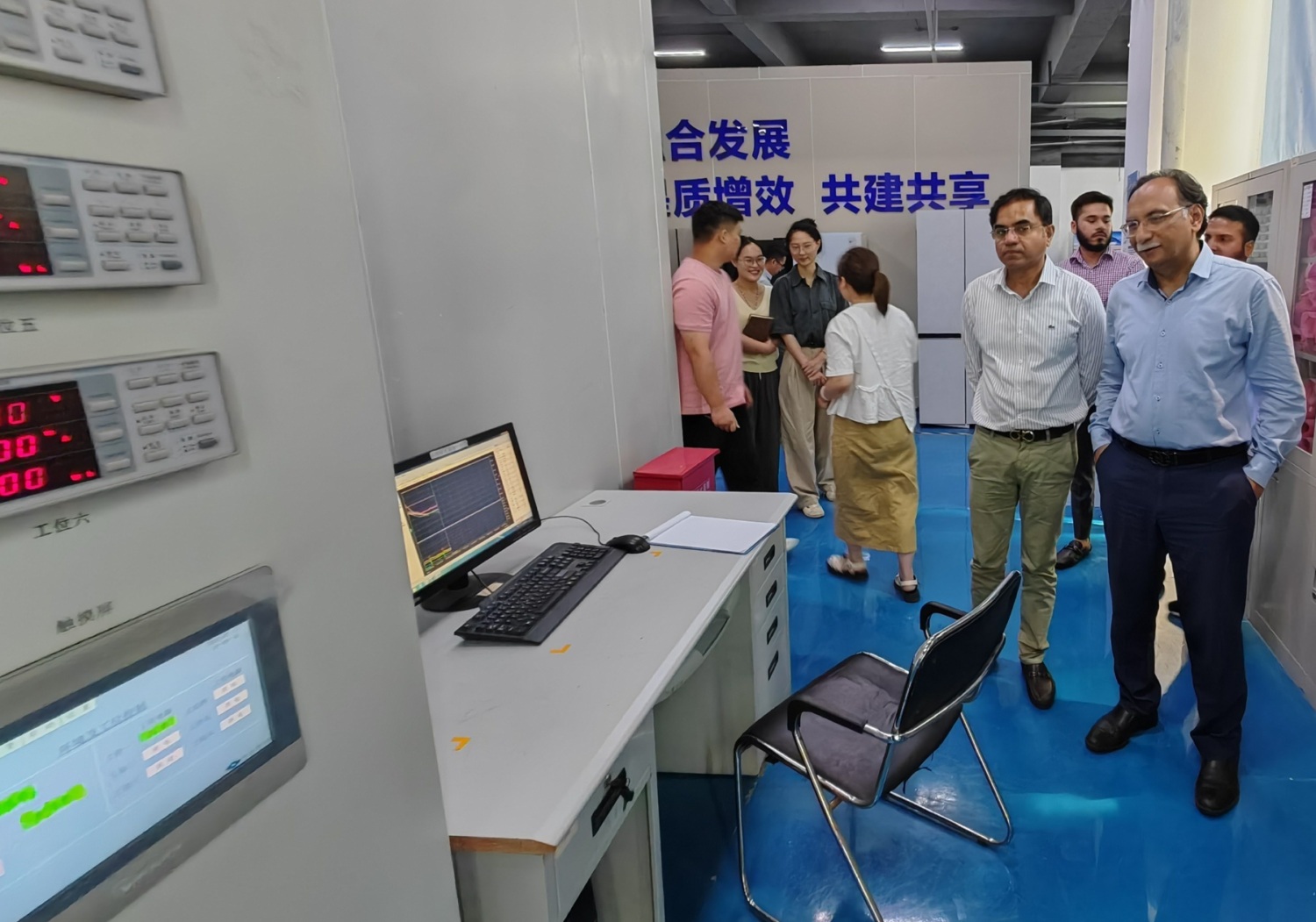
We were thrilled to visit the state-of-the-art appliance testing facility at CHEARI. It has been a great learning experience and we will bring back with us ideas for improved water heater designs, as well as connections and ideas for future testing and other product development.Mr. Muhammad Bilal
Director of Canon Home Appliances
With firsthand exposure to Chinese best practices, Pakistani manufacturers can integrate similar technologies into their own manufacturing processes to develop higher-quality, more efficient and improved appliances. The visit also allowed for discussions on future collaboration between Chinese and Pakistani appliance stakeholders, helping to position Pakistan at the forefront of regional manufacturing.
_____
China Household Electric Appliance Research Institute (CHEARI)was established in 1964. CHEARI is approved by State Commission Office of Public Sectors Reform (SCOPSR), is affiliated by State-owned Assets Supervision and Administration Commission of the State Council (SASAC).
Canon is a Lahore-based manufacturer of a range of home appliances including gas storage, gas instant, and hybrid storage water heaters, with a commitment to improving efficiency based on previous collaborations with CLASP.
Super Asia is a large Pakistani appliance manufacturer producing a wide range of products, including electric water heaters, and aiming to localize their supply chain and enhance exports. They are based out of Gujranwala.
Facilitating Industry Inclusive AC Policymaking in Indonesia
As temperatures rise in the world’s fourth most populous country, so does the demand for air conditioners (ACs). In 2020, CLASP found that ACs are one of Indonesia’s most energy-intensive appliances – without regulation, AC proliferation could exacerbate power supply gaps, stress peak loads, and increase greenhouse gas emissions (GHGs). To ensure that cooling demand can be met sustainably, CLASP brought together industry and government stakeholders to discuss energy efficiency interventions for approximately 129 million units to be manufactured by 2040.
Soaring temperatures leads to a growing demand for cooling
Over the past decade, Indonesia has seen a 0.4 °C. rise in average temperature, now experiencing a regular climate of 27°C and above. Despite a growing need, only 6% of Indonesian households currently have access to ACs.
By 2040, Indonesia is projected to be home to nearly half of all ACs in Southeast Asia – adding around 117 million installed units over the next two decades. To anticipate and plan for this growth, CLASP co-hosted a workshop with the Indonesian Directorate of Energy Conservation and the ASEAN Centre for Energy.
“The workshop convened energy efficiency experts and the Indonesian government to discuss current market information on split air conditioners, the most energy-efficient option on the market,” said Nanik Rahmawati, Program Manager at CLASP Indonesia. “We outlined a plan to further AC efficiency across the country.”
To meet national and regional climate and efficiency targets1, ten countries in Southeast Asia work through ASEAN to update policies and goals every five years. Indonesia is also a member of the Super-Efficient Equipment and Appliances Deployment Initiative (SEAD), which stipulates that air conditioners are a priority appliance and efficiency levels must be doubled to substantially reduce emissions. Under these agreements, Indonesia must spearhead more aggressive cooling efficiency efforts.
Industry-inclusive policymaking
The workshop titled, ‘Forum for Improving AC Energy Efficiency’, aimed to provide an avenue for key players from the AC supply and demand sides to actively engage in the policy drafting process. Over 50 participants from consumers associations, the Association of AC Experts, the Association of Practitioners and Entrepreneurs, NGOs, and governmental agencies. The participants signaled enthusiasm and willingness to participate in the process.
“This workshop was highly productive—we identified stakeholders’ individual capabilities, devised a plan to improve efficiency of ACs, and recognized institutions that could take energy efficiency for cooling products even further,” explained Rahmawati. “These policies are imperative to ensure more equitable cooling access, while limiting GHG emissions.”
Including diverse perspectives will ensure a smooth market transition and mitigate the risk of non-compliance. CLASP’s industry-inclusive process has yielded widespread success across Asia, recently achieving increased efficiency levels for motors and heat pumps in Pakistan. The workshop was supported by the Indonesian Consumers Protection Foundation (YLKI), ClimateWorks Foundation and CLASP.
Indonesia’s Road to Net Zero
Growing Population Strains Energy Needs
With 273 million people, Indonesia has the fourth largest population in the world. Current projections estimate a 5x increase in electricity use per capita and 2x increases in final energy consumption per capita. And once-scarce appliances like air conditioners will see a sevenfold increase by 2040. Despite the multitude of benefits, efficiency receives less government funding and attention than other energy transition programs like transportation and solar home system distribution.
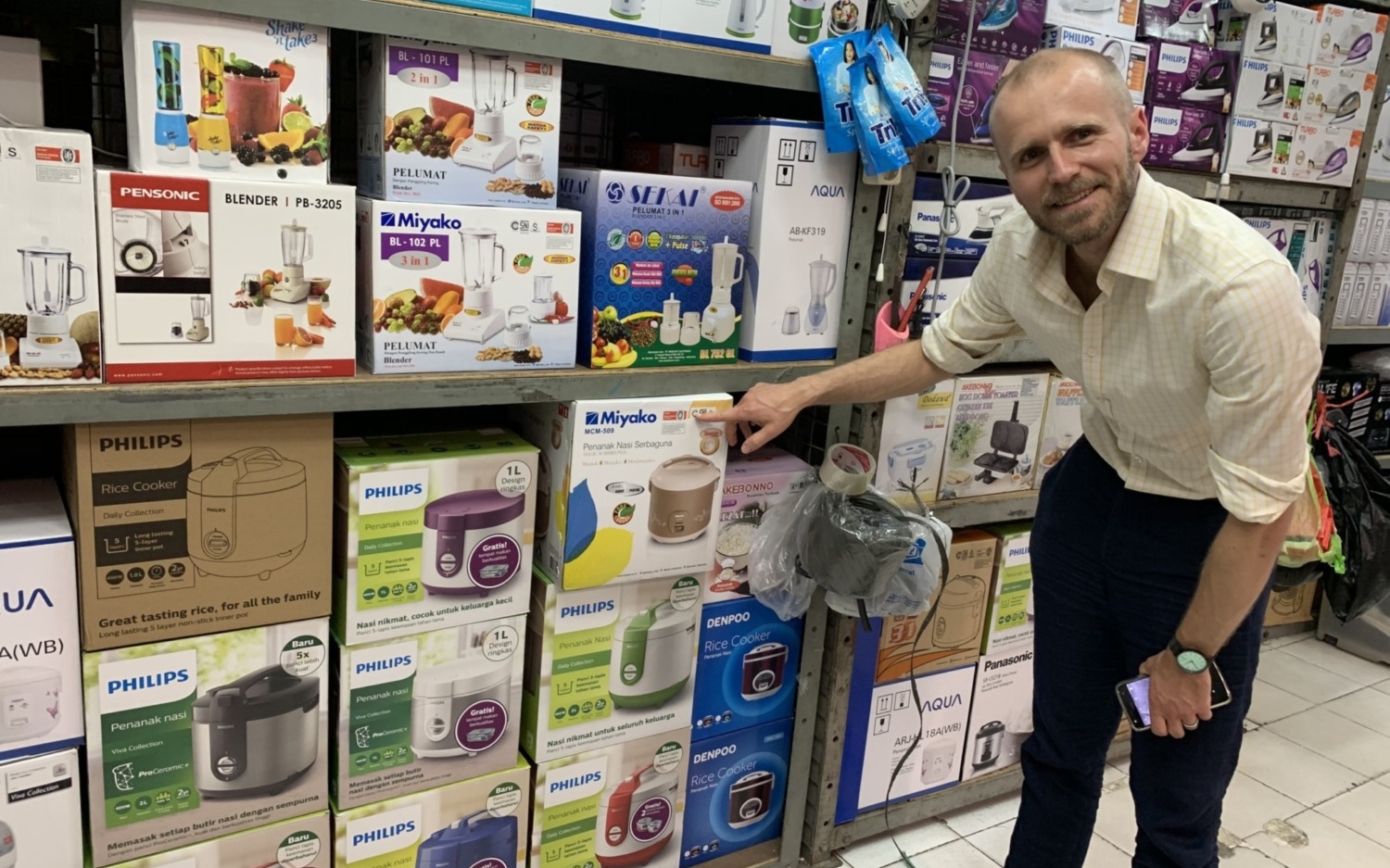
Over the past three years, CLASP has supported the Indonesian government in developing efficiency policies for fans, refrigerators and rice cookers. Because of this partnership, the Ministry of Energy and Mineral Resources (MEMR) requested CLASP’s input on the creation of the Net Zero Emissions (NZE) roadmap. In their updated National Determined Contributions published in 2021, Indonesia committed to reducing CO2 emissions by 29% through its own efforts and 41% conditional on international support, by 2030. Alongside the update, they submitted their Long-Term Strategy for Low Carbon and Climate Resilience 2050, which mentioned a goal of reaching NZE by 2060. That goal was later reiterated by the Energy Minister during COP26.
CLASP will bring our expertise into roadmap discussions to ensure the Ministry includes efficiency considerations for other appliances that contribute to high energy use. Increasing the ambition of efficiency policies can have significant impacts on emission reductions, ensuring Indonesia meets their net-zero target economically and on time.
Putting Energy Efficiency on the Map
Many projects that support the goals of the roadmap have already begun, like the harmonization of national standards and minimum energy efficiency requirements with regional ASEAN levels. This work would translate to a 32% reduction in energy intensity by 2025 and has already been initiated with harmonized AC and lighting standards. Following commitments made during COP26, the plan will also include steps to deliver on the pledge to double the efficiency of four key appliances by 2030, as per the SEAD Initiative’s Product Efficiency Call to Action.
CLASP is supporting the Ministry’s policy modeling team to develop energy use projections for relevant appliances through 2060, using Mepsy – our climate impacts calculator. For this project, we extended Mepsy’s projection capabilities to 2060, enabling a longer projection timeline for all available appliances and countries. In the coming months, CLASP will continue to attend inter-ministerial meetings to discuss mitigation scenarios and reach consensus among the proposed strategies. The work will likely be presented at the G20 Leader’s Summit in October 2022.
Indonesian Cooling Appliance Policies to Avert 10.5 megatons of CO₂ by 2030
To close out 2021, the Directorate of Energy Conservation in Indonesia drafted new MEPS and labeling policies for chillers and refrigerated display cabinets (RDCs), with CLASP support and in accordance with the Ministry of Energy and Mineral Resources Regulation No. 14/2021 on Implementation of Minimum Energy Standards for Energy-Using Equipment. Both appliances consume large amounts of energy and are used by millions of businesses and organizations, providing an enormous opportunity for efficiency improvements and emissions reductions. By 2030, the policies have the potential to prevent 10.5 million metric tons of CO₂ emissions and reduce the country’s energy use by 11,725 GWh, about 4% of the national annual consumption.
Indonesia is home to the second most supertall buildings (structures over 300 m tall) in Southeast Asia, and by end of 2020, the country had 105 such buildings. Better regulated chillers would increase the efficiency of these buildings’ cooling systems and significantly contribute to the country’s overall building efficiency.
RDCs are designed to maintain food and beverages at very low temperatures. According to BPS (the Indonesian Statistical Bureau), Indonesia has over 4 million enterprises in the Food and Beverage Service Activities sector, a majority of which regularly use RDCs.
Because of the potential market of both appliances, implementing appliance energy efficiency policies is critical to ensuring that consumers are only purchasing highly efficient, quality appliances. The MEPS and labeling policies will encompass:
- Scope or coverage of the regulation, such as definition, HS code, type or characteristic of products, etc.
- Values of the MEPS
- Type and model of the product certification
- Procedures and requirements for product testing
- Exceptions
- Tolerance values
From 20-21 December 2021, a technical team responsible for the development of MEPS and energy label regulations and representatives from ASHRAE and SUCOFINDO convened in West Java, Indonesia. The process will continue next year with a series of consultative meetings with key stakeholders impacted by the regulatory changes.
New Appliance Policies Expand Efficiency in Indonesia
Indonesia announced new and revised energy policies for five widely used appliances — fans, refrigerators, rice cookers, air conditioners, and televisions — that will cut carbon emissions and benefit people by reducing household energy bills.
The AC policies were issued by the Ministry of Energy and Mineral Resources (MEMR) on August 16 and took effect immediately, while the remaining appliances policies were issued on September 20 and will take effect one year from then. The policies represent a significant climate mitigation win for the country. At the initial energy performance levels, the policies will avoid 10.7 million metric tons of CO₂ (MTCO₂) emissions cumulatively by 2030 and 2.1 MTCO₂ annually from 2030 onwards.
Residential energy use in Indonesia has more than doubled over the last decade and is expected to continue growing as the warming climate will increase demand for cooling appliances in particular. The new policies will remove inefficient products from the market, ensuring that appliances included in the scheme carry an energy label to positively impact consumer decision-making, and help the Indonesian power grid keep up with growing demand. Appliance efficiency policy efforts in Indonesia were stalled in past years due to a lack of data, but CLASP’s Residential End-Use Survey, published in 2020, helped create a clearer picture of appliance use and demand.
CLASP supported the MEMR in developing three of these policies by conducting consumer and market research and assessing the potential climate impacts of various policy scenarios. “The cooperation between CLASP and the Directorate General of New and Renewable Energy and Energy Conservation has been a tremendous help on the development of energy efficiency policies in Indonesia,” said Dr. Ir. Hariyanto, M.T., Director of Energy Conservation of Directorate General of New and Renewable Energy and Energy Conservation (July 2018 – February 2021) in a statement about the work.
CLASP-Supported Policies
Fans are an important energy-consuming product in Indonesia’s hot and humid tropical climate, offering effective and financially accessible cooling. Last June, CLASP published an end-use survey showing that households operate fans for an average of 6.4 hours per day, leading to high overall energy consumption. The new fan efficiency policy will avoid 6.8 MTCO₂ of emissions from 2023 to 2030, reaching 1.3 MTCO₂ in annual reductions by 2030.
There are 43.4 million refrigerators in use in Indonesia, with about 2.5 million units sold yearly according to 2018 data. Under the new efficiency policy, refrigerator energy performance requirements will be set at a moderate level with projected greenhouse gas mitigation of 1.0 MTCO₂ over the next decade and 0.2 MTCO₂ annually by 2030. Indonesian manufacturers are well positioned to meet more stringent regulations over time, since in addition to serving domestic demand, the industry exports to more than 100 countries including markets like South Korea, Japan, and Australia, where they meet higher efficiency requirements.
Rice is an important element in Indonesian cooking, and the majority of households use a rice cooker on a daily basis. However, there are many unregistered and low-quality models on the market, indicating an opportunity for efficiency policies to reduce overall energy use for climate and consumer benefits. Under the new policy, higher rice cooker efficiency requirements will avoid emissions of 2.9 MTCO₂ over the next decade, growing to 0.6 MTCO₂ annually by 2030.
Looking forward, CLASP will continue to work with MEMR and other stakeholders across a wide range of priorities, including strengthening compliance with the new policies, addressing additional products, and increasing public adoption of super-efficient air conditioners.
Read about CLASP’s Indonesian end-use survey and market research here, and explore our work on cooking and cooling policy.
See DJEBTKE’s Instagram post announcing the new policies.
For media inquiries, please contact Matt Malinowski at mmalinowski@clasp.ngo
Potential Impact of Lighting and Appliance Efficiency Standards on Peak Demand – The Case of Indonesia
By now, the value of lighting and appliance energy efficiency standards to reduce power plant fuel inputs, thereby saving money, reducing harmful pollution, mitigating climate change and enhancing energy security is well-known. As important as these benefits may be to developing country governments, even more critical in their view may be the reduction of peak demand, since power shortages (due to insufficient capacity) damage economic productivity and generation capacity increases commit scarce capital to power plant construction that could be used toward other important development goals.
This paper uses LBNL (Lawrence Berkeley National Laboratory)’s BUENAS (Bottom-Up Energy Analysis System) model to forecast demand reductions from energy efficiency in a major developing country – Indonesia. Indonesia was chosen for its tropical climate (making cooling important to peak load) and because its level of development which suggests rapid growth of appliance uptake over the next two decades. The model considers future demand growth for 10 separate residential electrical end uses, three commercial building end uses, and considers industrial electricity in the aggregate. The model then combines the total electricity demand by appliance in each year with end use demand curves for each using data from Indonesia (if possible) and areas of similar climate.The resulting analysis finds that peak load may increase 3 times in Indonesia over the next 20 years in the business-as-usual case, primarily driven by space cooling with an important component from lighting and refrigerators. Applying BUENAS efficiency scenarios of cost-effective potential and best available technology indicates a potential peak load reduction of 13% and 37% in 2030, respectively.
CLASP and the Policy Partners Compare Global Appliance Energy Efficiency Standards and Labels
Comparing energy performance requirements for appliances from country to country is difficult because of variations in product definitions, misaligned energy test procedures, and divergent efficiency metrics. This complex landscape can prevent policymakers from identifying or adopting global best practices in appliance energy efficiency policy.
 To address this challenge, CLASP and the Policy Partners, along with many other technical product experts, collected data to compare appliance energy efficiency policies, test methods, and efficiency metrics for more than 100 products across nine economies—Australia, China, the European Union, India, Indonesia, Mexico, Russia, South Africa, and the United States.
The resulting analysis represents the largest and most comprehensive comparison of energy standards and labels ever compiled. It describes which product policies are comparable across economies; which are not; and which could be. It is intended to provide policymakers and experts with useful tools for analyzing country data at a macro-level and to enable more informed decisions about the most appropriate policies.
The results are presented in several components:
- The Policymakers’ Summary provides an overview of the analysis.
- The webinar provides additional insights from the report authors.
- The full report, Improving Global Comparability of Appliance Energy Efficiency Standards and Labels, contains the background, methodology, and high-level product specific information.
- Annex 1: Overview Table (Microsoft Excel file) contains quantitative information for all products.
- Annex 2: Product Fact Sheets contains additional product-by-product detail.
BUENAS Scenarios Estimate Cost-Effective and Technical Savings Potential for MEPS in 13 Major World Economies
The Bottom-Up Energy Analysis System (BUENAS) is a policy analysis tool created by Lawrence Berkeley National Laboratory (LBNL) and supported by CLASP and the Super-efficient Equipment and Appliance Deployment (SEAD) Initiative.
BUENAS provides estimates of potential CO2 ,energy savings and financial impacts for a wide range of residential, commercial, and industrial end uses. BUENAS enables consistent comparison of the impacts of energy efficiency standards & labeling (S&L) policies across major economies.
LBNL developed two scenarios – cost-effective potential (CEP) and best available technology (BAT) – to project potential savings from implementing policies of various stringencies in 13 major economies. The economies covered in these scenarios are Australia, Brazil, China, Canada, the European Union, India, Indonesia, Japan, Mexico, Russia, South Korea, and the United States. For these two scenarios, BUENAS includes a range of residential and industrial end uses. The commercial sector is not covered.
Cost-Effective Potential Scenario
The CEP scenario identifies policies that would maximize energy and CO2 emissions savings while saving consumers money if implemented in the world’s major economies. CEP policies are determined according to the cost of conserved energy of various design options or technologies. CEP scenario results enable policymakers to assess the energy and CO2 savings potentials of cost-effective policies and prioritize S&L policies that have the largest impact while benefiting consumers.
Based on the CEP scenario, the estimated global savings are:
- 770 terawatt hours (TWh) of electricity in 2020 and 1,500 TWh in 2030;
- Reduced energy consumption in 2030 of 17% in the residential sector and 4% in the industrial sector;
- 540 million tons (Mt) of CO2 emissions annually in 2020 and 1,000 MtCO2 in 2030; and
- Cumulative consumer financial benefits of 1,500 billion USD from 2015-2030.
Best Available Technology Scenario
The BAT scenario models the impacts that would result if economies adopted MEPS mandating the most efficient already available product or technologies across all end-uses. The BAT targets represent the maximum achievable energy-efficient designs, based on super efficient emerging technologies or designs combining most efficient components already commercially available. BAT scenario results provide estimates of energy efficiency technical potential, or the maximum potential savings that would result from implementation of MEPS requiring BAT in 13 economies.
Based on the BAT scenario, the estimated global savings are:
- 1,200 terawatt hours (TWh) of electricity in 2020 and 2,300 TWh in 2030;
- Reduced energy consumption in 2030 of 27% in the residential sector and 6% in the industrial sector;
- 860 million tons (Mt) reduction in annual CO2 emissions by 2020 and 1,700 MtCO2 by 2030; and
- Emissions reductions from electricity generation equal to 60% of the total reduction needed to remain under 450 ppm CO2 by 2030.
Authors:
CEP: Virginie E. Letschert, Nicholas Bojda, Jing Ke, and Michael A. McNeil
BAT: Virginie E. Letschert, Louis-Benoit Desroches, Jing Ke, and Michael A. McNeil
Updated BUENAS Methodology and Results Indicate Saving Potential Estimates for MEPS in 12 Major World Economies
The Bottom-Up Energy Analysis System (BUENAS) is a policy analysis tool created by Lawrence Berkeley National Laboratory (LBNL) and supported by CLASP, the Super-efficient Equipment and Appliance Deployment (SEAD) initiative, and the International Copper Association.
BUENAS, which covers 13 major economies contributing to 77% of global energy demand, is designed to provide estimates of potential CO2 and energy savings impacts for a wide range of residential, commercial, and industrial end uses. BUENAS also enables consistent comparison of impacts of the energy efficiency standards and labeling (S&L) policies across major economies.
The characteristics that, taken together, distinguish BUENAS from other modeling tools are that BUENAS:
- Covers multiple economies around the world;
- Models energy end use demand from the bottom-up according to engineering and use patterns; and
- Projects energy and CO2 savings based on specific efficiency targets judged to be achievable through near- to mid-term S&L policy implementation.
The 12 economies that are covered in this document are Australia, Brazil, Canada, the European Union, India, Indonesia, Japan, Korea, Mexico, Russia, South Africa, and the United States.
Part I
Part I of this report provides policymakers and S&L practitioners with a high-level overview of the BUENAS modeling framework, defines the scope of BUENAS, and describes potential uses of the model. For example, BUENAS has been used as an S&L policy planning and prioritization tool for developing countries as well as international initiatives such as the Association of South East Asian Nations (ASEAN) and the SEAD Initiative.
Part I also describes results from two policy scenarios – recent achievements (RA) and best practice (BP):
- The RA scenario quantifies the effectiveness of recently implemented, announced, and in progress minimum energy performance standards (MEPS) between January 1, 2000 and April 1, 2011.
- The BP scenario estimates the potential impacts of an economy adopting the most stringent standards to date (as of April 2011) by 2015.
Based on the S&L policies achieved to date in the 12 economies covered in this analysis (all of the above except China), BUENAS estimates global savings of:
- 389 terawatt hours (TWh) of electricity annually in 2030; and
- 219 million tons (Mt) of CO2 emissions annually in 2030.
Part II
Part II of this report provides a detailed description of the BUENAS methodology and data sources. It is intended for a technical audience and assumes some familiarity with the parameters used in energy demand and policy modeling.
The information in Part II includes:
- Definitions and main outputs of the model, in equation form;
- Key data inputs;
- Mechanics of key modeling variables by product group; and
- Detailed description of RA and BP scenarios.
Authors: Michael A. McNeil, Virginie E. Letschert, Stephane de la Rue du Can and Jing Ke; LBNL
Development of Energy Labeling in Malaysia: Past, Present and Future
Malaysia is currently a net exporter of energy. In 2001, the country registered a total net export of 26,311 KTOE. The largest export was LNG, followed by crude oil. The country, however, is a net importer of coal (mostly to meet the needs of electricity generation). In the not so distant future (as near as 2008), Malaysia will be a net importer of oil products, and the nation will have to face the economic consequences of this, including the issue of security of energy supply from foreign resources.
The Malaysian Government has taken steps to meet this new challenge in the energy sector by promoting renewable energy (RE) and energy efficiency (EE). One of the EE options currently being developed is the promotion of energy efficient appliances. For the industrial sector, a labeling program for motors is currently being developed. For the domestic sector, energy efficient refrigerators have been chosen as the first contender for the promotion. This paper will only discuss the development of energy labeling in the domestic sector.
Author: Faridah bte Mohd Taha, Universiti Teknologi Malaysia
Information from: the Asia-Pacific Economic Cooperation (APEC) Seminar on Cooperation on Energy Labeling