
Addressing Climate Comfort in China
 China’s recent exposure to extreme weather has heightened the demand for indoor comfort, with an estimated 39% of the population relying on ACs as their main heating source during winters. However, a pressing issue looms as 85% of the ACs in the Chinese market come equipped with an energy-inefficient auxiliary heating system. The lack of proper regulation in the current Minimum Energy Performance Standards (MEPS) allows manufacturers to opt for low-cost, energy-consuming auxiliary heating systems. This results in higher electricity bills for consumers who remain unaware of the system’s inefficiency due to inadequate disclosure requirements in MEPS and energy labels.1
CLASP and experts from Beijing University of Technology to researching and testing potential new standards focused on auxiliary heating.
The upgraded energy policies for ACs could lower energy bills for 550 million people in China.
Regulations for People and Planet
Steven Zeng, Director – China Program at CLASP, emphasizes the benefits of regulating auxiliary heating. He notes that informed consumer choices will reduce unnecessary costs, while manufactures will be incentivized to develop more efficient systems or adopt more advanced energy-saving technologies. Drawing on global examples of manufacturers phasing out auxiliary systems, Zeng asserts that China has the potential to follow suit.
Charting a Greener, More Comfortable Future
CLASP plans to conduct feasibility and methodological studies to identify alternative technical solutions, eliminating or restricting the operation of auxiliary heating heating systems in the AC units to consume less energy. Subsequently, CLASP will suggest a revision of Chinese MEPS and energy labels to align with EU standards, ensuring compatibility and transparent communication of energy efficiency information to consumers.
Professor Hongqi Li from Beijing University of Technology, a cooling and heating expert, underscores the significance of the collaborative study with CLASP in providing evidence for auxiliary heating’s impact on the energy efficiency of ACs. He anticipates that the research will lay a crucial foundation for future MEPS revisions
Led by Dr. Hongqi Li and his team, this joint effort between CLASP and from the Beijing University of Technology signifies a concerted push towards a more energy-efficient future for ACs in China.
0. Conference paper: Impact of the Auxiliary Electrical Heating on Energy Efficiency of Room Air Conditioners and Opportunity for Policy Improvement in China, CLASP
Redefining Heating Efficiency: CLASP Presents a Unified Approach to Heat Pump Adoption in China
At the China Heat Pump Annual Conference in Nanjing, CLASP presented new research on the opportunity to employ technology-neutral policies to scale adoption of energy-efficient heat pumps. CLASP and partners found that requiring heating technologies sold in the country to meet a new minimum energy threshold can reduce a total of 2.25 billion tons of CO2 by 2060.
Policy opportunities to spur heat pump market growth
Heat pumps constitute only 3% and 5% of China’s national water heater and space heating markets, respectively (2021). To drive further adoption, CLASP looked into the opportunity for a unified energy efficiency standard and test method. A unified test method, otherwise known as ‘technology-neutral,’ means that all types of heating technologies – gas and electric resistant, as well as heat pumps – will be required to use the same energy efficiency measurement metrics and classification schemes.
Using analysis from World’s Best MEPS, CLASP’s Matt Malinowski spoke virtually on policy instruments to shift from fossil fuel-run heating technologies to heat pumps, which can be 100% more efficient. He noted that technology-neutral performance standards and labels have already assisted consumers in other regions, like the European Union, identify and select heat pumps as the most efficient option. Malinowski also discussed how CLASP’s policy toolkit could be applied for global mass heat pump deployment.

Verifying a unified water heater policy in China
Since 2022, CLASP, CNIS, and the test lab CVC tested the validity of China’s first unified test method2 for water heaters. At the Conference, CLASP’s Bo Hu shared insights – finding that the test method is valid and ready to be promoted as a national-level policy.

“The test method provided strong evidence that heat pump water heaters are more climate friendly – in terms of energy efficiency and carbon emission reductions – compared to gas and electric water heaters. With improvements, this standard will lay a solid foundation for a unified policy for water heaters in China.” – Bo Hu, Technical Manager at CLASP.
Heat pumps support net zero ambitions
Bo Hu also presented the modeled scenario for the transition to high efficiency and the best heating technologies – finding significant reductions in carbon emissions by 2060.

The climate impacts of these policies would be significant: a reduction of 2.25 billion tons of CO2 by 2060. In a new report3, CLASP and partner CHPA found that heat pumps are a critical technology for the decarbonization of heat in domestic building sector and a “necessary pathway” for China to realize its 2060 net zero goal. Heat pumps deployed in newly built ultra-low energy buildings across China will save 210 GJ of energy and 69.4 million tCO2 by 2035.
“By working with our fantastic partners, we are proud to be part of the nation’s commitment and efforts in promoting heat pump. Technology-neutral MEPS and labels are key drivers for efficiency improvement and widespread proliferation. CLASP will continue support Chinese stakeholders further the market for heat pumps.” – Steven Zeng, Director of CLASP China.
China Heat Pump Annual Conference is the largest heat pump event in China, organized and hosted by China Energy Conservation Association. This year, more than 1,500 participants gathered together do discuss technology development, policy innovation and market opportunities.
0. Conference paper: Impact of the Auxiliary Electrical Heating on Energy Efficiency of Room Air Conditioners and Opportunity for Policy Improvement in China, CLASP
1. T/CECA-G 0022-2019: Testing and calculation method for energy efficiency of household and similar water heaters
2. The report is titled: Application of Ultra-Low Energy Building Heat Pump Technology
Lighting The Path to Net Zero: Boosting China’s LED Efficiency
In China, the world’s leading lighting producer, domestic lighting market is dominated by LED technologies which offer 50-80% energy savings compared to incandescent and fluorescent alternatives. CLASP is supporting the China National Institute for Standardization (CNIS) continue to raise the ambition for LED efficiency, drawing on international best practices and exploring opportunities to harmonize global or regional policies.
Lighting Efficiency as a Tool to Meet Net Zero Targets
Despite increasing lighting efficiency, the simultaneous increase in lighting demand and consumption is driving up overall energy consumption. In 2022, residential, commercial and industrial lighting in China together reached 990 TWh, accounting for 13% of overall national electricity consumption. To meet their Net Zero 2060 target, the Chinese government must continue innovating and pushing for improved lighting efficiency.
CLASP has been supporting China’s transition to clean lighting since 2020. We are very proud to continue moving forward in this collaboration. We believe this cooperation with CNIS will propose a path for China, and possibly for other countries, to improve LED lighting MEPS to the world-leading level.
– Steven Zeng, CLASP China Program Director.
According to Mepsy, CLASP’s climate impact calculator, by adopting new minimum energy performance standards (MEPS), China could reduce carbon emissions by 2,286 million tons by 2050. This is nearly equivalent to the emissions reductions anticipated from China’s New Energy Vehicle Industrial Development Plan. Revised MEPS align with China’s goal to phase-out mercury-containing fluorescent lighting by 2025, reducing mercury pollution by 3,466kg and saving 20.1 billion CNY/3 billion USD in energy costs.
Collaborating for a Brighter Future
CLASP and CNIS will collaborate to improve current LED MEPS.[1] The first focus will be on increasing efficiency levels for indoor LEDs to become the world leading MEPS. China plays a vital role in the global value chain as the world’s largest producer, consumer and exporter of LED lighting products. The country’s efforts to improve efficiency policies for LEDs will have a significant impact the global lighting supply chain – and therefore global energy consumption and carbon emissions. We will support CNIS to collaborate with regional and international partners to potentially synchronize global or regional policies.
“China recognized that MEPS are one of the key drivers for improving efficiency. We are glad to work with CLASP to advance our study on the roadmap of improving China’s MEPS for LED lighting products.”
– Xiuying Liang, Researcher of Lighting Products and Program Coordinator, CNIS.
[1] The new collaboration will target MEPS for Indoor LED Lighting (GB 30255-2019), MEPS for LED Road and Tunnel Lighting (GB 37478-2019) and MEPS for LED Flat Panel Luminaries (GB 38450-2019).
0. Conference paper: Impact of the Auxiliary Electrical Heating on Energy Efficiency of Room Air Conditioners and Opportunity for Policy Improvement in China, CLASP
1. T/CECA-G 0022-2019: Testing and calculation method for energy efficiency of household and similar water heaters
2. The report is titled: Application of Ultra-Low Energy Building Heat Pump Technology
Bridging the Innovation Gap: Pakistani Manufacturers Tour Chinese Test Facility
In an effort to spur innovation within the Pakistani domestic appliance industry, CLASP and partners led a group of manufacturers on a lab tour of the China Household Electric Appliance Research Institute (CHEARI), a leading appliance test facility in China. As gas reserves dwindle and the country faces some of the harshest temperatures in the world, Pakistan must improve and scale more efficient uses of energy – starting with the most common and energy-intensive household appliances.
“Pakistan is running out of gas by 9% each year. We believe in the future, these reserves will be critically low,” says Muhammad Salman Zaffar, Technical Lead for CLASP’s Pakistan Program.
Despite the drop in availability, the majority of Pakistani households rely on inefficient gas-powered appliances to meet their daily needs.
Pakistan boasts a robust domestic appliance manufacturing industry, yet certain technologies – like water heaters – have not evolved over the last 60 years. Last year, CLASP and local partner SAMA^Verte launched an Industry Accelerator Program to address this lag. The Program is in its pilot stage and currently supporting electric motor and water heater manufacturers. The current aim is to improve water heater efficiency by convening industry stakeholders and offering global expertise, best practices and technology know-how. Then, the program will expand the lessons and capabilities learned to the industry at large.
What can Pakistan learn from China’s expertise?
SAMA^Verte and the CLASP team in Pakistan, with support from the CLASP China team, arranged a full day tour to CHEARI in Chuzhou for representatives from Canon Appliances and Super Asia. The trip to China offered an opportunity for Pakistani manufacturers to contextualize insights from the Industry Accelerator Program – enhancing their knowledge of test lab equipment, methodologies and processes.
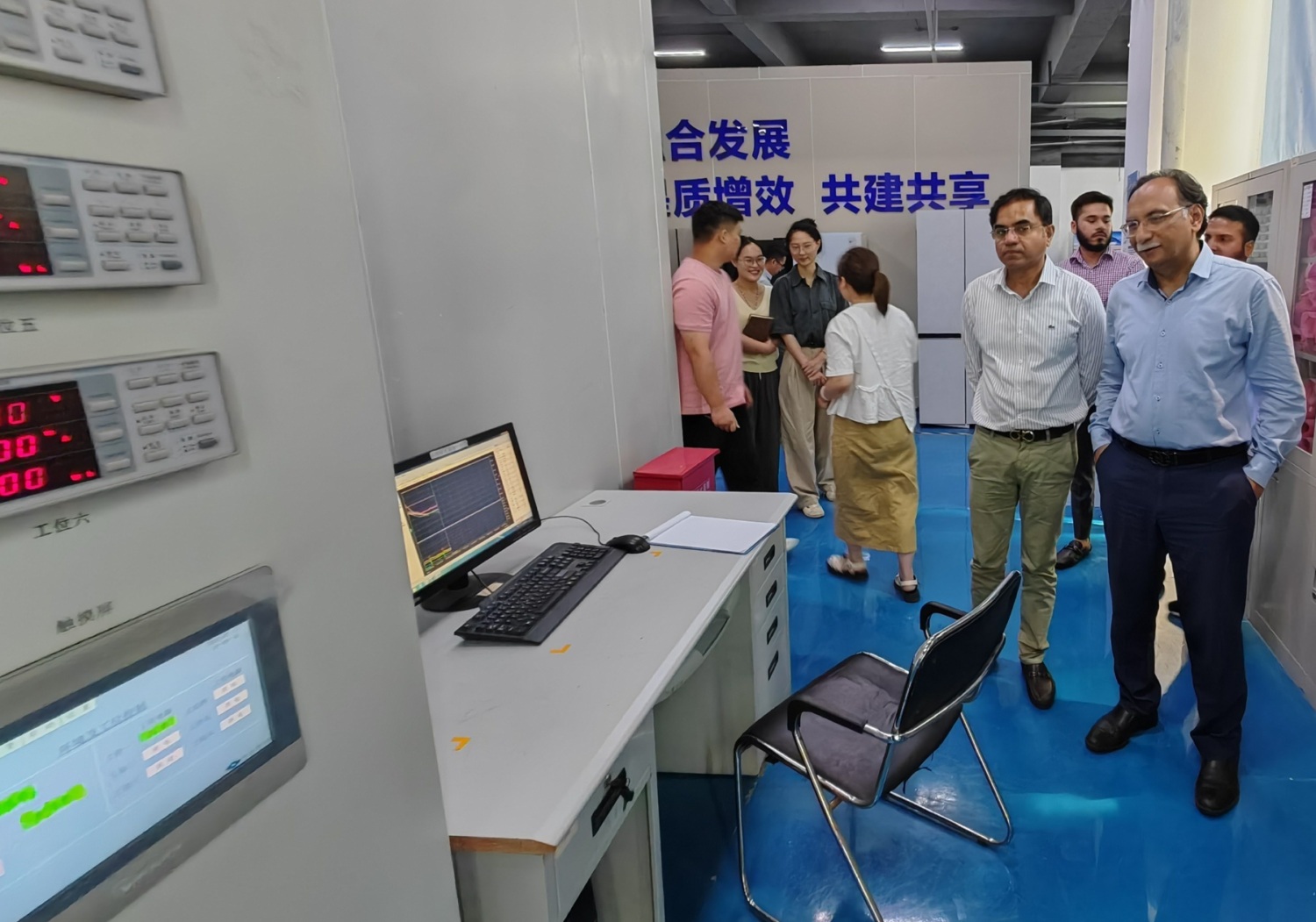
We were thrilled to visit the state-of-the-art appliance testing facility at CHEARI. It has been a great learning experience and we will bring back with us ideas for improved water heater designs, as well as connections and ideas for future testing and other product development.Mr. Muhammad Bilal
Director of Canon Home Appliances
With firsthand exposure to Chinese best practices, Pakistani manufacturers can integrate similar technologies into their own manufacturing processes to develop higher-quality, more efficient and improved appliances. The visit also allowed for discussions on future collaboration between Chinese and Pakistani appliance stakeholders, helping to position Pakistan at the forefront of regional manufacturing.
_____
China Household Electric Appliance Research Institute (CHEARI)was established in 1964. CHEARI is approved by State Commission Office of Public Sectors Reform (SCOPSR), is affiliated by State-owned Assets Supervision and Administration Commission of the State Council (SASAC).
Canon is a Lahore-based manufacturer of a range of home appliances including gas storage, gas instant, and hybrid storage water heaters, with a commitment to improving efficiency based on previous collaborations with CLASP.
Super Asia is a large Pakistani appliance manufacturer producing a wide range of products, including electric water heaters, and aiming to localize their supply chain and enhance exports. They are based out of Gujranwala.
0. Conference paper: Impact of the Auxiliary Electrical Heating on Energy Efficiency of Room Air Conditioners and Opportunity for Policy Improvement in China, CLASP
1. T/CECA-G 0022-2019: Testing and calculation method for energy efficiency of household and similar water heaters
2. The report is titled: Application of Ultra-Low Energy Building Heat Pump Technology
Results from China’s Energy Efficiency Program Encourage Further Progress
Over the past decade, China has made significant progress implementing mandatory energy efficiency policies. According to the IEA, energy efficiency standards decreased expected energy use in China by 20% in 2018. Since the announcement of CLASP’s official partnership with China National Institute of Standardization (CNIS) last July, three of our research reports have shown that strong energy efficiency policies have enormous potential to mitigate CO2 emissions and reduce energy costs in the world’s largest emitter.
In our most recent report, China’s MEPS Lead to Major AC Market Transformation, evidence demonstrates the success of such policies and serves as a case study for other countries, as well as China itself, to keep pushing for better standards. Room air conditioner (RAC) use in China is soaring, along with the percentage of efficient models on the market. This unprecedented market transformation, in just two years, is thanks to a timely update to China’s RAC efficiency levels.
In just two years, highly efficient ACs with variable speed technology went from 60% to 98% of the Chinese market.
Sustained partnership with government and industry is necessary to ensure China does not stagnate, but rather continues to achieve higher levels of efficiency for high-emitting appliances. The study found that the energy efficiency of cooling products can still improve by 30-50%.
The benefits of China’s standards are global. As the world’s largest exporter of RAC units, domestic policies can raise efficiency levels for dozens of other countries, potentially lowering energy costs for billions of people. China also has the opportunity to incorporate stricter requirements for refrigerant efficiency, the main cause of direct emissions from RACs.
These findings align with IEA’s Efficient World Scenario analysis that advises MEPS remain a central energy efficiency policy for China. To discuss China’s commitments and better understand progress, CLASP recently visited CNIS and several industry leaders, including National Lighting Test Center (NLTC), China Heat Pump Association (CHPA) and Vkan Certification and Verification Center (CVC), and attended the 34th China Refrigeration Expo in Shanghai.
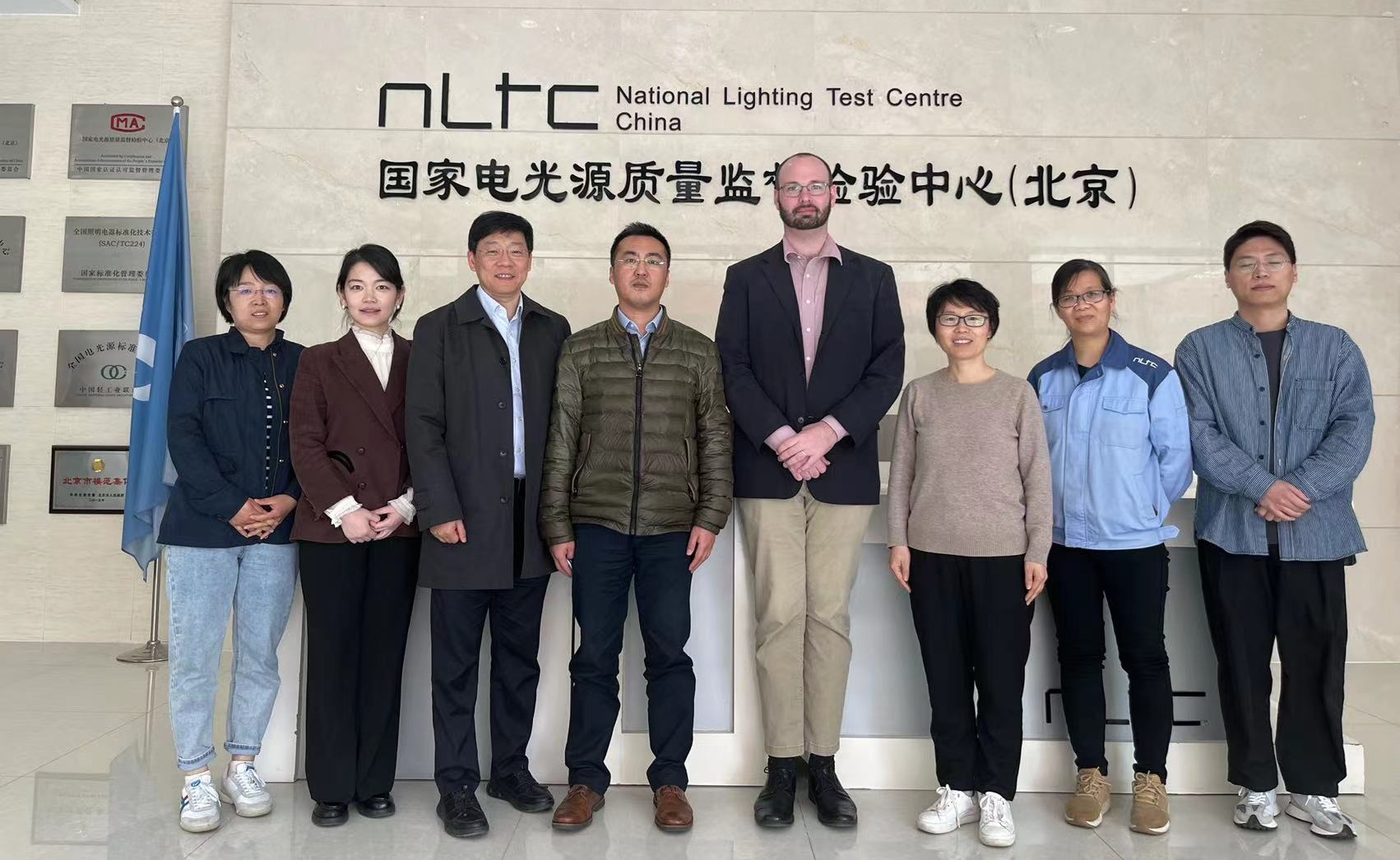
CLASP and Chinese partners agreed to continue prioritizing the development and revision of minimum energy performance standards (MEPS) for key products – cooling and refrigeration, water heaters, LED lighting, heat pump heating equipment, among others. We also will continue facilitating international knowledge exchanges to support other countries’ testing capabilities and policy processes, using lessons learned in China to realize policy breakthroughs around the world.
“CLASP will continue working with the National Development and Reform Commission and State Administration for Market Regulation to officially launch the 2023-2024 work plan,” says Steven Zeng, China Program Lead. “The plan includes developing policies that will reduce energy consumption by a cumulative 10,000 TWh by 2050. That translates to a 3.8 Gt reduction in CO₂ emissions, equivalent to China’s annual emissions from industry, transportation, agricultural, buildings, and fugitive emissions. Long-term, the China program hopes to become the global leader and role model for product energy efficiency policies.”
0. Conference paper: Impact of the Auxiliary Electrical Heating on Energy Efficiency of Room Air Conditioners and Opportunity for Policy Improvement in China, CLASP
1. T/CECA-G 0022-2019: Testing and calculation method for energy efficiency of household and similar water heaters
2. The report is titled: Application of Ultra-Low Energy Building Heat Pump Technology
China’s MEPS Lead to Major AC Market Transformation
As climate change continues to heat the earth to unprecedented temperatures, billions of people will rely on air conditioners to accomplish everyday tasks. However, air conditioners and electric fans already account for about 20% of global building electricity use, much of which is generated by fossil fuels. In China, highly polluting coal is the largest source of energy.
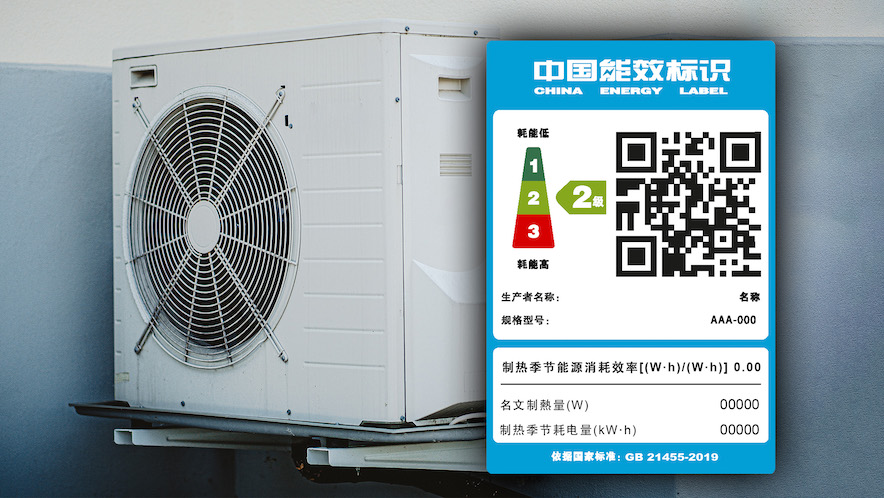
China is also the world’s largest manufacturer, exporter, and consumer of room air conditioners (RACs). In the past two decades, minimum energy performance standards (MEPS) have been enacted and revised to encourage more-efficient technologies, slashing energy costs, consumption, and CO₂ emissions. The most recent air-conditioning energy efficiency standard, GB 21455-2019, made significant changes that promote highly efficient technologies and fast-tracked China’s RAC market toward climate-friendly cooling.
Key findings:
- Room AC penetration has steadily increased since 2013, and in 2020 was at 117.7%, meaning there are 117.7 units for every 100 households.
- The new, more stringent MEPS precipitated the domination of the most efficient (grade 1) RACs in just two years, growing from 19% of the market share to 56%.
- Variable-speed ACs, which are technically much more efficient than their fixed-speed counterparts, completely overtook the market, quickly rising from 60% to 98% since implementation of the new MEPS.
- Mepsy analysis shows that without the revised 2019 standard, fixed-speed ACs would still hold a 30% market share in 2030.
- These long-term shifts brought on by China’s updated RAC MEPS are projected to prevent at least 470 Mt of CO₂ emissions between 2020 and 2030. Even more reductions could be realized with full adoption of the Best Available Technology (BAT).
- The Chinese MEPS also increased the average efficiency of export markets and increased the market share of more sustainable refrigerants.
As RACs are widely traded internationally and have cross-border supply chains originating in China, this report serves as evidence to encourage countries with similar market conditions as China to use their policy as a reference.
0. Conference paper: Impact of the Auxiliary Electrical Heating on Energy Efficiency of Room Air Conditioners and Opportunity for Policy Improvement in China, CLASP
1. T/CECA-G 0022-2019: Testing and calculation method for energy efficiency of household and similar water heaters
2. The report is titled: Application of Ultra-Low Energy Building Heat Pump Technology
China’s Circular Economy Push
Following China’s policy efforts to increase circular economy (CE) principles domestically, CLASP’s China program will integrate CE into project plans for 2023-2024. Initially, CLASP may support the phase out mercury-containing fluorescent lamps and promote environmentally-friendly refrigerants. This move will strengthen CE policy both in the country and surrounding region, as China is a key manufacturer and exporter of most appliances and energy-using equipment.
“This is a practical guidance for all industry stakeholders. It helps manufacturers to enhance manufacturing capacity for energy-efficient products and collaborate with waste management facilities to grow demand in the waste appliance recycling market. Consumers will also be supported to exchange their appliances for more efficient models.”
– Mr. Pengcheng Li, CNIS Chief Analyst
Chinese policymaker interest in circular economy has grown steadily since the 2009 passage of the Circular Economy Promotion Law of People’s Republic of China. This new policy, titled Guiding Opinions on Coordinating Energy Conservation, Acceleration and the Renovation and Upgrade of Products and Equipment in Key Areas, integrates CE strategies with existing work to promote energy-efficient appliances. The overarching goal is to further the market share of high-efficiency appliances and equipment.
To manage the influx of older and less-efficient models that will be swapped for more efficient alternatives, the government is creating mandated recycling streams and requiring safe and environmentally sound disposal of associated HCFCs and HFCs (ozone-depleting refrigerants used in many appliances). Researchers and industries see this policy as a stimulus for an improved economic system of recycling, resource utilization, clean and low carbon production to help establish circular economy in the appliance sector by 2025.
“We are confident that this policy will help China to cut energy consumption intensity by 13.5% per GDP and to honor international agreement such as Kigali Amendment and the Minamata Convention on Mercury”.
– Steven Zeng, CLASP China Program Lead
0. Conference paper: Impact of the Auxiliary Electrical Heating on Energy Efficiency of Room Air Conditioners and Opportunity for Policy Improvement in China, CLASP
1. T/CECA-G 0022-2019: Testing and calculation method for energy efficiency of household and similar water heaters
2. The report is titled: Application of Ultra-Low Energy Building Heat Pump Technology
China’s New Efficiency Policy Will Help Keep Pace with Climate Goals
China’s goals of peaking carbon emissions by 2030 and reaching carbon neutrality before 2060 are a sizable commitment that require similarly large-scale action. In 2021, China released a national plan to promote more responsive standards that keep pace with technological innovations and efficiency improvements. To action this plan, CLASP and the China National Institute of Standardization (CNIS) conducted research for a proposed policy that would mandate future efficiency standards revisions.
Can Policies Keep Up with Technological Advancement?
In 1989, China adopted the first minimum energy performance standards (MEPS) for nine types of common appliances. Three decades later, China had 75 MEPS covering everything from rice cookers to industrial motors — but to date, 46 have never been revised. Chinese authorities had enacted multiple policies that suggested proper execution and regular updates of MEPS but had no systematic framework for revisions.
To prepare a policy that would accomplish such a framework, the Chinese National Institute of Standardization (CNIS) and CLASP worked together for two years preparing technical reports and analyzing policy revision approaches in more than 10 countries. We used Mepsy to calculate energy use reduction achieved from increasing the efficiency of major appliances and researched established revision frequencies, triggers, (such as the presence of specific regulations or criteria to start a revision process) and other insights from processes followed around the world. The results from this analysis were synthesized in a MEPS upgrade roadmap study (linked above) which was later used to inform the revision policy draft.
A principal feature of the roadmap was the definition of 3 efficiency tiers:
- Tier 1 would be reserved for the top 5% most efficient appliances on the market
- Tier 2 for the top 20% (and used for “Energy Efficient” certification)
- Tier 3 for the minimum (MEPS) level, effectively phasing out the 20% of products with the lowest performance.
Between 2005–2020, China’s standards and labeling programs had achieved energy savings of more than 2500 TWh,4 which could more than double with updated standards.
Example MEPS revision for Room ACs
| Subcategory (cooling capacity) |
Advanced New Tier 1 |
MEPS Tier 1 New Tier 2 |
MEPS Tier 2 New Tier 3 |
MEPS Tier 3 Phased out |
|---|---|---|---|---|
| CC ≤ 4500 W | 6.0 Wh/Wh | 5.0 Wh/Wh | 4.5 Wh/Wh | 4.0 Wh/Wh |
| 4500 W < CC ≤ 7100 W | 5.0 Wh/Wh | 4.5 Wh/Wh | 4.0 Wh/Wh | 3.5 Wh/Wh |
| 7100 W < CC ≤ 14000 W | 4.6 Wh/Wh | 4.2 Wh/Wh | 3.7 Wh/Wh | 3.3 Wh/Wh |
CNIS analysis shows that the energy efficiency level for RACs would improve 20% on average if the policy is adopted.
If China prioritizes MEPS revisions for appliances with high energy-savings potential, they could prevent 4,179 Mt of CO₂ emissions by 2060.
The Future of Chinese MEPS Policy
In late 2022, China’s National Development and Reform Commission (NDRC) and the State Administration of Market Regulations published the draft policy, “Upgrading and Strengthening Implementation of Energy Efficiency Standards.” This policy would employ a regular revision schedule and the suggested efficiency tiers.
China’s dual carbon pledges continue to motivate efficiency improvements. CLASP plans to work with CNIS and deliver on these carbon reduction goals.
0. Conference paper: Impact of the Auxiliary Electrical Heating on Energy Efficiency of Room Air Conditioners and Opportunity for Policy Improvement in China, CLASP
1. T/CECA-G 0022-2019: Testing and calculation method for energy efficiency of household and similar water heaters
2. The report is titled: Application of Ultra-Low Energy Building Heat Pump Technology
Helping Chinese Consumers Identify Energy-Efficient Appliances
After a decade of exponential growth and a surge in online retail during the COVID-19 pandemic, China is now home to the second largest online retail market in the world. In the appliance sector, almost half of all purchases in China are made online, compared to barely 20% globally. For these customers, clear, standardized energy labels are necessary for understanding the financial and environmental costs of their purchases.
Between 2015 and 2021, the online appliance market in China grew from 16% to 48.8% of the overall appliance market.
Though China does use the China Energy Label (CEL), a CLASP survey found that consumers thought the label was too technical and noted that it was widely unavailable in online marketplaces, in contrast to its mandatory presence in physical stores. To address this, CLASP worked with China National Institute of Standardization (CNIS) to both improve label readability and availability online. The study also found that over 50% of consumers relied on the label to make purchasing decisions based on efficiency. A similar proportion of consumers expressed willingness to pay higher prices for more eco-friendly products, but hard-to-understand, non-standardized labels confused the process.
Several countries have improved their own energy labels by adding information like electricity cost to better communicate the environmental impact to consumers. Drawing from labeling systems in EU, U.S.A, Brazil, and Thailand, CLASP and CNIS researched the feasibility of calculating and displaying annual energy consumption information on the CEL for 6 priority product groups–refrigerators, LED lighting, dishwashers, clothes washers, TVs, and air conditioners. Annual energy consumption information, rather than single cycle, was shown to better convey energy use and savings on a realistic time scale. CNIS was able to use this research with Chinese consumer behavior data to create a model for annual energy savings as well as carbon reduction potential, represented in China’s first series of technical standards Evaluating CO2 Emission Reductions of Energy-Efficient End-Use Products.
Making the energy label information available was the next step. CNIS collaborated with the Alibaba Group to make energy labels mandatory on Tmall, the biggest B2C e-commerce platform in China. Before the appliance can be sold on Tmall, sellers must have it validated through the connected CEL database, which currently covers 2.23 million product models. Only products with successful verification can be listed, significantly curtailing the sale of unlabeled appliances and wrongly displayed CEL information. Air conditioners, freezers, and clothes washers were also selected to pilot the display of the new carbon reduction calculation.
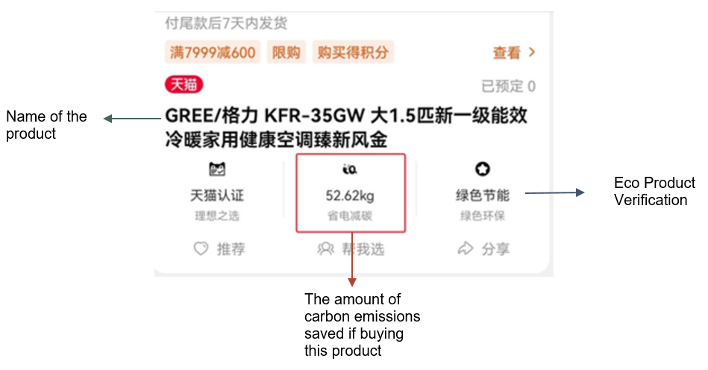
China’s dual carbon pledges5 have motivated the private sector to assess their social and environmental impact. In December 2021, the Alibaba Group announced its goal of achieving internal carbon neutrality by 2030 and eliminating a further 1.5 Gt through partner and consumer action by 2035. These labeling changes will bring the Alibaba Group closer to their climate goals and serve as a success story for other e-commerce platforms in China. CLASP and our partners hope China’s innovative online sales practices will encourage other climate actions across business and retail platforms.
0. Conference paper: Impact of the Auxiliary Electrical Heating on Energy Efficiency of Room Air Conditioners and Opportunity for Policy Improvement in China, CLASP
1. T/CECA-G 0022-2019: Testing and calculation method for energy efficiency of household and similar water heaters
2. The report is titled: Application of Ultra-Low Energy Building Heat Pump Technology
4. China has pledged to peak its carbon dioxide emissions before 2030 and achieve carbon neutrality before 2060.
Research Shows Huge Heat Pump Potential in China
Update: The China Heat Pump Association in collaboration with CLASP has released a white paper describing the opportunities for and benefits of transitioning to heat pumps for space and water heating. As next steps, the two partners will work on the development of a unified energy efficiency testing method for household space heating and conduct dialogue with Chinese policymakers. The full summary can be seen here.
China committed to net zero carbon emissions by 2060, an ambitious goal that requires large-scale efficiency action. Because of the country’s status as both a major manufacturer and one of the biggest energy-consuming economies in the world, energy-efficient strategies for space and water heating appliances could eliminate millions of tons of CO₂ and help China deliver on its carbon reduction goals. Heat pumps are already “on the radar” for many policymakers, but there is huge potential yet to be realized.
China’s Heat Pump Paradox
CLASP joined with the Regulatory Assistance Project (RAP), Global Buildings Performance Network (GBPN), and Agora Energiewende to research the impacts of transitioning from fossil fuel heating to electric heat pumps in China. Electric heat pumps in China run on average at 350%–450% efficiency, producing 3.5–4.5 units of energy in heat per every unit they consume. As the middle class continues to increase, so does the demand for climate-controlled living spaces, and subsequently the emissions from coal and gas. Now is the time to ensure that this demand is paired with efficient technology that can match it.
Our research specifically sought to answer the question, “Why do heat pumps have such a limited market presence despite their proven benefits?” Although Chinese data has already shown that heat pump technology is highly efficient and reduces emissions, they comprise only 3% of the nationwide water heater market and 5% of the space heating market in 2021 (China Heat Pump Association 2022 Heat Pump Development Report).
In 2021, the country’s heat pump systems reduced CO₂ emissions by 81 million metric tons. RAP estimated that for every 1% increase in heat pump uptake in China’s buildings, an additional 7.1 Mt of CO₂ could be eliminated annually. Currently, only 3.4% of building area in China uses heat pumps for space heating, indicating a significant opportunity to scale deployment and decrease CO₂ nationally.
Technology Neutral, Heat-Pump Positive
To examine the potential barriers to widespread proliferation, the research group conducted a comparative analysis of heat pump standards in the EU and China. The results showed that if the current labeling system in China were improved, customers would more easily understand the efficiency benefits of heat pumps as compared to fossil fuel alternatives like furnaces. Using the EU as an example, China should move to a unified (technology neutral) standard for heating, which would highlight the drastic jump in efficiency provided by heat pumps.
Capturing the Chinese market is especially important because of the sheer amount of fossil fuel that would be eliminated from homes across the country. Heating accounts for around 68% of average household energy use in China. The majority of these heating systems are powered by methane and liquefied methane gas. The CO₂ reductions from converting to electric heat pump technology is staggering.
CO₂ emissions from domestic hot water in China could be reduced by 890 million metric tons during 2022-2030 with a total conversion to heat pump hot water heaters. (Mepsy)
CLASP strongly recommends that China prioritizes the development of technology neutral standards for heating appliance labels, allowing consumers to choose more energy-efficient options. We are assisting the China Energy Conservation Association to develop these policies and hope to finalize a proposal by the end of 2022.
Other Efficiency Work in China
In addition to promoting the uptake of heat pumps, CLASP is also working to improve the minimum energy performance standards (MEPS) of several other appliances in China, as well as hosting international workshops to facilitate policy adoption globally. In July, CLASP wrapped a year-long research effort to support China’s transition to 100% LED lighting in compliance with the Minamata Convention COP 4 requirements.
0. Conference paper: Impact of the Auxiliary Electrical Heating on Energy Efficiency of Room Air Conditioners and Opportunity for Policy Improvement in China, CLASP
1. T/CECA-G 0022-2019: Testing and calculation method for energy efficiency of household and similar water heaters
2. The report is titled: Application of Ultra-Low Energy Building Heat Pump Technology
4. China has pledged to peak its carbon dioxide emissions before 2030 and achieve carbon neutrality before 2060.