
Guarding Against Low-Efficiency Appliances in East & Southern Africa
Across East and Southern Africa, households and businesses face increasingly frequent blackouts and rising electricity costs due to overburdened national grids. In an effort to lower energy demand, governments are implementing regulations to increase appliance efficiency levels, but face challenges ensuring products entering the market are compliant. Through UNIDO’s EELA project, CLASP is building compliance capacity throughout these regions.
Efficiency policies are limited without proper compliance
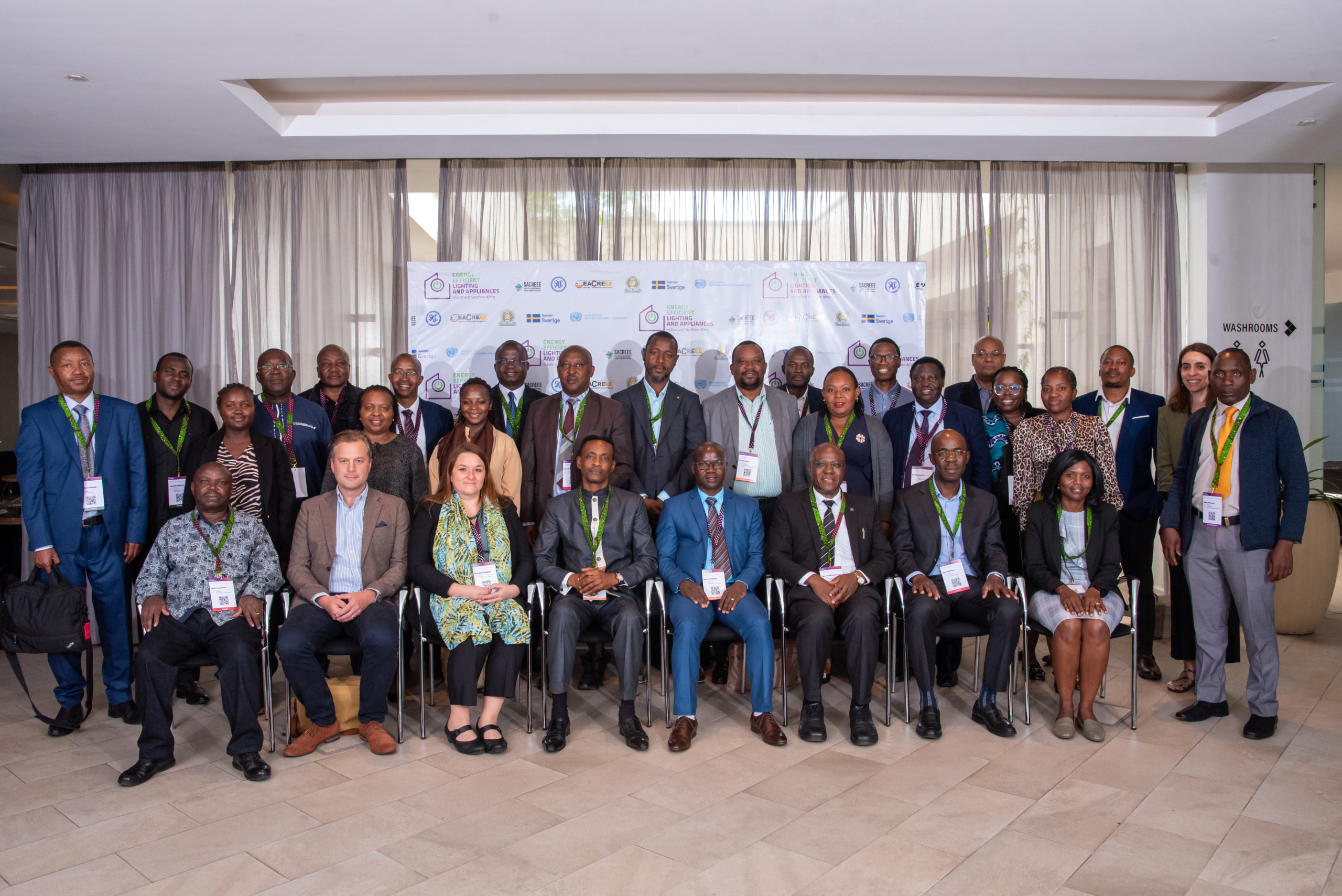
In March, CLASP joined the UNIDO Energy Efficiency Lighting & Appliances (EELA) Annual Stakeholder Forum as a technical partner, offering a workshop on compliance and joining panels on productive use and policy interventions. Most countries in East and Southern Africa are still adopting minimum energy performance standards (MEPS) and developing compliance frameworks to ensure appliances entering their markets meet the MEPS.
At the Forum, Angellah Wekongo led a training on Conformity Assessments – a mechanism to protect markets at the point of entry. The Assessment involves evaluating products before market entry through product testing, certification, and registration, to check that they comply with national requirements. In addition to ensuring compliance of appliances placed on the market, a robust conformity assessment can save costs on market surveillance and provide insights into the performance of appliances on the market.
Adopting a regionally harmonized framework
“A highlight of the meeting was voting on the adoption of the EAC/SADC region Compliance Framework that was developed by CLASP. The goal of the framework is to enable member states to effectively implement regionally harmonized energy efficiency policy measures and ultimately protect markets from non-compliant and low-quality products.” – Angellah Wekongo
The Framework objectives are to:
- Increase the efficiency of compliance efforts throughout the two regions;
- Establish appropriate communication channels and collaboration between the national compliance authorities through regional centers to share compliance intelligence and resources;
- Establish a regional product registration system;
- Ensure adequate and accessed-by-all testing capacity in the regions;
- Develop common practices and methodologies, and support alignment of national compliance regulations to the extent possible;
- and foster gender equality and women’s empowerment.
All 21 SADC countries voted in favor of the Framework, and five of the six EAC countries also voted in favor. South Sudan abstained as they had yet to read the framework.
CLASP focuses on policy & productive use appliance market opportunity
In addition to her work on compliance, Wekongo participated in a policy session about the legal, policy, and regulatory environment for energy efficient lighting and appliances. The session also shared experiences on how local markets have benefitted from harmonization of EELA policies and compliance efforts in the region.
Sam Grant, CLASP’s Director of Clean Energy Access, also moderated a session on productive use appliances to address the challenges and opportunities for market growth in the region.
To learn more about this event, visit SACREEE’s website.
Africa Region Galvanizes Efforts to End Mercury Lighting
Download the press release here.
WASHINGTON/BRUSSELS (3 May 2023) – The Zero Mercury Working Group and the Clean Lighting Coalition commend the Africa Region for proposing an amendment to phase out all the remaining fluorescent lamps at the Fifth meeting of the Conference of the Parties (COP 5) of the Minamata Convention on Mercury in Geneva.
This amendment complements the unanimous decision at Minamata COP4 to phase out compact fluorescent lamps (CLFs) by 2025. If adopted in November, the COP5 Amendment will effectively end the manufacture and trade of all fluorescent bulbs globally by 2026.
Phasing out the proposed categories of fluorescent lamps in the timeline proposed in the amendment will cumulatively:
- avoid 3.00 gigatonnes of carbon dioxide;
- save US $1.26 trillion in electricity costs, and;
- prevent 176 metric tonnes of mercury pollution – including both mercury used in lamps, and the mercury emissions from coal-fired power plants that would be avoided through lower electricity use for lighting.
“The COP5 African Lighting Amendment is the most effective strategy we have to limiting the dangerous health and environmental impacts of mercury-containing fluorescent lighting,” said Elena Lymberidi-Settimo, International Co-coordinator of the Zero Mercury Working Group. “The Africa region, and most regions around the world, do not have the recycling capacity and resources to properly manage the mercury contents of end-of-life fluorescent bulbs. Widely available LED alternatives mean these exemptions are no longer necessary – there is no justifiable reason to continue manufacturing, importing or exporting harmful fluorescent technologies.”
All fluorescent lamps contain mercury, a neurotoxin that can cause harmful and long-term health effects. Mercury is on the World Health Organization’s list of the 10 chemicals or groups of chemicals of major public health concern, as it affects the nervous, digestive and immune system. Pregnant people and children are at heightened risk for these health impacts.
When a fluorescent lamp is broken or improperly disposed of, the mercury from the lamp contaminates the atmosphere, land and water – posing a risk to workers and the local environment.
“We applaud the Africa Region for their continued leadership in the transition to more efficient mercury-free lighting,” said Rachel Kamande, Campaign Lead of the Clean Lighting Coalition. “The economic case to phase-out fluorescent lamps is even stronger today because the mercury-free LEDs have become less expensive and energy prices have increased leading to even shorter payback periods.”
LEDs are the most efficient lighting option on today’s market, consuming only half as much energy as fluorescent bulbs and have a lifespan up to three times longer. Due to the reduced energy demand, LEDs bulbs ease strain on the electric grid and have a rapid payback period for consumers. LED retrofits for fluorescents are widely available around the globe, with lamps to fit nearly every need and ballast.
Although some of the world’s largest lighting manufacturers already have plans to fully transition to LEDs in the next decade, many continue to export fluorescents – often to less regulated markets. The Africa region’s Amendment will prime the global LED market for an equitable and economically beneficial transition away from toxic lighting.
###
About the Clean Lighting Coalition: The Clean Lighting Coalition is a global partnership to capture the health and environmental benefits of eliminating mercury-based lighting. www.cleanlightingcoalition.org
About The Zero Mercury Working Group: The Zero Mercury Working Group is a coalition of more than 110 environmental and health non-governmental organizations from over 55 countries, which strives for zero supply, demand, and emissions of mercury from anthropogenic sources. www.zeromercury.org
PRESS CONTACTS
Washington, DC: Ana Maria Carreño, Director, Clean Lighting Coalition
acarreno@clasp.ngo | Phone/WhatsApp: +1 202 999 2886
Washington, DC: Alexia Ross, Strategic Communications Associate, Clean Lighting Coalition
aross@clasp.ngo | Phone/WhatsApp: +1 339 222 4311
Brussels: Elena Lymberidi-Settimo
International Co-coordinator Zero Mercury Working Group & Policy Manager, European Environmental Bureau
elena.lymberidi@eeb.org | Phone/WhatsApp: +32 496 532818
Evaluating Appliance Performance in the Field: Results from Appliance Testing
Appliance markets in their early stages face a daunting challenge: the lack of information on how their products are used in specific real-world applications. To address this problem, CLASP through Efficiency for Access partnered with various partners to conduct field testing on three solar-powered appliances: milking machines, refrigerators, and water pumps.
The results of these field tests have yielded valuable user-centric insights for each appliance, which have been compiled into reports. These reports are designed to benefit manufacturers, distributors, and other stakeholders, with the ultimate goal of improving user satisfaction and enabling laboratory testing to reflect real-world conditions more accurately.
Download the Evaluating Appliance Performance in the Field: Results from Appliance Testing reports.
About Efficiency for Access
Efficiency for Access is a global coalition working to promote renewable and energy efficient appliances to deliver clean energy to the world’s poorest people. It is coordinated jointly by CLASP and the UK’s Energy Saving Trust.
Productive Use Financing Facility Opens First Public Auction Window
Nairobi, Kenya, 12 April 2023 – Access to productive use appliances can deliver significant economic, health, education, and quality of life benefits for the approximately 600 million people across the African continent who lack access to electricity. This can also put under-electrified parts of the world on a low-carbon pathway to electrification. However, affordability remains a major barrier to access and scale. The Productive Use Financing Facility aims to help address the affordability barrier, and the current auction window will make procurement subsidies available for companies in six African countries.
Makena Ireri, Director at the Global Energy Alliance for People and Planet, said, “The Facility will help make high-quality, productive use appliances more affordable and accessible. These technologies can transform lives and livelihoods by helping to create new green energy-enabled jobs, enhance income generation for micro-enterprises and smallholder farmers, and improve the sustainability of renewable energy infrastructure projects through increased demand for electricity.”
The Facility’s initial scope includes the Democratic Republic of Congo, Ethiopia, Kenya, Nigeria, Sierra Leone, and Uganda based on growth potential and market maturity. Eligible technologies include electric pressure cookers, fans, milling, solar water pumps, refrigerators/freezers, and walk-in cold storage. All technologies must complete quality assurance testing, helping to ensure that users receive high-quality products.
Eligible distributors can also apply for capacity-building small grants to offset one-off costs associated with nascent PUA business lines, such as warehouse space, staffing, or training. The procurement subsidies and capacity-building grants will allow eligible companies to lower costs for customers while investing in long-term growth. Participating companies may also agree for the Facility to share their information with Nithio, should they wish to be considered for debt investment to help them further scale their business and reach more consumers.
Interested companies should send in their applications by the end of day on April 21, 2023. Please check out these resources to learn more about the program, including eligibility requirements of the procurement subsidy auction window and how to submit a subsidy request. For any other questions, please get in touch with financing@clasp.ngo.
About the Facility
Launched in October 2022 by CLASP and Nithio, with support from the Global Energy Alliance for People and Planet (GEAPP), the Facility supports companies in catalyzing the growth of productive use appliance markets. Facility operations will also generate a foundational data set on appliance market activity and the developmental impacts of appliances, improving our collective knowledge base on appliance performance, national markets, and consumer experience and satisfaction.
Companies can leverage the Facility to access bulk discounts on solar appliance procurement and offer products on credit to lower the cost of appliances for end-user. The Facility also provides smaller capacity-building grants and advisory support for PUA distributors to help establish credit systems and increase their investment readiness.
Facility support is intended to help companies expand their reach and cater to a broader market, helping to deliver essential technologies to more consumers in East and West Africa.
About CLASP
CLASP focuses on appliance & equipment energy performance and quality, to mitigate and adapt to climate change and expand access to clean energy. Super-efficient and high-quality appliances accelerate access to and use of renewable energy for the world’s poorest people. CLASP supports progress on the United Nations’ Sustainable Development Goal 7, affordable and sustainable energy for all. Renewable energy services like cooling, communications, and mechanization empower low-income communities and improve lives in a climate-friendly way. CLASP works globally and has teams in Washington, DC; Nairobi, Kenya; New Delhi, India; Brussels, Belgium; and Jakarta, Indonesia.
About Nithio
Nithio is an energy financing platform powered by its innovative credit risk analytics engine. Nithio leverages its deep sector expertise, geospatial data, and artificial intelligence (AI) to forecast repayment patterns by consumer segment, provide detailed insight on projected cash flows, and finance energy access technologies.
About the Global Energy Alliance for People and Planet (GEAPP)
The Global Energy Alliance for People and Planet (GEAPP) is an alliance of local entrepreneurs, governments in emerging and developed economies, and technology, policy, and financing partners. Our common mission is to support developing countries’ shift to a clean energy, pro-growth model that ensures universal energy access and unlocks a new era of inclusive economic growth, while enabling the global community to meet critical climate goals during the next decade. In doing so, as an Alliance we aim to enable 150 million new jobs, reduce 4 gigatons of future carbon emissions, and expand clean energy access to one billion people. With philanthropic partners, Bezos Earth Fund, IKEA Foundation, and The Rockefeller Foundation, GEAPP works to build the enabling environment, capacity, and market conditions for private sector solutions, catalyze new business models through innovation and entrepreneurship, and deploy high-risk capital to encourage private sector solutions, and assist just transition solutions. For more information, please visit www.energyalliance.org and follow us on Twitter at @EnergyAlliance.
Media Contact
Lisa Kahuthu, CLASP: lkahuthu@clasp.ngo
Solar-Powered Irrigation Systems: Challenges & Opportunities in Kenya
In sub-Saharan Africa, 95% of farmers primarily rely on rainfall for irrigation but climate change threatens crop yields & livelihoods. Solar-powered irrigation systems are a key solution – yet uptake is low. To develop and discuss how we could make progress, CLASP hosted a workshop in June 2022 with participants that included manufacturers, distributors, financiers, program implementors, and government officials.
This report identifies barriers in four categories, technology developing & innovation, affordability & financing, consumer awareness, and business & operational models, and suggests solutions for each one. These possible next steps will inform the Kenya Productive Use of Renewable Energy Program’s strategy to supporting smallholder farmers across the country.
Solutions included:
- Prioritize development of irrigation solutions that are high-performing, low-cost, require low maintenance, and can work under low solar irradiance.
- Bundle financing solutions for SWPs with other irrigation equipment, such as drip irrigation kits, water harvesting & storage structures.
- Create centers of excellence/demonstration centers for experiential learning targeting smallholder farmers, including village-based champion farmers who can serve as ambassadors and trainers for fellow smallholder farmers.
- Leverage the existing network of local technical installers by building their capacity through training and certification to build a healthy installation and aftersales support ecosystem.
Key Cold Chain Infrastructure Markets
With ever-changing global climatic conditions and growing demand for sustainable food production, cold chain technologies are critical for improving food security, reducing food waste, enhancing farmers’ livelihoods, and supporting adaptation to climate change. These technologies enable the safe and efficient transport, storage, and distribution of perishable goods, such as fresh fruits and vegetables, dairy, fish, and meat.
In this series of reports, CLASP through Efficiency for Access examines the fresh food value chains of India, Kenya, and Nigeria, three countries that are rapidly growing their access to energy and have a high potential demand for cold chain infrastructure (CCI). By using a combination of secondary research, modeling, and stakeholder consultations, CLASP through Efficiency for Access assesses the current state of cold chain infrastructure and identifies the gaps between the infrastructure that is currently deployed and what is necessary to meet these value chains’ needs by 2030.
The reports provide detailed country-specific insights on:
- existing CCI for the fresh fruits and vegetables, dairy, fish and meat value chains
- drivers and barriers for CCI uptake
- existing business and ownership models
- CCI policies and regulations
- proposed interventions for accelerated adoption of CCI technologies
By leveraging these insights, policymakers, investors, and other stakeholders can take concrete steps to improve food access, reduce carbon emissions, and promote sustainable development in these countries and beyond.
Download the Key Cold Chain Infrastructure Markets reports to learn more.
About Efficiency for Access
Efficiency for Access is a global coalition working to promote renewable and energy efficient appliances to deliver clean energy to the world’s poorest people. It is coordinated jointly by CLASP and the UK’s Energy Saving Trust.
Global LEAP Awards Announces Winners and Finalists of the 2022 Off-Grid Cold Chain Challenge
Nairobi, Kenya, 1 March 2023, The Efficiency for Access Coalition is pleased to announce the 2022 Global LEAP Awards Off-Grid Cold Chain Challenge (OGCCC) results. Please join us in congratulating the winning and finalist cold chain solutions:
DC Powered Solutions
Winner
- SelfChill Cold Room 20 by SelfChill (Cooperation of Solar Cooling Engineering GmbH, Phaesun GmbH and University of Hohenheim)
Finalists
- CoolCrop 6MT Split Dual Chamber by Coolcrop Technologies Private Ltd.
- Inficold 5SCS – Con – 7K/Q5/200M/48V/150A/134A by Inficold India Private Ltd.
- Promethean Power Micro Cold Room by Promethean Spenta Technologies Private Ltd.
- Solarcool F01 by Solarcool
AC Powered Solutions
- InspiraFarms 11 by Enterprise Project Ventures Ltd. (Winner)
Hybrid (AC/DC) Solutions
Winner
- Ecofrost Link 3.0 by Ecozen Solutions Pvt. Ltd.
Finalist
- Baridi by Baridi
- FreshBox FBMB 01 by FreshBox Enterprises Ltd.
Biomass Powered Solutions
- GreenCHILL GC-4TR-2021 by New Leaf Dynamic Technologies Private Ltd. (Winner)
The OGCCC promotes solar-powered cold storage solutions based on energy efficiency, design innovation, sustainability, commercial viability, and potential impact. The SelfChill Cold Room 20 emerged as the top winner, and the GreenCHILL GC-4TR-2021 unit by New Leaf Dynamic Technologies Private Limited was the runner-up. They will be awarded a cash prize of US$ 75,000 and 25,000, respectively, for their innovations.
Sustainable refrigeration services are essential in emerging markets where agriculture is a source of livelihood for nearly 80% of people. Unfortunately, almost 40% of food harvested is lost post-harvest due to inadequate storage facilities – contributing to diminished returns for farmers and is a leading cause of food insecurity globally.
“Congratulations to all winners and finalists in the 2022 Global LEAP Awards Off-Grid Cold Chain Challenge. Solar-powered cold chains are crucial in commercialising agricultural produce and improving the living standards of smallholder farmers in developing markets. Identifying and promoting impactful cold chain solutions is the first step in transforming the agricultural value chain.” said Ruth Kimani, Senior Associate at CLASP.
Access to cold chain storage solutions can increase perishable produce’s shelf life, thereby reducing spoilage and supporting income-generating activities for micro-enterprises. Early access to cold chains can also guarantee food security and reduce the time spent by households to gather food. However, to be viable in off- and weak grid settings and suitable for users, cold chains must be considerably more affordable, sustainably designed and operate on less energy than most conventional cold chain solutions.
Watch our video about OGCCC finalist Inficold’s innovative ice battery technology that enables Indian farmers to store their fresh produce for up to a week, decreasing crop wastage by 35% and increasing incomes.
The 2022 Global LEAP Awards Off-Grid Cold Chain Challenge is supported by the DOEN Foundation, Good Energies Foundation, IKEA Foundation and UK aid.
Jeffrey Prins from IKEA Foundation said, “Access to energy-efficient solar-powered appliances can increase household incomes by 15% and lower carbon emissions by 40%. Our partnership with the Global LEAP Awards Off-Grid Cold Chain Challenge brings us closer to achieving global carbon emission targets while improving the living standards of millions in unserved or underserved communities.”
Detailed information about the winners and finalists – including product performance data and sales contact information – will be published in the first-ever 2022 Global LEAP Awards Field Testing Buyer’s Guide for off-grid cold chain units. The Buyer’s Guide shares field-testing results, is a procurement tool for distributed energy companies and appliance distributors and provides general market intelligence.
Maarten Derksen from DOEN Foundation said, “We are excited to support early innovations that accelerate a clean energy transition. Cold storage solutions can catalyse income-generating activities, strengthen local food systems and enhance productivity for micro-enterprises across emerging markets.”
The competition received 24 product nominations from 20 companies, and 17 products from 14 companies were announced as preliminary finalists after a diligent shortlisting exercise. Ten entries in Nigeria (1), Kenya (5) and India (4) completed their field-testing stage of the competition, which was concluded in September 2022.
Watch our video on CoolCrop, an OGCCC finalist impacting 10,000 farmers in India with innovative solar-powered cold storage solutions. These customisable solutions are affordable and sustainable, allowing for an increased shelf life of fresh produce and a boost in incomes by over 30%.
The Global LEAP Awards – an initiative of the Low Energy Inclusive Appliance (LEIA) program under Efficiency for Access Coalition – is an international competition that identifies and promotes the world’s best, most energy-efficient appliances for off-grid and weak-grid areas where grid connections are intermittent and of inconsistent quality.
***
Efficiency for Access is a global coalition promoting energy efficiency as a potent catalyst in clean energy access efforts. Since its founding in 2015, Efficiency for Access has grown from a year-long call to action and collaborative effort by Global LEAP and Sustainable Energy for All to a coalition of 20 donor organisations. Coalition programmes aim to scale up markets and reduce prices for super-efficient, off- and weak-grid appropriate products, support technological innovation, and improve sector coordination. Current Efficiency for Access Coalition members lead programmes and initiatives spanning three continents, 62 countries, and 34 key technologies.
For media inquiries, please contact Lisa Kahuthu (lkahuthu@clasp.ngo).
CLASP Supports First Lighting Efficiency Policies in Nigeria
Lighting efficiency standards will play a key role in Nigeria’s Energy Transition Plan as the country seeks to tackle both energy poverty and climate change. CLASP is supporting the Nigerian government in the transition to energy-efficient, cost-effective LED lighting through the country’s first lighting minimum energy performance standards (MEPS).
The new policies will phase out compact and linear fluorescent lamps by 2024 and 2025, respectively. This move will avoid 300 kilograms of potential mercury pollution and save $2.47 billion in energy costs (2025-2050).
CLASP attended the Inception Workshop on the Minimum Energy Performance Standards (MEPS) and Labeling of Lighting in Nigeria, hosted by the Standards Organisation of Nigeria (SON). The workshop invited participating government agencies, private sector and industry, and academia to collaborate on strategies for fluorescent-to-LED replacements and developed a roadmap to efficiency policy adoption. It provided an opportunity to brainstorm stakeholder roles and necessary resources to implement the policies.
“Adoption of lighting MEPS will have multiple benefits for Nigeria and by extension the ECOWAS region. At the top of the list is increased energy savings for the country of up to 25 Terawatt hours (TWh) by 2050. Additionally, the inclusion of a labelling program will transform the market, encourage manufacturers to produce and consumers to purchase higher efficiency products convenient to individuals.” Said Alewu Cherry Achema, Deputy Director/Group Head & Head, Electrical/Electronics Engineering at Standards Organisation of Nigeria (SON)
CLASP Senior Manager, Colin Taylor, provided evidence to support the phase-out of fluorescent in Nigeria, in favor of more efficient LEDs. “By eliminating these products from the market, consumers will no longer be presented with inefficient, low quality, environmentally damaging products and decrease the demand on the grid”, said Taylor.
The lighting policies discussed align with the Nigeria Energy Transition Plan, a strategy to achieve carbon neutrality, end energy poverty, and drive economic growth. The standards also align with the NigeriaSE4ALL 2030 target of 100% efficient lighting by 2030.
“Lighting efficiency standards are a feasible, effective way to mitigate strain on Nigeria’s energy grid and save money on energy costs,” said Monica Wambui, Manager at CLASP
With development of their first lighting efficiency policy, Nigeria joins the international community in the transition to clean lighting. Last year, at the Minamata Convention on Mercury COP4, 137 parties agreed to phase out compact fluorescent lamps by 2025, and discussions for linear fluorescent lamps will be held at the COP5 later this year.
The Standards Organisation of Nigeria (SON) is spearheading the standards and labelling development process, and Sustainable Research and Action for Environmental Development (SRADeV) will help facilitate policy development and implementation.
Learn more about our efforts to accelerate the transition to energy-efficient lighting globally:
Appliance Impacts Over Time
Between 2015 -2021, in partnership with 60 Decibels, CLASP through Efficiency for Access surveyed over 4000 solar refrigerator, water pump and television customers across East, West and Southern Africa. Understanding these customers’ needs, experiences and satisfaction levels provides strategic insights to support the growth of the nascent solar appliance sector.
The ‘Appliance Impacts Over Time‘ report presents the findings of this longitudinal study and offers an exciting opportunity to understand how customers’ relationships with their solar appliances change over time based on product quality, durability, satisfaction, impact, and uptake indicators. The data presented is categorised by appliance type and ownership tenure to produce specific and actionable insights, share feedback from consumers and signal opportunities for improvement.
The customer cohort examined in the report is represented in previous Efficiency for Access and 60 Decibels reports that explore the use and impact of off-grid appliances (electric pressure cookers, refrigerators, solar water pumps & TVs). We recommend referencing the use and benefits reports together with this report for deeper insights.
Download the Appliance Impacts Over Time report.
About Efficiency for Access
Efficiency for Access is a global coalition working to promote renewable and energy efficient appliances to deliver clean energy to the world’s poorest people. It is coordinated jointly by CLASP and the UK’s Energy Saving Trust.
Charm Impact & CLASP Supporting Local Early-Stage African Renewable Energy Entrepreneurs Through a New Financing Facility
With support from the IKEA Foundation, CLASP is collaborating with Charm Impact to pilot a new financing facility for early-stage, locally owned, renewable energy companies on the African continent. The Supporting Early-Stage Local Entrepreneurs (SESLE) Program promotes inclusive finance by investing in local companies, which are often challenged to access the capital they need to grow their renewable energy businesses. SESLE de-risks loans for investors and helps borrowers hedge against volatile currency fluctuations.
Locally-owned companies are key drivers of the renewable energy transition. Despite their potential, financing to help them expand operations and reach more customers is critically insufficient, with investors often perceiving them as too risky. Funding overwhelmingly goes to foreign-owned companies. Often, the ticket size of available micro-financing is too small to be useful for entrepreneurs. At the same time, local commercial banks are unwilling to lend to startups or carry prohibitive collateral requirements and charge exceptionally high annual interest rates.
Charm Impact has developed a unique approach to tackling the financial exclusion of local entrepreneurs. Using its credit risk and impact assessment tool, Charm supports companies in establishing a commercial credit history. This enables entrepreneurs to scale their operations, prove their creditworthiness and access capital from later-stage investors. Adding to this effort, SESLE’s blended finance approach offers a pathway for increasing financial flows to these local companies.
“Blended finance is typically only looked at through the lens of supporting investors,” says Gavriel Landau, CEO and Founder of Charm Impact. “With SESLE, we have flipped this paradigm on its head and created an innovative instrument that caters to investors and entrepreneurs. One component of SESLE de-risks loans for investors by guaranteeing a portion of their investments. While the other supports entrepreneurs by absorbing some of their potential losses in the event of currency depreciation.”
Locally-owned energy access companies are desperately needed to create competition in the marketplace, reach underserved geographies and cater to last-mile customers to boost progress towards United Nations Sustainable Development Goal 7. Without the commercial funding to enable these companies to grow, it will be impossible to achieve the SDG7 targets.
“Energy access for all is possible. SESLE can help accomplish this by offering an innovative new funding facility that creates an equitable investment ecosystem and supports locally owned companies that are fundamentally being left behind”, says Siena Hacker, a Senior Program Associate at CLASP.
SESLE has demonstrated early traction by already incentivizing investment in three locally owned companies across Rwanda, Nigeria and Kenya. After demonstrating the pilot’s success, SESLE will aim to expand its reach and ensure that local entrepreneurs across Africa can climb the credit ladder, illustrate the success of their customer-centric businesses and enhance the growth of the energy access industry.
Jeffrey Prins, Head of Portfolio, Renewable Energy at IKEA Foundation, says, “We have partnered with CLASP and Charm Impact to give locally owned, renewable energy companies on the African continent the means to scale their high-impact businesses. This will help boost the local renewable energy markets, reduce greenhouse gas emissions and enable many families on the continent to access renewable energy products that would otherwise be unattainable.”
####
About the IKEA Foundation
The IKEA Foundation is a strategic philanthropy that focuses its grant-making efforts on tackling the two biggest threats to children’s futures: poverty and climate change. It currently grants more than €200 million per year to help improve family incomes and quality of life while protecting the planet from climate change. Since 2009, the IKEA Foundation has granted more than €1.5 billion to create a better future for children and their families. In 2021 the Board of the IKEA Foundation decided to make an additional €1 billion available over the next five years to accelerate the reduction of Greenhouse Gas emissions. Learn more at: www.ikeafoundation.org or by following them on LinkedIn or Twitter.
About CLASP
CLASP serves at the epicenter of collaborative, ambitious efforts to mitigate climate change and expand access to clean energy through appliance energy performance and quality.
About Charm Impact
Charm Impact’s mission is to combat the financial exclusion of clean energy entrepreneurs across Sub-Saharan Africa.
Charm has provided 27 loans across Nigeria, Kenya, Malawi, Rwanda, Zimbabwe, Tanzania and India with a combined value of £2m, improving energy for more than 350,000 people. To date, Charm maintains no defaults across its portfolio and has had 11 loans fully repaid.
Contacts
- We encourage local entrepreneurs eligible for the financing facility to get in touch via hello@charmimpact.com.
- Funders/philanthropies interested in supporting SESLE can contact CLASP via shacker@clasp.ngo.
- For media inquiries, please get in touch with Lisa Kahuthu at lkahuthu@clasp.ngo.