
Using Technology to Build Affordable Business Intelligence for the Solar Water Pump Market
Solar water pumps can be highly profitable investments in dry or variable climates with abundant solar radiation, for example, in Sub-Saharan Africa. For households in these regions, solar water pumping offers numerous economic and social benefits, including:
- Increasing crop yields
- Providing a more predictable source of disposable income
- Building resilience to droughts
- Supporting farmers to better adapt to the effects of climate change
However, barriers such as inadequate market intelligence hinder the technology’s growth and increased impact despite the above benefits. This productivity model seeks to solve the information gap in sub-Saharan Africa by providing market actors with actionable insights to improve farmers’ productivity, enhance the allocation of PUE appliances and enhance food security at the national and sub-national levels.
Key applications of the data available from remote sensing and crop simulations in the report include:
- Identifying locations where a subsidy for an asset such as a solar water pump would be most effective in raising farm incomes and finding areas most vulnerable to climate change and natural disasters.
- Improving risk assessments and reduce the cost of credit scoring based on the estimated yield and cash flows
- Developing customized offerings for farmers, including bundling products with extension services and sustainable irrigation equipment.
- Impact evaluation on yield improvement and new farming practices such as crop rotation/intercropping.
Download the report here: Using Technology to Build Affordable Business Intelligence for the Solar Water Pump Market
About Efficiency for Access
Efficiency for Access is a global coalition working to promote renewable and energy efficient appliances to deliver clean energy to the world’s poorest people. It is coordinated jointly by CLASP and the UK’s Energy Saving Trust.
Can Solar Improve Livelihoods for Small-Scale Farmers?
Solar Increasingly Powers Agriculture in Kenya
Over the past decade, the off-grid solar industry has grown to meet the energy demands of dispersed communities across Kenya, selling over 4 million solar lanterns and systems since 2016. As communities move up the energy ladder, solar-powered appliances improve the quality of life and offer new business opportunities.
In Kenya, agriculture plays a significant role in the economy, accounting for 40% of the overall workforce and contributing more than half of export earnings. The agriculture industry primarily consists of family-operated farms to meet both subsistence and commercial needs. Maize is a staple and can be eaten in popular maize dishes like Ugali, which is consumed by 78% of the population. However, there is a gap between raw maize production and the refining process to turn it into the commonly consumed flour. Because small-scale Kenyan farmers have limited access to milling machines, they rely on using third parties or mill manually. However, neither option is ideal. Milling through third parties is expensive, while manual milling does not produce a consistent grain texture. With access to smaller, more affordable mills, communities can improve agricultural productivity and the lives of off-grid communities.
Agsol Leads in Innovative Milling Technologies
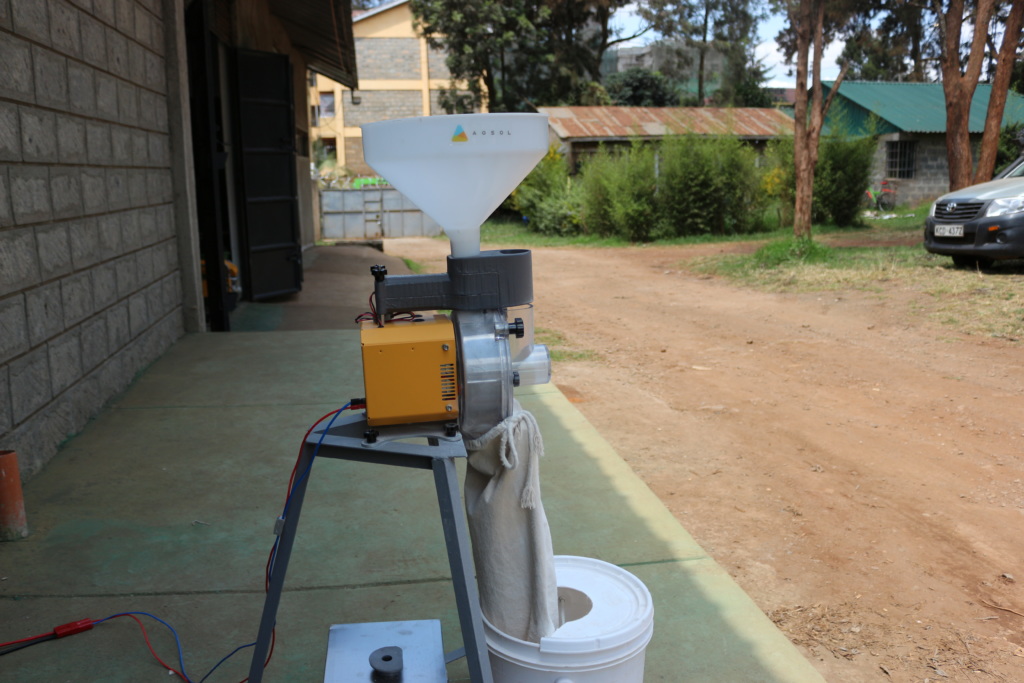
Agsol solar-mill
In 2016, Matt Carr and Greg Denn founded Agsol to build on early successes with “solarising” small agro-processing machines.
“Because diesel mills are large expensive machines and have really high operating costs, they are typically only found in larger towns and centres. That means most rural farmers waste huge amounts of time accessing these essential services. Our solar mills are specifically designed to be viable in smaller communities to bring milling services closer to the people that need them. They are cheaper to buy and cheaper to run than a diesel mill and can be operated by a non-trained technician.” explains Carr.
In 2019, Agsol won an Efficiency for Access R&D grant, which helped them develop the most efficient small grain mill known in the market. Our team has stayed in touch with Agsol since the grant. We recently visited their factory in Kikuyu to better understand their range of milling products and how farmers in Kenya use these appliances.
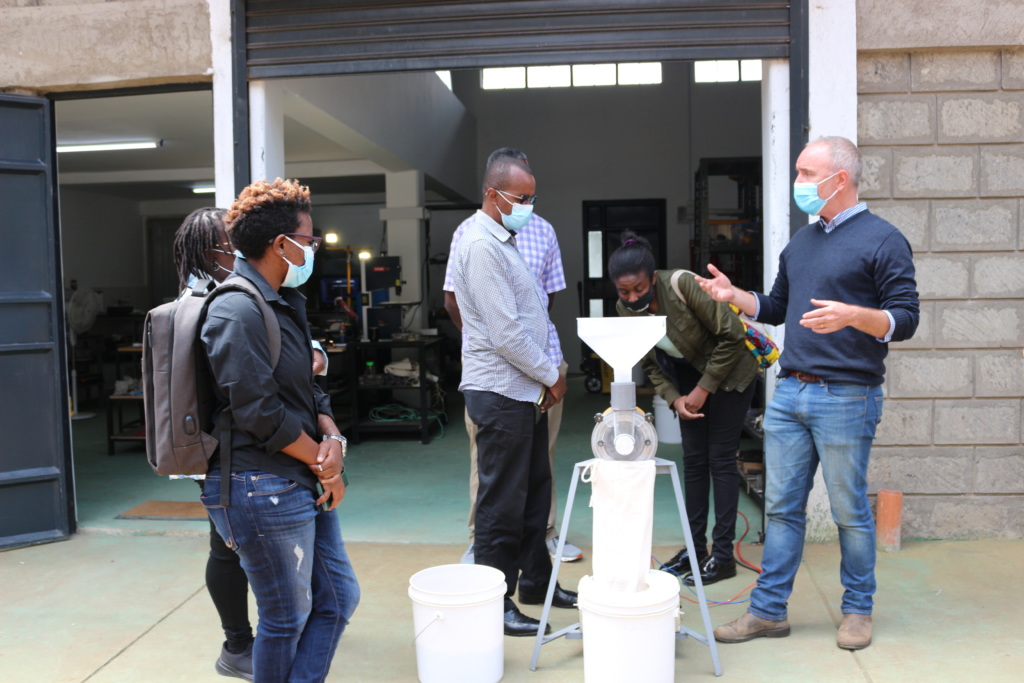
Agsol ’s Mills Offer Flexible Milling Hours
Agsol has developed a small hammer mill with interchangeable screens to produce fine flour or coarse grits for animal feed. Thanks to a specialized high-speed brushless DC (BLDC) motor, Agsol’s MicroMill is highly energy-efficient at converting power into flour – over 2.5 times more efficient than typical electric mills.
The Agsol MicroMill uses only 0.8kW, allowing for small quantity batch milling. This is not the case for diesel-powered mills, which can only mill in large quantities to conserve fuel. Diesel mill owners often make customers wait until there is sufficient volume to warrant starting up the diesel mill.
The need to conserve energy and mill in large quantities has led to millers setting specific milling times of the day, ensuring a large turnout of customers and large loads of cereal to be milled. In turn, solar mills offer flexible milling times as they consume less energy and can mill smaller batches.
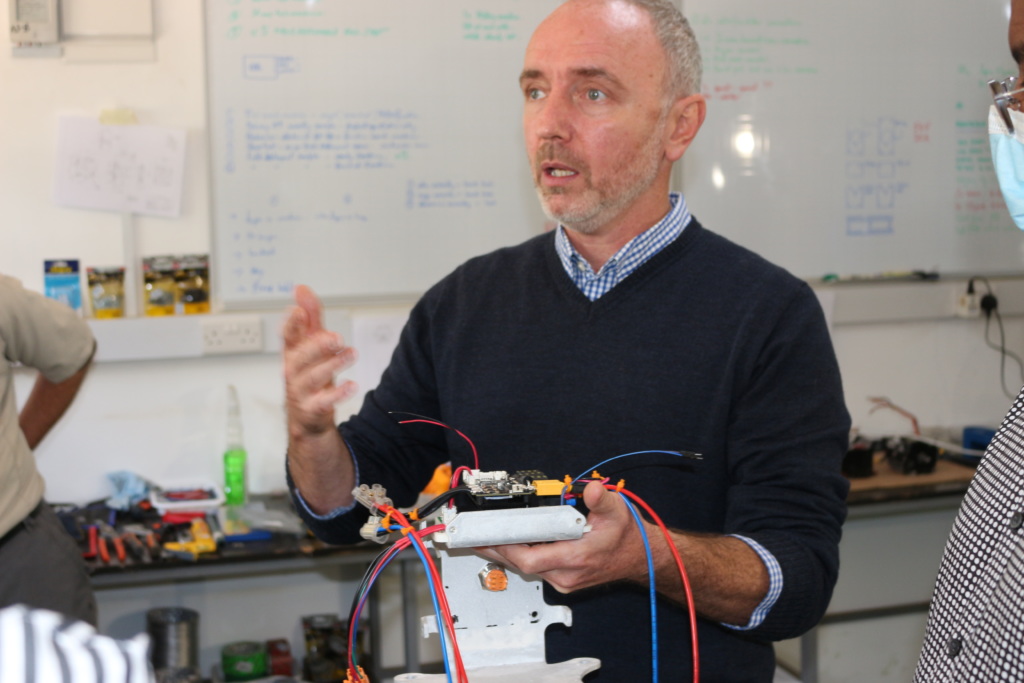
“Customers told us the previous version of the MicroMill was too slow, and it needed to be twice as fast. That was our goal for the current version. But by developing our own custom BLDC motor, we’ve actually tripled the production speed, increased efficiency by another 30%, and reduced the costs by 45%. The MicroMill can process over 300 kg/day of flour, and we’re excited this product has real potential to outcompete diesel mills in most off-grid settings.” Carr explained.
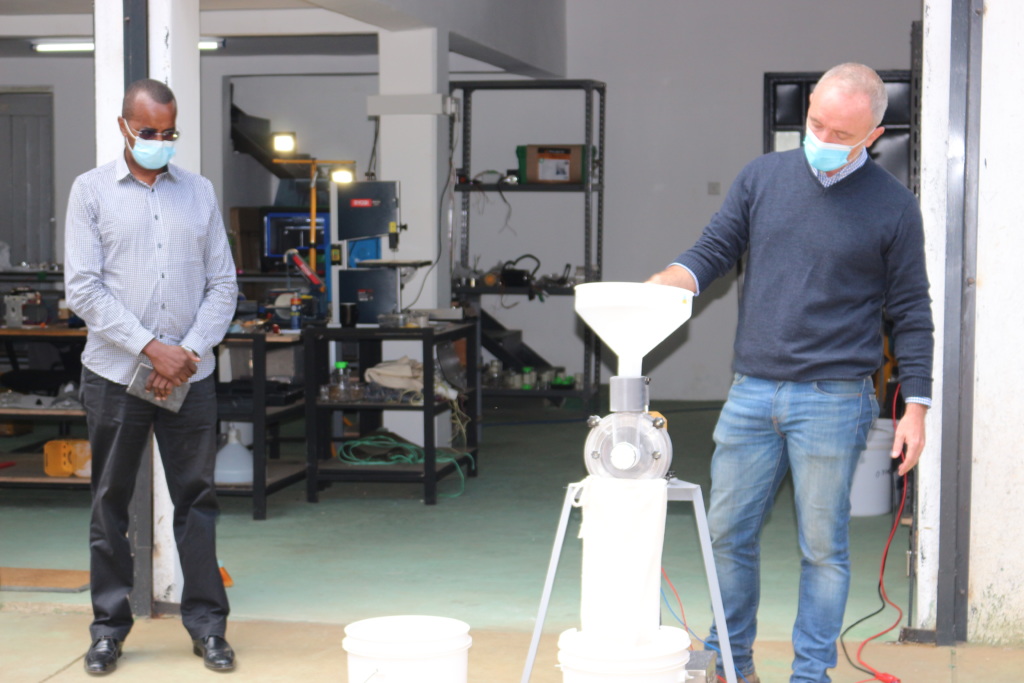
Solar Mills Offer Opportunity to Power Other Appliances
Consumers have the option of purchasing the Agsol mills with a power offtake module that can supply 12V and 5V DC to power devices like phones, clippers, fans, TVs, etc. The mill comes with an LFP lithium-ion battery to store excess power during periods of high irradiation, providing energy during periods of reduced sun exposure.
Are Solar Mills the Future of Small-Scale Farming?
Electric-powered mills are the most cost-effective milling option for domestic and small-scale commercial use, especially in rural areas. With no running and negligible maintenance costs, mills pay for themselves in less than two years, while diesel mills use up to 35% of the generated revenue in maintenance and fuel costs. They are environmentally friendly and adequately sized to allow more distributed placement, reducing the time and labour burden associated with accessing milling services.
“Our mills have the potential to create a more decentralized and accessible network of essential services, saving rural women time otherwise spent walking long distances to and from diesel mills. They can be used as a source of [clean] energy as well as support new income-generating activities in small communities.”
2021 Solar Appliance Technology Briefs Analyze Key Trends in Rapidly Evolving Markets
We are excited to announce that CLASP, on behalf of Efficiency for Access, has published a series of 2021 Solar Appliance Technology Briefs for off- and weak-grid appropriate technologies. The briefs synthesize the latest market intelligence and chart the pathway to commercialization for 11 disruptive technologies that are expected to catalyze energy access and sustainable development.
The first iteration of the LEIA Technology Summaries was published in 2017 to help the newly established Efficiency for Access Coalition navigate a nascent market. At the time there was limited data available on market trends and performance of appliances suitable for resource-constrained settings. Since then, CLASP, with the help of its partners, has assembled a wealth of information on a number of these technologies across market, consumer and impact research, and the Efficiency for Access Coalition members have invested nearly £130 million in the high-performing appliances space.
For a quick primer with most salient details from the briefs, see this collection of two-page snapshots.
The technologies are grouped into a four-part series based on market maturity:
Near-to-market Technologies: Fans and TVs
The markets for fans and televisions are mature compared to other off-grid appliances. Fans and TVs have a relatively high penetration rate across key markets in South Asia and sub-Saharan Africa when compared to other off-grid appliances. They are more energy-efficient and more affordable to a wider range of customers.
Over 670,000 off-grid fans and 427,000 televisions were sold in 2019
Fans: Over 670,000 off- and weak-grid fans were sold globally in 2019, as they are one of the most cost-effective and life-saving off-grid cooling solutions. With positive trends in off-grid fan affordability and efficiency, demand is predicted to grow, and the obtainable market is projected to reach 48 million households by 2030.
Televisions: The efficiency and affordability of off-grid televisions have improved by 48% and 44% respectively over the past few years, as they are one of the most coveted off-grid appliances by consumers. While the market potential for off-grid TVs is growing, last-mile distribution challenges and insufficient consumer financing prevents the market from reaching its full potential.
Emerging Technologies: Solar Water Pumps and Refrigerators
In a survey of 130+ energy access practitioners, solar water pumps ranked first in perceived consumer impact. Refrigeration ranked third. Both technologies help users improve productivity by reducing the time it takes to complete household chores and lead to better health outcomes in the form of healthier diets.
Solar water pumps and refrigerators rank are among the top 5 most impactful household appliances
Solar Water Pumps: Improving access to solar irrigation can improve crop yields by up to 3x and build resilience to droughts and unpredictable weather patterns. However, the market remains variable in Sub Saharan Africa and South Asia. To reach new customers, one must leverage new business models and expand partnerships to improve affordability.
Refrigerators: An increasing number of refrigerator manufacturers have expanded their market to target off-grid households and small businesses. Products sampled from local retail markets in the 2019 Global LEAP Awards had improved by 36% over the 2017 period. This class of efficient, off-grid appropriate refrigerators hold promising potential to provide reliable cooling services making it an overall ubiquitous household appliance.
Horizon Technologies: Walk-in Cold Rooms, Electric Pressure Cookers, Solar Milling, E-mobility
Despite their strong potential to unlock higher tiers of energy access and economic and social development, horizon technologies remain far from achieving scale in off- and weak-grid markets. The maturity of these nascent, horizon technologies will benefit greatly from an enabling environment fostered by a diverse set of stakeholders with aligned objectives including governments, energy service providers and the private sector.
Over 70% of all EPC sales take place in developed economies with reliable grid connections
Walk-in Cold Rooms: Establishing cold chains as extensive and reliable as those in industrialized countries would enable developing countries to raise food supply by 15% – about 250 million tonnes. A complete cold chain involves multiple stakeholders, and in the agricultural context this would include farmers, aggregators, transportation companies, warehouses and processing centers.
Electric Pressure Cookers: EPCs are highly energy-efficient appliances and can expand and improve clean cooking access for the 2.6 billion people worldwide who rely primarily on biomass cooking fuels. Efforts to improve design, consumer financing and awareness of their health benefits can help accelerate their market growth.
Solar Milling: Solar milling has the potential to enhance farming efficiency, increase farmer revenues, promote food security and empower women. On-grid solar-powered mills are slowly replacing diesel mills, but progress remains slow in off-grid settings as an ideal scenario must balance three parameters: efficiency, throughput as well as capital & operational cost.
E-mobility: Battery-powered E-mobility transportation modes eliminates internal combustion engine (ICE), that releases toxic particulate matter and carbon dioxide to the environment. The uptake of E- mobility is strong and improving across parts of Asia and Sub-Saharan Africa, however penetration lags in rural areas, and product quality remains an issue. To address core barriers, a deeper understanding of use cases is needed.
Enabling Technologies: Interoperability, ICT, Permanent Magnet Motors
Household appliances have become a major driver for the off-grid solar sector. The global addressable market for off-grid household appliances is an estimated USD 12.6 billion, with the potential to reach USD 25.3 billion by 2030. Interoperability, ICT and PM motors are central to this transition.
Adopting a standardized communication protocol across 25 appliances would lead to an estimated USD 1.5 million in savings for the off-grid solar industry.
Interoperability: Improvements in interoperability would allow customers wishing to upgrade their system or add an appliance to their household to not have to do so through the company that sold them their solar energy kit. The predominant model is that of non-interoperable systems which use brand-specific connectors combined with proprietary digital protocols.
ICT: ICT is a broad term that covers technologies that enable communications — such as radio, television, mobile phones, computer and network hardware, satellite systems, and internet of things (IoT)– and the services provided through these devices. ICT can also enable the uptake of other appliances highlighted in the brief series. For example, access to mobile phones has been a key enabler in the mobile money-driven PAYGo solar home system sector, helping off-grid communities gain access to electricity and contributing to SDG7.
Permanent Magnet Motors: PM motors are a type of electric motor that promise to be more efficient than their more common counterpart, induction motors. PM motors can play a crucial role in addressing efficiency-related challenges in resource-constrained settings across the full grid spectrum. Motors are the primary movers in almost all machinery and appliances. PM motors can be used with smaller power supplies, tolerate low or fluctuating voltages and have longer run times due to higher efficiency. Ideal applications for PM motors in solar appliances include solar water pumps, fans and refrigerators.
Nexus Solutions to Intersectional Issues
At the Climate Ambition Summit in December 2020, 75 parties outlined new commitments to address the burgeoning climate crisis amidst the COVID-19 pandemic. Yet, a recent analysis by the United Nations reveals that these commitments may be inadequate to limit global temperature rise by the end of the century. In fact, total emissions interventions in the new Nationally Determined Contributions (NDCs) would only result in around a 1% change in 2030 compared to 2010 against the needed 45%.
As we approach the 26th Conference of Parties (COP26), currently set for November, clarity on how countries will link their NDCs to longer-term carbon neutrality is critical. The priorities for COP26—spanning the energy transition, adaptation and resilience, zero-carbon transport, justice and equity so vulnerable groups won’t get left behind or further harmed, and the protection of ecosystems—can only be achieved with nexus solutions – those that take systemic, cross-sectoral approaches that examine the relationships between resources.
A systemic approach to the climate crisis is not a new concept, and yet it is still challenging to implement. In effect, this approach prevents multiple sectors and stakeholders from operating in silos, allowing each to benefit from the same, coordinated action. Take, for example, the “nexus” concept, which examines the interdependencies between water, energy, and food. First introduced in the 1980s and popularized through a 2011 conference, the nexus approach builds on the interrelation of socio-economic and environmental issues to best respond to the needs of an increasing global population. Indeed, addressing the climate crisis mandates a similar harmonization between the needs of people and the planet.
With these synergies in mind, the international community agreed to implement the 2030 Agenda for Sustainable Development through 17 Sustainable Development Goals (SDGs) in 2015. The SDGs provide a shared global framework whereby the alleviation of any single global issue is connected to several others. Energy efficiency, for example, contributes to SDG 7 (Providing Access to Sustainable and Affordable Energy for All), while eradicating poverty (SDG1) and reducing greenhouse gas emissions (SDG13).
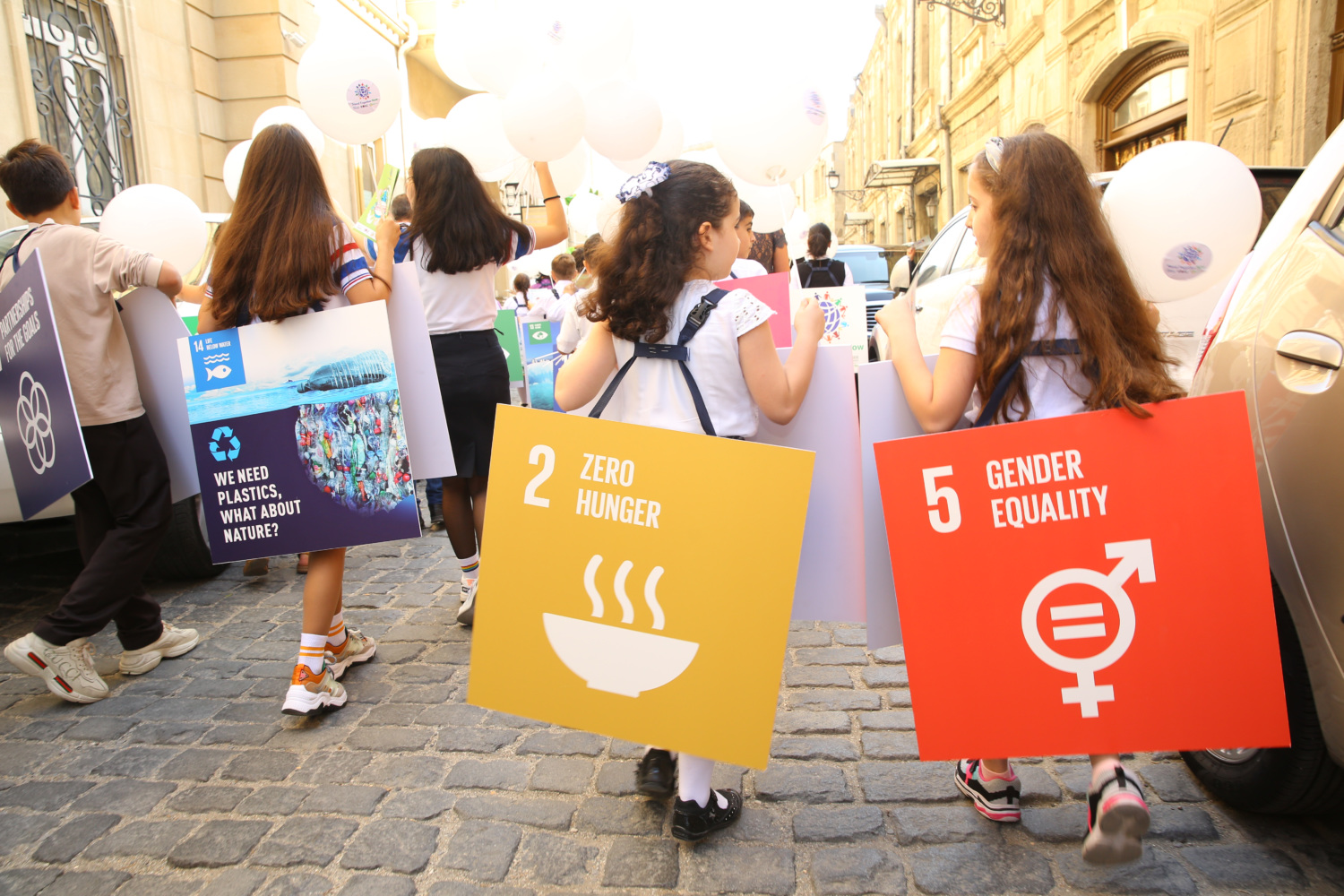
The priorities for COP26 can only be achieved with nexus solutions – those that take systemic, cross-sectoral approaches that examine the relationships between resources and people.
CLASP has increasingly explored integrated approaches to target the climate crisis, increase equity and advance resilience. For example, we recently explored the opportunity to develop water efficiency policies for taps and showerheads in the top carbon-emitting economies in the appliances sector. Efficiency policies for hot water products could achieve reductions in water use (SDG 6), CO₂ emissions (SDG 7 and 13), and improve water access (SDG 6 and 1) and overall sustainability (SDG 11).
CLASP also administers the Global LEAP Awards, whose Solar E-waste Challenge supports immediate investments in e-waste management (SDG7 and 12) as the off-grid solar sector continues to grow. Similarly, the Electric Pressure Cookers Competition identified 13 best-in-class, affordable, energy-efficient EPCs that are appropriate for use in underserved markets. The competition provides a pathway to safe and cost-effective cooking, while addressing the adverse impacts of biomass cookstoves on women and girls—preventing their exposure to household air pollution (SDG3) and safety and sustainability concerns related to collecting biomass (SDG5 and 15).
One key challenge of a nexus approach is aligning priorities and coordination across sectors, while still keeping pace with the urgency of the issue. For example, energy and water regulatory bodies often work separately of one another, resulting in fragmentation at various levels of governance. This involves poor horizontal coordination between water and energy agencies, as well as lacking vertical integration within the same sector i.e., among the stakeholders at the regional, national, provincial and local levels, as well as with non-state actors. Yet our Global Scoping Study showed that, because water is a key and scarce resource, most countries have an overarching framework which prioritizes water conservation and sustainability. Similarly, these countries are likely to prioritize energy conservation as well, creating an advantageous opportunity for coordinated efforts on policies that address products that use both. In the European Union, energy labels for washing machines and dishwashers inform consumers on both energy efficiency and water consumption – intending to drive the market toward the most efficient technologies. Coordinated policy efforts across these two sectors ensure that water and energy conservation are considered together, maximizing cost benefits for governments and people, while protecting the climate.
To achieve climate goals and more sustainable development, unique sectors must define concrete pathways that take a systemic and coherent approach. This can be achieved through collaboration among government agencies, their NGO partners, and with shared goal setting, as well as by exploring synergies at regional and global levels. Relatedly, philanthropic funds should evolve to acknowledge these intersectional foci and stimulate ambitious, cross-sectoral initiatives. CLASP is taking the remit seriously.
2020 Buyer’s Guide for Electric Pressure Cookers
The Global LEAP Awards Buyer’s Guide is a catalog of the world’s best-in-class appliances for off- and weak-grid environments. The 2020 Global LEAP Awards Electric Pressure Cookers competition was implemented by CLASP in partnership with the Modern Energy Cooking Services (MECS) program, and funded by UK aid. This edition contains information about electric pressure cookers named Winners and Finalists based on laboratory testing in the 2020 Global LEAP Awards Electric Pressure Cooker Competition.
The Buyer’s Guide serves as a procurement tool for distributed energy service companies and appliance distributors, and provides general market intelligence to other interested stakeholders. It includes rated product specifications, performance metrics based on laboratory testing, and sales contact information. The Global LEAP Awards identifies one Winner within each size category as the best overall product, with other high-quality products within the same category identified as Finalists. Overall, the Global LEAP Awards lists thirteen electric pressure cookers in the 2020 Buyer’s Guide designed for use in households and micro-enterprises served by off-grid energy systems, unreliable grid connections, and renewable mini-grids.
Download the 2020 Buyer’s Guide for Electric Pressure Cookers
Energy Efficient Refrigerators Boost Productivity in India
About 25 million households in India live without electricity, and many electrified households have unreliable power supply. India is one of the fastest-growing off-grid markets. According to GOGLA, 30% of the global volume share of standalone solar products were sold in India in 2018 — it is the world’s single largest market for portable lanterns. The solar market in India is quickly shifting focus on solar lighting to larger productive-use applications. In 2018, the Government of India announced an ambitious target to deploy more than one million solar pumps by 2022. To understand more about Indian consumers and their use-cases for productive use appliances, CLASP conducted a series of field visits in rural Bengaluru with the SELCO Foundation in February 2019.
Indiganatha is a rural hamlet located in The Male Mahadeshwara Hills (MM Hills) with no access to grid electricity due to its location deep within a forest. Indiganatha is best known for its sacred temple of Sri Male Mahadeshwara, an important Shiva temple and religious pilgrimage site. While in town, we visited a small shop that sells snacks and beverages near the temple. The shop’s location was very remote; it could only be reached on foot. The shopkeeper, Eeranna, owns the only solar refrigerator in the entire village, a 240-liter Phocos refrigerator installed by the SELCO Foundation. Eeranna and his family sell cold beverages to pilgrims and tourists. On a typical day, the shop can sell about 15 bottles of cold beverage and generate 300 Indian Rupees (INR) in income. When Eeranna installed a solar home system in his shop, he also spotted a new business opportunity to offer customers mobile phone charging for 10 INR per charge.
Purchasing a solar refrigerator was a huge financial investment for Eeranna and his family. Through a Self Help Group (SHG), Earanna and his neighbors pooled their money together so he could purchase a refrigerator. The SHG served as a guarantee for Earanna to obtain a loan from a micro-finance institution. Eeranna procured an 80,000 INR loan for the refrigerator with a 2.5 year repayment period. While the 80,000 INR loan seems significant, selling cold beverages and phone charging services allowed Eeranna to earn more than 60,000 INR in six months. Eeranna was eventually able to pay back his loan early. Now Eeranna and his family are now looking into other off-grid appliances, such as a mixer to make and sell fresh juice in their shop and a grinder to prepare Dosa/Idly batter.
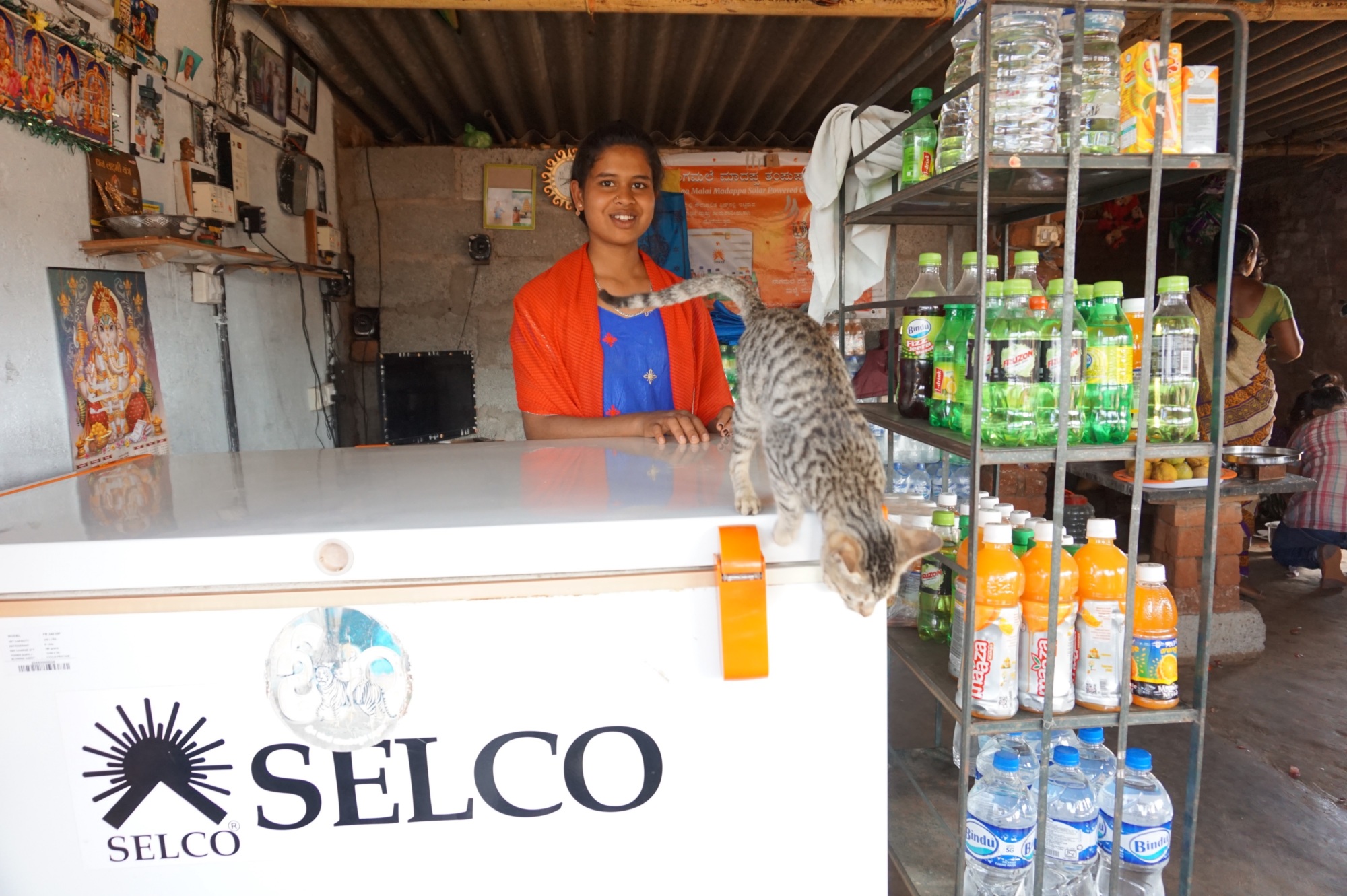
An employee at Eeranna’s shop
The next day, we visited two more customers, Thipperudrappa and his mother. Thipperudrappa is a road-side food truck entrepreneur who sells drink and snacks drivers at a toll plaza on the busy National Highway 4, which connects two major cities in the state of Karnataka, Bengaluru and Chitradurga. Thipperudrappa installed a 100L Devidayal DC refrigerator/freezer on his truck in order to sell cold food and beverages, and reduce financial losses from food spoilage.
Thipperudrappa’s mother described milk spoilage as the primary motive to purchase the new refrigerator. “Milk spoils very quickly in the summer, and once it does, we cannot sell it.” The solar refrigerator helps extend the product shelf-life of milk and other beverages, which in turn improves earning potential. Thipperudrappa’s mother told us that her income has increased since purchasing her DC refrigerator/freezer. On average, she sells 25 liters of beverage per day. The solar panels installed on her food truck serves as a free advertisement — people come to the truck and ask for the cold drinks when they see the solar panels.
The Efficiency for Access Coalition’s Off-Grid Appliance Market Survey 2018 identified off-grid refrigeration as one of the most demanded appliances across various sectors (agricultural, commercial and household). However, barriers like product availability, affordability and last-mile distribution continue to complicate the delivery of modern clean energy services to customers in rural India, like Eeranna and Thipperudrappa. Through programs like the Global LEAP Awards’ competition for off-grid refrigerators, the LEIA program aims to identify the best available cooling technologies and accelerate innovations in early-stage product markets.
Energy Efficient Refrigerators Boost Productivity in India
About 25 million households in India live without electricity, and many electrified households have unreliable power supply. India is one of the fastest-growing off-grid markets. According to GOGLA, 30% of the global volume share of standalone solar products were sold in India in 2018 — it is the world’s single largest market for portable lanterns. The solar market in India is quickly shifting focus on solar lighting to larger productive-use applications. In 2018, the Government of India announced an ambitious target to deploy more than one million solar pumps by 2022. To understand more about Indian consumers and their use-cases for productive use appliances, CLASP conducted a series of field visits in rural Bengaluru with the SELCO Foundation in February 2019.
Indiganatha is a rural hamlet located in The Male Mahadeshwara Hills (MM Hills) with no access to grid electricity due to its location deep within a forest. Indiganatha is best known for its sacred temple of Sri Male Mahadeshwara, an important Shiva temple and religious pilgrimage site. While in town, we visited a small shop that sells snacks and beverages near the temple. The shop’s location was very remote; it could only be reached on foot. The shopkeeper, Eeranna, owns the only solar refrigerator in the entire village, a 240-liter Phocos refrigerator installed by the SELCO Foundation. Eeranna and his family sell cold beverages to pilgrims and tourists. On a typical day, the shop can sell about 15 bottles of cold beverage and generate 300 Indian Rupees (INR) in income. When Eeranna installed a solar home system in his shop, he also spotted a new business opportunity to offer customers mobile phone charging for 10 INR per charge.
Purchasing a solar refrigerator was a huge financial investment for Eeranna and his family. Through a Self Help Group (SHG), Earanna and his neighbors pooled their money together so he could purchase a refrigerator. The SHG served as a guarantee for Earanna to obtain a loan from a micro-finance institution. Eeranna procured an 80,000 INR loan for the refrigerator with a 2.5 year repayment period. While the 80,000 INR loan seems significant, selling cold beverages and phone charging services allowed Eeranna to earn more than 60,000 INR in six months. Eeranna was eventually able to pay back his loan early. Now Eeranna and his family are now looking into other off-grid appliances, such as a mixer to make and sell fresh juice in their shop and a grinder to prepare Dosa/Idly batter.
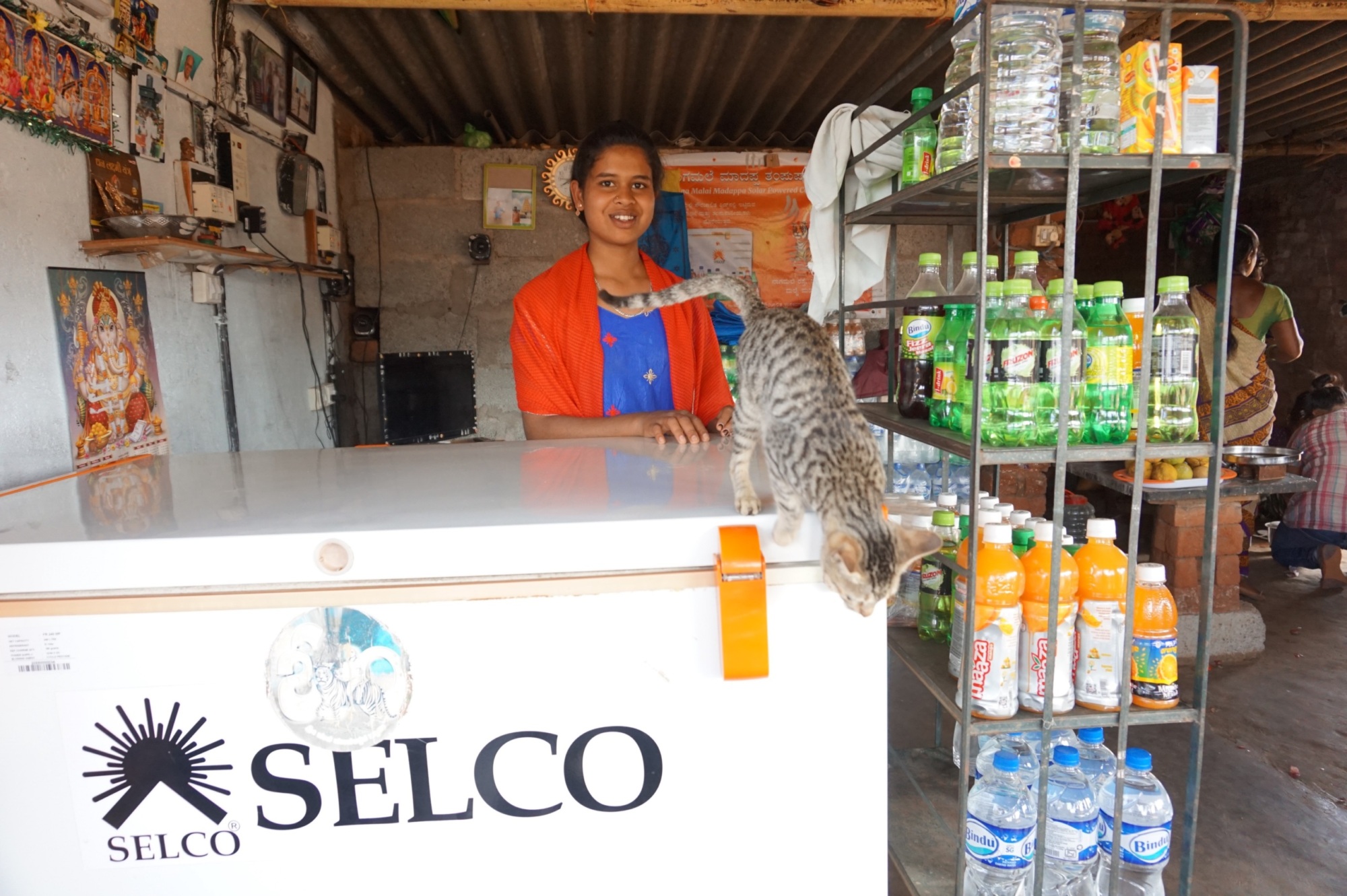
An employee at Eeranna’s shop
The next day, we visited two more customers, Thipperudrappa and his mother. Thipperudrappa is a road-side food truck entrepreneur who sells drink and snacks drivers at a toll plaza on the busy National Highway 4, which connects two major cities in the state of Karnataka, Bengaluru and Chitradurga. Thipperudrappa installed a 100L Devidayal DC refrigerator/freezer on his truck in order to sell cold food and beverages, and reduce financial losses from food spoilage.
Thipperudrappa’s mother described milk spoilage as the primary motive to purchase the new refrigerator. “Milk spoils very quickly in the summer, and once it does, we cannot sell it.” The solar refrigerator helps extend the product shelf-life of milk and other beverages, which in turn improves earning potential. Thipperudrappa’s mother told us that her income has increased since purchasing her DC refrigerator/freezer. On average, she sells 25 liters of beverage per day. The solar panels installed on her food truck serves as a free advertisement — people come to the truck and ask for the cold drinks when they see the solar panels.
The Efficiency for Access Coalition’s Off-Grid Appliance Market Survey 2018 identified off-grid refrigeration as one of the most demanded appliances across various sectors (agricultural, commercial and household). However, barriers like product availability, affordability and last-mile distribution continue to complicate the delivery of modern clean energy services to customers in rural India, like Eeranna and Thipperudrappa. Through programs like the Global LEAP Awards’ competition for off-grid refrigerators, the LEIA program aims to identify the best available cooling technologies and accelerate innovations in early-stage product markets.
Off-Grid Appliances Facilitate and Expand Gender-Positive “Productive Uses” of Energy
In a previous blog post, I talked about how high-performing off-grid appliances have a direct positive impact on almost all Sustainable Development Goals (SDGs). As I teased in that post, Efficiency for Access Coalition’s #AppliancesEmpower campaign is now in full swing — and to kick off a series of spotlights on energy access and gender equality (SDGs 5 & 7) you can expect to hear more from our team and partners in the coming months.
Revisiting the gender-energy nexus through a productive use lens
The concept of the “productive use” of energy — activities that use energy to improve income and welfare — is rising exponentially as an area of interest in the distributed energy sector. Addressing energy poverty from a productive use angle not only enhances the ability of energy access activities to achieve scale and sustainability, but also increases the likelihood that their positive benefits will spill over to other SDGs. If productive uses of energy are properly harnessed and universal access to energy (SDG 7: clean energy) translates to new or increased socioeconomic benefits, then other SDGs related to economic development (e.g. SDG 1: no poverty; SDG 8: decent work and economic growth) or fundamental rights (e.g. SDG2: zero hunger; SDG6: clean water and sanitation) can be fully met.
When we hear the phrase “energy for productive use”, most people immediately associate the concept with agricultural technologies, such as milling or water pumping, or industrial activities, like welding or infrastructure development. However, household appliances can also be transformative from an income generation perspective, enabling micro-enterprises to attract more customers and increase revenues. Our recent article with Programme Partner, Power for All, makes the case for a more inclusive definition of “income-generating appliances” that includes fans, refrigerators, and other household appliances.
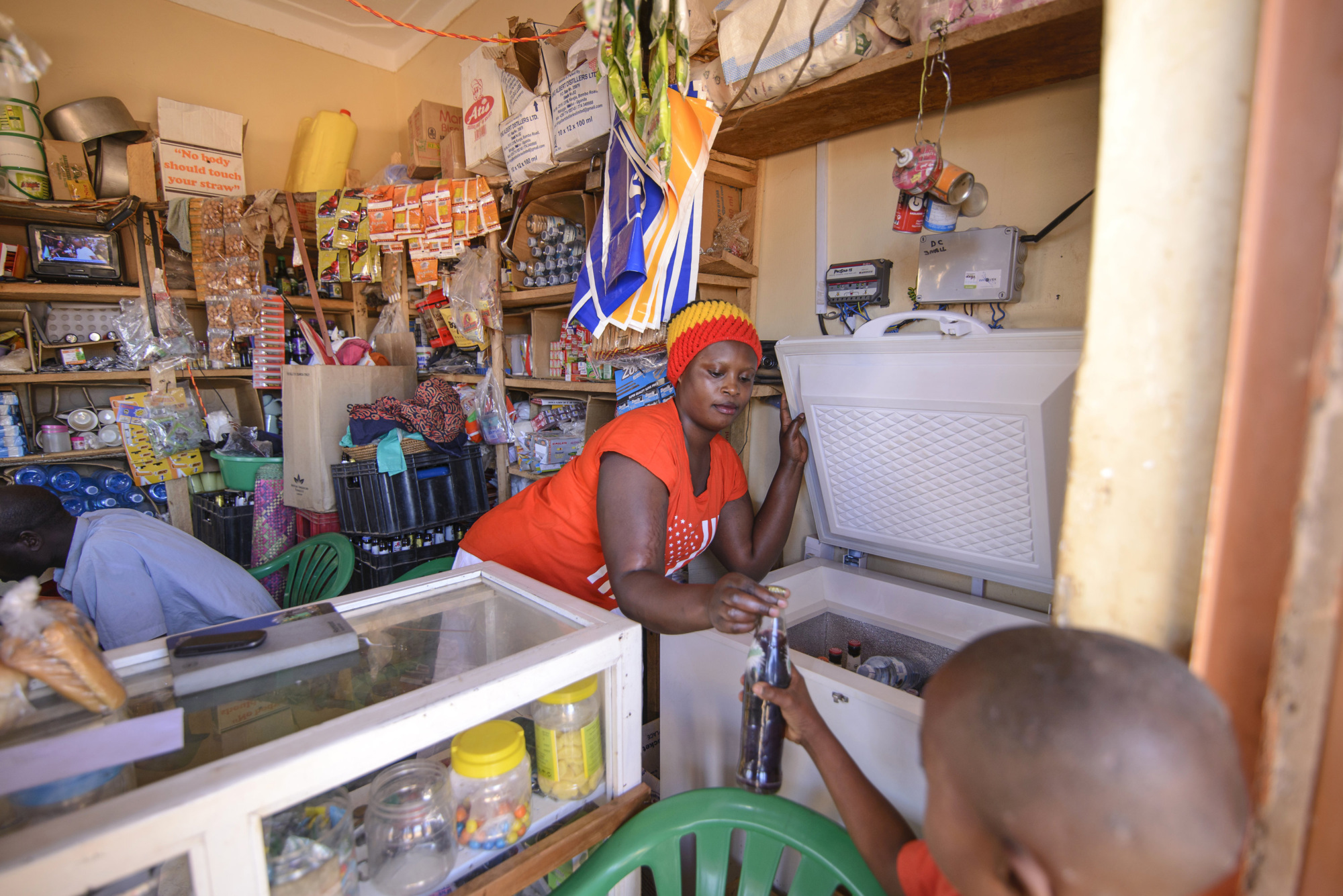
Recent Global LEAP survey data from Uganda shows that micro and small enterprises saw their daily incomes rise by 2.5 fold on average following the purchase of a refrigerator. Half of the enterprises surveyed used their refrigerator to expand into new lines of business, such as food and drink sales.
Regardless of scope or definition, it is clear that energy and productive use interventions have, to date, not taken gender differentials explicitly into account. This status quo is likely to deliver unequal impact outcomes: Men typically own more businesses (71% of enterprises in Tanzania are male-owned) and operate in a wider range of more energy-intensive activities such as construction and manufacturing (male-owned enterprises spend three times as much on electricity than women-owned counterparts in rural Tanzania), according to our campaign partner, ENERGIA.
To complicate things further, women in many developing countries are less likely to be employed in the formal economy, and often work in enterprises with lower energy demands, such as tailoring or food preparation. Finally, men typically employ other men in the businesses they run, whereas women employ women, thus perpetuating the gender divide for productive use applications in the absence of purposeful intervention.
A gendered perspective on the socio-economic benefits of off-grid appliances
Improving access to off-grid appliances has broader impacts on gender equality than increased economic opportunities. Solar water pumps and mills, for example, can also reduce time spent on household and farm chores alike, and the drudgery associated with traditionally female-led activities. This can include anything from being able to easily draw clean water for cooking, cleaning, and irrigation purposes mechanically rather than by hand, to being able to process a harvest automatically rather than having to sort and process grains manually. Similarly, household refrigerators can help keep prepared food, produce and dairy products cold, meaning not only that more items can be kept at the right temperature to unlock more sales and less waste, but also that women do not need to shop for and cook food for their families every day, opening up more of their time for other activities. In addition, televisions and mobile phones — appliances not traditionally considered under the “productive use” umbrella — can serve as a conduit for previously unavailable national, regional, and global information and perspectives. Expanded access to cable television is associated with positive changes across school enrollment, literacy, family planning, financial decisions, and health — all with significant relevance for positive change across corresponding SDGs.
The perception of many energy access practitioners and off-grid appliance distributors is supportive of the theory that the benefits accrued from the uptake of such technologies will differ between genders. In a recent Efficiency for Access survey, respondents were asked to rank the socioeconomic impacts of household appliances by the gender of the end-user. While demand for LED room lighting, mobile phone charging, and refrigeration showed little deviation, household appliances that support labor-intensive activities, such as hand power tools, clothes washers, sewing machines, and electric cookstoves demonstrated significant differences between genders, and all fell within prescribed gender norms.
Despite this variation, the relationship between access to income-generating appliances and its impact on shifting gender norms and socioeconomic outcomes remains largely unexplored. Productive use appliances are likely not reaching the full potential for women because the sector’s current focus is on larger, more industrial solutions whose incumbents have traditionally excluded women. Compounding this issue, there are indicators that women are also being left out of the loop for technology-enabled tools such as digital or mobile-based services targeting agriculture assistance. All these trickle-down effects add up to making the technology barrier even harder to overcome for women, and are a disservice to making progress towards SDG 10: reduced inequalities.
How can we move the narrative forward?
Most early movers in the distributed energy sector are still struggling to demonstrate the commercial viability of increasingly complex technologies in nascent and disorganized appliance markets, which provides a perfect opportunity to build in gender-sensitive approaches from the get-go. A more realistic understanding of the current state of play across the “productive use” spectrum will help companies develop more inclusive services, and eventually prove their impact potential. Blending consumer-facing design considerations and awareness-raising will, in turn, unlock more demand as well as financing structures, and therefore more support for proving the viability of and achieving true scale for productive use appliances.
Gender mainstreaming approaches for off-grid appliances that take into account both women’s involvement and empowerment — from design to distribution and use — can expand the productive customer base for entire communities. Prioritizing more traditionally “gendered” appliances like irons, sewing machines, and cooking solutions and supporting direct exploration of gender-positive business models can serve as a good starting point for the sector.
More gender-focused consumer research is the key: to parse out gendered usage patterns and preferences; unearth best practices in technology design, business models, and supportive activities; and pilot targeted design interventions to enable more women to participate in and benefit from scaling productive use appliances.
We will be raising a number of concrete suggestions to the abovementioned activities throughout the course of our #AppliancesEmpower campaign, which will run through March 2020. In collaboration with our campaign partners, you can look forward to posts and announcements across connections with health; disability inclusion; inclusive business models; emerging gender mainstreaming research and scoping; and lessons learned from positive interventions. Follow us on Medium, Twitter, and LinkedIn; to stay up to date on campaign developments, lend your voice in upcoming Twitter chats and webinars, and to pledge your commitment towards gender mainstreaming energy access efforts.
2021 Appliance Data Trends
Improving the performance and affordability of off-grid appliances and equipment can help make critical income-generating and time-saving devices more accessible to consumers in developing economies. A typical household in sub-Saharan Africa owns 2-5 appliances, compared to the 30+ appliances found in a typical European or North American household. Achieving greater parity in appliance ownership could enable households and businesses in developing countries to realise significant productivity and quality of life improvements.
The inaugural 2018 Appliance Data Trends report presented the first snapshot of energy efficiency, product performance and market trends for off-grid appropriate appliances. Since then, the market has grown substantially. The 2021 Appliance Data Trends report builds on the 2018 iteration and presents updated product performance, energy efficiency, and pricing trends for off-grid appropriate televisions, fans, refrigerators, solar water pumps and early market insights for electric pressure cookers.
Download the 2021 Appliance Data Trends report.
About Efficiency for Access
Efficiency for Access is a global coalition working to promote renewable and energy efficient appliances to deliver clean energy to the world’s poorest people. It is coordinated jointly by CLASP and the UK’s Energy Saving Trust.
Conversations with CLASP: New Podcast Features Huda Jaffer of SELCO Foundation
The first in a series, in this ‘Conversations with CLASP’ podcast episode, our CEO Christine Egan sits down virtually with Huda Jaffer, Director of SELCO Foundation.
“The silver lining to this pandemic is that we are seeing a renewed sense of urgency to be both self-reflective and act. I would rather we all implement, take action, and fail than be accused of inaction.”
-Huda Jaffer, Director of SELCO Foundation
The interview covers:
- The current situation in India for bottom of the pyramid off-grid communities
- Pandemic impact on the clean energy access ecosystem
- Specific opportunities for the off-grid solar sector to bolster pandemic response and recovery
Huda is a product/-service/-system’s designer with a keen interest in user-centric design specifically for sustainability and developmental issues. Over the past ten years at SELCO, she has played a critical role in growing the capacity and processes of the Foundation to build the ecosystem for sustainable energy access for the poor.
As the world copes with the shock of the COVID-19 pandemic, the role of appliances in mitigating its impacts, particularly in vulnerable off-grid communities, is becoming increasingly evident. Medical appliances are critical to run diagnostics and treat patients in health facilities. Televisions and radios enable people to stay informed and access education. Refrigerators help households preserve food and reduce trips to the market, and solar powered pumps provide water for drinking and sanitation.
The podcast can also be accessed on Spotify.