
Solar-Powered Milling & Irrigation Bring New Life to An Old Family Home
Magdalene Mbinya is a Kenyan small-scale farmer reaping the benefits of solar-powered farming. Like many Kenyans who grow up in rural or semi-urban areas, Mbinya left her home in Yatta, Machakos County, to pursue her dreams in Nairobi. She enrolled at a university there, completed her studies, and then worked as a social worker at various local and international NGOs. Things were going well until the COVID-19 pandemic hit and disrupted life as she knew it. Mbinya found herself re-evaluating the benefits of city living and eventually decided to return to her rural home in Yatta. Despite the hot and dry conditions there, Mbinya was determined to make the land she inherited from her late parents agriculturally productive.
‘Our place is dry, but I can do something with it. With the manpower, knowledge and exposure that I have, I can change it.’
Despite an above-average rural electrification rate of 62.7% in Kenya, Mbinya’s home is one of many unserved by the national grid. Undaunted by the lack of grid access, Mbinya has invested in solar as an alternative power source for her home and farming projects. Additionally, if it were available to her, Mbinya would be wary of connecting to the national grid due to the costly energy bills — especially with recent electricity price hikes.
‘Now I want solar — pure solar…The goal is to go green completely.’
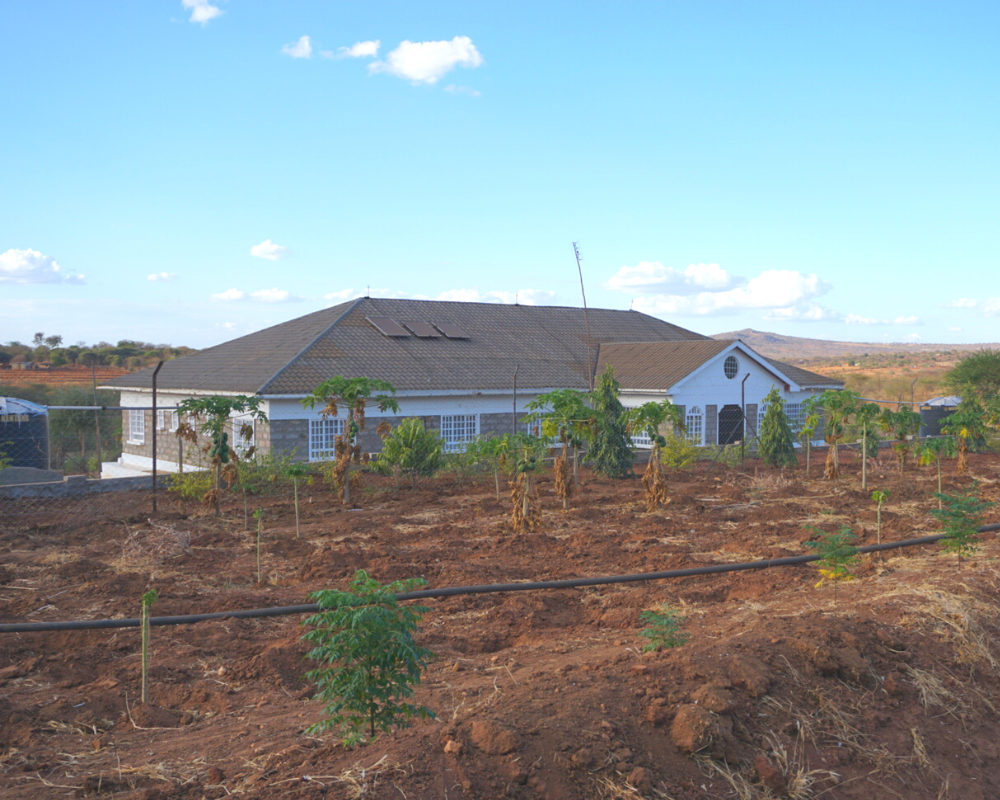
Mbinya’s beautiful home runs on a solar home system, and she uses a solar pump to channel water from a nearby river to a dam in her compound, enabling her to farm throughout the year — unrestrained by unreliable rain and the area’s arid conditions. At the time of our visit, it was particularly dry and dusty — Mbinya mentioned that it had been almost four months since the last rain. Despite this, we saw young papaya trees and other leafy green vegetables growing on sections of the ten-acre farm.
With her Agsol solar MicroMill, Mbinya provides flour for her household and serves neighbouring homes and schools. Her affordable pricing at KES 5 (USD 0.04) per kilogramme gives her an edge over the posho millers at the market centres. The electric-powered millers charge four times more than Mbinya at KES 20 (USD 0.16) per kilogramme, while the diesel-powered millers charge double at KES 10. Mbinya mills various crops, including maize (most popular), cassava, and chicken feed. Schools are her biggest customers — she currently mills maize flour for two schools, with a combined weekly output of 50 -70 kilograms of maize flour. She makes around KES 3,000–4,000 (USD 24 – 32) from all orders weekly. With this money, she employs someone to operate the mill and serve walk-in customers while she attends to her other business projects.
‘Now that my milling service is cheap; I have so many customers. They even buy maize from Kisiiki market centre (about 7km away) and come to mill it here instead of milling there.’
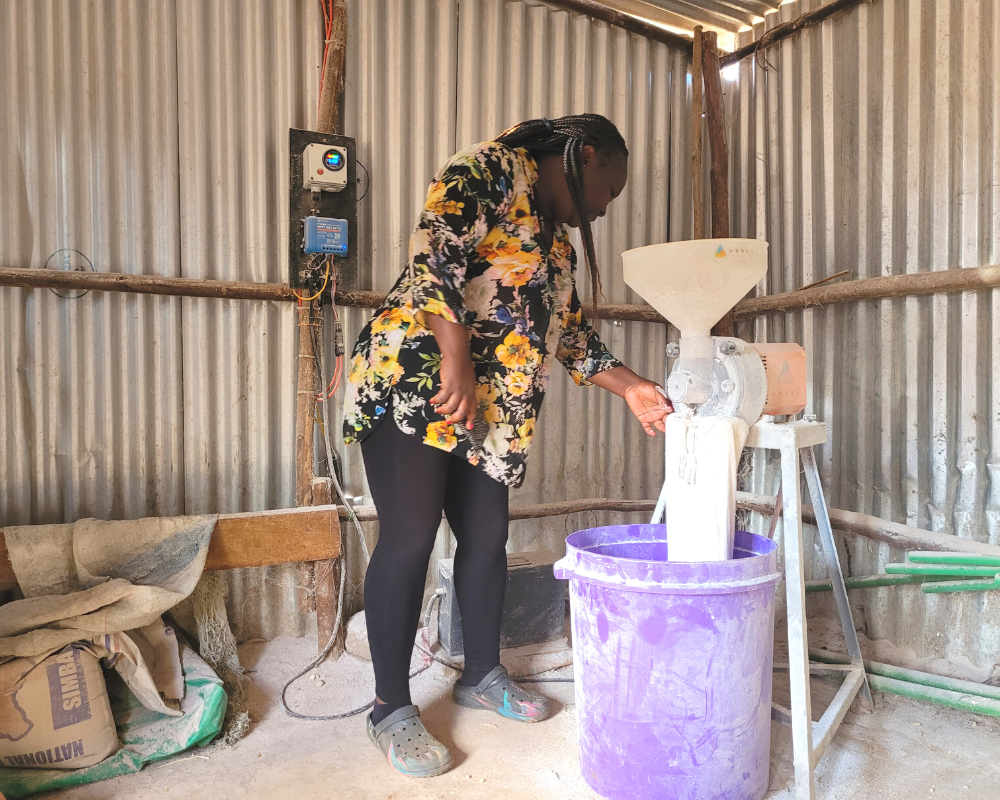
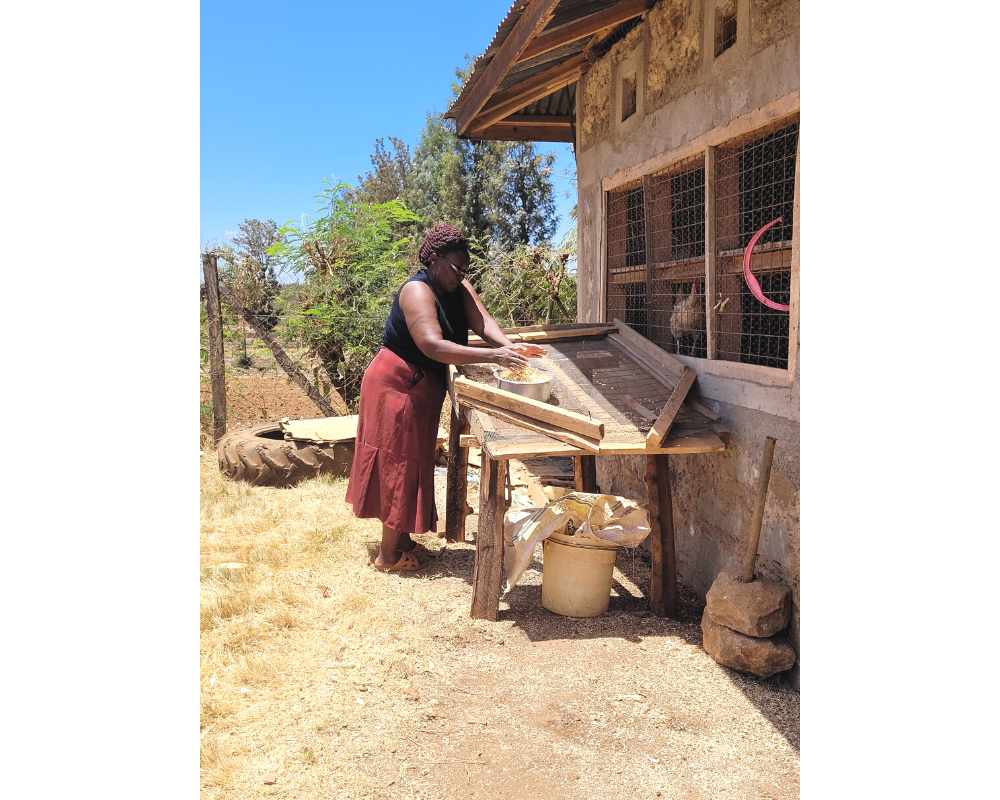
Mbinya checking her Agsol solar mill to confirm that the bag was well secured.
Mbinya learned about Agsol through her sister, who works for a humanitarian NGO. She was eager to try the MicroMill because of the challenges she had faced obtaining clean flour that didn’t smell of diesel fumes. Also, she knew there was a business opportunity to provide affordable and reliable milling for her community. Mbinya’s milling service is so popular in her neighbourhood that customers from beyond a five-kilometre radius come to buy her flour. Due to this high demand, after her initial lump sum payment, Mbinya managed to pay off the financing for the mill in two instalments over about three months. She attributes her growing customer base to word-of-mouth — customers tell their friends, who tell their other friends and so forth. Mbinya also encourages her customers to share their experiences of using her mill when they meet up for their ‘chama’ meetings (informal savings and investments groups) over the weekend.
‘I would say it’s a good initiative for a village like this one where there’s no power and diesel is expensive. Having a solar mill changes our lifestyle and even the food — it is clean.’
An aspect of the solar mill that Mbinya thinks could be improved is that during overcast conditions, the mill runs out of power early in the day. As a result, she serves fewer customers at those times compared to when it is bright and sunny. Besides that, she’s satisfied with the mill and is happy that she can provide this service to her community. Mbinya’s friends and neighbours have expressed an interest in purchasing Agsol’s MicroMill — the only barrier being affordability. Despite her explaining the consumer financing option to them, people are still hesitant to commit to such a large expense.
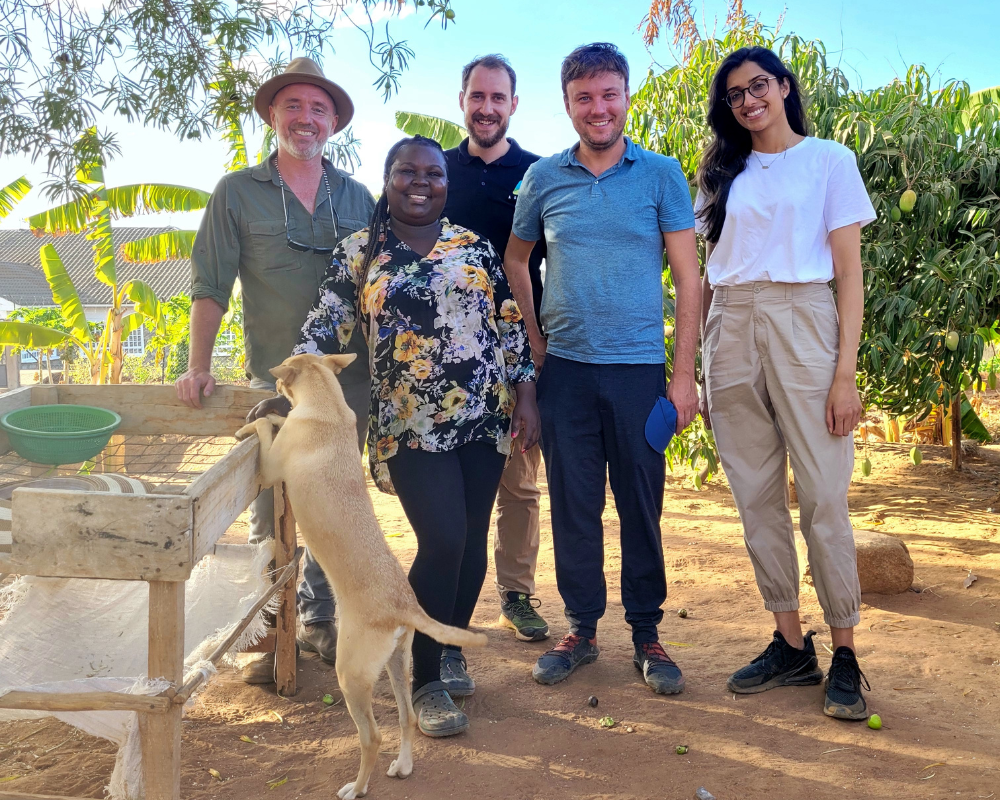
Mbinya plans to continue developing her home and farm. Among her goals is to sink a borehole, which would be a more reliable water source during prolonged dry seasons. Meanwhile, she will continue to provide convenient and affordable milling services, which she knows her community needs.
‘…the community really loves it (the mill service), and they appreciate it. They know that the food is clean and very nice.’
Adopting solar technologies like solar water pumps and mills boosts farmers’ productivity and saves energy-related costs while avoiding carbon emissions.
***
Agsol is based in Kenya and was established in 2016 to develop solar-powered milling machines that can viably serve small communities, improve labour efficiencies, keep more money in rural economies, and catalyse access to higher-tier energy services.
Efficiency for Access has been working with Agsol since 2018, both in research and R&D. The Efficiency for Access Research and Development Fund supported Agsol in two projects — the first project was to develop a MicroMill prototype and the second project involved further improvements to the prototype, including efficiency gains and improved affordability. The R&D Fund’s support has helped Agsol create a highly efficient, more affordable small grain mill with a strong product-market fit.
Serving the Community and Earning Extra Income through Efficient Solar Milling
Wilfred Muriithi proudly refers to himself as a ‘solar man.’
‘I am using solar for lighting, solar for pumping and solar for milling. I’m a solar man.’
But his solar reliance has been borne out of necessity. Despite an ambitious national electrification plan and the installation of electricity poles close to his home, Wilfred and his wife, like many other rural Kenyans, are yet to be connected to the national grid. Wilfred says the government set up the wiring for electricity supply in his area three years ago but has still not installed a transformer.
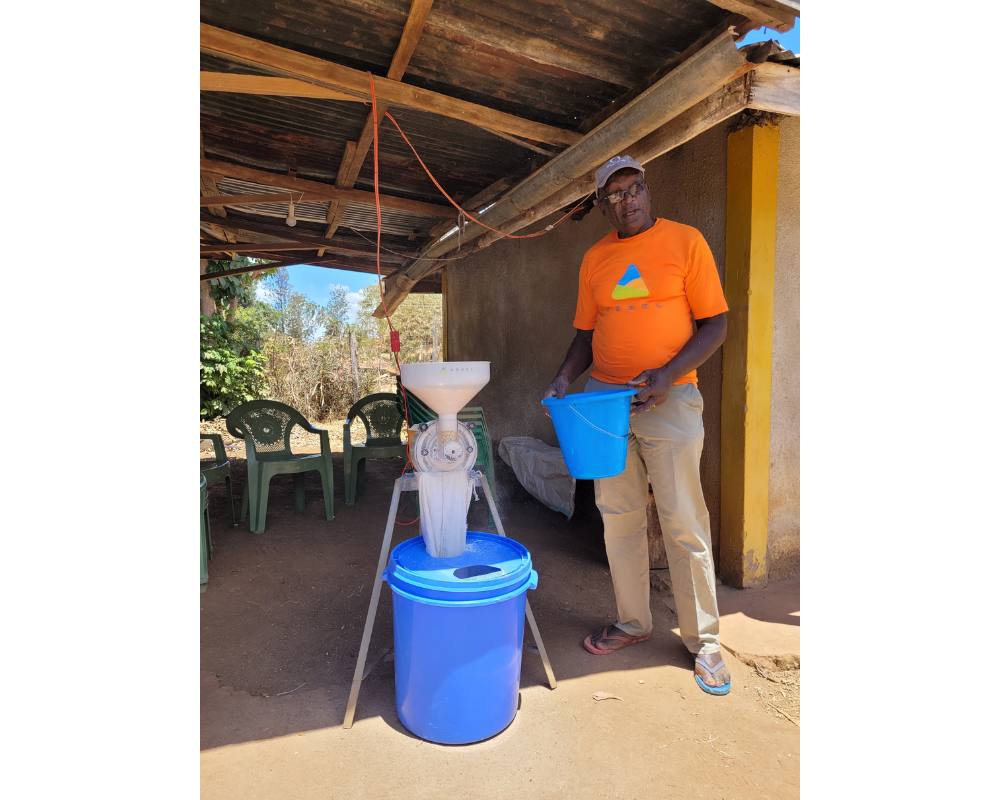
They live in Mbinguini, one of the smaller localities in Mwea, Kirinyaga County, Kenya, about two hours from Nairobi by road. Wilfred is a retired groundwater and agriculture engineer who previously worked with the government on soil and water conservation and is now an independent specialist in spatial water resource mapping.
Since Wilfred is often away from home on water prospecting trips, his wife is the one who mainly works with their Agsol mill and grinds flour for customers. So far, they are both immensely happy with the MicroMill, which they say works excellently and is reliable.
‘This [mill] is very easy to use…I have not encountered any issues. Even during very cloudy days, it is still functional.’
Wilfred discovered the Agsol solar mill during a water prospecting field visit. In addition to helping his customers identify groundwater sources, he trains them on drip-irrigation system installations and often promotes SunCulture solar water pumps for irrigation systems. On one such pump installation, Wilfred was introduced to the solar mill by the SunCulture team.
Already aware of the cost-saving benefits of solar-powered technologies, Wilfred was immediately interested in the innovative mill. For him, Agsol’s MicroMill presented a convenient option for flour production to meet his family’s needs and income generation through milling for his neighbours.
Access to a posho mill is crucial in many rural communities in Kenya. Families in these areas rely on them for their household and farming milling needs — citing that posho mill flour is more nutritious and palatable than flour from milling factories. Additionally, many rural Kenyan households (70%) rely on small-scale agriculture to earn a modest living and feed themselves. Because of this, crops such as maize, cassava, and millet are often readily available to them. The families typically harvest the produce from their farm and take it to the closest miller to make flour. This is then used to prepare popular local meals such as ugali (maize meal dish) and millet porridge — which are staples in rural homes.
Beyond household consumption, small-scale farmers can save on buying expensive commercial animal feed by milling the crops they grow to produce feed. Despite the undeniable benefits of milling for day-to-day rural-household demands, the posho mills are often inconvenient to access — often located at market centres many kilometres away. Women and children often walk long distances to the market centre to access a posho mill. The time spent travelling and then waiting for the flour to be milled could go towards more meaningful activities, e.g., studying, spending time with family or participating in income-generating activities. Additionally, many posho mills run on petrol or fuel, making them pollutive for the environment and costly due to recurring fuel costs.
For Wilfred and his neighbours, the closest posho millers in their area are at least three kilometres away. Wilfred offers his customers more convenient access to milling services and provides the service at about two-thirds the cost of the traditional posho millers. He charges KES 20 (USD 0.16) for two kilogrammes compared to the posho miller’s rate of KES 30 (USD 0.24). Additionally, the quality of the flour that Wilfred provides is superior to that of the diesel posho millers, which often taste of diesel fumes.
A changing climate
Unfortunately, Wilfred could not rely on customer revenue to pay off the mill’s financing due to the severe drought affecting his home area and other parts of Kenya for most of this year, coupled with challenging economic conditions. He reported that milling orders have been much lower this year than in 2021 because people haven’t grown much maize. Neighbours often mill small quantities that only meet their daily meal requirements. He also mentioned that they sometimes mill on credit, and he allows a neighbour to pay for what they milled during their next visit, often a few days later. On average, the solar mill generates KES 100–300 (USD 0.82 -2.45) daily at least three times a week.
‘I am not alone. Everybody is affected by these harsh economic times. Especially those who had employed people to rely on a salary from their mill — they have closed down.’
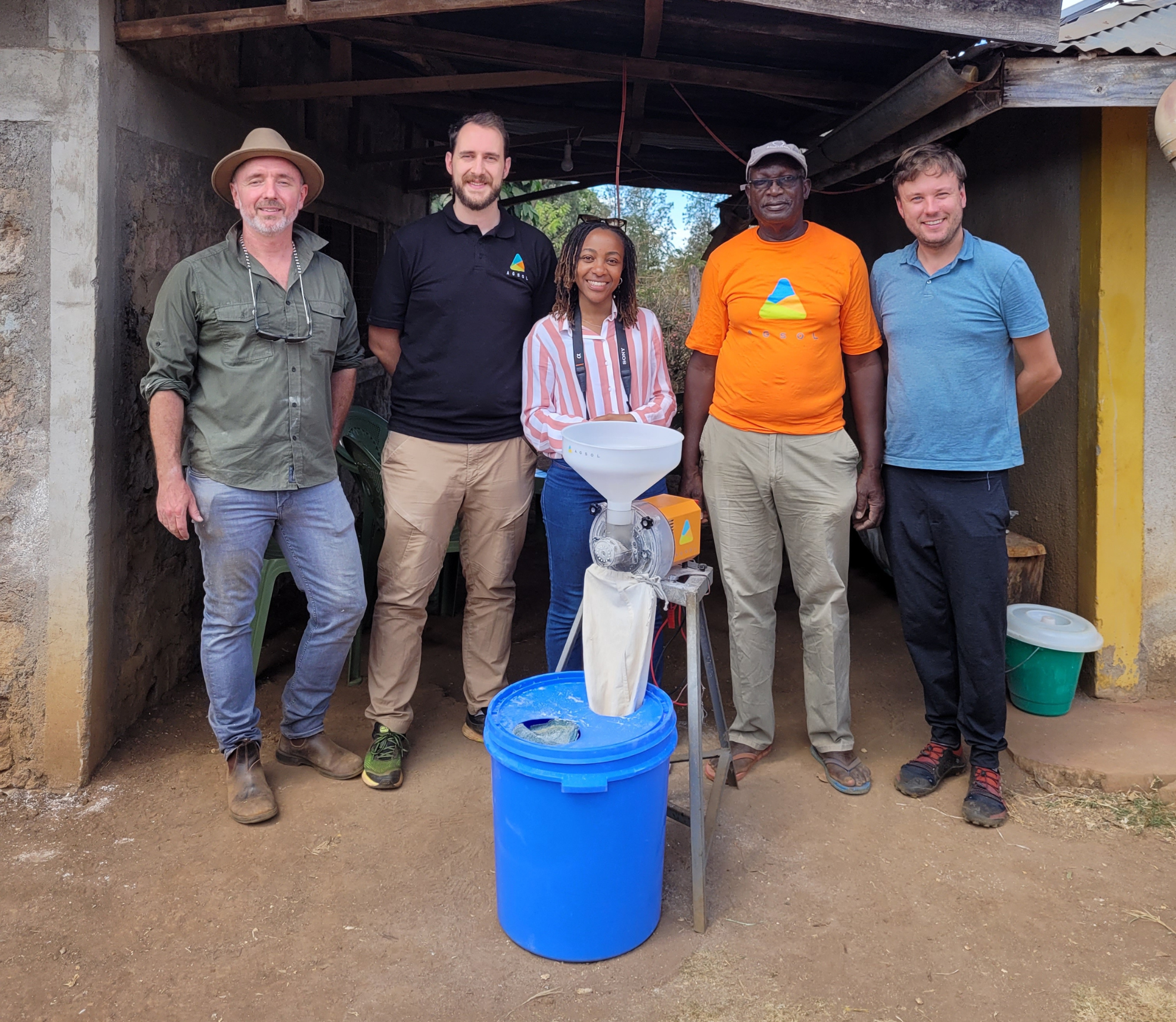
Wilfred with Agsol and Efficiency for Access team members.
Despite the dwindling quantity of milling orders, Wilfred is optimistic that his business will become more profitable. He has identified several business opportunities to widen his customer base, including partnering with the local schools to mill their flour weekly and possibly employing someone to provide mobile milling services at the local markets. He says the government has plans to reintroduce indigenous crops, such as millet, cassava and sorghum, in the region to boost food security and improve nutrition. Once underway, the increased crop production would provide another growth opportunity for his milling business. Finally, he is keen to stop buying commercial chicken feed by milling a more nutritious blend of homemade feed, which will be comparable to store-bought feed.
Wilfred and his wife’s story showcases how adopting a solar mill enables convenient and affordable milling services for rural Kenyan communities while avoiding carbon emissions.
***
Agsol is based in Kenya and was established in 2016 to develop solar-powered milling machines that can viably serve small communities, improve labour efficiencies, keep more money in rural economies, and catalyse access to higher-tier energy services.
Efficiency for Access has been working with Agsol since 2018, both in research and R&D. The Efficiency for Access Research and Development Fund supported Agsol in two projects — the first project was to develop a MicroMill prototype and the second project involved further improvements to the prototype, including efficiency gains and improved affordability. The R&D Fund’s support has helped Agsol create a highly efficient, more affordable small grain mill with a strong product-market fit.
GreenMax Capital Group and CLASP Launch Green4Access First Loss Facility to Drive Uptake of Renewable Energy Solutions in East and West Africa
October 19, 2022 — Today, at the Off-grid Solar Forum in Kigali, Rwanda, GreenMax Capital and CLASP announced the Green4Access Financing Facility (G4A) launch. G4A’s initial pilot phase will catalyse project and consumer financing for local renewable energy companies in Uganda and Nigeria, expanding next year to include Kenya, Tanzania, Malawi and up to 10 additional countries across Sub-Saharan Africa. The increased financing triggered by G4A’s risk mitigation instruments will enable low-income households to invest in solar home systems and appliances, deliver mini-grid installations and improve service delivery at community health facilities. G4A is supported by the IKEA Foundation.
Local lending for renewable energy in East and West Africa is not scaling at the speed required. According to World Bank projections, sub-Saharan countries will account for 85% of the world’s unelectrified population by 2030. Off-grid, distributed renewable energy supply coupled with solar appliances and equipment will put the region on a low-carbon pathway to electrification. Yet, there is a considerable gap between the funding available to energy access companies and what they require to provide more communities with energy services.
G4A is establishing a blended finance platform for first-loss facilities to support off-balance sheet energy access lending in East and West Africa. G4A is offering first-loss products and technical assistance that will help local lenders perceive off-grid consumer lending as sufficiently de-risked while also aiming to allow the fund’s investors to achieve modest returns that make the products sustainable.
GreenMax will manage G4A’s first loss guarantee facility and work with African banks during the pilot phase to reduce risk by covering up to 100% of losses if an individual customer defaults on their loan, up to a cap of 20% of the bank’s total energy access loan portfolio. G4A aims to unlock a further USD 25 million in consumer lending from banks in Uganda, Kenya, Nigeria, Tanzania and Malawi to scale solar-powered appliances and healthcare equipment in its pilot phase.
GreenMax Founding Principal, Clifford J. Aron believes that “G4A’s goal is to transform the energy access finance ecosystem by demonstrating to local lenders how the off-grid energy space can be a significant element of their mainstream consumer lending business. Local lenders provide a critical source of much-needed local currency finance. Their direct lending to consumers will dramatically reduce the pressure on energy access companies to finance their customers themselves- allowing smaller, locally owned energy access companies to flourish.”
###
About the IKEA Foundation
The IKEA Foundation is funded by INGKA Foundation, owner of the Ingka Group of companies. The IKEA Foundation is independent from the retail business, with a sole focus on creating brighter lives on a liveable planet through philanthropy and grantmaking. Learn more at www.ikeafoundation.org.
About CLASP
CLASP serves at the epicenter of collaborative, ambitious efforts to mitigate climate change and expand access to clean energy through appliance energy performance and quality.
About GreenMax Capital Group
GreenMax is a specialized fund management and advisory firm focused exclusively on the clean energy space in emerging markets.
For more information on how to participate in the G4A facility, please reach out to G4A@greenmaxcap.com. For media inquiries, please get in touch with Lisa Kahuthu at lkahuthu@clasp.ngo.
CLASP & Nithio Launch Financing Facility for Productive Use Appliances
Kigali, Rwanda, 19 October 2022 – Today at the Global Off-Grid Solar Forum and Expo, CLASP and Nithio launched a USD $6.5 million financing facility to catalyze uptake of productive use appliances across Africa. The facility will improve appliance affordability for consumers and companies and is supported by the Global Energy Alliance for People and Planet (GEAPP).
Access to productive use appliances can deliver significant economic, health, education, and quality of life benefits for an estimated 60 million households worldwide and put under-electrified parts of the world on a low carbon pathway to electrification. Yet, affordability remains a major barrier to access and scale.
Speaking during the facility’s launch in Kigali, Rwanda, Jeff Stottlemyer, Director at CLASP said, “This facility is designed to catalyze private investment in productive use appliance markets at scale, making those appliances more affordable and accessible.” CLASP and Nithio identified six appliance technologies based on their relative maturity and potential to drive development impact – walk-in cold rooms, refrigerators, electric cookers, fans, mills, and solar water pumps.
Chianda Njogu, Senior Associate at the Global Energy Alliance for People and Planet (GEAPP) said, “By making productive use appliances affordable and accessible, the facility can transform lives by enhancing income generated by smallholder farmers and micro-enterprises, creating new green energy enabled jobs, and improving the sustainability of renewable energy infrastructure projects through increased demand for electricity.”
The facility will initially operate in Democratic Republic of Congo, Ethiopia, Kenya, Nigeria, Sierra Leone, and Uganda based on growth potential and market maturity.
Kate Steel, Chief Executive Officer at Nithio said, “Consumer financing is crucial to long-term, sustainable growth in the productive use market. GEAPP’s support will enable Nithio to leverage our unique, data-drive approach to make consumer financing accessible for more companies and, ultimately, make it easier for their customers to afford these life-changing technologies.”
How it Works
The facility will offer procurement subsidies, capacity building grants, consumer financing, and advisory support focused on credit systems development for productive use appliance distributors. It will lower appliance costs for end-users by discounting the price of bulk solar appliance procurements and providing financing for distributors to enable them to sell their products on credit.
For more information, please visit our website. Grant requests and general enquiries should be sent to Financing@clasp.ngo. For media enquiries, please contact Lisa Kahuthu (lkahuthu@clasp.ngo)
About CLASP
CLASP focuses on appliance & equipment energy performance and quality, to mitigate and adapt to climate change and expand access to clean energy. Super-efficient and high quality appliances accelerate access to and use of renewable energy for the world’s poorest people. CLASP supports progress on the United Nations’ Sustainable Development Goal 7, affordable and sustainable energy for all. Renewable energy services like cooling, communications, and mechanization empower low-income communities and improve lives in a climate friendly way. CLASP works globally and has teams in Washington, DC; Nairobi, Kenya; New Delhi, India; Brussels, Belgium; and Jakarta, Indonesia.
About NITHIO
Nithio is an energy financing platform powered by its innovative credit risk analytics engine. Nithio leverages its deep sector expertise, geospatial data, and artificial intelligence (AI) to forecast repayment patterns by consumer segment, provide detailed insight on projected cash flows, and finance energy access technologies.
About the Global Energy Alliance for People and Planet (GEAPP)
The Global Energy Alliance for People and Planet (GEAPP) is an alliance of local entrepreneurs, governments in emerging and developed economies, and technology, policy, and financing partners. Our common mission is to support developing countries’ shift to a clean energy, pro-growth model that ensures universal energy access and unlocks a new era of inclusive economic growth, while enabling the global community to meet critical climate goals during the next decade. In doing so, as an Alliance we aim to enable 150 million new jobs, reduce 4 gigatons of future carbon emissions, and expand clean energy access to one billion people. With philanthropic partners, Bezos Earth Fund, IKEA Foundation, and The Rockefeller Foundation, GEAPP works to build the enabling environment, capacity, and market conditions for private sector solutions, catalyze new business models through innovation and entrepreneurship, and deploy high-risk capital to encourage private sector solutions, and assist just transition solutions. For more information, please visit www.energyalliance.org and follow us on Twitter at @EnergyAlliance.
Media Contact:
Eric Gay
Global Energy Alliance for People and Planet
+1 917 912 6190,
The Solar Lighting and Appliances Sector may be Leaving Marginalised Groups Behind, New Efficiency for Access Study Reveals
Washington, DC, September 13, 2022 – A new analysis from Efficiency for Access, “Appliances for All: Assessing the Inclusivity of the Solar Appliances & Lighting Sector”, examines how well solar lighting and appliances are reaching their target populations, and assesses inclusion across solar company employment practices and product offerings. According to the analysis, the sector is largely serving a homogenous demographic: men with grid connections who are better educated and wealthier than their peers. Additionally, women make up only 23% of the workforce within decentralised energy companies. Overall, this meta-analysis finds that more can be done to reach marginalised groups and ensure the benefits of energy access are experienced equitably.
This seminal report is a first step towards establishing a baseline to understand how well the sector is performing across different facets of inclusivity. “As global economic and climatic challenges threaten our progress towards achieving universal energy access by 2030, marginalised groups may be overlooked. This report offers a first look at the solar lighting and appliance sector’s reach to those historically excluded by virtue of their gender, disability, poverty or otherwise,” said Makena Ireri, Director of Clean Energy Access Research at CLASP.
The Sector’s Typical Consumer
While limited, data from 19 household surveys indicate that the typical solar lighting and appliance user is most commonly a male with a grid connection who is employed, does not have a disability, and is relatively better educated and more affluent than the average person in his country.
- Only 41% of respondents reported earning less than USD $3.20 per day, the international poverty line, compared to over 65% of people in sub-Saharan Africa and over 60% in India.
- 12% of the respondents reported having at least one disability, which is lower than the global estimate (15%).
- 64% of respondents identified as men, while women comprised less than 40% of our sample, suggesting access barriers to solar products across sales, ownership and use.
“These findings, while not exhaustive in their representation, still reveal a sobering status quo that solar lighting and appliances may still be out of reach for millions of vulnerable people,” said Yasemin Erboy Ruff, Clean Energy Access Manager at CLASP. “To truly accelerate the sector’s aim of achieving Sustainable Development Goal 7, we need to more intentionally focus on multiple dimensions of inclusivity, not just gender.”
Assessing the Private Sector
Data from 68 companies in four markets show that women account for 23% of the workforce in distributed energy companies, similar to the broader energy sector at 22%. Notably, 84% of companies did not report gender-disaggregated data. Further, only 5% of the companies surveyed said they distribute or deal in nascent technologies that have traditionally been perceived to benefit women, like electric pressure cookers or solar mills.
Men far outnumber women in managerial positions within solar lighting and appliance companies. For example, there are only three women CEOs in over 200 solar companies in Uganda. This diversity gap within the private sector may lead to biases in the types of products developed and business decisions made, which may affect social impact.
An Incomplete Picture
According to Lauren Boucher, Research Manager at CLASP, “Principles of diversity, equity, and inclusion are deeply embedded within the ethos of solar lighting and appliances sector and its goal to ‘leave no on behind.’ However, to date, it lacks the standardised definitions, targets, indicators, and data collection efforts required to assess who is included and excluded from access initiatives.”
The report is an important first step toward establishing a baseline to understand how well the sector is performing, but the results should not be viewed as a comprehensive or fully accurate view of the sector. No survey included in this analysis required respondents to share demographic information on all three dimensions of this report (gender, income, disability). In an effort to create the largest possible sample size, Efficiency for Access did not drop observations with missing data from its analysis. These missing data introduce bias and further underscore the need for a coordinated, sector-wide effort to fill data gaps and harmonize tracking and evaluation methods.
Recommendations for Impact
To deliver sustainable development through a just energy transition, solar products must be accessible to all who need or desire them. A push for a more inclusive sector is good for business: widening access to previously untapped populations can expand customer bases, increase sales and enable appliance markets to scale. Feedback from a diverse consumer base can lead to product improvements that benefit all customers, not just marginalised groups.
To fully realise these benefits, our analysis recommends addressing the affordability gap, developing and tracking diversity, equity and inclusion metrics, and innovating and investing in a broader array of solar appliances, among other tactics.
“As the sector develops strategies to leave no one behind, this report sets a baseline to give stakeholders more clarity, direction, and the ability to track,” added Makena Ireri of CLASP.
A Deeper Dive
To assess how well the off-grid solar sector is reaching marginalised groups, we used data on the respondent’s gender, income, and disability status to calculate the per cent of respondents that identify as a woman, have a household income lower than the international poverty lines of USD $1.90 or USD $3.20 daily, or live with a disability. We
used data from 60 Decibels and the World Bank to construct benchmarks and the relevant region/country to draw comparisons to the broader solar lighting and appliance sector as well as the populations it serves. Respondents were surveyed on ownership of more than nine appliances, including televisions, fans, milking machines, refrigerators, solar water pumps and solar home systems.
To assess workplace diversity and inclusion efforts among private sector companies, we analysed gender-disaggregated employment and compensation data from Power for All’s 2021 Powering Jobs Survey. We also analysed company-reported data on the location of company offices, company expertise, and product offerings using data from Power for All’s Powering Jobs Survey and the Global Distributors Collective’s Member Survey.
For more information, download “Appliances for All: Assessing the Inclusivity of the Solar Appliances & Lighting Sector” and follow us on Twitter for regular updates.
—
About Efficiency for Access
Efficiency for Access is a global coalition promoting energy efficiency as a potent catalyst in clean energy access efforts. Since its founding in 2015, Efficiency for Access has grown from a year-long call to action and collaborative effort by Global LEAP and Sustainable Energy for All to a coalition of 20 donor organizations. Coalition programmes aim to scale up markets and reduce prices for super-efficient, off- and weak-grid appropriate products, support technological innovation, and improve sector coordination. Current Efficiency for Access Coalition members lead 12 programmes and initiatives spanning three continents, 62 countries, and 34 key technologies.
For media inquiries, please get in touch with Dennis Migono at dmigono@clasp.ngo.
Appliances for All: Assessing the Inclusivity of the Solar Lighting and Appliances Sector
Improving inclusivity is crucial to achieving a just energy transition and maximising energy access gains, especially for vulnerable groups like women, people with disabilities and low-income households. CLASP through Efficiency for Access published a first-of-its-kind report which includes a meta-analysis of 19 household surveys spanning 5,483 solar lighting and appliance customers in eight countries and self-reported company data for nine solar product manufacturers and distributors. It is a first step towards establishing a baseline to understand how well the sector is performing across different dimensions of equity and inclusion, including:
- An understanding of the ‘typical solar product user’
- An assessment of how well the sector is reaching women, people living in poverty, and people with disabilities
- Analysis of gender gaps in hiring and compensation among private sector companies and the diversity of product expertise and offering
The report concludes with recommendations for donors, market development programs, investors, and private sector companies on improving data collection efforts and better integrating diversity, equity and inclusion principles into their work.
Download the Appliances for All: Assessing the Inclusivity of the Solar Lighting and Appliances Sector report.
About Efficiency for Access
Efficiency for Access is a global coalition working to promote renewable and energy efficient appliances to deliver clean energy to the world’s poorest people. It is coordinated jointly by CLASP and the UK’s Energy Saving Trust.
Uses and Impacts of Off-Grid Refrigerators
Expanding access to affordable, high-performing cooling solutions through off-grid refrigerators can strengthen food and healthcare systems, while also improving living standards and building resilience to climate change in vulnerable communities.
A recent longitudinal study by 60 Decibels and Efficiency for Access shows that off-grid refrigerators are creating financial benefits for users year on year, with 79% of respondents reporting that they use their off-grid refrigerators for income-generating activities.
This multi-year study was commissioned by Efficiency for Access as part of the Global LEAP Results-based Financing Facility. 60 Decibels interviewed 603 off-grid refrigerator customers in Kenya, Tanzania and Uganda between 2018 and 2022 to gain insights into consumers’ experience with off-grid refrigerators. Nearly half of respondents (48%) reported that their income grew from using off-grid refrigerators, while 24% reported growth in their businesses.
The findings in this report will fill user-experience knowledge gaps and guide manufacturers in improving product design and financing for off-grid solar products.
Download the Uses and Impacts of Off-Grid Refrigerators report for more information.
About Efficiency for Access
Efficiency for Access is a global coalition working to promote renewable and energy efficient appliances to deliver clean energy to the world’s poorest people. It is coordinated jointly by CLASP and the UK’s Energy Saving Trust.
Locally Grown Herbs for Global Markets: How A Kenyan Agribusiness Is Thriving On Off-Grid Cold Storage
In a lead-up to announcing this year’s Global LEAP Off-Grid Cold Chain Challenge (OGCCC) finalists, a team from Efficiency for Access visited two Kenya-based field testing participants. The first visit was to a family-owned agribusiness situated in Thika, a bustling agricultural and industrial town about an hour’s drive from Nairobi. The team was eager to have a first-hand view of the Solar Cooling Engineering cold room in use and learn more about the owner’s experience.
On arrival in Thika town, we drove about 20 minutes into a lush residential estate where Kamau Mbarire and his wife, Jane, warmly welcomed us. The middle-aged couple jointly runs a profitable and growing herbs-for-export business, Jungle Harvest Limited, with Jane more actively involved in the day-to-day operations.
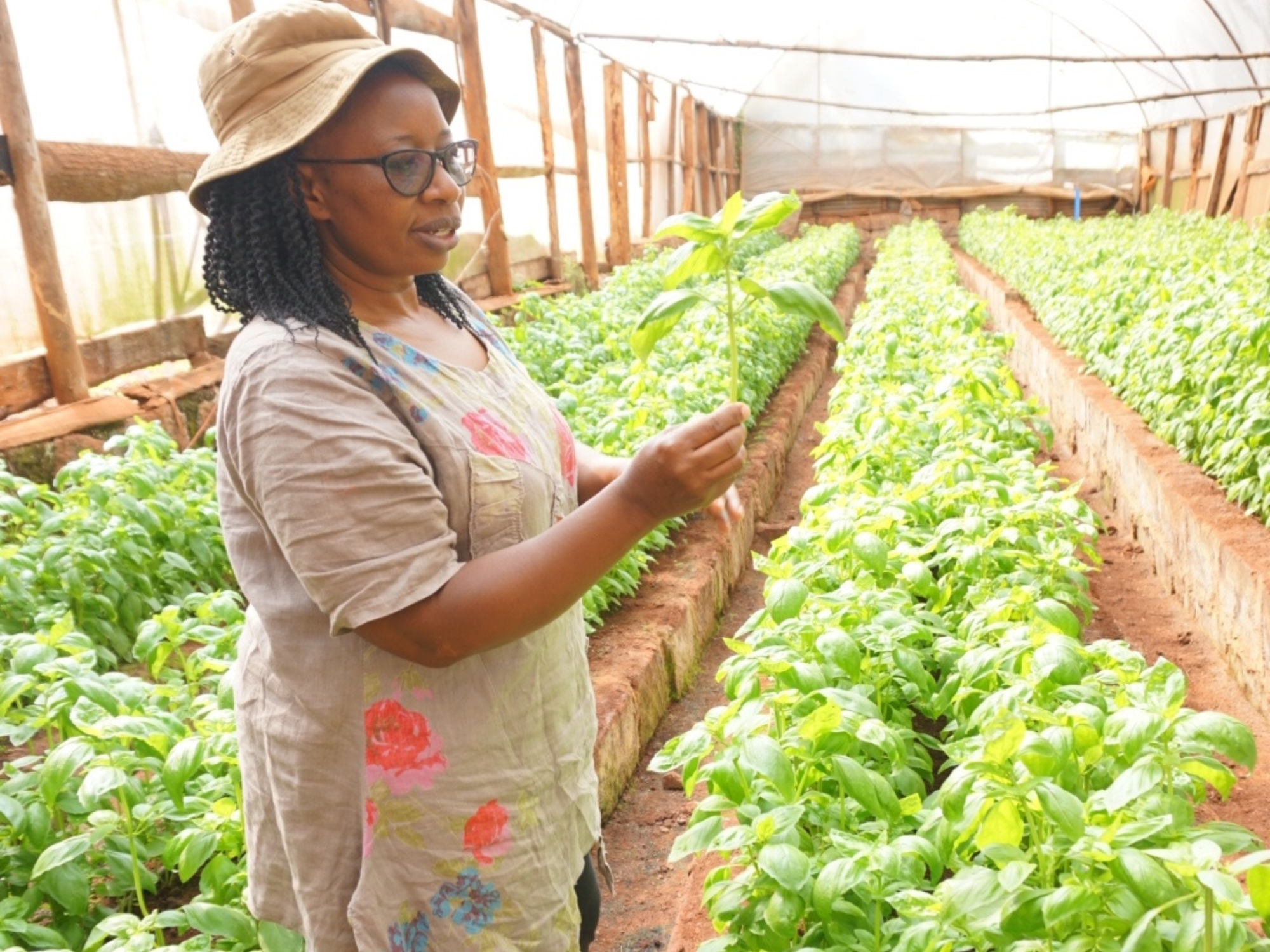
Jane Kamau holding a freshly cut basil plant in her greenhouse.
As the team explored the 0.75 acres of land under cultivation, Jane told us of her family’s nearly two-decade-long journey of establishing their now-thriving business. Since occupying the property, Jane’s family has tried their hand in various ventures, including dairy, pig and poultry farming and producing bananas, avocadoes, vegetables and strawberries. Of the initial pursuits, strawberries had been the most successful. Unfortunately, the success of the strawberries was short-lived — with wild monkeys in the neighbourhood stealing the ripe strawberries before she could gather them for sale. Deterred but not defeated, Jane erected a greenhouse where she would plant the strawberries away from the cheeky thieves. However, this solution did not last as the strawberries were not thriving under the canopy of the greenhouse. She also noted that the quality of the fruit did not match earlier harvests when the strawberries were planted under direct sunlight. This led to her exploring herb growing in 2018, which has proven less susceptible to the interference of the monkeys. The family now grows several herbs, including basil, coriander, dill, mint, rosemary, sage, tarragon and thyme.
Since settling on their cash crop of choice, the family shifted their sights to how best they could maximise the farm’s income generation. Following a recommendation from their son Francis (a Graduate in AgroEcosystems and Environment Management), Jane and Kamau chose to invest in an on-site cold storage facility in late 2021. They received financing for the Solar Cooling Engineering brand cold room through a loan which they are currently servicing.
Before purchasing the cold room, they had to hire refrigerated trucks to keep their produce fresh for transport. This was not a sustainable approach for them. It involved their workers spending long hours during harvest days to ensure all orders were sorted and packed in time for the scheduled pick up and delivery. It was also costly, with daily truck hires averaging USD $60–77. Now, with the cold room, Jane can store over 1000 kilograms of herbs for up to a week and take more time to sort and pack the product for transport to the airport.
“We have been using it day in, day out. It has really helped us because we are growing herbs that are very sensitive to high temperatures. We can harvest today, tomorrow and the next day, and the herbs remain fresh,” says Jane.
Jane and Kamau are no strangers to solar. They have been using a SunCulture solar water pump to irrigate their crops since 2015. “With solar, we are good to go anytime,” Jane remarked.
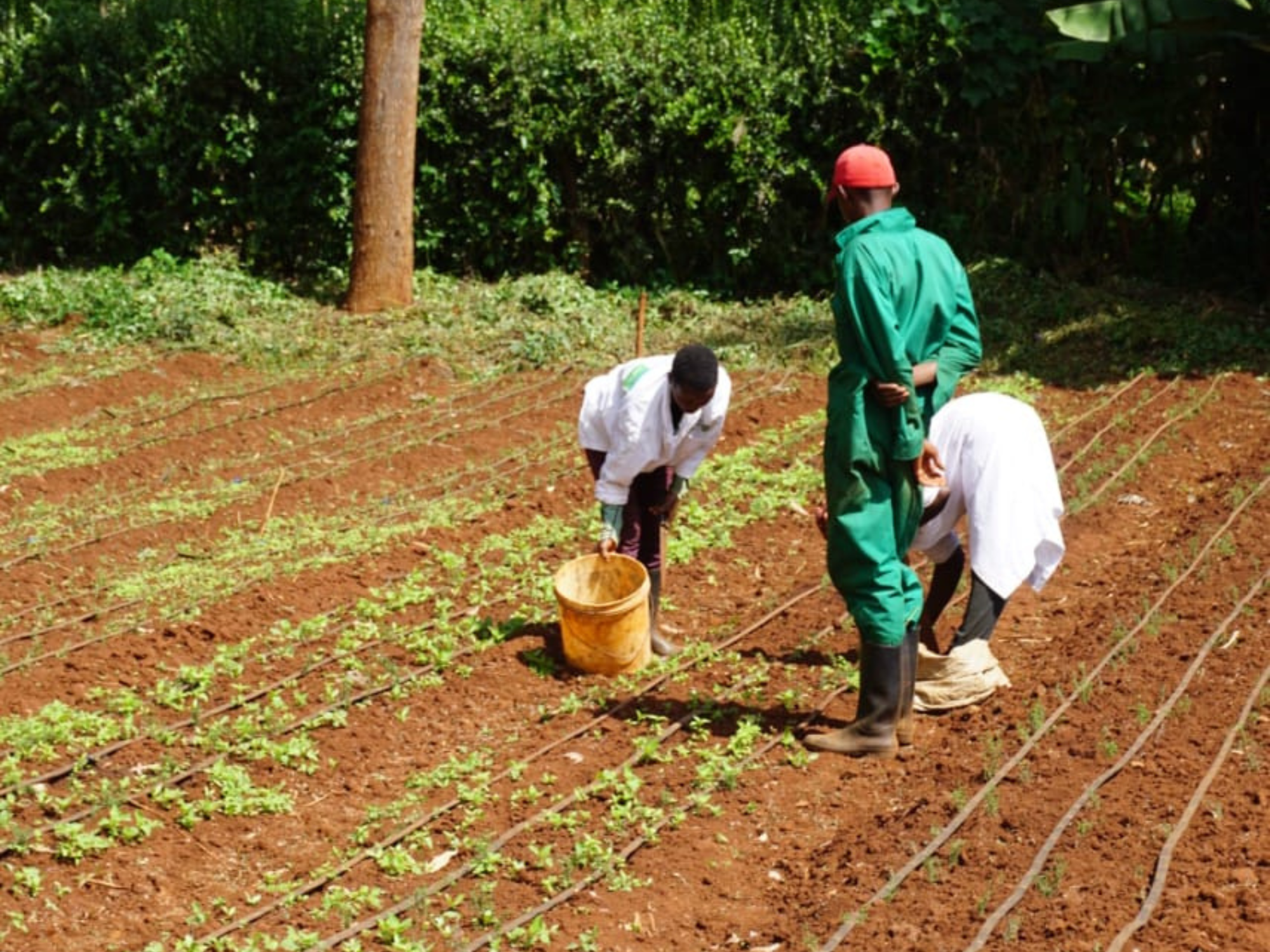
Dan, the Farm Manager, supervises two young ladies weeding newly planted thyme.
Since acquiring the cold room, Jane and Kamau’s herb capacity has grown from about 50–80 kgs to over 300kgs, nearly doubling their income from the farm. With their increased output, they now supply higher value export clients with larger orders instead of local clients who make small orders fetching lower returns. The family also appreciate that the precise temperature control of the cold room enables herb preservation in optimal conditions, meeting the high export quality standards
Not only has the cold room benefited Jane and Kamau’s bottom line, but it has also enabled them to empower their local community. Jane mentioned that, aside from Dan, the farm manager, she prefers to employ young single mothers on the farm. In this way, the young mothers can earn an income to support themselves and their children. Additionally, Jane distributes fresh vegetables to neighbouring households which she purchases in bulk and stores in the cold room, generating some extra income.
Jane and Kamau confirmed that the cold room has been a worthy investment and a means of further expanding their business. With the extra income brought about by the cold room, they are constructing a larger herb propagation shed and plan to lease land from their neighbours, extending their farm by about an acre. With these plans in place, they will grow more herbs, take up larger orders and expand the business.
“At least now with the cold room, we are able to do more propagation and grow as many crops as possible…It was a worth it investment.” – Jane Kamau.
—
About the GLOBAL LEAP Off-Grid Cold Chain Challenge (OGCCC)
The Global LEAP Off-Grid Cold Chain Challenge is an international competition that identifies and promotes the most energy-efficient, sustainable and cost-effective technologies designed for use by smallholder farmers and producers to meet cold storage requirements for fresh fruits, vegetables, fish, and dairy products.
CLASP in the Field: Seeing First-Hand How Solar-Water Pumps Are Improving Livelihoods in Kenya
On November 19, 2021, Efficiency for Access team members went out into the field to witness some of the ongoing activities of our solar water pump consumer awareness-raising campaign in Machakos county, Kenya. During this visit, they met Samuel Ndutu, a farmer from the Mwala sub-county, who relies on solar water pumping to irrigate his farm.
Samuel is a widowed father of two who left formal employment a few years back and now relies on farming to provide for his family’s needs, such as his sons’ education. On his farm, Samuel grows various vegetables and fruits, including tomatoes, cabbages, kales, bananas, pawpaws, eggplants, and more. These crops go through different growth cycles, requiring different levels of care and intervention, as well as need varying amounts of water to produce high and healthy yields. For example, tomatoes and cabbages require frequent watering, which is a scarce resource in the hot and dry Machakos county.

Section of Samuel’s farm where he has planted cabbage
Samuel’s farm is approximately half a kilometre away from the nearest water pan (a pond for storing rainwater), which he and surrounding households rely on as a water source for their livestock and crop farming. After weeks of research on online farming forums, looking for an effective and affordable means of getting the water to his farm, Samuel came across a neighbour who had shared her experience using a solar water pump on her farm. He got in touch with her and learned more about the pump’s performance, its purchase process, and how it had impacted her farming output. Satisfied with this information, Samuel contacted a local pump supplier and purchased a submersible solar water pump kit with a battery. By the time of the field visit, he had been using the pump for six months and was pleased with its performance, not having experienced any breakdowns so far. He was particularly impressed by the pump successfully pumping water uphill across a distance of over 400 meters. Aside from pumping water, he also uses the solar home system the pump came with for lighting and charging small household appliances like mobile phones.
“The pump has met the expectations I had, especially considering the distance and elevation of my farm. I have had no issues so far,” says Samuel. He further appreciated the freed-up time to attend to other tasks while water is pumped into his tank automatically. Before the purchase, he would fetch water himself—a time-consuming task.
Samuel explained that he typically pumps between 7,000- 8,000 litres over eight to nine hours. He switches the pump on in the morning, lets it run till lunchtime, empties the storage tank by watering his crops and then re-fills the tank. Samuel only pumps once a week during humid periods, but when it is drier, he pumps twice weekly. He mentioned an interest in purchasing a second pump, preferably a more powerful model than his current one, since he is keen to expand his farm to increase yields and, therefore, his income.

Storage tank on Samuel’s farm which stores the water he pumps
In addition to the pump performing as advertised, Samuel liked that he was not incurring ongoing costs to get water to his farm. If he had a fuel-powered pump, it would cost him about 5-8 USD per use. Additionally, he appreciated the convenience of the “pay as you go” product-financing model he used as an alternative to having to part with a prohibitive upfront payment. Samuel is also satisfied with the after-sales support offered by the manufacturer. The company’s engineer installed the pump at no extra cost, and after that, whenever he has had an inquiry, all he has had to do is get in touch with the manufacturer’s support team on the phone for assistance.

Samuel holding his submersible pump
Samuel is considered an influencer farmer in the area, and neighbours come to him to learn about farming with a solar water pump. Visiting his farm and seeing how using the solar water pump has boosted his farming productivity was a great reminder that efficient, solar-powered appliances improve and support the livelihoods of off-grid communities and households sustainably.
As CLASP continues to manage the Efficiency for Access consumer awareness campaign through February 2022, we look forward to uncovering more insights from the end-users like Samuel. To learn more about the campaign, follow us on Twitter or email us via info@efficiencyforaccess.org.
CLASP Supports Efforts to Increase Productive Use of Energy in East and Southern Africa
Appliances Stimulate Economic Growth
Across sub-Saharan Africa, communities in low-income countries often have limited access to high-performing appliances for income generation. Many communities still rely on traditional and dirty energy sources, like kerosene or diesel, which is expensive and harmful to the environment. Access to high-performing appliances can support sustainable economic growth, improve human health and the overall well-being of communities.
“Energy-efficient productive use appliances have the potential to positively change the lives of communities, as they offer a wide range of environmental, social, and economic benefits. Starting with this market assessment, we will define targeted interventions aiming to increase the uptake of these appliances across the EAC and SADC regions. Collaboration with key stakeholders and, in particular, the private sector will be crucial,” says Karin Reiss-Haimbala, Project Manager at UNIDO.
CLASP’s Market Analysis Will Guide Policy Decisions
“Understanding the current market of PUA’s will help us identify interventions that can increase the use of energy-efficient products, in turn increasing communities’ productivity and economic growth”, explains James Wakaba, CLASP’s East Africa director.
Productive use appliances (PUA) are income-generating appliances for domestic and small and medium-sized enterprises (SMEs). Appliances such as refrigerators and milling machines, allow small business owners to bring in new customers seeking cold drinks and to mill their cereals. Through this project, UNIDO aims to increase the uptake of these appliances to stimulate economic growth and increase productivity.
CLASP is conducting a market assessment to identify appliances with the most significant potential impact on income generation and improved quality of life for communities across six countries in East and Southern Africa. The analysis will also determine economic benefits, CO₂ emission reductions, and energy consumption reductions for selected high impact appliances to enable supply chain actors and policymakers to make informed decisions on the ease of access.
CLASP is supporting the United Nations Industrial Development Organization (UNIDO) and works closely with EACREEE and SACREEE. The market study is part of the Energy Efficient Lighting and Appliances in East and Southern Africa (EELA), funded by the Swedish International Development Agency (Sida) and implemented by UNIDO.