
CLASP in the Field: Seeing First-Hand How Solar-Water Pumps Are Improving Livelihoods in Kenya
On November 19, 2021, Efficiency for Access team members went out into the field to witness some of the ongoing activities of our solar water pump consumer awareness-raising campaign in Machakos county, Kenya. During this visit, they met Samuel Ndutu, a farmer from the Mwala sub-county, who relies on solar water pumping to irrigate his farm.
Samuel is a widowed father of two who left formal employment a few years back and now relies on farming to provide for his family’s needs, such as his sons’ education. On his farm, Samuel grows various vegetables and fruits, including tomatoes, cabbages, kales, bananas, pawpaws, eggplants, and more. These crops go through different growth cycles, requiring different levels of care and intervention, as well as need varying amounts of water to produce high and healthy yields. For example, tomatoes and cabbages require frequent watering, which is a scarce resource in the hot and dry Machakos county.

Section of Samuel’s farm where he has planted cabbage
Samuel’s farm is approximately half a kilometre away from the nearest water pan (a pond for storing rainwater), which he and surrounding households rely on as a water source for their livestock and crop farming. After weeks of research on online farming forums, looking for an effective and affordable means of getting the water to his farm, Samuel came across a neighbour who had shared her experience using a solar water pump on her farm. He got in touch with her and learned more about the pump’s performance, its purchase process, and how it had impacted her farming output. Satisfied with this information, Samuel contacted a local pump supplier and purchased a submersible solar water pump kit with a battery. By the time of the field visit, he had been using the pump for six months and was pleased with its performance, not having experienced any breakdowns so far. He was particularly impressed by the pump successfully pumping water uphill across a distance of over 400 meters. Aside from pumping water, he also uses the solar home system the pump came with for lighting and charging small household appliances like mobile phones.
“The pump has met the expectations I had, especially considering the distance and elevation of my farm. I have had no issues so far,” says Samuel. He further appreciated the freed-up time to attend to other tasks while water is pumped into his tank automatically. Before the purchase, he would fetch water himself—a time-consuming task.
Samuel explained that he typically pumps between 7,000- 8,000 litres over eight to nine hours. He switches the pump on in the morning, lets it run till lunchtime, empties the storage tank by watering his crops and then re-fills the tank. Samuel only pumps once a week during humid periods, but when it is drier, he pumps twice weekly. He mentioned an interest in purchasing a second pump, preferably a more powerful model than his current one, since he is keen to expand his farm to increase yields and, therefore, his income.

Storage tank on Samuel’s farm which stores the water he pumps
In addition to the pump performing as advertised, Samuel liked that he was not incurring ongoing costs to get water to his farm. If he had a fuel-powered pump, it would cost him about 5-8 USD per use. Additionally, he appreciated the convenience of the “pay as you go” product-financing model he used as an alternative to having to part with a prohibitive upfront payment. Samuel is also satisfied with the after-sales support offered by the manufacturer. The company’s engineer installed the pump at no extra cost, and after that, whenever he has had an inquiry, all he has had to do is get in touch with the manufacturer’s support team on the phone for assistance.

Samuel holding his submersible pump
Samuel is considered an influencer farmer in the area, and neighbours come to him to learn about farming with a solar water pump. Visiting his farm and seeing how using the solar water pump has boosted his farming productivity was a great reminder that efficient, solar-powered appliances improve and support the livelihoods of off-grid communities and households sustainably.
As CLASP continues to manage the Efficiency for Access consumer awareness campaign through February 2022, we look forward to uncovering more insights from the end-users like Samuel. To learn more about the campaign, follow us on Twitter or email us via info@efficiencyforaccess.org.
CLASP Supports Efforts to Increase Productive Use of Energy in East and Southern Africa
Appliances Stimulate Economic Growth
Across sub-Saharan Africa, communities in low-income countries often have limited access to high-performing appliances for income generation. Many communities still rely on traditional and dirty energy sources, like kerosene or diesel, which is expensive and harmful to the environment. Access to high-performing appliances can support sustainable economic growth, improve human health and the overall well-being of communities.
“Energy-efficient productive use appliances have the potential to positively change the lives of communities, as they offer a wide range of environmental, social, and economic benefits. Starting with this market assessment, we will define targeted interventions aiming to increase the uptake of these appliances across the EAC and SADC regions. Collaboration with key stakeholders and, in particular, the private sector will be crucial,” says Karin Reiss-Haimbala, Project Manager at UNIDO.
CLASP’s Market Analysis Will Guide Policy Decisions
“Understanding the current market of PUA’s will help us identify interventions that can increase the use of energy-efficient products, in turn increasing communities’ productivity and economic growth”, explains James Wakaba, CLASP’s East Africa director.
Productive use appliances (PUA) are income-generating appliances for domestic and small and medium-sized enterprises (SMEs). Appliances such as refrigerators and milling machines, allow small business owners to bring in new customers seeking cold drinks and to mill their cereals. Through this project, UNIDO aims to increase the uptake of these appliances to stimulate economic growth and increase productivity.
CLASP is conducting a market assessment to identify appliances with the most significant potential impact on income generation and improved quality of life for communities across six countries in East and Southern Africa. The analysis will also determine economic benefits, CO₂ emission reductions, and energy consumption reductions for selected high impact appliances to enable supply chain actors and policymakers to make informed decisions on the ease of access.
CLASP is supporting the United Nations Industrial Development Organization (UNIDO) and works closely with EACREEE and SACREEE. The market study is part of the Energy Efficient Lighting and Appliances in East and Southern Africa (EELA), funded by the Swedish International Development Agency (Sida) and implemented by UNIDO.
2022 Global LEAP Awards Off-Grid Cold Chain Challenge Announces Preliminary Finalists
Seventeen products from 14 companies have been selected as preliminary finalists of the 2022 Global LEAP Awards Off-Grid Cold Chain Challenge (OGCCC). The OGCCC nomination window opened on June 29, 2021 and closed on August 29, 2021. The Global LEAP OGCCC received product nominations from 20 off-grid cold chain suppliers, distributors, off-grid energy developers and companies based in nine countries. Nominated cold storage units use either solar power, grid or hybrid energy sources to reduce food waste, empower local farmers and bring fresh produce to local and regional communities.
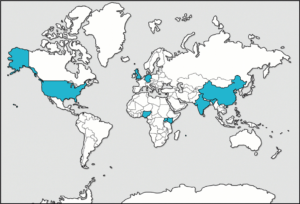
Preliminary finalists were determined based on their promising business models and energy-efficient, sustainable technologies that meet cold storage requirements for fresh fruits, vegetables, fish and dairy products in first-mile markets.
The preliminary finalist technologies are from the following companies:
- Promethean Spenta Technologies Private Limited
- Coolcrop Technologies Private Limited
- DGridEnergy, LLC
- ColdHubs Limited
- Ecozen Solutions Private Limited
- Inficold India Private Limited
- FreshBox Enterprises Limited
- Enterprise Project Ventures Limited
- QINGDAO HAIER BIOMEDICAL
- Tree_Sea.mals Limited
- New Leaf Dynamic Technologies Private Limited
- Basil Energetics Private Limited
- Solarcool
- Solar Cooling Engineering
The shortlisted technologies will undergo a six-month field assessment in Kenya, Nigeria, Rwanda, Tanzania, Uganda and India. The Global LEAP will provide needs assessment-based grants to participating companies to offset costs associated with the field deployment. During the field assessment period, the technologies’ efficiency, quality and suitability will be remotely monitored and verified. The program will also collect qualitative data on business models and the technologies’ use and impact on beneficiaries. OGCCC finalists and winners, which are expected to be announced in Q3 2022, will be eligible for $100,000 in innovation cash prizes and other investment opportunities.
The 2022 Challenge is implemented by Efficiency for Access and CLASP with support from DOEN Foundation, IKEA Foundation, Foreign & Commonwealth Department Offices (FCDO) and Good Energies Foundation.
Using Technology to Build Affordable Business Intelligence for the Solar Water Pump Market
Solar water pumps can be highly profitable investments in dry or variable climates with abundant solar radiation, for example, in Sub-Saharan Africa. For households in these regions, solar water pumping offers numerous economic and social benefits, including:
- Increasing crop yields
- Providing a more predictable source of disposable income
- Building resilience to droughts
- Supporting farmers to better adapt to the effects of climate change
However, barriers such as inadequate market intelligence hinder the technology’s growth and increased impact despite the above benefits. This productivity model seeks to solve the information gap in sub-Saharan Africa by providing market actors with actionable insights to improve farmers’ productivity, enhance the allocation of PUE appliances and enhance food security at the national and sub-national levels.
Key applications of the data available from remote sensing and crop simulations in the report include:
- Identifying locations where a subsidy for an asset such as a solar water pump would be most effective in raising farm incomes and finding areas most vulnerable to climate change and natural disasters.
- Improving risk assessments and reduce the cost of credit scoring based on the estimated yield and cash flows
- Developing customized offerings for farmers, including bundling products with extension services and sustainable irrigation equipment.
- Impact evaluation on yield improvement and new farming practices such as crop rotation/intercropping.
Download the report here: Using Technology to Build Affordable Business Intelligence for the Solar Water Pump Market
About Efficiency for Access
Efficiency for Access is a global coalition working to promote renewable and energy efficient appliances to deliver clean energy to the world’s poorest people. It is coordinated jointly by CLASP and the UK’s Energy Saving Trust.
Can Solar Improve Livelihoods for Small-Scale Farmers?
Solar Increasingly Powers Agriculture in Kenya
Over the past decade, the off-grid solar industry has grown to meet the energy demands of dispersed communities across Kenya, selling over 4 million solar lanterns and systems since 2016. As communities move up the energy ladder, solar-powered appliances improve the quality of life and offer new business opportunities.
In Kenya, agriculture plays a significant role in the economy, accounting for 40% of the overall workforce and contributing more than half of export earnings. The agriculture industry primarily consists of family-operated farms to meet both subsistence and commercial needs. Maize is a staple and can be eaten in popular maize dishes like Ugali, which is consumed by 78% of the population. However, there is a gap between raw maize production and the refining process to turn it into the commonly consumed flour. Because small-scale Kenyan farmers have limited access to milling machines, they rely on using third parties or mill manually. However, neither option is ideal. Milling through third parties is expensive, while manual milling does not produce a consistent grain texture. With access to smaller, more affordable mills, communities can improve agricultural productivity and the lives of off-grid communities.
Agsol Leads in Innovative Milling Technologies
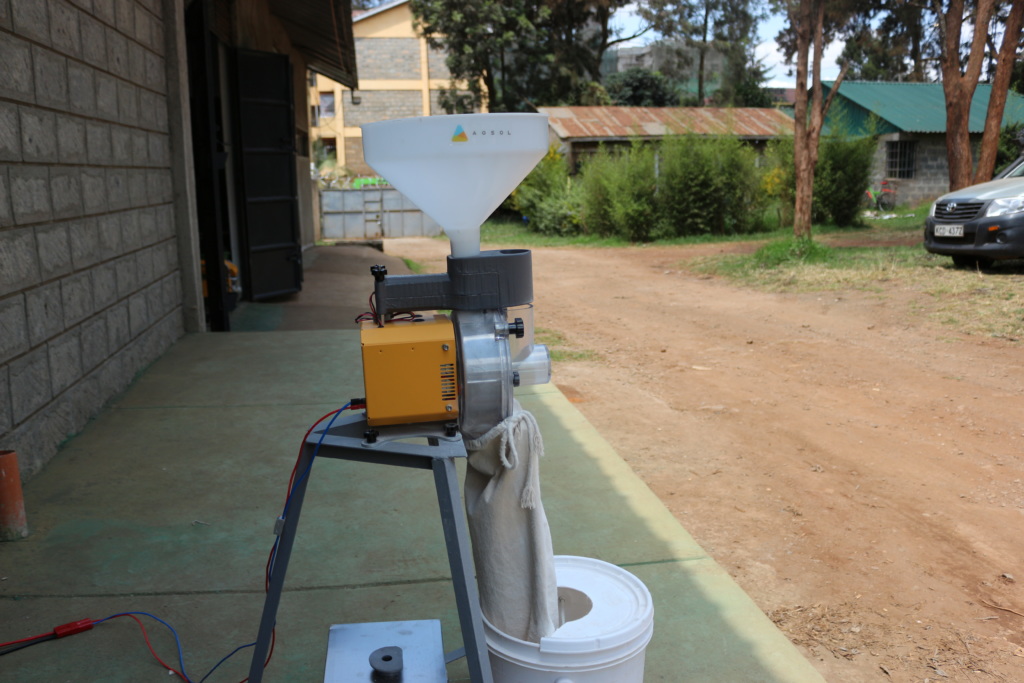
Agsol solar-mill
In 2016, Matt Carr and Greg Denn founded Agsol to build on early successes with “solarising” small agro-processing machines.
“Because diesel mills are large expensive machines and have really high operating costs, they are typically only found in larger towns and centres. That means most rural farmers waste huge amounts of time accessing these essential services. Our solar mills are specifically designed to be viable in smaller communities to bring milling services closer to the people that need them. They are cheaper to buy and cheaper to run than a diesel mill and can be operated by a non-trained technician.” explains Carr.
In 2019, Agsol won an Efficiency for Access R&D grant, which helped them develop the most efficient small grain mill known in the market. Our team has stayed in touch with Agsol since the grant. We recently visited their factory in Kikuyu to better understand their range of milling products and how farmers in Kenya use these appliances.
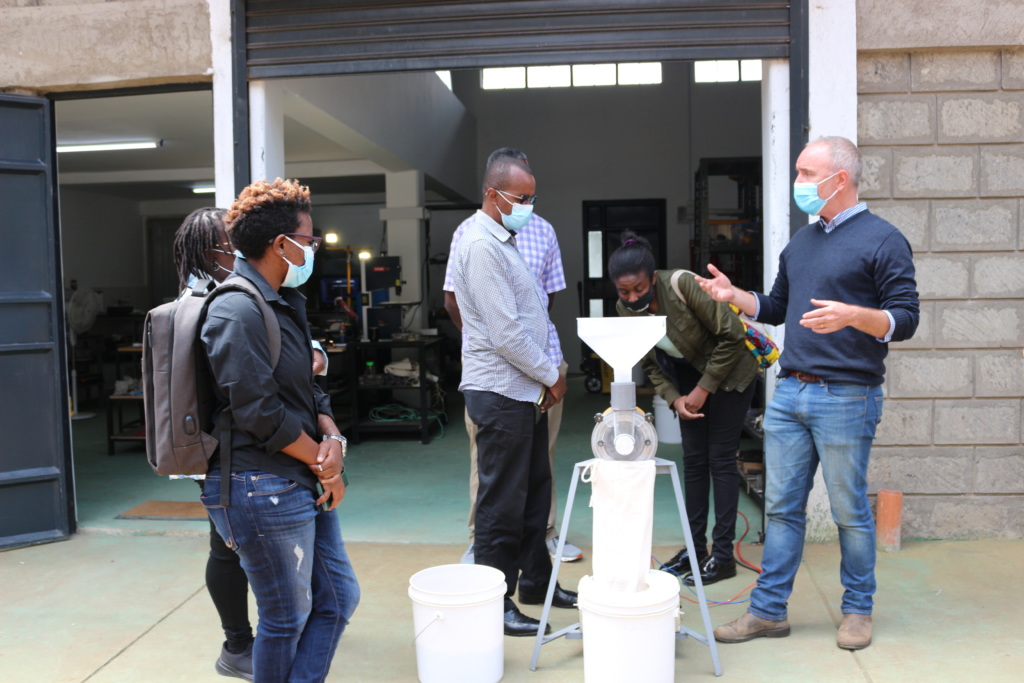
Agsol ’s Mills Offer Flexible Milling Hours
Agsol has developed a small hammer mill with interchangeable screens to produce fine flour or coarse grits for animal feed. Thanks to a specialized high-speed brushless DC (BLDC) motor, Agsol’s MicroMill is highly energy-efficient at converting power into flour – over 2.5 times more efficient than typical electric mills.
The Agsol MicroMill uses only 0.8kW, allowing for small quantity batch milling. This is not the case for diesel-powered mills, which can only mill in large quantities to conserve fuel. Diesel mill owners often make customers wait until there is sufficient volume to warrant starting up the diesel mill.
The need to conserve energy and mill in large quantities has led to millers setting specific milling times of the day, ensuring a large turnout of customers and large loads of cereal to be milled. In turn, solar mills offer flexible milling times as they consume less energy and can mill smaller batches.
“Customers told us the previous version of the MicroMill was too slow, and it needed to be twice as fast. That was our goal for the current version. But by developing our own custom BLDC motor, we’ve actually tripled the production speed, increased efficiency by another 30%, and reduced the costs by 45%. The MicroMill can process over 300 kg/day of flour, and we’re excited this product has real potential to outcompete diesel mills in most off-grid settings.” Carr explained.
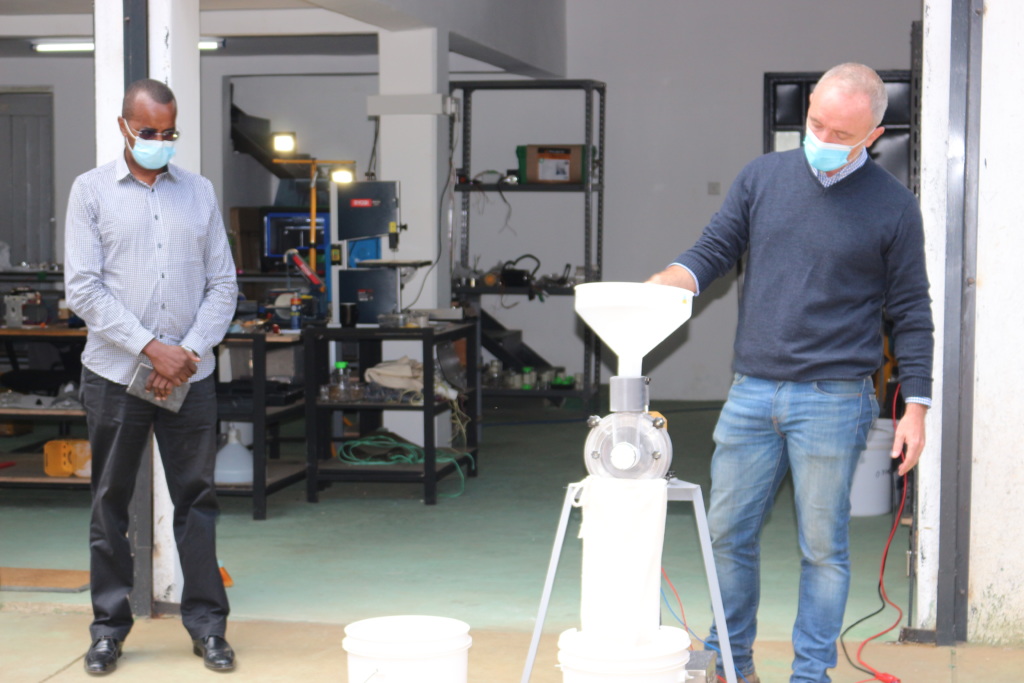
Solar Mills Offer Opportunity to Power Other Appliances
Consumers have the option of purchasing the Agsol mills with a power offtake module that can supply 12V and 5V DC to power devices like phones, clippers, fans, TVs, etc. The mill comes with an LFP lithium-ion battery to store excess power during periods of high irradiation, providing energy during periods of reduced sun exposure.
Are Solar Mills the Future of Small-Scale Farming?
Electric-powered mills are the most cost-effective milling option for domestic and small-scale commercial use, especially in rural areas. With no running and negligible maintenance costs, mills pay for themselves in less than two years, while diesel mills use up to 35% of the generated revenue in maintenance and fuel costs. They are environmentally friendly and adequately sized to allow more distributed placement, reducing the time and labour burden associated with accessing milling services.
“Our mills have the potential to create a more decentralized and accessible network of essential services, saving rural women time otherwise spent walking long distances to and from diesel mills. They can be used as a source of [clean] energy as well as support new income-generating activities in small communities.”
Evaluating Appliance Performance in the Field: Results from Remote Monitoring Solutions Beta Testing
The off-grid appliance space, especially for larger productive use appliances, has not caught up with the conventional on-grid market. However, advancements, such as reduced prices of solar power modules, have led to new and more powerful solar-powered appliances becoming more widely available. But as these appliances enter new markets, asset owners, investors, companies, donors, researchers and industry support organisations must evaluate and compare product performance and impact. Efforts to bridge the existing information gaps include:
- Monitoring energy production
- Measuring energy utilisation by connected electrical products
- Monitoring the delivered service to quantify the impact of the products.
It is becoming common practice to assess the technical performance of off-grid appliances through laboratory testing programs like VeraSol and the Global LEAP Awards. Lab testing, however, has limitations in determining the full spectrum of product performance, especially where user interaction is a significant factor. To address this, remote monitoring systems can evaluate the long-term performance of off-grid appliances in the field as consumers use and interact with products. This report details beta testing of remote monitoring solutions to gather data on solar refrigerators, solar water pumps and solar milking machines usage and optimise product performance.
Key takeaways include:
- Beta testing is essential for a smooth monitoring process and ensures that the data collected meets the required accuracy and utility conditions
- A one-size-fits-all monitoring solution is not suitable for appliances with different testing needs and complexity; therefore, field testing monitoring solutions will require customisation
- Understanding the network providers’ landscape in the target countries is crucial in developing an adaptable solution that can work even in areas with poor connectivity
Download the Evaluating Appliance Performance in the Field: Results from Remote Monitoring Solutions Beta Testing report to learn more.
About Efficiency for Access
Efficiency for Access is a global coalition working to promote renewable and energy efficient appliances to deliver clean energy to the world’s poorest people. It is coordinated jointly by CLASP and the UK’s Energy Saving Trust.
Off- and Weak-Grid Appliance Market: Uganda
Uganda’s electrification rate is growing rapidly, but 59% of people still do not have access to electricity. This large off- and weak-grid population, a sharp increase in mobile money operations, and the established markets for component-based solar energy systems all provide a strong foundation for appliance sales in Uganda.
While the solar market in Uganda is growing fast, ownership of appliances such as TVs and refrigerators remain extremely low. There is also insufficient data about off-grid appropriate appliances that can help manufacturers, policymakers, distributors, mini-grid operators, investors, and other market actors to make informed decisions and identify high quality, efficient products sold in their region.
To help address this challenge, Efficiency for Access has worked to gather data on the availability of off-grid appropriate appliances in key countries, including Uganda. The Off- and Weak-Grid Appliance Market Country Profile for Uganda analyses four types of off-grid appliances surveyed in 2018 and 2020—TVs, fans, refrigerators and SWPs.
The profile explores the overall market landscape in Uganda, the common power type, size, price and warranty of off-grid appliances sold in retail markets, and other findings. The market insights can help inform sector stakeholders, such as development programmes, distributors, manufacturers, mini-grid developers, policymakers, and others, on the state of the market. In addition, we hope that the publication can help its readers identify opportunities to encourage higher market penetration for high-quality off- and weak-grid appropriate appliances.
Download the Off- and Weak-Grid Appliance Market: Uganda report here.
About Efficiency for Access
Efficiency for Access is a global coalition working to promote renewable and energy efficient appliances to deliver clean energy to the world’s poorest people. It is coordinated jointly by CLASP and the UK’s Energy Saving Trust.
Efficiency for Access Research and Development Fund: Innovator Series – Agsol
Solar milling can help change how essential milling services are delivered in rural areas. Small or micro-milling machines can create a highly decentralised network of essential milling services and are a viable option for smallholder farmers. They have the potential to increase rural productivity, generate income and offset the time spent travelling to and waiting for large diesel mills.
Agsol was established in 2016 to develop solar-powered milling machines that can viably serve small communities, improve labour efficiencies, keep more money in rural economies, and catalyse access to higher tier energy services. The company has its operating base in Kenya and a facility in China where primary product research and development happens.
Download the report to learn more about Agsol developing a small-scale mill.
2021 Solar Appliance Technology Briefs Analyze Key Trends in Rapidly Evolving Markets
We are excited to announce that CLASP, on behalf of Efficiency for Access, has published a series of 2021 Solar Appliance Technology Briefs for off- and weak-grid appropriate technologies. The briefs synthesize the latest market intelligence and chart the pathway to commercialization for 11 disruptive technologies that are expected to catalyze energy access and sustainable development.
The first iteration of the LEIA Technology Summaries was published in 2017 to help the newly established Efficiency for Access Coalition navigate a nascent market. At the time there was limited data available on market trends and performance of appliances suitable for resource-constrained settings. Since then, CLASP, with the help of its partners, has assembled a wealth of information on a number of these technologies across market, consumer and impact research, and the Efficiency for Access Coalition members have invested nearly £130 million in the high-performing appliances space.
For a quick primer with most salient details from the briefs, see this collection of two-page snapshots.
The technologies are grouped into a four-part series based on market maturity:
Near-to-market Technologies: Fans and TVs
The markets for fans and televisions are mature compared to other off-grid appliances. Fans and TVs have a relatively high penetration rate across key markets in South Asia and sub-Saharan Africa when compared to other off-grid appliances. They are more energy-efficient and more affordable to a wider range of customers.
Over 670,000 off-grid fans and 427,000 televisions were sold in 2019
Fans: Over 670,000 off- and weak-grid fans were sold globally in 2019, as they are one of the most cost-effective and life-saving off-grid cooling solutions. With positive trends in off-grid fan affordability and efficiency, demand is predicted to grow, and the obtainable market is projected to reach 48 million households by 2030.
Televisions: The efficiency and affordability of off-grid televisions have improved by 48% and 44% respectively over the past few years, as they are one of the most coveted off-grid appliances by consumers. While the market potential for off-grid TVs is growing, last-mile distribution challenges and insufficient consumer financing prevents the market from reaching its full potential.
Emerging Technologies: Solar Water Pumps and Refrigerators
In a survey of 130+ energy access practitioners, solar water pumps ranked first in perceived consumer impact. Refrigeration ranked third. Both technologies help users improve productivity by reducing the time it takes to complete household chores and lead to better health outcomes in the form of healthier diets.
Solar water pumps and refrigerators rank are among the top 5 most impactful household appliances
Solar Water Pumps: Improving access to solar irrigation can improve crop yields by up to 3x and build resilience to droughts and unpredictable weather patterns. However, the market remains variable in Sub Saharan Africa and South Asia. To reach new customers, one must leverage new business models and expand partnerships to improve affordability.
Refrigerators: An increasing number of refrigerator manufacturers have expanded their market to target off-grid households and small businesses. Products sampled from local retail markets in the 2019 Global LEAP Awards had improved by 36% over the 2017 period. This class of efficient, off-grid appropriate refrigerators hold promising potential to provide reliable cooling services making it an overall ubiquitous household appliance.
Horizon Technologies: Walk-in Cold Rooms, Electric Pressure Cookers, Solar Milling, E-mobility
Despite their strong potential to unlock higher tiers of energy access and economic and social development, horizon technologies remain far from achieving scale in off- and weak-grid markets. The maturity of these nascent, horizon technologies will benefit greatly from an enabling environment fostered by a diverse set of stakeholders with aligned objectives including governments, energy service providers and the private sector.
Over 70% of all EPC sales take place in developed economies with reliable grid connections
Walk-in Cold Rooms: Establishing cold chains as extensive and reliable as those in industrialized countries would enable developing countries to raise food supply by 15% – about 250 million tonnes. A complete cold chain involves multiple stakeholders, and in the agricultural context this would include farmers, aggregators, transportation companies, warehouses and processing centers.
Electric Pressure Cookers: EPCs are highly energy-efficient appliances and can expand and improve clean cooking access for the 2.6 billion people worldwide who rely primarily on biomass cooking fuels. Efforts to improve design, consumer financing and awareness of their health benefits can help accelerate their market growth.
Solar Milling: Solar milling has the potential to enhance farming efficiency, increase farmer revenues, promote food security and empower women. On-grid solar-powered mills are slowly replacing diesel mills, but progress remains slow in off-grid settings as an ideal scenario must balance three parameters: efficiency, throughput as well as capital & operational cost.
E-mobility: Battery-powered E-mobility transportation modes eliminates internal combustion engine (ICE), that releases toxic particulate matter and carbon dioxide to the environment. The uptake of E- mobility is strong and improving across parts of Asia and Sub-Saharan Africa, however penetration lags in rural areas, and product quality remains an issue. To address core barriers, a deeper understanding of use cases is needed.
Enabling Technologies: Interoperability, ICT, Permanent Magnet Motors
Household appliances have become a major driver for the off-grid solar sector. The global addressable market for off-grid household appliances is an estimated USD 12.6 billion, with the potential to reach USD 25.3 billion by 2030. Interoperability, ICT and PM motors are central to this transition.
Adopting a standardized communication protocol across 25 appliances would lead to an estimated USD 1.5 million in savings for the off-grid solar industry.
Interoperability: Improvements in interoperability would allow customers wishing to upgrade their system or add an appliance to their household to not have to do so through the company that sold them their solar energy kit. The predominant model is that of non-interoperable systems which use brand-specific connectors combined with proprietary digital protocols.
ICT: ICT is a broad term that covers technologies that enable communications — such as radio, television, mobile phones, computer and network hardware, satellite systems, and internet of things (IoT)– and the services provided through these devices. ICT can also enable the uptake of other appliances highlighted in the brief series. For example, access to mobile phones has been a key enabler in the mobile money-driven PAYGo solar home system sector, helping off-grid communities gain access to electricity and contributing to SDG7.
Permanent Magnet Motors: PM motors are a type of electric motor that promise to be more efficient than their more common counterpart, induction motors. PM motors can play a crucial role in addressing efficiency-related challenges in resource-constrained settings across the full grid spectrum. Motors are the primary movers in almost all machinery and appliances. PM motors can be used with smaller power supplies, tolerate low or fluctuating voltages and have longer run times due to higher efficiency. Ideal applications for PM motors in solar appliances include solar water pumps, fans and refrigerators.
Uses and Impacts of Solar Water Pumps
CLASP, through Efficiency for Access, worked with 60 Decibels to publish the first iteration of this report in May 2019. Since then, we have followed up with a majority of the initial 375 respondents and contacted an additional 818 customers in Kenya, Rwanda, Senegal, Tanzania, Uganda and Zambia through baseline and follow up interviews.
This analysis examines the differences between the data collected before 2020 for the first report and the data collected since January 2020 to provide more insight into any changes. The study provides compelling evidence on SWPs’ contribution to economic growth and improved livelihoods. However, users also reported challenges with the technology, including a need for wider inclusivity, improved affordability and the need for design solutions.
The customers interviewed for this report purchased their SWPs as part of the Global LEAP Results-based Financing facility.
Download the Uses and Impacts of Solar Water Pumps report here.
About Efficiency for Access
Efficiency for Access is a global coalition working to promote renewable and energy efficient appliances to deliver clean energy to the world’s poorest people. It is coordinated jointly by CLASP and the UK’s Energy Saving Trust.