
Appliances for All: Assessing the Inclusivity of the Solar Lighting and Appliances Sector
Improving inclusivity is crucial to achieving a just energy transition and maximising energy access gains, especially for vulnerable groups like women, people with disabilities and low-income households. CLASP through Efficiency for Access published a first-of-its-kind report which includes a meta-analysis of 19 household surveys spanning 5,483 solar lighting and appliance customers in eight countries and self-reported company data for nine solar product manufacturers and distributors. It is a first step towards establishing a baseline to understand how well the sector is performing across different dimensions of equity and inclusion, including:
- An understanding of the ‘typical solar product user’
- An assessment of how well the sector is reaching women, people living in poverty, and people with disabilities
- Analysis of gender gaps in hiring and compensation among private sector companies and the diversity of product expertise and offering
The report concludes with recommendations for donors, market development programs, investors, and private sector companies on improving data collection efforts and better integrating diversity, equity and inclusion principles into their work.
Download the Appliances for All: Assessing the Inclusivity of the Solar Lighting and Appliances Sector report.
About Efficiency for Access
Efficiency for Access is a global coalition working to promote renewable and energy efficient appliances to deliver clean energy to the world’s poorest people. It is coordinated jointly by CLASP and the UK’s Energy Saving Trust.
Uses and Impacts of Off-Grid Refrigerators
Expanding access to affordable, high-performing cooling solutions through off-grid refrigerators can strengthen food and healthcare systems, while also improving living standards and building resilience to climate change in vulnerable communities.
A recent longitudinal study by 60 Decibels and Efficiency for Access shows that off-grid refrigerators are creating financial benefits for users year on year, with 79% of respondents reporting that they use their off-grid refrigerators for income-generating activities.
This multi-year study was commissioned by Efficiency for Access as part of the Global LEAP Results-based Financing Facility. 60 Decibels interviewed 603 off-grid refrigerator customers in Kenya, Tanzania and Uganda between 2018 and 2022 to gain insights into consumers’ experience with off-grid refrigerators. Nearly half of respondents (48%) reported that their income grew from using off-grid refrigerators, while 24% reported growth in their businesses.
The findings in this report will fill user-experience knowledge gaps and guide manufacturers in improving product design and financing for off-grid solar products.
Download the Uses and Impacts of Off-Grid Refrigerators report for more information.
About Efficiency for Access
Efficiency for Access is a global coalition working to promote renewable and energy efficient appliances to deliver clean energy to the world’s poorest people. It is coordinated jointly by CLASP and the UK’s Energy Saving Trust.
Soaring Temperatures in India Necessitate Sustainable Cold Storage
On the outskirts of Delhi, CLASP visited two cold storage facilities to learn how policy can improve cold chain infrastructure across India. We are partnering with Alliance for an Energy Efficient Economy (AEEE) to support more resilient food chains in the face of increasingly severe weather.
Rising Temperatures Put Crops at Risk
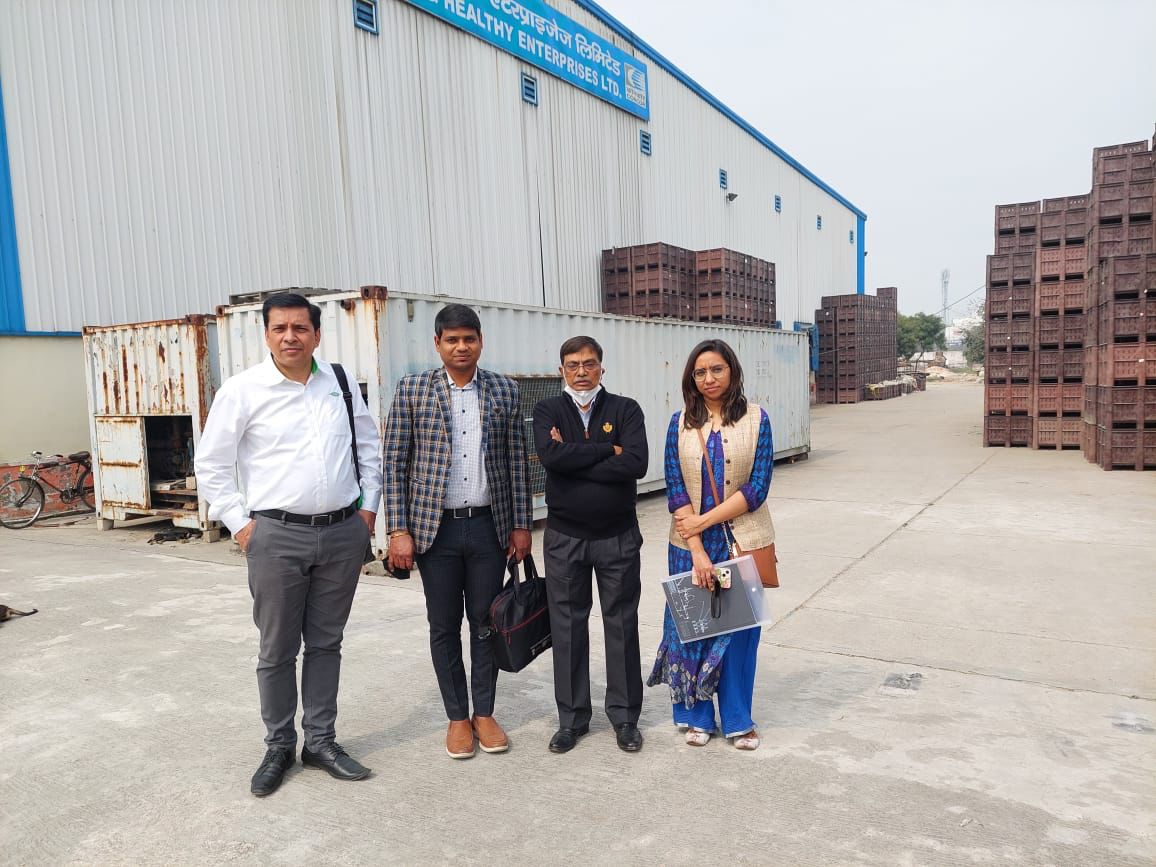
CLASP visited two cold chain units – ASPAM Cold Storage and Fresh Healthy Enterprise Limited (FHEL). Meeting with these companies offered important insights into the use cases and challenges we could address through better efficiency policies – namely lowering soaring electricity costs and increasing capacity for storage.
The FHEL unit sits in a remote midpoint for several neighboring cities. FHEL is one of several key actors in the regional cold chain, connecting farmers and agricultural cooperatives to larger businesses. With soaring temperatures across India and erratic rainfall, storage of produce is becoming an increasingly important aspect of food security efforts.
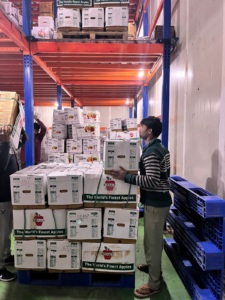
The local government has stepped in to support food chain infrastructure in Sonipat. The government allocated ASPAM Cold Food Storage land to build a cold storage unit and granted the company a 40% subsidy to fully automate the facility. The facility contains twenty-one Controlled Atmosphere (CA) chambers – highly effective technology to control the temperature and humidity. The combined capacity of this facility is 8500 MT (approximately the weight of 2236 full-sized shipping containers) and frozen storage capacity of 1500 MT.
Regulating Cold Rooms Requires Intensive Electricity
The ASPAM cold units require intensive electricity to maintain advanced temperate controlled rooms. The units maintain low levels of oxygen and high levels of carbon dioxide in gas-tight containers to retain freshness and nutritional content of fruits like apples and kiwis, as well as frozen produce like peas. The chambers employ unique storage protocols that vary depending on the product’s needs. For example, apples and kiwis are stored at 1-20°C, whereas dates and oranges are stored at 4-5°C. For reference, July temperatures in Sonipat average 28-39°C. Without the unit, the fruits would quickly rot.
The controlled atmosphere extends the shelf life of produce and reduces the need for post-harvest chemicals, usually sprayed for protection against insects and microorganisms. The unit also hosts a ripening chamber for fruits like bananas, mangoes and papayas. This is typically a 5-day cycle and requires a consistent temperature of 2°C and relative humidity of 95%. All the conditions in the cold rooms are controlled and monitored through a remote monitoring system.
The total cost to run these units is approximately INR 700,000 ($8778 USD) per month.
Power cuts are frequent in the area so ASPAM relies on a diesel generator for power backup.
Currently, CLASP is visiting cold storage facilities across the country to understand the ecosystem and the different requirements of cold chain infrastructure amidst varied weathers. CLASP aims to use this information to devise standards and labels for key cold chain equipment in the months to come.
How can cold storage employ more design and technology innovations?
The unit maintains the variable temperatures efficiently by employing freon refrigeration technology. Freon is a non-combustible gas, typically used as a refrigerant in air cooling applications. By undergoing an evaporation process repeatedly, freon helps produce cool air that can be circulated throughout a unit. CLASP is standardizing the equipment that utilizes freon – ensuring that the gas is efficiently used in cold storage applications.
With the lessons learned from the visit to Sonipat and six other sites across India, our team will collaborate with industry leaders to achieve our goals. By 2030, our cold storage policies aim to mitigate 8.5 Mt of CO₂ emissions by adoption of high-efficiency agricultural cold chain solutions.
Learn more about how CLASP is contributing to more resilient cold chain systems around the world:
- CLASP celebrates and encourages innovation the cold chain sector – 2022 Global LEAP Awards Off-Grid Cold Chain Challenge Announces Preliminary Finalists
- Standards and Labeling Policy for Deep Freezers in India
- How a Solar-Powered Walk-In Cold Room is Cutting Post-Slaughter Losses for Butchers in Kenya
Fresh & Chill: How a Solar-Powered Walk-In Cold Room is Cutting Post-Slaughter Losses for Butchers in Kenya
The smell of meat on the grill, stares from curious onlookers and persuasive sales pitches rented the air as we strolled through Burma Market in the heart of Nairobi, Kenya. Burma Market is a critical component of Nairobi’s fresh livestock meat distribution chain, employing thousands of people and feeding millions of Kenyans within the city and beyond. Every morning, delivery trucks flock to the market to service awaiting buyers who purchase meat for consumption in hotels, supermarkets, schools, and households.
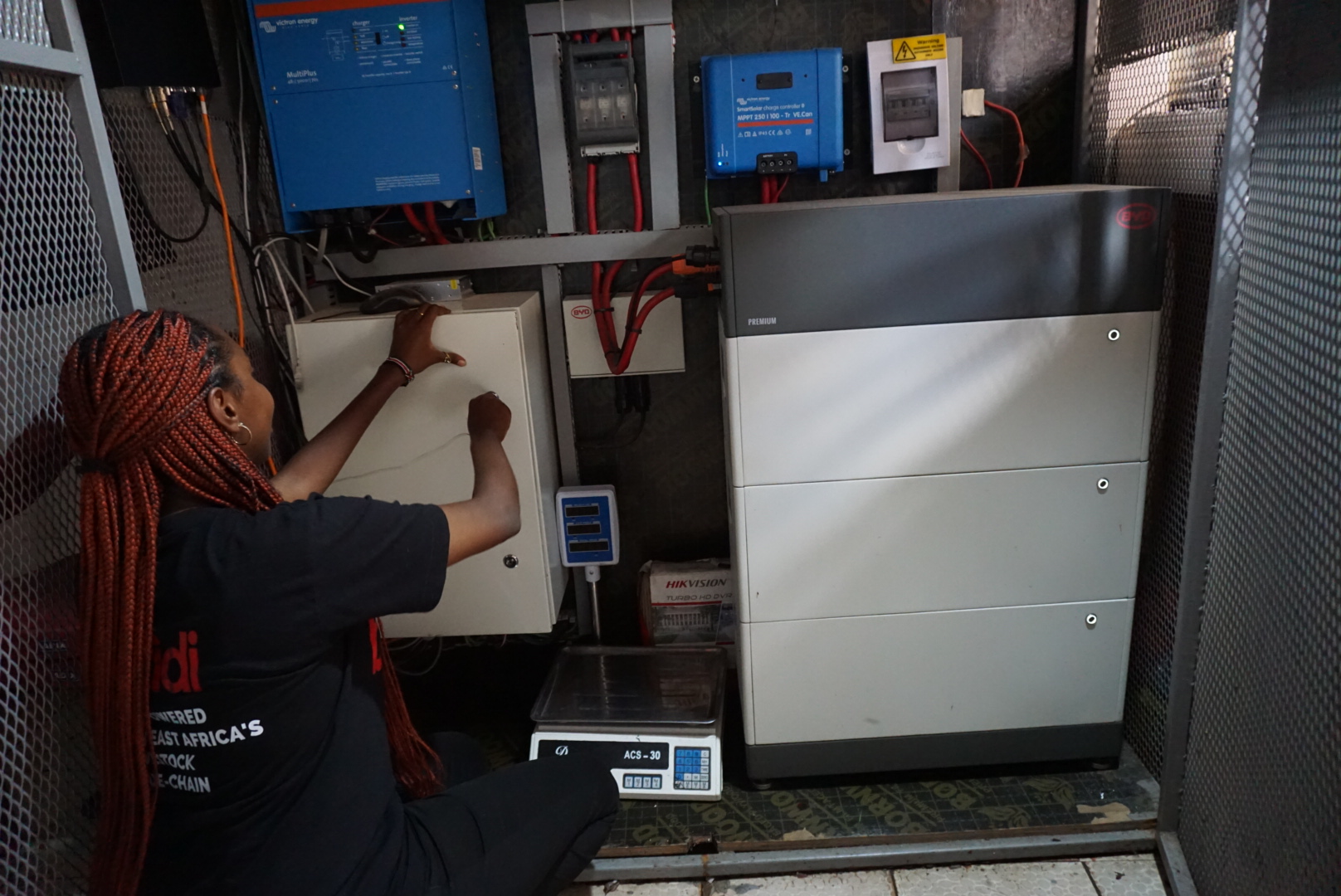
On 26 May, the Global LEAP team visited Burma Market to check on the progress of Baridi, a 2022 Off-Grid Cold Chain Challenge preliminary product finalist, owned and operated by Tree_Sea.mals Limited. Baridi is a single-phase, solar-powered walk-in cold room capable of chilling up to 1000 kilograms of meat at once. The 3.4 x 2.1 x 2.2-meter unit has an indoor adjustable temperature of 0 to 5°C, powered by a rooftop solar panel during the day. Excess power generated from the solar panels is stored in a 12kWh Lithium-Ion battery for utilization during low light periods and at night.
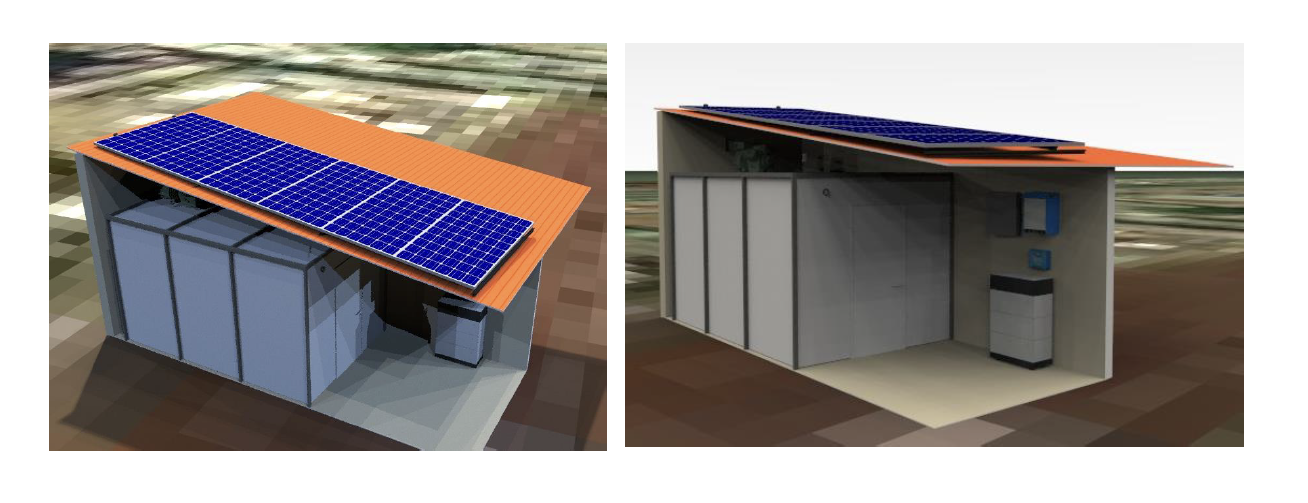
Prior to the unit’s installation, butchers in the market relied on standard box freezers for all their cooling needs. The majority of these box freezers have a capacity of 300 kilograms, requiring users to cut whole carcasses into smaller pieces for easier storage. Additionally, due to frequent break-ins at the market, the butchers risked financial losses from the theft of their freezers and meat. Having worked with pastoralist communities in Kenya, and recognizing the opportunity for cooling as a service in urban markets, Tree_Sea.mals installed their game-changing cold storage solution at Burma Market during in late 2021.
A Game Changer
“The post-slaughter urban meat market is underserved…Our goal is to enhance food security and minimize post-slaughter loss by increasing the shelf life of fresh meat,” said Tracy Kimathi, Founder of Tree_Sea.mals Limited. The cold room was installed after three failed attempts and a year-long collaborative deployment process involving a team of researchers and industry specialists. As of May 2022, it had processed over 70,000 kilograms of meat.
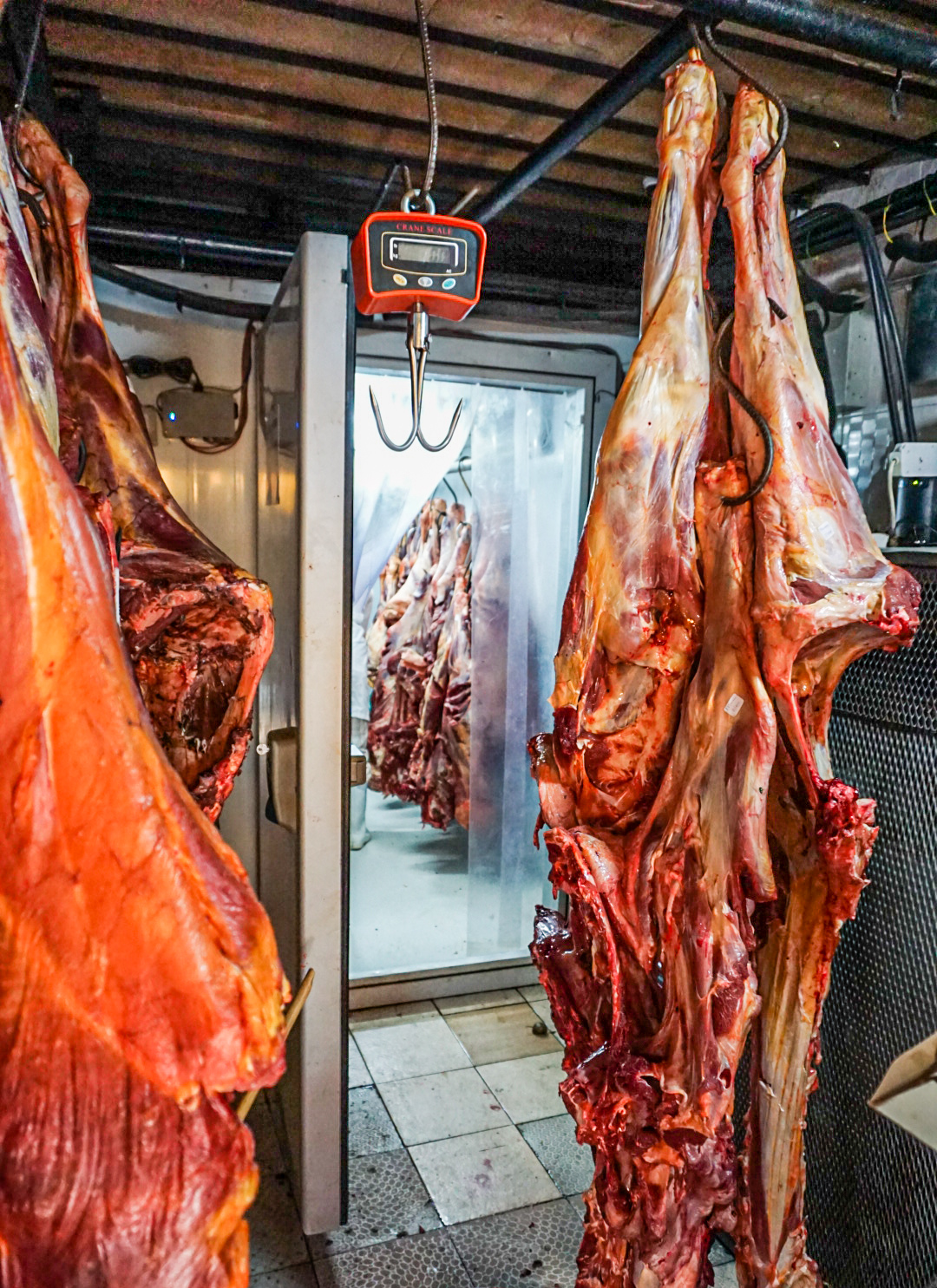
“Our cold room operates at 60–100% capacity every day. There is so much demand for our cooling services that we are going to introduce a second unit in this market,” said Tracy. In contrast to the widely used box freezers at Burma Market, Baridi chills whole carcasses. Further, being off-grid, the unit shields customers from possible spoilage arising from power cuts or grid down times.
“There is a perception among customers that frozen meat is bad meat. The advantage of our unit is that it chills, so the meat will come out of storage looking fresh, not pale and frosty,” added Tracy. “The second unit we’re introducing is a freezer, but we can always raise the temperatures if we want to chill.”
Tracy and her team leverage a sophisticated Internet of Things (IoT) tracking system to simplify customer journeys and enhance operational efficiency. Upon arrival at the stall, customer and product details are entered into a cloud-based inventory system. The meat is then tagged using Radio Frequency Identification (RFId) chips before entering storage. This process is significantly shorter for repeat clients as their details already exist in the system.
“We partnered with the Kenya Meat Commission (KMC) to train our staff before they started working with the unit. It was a two-week training on asset management and stock keeping. We regularly train them on solar operations, basic solar chilling and how to troubleshoot in the event of a technical hitch,” said Tracy.
A kilogram of steak is frozen for five Kenyan Shillings per day, for a maximum of seven days. Payments are done only through mobile money to maximize stall security and avoid unsanitary contact between money and carcasses. “There was an attempted break-in via the roof on the first night after we installed the cold room. Luckily, the unit’s motion sensors flagged this and promptly alerted us. We rushed here and averted loss of property which would have been a major setback for us,” said Tracy.
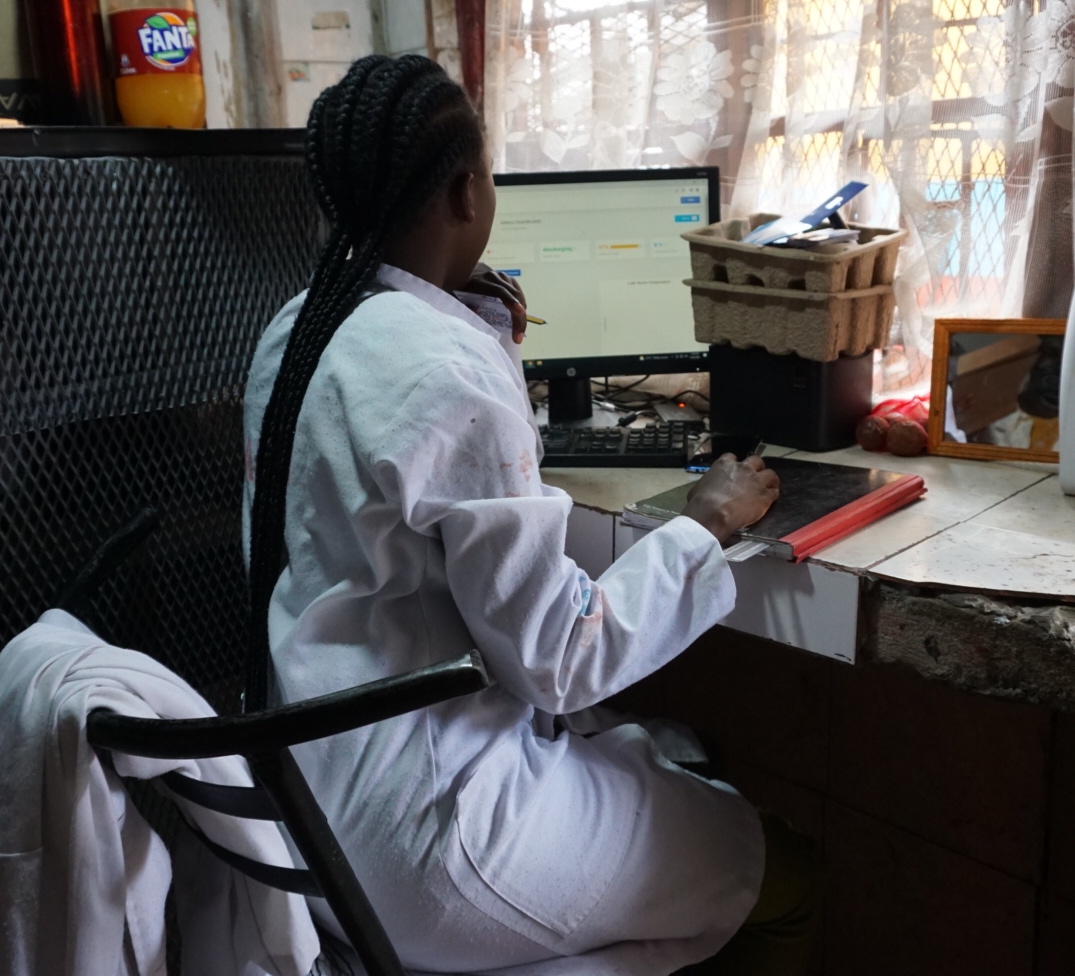
After the incident, Tree_Sea.mals beefed up security by installing a Closed-Circuit Television (CCTv) camera and reinforcing the stall’s ceiling with metal barriers. “In addition to motion sensors, we now have a video feed which helps us to monitor everything remotely,” said Tracy as she proudly pointed to a desktop monitor displaying numerous CCTV video feeds.
The Road Ahead
The Tree_Sea.mals team hopes to build 70 Baridi units by their seventh year of operation and expand to as many meat markets across the East African region as possible. The primary challenge facing this expansion plan is limited space. While urban meat markets offer convenient proximity to customers with a higher paying ability, securing stall space large enough to house a cold storage unit is no small feat. Urban meat markets also present a raft of technical challenges which hinder ease of assembly and security of the walk-in cold rooms.
Even so, the cost basis of prioritizing urban settings is clear: “We did not set up within pastoralist communities because potential customers in urban meat markets have a higher ability and willingness to pay for cooling-as-a-service compared to those in rural pastoralist settings,” said Tracy. Another advantage of an urban setting is that it allows Tree_Sea.mals to quickly modify business operations in response to market trends. For example, Tree_Sea.mals plans to increase the cost of cooling a kilogram of meat from five to seven Kenyan Shillings per day on account of increased demand.
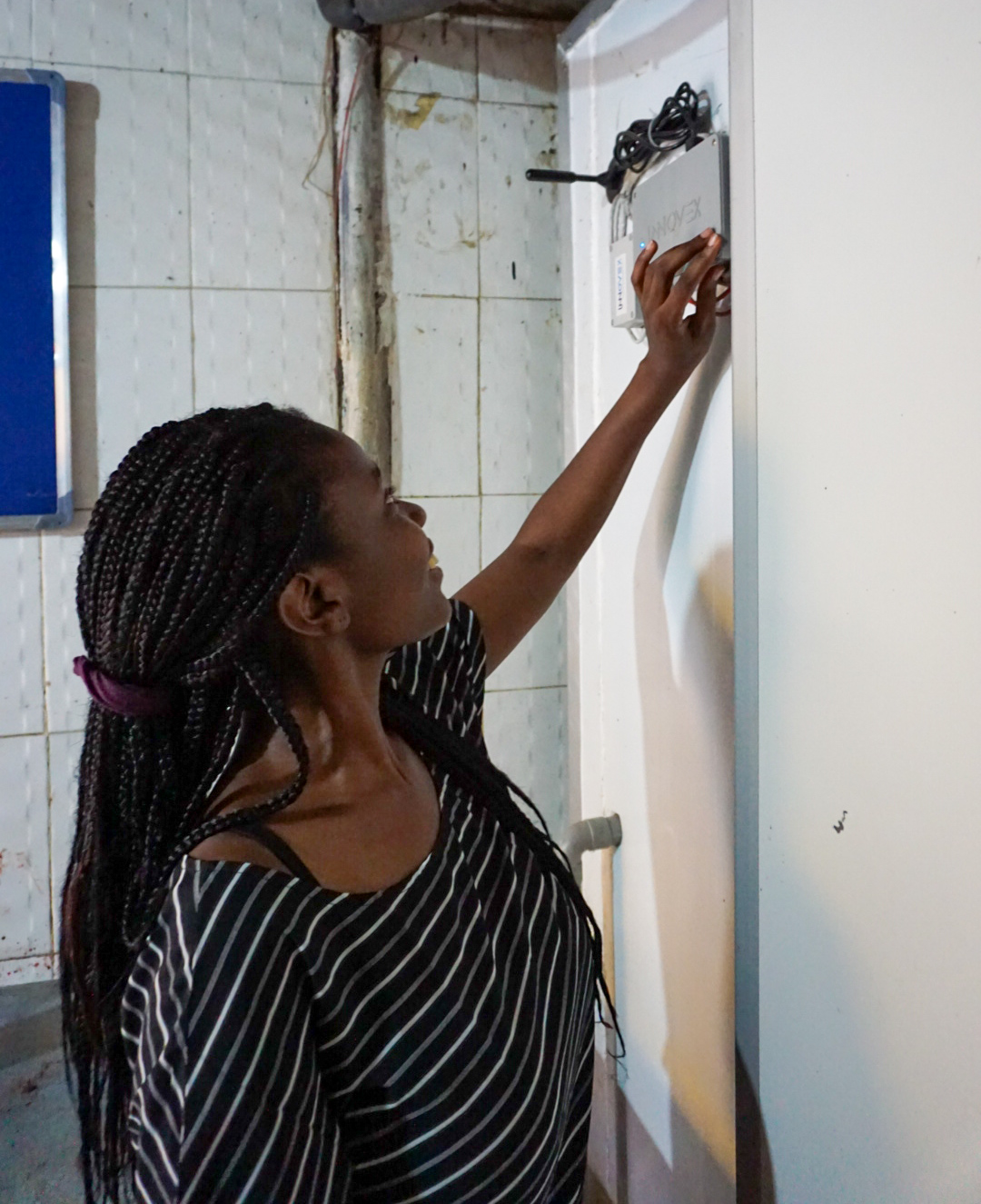
Participating in the 2022 Off-Grid Cold Chain Challenge has empowered Tree_Sea.mals to leverage data as a driver of efficient business operations. They are currently scoping meat markets using geo-mapping services and utilizing power consumption, unit occupancy and customer demographics data collected from their installation to inform future expansion plans.
This installation exemplifies a successful urban application of what would be considered a typical rural off-grid cold storage solution. “It’s rewarding to witness increasing demand for our services because that is an indicator that the solution is impactful”, said Tracy. “In the future, we hope to introduce thermal cooling. Our current set up uses Lithium-Ion batteries, which are very expensive. Thermal cooling will be a good substitute, as it will lower operational costs”, added Tracy. For more information, please read this OGCCC halfway point article to learn how the competition’s field testing is benefiting stakeholders and follow us on Twitter for regular updates on the Off-Grid Cold Chain Challenge.
About the Global LEAP Off-Grid Cold Chain Challenge (OGCCC)
The Global LEAP Off-Grid Cold Chain Challenge is an international competition that identifies and promotes the most energy-efficient, sustainable and cost-effective technologies designed for use by smallholder farmers and producers to meet cold storage requirements for fresh fruits, vegetables, fish, and dairy products.
Locally Grown Herbs for Global Markets: How A Kenyan Agribusiness Is Thriving On Off-Grid Cold Storage
In a lead-up to announcing this year’s Global LEAP Off-Grid Cold Chain Challenge (OGCCC) finalists, a team from Efficiency for Access visited two Kenya-based field testing participants. The first visit was to a family-owned agribusiness situated in Thika, a bustling agricultural and industrial town about an hour’s drive from Nairobi. The team was eager to have a first-hand view of the Solar Cooling Engineering cold room in use and learn more about the owner’s experience.
On arrival in Thika town, we drove about 20 minutes into a lush residential estate where Kamau Mbarire and his wife, Jane, warmly welcomed us. The middle-aged couple jointly runs a profitable and growing herbs-for-export business, Jungle Harvest Limited, with Jane more actively involved in the day-to-day operations.
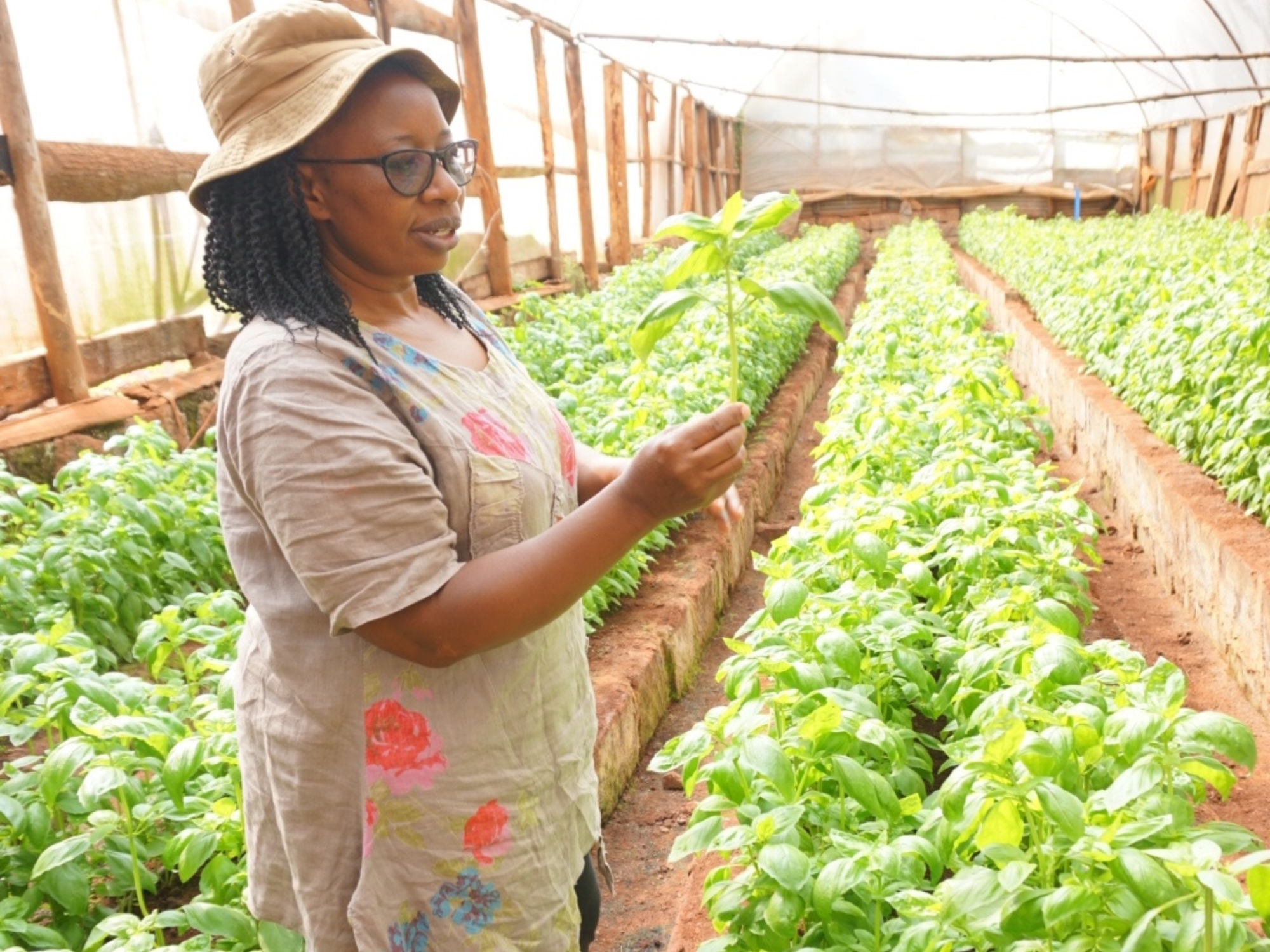
Jane Kamau holding a freshly cut basil plant in her greenhouse.
As the team explored the 0.75 acres of land under cultivation, Jane told us of her family’s nearly two-decade-long journey of establishing their now-thriving business. Since occupying the property, Jane’s family has tried their hand in various ventures, including dairy, pig and poultry farming and producing bananas, avocadoes, vegetables and strawberries. Of the initial pursuits, strawberries had been the most successful. Unfortunately, the success of the strawberries was short-lived — with wild monkeys in the neighbourhood stealing the ripe strawberries before she could gather them for sale. Deterred but not defeated, Jane erected a greenhouse where she would plant the strawberries away from the cheeky thieves. However, this solution did not last as the strawberries were not thriving under the canopy of the greenhouse. She also noted that the quality of the fruit did not match earlier harvests when the strawberries were planted under direct sunlight. This led to her exploring herb growing in 2018, which has proven less susceptible to the interference of the monkeys. The family now grows several herbs, including basil, coriander, dill, mint, rosemary, sage, tarragon and thyme.
Since settling on their cash crop of choice, the family shifted their sights to how best they could maximise the farm’s income generation. Following a recommendation from their son Francis (a Graduate in AgroEcosystems and Environment Management), Jane and Kamau chose to invest in an on-site cold storage facility in late 2021. They received financing for the Solar Cooling Engineering brand cold room through a loan which they are currently servicing.
Before purchasing the cold room, they had to hire refrigerated trucks to keep their produce fresh for transport. This was not a sustainable approach for them. It involved their workers spending long hours during harvest days to ensure all orders were sorted and packed in time for the scheduled pick up and delivery. It was also costly, with daily truck hires averaging USD $60–77. Now, with the cold room, Jane can store over 1000 kilograms of herbs for up to a week and take more time to sort and pack the product for transport to the airport.
“We have been using it day in, day out. It has really helped us because we are growing herbs that are very sensitive to high temperatures. We can harvest today, tomorrow and the next day, and the herbs remain fresh,” says Jane.
Jane and Kamau are no strangers to solar. They have been using a SunCulture solar water pump to irrigate their crops since 2015. “With solar, we are good to go anytime,” Jane remarked.
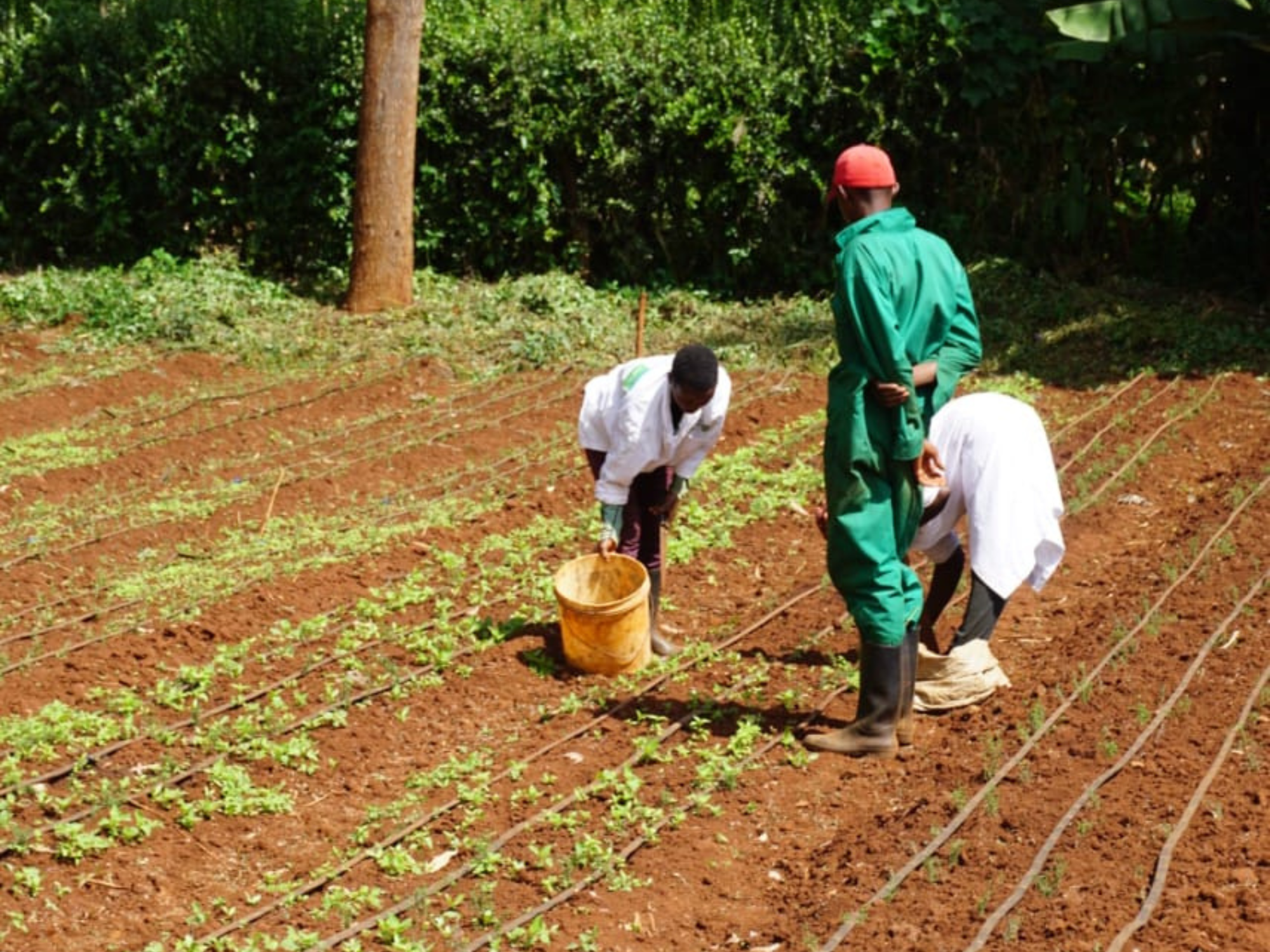
Dan, the Farm Manager, supervises two young ladies weeding newly planted thyme.
Since acquiring the cold room, Jane and Kamau’s herb capacity has grown from about 50–80 kgs to over 300kgs, nearly doubling their income from the farm. With their increased output, they now supply higher value export clients with larger orders instead of local clients who make small orders fetching lower returns. The family also appreciate that the precise temperature control of the cold room enables herb preservation in optimal conditions, meeting the high export quality standards
Not only has the cold room benefited Jane and Kamau’s bottom line, but it has also enabled them to empower their local community. Jane mentioned that, aside from Dan, the farm manager, she prefers to employ young single mothers on the farm. In this way, the young mothers can earn an income to support themselves and their children. Additionally, Jane distributes fresh vegetables to neighbouring households which she purchases in bulk and stores in the cold room, generating some extra income.
Jane and Kamau confirmed that the cold room has been a worthy investment and a means of further expanding their business. With the extra income brought about by the cold room, they are constructing a larger herb propagation shed and plan to lease land from their neighbours, extending their farm by about an acre. With these plans in place, they will grow more herbs, take up larger orders and expand the business.
“At least now with the cold room, we are able to do more propagation and grow as many crops as possible…It was a worth it investment.” – Jane Kamau.
—
About the GLOBAL LEAP Off-Grid Cold Chain Challenge (OGCCC)
The Global LEAP Off-Grid Cold Chain Challenge is an international competition that identifies and promotes the most energy-efficient, sustainable and cost-effective technologies designed for use by smallholder farmers and producers to meet cold storage requirements for fresh fruits, vegetables, fish, and dairy products.
Off- and Weak-Grid Appliance Market: Ethiopia
Most of Ethiopia’s population (78%) lives in rural areas, and only 36% of that population has access to electricity. Urban dwellers are well-electrified, with 93% of people having access to electricity. Still, households and businesses experience frequent power outages even in grid-connected areas. For example, a World Bank study found that 80% of surveyed companies in Ethiopia experienced frequent power outages – 8 times per month, for 6 hours on average during each outage. This unreliable access and large unelectrified rural population provide an opportunity for increased energy service delivery for Ethiopians via solar home systems and accompanying off-grid appliances.
CLASP, as co-Secretariat of Efficiency for Access, engaged a local consultant in collecting appliance data and reporting on the market conditions in Ethiopia. Our findings reveal that although Ethiopia’s solar market is emerging, with great potential for growing its productive use of renewable energy (PURE) product market, the solar appliance sector is nascent. Obstacles such as appliance affordability, low consumer awareness, and inconsistent interpretation of tax policies and importation guidelines require resolution for continued growth.
Read the full report for detailed insights on the off- and weak-grid market landscape, the common power type, size, price, and warranty of off-grid appliances sold in retail markets, and other findings relevant to sector stakeholders working in Ethiopia.
Download the Off- and Weak-Grid Appliance Market: Ethiopia report here.
About Efficiency for Access
Efficiency for Access is a global coalition working to promote renewable and energy efficient appliances to deliver clean energy to the world’s poorest people. It is coordinated jointly by CLASP and the UK’s Energy Saving Trust.
First-of-its-kind Campaign Raises Awareness on Solar Water Pumps in Kenya
Through Efficiency for Access, CLASP ran an awareness-raising campaign across five sub-counties in Machakos, Kenya. The campaign sought to stimulate consumer awareness of the benefits of solar water pumps (SWPs) for improved agricultural productivity and potentially increase the demand for SWPs among rural households.
The campaign engagement strategy included a variety of mass communication and tailored direct-to-consumer activities, including community education forums, farm-to-farm visits, product demonstrations, and radio advertisements. By the end of December, we reached over 30,000 people through direct in-person engagement, and we estimate that the local radio ads reached 3,000,000 people, exceeding our target audience of 770 households.
We partnered with Shamba Shape Up to film an episode on a solar water pump installation for Ted, a Kenyan farmer who previously relied on an electric pump for irrigation.
Here are some insights from the campaign:
- Between the baseline and the end-line surveys, awareness levels increased by 46%, indicating that more people were knowledgeable about the benefits of SWPs.
- Almost 80% of the farmers interviewed indicated they would like to adopt solar irrigation within one year; but we have not yet seen any conversion into sales. A lack of financing options was cited as the main reason.
- Community members identified water source challenges, inadequate knowledge and lack of capital as the most significant barriers to solar irrigation adoption.
- Despite increased awareness of the benefits of solar water pumping, there is a massive gap in local supply and brand-specific technical awareness among the farmers.
Download the campaign readout or watch our YouTube video to learn about the campaign’s outcomes and Efficiency for Access’ recommendations for increasing demand among rural households.
You can also watch a recording of the live Q&A session Efficiency for Access hosted with Kilian Blumenthal from Water and Energy for Food and Kavita Ndolo, an agribusiness owner from Machakos, Kenya for insights on the awareness-raising campaign.
Kenya Consumer Experience Study: Insights on Solar Appliances
Currently, the information on the penetration of off-grid solar appliances and how consumers experience and interact with them is quite limited. VeraSol recognizes that this kind of data is essential for manufacturers to design products more effectively, for sector stakeholders to identify market gaps, and for programs and policymakers to scale quality assurance (QA) efforts. Using data collected during the 2021 CLASP commissioned study on off-grid solar product usage from 4,195 surveyed households in Kenya, the VeraSol team has taken a deeper look at solar appliance data to produce new insights on ownership of and consumer experience with off-grid solar appliances in Kenya.
Key findings from this research include:
- Top consumer considerations when purchasing solar appliances
- Insights on ownership and projected demand for TVs, refrigerators and solar water pumps in Kenya
- Other consumer perspectives on solar appliance affordability, accessibility, and after-sales care
Download the Kenya Consumer Experience Study: Insights on Solar Appliances report.
About Efficiency for Access
Efficiency for Access is a global coalition working to promote renewable and energy efficient appliances to deliver clean energy to the world’s poorest people. It is coordinated jointly by CLASP and the UK’s Energy Saving Trust.
Rapid Product Assessment: A New Approach to Testing Productive Use Appliances
High-quality productive use equipment (PUE) has the potential to increase the productivity of business owners and farmers in rural and underserved communities, particularly in sub-Saharan Africa and accelerate the uptake of renewable energy solutions such as solar home systems and mini-grid developments. However, these nascent PUE are complex technologies with unproven commercial paths, making it risky for off-grid solar companies and distributors to confidently invest in and deploy new PUE.
Access to reliable data and information about the performance, durability, and safety of PUE enables these market stakeholders to make informed decisions and identify high-quality, energy-efficient technologies. Responding to the market needs, VeraSol developed the Rapid Product Assessment framework, which offers a flexible, cost-effective, and timesaving approach to verify the quality of nascent PUE technologies.
The team selected egg incubators as the first trial product for the Rapid Product Assessment approach due to their potential to significantly increase the productivity of poultry farmers and rural households. VeraSol partnered with Kijani Testing, a Kenya-based research and testing facility, to conduct egg incubator testing.
Read the report for insights on the testing and evaluation processes and learnings from the egg incubator testing pilot.
Download the report here: Rapid Product Assessment: A New Approach to Testing Productive Use Appliances
About Efficiency for Access
Efficiency for Access is a global coalition working to promote renewable and energy efficient appliances to deliver clean energy to the world’s poorest people. It is coordinated jointly by CLASP and the UK’s Energy Saving Trust.
Efficiency for Access Launches New Efficiency for AgTech Campaign
In an effort to form a bridge between the historically siloed energy and agriculture sectors, Efficiency for Access is launching a campaign entitled Efficiency for AgTech that will spotlight the inextricable link between energy and agriculture. From January to April 2022, the campaign will promote and highlight the latest trends and innovations in energy-efficient, sustainable and climate-smart agricultural solutions that can enhance global food security and build climate resilience. As an evolution of the Low-Energy Inclusive Appliances (LEIA) programme’s first-ever communications campaign in 2017, also entitled Efficiency for AgTech, this campaign brings the five-year LEIA programme full circle.
The United Nations Food and Agriculture Organization (FAO) estimates that by 2050, 70% more food will need to be produced in order to feed the growing global population. Yet as climate change destablises weather patterns and predictable growing seasons, this effort to expand global food production becomes increasingly threatened. The ecological crisis thus compounds the problem by exacerbating already existing inefficient and polluting food production and storage processes.
Energy-efficient, solar-powered, off-grid appropriate agricultural appliances and equipment have the potential to help meet the growing food demand in a way that mitigates climate impacts and builds resilience. These technologies are particularly impactful for the smallholder farmers who help feed a third of the world’s population.
“Solar-powered productive use agricultural equipment has gained an increasingly important role in the face of our changing planet,” says Jenny Corry, Director at CLASP. “Using polluting and inefficient systems or technologies is no longer viable. We need clean agtech to empower smallholder farmers to sustainably feed our growing global population, while also enhancing the infrastructure and processes that build climate resilience.”
“This 2022 Efficiency for AgTech communications campaign is an evolution from our first campaign in 2017, also entitled Efficiency for AgTech. This campaign will serve as a crucial link between the energy and ag sectors, highlighting the need to form partnerships that accelerate the uptake of these technologies–at a pace that acknowledges the urgency of the climate crisis.”
Over the course of this three-month campaign, Efficiency for AgTech will highlight what Efficiency for Access and its partners have accomplished so far in accelerating the uptake of solar-powered agricultural appliances. It will also forecast the future direction of the ag-related productive use equipment sector by shining a light on emerging trends and challenges. The campaign will use Efficiency for Access social media channels and newsletter outlets to amplify blog articles, publications and events. All campaign-related materials and collateral will use the hashtag #EfficiencyforAgTech. Visit the campaign webpage for more.
Throughout the campaign, Efficiency for Access will collaborate with organisations working in the energy and agriculture nexus to disseminate information, co-host events and develop new content. To get involved, please contact Marion Kudla (mkudla@clasp.ngo) and Lisa Kahuthu (lkahuthu@clasp.ngo).
—
About Efficiency for Access
Efficiency for Access is a global coalition working to promote high performing appliances that enable access to clean energy for the world’s poorest people. It is a catalyst for change, accelerating the growth of off-grid appliance markets to boost incomes, reduce carbon emissions, improve quality of life and support sustainable development. Efficiency for Access consists of 15 Donor Roundtable Members, 17 Programme Partners, and more than 30 Investor Network members. Current Efficiency for Access Coalition members have programmes and initiatives spanning 47 countries and 25 key technologies.
The Efficiency for Access Coalition is coordinated jointly by CLASP, an international appliance energy efficiency and market development specialist not-for-profit organisation, and Energy Saving Trust, which specialises in energy efficiency product verification, data and insight, advice and research. Visit https://efficiencyforaccess.org/ for more information.
If you would like more information about this topic, please email Marion Kudla at mkudla@clasp.ngo