
CLASP Supports First Lighting Efficiency Policies in Nigeria
Lighting efficiency standards will play a key role in Nigeria’s Energy Transition Plan as the country seeks to tackle both energy poverty and climate change. CLASP is supporting the Nigerian government in the transition to energy-efficient, cost-effective LED lighting through the country’s first lighting minimum energy performance standards (MEPS).
The new policies will phase out compact and linear fluorescent lamps by 2024 and 2025, respectively. This move will avoid 300 kilograms of potential mercury pollution and save $2.47 billion in energy costs (2025-2050).
CLASP attended the Inception Workshop on the Minimum Energy Performance Standards (MEPS) and Labeling of Lighting in Nigeria, hosted by the Standards Organisation of Nigeria (SON). The workshop invited participating government agencies, private sector and industry, and academia to collaborate on strategies for fluorescent-to-LED replacements and developed a roadmap to efficiency policy adoption. It provided an opportunity to brainstorm stakeholder roles and necessary resources to implement the policies.
“Adoption of lighting MEPS will have multiple benefits for Nigeria and by extension the ECOWAS region. At the top of the list is increased energy savings for the country of up to 25 Terawatt hours (TWh) by 2050. Additionally, the inclusion of a labelling program will transform the market, encourage manufacturers to produce and consumers to purchase higher efficiency products convenient to individuals.” Said Alewu Cherry Achema, Deputy Director/Group Head & Head, Electrical/Electronics Engineering at Standards Organisation of Nigeria (SON)
CLASP Senior Manager, Colin Taylor, provided evidence to support the phase-out of fluorescent in Nigeria, in favor of more efficient LEDs. “By eliminating these products from the market, consumers will no longer be presented with inefficient, low quality, environmentally damaging products and decrease the demand on the grid”, said Taylor.
The lighting policies discussed align with the Nigeria Energy Transition Plan, a strategy to achieve carbon neutrality, end energy poverty, and drive economic growth. The standards also align with the NigeriaSE4ALL 2030 target of 100% efficient lighting by 2030.
“Lighting efficiency standards are a feasible, effective way to mitigate strain on Nigeria’s energy grid and save money on energy costs,” said Monica Wambui, Manager at CLASP
With development of their first lighting efficiency policy, Nigeria joins the international community in the transition to clean lighting. Last year, at the Minamata Convention on Mercury COP4, 137 parties agreed to phase out compact fluorescent lamps by 2025, and discussions for linear fluorescent lamps will be held at the COP5 later this year.
The Standards Organisation of Nigeria (SON) is spearheading the standards and labelling development process, and Sustainable Research and Action for Environmental Development (SRADeV) will help facilitate policy development and implementation.
Learn more about our efforts to accelerate the transition to energy-efficient lighting globally:
World’s Best MEPS: Tracking Global Leaders in Appliance Energy Efficiency Standards
WASHINGTON, DC – A new research tool and report from CLASP offers groundbreaking insights into the state of minimum energy performance standards (MEPS) across high carbon emitting economies and appliances.
The analyses evaluate the stringency of MEPS requirements for six major appliance categories—lighting, air conditioners, refrigerators, electric motors, water heating, and space heating—across ten high greenhouse gas-emitting economies—Brazil, Canada, China, the European Union, India, Indonesia, Japan, South Africa, the United Kingdom, and the United States. Doubling the energy efficiency of these appliances worldwide could avoid over 2 gigatons (Gt) of carbon dioxide (CO₂) emissions per year in 2030.
“Minimum energy performance standards for appliances sit at the crux of the international community’s Paris Agreement targets and achievable carbon savings. This new comparative analysis from CLASP will be essential to inform global progress toward net zero targets,” said Christine Egan, CEO of CLASP.
The tool and its accompanying report, “World’s Best MEPS: Identifying Top Efficiency Standards for Priority Appliances,” identify economies with the most ambitious MEPS. The resources also highlight opportunities for further policy intervention.
“This game-changing analysis will be critical in raising global appliance energy performance, cutting carbon and costs for millions of people across the globe,” said Ari Reeves, CLASP’s Senior Director of Research. “Our aim with this analysis is to open people’s eyes to what is possible. With this information, policymakers have tangible advice for setting more stringent standards.”
The research tool, “World’s Best MEPS: Tracking Leaders in Global Appliance Energy Efficiency Standards, offers a birds-eye-view of the status of MEPS for all mentioned economies and appliance categories, as well as per-product data visualizations. The accompanying report contains detailed information on the methodology and research findings.
The tool and report will be updated on periodically, offering researchers and policymakers the most up-to-date picture of the world’s best MEPS.
Explore the tool and read the report on the CLASP website.
###
About CLASP: CLASP serves at the epicenter of collaborative, ambitious efforts to mitigate climate change and in the global movement for clean energy access, through appliance efficiency. CLASP works hand-in-hand with governments, experts, industry, consumers, donor organizations and others to propel policies and markets toward the highest-quality, lowest resource-intensive products possible. Learn more at https://www.clasp.ngo/.
World’s Best MEPS: Identifying Top Energy Efficiency Standards for Priority Appliances
Minimum energy performance standards (MEPS) for appliances and equipment play a critical role in meeting ambitious international climate goals. By adopting updated MEPS aligned with international targets and best practice, governments can deliver further energy and cost savings to consumers and take action to curb the worst impacts of climate change.
CLASP evaluated the stringency of MEPS requirements for six major appliance categories—lighting, air conditioners, refrigerators, electric motors, water heating, and space heating—across ten of the world’s highest greenhouse gas-emitting economies—Brazil, Canada, China, the European Union, India, Indonesia, Japan, South Africa, the United Kingdom, and the United States.
This report identifies economies with the most ambitious MEPS, and highlights opportunities for further policy intervention across all economies. The analysis will be updated periodically, with updated data available on the World’s Best MEPS tool page.
Webinar Materials | How to Achieve the World’s Best MEPS
Global Lighting Policy Bulletin
Insights into Our Global Campaign to Transition to LED Lighting
CLASP’s Clean Lighting Coalition (CLiC) formed in 2021 to accelerate the transition away from fluorescent lighting and towards LEDs, in support of the African Lighting Amendment. Fluorescents contain mercury, a potent neurotoxin especially dangerous to pregnant people, young people, and workers in the supply chain, e.g. recyclers. Additionally, LED lighting uses half the power of fluorescent lighting – cutting energy bills in half – while providing the same illumination. A total global transition to LED lighting would avoid 261.5 million tonnes of CO₂ by 2050. In this case study, learn about the first phase of our campaign – and what we’re up to next.
Insights into Our Global Campaign to End Toxic Lighting
In early 2021, CLASP launched the Clean Lighting Coalition (CLiC), a campaign to mobilize broad global support to phase-out mercury-containing fluorescent lighting through the Minamata Convention fourth Conference of Parties (COP4). Over 16-months, our campaign brought together advocate and technical partners, facilitated evidence-based discussions with governments, and mobilized advocates. At COP4 in March 2022, 137 governments agreed to phase-out compact fluorescent lighting by 2025.
Despite the successes, last minute interventions delayed a decision on linear fluorescent lamps (LFLs), the long tubes commonly found in offices and stores, until Minamata COP5 in November 2023.
We gained valuable insights during the first phase of the campaign and have compiled a case study of lessons learned and reflections as we pivot to Phase 2 in the lead up to COP5.

Strong Collaboration
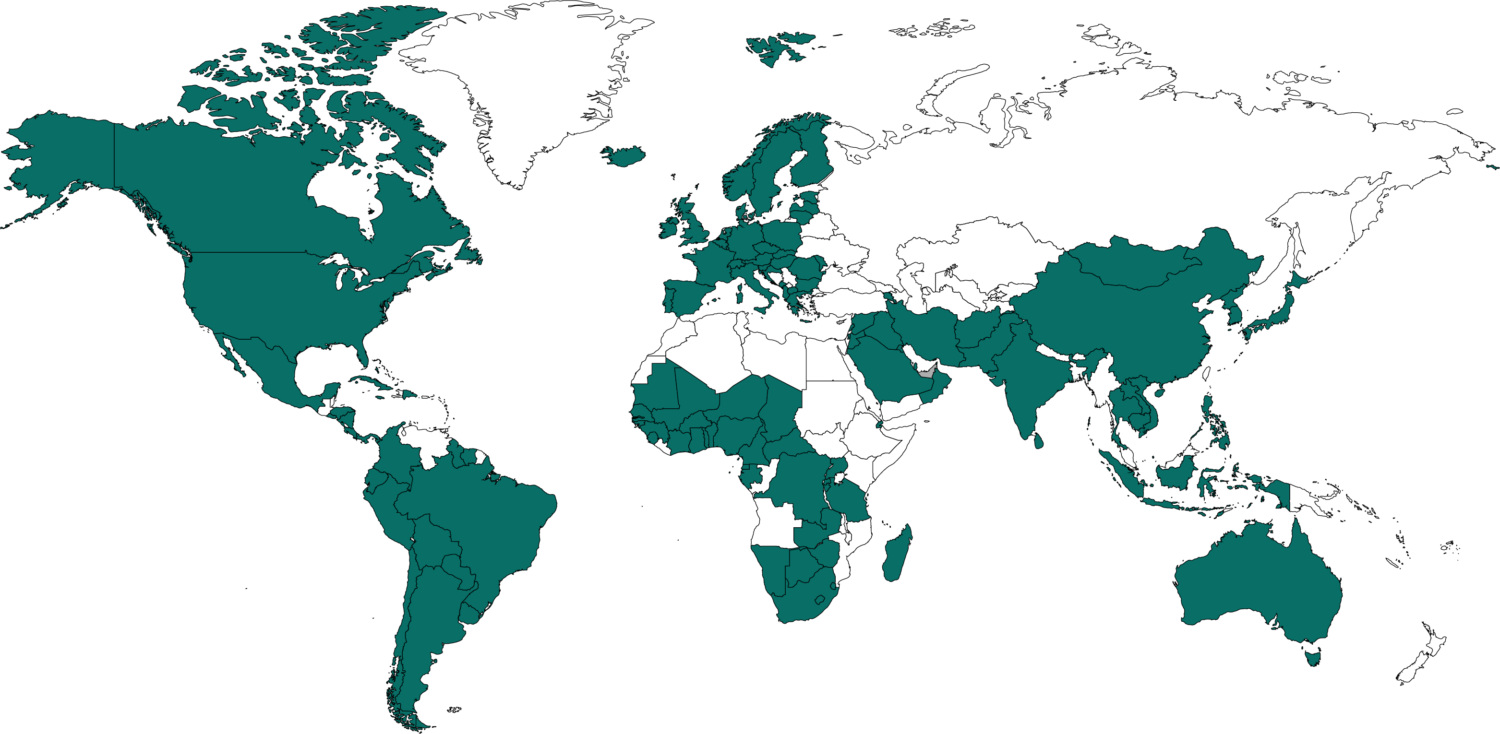
During Phase 1, CLiC engaged 168 partners across 52 countries. Our partners supported data collection on the availability of LEDs in more than 40 countries, retrofitted hospitals with energy-efficient LEDs, ran national and local campaigns and conducted extensive media outreach, supported in government meetings and negotiations, built up recycling capacity to deal with the mercury in fluorescent bulbs, and more.
Internally, we staffed by campaign through four, highly coordinated workstreams, which worked with and through regional representatives:
Government Engagement Workstream – built relationships with national decision makers & developed regional coalitions.
Evidence-Base Workstream – demonstrated the feasibility and benefits of an LED transition.
Private Sector Engagement Workstream – built a network of supportive LED companies.
Communications & Advocacy Workstream – developed a global brand and network of advocate partners.
Regional Leads – cultivated relationships with in-country NGOs, industry members and governments.
The campaign team coordinated daily across time zones, languages and cultural contexts and met regularly to adapt tactics according to the latest local intelligence.
The case study details specific interventions that were successful in securing commitments from governments, as well as the challenges we faced along the way.
Impacts
The COP4 decision to ban compact fluorescent lighting by 2025 will avoid 26.2 metric tonnes of mercury pollution and 261.5 million metric tonnes CO₂ emissions and save people $77.8 billion in lower energy bills by 2050. We will continue to work closely with and build our coalition to drive government support and ambition for a total fluorescent ban at COP5.
Check out the full case study here. If you are interested in supporting our campaign to end toxic lighting globally, consider joining CLiC here or contact info@cleanlightingcoalition.org.
GreenMax Capital Group and CLASP Launch Green4Access First Loss Facility to Drive Uptake of Renewable Energy Solutions in East and West Africa
October 19, 2022 — Today, at the Off-grid Solar Forum in Kigali, Rwanda, GreenMax Capital and CLASP announced the Green4Access Financing Facility (G4A) launch. G4A’s initial pilot phase will catalyse project and consumer financing for local renewable energy companies in Uganda and Nigeria, expanding next year to include Kenya, Tanzania, Malawi and up to 10 additional countries across Sub-Saharan Africa. The increased financing triggered by G4A’s risk mitigation instruments will enable low-income households to invest in solar home systems and appliances, deliver mini-grid installations and improve service delivery at community health facilities. G4A is supported by the IKEA Foundation.
Local lending for renewable energy in East and West Africa is not scaling at the speed required. According to World Bank projections, sub-Saharan countries will account for 85% of the world’s unelectrified population by 2030. Off-grid, distributed renewable energy supply coupled with solar appliances and equipment will put the region on a low-carbon pathway to electrification. Yet, there is a considerable gap between the funding available to energy access companies and what they require to provide more communities with energy services.
G4A is establishing a blended finance platform for first-loss facilities to support off-balance sheet energy access lending in East and West Africa. G4A is offering first-loss products and technical assistance that will help local lenders perceive off-grid consumer lending as sufficiently de-risked while also aiming to allow the fund’s investors to achieve modest returns that make the products sustainable.
GreenMax will manage G4A’s first loss guarantee facility and work with African banks during the pilot phase to reduce risk by covering up to 100% of losses if an individual customer defaults on their loan, up to a cap of 20% of the bank’s total energy access loan portfolio. G4A aims to unlock a further USD 25 million in consumer lending from banks in Uganda, Kenya, Nigeria, Tanzania and Malawi to scale solar-powered appliances and healthcare equipment in its pilot phase.
GreenMax Founding Principal, Clifford J. Aron believes that “G4A’s goal is to transform the energy access finance ecosystem by demonstrating to local lenders how the off-grid energy space can be a significant element of their mainstream consumer lending business. Local lenders provide a critical source of much-needed local currency finance. Their direct lending to consumers will dramatically reduce the pressure on energy access companies to finance their customers themselves- allowing smaller, locally owned energy access companies to flourish.”
###
About the IKEA Foundation
The IKEA Foundation is funded by INGKA Foundation, owner of the Ingka Group of companies. The IKEA Foundation is independent from the retail business, with a sole focus on creating brighter lives on a liveable planet through philanthropy and grantmaking. Learn more at www.ikeafoundation.org.
About CLASP
CLASP serves at the epicenter of collaborative, ambitious efforts to mitigate climate change and expand access to clean energy through appliance energy performance and quality.
About GreenMax Capital Group
GreenMax is a specialized fund management and advisory firm focused exclusively on the clean energy space in emerging markets.
For more information on how to participate in the G4A facility, please reach out to G4A@greenmaxcap.com. For media inquiries, please get in touch with Lisa Kahuthu at lkahuthu@clasp.ngo.
CLASP & Nithio Launch Financing Facility for Productive Use Appliances
Kigali, Rwanda, 19 October 2022 – Today at the Global Off-Grid Solar Forum and Expo, CLASP and Nithio launched a USD $6.5 million financing facility to catalyze uptake of productive use appliances across Africa. The facility will improve appliance affordability for consumers and companies and is supported by the Global Energy Alliance for People and Planet (GEAPP).
Access to productive use appliances can deliver significant economic, health, education, and quality of life benefits for an estimated 60 million households worldwide and put under-electrified parts of the world on a low carbon pathway to electrification. Yet, affordability remains a major barrier to access and scale.
Speaking during the facility’s launch in Kigali, Rwanda, Jeff Stottlemyer, Director at CLASP said, “This facility is designed to catalyze private investment in productive use appliance markets at scale, making those appliances more affordable and accessible.” CLASP and Nithio identified six appliance technologies based on their relative maturity and potential to drive development impact – walk-in cold rooms, refrigerators, electric cookers, fans, mills, and solar water pumps.
Chianda Njogu, Senior Associate at the Global Energy Alliance for People and Planet (GEAPP) said, “By making productive use appliances affordable and accessible, the facility can transform lives by enhancing income generated by smallholder farmers and micro-enterprises, creating new green energy enabled jobs, and improving the sustainability of renewable energy infrastructure projects through increased demand for electricity.”
The facility will initially operate in Democratic Republic of Congo, Ethiopia, Kenya, Nigeria, Sierra Leone, and Uganda based on growth potential and market maturity.
Kate Steel, Chief Executive Officer at Nithio said, “Consumer financing is crucial to long-term, sustainable growth in the productive use market. GEAPP’s support will enable Nithio to leverage our unique, data-drive approach to make consumer financing accessible for more companies and, ultimately, make it easier for their customers to afford these life-changing technologies.”
How it Works
The facility will offer procurement subsidies, capacity building grants, consumer financing, and advisory support focused on credit systems development for productive use appliance distributors. It will lower appliance costs for end-users by discounting the price of bulk solar appliance procurements and providing financing for distributors to enable them to sell their products on credit.
For more information, please visit our website. Grant requests and general enquiries should be sent to Financing@clasp.ngo. For media enquiries, please contact Lisa Kahuthu (lkahuthu@clasp.ngo)
About CLASP
CLASP focuses on appliance & equipment energy performance and quality, to mitigate and adapt to climate change and expand access to clean energy. Super-efficient and high quality appliances accelerate access to and use of renewable energy for the world’s poorest people. CLASP supports progress on the United Nations’ Sustainable Development Goal 7, affordable and sustainable energy for all. Renewable energy services like cooling, communications, and mechanization empower low-income communities and improve lives in a climate friendly way. CLASP works globally and has teams in Washington, DC; Nairobi, Kenya; New Delhi, India; Brussels, Belgium; and Jakarta, Indonesia.
About NITHIO
Nithio is an energy financing platform powered by its innovative credit risk analytics engine. Nithio leverages its deep sector expertise, geospatial data, and artificial intelligence (AI) to forecast repayment patterns by consumer segment, provide detailed insight on projected cash flows, and finance energy access technologies.
About the Global Energy Alliance for People and Planet (GEAPP)
The Global Energy Alliance for People and Planet (GEAPP) is an alliance of local entrepreneurs, governments in emerging and developed economies, and technology, policy, and financing partners. Our common mission is to support developing countries’ shift to a clean energy, pro-growth model that ensures universal energy access and unlocks a new era of inclusive economic growth, while enabling the global community to meet critical climate goals during the next decade. In doing so, as an Alliance we aim to enable 150 million new jobs, reduce 4 gigatons of future carbon emissions, and expand clean energy access to one billion people. With philanthropic partners, Bezos Earth Fund, IKEA Foundation, and The Rockefeller Foundation, GEAPP works to build the enabling environment, capacity, and market conditions for private sector solutions, catalyze new business models through innovation and entrepreneurship, and deploy high-risk capital to encourage private sector solutions, and assist just transition solutions. For more information, please visit www.energyalliance.org and follow us on Twitter at @EnergyAlliance.
Media Contact:
Eric Gay
Global Energy Alliance for People and Planet
+1 917 912 6190,
Understanding the Mozambique Lighting Market
Supporting a transition to cleaner, more energy-efficient lighting
CLASP is working to ensure consumers worldwide have access to high-quality lighting options. Our new market study in Mozambique seeks to better understand the types and quantities of lighting products, efficiency levels, and the economic and environmental benefits of more stringent lighting policies.
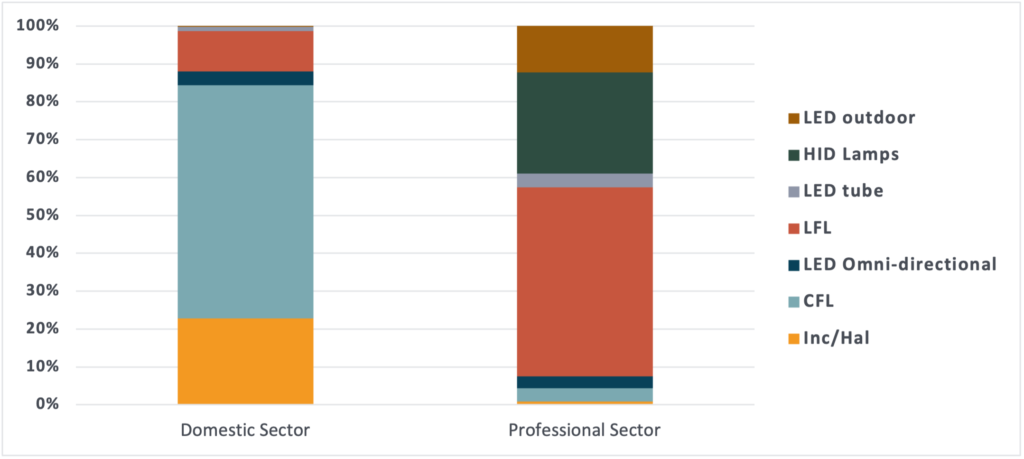
“Through the study, we identified interventions that could be adopted in Mozambique to aid the transition to more energy-efficient lighting technologies,” explained Angellah Wekongo of CLASP East Africa. “While all lighting technologies are available in Mozambique, compact fluorescent lamps (CFLs) are popular in the residential sector because of recent government efforts to promote fluorescents as the most energy-efficient option on the market.”
Mercury-containing bulbs dominate Mozambique
In April, CLASP met with stakeholders and collected data on lamps in formal and informal markets in the city of Maputo as well as in the Tete, Zambezia, Manica, and Sofala provinces. We found that electric utility companies are promoting mercury-containing CFLs as energy-efficient alternatives to incandescent lamps. These efforts have driven CFL uptake across the country, but there are concerns about the quality and safety of these lamps.
CFLs in Mozambique are an expensive option—in some instances, CFLS are more costly than energy-efficient LED alternatives—and contain mercury, a harmful neurotoxin that is released into communities when the bulbs break or are improperly disposed of.
“In all stakeholder interviews, we found that consumers opt for CFLs given their widespread support. Packaging will indicate 8,000 hours of lighting, but once at home, the CFL dies after 4 days,” said Ms. Wekongo. “In other instances, people purchase unbranded CFL lamps, and if they complain about CFL quality to the government, it is difficult to trace the lamp origins.”
Incandescent lamps are also widely available due to their low upfront cost despite higher long-term running costs and short lifespan. CLASP’s project partners at EDM estimated that incandescent lamps contribute to almost 40% of lighting in the country.
The challenges of shifting to safe, efficient lighting
Consumer interest is growing in more energy-efficient and mercury-free light-emitting diode bulbs (LEDs). Mozambique has not yet domesticated the regional quality and performance standard that CLASP helped develop through the UNIDO Energy Efficient Lighting and Appliances (EELA) project. The EELA standard bans the sale of CFL and low-efficiency LEDs, shifting markets to 100% high-efficiency LED options.
Stakeholder interviews identified the following market barriers that delay or prevent the uptake of more energy-efficient lighting:
- Lighting affordability is a significant factor for low-income households; LED lamps have a higher initial cost than incandescent lamps.
- Market spoilage and circulation of low-quality LED and CFL luminaires and lamps that do not perform as expected and are not durable.
- Absence of a quality and performance regulation and energy label; there is no regulation to prevent the distribution of poor-quality lighting.
- Lack of consumer awareness of the economic and environmental benefits of LEDs.
- No/Minimal customs regulation/inspection of imports into the country contributes to the entry of products of varying quality.
Harmonized efficiency policies benefit suppliers and consumers alike
CLASP strongly recommends that Mozambique adopt EELA’s SADC energy efficiency standards (SADCSTAN HT109:2021), the regionally harmonized lighting minimum energy performance standard.1 If adopted, the policy will lead to cumulative savings of 6,811 GWh/yr between 2023-2050. Additionally, the country will avoid 241,000 Mt of CO2 emissions through 2030 and 970,000 Mt through 2050.
Harmonized policies reduce trade barriers for suppliers and lower costs for testing and compliance certification reporting. In turn, consumers pay lower prices and have a higher quality set of product choices.
Stay tuned for the upcoming report.
California Passes Landmark Clean Lighting Bill
On Sunday, California Governor Gavin Newsom signed AB 2208 into law, a landmark bill by Assemblymember Kalra and Senator Becker that sets phase out dates for compact fluorescent lamps (CFLs) and linear fluorescent lamps (LFLs) starting in 2024. Climate, clean air, worker safety, and public and environmental health advocates applaud the move to protect Californians and the planet from the dangers of mercury containing lamps.
“We are delighted to have legislative champions in Assemblymember Ash Kalra and Senator Josh Becker who were willing to take action to remove toxic mercury from lighting which unnecessarily exposes the public and waste workers to a potent neurotoxin,” said Heidi Sanborn, Executive Director of the National Stewardship Action Council (NSAC), sponsor of the bill.
Over the last 10 years, light emitting diodes (LEDs) have become an increasingly available, cost-effective, and much more efficient lighting solution. Because LED retrofit lamps produce the same illumination as fluorescents but use half as much electricity, this new law will cut California’s lighting energy bills in half and protect the state from rolling blackouts caused by electricity shortages.
“AB 2208 will result in even more efficient energy use in our homes and businesses, reduced electricity bills, as well as reductions in both carbon and toxic pollution,” said Victoria Rome, Director of California Government Affairs for NRDC (Natural Resources Defense Council).
A recent market study found that by 2030, California could save over $1 billion annually on electricity bills, achieve annual electricity savings of about 5,600 gigawatt hours, and avoid the release of 950,000 metric tons of CO2 per year.
California is now the second state to pass a ban on fluorescent lamps, following Vermont’s vote to phase out CFLs in 2023 and 4-foot LFLs in 2024. California, however, went further by including lamps up to 8 feet in the phase-out.
“We applaud the leadership being shown by the State of California, transitioning away from toxic mercury-based light sources in favor of clean, efficient and cost-effective LED technology,” said Corinne Schneider, Chief Communications and Development Officer at CLASP. “We hope California’s move will generate some momentum, with other states taking action to protect people and the planet from fluorescent lighting.”
Governments around the world are increasingly recognizing LEDs as the foremost lighting technology on the market today. In December 2021, the European Union banned the sale of almost all mercury-containing fluorescent lamps by September 2023, and in March 2022, 137 governments voted to phase out CFLs by 2025 through the Minamata Convention on Mercury.
As one of the biggest lighting markets in the country, the new California law signals that the US is ready to make the transition to a clean lighting economy. The US is well positioned to take a leading role in global negotiations and push for an equitable global transition to better lighting at the Minamata Convention COP5 next year.
###
About the Clean Lighting Coalition: The Clean Lighting Coalition is a global partnership coordinated by CLASP to capture the health and environmental benefits of eliminating mercury-based lighting. To learn more, visit www.cleanlightingcoalition.org and follow the Coalition on Twitter and LinkedIn.
About the National Stewardship Action Council: The National Stewardship Action Council was founded in 2015 as a 501(c)(4) nonprofit organization that engages in education and advocacy work that drives a circular and equitable economy, anywhere in the U.S., and at any level of government. Our vision is that the U.S. achieve a circular and equitable economy. You can follow us on social media via Facebook, Twitter, LinkedIn, and You Tube.
The Solar Lighting and Appliances Sector may be Leaving Marginalised Groups Behind, New Efficiency for Access Study Reveals
Washington, DC, September 13, 2022 – A new analysis from Efficiency for Access, “Appliances for All: Assessing the Inclusivity of the Solar Appliances & Lighting Sector”, examines how well solar lighting and appliances are reaching their target populations, and assesses inclusion across solar company employment practices and product offerings. According to the analysis, the sector is largely serving a homogenous demographic: men with grid connections who are better educated and wealthier than their peers. Additionally, women make up only 23% of the workforce within decentralised energy companies. Overall, this meta-analysis finds that more can be done to reach marginalised groups and ensure the benefits of energy access are experienced equitably.
This seminal report is a first step towards establishing a baseline to understand how well the sector is performing across different facets of inclusivity. “As global economic and climatic challenges threaten our progress towards achieving universal energy access by 2030, marginalised groups may be overlooked. This report offers a first look at the solar lighting and appliance sector’s reach to those historically excluded by virtue of their gender, disability, poverty or otherwise,” said Makena Ireri, Director of Clean Energy Access Research at CLASP.
The Sector’s Typical Consumer
While limited, data from 19 household surveys indicate that the typical solar lighting and appliance user is most commonly a male with a grid connection who is employed, does not have a disability, and is relatively better educated and more affluent than the average person in his country.
- Only 41% of respondents reported earning less than USD $3.20 per day, the international poverty line, compared to over 65% of people in sub-Saharan Africa and over 60% in India.
- 12% of the respondents reported having at least one disability, which is lower than the global estimate (15%).
- 64% of respondents identified as men, while women comprised less than 40% of our sample, suggesting access barriers to solar products across sales, ownership and use.
“These findings, while not exhaustive in their representation, still reveal a sobering status quo that solar lighting and appliances may still be out of reach for millions of vulnerable people,” said Yasemin Erboy Ruff, Clean Energy Access Manager at CLASP. “To truly accelerate the sector’s aim of achieving Sustainable Development Goal 7, we need to more intentionally focus on multiple dimensions of inclusivity, not just gender.”
Assessing the Private Sector
Data from 68 companies in four markets show that women account for 23% of the workforce in distributed energy companies, similar to the broader energy sector at 22%. Notably, 84% of companies did not report gender-disaggregated data. Further, only 5% of the companies surveyed said they distribute or deal in nascent technologies that have traditionally been perceived to benefit women, like electric pressure cookers or solar mills.
Men far outnumber women in managerial positions within solar lighting and appliance companies. For example, there are only three women CEOs in over 200 solar companies in Uganda. This diversity gap within the private sector may lead to biases in the types of products developed and business decisions made, which may affect social impact.
An Incomplete Picture
According to Lauren Boucher, Research Manager at CLASP, “Principles of diversity, equity, and inclusion are deeply embedded within the ethos of solar lighting and appliances sector and its goal to ‘leave no on behind.’ However, to date, it lacks the standardised definitions, targets, indicators, and data collection efforts required to assess who is included and excluded from access initiatives.”
The report is an important first step toward establishing a baseline to understand how well the sector is performing, but the results should not be viewed as a comprehensive or fully accurate view of the sector. No survey included in this analysis required respondents to share demographic information on all three dimensions of this report (gender, income, disability). In an effort to create the largest possible sample size, Efficiency for Access did not drop observations with missing data from its analysis. These missing data introduce bias and further underscore the need for a coordinated, sector-wide effort to fill data gaps and harmonize tracking and evaluation methods.
Recommendations for Impact
To deliver sustainable development through a just energy transition, solar products must be accessible to all who need or desire them. A push for a more inclusive sector is good for business: widening access to previously untapped populations can expand customer bases, increase sales and enable appliance markets to scale. Feedback from a diverse consumer base can lead to product improvements that benefit all customers, not just marginalised groups.
To fully realise these benefits, our analysis recommends addressing the affordability gap, developing and tracking diversity, equity and inclusion metrics, and innovating and investing in a broader array of solar appliances, among other tactics.
“As the sector develops strategies to leave no one behind, this report sets a baseline to give stakeholders more clarity, direction, and the ability to track,” added Makena Ireri of CLASP.
A Deeper Dive
To assess how well the off-grid solar sector is reaching marginalised groups, we used data on the respondent’s gender, income, and disability status to calculate the per cent of respondents that identify as a woman, have a household income lower than the international poverty lines of USD $1.90 or USD $3.20 daily, or live with a disability. We
used data from 60 Decibels and the World Bank to construct benchmarks and the relevant region/country to draw comparisons to the broader solar lighting and appliance sector as well as the populations it serves. Respondents were surveyed on ownership of more than nine appliances, including televisions, fans, milking machines, refrigerators, solar water pumps and solar home systems.
To assess workplace diversity and inclusion efforts among private sector companies, we analysed gender-disaggregated employment and compensation data from Power for All’s 2021 Powering Jobs Survey. We also analysed company-reported data on the location of company offices, company expertise, and product offerings using data from Power for All’s Powering Jobs Survey and the Global Distributors Collective’s Member Survey.
For more information, download “Appliances for All: Assessing the Inclusivity of the Solar Appliances & Lighting Sector” and follow us on Twitter for regular updates.
—
About Efficiency for Access
Efficiency for Access is a global coalition promoting energy efficiency as a potent catalyst in clean energy access efforts. Since its founding in 2015, Efficiency for Access has grown from a year-long call to action and collaborative effort by Global LEAP and Sustainable Energy for All to a coalition of 20 donor organizations. Coalition programmes aim to scale up markets and reduce prices for super-efficient, off- and weak-grid appropriate products, support technological innovation, and improve sector coordination. Current Efficiency for Access Coalition members lead 12 programmes and initiatives spanning three continents, 62 countries, and 34 key technologies.
For media inquiries, please get in touch with Dennis Migono at dmigono@clasp.ngo.