In India, Solar-Powered Crop Storage Helps Farmers and the Economy
Preserving crops with solar-powered refrigerated storage units benefits farmers and India’s vital agricultural sector.
Reading time: 2 minutes
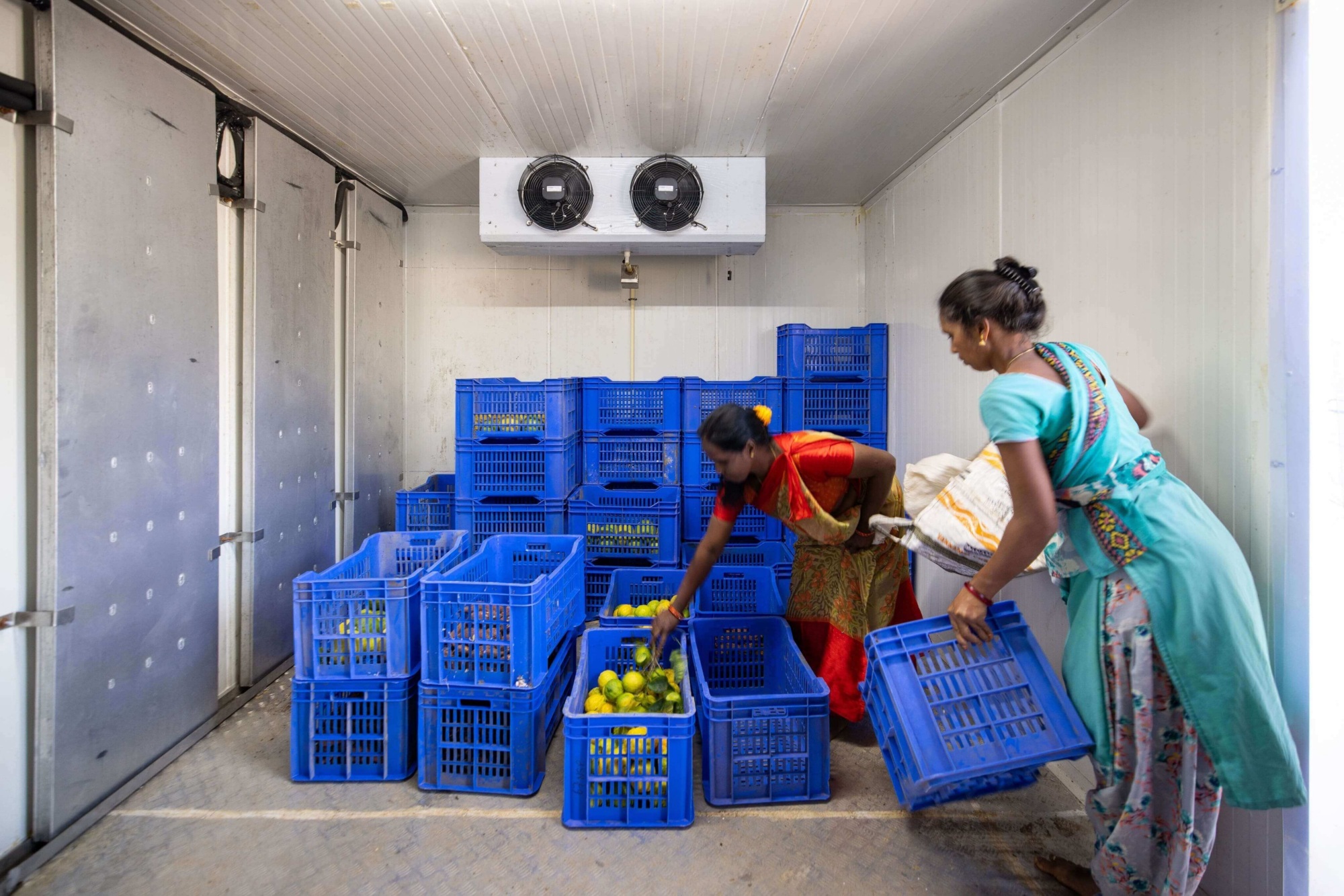
For Lokratnam, a farmer in Andhra Pradesh, India, some of the biggest challenges in her work used to begin after the harvest. Heatwaves, floods, and a lack of refrigerated storage often forced her to watch her produce rot or sell it as quickly as possible.
“All our produce would get spoiled, and we would throw it out as waste. Whatever was left, we used to sell, but at rock-bottom prices, with no profits to show for it,” she said.
Her experience reflects a wider reality across many low- and middle-income countries. According to the United Nations, a lack of refrigeration is a key driver of food waste, resulting in the loss of roughly 12% of the world’s produce—enough to feed an estimated 1 billion people—in 2017.
In India, the world’s second-largest producer of fruits and vegetables, crop loss has serious implications for the national economy. According to the Ministry of Finance, agriculture and related fields account for roughly 16% of the nation’s GDP and employ approximately half of its workforce. But 30 to 40% of India’s fruits and vegetables are lost after harvest, dramatically reducing farmers’ earning potential.
Room-size refrigerated storage equipment, often referred to as cold storage units or walk-in cold rooms, can change this reality. By keeping fruits and vegetables fresh for longer, cold storage units reduce losses and give farmers more control over when they sell their crops and for what price. For farmers, this translates to increased profits, a more stable income, and improved livelihoods. For the nation, it means economic growth.
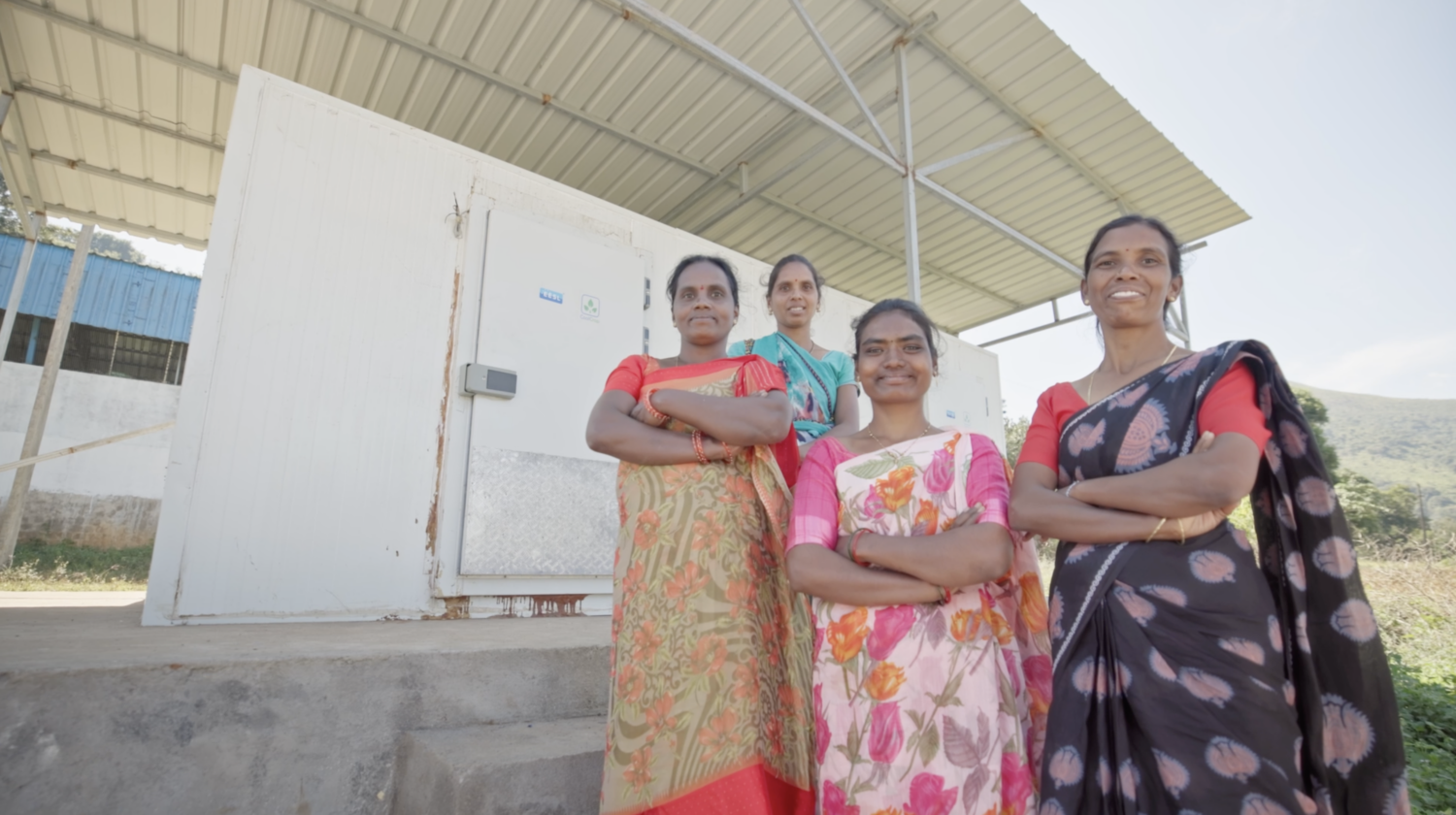
Solar energy is key to helping more Indian farmers access cold storage units, making it possible to locate this equipment in rural areas, where the power grid is often absent or unreliable. Solar-powered systems offer dependable, affordable solutions for storing produce close to where it is grown.
India’s government is working to help more farmers access this important solution. Energy Efficiency Services Limited, a joint venture under the Ministry of Power, is collaborating with CLASP to expand access through the Low-Energy Inclusive Appliances (LEIA) programme, a flagship research, development, and demonstration initiative under Efficiency for Access.
The collaboration began with the installation of six micro solar cold storage units across the states of Andhra Pradesh, Gujarat, Himachal Pradesh, Karnataka, and Odisha. Financing from The Asia Development Bank covered 75% of the capital costs, with farmers paying the rest.
There are now plans to deploy up to 150 units nationwide, unlocking $3.6 million in financing from the Indian government, private investors, and farmers (who are receiving loans to help cover their costs).
This effort will one day reverberate across India’s economy. For farmers like Lokratnam, however, the benefits are immediate and tangible.
“Now, with the cold storage, we are able to keep our custard apple, tamarind, and honey fresh and sell them later,” she said, referring to high-value crops. “It has changed everything for us, bringing profits without any losses.”
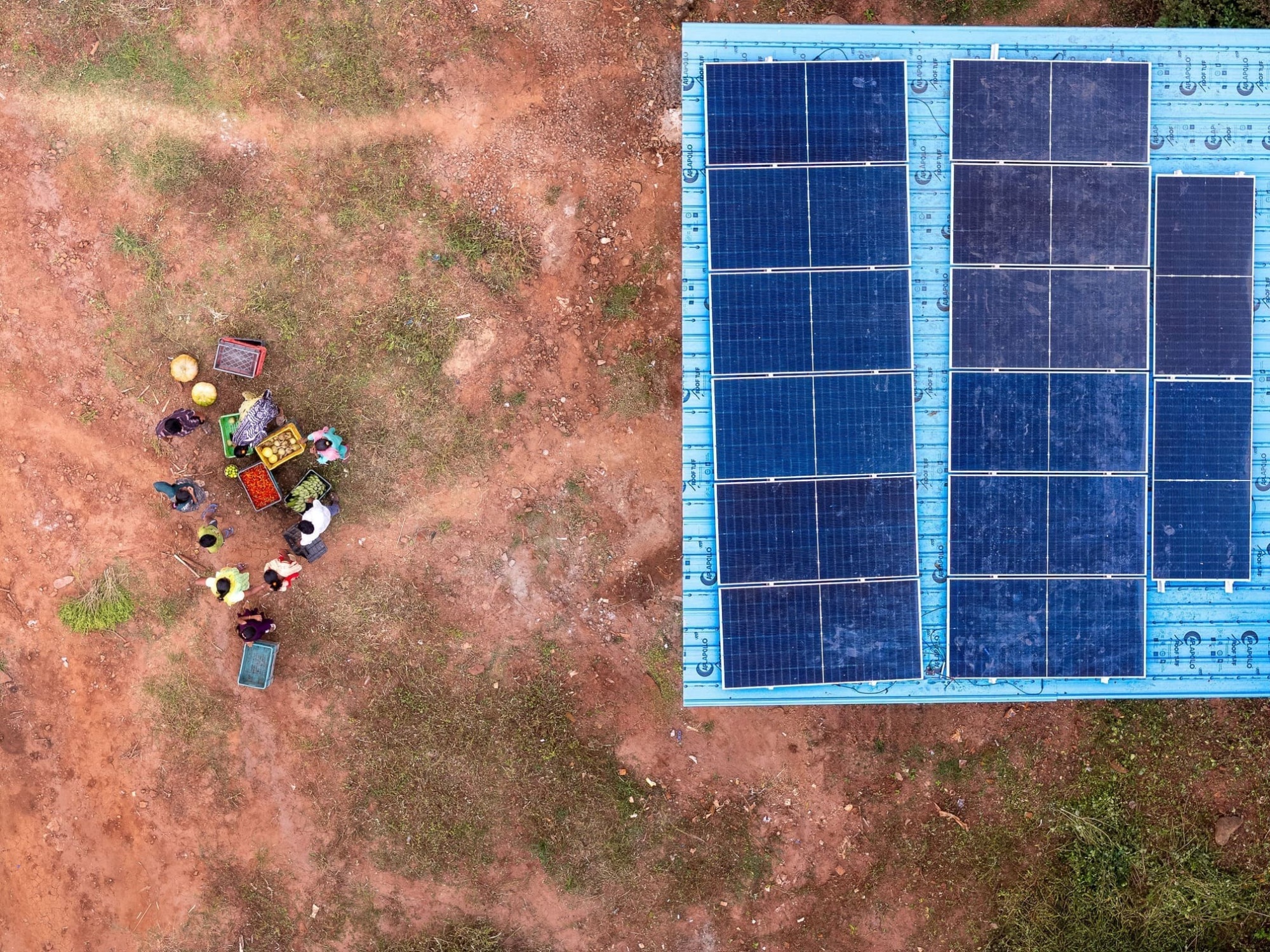
Farmers gathered beside a solar-powered cold storage unit.
CLASP
Source list
“Agriculture and Food Management: Raising Productivity, Securing Incomes and Ensuring Food Security.” In Economic Survey 2025–2026. Government of India, Ministry of Finance. Accessed May 21, 2026.
Food and Agriculture Organization of the United Nations. “India at a Glance.” Accessed May 21, 2026.
Government of India, Press Information Bureau Delhi. “Highlights of Economic Survey 2024–25.” Accessed May 21, 2026.
Ranjan, Juhi, and Ramesh Sahni. “Post Harvest Losses of Fruits and Vegetables in India.” Ropan, September 2023, 41–45.
Sustainable Food Cold Chains: Opportunities, Challenges and the Way Forward. United Nations Environment Programme and Food and Agriculture Organization of the United Nations, 2022.