
Off- and Weak Grid Appliance Market: Sierra Leone
The off-grid appliance market in Sierra Leone is nascent and the availability of off-grid appliances is limited, mainly due to low penetration of SHS kits, limited access to credit for customers and companies, and low disposable household incomes. However, there is a sizeable potential demand for SHS and off-grid appliances to reach the 80% of Sierra Leoneans living off of the grid.
Insufficient data about the quality and performance of off- and weak-grid appropriate appliances hinders the ability of market actors to make informed purchases, investments, and policy decisions, making it difficult to deliver high-performing solutions to consumers.
In an effort to fill these information gaps, CLASP conducted market scoping surveys in 10 countries, including Sierra Leone. This country profile sheds light on the market like never before. The profile summarises data collected through market scoping surveys conducted in local retail shops, testing results of products sampled from the market in Sierra Leone, and interviews with a range of stakeholders, including members of government, renewable energy businesses, donors, non-governmental organizations and large electrical shops.
Download the Off- and Weak Grid Appliance Market: Sierra Leone report here.
About Efficiency for Access
Efficiency for Access is a global coalition working to promote renewable and energy efficient appliances to deliver clean energy to the world’s poorest people. It is coordinated jointly by CLASP and the UK’s Energy Saving Trust.
Off-Grid Solar Social Enterprises Respond to COVID-19 in Kenya & Zambia
Under the Global LEAP Awards Solar E-Waste Challenge, as Efficiency for Access Coalition Co-Secretariat CLASP has been working closely with Grantee companies across sub-Saharan Africa as they adapt operations to help vulnerable off-grid consumers navigate the COVID 19 Pandemic. Two social enterprises in Kenya and Zambia are at the frontline, ensuring that their consumers continue to have access to energy, safe water and essential health services.
Adapting to COVID-19
The governments of Kenya and Zambia have implemented measures to protect citizens and slow the spread of COVID-19. In both countries, strict lockdowns and school closures began in late March. Local organizations and companies have played an important role in supporting communities with essential health and energy services.
To comply with the guidelines recommended by global and national regulators in response to the pandemic, Solar E-Waste Challenge Grantees are adjusting and augmenting operations. In Zambia and Western Kenya SunnyMoney and WeTu are providing essential services to their communities.
SunnyMoney Lights Health Facilities
In Zambia, almost 70% of the population lives off-grid and persistent load-shedding leaves even electrified areas in the dark for hours every week. SunnyMoney is building a sustainable solar market across the country through the distribution of pico-solar lights and solar home systems.
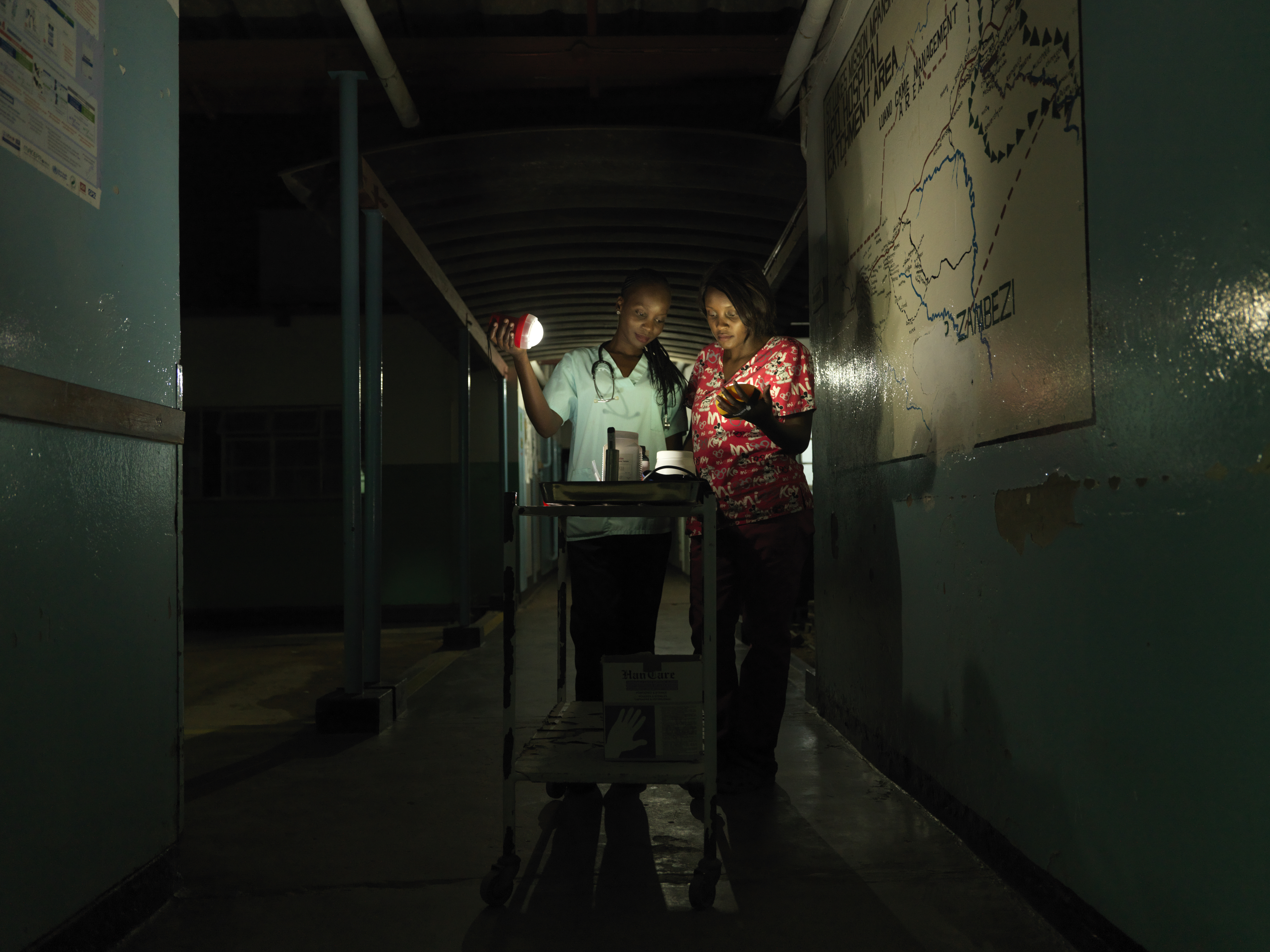
In response to the pandemic, SunnyMoney has partnered with the Ministry of Health to address two of Zambia’s biggest public health challenges: poor electrification of health facilities and lack of definitive information about the virus. They have donated solar lights to health facilities without reliable electricity. Many of these solar lights also come with phone charging capabilities for the Ministry to use at border-post quarantine centers and testing sites.
Although the Ministry of Health has been sensitizing communities on protections against the virus, 56% of the population lives in rural areas where information dissemination can be difficult. Without access to radios or televisions, communities rely on word of mouth, which can quickly spread false information on the virus. SunnyMoney is utilizing their network of dispersed, community-integrated agents to call and text customers accurate information.
“Our staff are using the local language in order to ensure that information is disseminated correctly and that social distancing, hand washing and good hygiene is understood to decrease the risk of infection and the spread of the virus,” explained Karla Kanyanga, Operations Director at SunnyMoney.
WeTu Bolsters Community Health in Western Kenya
In Kenya’s Lake Victoria region, only 35 percent of the population has access to clean drinking water and 20 percent is connected to a central power grid. WeTu provides innovative solutions for energy, safe drinking water and e-mobility to communities around the lake.
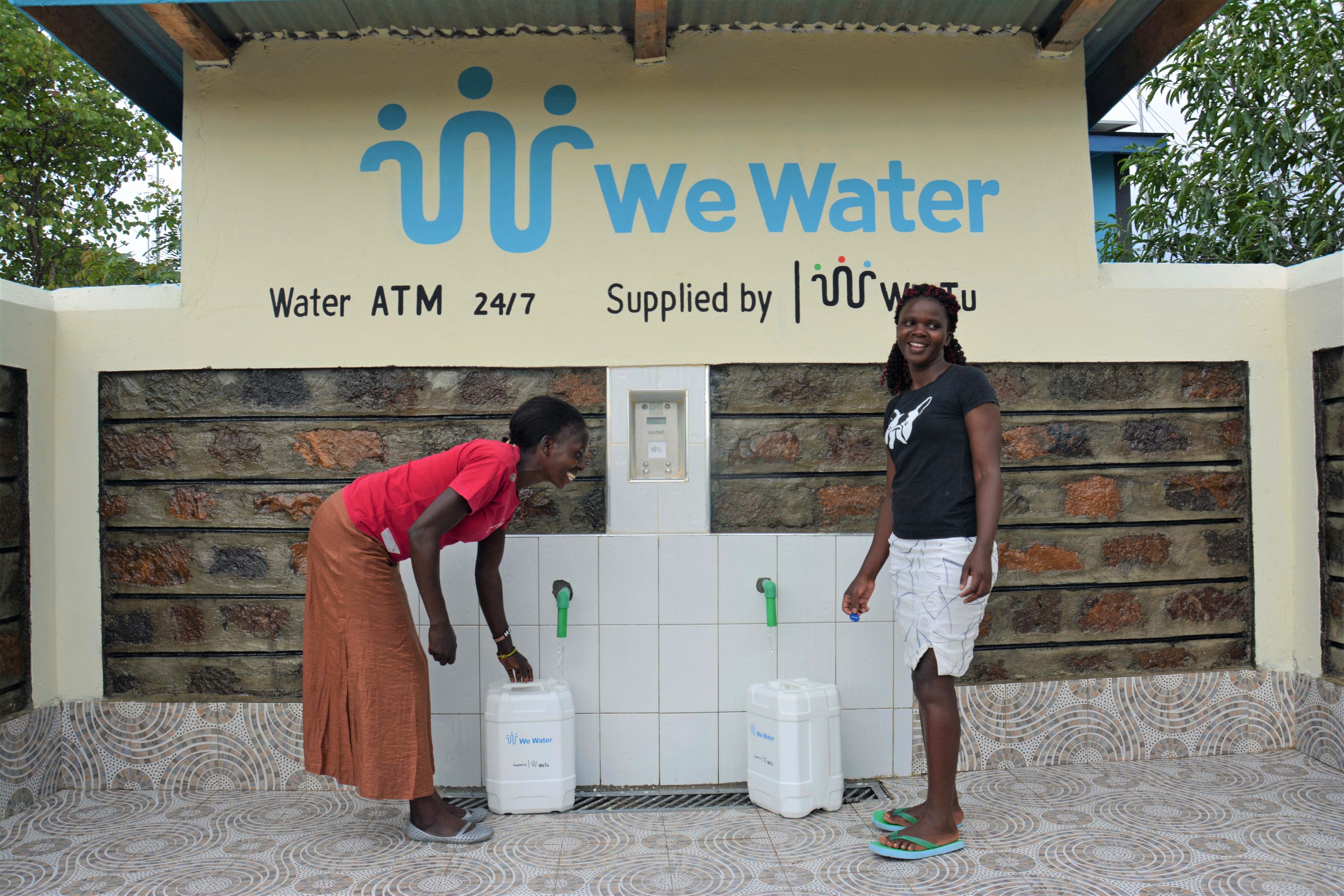
WeTu also partnered with the Ministry of Public Health and Community Health Volunteers to support response to the pandemic in three counties. Their coronavirus campaign is using flyers and posters to sensitize the community on hygienic behavior, correct “fake news,” and dispel rumors circulating about the virus in the local Luo language.
“We equipped our WeTu Hubs with handwashing facilities, soaps, sanitizers, and masks to ensure the safety of our employees and clients. We also opened up an additional water hub to increase access to clean drinking water in our communities,” outlined Stephen Agola, Operations Manager.
WeTu supports a crucial part of the local economy by providing lanterns that are customized for night fishing and serve as an environmentally friendly alternative to lead-acid batteries. The lanterns are leased, maintained and recharged with solar energy at the hubs and collected at e-waste collection points in the hubs at the end of their lifecycle. Find out more about WeTu in their Project Spotlight.
The Off-Grid Solar Sector Supports Community Resilience
Access to energy is at the core of building resilient communities. Off-grid solar companies provide energy services that enable households to remain connected and informed, support economic activity and bolster health. In times of crises, clean energy access companies are uniquely positioned to reach vulnerable, off-grid customers and provide them with critical information and support.
CLASP has joined many of our partners and endorsed a letter calling on all donors, foundations and philanthropies to quickly mobilize to provide relief funding for the energy access sector—this is critical to safeguard the collective progress we have made towards sustainable, clean and reliable energy for all.
Global LEAP E-Waste Challenge Update
While COVID-19 has disrupted the operations of off-grid solar companies, the Global LEAP Awards team and Grantees are finding innovative ways to continue their work and share insights from the Challenge projects. In May, under Efficiency for Access, CLASP and EEP Africa co-hosted a Webinar on Solar E-Waste Management Innovations in Sub-Saharan Africa that highlighted the Grantee projects and market trends across the industry.
Global LEAP Awards is also profiling each of the Grantees through a Spotlight series on Medium. Check out our latest Spotlight on d.light’s innovative approach to take-back and collection in Kenya.
Adapting Fund Allocation & Distribution for COVID-19 Relief
Appliances are playing an important role in keeping off- and weak-grid communities healthy, safe and connected through the COVID-19 pandemic. New data from 60 Decibels found that since the start of the pandemic, one third of off-grid appliance consumers are using their products more. But the companies behind these critical services are struggling.
Clean Energy Access Companies Face COVID-19 Impacts
Under the Efficiency for Access Coalition, CLASP is adapting and reallocating program funding to support clean energy access companies impacted by COVID-19. Through conversations with 40 companies selling efficient appliances for off- and weak-grid communities, we found that lockdowns and resulting economic turmoil is impacting all aspects of business—from inventory management to sales and distribution to customer service. Nearly a third of companies lack the capacity to sustain business without immediate relief, and 75 percent are considering layoffs. One third of companies said that less than $25,000 in relief funding would keep them from closing shop.

“The greatest impact of the coronavirus outbreak on ColdHubs is loss of projected revenue indefinitely. Across Nigeria, outdoor markets and produce aggregation centers are closed and we do not know when they will reopen. Our business model is based on vendors renting daily space in our cold units to store their produce, but all of our ColdHubs are closed.”
–Nnaemeka Ikegwuonu, ColdHubs CEO
Providing Small Grants for Relief
Through the Coalition, CLASP and the Energy Saving Trust are coordinating with the IKEA Foundation to provide small relief grants to SMEs that are R&D grantees or that are winners or finalists in recent Global LEAP Awards competitions. The funds will be reallocated from Coalition activities delayed due to the pandemic and instead delivered as small grants of $5,000-$10,000. Small grants can provide essential financial support to help companies continue to deliver critical services and avoid layoffs until a larger relief fund is established.
Restructuring Global LEAP Awards Results-Based Financing
CLASP has also converted over $340,000 of total financial incentives for Global LEAP Awards Results-Based Financing (Global LEAP+RBF), provided by USAID through the Powering Agriculture Energy Grand Challenge, from performance-based disbursements into upfront funding disbursements to support companies intending to sell energy-efficient solar water pumps. In acknowledgment that product sales have almost entirely come to a halt, this disbursement of funds will no longer be tied to verification of an eventual end consumer product sale. We expect to allocate this funding to companies from mid-July.
In addition, CLASP will be disbursing more than $1M in incentive funding provided by EnDev to solar water pump and off-grid refrigerator companies participating in Global LEAP+RBF to address some of their working capital constraints. The incentive structure has been adjusted to disburse higher per-unit incentive amounts for product inventory, now paying the bulk of the incentive funds pre-sale as opposed to post-sale, i.e. upon verification of a legitimate sale. We have pivoted the program structure in recognition that distributors have working capital tied up in inventory sitting in their local warehouses, which they are unable to sell due to restrictions in movement.
These two changes to the Global LEAP+RBF funding structure are aimed at helping companies maintain their liquidity and retain staff that are critical to jump-start operations.
CLASP Supports Additional Sector Support
CLASP has joined many of our partners and endorsed a letter calling on all donors, foundations and philanthropies to quickly mobilize to provide relief funding for the energy access sector—this is critical to safeguard the collective progress we have made towards sustainable, clean and reliable energy for all.
Read our initial note of support by CEO Christine Egan for additional relief fund financing.
Webinar: Insights from the Global LEAP Awards Off-Grid Cold Chain Challenge
On 30 June, CLASP as the Efficiency for Access Co-Secretariat and Energy 4 Impact hosted a webinar on the findings and experiences from the inaugural Global LEAP Awards Off-Grid Cold Chain Challenge(OGCCC). The OGCCC was an international competition to identify and promote the most energy-efficient, sustainable and cost-effective technologies that can meet the cold storage requirements for fresh fruits, vegetables and dairy products in sub-Saharan Africa.
The webinar provided an overview of the cold chain market opportunity in emerging economies and the cold storage technologies and business models that participated in the Challenge. The four finalists deployed their units in Kenya (2), Nigeria and Uganda, but faced significant logistical, operational and technological challenges during the implementation stage of the competition. Only four of the twelve OGCCC finalists were able to deploy their units.
Meet the four finalists: FreshBox, Ecolife, ColdHubs and Ecozen Solutions.
Through the Competition, the Efficiency for Access Coalition identified the need for continued R&D investment and support for companies developing high-quality and affordable cold storage technologies suitable across the agricultural value chain. Two of the units were used by farmers for dairy and herb storage, while the other two operated out of markets and offered rent space for local vendors to keep produce fresh in hot, ambient climates. In order to develop suitable solutions for disparate cold storage use cases, more support is needed for pilots that test workable business models for scale.
For more information:
Accelerating the Uptake of Electric Pressure Cookers on Mini-Grids in Tanzania
Electric pressure cooking represents a cost-effective, durable and clean energy solution to biomass cooking for off- and weak-grid communities. CLASP partnered with PowerGen Renewable Energy to conduct and evaluate a small-scale electric pressure cooker pilot in rural Tanzania, finding that the appliance leads to significant quality of life improvements for customers.
The Opportunity for Clean Cooking
Three billion people around the world depend on food cooked over polluting, open fires or inefficient stoves. Exposure to household air pollution (HAP) from burning wood, charcoal, coal and kerosene is a leading risk factor for respiratory diseases, putting women and children primarily responsible for domestic activities at the highest risk.
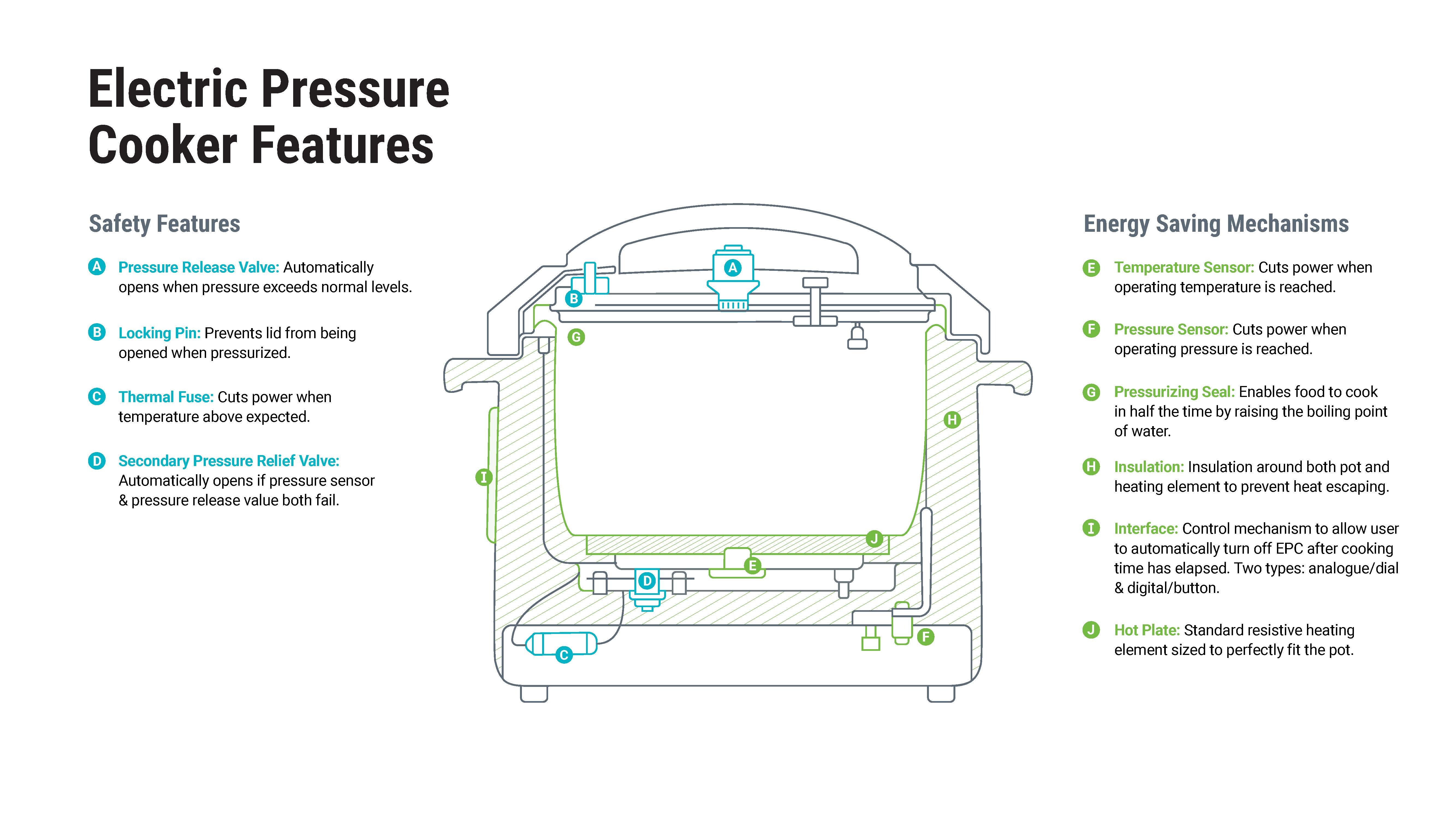
Electric pressure cookers (EPC) are highly suitable for mini-grids due to their unique combination of low energy consumption and high pressure. With minimal training, East African households can quickly and efficiently cook staples like beans, ugali, and meat stews. EPCs also provide a range of benefits, from reducing carbon emissions and personal exposure to harmful pollutants to lowering the burden of disease associated with HAP. Despite the potential of EPCs to accelerate access to clean cooking in low income, rural communities, poor consumer awareness, high-cost and lack of viable product options inhibits the market.
Mini-grids, or micro-grids, represent a unique opportunity to introduce EPCs to consumers previously living in off- and weak-grid environments. The majority of microgrid consumers still rely on biomass fuels for cooking, but once connected to the grid, they can easily transition to using EPCs designed for their unique cooking needs.
To evaluate the need and use-case for EPCs, CLASP conducted a small-scale study with PowerGen Renewable Energy mini-grid EPC customers in Singida Region, Tanzania. The report outlines the business model and delivery mechanisms used to distribute the EPCs, demonstrating that in-person trainings and loan facilities are critical components of product uptake and retention.
Consumer Insights
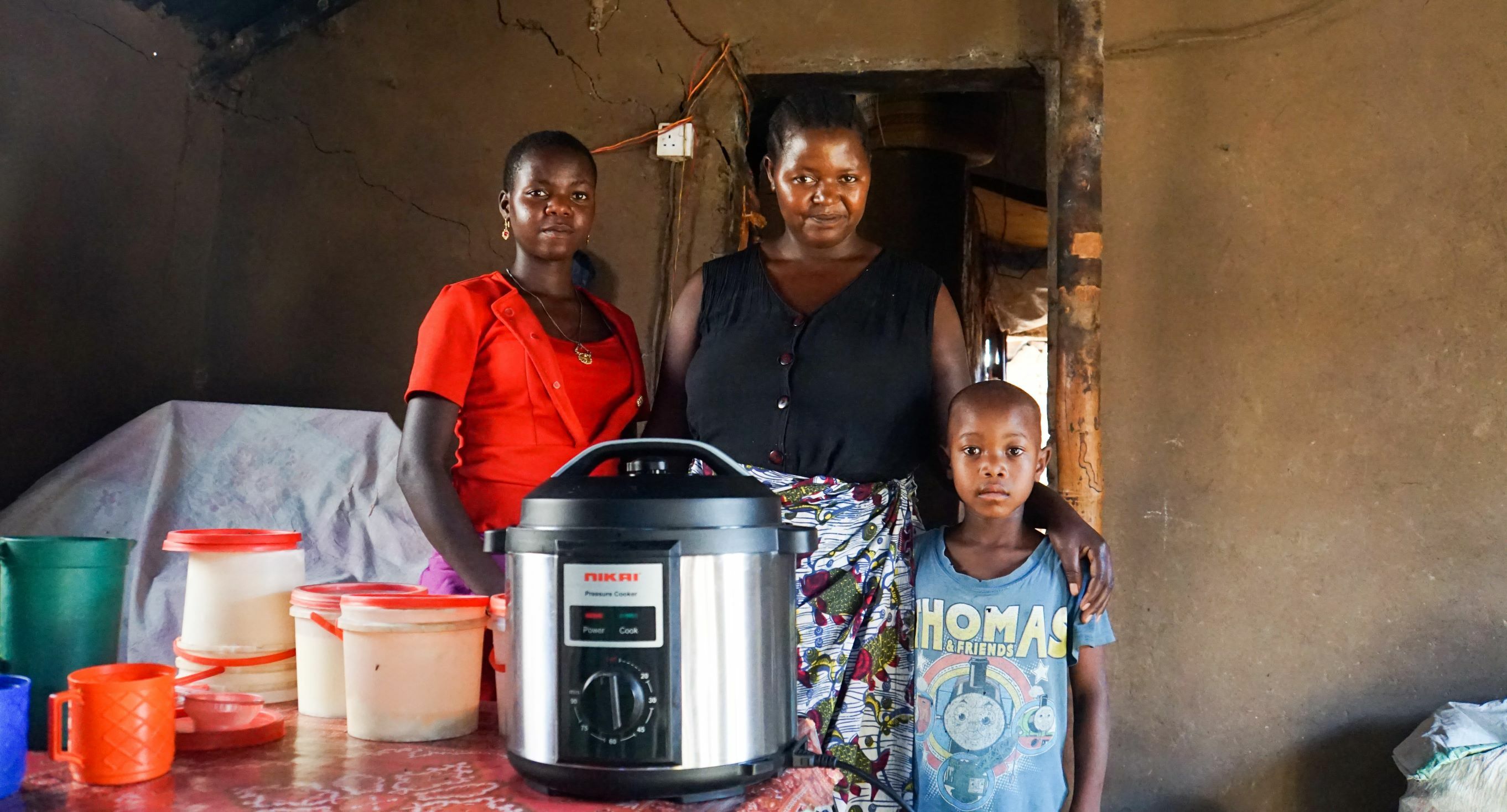
“The best thing about this [EPC] is having more time. I used to sit inside [the house] for two or three hours to prepare each meal, but now I can put food inside the cooker and just leave. I go to my farm and work all day. It is especially helpful during the harvest season when we have so much to do. Now I come home and the food is ready,” one customer reported.
The study found that EPCs had a positive impact on consumer quality of life and did not require significant behavior change. The majority of EPCs were purchased by men, primarily to ease the burden of cooking for their wives, however several male customers also cooked with it themselves. Customers appreciated that the EPCs lead to time-savings, while minimally impacting electricity consumption and costs. Users reported that the appliance was easy to use and produced the same quality of food as alternative options.
Smart data collected through the mini-grid household meters show that consumers’ energy consumption increased by 19.5% after receiving the EPC, indicating that EPCs were actively used in the households and created demand for more electricity consumption. Sustained energy demand is important for mini-grid business models to remain viable long-term.
Scaling Electric Cooking
While the report draws on small-scale preliminary data, early results indicate off-the-shelf EPCs are strongly compatible with microgrids and meet customer needs. The results demonstrate a path to scale for appliance stakeholders alongside the fast-growing microgrid sector, with an opportunity to impact millions of beneficiaries.
In an effort to identify and scale best-in-class, cost-effective and durable EPCs, CLASP, through the Global LEAP Awards, is conducting an Electric Pressure Cooker Competition and results-based financing (RBF) facility. The inaugural EPC Competition received 39 unique nominations from 12 companies operating in 8 countries. Products are currently undergoing laboratory testing and winners will be announced in August 2020.
Similar to other Global LEAP-RBF efforts that focus on product quality verification, this RBF pilot will provide financial incentives to support the sale of EPCs that have passed safety and performance testing. With support from EnDev, the facility will support the distribution of approximately 5,000 products in Kenya.
Read the full report here.
_____________________________
The EPC pilot was supported by the Modern Energy Cooking Services (MECS) program, a five-year program funded by UK Aid (DFID). The research, conducted by CLASP as Co-Secretariat of the Efficiency for Access Coalition, was supported by the Low –Energy Inclusive Appliance (LEIA) program.
Electric Pressure Cooking: Accelerating Microgrid E-Cooking Through Business and Delivery Model Innovations
Three billion people around the world depend on food cooked over polluting, open fires or inefficient stoves. Exposure to household air pollution (HAP) from burning wood, charcoal, coal and kerosene is a leading risk factor for respiratory diseases, putting women and children primarily responsible for domestic activities at the highest risk.
Electric pressure cookers (EPC) represent a viable clean cooking solution for communities living on mini-grids, combining low energy consumption and high pressure to cook household staples in East Africa. EPCs also provide a range of benefits, from reducing carbon emissions and personal exposure to harmful pollutants to lowering the burden of disease associated with HAP. Despite the potential of EPCs to accelerate access to clean cooking in low income, rural communities, poor consumer awareness, high-cost and lack of viable product options inhibits the market.
To evaluate the need and use-case for EPCs, CLASP conducted a small-scale study with PowerGen Renewable Energy mini-grid EPC customers in rural Tanzania. The report outlines the business model and delivery mechanisms used to distribute the EPCs, demonstrating that in-person trainings and loan facilities are critical components of product uptake and retention.
Download the Electric Pressure Cooking: Accelerating Microgrid E-Cooking Through Business and Delivery Model Innovations report.
___________________________________________________________________________________
The pilot was supported by the Modern Energy Cooking Services (MECS) program, a five-year program funded by UK Aid (DFID). The research, conducted by CLASP as Co-Secretariat of the Efficiency for Access Coalition, was supported by the Low –Energy Inclusive Appliance (LEIA) program.
About Efficiency for Access
Efficiency for Access is a global coalition working to promote renewable and energy efficient appliances to deliver clean energy to the world’s poorest people. It is coordinated jointly by CLASP and the UK’s Energy Saving Trust.
Efficiency for Access Shares Market Insights on India’s Off-Grid and Weak-Grid Solar Appliance Market
India’s electric grid is expanding rapidly in rural areas, but grid reliability remains a challenge – only 22% of the rural population has access to reliable service. Distributed energy solutions such as stand-alone solar energy systems have become a viable alternative to provide dependable energy solutions to communities in off- and weak-grid areas and improve the socioeconomic status and quality of life for those without reliable access to energy services.
Widespread access to good-quality appliances compatible with distributed energy solutions are critically important to ensuring the social and economic benefits of energy access are realized. However, there is limited “on-the-ground” market knowledge about the availability of off-grid appropriate appliances in the specific off-grid solar markets.
To address market knowledge gaps, Efficiency for Access conducted market scoping surveys to identify products sold in local retail shops and gather data on off-grid appropriate appliances that are available to off- and weak-grid consumers in key retail markets. Efficiency for Access’s field consultants interviewed retail shop-owners, appliance distributors, and appliance consumers to provide anecdotal evidence and help understand the unique local context. Efficiency for Access has summarized key findings in a series of four country profiles, beginning with India.
Evidence from market surveys suggests India’s solar appliance market is vibrant and uniquely distinguished from other markets due to various contributing factors, including:
- DC appliances aren’t commonly sold in retail shops, but solar-compatible appliances, like AC refrigerators with digital inverters, are increasing in demand.
- The price of TVs and refrigerators varied widely due to factors like size and features offered while fans had little variation in price.
- The majority of products assessed through the market survey are covered by a warranty, a good indication of consumer protection, but coverage terms vary.
Off-Grid Fans Deliver a Range of Socio-Economic and Health Benefits for Households and Businesses in Bangladesh
Bangladesh is an ideal market for super-efficient off-grid fans. Average temperatures have risen considerably over the last 60 years in Bangladesh and are expected to continue increasing with climate change. While many households in Bangladesh have turned to fans as an affordable cooling solution, evidence shows that the market penetration of fans in rural areas is low and consistent with broader divides in energy access. Super-efficient off-grid fans capable of use with off-grid solar home systems offer under- and un-electrified households a viable cooling solution capable of delivering a number of socio-economic, health, and environmental benefits for rural communities.
Despite their potential to deliver tangible benefits for households, reliable data on the impacts of super-efficient off-grid fans is generally sparse. To address these gaps in knowledge, CLASP conducted over 1,600 telephone surveys with off-grid fan customers. Results shed light on the real impact and socio-economic value of super-efficient off-grid fans and underscore their role in expanding access to modern energy services:
- 94% of customers surveyed stated that their fan allowed them to extend their productive time by an average of 2 hours and 20 minutes each day, allowing more opportunities for income generation and other productive activities.
- 92% of customers surveyed noticed an improvement in the health of their family members when using their fan. Respondents reported reductions in dehydration and perspiration, both important factors in reducing the risk of serious health conditions.
- 90% of customers surveyed powered their fan with a new or pre-existing solar home system kit. By using a super-efficient off-grid fan, customers were able to power a range of appliances with their solar home system, increasing the overall value of their system.
- 91% of customers surveyed stated they were satisfied with their purchase and 89% stated they would recommend a fan to others, indicating a strong market potential for super-efficient off-grid fans in Bangladesh.
Efficiency for Access Shares New Data & Guidance for Improving Solar Water Pump Durability
Situated at the heart of the water-food-energy nexus, solar water pumps play a critical role in improving the incomes and resilience of farming households, while delivering benefits for the climate and environment.
In the marketplace, however, developing a high-quality, affordable water pump able to perform under a wide range of geographic and environmental conditions remains a large challenge for the industry. Manufacturers face a tradeoff between supplying a more durable pump at a high cost and developing a more affordable pump that may require more maintenance and operational expenditures over time. At the same time, buyers and distributors looking to supply quality solar water pumps have limited access to quality data about the performance and durability of pumps available on the market.
To fill important knowledge gaps, Efficiency for Access and the Schatz Energy Research Center have published a memo that shares key data from Global LEAP Awards laboratory testing and interviews with industry experts. The memo describes test methods for assessing solar water pump durability in a laboratory setting and highlights a number of steps that manufacturers and distributors can take to improve pump system durability.
The memo also identifies opportunities for how to improve existing test methods and future quality assurance efforts. Market research that assesses the return on investment of a pump over its expected lifespan and typical loan period can, for example, help determine the appropriate financing mechanisms that make high-quality, durable pumps more affordable to consumers.
Read the full memo to learn more about what is needed to improve the durability of solar water pumps.
Solar Water Pump Durability Research Memo
Solar water pumps have the potential to play a critical role in improving the incomes and resilience of smallholder farmers, while delivering benefits for the climate and environment. In the marketplace, however, developing a high-quality, affordable water pump able to perform under a wide range of geographic and environmental conditions remains a large challenge for the industry. Manufacturers face a tradeoff between supplying a more durable pump at a high cost and developing a more affordable pump that may require more maintenance and operational expenditures over time. At the same time, buyers and distributors looking to supply quality solar water pumps have limited access to quality data about the performance and durability of pumps available on the market.
This memo fills important knowledge gaps on solar water pump durability by sharing key data from Global LEAP Awards laboratory testing and summarizing information from the existing literature and interviews with industry experts. It provides useful recommendations for how to enhance solar water pump durability and identifies opportunities for how to improve existing test methods and future quality assurance efforts.
Download the Solar Water Pump Durability Research Memo here.
About Efficiency for Access
Efficiency for Access is a global coalition working to promote renewable and energy efficient appliances to deliver clean energy to the world’s poorest people. It is coordinated jointly by CLASP and the UK’s Energy Saving Trust.