
Pollution & Waste & Appliances
At the end of its usable lifetime, electronic equipment is an environmental and financial opportunity if it is correctly managed. CLASP recognizes that circularity and circular economy principles are vital to reduce the environmental pollution and waste impact of the appliances we use every day.

CLASP’s key stats on pollution & waste
- CLASP played an instrumental role in shaping the European Commission’s Ecodesign Regulation, which will aim to decrease the use of new materials for production by 35%, along with a 22% reduction in the use of critical raw materials.
- A CLASP report on moving towards a circular economy, states that every year, of the estimated 100 billion tons of materials enter the global economy, only 8.6% is recycled and used again.
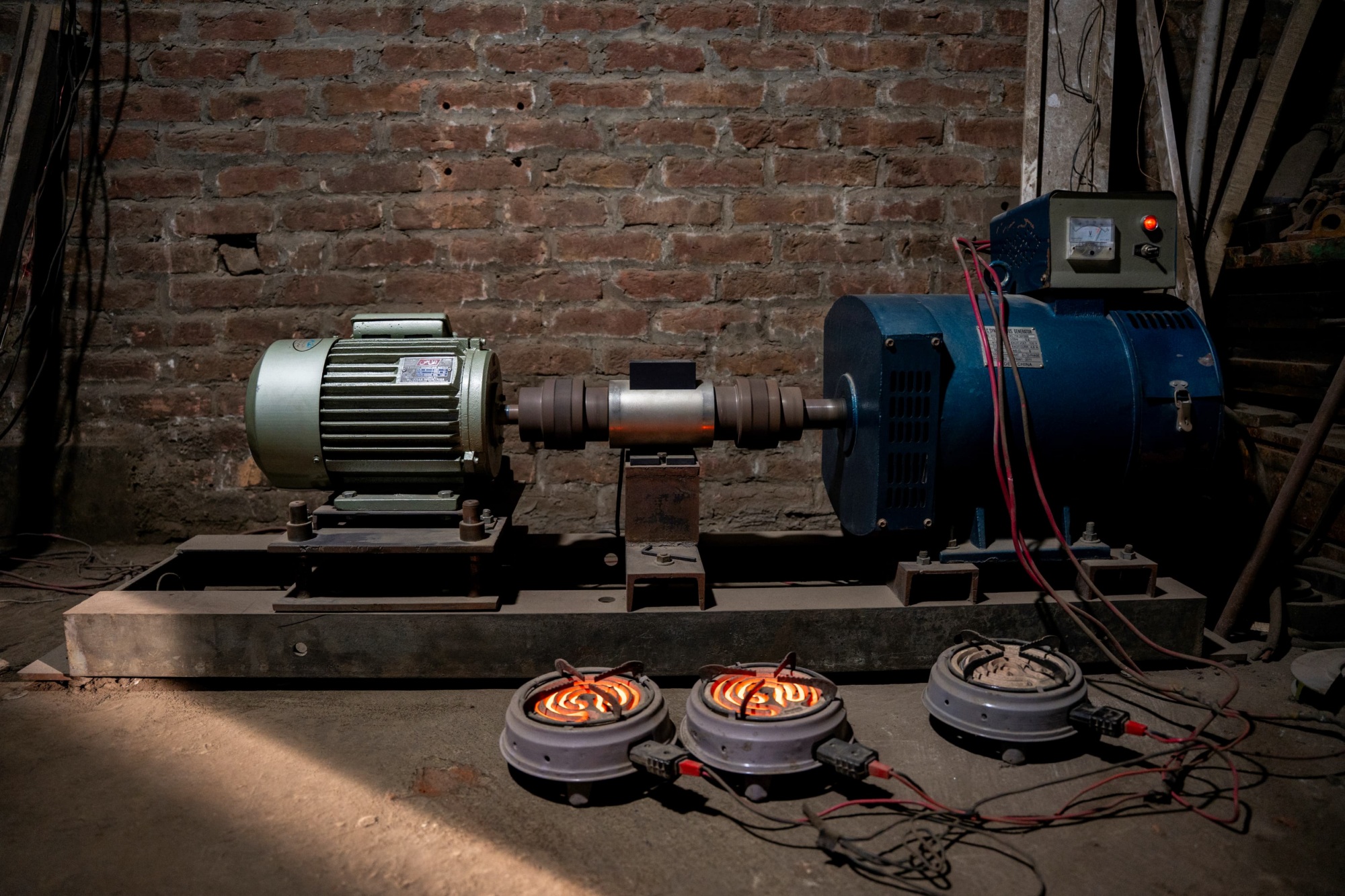
- The 2019 Global LEAP Awards Solar E-Waste Challenge, which CLASP launched through the Efficiency for Access Coalition, supported eight innovative companies on the cutting-edge of recycling, repairability, and consumer awareness raising.

[Photo: CLASP]
How do energy-efficient appliances support the reduction of pollution & waste?
When past their use, appliances, lighting and equipment should be managed as valuable electronic-waste (or e-waste) to avoid waste and harmful leaking of toxins into the environment. Understanding circularity and circular economy principles is vital to grasp the total environmental pollution and waste impact of the appliances we use every day.
As stewards of appliance energy efficiency, CLASP’s mission to ensure appliances benefit people and the planet includes all stages of the appliance lifecycle. CLASP works with global partners to ensure that products entering the market meet minimum requirements and provide information on aspects such as product energy efficiency, ease of repair, battery lifespan, resilience against dust and water, and durability.
These measures help build economies that are more circular, save energy and cut carbon emissions.
In 2023, CLASP led the global campaign to phase out fluorescent lamps.1 This will avoid 2.7 gigatons of CO2 emissions and eliminate 158 tons of mercury pollution. CLASP experts have also conducted extensive research and made recommendations for how Africa and Southeast Asia2 countries can prevent the widespread sale of less efficient air conditioners with obsolete, climate-harming refrigerants.
Related News


How does CLASP’s work support the reduction of pollution and waste?
Our programs focus on data-driven, cost-effective interventions to simultaneously promote the uptake of super-efficient, durable technologies while creating the end-of-life systems to manage their reuse and safe disposal to limit environmental harm. CLASP programs and partnerships that have an impact on the environment include:

Efficient appliances advancing pollution and waste reduction
CLASP has identified the appliances at the core of achieving Net Zero by 2050, positively impacting people and the environment: these are the ten “Net Zero Heroes.” The following appliances have a direct impact on pollution and waste reduction:

The demand for air conditioners is steadily growing as global consumers seek to improve their quality of life in the face of rising global temperatures. Energy-efficient ACs that use low-GWP (global warming potential) refrigerants are crucial to keeping people cool while reducing climate emissions.

Unsustainable harvesting of fuelwood and incomplete burning of biomass (mainly for cooking) accounts for up to 2% of global GHG emissions and up to 25% of annual anthropogenic black carbon emissions. A global transition to electric cooking would help reduce deforestation, greenhouse gas emissions, and exposure to harmful air pollution.

Residential heating and cooling account for 51% of household energy use and 40% of household energy bills in the US alone. Heat pumps, which can provide both cooling and heating services, are up to four times more efficient than traditional equipment and have the potential to save consumers money on their energy bills and reduce greenhouse gas emissions and air pollution caused by burning fossil fuels.

Replacing all or some oil-powered water heating equipment with modern heat pump water heaters can cut greenhouse gas emissions, reduce household heating costs, and increase comfort. Focusing on heat pump water heaters with lower-global warming potential and natural refrigerants, quality installation, and recycling at end-of-life can also have a significant environmental impact.

LED lighting contains no toxic mercury and cuts energy use by about half compared with fluorescent lamps, reducing power plant emissions of mercury, carbon dioxide (CO2), and other pollutants.

Refrigerator-freezers help extend the shelf life of food and medicine, reducing their waste so avoiding significant amounts of greenhouse gas emissions. Efficient coolers use less energy and this lowers carbon emissions.
Efficient solar water pumps enable access to energy services and mitigate or prevent greenhouse gas emissions by displacing the need for diesel fuel.

Solar Generators
Solar-powered zero emission generators (ZE Gen) are portable power stations that are used as individual use resources to power things like small businesses, schools, or campsites.
Solar Mini-Grids
Solar mini-grids provide access to clean energy in electricity-constrained regions.
0. “Global Leaders Agree to Full Phase-Out of Fluorescent Lighting,” CLASP, November 3, 2023. https://www.clasp.ngo/updates/cop5-decision/.
1. “Pathways to Prevent Dumping of Climate Harming Room Air Conditioners in Southeast Asia”, CLASP, September 20, 2023. https://www.clasp.ngo/research/all/pathways-to-prevent-dumping-of-climate-harming-room-air-conditioners-in-southeast-asia/.