
Air Conditioners
Air conditioners keep people cool but worsen climate change. Fortunately, there are solutions.

Everything you need to know about ACs
The first modern air conditioner (AC) was invented in 19021 in Brooklyn, New York. Since then, the technology has become a fixture in many parts of the world.
How do air conditioners work?
ACs pull air from indoor spaces, then use chemicals called refrigerants to extract its heat. The newly chilled air is then sent indoors while the unwanted heat is directed out of the building.
Most people don’t realize it, but many air conditioners can heat as well as cool buildings—in fact, ACs are technically a type of heat pump. In some parts of the world, “air conditioning” refers to both heating and cooling.
Where are ACs used?
Today, only a relatively small percentage of the world’s population has air conditioning. In most countries, ACs are used almost exclusively by middle- and upper-income households, businesses, and institutions. With their relatively steep purchase price and high energy needs—in warm climates, they typically use more energy than any other residential appliance—these appliances are out of reach for many people.
In fact, as of 2018, ACs were present in more than half of all households in only a few countries:2 China, Japan, Korea, Saudi Arabia, and the United States.
Why are air conditioners vital for climate adaptation?
Extreme heat is the leading cause of death related to climate change. Today, heat waves kill almost half a million people each year3, and the risk of heat stress is increasing as global temperatures warm.
Air conditioners lower this risk—but only for people who have access to them.
Do air conditioners make climate change worse?
While air conditioning is a critical climate adaptation tool, it’s also a major driver of climate change. Greenhouse gas emissions from ACs are expected to more than double by 2050 if current trends continue, bringing them to over 10% of global emissions.4
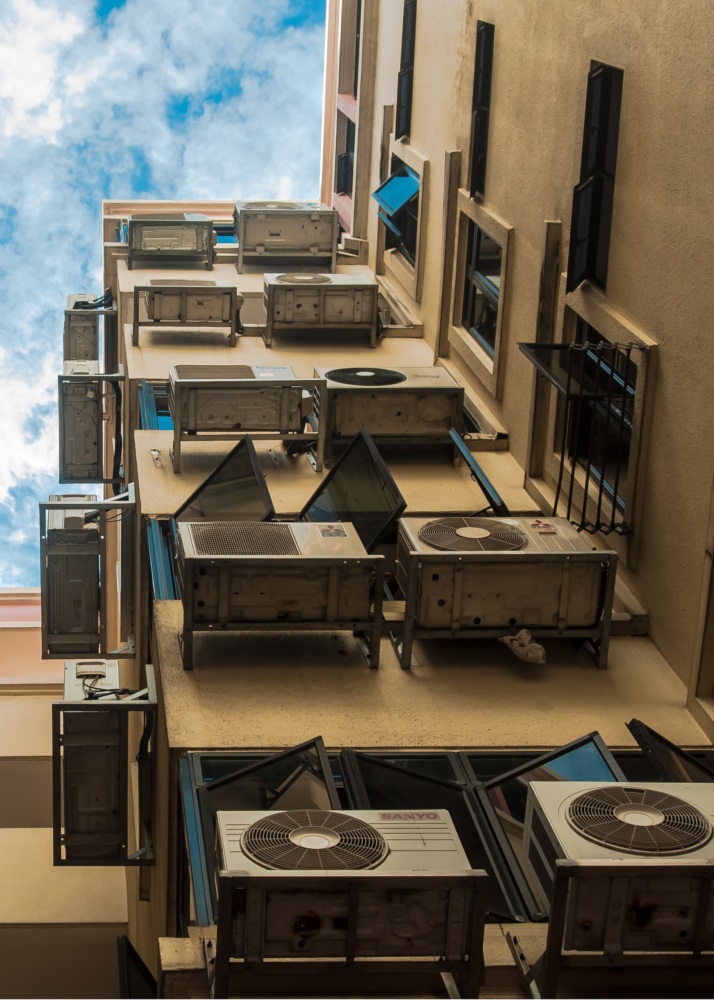
ACs warm the planet in two ways: through the electricity used to power them, if it’s generated by burning fossil fuels, and through refrigerants, many of which are potent greenhouse gases that often leak into the air.
CLASP has identified 10 appliances critical to fighting climate change and improving people's lives. Air conditioners are one.
[Photo: Shutterstock]

[Photo: Shutterstock]

[Photo: Shutterstock]
What is the solution?
- Making ACs more energy efficient will cool or heat buildings while using less electricity, generating fewer planet-warming emissions, and reducing demand on energy grids. Higher efficiency also lowers users’ energy bills, helping more people afford ACs.
- Switching to climate-friendly refrigerants will keep more greenhouse gases out of the atmosphere.
- Getting high-quality ACs to more people who need them will save lives, keep people comfortable, and improve productivity during heat waves.

How can we achieve this?
Governments
- Develop, promote, and incentivize the production and/or import of efficient ACs and those using low-global-warming-potential (GWP) refrigerants.
- Set policies to phase out the production, trade, and sale of inefficient ACs and those that use refrigerants with high global warming potential.
- Increase national awareness of the net benefits of efficiency of ACs and other appliances.
- Use labels to indicate and promote the most efficient and climate-friendly AC models.
- Reduce the need for air conditioning by supporting cooling-friendly design and construction practices, such as by ensuring that building standards and codes include effective insulation and triple glazing as the default option.
AC manufacturers
- Invest in research and development to improve the efficiency, affordability, and climate-friendliness of air conditioners to match global best practice.
- Abandon the production and export of inefficient models and challenge competitors to do the same.
Building professionals and urban planners
- Reduce the need for air conditioning by optimizing the design of buildings and cities, employing strategies like well-insulated walls and windows, cool roofs, natural ventilation, and green space.
- Lobby governments for cooling-friendly building standards and codes to minimize the need for ACs.
Consumers and consumer groups
- Choose the most efficient air conditioner you can afford to lower your energy bills and reduce your carbon footprint.
- Choose ACs with low-global-warming-potential refrigerants.
- Increase the wall insulation, shade, and layers of window glazing in your homes and businesses to reduce the need for air conditioning.
- Contact government representatives to request ambitious efficiency policies for all appliances.
Recent News



Are you a policymaker working on ACs? Explore CLASP's free tools:
Net Zero Appliances NDC Toolkit
- Learn how (and why) to maximize the potential of appliance efficiency in NDCs.
World's Best MEPS: Tracking Leaders in Appliance Energy Efficiency Standards
- Find the world’s most ambitious energy performance standards for six key appliances and equipment.
Mepsy: The Appliance & Equipment Climate Impact Calculator
- Analyze efficiency policy options for key appliances across 162 countries.
CLASP's work on ACs impacts:



0. “History of Air Conditioning,” US Department of Energy, July 20, 2015. https://www.energy.gov/articles/history-air-conditioning.
1. ”The Future of Cooling: Opportunities for energy-efficient air conditioning,” IEA, May 2018. https://www.iea.org/reports/the-future-of-cooling/.
2. ”Heat and health,” World Health Organization, May 28, 2024. https://www.who.int/news-room/fact-sheets/detail/climate-change-heat-and-health.
3. ”Key measures could slash predicted 2050 emissions from cooling sector,” United Nations Environment Programme, December 5, 2023. https://www.unep.org/news-and-stories/press-release/key-measures-could-slash-predicted-2050-emissions-cooling-sector#:~:text=On%20current%20growth%20trends%2C%20cooling,of%20global%20emissions%20in%202050.