
The Role of Trade Policy and Energy Efficiency Policy to Promote Highly Efficient Air Conditioner Markets
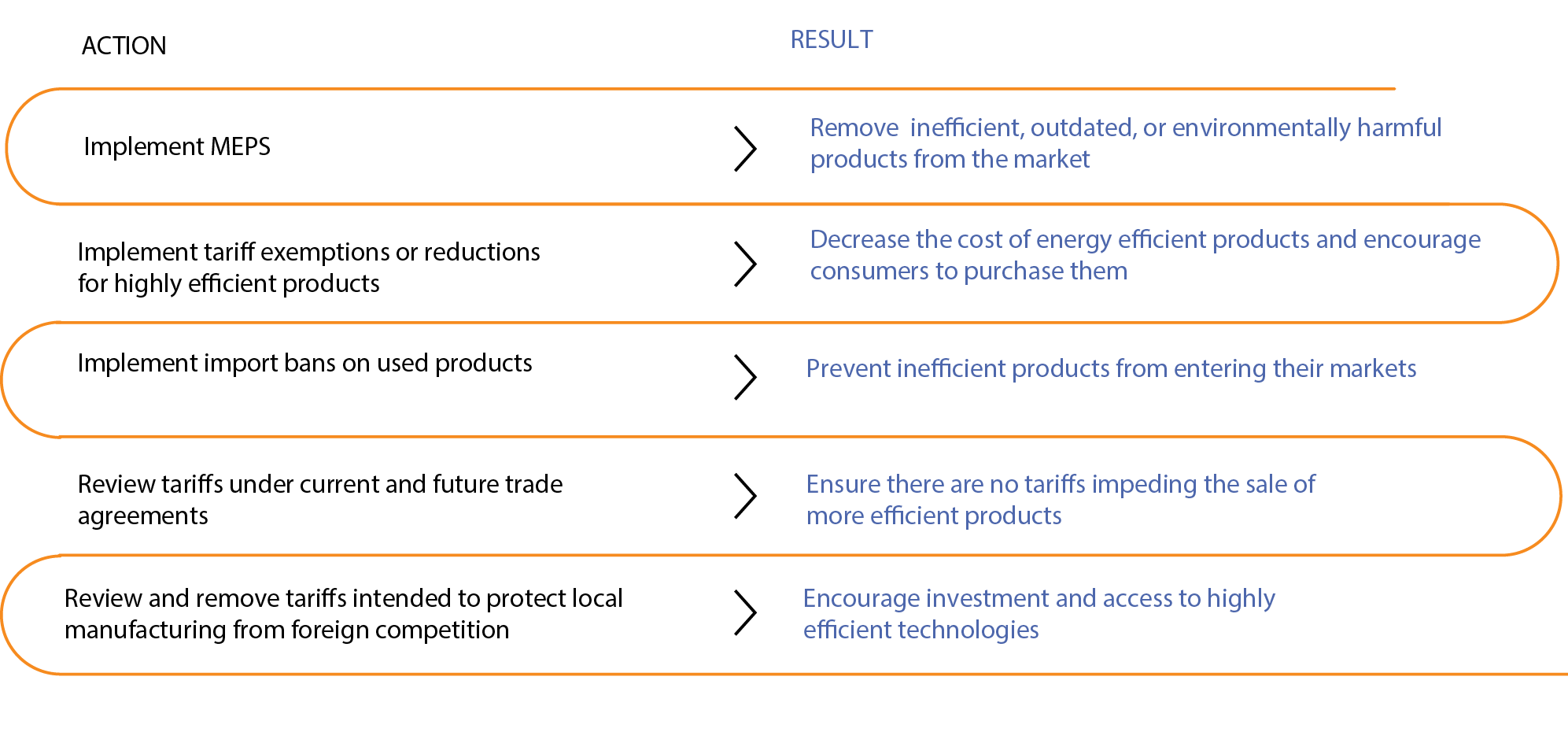
Trade policy and energy efficiency policy often influence each other. Energy efficiency policies such as minimum energy performance standards and energy labeling affect which products can be sold on the market, and thus can restrict trade in inefficient products. Trade-minded energy efficiency policy can enhance energy efficient markets by determining the availability and relative prices of highly efficient imported products. Despite the interactions between these two policy areas, policymakers rarely design trade policies such as tariffs and local content requirements with energy efficiency in mind.
This report discusses how trade and energy efficiency policy can work together to reduce the dumping of inefficient products in developing and emerging economies and to promote market transformation to highly efficient ACs. The report presents several case studies assessing the impacts of trade measures that have enhanced or restricted the availability of energy efficient products in various countries.
Case studies on non-tariff trade measures affecting energy efficiency include:
- Ghanaian Standards and Ban on Incandescent Lights and Used Appliances
- ASEAN Standards Harmonization and Free Trade Area
- Pre-Verification of Conformity in Kenya and Haiti
- Safety Standards as a Trade Measure Restricting the Availability of Efficient ACs
Case studies on tax and policies affecting energy efficiency include:
- CARICOM Tariff and Tax Exemptions for Energy Efficient Products
- Tariff Exemptions for Energy Star Products in the Turks and Caicos Islands and the Marshall Islands
- Tariffs Impeding Sale of Energy Efficient Products in Central America
- Brazil’s Manaus Free Zone
The Role of Trade Policy and Energy Efficiency Policy to Promote Highly Efficient Air Conditioner Markets provides recommendations on the steps policymakers can take to ensure that trade and energy efficiency policies are complementary and effective.
CLASP conducted this research with support from the Institute for Governance & Sustainable Development (IGSD).
Cooling in a Warming World
In 2018, CLASP conducted research and provided technical assistance to policymakers to improve the uptake of efficient cooling appliances, particularly air conditioners. Regions of focus for CLASP’s 2018 cooling portfolio included Africa, South America, and South and Southeast Asia. From identifying trade and industrial policy barriers for high-efficiency air conditioners in Brazil to tracking rapid market transformation brought about by highly efficient inverter compressor technologies in India, Vietnam and Thailand, Cooling in a Warming World guides readers through the findings of our recent market and product analyses. The featured market assessments, policy analyses, and research highlighted in the magazine are driving discussions with policymakers, industry, and other stakeholders on ambitious efficiency policies and setting the stage for future market transformation programs.
Philippines Room Air Conditioner Market Assessment and Policy Options Analysis
The room air conditioner market in the Philippines is unique in Southeast Asia, as it is the only market dominated by fixed-speed window-type units, at 62%. Philippine households favor small size window units, which cost less up-front, but are also less efficient. This partially explains the slow transitioning of the air conditioner market to more efficient split type air conditioners with inverter technology. Revision of the minimum energy performance standards (MEPS) for air conditioners, which have not changed since 2002, is key to transforming the Philippine market towards more efficient air conditioners.
Philippines Room Air Conditioner Market Assessment and Policy Options Analysis provides the technical evidence to support increasing the stringency of MEPS for air conditioners in the Philippines.
CLASP, in collaboration with Innogy Solutions, conducted a comprehensive characterization of the room air conditioner market in the Philippines and analyzed impacts from various policy scenarios. Innogy collected product data for 3,936 models through in-person surveys at 200 retail stores in the Luzon, Visayas, and Mindanao regions and conducted multiple interviews with relevant stakeholders. CLASP analyzed the data and estimated potential energy savings and avoided emissions at the national level, and life-cycle cost savings for consumers, under various energy efficiency policy scenarios.
The report assesses the key characteristics of the room air conditioner market in the Philippines, the Philippine power sector, and the legal and regulatory framework for implementing energy efficiency policies. CLASP uses current market conditions and market forecasts to model the impacts of multiple policy revision scenarios and provide policy recommendations.
The Philippines Room Air Conditioner Market Assessment and Policy Options Analysis is funded by the Kigali Cooling Efficiency Program (K-CEP). As a grantee of K-CEP, CLASP supports activities to raise efficiency standards, improve testing efforts, provide training and other capacity building activities targeted to local needs, and implement national market transformation initiatives in Southeast Asia. K-CEP is a philanthropic initiative to support the Kigali Amendment of the Montreal Protocol by focusing on the energy efficiency of cooling to increase and accelerate the climate and development benefits of phasing down HFCs.
Want to learn more about this report? On July 18, 2019 CLASP hosted the Air Conditioner Markets & Energy Efficiency Policy Opportunities webinar. CLASP, K-CEP, and our partners discussed the findings of the Room Air Conditioner Market Assessment and Policy Options Analysis reports for the Philippines, Thailand, Vietnam, and Kenya. Additionally, the World Bank presented on their cooling technology transfer program in Southeast Asia. Watch a recording of the webinar.
Next Generation Residential Air Conditioners: Technologies, Barriers to Market, and Policy Options
Shifting to a new generation of high-efficiency air conditioners using low global warming potential refrigerants could reduce global greenhouse gas emissions by as much as 98 Gt of CO₂e by 2050.
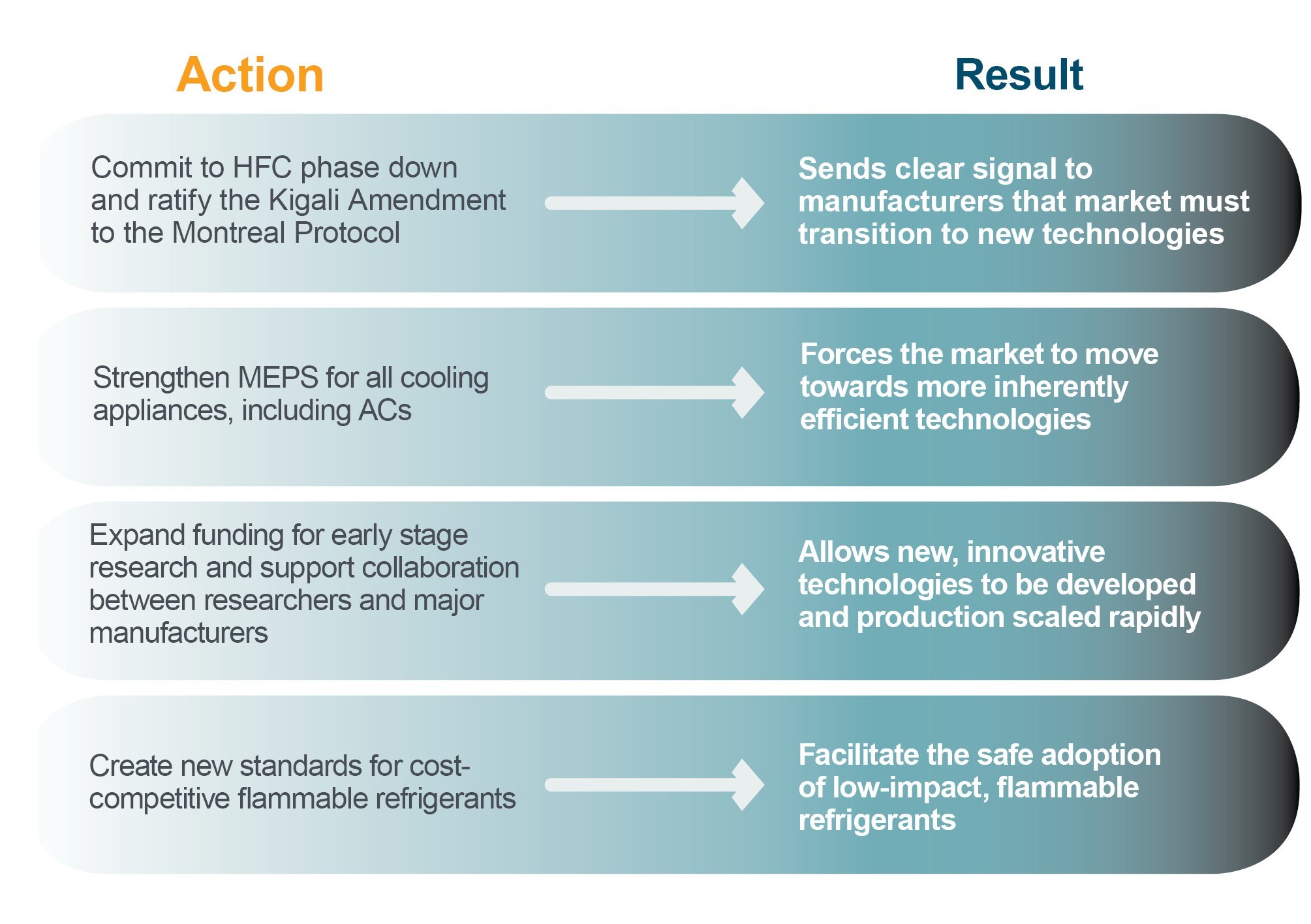
A new paper by CLASP team member Colin Taylor, “Next Generation Residential Air Conditioners: Technologies, Barriers to Market, and Policy Options,” makes the case that strengthening policy, increasing research funding, and establishing productive links between academia and industry will be crucial in driving markets towards innovative, highly efficient air conditioner technologies.
Improving air conditioner (AC) energy efficiency could dramatically reduce peak electricity demand in many parts of the world, which will in turn lessen the need for new electricity generation facilities. The cooling industry and academic researchers are developing a new generation of AC technologies for just this purpose. These new technologies range from propane-based ACs and advanced vapor compression technologies that use refrigerants such as hydrofluoroolefins (HFOs) or CO₂, to technologies that do not use vapor compression at all, such as solid-state cooling, and electro-mechanical cooling. However, these next generation AC technologies face numerous technical, economic, and regulatory barriers to their widespread uptake.
The paper examines the status of emerging residential AC technologies, identifies major barriers preventing large-scale adoption of these technologies, and reviews policy options to overcome these barriers and transform the AC market.
A comprehensive set of policies can fill institutional gaps and bring the next generation of air conditioners into the market. Ratification of the Kigali Amendment to the Montreal Protocol, whereby countries agree to phase out hydrofluorocarbons (HFCs), by every country would clearly signal manufacturers to shift production to new technologies. Taxing HFCs and strengthening MEPS where they already exist, or establishing ambitious MEPS in economies that have yet to implement efficiency standards, will further encourage innovation in AC technology.
While policy can grow demand for efficient products, increasing research funding and facilitating meaningful collaboration between startups and universities conducting space cooling research and manufacturers is also necessary to enable scaling up production of innovative ACs. In particular, universities and startups in the U.S. need to establish these links with major AC manufacturers in Asia.
“Next Generation Residential Air Conditioners: Technologies, Barriers to Market and Policy Options” is published by the American Council for an Energy-Efficient Economy (ACEEE). Read the full paper here.
CLASP supports governments to determine and implement the most ambitious and cost-effective policy solutions, drawing on global best practice and leading technical expertise. Learn more about our policy and market transformation work by visiting clasp.ngo/what-we-do/policy-analysis.
CLASP Hosts Kenya Room Air Conditioner and Refrigerator Energy Efficiency Workshop
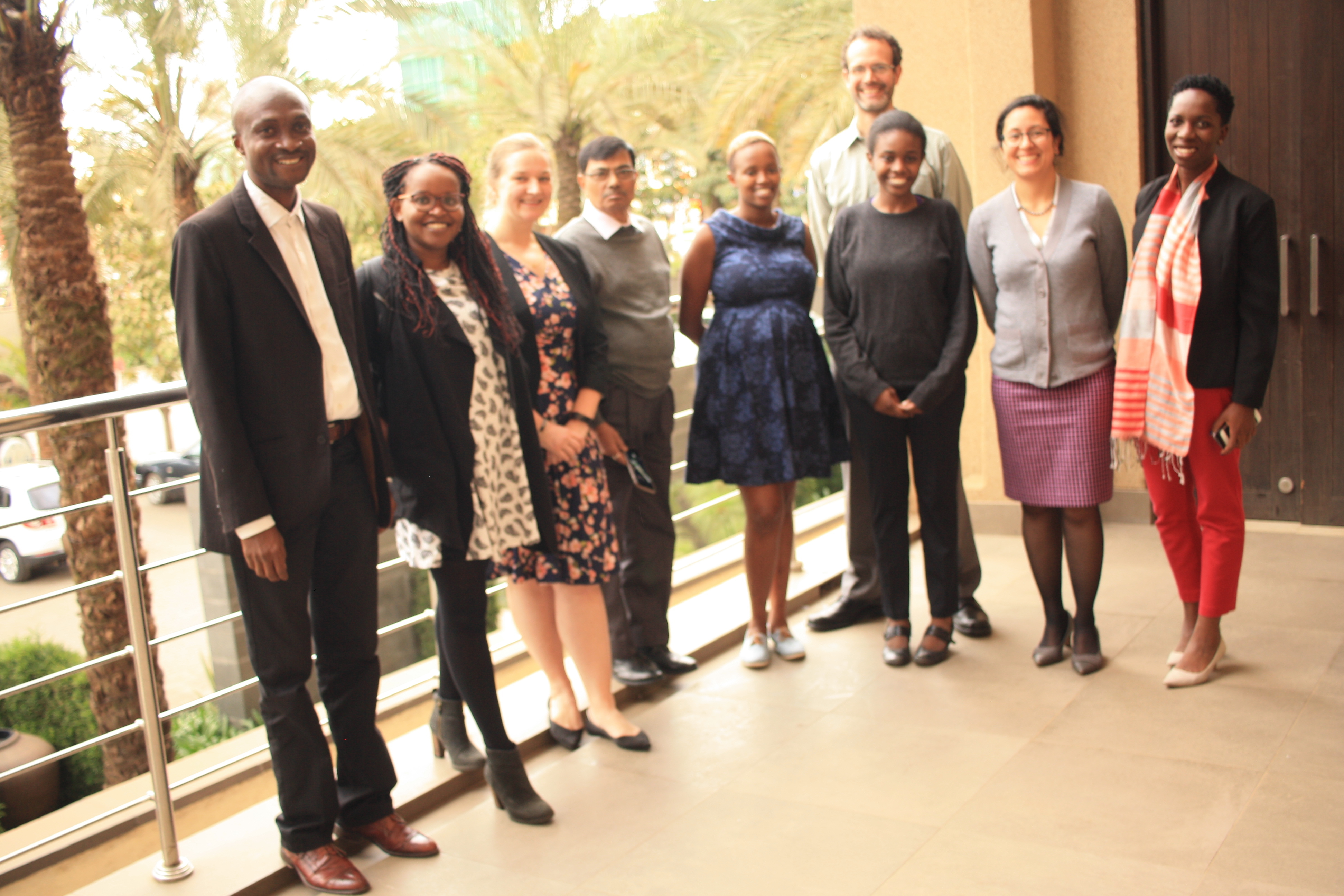
CLASP hosted the Kenya Room Air Conditioner and Refrigerator Energy Efficiency Workshop in Nairobi, Kenya from August 13 – 15. The three-day workshop brought together stakeholders from Kenyan government agencies, industry, and academia to participate in trainings and discuss preliminary results from CLASP’s ongoing room air conditioner and residential refrigeration market assessments.
Trainings focused on product performance testing and rating, best practices for energy efficiency compliance programs, and methodologies for setting minimum energy performance standards. Participating government agencies included the Ministry of Energy, the Kenya Bureau of Standards (KEBS), the Energy Regulatory Commission (ERC), the Kenya Industrial Research and Development Institute and the Kenya Revenue Authority.
KEBS and ERC provided opening remarks and presented overviews of current MEPS and the energy labeling program. The two agencies have designed and implemented a strong conformity assessment procedure that ensures products entering the Kenyan market through regulated channels are complying with energy efficiency requirements. In the next phase, the priority for both ERC and KEBs is to focus on market surveillance, particularly monitoring to catch the non-compliant products that do make it past rigorous checks.
Participants expressed a desire to work towards strengthening compliance activities and increasing consumer awareness on the benefits of energy efficiency and the Kenyan labeling program.
For many of the industry players, the workshop was the first public platform to discuss the challenges they face in complying with MEPS and regulations for refrigerators and ACs with government agencies. More than twenty representatives from the room AC and residential refrigeration sector attended the first two days of the workshop, with industry representatives sharing their perspectives on the Kenyan program during a panel discussion.
In break-out sessions, participants also discussed key elements of a National Cooling Action Plan for Kenya.
Following the completion of the room AC and residential refrigerator market assessments, CLASP will continue our work in Kenya by providing technical analysis, assisting Kenya in developing a robust compliance framework to support the MEPS and labeling program implementation, and working with relevant actors to design a consumer awareness campaign on the benefits of energy efficiency.
The three-day workshop is one component of the Kigali Cooling Efficiency Program (K-CEP) in Kenya funded by ClimateWorks Foundation. Read a summary of CLASP’s Cooling Program in Kenya or learn more about CLASP’s work in Africa at clasp.ngo/programs/Africa.
Strategic compliance programs are critical to safeguarding energy savings, CO2 emissions reductions, and other benefits from appliance efficiency programs. For an introductory overview of compliance best practices, see our Intro to Compliance suite of materials:
- Compliance Protects Energy Efficiency Policies
- Conformity Assessment Supports Compliance at Market Entry
- Market Surveillance Identifies Non-Compliance
- Enforcement Corrects and Deters Non-Compliance
CLASP Africa Air Conditioner Market Scoping Study Sheds Light on Growing AC Markets in Africa
CLASP’s newly published Africa Air Conditioner Market Scoping Study provides an initial overview of air conditioner market sizes and characteristics, a crucial step in filling the information gap faced by policymakers. The study is one component of our work to increase the uptake of affordable, low-impact, high quality appliances and cut the catastrophic climate impacts of air conditioning. Through this study, CLASP provides comprehensive data on air conditioners available through African online retailers, while also drawing attention to the larger market characteristics and policy gaps that future market assessments should seek to address. The study was sponsored by the Institute for Governance & Sustainable Development (IGSD).
In 2017, 2.8 million air conditioners (ACs) were sold in Africa, following 8.3% market growth over just the two years prior. To date, only ten African countries have implemented energy efficiency policies for appliances such as room air conditioners, leaving many countries at risk of being saddled with inefficient, environmentally harmful, and poor quality appliances. But as demand for ACs grows, many policymakers are looking to energy efficiency policies as a key component of building sustainable cooling markets.
In addition to driving markets towards high-quality products, standards and labeling policies incentivize reporting and verification of product performance, which provide policymakers with reliable market information. A lack of information on the sizes and characteristics of African air conditioner markets is an obstacle for countries aiming to develop new energy efficiency policies for air conditioners.
Africa Air Conditioner Market Scoping Study is the result of CLASP’s collection and analysis of information on split AC and window AC products in nine key markets in Africa: Burkina Faso, Ghana, Kenya, Mauritius, Morocco, Nigeria, Senegal, South Africa, and Tunisia. Each of the nine countries CLASP chose for the study meets at least one of three criteria:
- The largest economies in terms of AC demand from each region in Africa
- Countries that import all of their AC equipment (i.e. without an AC manufacturing base)
- Countries that have demonstrated leadership on integrating energy efficiency into the refrigerant transition
CLASP gathered AC market size from Euromonitor, the Japan Refrigeration and Air Conditioning Industry Association, and the Japan Air Conditioning, Heating and Refrigeration News, and validated this data through stakeholder interviews with National Ozone Officers and local experts. To determine popular AC characteristics in each country, we gathered product data, including brand name, model number, cooling capacity, energy efficiency rating, refrigerant type, country of origin, and price from online retailers.
Some of the key regional findings include:
- Brand: CLASP identified over 55 unique brands; however, in most African countries, Chinese and South Korean AC brands have the largest market share.
- Distribution: Distribution channels vary depending on whether most ACs are imported or if foreign manufacturers have established local assembly plants. Many countries have porous borders, through which inefficient ACs enter illegally.
- Product Type: Split units are the most popular AC type in African markets. Some countries showed a preference for products with heating and cooling functions.
- Capacity: Regionally, the most common cooling capacities are 9,000, 12,000, and 18,000 Btu/hr, but there is significant variation in the most popular sizes in each country.
- Price: Average prices for ACs with the most popular cooling capacities of 12,000 and 24,000 Btu/hr ranged from USD 433-570 and USD 789-960 respectively.
- Performance Reporting: Because online shops are not currently monitored in most countries, energy performance metrics are not available for most AC units sold in African online shops, even though five of the countries in the study have implemented standards and labeling policies.
- Technology: The penetration of inverter technologies is low in most African countries.
- Refrigerant: ACs with the R-410A refrigerant are popular in African markets; however, ACs containing HCFCs – in particular R-22 refrigerant – can still be found in some African countries.
Scoping Study of African Air Conditioner Markets
In 2017, 2.8 million room air conditioner units were sold in Africa. To date, only ten African countries have implemented energy efficiency standards and labeling policies for appliances such as room air conditioners, leaving many countries at risk of being saddled with inefficient, environmentally harmful, and poor quality appliances. Without standards and labeling policies to incentivize reporting and verification of product performance, locating reliable market information is difficult for policymakers.
With support from the Institute for Governance & Sustainable Development (IGSD), CLASP conducted the Africa Air Conditioner Market Scoping Study to address the information gap with respect to split air conditioner (AC) and window AC products by utilizing market data and stakeholder interviews to provide an overview of the sizes and characteristics of AC markets in Africa. The Africa Air Conditioner Market Scoping Study analyzes available information on AC products in nine key African markets: Burkina Faso, Ghana, Kenya, Mauritius, Morocco, Nigeria, Senegal, South Africa, and Tunisia.
This report addresses the following characteristics of AC markets:
- Market size
- Share of imports versus local manufacturing
- Major brands and country of origin
- Popular AC types, functions and capacities
- Average prices
- Energy performance
- Availability of inverter technologies
- Refrigerant types
- Existing minimum energy performance standards
The primary sources of data for AC product information were stakeholder interviews, industry reports, and online shops. This report serves as an initial characterization of African AC markets and identifies gaps that future AC market studies should seek to address.
Accelerating the Adoption of Energy Efficient Air Conditioners
In 2015, room air conditioners accounted for approximately 20 per cent of the residential electricity demand in 150 developing and emerging countries. In those countries, the number of room air conditioners in use is expected to increase to 1,5 billion in the next 15 years. Air conditioning makes up a significant portion of household energy demand in particular in regions with hot climates where periods of high use correlate with peak demand.
Over 40 countries around the world have already implemented regulations for air conditioners. By expanding similar regulations to more countries, the market transformation to climate friendly and energy-efficient room air conditioners can result in significant energy savings. Because of this potential, the United Nations SecretaryGeneral’s Sustainable Energy for All (SEforALL) initiative identified energy-efficient appliances as a “high-impact opportunity.” They have the potential to reduce countries’ greenhouse gas (GHG) emissions, generate significant economic benefits, enhance energy security, and improve people’s well-being.
This guide focuses on room air conditioners and is intended to provide policy makers with information and best-practice case studies on how to promote energy-efficient and climate friendly room air conditioners in their respective national markets.
AC Challenge Program for India
India is the second fastest growing economy in the world. Increasing income levels, affluence and consequently changing consumer behaviour have led to a growing demand for different white goods such as room ACs (RACs). The India-US Collaboration on Smart and Efficient Air Conditioning and Space Cooling is an initiative to facilitate the AC market transformation to super-efficient space cooling technologies.
This report by CLASP and PWC looks at the AC Challenge Program, one of the initiatives under the India-US Collaboration on Smart and Efficient Air Conditioning and Space Cooling. The objective of the AC Challenge Program is to catalyse the private sector to develop super energy efficient RACs (window or split ACs) that perform efficiently and incorporate new climate-friendly refrigerants or other technologies to eliminate the use of high GWP substances.
Cost Benefit of Improving the Efficiency of Room ACs in India
Electricity demand due to Room ACs (RACs) in India is likely to increase multifold due to rising incomes and urbanization, falling prices, and high cooling requirements due to a hot and humid climate. Increased penetration of room air conditioners in India is already causing significant adverse impacts on the electricity grid by increasing peak load and power purchase costs of the utilities. Improving the energy efficiency of RACs can help mitigate these impacts, while saving significant amounts on consumer electricity bills.
This report presents an analysis of the cost and benefit of improving efficiency of air conditioners in India, based on a bottom-up engineering analysis of key AC components such as compressors and heat exchangers.
The energy efficiency of the more efficient ACs is reported in the Indian Seasonal Energy Efficiency Ratio (ISEER) metric. The retail price increase required to cover the cost of efficiency improvement is estimated and compared to the electricity bill savings to calculate the payback period for consumers. Significant efficiency improvement is found to be cost effective from a consumer perspective even under a wide range of assumptions. For example, the payback period for a room AC with a 3.5 ISEER efficiency rating is 1.1 years, while a room AC with a 5.2 ISEER is estimated to have a payback period of less than 3 years.
This work was funded by the U.S.-India Space Cooling Collaboration through the U.S. Department of Energy’s Office of International Affairs under Lawrence Berkeley National Laboratory.